My Cousin Rachel-2017

My Cousin Rachel-2017

Director Roger Michell

Starring Rachel Weisz, Sam Claflin

Scott’s Review #685

Reviewed September 25, 2017

Grade: B-

My Cousin Rachel (2017) has the advantage of providing wonderful, scenic locales in Florence, Italy, and lovely scenes filmed around England, which make the film a joy to watch from a cinematic perspective.

The acting, especially by seasoned veteran Rachel Weisz,  is also stellar and noteworthy.

The plot, however, is a big negative to the film as My Cousin Rachel suffers from weak dramatic storytelling, an anti-climactic conclusion, and missed opportunities with the plot.

The film is based on Daphne du Maurier’s 1951 novel of the same name. I have yet to read the book, but I am certain the film does it no justice. The overall tone of the film contains little mystique, to say nothing of lacking any sort of haunting elements as one might expect to receive with titillating anticipation.

The story begins well enough as, through narration, we learn that a young man named Philip, having been orphaned as a child and raised by his older cousin, Ambrose, returns home from school to his childhood home in lavish Cornwall.

Through a letter, he learns that Ambrose has married his widowed cousin, Rachel, and has moved to Florence. He also cryptically writes that he is in fear for his life and suspects Rachel of poisoning him.

The main plot starts after Philip finally meets Rachel and astonishingly falls madly in love with her.

To be fair, the film is shot beautifully and glimmers with interesting camera angles. In a few hallucination scenes, the filmmaker uses a blurry, almost magical film-making style.

The aforementioned locales give My Cousin Rachel a sophisticated, graceful look. On the negative side of this filming evaluation, the lighting is much too bright, appearing more like an episode of the PBS series Downton Abbey rather than the mysterious, cryptic film that My Cousin Rachel is promoted as.

The best thing about the film is the outstanding acting performance by Rachel Weisz as the title character, Rachel. While not played quite as mysterious, Weisz envelopes her character with a passionate, earnest quality that sells the character as enchanting.

With a winning smile and a polite, dutiful manner, Rachel is tough to imagine as a murderess, which helps the lackluster plot just a bit. She happily makes a “special” tea or performs other household tasks with cheerful, uniform pizzazz.

Without Weisz in the role, I shudder to think how bleak the result might have been.

Early on in the story, Philip’s wealthy family, the Kendalls, are surprised that Ambrose married, as he was never known to be in or enjoy the company of women. It also must be noted that in flashbacks, Ambrose is portrayed as somewhat effeminate or, at most, less than manly.

This seems a blatant attempt to question the character’s sexuality, yet the film chooses never to pursue this topic again. I know how the novel handled this plot item, but it seems like a wasted opportunity.

Chemistry, or lack thereof, is also an issue with My Cousin Rachel. No connection between Weisz and Claflin exists throughout, nor is there any between either character and Philip’s intended love interest, Louise Kendall, played by Holliday Grainger.

The actress is acceptable in a role given little meat or substance.

Uneven at best, My Cousin Rachel is a beautiful-looking period piece, but it is mostly just mediocre filmmaking. The ending is quite sudden and definitively answers none of the main plot questions.

Released in 2017, the film will likely be forgotten by 2018.

It-2017

It-2017

Director Andres Muschietti

Starring Bill Skarsgard, Jaeden Lieberher

Scott’s Review #684

Reviewed September 20, 2017

Grade: A-

An enormous hype has gone into the first big-screen adaptation of the epic-length 1986 Stephen King novel, It.

An above-average mini-series based on the book was released in 1990, but the film version is much more effective.

Officially entitled It: Chapter One (2017), it divides the story in half, only focusing on the characters as children, not as adults decades later.

The film is highly effective, with a fantastic story, visuals, cinematography, and a rocking musical score. Simply put, it is one of the better Stephen King film adaptations.

As rabid Stephen King readers will understand, at over eleven hundred pages in length and spanning thirty years, a two-hour and fifteen-minute film simply wouldn’t encompass the author’s artistic vision.

To be determined is how chapter two will measure up to the glory of the first chapter.

Derry, Maine, is the sleepy little town where the action takes place. The period is 1988, but it is worth pointing out that the novel takes place in the late 1950s.

On a stormy afternoon, seven-year-old Georgie takes a paper boat, constructed by his older brother Bill Denbrough, outside to see if it sails. He meets a clown in the storm drain, who introduces himself as “Pennywise the Dancing Clown.”

Pennywise toys with Georgie turns vicious, and tears the boy’s arm off.

Months later, life goes on as Bill and his group of friends known as “The Losers Club” all separately begin to see variations of Pennywise.

The film is part of a teenage summer adventure balanced with a terrifying horror film, and director Andres Muschietti achieves this mixture seamlessly.

Lighting is one example of how the film goes about in this fashion.

Most of the outdoor sequences are bright, sunny, and airy. Conversely, the terrifying scenes, usually involving the entity of Pennywise, are shot using dark lighting, eliciting fear and a perfect mood.

The casting is terrific—I specifically found actor Jaeden Lieberher as Stuttering Bill, Jeremy Ray Taylor as Ben Hanscom, and actress Sophia Lillis as Beverly Marsh to be wonderful performers and clear standouts among the teenage characters.

Lillis, bright-eyed and with a strong-willed composure, resembles a young Scarlett Johansson and could have a bright future ahead of her. Lieberher’s earnestness and stuttering ability are believable, and his innocence is reminiscent of every kid’s.

Lastly, Taylor fills a pudgy new kid in town, Ben, with comedy and romanticism in his unrequited love for Bev.

Thriving is the portrayal and appearance of the demonic entity Pennywise. Since the fictional clown has over thirty years of interpretation and imagination, bringing him to cinematic life was challenging.

The risk would have been making him either too horrific or cartoon-like- the result is a perfect hybrid. Bill Skarsgard exudes crazy in his brilliant performance, teetering between goofy and playful with Georgie and evil personified as he taunts and terrorizes the kids in his dusty hideaway.

Interestingly, none of the adult characters are written sympathetically. From the creepy Alvin Marsh to the nerdy pharmacist, even the stern librarian and the overbearing Mrs. Kaspbrak are each laden with an unlikable quality.

The closest adult to being “nice,” Bill’s father, finally screams at his son to accept the fact that Georgie is dead.

Two small complaints include the two secondary bullies—the King Bully Henry Bowers cohorts are not given their comeuppance and simply vanish from the screen, never to be mentioned again.

Secondly, the sound exterior shots of Derry, Maine, exude a New England freshness and a small-town mystique. It’s too bad the scenes were not filmed in Maine at all but somewhere outside of Toronto, Canada—more realism would have been nice.

Due to the massive success of the adapted film, legions of fans will undoubtedly hold their breaths waiting for the resurrection of Pennywise and “It” to be unleashed on film fans everywhere- probably in 2019.

I will be one of those fans.

Chronic-2015

Chronic-2015

Director Michel Franco

Starring Tim Roth, Robin Bartlett

Scott’s Review #682

Reviewed September 18, 2017

Grade: A-

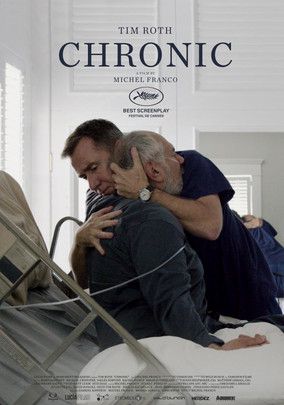
Chronic (2015) is a brave film, a character study, that offers an in-depth look at the life of a male nurse. He has rich relationships with his patients.

What the film also does quite soundly is reflect on not just the obvious physical needs of the patients, but the deep effects that the main character’s dying patients have on himself as well.

The film is quite bleak with a quiet element and very long scenes containing little dialogue but a treasure in bold storytelling and brazen reflection.

The film is a subdued work requiring attention and focus.

Yes, some would deem Chronic to be slow, and most would describe it as “a downer”, but dismissing the film is a mistake as it offers rich writing and an in-depth look at a vocation and lifestyle misunderstood or confusing to most people.

Tim Roth, famous for his bad boy roles, especially in Quentin Tarantino films, does an about-face, delivering a superb, subdued performance as David Wilson, a lonely and depressed nurse in the Los Angeles area.

He is a quiet, kindly man whose internal pain registers on his face as he dutifully treats his mostly close-to-death patients, sometimes attending their funerals after they have expired.

Initially, we meet David as he treats a sickly young woman. Once beautiful, she is now haggard and I cringed when the woman’s nude, skeleton-like body, is on display as David washes her with a washcloth.

The filmmakers do not gloss over his tender attention to her private areas, shot gracefully and not done garishly. Still, the long scene is frightening in its realism.

When the woman succumbs to AIDS, David reluctantly becomes involved in a celebratory drink with a newly engaged young couple after he goes to a bar to unwind.

When he pretends the deceased woman is his wife, he receives sympathy, but the couple quickly becomes aloof when he reveals what she died of.

Does he do this purposely to push the couple away? Throughout the film, we realize that David thrives on being with his patients, and can do no other work.

In contrast, he has difficulty with relations with “normal” people.

Perplexities abound in this film, which makes the viewer think and ponder throughout, and after the story ends.

For example, David searches through a young girl’s Facebook account looking at her photos- he later finds the girl, revealed to be studying medicine, and they happily reunite.

Is she his daughter or the daughter of a deceased patient?

Later, David is sued by an affluent family and subsequently fired, after he watches porn with an elderly man to lift his spirits. There is a glimmer of uncertainty where we are not sure what David’s sexual orientation is.

In the most heartbreaking sequence of all, David begins caring for a middle-aged woman with progressive cancer. Martha (Robin Bartlett) is strong-willed and no-nonsense and makes the painful decision not to continue with chemotherapy after suffering chronic nausea and later soiling herself.

It is apparent that her family only visits her out of obligation as she lies to them that her cancer is gone and she is in the clear. She then pleads with David to end her life with dignity using a heavy dose of morphine- the sequence is heartbreaking.

The final scene will blow one away and I did not see this conclusion coming. The event left me questioning the entire film, wondering how all the pieces fit together.

Surely, being overlooked for an Oscar nomination, Tim Roth proves he is a layered, complex, full-fledged actor, in a painful, yet necessary story called Chronic (2015).

Independent Spirit Award Nominations: Best Feature, Best Male Lead-Tim Roth

Clown-2016

Clown-2016

Director Jon Watts

Starring Andy Powers, Laura Allen

Scott’s Review #681

Reviewed September 16, 2017

Grade: B-

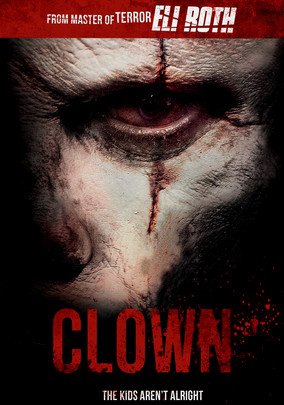
As a fan of all things horror and with a robust appreciation for the genre, clowns in said genre are always a stroke of genius, and the 2016 film Clown establishes a creepy premise right off the bat.

After seeing the film, it was not until a few days later that the story began to marinate in my mind, and I gained a bit more appreciation than I had once the film had ended.

Clown is one hour and forty minutes long, but it reminds me of the mid-2000s Showtime horror anthology series Masters of Horror.

The film has a unique, creepy vibe, is also a highlight of the cherished series of yesteryear, and oddly plays out like a vignette.

The premise is creepy as the action kicks off.

When Kent McCoy (Andy Powers), a likable young father who works far too much maintaining his real estate business, is notified by his wife, Meg (Laura Allen), that the clown they hired to entertain at their son Jack’s birthday party has canceled, he is determined to save the day.

Kent discovers an old clown suit in the attic of one of his abandoned houses and dons the costume. The next day, Kent and Meg are startled when Kent cannot remove the costume, even when pliers, a hacksaw, and other horrid machinery are used on him.

The story then introduces a strange character named Herbert Karlsson (Peter Stormare), who informs Kent that the clown costume is not a costume but the hair and skin of an ancient demon from Northern Europe.

Kent realizes that the demon needs to feast on and devour children to survive, and he becomes ravenous and hungry. Karlsson attempts to kill Kent, revealing that the only way to destroy the beast is via beheading.

The clever and compelling part of the story is the mixture of clowns and children in peril, a recipe for success in most horror films.

The fact that Kent and Meg slowly begin the temptation to harm children is both shocking and compelling.

The McCoys are average, everyday folks, Meg even working as a nurse, so the likelihood of the pair harming kids on any other day is remote, but tested by a vicious demon and their son Jack in peril makes Clown work well.

My favorite sequence occurs during a birthday party at Chuck E. Cheese. While the kids play in a lavish and dark tunnel, the demon (Kent) is on the loose, causing havoc and eating two children.

When Meg drives an unwitting young girl home, she is conflicted and tempted to offer the girl to the demon as a sacrifice to hopefully save Kent.

The girl’s pleading is palpable.

The film is gruesome from a violent perspective and hesitates not to go where many horror films dare not to go, with the death and slaughter of young children.

One kid, in particular, is shown disemboweled. The kid is written as a bully and gets his comeuppance in grisly form.

Sad is the death of a lonely trailer park-type kid, only looking for a friend in Kent. Little does he know his short days are numbered.

As strong and measured as the story idea is, Clown does have some negatives. The film has an amateurish quality, not because it is independent. Instead, the style almost comes across as a student film.

Some of the acting is not great, specifically Laura Allen’s performance as Meg. The filmmakers might have been wiser to make this project more of an episodic venture instead of a full-length release.

Clowns, kids, and demons make a fun combination for horror, and the aptly named Clown is a solid B-movie effort in the glorious chambers of the cinematic horror genre.

With a few tweaks and zip-ups, Clown (2016) might have been an even more memorable film. It will not go down in history as a masterpiece, but it has the necessary elements for a good watch.

Bride of Chucky-1998

Bride of Chucky-1998

Director Ronny Yu

Starring Jennifer Tilly, Brad Dourif

Scott’s Review #680

Reviewed September 11, 2017

Grade: D+

Bride of Chucky (1998) is the fourth installment in the famed late 1980s Child’s Play hit franchise. The late 1980s was not the best time for the horror genre in general, but the film was quite the highlight in a slew of duds.

By this time in the series, (1998), the child/victim of the doll premise is dropped in favor of dark humor, thus the series immerses itself more into the horror-comedy arena.

A treat is the inclusion of a fantastic hard rock soundtrack led by the Rob Zombie classic, Living Dead Girl, adding some points to the film’s final grade, otherwise have been more dismal.

The film is not great and I find perverse pleasure in reviewing poor films. However, Bride of Chucky does have its place- as a late Saturday night viewing choice amid strong cocktails it contains a certain charm.

Not to be taken seriously, the placement of a love interest for Chucky gives the film macabre romantic humor.

Still, the film suffers from lackluster acting and quickly turns into drivel by the time the credits finally roll.

The action picks up from where Child’s Play 3 leaves off and the appearance of Chucky is now weathered and stitched giving the doll a more gruesome and maniacal look- this works given the elimination of a child lead character.

Left for evidence in a police compound, Chucky is stolen by Tiffany Valentine, played by Jennifer Tilly. The girlfriend of a deceased serial killer, Tiffany is convinced that the spirit of her boyfriend exists within Chucky and she is determined to bring him back to life using a voodoo ritual.

When the act finally works, Chucky and Tiffany reunite, but shortly afterward, Tiffany is also turned into a doll and the duo sets out on a killing spree.

The best aspect of the film is the camaraderie between Tilly and actor Brad Dourif, who voices Chucky. The duo has a light, comic banter that is fun to watch, as well as fantastic chemistry.

Granted the actors only voice the dolls for a small part of the film, but their back-and-forth works well.

This is what makes Bride of Chucky tongue in cheek- let’s face it, with talking dolls as your main characters, director Ronny Yu wisely avoids making the killings too grisly or heavy-handed, but rather, frequently uses quips and one-liners throughout the film.

As Chucky and Tiffany slice and dice their way to Hackensack, New Jersey, their motivations are to embody a neighborhood boy, Jesse, and his girlfriend Jade, played by a young Katherine Heigl.

Along the trek, the foursome is faced with ludicrous obstacles, such as the brief introduction of a con artist couple who meet their doom by flying shards of glass after stealing Jesse’s money.

The side story of Jade’s overprotective police chief Uncle, played by a miscast John Ritter, does not work at all. His schemes to plant marijuana in Jesse’s van are little more than plot-driven machinations to advance the thin plot.

The characters of Jesse and Jade are trivial and secondary and Heigl’s acting is particularly garish to say nothing of the lack of any chemistry between Heigl and actor Nick Stabile.

Heigl seems to wear a pout throughout the entire film. But, not to worry, these characters are as meaningless as all the others.

The gimmick ending, surely meant to “spawn” yet another sequel is as interesting as it is grotesque and a small highlight in a poor film.

Bride of Chucky (1998) provides a nice lineage to the history of the franchise, a killer musical score, and decent chemistry among the leads, but also suffers a similar fate to many horror films, especially sequels- poor acting, a silly tone, and no character development.

Latter Days-2003

Latter Days-2003

Director C. Jay Cox

Starring Steve Sandvoss, Wesley A. Ramsey

Scott’s Review #679

Reviewed September 7, 2017

Grade: B

In the now saturated genre of LGBT film, a novel little more than a decade ago, Latter Days, released in 2003, tells a story with an interesting religious spin and is the first LGBT film to my knowledge to depict a clash of religious values, which deserves kudos.

The film was popular among film festival goers, yet critically, received only mixed opinions.

There are both positives and negatives to this film.

When rigid Mormon innocence meets plastic Los Angeles playboy, anything is bound to happen as a surprisingly sweet romance develops between the two young men.

While the overall feeling of the film is rather “cute”- not exactly a rallying cry of cinematic excellence- Latter Days suffers mostly from some sophomoric acting and an odd combination of a soft-core porn film and a wholesome Hallmark channel television movie quality.

This, in turn, allows the film to achieve only slightly above mediocre as a final score.

Young Mormon missionary, Aaron Davis, just out of Idaho, is sent to Los Angeles with three fellow missionaries, to spread the word of faith. Soon, he meets an openly gay waiter, Christian, promiscuous, brazen, and proud of it.

After a silly bet with friends predicting how long it will take Christian to “deflower” Aaron, the young men become enamored with each other as Aaron’s secret desires for men are exposed.

This leads to a test of faith for Aaron, especially with his religious and rigid parents, waiting with fangs drawn as he is banished back to small-town Mormon territory.

The romance and chemistry between the lead actors are the best part of Latter Days. Though Aaron and Christian could not be more opposite, there is warm chemistry that actors Sandvoss and Ramsey successfully bring to the screen.

Sandvoss’s “aww shucks” handsome, innocent looks compliment Ramsey’s extroverted, pretty-boy confidence, and the film succeeds during scenes containing only the two actors.

Much is gained from a throwaway laundry scene as the young men chat and get to know one another’s backgrounds, as during the brilliant soft-porn scene as the nude men thrash around a hotel bed making love.

Though, admittedly, neither actor is the best in the acting department.

The nudity in the film is handled well- explicit, yes, but never filmed for cheap or trashy effect. While the nudity is sometimes sexual, the men also lounge around nude in bed while chatting about life and their various ideals.

Also positive is the casting of Jacqueline Bisset in the motherly role of Lila. Suffering from her drama (an unseen gravely ill romantic partner, and admittedly an unnecessary add-on to the story), she is the sensible, liberal-minded owner of Lila’s restaurant, where Christian and his friends work and socialize.

The film creates a “family unit” in this rather nice way. Bisset and her British sophistication add much to the film.

Contrasting Bisset’s character is the fine casting of Mary Kay Place as Gladys, the rigid mother of Aaron.

Hoping to “pray the gay away”, she and her husband banish Aaron to a garish rehabilitation facility to turn him straight after a suicide attempt. The character does show unconditional love for her son but simply refuses to accept his sexual preferences.

There is no question that director C. Jay Cox slants the film in one clear direction as the Mormon characters are portrayed as stodgy and bland.

Latter Days slips when the focus is on the other supporting characters. I tend to champion large casts and neat, small roles, but Christian’s friends are largely self-centered, bantering about either their sexual escapades or their career aspirations as they wait tables hoping to get a big break.

Worse yet, a silly side story is introduced focusing on a misunderstanding between Christian and his best friend Julie.

I could have done well without many of these secondary characters.

In the final act, the film goes the safe route with a brief red-herring about a character’s death only to then quickly wrap the film in a nice happy ending moment featuring a nice Thanksgiving dinner at Lila’s restaurant.

Latter Days (2003) contains a good romantic story between two males that does just fine without the added trimmings that occasionally bring the film down.

All in all a decent effort.

XX-2017

XX-2017

Director Jovanka Vuckovic, Annie Clark, Roxanne Benjamin, Karyn Kusama, Sofia Carrillo

Starring Natalie Brown, Melanie Lynskey

Scott’s Review #677

Reviewed September 1, 2017

Grade: B

XX is a 2017 American anthology film featuring four unique horror vignettes directed by female directors—a brazen feat in itself as this gender is too often underrepresented in the genre.

The chapters do not always make complete sense, but they achieve a creative, unpredictable edge and the feeling of watching something of substance.

Another anomaly is that each features a female lead, giving the film a measure of female empowerment.

Immediately, we are treated to an odd tale named The Box, based on a short story written by an author notable for composing tales of the gruesome Jack Ketchum.

In this story, a young boy named Danny, cheerfully riding a train with his mother and sister during the holidays, innocently asks an odd-looking man to peek inside a shiny, red, gift-wrapped box.

When the man agrees, Danny initially goes about his day but stops eating, much to his parent’s horror. This installment is my favorite of the four as it is the only holiday-themed chapter and contains a morbid quality amid the cheeriness of the season.

The perspective soon switches from Danny to his mother, Susan, and the conclusion is surprising.

Next up, The Birthday Party features middle-aged Mary, intent on holding a birthday party for her young daughter, Lucy. When Mary finds her husband dead, she dresses him up in a panda costume and attempts to conceal him from the group of anxious young party-goers.

The conclusion is a mix of the hilarious and the disturbing. This vignette features a nanny and a neighbor, both odd and mysterious characters. I admire the black comedy in this one most of all.

Third in the series is Don’t Fall, which transports the viewer to the middle of the desert. Four friends are on an expedition seeking adventure. The main character, Gretchen, is deathly afraid of heights.

When the group discovers a cave with ancient, evil writings on it, one group becomes possessed and embarks on a killing spree against the others.

Very short in length, Don’t Fall suffers from absurdity and has the least character development of the four—it is also the one I found to be the weakest.

Finally, Her Only Living Son is the strangest in the quartet. Cora, a working-class single mom, has only one son, Andy. About to turn eighteen, he is rebellious and known to be cruel to classmates—even gleefully tearing off one poor girl’s fingernails.

Ironically, the high school faculty seems to worship Andy, deeming him remarkable and seeming somewhat entranced by him. As Cora becomes influenced by her mailman, Chet, it is revealed that Andy’s father is a Hollywood star and wants nothing to do with Cora or Andy.

When Andy develops claws on his fingernails and toenails, Cora fears that he is not her ex-husband’s son at all but the spawn of Satan. This tale is a miniature of the classic 1968 horror film Rosemary’s Baby, haunting and devious in tone.

Enticingly, each chapter runs the gamut in theme and is unique and different enough from the others to be distinguishable and not suffer from a blended or all-too-similar feel.

Indeed, each situation is implausible in “real life,” and some head-scratching plot points abound. For instance, how is it possible for an emaciated child, under a doctor’s care, not to be force-fed?

Also, a teenager growing claws and hooves? Really? But horror, and sometimes supernatural, or even silly, elements can be fun.

XX, new for 2017, is reminiscent of the successful horror anthology that the Showtime cable network was daring enough to air from 2005-2007- this series ran the gamut in stylized and edgy horror escapades, using various directors to achieve this result.

Here’s to hoping that XX opens new doors and prompts a new horror series. XX has a few flaws but is successful in undoubtedly pleasing the legions of horror fans.