American Fiction-2023

American Fiction-2023

Director Cord Jefferson

Starring Jeffrey Wright, Issa Rae, Sterling K. Brown

Scott’s Review #1,421

Reviewed February 11, 2024

Grade: A

American Fiction (2023) is an intelligently written expose of black culture and a poignant family drama mixed as one. Cord Jefferson makes his feature directorial debut with the satirical comedy-drama which he also wrote.

The film explores how perceptions of black people, mostly by white people but even amongst themselves, are categorized into neat little boxes.

Usually, the negative stereotypes are assumptions of bad grammar, poverty, and hardships in ghetto situations.

While some may be sympathetic these beliefs are either conscious or subconscious and they are propelled by the media. In the case of the film, through literary works.

Are white people intimidated by intelligent black people, the film questions. How do the intelligent black people feel about themselves?

American Fiction is a witty, smart, funny, and poignant film that will make you laugh as often as it makes you think about the perspectives offered.

Jefferson brilliantly offers up both an education and powerfully drawn black characters. In the middle is a sentimental family storyline that had me enraptured by almost all the characters.

The writer/director bases his film on the 2001 novel Erasure by Percival Everett. Thelonious “Monk” Ellison (Jeffrey Wright) is a highly intelligent African-American upper-class writer and professor living in Los Angeles.

He is a frustrated novelist-professor who doesn’t make much money or sales from his serious works.

Needing money after moving back to Massachusets on a leave of absence, he decides to write an outlandish satire of stereotypical “black” books, only for it to succeed by mistakenly thought of as serious literature and published to both high sales and critical praise.

He struggles with keeping his alter ego a secret while questioning the lack of intelligence with people assumed to be the liberal elite and the general public.

Wright is great and leads the charge of a dynamic cast. He makes his characters believable and their motivations clear while still showing Monk’s conflict. Monk has lived a privileged life with education, social status, and success.

His experience as a black man is different than other black men and he is smart enough to know this while still wrestling with his feelings.

Wright is dynamic at showing many emotions.

To make the film even better, the supporting characters are delightful with their own stories, making me fall in love with them. Special call-outs are for Sterling K. Brown and Erika Alexander who plays Monk’s brother and girlfriend, respectively.

Brown as Cliff is a successful surgeon but lives a conflicted life as a newly ‘out’ middle-aged gay man. He dabbles in drugs and promiscuous behavior but all he wants is approval by his family.

Alexander is a successful public defender and neighbor of the Ellison’s going through a divorce. She relates to Monk while challenging him on his bullshit and is a richly carved character.

Also, Leslie Uggams Monk’s mother suffering from Alzheimer’s disease, Ellison’s housekeeper Lorraine (Myra Lucretia Taylor), and Issa Rae as Sintara Golden are weaved into the canvas seamlessly and with purpose.

The film’s ending left me scratching my head and caught me off guard. While clever, it made me wonder if what I had just seen was reality or fantasy. Providing three different endings as adapted film options it’s tough to know which if any actually happened but maybe that’s the point.

I left the movie theater having laughed out loud, thought, and been entertained.

American Fiction (2023) made me feel like I had seen something relevant that would help me understand people better and give me insight into what other people feel.

Oscar Nominations: 1 win-Best Picture, Best Actor-Jeffrey Wright, Best Supporting Actor-Sterling K. Brown, Best Adapted Screenplay (won), Best Original Score

Independent Spirit Awards Nominations: 2 wins-Best Film, Best Lead Performance-Jeffrey Wright (won), Best Supporting Performance-Erika Alexander Sterling K. Brown, Best Screenplay (won)

The Seduction of Mimi-1972

The Seduction of Mimi-1972

Director Lina Wertmüller

Starring Giancarlo Giannini, Mariangela Melato, Agostina Belli

Scott’s Review #1,420

Reviewed February 4, 2024

Grade: B+

Lina Wertmüller, a visionary female director around a time when there were few female directors with notoriety, created The Seduction of Mimi (1972), a flavorful Italian adventure/drama/comedy.

Any fans of Federico Fellini will immediately draw comparisons to his films with saucy banter, odd characters, and lively music. But amid the fun exists importance.

Wertmüller produces a film with a more defined plot focus than Fellini usually does.

The key to the enjoyment of The Seduction of Mimi is twofold. Actors Giancarlo Giannini and Mariangela Melato starred together in three of Wertmüller’s films, usually as love-torn yet bickering couples, full of drama and misunderstandings.

The other films are Love and Anarchy (1973), which I have not seen, and Swept Away (1974), which I have seen.

The actors work so well together that anyone familiar with them will instantly be delighted, especially during high-energy scenes when they spar or passionately solidify their romantic intentions.

Giannini was Wertmüller’s muse in a time when, rarely if ever, a male actor was a muse of a female director.

The other nicety is the film’s title. One might assume (I did) that the character of Mimi is female and is seduced by a male, but in Wertmüller’s film, it is the reverse. This causes traditional gender stereotypes to be turned on their heads with more awareness of assumptions.

Mimi (Giannini) is a Sicilian dockworker who inadvertently becomes involved in an increasingly complicated series of personal conflicts.

After he loses his job after voting against a Mafia kingpin in a ‘secret’ election, Mimi leaves his frazzled wife Rosalia (Agostina Belli) to find work. He moves to Turin, where he engages in an affair with a Communist organizer, Fiorella Meneghini (Melato).

Soon, Mimi finds himself juggling not two but three relationships and three children while plotting to take revenge against the corrupt forces that ruined his life.

The Seduction of Mimi is quite good, but I’m more partial to her other films, like Swept Away and the hysterically brash Seven Beauties (1975), which is, in my opinion, her best work.

Still, there is a lot to enjoy about ‘Seduction’.

Taking nothing away from Melato’s performance, Mimi is the focal point, and Giannini is a pure delight. For viewers unfamiliar with his work, his dazzling green eyes and almost manic style fill the character with pizazz and passion.

The actor is also great at making his wacky shenanigans seem realistic.

Beyond the hijinks, Wertmüller offers serious messages about sexual hypocrisies, political dilemmas, and corruption. She mixes jokes with purpose so that the audience learns a thing or two while being richly entertained.

Like her obvious mentor, Fellini, she appreciates good satire and incorporates that into her films.

Visually, there’s some cool, wacky camera angles going on. Mimi repeatedly notices moles, beauty marks, or otherwise odd or eccentric facial features, which come into focus in shaky close-up shots.

Since the film is so Italian, it’s joyful to watch it for this aspect alone. There are frequent sequences shot on location in Sicily and around Italy, a treat for those partial to European films.

The Seduction of Mimi (1972) is a film I’d like to see again for more appreciation and further examination. It’s a film that has more going on than meets the eye and leaves viewers pondering, specifically regarding the Union storyline.

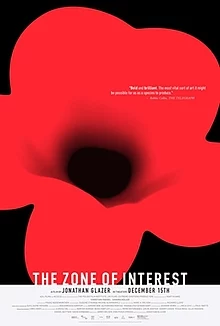
The Zone of Interest-2023

The Zone of Interest-2023

Director Jonathan Glazer

Starring Christian Friedel, Sandra Hüller

Scott’s Review #1,419

Reviewed February 2, 2024

Grade: A

The Zone of Interest (2023) offers a unique experience for its audience. It’s one of a distant observer to unthinkable horrors and events that took place during the 1940s occupied Poland.

A lovely estate rife with flourishing flowers and plush gardens surrounds the haunting setting of the Auschwitz concentration camp.

Exterminations and unspeakable acts of human suffering occur daily whilst a German family enjoys their dream home hardly unnerved by what’s going on steps away.

The father is the mastermind behind the suffering.

The macabre film is extraordinary, and powerful, and will haunt you long after it ends.

The subject matter of the Holocaust in cinema is usually told with a visual examination of the victims. In The Zone of Interest, though, what you don’t see is worse than what you do.

The commandant of Auschwitz, Rudolf Höss (Christian Friedel), and his wife Hedwig (Sandra Hüller) live a seemingly idyllic life with their five children. They fish, swim, and frolic among the confines of their house and garden next to the camp.

Höss is a high-ranking and respected member of the Third Reich. Servants handle chores around the house, while the prisoners’ belongings are given to the family.

As a viewer, I first thought to myself what a happy family they seem to be. I was quickly sickened when I realized what was going on over the top of their high walls and their role in it.

Director, Jonathan Glazer, brought us disturbing films such as Birth (2004) and Under the Skin (2015) and revolts even more with The Zone of Interest. I’m not sure I’ve ever seen a film quite like it.

Usually, what happens in a film happens on screen. Seeing the Jews gassed or shot or tortured is horrific enough. Spielberg’s Schindler’s List (1993) was a masterpiece by visually featuring the nature of the Holocaust in an inventive black-and-white way.

We see the victims.

In The Zone of Interest, it’s the sound that is effective. Beyond the garden wall, gunshots, shouting, and sounds of trains and furnaces are constantly heard.

The nights are even worse.

A quick glimpse of flames and smoke roaring to the sky are the visuals key to the events taking place next door.

We only very quickly see a parade of prisoners march through the grass……once.

Höss approves the design of a new crematorium, which soon becomes operational. With horror, it is confirmed that thousands of Jews are gassed and burned.

Glazer keeps the viewer at a distance with more than just experiencing the unseen. The cameras are set far back from events so the audience observes the family instead of being alongside.

There are no closeups.

The lighting is superior. Muted tones portray the starkness of the period. Effective is how everything appears grey except the flowers in the garden.

Some peculiarities exist that are hard to figure out. In two sequences, a Polish girl who lives nearby sneaks out every night, hiding food at the prisoners’ work sites for them to find and eat.

The film is a clay animation style similar to what Glazer used in parts of Under the Skin. It’s weird, stylistic, and fascinating.

Late in the film, Höss descends a staircase and retches. He does so again. I’m not sure why he does. Is he subconsciously sickened by the death he causes? He has been tasked with a new initiative to transport hundreds of thousands of Hungarian Jews to Auschwitz to be killed.

The mission has been named after him.

Is it too much for him to deal with?

The film ends with a modern scene of a group of janitors cleaning the Auschwitz-Birkenau State Museum before it opens.

I was dying to know what happened to Höss and Hedwig.

It’s a searing film, unforgettable and uncomfortable. It plods and sickens but is pure art. It’s troublesome and a unique entry for Holocaust films. Glazer finds a new way to examine material told in cinema for decades.

The Zone of Interest (2023) is a painful masterpiece and a thinking man’s film.

Oscar Nominations: 2 wins-Best Picture, Best Director-Jonathan Glazer, Best Adapted Screenplay, Best International Feature Film (won), Best Sound (won)

Independent Spirit Award Nominations: Best International Film