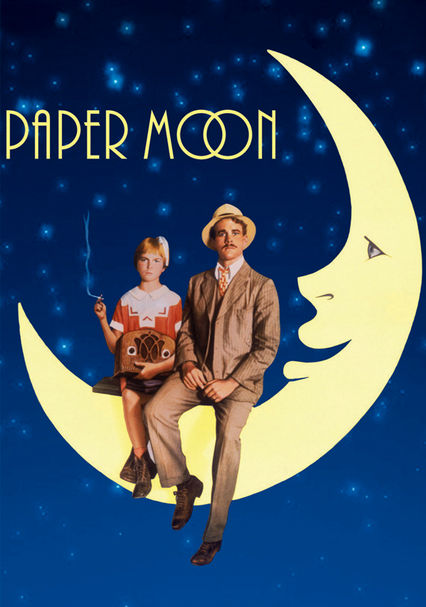
Paper Moon-1973

Paper Moon-1973

Director Peter Bogdanovich

Starring Ryan O’Neal, Tatum O’Neal, Madeline Kahn

Scott’s Review #1,352
Reviewed March 23, 2023

Grade: A-

Peter Bogdanovich’s follow-up to the 1971 brilliance of The Last Picture Show is a film called Paper Moon (1973), named after a song introduced during the opening sequence.

While similar in texture and tone to the former, the latter takes much more time to become absorbed in. But the payoff finally arrives. There are also hints of comedy in Paper Moon, which The Last Picture Show had virtually none of, but they are companion pieces for sure.

The cinematography could even be classified as a carbon copy, and the isolated Midwest (this time, Kansas and Missouri rather than Texas) is on full display, rather than a 1950s Korean War dilemma.

In Paper Moon, the time is the 1930s Depression Era United States, when everyone and their brother was looking for a way to survive.

To make things interesting, real-life father and daughter star together. Ryan O’Neal and Tatum O’Neal are a remarkable dynamic duo, and the connection is evident.

They portray slick con artists Moses Pray (Ryan) and Addie Loggins (Tatum), who play off each other in a relaxed, easy manner.

When “Moze” is unexpectedly saddled with getting the nine-year-old Addie to relatives in Missouri after her mother’s death, his attempt to dupe her out of her money backfires, and he’s forced to take her on as a partner.

Swindling their way through farm country, the pair is nearly done in by a burlesque dancer (Madeline Kahn) and an angry bootlegger (John Hillerman).

Knowing that years later, Ryan would unwittingly proposition his daughter at a funeral, unaware of who she was, is both comical and sad.

But, I digress.

The chemistry makes Paper Moon work, though Bogdanovich’s direction is second to none in creating the proper mood, as he did so well two years earlier. The muddy, crusty atmosphere is palpable with miles and miles of desolate land on full display for the viewer.

Everything looks dirty, dusty, and depressing, which is to the film’s credit.

The small characters are a winning formula as they hope against hope that the scheme Moze is selling (a first-rate Holy Bible inscribed to them by their recently deceased loved one) could be true, and it is heartbreaking.

I’d give the first half a B or a B+, but the second half earns a solid A. The events start slowly and are a bit tough to get into from a storyline perspective.

I wasn’t so enamored of Madeline Khan’s character, though the actress is one of the film’s strongest aspects. Moze is hot and heavy for Miss Trixie Delight, but besides being busty, she has little else to offer.

She doesn’t treat her downtrodden teenage maid, Imogene (P.J. Johnson), very well and makes a spectacle of herself wherever she goes.

Satisfyingly, Addie and Imogene make quick work of her when they conspire to have Moze catch Trixie in bed with a hotel clerk. Khan is a hoot, but Trixie is mediocre.

When events get back to the Moze and Addie story, it’s off to the races. An enthralling final sequence occurs when the pair uncovers a bootlegger’s store full of whiskey, steals some of it, and sells it back to the bootlegger.

Unfortunately, the bootlegger’s twin brother is the local sheriff, and he quickly arrests Addie and Moze. The climax is on par with 1967’s Bonnie and Clyde without the killings- instead, the pair are on the run and foraging for an uncertain future.

The characters may not have the best morals, but they are survivors, and that makes them appealing. I’d venture to say Tatum O’Neal is the standout, though Ryan’s good looks are hard to ignore.

Paper Moon (1973) starts slow but becomes infectious during the final thirty minutes or so.

Oscar Nominations: 1 win-Best Supporting Actress-Madeline Kahn, Tatum O’Neil (won), Best Screenplay-Based on Material from Another Medium, Best Sound
All Quiet on the Western Front-2022

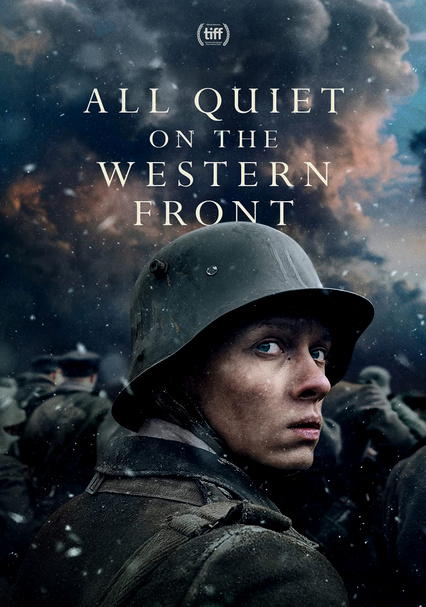
All Quiet on the Western Front-2022

Director Edward Berger

Starring Felix Kammerer

Scott’s Review #1,350

Reviewed March 10, 2023

Grade: A

With the escalating situation in vulnerable Ukraine, with Russia’s dictator invading the neighboring country, the timing for the release of All Quiet on the Western Front (2022) couldn’t be more perfect.

The clear anti-war message that the film presents remains nearly as powerful as when it was first made in 1930, but the original version wins out by a sliver.

The human destruction, loss of life, and futility of battle still resonate nearly one hundred years later with a very different rendition.

In both a timely and timeless way, the film reminds its audience of the horrors of war through countless battlefield scenes that devastate and scar the main character.

As I asked in my original review, have we learned nothing at all?

The time is 1918, amid World War I. Furious patriotism prompts seventeen-year-old Paul (Felix Kammerer) to enlist in the German Army. He and his peers are duped into believing they will receive a hero welcome and fulfill their duty to the country.

Their perception is shattered as they are sent to the muddy trenches and stinking foxholes, where they receive little food, water, or training.

They quickly learn about the horrors of war.

While keeping the terrible message close to my heart during my viewing of the film, I was nonetheless constantly comparing the 2022 version to the 1930 version, directed by Lewis Milestone.

Especially intriguing is how a film can be remade so well after many decades have passed

The remake significantly alters the final scene, with mixed results. The powerful ‘butterfly scene’ in which Paul reaches for the gorgeous creature from a bloody foxhole is eliminated.

Instead, a scene nearly equivalent is presented involving Paul’s fate. It’s more drawn out but resonates nonetheless.

Both are exceptional endings, but I’ll forever remember Milestones, and neither is a happy one.

Also missed are Paul’s furlough and subsequent visit to his small hometown. Instead of being embraced, he is ridiculed and called a coward for questioning the war.

This is a precursor to the sheep-like support of Adolf Hitler by the German people several years later.

However, the remake introduces a powerful musical score featuring a loud and bombastic drumbeat. Its eeriness and unexpected appearances are foreboding and tragic, assuring that death is right around the corner.

The cinematography is more modern and slickly created, which is beautiful to witness, especially in the wintry France sequences. The snow-coated farmland and cloudy skies perfectly encompass the mood of the film.

Enough praise for Kammerer, an Austrian actor. His clean-cut appearance quickly turns waif-like as he is traumatized by one death after another. His piercing blue eyes offer a mesmerizing depth, conveying a profound pain.

He should have received an Oscar nomination for Best Actor.

The battle scenes are not softcore, and nor should they be. A heaping amount of bodies are bludgeoned, run over by tanks, self-mutilated, or otherwise torn apart. This reinforces the destruction that war has on lives, especially the young ones.

But the best scenes occur when Paul forms a bond with another soldier. His best friend, Kat, played by Albrecht Schuch, has nothing in common with him in ‘real life’. Coming from different backgrounds, they would normally not cross paths, and yet they became close.

A tender moment occurs when Paul and a French soldier engage in a physical altercation, only to see each other as human beings, and a level of kindness emerges. They wonder why they are intent on killing each other.

Just as its predecessor does, All Quiet on the Western Front (2022) successfully portrays the ravages of war while also highlighting examples of friendship and humanity.

Sadistic and brutal, the film presents the case for a world that is anti-war and wins out in spades. It’s more terrifying than any horror film because of its reality.

In the end, the staggering numbers of human casualties are listed with somber and quiet end credits.

Oscar Nominations: 4 wins-Best Picture, Best Adapted Screenplay, Best Cinematography (won), Best Production Design (won), Best Original Score (won), Best Sound, Best Makeup and Hairstyling, Best Visual Effects, Best International Feature Film (won)

The Banshees of Inisherin-2022

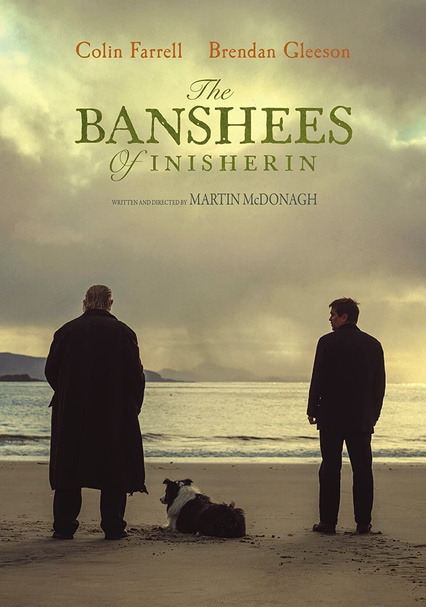
The Banshees of Inisherin-2022

Director Martin McDonagh

Starring Colin Farrell, Brendan Gleeson, Kerry Condon

Scott’s Review #1,348

Reviewed March 2, 2023

Grade: A

Martin McDonagh, who directed The Banshees of Inisherin (2022), is known for films such as In Bruges (2008) and Three Billboards Outside Ebbing, Missouri (2017).

His films typically feature dark humor stories about humanity and unpleasantness, and require some reflection to consider the characters’ true nature.

This film stars Colin Farrell and Brendan Gleeson, who reunite after their collaboration in In Bruges for another turn playing men dealing with depression, loneliness, and the complexities of friendship.

McDonagh is British/Irish, so the period and surroundings likely resonate well with him. The gorgeous islands off the coast of Ireland are integral to the story and serve as a counterbalance to the troubles and tribulations of the characters.

Pádraic (Farrell) and Colm (Gleeson), are lifelong friends and inhabitants of an island off of mainland Ireland. They find themselves embroiled in a feud after Colm one day announces he is ending their friendship.

This confuses Pádraic, who vows to mend the relationship at all costs.

Their reunion is thwarted by severed fingers, a fire, and the mysterious death of Pádraic’s beloved pet donkey, Jenny.

Mixed into the events are Pádraic’s sister, Siobhán (Kerry Condon), and the troubled young islander, Dominic (Barry Keoghan), who have their own problems to face.

The Banshees of Inisherin is a slow-paced and cerebral film, and many questions will be pondered but left unanswered. This will likely disappoint viewers who prefer a clear conclusion to the characters’ lives.

However, this is a key part of the film’s beauty. I might have liked a big, no-holds-barred argument scene between Pádraic and Colm, or more closure in Dominic’s or Siobhán’s stories. Instead, McDonagh challenges the audience to feel perplexed or unsure and use their interpretations.

For example, I wonder if Dominic was being sexually abused by his policeman father, who has a penchant for sitting naked in the living room chair and masturbating.

Or, what does Siobhán leave the island for, and will she ever return?

On a separate note, I wonder if McDonagh was influenced by the epic 1970 gem Ryan’s Daughter, directed by David Lean. The flowing Irish landscapes and unpleasant, embittered townspeople have key similarities.

The winning formula is ambiguity. The audience is treated to terrific acting all around, particularly among the four principals (Farrell, Gleeson, Condon, and Keoghan), all of whom were awarded Academy Award nominations.

Each provides subdued performances dripping with contained emotion and complexities buried beneath the surface.

Audiences can draw their conclusions, but my takeaways were loneliness, longing for new adventures, depression, and begrudgingly accepting a meager existence amid the most lavish countryside one can find.

The 1920s Irish Civil War serves as the backdrop, although those events are not central to the plot.

Since Colm’s desire to create music is a central part of the story, the accompanying music is crucial to the film. The use of fiddles is incorporated rather than traditional Irish music, except in the sprinkling of pub scenes.

A hearty round of applause is due to McDonagh and company for crafting and performing a thinking man’s film. The comic bits are not syrupy but tragic in their honesty and cadence.

The Banshees of Inisherin (2022) separates cinematic thinkers from passive viewers with a quiet story about the friendship between two men and the layers that exist beneath the surface.

Oscar Nominations: Best Picture, Best Director-Martin McDonagh, Best Actor-Colin Farrell, Best Supporting Actor-Brendan Gleeson, Barry Keoghan, Best Supporting Actress-Kerry Condon, Best Original Screenplay, Best Film Editing, Best Original Score