Kiss of the Spider Woman-1985

Kiss of the Spider Woman-1985

Director Hector Babenco

Starring William Hurt, Raul Julia

Scott’s Review #187
60010547

Reviewed October 24, 2014

Grade: B+

1985 was not the best year for film, nor was much of the 1980s, as I think about it, but there are unique standouts, and Kiss of the Spider Woman is an unusual and artistic film.

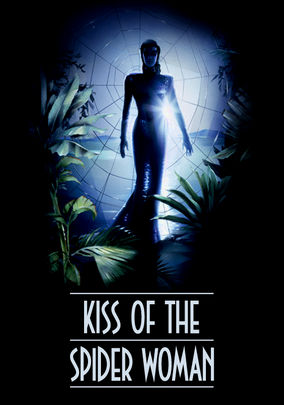
Set in present-day South America (Brazil), two men are imprisoned for very different reasons and are cellmates in the prison where they are captives.

Complete opposites, they form an unlikely bond centered on friendship but also skirting toward romance, flirtation, and, at times, love.

Luis Molina is outwardly homosexual and extremely flamboyant and perhaps out of touch with reality as he fantasizes and describes romantic Nazi films.

He is imprisoned not only for being homosexual but also for having sex with an underage male.

The other man, Valentin Arregui, is a liberal political activist who has been beaten, tortured, and interrogated due to his revolutionary-leaning politics. He has a rough, macho edge.

On the surface, the two men have nothing in common, but due to their proximity, they forge a close bond and mutual respect as their pre-imprisonment lives are explained to each other and to the audience.

The true strength of this film is the performance, very against type, of William Hurt- the best performance of his career by a mile. He completely embodies Luis’s character in his effeminacy, yearning, pain, and obsession with escaping reality through film.

Raul Julia has the same effect, though in a completely different way, in his portrayal of Valentin.

Luis tenderly comforts Valentin, who is being poisoned by prison officials, by incorporating his stories of films into Valentin’s real life, as he yearns for his separated lover, Marta.

As Luis begins falling in love with Valentin, and one seems to be double-crossed by the other, this leads to a test of courage and dedication to each other.

The ending of the film is a sad one, dark, yet thought-provoking, and shows love, tenderness, and bravery.

My only negative about Kiss of the Spider Woman (1985) is that, at times, with the flashback structure or through Luis’s narration, it is tough to follow and figure out exactly what is going on in the story. Still, the performances of Hurt and Julia, and the chemistry between them, are the film’s major strengths.

Oscar Nominations: 1 win-Best Picture, Best Director-Hector Babenco, Best Actor-William Hurt (won), Best Screenplay Based on Material from Another Medium

Independent Spirit Award Nominations: 1 win-Best International Film (won)

Annabelle-2014

Annabelle-2014

Director John R. Leonetti

Starring Annabelle Wallis

Scott’s Review #186

80013775

Reviewed October 17, 2014 

Grade: B+

Annabelle (2014) is a classic, edge-of-your-seat, ghost story that is effective in its creepiness and element of surprise.

Set in California circa 1969, John (Ward Horton) and Mia Gordon (Annabelle Wallis) are an all-American happy young couple.

He is a Doctor and she is beautiful and pregnant with their first child. They attend church each Sunday, are friendly with the neighbors, and have a strong sense of community.

As a surprise, John bestows a life-sized doll on Mia as a present and addition to her existing collection of interesting dolls. Soon strange events begin to occur: a home invasion, a fire, a bizarre experience in an elevator, and creepy drawings by the neighbor’s children.

The film eventually dives into murkier territory when a strange, religious woman, played by Alfre Woodard, is introduced, and the film then shifts focus to spirits, taking one’s soul, and the occult.

What sets Annabelle apart from similar horror contemporaries is the power of suspense. We as the audience know something bad will happen, but we don’t know when.

Unlike many horror films that slice and dice for shock value, Annabelle does not. Rather, foreshadowing and anticipation are common within the film, making the eventual jumps scarier!

Mia’s constant use of an electric sewing machine and Mia’s attentive watching news coverage of the Manson murders are clues as to what will come next.

A scene set in the middle of the night as a home invasion takes place next door is shot exceptionally well, like Alfred Hitchcock’s Rear Window (1955), with no dialogue. What the audience sees inside the house from across the yard as violence occurs- is frightening.

Within the same scene we know the home invasion will gravitate to Gordon’s house, but when will it strike?

Another effective scene shows a seemingly innocent little girl running towards another character in a separate bedroom but turns into a maniacal fiend and the foot thudding makes this terrifying.

I found myself genuinely scared during a few scenes!

Wisely choosing to avoid the all too frequent CGI effects, Annabelle instead goes the traditional route with genuine scares harvested from the unknown and the feeling of anticipation and dread of events to come.

The fantastic musical score composed by Joseph Bishara adds to the anticipation. Annabelle is a prequel to the equally scary The Conjuring (2013). The very first scene is, in fact, the same scene from that film where two nurses explain how they obtained the doll, named Annabelle, and cannot get away from her.

The final act delves into the spiritual world of evil- a soul (presumably Mia’s or her babies) must be sacrificed to relinquish the curse put upon her by Annabelle’s original owner.

A surprising figure aids in the conclusion of this film. Annabelle (2014) is an old-school horror film done very well.

Contracted-2013

Contracted-2013

Director Eric England

Starring Najarra Townsend

Scott’s Review #184

70296585

Reviewed October 12, 2014

Grade: B-

It seems that many reviewers of Contracted (2013) are looking for a deeper meaning to the film or debating whether a particular scene was a rape or a consensual sexual act.

I looked for neither and just took the 2013 independent horror film at face value. I do not view the film as particularly worth over-analyzing or delving too much beneath the surface.

The plot is rather basic. Samantha is a young woman on the outs with her girlfriend Nikki. She goes to a party where her friend Alice gets her drunk and Samantha winds up talking to a handsome stranger named BJ.

Samantha agrees to have sex with him in his car, but at one point begs him to stop. It is unclear what transpires.

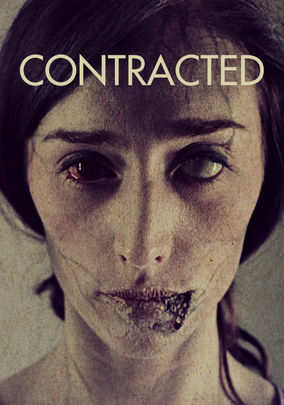
The next morning Samantha wakes up feeling strange- she assumes she is hung-over, but gradually her hair, teeth, and fingernails begin to fall out and her eyes are hideously bloodshot.

Her symptoms slowly worsen as she transforms into a strange monster.

In the mix are supporting characters, Riley, who is in love with Samantha even though she is a lesbian and rebuffs all of his advances, and Samantha’s Mom, who is convinced that Samantha is using drugs again (which she is).

I did not find the film to be a metaphor for punishing women or lesbians for a one-night stand- I viewed it as a fun, Saturday late-night, horror flick.

If I were to dissect the film critically, the premise is rather absurd- a young woman turning into a zombie/monster after having sexual relations with a stranger.

Silly, but I am not expecting highbrow art from this type of film. The acting- especially of the actress portraying Samantha is below average at best- and horrid at worst.

The three central female characters (Samantha, Nikki, and Alice) are presumably all lesbians or bisexual, especially, Nikki, is irritated when a man dares to hit on her as if they should magically already know she is a lesbian.

The character of Nikki is very unlikeable- she seldom returns Samantha’s phone calls and continually pushes her away.

I did not buy any of the three as lesbians- not to be stereotypical, but they each had feminine only, qualities.

The way Samantha’s mother kept insisting that Samantha was on drugs became irritating by the fifth time she brought it up. Why did Riley pursue Samantha ad-nauseam when he was aware that she was a lesbian? What is BJ’s motivation for presumably giving Samantha a drug? She was already drunk enough to have sex with him- why did he want to turn her into a monster?

This plot point is unclear.

The film is not character-driven, is strictly plot-driven, and like most horror films, is meant to be that way. The finale of the film is quite satisfying as Samantha’s fate, along with her mother’s, is left up in the air.

The same cannot be said for Nikki or Alice as both receive their just desserts.

Contracted (2013) is not a masterpiece, but is a fun little horror film to be enjoyed. Just don’t ask too many questions.

Gone Girl-2014

Gone Girl-2014

Director David Fincher

Starring Ben Affleck, Rosamund Pike

Scott’s Review #181

70305893

Reviewed October 6, 2014

Grade: A-

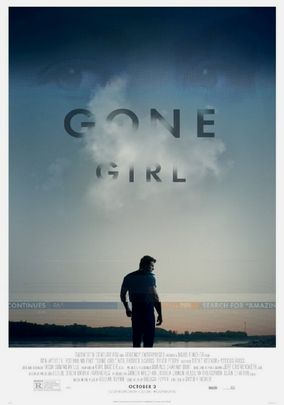
Gone Girl (2014), directed by dark yet mainstream filmmaker David Fincher, offers a simple premise. An affluent woman disappears without warning and a loved one is suspected of the crime.

This type of story has been done many times before in film- think Prisoners from 2013 to cite a very recent example, but what makes Gone Girl unique is its storytelling, pacing, and twists and turns aplenty.

The film is based on the best-selling novel, written by popular novelist Gillian Flynn, who also wrote the screenplay.

Ben Affleck plays Nick Dunne, a man in his 30’s, whose wife Amy, magnificently played by Rosamund Pike, mysteriously disappears, causing a media frenzy.

After clues are revealed, Nick is thought to be a sociopath and responsible for Amy’s disappearance. Nick and Amy have the perfect marriage….or so it appears. Until fairly recently Nick and Amy have lived an idyllic, well-to-do lifestyle in New York City.

Amy’s family is wealthy and writes as successful children’s authors.

Following the recession of 2010 causing both Nick and Amy to lose their jobs and all of their money, combined with Nick’s parent’s health problems, they wind up in a state of peril, and their marriage is severely tested.

They are forced to move to a small town in Missouri where Nick grew up and their lifestyle completely changes.

These facts are naturally revealed as the film progresses, via flashbacks, mostly told from Amy’s perspective, as she chronicles events by writing in her diary.

The story is so smart and layered that the audience continually asks questions throughout the film. Is Amy dead? Did she fake her death? Is Nick involved or innocent? Could Amy’s parents be involved in her disappearance? Can we trust Nick’s sister Margo? What involvement does Amy’s wealthy college sweetheart Desi Collings (Neil Patrick Harris) have?

As more of the plot is revealed new questions are asked.

Intelligently written, with twists and turns galore, after a slow start, the film is a thrill ride. The slow start is necessary to lay the groundwork of the film and it wisely keeps the audience guessing throughout.

The film seems to be a puzzle (literally and figuratively) as each layer is unraveled leading to further questions and new theories.

The film’s score is composed by Trent Reznor (Nine Inch Nails), which adds a dark, techno-gloomy feel, which increases the mood wonderfully.

The acting in Gone Girl is exceptional. Affleck is capable in the lead male role, though I did not find the part as meaty as one might think. Affleck is handsome and charismatic, though unlikeable too, and I think that is all the part requires.

The standout and breakout performance belongs to Rosamund Pike. After years of struggling in support film roles as someone’s wife or friend, Pike finally has a complex role that allows her to sink her teeth in.

Pike displays almost every emotion- kindness, anger, rage, deception, humor.

The character of Amy is nuanced and resourceful and more than one movie-goers mouth dropped open at her actions in a couple of scenes- think wine bottle and hammer for reference.

Neil Patrick Harris is dynamic in the role of Desi and brings a healthy dose of creepiness mixed with child-like sweetness.

Gone Girl features one of the most shocking scenes involving a bedroom, a box-cutter, and lots of blood.

Fincher’s setting of North Carthage, Missouri is interesting. Hardly the intelligentsia of Manhattan that Nick and Amy are accustomed to, the perfect mix of homespun kindness turned to a lynch mob of the townspeople is effectively portrayed.

The sweet neighbors, happily offering casseroles and hugs to Nick one minute, suddenly turn into sharks when detail is revealed.

The media is, almost ironically, portrayed as menacing and ready to pounce. Female reporters are played by Sela Ward and deliciously and comically played by Missi Pyle.

More than a handful of female characters are written as borderline man-hating and eager to either castrate, figuratively speaking, or bed (or both!), Nick Dunne.

Gone Girl contains a few plot holes. How could there be no recorded tapes of the goings-on at Desi’s lake house? The entire plot is so far-fetched when one decides to ponder it.

Gone Girl (2014) is a mainstream yet dark Hollywood thrill ride with a theme of dishonesty, and a film exceptionally well-written and layered.

Oscar Nominations: Best Actress-Rosamund Pike

The Skeleton Twins-2014

The Skeleton Twins-2014

Director Craig Johnson

Starring Bill Hader, Kristen Wiig

Scott’s Review #179

70299272

Reviewed October 2, 2014

Grade: A-

The Skeleton Twins (2014) is a tremendous, character-driven, family drama that focuses on character development rather than standard plot devices.

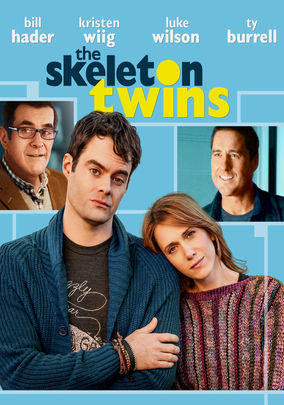
The film stars Bill Hader and Kristen Wiig from Saturday Night Live, but do not be fooled based on the actors involved that The Skeleton Twins is a light comedy- it is not.

There are laugh-out-loud scenes throughout, but this is a serious story about depression, suicide, and anger, and at times, very dark.

Wiig plays Maggie, a woman in her thirties who seemingly has it all. Lance, her handsome, loyal husband, played by Luke Wilson, adores her. She has a stable job as a dental hygienist and lives a quiet, quaint life in upstate New York- seemingly enjoying a happy middle-class existence.

Hader plays Milo, Maggie’s estranged twin brother, who lives in Los Angeles and is a struggling actor with no agent, reduced to waiting tables in a lousy restaurant. Presumably, just out of a relationship, Milo attempts suicide by slitting his wrists.

Maggie flies to Los Angeles to visit Milo in the hospital and invites him to recuperate with Maggie and Lance in New York.

Having grown up as best friends, they reconnect once Milo moves in.

The Skeleton Twins is so jam-packed with interesting stories, both current and back story, that it becomes effortless to fall in love with Maggie and Milo.

When the twins were aged fourteen, their father committed suicide by jumping off a bridge, a father they were very connected to.

Their mother, played by Joanna Gleason, was a horrible mother growing up and, in present times, is a hippie involved in an interracial marriage. She awkwardly visits Maggie and Milo and attempts to heal them through meditation.

Other character history is revealed.

Milo, who is gay, was molested by his teacher when he was fifteen years old, a teacher he is still in love with, and is wonderfully played against type by Ty Burrell.

Maggie has carried on affairs with various men throughout her marriage to Lance and is secretly using birth control pills to avoid becoming pregnant. Lance happily thinks they are trying to conceive.

The characters of Milo and Maggie are incredibly layered and well-written. They are both damaged from a difficult childhood, suffer from depression, and now only have each other.

Scenes in The Skeleton Twins range from hysterical- a scene in a dentist’s office involving laughing gas rolling on the floor funny and a lip-synching scene to the hit “Nothing’s Gonna Stop Us Now”, are both wonderful.

Dramatic and shocking scenes where Milo and Maggie go at each other with gusto, dredging up childhood wounds, are brilliantly acted by Wiig and Hader.

The chemistry between Wiig and Hader is incredible and both actors are very successful at playing hysterical comedy versus dark drama, which impressed me.

Luke Wilson is great in support as the straight-laced, nice guy married to Maggie.

A slight criticism- the character of Milo is written as stereotypically gay- man-hungry and hardly a man’s man. He has trouble clearing brush because presumably, he is too girly to handle the task.

I wish more films would steer away from these stereotypes.

Ty Burrell’s character of Rich is so complex that I wish he would have been explored a bit more- being gay how can things work with his girlfriend while harboring many secrets? Is he still in love with Milo despite repeatedly pushing him away? I would have loved more depth to this complex character.

After the film, I felt the filmmakers did not go as dark as they could have, and audiences will know what I mean following the final scene.

There is no fairy tale ending ether.

Milo and Maggie are damaged goods who only have each other making for a dynamic character-rich film.