Category Archives: Independent

Pink Flamingos-1972

Pink Flamingos-1972

Director John Waters

Starring Divine, David Lochary, Mink Stole

Top 250 Films #165

Scott’s Review #359

70032618

Reviewed January 9, 2016

Grade: A

One of the truest and best late-night gross-out films of all time, Pink Flamingos (1972) breaks down barriers I never thought possible in film and contains one of the most vomit-inducing scenes ever to grace the movies.

The film is certainly one of a kind and will only be appreciated by a certain type of film-goer. Pink Flamingos is raw, entertaining, and must be seen to be believed.

Outrageous in every way and shot in a documentary style, the film features weird close-ups and amateurish camera angles, only adding to the fun.

I love the film.

In what director John Waters famously dubbed the “Trash Trilogy”, along with similar films Desperate Living and Female Trouble, Pink Flamingos has the dubious honor of being the best of the three.

Waters’ stalwart, Divine, plays Babs Johnson, an underground criminal who lives a meager existence in a trailer with her mentally challenged son, Crackers, and her bizarre, egg-obsessed mother, Edie (Massey). Babs’s companion, Cotton, joins them.

In an attempt to win the “Filthiest Person Alive” contest and usurp Babs from achieving this distinction. The Marbles (Mink Stole and David Lochary) set out to destroy her career.

Pink Flamingos is complete and utter over-the-top fare, but I have fallen in love with the film over the years.

Let’s say it is a type of film that is an acquired taste, and one will eventually revel in the madness or be disgusted with its bad taste.

Waters, a truly creative person, breaks new ground in filth. On a budget of no more than $10,000, it is impressive how he pulled this off.

The antics that Babs and the Marbles engage in are downright crude, but the extreme nature of the fun is exactly what is to love about the film. Hysterical is the character of Babs’s mother, Edie.

Confined to a crib and constantly inquiring about the Egg Man, she is obsessed with eggs and wants to eat nothing else. She eventually marries the Egg Man. The character is entertaining beyond belief.

The Marbles run a clinic in which they sell stolen babies to lesbian couples for cash.  When they send Babs a box of human excrement and a card that says “fatso”, the war between the two sides is on.

The highlight of the film is the main sequence in which Babs holds a birthday party. A male contortionist flexes his anus in rhythm to the song “Surfin’ Bird”, which may be the only film featuring an anus.

How Waters got away with some of this stuff is mind-blowing.

The most disturbing scene occurs at the very end, when Babs watches a dog do “its business” on the street and then picks up the excrement and eats it, revealing to the audience a toothy (and brown) smile.

Reportedly, Divine did this act. As the film ends, Babs truly is “The Filthiest Person Alive”.

Thanks to the genius of John Waters and Divine, and the superlative supporting cast, Pink Flamingos (1972) is a reminder that creativity and unique humor need not conform to a specific style or follow a road map.

Waters throws out any film criteria, instead creating a masterpiece of warped fun and disgust.

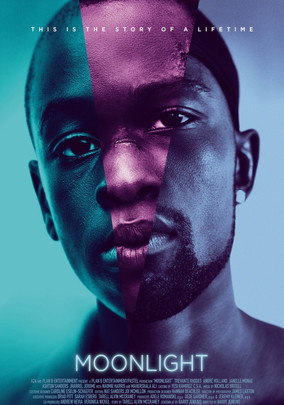
Moonlight-2016

Moonlight-2016

Director Barry Jenkins

Starring Trevante Rhodes, Andre Holland

Top 250 Films #167

Scott’s Review #512

80121348

Reviewed November 6, 2016

Grade: A

Moonlight (2016) is an excellent film rich in character and grit. It tells the story of one man’s life, from childhood to teenage years to adulthood, sharing the bonds he forms and the demons he wrestles with.

The acting is fantastic, and the story is poignant and truthful.

The film is not preachy but instead tells a story, leaving the audience to sit and observe, quietly formulating their opinions.

Moonlight is a mixture of beauty and heartbreak and is told very well.

The film is divided into three chronological chapters that describe the central character’s life.

Chiron is a shy, docile young boy of six or seven living in the drug-filled world of Miami, Florida, in the 1980s. He is bullied for being “different,” though he does not know why he is shunned. Chiron is introverted and distrustful.

A kind-hearted drug dealer named Juan (Mahersala Ali) takes a shine to Chiron, whose own mother becomes more and more absent and emotionally abusive to her son.

Naomie Harris plays Paula, mother to Chiron and herself a drug addict. Juan and his girlfriend Theresa (Janelle Monae) become surrogate parents to Chiron and share their home with him as needed.

Chapter two focuses on Chiron as a teenager, still bullied and coming to terms with his sexuality and feelings of insecurity. By this time, his mother has spiraled out of control, and his life is a sad one.

He is filled with emotions such as rage, despair, and confusion. An experience with his best friend, Kevin, changes the direction of his life. Kevin is his saving grace and a decent person amidst his troubled life.

In chapter three, we are re-introduced to Chiron as an adult, having wholly reinvented himself and become a changed man, but is he changed for better or worse? People from his past resurface at this time, and Chiron must face various demons and emotions and come to terms with himself and the others surrounding him.

Does his story have a sad or a happy ending? This is the question we are left wondering.

The aspect that impressed me the most is the storytelling and the ground broken with this film.

From an LGBTQ+ perspective, by this time (2016), we have experienced numerous offerings on the subject. Still, the fact that Moonlight is not only a character study but a love story between two black men has not yet been done to this degree in cinema, or arguably at all, especially in mainstream fare.

Happily, Moonlight is receiving critical praise. The fact that Chiron lives in a macho, male-driven society makes his self-acceptance all the more challenging for him.

The direction in Moonlight is impressive, and director Barry Jenkins deserves much praise.

Quiet scenes of Chiron as a boy asking Juan and Theresa why the bullies call him a specific name are heartbreaking. Another scene muted and in slow motion, reveals an abusive Paula calling Chiron a degrading name, leaving him confused and hurt.

The tender scenes between Chiron and Kevin are sweet and passionate and are told on a humanistic level.

Moonlight delves into such territory as loneliness and self-identity. It is an interesting film for anyone who has struggled with these issues or is empathetic to those who have.

Moonlight (2016) breaks stereotypes and molds a subtle and low-key film that speaks volumes.

Oscar Nominations: 3 wins-Best Picture (won), Best Director-Barry Jenkins, Best Supporting Actor-Mahershala Ali (won), Best Supporting Actress-Naomie Harris, Best Adapted Screenplay (won), Best Original Score, Best Cinematography, Best Film Editing

Independent Spirit Award Nominations: 6 wins-Best Feature (won), Best Director-Barry Jenkins (won), Best Screenplay (won), Best Cinematography (won), Best Editing (won), Robert Altman Award (won)
Female Trouble-1974

Female Trouble-1974

Director John Waters

Starring Divine, David Lochary, Mary Vivian Pearce

Top 250 Films #168

Scott’s Review #146

70032612

Reviewed August 4, 2014

Grade: A

Female Trouble (1974) is a deliciously naughty treat by the famous Independent film legend, John Waters.

Not exactly family-friendly, it is a gem for those desiring more left-of-center fare with depravity and gross-out fun mixed in for good measure.

The film’s theme is “crime is beauty,” and it is dedicated to Manson family member Charles “Tex” Watson.

Meant for adult, late-night viewing, the film tells the story of female delinquent Dawn Davenport, who angrily leaves home one Christmas morning after not receiving her desired cha-cha heels as a Christmas present.

Her parents, religious freaks, disown her, and she is left to fend for herself on the streets of Baltimore.

The film then tells of her life story of giving birth and subsequently falling into a life of crime in the 1960s.  Her friends Chicklet and Concetta are in tow as they work various jobs and embark on a career of theft.

Female Trouble stars Waters’ regulars Divine, Mink Stole, Edith Massey, Cookie Mueller, and others.

Interestingly, Divine plays a dual role- Dawn Davenport (in drag, of course) and also the father of her bratty child, Earl Peterson.

Dawn and Earl have a less-than-romantic interlude on a dirty mattress on the side of the road when he picks her up hitchhiking, which results in the birth of Taffy.

Also featured is the hilarious feud between Dawn and her love interest’s (Gator) Aunt Ida, as the women engage in tactics such as acid throwing and chopping off of limbs as they constantly exact revenge on each other.

Favorite scenes include Dawn’s maniacal nightclub act, in which she performs an acrobatic routine and then begins firing a gun into the crowd. Another is of Dawn’s dinner party with Donald and Donna Dasher- serving a meal consisting of spaghetti and chips, Taffy’s tirade hilariously ruins the evening.

This film is not for the prudish, squeamish, or uptight crowd, but a ball for all open-minded, dirty fun-seekers. The film contains one over-the-top, hilarious scene after another.

The line “just cuz you got them big udders don’t make you somethin’ special” is a Waters classic.

Female Trouble is one of a series of outrageous cult classics featuring the legendary camp star Divine.

Not meant to be overanalyzed, or some might say, analyzed at all, Female Trouble (1974) is unabashedly trashy and makes no apologies for its outrageousness.

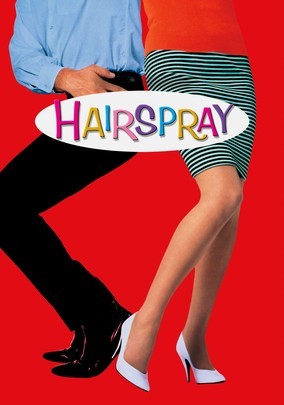
Hairspray-1988

Hairspray-1988

Director John Waters

Starring Ricki Lake, Divine

Top 250 Films #170

Scott’s Review #130

60025089

Reviewed July 23, 2014

Grade: B+

Hairspray (1988) is one of director John Water’s later and much more mainstream comedies.

Influencing the Broadway musical of the same name that was created years later and inspiring a successful remake in 2007, the film is a wonderful watch one late at night accompanied by spirits.

It is fun, fun, fun.

The film tells the story of a cute, yet insecure, overweight teenager named Tracy Turnblad, wonderfully portrayed by Rikki Lake. Tracy lives in Baltimore in the racially conflicted 1960s, and she battles to appear on a local talent show.

With Waters directing, one might expect comedic raunchiness, but Hairspray is quite tame. It is the only Waters film to be rated PG, the others are rated X.

Not to be outdone, however, Hairspray does contain its share of light naughtiness.

The film itself, while campy and over the top, is important since it does its best to break down racial barriers, including interracial relationships, and sends an important message.

Tracy and her best friend Penny Pingleton judge people for who they are, not on race, income, or anything else.

Those characters in Hairspray who are written as racist or less than welcoming to interracial cohabitation (again the film is set in the early 1960s) look like buffoons and not with the progressive social times.

The supporting cast is high caliber- Divine and Jerry Stiller are perfectly cast as Tracy’s open-minded yet cautious and concerned parents.

Famous musicians appear in cameos- most notable are Debbie Harry, Ric Ocasek, and Sonny Bono in small but zesty roles.

The musical dance numbers are plentiful and perfectly fit the time of the film.

Hairspray (1988) is entertaining, relevant, and free with a powerful message mixed in with the entertainment.

Independent Spirit Award Nominations: Best Feature, Best Director-John Waters, Best Female Lead-Ricki Lake, Best Supporting Male-Divine, Best Supporting Female-Debbie Harry, Best Screenplay

Boys Don’t Cry-1999

Boys Don’t Cry-1999

Director Kimberly Peirce

Starring Hilary Swank, Chloe Sevigny

Top 250 Films #177

Top 10 Most Disturbing Films #10

Scott’s Review #340

27422770

Reviewed January 9, 2016

Grade: A

Boys Don’t Cry (1999) is a fitting tribute to real-life figure Brandon Teena, a transgender man from Nebraska, who adopts a male identity and attempts to find love with Lana, played by Chloe Sevigny. Brandon is played by Hilary Swank.

Sadly, Brandon was brutally raped and murdered at the hands of some local men- a fact that the film does not gloss over.

Boys Don’t Cry is a heartbreaking and tragic film that will disturb some with its shocking and violent content- sadly it is a true story.

Swank deservedly walked away with the Best Actress Oscar statuette.

Set in working-class Nebraska and in the heartland, Brandon has the cards stacked against him from the start. Not exactly the most open-minded of areas, the film also sets a working-class environment for Brandon as most of his friends are poor factory or bar workers.

Born as Teena Brandon and female, Brandon (Swank) is a drifter and in trouble with the law for various unpaid tickets. He befriends ex-convicts John and Tom and becomes part of their crowd, falling in love with Lana- they are all unaware of Brandon being a female.

When Brandon’s secret is revealed, Lana is accepting and the pair decide to run away together, but Tom and John decide to murder Brandon.

Swank’s portrayal of Brandon is brilliant and believable and very few actresses could successfully pull this off. Swank has angular, androgynous features to begin with, but her drastic physical transformation is jaw-dropping.

Having closed-cropped hair and a male swagger, Swank immerses herself in the role, so much so, that as I watched the film I completely forgot that Brandon was not physically male.

Her physical transformation is not the sole reason for the fantastic performance though- Swank is emotionally there in the role and in a heartbreaking scene, after being beaten and raped, is treated poorly by a sheriff handling the accusations- just when Brandon could use an understanding ear.

What a cold world it can be for someone different from most others as Boys Don’t Cry reveals in a brutal, honest fashion.

Anyone who knows the true story of Brandon Teena knows he led a painful, tragic life, but was also filled with life and love- mainly for Lana.

Worth mentioning is Sevigny’s performance as Lana- in love with the person that was Brandon, not so much the gender. Sevigny portrays Lana as supportive, confused, and loving.

Director, Kimberly Peirce, became obsessed with the real-life case and does a fantastic job at tackling the film in a true, compelling way. To say nothing of the writing and the acting, Peirce also successfully uses a hand-held camera during Brandon’s strip scene and a surreal, muted light to portray the gloomy mid-west and the cold, hard lives that most of the characters lived.

Impressively, Peirce accomplished all of this on a shoe-string budget and took a wealth of inspiration from independent film legend John Cassavetes, who proved that gorgeous films can be made for very little money.

Many scenes take place in bars as Lana, a devoted karaoke singer, croons one tune after another, the highlight being Restless Heart’s 1988 country hit, “The Bluest Eyes In Texas”, which Lana sings in Brandon’s presence.

The use of somber songs gives the film a tragic soundtrack.

Famed film critic, Roger Ebert, described Boys Don’t Cry as “Romeo and Juliet set in a Nebraska trailer park”.

Boys Don’t Cry (1999) is an enormous victory in film for the LGBT community and, along with Brokeback Mountain (2006), is a perfect double-feature, as both are similar films, only one featuring males, the other females.

Both are tragic, bleak and all too real.

Oscar Nominations: 1 win-Best Actress-Hilary Swank (won), Best Supporting Actress-Chloe Sevigny

Independent Spirit Award Nominations: 2 wins-Best First Feature (Over $500,000), Best Female Lead-Hilary Swank (won), Best Supporting Female-Chloe Sevigny (won), Best First Screenplay, Producers Award

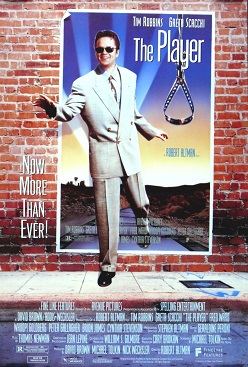
The Player-1992

The Player-1992

Director Robert Altman

Starring Tim Robbins, Peter Gallagher

Top 250 Films #181

Scott’s Review #601

Reviewed January 11, 2017

Grade: A

The Player (1992) ranks up there with other Robert Altman classics such as Gosford Park (2001), Nashville (1975), and Short Cuts (1993).

The film is an excellent piece of Hollywood satire and centers around a jaded movie executive, played by Tim Robbins, who does an incredible job with his role.

Robbins plays Griffin Mill, a man with no scruples. Feeling usurped by a younger executive, played by Peter Gallagher, as well as receiving death threats, he goes on the hunt for the person he feels responsible for, which leads to murder.

The audience is unsure whether to love or hate Mill, thanks to Robbin’s performance. He is snarky, but also vulnerable and a tad sympathetic.

The film contains a slew of real Hollywood celebrities (Cher, Malcolm McDowell, Bruce Willis) playing themselves and is largely improvised (as many of Altman’s films are).

Whoopi Goldberg and Lyle Lovett star as odd police detectives.

The plot is nothing that hasn’t been done before, but it’s the realness and the direction that make this movie a must-see, especially for Robert Altman fans.

The Player (1992) is a hidden gem.

Oscar Nominations: Best Director-Robert Altman, Best Screenplay Based on Material Previously Produced or Published, Best Film Editing

Independent Spirit Award Nominations: 1 win-Best Feature (won)

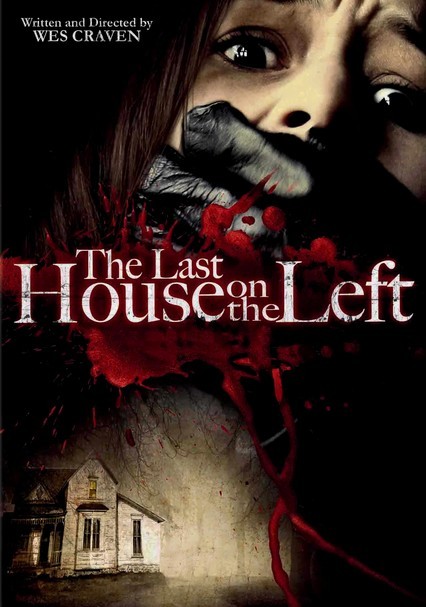
The Last House on the Left-1972

The Last House on the Left-1972

Director Wes Craven

Starring Sandra Peabody, Lucy Grantham, David Hess

Top 250 Films #218

Top 40 Horror Films #32

Scott’s Review #1,387

Reviewed August 6, 2023

Grade: A

Heavily influenced by Ingmar Bergman’s 1960 masterpiece The Virgin Spring, The Last House on the Left (1972) is essentially the same story.

The time is modern, the locale is switched from Sweden to New York, and the religious exploration is absent. But rest assured, both films are brutal and not for the faint of heart.

It’s not violence for violence’s sake, though, and a powerful revenge tale emerges amid unique camera styles and settings.

Wes Craven, who put the horror genre back on the map in 1996 with Scream, writes and directs the raw, independent The Last House on the Left.

He was accused of going too far in the film and exploiting pain and suffering, mostly by victimizing female characters, but the truth is, the situation can and has occurred in real life.

The film brings powerful realism to the terrifying actions of horrible people; if that’s too much for some, they shouldn’t watch it.

But lovers of experimental cinema should.

Craven’s genius is mixing sunny, cheery sequences, poppy music, and comic relief with uncomfortable scenes of rape and torture so well that the audience’s reaction is guttural and rage-infused. The dark scenes unfold on a sunny afternoon in the woods, set to upbeat music, making what would otherwise be a pleasant day feel unsettling.

Many horror sequences use darkness, thunderstorms, or other special effects to set the right mood, but Craven goes way off center.

Perky teenagers Mari (Sandra Peabody) and Phyllis (Lucy Grantham) head into New York City for a concert where they look for some marijuana. They stumble upon a foursome (three men and one woman) of escaped convicts who force them to endure a night of rape and torture.

The following day, the gang kills the girls in the woods, not realizing they’re near Mari’s house. When they pose as salesmen and are taken in by Mari’s mother (Eleanor Shaw) and father (Richard Towers), the parents quickly figure out their identities and plot revenge.

A side story involves two incompetent police officers who unsuccessfully try to pursue the escaped convicts.

I was immediately made aware of the very low-budget filmmaking, with muted, grainy visuals. The cinematography is what makes The Last House on the Left work so well. With high caliber and glossy texture, it would seem too polished.

The acting isn’t brilliant, and the overall look and feel is reminiscent of a John Waters film. Again, this only enhances the bare bones, late-night viewing experience.

There are warnings galore. The pain and suffering endured by Mari and Phyllis are hard to watch, and I felt their degradation in my bones. I won’t go into gory details, but it isn’t fun.

However, there is some satisfaction to be had. When Mari’s parents cleverly set traps inside their house for the murderers to fall into, there are cheer-out-loud moments of celebration for the audience.

One murderer even gets his penis bitten off.

Suspension of disbelief must be given to justify how this chain of events could occur. What are the chances the convicts would happen to bring the girls to Mari’s house in the middle of nowhere?

Wouldn’t the parents be in shock or have a meltdown over the realization of Mari’s death? Somehow, they find the wherewithal to construct a stagey revenge plot on the fly.

The dumb cops will do no favors for police officers looking for some respect.

Still, the utter depravity and brutality of The Last House on the Left (1972) make it one of the most genuine-feeling horror films of all time. Add the fact that the situation could happen, and the result is a frightening one.

Desperate Living-1977

Desperate Living-1977

Director John Waters

Starring Mink Stole, Liz Renay, Susan Lowe

Top 250 Films #225

Scott’s Review #534

Reviewed December 4, 2016

Grade: B

Desperate Living (1977) will not be everyone’s cup of tea. It is a raunchy, late-night comedy, similar to other John Waters-directed cult classics.

This one, however, suffers from the absence of Waters’ staple, Divine, who did not appear due to scheduling conflicts.

For this glaring omission, Desperate Living is not the greatest of the Waters films, but it is a fun experience all the same.

The film features choruses of political satire, specifically on fascism and the overthrow of the government.

Mink Stole (Peggy Gravel) takes on the lead role as a crazed, mentally unhinged, neurotic woman on the lam with her maid, Grizelda, after they accidentally cause the death of Peggy’s husband.

Peggy has been in and out of mental hospitals and is clearly off her rocker as she yells at neighbors about communism.

After an encounter with a lewd police officer, the duo is banished to Mortville, a town filled with outcasts and social deviants. They align with others in the town to overthrow the tyrannical Queen Carlotta, played by Waters fixture Edith Massey.

Carlotta plots to spread rabies throughout the community and is at war with her daughter, Princess Coo Coo.

The issue with Desperate Living is the absence of Divine, originally set to play Mole McHenry, a self-loathing female wrestler, determined to receive a sex change operation.

One imagines the Divine in this important role, which Susan Lowe, a capable star, played, but not the Divine. With Divine in the part, the hilarious possibilities are endless.

Mink Stole carries the movie well, but traditionally being a supporting player in Waters’s films, she is not quite the star the film needs to be a true success.

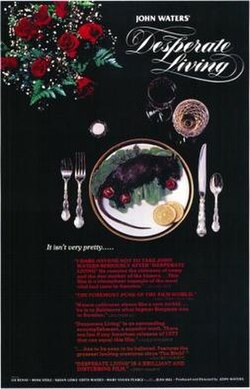
This is not to say that the film is a dud- it is entertaining and will please most Waters fans. It contains gross-out moments and vulgarity from the very first scene- as the opening credits roll, we see a roasted rat, daintily displayed on good china, on an eloquent dinner table, presumably to be served.

Later, Carlotta meets her fate by being roasted, pig style, on a spit with an apple in her mouth. Another character is executed by being shot in the anus. The offensive moments never end!

There also exists a quite controversial scene that I am surprised made the final cut. Peggy, already in a frazzled state due to a neighbor boy accidentally shooting out her bedroom window, is shocked to find another boy playing “doctor” with a little girl in her downstairs basement.

Both children are completely naked, leaving not much to the imagination. This scene is tough to watch as one wonders what the child actors thought of all of this.

I have never viewed another scene quite like this in a film.

Otherwise, Desperate Living is filled with cartoon-like characters, lots of sexually deviant leather men, grizzled men with facial hair, and other odd-looking characters who make up the community of Mortville.

Water’s set creations for the exterior scenes of the town are great using mainly cardboard and rubbish he found throughout Baltimore where the film was shot, the sets show a bleak yet colorful underworld.

Desperate Living (1977) is a raunchy good time with over-the-top acting, trash-filled moments, and laugh-out-loud fun.

The lack of any Divine makes it not the first offering to watch from the Waters collection. Pink Flamingos (1972) and Female Trouble (1974) would take that honor.

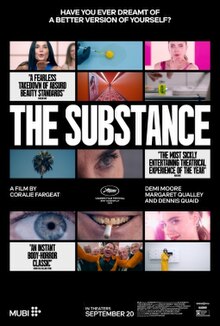
The Substance-2024

The Substance-2024

Director Coralie Fargeat

Starring Demi Moore, Margaret Qualley, Dennis Quaid

Top 250 Films #238

Top 40 Horror Films #36

Scott’s Review #1,461

Reviewed January 18, 2025

Grade: A

Demi Moore takes her languishing career by the reigns in a risky role, leaving any glitz and glamour by the wayside in the wacky horror film The Substance (2024).

She also sheds her mainstream blockbuster image for darker cinematic territory, propelling her into a fresh new image.

Respectability.

The film received widespread critical acclaim, a gaspy crowd reaction, and buzz during awards season, making it the most talked-about film of the season.

Moore portrays a fading celebrity, Elisabeth Sparkle, wired by her producer (Dennis Quaid) on her fiftieth birthday due to her age.

She decides to use a black-market drug that creates a much younger version of herself (Margaret Qualley) with unexpected side effects.

As she drives home after being fired, she is involved in a car accident. At the hospital, she meets a handsome young nurse who casually advertises a new product. He boldly tells her that it changed his life.

It creates a younger, more beautiful, more perfect you. The catch is that you share time, one week for one and one week for the other—an ideal balance of seven days each.

What could go wrong?

The film begins with a weird shot of a camera looking down at the creation of a famous star on Hollywood Boulevard, where anyone who’s anyone has their name in a star on the famous street.

The sequence reveals that Elisabeth was once a big star. Workers sand her name on the sidewalk amid the celebration, and people stop in awe of her name. As the years go by, people comment that she was in some movie they can’t remember, and then someone callously spills garbage on her name, thinking nothing of it.

The story has powerful meaning about the societal pressures on women’s bodies and aging, especially in the media spotlight.

But this isn’t simply about women. Anyone of any gender or humanity can reflect on the insecurities of aging, whether in the corporate world or being cast aside for a younger person in any way.

I found The Substance incredibly relatable.

Besides the story, Coralie Fargeat, a French director I’d like to see more of, directs The Substance very well.

She bravely incorporates snippets of Stanley Kubrick’s work, adding her funky weirdness and creating an insane experience for viewers.

Kubrick famously created long shots of hallways, which Fargeat brilliantly borrows. Elisabeth watches her producer and team rapidly walk towards her and reminds her that ‘pretty girls always smile,’ reinforcing ridiculous stereotypes attractive women are ‘supposed’ to follow.

Fargeat counterbalances the long shots with several close-ups, mainly of Moore staring at herself in the mirror. Seeing every wrinkle and blemish, she becomes increasingly obsessed with the younger version of herself.

The film does so much with very little dialogue, allowing Moore to deliver a performance of a lifetime.

As the film progresses, it becomes wackier and wackier in only the finest of ways as the older version becomes obsessed with her younger self. As she decays, she becomes a bald hunchback, unrecognizable.

At a diner, she runs into the older version of the young nurse, who admits that the process gets worse with each transformation.

The finale, set on New Year’s Eve, when Elisabeth is set to host events for millions to see, becomes horrific as her monster is set loose. A weird combination of human being and lumpy clay emerges on stage as Elisabeth begs the crowd to accept her.

The result is a moment that combines 1931’s Frankenstein with 1976’s Carrie as a horrific and quite bloody witch hunt ensues.

The film also reminds me of 2the 2000sRequiem for a Dream in style and addiction.

Fargeat, who directed, wrote, and produced the film, creates a feminist message that is awe-inspiring.

Combining unique camera angles that infuse a futuristic feel, astounding makeup work, and an exceptional performance by Moore makes The Substance (2024) the year’s surprise hit.

Oscar Nominations: 1 win-Best Picture, Best Director-Coralie Fargeat, Best Actress-Demi Moore, Best Original Screenplay, Best Makeup and Hairstyling (won)

Independent Spirit Award Nominations: Best Feature, Best Lead Performance, Demi Moore

Anora-2024

Anora-2024

Director Sean Baker

Starring Mikey Madison, Mark Eidelstein, Yura Borisov

Top 250 Films #243

Scott’s Review #1,450

Reviewed November 3, 2024

Grade: A

Anora (2024) is one of the boldest films I’ve seen in some time and is my favorite Sean Baker film so far. Tangerine (2015) and The Florida Project (2017) are also great works.

Those planning to see the film should do homework and learn what Baker films are about. He frequently directs independent feature films about the lives of marginalized people, especially immigrants and sex workers.

Baker’s films are dirty, dark, and outrageous.

Because Anora has received awards buzz and is classified as a romantic comedy, the audience at my showing seemed slightly overwhelmed by its raw nature. While there are comedic moments, they are shrouded in darkness, and I don’t think my audience quite knew how to respond.

Some cover art captured the main couple, played by Mickey Madison and Mark Eidelstein, happily dancing and depicted them with the caption ‘a modern day Cinderella story’. This is misleading to the gritty nature of the story.

Madison plays Ani (Anora), an exotic dancer and part-time sex worker at a swanky Manhattan strip club. She lives in a Russian section of Brooklyn. Her life takes an unexpected turn when she meets and impulsively marries Vanya (Mark Eidelstein), the childlike son of a Russian billionaire.

When Vanya’s godfather and parents catch wind of the union, they send their henchmen to annul the marriage, setting off a wild chase through the streets of New York. Vanya flees the scene, and the others must find him.

Madison is brilliant. Known for a small role as Susan Atkins in Quentin Tarantino’s Once Upon a Time in Hollywood (2019) and a role in one version of Scream (2022), the young actress comes on as gangbusters.

Her character is tricky. We only know she lives with her older sister, and their mother lives in Florida with her boyfriend. Presumably, her father is absent, and she has had to find work to support herself. She is brassy, savvy, and intelligent. Most importantly, the audience roots for her.

Madison has an aura surrounding her, and she believably plays loving and hysterical with ease. Ani wants love but is also intelligent enough to know love doesn’t come easy and has a price. Madison channels each emotion with seeming ease.

Baker has become a favorite director of mine. He also writes, produces, and edits most of his projects. Although his films are not easy to watch, that’s what I like about them.

His films take marginalized or dismissed groups and provide representation.

Another standout is Russian actor Yura Borisov. Since Ani is the only character worth rooting for, Borisov’s character, Igor, slowly becomes a fan favorite. Assumed to be a henchman, he begins to care for Ani and strive to do the right thing amid chaos.

Borisov provides Igor with warmth and kindness in a world of chaos. I yearned to know more about the character. How did he get to be where he is? Did he need to escape Russia any way he could?

It’s hard to like the other characters, and I wouldn’t say I enjoyed quite a few, especially the wealthier ones. I yearned to leap across the aisles and smack Vanya, his mother, and one stripper who is Ani’s rival.

This caused me to react viscerally to the film and think about my emotions after it ended. Anyone who appreciates good cinema knows that the longer you think about it, the better it is.

Towards the end, Baker incorporates satisfying moments of Ani standing up for herself, especially against Vanya and his mother. This only reaffirmed the passion of her character. Even in despair, Ani remains tough and refuses to be mistreated by anyone.

My favorite sequence is at the end, during a January snowstorm in Brooklyn. A tender moment occurs between Ani and Igor where the writing, cinematography, and camera angles are beautiful.

Anora (2024) is recommended for fans of Baker’s work. He successfully and carefully weaves an emotional and raw tale of adventure, romance, desperation, and the haves versus the have-nots.

Oscar Nominations: 5 wins-Best Picture (won), Best Director-Sean Baker (won), Best Actress-Mikey Madison (won), Best Supporting Actor-Yura Borisov, Best Original Screenplay (won), Best Film Editing (won)

Independent Spirit Award Nominations: 3 wins-Best Feature-(won), Best Director-Sean Baker-(won), Best Lead Performance-Mikey Madison-(won), Best Supporting Performance-Yura Borisov, Karren Karagulian

Eraserhead-1977

Eraserhead-1977

Director David Lynch

Starring Jack Nance, Charlotte Stewart

Top 250 Films #249

Top 40 Horror Films #38

Scott’s Review #541

Reviewed December 10, 2016

Grade: B+

Eraserhead is one of the oddest films that I have ever seen. The film is an early (1977) David Lynch film, shot entirely in black and white.

It is a surrealist horror film.

Entrancing is the locale of the film- a bleak wasteland, of sorts, in an even bleaker town. The name is unknown.

Factory worker Henry Spencer (Nance) is garish in appearance/with spiky hair and wild eyes; he is peculiar, to say the least.

He trods day after day, to and from his job, meeting interesting, yet grotesque characters. He has an inhuman child with a snake-like face.

Henry meets an odd woman while carrying groceries home, and his apartment is filled with rotting vegetation.

While not one of Lynch’s best works, since the “plot” is incomprehensible to follow or make very much sense of, still, Eraserhead is a blueprint for his later works, with odd visuals and even odder characters. It is to be revered for its imagination alone.

The film is fascinating in its weirdness, but I probably never need to see it again.

It’s a must-see for any David Lynch fan for the warped experience.

Butt Boy-2020

Butt Boy-2020

Director Tyler Cornack

Starring Tyler Cornack, Tyler Rice

Scott’s Review #1,483

Reviewed June 28, 2025

Grade: B+

Despite the title, Butt Boy (2020) is not a film intended for adult entertainment during a seedy escapade to a cheap motel.

It’s better than that.

It’s a wacky, darkly humorous comedy played straight, without relying on easy gags.

With an experimental feel and co-written, directed by, and starring newcomer Tyler Cornack, it conveys a sense of creative freedom and an expressive nature.

To its resounding credit, Butt Boy is an independent film and hardly a studio production, where it undoubtedly would have been made more mainstream if not for the titillating title.

The film is a spinoff from a Tiny Cinema comedy sketch.

I am surprised I am awarding it a ‘B+’ rating because early on I wasn’t as enamored with it as I was when the credits rolled and I was able to ‘digest it’, pun intended.

The story doesn’t make complete sense, and has a fantasy edge where it’s not always clear what is happening or why.

Chip Gutchell (Cornack) is an IT specialist and married father trapped in a loveless marriage with his wife, Anne (Shelby Dash), who may be cheating on him.

He develops a compulsive behavior after a routine rectal exam, where anything he inserts into his anus provides intense pleasure and then mysteriously disappears. This fetish consists of objects, animals, and people.

Detective Fox (Tyler Rice) loves work and alcohol. After going to AA, his sponsor, Chip, becomes the main suspect in his investigation of a missing kid.

Fox also starts to believe that people are disappearing up Chip’s butt.

The audience immediately relates to Chip. He works in a sterile office with colleagues who engage in enthusiastic work chants to celebrate successes. He counts the minutes until the work day ends.

His home life is no better with a distant wife who chats on the phone and goes out with the girls. It’s revealed that Chip got her pregnant, causing them to forge a life of doldrums.

The story goes off course after Chip discovers the pleasures of anal stimulation. He kidnaps a baby, a young kid, and his dog to shove them up his butt where they are trapped inside his intestines.

Why he needs the stimulation to be a living being instead of an object is never revealed.

Bizarre sequences of Chip farting and inevitably having an explosion of diarrhea thus making his victims escape his anus covered in fecal material make no sense.

Nonetheless, I slowly became absorbed by Butt Boy mostly because it’s an idea in cinema that has never been done before. The film’s tone is awe-inspiring in its serious nature, opting not to rely on cheap laughs or easy comic points.

Deeper subjects like compulsion, addiction, and career emptiness are easy to correlate to the central premise.

I found myself intrigued by the character of Detective Russell Fox as well. Rice seems like a good actor and a poor man’s Christian Bale, with his slicked-back hair.

A revelation later in the film about Fox connects the dots better regarding his story and character motivations.

Butt Boy was recommended by John Waters, a left-of-center film director most known for gross-out indies like Pink Flamingos (1972) and Female Trouble (1974). I trust his warped appreciation for film implicitly.

The mood is comparable to that of other film gems, such as Under the Skin (2013) and Nightbitch (2024). The finale is reminiscent of The Substance (2024) in its absurdity even though Butt Boy was made several years prior.

I’m curious about Cornack and whether Butt Boy (2020) is a one-off novelty idea or if there’s more to come from his distinguished creative mind.

Time will tell.

Sing Sing-2024

Sing Sing-2024

Director Greg Kwedar

Starring Colman Domingo, Clarence Macrin

Scott’s Review #1,477

Reviewed April 22, 2025

Grade: B+

Based on the real-life Rehabilitation Through the Arts program at Sing Sing Maximum Security Prison in suburban New York, the film Sing Sing (2024) centers on a group of incarcerated men involved in creating theatrical stage shows through the program.

Inspiring, it successfully paints a positive picture of prison life instead of the tried-and-true prison dramas released over the years. The grit and violence are kept to a minimum, with rich character nuances added in their place.

If theater and prison sound like an unlikely pairing, the film works surprisingly well and provides a few emotional moments while just barely avoiding being labeled as wimpy.

Divine G, played by Colman Domingo, is imprisoned at Sing Sing for a crime he didn’t commit. He finds purpose by acting in a theatre group alongside other incarcerated men, including a wary newcomer named Clarence Maclin (self-portrayed).

While Domingo is the standout from an acting lens, the most impressive aspect of the film is the use of not only non-actors but an unforgettable ensemble cast of formerly incarcerated actors.

This provides authenticity and realism to a film that also feels watered down and safe.

Sure, it’s based on real-life events, and the results are uplifting, with teachable moments of resilience showcased, but it’s not exactly edgy material either.

Divine G is a character with humanity and kindness, and this is the message director Greg Kwedar wants to instill in the audience. He doesn’t go for knife fights, drug cartels, or anything overly conflicting other than the theater moments.

In only one scene, when Divine Eye threatens another prisoner with payback if the owed money is not paid, it feels thrown in as a way to remind the audience that the characters are tough guys.

Otherwise, the theater is the main attraction. And this is fine with me.

Nuggets of Shakespearean knowledge are shared with the prisoners and subsequently with the audience.  The theater fellows debate Hamlet and the idiosyncrasies of owning a scene, and compelling the audience to believe in what a character is saying are featured.

Domingo is excellent in the role, receiving his second Best Actor nomination but coming up empty-handed. The delicate nature of the film may have a lot to do with this, and I yearned for more grit from this fine actor.

He is getting roles that Denzel Washington would have gotten ten or fifteen years ago.

His best scene comes when he breaks down in anger at his false imprisonment. Angry yet contained, he powerfully reveals how a wrongly accused man can reach his breaking point.

In satisfying form, the film closes with real-life footage from the RTA program at Sing Sing, featuring the real actors who portrayed themselves in the film, performing in past productions when they were still inmates at the facility.

A lovely reunion between rivals Divine G and Diving Eye wraps up Sing Sing (2024) like a perfect little bow.

Refreshingly different from many prison films, I still wanted more muscle from this otherwise pleasant film.

Oscar Nominations: Best Actor- Colman Domingo, Best Adapted Screenplay, Best Original Song-“Like a Bird”

Independent Spirit Award Nominations: Best Feature, Best Lead Performance- Colman Domingo, Best Supporting Performance- Clarence Maclin

Anything-2017

Anything-2017

Director Timothy McNeil

Starring John Carroll Lynch, Matt Bomer

Scott’s Review #1,472

Reviewed March 17, 2025

Grade: B

Anything (2017) is a sweet LGBTQ+ independent film written and directed by Timothy McNeil. It is based on a play that he performed in Los Angeles.

While it is nice to see longtime character actor John Carroll Lynch (Fargo, 1996, and Zodiac, 2007) in a starring role and Matt Bomer looking fabulous in drag, the film suffers from contrivances and treads lightly.

The stagey setups, cliched situations, and popcorn dialogue feel forced, and the ambiguous conclusion is unfulfilling.

However, McNeil and the cast deserve kudos for showcasing a story never told before and fraught with possibilities with a powerful ‘love is love’ message.

Deeply depressed after his wife’s death, Early Landry (Lynch) survives a suicide attempt and moves from a small town in Mississippi to flashy Los Angeles to live with his loving yet controlling sister, Laurette (Maura Tierney).

While there, he develops a complicated and tender relationship with a transgender sex worker named Freda (Matt Bomer). They bond over their shared loneliness and past traumas, sparking a friendship and gradually more.

Early immediately captured me. A hulking man, his kindness and gentleness ooze from him when he takes a run-down apartment in a shady section of L.A. Surrounded by drug addicts and questionable neighbors, he makes friends simply because he is lovely.

Because Lynch frequently plays villains, this was a nice change of pace to witness, and I suspect the actor also enjoyed it.

McNeil kindly writes the character as non-judgmental and savvy despite his Mississippi origins. Oftentimes, in cinema, a Deep South character is written as racist, stupid, or both.

Instead, Early is accepting of different lifestyles. Lynch effortlessly carries the film because he gives the character authenticity and sensitivity.

I wanted to be friends with him.

On the other hand, Freda’s character took most of the film to win me over. Her unpredictable, defensive, and cutting remarks imperfectly represent typical drag queen caricature behavior.

It also took me until the conclusion not to think of McNeil’s reason for casting Bomer as a vehicle to see the pretty actor in drag. Bomer is a great actor in anything he appears in and does his job effectively.

But when Freda callously insults Early when they first meet by nicknaming him ‘Havisham,’ a character from Charles Dicken’s novel Great Expectations, she seems cutting for the sake of being insulting.

I also wanted to know more about Freda. How did she wind up in Los Angeles as a streetwalker? What was her upbringing like? We can guess it wasn’t great, but not much is said.

My reaction improved to championing Freda after a fantastic, ill-fated dinner party scene. Early invites Laurette, her husband, and their son to his apartment for dinner to meet Freda. When Laurette quickly realizes Freda is transgender, she guzzles white wine and lets loose on Freda, fearing she is manipulating her brother.

Despite the story’s groundbreaking nature, the feeling is predictable. Of course, Laurette will object to the romance as much as Freda’s friends call her a dreamer for wanting a ‘9 to 5 life’.

Straight and narrow, Early shakes Freda’s drug dependency in only one night while enduring her venom, vomiting, and unbelievably quick recovery, almost in the snap of his fingers.

I wanted a more definitive conclusion and had questions left in my back pocket that were never answered. Will the couple move in together? What will Freda do for a living? Does Laurette even know Freda is a prostitute?

Unfortunately, Early and Freda never have a sex scene, so the sexual complexities of their assumed relationship feel swept under the rug.

Though sweet-natured and carefully plotted, Anything (2017) has so much more potential story to tell that the results feel lacking.

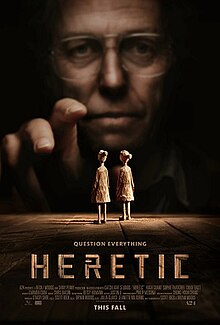
Heretic-2024

Heretic-2024

Director Scott Beck, Bryan Woods

Starring Hugh Grant, Sophie Thatcher, Chloe East

Scott’s Review #1,470

Reviewed March 13, 2025

Grade: B+

Heretic (2024) is a terrifying and thoroughly compelling horror film co-directed and written by Scott Beck and Bryan Woods. The pair most notably wrote the story for and co-wrote A Quiet Place (2018).

The premise of Heretic is rich in scariness, and the screenplay questions and challenges religion and the expected thought process of organized religion, targeting Mormons. It’s a thinking man’s horror film and hardly superfluous, like many genre films over the years.

I was pleasantly surprised at how much meaning the film had in addition to fantastic, traditional horror elements.

Two young missionaries, Sister Barnes (Sophie Thatcher) and Sister Paxton (Chloe East) are forced to prove their faith when they knock on the wrong door and are greeted by an initially kindly but ultimately diabolical Mr. Reed (Hugh Grant).

They become ensnared in his deadly game of cat-and-mouse.

Things get off to a perilous start when the pair embark on their bicycles for their next stop in a small town in the United States. They are mocked by a group of teenage girls while an impending snowstorm hovers in the sky.

What could go wrong when Mr. Reed offers the girls a warm living room and a wonderfully smelling blueberry pie his wife is baking in an unseen kitchen?

We, the audience, of course know that things will turn grim. It’s a question of when.

At first, Mr. Reed seems nice enough. Engaging the missionaries in innocent questions like their favorite fast food restaurants and stories of rock and roll makes the inquiries deeper and deeper, questioning their religious beliefs.

The most intriguing part of this process is that he makes good points. He educates the girls about the incarnation of the board game Monopoly and that religions are just recreations of other religions kept up to date.

Isn’t it all bullshit?

When he challenges them to choose between two luminous cellar doors things go batshit crazy.

I continue to be impressed when I see the ‘A24’ logo cross the screen. The independent production company specializes in high-caliber horror films with merit, and Heretic is no exception.

The winning formula is that the tension builds slowly and carefully. As the girls go deeper and deeper into the vast house, they have less chance to escape.

When Mr. Reed claims the locked front door cannot be unlocked until morning, the girls and the audience feel dread.

Once the poster boy for cute romantic comedies playing the hero, Hugh Grant has reached an age where he is willing to go full-throttle into character actor roles. His quick British charm and wit make Mr. Reed even more terrifying.

Playing against type, his cheery yet chilly demeanor is scarier than going for full-on crazy. His running tangents about theology scare, confuse, and challenge the girls.

Grant’s charm, gleaming blue eyes, and kind smile make him a creepy villain. He exudes trust, and we want to trust him, so seeing him play maniacal is a delight.

Thatcher and East are well cast as the Sisters, though I’m more partial to Thatcher’s character as she is the more non-believing and has more charisma than East. She’s also the stronger character more willing to stand up to Reed.

Like many horror films, the elements make the movie what it is. The first-hour setup is simply brilliant. The storm, the warm blueberry pie, and the intricately structured mouse maze-like house with creaks, dark stairways, and cellars all come into play.

Religious horror is creepy, and an attempted resurrection propels the story.

Like many horror films, the conclusion isn’t as good as the buildup. The logic involved in the more minor character’s motivations isn’t mainly explained or believable.

Beck and Woods, supported by A24, create a simple yet eccentric tale set in essentially one lonely house on one lonely night. They prove that a lavish budget or bells and whistles can’t replace a gripping, well-written story with intelligent dialogue.

Independent Spirit Award Nominations: Best Screenplay

The Brutalist-2024

The Brutalist-2024

Director Brady Corbet

Starring Adrien Brody, Guy Pearce, Felicity Jones

Scott’s Review #1,468

Reviewed March 1, 2025

Grade: A

The three-hour and thirty-five-minute film The Brutalist (2024) captivated me from the first sequence.

Adrien Brody’s character László Tóth, emerges from what is revealed as a ship. He emigrated to the United States after being sent to the Buchenwald concentration camp and forcibly separated from his wife, Erzsébet, and orphaned niece, Zsófia.

As his ship enters New York Harbor, he sees the Statue of Liberty.

The sequence follows László in the dark, and the audience is confused and unaware of what’s happening. His wife reads a Hungarian letter amid the scene explaining the events.

This is a top notch first scene.

The film is very long, so if you can’t watch it in a movie theater, we recommend watching it in miniseries style and digesting the segments slowly.

While The Brutalist initially feels like a studio blockbuster extravaganza, it’s shockingly an independent film made for relatively little money.

It’s brilliant but slow and methodic with rich moments of raw emotion, and graceful humanity. Parts are edgy and artistically creative with a quiet bombast.

Events occur between 1947 and 1958; the conclusion is set in 1980.

Having escaped post-war Europe, visionary architect László is well-respected and admired in his home country. He finds his way to Pennsylvania, where the wealthy and prominent industrialist Harrison Lee Van Buren (Guy Pearce) recognizes his talent for building.

The central theme of The Brutalist is László’s struggles to achieve the American Dream. While a wealthy client changes his life, it comes at a price. Do we trust Harrison?

An early scene showcases Harrison’s bad temper, and we know this will come into play again, but it does at the expense of László.

There are so many wonderful facets to The Brutalist; some slowly build and reach a dramatic crescendo, and others continue to bubble under the surface, ripe for discussion after the film has ended.

Though sometimes conventional with a heartwarming story of an immigrant’s struggle to succeed in 1950s USA, it is anything but a mainstream film when looked at closely.

Is there an attraction between Harrison and László? Harrison has no wife and seems uninterested in women. László visits a prostitute and cannot perform; he dances with a gorgeous woman and cannot be seduced. He cannot have sex with his wife.

A male/male rape scene is both gorgeously shot and filled with animalistic brutality. It’s the most unconventional rape scene I’ve ever seen in cinema.

László is also addicted to heroin and has bouts of rage. Is his relationship with Erzsébet more a friendship than a romance?

Brady Corbet’s direction is flawless, led by astounding cinematography of rural Pennsylvania. An early shot of a speeding bus with the opening credits shifting sideways brims with fresh style and creativity.

The sophisticated costumes and makeup perfectly fit the era, which is even more reason to give it kudos on such a small budget.

The acting by Brody, Pearce, and Jones is terrific.

We finally meet Erzsébet (Jones) halfway through the film when she makes her way to America. Crippled, due to osteoporosis, she is a brave and confident woman, finding career work as a writer for a newspaper.

Jones enfuses confidence into a role where she could be the victim. In a late scene, she tears down the house in a powerful performance, interrupting a family dinner.

Pearce electrifies in the best role of his career. His sexuality might explain his Jekyll and Hyde personality and bouts of rage. After all, this was the 1940s and 1950s. The actor plays ambiguity so well that knowing what Harrison feels is challenging.

Finally, Brody is brilliant. In a role arguably similar to his character in The Pianist (2002), he is a clever man forced as an immigrant to play the lousy cards he is dealt. With raw emotion, Brody makes every scene real and powerful.

Is he better off in Hungary or Israel?

Corbet, who also co-wrote the screenplay, delves into the experience of an immigrant. He showcases discrimination, preconceived notions, and the hopes and dreams of one man with the cards stacked against him.

The Brutalist (2024) is a beautiful film with much to say. It has soul and grit and perfectly pays tribute to an experience in the 1950s while sadly feeling relevant to the discrimination still facing immigrants in present times.

Oscar Nominations: 3 wins-Best Picture, Best Director-Brady Corbet, Best Actor-Adrien Brody (won), Best Supporting Actor-Guy Pearce, Best Supporting Actress-Felicity Jones, Best Original Screenplay, Best Original Score (won), Best Production Design, Best Cinematography (won), Best Film Editing

Independent Spirit Award Nominations: Best Director-Brady Corbet

I Saw the TV Glow-2024

I Saw the TV Glow-2024

Director Jane Schoenbrun

Starring Justice Smith, Jack Haven

Scott’s Review #1,467

Reviewed February 17, 2025

Grade: A-

I Saw the TV Glow (2024) is a bizarre independent psychological drama/horror film co-produced by Emma Stone and her husband.

It was produced by their Fruit Tree production company and distributed by A24, a brilliant independent film distributor, immediately giving the film credibility and a broad audience.

Writer/director Jane Schoenbrun perfectly depicts teenage angst via a visually cerebral and creative avenue. They sprinkle pink lettering and a colorful, moody aesthetic that is impressive.

The film is more than mysterious; it is hypnotic, with a dark mood evoking the dark underbelly of life in the suburbs.

Delving deeper after my initial viewing, I realized the film is an allegory for being transgender, which I did not know. Having that knowledge makes perfect sense because the characters feel trapped in their skin and fear being buried alive.

Transgender people often feel like the “egg crack,” a term for the moment in a trans person’s life when they realize their identity does not correspond to their assigned gender.

The film depicts bleak life in the suburbs and transitions between 1996 and 2026 when the main character is a teenager and finally a middle-aged man.

Owen (Justice Smith) is trying to make it through life in the suburbs when his older classmate, Maddy (Jack Haven), introduces him to a mysterious late-night TV show, a vision of a supernatural world beneath their own.

Both are loners and immediately bond over the young adult television show The Pink Opaque, which follows teenagers Isabel and Tara as they use their psychic connection to fight supervillain Mr. Melancholy, who has the power to warp time and reality.

Enthralled, Owen’s view of reality begins to crack.

I Saw the TV Glow is an unusual experience, especially during the 2006 chapter when Maddy returns to town after years away. When she explains that she paid a man to bury her alive, mirroring the finale of The Pink Opaque, the sequence is frightening, macabre, and hard to follow.

I wondered if she was speaking literally or figuratively.

But Maddy is trapped inside her own body, in her case, the wrong gender, and yearns to break out of her coffin. She encourages Owen to do the same, though it’s not clear if he identifies as female, is gay, or is just trapped in suburbia in a dead-end job.

In 2026, we realize that Owen has remained in the small town, mainly at the same job cleaning a movie theater, with his mother and stepfather long dead.

Sadly, he is still trapped inside his own body, aching to come to the surface. He screams out that he is dying and needs help, but nobody ever seems to notice.

He mentions a family, but they are never seen. Are they imagined? Is he living the life of a gay man or a straight man? Owen is mixed race, so what other issues does he face?

I wanted more concrete answers.

Even though the story is focused on a transgender lifestyle, Schoenbrun is never blatant about it.

Growing up in the lonely suburbs, I can relate to the feeling of suffocation at being unable to get out. Many are trapped for decades with the sameness day after day. Young people face this dilemma constantly, so I Saw the TV GLow is an essential film for most.

Debatable is whether I Saw the TV Glow was not overtly marketed as a trans film or even an LGBTQ+ film purposely. At a time in United States history when the trans community is under attack, they need all the support they can get.

The myriad of awards notice and star power (Emma Stone) supporting this film is reaffirming and another reason I love A24 so much.

But I Saw the TV Glow (2024) is a film with many interpretations and meanings.

Independent Spirit Award Nominations: Best Feature, Best Director, Jane Schoenbrun, Best Screenplay, Best Lead Performance-Justice Smith, Best Supporting Performance-Jack Haven

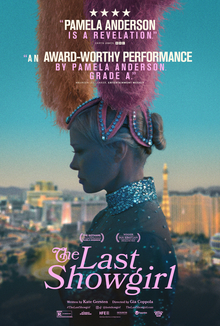
The Last Showgirl-2024

The Last Showgirl-2024

Director Gia Coppola

Starring Pamela Anderson, Jamie Lee Curtis, Dave Bautista

Scott’s Review #1,459

Reviewed January 12, 2025

Grade: A

The Last Showgirl (2024) is a powerfully acted and beautifully written story about an aging Las Vegas showgirl who struggles to find relevance and retain her identity after her show closes.

Pamela Anderson’s career-highlighting performance leads the film, featuring stellar acting from Jamie Lee Curtis, Dave Bautista, Billie Lourd, and Kiernan Shipka in supporting roles.

The story showcases a disenfranchised and easily dismissed group of Vegas performers like Boogie Nights (1997) did for the adult film industry and The Wrestler (2008) for the professional wrestling community.

Gia Coppola, granddaughter of legendary director Frances Ford Coppola (The Godfather and The Godfather Part II, 1972-1974), has talent in her blood as she creates the proper mood and the setup to showcase outstanding performances and the underbelly of the Vegas glitz and glamor.

Coppola uses handheld cameras and mostly close-up shots, which could distract some but allow for the rawness and blatancy of seeing Anderson, mainly sans makeup.

The film is a poignant story of resilience that anyone troubled by the aging process regarding their career and livelihood can easily relate to.

Pamela Anderson is a revelation as Shelley, a showgirl who must plan for her future when her show abruptly closes after a thirty-year run. She is proud to be in Le Razzle Dazzle, a classic French-style revue at a casino on the Las Vegas Strip, and views the show as glamorous art rather than a nudie show.

Her co-stars in the show include several younger women, including Mary-Anne (Brenda Song) and Jodie (Kiernan Shipka), who view Shelly as a mother figure.

Shelly’s older best friend, Annette (Jamie Lee Curtis), is boozy and has a gambling addiction, yet maintains a close relationship with Shelly. Years ago, she was ousted from the show and now works as a cocktail waitress.

Anderson, for years known as a sexpot, blonde bombshell femme fatale type who dates rockstars and keeps in the headlines, gives a stunning acting performance.

I was floored.

With her baby voice and kindness, the character of Shelly allows Anderson to give a refreshingly raw and dramatic performance. Usually there for everyone else, she faces an uncertain future, leaving her exposed and vulnerable.

A side story involves Shelly’s estranged daughter, Hannah, played by Billie Lourd. Shelly’s attempt to reconnect with her is interesting but not as effective as the loss of her show and her struggle with identity.

Anderson’s best scene occurs at the beginning and end of the film when she is forced to audition for a modern and sexy stage show. Shelly is confident and insecure as she struts around the stage to a 1980s Pat Benatar song, clumsily revealing her time capsule world with her song choice.

Ridiculed and brutally given honest advice by the director, she nonetheless champions herself, boldly describing herself as ‘fifty-seven years old and beautiful.’

One can’t help but see Anderson stripping off her defenses and applying makeup for herself and her character, Shelly.

Curtis gets better and better with age and now accepts supporting roles with grit and mustard rather than genre roles that define her. Annette wears dated blue makeup and a hairstyle she has undoubtedly had since the 1980s but cannot be held back; she is proud of who she is.

Former professional wrestler Bautista is amazing as Eddie, the revue producer.  Having succeeded at wrestling, he has now brilliantly forged into acting with stellar results. He gives a heartwarming performance.

The Last Showgirl (2024) left me mesmerized, teary, and pondering life and the reality of getting older. It does what great films are supposed to do and left me thinking long after the credits rolled.

Thanks to several awards season nominations for Anderson and Curtis, the small film receives proper exposure and word-of-mouth credibility, encouraging many cinema fans to see it.

A Real Pain-2024

A Real Pain-2024

Director Jesse Eisenberg

Starring Jesse Eisenberg, Kieran Culkin, Jennifer Grey

Scott’s Review #1,452

Reviewed November 25, 2024

Grade: A-

A Real Pain (2024) is a well-written film about life’s emotions, experiences, joys, and pains. It wonderfully mixes comedy with drama, not one genre or the other but a pot of delicious flavors forming a potent concoction.

Jesse Eisenberg produces, writes, directs, and acts in his creation, making it his own. Kieran Culkin is a revelation as a troubled young man plagued by depression and ravaged by passion.

Emma Stone co-produces.

David (Eisenberg) and Benji (Culkin) play New York Jewish cousins with seemingly minor in common who reunite for a tour through Poland to honor their beloved grandmother.

David, a reserved and pragmatic father and husband, contrasts sharply with Benji, a free-spirited and eccentric drifter. Their personalities clash as Benji criticizes David for losing his former passion and spontaneity, while David struggles with Benji’s unfiltered outbursts and lack of direction.

In Poland, the pair meets up with a Holocaust tour group that each shares a link to the Holocaust history.

Emotional honesty among the group members and tour guide occurs during their week-long trip as brutal truths and past tensions surface.

A Real Pain is a character study with flawless writing. Eisenberg delivers an effort reminiscent of a Woody Allen film with punchy moments, neurotic characters, and cheeky humor.

Benji and David, more like brothers than cousins, admire and resent each other. Benji wishes he had what David does- a stable job, a wife and child, and peace of mind. David resents the way Benji lights up a room with his passion, quickly becoming center stage while David is forced to lurk in his shadow.

Together, the film belongs to Eisenberg and Culkin as their dazzling chemistry emulates from the screen.

From the first scene, we sense David’s frustration. He rushes to the chaotic airport, hurriedly leaving voicemails for Benji. But the carefree Benji has been at the airport for hours and dismisses David at every measure.

David is a nice guy who selflessly gives Benji the window seat and first dibs on the shower. But he secretly feels bullied by Benji’s selfishness.

David realizes that people always fall for Benji and give him a pass, which frustrates him. He essentially mocks and calls the tour group assholes but somehow is deemed ‘real’ or ‘honest.’

Benji is tough to like, but Culkin’s wounded blue eyes allow the audience to realize he is hurting and suffering from deep pain.

My only knock is why the tour guide, who is mocked and criticized by Benji, ultimately thanks him for his brutal honesty and more or less snubs David.

Compared to the otherwise honest writing, this scene feels forced and unrealistic.

Eisenberg flawlessly delivers a performance that showcases his range of emotions. Sufferingly patient, he explodes during a dinner scene, letting his emotions spill onto the table.

Eisenberg and Culkin’s great acting is showcased, especially during the scenes where they let their emotions rip. Their best scene together is atop a hotel, where they smoke pot and old wounds furiously come to the surface.

Besides the acting, Eisenberg, the screenwriter, immerses the audience in the importance of Holocaust history.

It’s not for the faint of heart. Powerful scenes of the tour group walking through  Majdanek concentration camp are hard to watch, with the knowledge that thousands were exterminated.

Led by a scene-stealing turn from Culkin and a bevy of creative talents by Eisenberg, A Real Pain (2024) is a powerfully funny, emotionally resonant dramedy that finds him playing to his strengths on either side of the camera.

Oscar Nominations: 1 win-Best Supporting Actor-Kieran Culkin (won), Best Original Screenplay

Independent Spirit Award Nominations: 2 wins-Best Supporting Performance-Kieran Culkin (won), Best Screenplay (won)

All of Us Strangers-2023

All of Us Strangers-2023

Director Andrew Haigh

Starring Andrew Scott, Paul Mescal, Claire Foy

Scott’s Review #1,439

Reviewed September 22, 2024

Grade: A

A moody, dark-lit experience, All of Us Strangers (2023) is a dreamy affair in all the best ways. It’s a bit of a ghost story combined with a love story and can be challenging to explain. 

Especially noteworthy are some elements like the lighting and mood which serve as enhancers. The lavish setting of London, England, and its surroundings are presented as lonely and depressing.

Loneliness is an encompassing description of the film summing up the character-driven story set mostly in an enormous yet almost vacant luxury high-rise apartment.

The vacant building is an effective backdrop to the main character’s experience.

We get inside his head and travel down a tunnel of self-reflection and acceptance just as he does. It’s unclear what is imagined or real, raising the stakes and catapulting the viewer into a world of questions.

The best pleasure comes after finishing the film and wondering how all the pieces come together or even if they do. I wasn’t sure what happened in the conclusion but the overall experience left me thinking. 

The British film follows a lonely screenwriter named Adam who works as a television writer. He develops an intimate relationship with his mysterious male neighbor while revisiting memories from the past involving his parents.

Andrew Haig directs the film and Andrew Scott plays the screenwriter from which the story is his vehicle. Paul Mescal plays his neighbor and love interest.

Haigh is best known for efforts like 45 Years (2015) and Lean on Pete (2017). Both are quiet films and character-driven. All of us Strangers is the best of the trio, though.

The film also has some teary moments of sweetness mostly shown through an LGBTQ+ lens but the film is not only for members or allies of the community but for anyone with a heart or craving something cerebral.

Viewers who have lost parents far too soon before feelings are expressed and only cherished memories remain will find All of Us Strangers to resonate mightily.

Specific to the LGBTQ+ community, what gay man wouldn’t want to travel thirty years into the future and have deep conversations with his parents about his lifestyle? Having missed those prominent years because of death. 

In the story, Adam’s parents died in a car accident when he was a child. Since he never ‘came out’ to them he travels to their house outside of London and imagines conversations with them separately and together. 

The best scenes are between Andrew Scott and Claire Foy who plays Adam’s mother. They are lengthy and poignant and brilliant acting by both are showcased. 

In an ideal fantasy, his mother would leap into Adam’s arms and champion his lifestyle becoming his most ardent supporter. Haig writes the scenes better than that as real-life situations might play out with conflict and misunderstandings.

The mother wants to understand and support but has hesitancies and ideas about a lifestyle different than Adam’s. The scenes become tense and complex not because of shouting but because of a deep struggle for understanding.

Not to be outdone by Foy’s performance in the unique relationship between father and son deliciously played by Jamie Bell. 

Adam has resented his father’s emotional distance for years never forgetting how he needed his father’s support as a child and never got it.

In a powerful scene, Adam and his father embrace. The embrace is one that Adam needed as a child.

The film is for everyone because why wouldn’t anyone want to visit their dead parents years later? Even if still alive there are things between parent and child never said or expressed. 

So many scenes are emotional, poignant, and meaningful in All of Us Strangers. 

The finale is trippy and made me recall David Lynch’s Mulholland Drive (1992) where what is real may not be and who we think a character’s life is all about may not be so.

Though wrapped in fantasy, All of Us Strangers (2023) is focused on grief through a deep emotional lens and uses superior acting to tell its story.

Independent Spirit Award Nominations: Best Film, Best Director-Andrew Haigh, Best Lead Performance-Andrew Scott

American Fiction-2023

American Fiction-2023

Director Cord Jefferson

Starring Jeffrey Wright, Issa Rae, Sterling K. Brown

Scott’s Review #1,421

Reviewed February 11, 2024

Grade: A

American Fiction (2023) is an intelligently written expose of black culture and a poignant family drama mixed as one. Cord Jefferson makes his feature directorial debut with the satirical comedy-drama which he also wrote.

The film explores how perceptions of black people, mostly by white people but even amongst themselves, are categorized into neat little boxes.

Usually, the negative stereotypes are assumptions of bad grammar, poverty, and hardships in ghetto situations.

While some may be sympathetic these beliefs are either conscious or subconscious and they are propelled by the media. In the case of the film, through literary works.

Are white people intimidated by intelligent black people, the film questions. How do the intelligent black people feel about themselves?

American Fiction is a witty, smart, funny, and poignant film that will make you laugh as often as it makes you think about the perspectives offered.

Jefferson brilliantly offers up both an education and powerfully drawn black characters. In the middle is a sentimental family storyline that had me enraptured by almost all the characters.

The writer/director bases his film on the 2001 novel Erasure by Percival Everett. Thelonious “Monk” Ellison (Jeffrey Wright) is a highly intelligent African-American upper-class writer and professor living in Los Angeles.

He is a frustrated novelist-professor who doesn’t make much money or sales from his serious works.

Needing money after moving back to Massachusets on a leave of absence, he decides to write an outlandish satire of stereotypical “black” books, only for it to succeed by mistakenly thought of as serious literature and published to both high sales and critical praise.

He struggles with keeping his alter ego a secret while questioning the lack of intelligence with people assumed to be the liberal elite and the general public.

Wright is great and leads the charge of a dynamic cast. He makes his characters believable and their motivations clear while still showing Monk’s conflict. Monk has lived a privileged life with education, social status, and success.

His experience as a black man is different than other black men and he is smart enough to know this while still wrestling with his feelings.

Wright is dynamic at showing many emotions.

To make the film even better, the supporting characters are delightful with their own stories, making me fall in love with them. Special call-outs are for Sterling K. Brown and Erika Alexander who plays Monk’s brother and girlfriend, respectively.

Brown as Cliff is a successful surgeon but lives a conflicted life as a newly ‘out’ middle-aged gay man. He dabbles in drugs and promiscuous behavior but all he wants is approval by his family.

Alexander is a successful public defender and neighbor of the Ellison’s going through a divorce. She relates to Monk while challenging him on his bullshit and is a richly carved character.

Also, Leslie Uggams Monk’s mother suffering from Alzheimer’s disease, Ellison’s housekeeper Lorraine (Myra Lucretia Taylor), and Issa Rae as Sintara Golden are weaved into the canvas seamlessly and with purpose.

The film’s ending left me scratching my head and caught me off guard. While clever, it made me wonder if what I had just seen was reality or fantasy. Providing three different endings as adapted film options it’s tough to know which if any actually happened but maybe that’s the point.

I left the movie theater having laughed out loud, thought, and been entertained.

American Fiction (2023) made me feel like I had seen something relevant that would help me understand people better and give me insight into what other people feel.

Oscar Nominations: 1 win-Best Picture, Best Actor-Jeffrey Wright, Best Supporting Actor-Sterling K. Brown, Best Adapted Screenplay (won), Best Original Score

Independent Spirit Awards Nominations: 2 wins-Best Film, Best Lead Performance-Jeffrey Wright (won), Best Supporting Performance-Erika Alexander Sterling K. Brown, Best Screenplay (won)

Triangle of Sadness-2022

Triangle of Sadness-2022

Director Ruben Östlund

Starring Harris Dickinson, Charlbi Dean, Woody Harrelson

Scott’s Review #1,374

Reviewed July 2, 2023

Grade: A

When I realized the director of Triangle of Sadness (2022) had directed Force Majeure (2014) and The Square (2017), I became very interested in seeing it.

I’m not sure I ultimately ‘got’ The Square, but Force Majeure was a thought-provoking slice of cinematic brilliance that I still think about from time to time.

Sure, Triangle of Sadness was rewarded with three Academy Award nominations, which it deserved. Still, Ruben Östlund has a knack for challenging his audience to think outside the box, both cinematically and otherwise, with a robust examination of social classes.

He crafts a subject matter about class systems and the haves and have-nots that has been explored in film many times before. But, in Triangle of Sadness, it feels fresh and fraught with many different possible directions.

The wicked dark comedy explores political talking points such as capitalism, communism, and socialism, and challenges conventional ways of thinking.

It’s on par with the popular HBO series The White Lotus, but on steroids.

I cannot recommend the film more highly, primarily geared toward those seeking expressive and deeply textured films with some meaning.

Despite the dreary title, it’s far from a dour experience. There are quite a few laugh-out-loud moments, especially in scenes featuring severe vomiting amid seasickness.

The rich and famous embark on a luxury cruise with fine dining and servants galore. But after a devastating storm leaves several passengers and staff stranded together on a deserted island, the power exchange begins to shift, and the social hierarchy is turned upside down.

Events mainly surround a celebrity model couple, Carl (Harris Dickinson) and Yaya (Charlbi Dean), who are invited on the luxury cruise for promotional purposes. Yaya is a social media influencer.

They are joined by a Russian oligarch, Dimitry, and his wife, Vera, as well as an elderly couple, Clementine and Winston, who have made their fortune manufacturing grenades and other weapons. Therese, a wheelchair user only capable of speaking a single phrase in German following a stroke, and Jarmo, a lonely tech millionaire who flirts with Yaya.

Besides possibly Therese, there is no a sympathetic rich character to be found.

The yacht staff are more sympathetic, although we don’t get to know all the characters very well.

Highlights include the head of staff, Paula, who demands that the staff obey the guests without question, Abigail, a cleaning woman, and the yacht’s captain, Thomas Smith (Woody Harrelson), who spends his time drunk in his cabin and despises the absurdity of the guests’ wealth.

The main events on the ship take a while to get to, and the film is divided into chapters. Part 1: Carl and Yaya, Part 2: The Yacht, and Part 3: The Island.

I realized after the fact that the point of the slow build is to show the dynamic between Carl and Yaya, the main characters. Both models and living life based on their looks, they are wildly insecure, bickering over money and gender roles.

While not likable nor complete assholes either, enjoyable is a chance to get a fleshed-out perspective on where they are coming from.

My adoration for the film largely stems from not knowing what is going to happen but knowing that at some point the shit is going to hit the fan.

The setup is perfect, especially the put-upon staff. While they are not abused, the relationship is clear. The passengers are in a position of power; the staff is not.

This will soon change.

Late in the game, I unexpectedly found myself rooting for a minor character who takes center stage in the last chapter, turning events upside down.

Comparisons can also be found in the recent Best Picture winner Parasite (2019) and classic international films such as Swept Away (1974) and L’Avventura (1960).

These are all brilliant films, and my hunch is that Triangle of Sadness (2022) will hold up well, perhaps achieving even greater acclaim as the years go by.

Oscar Nominations: Best Picture, Best Director-Ruben Östlund, Best Original Screenplay

Women Talking-2022

Women Talking-2022

Director Sarah Polley

Starring Rooney Mara, Claire Foy, Jessie Buckley

Scott’s Review #1,341

Reviewed February 7, 2023

Grade: B+

Women Talking (2022) is a quiet film faithful to its title because it is about a group of women, well, talking. But, instead of idle gossip, these women have something powerful to say. They debate and discuss their fates throughout the film’s one hour and forty-four-minute running time.

It is written and directed by Sarah Polley, a former actress, and adapted from the recent 2018 novel of the same name written by Miriam Toews.

Shockingly, the film is inspired by actual events that took place in the ultraconservative Manitoba colony in Bolivia.

For years, the women of a rural colony have been drugged and raped nightly by demons punishing them for their sins. They have, until recently, acquiesced.

But when the women discover that these “demons” are the men of their community, they boldly decide to take a vote to determine what action to take.

The year is 2010, but the woman’s dress makes it seem like it’s the 1800s. I wasn’t sure of the year going in, save for a 1960s pop tune bursting from the speakers of a pushup truck, so the viewer can easily be misled or unclear.

A male rapist is caught and imprisoned, which leads the men to conveniently be out of town while the women have two days to make a decision. They will either stay and do nothing, stay and fight, or leave.

One male remains with the females; the kind teacher, August, played by Ben Whishaw. There also exists a transgender man who has been raped by men and no longer speaks to adults.

While the film is a slow one, it has something intelligent and interesting to offer. Despite the women being repressed and abused a feminist overtone is readily apparent which uplifts the dire tone.

Hollywood heavyweights like Frances McDormand and Brad Pitt executive-produced and produced, respectively, so Women Talking has big-time backing, deservedly so.

Comparisons to a female version of the classic play, Twelve Angry Men, cannot be overlooked by the astute viewer. The women are divided and not in agreement or harmony…..at first. The lone juror would be most similar to Ona (Rooney Mara), a sensible woman who reasons and weighs the pros and cons.

McDormand also appears in a small role as the grizzled and beaten-down ‘Scarface’ Janz, who has accepted her lot in life.

Mara, Claire Foy, and Jessie Buckley are the standouts; the latter two characters are fueled with anger at the revelations and mistrust of the men.

Liberties must be taken.

It’s mentioned that the women are not taught to read or write, but the characters are wise, cagey, and well-spoken. The ambiguity of what’s to become of the women slightly let me down. A decision has been reached, but what’s next?

Polley has directed a gem and garnered considerable notice for her project, and the kudos can’t come loudly enough. I thought it wise that, besides August, the male characters are either not seen or seen only from a long distance. Some are blurred entirely.

This adds to the mystique and grotesqueness of their actions.

An accurate ensemble picture that could easily be shaped into a stage play, Women Talking (2022), led by Polley and backers, produces a compelling narrative.

The point is well-intentioned and well-received that repression and victimization are alive and well.

Oscar Nominations: 1 win-Best Picture, Best Adapted Screenplay (won)

Independent Spirit Award Nominations: 1 win-Best Feature, Best Director-Sarah Polley, Best Screenplay, Robert Altman Award (won)

When Love Comes-1998

When Love Comes-1998

Director Garth Maxwell

Starring Rena Owen, Dean O’Gorman, Simon Prast

Scott’s Review #1,340

Reviewed February 3, 2023

Grade: B+

When Love Comes (1998) is a New Zealand film, spoken in English, by filmmaker Garth Maxwell.  It starts slow and muddled but quietly captures me with its thoughtful and humanistic tones of emotion, conflict, and sexuality.

There are no subtitles which makes the dialogue hard to follow given the accents and may knock the film down a smidgen for me but the main stories are enthralling with deep texture.

More or less an ensemble of six acquaintances, and three of the characters get the most screen time.

The main character is washed-up singer Katie Keen (Rena Owen) who struggles to create a new life for herself while coping with her absent admirer Eddie and living with her best friend, Stephen.

Stephen is in love with sexually confused ex-hustler Mark, while, band members Fig and Sally, smitten with each other, yearn for success while traipsing around town and the beaches together.

The most interesting storyline is LGBTQ+ centered. Given the time was 1998 when gay films were just starting to make their presence known, Stephen and Mark have the most depth.

Admittedly, a couple of story points are disjoined like why the men have trouble admitting their feelings for each other and Mark’s anger issues cause him to smash a window. In the end, their story wraps nicely and Maxwell gets points for making the audience appreciate the couple.

The lesbians get short shrift. Are they gay or bisexual? If bisexual, are they a couple or what is their arrangement? Don’t get me wrong, they are fun to watch shred the guitar and beat mercilessly on the drums as they raucously perform but little is known about their lives.

Even though When Loves Comes is an ensemble the lead character is Katie. I fell in love with her character because she is the most well-written. At one time a big pop singer, her star faded and she is at a crossroads.

As she whimsically gazes at the crashing waves the expression on her face reveals the deep thought and regrets in her life.

Unfortunately, her love interest, Eddie, is heard from but does not appear in the flesh until pretty deep into the film. Therefore, there is not much rooting value for the couple and we don’t know much about Eddie.

Surprisingly, despite this miss, there is a connection I felt for Katie and Eddie. Rena Owen is a terrific actress revealing expressions and a veneer we deeply want to explore.

There is a decent amount of flesh in the sex scenes which makes for some fun but the wise move is to stick to the character motivations and watch them develop.

This can be said with only three of the characters and I wished for more grit from Eddie, Fig, and Sally.

When Love Comes feels lopsided at times but succeeds as a slow-build film. Nothing is done quickly or forcefully instead crafting long scenes of dialogue but the conversations have something to say rather than existing as filler or a bridge to get to more important scenes.

I respect the cinematography because it has a softer independent film look which is of course what it is. A big budget is not needed for a film about people and the sequences showing Aukland are wonderful.

Keeping the time frame in mind, I wish I saw When Love Comes (1998) at the time it was released. It would have packed a harder punch than it does twenty-five years later when plenty of similar-toned films have been made.

Pearl-2022

Pearl-2022

Director Ti West

Starring Mia Goth, David Corenswet

Scott’s Review #1,339

Reviewed February 2, 2023

Grade: A-

The follow-up to the superb horror film X (2022) is even better. Ti West directs and co-writes Pearl (2022) with star Mia Goth, who is quickly becoming a household name, especially in horror circles.

The duo creates a macabre and intelligent piece that pays homage to legendary films like The Wizard of Oz (1939) and Mary Poppins (1964) in the most wicked of ways. The film resembles a musical from the golden age of cinema, but it is haunting instead.

A24 is the place to be predominantly in the horror genre, as creativity is embraced and massaged rather than picked apart and recreated by too many cooks in the kitchen.

West and Goth appear to have complete creative control, and it shows in the finished product.

In the second chapter of X, we are introduced to the character Pearl as a young woman living on a farm in rural Texas. Fans recall that Pearl is the old lady in X, but we knew nothing of her backstory until now.

Pearl feels trapped on her family farm. Bored and isolated, she needs more out of life than milking cows, caregiving for her sickly father (Matthew Sunderland), or disagreeing with her rigid mother, Ruth (Tandi Wright).

She lusts for the glamorous life starring in Hollywood pictures, much to her mother’s chagrin. When a church-sponsored audition for dancers needed for a traveling troupe occurs, Pearl sees this as her way out of dodge and anticipates winning the contest. She is joined by her affluent sister-in-law Mitsy (Emma Jenkins-Burro).

The time is 1918, and Pearl’s fiancé is off fighting World War I.

It’s tough to take my eyes off Goth, quickly becoming a modern scream queen turned upside down. She’s not the victim, she’s the villain. With her wide-eyed stare and luscious red lips, she bears a striking resemblance to Dorothy Gale from Kansas.

Her descent into madness is slow yet always bubbling beneath the surface. We quickly get glimpses of her psychosis when she stares down her mother during a disagreement, showing that Pearl doesn’t merely get into a tizzy; she goes full-throttle psycho.

And anyone who has seen X knows that the old lady has some issues.

Initially, there is hope for Pearl, and we take pleasure in her company. She catches the eye of a handsome projectionist played by David Corenswet. Mutually smitten, he makes her forget her fiancé, and they bond over films and aspirations.

But once he visits Pearl’s farm and finds a maggot-covered stuffed pig and hears noises in her house, his interest wanes.  Not to be so easily dismissed, Pearl’s actual mental state is revealed.

West and Goth turn the horror genre upside down when the best and most brutal killings occur during the daytime. Standard horror films often take place at night, so this invention raises the stakes when the cinematography and lighting are as bright.

This adds to the horrific nature of the gruesome bloodletting. Pearl calmly follows her prey down the sunny driveway, holding a pitchfork, intent on killing.

She repeatedly exclaims that nothing will keep her on the farm, but we know that she will.

Returning to the Wizard of Oz comparisons, several references can be found. For starters, Goth resembles Judy Garland, mainly around the eyes. Her outfits, most notably her dresses and hair bow, pay tribute to Dorothy. Her bicycle looks like Miss Gulch’s ride.

Goth also resembles American actress Shelley Duvall, whose most notable role is that of the suffering Wendy Torrance in The Shining (1980). Both actors have a mesmerizing stare as if to say ‘I can go cuckoo at any moment now’.

Too few modern films can be watched and re-watched, but my hunch is that my first viewing of Pearl (2022) will not be my last.

A third film is in the works.

Independent Spirit Award Nominations: Best Lead Performance-Mia Goth, Best Cinematography