Category Archives: Independent

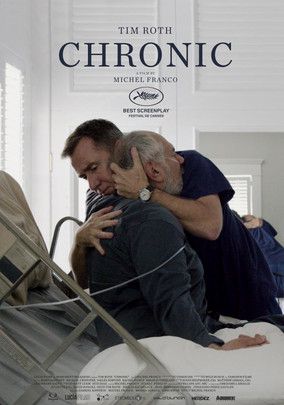
Chronic-2015

Chronic-2015

Director Michel Franco

Starring Tim Roth, Robin Bartlett

Scott’s Review #682

Reviewed September 18, 2017

Grade: A-

Chronic (2015) is a brave film, a character study, that offers an in-depth look at the life of a male nurse. He has rich relationships with his patients.

What the film also does quite soundly is reflect on not just the obvious physical needs of the patients, but the deep effects that the main character’s dying patients have on himself as well.

The film is quite bleak with a quiet element and very long scenes containing little dialogue but a treasure in bold storytelling and brazen reflection.

The film is a subdued work requiring attention and focus.

Yes, some would deem Chronic to be slow, and most would describe it as “a downer”, but dismissing the film is a mistake as it offers rich writing and an in-depth look at a vocation and lifestyle misunderstood or confusing to most people.

Tim Roth, famous for his bad boy roles, especially in Quentin Tarantino films, does an about-face, delivering a superb, subdued performance as David Wilson, a lonely and depressed nurse in the Los Angeles area.

He is a quiet, kindly man whose internal pain registers on his face as he dutifully treats his mostly close-to-death patients, sometimes attending their funerals after they have expired.

Initially, we meet David as he treats a sickly young woman. Once beautiful, she is now haggard and I cringed when the woman’s nude, skeleton-like body, is on display as David washes her with a washcloth.

The filmmakers do not gloss over his tender attention to her private areas, shot gracefully and not done garishly. Still, the long scene is frightening in its realism.

When the woman succumbs to AIDS, David reluctantly becomes involved in a celebratory drink with a newly engaged young couple after he goes to a bar to unwind.

When he pretends the deceased woman is his wife, he receives sympathy, but the couple quickly becomes aloof when he reveals what she died of.

Does he do this purposely to push the couple away? Throughout the film, we realize that David thrives on being with his patients, and can do no other work.

In contrast, he has difficulty with relations with “normal” people.

Perplexities abound in this film, which makes the viewer think and ponder throughout, and after the story ends.

For example, David searches through a young girl’s Facebook account looking at her photos- he later finds the girl, revealed to be studying medicine, and they happily reunite.

Is she his daughter or the daughter of a deceased patient?

Later, David is sued by an affluent family and subsequently fired, after he watches porn with an elderly man to lift his spirits. There is a glimmer of uncertainty where we are not sure what David’s sexual orientation is.

In the most heartbreaking sequence of all, David begins caring for a middle-aged woman with progressive cancer. Martha (Robin Bartlett) is strong-willed and no-nonsense and makes the painful decision not to continue with chemotherapy after suffering chronic nausea and later soiling herself.

It is apparent that her family only visits her out of obligation as she lies to them that her cancer is gone and she is in the clear. She then pleads with David to end her life with dignity using a heavy dose of morphine- the sequence is heartbreaking.

The final scene will blow one away and I did not see this conclusion coming. The event left me questioning the entire film, wondering how all the pieces fit together.

Surely, being overlooked for an Oscar nomination, Tim Roth proves he is a layered, complex, full-fledged actor, in a painful, yet necessary story called Chronic (2015).

Independent Spirit Award Nominations: Best Feature, Best Male Lead-Tim Roth

Clown-2016

Clown-2016

Director Jon Watts

Starring Andy Powers, Laura Allen

Scott’s Review #681

Reviewed September 16, 2017

Grade: B-

As a fan of all things horror and with a robust appreciation for the genre, clowns in said genre are always a stroke of genius, and the 2016 film Clown establishes a creepy premise right off the bat.

After seeing the film, it was not until a few days later that the story began to marinate in my mind, and I gained a bit more appreciation than I had once the film had ended.

Clown is one hour and forty minutes long, but it reminds me of the mid-2000s Showtime horror anthology series Masters of Horror.

The film has a unique, creepy vibe, is also a highlight of the cherished series of yesteryear, and oddly plays out like a vignette.

The premise is creepy as the action kicks off.

When Kent McCoy (Andy Powers), a likable young father who works far too much maintaining his real estate business, is notified by his wife, Meg (Laura Allen), that the clown they hired to entertain at their son Jack’s birthday party has canceled, he is determined to save the day.

Kent discovers an old clown suit in the attic of one of his abandoned houses and dons the costume. The next day, Kent and Meg are startled when Kent cannot remove the costume, even when pliers, a hacksaw, and other horrid machinery are used on him.

The story then introduces a strange character named Herbert Karlsson (Peter Stormare), who informs Kent that the clown costume is not a costume but the hair and skin of an ancient demon from Northern Europe.

Kent realizes that the demon needs to feast on and devour children to survive, and he becomes ravenous and hungry. Karlsson attempts to kill Kent, revealing that the only way to destroy the beast is via beheading.

The clever and compelling part of the story is the mixture of clowns and children in peril, a recipe for success in most horror films.

The fact that Kent and Meg slowly begin the temptation to harm children is both shocking and compelling.

The McCoys are average, everyday folks, Meg even working as a nurse, so the likelihood of the pair harming kids on any other day is remote, but tested by a vicious demon and their son Jack in peril makes Clown work well.

My favorite sequence occurs during a birthday party at Chuck E. Cheese. While the kids play in a lavish and dark tunnel, the demon (Kent) is on the loose, causing havoc and eating two children.

When Meg drives an unwitting young girl home, she is conflicted and tempted to offer the girl to the demon as a sacrifice to hopefully save Kent.

The girl’s pleading is palpable.

The film is gruesome from a violent perspective and hesitates not to go where many horror films dare not to go, with the death and slaughter of young children.

One kid, in particular, is shown disemboweled. The kid is written as a bully and gets his comeuppance in grisly form.

Sad is the death of a lonely trailer park-type kid, only looking for a friend in Kent. Little does he know his short days are numbered.

As strong and measured as the story idea is, Clown does have some negatives. The film has an amateurish quality, not because it is independent. Instead, the style almost comes across as a student film.

Some of the acting is not great, specifically Laura Allen’s performance as Meg. The filmmakers might have been wiser to make this project more of an episodic venture instead of a full-length release.

Clowns, kids, and demons make a fun combination for horror, and the aptly named Clown is a solid B-movie effort in the glorious chambers of the cinematic horror genre.

With a few tweaks and zip-ups, Clown (2016) might have been an even more memorable film. It will not go down in history as a masterpiece, but it has the necessary elements for a good watch.

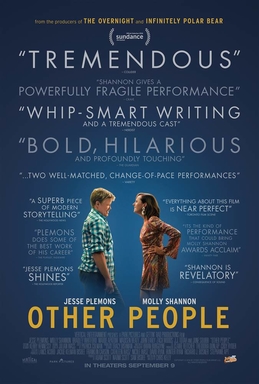
Other People-2016

Other People-2016

Director Chris Kelly

Starring Jesse Plemons, Molly Shannon

Scott’s Review #676

Reviewed August 24, 2017

Grade: B+

2016’s recipient of numerous Independent Film award nominations is equal parts a touching drama and equal parts witty comedy, providing a film experience that crosses more than one genre.

Is it a heavy drama, or is it a comedic achievement?

Without being sappy or overindulgent, Other People is a film that will elicit laughs and tears from viewers fortunate enough to see it. The subject is a tough one- a woman dying of cancer.

The title, in which one character states he always thought cancer was something that happened to “other people,” is poignant.

Jesse Plemons and Molly Shannon play son and mother. The film is both written and directed by Chris Kelly.

The very first scene is a confusing one and caught me off guard. We see the entire Mulcahey clan- father Norman (Bradley Whitford), three kids, David (Plemons), Alex, and Rebeccah, along with their dead mother Joanne (Shannon), all lying in the same bed, sobbing and clutching hands.

Joanne has just succumbed to her battle with cancer. This powerful opening scene, also the final scene, sets the tone as Kelly works his way back, beginning a year before the critical “death scene.”

Cancer is a challenging subject to cover in film, especially going the comedy/drama route.

The sensitive filmmaker must be careful not to trivialize the subject matter with too many comedic elements or heavy drama. Kelly successfully mixes humor and drama well, making it a cross-genre film.

He achieves this with capable talents like Plemons and Shannon. They share tremendous chemistry in every scene they appear in together.

Scenes that show David and Joanne crying in each other’s arms work well, as do others, such as when David takes a giddy Joanne to meet his comedy friends.

Most impressive is that the story in Other People is mainly autobiographical. Kelly, a gay man like the character of David, moved from New York City to Sacramento, California, to tend to his ailing mother, who had also died from cancer.

Actress Shannon reminded him so much of her that he had the fortune of casting the talented lady in his film- the part slated initially to go to Sissy Spacek instead.

Along with Joanne’s battle with cancer, a lovely story about David is included. A gay man, David has broken up with his boyfriend Paul, who previously lived together on the East Coast (though he still pretends to spare Joanne worry), and is returning to the West Coast.

Over the next year, we see Joanne and Norman slowly come to terms with David’s sexuality. The turbulent father/son relationship is explored during the film as Norman, initially hesitant to meet David’s boyfriend, Paul, pays for his airline ticket to attend Joanne’s funeral.

A slight miss with the film is the Norman/David dynamic.

Other than a few hints of Norman encouraging David’s struggling writing career and his obsession with David joining the gym and boxing, it is not clear what issue he takes with his son being gay or why he is uncomfortable with it. Besides the family being rather conservative, no other reason is given.

David’s sisters and grandparents do not seem to take issue with David’s sexuality, though it is not made sure if the grandparents are even aware of it. Is it a machismo thing with Norman?

This part of the story is unclear.

Still, Other People (2016) is a good, small indie film. It is rich with crisp, sharp writing and a tragic “year in the life of a cancer patient. ” The film also features good family drama and the relationships that abound when a family comes together and unites because of a health threat.

The film is nothing that has not been done before, but thanks to good direction, a thoughtful, nuanced approach, and one character’s sexuality mixed in, the film feels relatively fresh.

Independent Spirit Award Nominations: 1 win-Best Male Lead-Jesse Plemons, Best Supporting Female-Molly Shannon (won), Best First Screenplay, Best First Feature

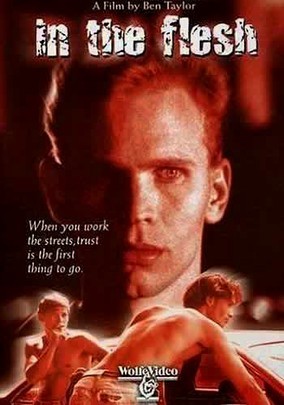
In the Flesh-1998

In the Flesh-1998

Director Ben Taylor

Starring Dane Ritter, Ed Corbin

Scott’s Review #663

Reviewed July 10, 2017

Grade: B

In the Flesh is a steamy, pre-Brokeback Mountain, LGBT film from 1998. The budget for this film is very small and the acting is quite wooden.

My initial reaction was that In the Flesh is a terrible film, yet something sucked me in as a fan, whether the crime theme or the romance (or both).

The atmosphere is quite dreamlike and moody, which I find appealing and the addition of a whodunit murder mystery amid the romantic drama is highly appealing- therefore I hesitantly recommend this film for perhaps a late-night adult viewing.

But be prepared for endless plot holes and unnecessary subplots.

Oliver Beck (Dane Ritter) is a handsome college student who works as a hustler in a dive bar named The Blue Boy in Atlanta, Georgia. He has his share of loyal, older men who use his services and adore him, especially a lonely man named Mac- a barfly at the watering hole.

When closeted Detective Philip Kursch (Ed Corbin) begins an undercover assignment to bust a drug ring at The Blue Boy, their lives intersect, as Philip falls in love with Oliver and investigates his past.

As the drug investigation seems to be quickly forgotten, a murder mystery develops when Mac is murdered at the ATM- Oliver looks on, panics,  and speeds away. When Philip covers Oliver as an alibi, the plot thickens.

Other side stories like a flashback sequence involving Oliver’s past- while driving drunk he killed his best childhood friend, the introduction of his sometime boss and girlfriend, Chloe, and his caring for Lisa, his sister, addicted to heroin- are brought to the table, but really have little to do with the main story and only confuse the plot.

The most compelling element is the relationship between Oliver and Philip and their dysfunctional love story, but many questions abound. Is Philip secretly married or dating a female? We know nothing about his personal life.

Oliver, hustling and hating every minute of it, merely as a way to support Lisa’s habit is ridiculous- why not get her help?

Neither actor Ed Corbin nor Dane Ritter will ever be accused of being the world’s greatest actor, and can hardly act their way out of a paper bag. Both actor’s performances are wooden and unemotional, even when emotion is required in the scene.

Still, oddly this somewhat works in the film.

Regardless of In the Flesh being riddled with plot holes and sub-par acting, the film has some charm.

The moody Atlanta nights, rife with sex and secrets, are quite appealing. A murderer on the loose and disguised save for a green watch is intriguing.

The film also has a mysterious, almost haunting nature, and the muted camera work, whether intentional or the result of a poor DVD copy, works very well.

Since the time is 1998, a time when more and more LGBT films were beginning to be made, but not overly so, In the Flesh and its director, Ben Taylor, deserve credit for even being able to get this film produced and made.

The mainstream success of the LGBT juggernaut, Brokeback Mountain (2006), undoubtedly helped, albeit in a small way, by this film.

Though, strangely, I never noticed the two main characters ever kiss- too soon for 1998?

Not the finest acting nor the best-written screenplay, In the Flesh (1998), is a bare-bones film that will be enjoyed largely by an LGBT audience seeking a peek into a time when these types of films were not running aplenty and typically made in the independent film venue.

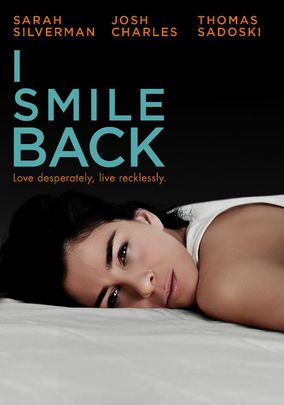
I Smile Back-2015

I Smile Back-2015

Director Adam Salky

Starring Sarah Silverman

Scott’s Review #654

Reviewed June 13, 2017

Grade: B+

As a fan of Sarah Silverman, the comedienne, I was anxious to see the 2015 film, I Smile Back, which garnered her a Screen Actors Guild Award nomination.

Silverman tackles a heavily dramatic role in a film that teeters on being a pure “downer”. Many fans expecting the actress’s comic wit to be featured need not see it.

Rather, I embraced the performance and found the film to be an independent film treat, thanks to Silverman’s powerful performance. She nails the part and carries it to success.

I Smile Back is a small film that I wish had garnered more viewers.

Laney Brooks (Silverman) appears to have it all. She lives an affluent existence in Westchester County, New York with her handsome husband, Bruce (Josh Charles), and their two young children.

With a gorgeous house, dinner parties, and friends, who could ask for anything more?

Bored and troubled by a tough childhood and “daddy issues”, Laney tends to drink too much, abuse drugs and prescription pills, and carry on an affair with her best friend’s husband, all while managing to run a household.

As she gradually spirals down a darker path, Laney sees her perfect world slowly crumble around her.

Throughout the film, I asked, “Are we supposed to root for Laney or dislike her?”

Director Adam Salky does not make it easy to like her.

In addition to her substance abuse use (or over-use), Laney is rather selfish. From the small scenes when Laney drops off her kids from school and is annoyed when the crossing guard and a teacher refuse to give her special treatment, she mutters insults under her breathe as she grabs a cigarette and heads for her scandalous rendezvous.

But when she is put in great peril later in the film, following one of her benders, I could not help but feel deep sympathy for her.

It is a bit unclear what the audience should feel.

This leads me to conclude that the film belongs to Silverman.

What impresses me most is how believable she is in most scenes. She packs creative lunches for her kids and plays fun birthday cake decorating games with them, but in the next breathe snorts cocaine and rails at a neighbor lady for not celebrating Thanksgiving.

Thanks to Silverman, she plays these scenes with gusto.

Some critics have complained about the script, but I find no real fault. While not the strongest element, it is fine, nonetheless.

I Smile Back is a low-budget indie drama that serves its purpose- it does not delve too deeply into the how’s and why’s of her addiction, and a nice scene with Laney’s father (Chris Sarandon) offers no concrete evidence of why this man drove her to drugs by his abandonment.

The film seems to be more about proving a good performance by Silverman than anything else.

Sarah Silverman commands great respect for her dark portrayal in I Smile Back.

This role, combined with her recent turn in Showtime’s Masters of Sex television series, portraying a pregnant lesbian in the 1960s, proves that she has what it takes to compete with the great dramatic actresses of today.

She is much more than a stand-up comic. Here’s to hoping for more drama from this talented lady in the years ahead.

Spa Night-2016

Spa Night-2016

Director Andrew Ahn

Starring Joe Seo

Scott’s Review #645

Reviewed May 19, 2017

Grade: B+

On the surface, Spa Night (2016) may seem like a straight-ahead independent LGBTQ-themed film (of which, in recent years, there has been no shortage), but the film’s plot is twofold.

Sure, it tells the coming-of-age story of a young man’s sexuality. Still, Spa Night is also a story of the boy’s Korean parent’s financial struggles and their desire to raise a son into a successful young man, sacrificing their happiness.

The film’s tone is very subtle, and the action moves slowly, but it is a sweet and relevant story.

David Cho is a shy Korean-American high school student on the cusp of going to college. His parents (who only speak Korean) have sadly recently lost their take-out restaurant in Los Angeles. The parents struggle to make ends meet (she by waitressing, he by doing odd moving jobs), while David takes SAT classes to ensure he gets into a great college.

David is also struggling with his sexuality and one-night visits a local male spa with drunken friends. He gets a job there and begins to experience male-on-male shenanigans taking place on the sly in the spa, all the while developing his blossoming sexual feelings.

David’s development in the story is key- he is resistant to coming out as gay because his parents are traditionally Korean, constantly mentioning David finding a girlfriend and succeeding in school, becoming what they have failed to achieve.

When, at one point, he fools around with another male in the spa, David insists on a no-kissing policy. This reveals to the audience that he has issues with intimacy with another male, and in one compelling scene, some self-loathing occurs.

When he stares too long at a buddy in the bathroom, while both are inebriated, this clues in the friend, who is then distant towards David.

The film is enjoyable because it tells two stories rather than one, which helps it succeed. We also care greatly about David’s parents, who are compassionately portrayed rather than the stereotypical “tiger mom” and rigid father.

Wanting only the best for him and having no clue about his sexuality struggles, they trudge along with their issues. The father drinks too much, and the parents frequently squabble.

This is a clue to the film because it explains why David hesitates to mention anything to them, even though he is close to his parents.

I also enjoyed the slice-of-life and coming-of-age appeal that the film possesses.

Several shots of day-to-day life in Los Angeles are shown, mainly as characters go about their daily routines.

The budget allotted for Spa Night must have certainly been minimal. Still, the lesson learned is that some fantastic films are made for minuscule money, but as long as the characters are rich and the story humanistic, the film succeeds- this is the case in Spa Night.

Almost every character is of Asian descent- I am guessing all Korean actors. This is another positive I give to Spa Night.

In the cinematic world, where other cultures and races are woefully underutilized or still stereotypically portrayed, how refreshing is it that Spa Night breaks some new ground with an LGBTQ-centered film with Korean characters?

Spa Night has deservedly crowned the coveted John Cassavetes Award at the 2016 Independent Spirit Awards (for films made for under $500,000), and director Andrew Ahn is undoubtedly a talented novice director to be on the watch for.

He seems destined to tell good, interesting stories about people.

Independent Spirit Award Nominations: 1 win-John Cassavetes Award (won), Acura Someone to Watch Award

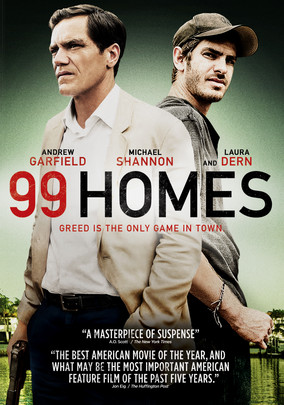
99 Homes-2015

99 Homes-2015

Director Ramin Bahrani

Starring Andrew Garfield, Michael Shannon

Scott’s Review #633

Reviewed April 13, 2017

Grade: B+

99 Homes is a 2015 independent film containing an underlying theme of morality as its central message, bubbling to the surface throughout the run.

Our main hero is faced with a major dilemma.

Set in 2010 amid the dark economic housing crisis where thousands of families lost their homes to foreclosure, the film is depressing but turns uplifting towards the end.

Reminiscent of The Big Short (2015) and Inside Job (2010) in subject matter, we witness a wonderful performance by Andrew Garfield in the lead role, with a worthy supporting turn by Michael Shannon as an opportunist.

Director Ramin Bahrani immediately creates tension with a taut musical score that bombards the screen. We see a poor victim of foreclosure, having shot himself to avoid the humiliation of being evicted from his home, followed by the introduction of a powerful real-estate mogul, Rick Carver.

Carver has wisely capitalized on the slew of Florida working-class families, living well beyond their means and novice homeowners, booted from their homes thanks to adjustable mortgages that they cannot afford to pay.

Andrew Garfield plays Dennis Nash, a struggling construction worker, raising his young son and presumably supporting his mother (Laura Dern).

They are fated to be evicted even though they have tried to win an extension with the court- months behind in their mortgage payments. They feel victimized and are forced to move to a seedy motel that houses many others in the same circumstances.

Desperate for work, Dennis ironically ends up working for Rick and becomes encased in the dishonest world of real estate scheming- manipulating banking and government rules at the expense of homeowners down on their luck.

The main point is the exploitation of the “working man” at the expense of “the man” and Rick is an example of this beast. Dennis represents the goodness of humanity as he wrestles with the moral repercussions of evicting families since he has met with similar circumstances.

Is the money worth the pain and the hardship he causes people? How is it Rick has no morals, but Dennis does? Will Dennis choose money and lose himself in the process? What would the viewer do?

Despite the morality questions, the film does play like a slick thriller, with a few slight contrivances and the “wrapped up in a neat bow” style ending.

This slightly makes the film lose its luster at times. It is implied that it ends happily for Dennis and that Rick gets his “just desserts”, but what about the characters kicked out of their homes?

Sadly, as in real life, they are largely forgotten by the end and play as footnotes in a larger story. Some follow-up as to what happens to them might have been nice.

99 Homes is a thinking man’s film and will undoubtedly leave the viewer asking what he or she would do in many situations that Dennis faces.

The emotions ooze from the face of Andrew Garfield as Bahrani uses many close-ups and enough cannot be said for Garfield’s bravura performance.

In one heart-wrenching scene, he is forced to evict a man and his wife and children from their home, the man is reduced to tears, comforted by his wife-Dennis is pained.

In another, an elderly man with nowhere to go is evicted, and defeated by the side of the road.

These scenes may have played as overwrought, but Garfield convincingly brings honesty and raw emotion to the work.

Laura Dern is good in her role as a young mother, Lynn,  to Garfield’s Dennis and I am perplexed why she was cast- she barely seems old enough to play convincingly as his Mom, but she does pull it off.

However, I could not help but desire more meat from this Oscar-nominated Actress- sure there is one great scene when Lynn realizes the extent of Dennis’s involvement with Rick, but I wanted more.

Still, the acting all around in this film is superb.

What left me so bothered by 99 Homes (2015) is that situations just like the ones that played out in the film are examples of countless real-life occurrences people experienced due to greed, dishonesty, and uncaring fellow human beings and that is a sad realization.

Director, Bharani, surrounded by a stellar cast, brings this realism to the big screen in raw, honest, storytelling.

Independent Spirit Award Nominations: Best Supporting Male-Michael Shannon

Chained-2012

Chained-2012

Director Jennifer Lynch

Starring Vincent D’Onofrio

Scott’s Review #627

Reviewed March 24, 2017

Grade: B-

Chained is a 2012 independent horror film directed by Jennifer Lynch, who is the daughter of the brilliant film and television director, David Lynch.

His influence is readily felt throughout.

The film is an exercise in cerebral, psychological horror, and is quite mesmerizing for most of the experience. The ending, however, is the pits and takes away from the enjoyment of the rest of the film in its asinine, quickly wrapped-up, conclusion.

The film is set in an unknown area- all the audience knows is a  decrepit, isolated, cabin in the middle of nowhere and that the shack exists in somewhat proximity to a college town.

Since the film is shot in Canada that is a good enough locale for me to accept.

One day a seemingly happy husband drops off his wife and nine-year-old son at the movies but implores them to take a taxi home as the bus is too dangerous. When they heed his advice, they are accosted by a deranged serial killer, Bob (D’Onofrio), who drives a cab and whisks them away to his remote home.

After he kills the mother, he makes the son, whom he re-names Rabbit, his slave, reducing him to household chores and a somewhat accomplice to the subsequent victims he brings home.

As the years pass and Bob continues to kill, he is determined to have, a now mature, Rabbit, follow in his footsteps.

A large chunk of Chained (and the film is aptly named because Bob commonly keeps Rabbit chained) takes place in Bob’s lonely home and Bob and Rabbit are all each other have for support. Bob presumably earns a living by stealing the cash his victims carry.

Many scenes of a binding nature, albeit perverse, are featured as the two dole away the time between Bob’s kills, almost like a father and son.

Jennifer Lynch wisely moves the film at a slow pace for appropriate build-up.

Bob’s psychologically troubled childhood is told through flashbacks as he is victimized by his abusive father and forced to have sex with his mother, who blames him rather than her husband.

As a result, Bob hates women, and lures victim after victim into his cab and then slices and dices them back at his home.

Bob is sympathetic, like a wounded bird, and whether he rapes the victims before killing them is unclear, as much happens off-screen.

The cabin is purposely suffocating and when Bob teaches Rabbit intellectual facts and encourages him to read and study to become smart, it is a bonding experience.

Slowly, Bob trusts Rabbit more and more.

When Bob makes Rabbit pick out a young girl in a school yearbook to kill, the film kicks into high gear. Suddenly, it becomes vague whether Rabbit is loyal to Bob or still determined to escape. Will he help his intended victim instead of killing her?

David Lynch’s imprint is blatant in both the pacing of the film and more specifically in the low hum musical score, common in his films.

Daughter Jennifer knows her father’s techniques as they continually come into play. A nice homage to Mulholland Drive (1992) appears when a sweet older couple rides in the back of Bob’s cab, reminiscent of the older couple featured in Mulholland Drive.

The gloomy ambiance is highly effective in Chained and the relationship between Bob and Rabbit, not sexual or overly violent, becomes rather sweet in some moments.

The rushed conclusion of the film is disastrous and Lynch’s attempt at a twist goes haywire in the “makes sense” department.

After a compelling fight scene with Bob, Rabbit finally kills him, escapes his clutches, and returns to his father’s open arms (now newly re-married with another son) only to reveal to his father that he knows he orchestrated Rabbit and his mom’s abduction years ago and that Bob is Rabbit’s uncle!

To matters even more confusing, after a dramatic event, Rabbit is sent away yet again and returns to the cabin as his only safe place.

This final act is a real dog, makes little sense, and is tough to digest.

I will give some liberties to 2012’s Chained since the director is spawned from the great David Lynch and the mood and several characteristics mirror his work, but still with her unique vision an obvious characteristic.

Most of the film is a solid effort, but due to the ending of the film being such a letdown, the body of work seems incomplete.

BearCity-2010

BearCity-2010

Director Douglas Langway

Starring Joe Conti, Stephen Guarino

Scott’s Review #626

Reviewed March 19, 2017

Grade: B

BearCity is a small, independent, LGBT, coming-of-age film that tells of a young man living in New York City, and his exploration of a sub-culture within the LGBT community and the subsequent romance that follows.

The film is a comedy and has a “Sex in the City” or “Queer as Folk” approach to its storytelling- a group of close-knit friends and raunchy and gratuitous to be sure.

The budget is very small and some aspects are rather amateurish, but the film is enjoyable, especially for those exposed to the LGBT lifestyle.

The film is not heavy nor are any of the characters dealing with “coming out” issues, but rather it is a fun sex comedy romp.

Our central character, Tyler (Joe Conti), is a young man in his twenties, an aspiring actor, who moves to New York City to pursue his career, with a mind for casual dating.

His roommates encourage him to date Abercrombie and Fitch types, but Tyler comes to realize he prefers “bear” types- mature, hairy men.

On the sly, he begins to pursue this subculture and makes many friends. The apple of his eye, handsome Roger (Gerald McCullough) is a popular mature man, distinguished in the bear circle, and risks his reputation with “the bears” by falling in love with Tyler.

The two men spend the greater part of the film conquering their respective fears and finding their way into each other’s arms in a predictable ending.

BearCity is a fun farce and nothing very heavy and the feature of a strong circle of friends is a nice, positive portrayal- all of the friends connect well and stick by each other through thick and thin.

Comical sub-plots abound such as one couple (Brent and Fred) awkward parlay into the world of threesomes with unsuccessful results.

Another bear who is unemployed, and grossly obese, decides to undergo weight loss surgery much to the chagrin of his hunky boyfriend.

The main story though belongs to Tyler and Roger and their inevitable reunion can be seen miles away. The film throws various hurdles in their ways, such as a third-person briefly dating Roger, or Roger’s commitment issues, but the climax of the film will be no surprise to anyone.

Tyler and Roger make a nice couple as a whole, but perplexing is how the film makes Roger the undisputed leader of the bear group when he is a lean, muscular man- not a “bear” at all!

This is odd to me, but BearCity is so light-hearted that I suppose I can let this detail slide in favor of a good romance.

Critically, the film is nice but quite amateurish, and super low-budget. The acting, especially by some of the supporting characters (the pre-surgery guy’s boyfriend is the most glaring example), is not great.

I half-expected him to accidentally look at the camera.

Additionally, the film has a low-budget look and feel, which on one level is fine, but combined with the not-so-stellar acting, enhances the inexperience of the cast and crew. The film is tough to take too seriously- if this is even the intention of the filmmakers.

The film is a logistical treat for anyone privy to popular gay hangouts in New York City- specifically The Eagle and The Ramrod, both locales are featured prominently, and the use of many real-life people who hang out at those establishments are used throughout the production.

BearCity (2010) is not a bad experience and a film that is light and comical within the LGBT community seems rather fresh compared to the myriad of dramatic and heavy films that exist.

At the same time, the film teeters towards goofy too much with more than one silly, sex-crazed, stereotypical gay man, that it almost gives a bad impression, so the film has mixed results for me.

American Honey-2016

American Honey-2016

Director Andrea Arnold

Starring Sasha Lane, Shia LaBeouf

Scott’s Review #622

Reviewed March 6, 2017

Grade: A-

American Honey (2016) is an unconventional coming-of-age drama that deserves kudos for being shot on a shoestring budget and having something of substance to tell.

The film is mainly shot outdoors in heat-drenched Oklahoma, Nebraska, and Kansas during the summer. It follows a group of rebellious, lonely teenagers who attempt to sell magazines as part of a shady con organization.

Their female leader uses cult-like rallying techniques to achieve loyalty.

The film is shot mainly with hand-held cameras and uses only natural light, which is an admirable feat in filmmaking.

The film’s central character is an eighteen-year-old girl named Star, played by novice actress Sasha Lane.

Saddled with a deadbeat boyfriend with two young kids that she is forced to care for, she takes food from dumpsters to survive.

One day, she is approached by a charismatic, handsome bad boy, Jake (Shia LaBeouf). Jake and a group of teenagers offer her a job in Kansas.

Hesitant but realizing her dead-end existence, she accepts the mysterious job and travels with other unsavory characters across the states, where they prey on wealthy, religious types willing to lend a hand under the guise of selling them magazines.

The central story envelopes Star, her romantic feelings for Jake, and the quandaries she faces on the road. She drinks, smokes, curses, and is sexually active, yet also savvy and wise beyond her years.

The audience wonders if she will continue this lifestyle and worries when she meets older men—all rather well-mannered and affluent.

Will they pay her for her magazines or some other form of entertainment? How will Star handle propositions and scrapes in and out of precarious situations? Throughout the film, Star grows up and becomes kind and confident.

American Honey is extremely lengthy at two hours and forty-three minutes long, especially given that the film is an independent feature and does not seem to contain many concrete plot points or much of a conclusion.

It seems to go on and on and on.

Despite this, the film never bored me. I was pretty enraptured by the antics of the story’s characters, and I found myself quite fond of the surprising love story shrouded in the hip-hop and rap soundtrack.

Star and Jake (thanks mainly to the talents of Lane and LaBeouf) have genuine chemistry and likability as a couple.

The mystery surrounding Star is we know nothing about her parents or family or how she came to this existence at such a young age. At one point, she does mention her mother dying of a meth overdose, but it is unclear whether she makes this story up for the benefit of a magazine sale or if it is the truth.

Star is rebellious but brilliant and capable, all the while exhibiting kindness to strange children and her “colleagues.”

Two key aspects of American Honey are interesting to note: the film uses almost all non-actors. Director Andrea Arnold scouted and offered roles to most of the kids at local malls or various hangouts, so the film has a powerful rawness and energy, given that it is largely improvised.

Also, the film is almost entirely shot using a hand-held camera or cellphone, which creates a shaky, documentary-style feel. However, these characteristics do not give American Honey an amateurish feel; instead, they give the film an authentic quality.

The left-of-the-center approach of featuring male frontal nudity and same-sex relations gives the film much credo as an alternative film- the teens also swear and use drugs quite a bit, which could turn some off.

Receiving a heap of 2016 Independent Film award nominations (but winning none), my reason for watching American Honey (2016) breathes some fresh air into the world of independent cinema, where sometimes too many big-name stars appear in the indies to garner some credibility.

Watching a film of novices or individuals with no acting aspirations creates a good story that is worth something. And kudos to Arnold for spinning such a fresh tale.

Independent Spirit Award Nominations: Best Feature, Best Director-Andrea Arnold, Best Female Lead-Sasha Lane, Best Supporting Male-Shia LaBeouf, Best Supporting Female-Riley Keough, Best Cinematography

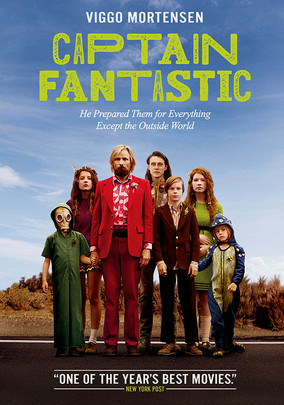
Captain Fantastic-2016

Captain Fantastic-2016

Director Matt Ross

Starring Viggo Mortensen

Scott’s Review #616

Reviewed February 10, 2017

Grade: B+

A thought-provoking story that raises a question of home-schooled, non-traditional book intelligence versus the lack of social norms and interactions and debates about which upbringings are more relevant, Captain Fantastic (2016) is a terrific film with a moral center.

The film, which stars Viggo Mortensen, is a family drama with a unique spin and edgy subject matter. Mortensen is not afraid to tackle complex and thoughtful roles.

Although it is perhaps not as gritty as it could have been and feels a bit safe, it still entertains and elicits thought, a critical aspect of film often lacking in modern cinema.

Director Matt Ross immediately treats us to aerial views of the green and mountainous Pacific Northwest, where a family of seven- one father and six children aged five to seventeen, silently prey on and kill a deer grazing in the forest. This is their dinner.

The family is unorthodox, to say the least.

Led by Ben Cash (Mortensen), he teaches the children how to fight, how to survive, and how to be ready for any situation. They are brilliant kids who can recite the Bill of Rights and the most complex literature.

Soon, it is revealed that their mother, Leslie, has committed suicide, and a battle ensues between her parents (Frank Langella and Ann Dowd), who is determined to bury her “properly” with a Christian funeral, and Ben and his children, who are determined to honor her last wishes for cremation.

Ben and the gang travel via their run-down school bus to New Mexico, meeting local townspeople as a battle of cultures occurs.

I commend Ross for creating a story that challenges the viewer to think, depending on the viewer’s religious or political views. There is a risk of people either loving or hating the film.

The film is skewed toward the left, as in the dinner and sleepover scenes with Ben’s sister. Her “Americanized” family is awkward, and the families have entirely different styles.

Ross makes it clear that Ben and his family are the intelligent ones, and his sister’s kids are pretty dumb, not even knowing what the Bill of Rights is and mindlessly playing violent video games.

The fact that they are a “typical American family” is sad and quite telling of wRoss’s perspective

Captain Fantastic wisely shows that either side is not perfect. His oldest son, Bodevan, blooming sexually, has an awkward encounter with a pretty girl, proposing marriage to her with her mother present because he knows no social norms.

A younger son is attracted to a “normal” life with his grandparents, who are a wealthy couple. The grandparents are not presented as bad people; instead, they want the best for their grandchildren and fear how their lives will turn out without better structure or what they perceive as a better upbringing.

Some of the kids blame Ben for their lack of social skills and being what they perceive as “freaks.”

The film does end safely as a happy medium is ultimately reached, but I never felt cheapened by this result. I found Captain Fantastic rich in intelligent writing and a challenging tale.

Many moments of “what would you do?” were brought to the forefront. Mortensen portrays Ben Cash flawlessly, mixing just the right vulnerability with the stubbornness of the character, and it is an excellent film for anyone fearing being intelligent is not cool because it is.

Oscar Nominations: Best Actor-Viggo Mortensen

Independent Spirit Award Nominations: Best Male Lead-Viggo Mortensen

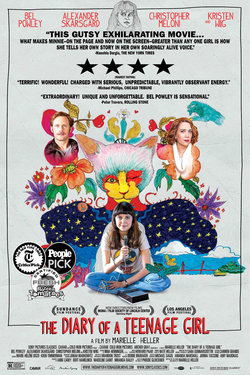
The Diary of a Teenage Girl-2015

The Diary of a Teenage Girl-2015

Director Marielle Heller

Starring Bel Powley, Alexander Skarsgard, Kristen Wiig

Scott’s Review #614

Reviewed February 2, 2017

Grade: A-

I was not sure what I expected from the Independent Spirit award-winning film, Diary of a Teenage Girl (2015).

I surmised that I would be treated to a light-hearted, yet well-written coming-of-age story, but the film is much darker than I would have thought, and this is a plus.

The film is edgy.

There is so much depth to the central characters and an incredibly complex performance by newcomer, Bel Powley in the title role.

Stars Kristen Wiig and Alexander Skarsgard also give tremendous performances.

The film is based on the graphic novel The Diary of a Teenage Girl: An Account in Words and Pictures by Phoebe Gloeckner.

Set in 1976 in San Francisco, a time filled with hippies, drugs, music, and life, fifteen-year-old Minnie, an aspiring comic book writer, is as insecure as any typical fifteen-year-old is.

With wide eyes and stringy hair, she is cute, but rather quirky looking, not the prettiest girl in her class, and records her deepest thoughts into a cassette recorder. Minnie is intelligent and worldly, accepting of alternative lifestyles and drugs.

She is wise well beyond her years.

Minnie’s mother Charlotte (Wiig), lives a bohemian lifestyle, constantly partying and losing jobs, and is divorced from Minnie’s and sister Gretel’s affluent, but mostly absent father, Pascal (Christopher Meloni).

The girls refer to him as “Pascal” instead of “Dad”, which he hates. Determined to lose her virginity, Minnie is man crazy and develops a sweet relationship with her mother’s boyfriend, Monroe (Skarsgard).

Things begin slowly but develop into a full-blown sexual relationship. A controversial piece to the story is that Monroe is thirty-five years old- Minnie is only fifteen. Both Monroe’s and Minnie’s feelings are challenged due to circumstances and Minnie’s emotions spiral out of control.

The subject matter of The Diary of a Teenage Girl will undoubtedly be off-putting for many folks as the actions are technically statutory rape.

The film never goes in that direction.

Rather, director Marielle Heller crafts a tender story of young love, and when there is too much drama comic relief is added.

Monroe is never the aggressor and Minnie is. She is a young girl who knows what she wants.

Since the director is female there is no hint of Minnie being taken advantage of or regretting her affair- the film is not about this.

Rather, it is about a young girl with blooming sexuality and emotions finding herself in the world. I admire this left-of-center approach to the story immensely.

Other aspects of the film may be too much for some. Minnie and her best friend pretend to be prostitutes and orally service two young men in the men’s room on a lark.

Later, Charlotte uses filthy language to describe Monroe’s and Minnie’s relationship.

The film is not safe, but daring and honest. I admire its courage.

Enough cannot be said for the three principal actors in Diary of a Teenage Girl. Bel Powley is a find!

Nominated for an Independent Spirit award, this amazing young actress should have been recognized by the Academy Awards, but she no doubt has many years and films ahead of her.

She is a “regular girl” type and reminds me of actress Lena Dunham in her looks and her rich delivery.

Kristen Wiig is fantastic and is evolving into a great dramatic actress. As Charlotte, Wiig is wonderfully insecure and an offbeat mother. She does not discipline, but rather befriends her daughters, showering them with hugs and kisses and giving vulnerable neediness to the character.

Wiig, dynamite in the comedy/drama The Skeleton Twins (2014), has embraced small, but important indie films, and kudos to her for this.

Lastly, Skarsgard, mainly known as HBO’s villainous Eric on True Blood, is as inspiring as Monroe.

Providing his character with sympathy and humanity (tough when having an affair with a teenage girl who also happens to be your girlfriend’s daughter), Skarsgard evokes so much emotion into the role that you almost root for Monroe and Minnie before remembering that she is too emotionally fragile.

Skarsgard is brilliant in Monroe’s breakdown scene. I hope audiences see him in more of these complex roles as he is far more than a hunky actor.

Diary of a Teenage Girl (2015) intersperses graphic novel/animated elements into the story told from the perspective of Minnie and the character narrates parts of the film.

This authentic story is not only for teenagers but for smart thinkers and anyone who has ever been over their heads in the emotions of love.

Independent Spirit Award Nominations: 1 win-Best Female Lead-Bel Powley, Best First Screenplay, Best First Feature (won)

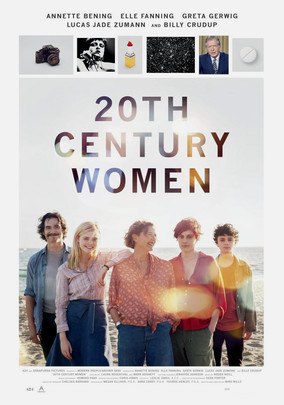
20th Century Women-2016

20th Century Women-2016

Director Mike Mills

Starring Annette Benning, Greta Gerwig, Elle Fanning

Scott’s Review #611

Reviewed January 22, 2017

Grade: A-

Annette Benning shines in her leading role in 20th Century Women (2016), a film directed by Mike Mills, a formidable independent filmmaker whose credits include 2010’s Beginners and 2005’s Thumbsucker.

In 20th Century Women, Mills serves as director and writer, so the film is his vision.

All five principal characters are quirky and well-written, though Benning’s is the most nuanced and fascinating.

The time is 1979, Santa Barbara. Despite the image of Santa Barbara as a wealthy, grand town dripping with the rich and powerful (perhaps due to the sweeping 1980s daytime soap opera of the same name), Mills does not present this film as such.

He presents Santa Barbara as a more artsy town, at least where his characters are concerned.

Benning plays Dorothea Fields, a fifty-five-year-old divorced mother of a fifteen-year-old boy, Jaimie. She is a free spirit who allows two runaways to live with her: Abbie (Greta Gerwig), a twenty-five-year-old aspiring photographer with fuchsia-colored hair recovering from cervical cancer, and William (Billy Crudup), a handyman.

They are joined by Jaimie’s good friend, Julie (Elle Fanning), a depressed neighbor.

The film nicely explores each character’s trials and tribulations and their interactions with each other in a highly quirky manner, and we fall in love with each of them.

Dorothea enlists Abbie and Julie’s help to have a positive influence after he nearly dies after a foolish teenage prank.

Mills successfully gives the period a slice-of-life feel, heavily referencing punk rock and the political climate in the film. Bands such as Talking Heads and Black Flag focus on Dorothea’s striving to learn what young people like, to remain youthful, and to stay in touch with her charges.

Dorothea is a chain smoker, and many scenes feature her pondering a situation while taking long drags. I love this aspect of the film as it showcases Benning’s cerebral performance. She is a thoughtful woman who wants her son to grow up sane and productive since his father is absent.

Sex and feminism are significant themes in the film. Abbie loans Jaimie two books by female feminist authors to help him better understand women.

When he begins to discuss orgasms and a strange conversation about sex and virginity ensues during a dinner party Dorothea is hosting, the graphic detail is a bit too much for Dorothea.

She is a conflicted character- open-minded and caring; when it comes to her son, she has a more conservative edge while trying to remain open to his new experiences as a teen.

20th Century Women is strictly a character-driven film with enormous strength. Each character is in a different place in their lives, and I adore how the film gives a conclusion to each of the characters’ lives in the years to come.

Indeed, the film follows the “happily ever after” formula, but this does not bother me. Instead, the film is so well composed that the characters’ lives enrapture me.

Admittedly, the film is slow-moving at times, but this is due to the richness of the dialogue—nothing is rushed.

Kudos to the cast. Gerwig and Fanning are incredibly excellent. Fanning’s Julie is a unique character- her mother is a psychiatrist who forces her to attend group sessions that she holds. Julie has a step-sister with cerebral palsy, so Julie frequently sleeps at Dorothea’s house as a way to escape her life.

Sexual active, Julie has a pregnancy scare during the story.

A coming of age type film set in an enjoyable time, 20th Century Women (2016) showcases the talents of a stellar cast led by Benning, takes its audience into a wonderful, character-themed world, and discusses the lives of its intriguing characters with a clear portrayal of life in the late 1970s.

Oscar Nominations: Best Original Screenplay

Independent Spirit Award Nominations: Best Female Lead-Annette Bening, Best Screenplay

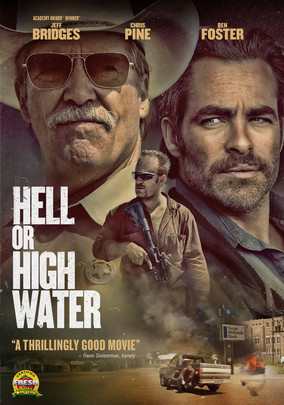
Hell or High Water-2016

Hell or High Water-2016

Director David Mackenzie

Starring Jeff Bridges, Chris Pine, Ben Foster

Scott’s Review #609

Reviewed January 16, 2017

Grade: B+

Hell or High Water (2016), a splendid tale of bank robbers chased by law enforcement officers in rural western Texas, is reminiscent of the Coen Brothers’ No Country for Old Men (2007) or a classic Sam Peckinpah film from the 1970s.

The film provides a good story with a morality tale, so the viewer is unsure who to root for—the good gr tad guys. This gives the film substance compared to the typical action-guy film, which is done to death.

Odd, quirky, minor characters are interspersed throughout the film, which adds comedy and a unique feel.

David Mackenzie directed the film, but up until now, it has been unknown to me.

Chris Pine and Ben Foster play Toby and Tanner, two brothers who embark on small-town bank robberies to save their recently deceased mother’s ranch.

Tanner (Foster) is the more seasoned criminal, having spent time in jail and being more volatile than his brother. Toby (Pine) is a family man with two kids and is more intelligent and sensible than his brother.

Two Texas Rangers, Marcus Hamilton (Bridges), a grizzled man weeks away from retirement, and his partner, Alberto Parker (Gil Birmingham), pursue them.

What I enjoyed most about this film is the authenticity of the setting.

The film was shot in New Mexico but meant to be in West Texas. This is believable, and the cinematography is gorgeous. The vastness of the land and the sticky desert heat are filmed very well.

Small-town Texas is portrayed as tiny characters introduced as townspeople, giving much credo to the film.

My favorites are the diner waitress-smitten with the handsome Toby (and her $200 tip), and t-bone waitress- grizzled and rude after forty-four years in the same place. Their sassy and abrasive behavior works and adds much to the film.

Dale Dickey is a treat in any film, and her turn as a bank employee is a joy.

How nice to see Chris Pine in a challenging role. His character is conflicted morally. Not wanting to hurt anyone, he struggles with the robberies and wants to do right by his kids and mother.

He is a decent man caught in uncertain circumstances, and Pine does an excellent job of portraying him, proving that the actor is becoming more than just a pretty face.

Bridges plays anger quite well, and it is nice to see the actor succeeding career-wise in his golden years. His Texas Ranger character is determined to uphold the law. Still, below the surface, he is more than a bit worried about his upcoming retirement, closing a chapter in his life that is undoubtedly important to him.

His relationship with his partner is jovial and buddy-like, but is there an underlying physical attraction between the men?

The film does not go there, but perhaps on a subconscious level, it is hinted at.

A fantastic scene laced with tension occurs near the film’s end when two of the main characters are killed. It is a stand-off of sorts atop a desert mountain ridge. One of the characters loses it, which results in a shoot-out and a shocking loss of life.

The scene is excellent in that it is a good, old-fashioned shoot ’em up done well.

Hell or High Water (2016) is a gritty action film with excellent elements, nice characterization, and clean fun. It’s a throwback to a long-time crime western without the standard stock characters.

This film is more layered than the traditional and intelligently written, achieving something unique.

Oscar Nominations: Best Picture, Best Supporting Actor-Jeff Bridges, Best Original Screenplay, Best Film Editing

Independent Spirit Award Nominations: 1 win-Best Supporting Male-Ben Foster (won), Best Screenplay, Best Editing

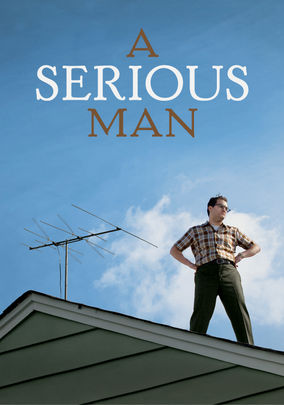
A Serious Man-2009

A Serious Man-2009

Director Joel Coen, Ethan Coen

Starring Michael Stuhlbarg

Scott’s Review #582

Reviewed January 4, 2017

Grade: B

A Serious Man (2009) is a quirky, odd film that is a character study.

Directed by the Coen brothers who typically have an offbeat style to their films (No Country For Old Men-2007, and Fargo-1996 spring to mind), A Serious Man is no different, offering wonderful, richly written supporting characters.

The film, however, lacks the violence of other Coen Brothers films, instead, adding more humorous situations and an overall comical premise.

It tells the story of a Jewish Professor, Larry Gopnik (Michael Stuhlbarg), living in the 1960s, and has a string of bad luck. People close to Larry begin to drop dead all around him and he seems cursed with a string of bad luck.

The film centers around how he deals with crisis after crisis.

The first half of the film admittedly drags a bit, but the second part picks up nicely. The plot suddenly comes to a head rather quickly.

To stress, A Serious Man is a witty, dark comedy, so much of the dialogue is either tongue-in-cheek or dry.

The rabbis that Larry meets, combined with his son Danny and wife Judith are very funny and well-carved-out characters, many certain “types”.

The character of Larry also contained elements of the Larry David character on TV’s Curb Your Enthusiasm.

Also, for those cinema lovers who pay close attention to or have an appreciation for good set design, the film captures the 1960’s style (dress, furniture, cars), perfectly.

Oscar Nominations: Best Picture, Best Original Screenplay

Independent Spirit Award Nominations: 2 wins-Best Director-Joel and Ethan Coen, Best Cinematography (won), Robert Altman Award (won)

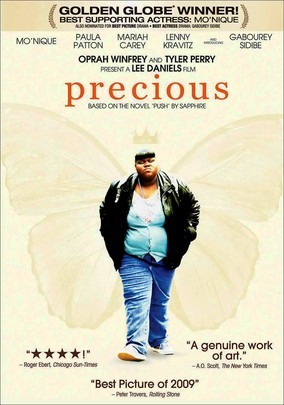
Precious: Based on the Novel Push by Sapphire-2009

Precious: Based on the Novel Push by Sapphire-2009

Director Lee Daniels

Starring Gabourey Sidibe, Mo’Nique

Scott’s Review #581

Reviewed January 2, 2017

Grade: A

Precious is an amazing film and one of the best to come out of the year 2009. Due to the hype, I had high expectations entering the theater and I was not disappointed.

The film is an in-your-face slug-fest with some of the rawest acting performed in recent years.

The marvelous aspect is that the film takes the viewer into a world that is probably not one’s own experience and makes them empathize with the characters.

The film is very disturbing at times, raw, gritty, and violent, but also has some light, humorous moments and an oh-so-important film to see. There is a heartwarming charm that offsets the violence perfectly.

The story itself, and the direction are basic, but the wonderful acting is what sets this film on a high pedestal. Gabourey Sidibe, a relatively unknown and novice actress, gives an astounding turn as an unloved, overweight, pregnant teen mom.

She is abused by both of her parents in separate ways and seems to have a life of pain ahead of her.

Paula Patton, who has been in several fluff films, impresses as a teacher who takes a shine to Precious. Mariah Carey is simply unrecognizable as a plain-looking social worker, who is also a sympathetic character.

However, actress and comedienne, Mo’Nique plays an unfeeling, brutal, violent mother to the hilt and holds nothing back. Her Best Supporting Actress Oscar win was deserving.

Everyone should see this fantastic slice-of-life film.

Oscar Nominations: 2 wins-Best Picture, Best Director-Lee Daniels, Best Actress-Gabourey Sidibe, Best Supporting Actress-Mo’Nique (won), Best Adapted Screenplay (won), Best Film Editing

Independent Spirit Award Nominations: 5 wins-Best Feature (won), Best Director-Lee Daniels (won), Best Female Lead-Gabourey Sidibe (won), Best Supporting Female-Mo’Nique (won), Best First Screenplay (won)

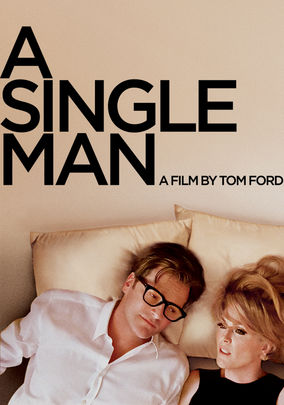
A Single Man-2009

A Single Man-2009

Director Tom Ford

Starring Colin Firth, Julianne Moore

Scott’s Review #577

Reviewed January 1, 2017

Grade: B+

A Single Man (2009) is a dark film fraught with meaning and honesty-it is a very good movie. It is a melancholy film and a bit surreal, but worth seeing.

The acting, especially from star Colin Firth, is first-rate.

The subject matter involves being gay in the 1950s and 1960s and the ramifications of living a forbidden and secretive life.

The intelligent film is based on the novel of the same name, written by Christopher Isherwood.

The film is written as a sad tale of a day in the life of a gay man living in the 1960s.

Firth portrays George Falconer, a British college professor living in liberal-minded Los Angeles. When his much younger lover (presumably a student) dies, George plans to commit suicide.

Moore plays his best friend and confidante, Charley, who is dealing with her demons.

Through flashbacks, we learn about George and his lover Jim’s secret life together and the challenges that ensued. George also had a strange relationship with a male prostitute.

We learn the path of life George leads following Jim’s tragic death- we also see them happy at one time.

A Single Man (2009) is a bit of a downer containing a definite dream-like feel and is heavy on the flashbacks, but this is intriguing to the picture and not a complaint.

A very good, but not an uplifting film.

Oscar Nominations: Best Actor-Colin Firth

Independent Spirit Award Nominations: Best Male Lead-Colin Firth, Best First Screenplay, Best First Feature

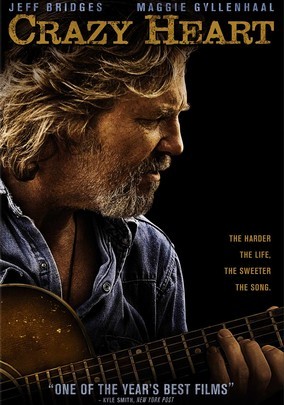
Crazy Heart-2009

Crazy Heart-2009

Director Scott Cooper

Starring Jeff Bridges, Maggie Gyllenhaal

Scott’s Review #571

Reviewed December 29, 2016

Grade: A-

Crazy Heart (2009) is a film that is perfectly crafted for Jeff Bridge’s talents as an actor and the role seems written specifically for him.

To that end, it is a showcase for the actor, and as proof, he was awarded the Best Actor Oscar.

He plays surly, grizzled, and rode-hard to the hilt. His chemistry with co-star Maggie Gyllenhaal is fantastic- despite her character being much younger than his.

The first directorial effort by Scott Cooper, who does an outstanding job.

Gyllenhaal plays a reporter, Jean Craddock, who becomes attached and fascinated by Bad Blake (Bridges), a former country-western star turned alcoholic and now a washed-up old man.

He has mentored an upstart played by Colin Farrell, who has since usurped Bad Blake in popularity, leading Blake to depression and alcohol to relieve his pain. He still performs, but in dirty hotels or bowling alleys, for peanuts.

Bridge’s character reminds me so much of Mickey Rourke’s character “Randy the Ram” in The Wrestler, from 2008, so anyone who enjoyed the latter will enjoy the former.

One might watch the two exceptional films in tandem- and in both, there appears a younger female character who meshes well with the stories.

The story portrayed in Crazy Heart is gritty and depressing, yet also heartwarming and sentimental. We root for Blake and Jean to succeed, battling Blake’s many demons.

Crazy Heart is very well-acted and genuine.

The film is nice as it is a character-driven film instead of a story-dictated one.

Oscar Nominations: 2 wins-Best Actor-Jeff Bridges (won), Best Supporting Actress-Maggie Gyllenhaal, Best Original Song-“The Weary Kind” (won)

Independent Spirit Award Nominations: 2 wins-Best Male Lead-Jeff Bridges (won), Best First Screenplay, Best First Feature (won)

The Kids Are All Right-2010

The Kids Are All Right-2010

Director Lisa Cholodenko

Starring Julianne Moore, Annette Bening

Scott’s Review #560

Reviewed December 24, 2016

Grade: A

The Kids Are All Right is a fantastic film!

In my opinion, the film is one of the best of the year 2010 and was rewarded with a deserving Best Picture nomination.

Annette Bening and Mark Ruffalo were also honored with acting nominations. Bening gives the best performance in the film.

Continuing the trend of more exposure to LGBT issues, The Kids Are All Right tells of a same-sex-centered family dealing with real issues.

Though not dark, the film is not light or played strictly for laughs. It is a family drama that shows how same-sex family units face problems like everyone else, and how they deal with them, never forgetting how much they love each other.

The writing is intelligent, deeply layered, and rich. The acting is superb, and the characters are complex.

The best scene is one where the entire family is eating dinner- suddenly the camera focuses on one person and goes in slow motion, the other voices become muffled and distant, and painful emotion is portrayed on one of the character’s faces as a revelation comes to the surface.

Brilliant.

Even the seemingly unimportant dialogue throughout the film is smart as it shows the bond of the family that cannot ultimately be broken.

The Kids Are All Right (2010) is a worthwhile and compelling film.

Oscar Nominations: Best Picture, Best Actress-Annette Bening, Best Supporting Actor-Mark Ruffalo, Best Original Screenplay

Independent Spirit Award Nominations: 1 win-Best Feature, Best Director-Lisa Cholodenko, Best Female Lead-Annette Bening, Best Supporting Male-Mark Ruffalo, Best Screenplay (won)

Get Low-2009

Get Low-2009

Director Aaron Schneider

Starring Robert Duvall, Sissy Spacek, Bill Murray

Scott’s Review #557

Reviewed December 22, 2016

Grade: B+

Get Low (2009) is an understated, gentle, sweet story set in Tennessee during the late 1930s.

The film is greatly enhanced by the stellar cast consisting of Robert Duvall, Sissy Spacek, and Bill Murray.

I dislike the title of the film as, to me, it feels dull.

Despite the very slow pace and the understated feel, the film is successful as one will become engaged with the character’s lives.

It tells the story of an elderly man named Felix Bush (DuVall), who decides to plan his living funeral for the small town to attend. Felix is a hermit who lives deep in the woods of Tennessee. He is despised, yet largely unknown by the townspeople, who only have past stories they have heard about him to formulate their opinions.

He hides a long ago, dark secret, which predictably is eventually revealed.

DuVall is the standout in this movie, but Sissy Spacek and Bill Murray are also very good- unsurprising based on their string of acting credits.

Enjoyable are the exterior scenes of rural Tennessee, giving an authentic look into the lives of small-town folks of that period.

I could have gone for a quicker pace, although I love slow-moving stories, as long as a pay-off is to be received. The reveal served satisfactorily, but I could have gone for some juicer scandals and revelations.

Get Low (2009) is a simple, yet moving story about life, regret, secrets, and religion.

Independent Spirit Award Nominations: 1 win-Best Supporting Male-Bill Murray, Best First Feature (won)

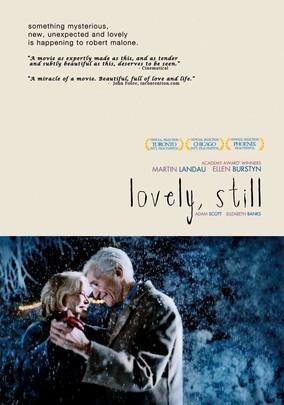
Lovely, Still-2008

Lovely, Still-2008

Director Nik Fackler

Starring Ellen Burstyn, Martin Landau

Scott’s Review #543

Reviewed December 11, 2016

Grade: B+

Oh, how I wish this movie had gotten more attention! Lovely, Still (2008) is a small, independent venture, that is Christmas-themed, and set in Omaha, Nebraska.

It stars Martin Landau and Ellen Burstyn as an older couple who fall in love. Landau is Robert, a lonely older man interested in dating again. He meets and falls in love with Mary, the mother of his next-door neighbor.

Before you start thinking Lifetime television movie, the last thirty minutes of the film will shock and fascinate you. A guttural reveal takes this film to a completely different place during the climax, making it a heart-wrenching, and powerful experience.

Landau and Burstyn are wonderful actors who mesmerize scenes together. They have a sweet, innocence, and are in glee, like teenagers, experiencing first love.

My only criticism is the first half of Lovely, Still is a bit slow, but this can be forgotten as the film kicks into high gear.

Also, some wonderful camera shots from novice director Nik Fackler.

Manchester by the Sea-2016

Manchester by the Sea-2016

Director Kenneth Lonergan

Starring Casey Affleck, Michelle Williams

Scott’s Review #542

Reviewed December 11, 2016

Grade: A

Manchester by the Sea (2016) is a beautiful film.

Told from a slow build-up to a crescendo and a big reveal mid-stream about one of the character’s pasts, it takes time, which is why it is so compelling.

The audience slowly becomes familiar with the characters, making them rich with nuances. They care about them and their predicaments, just as good, solid storytelling should.

The film is a slice of life, dark drama, but I did not find it to be a downer in the least bit—instead, a film with rich writing and great characters. A good movie makes you care for the characters like real people.

Casey Affleck is excellent as the lead character, Lee Chandler. In the film, he plays a janitor who lives a mundane life in Quincy, Massachusetts, tending to apartment buildings. He calmly deals with indifferent, angry, or odd tenants.

Affleck portrays this man with reserve and occasional outbursts of rage. His anger is confusing, but as the story unfolds, we begin to understand what this man has been through and the reasoning behind his anger, even though he is a good person.

Lee receives a call one day with news that his brother, Joe, has died.

Kyle Chandler plays Joe through many flashbacks throughout the film. Upon Joe’s death, Lee returns to Manchester (where he formerly resided) and is told he will be the guardian of his sixteen-year-old nephew, Patrick (Lucas Hedges).

In the mix are the characters of Joe and Lee’s ex-wives- Elise and Randi (Michelle Williams), playing small yet pivotal roles.

The film is dark, and many characters either suffer from emotional trauma, neurosis, or some other maladies, either physical or emotional.

The slice-of-life analogy comes into play. Everyone can relate to these characters in some way, and most people have lived in towns like this and/or have suffered crappy turns of events in life.

When Lee returns to Mansfield, he is a familiar face with a hint of mystery and history. Mansfield is a small town; everyone knows each other’s business, and the characters are hardened, blue-collar, and rugged individuals.

In addition to Affleck’s compelling performance, Williams must be mentioned. She gives a tremendous, heart-wrenching performance as a good woman in pain, trying to carry on and do the right things, forging some adequate existence, as is Lee.

Anyone who has gone through pain (which is everybody) can relate to these characters.

The supporting cast, including even the tiny characters, is perfectly cast and has hearty Boston-type accents that I loved. From Joe’s wife to Patrick’s girlfriend’s mother to various other walk-on characters, each has a vulnerability mixed with toughness.

It is as if life has been challenging, and they are wary of trust, yet they help each other and stick together.

The characters are a major positive to Manchester by the Sea.

Many reflective moments abound within the film, and we are often given scenes of Lee driving down the highway deep in thought. Or long shots of the vast Atlantic Ocean, where fishing is a large part of the character’s lives.

Fishing boats and waves are monumental in the film.

These are not throwaway scenes but interesting, compelling moments rich with meaning.

During the best sequence of the film, when a startling event occurs, the scenes are mixed with classical and operatic music, giving the scenes and the shocking revelations power and meat.

It is heavy stuff but also beautiful, with a compelling musical score.

Not to be drowned by the heavy drama, Manchester has some quirky, dry humor moments. When Joe is initially told about his heart condition, he and his father unintentionally call his female Asian doctor by the wrong name.

When family friends host a party following Awaken, they awkwardly misunderstand each other when they attempt to fix Lee a plate of food. Finally, nobody can find the deceased Joe’s belongings at the hospital. These awkward moments add some comic relief to the film.

I adore well-crafted, emotional, compelling family dramas. Too often, they are cliche-ridden and highly predictable.

Manchester by the Sea (2016) has brilliant writing, top-notch acting, and intricately layered characters.

This film has it all.

Oscar Nominations: 2 wins-Best Picture, Best Director-Kenneth Lonergan, Best Actor-Casey Affleck (won), Best Supporting Actor-Lucas Hedges, Best Supporting Actress-Michelle Williams, Best Original Screenplay (won)
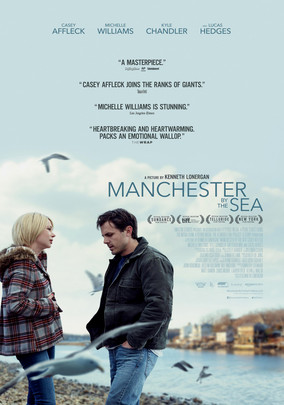
Independent Spirit Award Nominations: 1 win-Best Feature, Best Male Lead-Casey Affleck (won), Best Supporting Male-Lucas Hedges, Best Screenplay, Best Editing

A Wedding-1978

A Wedding-1978

Director Robert Altman

Starring Desi Arnaz, Jr., Carol Burnett, Geraldine Chapman

Scott’s Review #539

Reviewed December 17, 2016

Grade: A

A Wedding (1978) is an obscure, brilliant gem penned and directed by Robert Altman, a film genius and one of my most adored directors.

I love most of his movies, and A Wedding is no exception. The creative way that Altman weaves intersecting storylines and dialogue, thereby creating a real-life tone, gives immense realism to his films.

In A Wedding, he takes a basic life event and turns it into a well-nuanced, fascinating, comical, yet dramatic story.

He is known for having enormous casts (in A Wedding, there are 48 principals!), but every character serves a purpose.

The viewer will feel like a fly on the wall at a real wedding.

Altman’s actors primarily improvise their dialogue, speaking at the same time, which lends a realistic edge. I adore this quality.

The film is a satire- people either love or loathe attending weddings, and Altman’s film caters to the latter. He creates a setting, from the ceremony to the reception, riddled with awkward moments and social gaffes.

In pure satirical soap-opera fashion, two wealthy families gather at a lavish estate for the ceremony to begin. Hilarity ensues when the corpse of the matriarch of one family lies in her bed, nobody realizing she is dead.

Other hi-jinks, such as the revelation of a nude, life-size portrait of the bride, the caterer falling ill, and a tornado wreaking havoc.

Slowly, the families reveal secrets as alcohol flows and the characters become entangled in perilous situations.

Altman does it again, creating a masterpiece based on real-life situations most can relate to.

The Last Exorcism-2010

The Last Exorcism-2010

Director Daniel Stamm

Starring Ashley Bell, Patrick Fabian

Scott’s Review #528

70136074

Reviewed November 27, 2016

Grade: B+

The Last Exorcism (2010) is an enjoyable independent horror film.

I found it unique and creative and it’s shot documentary style, so there is a level of watching something new and different in the horror world, that I appreciated.

The usage of either hand-held or documentary footage has been done before, but this film feels fresh and not cliche-driven.

Horror master Eli Roth produced the film.

A doubtful preacher (Reverend Cotton Marcus) who lives in Louisiana, sets out to perform his final exorcism with a documentary crew in tow, only to find a girl who is possessed by the devil.

Cotton is assumed a con artist, so we doubt he actually can help the girl, which is what makes the film so interesting and unpredictable.

What will happen next? Could the girl or her family be frauds?

The film is really scary and contains a dark, creepy, ambiance. It reminds me a bit of The Blair Witch Project (1999) with its shaky camera, dark, raw tones, and independent nature.

Recommended mostly for fans of horror.

Independent Spirit Award Nominations: Best Supporting Female-Ashley Bell, Best First Feature

Animal Kingdom-2010

Animal Kingdom-2010

Director David Michod

Starring Ben Mendelsohn, Joel Edgerton

Scott’s Review #519

70129388

Reviewed November 15, 2016

Grade: A-

Animal Kingdom (2010) is an excellent Australian crime drama movie that is in the same vein as Goodfellas (1990), The Godfather (1972), or a myriad of other mafia/mob-type films- only Aussie style, which in itself piques interest.

The film has an indie feel, is raw and not slickly produced, and is not over-dramatized with explosions, CGI effects, and various other bells and whistles, making it character-driven.

It is simply a well-made drama about a seventeen-year-old boy named Joshua, who is taken in by his extended family of criminals.

Starting like an innocent, he slowly becomes entangled in the family’s web of corruption. This is similar to Al Pacino’s Michael Corleone from The Godfather.

Making the plot even more compelling, is the arrival of a goodhearted detective (Guy Pearce) who tries to steer Joshua on the straight and narrow.

The acting is topnotch (Jacki Weaver in particular is amazing as the diabolical leader of the family), shocking events happen out of the blue, and operatic music mixed in with dramatic events is well done.

Animal Kingdom (2010) is a diamond in the rough.

Oscar Nominations: Best Supporting Actress-Jacki Weaver