Category Archives: Imogen Poots

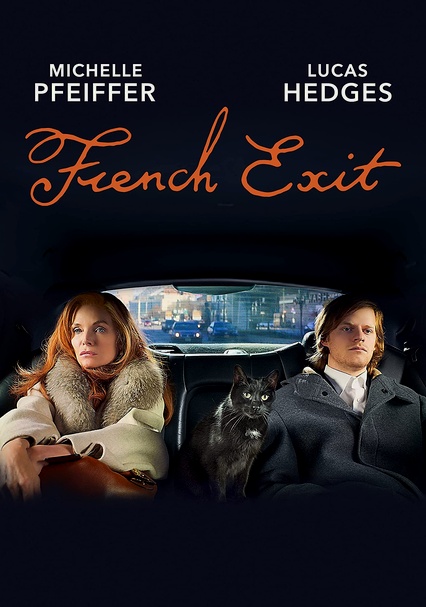
French Exit-2020

French Exit-2020

Director Azazel Jacobs

Starring Michelle Pfeiffer, Lucas Hedges

Scott’s Review #1,188
Reviewed October 29, 2021

Grade: C+

French Exit (2020) is a mediocre effort that left me disappointed. I expected to be dazzled by the eccentric French culture and sequences that I had anticipated.

While there are some location shots in historic Paris, they are not enough to compensate for the lackluster writing and unlikable characters the film offers.

Plot-wise, the intriguing premise teeters into the far-fetched, to the point where the result becomes banal and silly.

The film is a miss and should be skipped in favor of other films, such as Midnight in Paris (2011) and Last Tango in Paris (1972), which both offer a better French flair and superior storytelling.

A widowed New York socialite named Frances (Pfeiffer) and her meandering son Malcolm (Hedges) move to Paris after she spends the last of her husband’s inheritance.

Sixty years old and now penniless, she borrows a friend’s apartment where she plans to live out the rest of her days anonymously. Her husband, Franklin, has been dead for twelve years, and all that’s left of him is a cat named Small Frank, who may or may not embody his spirit.

Based on the previews, I anticipated an adventure involving cobblestone Parisian streets, delicious bakeries, and cultural French music. A glimpse of the famous Louve or Eifel Tower would have been a cherry on top.

While there are a few sequences of Frances and Malcolm walking along Parisian streets and an apartment that provides good French flavor, there is not enough to be considered an achievement.

Michelle Pfeiffer plays the main character.

As a fan of some of her more recent projects, like Mother! (2017), a brilliant film directed by Darren Aronofsky, the character didn’t catch fire for me. She’s pretty snobbish throughout and never really gets her comeuppance or learns any lesson.

As the protagonist, I was baffled as to why I was expected to root for a woman who is a bitch.

Hedges, a fantastic actor, plays his part according to the script. Still, the morose, one-dimensional Malcolm is uninteresting, and a so-so romantic plot involving his girlfriend Susan (Imogen Poots) is even less so.

On the plus side, Valerie Mahaffey steals the show with her quirky, comedic performance as Reynard.

A fan of Frances’s, she befriends the woman who initially shows no interest in her and dismisses her coldly. An eccentric, her odd demeanor and style are infectious, and she won me over immediately, especially when placed side by side with the other, less flavorful characters.

She was deservedly rewarded with recognition and received a Spirit Award nomination. Hopefully, this leads to more juice roles from Mahaffey.

Azazel Jacobs, who has had modest success on the independent film circuit, offers moderately impressive direction but loses me with the addition of not one but two tired seance sequences. A cat inhabiting a dead body and coming to life with the deceased person’s voice is drab and better suited for low-brow light comedy.

To make matters worse, the inclusion of a plump medium Madeleine (Danielle Macdonald) is about as clichéd as you can get.

There is not enough substance to give French Exit (2020) higher than average marks. Pfeiffer, taking center stage and doing her best, deserves better roles as she enters her senior years. She’s got gusto, so let’s give her better material.

Independent Spirit Award Nominations: Best Supporting Female-Valerie Mahaffey
The Father-2020

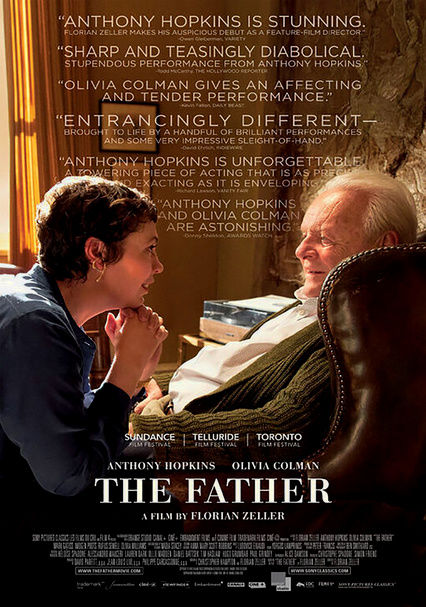
The Father-2020

Director Florian Zeller

Starring Anthony Hopkins, Olivia Colman 

Scott’s Review #1,123

Reviewed March 17, 2021

Grade: A

The Father is a heartbreaking 2020 drama film co-written and directed by Florian Zeller, based on his own 2012 play entitled Le Père. The piece is wonderfully written and superbly acted with incredible empathy for the characters involved.

Everyone should see this important film.

Anne (Olivia Colman) has always adored her intelligent and independent father, Anthony (Anthony Hopkins), who’s approaching the treacherous age of eighty. His mind is not what it used to be by any means, and is starting to fail. Stubborn, he rejects every caregiver she brings in to assist with his daily living.

Anne finds herself in anguish about how to solve this crisis while striving to live her own life.

Zeller spins a brilliant story from the very first scene because it’s told from Anthony’s perspective rather than solely from Anne’s.

Traditionally, in films centering around Alzheimer’s disease or dementia, the perspective is from the family member and how they cope and handle a life-altering and painful situation.

2014’s Still Alice, starring Julianne Moore, is an exception.

Immediately, the viewer is forced into the same world as Anthony and suffers as much confusion as he does. This is tremendously effective. When Anthony rummages in his kitchen in his London flat and hears a door close, he is startled.

Who can it be?

He wanders to the living room to discover a man sitting reading the newspaper, who claims to be Anne’s husband. Anthony has never laid eyes on the man before. Neither has the viewer.

Immediately, Anthony and the viewer are confused. Who is the man? Is he a burglar playing tricks on an older man, or is Anthony forgetting?

From this point in the film, it remains unclear what events are happening and what Anthony is forgetting or misunderstanding. Sometimes the characters are ambiguous.

Does Anthony think one person (Olivia Williams) is Anne, but is she his nurse? Is his caretaker his other daughter, Lucy? Is the man his daughter or Anne’s husband?

Confusion. Disorientation. Just like anyone with Alzheimer’s disease or dementia feels regularly.

Towards the finale, the most heartwrenching part of the film, Anthony weeps at his memory loss, yearning to be a child again and safe in his mother’s arms.

We feel his despair and desperation, and it’s gutwrenching to witness. Anyone who has had to care for an elder will understand. Anyone else should be empathetic.

We suffer alongside Anne, too. Help is becoming a necessity for her; she can’t make daily visits anymore, and Anthony’s grip on reality is unraveling. She wants to move to Paris, where her new boyfriend lives.

In a chilling scene, we watch Anthony sleeping peacefully while Anne gazes lovingly at him. She tucks him in and then begins to strangle him. We hope this is only a fleeting fantasy, toying with the idea of saving him from further suffering and giving her freedom back.

As we experience the changing tides of his memory, how much of his own identity and past can Anthony cling to? How does Anne cope as she grieves the loss of her father, while he still lives and breathes before her?

Hopkins and Colman are dynamic.

It’s hard to imagine Hopkins usurping his unforgettable role as Hannibal Lecter in The Silence of the Lambs (1991); he nearly does. His character is humorous, dignified, and lovable. He is also angry, feisty, and frustrated. Hopkins channels almost every emotion.

Colman is teary but strong. A woman sacrificing her own life and happiness for the burden of caring for her father. She is loyal and wouldn’t think twice about having it any other way.

The story is a downer, but one that must be witnessed.

The Father (2020) warmly embraces real life through loving reflection upon the simple human condition; heartbreaking and uncompromisingly poignant, the film tells a simple yet complex tale about life, death, and loss.

Oscar Nominations: 2 wins-Best Picture, Best Actor-Anthony Hopkins (won), Best Supporting Actress-Olivia Colman, Best Adapted Screenplay (won), Best Production Design, Best Film Editing

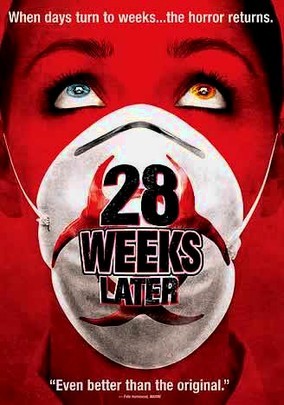
28 Weeks Later-2007

28 Weeks Later-2007

Director Juan Carlos Fresnadillo

Starring Rose Byrne, Jeremy Renner

Scott’s Review #513

70058018

Reviewed November 6, 2016

Grade: B-

At the time of its release, I remember 28 Weeks Later (2007) to be a successful follow-up to the original 28 Days Later (2002), a clever play on the title and picking up events some seven months after the original.

Watching the film now, however, I see flaws, mostly in the lack of a character-driven story and the resulting traditional action-type film.

Still, the film is far from all bad.

The action begins as the audience meets a “family”, barricaded in a homey residence, attempting to resume normalcy in life by preparing and serving a delicious family dinner- almost reminiscent of Thanksgiving.

The scene is tranquil and rich in familiarity.

When a little boy pounds on the door to be let in, the terror begins and the Rage virus is proven to still be alive and well.

The story was written for 28 Weeks Later has nothing to do with the original and contains none of the original characters. Rather, a father, mother, and young boy and girl are the family that we follow throughout the film.

Rose Byrne stars as a doctor- laughingly named Scarlet- and Jeremy Renner as a U.S. military presence, NATO having been sent in to keep order as best they can.

The opening sequence is fantastic as peacefulness turns deadly rather quickly and the characters are in immediate peril. In another scene, when the father and mother are alone in a laboratory and events go awry, the sequence is gory, shocking, and quite heartfelt.

These are merely moments, however, and are not quite enough to carry the film into a successful sequel.

Another positive to note, even more, prevalent than in the original, are the wonderful location shots of London. From the London Eye to Big Ben to street shots of downtown London and the surrounding streets, are capably done and I loved seeing the ariel views of said city.

The conclusion at Wembley Stadium was also great. This was a treat for any fan of London and gave the film a clear sense of location.

Conversely, I was not a fan of the characters in 28 Weeks Later.

Whereas, in 28 Days Later, the characters were well-drawn and compelling, rich with beauty and emotion, the same cannot be said for the sequel. I am unclear what the purpose of Renner’s tough, no-nonsense military type was for, or Byrne’s sympathetic, but pointless turn as a scientist/doctor.

Both held little appeal and gave snore-worthy performances. Or perhaps the roles were just not written well. Regardless, neither worked.

The dynamic between the father and mother did work, but the kids were not the best actors and I found their additions pointless as well.

The last scene, a frenetic trip through a tunnel by the infected and arriving in gorgeous Paris- a shot of the Eifel tower as proof, is a nice touch.

With a few nice touches, cool location shots, and intense peril in a few sequences, but with limited compelling characters, 28 Weeks Later (2007) is okay, but hardly an upgrade to the original or even close to the character-driven film.

No follow-up film, while initially planned, was ever completed.

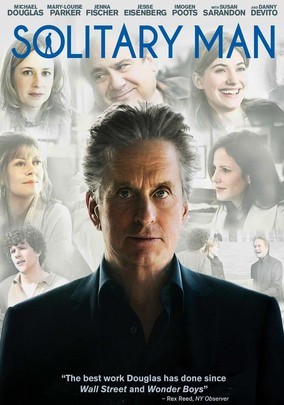
Solitary Man-2009

Solitary Man-2009

Director Brian Koppelman, David Levien

Starring Michael Douglas, Susan Sarandon

Scott’s Review #508

70117589

Reviewed November 3, 2016

Grade: B-

Solitary Man (2009) is an indie drama that has good points and bad.

Michael Douglas stars as a one-time successful, but womanizing, car dealership owner who hits rough times and loses everything.

Michael Douglas’s performance is very good and believable as a cad who hits a difficult stretch in his life. As an actor, Douglas still possesses his good looks and charm despite being an older leading man by this time- he plays 60 very well.

The film centers around him and wisely so- despite the film containing other notable actors. His character of Ben Kalman has swagger and is narcissistic, but yet lovable at the same time and this is unmistakably due to Douglas’s talents.

Annoyingly, the supporting characters played by Susan Sarandon, Danny Devito, and Jesse Eisenberg are quite one-note and not interesting, which is a shame in light of their immense talents.

The story is okay, but nothing fantastic.

I felt as though I had seen films like this many times before- the quirky edge and the attempted dark humor with laughs and some melodrama mixed in was forgettable.

However, as a character study, the movie succeeds.

Solitary Man (2009) is recommended for Michael Douglas’s performance only.

Jimi: All Is By My Side-2014

Jimi: All Is By My Side-2014

Director John Ridley

Starring André 3000

Scott’s Review #487

70292988

Reviewed September 30, 2016

Grade: A-

Jimi: All Is By My Side (2014) was not quite the film I was expecting it to be. It was better!

I was not expecting poor work since the film received a Best Male Lead Independent Spirit Award nomination for André 3000 (rapper) in the title role.

I expected an overview of the rise and fall of famed rocker Jimi Hendrix. Instead, I was treated to a more introspective piece than I imagined.

The film is a British production.

Interestingly, the film denied any Jimi Hendrix songs familiar to audiences, but only songs were written in 1966 and 1967.

This surprisingly turns out to be positive for the film.

The awesome achievement of this film is its non-conformity and being an independent film, lots of freedoms were undoubtedly given.

This is a good thing.

Had this film been targeted for a showing at local theaters, it may have been a run-of-the-mill affair, focusing on the star and the star only.

It is also shot in a less-than-glossy way, giving it an almost grainy, gritty look that I found added something.

Impressively, the supporting characters, specifically three females whom Hendrix has relationships with throughout his initial rise to fame, are prominently featured, and the story shifts at times to their perspectives and feelings, not just Hendrix’s.

The film does not focus on Hendrix’s untimely death.

We meet Hendrix (compellingly played by André 3000) performing guitar in a sparsely attended bar in New York City. He is discovered by Linda, the girlfriend of Rolling Stones guitarist Keith Richards, as she becomes both smitten with Hendrix and recognizes his immense talents.

Slowly, he is discovered (mainly in London) and rises to fame.

However, the film is not only focused on his success but his personal life.

Besides Linda, Hendrix becomes involved with a volatile groupie and fixture in the 1960s London music scene, Kathy, and cultured American Ida. Instead of the female characters being written as one-dimensional and dizzy, all three are quite intelligent and layered.

While each has feelings for the star, they are forced to be reckoned with in their own right, and we grow to care about their characters as individuals.

A scene involving Jimi violently beating girlfriend Kathy with a telephone during an argument has been refuted by friends as being fictitious- Hendrix was known as a gentle, peaceful man.

A controversy has emerged surrounding the accuracy of this film in general, but I thought it quite introspective and fascinating.

Independent Spirit Award Nominations: Best Male Lead-André 3000