Category Archives: Adventure

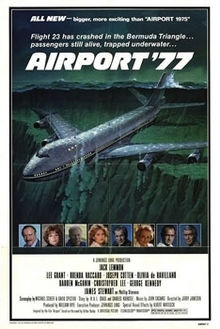
Airport 1975-1974

Airport 1975-1974

Director Jack Smight

Starring Charlton Heston, Karen Black, George Kennedy

Scott’s Review #1,060

Reviewed September 8, 2020

Grade: B+

Possessing all the disaster film genre schmaltz, proper trimmings, and then some, Airport 1975 (1974) is good, hammy entertainment that gleefully satisfies. However, artistic types will be embarrassed to admit how much they like it.

The Towering Inferno (1974) and Earthquake (1974) were among the highest-grossing films of the year, and it is little wonder why. The offering has enough adventure and peril to satisfy the entire family.

I watched this film practically in tandem with Airport (1970) and it feels a letdown by comparison, but that hardly matters. Both are very good.

With great anticipation, the filmmakers paid a ton of cash to secure a bevy of Hollywood stars of yesteryear, ensuring they could rake in the box office.

Most are past their prime but still marketable. What a treat to see legendary silent film star Gloria Swanson playing herself as a passenger.

The unequivocal star and hero of the film is Charlton Heston, as he also was in Earthquake. Karen Black, Myrna Loy, Linda Blair, Susan Clark, Nancy Olson, and George Kennedy (reprising his role from the first Airport) round out the stellar cast.

Worth its price of admission is watching the opening credits to see who is in the cast.

Unlike Airport, which wisely spent much of its time inside the actual airport setting up the events and stories, Airport 1975 takes flight right away and crafts its trials and tribulations within the aisles and cockpit of the plane.

We learn right off the bat that the main romantic couple is Heston and Black. Captain Alan Murdock (Heston) apparently cannot commit to Chief Stewardess Nancy Pryor (Black), and they plan to meet up in Los Angeles to discuss the drama further.

We know they will have more to do with each other as her flight to La La Land takes off.

Quickly, a small plane flown by businessman Scott Freeman (Dana Andrews) is diverted to Salt Lake City airport, and he suffers a massive heart attack while descending.

His plane naturally crashes into the cockpit of the enormous Boeing 747, killing two pilots and blinding the other.

With no one able to fly the plane, Nancy must figure out how to avert disaster as it cascades over mountains and contemplates a fuel leak. Murdock and crew try to land the plane remotely or get somebody up there to save the day.

Predictably, Murdock is that man.

If Airport 1975 weren’t so damned fun, it would be offensive since it’s riddled with gender stereotypes. Screenwriter Don Ingalls composes a project so fraught with machismo and masculinity that the female characters have little chance to do much of anything without being saved by a man.

Let’s cite a couple of examples. Nancy is left alone in the open cockpit to navigate the plane.

Worth mentioning is that her hair remains perfect throughout.

Anyway, Murdock must explain to her how to check various controls, which he does as if she were a five-year-old learning the alphabet, referring to a picture of the “little airplane” and calling her “dear”.

She rattles off a puzzled “what?” before figuring out where or what the “little airplane” is.

Secondary Stewardess Bette (Christopher Norris) is boy-crazy, asking Nancy if the flight crew is “sexy” before making googly eyes at the Latin pilot, Julio (Erik Estrada). He is married, but that doesn’t seem to bother either of them.

They flirt while he orders her to bring him a cup of coffee. The male characters telling the female characters to get them drinks is a common theme in Airport 1975.

Naturally, Murdock eventually makes it on board to take over the controls and land the plane.

We imagine Nancy’s character thinking, “Good Heavens, thank goodness a man arrived just in the nick of time to save all of us!” She is promptly sent to get Murdock a drink and fluff pillows.

But these are gripes I can look past, given that if this film were made in 2020, Nancy would either land the plane or Murdock would be a female character and Nancy a male character.

Imagine that!

The real threats are the peril and drama associated with the events on the flight.

A sick kid (Linda Blair) must reach land quickly so that she can be provided medical assistance, while a crack in the airplane’s ceiling could burst at any moment, killing everyone on board.

For popcorn-fueled entertainment sure to please any viewer, Airport 1975 (1974) is a perfect late-afternoon, rainy-day suggestion.

It is advisable not to look too deeply into the stereotypes and contrived setups, or this will ruin the fun. Instead, hop aboard and enjoy the bumpy flight from the comfy cushions of your living room with the assurance that you will land safe and sound.

Airport-1970

Airport-1970

Director George Seaton

Starring Burt Lancaster, Dean Martin, Helen Hayes

Scott’s Review #1,059

Reviewed September 2, 2020

Grade: A

The film that triggered the popular disaster genre that captivated much of 1970s cinema, Airport (1970), led the pack in innovation and entertained the masses with a large cast of A-list Hollywood stars suffering peril.

What fun!

The blueprint continued with The Poseidon Adventure (1972), Earthquake (1974), and The Towering Inferno (1974). Interestingly, the Airport contains little death, unlike the others who systematically killed off cast members in a reverse whodunit, more like “who gets it”.

It holds up quite well.

Airport is pure bliss for me. An enormous fan of the disaster epic, to begin with, this one satisfies my obsessions with airports and airplanes, adding late 1960s sophistication and style, and a healthy dose of subplots.

From a romantic triangle to mental illness to an elderly stowaway named Ada (Helen Hayes), the storylines mesh so that there’s never a dull moment. Events unfold over a twenty-four-hour period, with a busy, snowy Chicago airport as the backdrop.

The cinematic spectacle was based on a little-known novel of the same name by Arthur Hailey, adapted into a screenplay by George Seaton, who also directed the flick. I love it when a director also writes the dialogue because a better experience often prevails.

Seaton directed Miracle on 34th Street (1947) and a slew of other films, so he knows a thing or two about pulling the heartstrings while offering adventure.

The film was rated “G,” so it’s a family-friendly affair.

A cold and snowy winter night in Chicago results in flight delays and a 707 plane getting stuck on the runway in snow and mud. As crews dig to free the plane, Airport manager Mel Bakersfield (Burt Lancaster) is forced to work overtime.

His furious wife Cindy (Dana Wynter) demands a divorce. He’s in love with Tanya anyway, a pretty customer relations agent for the airline, Trans Global Airlines, a clever play on Trans World Airlines.

Other characters emerge, such as a high-spirited chief mechanic (George Kennedy) and married man Vernon, a TGA captain having an affair with stewardess Gwen (Jacqueline Bisset), who is pregnant with his child.

The heavy is a mentally disturbed man named D.O. Guerrero (Van Heflin) who is so down on his luck that he desperately crafts a handmade bomb and takes out an insurance policy that his struggling wife Inez (Maureen Stapleton) will receive upon his death.

He boards a plane to Rome with most of the other characters, intent on detonating the bomb, killing himself, and leaving Inez with some financial relief. When she catches on, she hurries to the airport, desperate to stop the flight from departing. Of course, things don’t go so well.

The Guerreros are my favorite characters. D.O. could have easily been written as a villain, one-note, and dastardly, but he isn’t. He is a sympathetic character, pained and wounded; his troubles are the result of war, and he oozes compassion.

Stapleton is tremendous as Inez, the suffering wife who loves her husband and desperately wants them to have a nice life. The actress gives a gut-wrenching performance that should have won her the Oscar.

Instead, it went to Hayes’s comic talents.

The main appeal of these stories is that the audience slowly gets to know and falls in love with the characters. They become like good friends.

The pacing is so good that the real action takes place only in the last forty-five minutes of the film.

Strong characters and rich stories are offered as the buildup, and we know that peril is eventually coming, and indeed it does.

The special effects and the airplane set are fantastic for 1970. The luxury airline, with its plush seats and catered meals, is on display, and the entire length of the plane, including the cockpit, is used extensively.

Characters walk up and down the aisles frequently, so the illusion is a vast and stylish airliner, even though a small set was probably used.

The stewardesses and pilots offer a glimpse of what a luxury it used to be to fly in style without the annoyances of long security lines, check-ins, and constant hassles.

Hell, D.O. casually walks on the plane with a bomb, and Ada gets on without a second glance when she claims to be giving a passenger their dropped wallet!

Airport (1970) set the tone for other similar films to follow and successfully mixes sudsy dramatic stories of its characters’ lives with the thrills and plights of those same characters in danger.

I don’t consider it the fluff that many others do, but a satisfying, well-constructed film that still holds up well.

Three sequels followed the film and were hilariously spoofed by the comedy Airplane! (1980).

It bears repeated viewings.

Oscar Nominations: 1 win-Best Picture, Best Supporting Actress-Helen Hayes (won), Maureen Stapleton, Best Screenplay Based on Material from Another Medium, Best Original Score, Best Sound, Best Costume Design, Best Art Direction, Best Cinematography, Best Film Editing

Maleficent: Mistress of Evil-2019

Maleficent: Mistress of Evil- 2019

Director Joachim Ronning

Starring Elle Fanning, Angelina Jolie

Scott’s Review #1,039

Reviewed July 14, 2020

Grade: B+

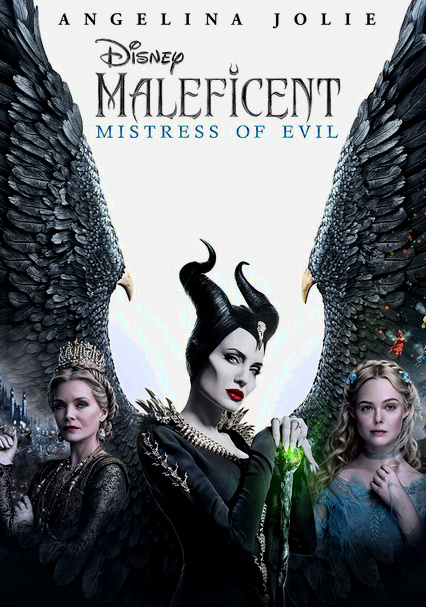
Maleficent: Mistress of Evil (2019) is the follow-up to the 2014 film, titled Maleficent, and while not a necessary sequel, it surpasses the original.

The intent was to create a significant studio effort that would generate substantial revenue, and the experiment appears to have been successful.

The production is not as frightening as the title might lead one to believe, and children over the age of ten would be a suitable target audience.

While the screenplay features traditional plot elements and a predictable ending, the real winner is the visual and cinematic treatment, which will leave viewers gasping.

The lush landscapes, odd little worlds, castles, and forests blossom with vibrant colors and exquisite shapes and objects.

It may primarily be CGI, but marvelous all the same.

To recap, the character of Maleficent debuted in the 1959 classic animated Disney film Sleeping Beauty. Maleficent is an evil fairy and the self-proclaimed “Mistress of All Evil” who, after not being invited to a christening, curses the infant Princess Aurora to “prick her finger on the spindle of a spinning wheel and die” before the sun sets on Aurora’s sixteenth birthday.

The character has since “evolved”, now portrayed as a sympathetic character, who is misunderstood in trying to protect herself and her domain from humans.

For five years, Aurora (Elle Fanning) has reigned peacefully as Queen of the Moors with Maleficent (Angelina Jolie) serving as teacher and protector. They have a rapturous relationship and flock and carry on with fairies and animals alike.

Handsome Prince Phillip (Harris Dickinson) proposes to Aurora, thereby uniting her kingdom with his, which is met with caution by his parents, specifically his mother, Queen Ingrid (Michelle Pfeiffer).

When the players gather for a celebratory dinner, Maleficent is mocked, causing her to fly into a rage, setting off a war between humans and fairies.

A key positive, and a notable shift in the story, is that Maleficent, a legendary film villain, is written sympathetically, and the plot device is effective. Rather than have her sparring with daughter Aurora, the duo team up to thwart the devious efforts of the evil Queen Ingrid, who is the real villain.

Jolie and Pfeiffer must have had fun playing the roles, and both perform their respective parts adequately. Favorable to me is Jolie, adding just enough vulnerability to balance her fierce nature and blood-red lips. Pfeiffer plays the role straight, as a caricature, with no redeeming value.

Both roles are fun.

Keeping in mind the target audience, the characters of Maleficent and Aurora are inspiring, especially to young females everywhere. The film adds more than a hint of progressive feminism as both characters are strong and no-nonsense.

This does not detract from their sensitivity or sense of fairness. Both could equally be role models of tough yet compassionate female characters.

In most Disney films, there are heroes and villains, and we all know and expect that. The standard storyline of good revolting against evil is on display, and an epic climactic battle scene gives a customary ending to the film.

Likewise, the fairy tale romance between Prince and Princess is prominently featured, and for my money, Dickinson and Fanning are tremendous in the roles.

The chemistry between the actors is apparent, and there is a nice balance between a believable romance and strong, independent characters.

Queen Ingrid, barely a mention in the original animated film, is turned into an evil shrew, all completely plot-driven. The story is what I expected it to be, but not the film’s high point.

More impressive is how the viewer can easily escape into a world of make-believe and long to stay there forever. Especially for the younger viewers, the Moors are a bevy of magical creatures and fluttering fairies rich with goodness.

The comical Knotgrass, Thistlewit, and Flittle, the red fairy, green fairy, and blue fairy, respectively, make a return appearance, though in a limited capacity. It would have been nice to give them a stronger presence, providing more wisdom, more advice, and more humor, but they serve their comic relief purpose well.

Will there be a third incarnation of Maleficent?

The filmmakers provide a strong likelihood. After Aurora and Philip wed, Maleficent returns to the Moors with the other Dark Fey, teaching the young fairies to fly. She promises to return for Aurora and Philip’s future child’s christening.

This vow seems like an easy setup to build on the original storyline, unlocking the next chapter in this engaging saga.

Oscar Nominations: Best Makeup and Hairstyling

A Cat in Paris-2010

A Cat in Paris-2010

Director Jean-Loup Felicioli, Alain Gagnol

Starring (ENGLISH) Marcia Gay Harden, Steve Blum 

Scott’s Review #1,006

Reviewed April 1, 2020

Grade: A-

For any lover of all things cats or all things Paris, A Cat in Paris (2010) is a double-punch winner in themes alone and a pure treat.

The French-made film was nominated for the Academy Award for Best Animated Feature along with Chico and Rita (2010), another foreign language animated feature, both considered surprise entries.

This was monumental as it aided subsequent non-American features to be allowed into the mix.

The former is a moody and mysterious caper story involving a cat and a young Parisian girl and the adventures they share. The traditional ink colors and hand drawings are lovely and creative, adding to the inventive mood.

The feline-centered story and feminist empowerment angle provide a unique and worthy experience to be well remembered. The French language version contains native language voices while the English version has English speakers.

The main protagonist of the film is Dino, a pet cat who leads a double life. By day he lives with his friend Zoe (Lauren Weintraub), a little mute girl whose mother, Jeanne (Marcia Gay Harden), is a detective in the Parisian police force.

He sneaks out of the window each night to work with Nico (Steve Blum), a slinky cat burglar with a heart of gold, who regularly evades captors as he glides and swishes from rooftop to rooftop with the picturesque Paris skyline serving as a backdrop.

Dino’s two worlds collide when one night Zoe decides to follow Dino on his nocturnal adventures and falls into the dangerous hands of Victor Costa (JB Blanc), an intimidating gangster who is planning the theft of a rare statue.

Now the cat and cat burglar must team up to save Zoe from the bumbling thieves, leading to a thrilling acrobatic finale on top of Notre Dame.

In an acute tongue-in-cheek final moment, Nico gives Jeanne a snow globe with the Cathedral of Notre Dame in it as a Christmas present.

Despite the film being an animated one, this fact does not take away from the cultural and sophisticated Parisian experience.

Delicious views of the distinguished Eifel Tower and the luminous, glowing skylines of the City of Lights assuredly will captivate each viewer fortunate enough to have ever visited the magical city in person, or those who have daydreamed an afternoon away imagining experiencing the grand city.

Alfred Hitchcock’s work is mirrored throughout A Cat in Paris, specifically his film To Catch a Thief (1955). That film is set along the French Riviera instead of in Paris but features a cat burglar, a thrilling rooftop climax, and enough cat and mouse-thrills to last a lifetime.

The director’s work is easy to spot, and the filmmakers are wise to adapt to his style, carefully weaving elements into an animated film with the hopes of exposing children to intelligent filmmaking.

Adults will equally love the film.

At a mere one hour and five minutes, nearly teetering classification of a short film instead of a full-length feature, A Cat in Paris (2010) more than accomplishes what it sets out to in the limited time.

Utilizing fantastic silhouettes and lit shapes and angles, the visual treats alone make this one exceptional. Adding tidbits of the greatest film director of all time’s work without outright stealing it is a wise choice.

May more intelligent international animated films like this one receive their deserved exposure to mass audiences.

Oscar Nominations: Best Animated Feature Film

21 Jump Street-2012

21 Jump Street-2012

Director Phil Lord, Chris Miller

Starring Channing Tatum, Jonah Hill

Scott’s Review #992

Reviewed February 20, 2020

Grade: C+

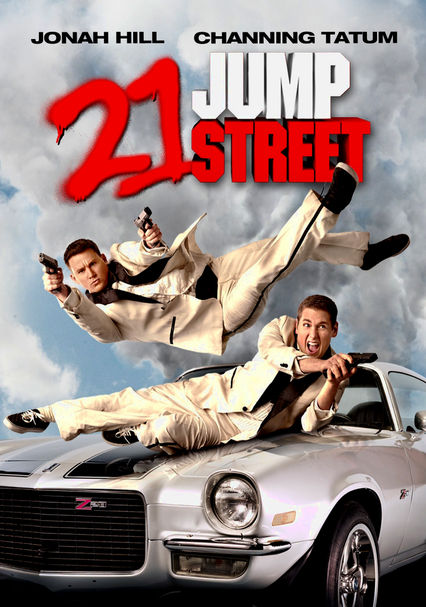
21 Jump Street (2012) is a nostalgic ode to the general style of the 1980s, more specifically a popular television series that ran from 1987 to 1991.

The teen police drama launched the successful career of actor Johnny Depp.

He starred as the good-looking leader of a team of young police officers who can pass for high school students, and infiltrate potential drug rings, prostitution circles, or other such shenanigans.

The film is hardly high art nor cinematic genius. The gags are silly and trite, other times not funny at all. But the film contains a freshness that feels cool, sleek, and fun and a throwback to the decade of materialism, and the film never apologizes for this.

The combination of stars Jonah Hill and Channing Tatum have nice chemistry, turning a standard buddy film into something bearable to watch.

The film is formulaic, but not dull.

The filmmakers strive for an action-comedy hybrid even though the series was only conventional drama and taught a lesson with each episode. They also change course and focus on two characters instead of a group making it more of a guy movie.

Honor roll student Morton Schmidt (Jonah Hill) and popular underachieving jock Greg Jenko (Channing Tatum) reunite seven years after graduating high school at the police academy where they are studying to be cops.

Eager to leave their juvenile problems, and their dislike for each other behind, they use their youthful appearances to go undercover at a local high school as part of a Jump Street unit.

As they trade in their guns and badges for books and bagged lunches, Schmidt and Jenko risk their lives to investigate a violent and dangerous drug ring.

They slowly realize that high school is nothing like they left it just a few years earlier, and they revisit the terror and anxiety of being a teenager again and all the issues they assumed they had left behind.

The film is mediocre and while there is nothing wrong with the film, nothing is outstanding about it either. As the setup poises the audience, Morton and Greg are opposites in every way and must come together to achieve a common goal.

This is a standard cliche told countless times in films such as Stir Crazy (1983) and 48 Hours (1982), the reference being one of the 1980s.

Speaking of the decade of excess, 21 Jump Street achieves what it sets out to in this regard with a clever nod to a revived scheme from that decade.

Set in present times, the film is nonetheless a nod to teen films of the day.

Wild comedy and lavish adventures are in order in every high school situation imaginable. Dating, AP chemistry class, and the senior prom are heavily promoted so that any viewer above the age of twenty-five can reminisce.

A fun and necessary quality is the inclusion of a few of the original cast of the television series-Holly Robinson Peete, Peter DeLuise, and Johnny Depp all appear in cameo roles. This is a treat for fans of the original series and a tribute to its creation, though nothing else is utilized very well and no other history ever quite measures up.

Robinson Peete’s role is nice because she appears as a police officer.

While doing little to honor the television series it is based on, instead of churning out more of a male cop film, the incorporation of the original cast does deserve praise.

The lead actors are charismatic and clever in their roles which saves the film from being a disaster.

21 Jump Street (2012) kvetches too far into slapstick instead of sending an important message to its audience, which it could have.

The box-office hit was followed in 2014 by an unnecessary remake, aptly entitled 22 Jump Street.

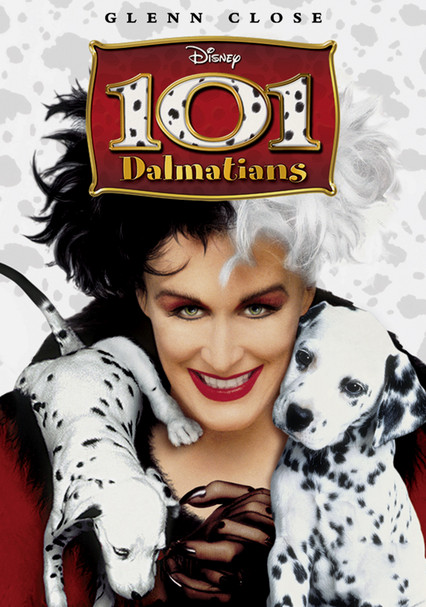
101 Dalmatians-1996

101 Dalmatians-1996

Director Stephen Herek

Starring Glenn Close, Jeff Daniels

Scott’s Review #989

Reviewed February 13, 2020

Grade: C+

The classic animated Disney film 101 Dalmatians (1961) is brought to life in a live-action adaptation thirty-five years later, offering a fresh spin on the revered original.

Unfortunately, the result is nothing special save for Glenn Close’s brilliant performance as the dastardly Cruella De Vil.

Otherwise, the reworking is too amateurish and largely unnecessary, especially as compared to the brilliance and charm of the original.

Thankfully, not modifying the London setting, American video game designer Roger Dearly (Jeff Daniels) lives with his pet dalmatian, Pong.

Lonely, Roger trudges along through life without a love interest. During a walk, Pongo sets his eyes on a beautiful female Dalmatian named Perdy.

After a chase through the streets of London that ends in St. James’s Park, Roger discovers that Pongo likes Perdy.

Her owner, Anita Campbell-Green (Joely Richardson), immediately falls in love with Roger, and the duo is inseparable.

They get married along with Perdy and Pongo. Anita works as a fashion designer at the House of de Vil. Her boss, the pampered and glamorous Cruella de Vil (Close), has a passion for fur.

Anita, inspired by her Dalmatian, designs a coat made with spotted fur, and Cruella is intrigued by the idea of wearing Anita’s dog. She hatches a plot to steal and kill the puppies for her lavish gain.

The scenes between the dogs are cute and work better than the intended romantic relationship between the humans—a daring pursuit in the animated feature that does not shine through with real actors.

Either the chemistry between Daniels and Richardson does not exist, or the scene is too forced, or perhaps both. I did not buy the love-at-first-sight, stars-aligning moments.

I bet most audiences didn’t either. The result is a banal and stale connection between Roger and Anita, meant to be the core of the story.

Enough cannot be said for what Close brings to the role. The actress delivers a tremendous performance and sinks her teeth into the most prominent and interesting role in the film.

With a sinister sneer, a flowing red-and-white coat, and a token cigarette holder, she provides Cruella with dazzling menace.

Careful not to overact and result in a juvenile character, she relishes the role, providing just enough comedy without being too scary. The performance is perfect.

A negative is that, unlike the animated version, none of the animals have speaking voices. This detracts from the earnest quality of expressive, talking animals.

What pet owner does not imagine what their cat or dog would sound like if they talked?

Instead, the puppies sniff and look cute, distracting themselves and leaving them unclear about what feelings they have. One wonders why the decision was made in this way, but it does little to provide texture.

101 Dalmatians are too cute for their own good, which limits their sophistication. The original had British intelligence and a cultural voice, with small, yet important details, like falling rain, that live-action cannot mimic.

The 1996 version is kid-friendly, but brings little to the table, lacking interesting flair. Why not teach a lesson about the dalmatian dog breed rather than settle for simply an adorable slant?

Rumors abound that parents adopted dalmatians for their children after seeing the film and were forced to return them, rather than invest time in study, realizing that raising a dalmatian is hard work.

The idea of remaking an adorable, cozy Walt Disney classic from the 1960s with a fresh approach is admirable. The live-action detail could add a new twist or inventive spin that appeals to a new generation of youngsters.

Unfortunately, 101 Dalmatians (1996) works unwell, barely rising above mediocrity, with an aura of fluff and gimmicks that feel forced and trite.

The saving grace is Glenn Close, a tremendous talent who gives it her all despite subpar material.

Stick to the original 1961 version.

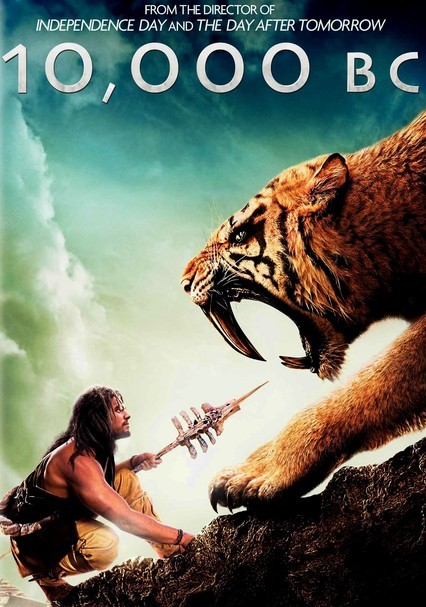
10,000 B.C.- 2008

10,000 B.C.- 2008

Director Roland Emmerich

Starring Steven Strait, Camilla Belle

Scott’s Review #988

Reviewed February 11, 2020

Grade: F

10,000 B.C. (2008) is a by-the-numbers adventure/action hybrid film that attempts to be slick and modern with catchy visual elements, but instead bottoms out, resulting in a terrible example of filmmaking.

The CGI usurps all other qualities, offering no historical accuracy and a ridiculous 2008 feel rather than the time at hand.

Those involved had only the film’s box-office returns in mind when the film was created.

An irritating formulaic quality and poor acting across the board leave this one dead on arrival.

Fierce, masculine mammoth hunter D’Leh (Steven Strait) sets out on an impossible journey to rescue the woman he loves, Evolet (Camilla Belle), from an evil warlord and save the people of his village.

While venturing into the unknown and frightening territories, D’Leh and his fellow warriors discover an amazing civilization rife with possibilities.

Predictably, the warriors are attacked and slaughtered, leaving the young man to protect the remaining group while winning the heart of a princess, well above his station in life.

The story is complete schmaltz and easy to predict from nearly the very beginning of the film.

Powerful invaders force the hunters of D’Leh’s tribe into slavery and accost the princess in such a fashion that the setup is all put neatly in place for the viewer, providing nothing out of the ordinary.

When the young and naive boy has an epiphany and realizes he is the only one who can save his tribe from extinction, it is all too much.

The film is riddled with cliché after cliché after cliché.

A tough ask to lead a film with summer blockbuster written all over it, newcomers Strait and Belle do their best, which only enhances how poor their acting is.

Cast for their good looks, they can offer little else. For audience delight, Strait is costumed with a bad wig, dripping sweat, and bulging muscles.

Belle is also victimized as she pouts and sulks while wearing skimpy clothing.

The result is a standard boy-meets-girl story: the boy loses the girl, and the boy becomes a man to clean up the girl’s mess. Inexplicable is how they meet and fall in love before ever speaking or getting to know each other.

If only the bad acting were the only negative, the film might be fair to middling, but nothing good is ever offered. All the hunters and tribe members look like modern people dressed to look like people from a different period.

The endless battle scenes borrow from the legion of action and adventure films that have come before it. The animals prance across the screen in obviously timed moments, providing little in the way of authenticity.

Director, Roland Emmerich, known for films such as Independence Day (1996) and The Day After Tomorrow (2004) has a knack for creating large epic adventures to please mainstream audiences.

There is nothing wrong with a conventional film if it manages to teach the viewer something or offer something of merit. With a target audience of pubescent boys and girls yearning to learn, Emmerich misses a golden opportunity to present an imaginative prehistoric moment and provide a lesson.

Complete with a bad story and bad acting, the drivel conjured up is nearly too much.

The over-stylish visuals cannot save 10,000 B.C. (2008) because they are so phony that one cannot even fathom any credibility.

The good-looking main stars look straight out of a glossy magazine and hardly from the prehistoric era presented.

With a little attempt at giving audiences anything of substance, this film is an epic fail to be missed.

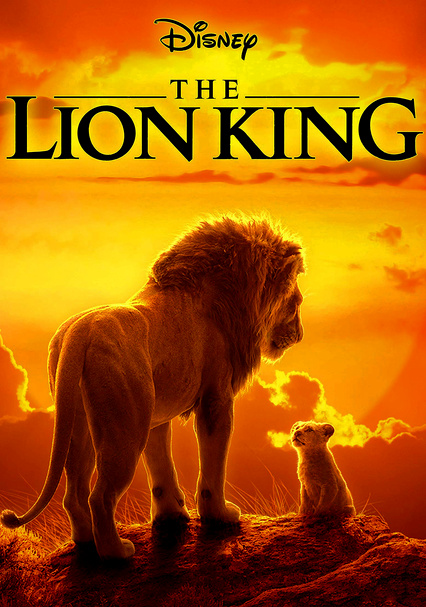
The Lion King-2019

The Lion King-2019

Director Jon Favreau

Voices: Donald Glover, Alfre Woodard, Seth Rogen

Scott’s Review #981

Reviewed January 17, 2020

Grade: B

An impossible feat would have been to eclipse the magic of the stage version or the loveliness of the animated version. Still, The Lion King (2019) offers a different approach as well.

Arguably, this version is both animated and not, infused with computer-generated animation (CGA) and marvelous visual effects, showcasing creativity.

Partial to the two-former offering, this telling is lovely and perfect for the entire family.

The realism of the animals and scenery is remarkable.

To recap, new viewers, the story centers on a den of lions living among the creatures in the “Pride Lands of Africa”. They hunt, prance, love, and guard their territory, mainly from the hungry hyenas, who are kept at bay during peaceful times.

King Mufasa (James Earl Jones) and Queen Sarabi (Alfre Woodard) are fair rulers and anticipate their son, Simba (Donald Glover), taking over the throne one day, much to the chagrin of Mufasa’s evil brother, Scar (Chiwetel Ejiofor), who was passed over for the crown.

Envious of Simba, Scar tricks him and his friend Nala (Beyoncé) into wandering into the land of the hyenas, hoping to cause their deaths. When a heroic Mufasa foils his plot, Scar ups the ante and hatches a scheme to kill his brother.

He not only succeeds but also makes Simba believe he caused his father’s death. Ashamed, the youngster runs away to begin a new life, unaware that he will one day return to save the day.

Props must be given to the filmmakers for their inclusion and cultural authenticity, as many of the characters, especially those at the forefront, are voiced by African-American talent.

This is a notable achievement, considering the film is set in Africa, and it’s unusual for the voices to be Caucasian.

Heavyweights like Jones and Woodard sound polished, especially Jones with his deep and dominant, yet fatherly voice, perfectly cast as the King. Woodard provides gentle warmth and confident complexity.

The musical numbers are terrific.

The film begins with an energetic and tribal rendition of “Circle of Life,” where a legion of wild animals dances together in a warm display of diversity.

The song appears later in the film. The powerful and romantic “Can You Feel the Love Tonight” is performed against a lovely moonlit sky with decadent stars.

The new song “Spirit” performed by Beyoncé is adequate but does not figure into the story as much as it should, seeming more like an afterthought.

The best parts of The Lion King, however, are the astounding visuals.

The contrasting sequences of bright, sprawling African terrain and a magical oasis of colorful flowers and running water, set against the dark and foreboding landscape of the dangerous hyenas, offer the viewer a multitude of delights to savor.

The orange and red colors during the climactic finale are unrivaled in the dazzling bombast of adventure.

As realistic as the elements are in the film, they are also negative. Watching the animals talk and prowl amid the lush landscape felt wonderful, until I realized that all of it is fake.

Real animals were never used; instead, it is a virtual reality tool that creates the illusion of reality.

This aspect slightly saddens me as the genuine quality left me feeling robbed. The possibility of another alternative would have meant a reboot of the animated classic, and I am not sure that would have been wise.

Favreau, once an actor and now a director, known for creating films such as Iron Man (2008) and Iron Man 2 (2010), certainly knows his way around an adventure film.

The story, while containing some menacing moments, also feels a bit safe and lacks the freshness or edginess that the 1994 version possessed. Something seems watered down, and the excitement and heart of the original feel missed.

I will always go back to the animated 1994 treasure for a cinematic feast, but while The Lion King (2019) could have been a disaster, it isn’t. With modernized songs and enough CGA to last a lifetime, I could easily see some people hating the film, but I embraced it for what it is.

Spectacular visual treats await any fan of cinema, as one will ponder how the project all came together.

Oscar Nominations: Best Visual Effects

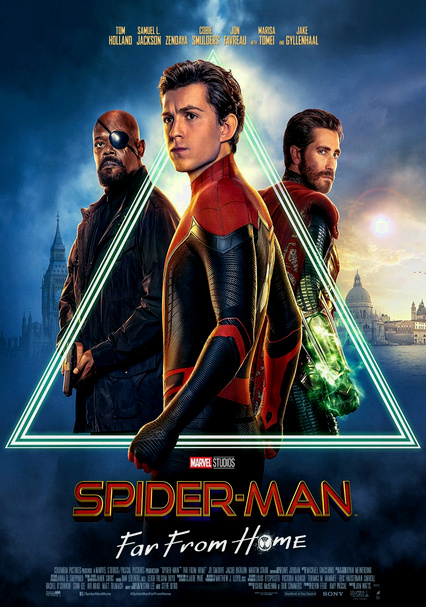
Spider-Man: Far From Home-2019

Spider-Man: Far From Home-2019

Director Jon Watts

Starring Tom Holland, Jake Gyllenhaal, Samuel L. Jackson

Scott’s Review #916

Reviewed July 5, 2019

Grade: B

Having not seen the first two installments of the latest Spider-Man franchise, nor with any prior knowledge of the Avengers franchise or the cross-sectional connections of the characters to other films, I walked into Spider-Man: Far From Home (2019) with little expectation.

And an admittedly limited understanding of the Marvel universe altogether.

The film is no better or worse than a summer popcorn flick with enough adventure and lovely locales to keep a non-super-hero buff entertained for over two hours without fidgeting too much.

The film begins with a nod to a past film, where a mysterious “Blip” occurred, erasing people for five years, and then returning them to normalcy, with no aging.

Shots of various Avengers characters, including Tony Stark (Iron Man), who have died, appear on the screen amid a musical tribute to Whitney Houston’s “I Will Always Love You.”

Peter Parker (Spider-Man) (Tom Holland) still mourns his mentor as he embarks on a two-week European vacation with his classmates as part of a school trip. He plans to confess his love for MJ (Zendaya) atop the Eiffel Tower in Paris.

Peter’s Aunt May (now reduced in age and sexy with the casting of Marisa Tomei) quickly packs his Spider-Man suit as Nick Fury (Samuel L. Jackson), a former director of S.H.I.E.L.D. attempts to enlist Peter’s help on a mission and provide him with Stark’s special glasses, named E.D.I.T.H. which possess all the databases of Stark Industries.

Quentin Beck/Mysterio (Jake Gyllenhaal), a master of Illusions, is recruited to help Spider-Man and serve as a fabulous Uncle figure.

These events all happen as Peter travels abroad.

The film is undeniably light and fun, with a bright and safe ambiance. The perilous scenes are not particularly scary or dangerous, despite the characters being at risk of death.

The teen romance angle enhances this assessment as it is a central component of the film, even as much as the adventure and superhero antics are.

Even before the teenage classmates traverse Europe, a triangle develops between Peter, MJ, and Peter’s hunky high school football rival, as does love at thirty-five thousand feet between lovebirds Ned and Betty Brant.

Tom Holland is very well cast in the lead role and is charismatic and believable. Charming with youthful innocence, he is part nerd and part hero, yet always empathetic and benevolent without feeling forced.

As a viewer unfamiliar with the first two chapters, I was immediately catapulted into his world of teen angst, romance, and his responsibility of saving the world. The young actor could have a promising future ahead of him if he avoids typecasting and chooses well-chosen roles.

The guts of the film, meaning the action sequences and the standard genre elements, are palpable and worthy of admiration on their own merits.

The visual effects are tremendous and crowd-pleasing, especially whenever Mysterio is involved. With a twisting, tornado-like blue and green swirling motion, he flies in and out of sequences with enough pizzazz to put the Wicked Witch of the West to shame.

Similarly, the gusty, unnatural storm, Earth Elemental, and the dangerous Fire provide magical and atmospheric power that enhances the film’s look.

Comedy, rather than dark and foreboding scenes, appears to be the filmmakers’ goal with this project.

As class trip chaperones and the students’ teachers, the comic duo of Julius Dell and Roger Harrington trade barbs with themselves and the kids, part bumbling and part incompetent, always offering comic moments of relief.

When Harold “Happy” Hogan becomes smitten with Aunt May, his awkwardness is cute and fresh rather than sappy and clichéd. The supporting characters have the substance to do so, but I would have preferred a bit more darkness or gloominess.

The sequences that raise Spider-Man: Far from Home above mediocrity are the excellent and plentiful European scenes, a feast of riches for this fan of world travel and culture.

The canals of Venice and the magnificence of Prague are nearly rivaled by the sophistication of London and the history of Berlin. Sadly, the film does not culminate in Paris as I had hoped and was hinted at, causing a slight hiccup in my vicarious travel pleasures.

Spider-Man: Far From Home (2019) is a film perfectly crafted for summer, and it was fittingly viewed on a scorching hot July day.

The film is not a masterpiece, sticking to a tried-and-true formula and limiting the dangerous possibilities when one threatens to destroy the world in favor of humor.

The cast is likable, the villain is compelling, and the romance showcases more than just the main couple, being careful not to limit the cash cow of special effects and adventure that the film provides in abundance.

Dumbo-2019

Dumbo-2019

Director Tim Burton

Starring Colin Farrell, Danny DeVito, Eva Green

Scott’s Review #889

Reviewed April 24, 2019

Grade: C+

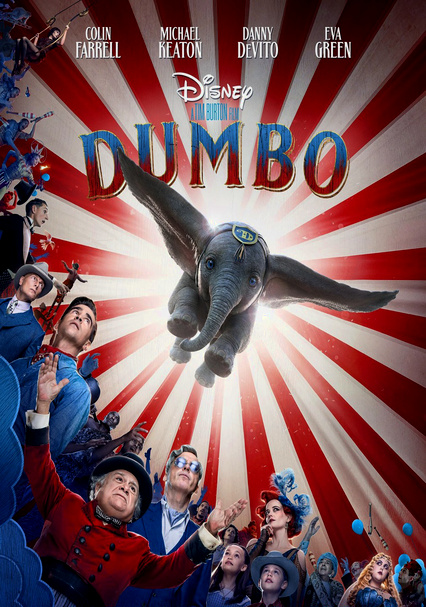
Dumbo (2019), the live-action remake of the charming and emotionally charged animated original from 1941, contains some positives but ultimately underwhelms, coming up with less than a stacked deck.

The problematic and gnawing element that persisted throughout the Disney film was its overly cute or child-leaning quality, which was not to my taste.

Nevertheless, for an afternoon at the theater with young children under the age of twelve, the film is a recommended and utterly appropriate activity for fun.

My expectation, knowing that Tim Burton was at the director’s helm, was for a darker, perhaps murkier interpretation, given some of his films in the catalog.

After all, Beetlejuice (1988) and Dark Shadows (2012), though flawed, contain some wicked charm and naughty humor. Dumbo is considerably softer as the director chooses a safe, more accessible path.

Creating magic from nearly eighty years ago is a challenging task for anyone to achieve.

World War I veteran and amputee, Holt Farrier (Colin Farrell) returns from the war to rejoin the financially problematic traveling circus owned by Max  Medici (Danny DeVito).

A widower, reunited with his two children, Holt is assigned to oversee the pregnant elephant, Mrs. Jumbo, as she gives birth to an unusual-looking elephant with giant ears who comes to be known as Dumbo.

The children discover that Dumbo can fly when aided by a feather, as the evil V.A. Vandevere (Michael Keaton) attempts to profit from Dumbo’s talents at any cost, adding to his fabulous creation, Dreamland.

The art direction and the look of the film are where Burton succeeds.

With dark, visually striking creations and intricate, spider-like sets, especially in Dreamland, the film bears the director’s unmistakable signature.  The costumes and styles are well-suited to the year 1919, and the wardrobe and hairstyles are in line with the times.

The circus stars and characters, from the fat lady to the exotic jugglers, are well-cast, adding good texture and multicultural flavor to the production.

The standout musical number is the poignant and sentimental “Baby Mine,” wisely featured twice during the film. Since the song is so lovely, this proves a bold move and my favorite part of what is otherwise a mediocre experience.

Sharon Rooney sings the version featured during a touching and painful scene between separated elephants Dumbo and Mrs. Jumbo, and the rock band Arcade Fire performs a different rendition over the end credits.

Anyone needing a good cry would be advised to check out the emotionally charged song.

While the acting among Farrell, DeVito, and Eva Green as Colette, the French trapeze artist who falls for the sexy Holt, is all admirable, two performances left me with critical fire. Keaton, typically a standout performer, goes full-throttle with an over-the-top and one-note performance as the villainous Vandevere.

Cartoon-like with herky-jerky head snaps and tic-like movements, the actor appears silly and ineffectual at creating any sort of robust character. Young actress, Nico Parker as Milly, Holt’s daughter, gives a dreadfully wooden performance in what could have been the film’s most likable character.

Besides one or two tender scenes the film largely goes for a cutesy vibe, not feeling fresh nor especially genuine. A Disney production, the film feels quite mainstream, lacking edginess, like the producers had dollar signs and major success on their minds over artistic merit or staying true to the original.

Other than a quick shot of the number “41” on the front of a train, a clear tribute to the animated original’s year of release, the remake strays very far from the first Dumbo with a few new characters and sadly no gossipy female elephants anywhere.

A disappointing offering, the live-action Dumbo (2019), the year’s first in a series of five expected Disney releases (Aladdin, The Lion King, Maleficent: Mistress of Evil, and Lady and the Tramp being the others) lacks much more than a couple of sweet scenes, an adorable elephant, and admirable sets, feeling utterly ordinary in flavor.

This is a misfire compared to the legendary, teary 1941 version of Dumbo.

Black Panther-2018

Black Panther-2018

Director Ryan Coogler

Starring Chadwick Boseman, Michael B. Jordan

Scott’s Review #805

Reviewed August 23, 2018

Grade: B+

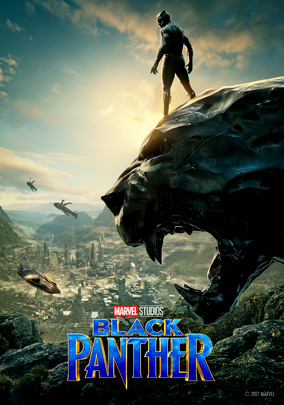
For the record, I am not a huge superhero fan nor an obsessive follower of the popular Marvel comic series. I see a handful of superhero films but hardly any of this particular genre, usually those (if any) receiving year-end recognition.

Having heard many positives regarding Black Panther (2018), I was looking forward to something creative and left of center from the typical genre film.

While the film has some standard superhero elements, the fact that most of the characters are ethnic is an enormous plus and worth the price of admission alone.

Admittedly, Black Panther plays out like a superhero film is “supposed” to play out: fight scenes, machismo, action, and villains, with the standard good versus evil storyline thrown in.

This is all good and will undoubtedly please the traditional Marvel comic book fan. However, the nuances that the screenwriters and director, Ryan Coogler, sneak into the film set it above a mediocre rating.

The fact that nearly all of the principal characters are black is tremendous, and the female black characters are portrayed as strong.

Furthermore, the visual treats of Africa and Korea, and multi-cultural clothing and colors are noteworthy. While I wish the actual story had steered further away from the tried-and-true, I was left happy with the other qualities.

The film begins with a quick story of how one African nation, Wakanda, came to be and proudly brought into existence the first “Black Panther” with superpowers obtained from a special plant.

As the action moves to Oakland, California, circa 1992, we learn that the King of Wakanda is visiting his brother, who works undercover.

Following the King’s death, his son T’Challa (Chadwick Boseman) takes over the throne but is soon challenged by his cousin, N’Jadaka (Michael B. Jordan), who deems himself the rightful heir.

Another subplot involves a black-market arms leader named Ulysses Klaue, who leads T’Challa, along with Nakia (Lupita Nyong’o) and Okoye (Danai Gurira), to South Korea and back to Wakanda.

Black Panther feels ambitious, like seeing something worth seeing, something inventive and cool. The film is stylized, and Coogler’s direction is spectacular, with bright, colorful visual treats, especially as he features lavish African locales.

Admittedly, in a mainstream comic book film laden with CGI effects, it is tough to know what is real or not, but as a viewer, these aspects were a treat and pleasing to the eyes.

The plot of the film itself feels admittedly mediocre, tough to follow, and a “been there, done that” evaluation. By the same token, the story seems predictable, and is it any wonder that T’Challa will reclaim the throne as King of Wakanda?

It does not matter too much after the inevitable clashes with warrior-type men who want the throne and/or feel that they are the rightful heir to it.

This is not to say the film is not good—it is, but the plot is not the highlight of Black Panther; it feels fairly standard.

The male-female roles are a fascinating study and progressive-minded. Granted, the male characters (T’Challa, N’Jadaka, and M’Baku) are all testosterone-laden and fierce with machismo.

However, despite being manly men, they also contain some sensitivity, and the characters have a unique family element.

On the other hand, the female characters are powerful and empowering- a dynamic approach for a superhero film sure to be seen by millions. One female character is even an Army General! So the portrayal of women as strong warriors rather than merely secondary or arm candy is impressive.

The comic book or superhero genre is notoriously filled with gender stereotypes and specific, often generic aspects. It is nice to see this work break down some of these barriers.

Between the recent Wonder Woman (2017) and Black Panther (2018), women and the black community have been represented positively.

Here’s to hoping that the LGBT community may be next.

Oscar Nominations: 3 wins- Best Picture, Best Original Score (won), Best Original Song-“All the Stars”, Best Sound Editing, Best Sound Mixing, Best Production Design (won), Best Costume Design (won)

The Polar Express-2004

The Polar Express-2004

Director Robert Zemeckis

Starring Tom Hanks

Scott’s Review #800

Reviewed August 8, 2018

Grade: B+

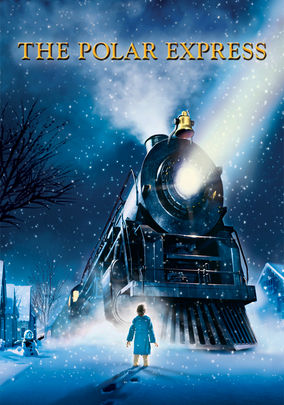
The Polar Express (2004) is a modern entry into the annals of holiday film history. Along with treasures like Rudolph, Frosty, the Grinch, and all the other standards, this film has become a popular one to watch throughout the season.

The film is not exactly like the others, since it is the first of its kind to incorporate live human characters animated using live-action motion capture animation.

The mood of the film is mysterious, edgy, and with a dark tint, so jolly it isn’t, but compelling it is, and visually it is a marvel.

The story is as follows: on a snowy Christmas Eve, a young boy living in Grand Rapids, Michigan, doubts the existence of Santa Claus.

When a steam locomotive suddenly appears outside his house, he curiously boards the train and finds a mysterious conductor (Tom Hanks) manning it.

As the train rolls away, the boy meets two other children on board and stops for another one who is also reluctant to get on.

They begin a dazzling, frozen adventure to the North Pole with the promise of receiving the first gift of Christmas from Santa Claus himself.

The main reason to recommend The Polar Express is simply the gorgeous visual treats it offers. In 2004, the film was a unique experience, and I fondly recall sitting in a dark movie theater, watching it for the first time.

There was a magical element to the surroundings, combining intrigue and fantasy that still holds up well.

For adults, I do not think the film is at all scary, but I have heard some reviewers complain that the moody ingredients are a bit frightening for children, so there is that concern. 

A major component is the mixture of human beings and animated tools. The familiar actor that everybody knows is Tom Hanks as the conductor.

Therefore, to sit back and observe the character is a wonderful thing- is it really Tom Hanks or is it an animation?

It is ultimately both, but the fun is in the observation and wondering how the filmmakers created this experience.

And listen for Hanks in other voice performances throughout the film. 

The story (or fable) itself is warm and fairly predictable. But, of course, being largely made with kids in mind, this is to be expected.

There is never a doubt that the boy (interestingly, never given a name) will ultimately believe in Santa after all and live happily ever after.

The magic is in the details, though- the boy’s journey to this realization is peppered with fun and creative richness- the little girl’s floating ticket and an ornament falling off a Christmas tree are good particulars. 

Director Robert Zemeckis and Hanks worked closely together in Forrest Gump (1994), so the pair are familiar with each other, creatively speaking. Hanks undoubtedly had much input into the decision-making, and it shows. 

I do not personally rank The Polar Express (2004) among the best of the best holiday film offerings, but I support an occasional dusting off of this work for viewing pleasure.

Perhaps over time, the animations may become dated or seem less dazzling, but the film is still worth appreciating for its creative elements.

The story is nothing spectacular (in a way, Scrooge for kids), but it makes for a pleasant family viewing experience. 

Oscar Nominations: Best Song-“Believe”, Best Sound Editing, Best Sound Mixing

A Wrinkle in Time-2018

A Wrinkle in Time- 2018

Director Ava DuVernay

Starring Storm Reid, Oprah Winfrey, Reese Witherspoon

Scott’s Review #788

Reviewed July 16, 2018

Grade: C

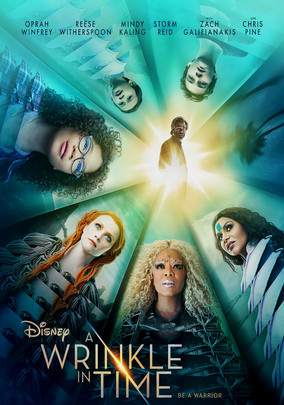
A Wrinkle in Time (2018) is a film I had high hopes for, given the enormous marketing push, first-rate cast, and especially the acclaimed female director involved with the project, Ava DuVernay (Selma, 13th).

Additionally, having admired the 1962 novel, I expected a rich, earthy, and mysterious experience. Sadly, whether it be a “too many cooks in the kitchen” situation given the star power involved, or some other factors leading to a disconnect, this film disappointed me.

It’s not terrible, but it suffers from miscasting, too much CGI, and a story that is not very compelling.

Thirteen-year-old Meg (Storm Reid) is having a tough time in school. Smack dab in the “awkward phase,” she is picked on by schoolmates because her father (Chris Pine) has disappeared, presumably having ditched the family.

In reality, he is a scientist transported to another world after solving the question of humanity’s existence.

After Meg and her family are visited by a strange woman named Mrs. Whatsit (Reese Witherspoon), Meg, her little brother Charles Wallace, and Meg’s crush, Calvin, time-travel to find a way to save her father.

Fans who have read the fantastic novel written by Madeleine L’Engle will most certainly be disappointed since many details of the film are vastly different from the written page.

DuVernay attempts to take the film out of the 1960s and into 2018 (I have no issue with that), but the film feels so slick and modern with the visual elements and heavy use of CGI that the story suffers enormously.

The film is gorgeous, especially in the sweeping outdoor scenes, but in this case, too many bells and whistles spoil A Wrinkle in Time.

The three strange women characters, Mrs. Whatsit, Mrs. Who (Mindy Kaling), and Mrs. Which (Oprah Winfrey), are completely butchered. In the novel, each is portrayed as peculiar, mysterious, and similar to witches: frumpy, awkward, yet lovable.

In the film, however, they are colorful, glamorous, and empowered, but lack uniqueness or intrigue.

I am all for female empowerment, but the characters just felt wrong.

Kaling is fine in the most minor role, but in the case of Witherspoon and Winfrey, it appears to be a case of “we have big stars, let’s find roles for them.” A tough sell with Mrs. Which is to think of Oprah as anyone other than….well, Oprah!

Witherspoon’s attempts to be goofy and the comic relief of the film do not work.

The casting of newcomer Storm Reid is lackluster. I have no issue with the character of Meg being changed to bi-racial, I feel that’s a plus in the modern age. However, the actress is not the greatest, appearing both sullen and wooden in various scenes.

Nor does she have any chemistry with her love interest, Calvin.

This is a shame since the theme of young love would have been a nice addition to the film and was a coming-of-age element in the novel.

At the risk of being overly critical, A Wrinkle in Time is not a total disaster either. The progressive and heroic message of the overall film is quite inspiring if kids watch the film (and since it is Disney-produced and heavily advertised, I can see no reason why they wouldn’t), they will be exposed to a nice message of good conquering evil.

On a side note, the villain is safe and hardly conjures up much fright, so parents need not worry about the film being too scary.

With heaps of buzz and anticipation regarding A Wrinkle in Time (2018), the film seemed poised to become a blockbuster hit and a great spring flick. Instead, critics and audiences alike have largely derided it.

With creative genius, star power, and a considerable budget, something ran amok as the final product is fair to middling.

Let’s hope director Ava DuVernay gets her groove back with her next project- I expected more.

Slumdog Millionaire-2008

Slumdog Millionaire-2008

Director Danny Boyle

Starring Dev Patel

Scott’s Review #786

Reviewed July 11, 2018

Grade: A-

Winner of the 2008 Best Picture Oscar (as well as seven other Academy Awards), Slumdog Millionaire (2008) arguably was the “feel-good” film of the year.

While I am not sure all those awards are ultimately deserved, the film is nonetheless very good, offering a mix of rich culture, a young man overcoming enormous odds, and a love story.

Fans of the universal game show hit, Who Wants to Be a Millionaire, will be pleased.

Young Dev Patel (critically acclaimed for 2016’s Lion) stars as a poor young Indian man, Jamal Malik.

He is detained after being a contestant on Who Wants to Be a Millionaire after he came one question away from winning a million dollars.

The producers go on a commercial break, and Jamal is whisked away to custody as suspicions are aroused and the young man is accused of cheating. Since he is a “slumdog” and poorly educated, it is assumed that he could not know all the answers.

Jamal recounts, through flashbacks and experience, how he came to know all the correct answers.

Director Danny Boyle does a fantastic job. Slumdog Millionaire is edited in a fast-paced fashion, and the camera angles are quick and stylized, making for an excellent flow.

The soundtrack to the film is very effective and enhances the plot. For example, the music is extremely diverse, featuring genres such as traditional Indian classical music, European house music, and American-style hip hop.

This is an ingenious way for Boyle to incorporate multiple cultures, and he therefore creates a rousing, crowd-pleasing experience.

Another successful aspect of the film is its use of knowledge and intelligence to tell a story.

As we experience Jamal’s difficult life, beginning as a five-year-old orphan, his unlikely success story and his adventures on the streets are intertwined with both life lessons and education.

The audience is learning important details about the world while Jamal is simultaneously.

The romantic love story featured in Slumdog Millionaire is also a highlight and extremely well-crafted. Heartbreakingly, Jamal, his older brother Salim, and the lovely Latika (later played by the gorgeous Freida Pinto) are on the run when Latika vanishes.

Her disappearance and later reappearance are vital aspects to the heart of the film, and Patel and Pinto make a handsome and highly likable couple. Their reconciliation is heartfelt and beautiful, and gives the film a nice emotional investment.

The incorporation of a relevant and acclaimed game show into the story is wonderful, though hopefully, as the years go by, the film does not suffer from a dated feel if and when Who Wants to Be a Millionaire is long forgotten, but alas, this is a risk, and only time will tell.

The glossy set and for American audiences, the Indian-style version of the game show is great fun, as are the Indian locales, which visually dazzle.

A slight detraction of Slumdog Millionaire is that the film is unquestionably uplifting and light-hearted. Even though the characters face peril and dangerous experiences, the film “feels” safe.

So much so that qualities such as slick and mainstream resound.

Don’t get me wrong, the film is genuine and has heart and soul, but just slightly too cheery. Of course, since the film is well-made and the story and acting are great, this can easily be overlooked.

Slumdog Millionaire (2008) is a wonderful piece of work and, quite simply, a film that many people will champion. All of the elements are perfectly in place, which is a main selling point and a prime reason for the film’s many accolades.

The romance and adventure pieces are the best parts, with a quick flow and lots of fun, educational tools utilized.

The film is a nice pleasure to experience.

Oscar Nominations: 8 wins-Best Picture (won), Best Director-Danny Boyle (won), Best Adapted Screenplay (won), Best Original Score (won), Best Original Song-“Jai Ho”, “O Saya”(won), Best Sound Editing, Best Sound Mixing (won), Best Cinematography (won), Best Film Editing (won)

Twister-1996

Twister-1996

Director Jan de Bont

Starring Bill Pullman, Helen Hunt

Scott’s Review #763

Reviewed May 25, 2018

Grade: B+

Twister (1996) is a film with amazing, groundbreaking special effects that blew people away (pun intended!) when it was released to the masses over twenty years ago.

Moviegoers flocked to theaters everywhere to enjoy the escapist summer feel-good hit starring popular stars of the time.

The film spawned amusement park rides and lots of other fun things during its run.

The visuals are what truly deserve to be enjoyed here, not the generic, tried-and-true subplots of romance, childhood trauma, and corporate greed that are mixed in.

The film does not hold up well in the present day, as its dazzling effects now look rather dated when compared with modern blockbusters. This results in Twister being reduced to “one of those 1990’s films”.

Bill Paxton and Helen Hunt star as American storm chasers, Bill and Jo, obsessed with their craft of tracking tornadoes throughout the Midwestern United States.

Adding drama to the plot is that Bill and Jo are an estranged married couple in the midst of a divorce.

Bill brings his new fiancée, Melissa (Jami Gertz), along as numerous meteorologists converge to track storms using newly invented devices.

Predictably, a series of vicious storms commences while Bill, Jo, and Melissa play out a love triangle.

Twister gets off to a fantastic start when a wicked storm kills the five-year-old Jo’s father, prompting her to pursue her chosen career. Jo has never gotten over her father’s death, becoming fascinated by deadly storms.

The effects of this initial storm are very well done as Jo’s father’s death scene is riveting- the poor man being sucked into the deadly cyclone is memorable.

Regardless, this scene sets the tone for the ample effects to follow- most notably the terrifying sound of the swirling storm as farm tools and animals fly around onscreen.

After the initial introduction, the rest of the film mainly follows the group as they drive around and encounter storms, with Bill and Jo taking center stage.

As a child who spent many summers in the Midwest, sans tornadoes, thankfully, I felt a sense of nostalgia watching the film.

It is assumed that Twister was filmed on location (with studio help), but the authenticity is apparent. From the vastness of the plains to the dusty roads, cornfields, and the small-town U.S.A.

I enjoyed the down-home, slice-of-life feel.

The action and effects are lightning-quick and quite realistic. As mentioned, the sound effects are as strong as the visual effects, and I never doubted for a second that the twisters had a realistic quality.

This successfully merges into the summer blockbuster that Twister’s producers undoubtedly were going for. Making a ton of money, the result was successful and inspired by Hollywood.

Despite the superlative special effects, though, this is the only reason to watch Twister, and seeing the film once is enough excitement.

The writers (Michael Crichton and Anne-Marie Martin) attempt to incorporate a romance into the story, and this does nobody any good.

This negative aspect is even more apparent since the chemistry between Paxton and Hunt is non-existent, and Gertz’s Melissa is meant to be the odd woman out all along.

A large amount of suspension of disbelief is necessary to “buy” various scenes. Ludicrous are countless scenes where characters either outrun the monstrous twisters or, somehow, the storms encircle them but miraculously never touch them.

When Jo, Bill, and Melissa’s truck is captured inside the funnel cloud, the vehicle and its passengers somehow remain unharmed.  Tornadoes do not simply come out of nowhere to attack without any indication on the radar.

But alas, this is a disaster film, and liberties must be taken.

The famous “cow scene”, notoriously used twice in the film, seemed groundbreaking and cutting-edge in 1996, but in 2018 now seems hokey and unnecessary.

Times sure do change in cinema, especially with technical effects and CGI growing each year.

Admittedly, the film does contain a good, all-American rockin’ summer tune by Van Halen named “Humans Being”, which always makes me think of summertime when I hear it.

The entire Twister soundtrack was an enormous success with radio airplay, which led to further successes for the film.

Perhaps now watched as a blast from the past or a revisit to some sort of nostalgic time for folks, Twister (1996) is a great example of a once-popular popcorn movie falling into semi-obscurity.

Given another twenty years, the film will undoubtedly fall apart—a nice film for its time, but not much more.

Oscar Nominations: Best Sound, Best Visual Effects

Indiana Jones and the Temple of Doom-1984

Indiana Jones and the Temple of Doom-1984

Director Steven Spielberg

Starring Harrison Ford

Scott’s Review #759

Reviewed May 17, 2018

Grade: A

The second in the trilogy (I refused to acknowledge the middling Kingdom of the Crystal Skull in 2008), Indiana Jones and the Temple of Doom (1984) is easily my favorite of the group.

Much darker than its predecessor, Raiders of the Lost Ark, it is also better, with more flair and pizzazz.

All three (1989’s The Last Crusade added) could be watched in sequence and easily enjoyed as companion pieces for a slice of 1980’s nostalgia.

A prequel to Raiders of the Lost Ark, the action picks up a few years prior as our hero narrowly escapes the clutches of a crime boss in Shanghai, China.

Indiana Jones (Harrison Ford), along with sidekick eleven-year-old Short Round (Ke Huy Quan) and nightclub singer Willie Scott (Kate Capshaw), embarks on an adventure to retrieve a stolen sacred stone.

The poor villagers have also lost their children to a lavish palace where they are forced to work as enslaved people.

Wisely in keeping with the continuity of the first story, director Steven Spielberg and writer George Lucas return to the fold. This enriches the experience, as both men are attuned to Indiana Jones’s character and do not try to change him.

His familiar wittiness and charismatic nature return, and the dashing hero shows more skin this time around with more than one shirtless scene.

To cement the good character, Harrison Ford returns to the role he created and made famous.

Indiana Jones and the Temple of Doom is layered with positive aspects and holds special childhood memories for me. I vividly recollect going to the movie theater and excitedly watching the film on the big screen, clutching a tub of buttery popcorn.

For a young boy, this is the best- an adventure story for the ages with thrills and edge-of-your-seat sequences.

The film is perfect for the entire family.

Many gorgeous exterior sequences abound throughout the film. A prime example is when the trio encounters deadly assassins on a precarious rope bridge high atop a crocodile-infested, murky river.

This scene is fraught with tension and “how will he ever get out of this?” thinking when the killers corner dear Indie.

With lightning-quick thinking, he severs the bridge, resulting in a dangling escapade. As numerous bodies fall into the river, they are chopped to bits by the hungry reptiles. The fact that the action is all shot outdoors in lush scenery only adds to the enjoyment.

The film is admittedly filled with dark and scary aspects, necessitating a PG-13 rating rather than a PG one. As Indie, Willie, and Short Round are held hostage in the evil palace, a dangerous sacrifice occurs.

One poor man is chosen to give his life by being burned alive in a roaring fire. Indie is then forced to drink the potion and presumably suffer the same fate.  Other bloody moments include a bad guy meeting his fate after being flattened like a pancake by a steamroller.

The tone of the film is much darker than that of Raiders of the Lost Ark.

To offset the blood, guts, and voodoo, the film occasionally parleys into humor, mostly at the expense of Willie, the film’s comic relief.

Accustomed to the glamour of costumes and luxurious hotels, the singer is forced to fend for herself amid snakes, elephants, and other creatures. As she hungrily sits down for what she thinks is a scrumptious dinner, she is served soup with monkey brains and bulging eyeballs, deemed Indian delicacies.

Readily apparent, watching the film now, are glaring negative stereotypes associated with the Indian culture. As I am sure the intent was not to insult, some stereotypes do abound with the hokey cuisines and the severe poverty.

The underlying image of tribal Indians as being weird or out of touch is prevalent, to say nothing of the odd religious overtones.

Kate Capshaw as Willie is the complete opposite of the central female character, Marion, in Raiders of the Lost Ark. Whereas Marion is intelligent and serious, Willie is pampered, rich, and gullible.

I find the camaraderie between Indie and Willie much more palpable than between Indie and Marion, and the romantic overtures appealing.

Who can forget the famous “bug scene” in the palace?

Conjuring up wonderful and exciting childhood memories, Indiana Jones and the Temple of Doom (1984) is a treasure for the eyes and the strongest entry in the bunch.

If you are in the mood for a good, fun-filled experience with a healthy dose of Indian culture, adventurous antics, and a slice of darkness, this one is a must-see.

Oscar Nominations: 1 win-Best Original Score, Best Visual Effects (won)

Raiders of the Lost Ark-1981

Raiders of the Lost Ark-1981

Director Steven Spielberg

Starring Harrison Ford, Karen Allen

Scott’s Review #757

Reviewed May 15, 2018

Grade: A

A film that kicked off the tremendously successful and ever-so-fun 1980s trilogy, Raiders of the Lost Ark (1981), is a treasure in the adventure genre time capsule.

Director Steven Spielberg embarks on the journey of one of the most highly visible film heroes in the form of Indiana “Indie” Jones, a swashbuckling, aw-shucks kind of guy.

Harrison Ford is perfectly cast in a role that perfectly fits him and, besides Han Solo, defined him during the decade- the best role of his career if you ask me.

Wonderful to watch in sequence with the even more superb Indiana Jones and the Temple of Doom (1984), these two films are a pure pleasure as our hero faces dangerous obstacles at every turn, either being chased by or pursuing sinister robbers and other undesirables.

All the while, Indie keeps his familiar sly grin and numerous jokes to entertain audiences.

Raiders of the Lost Ark has it all with superior writing, editing, cinematography, art direction, sound, and visual effects.

They reaped many Oscar nominations, quite uncommon for an adventure tale, but the merits were warranted. Atypical compared to other films of this type, the film is not overly saturated with phony machismo or unnecessary “guy” stuff, but rather appealing and genuine.

The time is 1936, and archaeologist Indiana Jones works as a professor at a University. Known for retrieving ancient artifacts, he is contacted by Army intelligence officers who ask him to help stop the Nazis from acquiring the Ark of the Covenant, which they believe will make their armies invincible and allow them to conquer the world in a sinister fashion.

Events lead Indie to Marion (Karen Allen), who harbors resentment towards him for a failed past romance.

The rest of the film follows the pair through Nepal and Cairo as they attempt to recover the Ark before the Nazis do.

Raiders of the Lost Ark contains all the elements of a successful “hit” movie and has “blockbuster” written all over it. This is not a slight against the film, but rather a testament to all involved.

Led by the successful Spielberg, who knows how to connect all the dots, Ford, first and foremost, infuses his character with charisma so that the audience enjoys his sensibilities and desire for the truth.

Indie is intent on protecting humankind, so Spielberg carves a “good versus bad” approach- making the villainous Nazis the antithesis of Jones, which creates a clear rooting value.

My favorite scene in the film is nicknamed the “face-melting scene” and contains state-of-the-art special effects that compelled and mesmerized me, and also led to light nightmares for any kid under the age of twelve.

The way that the bad guys see swirling, benevolent ghosts- first beautiful and peaceful, but soon turning deadly- causes their faces to melt off or shrivel. The scene is both inventive and dramatic.

Not to be dismissed as trite or fluff are the exciting and memorable scenes dubbed “the snake scene” and “the rolling boulder scene”.  In the former Indie, wryly admits his fear and trepidation of snakes as he must traverse a huge pit filled with thousands of them, and he comes face to face with a deadly King Cobra.

In the latter scene, Indie must outrun a speeding boulder as he takes an ancient artifact from a sacred spot inside a cave, causing boulders to collapse around him.

Both scenes are enormous fun and the immeasurable edge-of-your-seat sequences.

I never sensed much chemistry between actors Ford and Allen. Still, writing the characters of Indie and Marion as former lovers adds a good bit of tension and sparring between the characters- this provides some good fodder and humorous situations.

Thankfully, the romance between the two is neither the focal point of the film nor all that important, but rather, in the safety that 1980’s cinema afforded, merely a necessity.

Raiders of the Lost Ark (1981) is a superb adventure film that holds up better than it should, decades beyond its release. The film is rich with good old-fashioned action, a charismatic hero, thrills, intrigue, and a good history lesson for those interested in the build-up to World War II.

The accounts are fictional, of course, but Spielberg offers a fine 1980s cinematic experience that’s got it all.

Oscar Nominations: 4 wins-Best Picture, Best Director-Steven Spielberg, Best Original Score, Best Sound (won), Best Art Direction (won), Best Cinematography, Best Film Editing (won), Best Visual Effects (won)

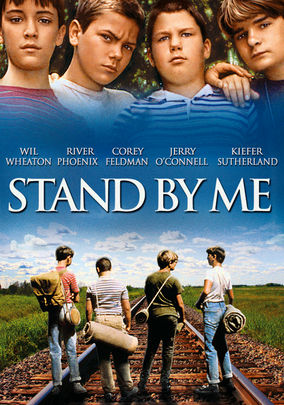
Stand By Me-1986

Stand By Me-1986

Director Rob Reiner

Starring Wil Wheaton, River Phoenix

Scott’s Review #752

Reviewed May 2, 2018

Grade: A

Stand By Me (1986) is a sweet, coming-of-age story that every male (or female, for that matter) who grew up in small-town America will undoubtedly relate to.

Set mostly outdoors in the remote Pacific Northwest, the film successfully shows the deep bonds of friendships over the course of a Labor Day weekend as four youths set out on an adventure of discovery.

In 1986, I could completely relate to the film, and today, Stand By Me holds up quite well.

Stephen King, a tremendous author known mostly for horror novels, wrote a short story titled “The Body” in 1982. Stand By Me is based on this story.

Instead of traditional horror, however, the story is more of a straight-up adventure, though in pure King style- a dead body is front and center (naturally).

Stand By Me is directed by Rob Reiner, and its success led to other mainstream achievements for Reiner (1989’s When Harry Met Sally and 1990’s Misery- also a King novel). The legendary theme song by Ben E. King plays over the closing credits and became a smash hit again in 1986.

The film starts intriguingly as the main character, Gordie, as an adult, learns that his childhood friend Chris Chambers has tragically been stabbed to death.

Gordie then narrates a flashback to the summer of 1959, when he and three other boys embarked on a childhood adventure on Labor Day weekend.

Along with Gordie (Wil Wheaton), we meet Chris (River Phoenix), a rebellious boy with a troubled home life, Teddy (Corey Feldman), who is scarred as a result of being burned by his mentally ill father, and Vern (Jerry O’Connell), an overweight kid insecure about his looks.

The wonderful aspect of Stand By Me is that each of the four central characters is flawed, whether physically or by some other insecurity, giving each character depth. Each character is highly empathetic to an audience member who may see him or herself in these characters.

This point carries through for the entire length of the film. Through conversational scenes with one another, each weakness is exposed and dissected- Teddy becomes vulnerable about his relationship with his father when a character refers to him as “loony”.

Vern’s weight bothers him, and Chris aspires to be so much more than people anticipate he will ever become.

To avoid being weighed down by too many dramatic elements, Stand By Me incorporates much-needed humor into its story. My favorite sequence is the delightful story in which Godie regales the other boys one night as they camp outdoors.

Town legend has it that a rotund man, who picked on a boy nicknamed “Lard-Ass,” enacts the perfect revenge on the townspeople one summer as he enters a pie-eating contest, resulting in a torrent of vomiting.

This scene is very well shot by Reiner and brilliantly balances the film’s differing tones, all the while nestled within a cohesive package.

The film belongs to the young actors, each of whom is cast extremely well. Of course, Corey Feldman and River Phoenix went on to major success in the 1980s.

Phoenix, who tragically died in 1993, and Feldman, who suffered numerous setbacks in his short career, are forever youthful, with promise and poise in this film.

In Phoenix’s case, he seemed most on course for leading man status with his dashing, youthful looks and clean-cut appearance. Watching in later years, it is bittersweet to watch both actors and recollect the promise of each.

Mixing drama and comedy, and at its core a true adventure story best watched on a summer evening, Stand By Me (1985) is memorable and poignant.

The setting of late summer, outdoorsy camping, and green scenery is resilient and stands the test of time.

Anyone who has embarked on a good journey as a kid or formed everlasting memories from their youth (which should be all of us) can appreciate this timeless gem.

Oscar Nominations: Best Screenplay Based on Material from Another Medium

Independent Spirit Award Nominations: Best Feature, Best Director-Rob Reiner, Best Screenplay

Wonder Woman-2017

Wonder Woman-2017

Director Patty Jenkins

Starring Gal Gadot, Chris Pine

Scott’s Review #696

Reviewed November 20, 2017

Grade: B

Wonder Woman is a 2017 summer offering (and a mega success) firmly nestled in the comfort of the superhero adventure genre. It is unique because it is directed by a woman in a male-dominated field.

This must be championed, and the film has a palpable, female-empowering quality that I adore since it is still lacking in most mainstream movies.

However, at times, the film teeters too much around predictability and possesses many traditional superhero elements, such as good versus evil, climactic fight scenes, and stock villains.

But liberties must be taken, and overall, I saw the film as a female-driven work.

The fact that the masses celebrated Wonder Woman is terrific news.

Director Patty Jenkins, notable for having previously tackled weighty subject matter in films such as 2003’s Monster, is at the helm of this project and embodies her lead character with a good blend of earnestness, pizzazz, and heart.

“Wonder Woman” is a likable character, and newcomer Gal Gadot, who is unknown to me, is interesting casting. There are a myriad of young Hollywood “names” who could have championed the part—Scarlett Johansson or Jennifer Lawrence may have been palpable in the role.

Seemingly brave, Gadot takes command of the character and fills her with substance.

We meet “Princess Diana” as a young girl living on the protected Amazon island of Themyscira, inhabited only by females. It is around 1918, amid the harsh reality of World War I, though the members of the tribe know nothing about the war or any other current events—nor do any males live on the island.

Most women are trained warriors, presumably to protect the island from potential dangers. It is soon revealed that Diana has special powers, and after meeting a lost American soldier, Steve Trevor (Chris Pine), she embarks on a mission to save the world from the ravages of war.

Mixed in with the main story is a briefly mentioned ancient legend of Zeus’s son Ares plotting to return and destroy the Amazons, whom Zeus created.

My only issue with Wonder Woman as a whole is with the story.  The plot is not weak, but simply put- it is nestled in Hollywood predictability rather than containing surprises.

Despite deserved kudos for the characterization of Diana, the story ultimately turns ho-hum like many superhero films—peppered with the inevitable battle scenes.

The genre-specific “save the world” is played to the hilt as Diana takes it upon herself to stop the war, believing that people are not entirely bad. With this thought, Diana finally learns a valuable lesson about the complexities of human beings.

Wonder Woman contains a moralistic tale, but then there are more battle scenes.

The villains are mainly cartoon-like, which is what one might expect for a film of this kind.  Chemist Isabel Maru/Doctor Poison (Elena Anaya) dons a mask to hide a disfigured face (intentionally to test the poison gas), and General Erich Ludendorff (Danny Huston) plans to destroy all of humanity.

These characters are straight out of comic books and contain no redeeming qualities.

Contrary to where the main story may be a tad lacking, the romantic element is nicely done. The scenes involving Diana and Steve are sweet and romantic, making them fun to watch and a good balance against the action sequences.

Gadot and Pine have great chemistry, adding humor, so the scenes are not forced. As Diana sees Steve naked for the first time, a clever sexual flirtation develops, and a sly lesbian backstory is briefly hinted at.

Diana remarks with a smirk that men are only needed for procreation and that the women on the island “can satisfy themselves.” The duo also has a play of words about his “manhood.”

Due to Wonder Woman’s success, a sequel, again directed by Jenkins, is in the works. My hope is that because of the box office performance, the talented director can take many more liberties and push the envelope further, as she did with Monster.

Wonder Woman (2017) is a good film, so we hope the next installment will be great.

Pirates of the Caribbean: Dead Man’s Chest-2006

Pirates of the Caribbean: Dead Man’s Chest-2006

Director Gore Verbinski

Starring Johnny Depp, Orlando Bloom, Keira Knightley

Scott’s Review #606

Reviewed January 11, 2017

Grade: B-

Pirates of the Caribbean: Dead Man’s Chest is the follow-up to the original Pirates of the Caribbean: The Curse of the Black Pearl, from 2003.

The sequel is decent but inferior to Curse of the Black Pearl.

The visual effects are spectacular, and the budget is very high, but the story isn’t there. The film drags along at times and is a bit confusing.

Johnny Depp gives his all to his role of Jack Sparrow, performing with gusto, and is the highlight of the franchise.

The supporting characters, Bloom as Will Turner, and Keira Knightley as Elizabeth Swann, are fine, but not on the level of Depp.

Otherwise, the performances are okay, but they are essentially a carbon copy of the first film.

Story-wise, Will and Elizabeth are arrested for aiding Jack Sparrow’s escape, and the plot involves attempts to locate Sparrow.

This is paired along with the typical adventure aspects of a film like this and the stock-character villains, with grimaces, heavy makeup, and overacting, but I expected as much.

Not a bad sequel, certain to entertain the masses, and guaranteed to make a ton of money, inevitably ensuring another sequel will be made, with little doubt of being even less compelling.

Oscar Nominations: 1 win-Best Sound Editing, Best Sound Mixing, Best Art Direction, Best Visual Effects (won)

Sherlock Holmes-2009

Sherlock Holmes-2009

Director Guy Ritchie

Starring Robert Downey, Jr., Jude Law

Scott’s Review #575

Reviewed December 31, 2016

Grade: B-

From a technical perspective. Sherlock Holmes, a 2009 attempt at revitalizing the famous detective story into something of a modern franchise for the masses, achieves a measure of success in style and editing but ultimately fails in character development or story.

Traditionalist fans of the detective and his partner will undoubtedly be displeased with this film.

This film is very well made, with snappy editing, fast-paced wit, and attempts at humor, but it does not work all so well when put together as a film.

The re-birth of Sherlock Holmes was made to entice modern audiences.

Director Guy Ritchie even brings in superhero elements to Sherlock Holmes- suddenly he can kick ass as well as solve a complex mystery, which is so far removed from the original character.

Downey Jr. and Jude Law as Sherlock Holmes and his partner Watson, have some humorous moments, but the chemistry is not wholly there-it appears they are both trying too hard to create some magic where there is none.

All in all, though a well-made, entertaining two hours well spent, the story and characterization ultimately do not work.

Downey Jr. gives a great performance and shows why he is one of today’s most versatile actors, but this cannot ultimately make the entire film a success.

Oscar Nominations: Best Original Score, Best Art Direction

Star Wars: Episode VII: The Force Awakens-2015

Star Wars: Episode VII: The Force Awakens-2015

Director J.J. Abrams

Starring Harrison Ford, Carrie Fisher, Mark Hamill

Scott’s Review #540

Reviewed December 8, 2016

Grade: B

As a youngster who grew up exposed to the original three Star Wars films (admittedly, I cannot keep track nor care enough to learn the exact chronological order of the franchise), the 2015 reincarnation is very nostalgic.

Star Wars (1977), The Empire Strikes Back (1980), and Return of the Jedi (1983) were magical films for a kid to enjoy.

I saw each one in the movie theater.

Sadly, The Phantom Menace in 1999 was a rather forgettable endeavor and did nothing to draw new fans to the franchise, nor keep existing fans engaged.

Taking center stage in this installment are beloved stalwart characters Han Solo (Harrison Ford), Princess Leia (Carrie Fisher), and Luke Skywalker (Mark Hamill) in a nostalgic trip down memory lane.

A slight gripe is the shamefully under-use of one of these characters.

The visual effects are impressive, the main villain is okay, and the action sequences adequate, but the ode to history keeps the long-time viewer engaged the most.

In a way, Star Wars: The Force Awakens is aptly titled as it is a rebirth of sorts for the storied franchise.

Legendary actor Max von Sydow is shamefully under-utilized in a throwaway part in the film’s first sequence.

He resembles deceased actor Alec Guinness, made famous again in the 1970s when he appeared in the first Star Wars.

A coincidence?

Filmmakers are going for a modern reboot of Episode IV (the 1977 Star Wars).

The main character of Rey (Daisy Ridley) is meant to be the new Luke Skywalker, who is known as a Jedi hero in the land and has been missing for years. Rey has special powers and is accompanied by her sidekick droid, BB-8, a similar character to R2-D2.

The villain is Kylo-Ren, son of Han Solo and Princess (now General) Leia, and reminiscent of Darth Vader.

The film is a classic tale of good versus evil as the evil First Order battles the good Resistance.

I enjoyed the good storytelling most of all and prominent roles for Han Solo and Leia were good choices for the storied franchise. Newcomers Rey and her love interest, Finn, are appealing, as are fighter pilot, Poe, played by Oscar Isaac.

Reportedly, this film is the start of another trio of films so we will undoubtedly see more of these characters.

I could not help but notice the Nazi similarities of the First Order and their soldiers, the Stormtroopers. Possessing a red quality and a Nazi-like salute to their supreme leader, they even look German in appearance.

Kylo-Ren, raven-haired, pale, and clad in a dark black cape, was derived from Darth Vader, especially when he appeared in mask attire.

He almost could have been his son.

Set thirty years since the original Star Wars, the plot is more or less similar, and I think this is a wise move in introducing the franchise to a new audience while staying true to the rich history of the central characters and their offspring.

Han Solo and Leia discuss their love affair, past adventures, and their son, who has been hypnotized to the dark side. They struggle to concoct a way to rescue him and hope to persuade him that aligning with the Resistance is the only way.

Favorite scenes include the ultimate showdown between Rey and Kylo-Ren. Set in a snowy, wintry forest, with their glistening and glowing lightsabers, the scene is visually gorgeous, as are the many scenes in one battle station or another.

The re-appearance of comical C-3PO is darling.

As with the original Star Wars, humor is mixed to lighten the mood. Han Solo and his dedicated side-kick Chewbacca, gently spar, and when Han Solo takes the group to a saloon filled with interesting creatures, the scene is light and fun. 

The real drawback for me is that the film is not all that compelling save for the nostalgia aspects. It is a classic battle of two wills, but nothing new and exciting. Sure there are a few new characters, but the plot is rather basic and what one would expect. 

I am not truly invested in the franchise, despite zillions of die-hard fans being fanatics of the films and their intricacies, so that is more of an opinion than a criticism of the merits.

Star Wars: Episode VII: The Force Awakens (2015) will undoubtedly please fans and introduce new ones to a world of galaxies, and the “force”.

A satisfying trip down memory lane.

Oscar Nominations: Best Original Score, Best Sound Editing, Best Sound Mixing, Best Film Editing, Best Visual Effects

Oz The Great and Powerful-2013

Oz The Great and Powerful-2013

Director Sam Raimi

Starring James Franco, Mila Kunis

Scott’s Review #433

70243359

Reviewed June 30, 2016

Grade: B

Being a huge fan of the original The Wizard of Oz epic classic in 1939, I was interested in seeing this extension of the original version.

While it has its moments of charm and good old-fashioned adventure, it is ultimately good, but nothing great.

James Franco is fantastic as the Wizard of Oz, the highest point of the film,  and has great charisma in the role. He brings a fun flair and is quite appealing.

The witch characters are okay, but not terribly interesting or deeply explored. Further character depth might have been helpful as I did not notice much-rooting value for either of them.

On a positive note, I loved the first sequence, which was in black and white, true to the original, and the twister scene is impressively done.

The set/art design in this sequence and once the setting was Oz were beautifully done.

Toward the end of the film, though, the story becomes more of a silly fantasy action series that draws away from the heart of the original.

The first half of Oz The Great and Powerful (2013) excels, while the second half disappoints.

Life of Pi-2012

Life Of Pi-2012

Director Ang Lee

Starring Suraj Sharma

Scott’s Review #412

70213509

Reviewed June 18, 2016

Grade: B

Life of Pi (2012) is a visual masterpiece. It’s a beautiful piece of filmmaking and lovely to look at. There are several majestic scenes, mostly in the ocean sequences that one will marvel at.

I did not see this movie in 3-D so I am unsure what difference, if any, it would have made. A good portion of the film is CGI-laden, which I am typically not a fan of, but in this case, it works wonders.

What an adventure the main character has!

The actual story, and the acting, are nothing special and have been done before, and slightly stereotypical if truth be told, though I did enjoy the ending.

Life of Pi (2012) is based on a novel and is a wonderful adventure tale, one made very, very well.

The main reason to see it is for its Direction (Ang Lee) and the visual spectacle that it is.

Oscar Nominations: 4 wins-Best Picture, Best Director-Ang Lee (won), Best Adapted Screenplay, Best Original Score (won), Best Original Song-“Pi’s Lullaby”, Best Sound Editing, Best Sound Mixing, Best Production Design, Best Cinematography (won), Best Film Editing, Best Visual Effects (won)

The Martian-2015

The Martian-2015

Director Ridley Scott

Starring Matt Damon, Jessica Chastain

Scott’s Review #379

80058399

Reviewed February 19, 2016

Grade: C-

The latest film from heralded director Ridley Scott (notable for classics Blade Runner-1981, and Alien, 1979), The Martian (2015), is a science-fiction/space adventure about a believed-dead astronaut (Matt Damon) trapped on Mars after his fellow team members thought he was dead.

NASA and a crew of rescuers fervently attempt to save him as supplies run out.

Extremely resourceful, Mark Watney (Matt Damon) cleverly avoids death by using his wits to survive and prosper on the challenging planet.

Hot on the heels of several other high-profile modern science fiction offerings, such as Interstellar (2014) and Gravity (2013), The Martian features a big Hollywood star in the lead role.

Much of the action is Watney on his own, attempting to grow to produce, ration food, and keep his sanity- think Tom Hanks in Castaway (1996) except on another planet, and with a “Hab”, an indoor operations station left by his abandoned crew.

The Martian has received accolades, even winning the Golden Globe for Best Musical or Comedy Film, though that is poor categorization.

The film has snippets of humor and a few songs in the background, but that is it. Maybe some late 1970s disco songs constitute a musical?

I found The Martian to be a Hollywood mainstream film in every sense. That may be a high compliment to some, but I expect more.

It is not that The Martian is a bad film, it is not, but it is mediocre, and has all the elements of an average offering. The film was going for an emotional experience that I did not experience.

I had little doubt that the ending would be sweet and wrapped in a bow.

Mark Watney is the typical all-American character in a “guy film”. He hates disco and loves ketchup. The film makes him a guys guy, so therefore the average film-goer will relate to him.

He is in good shape, cracks jokes, and is likable.

But that is also a problem with the character and The Martian. He lacks substance. We know little about him except he has parents who never appear on-screen.

The way that the film touts him as the hero and is cheered and praised, while in real life would be warranted, it just feels forced and contrived.

This is not a knock against Matt Damon, who does a decent job.

My beef is that the character is not fleshed out.  The well-built Damon at the beginning of the film versus the scrawny Damon at the conclusion is a facade as a body double was used in the later scenes.

This lack of authenticity disappointed me.

I expected more from the supporting cast. Jessica Chastain, Jeff Daniels, Chiwetel Ejiofor, and Kristen Wiig play one-note types that any actor could have played.

Why were big stars cast at all?

Chastain as a mission commander, Daniels as Director of NASA, Ejiofor as NASA mission commander, and Wiig as a Public Relations specialist. The casting, in particular, of Wiig in the straight-laced, stale was mysterious to me, and it was not a particularly good portrayal….and I am a Wiig fan.

The humorous parts in The Martian are contrived and not dissimilar to countless other films with the smart-ass remarks all containing a bland quality. Lines like “Eat your heart out Neil Armstrong” seem silly and unnecessary.

I expected more wit.

Let me be fair- the visual effects (it is space after all) are impressive, and it was fairly interesting to see what is supposed to be the planet of Mars, but really in this day and age of CGI effects the film is not that spectacular.

 I would much rather be given a compelling story than visual treats any day of the week.

My review of The Martian may seem harsh, but only because I expected more from it than I was given.

With several Oscar nominations including Best Picture, I anticipated a top-notch film, and The Martian did not come close.

Mediocrity, straightforward, and predictable describe The Martian (2015) film.

I have heard that the novel is fantastic and added it to my reading list.

Oscar Nominations: Best Picture, Best Actor-Matt Damon, Best Adapted Screenplay, Best Sound Editing, Best Sound Mixing, Best Production Design, Best Visual Effects