Category Archives: Michael Bowen

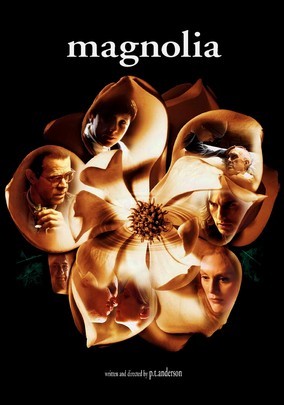
Magnolia-1999

Magnolia-1999

Director Paul Thomas Anderson

Starring Tom Cruise, Julianne Moore, John C. Reilly

Top 250 Films #67

Scott’s Review #777
Reviewed June 21, 2018

Grade: A

Paul Thomas Anderson is one of my favorite modern directors. In my opinion, his best film is Boogie Nights (1997), but he has also created other dark offerings, such as Phantom Thread (2017) and Inherent Vice (2014).

Arguably, his most distinctive effort might be Magnolia (1999), a cerebral film that explores themes of forgiveness and the meaning of life.

An ambitious effort, featuring a stellar ensemble cast, makes the film a fantastic experience.

Set in the San Fernando Valley (a mountainous area of Los Angeles), the film resembles David Lynch’s Mulholland Drive (2001) in its setting and oddness, as well as its unusual dialogue and offbeat characters.

A narrator explains three situations of extreme coincidence and surmises that chance may not be the only responsible party. Anderson then weaves an intricate tale involving numerous characters, intersecting lives, and a riveting climax on a rainy California day (an oddity in itself!).

The plot begins when we meet Jim Kurring (John C. Reilly), a police officer who is called to investigate a disturbance.

After finding a woman’s body in an apartment closet, events turn bizarre as a children’s game show host (Philip Baker Hall), his estranged daughter (Melora Walters), the show’s former producer, Earl (Jason Robards), who is dying from cancer, his drug-addicted wife Linda (Julianne Moore), Earl’s male caretaker (Philip Seymour Hoffman), a former game show champion (William H. Macy), and finally, an intense motivational speaker (Tom Cruise).

Quite a bevy of talented actors!

As the plot progresses mysteriously, the connections among the characters are revealed, and their peculiar motivations begin to take shape.

For example, Linda, who married Earl for his money, seems to have an epiphany and demands her lawyer change Earl’s will. Later, a character may have a connection to Earl and Linda, but is it all as it seems?

In Magnolia, the film is so wonderfully strange that it leaves the audience guessing for most of its running time.

Bizarre scenes are commonplace throughout the film. My favorite one is a marvelously creative scene. Suddenly, frogs begin to fall out of nowhere from the Los Angeles sky, with numerous consequences for the characters.

The incident causes a ripple effect, of sorts, as many of the characters’ fates are determined. Though one may not be able to make heads or tails of this scene or take complete logic from it, it’s enthralling all the same.

Magnolia has an overall quirky tone- sometimes upbeat, sometimes melancholy- that I adore. Films that are tough to figure out and feature an interesting musical score are so rich in flavor.

Aimee Mann is responsible for composing many of the songs on the musical soundtrack, so much so that she received a title credit on the soundtrack itself. Mann infuses her music with moody, diverse richness and ambient essentials.

Many actors make frequent appearances in Paul Thomas Anderson’s films. Magnolia alone seems almost like a Boogie Nights reunion with Moore, Walters, Macy, Baker Hall, and Philip Seymour-Hoffman to name just a handful.

The amazing aspect is that all of the aforementioned actors play vastly different, and arguably even more complex roles than they did in Boogie Nights.

Similar to Quentin Tarantino’s actors appearing in many of his films, this must be a creative treat for them.

There is no doubt that Magnolia (1999) is a complex, dream-like film. Open to interpretation and reflection, I find it a brilliant movie that I would like to revisit and dive into further with each viewing, hopefully for a better understanding and even deeper appreciation.

Oscar Nominations: Best Supporting Actor-Tom Cruise, Best Screenplay Written Directly for the Screen, Best Original Song-“Save Me”
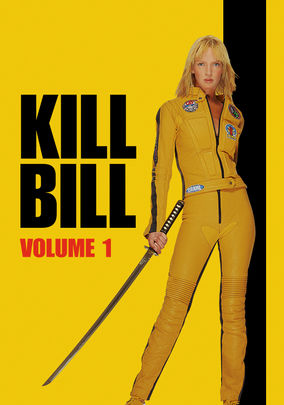
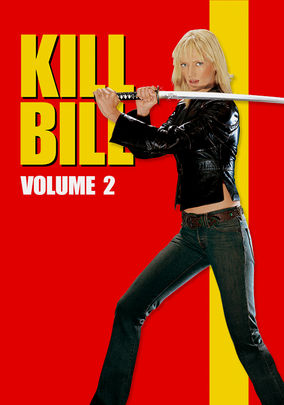
Kill Bill: Volume 1 and Volume 2-2003/2004

Kill Bill: Volume 1 and Volume 2- 2003/2004

Director Quentin Tarantino

Starring Uma Thurman, David Carradine

Top 250 Films #98

Scott’s Review #322

6003123660032563

Reviewed January 3, 2016

Grade: A

Despite being released as separate films (Fall of 2003 and Spring of 2004), Kill Bill: Volume 1 and Kill Bill: Volume 2 are one grand, sprawling feature.

The films were shot as one, but at a running time of over four hours, it was impossible to release them as one, so director Quentin Tarantino decided to release his masterpiece martial arts film as two sequential films.

I have decided to review them as one since Volume 2 is a clear continuation of Volume 1.

From a story perspective, Kill Bill is a basic revenge thriller. The plot is not complex nor ingenious and is rather ordinary containing B-movie components- think the really bad Kung-Fu films of long ago.

What makes Kill Bill an extraordinary masterpiece, however, is the style that exudes from the film, thanks to the direction and creation of Tarantino.

The film is brimming with good flavor and crackling dialogue of an intelligent sort.

Characters have long conversations with each other-not for redundancy’s sake- in between the endless martial arts and bloody sequences.

We meet our heroine, The Bride (Uma Thurman), in a chapel in El Paso, Texas. About to be married to her groom, the entire wedding party is suddenly assassinated in a bloody fashion by the Deadly Viper Assassination Squad.

Their leader, Bill (David Carradine), shoots The Bride after she reveals to him that she is carrying his baby.

The film flashes forward four years later- The Bride has survived the massacre but has been comatose ever since. When a hospital worker rapes her, she escapes and vows revenge on each one of her attackers- the revenge culminating with Bill.

Her path of destruction leads her to Japan.

Like most of Tarantino’s films, Kill Bill is divided into chapters and often goes back and forth from past to present.

The brilliance of Kill Bill is its pizazz. We know The Bride will get her revenge on the assassins, we just do not know in what way or how bloody the slaughters will be.

The film contains copious amounts of blood and swords and machetes are everywhere to be found.

The slow drawl dialogue as The Bride has conversations with her prey before she kills them, oftentimes ends in a big fight scene. Her first revenge, against Vernita (Vivica A. Fox), is unique in that it takes place in Vernita’s kitchen as her young daughter is happily eating her breakfast cereal.

The entire battle ensues in the kitchen and we are left watching blood and cereal.

It is Tarantino’s unique style of filmmaking and storytelling, adding violence, and long character conversations, that give Kill Bill, and all of his other classic films, his unique brand, and stamp of approval.

I dearly hope he continues to make films that challenge the norm, for years to come.

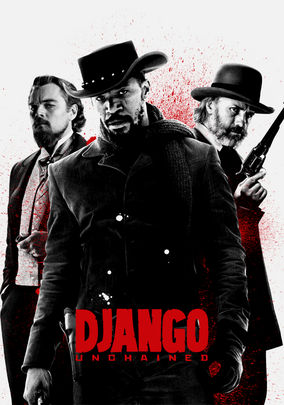
Django Unchained-2012

Django Unchained-2012

Director Quentin Tarantino

Starring Jamie Foxx, Christoph Waltz

Top 250 Films #116

Scott’s Review #699

Reviewed November 26, 2017

Grade: A

Quentin Tarantino, the brilliant filmmaker, can do very little wrong in my opinion, and he releases yet another masterpiece with 2012’s Django Unchained, a western story centering around the delicate subject matter of slavery.

As with several other talented director’s stories, the main focal point here is a revenge-driven tale with plenty of bloody scenes and stylistic ferociousness, making Django Unchained yet another masterpiece in the Tarantino collection.

Certainly not for the faint of heart, the film will please fans of film creativity and artistic achievement.

As with many Tarantino films a stellar cast is used and each actor cast to perfection- it seems almost every actor in Hollywood is dying to appear in the director’s films- this time Jamie Foxx, Christoph Waltz, Kerry Washington, Leonardo DiCaprio, and Samuel L. Jackson are the lucky ones, all featured in prominent roles- not surprisingly the acting is top-notch.

An interesting fact to note is that whoever appears in a Tarantino film seems to be having the time of their lives- what creative freedom and interesting material to experience.

A comparable director to Tarantino- as far as recruiting fine actors- is Robert Altman- also tremendously popular with talent.

The saga begins with clear Western flair as Django Freeman (Foxx) is led through the scorching heat of Texas with a group of other black slaves, presumably, to be sold by their abusive white captors- the time is 1858, and the abolition of slavery has not yet occurred the Civil War is still two years away.

Doctor King Schultz (Waltz), a former dentist and current bounty hunter, is on a mission to find and kill the Brittle brothers and realizes that Django can help him find the men.

To complicate matters, Django has been separated from his wife Broomhilda (Washington) and vows to find her and avenge her abductors.

As circumstances lead Schultz and Django to a vast Tennessee estate, the duo becomes business partners and friends. The race to rescue Broomhilda takes the pair to sunny (and equally hot) Mississippi- the home of vicious Calvin Candie (DiCaprio) and his dreaded “Candyland”.

The crackling heat and the atmospheric nature of Django Unchained combined with the revenge theme make the film an immeasurable success.

An ode to spaghetti westerns of yesteryear, the film incorporates similar music and grit so that the result is a modernized version of those films, with lots more blood and violence.

Slavery is a tough subject matter to tackle, especially when members of the Ku Klux Klan are featured, but Tarantino does so effortlessly, and as Django gains revenge on his tormentors, there is major audience satisfaction to be enjoyed.

The indignities and downright abuse that several black characters suffer can be quite tough to sit through.

The climactic dinner scene in Mississippi is splendid and the best sequence of the film. Schultz and Django dine with Calvin at his spectacular mansion. Calvin’s sinister and loyal house slave (Jackson) suspects a devious plan is about to be hatched and a vicious shoot-out erupts between the parties involved.

The ingenious and long sequence is a cat-and-mouse affair with all of the characters carefully tiptoeing around the others in fear of being revealed or discovered as fakes.

The scene is exceptional in its craft as we watch the characters dine on delectable food and drink, all the while motivations bubble under the surface.

Django Unchained is not for film-goers seeking either a linear story or a mainstream piece of blockbuster movie-making-Tarantino is not a typical Hollywood guy.

The film is exceptionally carved and constructed in a way that challenges the viewer to endure what some of the characters (specifically Django and Broomhilda) are made to go through. This discomfort and horror make the inevitable revenge all the more sweet and satisfying.

Quentin Tarantino has created masterpiece after masterpiece throughout his filmography of work.

Proudly, I can herald 2012’s  Django Unchained as one of the unique director’s very finest and will be sure to be remembered decades and decades in the future as being able to challenge, provoke thought, and satisfy legions of his fans.

Oscar Nominations: 2 wins-Best Picture, Best Supporting Actor-Christoph Waltz (won), Best Original Screenplay (won), Best Sound Editing, Best Cinematography

Jackie Brown-1997

Jackie Brown-1997

Director Quentin Tarantino

Starring Pam Grier, Robert Forster

Top 250 Films #124

Scott’s Review #356

60010514

Reviewed January 9, 2016

Grade: A

Quentin Tarantino’s Jackie Brown (1997) is a fantastic film and one of the few to have a solely female lead (Kill Bill Volumes I and II are the others) and successfully re-launched star Pam Grier’s and Robert Forster’s careers after too many years on the sidelines.

The film is heavily influenced by Grier’s earlier films in the 1970s blaxploitation genre. Jackie Brown is one of the more obscure Tarantino films, but is brilliant nonetheless and filled with slow, plodding, yet tremendous scenes.

Grier plays the title character, Jackie Brown, a flight attendant for a small Mexican airline who smuggles money into the United States from Mexico to supplement her income. When she is caught and threatened by the Feds to aid them in catching a much larger fish, she plots to use both sides to her advantage and walk away with the money.

Jackie develops feelings and a sweet relationship ensues with Max Cherry, a bondsman played by Forster.

Mixed in with the plot is Tarantino staple, Samuel L. Jackson, as Ordell Robbie, a crooked drug smuggler, Robert De Niro as Louis, a former cellmate of Ordell’s, and Bridget Fonda as Melanie, a dizzy stoner girl.

As is always the case with Tarantino films, Jackie Brown contains a stellar cast just chomping at the bit to deliver the best performance they can with the help of rich and crackling dialogue written for them.

The writing is always fantastic in Tarantino films and the number of plot twists and turns in Jackie Brown is great.

My favorite scene by far is the scene involving the transfer of money that takes place in the local Mall. Rich with flavor and atmosphere it is a marvel. Jackie and Max engage in small talk at the food court before the transfer is to take place- Jackie then goes to a fitting room where the “switch” will occur.

Throughout this sequence, the tension is incredibly high and the film turns into a nail-biter.

Tarantino, not one to focus on a romantic storyline, gives Jackie Brown a uniqueness as the film features the respectful and delicious romance between Jackie and Max. This adds layers to the mainly bloody and crime-laden film. To counter this relationship is the volatile relationship between Louis and Melanie, which ends in tragedy.

I love how the film is set in Los Angeles. Sunny, bright, with a stuffy and superficial element to the action, mixing the beach and the hot weather with a crime story, manipulation, and double-crossing works so well.

Giving aging Hollywood stars a deserving comeback, Tarantino weaves a complex, but adventurous and well-paced, crime drama featuring veteran actors who deliver the goods, Jackie Brown is a treasure in a world of other Tarantino treasures and is a must-have for all of the director’s fans and fanatics.

Oscar Nominations: Best Supporting Actor-Robert Forster

The Player-1992

The Player-1992

Director Robert Altman

Starring Tim Robbins, Peter Gallagher

Top 250 Films #181

Scott’s Review #601

Reviewed January 11, 2017

Grade: A

The Player (1992) ranks up there with other Robert Altman classics such as Gosford Park (2001), Nashville (1975), and Short Cuts (1993).

The film is an excellent piece of Hollywood satire and centers around a jaded movie executive, played by Tim Robbins, who does an incredible job with his role.

Robbins plays Griffin Mill, a man with no scruples. Feeling usurped by a younger executive, played by Peter Gallagher, as well as receiving death threats, he goes on the hunt for the person he feels responsible for, which leads to murder.

The audience is unsure whether to love or hate Mill, thanks to Robbin’s performance. He is snarky, but also vulnerable and a tad sympathetic.

The film contains a slew of real Hollywood celebrities (Cher, Malcolm McDowell, Bruce Willis) playing themselves and is largely improvised (as many of Altman’s films are).

Whoopi Goldberg and Lyle Lovett star as odd police detectives.

The plot is nothing that hasn’t been done before, but it’s the realness and the direction that make this movie a must-see, especially for Robert Altman fans.

The Player (1992) is a hidden gem.

Oscar Nominations: Best Director-Robert Altman, Best Screenplay Based on Material Previously Produced or Published, Best Film Editing

Independent Spirit Award Nominations: 1 win-Best Feature (won)

Private Resort-1985

Private Resort-1985

Director George Bowers

Starring Rob Morrow, Johnny Depp

Scott’s Review #1,382

.

Reviewed July 26, 2023

Grade: B

Depending on what type of film you are looking for, Private Resort (1985) may be just what the doctor ordered.

A version of Animal House (1978) or Porky’s (1981) shifted to a sunny beach resort is the perfect summer setting for a sex romp with enough g-strings, boobs, and bare butts to make even non-prudish viewers blush a little.

Suffice it to say, director George Bowers, mostly known as a film editor, and screenwriter Alan Wenkus weren’t seeking any Academy Award nominations.

Though silly, thoughtless, and caked with terrible acting, Private Resort is a fun flick.

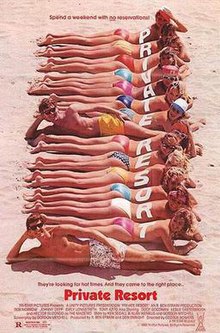
Shamelessly, since its 1985 release, the distributors have callously billed mega Hollywood star Johnny Depp as the ‘star’ of this film. Someone even dared to add his photo to the film’s cover art, which I nearly used when creating my film review.

In reality, Depp plays second fiddle to Rob Morrow, who is the film’s real star and proudly displays more bare flesh than Depp does.

Morrow also proudly dons a dress and wig for a lengthy drag performance.

Thankfully, another source cleverly depicts a lineup of bronzed, toned beach bodies, each donning the letters that spell ‘Private Resort’ (see above), across different cover art.

Horny teenage buddies, Ben and Jack (Morrow and Depp), decide to spend a weekend in a swanky Miami beach resort chasing the flock of equally horny and scantily clad women they encounter.

How they have the money to afford a room is never explained.

Their fun is parlayed when they cross paths with a shifty jewel thief played by Hector Elizondo and his leggy girlfriend Bobbie Sue (Leslie Easterbrook). Throw in a romance with all-American-looking waitress Patti (Emily Longstreth) and sultry Dana (Karyn O’Bryan), and you’ve got a plot.

Bowers throws in enough physical comedy and antics to keep the action moving along in a speedy one-hour and twenty-two-minute running time.

The gags follow films like Caddyshack (1980) or any of the other countless 1980s slapstick comedies, and you can pretty much bank on what you’ll be served up.

Why, the opening scene follows a parade of sexy female sunbathers slathering suntan lotion on or suggestively bending over for all to see.

Many were uncredited, so my hunch is that adult film stars were used.

Morrow is the standout, and his boyish charisma lights up the screen, especially when he becomes smitten with Patti. The fresh-faced pair make a perfect match and exude young love, becoming the heart of the film.

Elizondo and Easterbrook dutifully perform their parts as one-dimensional foils and MILF roles, respectively. Decent actors are worlds above any of the other supporting actors in terms of talent.

Even comic actress Dody Goodman (Grease, 1978) goes way over the top in her role as Dana’s wealthy grandmother.

Andrew Dice Clay, then known as Andrew Clay, also appears.

Private Resort gets a severe wrist-slapping for two crass fat-shaming scenes not worth giving time to other than to mention it’s not kind to plump girls.

I first saw Private Resort (1985) as a teenager when it was first released and loved it. This was before I blossomed into a snobby film critic.

Seeing the film a million years later with more sophisticated tastes, I still find it fun, especially on a scorching summer night.

That’s got to count for something, right?

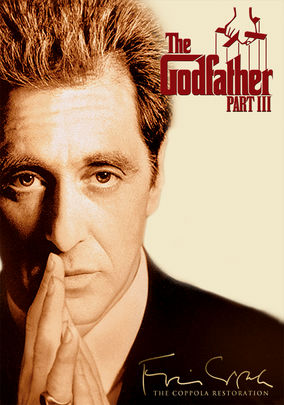
The Godfather: Part III-1990

The Godfather: Part III-1990

Director Francis Ford Coppola

Starring Al Pacino, Diane Keaton, Andy Garcia

Scott’s Review #533

60011153

Reviewed December 3, 2016

Grade: B+

The Godfather: Part III, released in 1990, has traditionally been met with unwavering criticisms for not being as great as the two preceding epics.

Sofia Coppola, who plays Mary- daughter of Michael Corleone, in particular, has bared the brunt of the attacks.

No, The Godfather: Part III is not on the level of the others, but is pretty damned good based on its own merits and is a capable mob epic to conclude the franchise satisfyingly.

The central theme is Michael’s continued desire to leave the mafia and religion, and the Catholic Church are central themes of the film.

Some backstory to the making of the film; Coppola had a non-expiring offer to create a third installment to the saga ever since 1974 when Part II was released.

Having had a financial crisis, 1990 was the time Coppola agreed to do the follow-up.

The ever-crucial role of Mary (now a coming-of-age young lady) was to be played by Julia Roberts, who dropped out. Winona Ryder was then cast and bailed at the very last minute.

Out of necessity, Coppola’s daughter Sofia was cast and had little time to prepare or much acting experience (she would later become an acclaimed director, which better suited her talents).

In a similar fashion to the other epics, a big event launches the film, as Michael (Pacino) is named Commander of the Order of Saint Sebastian in a lavish ceremony at St. Patrick’s Old Cathedral.

It is revealed that Michael is approaching age sixty and semi-retired, leaving his business dealings mainly to Joey Zasa in New York, who has ravaged what the Corleone family had once built.

Many characters- Kay, Mary, Tony, and Connie, are re-introduced, and new characters such as Vincent Mancini (Andy Garcia) and Don Altobello (Eli Wallach) are introduced, in a flurry of new storylines.

It is like a big, grand, soap opera, with wonderful, rich, writing.

I was immediately impressed by the neat cinematography- the camera captures wind-swept leaves and an artistic introduction to the film, as well as either mentioned or appearing in cameo roles, small characters from the first two films- a great touch in continuity and history.

Coppola does a fantastic job of providing little updates on these characters during a party. For example, we learn that Vincent is the deceased, illegitimate son of Sonny, his mother being Lucy Mancini, who appears in a scene. (Clever viewers will remember Sonny and Lucy’s torrent affair in the bathroom during The Godfather-it is suggested that this produced Vincent).

It is mentioned that Tom Hagen (Robert Duvall) has died, though his wife and son appear, and Coppola treats us to a myriad of flashbacks (Apollonia, a young Michael, and Kaye).

These nuances make The Godfather: Part III filled with cool little aspects that fill the loyal viewer with warmth.

The main story- Michael takes Vincent under his wing- and strives to steer the family clear of criminal ties- is interesting, if not spectacular. Connie rises from a battered mafia wife, raising kids, to a major player in the family, just as women progressed from the 1940s to the 1980s when the story takes place.

She even feeds her godfather a poisoned cannoli!

Michael, Vincent, and Connie involve themselves with the Catholic Church, bailing them out (the real-life Papal banking scandal is linked to the story) and making a deal with them for major shares of a real estate company, Immobiliare.

In-fighting between the major crime mob bosses leads to several bloody massacres throughout the film, on the streets, in Atlantic City, and finally, in the Sicilian Opera house.

The pairing of cousins and lovers, Vincent and Mary, never really works, nor does Bridget Fonda’s one-two-scene appearance as Grace Hamilton, a brief dalliance for Vincent. Also, the exclusion of the character of loyal family attorney Tom is a glaring omission.

So the film does contain a few negatives.

In a nutshell, The Godfather: Part III (1990) is a very good, epic, crime drama even without the Godfather name. To measure up to the glory of Parts I and II are impossible.

With the bonus of having the rich Corleone family history and the intricate relationships between the characters, this makes for a treat for fans.

There has not been a Part IV, nor should there ever need to be as the conclusion of the film is a satisfying wrap-up to the saga.

Oscar Nominations: Best Picture, Best Director-Francis Ford Coppola, Best Supporting Actor-Andy Garcia, Best Original Song-“Promise Me You’ll Remember”, Best Art Direction, Best Cinematography, Best Film Editing