Category Archives: British

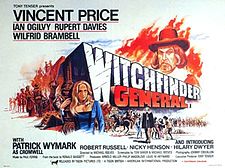
Witchfinder General-1968

Witchfinder General-1968

Director Michael Reeves

Starring Vincent Price, Ian Ogilvy, Hilary Dwyer

Scott’s Review #904

Reviewed May 31, 2019

Grade: B+

Witchfinder General (1968) is a macabre horror film that creates an intense atmosphere amid a gruesome story centered on witch-hunting.

By the late 1960s, violence and bloodletting in cinema had become more lenient and acceptable. Hence, the film takes full advantage of the timing with an unusual amount of torture, cruelty, and brutality.

The mid-seventeenth-century English period is highly effective, as is the ghastly religious angle, making for compelling filmmaking.

Vincent Price is delicious in any film he appears in, having amassed over one hundred cinematic credits alone, to say nothing of his television appearances.

Practically trademarking his over-the-top comic wittiness and campy performances, his role in Witchfinder General may be his best yet, as he plays the character straight and deadly serious.

This succeeds in making his character chilling and, maybe, the best role of his career, despite numerous disputes with director Michael Reeves over motivation.

During the English Civil War, Mathew Hopkins (Price) took advantage of the unrest, profiting from witch-hunting. He travels from town to town, accusing the unfortunate of witchcraft, until they are mercilessly executed, after which he is paid handsomely.

Matthew is assisted in the accusations and torments by John Stearne (Robert Russell), a man his equal in brutality. Knowing these two men were real-life historical figures makes the action even more challenging to watch.

When he arrests and tortures Father Lowes (Rupert Davies), Lowes’s niece’s fiancé (Ian Ogilvy) decides to put an end to Hopkins’s sleazy practices and goes on a quest to seek vengeance.

The mixture of a romantic love story, as Richard Marshall (Ogilvy) and Sara (Hilary Dwyer) marry, and a revenge tale, as Marshall vows to destroy Hopkins, is a nice combination, as are the numerous outdoor scenes.

Witchfinder General has much going on, and the pieces all come together.

The most horrific moments of the film come during the death scenes as the victims, whom logical viewers can ascertain are innocent. The characters are merely perceived as peculiar, therefore deemed to be up to witchcraft, and do not stand much of a chance despite their endless pleas and cries.

Before they are murdered, they are typically tortured until they ultimately confess to crimes out of desperation and perceived relief. The standard mode of death is either hanging or burning to death.

In one sickening scene, victims are assumed to be witches if they can swim and then are subsequently burned at the stake; if they drown, they are innocent, but of course die anyway.

One unfortunate victim has her hands and legs bound and drowns, followed by one of the witch hunters professing how her death was tragic because she was innocent all along.

In horror films, the most frightening situations are the ones that can conceivably occur in real life, whether it be a home invasion, a psycho with a knife, or being burned at the stake in the 1600s.

The fact that witch-hunting did happen is shocking and resoundingly makes Witchfinder General creepier, especially given that most scenes take place in the daytime. Anyone can create a studio monster, but the realism of the events is the key to the film’s power.

As an aside, while watching the film, I was keen to keep in mind how many countries still treat certain classes and groups of people differently, or even oppress them in the name of God.

Food for thought and an additional component that makes Witchfinder General relevant.

The story and the screenplay are not brilliant, nor do they necessarily need to be, given the treasures existing among the elements. The writing is your basic villains getting their comeuppance with a love story thrown in, standard fare, and adequate.

While pointing out some negatives is “Witchfinder General,” the best title that Reeves could come up with, or anyone else, for that matter? The title does not exactly roll off the tongue, nor does the renamed United States release, The Conqueror Worm, sound much better.

Witchfinder General (1968) is not an easy watch, and the faint of heart may want to avoid it, but its realism and rich atmosphere make it a success.

The lit candles, an old castle, potent red and blue costumes, and one of the greatest horror legends of all time make this a must-watch among horror fans.

Taste of Fear-1961

Taste of Fear-1961

Director Seth Holt

Starring Susan Strasberg, Ronald Lewis

Scott’s Review #901

Reviewed May 21, 2019

Grade: A-

Though Taste of Fear (1961) is a Hammer Production, a British film company known for its heavy horror offerings, it plays more like an intense and chilling thriller with a Gothic, ghostly feel than a full-throttled horror display.

The title was changed for US marketing purposes to Scream of Fear, and neither the US nor the UK title quite works, lacking the appropriate pizzazz that the film warrants.

The result is a razor-edged spellbinder with marvelous cinematography and more than a few surprise twists.

The action gets off to an exciting start as a female body is suddenly discovered in the waters of coastal Italy; a young woman has taken her own life by drowning.

Soon after, a heiress who uses a wheelchair, Penny Appleby (Susan Strasberg), arrives at her father’s estate in the lavish French Riviera to bond with her new stepmother, Jane (Ann Todd), and await her father’s return from vacation.

It is explained that the deceased woman was a close friend of Penny’s.

Penny distrusts her stepmother immensely but is unsure why since the woman is more than accommodating during her stay.

Immediately, strange events begin to occur at a rapid rate, most notably seeing her father’s corpse in odd places around the house and the grounds. The body disappears when Penny calls for help, leaving the household members questioning her sanity and Penny starting to agree.

She befriends the handsome family chauffeur, Robert (Ronald Lewis), and the pair are determined to figure out what is happening.

Cleverly, the audience knows something is amiss but not what the entire puzzle will add to, which is an excellent part of the viewing pleasure. Director Seth Holt enjoys toying with his viewers, keeping them guessing at every dark turn.

The biggest questions are these: If Penny’s father is dead, where is the body being hidden? Who is responsible and why? Why does Jane leave the house for drives every night? What does the family doctor (Christopher Lee) do with the story?

The best visual aspect of Taste of Fear is the black-and-white cinematography, which adds foreboding and brooding elements throughout the film’s short running time of eighty minutes.

The grand estate with creepy nooks and crannies provides plenty of prop potential. A grand piano that seems to play by itself is pivotal to the story, as is a murky pool, shockingly deep and unkempt for such a residence. Finally, the mansion boathouse that may or may not contain lit candles takes center stage during the film.

The storytelling is quick-paced and robust, never dragging. Layers unfold as the story progresses, but the developments are necessary instead of overkill as the conclusion comes into view.

Assumptions about which character’s motivations are devious begin to unravel. The illustrious dialogue crackles with spunk, and by the time we figure out what is going on, we scratch our heads in disbelief, finally surrendering to the film’s manipulations.

Taste of Fear falters slightly when an attempt to make the story ultimately add up is pondered. Liberties must be taken happily so, as what could be deemed silly or superfluous instead results in thrilling fun.

Once or twice, I thought the setup was too contrived, but I just as quickly tabled the inquisition instead of choosing to revel in the story.

The more than adequate cast performs their roles with professionalism and energy, always careful to make the unbelievable believable. Any film starring the legendary Christopher Lee is worthy of praise, even if the actor only has a supporting role.

Justice is eventually served, though, as his character becomes central to the plot.

A fun fact is that Lee said, “Taste of Fear was the best film I was in that Hammer ever made. It had the best director, the best cast, and the best story.” Given the actor’s catalog of treasures, this is not to be easily dismissed.

A forgotten delight, Taste of Fear (1961), is a prime example of a film that does everything correctly.

It is an excellent story, Gothic gloominess, and a foray for Hammer Production company into the new psychological thriller genre. The piece is never over-the-top and is a production sure to impress Hitchcock himself.

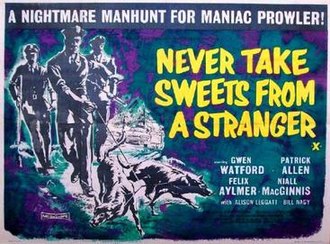
Never Take Sweets from a Stranger-1960

Never Take Sweets from a Stranger-1960

Director Cyril Frankel

Starring Patrick Allen, Gwen Watford

Scott’s Review #900

Reviewed May 17, 2019

Grade: A

Never Take Sweets from a Stranger (modified to Never Take Candy from a Stranger in the US for marketing purposes) is a 1960 British film directed by Cyril Frankel and released by Hammer Film Productions.

The film contains brilliant cinematography and cerebral quality, and it is pretty daring for the time it was made. It combines a story of pedophilia with manipulations of the legal system, allowing those to get away with this most heinous crime because of their status.

Despite the production company name being marketed as a horror film, the film is more left-of-center than a traditional horror film.

The locale is a small, sleepy lakefront Canadian town that seems like an everyday US town. The Carter family (Peter, Sally, and their 9-year-old daughter Jean) has just moved there to give Peter a fantastic job opportunity as the school principal.

Jean confides to her parents that while playing in the woods, she and her friend Lucille went into the house of an elderly man. The man asked them to remove their clothes and dance naked for him in return for some candy, which they did.

Peter and Sally are appalled and decide to file a complaint. The elderly man is one of the wealthiest and most influential in the town, the respected Clarence Olderberry, Sr.

Jean’s experience is downplayed, and the town largely shuns the Carter family. As a trial against Olderberry commences, Jean is ridiculed on the stand and her story ripped to shreds by attorneys.

After Olderberry is acquitted, he pursues Jean and Lucille in the woods, eventually catching the girls during a harrowing lakefront chase and murdering Lucille. Jean escapes, and the truth is revealed to the shocked and devastated town.

Although the cast of Never Take Sweets from a Stranger is not a household name, each performs well.

As the parents, Patrick Allen and Gwen Watford are well-cast and believable. They are upstanding strangers in the town, wanting to protect their daughter without smothering.

As old man Olderberry, Felix Aylmer plays the role not as menacing but by providing glimpses of pain and sympathy. The audience is unclear whether the man has dementia or Alzheimer’s disease, perhaps not even knowing what he has done.

The black-and-white cinematography is gorgeous, surreal, and tremendously effective.

With ghostly tones, the film gets off to a mysterious and prominent start as we see Jean and Lucille casually playing in the woods, startled to glance up at a menacing mansion (perfect for a Hammer production) to see elderly Olderberry leering at them with binoculars.

The lakefront sequences and the chase through the woods are among the best at providing superior camera angles.

As Lucille talks Jean into entering Oldberry’s house, we presume she has done this before. She knows Oldberry will provide the girls with candy, but does she understand this comes at a price?

Immediately, there is a shred of doubt about the children’s innocence—ever so quickly. The film’s decision and Oldberry’s representation are pivotal in casting even the slightest doubt on the motivations or decisions of the main characters.

Comparisons to the brilliant The Night of the Hunter (1955) are rapid. Themes of child abuse, young children in front and center roles, a creepy lake with a prominent boat, and macabre adults are prevalent, at least to some degree, in both films.

Additionally, both films were shunned at the time of release, misunderstood, and later rediscovered, subsequently seen as treasures of brilliant filmmaking.  Measuring both films as tragedies is also apparent; each results in pain and sadness for the children involved.

Never Take Sweets from a Stranger (1960) was released decades ago. It took years for its brilliance to be recognized and appreciated, as it added admirable and thought-provoking nuances to the viewer.

The subtle qualities make this film a world of its own. Sadly, the best movies are often overlooked, marinating the flavorful juices rather than a sudden bombastic reaction.

1960, the world was not ready for this film, but it is remembered as a brave, disturbing, and relevant film offering.

Scream and Scream Again-1969

Scream and Scream Again-1969

Director Gordon Hessler

Starring Vincent Price, Christopher Lee, Peter Cushing

Scott’s Review #899

Reviewed May 16, 2019

Grade: B+

Any film featuring horror heavyweights and great actors like Vincent Price, Christopher Lee, and Peter Cushing is well worth the price of admission for the name value alone. Each is a mainstay attraction in its own right and, combined, results in an orgy of riches.

Scream and Scream Again (1969) sputters by limiting the on-screen interaction between the actors. Still, after a reflective pause, I realize the picture is to be revered for its creativity and for its use of intersecting plotlines to build a thrilling crescendo into a surprise ending.

The audience is offered three segments of the story, each revisited periodically as a stand-alone segment that culminates in overlapping components.

An athletic runner trots along the streets of London, suddenly suffering from an attack, only to awaken in the hospital with no legs.

Elsewhere, a deadly intelligence operative reports back to his repressed Eastern European country, only to murder his commanding officer with a fatal paralyzing hold.

Finally, a London detective investigates the brutal deaths of several young women in metropolitan nightclubs.

Cushing, reduced to merely a cameo-sized role as the ill-fated officer, is barely worth mentioning and adds little to the film besides appearing in it.

Lee, like Fremont, the head of Britain’s intelligence agency, plays a straight role with not much zest.

Price, with the meatiest role as a mysterious doctor specializing in limb replacement, can give anyone the creeps with his scowl and eerie mannerisms. Still, the film misses the mark by wasting the talents of the other legendary actors.

The film is not at all what a fan of Hammer horror would expect, given the familiar horror cast and the gory-sounding title.

Heaping buckets of blood or ghoulish vampires were on the anticipated menu, but that does not mean the film fails to deliver. It may not please a fan of traditional horror films, as the genres of political espionage and science fiction come into play heavily.

However, the fantastic, peculiar nightclub-serial-killer storyline will satisfy fans eager for a good kill or two.

My initial reaction to Scream and Scream Again was that it was over-complicated and had too much going on at once, especially for a horror film.

After the film concludes and the surprise ending is revealed, I realized that the numerous tidbits are necessary to achieve the desired effect, and that the events will make the viewer ponder when the film ends.

Not to ruin the big reveal, but the filmmakers borrow a healthy dose of Invasion of the Body Snatchers (1956) in a more macabre way, naturally.

Fans of the 1960s British television series The Avengers will be pleased with Scream and Scream Again, as a similar tone exists in both.

The distinctive musical soundtrack, popular in the 1960s, works well, and the nightclub sequences and some of the detectives feel reminiscent of the show.

The feel of the film is not limited to an episodic television story but contains a similar style.

High British 1960s fashion is also prevalent and pleasing to the eye.

A couple of supporting characters strike a fascination in small and almost entirely non-verbal performances.

A sexy red-headed hospital nurse with superhuman powers and a penchant for amputating limbs, combined with a brooding, mysterious serial killer, provides dubious intrigue about who the actual characters are.

What is their motivation? Do they work for someone or something sinister? Questions like these will keep the viewer occupied and thirsty for an explanation.

Bizarrely, British film and television director Gordon Hessler crafts an implausible yet fascinating story that keeps the viewer guessing.

Featuring horror superstars Price, Cushing, and Lee would seem like an assured horror masterpiece, but the stars’ limited time on-screen brings the overall project down a notch.

Scream and Scream Again (1969) still achieves a good measure of worthy entertainment.

Night Train to Munich-1940

Night Train to Munich-1940

Director Carol Reed

Starring Margaret Lockwood, Rex Harrison

Scott’s Review #855

Reviewed January 9, 2019

Grade: B

Night Train to Munich (1940) is a taut war thriller unique in the subject matter of World War II made before the war became full-blown and all the horrors not known.

The film is related to The Lady Vanishes (1938) and Alfred Hitchcock’s projects, which feature familiar crossover characters. The film’s final thirty minutes are spectacular in excitement and chase scenes. Still, the overly complex plot takes too long to develop, leaving me underwhelmed and bored for most of the experience.

In March 1939 a Czechoslovakian scientist, Axel (James Harcourt) is wanted for questioning by the Germa  Gestapo. Residing in Britain, they accost his daughter Anna (Margaret Lockwood) and throw her in a concentration camp.

She meets fellow prisoners and assumed ally Karl Marsen (Paul Henreid), who escapes with her to the safety of London. He is revealed to be a Gestapo agent assigned to gain her trust and question her father.

Finally, Anna meets undercover British intelligence officer Dickie Randall (Rex Harrison), who poses as a Nazi officer to take Anna and her father to safety.

The first forty-five minutes to an hour of Night Train to Munich are slow-moving, with a complicated and rather uninteresting plot. However, I am all for slow-moving films, provided the setup is there and the elements align correctly.

I felt shame because the cover art and title of the film suggested a more robust experience. I continued to ask, “Where is the train?” and “Where is the mountainous terrain and ski lift?” as pictured. These elements finally do arrive, but the wait is longer than necessary.

The fact that Karl and Dickie are similar in physical appearance and are both undercovers makes the average viewer a bit confused. Plus, it takes a while to realize who is playing for whose team, and since the film is related to The Lady Vanishes, I expected a bit more of the suspense and intrigue commonplace with a Hitchcock telling.

The core of the film is mediocre.

Yet the above criticisms can be almost forgiven when events kick into high gear and Night Train to Munich becomes an entirely different film.

A riveting train ride brings enormous treats and intrigue as Dickie, Anna, and Axel attempt to outwit Karl and escape before their train arrives n Munich. The fun becomes the cat-and-mouse game between the group when a secret note is hidden under a doughnut as they sip tea together and feign pleasantries in one of the film’s best scenes.

The ravishing mountaintop finale is breathtaking when Dickie attempts to transport everyone via a ski lift from Germany to the safety of Switzerland over perilously high mountains. The suspense reaches a boiling point when Karl and the Gestapo are hot on his heels.

As a wild shootout commences, we do not know whether those on the lift will be saved. A potboiler reaches a shocking crescendo as the seconds tick by.

For 1940, the sets and effects were awe-inspiring and believable rather than silly or staged.

The final segment introduces humorous characters from another film, The Lady Vanishes. A late entry into the story, nonetheless they breathe life into the script making it as suspenseful as much s a yarn. British gentlemen Caldicott (Naunton Wayne) and Charters (Basil Radford) add humor and sophisticated wit to aid the group’s successful escape.

I wondered if the pair were gay since the men appeared in The Lady Vanishes, and the esteemed director is known for slyly adding discreet LGBTQ+ characters into his pictures.

Slightly above a middling affair, Night Train to Munich (1940) has impressive moments and a startlingly good ending worth the price of admission.

The central portion of the film feels tired and overlong, with insufficient gravy to keep viewers caring for very long.

An interesting double feature would be watching this film alongside The Lady Vanishes for similar concepts and themes.

Oscar Nominations: Best Original Story

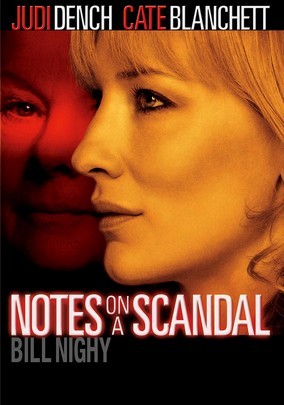
Notes on a Scandal-2006

Notes on a Scandal-2006

Director Richard Eyre

Starring Judi Dench, Cate Blanchett

Scott’s Review #793

Reviewed July 23, 2018

Grade: A

A British drama centering on the world of teachers, illicit affairs, and sexuality, Notes on a Scandal (2006) is a superlative effort with thrills and drama galore.

Featuring heavyweights like Judi Dench and Cate Blanchett there is no way this film could be a dud based on the acting alone. The chemistry between the women and the carefully crafted thrills created by director, Richard Eyre, make the film a compelling joy to view- perhaps multiple times for additional entertainment.

The story is told mainly from the perspective of Barbara Covett (Dench), a rigid and bored schoolteacher nearing retirement at a comprehensive school in London, where she teaches.

Barbara is a spinster and a closeted lesbian, constantly writing in her journal for comfort- this is the main narrative of the story and is tremendously effective.

When a young and attractive art teacher, Sheba Hart (Blanchett), arrives on the scene, Barbara fancies her and is determined to get closer. After Sheba begins an illicit affair with a male student, Barbara discovers the shenanigans and uses the situation to her advantage.

The scandal results in both women’s careers being at risk as well as Sheba’s troubled home life coming to fruition.

Notes on a Scandal is a good, solid, psychological thriller/drama with enough twists and turns to compel the viewer. The film is not very long- at one hour and thirty-two minutes, there is hardly time for lagging.

The best achievements, however, are with the superior acting of the two leads. With other lesser talents, this film might have suffered from too much melodrama and not enough meat. With great acting chops, Dench and Blanchett do not let this happen and instead treat the audience to a riveting affair.

As fantastic as Blanchett is, Dench’s Barbara is the standout and takes center stage throughout the film.

Interestingly, despite both actresses being leads, Dench received an Oscar nomination for Best Actress, while Blanchett went supporting. But there is no question that both actresses deserved the praises they reaped- and then some.

Dench turns in such a delicious performance that she makes the film arguably the reason to watch it. Wearing no makeup and dressed as conservatively as imaginable, an icy stare or thoughtful gaze will run shivers up and down the viewer’s spine.

As conflict and drama unfold, Barbara proves she is nobody to be messed with. Still, the character has an underlying vulnerable quality, simply yearning for affection and love from another woman. One wonders if she has ever really had the love she deserves.

Dench is brilliant at revealing all of Barbara’s underlying nuances.

The film poses an interesting moral question that will leave some viewers undoubtedly not a fan of Sheba’s. The fact that she lusts after an underage male, Steven Connolly (Andrew Simpson), and has relations with him, while having a husband and handicapped child at home may be too much for some.

Surely, the character will not be championed by many, but I found Sheba complex and difficult to grasp. This complexity is to the filmmaker’s credit and allows for a more layered character study of both Sheba and Barbara- neither is cut and dry.

An interesting aside of the film is what if the genders of the roles were reversed? Would the film have the same effect if Sheba were a male character and Steven was a teenage girl? What if Barbara were a straight woman? What if Barbara was a gay male character?

These other possibilities left me wondering as I watched the film. Wisely, I think director Eyre got things just right.

Notes on a Scandal (2006) is a film that reminds me of a British version of Fatal Attraction (1987) meets Single White Female (1992).

The story holds elements of each and was adapted from a 2003 novel of the same name. With frightfully good performances by both Dench and Blanchett, this film is a memorable thriller not to be missed.

Oscar Nominations: Best Actress-Judi Dench, Best Supporting Actress-Cate Blanchett, Best Adapted Screenplay, Best Original Score

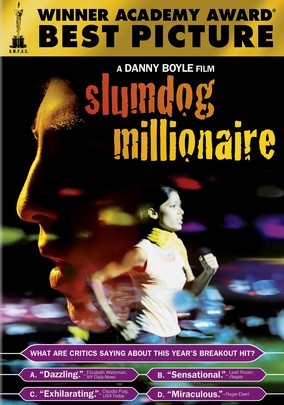
Slumdog Millionaire-2008

Slumdog Millionaire-2008

Director Danny Boyle

Starring Dev Patel, Freida Pinto

Scott’s Review #786

Reviewed July 11, 2018

Grade: A-

Winner of the 2008 Best Picture Oscar (as well as seven other Academy Awards), Slumdog Millionaire (2008) arguably was the “feel good” film of the year.

While I am not sure if all of those awards are ultimately deserved, the film is nonetheless very good, offering a mixture of good culture, a young man overcoming enormous odds, and a love story.

Fans of the universal game show hit, Who Wants to Be a Millionaire, will be pleased.

Young Dev Patel (critically acclaimed for 2016’s Lion) stars as a poor young Indian man, Jamal Malik. He is detained after being a contestant on Who Wants to Be a Millionaire after he comes one question away from winning a million dollars.

The producers go on a commercial break and Jamal is whisked away to custody as suspicions are aroused and the young man is accused of cheating. Since he is a “slumdog” and poorly educated, it is assumed there is no way possible he could know all the answers.

Jamal recounts, via flashbacks, through experience, how he came to know all of the correct answers.

Director, Danny Boyle does a fantastic job directing the film. Slumdog Millionaire is edited in a fast-paced fashion and the camera angles are quick and stylized, making for an excellent flow.

The soundtrack to the film is very effective and enhances the plot. For example, the music is extremely diverse and features genres such as traditional Indian classical music, European house music, and American-style hip hop.

This is an ingenious way for Boyle to incorporate multiple cultures and he, therefore, creates a rousing crowd-pleasing experience.

Another successful aspect of the film is its use of knowledge and intelligence to tell a story. As we experience Jamal’s difficult life beginning as a five-year-old orphan, the unlikely success story and his adventures on the streets are engulfed in both life lessons and education.

The audience is learning important details about the world while Jamal simultaneously is.

The romantic, love-story featured in Slumdog Millionaire is also a highlight and extremely well-crafted. Heartbreakingly, Jamal, his older brother Salim, and the lovely Latika (later played by the gorgeous Freida Pinto) are on the run when Latika vanishes.

Her disappearance and later reappearance are vital aspects to the heart of the film and Patel and Pinto make a handsome and highly likable couple. Their reconciliation is heartfelt and beautiful and gives the film a nice emotional investment.

The incorporation of a relevant and acclaimed game show into the story is wonderful, though hopefully as the years go by, the film does not suffer from a dated feel if and when Who Wants to Be a Millionaire is long forgotten, but alas this is a risk and only time will tell.

The glossy set and for American audiences, the Indian-style version of the game show is great fun as are the Indian locales, which visually dazzle.

A slight detraction of Slumdog Millionaire is the film is unquestionably uplifting and light feeling. Even though the characters face peril and dangerous experiences, the film just “feels” safe.

So much so that qualities such as slick and mainstream resound.

Don’t get me wrong, the film is genuine and has heart and soul, but just slightly too cheery. Of course, since the film is made well and the story and the acting great, this can easily be overlooked.

Slumdog Millionaire (2008) is a wonderful piece of work and is quite simply a film that lots of people will champion.  All of the elements are perfectly in place, which is a main selling point and a prime reason for the film’s many accolades.

The romance and adventure pieces are the best parts- with a quick flow and lots of fun, educational tools utilized.

The film is a nice pleasure to experience.

Oscar Nominations: 7 wins-Best Picture (won), Best Director-Danny Boyle (won), Best Adapted Screenplay (won), Best Original Score (won), Best Original Song-“Jai Ho”, “O Saya”, Best Sound Editing, Best Sound Mixing (won), Best Cinematography (won), Best Film Editing (won)

God’s Own Country-2017

God’s Own Country-2017

Director Francis Lee

Starring Josh O’Connor, Alec Secareanu

Scott’s Review #773

Reviewed June 13, 2018

Grade: B+

God’s Own Country (2017) is a British, romantic, LGBT-themed drama directed by Francis Lee, making his directorial film debut.

The setting is farming land in the Yorkshire (northern England) territory, making the film quite lovely to watch, and the pace is slow. Lee does not rush the story’s pace either, so it mirrors the slow life that farmers must endure.

The film is somewhat autobiographical of Lee’s own life.

The connection and chemistry between the two leads are palpable, and the love story is endearing. It is awe-inspiring to see two cultures come together and merge as one.

The film is a nice watch and an above-average story, making it worthy of LGBT audiences worldwide. Those who believe in true love and find their soulmate will be deeply satisfied.

Twenty-something Johnny (Josh O’Connor) lives a dull existence on his father’s farm in remote Yorkshire, England. His grandmother (Gemma Jones) also lives there, and due to his father’s recent stroke, the farm’s success is in question. Johnny is depressed, drinking regularly, and engaging in sexual encounters with men.

Romanian migrant worker Gheorghe (Alec Secareanu) is hired to help, and the two young men eventually fall in love. After some ups and downs in their relationship, they decide to live on the farm together and presumably live happily ever after.

God’s Own Country is a rich story of romance, and the only real obstacles that Johnny and Gheorghe face are internal struggles.

In a unique fashion for LGBT films, neither of the men are necessarily unhappy with their sexual identities, nor do they face hurdles by other characters because of their sexuality. Gheorghe faces harassment because he is Romanian and deemed an “outsider”.

Besides Johnny’s grandmother and perhaps his father, no characters seem aware that the men are a couple.

The cinematography is gorgeous and a perfect backdrop for the love story. The farm is lush with spacious green rolling hills for miles and miles.

The family raises lamb and cattle, and more than one scene features a beautiful birth and the nuzzling of the parent to the newborn baby. Sadly, one birth is also a breach, which is tough to watch.

The themes of life and birth perhaps mirror the feelings and emotions that Gheorghe and Johnny experience- new love.

Throughout God’s Own Country, I frequently drew comparisons to arguably the most mainstream and revolutionary film in LGBT history- that of 2005’s Brokeback Mountain.

Both films feature similar elements of animals, farming, and the outdoors. Additionally, commonalities like loneliness and loss are heavily featured. Finally, the rough-and-tumble, machismo-fueled wrestling scenes that result in rough sex between the men are used in both Brokeback Mountain and God’s Own Country.

Both films could be companion pieces.

The film does not delve too much into the back story of the main characters; at least, I did not catch many mentions. Admittedly, viewing the movie on DVD with no closed captioning or subtitle capability made capturing all of the dialogue difficult.

Especially with English and cockney accents, this was made doubly challenging. Regardless, both men are lonely, even despondent, but why? What happened to Johnny’s mother? Where are Gheorghe’s parents or his family?

Upstart Francis Lee carves a quiet, thoughtful, yet compelling story of unexpected love that develops between two lonely men in a remote area of the United Kingdom.

God’s Own Country (2017) paints a nearly perfect experience, slow, yes, but featuring exceptional acting from both leads and the two supporting turns.

The film is recommended for those seeking a poignant and fulfilling love story.

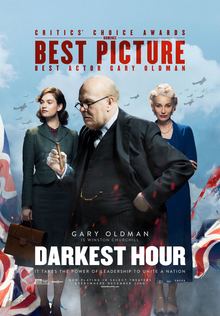
Darkest Hour-2017

Darkest Hour-2017

Director Joe Wright

Starring Gary Oldman, Kristin Scott Thomas

Scott’s Review #718

Reviewed January 24, 2018

Grade: A-

Darkest Hour (2017) is a British historical film that showcases legendary actor Gary Oldman’s astounding portrayal of Winston Churchill.

Known for numerous other fine-acting performances in films such as the Harry Potter series (2001-2011), JFK (1991), and Batman Begins (2005), this performance easily transcends all of the others as he brings perfection to complex role-infusing humor, drama, and many idiosyncrasies of the storied historic figure.

Churchill is the best role of Oldman’s lengthy career.

Director Joe Wright, famous for classy European films such as Pride and Prejudice (2005), Atonement (2007), and Anna Karenina (2012), traditionally offers rich, intelligent experiences with an upper-crust, often British theme and fills his characters with wry humor and wit.

In Darkest Hour, a film that belongs to Oldman, by the way, Churchill is the master of gruff sarcasm and cantankerous charm.

During the tumultuous time of 1940,  with the barbaric grips of Nazi Germany settling upon both England and France (Allies in World War II), a disheveled England is frustrated with their current Prime Minister, Neville Chamberlain, for being weak.

Chamberlain begrudgingly appoints Winston Churchill as his successor, amid limited support.

The film discusses Churchill’s early days in charge as the war and the Nazi presence loomed larger and larger- especially as the historic Dunkirk situation comes into fruition.

Darkest Hour is a good quality film —it has a certain historic richness and the feeling of experiencing a worthy and relevant film. For those of us who did not live during the 1940s, the film will likely serve as an educational experience into the events of the day.

Hundreds of films have been made over time that have explored the events during World War II in fantastic detail, but this film is unique in that it not only provides a perspective of the Allied countries “back against the wall” situation but the ups and downs and pressures that Churchill, the man, faced.

Despite a few quick clips of Hitler and very old black-and-white footage and newspaper headlines of the crazed leader, the focus is not on the enemy country. No actor was used to play Hitler; rather, the focus is on Churchill and the decisions he made and the influences he was faced with.

Pressured to appease the militant German country and reach a “peaceful” deal, Churchill instead listened to the voices of the ordinary, everyday, British people to get his decision to fight the Germans and not back down.

Clever and relevant to 2017 cinema, the film spotlights the famous Dunkirk situation, when British forces were trapped on the shores of Dunkirk, with German planes looming overhead.

Many men were saved, thanks in large part to Churchill and British and French civilian boats that aided in the rescue.

The 2017 film Dunkirk would make an excellent companion piece to Darkest Hour because its subject matter is similar to that of Darkest Hour.

Not surprisingly, both films received Academy Award nominations for Best Picture.

A great lesson I carried away from the film is with Churchill himself.

Sure, I knew that he was the Prime Minister of England during the 1940s and was instrumental in the events of the bloody war, but I knew little about the man himself.

Thanks to Wright and, of course, Oldman, the viewer will learn the good and bad characteristics of this man. A heavy drinker, commonly downing champagne with lunch and brandy the rest of the day, he was initially not well-liked, nor taken very seriously by British royalty.

With Churchill’s bubbling personality, Oldman is fantastic at filling the role with humor, frustration, and just the correct amount of empathy and concern.

Despite his temper, we can tell that he loves his country and is proud of the people living there—that is why he is adamant about conquering the enemy. So, we know he is a good man despite his temper tantrums.

Oldman also successfully embodies the mannerisms that this historical figure contained.

Kristin Scott Thomas also gives a worthy performance, albeit in a small role, as the mature and graceful wife, who can both support and match wits with her husband.

Thanks to a brilliant acting performance by Gary Oldman, who takes on a difficult role that could easily be botched by lesser talent, Darkest Hour is a 2017 historical drama worth seeing.

He makes a film that could have been dull and flat into a worthy watch to both learn something and be amazed at a truly great acting performance.

Oscar Nominations: 2 wins-Best Picture, Best Actor-Gary Oldman (won), Best Production Design, Best Cinematography, Best Makeup and Hairstyling (won), Best Costume Design

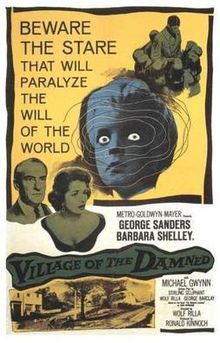
Village of the Damned-1960

Village of the Damned-1960

Director Wolf Rilla

Starring George Sanders, Barbara Shelley

Scott’s Review #701

Reviewed November 30, 2017

Grade: B

Village of the Damned is a 1960 black and white horror film released during a spectacular year for the film genre- and specifically for the horror genre.

With legendary films such as Hitchcock’s Psycho and Michael Powell’s British Peeping Tom making their debuts at the same time, what a coincidence that Village of the Damned (also British) shares the same year.

The film is a satisfying treat- certainly not on par with the aforementioned duo of masterpieces, but on its terms, it is a fine film with just enough suspense and intrigue to make it a memorable affair.

Anything in movie horror involving children is downright creepy, so German director Wolf Rilla is wise to adopt a film based on a 1957 novel entitled The Midwich Cuckoos by John Wyndham.

I adore the title and wish Rilla had kept it for the film. Alas, he did not, but the story is well-written and almost like an extended episode of The Twilight Zone or a similar television chapter from the 1960s—it just seems like more of an episodic experience.

No disrespect, of course, but the film does not contain the bombast expected from a feature film, but rather a compartmentalized, small tale.

In the sleepy little town of Midwich, England, a polarizing force suddenly and without warning overtakes the city, causing all the inhabitants to fall unconscious and into a state of inactivity.

Attempts by the military to enter the town fail, even as an airplane crashes to the ground after attempting to cross into Midwich.

As quickly as these events occur, the townspeople “wake up” and resume normalcy. Two months later, all women of childbearing years suddenly become pregnant, causing gossip and intrigue. As the years pass, the children look similar, with platinum-blonde hair, piercing eyes, and rapid growth spurts.

Furthermore, they all are telepathic and communicate with each other in this manner.

The central characters include a prominent professor, Gordon Zellaby (George Sanders), and his wife, Anthea (Barbara Shelley). They are the parents of one of the children, named David, who appears to be the leader of the other children.

As the children become increasingly menacing and intelligent as they grow older, sometimes hurting or killing other townspeople by somehow “possessing” their thoughts, Gordon must race to find a way to trap and stop the children from more dastardly deeds.

The use of black and white cinematography and the small-town setting successfully give Village of the Damned an eerie and mysterious vibe, is little or no bloodshed nor the traditional horror-themed elements- hence the above Twilight Zone reference.

The film does not need these to succeed, as the psychological mystique is compelling enough. We wonder, “What is wrong with these kids?” and “Why do they act so strangely?” “Are they possessed?” and  “Is this some weird experiment?”

The answers are never really explained in detail.

Slight negatives to the film are the only limited character development among any prominent characters such as Gordon or Anthea, and these roles are one-dimensional- the children are the stars.

Sanders and Shelley are adequately cast, but I can think of numerous other actors who could have played these parts well.

The conclusion to Village of the Damned is unspectacular, and I was left with an unsatisfied feeling, especially as related to other more satisfying aspects of the film as a whole.

I felt like a bit of potential was not reached.

Gordon merely orchestrates a big event, sacrificing himself to destroy the children, and the film ends.

Village of the Damned was followed by a 1963 sequel entitled, Children of the Damned, which was not deemed a critical nor a commercial success.

Years later, in 1995, the film was remade and directed by John Carpenter but also received poor reviews.

A Room with a View-1986

A Room with a View-1986

Director James Ivory

Starring Helena Bonham Carter, Julian Sands

Scott’s Review #695

Reviewed November 3, 2017

Grade: B+

A Room with a View (1986) is one of four major films to be based on famed British author E.M. Forster’s novels- Howards End (1992) and A Passage to India (1986), and Maurice (1987) being the other three.

The foursome contains common elements such as the vast English countryside and class distinctions, leading to heartaches and passion.

In the case of A Room with a View, the film traverses from artistic Florence, Italy to a cozy village in England.

The film is a period drama mixed with lots of authentic, unforced, good humor and at its core is a solid romantic drama, though if compared with the aforementioned other films, is not quite on par, though is still an entertaining watch- given the dismal year of cinema circa 1986.

The film was considered one of the best releases that particular year and was awarded a handful of Oscar nominations- winning Costume Design, Adapted Screenplay, and Art Direction.

Cultured and oftentimes brooding, Lucy Honeychurch (Helena Bonham Carter), goes on holiday to Florence with her rigid and conventional older cousin Charlotte (Maggie Smith), who also serves as her chaperone.

While enjoying the artistry of the European city, Lucy meets and falls madly in love with free-spirited George Emerson (Julian Sands), who is also visiting Florence with his easy-going father, Mr. Emerson (Denholm Elliott).

The men seem oblivious to Lucy’s (and Charlotte’s) Victorian-era upbringing, which attracts Lucy and appalls Charlotte.

Months later, the would-be lovers reunite in England and spend time averting obstacles thwarting their love, while admitting to themselves that their love is blossoming.

As Lucy has become engaged to snobbish Cecil Vyse (Daniel Day-Lewis), a sophisticate deemed suitable by her family to marry Lucy, the pair lacks the romantic connection that she shares with George.

Day-Lewis, on the cusp of becoming a breakout star and brilliant talent, gives Cecil a somewhat comical, yet endearing persona, that makes him the main foil, but also breathes sympathy into the character. This is especially evident during the Lucy/Cecil break-up scene.

The standout performance in A Room with a View is the comic brilliance of Smith as the manipulative and witty, Charlotte Bartlett, and this is evident throughout.

Smith injects vigor and comic wit into her character, as Charlotte seemingly makes one blunder after the other in the self-deprecating way she manages to use to her advantage to humorously manipulate other characters into doing things her way.

A risqué and quite hysterical all-male frontal nudity scene occurs mid-way through the film and, while not advancing the plot in any way, steals the entire film in its homoerotic and free-spirited way.

As the Reverend, young George, and Lucy’s energetic brother, Freddy, walk along a beautiful path, they decide to skinny dip in a pond where they horseplay and wrestle with each other completely in the buff.

As they chase each other around the pond, grab each other, and lightly smack bottoms, one cannot help but wonder if this scene set the tone for 1987’s gay-themed period piece based on another E.M. Forster novel, called Maurice.

A coincidence? I think not. As the trio of rascals come upon the properly dressed girls on the path, hilarity takes over the scene.

The art direction and costumes are of major excellence to A Room with a View as the film “looks” like a 1910 period rather than seeming like it is 1986 with the actors donning early twentieth-century styles.

Every scene is a treat from this perspective as we wonder who will wear what attire in the next scene.

As with the other aforementioned E.M. Forster films, class distinctions, and expectations are a major element in A Room with a View and make Lucy and George all the more likable as a couple.

Still, from an overall standpoint, there is something slightly amiss in the story department.

I did not find Helena Bonham Carter, an actor I like, overall very compelling as Lucy, and I think this leads to the story being slightly less than it might have with another in the role.

We may root for Lucy and George, but if the pair do not wind up together it is more of a pity rather than a travesty.

To summarize A Room with a View, the story is good, not great, and other key components to the film are much better than the central love story of Lucy and George but are therefore secondary to the main action.

Given a Charlotte romance, the film’s best character, that would have catapulted this film to the exceptional grade. Imagine the possibilities.

Or more of the two Miss Alan’s and their gossipy nature, or even a story to the rugged nude horseplay among men.

Many of the aspects that could have made A Room with a View (1986) great, were too often on the sidelines.

Oscar Nominations: 3 wins-Best Picture, Best Director-James Ivory, Best Supporting Actor-Denholm Elliott, Best Supporting Actress-Maggie Smith, Best Screenplay Based on Material from Another Medium (won), Best Art Direction (won), Best Cinematography, Best Costume Design (won)

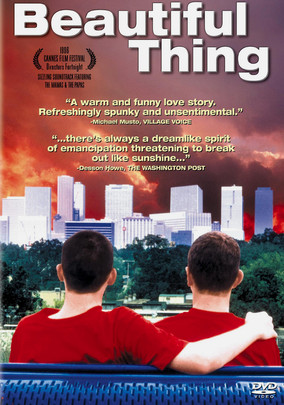
Beautiful Thing-1996

Beautiful Thing-1996

Director Hettie MacDonald

Starring Glen Berry, Scott Neal

Scott’s Review #675

Reviewed August 20, 2017

Grade: B

Based on the play of the same name, Beautiful Thing is a heartwarming 1996 British LGBT film written by Jonathan Harvey and directed by Hettie MacDonald.

Incorporating music from the Mamas and the Papas, and specifically Mama Cass, the film undoubtedly was groundbreaking upon release in the 1990s due to its taboo (at that time) gay romance, but in the year 2017, this film suffers a bit from both a dated feeling and a play it safe vibe.

The action, just like a play would, takes place almost entirely within a working-class London apartment building in the present times.

The lead character is Jamie (Glen Berry), a high school student, intrigued by his male classmate and neighbor, Ste (Scott Neal). He also must keep an eye on his flighty mother, Sandra, who changes boyfriends like the weather, and aspires to open her pub- she is currently dating neighbor and understanding hippie, Tony.

Ste is the other central character. Shyer than Jamie, he has a difficult upbringing, living next door to Jamie with an abusive father and brother. Ste and Jamie eventually bond and a secret love story begins as the young men conceal their relationship from everyone else.

In the mix is a vivacious black teenage neighbor girl, Leah, who is obsessed with Mama Cass’s records, which her grandmother owns and frequently plays. Leah and Sandra are engaged in a lightweight feud, in large part because Sandra believes Leah is a bad influence on Jamie.

Keeping in close mind when Beautiful Thing (1996) was made, the film deserves an enormous amount of praise for, at the time, simply existing when LGBT films were hardly the norm.

Watching in 2017, though, the film loses a bit when compared with subsequent LGBT releases that broke more barriers with their mainstream viewership and much darker themes (LGBT masterpieces like 2006’s Brokeback Mountain and 2016’s Moonlight immediately come to mind).

Beautiful Thing also contains a safer, lightweight touch than the aforementioned films, making it now seem too much like fluff.

Director, MacDonald, mixes in humor so that while the message of a same-sex relationship is important, it is softened a bit by the comedy.

Specifically, the sidekick character of Leah lightens the message. The supporting characters may get a bit too much screen time. Sandra’s giggle-worthy job interview attempting to do “respectable work” in an office environment, or her man-hungry escapades, take away from the main story.

I also never felt any real threats or danger to the same-sex relationship. Sure, there is some brief disapproval, and a quick mention of Jamie not liking football (a negative gay stereotype that is unnecessary) combined with Ste’s abuse at the hands of his family, but even that is not perceived as a major obstacle to their, at that time anyway, shocking relationship.

On the other hand, the chemistry between the two leads (Berry and Neal) is wonderful and the best aspect of the film. Both actors convey the emotions of the characters perfectly- both coming into their sexuality, Berry’s Jamie is the more confident one, asking Neal’s Ste, in a sweet scene, whether he has ever been kissed.

This leads to a sleepover that is innocent and tender rather than steamy or sexual. I completely buy the characters as young lovers, coming to terms with their own identities while supporting the needs of the other, and becoming a good team.

The final scene, naturally accompanied by a Cass Elliot song “Dream A Little Dream Of Me”, is a touching, wonderful scene. Jamie and Ste dance together in broad daylight, for their entire complex to see, and subsequently are circled by both supporters and the curious.

As their show of support, Sandra and Leah join the boys and end their dispute.

Beautiful Thing (1996) offers a heartwarming conclusion to a fine, yet lightweight by modern standards, LGBT romantic film.

An Education-2009

An Education-2009

Director Lone Scherfig

Starring Carey Mulligan, Peter Sarsgaard

Scott’s Review #584

Reviewed January 4, 2017

Grade: B+

An Education, a British film released in 2009, is a small, little gem of a film. The story-telling and the acting are very good.

Since it is a British film, the accents can be a little distracting for some, but I enjoyed it very much.

It tells the story of an intelligent, college-driven teenager, named Jenny (Mulligan), who falls in love with an older, charismatic man (Sarsgaard). She is faced with conflict from her family and teachers, most notably her father, played by Alfred Molina.

The individuals in her life have differing opinions on which path Jenny should choose in her life. This leads to the main conflict in the film.

The setting is rainy, cold, London in 1961. Headed for Oxford and a successful career (not common for a female in those days), Jenny is willing to risk it all for love, but is she being taken advantage of?

The film is romantic, comical, and serious all rolled into one. The story is nothing original, to be frank, but specifically, the excellent acting makes it worth seeing.

An Education (2009) proves filmmakers can take a good story, told before, and make it compelling to an audience.

Carey Mulligan deservedly received an Oscar nomination for this film and made her debut as a high-caliber young actress to watch.

Oscar Nominations: Best Picture, Best Actress-Carey Mulligan, Best Adapted Screenplay

Independent Spirit Award Nominations: 1 win-Best Foreign Film (won)

Repulsion-1965

Repulsion-1965

Director Roman Polanski

Starring Catherine Deneuve

Scott’s Review #554

Reviewed December 21, 2016

Grade: A

Repulsion is an excellent British film, an early film by the great director Roman Polanski, made in 1965. The film was shot on a low budget, and the action mainly takes place inside a small London apartment.

Repulsion is part of Polanski’s “Apartment Trio,” along with Rosemary’s Baby (1968) and The Tenant (1976), which are all set in apartments.

The film tells the story of Carol (Catherine Deneuve), a beautiful young woman who slowly goes insane throughout a weekend while left alone by her vacationing sister.

Carol is a beauty parlor worker who is seemingly sweet and shy but gradually becomes violent, volatile, and unbalanced. She experiences hallucinations, and it is alluded to that she may have been sexually abused as a child.

She loathes men.

The film is shot in black and white, with eerie camera shots, background noises, and very little music. Its claustrophobic atmosphere makes it all the more disturbing.

These characteristics make the film a challenging experience to watch, but that is to its credit.

We see Carol unravel and are mystified by the aspects that make her this way. The bathtub scene and the scene with Carol’s landlord are highlights of their brutality.

Repulsion (1965) is challenging to watch but an excellent piece of cinema. It is an in-depth character study of an unhinged woman reaching her psychological breaking point.

Exit Through the Gift Shop-2010

Exit Through the Gift Shop-2010

Director Banksy

Starring Banksy

Scott’s Review #531

70132200

Reviewed December 1, 2016

Grade: B-

Exit Through the Gift Shop is a documentary from 2010. I am a fan of documentaries if the subject matter interests me.

The topic of this documentary is street art, which is not especially appealing to me, but it is also nice to be open to new experiences and perhaps learn a thing or two.

Bansky, who both directed and stars in the documentary, is the main feature and his story is told. We meet a man from Los Angeles, who carries a camera with him wherever he goes.

Through his cousin in France, he decides to do a documentary on street artists.

He is fascinated by the mysterious and secretive, Bansky until he manages to one day meet him. He then begins to film Bansky’s street art activity.

So the documentary has some plot and is not the standard type of documentary.

Some claim that the film is staged and that a bit of a hoax has run rampant, but those allegations have not been proven.

I respect this feature as a nice, telling, documentary, but it drags a bit, which may be the result of my limited interest in the topic.

Great for anyone into street art.

Oscar Nominations: Best Documentary Feature

Independent Spirit Award Nominations: 1 win-Best Documentary (won)

Lifeforce-1985

Lifeforce-1985

Director Tobe Hooper

Starring Steve Railsback, Peter Firth

Scott’s Review #516

699938

Reviewed November 11, 2016

Grade: F

Lifeforce, a film made in 1985, is a film that I did not enjoy at all.

It tells the story of a team of astronauts who find three pods of seemingly human bodies, who eventually return the bodies to Earth and turn said humans into zombies.

That is it in a nutshell.

The story makes no sense whatsoever and there is no rhyme or reason for the actions of the characters except to further the plot.

No mention or details as to why they are in outer space or anything that drives the character’s motives.

The film is way too complicated for its good and would have been wiser to go for a straightforward action film rather than what we are treated to (a combo sci-fi/horror mess).

The special effects are completely dated and very cheesy.

Lifeforce (1985) is completely plot-driven and I did not find it gripping at all and is a waste of time that deserves to be completely forgotten.

28 Days Later-2002

28 Days Later-2002

Director Danny Boyle

Starring Cillian Murphy, Noah Huntley

Scott’s Review #507

60027998

Reviewed November 2, 2016

Grade: B+

Before the influx of zombie-related horror films and television shows filled the land- arguably offset by the success of The Walking Dead series, a little film came along- now almost teetering on its influence being forgotten- that presented this genre with fresh insight and creative storytelling posing questions amid the mayhem.

28 Days Later (2002) rejuvenated this largely dormant film category with a gritty story of peril among a group of survivors spared from a deadly virus.

The film is smart as it explores morality issues and the needs of society to continue.

We initially are immersed in confusion as chaos immediately ensues. After a brief prologue of a group of laboratory chimpanzees gone mad, inflicted with rage, being let loose by animal liberators, and killing all present as well as inflicting the humans, we meet a lone man named Joe- the timing is relevant as it is “28 days later” from the incident.

The young man awakens in a hospital to find himself alone amid downtown London- not a soul in sight.  Fortunately, he has been in a coma and missed the crumbling of society due to an outbreak- somehow Joe has been spared.

Gradually, Joe meets others uninfected by the virus and they forge through the country in search of a military base rumored to be a haven.

The infected humans are not zombies, but rather, violent creatures who destroy anyone in their path. The film not only presents the grotesque creatures but also challenges the audience to think in a political sense- how will the survivors forge a new society?

How will women be treated differently from and by their male counterparts in a world that now lacks any police force or government?

My initial reaction to watching 28 Days Later- years after its initial release- is that it now seems slightly dated, but that has more to do with the legions of copycat films that have come after it and have been exposed to.

We have become more encompassed by this type of film, both in genre and in style. Appreciation is warranted for its gritty, fast-paced camera-work, extreme violence, and the use of “infected” who turn from human beings to vicious beings.

A fantastic part of this film is that it is not simply a horror film, it is more layered than that. There are moments of great beauty and tender moments among Joe and Selena- the sole surviving female other than the young, waif-like, Hannah, whose world has been shattered by the death of her loved ones.

In one sad scene, a couple has peacefully committed suicide, rather than face what would surely become of them.

There is a sense of a human story in 28 Days Later, which made me find the film heartfelt and almost sweet. Even the military soldiers- their motivations questionable- are relatable based on the world being turned upside down. A layered, complex, zombie film with some character-driven elements.

Jimi: All Is By My Side-2014

Jimi: All Is By My Side-2014

Director John Ridley

Starring André 3000

Scott’s Review #487

70292988

Reviewed September 30, 2016

Grade: A-

Jimi: All Is By My Side (2014) was not quite the film I was expecting it to be. It was better!

I was not expecting poor work since the film received a Best Male Lead Independent Spirit Award nomination for André 3000 (rapper) in the title role.

I expected an overview of the rise and fall of famed rocker Jimi Hendrix. Instead, I was treated to a more introspective piece than I imagined.

The film is a British production.

Interestingly, the film denied any Jimi Hendrix songs familiar to audiences, but only songs were written in 1966 and 1967.

This surprisingly turns out to be positive for the film.

The awesome achievement of this film is its non-conformity and being an independent film, lots of freedoms were undoubtedly given.

This is a good thing.

Had this film been targeted for a showing at local theaters, it may have been a run-of-the-mill affair, focusing on the star and the star only.

It is also shot in a less-than-glossy way, giving it an almost grainy, gritty look that I found added something.

Impressively, the supporting characters, specifically three females whom Hendrix has relationships with throughout his initial rise to fame, are prominently featured, and the story shifts at times to their perspectives and feelings, not just Hendrix’s.

The film does not focus on Hendrix’s untimely death.

We meet Hendrix (compellingly played by André 3000) performing guitar in a sparsely attended bar in New York City. He is discovered by Linda, the girlfriend of Rolling Stones guitarist Keith Richards, as she becomes both smitten with Hendrix and recognizes his immense talents.

Slowly, he is discovered (mainly in London) and rises to fame.

However, the film is not only focused on his success but his personal life.

Besides Linda, Hendrix becomes involved with a volatile groupie and fixture in the 1960s London music scene, Kathy, and cultured American Ida. Instead of the female characters being written as one-dimensional and dizzy, all three are quite intelligent and layered.

While each has feelings for the star, they are forced to be reckoned with in their own right, and we grow to care about their characters as individuals.

A scene involving Jimi violently beating girlfriend Kathy with a telephone during an argument has been refuted by friends as being fictitious- Hendrix was known as a gentle, peaceful man.

A controversy has emerged surrounding the accuracy of this film in general, but I thought it quite introspective and fascinating.

Independent Spirit Award Nominations: Best Male Lead-André 3000

Burn Witch Burn (Night of the Eagle)-1962

Burn Witch Burn (Night of the Eagle)- 1962

Director Sidney Hayers

Starring Peter Wyngarde, Janet Blair

Scott’s Review #316

220px-Night-of-the-eagle-poster

Reviewed January 1, 2016

Grade: B

Burn Witch Burn, retitled for U.S. release from the original British title Night of the Eagle, is a 1962 black-and-white horror film.

It is based on a 1943 novel entitled Conjure Wife.

The film is quite decent and delves into the fascinating and arguably unusual subject of witchcraft. It’s careful not to be too dark a film, and it resembles more of an extended episode of the Twilight Zone. It’s a good episode.

I enjoyed the film’s wit and charm. It never took itself too seriously and added humor and lightness.

Norman, a psychology professor at the local university, is intelligent, successful, and well-adjusted. He has a blonde, pretty, sophisticated wife named Tansy.

The perfect housewife, she coordinates Friday night bridge parties with fellow professors and staff and a Mrs. Cleaver type, the mother character from the famous 1950s television series Leave it to Beaver.

When Norman discovers Tansy is practicing witchcraft and possesses various charms, dolls, and weird things, he forces her to destroy all of them.

This leads to a series of bad events.

Norman is accused of rape by a student, and other dire circumstances occur. Tansy assumes this is a result of the destruction of her witchcraft.

Burn Witch Burn is a fun film that doesn’t take itself too seriously despite its heavy subject matter. Tansy certainly does not look like the stereotypical witch. She is more like a PTA mom; we almost cheer for her.

At the same time, the film is not so over-the-top that it becomes ridiculous, either. I found it entertaining but not a masterpiece or scary.

As the film progressed, I found the action confusing from a story-line perspective, but that was admittedly okay. I went with it and enjoyed it.

For instance, the plot thickens when an enormous eagle affixed to the front of the university building comes into play or the sinister university secretary’s motives are revealed.

The special effects and ambiance of the thunderstorm are worth mentioning. The heavy storm was crucial in making Burn Witch Burn a compelling horror film. It added a heavy dose of spookiness to the events, and the atmosphere was spot on.

Burn Witch Burn (1962) is a fun, late-night horror flick that does not take itself too seriously. It is a worthy film for horror fans to enjoy.

An underappreciated British horror flick.

Horror Express-1974

Horror Express-1974

Director Eugenio Martin

Starring Christopher Lee, Peter Cushing

Scott’s Review #311

7780013

Reviewed December 30, 2015

Grade: B

Horror Express (1974) is a fun 1970s Spanish/British horror film starring legendary horror actors Christopher Lee and Peter Cushing.

A horror version of Agatha Christie’s Murder On The Orient Express with a bit of camp thrown in, it is an entertaining late-night experience, on a low-budget level.

It is the early 1900’s, and while traveling from Shanghai to Moscow, via the Trans-Siberian Express, a British anthropologist named Professor Alexander Saxton (Lee) brings an enormous,  mysterious crate on board that contains a creature he discovered in a cave.

What we know is it has something to do with human evolution.

A fellow passenger, Doctor Wells (Cushing), and various other passengers become suspicious of the crate and demand to have it opened.

Things go awry and victims begin to be murdered by the creature (an ape-like monster) and left with eyes completely white with missing pupils and irises.

The best part of Horror Express is the setting. The cozy train is a perfect backdrop for the events taking place and it makes the film exciting as the different cars are set-decorated nicely.

This lends itself to a sense of entrapment and being unable to escape the creature as it roams freely from car to car.

For being a low-budget film,  the train sets are quite believable, as are the sounds of the train. It feels like the actors are on a real train as the tooting horns and the sounds of the tracks are authentic.

Having actors as big as Lee and Cushing gives the film respect in horror circles and both actors do believable work.

This film would not have been as good without the talents (and name recognition) of both.

There are also interesting supporting characters and I didn’t find the acting to be too over-the-top as is known to occur in similar types of horror films.

Specifically, the countess’s role and the appearance of Telly Savalas as a Cossack officer investigating events are interesting.

Fans of this genre of horror will understand that suspension of disbelief is necessary as the plot gets a bit goofy- something about the creature taking the information from the victim’s brain and the victims subsequently turning into zombies- it doesn’t make a whole lot of sense.

Especially towards the end, as some drunken Russians and some weird resurrections happen, but that is somehow okay.

For a late-night viewing with some spirits, you can’t ask too many questions and Horror Express (1974) is a decent flick.

Suffragette-2015

Suffragette-2015

Director Sarah Gavron

Starring Carey Mulligan, Helena Bonham Carter

Scott’s Review #291

80046819

Reviewed December 1, 2015

Grade: A-

Led by an excellent performance by Carey Mulligan, Suffragette (2015) is a British film that tells the true story of the fight for women’s suffragette, as a team of women fought endlessly to obtain their right to vote, a vote that today most (men and women) take for granted.

Several characters are real-life portrayals, however, Mulligan’s central character Maud Watts is fictional. She is assumed to be a hybrid of other real-life characters.

Perfectly shot and giving a fantastic impression of life in England in 1912, the film centers around a bevy of working-class women- many of whom work endless and thankless hours in a sewing factory, working for and forced to tolerate a vicious, unkind man.

Their lives are bleak.

A women’s movement has developed, led by the mysterious Emmeline Pankhurst (Meryl Streep) and Edith Ellyn (Helena Bonham Carter), both financially successful, but very passionate women, spearheading the “women’s movement”.

The main character is Maud. The film is told from her perspective.

She is a hard-working laundress in her early twenties, married to her husband, Sonny, and with a young son. Plain, yet pretty, the audience knows this is all her life will ever be.

She has worked at the same sewing shop since a young age and has been sexually abused by her boss for years. While delivering a package, she witnesses a co-worker smashing a window protesting the women’s movement.

Initially reluctant to join the movement, Maud realizes the importance and loses her family and job because of her devotion to the cause.

When women were finally granted the right to vote in England in 1928, sixteen years after the movement began,  this took a brave group of women who risked (and lost) their families, and jobs and were imprisoned, and in one heartbreaking scene, loss of one’s life, all in powerful devotion to what they felt was right and just, despite numerous powerful figures beating them down.

How sad to think this happened.

The film accurately portrays the might and courage that the women possessed.

One of two of the most powerful scenes in the film is as follows and belongs to Mulligan. Left by her husband and community and having been imprisoned more than once, Sonny decides to give their son away to an affluent couple. The boy is ripped from Maud’s arms and we realize she will likely never see the boy again.

It is tragic and painful to watch and Mulligan nails it from an acting standpoint. I have always admired Carey Mulligan, she chooses wonderful and challenging parts, never succumbing to mainstream mediocrity.

Think portrayals in Shame (2011), Never Let Me Go (2010), and An Education (2009).

The second powerful scene comes at the end of the film. When a character sacrifices her life (a real-life person, mind you) at the Epsom Derby where King George V is present, simply so that the women’s movement can get major exposure by running onto the track and wielding a sign, she is brutally trampled to death.

Subsequently, a funeral parade results, finally leading the masses to take notice and realize how important an issue this was.

The filmmakers of Suffragette wisely dedicated real-life footage of the parade that occurred at the time.

An important film with a message, Suffragette (2015) is beautifully shot and led by bravura acting and a true, real-life historical story, to be appreciated for its honesty.

Sexy Beast-2001

Sexy Beast-2001

Director Jonathan Glazer

Starring Ray Winstone, Ben Kingsley

Scott’s Review #286

60020863

Reviewed November 13, 2015

Grade: B+

Sexy Beast is an interesting little indie gem that has garnered quite a cult following, deservedly so,  since the year of its release- 2001 and that I have recently viewed for the first time.

In large part, the film belongs to Ben Kingsley as he gives a bravura, and frightening,  performance as a crime lord attempting to convince a retired hitman, now sworn to the straight and narrow, to resurrect his career for one last heist.

The other principal characters are wonderful in their own right, as the film successfully mixes elements of Quentin Tarantino with Ocean’s Eleven- bank heist meets quirkiness, with smart and witty dialogue sprinkled in.

Gary Dove is happily retired and living a life of contentment with his ex-porn star wife, Deedee, and best friends Aitch and Jackie.  Having all been involved in “the biz”, they are long since removed from their respective careers. They now enjoy evening parties of wine and martinis, and days relaxing by the pool in their Spanish villas.

One day, a former criminal associate, Don Logan (Kingsley), who is also a sociopath, arrives to disrupt their peaceful lives and coordinate a bank heist in London, in hopes of luring Gary into the game once again.

As Gary and company nervously decide to decline Don Logan’s offer to participate in his sinister plan, a wonderful and important scene occurs early in the film. The quartet sits around the dinner table at a swanky Spanish restaurant anticipating a scrumptious meal.

Jackie reveals the news that Don has contacted her and the tone of the scene immediately changes to one of dread. All of them both fear and despise Logan.

They agonize over this sudden disruption to their lives and we, the audience, fear Don Logan before he ever appears on-screen. What fantastic story-telling.

Kingsley portrays a menacing character and brilliantly so. The character contains frightening brutality bubbling beneath his normally calm demeanor, which makes the viewer shudder when he appears on-screen.

Lest we forget, Ian McShane also gives a nuanced performance as Teddy Bass, Logan’s right-hand man, and wise businessman.

The cat and mouse scene towards the end as Teddy and Gary have an important discussion in a car is both chilling and important to the plot of the film. As Teddy slowly figured out certain events I was left intensely anticipating his reactions.

The film introduces an intriguing sub-plot involving Don’s long-ago fling with Jackie and subsequent love for her which adds layers to the plot and the dynamic and tension between Don and Gary.

Upon finishing the film, I loved the effect of foreshadowing that the film contains. I found myself rewinding the events in my mind, pleasurably so.  From the pool to the young Hispanic kid to the thunderous boulder- all of these elements were crucial to the conclusion and fit like a puzzle.

A dark comedy of sorts, I chuckled after the film as the final reveal involving a double-heart insignia and a pool that gives comeuppance to the villain and pleases the viewer.

Having alluded to viewing Sexy Beast (2001) over the years, I am glad that I finally found the time to witness a darkly comical gem that, admittedly, may take repeated viewings to absorb and therefore fully “get”, and I look forward to doing just that.

Oscar Nominations: Best Supporting Actor-Ben Kingsley

Independent Spirit Award Nominations: Best Foreign Film

A Little Chaos-2014

A Little Chaos-2014

Director Alan Rickman

Starring Kate Winslet, Matthias Schoenaerts

Scott’s Review #269

80017099

Reviewed August 22, 2015

Grade: B-

A Little Chaos (2014) is a difficult film to review. The film does not kick into high gear, or much of gear until the final thirty minutes or so as the drama hits a crescendo and past events are suddenly explained.

At this point, it becomes a very entertaining film.

Until then, it is largely a bore and slow-paced.

Starring Kate Winslet and Alan Rickman, who also directs the film, A Little Chaos is a good film with beautiful period piece costumes to marvel over, and feels great, but misses the mark with a lack of balancing the momentum throughout the length of the film.

It is also largely fictionalized, making the viewing less enjoyable.

A period drama set at the gorgeous Versailles in France, the period in the late 1600s when King Louis XIV of France is in power and lives on the illustrious estate.

Landscaper, Andre Le Notre, hires unconventional gardener Sabine (Winslet) to create one of the gardens.

Sabine is progressive and does not live in the past. Rather, she has ideas for creating a unique pattern. Sabine is instructed to incorporate a wonderful fountain within the garden. She faces hostility from staff members for simply being a woman and they refuse to work for her.

Others admire her creativity.

As the plot unfolds, Sabine has romantic feelings for Andre, a man trapped in a loveless marriage with Francoise, and they begin a tender courtship.

Sabine is haunted by the past and frequently hears cries in her dreams. The audience does not know what her past life was, only that she is widowed.

The final act of the film brings everything together nicely. We learn about Sabine’s past and her suggested dalliance with Andre comes to fruition.

After the film, I was left thinking how exceptional it was, but then remembered the majority of it had dragged.

The themes of A Little Chaos are class systems, feminism, and societal views. At first, snubbed by some for being a commoner, Sabine slowly is accepted by the royal figures, including the King himself, whom Sabrine humorously mistakes for the gardener at one point.

Ideally, it would have been lovely if a woman had been hired to create the garden.

Sadly, events do not happen this way but is someone’s fantasy.

A Little Chaos (2014) has great potential and looks beautiful- my main complaint is for most of the film nothing happens.

Also disappointing is that the film was not filmed at the historical Versailles, nor was it even shot in France. Every exterior scene was filmed in England.

This is not a deal-breaker, but some genuineness would have been nice. Another major detraction is that Sabine De Barra is not even a real-life figure, but rather is fictionalized- sort of how the past should have been but wasn’t really.

Having been a real person would have made the film more interesting. What is the investment?

From an acting standpoint, the film succeeds. Winslet, a highly talented actress, is well cast and the chemistry between her and Matthias Schoenaerts is palpable. Both actors are believable in their roles.

Stanley Tucci, typically great in whatever he appears in, plays Phillippe, a silly, slightly effeminate Duke who does more to annoy than to amuse and is a trivial character.

Throughout my viewing of the film, I kept thinking of it as the type of film that should be liked because it looks great, but something was missing.

The royal drama, sexual dalliances, and antics were fun, but I felt like the film could have been much more than it ended up being.

The Nanny-1965

The Nanny-1965

Director Seth Holt

Starring Bette Davis

Scott’s Review #256

70089620

Reviewed July 11, 2015

Grade: B

The Nanny is a 1965 Hammer productions thriller starring legendary film icon Bette Davis as a mysterious nanny caring for a ten-year-old boy named Joey.

Joey has recently been released from a mental institution and returned home to resume everyday life, but has he been “cured”?

There is obvious tension between Joey and Nanny, but the audience doesn’t know what that tension is precisely. Why do they dislike each other? Why is Joey afraid of her?

As the plot unfolds, the suspense and tensions thicken as various events occur and Joey’s parents and Aunt Pen are further fleshed out. Past events are revisited, and the story becomes thrilling.

At one point, long before Joey’s return home, his younger sister has drowned, and the circumstances are vague. It has devastated the family, including Nanny. Joey has been blamed for her death, though he insists that Nanny is the culprit.

Nobody except the neighbor girl believes Joey, and the audience wonders who to believe and who to root for: Joey or Nanny. Davis, like Nanny, brings a warmness to her character, but is she sincere? Is it an act? Is Joey a sweet boy or maniacal?

These questions race through the audience’s minds as the film progresses. When Virginia, the mother, eats tainted food, the obvious conclusion is that the Nanny poisoned it since she prepared it. But why? Did she do this?

As the plot is slowly explained, there are a few chills, though the ending is not too surprising.

Any film starring Bette Davis is a treasure, though admittedly, it is not her finest work. Still, her finest work is challenging to match.

The Nanny is a good film, though not great. It is shot in black and white, which is a nice touch for a thriller.

The main reason to watch Davis’s performance is that it is always mesmerizing. Traditionally playing gruff, mean, or bitchy parts (especially in her later years), The Nanny allows Davis to play a sympathetic role.

She is seemingly sweet, proper, well-organized, and a perfect nanny on paper.

The role of Virginia, played by Wendy Craig, is a bit too neurotic and slightly over-acted. She is rather one-note as the fretting mother worried about her son. The character of the father is also a bit one-dimensional.

The Nanny is more of a classic thriller from the 1960s that is often lumped together with some of Bette Davis’s other films around the same period (Dead Ringer-1964, Hush, Hush, Sweet Charlotte-1964, and Whatever Happened to Baby Jane? -1966), and are in large part superior to The Nanny. As a stand-alone, it is a decent film.

Madhouse-1974

Madhouse-1974

Director Jim Clark

Starring Vincent Price, Peter Cushing

Scott’s Review #233

220px-Madhouseposter[1]

Reviewed April 3, 2015

Grade: B-

Madhouse, a 1974 British horror film, stars horror icon Vincent Price who portrays a sympathetic Hollywood actor who is unsure of his sanity after the grisly murder of his trophy fiancé whom he may or may not have been responsible for murdering.

Mainly set in London, Madhouse also stars famed British actors in the latter stages of their careers, such as Peter Cushing, and is a treat for classic British horror fans.

The look of the film is stylistic and effective in the mood- the story, while silly, is also fun.

Paul Toombes (Price) is a famed actor notorious for his character of Dr. Death in a successful film franchise. He seemingly has it all and is the envy of his contemporaries- wealth, notoriety, and a glamorous blonde fiancé named Ellen.

After Ellen is murdered by someone dressed as Dr. Death, Paul is unable to remember the circumstances or his whereabouts during the murder.

After spending years in a mental institution in a confused state he is summoned to London to mount an acting comeback of sorts, reprising his Dr. Death alter-ego.

As the bodies begin to pile up, a whodunit commences- is Paul Toombes the killer, or is someone impersonating him?

The film itself is quite pleasing to a horror fan like me. The deaths, while silly, are fun and campy.

Mostly all female victims, a comical aspect is how the victims, when cornered by the killer, simply scream and stand there waiting to be sliced.

Wouldn’t they fight back in real life?

This film is certainly not realism at its finest but is a fun horror film. It is a bit exaggerated and over-the-top in a campy way but is also true to the 1970s style with the point of view scenes from the killer’s perspective.

A wonderful aspect of this film is real clips of old Vincent Price films (The Raven, The Pit and the Pendulum, and House of Usher) to name a few, featuring deceased horror god Boris Karloff and Basil Rathbone.

Since the plot involves Price’s character being a former horror actor this is a wonderful opportunity to showcase long-ago classic horror films and it works perfectly.

I enjoyed the television scenes within the film plot as Paul revives his career and shoots a series for the BBC- the film chooses interesting, haunting sets and Cushing’s character of Herbert Flay and his zany wife reside in a spooky, vast mansion with eerie spiders that the wife is obsessed with.

The set pieces are great and very Halloween-like. And the spider-eating-flesh scene is excellent!

The tag team of Price and Cushing is fun to watch- both horror stalwarts connect well and both actors play off of each other successfully.

They had a ball while making this film.

Towards the end of the film, the plot becomes confusing and the big reveal as to the killer’s identity and the motivations surrounding is a disappointment.

The conclusion to the film is silly and makes little sense, although that is secondary to a film of this genre that borders on camp.

Madhouse (1974) is an enjoyable midnight flick starring two of the top classic horror icons.