Category Archives: LGBTQ+ Films

When Love Comes-1998

When Love Comes-1998

Director Garth Maxwell

Starring Rena Owen, Dean O’Gorman, Simon Prast

Scott’s Review #1,340

Reviewed February 3, 2023

Grade: B+

When Love Comes (1998) is a New Zealand film, spoken in English, by filmmaker Garth Maxwell.  It starts slow and muddled but quietly captures me with its thoughtful and humanistic tones of emotion, conflict, and sexuality.

There are no subtitles which makes the dialogue hard to follow given the accents and may knock the film down a smidgen for me but the main stories are enthralling with deep texture.

More or less an ensemble of six acquaintances, and three of the characters get the most screen time.

The main character is washed-up singer Katie Keen (Rena Owen) who struggles to create a new life for herself while coping with her absent admirer Eddie and living with her best friend, Stephen.

Stephen is in love with sexually confused ex-hustler Mark, while, band members Fig and Sally, smitten with each other, yearn for success while traipsing around town and the beaches together.

The most interesting storyline is LGBTQ+ centered. Given the time was 1998 when gay films were just starting to make their presence known, Stephen and Mark have the most depth.

Admittedly, a couple of story points are disjoined like why the men have trouble admitting their feelings for each other and Mark’s anger issues cause him to smash a window. In the end, their story wraps nicely and Maxwell gets points for making the audience appreciate the couple.

The lesbians get short shrift. Are they gay or bisexual? If bisexual, are they a couple or what is their arrangement? Don’t get me wrong, they are fun to watch shred the guitar and beat mercilessly on the drums as they raucously perform but little is known about their lives.

Even though When Loves Comes is an ensemble the lead character is Katie. I fell in love with her character because she is the most well-written. At one time a big pop singer, her star faded and she is at a crossroads.

As she whimsically gazes at the crashing waves the expression on her face reveals the deep thought and regrets in her life.

Unfortunately, her love interest, Eddie, is heard from but does not appear in the flesh until pretty deep into the film. Therefore, there is not much rooting value for the couple and we don’t know much about Eddie.

Surprisingly, despite this miss, there is a connection I felt for Katie and Eddie. Rena Owen is a terrific actress revealing expressions and a veneer we deeply want to explore.

There is a decent amount of flesh in the sex scenes which makes for some fun but the wise move is to stick to the character motivations and watch them develop.

This can be said with only three of the characters and I wished for more grit from Eddie, Fig, and Sally.

When Love Comes feels lopsided at times but succeeds as a slow-build film. Nothing is done quickly or forcefully instead crafting long scenes of dialogue but the conversations have something to say rather than existing as filler or a bridge to get to more important scenes.

I respect the cinematography because it has a softer independent film look which is of course what it is. A big budget is not needed for a film about people and the sequences showing Aukland are wonderful.

Keeping the time frame in mind, I wish I saw When Love Comes (1998) at the time it was released. It would have packed a harder punch than it does twenty-five years later when plenty of similar-toned films have been made.

Single All the Way-2021

Single All the Way-2021

Director Michael Mayer

Starring Michael Urie, Philemon Chambers, Luke Macfarlane

Scott’s Review #1,325

Reviewed December 21, 2022

Grade: C+

Single All the Way (2021) is an LGBTQ+ romantic comedy film released by the streaming behemoth Netflix. However, I swear the film feels like a Hallmark or Lifetime television movie of the week offering.

The film, a Christmas-themed romantic comedy about gay men, is the streaming service’s first gay holiday film.

As inspired and momentous as this may sound, please hold the accolades and champagne for just a hot second. I had hoped for a bit more danger, complexity, or even darker drama from Single All the Way, given it’s the first of its kind.

Instead, I was presented with a childish, cliched, saccharine-induced, run-of-the-mill story that swaps the standard straight-laced, blue-eyed, blonde-haired straight couple from the Midwest, USA, with gay characters.

Everything else remains the same.

Since the LGBTQ+ is to be celebrated, the result is a marginally enjoyable romantic comedy featuring gay men and a timid triangle where the audience knows all along how it’s going to play out.

Desperate to avoid his family’s judgment about his perpetual single status, Peter (Michael Urie), who lives in Los Angeles, convinces his best friend Nick (Philemon Chambers) to join him for the holidays in snowy New Hampshire and pretend that they’re now in a relationship.

But when Peter’s mother (Kathy Najimy) sets him up on a blind date with her hunky trainer James (Luke Macfarlane), the plan goes awry. Peter becomes caught in a quandary about either confessing his feelings for Nick or pursuing relations with James while his family schemes to unite Peter and Nick.

Let me make clear that the only reason Single All the Way rates as high as a ‘C+’ is that I applaud the decision to write, produce, and release an LGBTQ+-themed film. It’s about damn time, but I wish it were a better film.

Nick being light-skinned black is also a way to promote at least a bit of diversity, although the other characters and environment feel as white as the fake snow draping the wintry set design.

Despite being slightly effeminate, he works as a rugged handyman, which somehow doesn’t quite work out.

The main issue is that there is no chemistry between any of the three men. It’s unbelievable that Nick and Peter have been roommates for years, and it takes a trip to New Hampshire for them to realize their undying love for one another.

Macfarlane, well-known for appearing in Bros. (2022), the first gay romantic comedy released by a major studio, is almost distractingly good-looking. Hunky and drop-dead gorgeous, it’s laughable to think his character would be the odd man out against the semi-cute Peter and Nick.

It’s as if someone wanted the average Joe to beat out the hunk, finally.

Realistically,  Peter would have at least slept with James instead of hemming and hawing before declining an invitation to James’s apartment after a date.

The family, led by Peter’s mother Carole (Najimy), is beyond irritating. Wanting desperately for her son to find love, she is what every gay man doesn’t want his mother to be.

Landing Jennifer Coolidge, a gay icon, is a significant win wasted by casting her in the cliche-riddled role of Aunt Sandy, a man-hungry diva.

If that isn’t bad enough, Peter’s two sisters’ scheming to separate Peter and James’s burgeoning romance and unite Peter and Nick is silly and not worthy of a daytime soap opera.

At the end of the day, Single All the Way (2021) is barely even a cute film. It’s as safe as can be with every cliche (straight and gay) imaginable, as if someone was so thrilled to be making an LGBTQ+ film that they didn’t dare take one single risk.

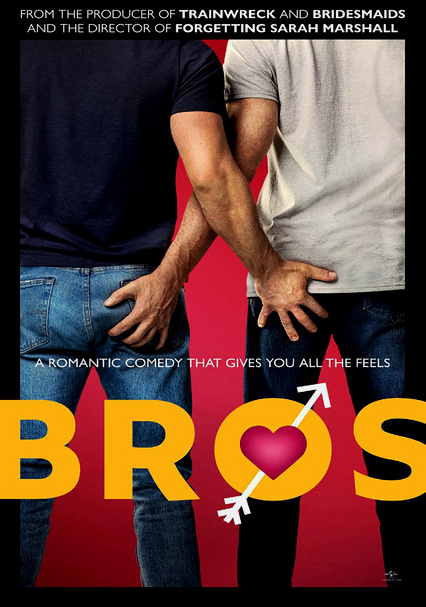
Bros-2022

Bros-2022

Director Nicholas Stoller

Starring Billy Eichner, Luke Macfarlane 

Scott’s Review #1,304

Reviewed October 5, 2022

Grade: A

Even if Bros (2022) were a bad film, it would still hold the monumental distinction of being the first LGBTQ+-themed romantic comedy released and supported by a major distributor.

In 2022, years after the legalization of same-sex marriage in the United States and various other milestones that would take too long to list, Bros is the first of its kind.

Fortunately, Bros is not a poor film but an exceptional one with brazen confidence and a lot to say.

Led by crisp and intelligent dialogue, lovable lead actors, a cast comprised solely of the LGBTQ+ community, strong characters, and hilarious moments, it has something for everyone, whether gay, straight, or otherwise.

Before readers pigeonhole the film as one only to be seen by the  LGBTQ+ community, I will cry bullshit.

Straight audiences will fall in love with the characters and learn valuable lessons about stereotypes and deep-seated emotions of gay men who are not always comfortable in their skin.

Unfortunately, Bros was not the box office smash hit the studio had hoped it would be. Some straight viewers felt the film was not for them, and that’s a shame.

There is still more work to be done to eliminate conscious and unconscious bias and educate others to embrace differences.

Billy Eichner, who co-wrote the Bros screenplay along with director Nicholas Stoller, stars in the film, alongside Luke Macfarlane.

Eichner plays a sardonic, gay Jewish male named Bobby Leiber who resides in New York City.  We meet Bobby while he is recording another episode of his New York podcast and radio show, The Eleventh Brick at Stonewall, where he talks to callers about his written works on gay history and gay icons.

He claims to be okay with being single and not having found love, instead hooking up with random men through a dating application called Grindr, although he is successful in his career and has good friends.

He awkwardly meets Aaron Shepard (Macfarlane), a hunky, masculine guy deemed ‘hot but boring’ by those in Bobby’s circle, in a gay club.

The two men slowly develop a romantic relationship despite their commitment problems and hectic schedules, which seem designed to put the kibosh on love.

Despite all the other aforementioned wins, what makes this LGBTQ+ film stand out is that the screenwriting feels fresh and intelligent. Above all else, it wisely paints the struggles that most gay men seeking a relationship of substance face.

As in other romantic comedies, specific setups and situations create conflict that risks preventing Bobby and Aaron from getting together. Bobby feels Aaron is out of his league, preferring other muscular men to his overbearing and critical approach.

One can understand Bobby’s angst, but in one of the film’s most poignant and beautiful scenes, Aaron tearfully reveals that Bobby constantly challenges him, and it feels good.

He needs to be with Bobby because it is right. Bobby serves as a mentor to Aaron as he wrestles with being true to himself. Stuck in a depressing yet financially secure job, Aaron longs to be a chocolate maker instead.

Beauty is only skin deep. Regardless of occasional insecurities, the two men are firmly connected, and that beats everything else.

On a personal level, both characters resonated with me, evoking their angst. One would assume that Aaron the hunk would be more confident, but is that the case? Both men teach and learn from each other, which makes their relationship powerful.

In addition to the romantic moments, Bros has its share of raunchy and comical scenes, which justify its ‘R’ rating. In typical Judd Apatow (the film’s producer) form, the sex scenes are revealing.

There are enough orgies, toe-sucking, and fist-sucking to make the prudish blush. The planned ‘rimming’ scene was cut from the final cut. One wonders what that would have been like.

The film follows a distinct comedy formula and includes a helping of standard annoying, clueless, or over-the-top colorful characters that appear to justify its mainstream comedy placement.

The genius is that Bros works.

I implore straight audiences to give the film a chance, if for no other reason than to show that gay people are as different from each other as apples and oranges. As Bobby makes clear, some are nice and some are assholes.

Bros (2022) treads conventional but with a twist, and shows that gay characters are as genuinely funny as straight characters. It provides laugh-out-loud moments and teary sentimental ones.

I’m eager for the next project from Billy Eichner.

Flee-2021

Flee-2021

Director Jonas Poher Rasmussen

Scott’s Review #1,274

Reviewed July 7, 2022

Grade: A-

Flee (2021) holds the distinction of being the first film to be a documentary, an animated movie, and classified as international, as it was made in Denmark. It was nominated in all three categories for icing on the cake at the Academy Awards.

It’s a unique telling of one man’s journey out of war-torn Afghanistan as a refugee and his eventual safe destination of Denmark. He eventually went to Princeton University in the United States.

This is pretty impressive for a man who could have easily died in Afghanistan before he even had a fair shot.

The film also depicts stories of his family, and his realization that he is gay is made further complicated because of the country in which he was born.

Flee contains beautiful graphics and art design and shifts focus from the present-day to the past and back again, and includes real-life footage of various soldiers and battles (hence the documentary status).

It’s one of a kind and a tremendous effort, though I longed for a bit more of the LGBTQ+ storyline and was curious for a glimpse of what the real-life figures looked like, which usually comes at the end of a biography-type film.

In this case, it never did.

But the gripe is small potatoes when stacked against the meaning and inspiration that Flee provides.

The focus of the story is on Amin Nawabi, who wrestles with a painful secret he has kept hidden for over twenty years, one that threatens to ruin the life he has built for himself and his soon-to-be husband, Kasper.

Recounted primarily through animation by director Jonas Poher Rasmussen, he tells the story of his extraordinary journey as a child refugee from Afghanistan.

Because of the animation, I was initially thrown off by Flee, as it starts with the interviewer and interviewee having a conversation. In a traditional documentary, we would see the two people face to face, but instead, we hear their voices in animated characters.

I quickly got used to this, and it’s the way the film is throughout. The real-life characters, such as Amin’s family and future husband, are all animated, and real human beings never appear except for the newsreel-type footage.

Surprisingly, and also a deepening of the story, is when Amin admits that he initially lied about his family all being dead. The reason he does this is out of instinct and a survival technique (for both him and his family).

Flee is perfectly paced at one hour and thirty minutes. There is ample time to discuss and showcase Amin’s decision to leave Afghanistan and the terrible journey his mother and sisters were forced to endure.

They traveled by boat from Russia to the safety of Sweden as human traffickers.

What a horrific way to escape a country, especially as many stories of deaths due to suffocation follow human traffickers.

Amin is a man of secrets, and anyone who has ever harbored some out of desperation will assuredly relate to Amin’s plight.

He keeps many secrets from his husband, and the viewer can understand his secrecy and deep-seated fear of a return to Afghanistan and a particular execution.

His story is both tragic and courageous, and I yearned to learn more about his life with Kasper. How did they meet? Did Amin have trouble realizing his homosexuality? He mentions that he was a ‘different’ child and openly wore girls’ dresses, but how else did he deal? What obstacles do they continue to face?

There is a beautiful scene where he comes out to his understanding brother and sisters, but I guess I wanted more.

Visually, the graphics are modern and edgy. The different countries of Afghanistan, Russia, Sweden, and Denmark all take on distinctive identities, and the animation during the boat sequences is quite nerve-racking.

If a standard documentary can provide adequate emotion and storytelling, the way the filmmakers decided to make Flee (2021) is remarkable and worthy of praise.

For those seeking a humanistic tale of one man’s courageous struggle, Flee will leave you thoroughly satisfied.

Oscar Nominations: Best Animated Feature, Best Documentary Feature, Best International Feature Film

The Object of My Affection-1998

The Object of My Affection-1998

Director Nicholas Hytner

Starring Jennifer Aniston, Paul Rudd

Scott’s Review #1,249

Reviewed April 24, 2022

Grade: B

The Object of My Affection (1998) is a romantic comedy riddled with the standard cliches and obvious situation setups of similar types of film.

As a whole, it is plot-driven rather than character-driven.

The redeeming factor is that it adds a left-of-center approach and delves into LGBTQ territory, albeit in a soft touch, which more mainstream American films were only starting to do in the late 1990s.

The best part of the film is the casting of Jennifer Aniston and Paul Rudd who have tremendous chemistry as a potential couple who has no chance of riding off into the sunset together. At least in any romantic sort of way.

He is gay and she is straight and nothing can change that.

Though fluffy, The Object of My Affection deserves some level of praise. Several gay men can easily relate to a situation where they find a female friend enamored with him and experience a return of affection differently.

It’s common to fantasize about what might have been if feelings were different and as the film explores, even try to go straight.

The film itself has a definite Will & Grace vibe, a popular television program emerging at this time, and even has the same location. The main characters become the very best of friends, watching movies together and sharing intimate moments just like a romantic couple would do.

The late 1990s was a time when gay characters took center stage so The Object of My Affection gets a thumbs up for being part of the herd.

Nina Borowski (Jennifer Aniston) lives in Brooklyn, New York, and works as a social worker. She invites her new gay friend, George (Paul Rudd), to move into her apartment after he breaks up with his longtime lover, Robert (Tim Daly).

Meanwhile, Nina gets pregnant and decides to keep the baby, but ends her relationship with the child’s father, her controlling boyfriend Vince (John Pankow).

As Nina and George live and experience her pregnancy together, they grow close and Nina realizes she’s beginning to fall in love with her friend.

Aniston and Rudd work well together as a couple, friends or otherwise, and the chemistry tones are terrific. Even during the sappiest of scenes, and there are many of them, I always smiled a bit at their bond.

When Nina and George have the inevitable dramatic scene and express their feelings it doesn’t feel as forced as one might expect. Their bond is solidified and the film unsurprisingly has the pair remain in each other’s lives, presumably forever.

In satisfying form, Nina and George do ride off into the sunset along with little Molly but in solid relationships with other mates. Each character finds their destiny and soulmate while keeping in each other’s life.

While nice, there are many hurdles the filmmakers could have gone further with but don’t. The message is clear- regardless of sexuality, race, religion, or politics, a friend is a friend and a bond is meant to be forever.

It’s a warm message which is the basis for what the intent was and the film delivers a heartfelt story that eases the conflict of real life and perhaps that is needed sometimes.

As much as The Object of My Affection (1998) has its heart in the right place with a progressive and inclusive slant, the film is bogged down by standard cliches and a fairy tale ending.

It’s a nice, fulfilling fantasy film but skates over hard-hitting realistic issues in favor of kid gloves-type situations making it feel dated nearly twenty-five years later.

Other films in the years ahead would supersede the premise and take it to different and more interesting levels delving outside the box further and further.

But, a nice attempt.

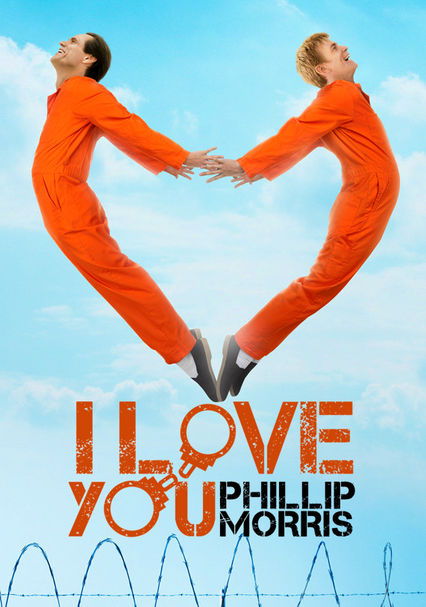
I Love You Phillip Morris-2009

I Love You Phillip Morris-2009

Director John Requa, Glenn Ficarra

Starring Jim Carey, Ewan McGregor

Scott’s Review #1,235

Reviewed March 5, 2022

Grade: A-

Easily the most daring and arguably the best film role of Jim Carey’s career, I Love You Phillip Morris (2009) is a delightful romantic comedy featuring same-sex characters in the central roles.

At the risk of being too fluffy, there is a sardonic and wry wittiness that I fell in love with.

Those criticizing the film as ‘gay porn’ are silly since there is hardly a sex scene to be critical of or anything more than would appear in a traditional male/female romantic comedy.

Prudes wouldn’t see a film as I Love You Phillip Morris anyway.

It is based on the 1980s and 1990s real-life story of Texas con artist, impostor, and multiple prison fugitive Steven Jay Russell who was clever beyond belief and successful at outwitting his opponents.

I Love You, Phillip Morris, is the directorial debut by John Requa and Glenn Ficarra who received a nomination from the Writers Guild of America Award for Best Adapted Screenplay.

Steven Russell  (Carrey) becomes a cop, gets married, and starts a family, but after a terrible car accident, he vows to be true to himself. Thus far in his life, he has played by the rules and done what is expected of him and because of the crash, he pivots to an emotional bloodletting.

The key irony is that Steven is telling the audience his story from his deathbed so most of the activity is in the past. This is the hook because it made me wonder how and why he died. But is there a twist?

He comes out of the closet, moves to Florida, and finances a luxurious lifestyle with bad checks and credit cards. Arrested and now in prison, Steven meets Phillip (Ewan McGregor), a mild-mannered inmate who becomes the love of his life.

Determined to build a beautiful life with his partner, Steven embarks on another crime spree.

The film caters to the LGBTQ+ audience but has a crossover appeal so that all audiences can enjoy it. This is in large part thanks to the screenwriters and whoever had Carey and McGregor in mind for the film.

Too often films centering around gay characters are deemed second fiddle and not profitable but with bigger stars, the audiences will come.

I Love You Phillip Morris is an independent film that builds momentum when the message is that big stars are comfortable in gay roles, something Heath Ledger and Jake Gyllenhaal taught us a few years earlier in Brokeback Mountain (2005).

Jim Carey, fabulous in The Mask from 1994, and having his share of hits and misses over the years, is perfect in the role of Steven. It’s the most interesting role he has portrayed since he gets to provide his usual physical humor in a role that matters.

LGBTQ+ audiences see a character who makes them laugh without the typical gay stereotypes.

Straight audiences will see a character whose sexual identity doesn’t matter to them.

Props go to McGregor as well who makes a perfect counterpart for Carey as the calm, cool, and collected ‘straight man’. The film could not have worked without him.

He meshes so well with Carey that the audience instantly roots for Steven and Phillip to ride off into the sunset despite being criminals.

The stereotypes are limited but the subject matter of AIDS, especially given the time in which the film is set, is given notice. This is a win and Requa and Ficarra are very careful not to teeter too close to the edge of doom and gloom while respecting the disease.

At its core, I Love You Phillip Morris (2009) is a romantic comedy, and the trials and tribulations of Steven and Phillip are told. I immediately fell in love with them and viewers will too.

It’s a film that feels fresh and alive with the exploration of character richness that is not easy to come by.

In the Name of-2013

In the Name of-2013

Director Malgorzata Szumowska, Mateusz Kościukiewicz

Starring Andrzej Chyra

Scott’s Review #1,159

Reviewed July 8, 2021

Grade: B+

In the Name of (2013), not to be confused with In the Name of the Father, a 1993 film starring Daniel Day-Lewis, is a Polish independent LGBTQ+ genre film directed by a female, Malgorzata Szumowska.

I point out the gender only because the subject matter skews heavily towards male homosexuality which is an interesting one for a female to tackle.

Szumowska does so with gusto providing wonderful cinematography and quiet dialogue.

She casts her husband, Mateusz Kościukiewicz, in the central role of an outsider who stirs up the sexual feelings of a priest struggling with his long-repressed sexuality.

If one looks carefully, each character struggles with conflict and self-acceptance in some way, restless and hungry for peace of mind and satisfaction.

We wonder if any of the characters will ever find this.

The priest in question is played by Andrzej Chyra. It’s revealed that Adam joined the House of God at age twenty-one to escape issues he wrestled with concerning his sexuality. He has spent his life running away from his true self.

Now in his forties, he currently leads a rural parish having been transferred from the lively city of Warsaw, and is still tormented by desire. To make matters even more difficult he mentors troubled young men with lots of testosterone.

When Adam attempts to help troubled teen Lukasz (Kościukiewicz), long-suppressed feelings begin to surface as the men grow closer. A townsperson catches wind of possible shenanigans and Adam is transferred yet again to another location. This has happened before. But, will Adam and Lukasz have a chance at happiness if they play their cards right?

The obvious comparison of In the Name of is to Brokeback Mountain (2005) which set the standard and paved the way for many LGBTQ+ films to be made.

All of Adam’s and Lukasz’s dalliances, and there are romantic suggestions, but nothing animalistic is secretive. Both men are repressed but are at different stages of life.

I can’t say In the Name of hits the mark in this regard because the film is less about a male romance than about the characters being unhappy. It’s not until the end of the film that any blossoming develops between Adam and Lukasz.

I wanted more meat between the characters, pun intended but was left knowing almost nothing about Lukasz specifically.

I also yearned for more backstories from three supporting characters. Ewa (Maja Ostaszewska), an attractive local woman, flirts with Adam and the coach on occasion and drinks too much, later regretting her actions.

How does she happen to be in the town and why is she without a man already? Is the coach gay or straight? It is suggested he is gay but this remains unclear.

Finally, Blondi is a bleached blonde troubled boy played by Tomasz Schuchardt. He beds another boy and senses Adam’s sexuality filling Blondi with venom.

I wanted to know more about Blondi.

Despite these slight yearnings for more the film is very good.

Chyra does a terrific acting job in the main role of Adam and easily wins over the audience who will root for his happiness. During a great scene, the typically reserved Adam explodes with self-deprecating rage while on a video call with his sympathetic sister.

He struggles for self-acceptance that many of the LGBTQ+ community can relate to.

I sense that having seen In the Name of when it was originally released in 2013 would have made the experience even more powerful.

By 2021 the cinema world has been saturated with films containing similar story points and religious conflict issues so that appears a commonality rather than originality.

But I’ll never complain about too many LGBTQ+ films being made.

Nonetheless, I thoroughly enjoyed the film and recommend it to anyone seeking a quality character-driven experience.

Portrait of a Lady on Fire-2019

Portrait of a Lady on Fire-2019

Director Céline Sciamma

Starring Noémie Merlant, Adèle Haenel

Scott’s Review #1,114

Reviewed February 19, 2021

Grade: A-

A film with tremendous artistry and a cool LGBTQ+ vibe, gay director Céline Sciamma delivers the goods with interesting finesse in Portrait of a Lady on Fire (2019).

She takes modern-looking actors and transplants them to the era of France during the late 18th century.

The film tells the story of a forbidden affair between an aristocrat and a painter commissioned to paint her portrait.

The viewer will ask themselves the following questions. What would become of two young gay women in this long-ago age? How many people repressed their true feelings and desires because of the times they lived in?

Would their different classes and backgrounds cause strife within their burgeoning relationship? I know I constantly asked myself these questions.

To those with limited cinematic patience, be forewarned. A Portrait of a Lady on Fire is plodding.

I didn’t mind this aspect, but some might. The payoff is not bombastic in an act of violence or an explosion sort of way, but it’s well worth the effort put in.

In a common approach in modern film that is feeling more standard than special, the first scene often precedes the events in the rest of the movie, so that we know how the events will turn out. But we do not know the hows and the whys.

It is immediately assumed that one character has suffered some loss or misfortune related to a painting.

Painter, Marianne (Noémie Merlant), is summoned to a remote island inhabited by very few people. She is commissioned to paint the wedding portrait of Héloïse (Adèle Haene), who is destined to be married to a nobleman in Milan, Italy.

Héloïse is depressed and despondent, wanting nothing to do with her intended, whom she has not met.

The portrait is a gift to the never-seen husband-to-be. It is revealed that Héloïse’s sister leaped to her death from the cliffs on the family estate, so it’s suggested throughout that she may suffer the same fate.

Needless to say, Marianne and Héloïse fall madly in love.

Their love is hardly ever a question, as the chemistry is immediately noticed. Sciamma, who wrote the screenplay, avoids stereotypes that would give away the sexuality of the main characters. They are not butch nor do they possess masculine qualities.

Do we wonder if they are bisexual? They never struggle with their sexuality, a dramatic cliche in other LGBTQ+ films.

I adore this because it makes the love story more powerful, rather than one character pursuing the conflicted other.

As brilliant and artistic as I found Portrait of a Lady on Fire to be, there are a couple of unexplained or unclear aspects. I am not even sure how they relate to the main story.

Waifish housemaid Sophie has an abortion with assistance from Marianne and Héloïse. Later, the three go to a bonfire gathering where women sing, during which Héloïse’s dress briefly catches fire (just as shown in the painting featured in the beginning).

When Sophie is having the abortion, there is an infant and a child nearby. Are they her children? Who are the women who sing?

I didn’t understand the point of these items.

Fortunately, these missteps can be forgiven for the grander piece is exceptional filmmaking. The final shot of Héloïse sitting in a theater is phenomenal and borrowed from Call Me By Your Name (2017), which featured an identical scene.

The camera focuses on the face of actress Haene as she conveys a range of emotions during the flawless scene. What a win for an actor!

Despite some side story flaws, I adored Portrait of a Lady on Fire (2019).

The film is exceptionally shot, and almost all shots could be portraits in their own right. Charming are the beach sequences, as when Marianne and Héloïse first ignite the flames of their passion.

My takeaway is that it tells the story of fate, but doesn’t feel like a downer. Instead, it feels like life.

Independent Spirit Award Nominations: Best International Film

The Prom-2020

The Prom-2020

Director Ryan Murphy 

Starring Meryl Streep, James Corden, Nicole Kidman

Scott’s Review #1,101

Reviewed January 17, 2021

Grade: A

Hollywood legends Meryl Streep and Nicole Kidman take on singing and dancing roles in the lovely and timely film, The Prom (2020).

James Corden joins them in a prominent role in a musical based on the popular and recent Broadway production of the same name.

The LGBTQ+ storyline is important and influential, but doesn’t overshadow the fun. The message is perfectly incorporated in the delicious comedy romp.

The Prom reminds me of John Waters’ Hairspray from 1988 or even the fun remake from 2007. Instead of racism, the topic is now homophobia, with a few characters rebuffing the lifestyle.

Most of the performances are over-the-top, but the film works on all levels. The one-liners are crackling and polished, especially by Streep and Corden.

Director Ryan Murphy has become a favorite of mine for creating both extremely dark and light-hearted projects alike that usually slant towards LGBTQ+ recognition and inclusion.

His treasured FX series American Horror Story (2011-present) and miniseries The Assassination of Gianni Versace: American Crime Story are excellent examples of this.

I drool with anticipation over what his next offering might be.

High school student, Emma Nolan (Jo Ellen Pellman), wants to bring a female date to the upcoming prom. Chaos has erupted after the head of the PTA (Parent-Teacher Association), Mrs. Green (Kerry Washington), has canceled the prom.

The setting is Indiana, where same-sex couples face conflicts with the town’s traditional beliefs and values. Little does she know that her daughter, Alyssa (Ariana DeBose), is Emma’s secret girlfriend. The school principal, Tom Hawkins (Keegan-Michael Key), supports Emma and has leaked the story to social media outlets.

Meanwhile, in sophisticated New York City, snooty broadway stars Dee Dee Allen (Streep), Barry Glickman (Corden) are devastated when their new musical flops.

They join forces with struggling performers Angie Dickinson (Kidman) and Trent Oliver (Andrew Rannells) and take a bus trip with the cast of Godspell to champion Emma’s cause and drum up sympathy from their fans and critics.

The rest of the film, as one might expect, features bursts of song and dance, teaching the stuffy residents of small-town Indiana to accept and even embrace Emma and her LGBTQ+ brethren.

Amid a flurry of misunderstandings, mainly between newly dating Tom and Dee Dee, Emma and Alyssa, and Alyssa and her mother, a lavish prom is funded for the town, high school students, straight and gay, to flock to and co-mingle in unity.

While The Prom (2020) is sheer fantasy and real life doesn’t usually work out so perfectly, the sentiment is meaningful, and the film takes a progressive stance.

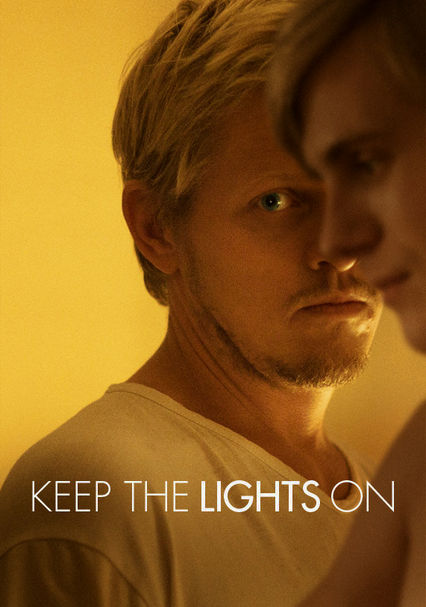
Keep the Lights On-2012

Keep The Lights On-2012

Director Ira Sachs

Starring Thure Lindhardt, Zachary Booth

Scott’s Review #1,100

Reviewed January 16, 2021

Grade: A

With such a healthy dose of LGBTQ+ films released during the 2010s, most independent productions enough exist to please nearly everyone striving for good diversity in film.

Over the years in cinema, it was tough to find specific genre films, rather than being forced to seek out subtle clues that filmmakers would incorporate.

LGBTQ+ films are now a dime a dozen, which is good but makes some films fall under the radar.

Keep The Lights On (2012) is a romantic drama, rather mysterious, about two men and the nine-year-long love affair they share. It’s not a happy watch because drug addiction is a large part of the story.

It portrays the men as human beings with passion, and feelings, and experiencing joys and pains, instead of being written as caricatures or comic relief.

This is progress, and worthy of much praise.

The only issue with the film is that by 2012, and the decade as a whole, there were so many similar films being made that there’s not enough to distinguish it from other high-profile works.

The LGBTQ bar was set very high with Brokeback Mountain in 2006, and recent offerings like Carol (2015) and Moonlight (2016) thrust the LGBTQ+ community into the spotlight.

Keep The Lights On has many positives, especially cinematically, but it risks getting lost in the shuffle matched up against other genre films.

Advisable, is to check out this gem.

It might best be compared to the exceptional same-sex love story, Call Me By Your Name (2017). Both are character-driven and are both happy and tragic.

Keep The Lights On is technically an American film. It feels like an international film, though, because it centers around a Danish filmmaker who lives in New York City.

Erik (Thure Lindhardt) is a troubled, creative soul, struggling to complete a documentary about an artist named Avery Willard. He meets and enters into a loving but complicated long-term relationship with Paul (Zachary Booth), a lawyer in the publishing industry who struggles with drug addiction.

Therein lies the complicated nature of their relationship. They are bonded but plagued with outside challenges. It began in 1998 and ended in 2006.

They meet via a phone sex chatline which adds to the sexual mystique. Erik is gay and happily out, but Paul indulges in both men and women and is conflicted sexually.

He gets Erik high. Will he lead Erik down a dark path? Will Paul clean up his act or die? Erik and Paul bed numerous other men throughout the story. This is an intriguing addition to the complicated events.

Since the film is about a filmmaker it ought to include cool and inventive camera angles and trimmings, and it does. Ira Sachs, an American director, provides flourishing shots of New York City and gazes through the lens of an actual creative spirit, which justifies the character of Erik.

The story builds quite slowly and plenty of times I awaited something exciting to happen. But real life is composed of many small moments and I loved how the film simply is instead of big momentous scenes being added for effect.

The audience is meant to root for Erik and Paul to trot into happily ever after territory. This may or may not happen.

Keep The Lights On has a vague ending open to interpretation.

Erik and Paul look similar to each other which I found very interesting. They say that many same-sex couples are attracted to individuals who look like themselves. I’m not sure how true this is, but I wondered if Sachs had a point to make.

Can a person have multiple sides to themselves they see through other people? Keep The Lights On is told more from Erik’s perspective and sees in Paul the dark side of himself.

Key to the honesty that exudes from Keep The Lights On is that the story is based on Sach’s relationship with a publisher he met and fell in love with. The truthfulness comes across on screen, which is the main appeal to the overall experience.

I love the title which can be interpreted in a few different ways, especially once the conclusion is upon us.

I admire the fact that Keep The Lights On (2012) was made and the characters provide a longing and yearning that is quite humanistic. It feels like it was created based on fact rather than a studio idea conjured up around a boardroom table.

Ira Sachs creates an excellent, quiet film about two men and the love story they share. Their troubles come and go but their passion and bond never waver.

Independent Spirit Award Nominations: Best Feature, Best Director-Ira Sachs, Best Male Lead-Thure Lindhardt, Best Screenplay

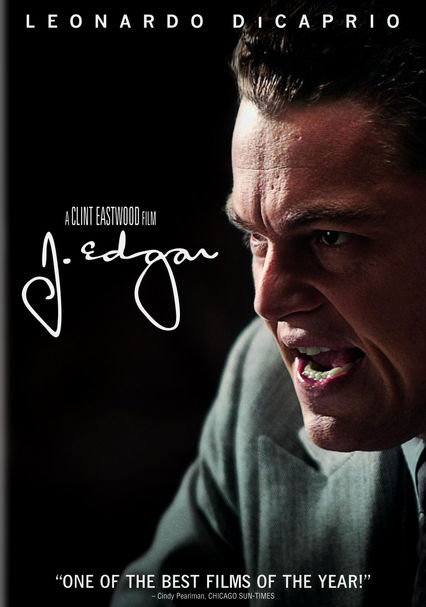
J. Edgar-2011

J. Edgar-2011

Director Clint Eastwood

Starring Leonardo DiCaprio, Armie Hammer, Naomi Watts

Scott’s Review #1,099

Reviewed January 12, 2021

Grade: A

When director Clint Eastwood and actor Leonardo DiCaprio align, exceptional things can happen. This is evidenced by J. Edgar (2011), a compelling and well-constructed drama with a biographical and character-driven focus.

One gets inside the head and psyche of the title character, J. Edgar Hoover, the head of the Federal Bureau of Investigations, with DiCaprio playing him flawlessly.

The film is left-of-center, surprising for the mainstream director, though his film-making style is familiar. Eastwood does what he does best by constructing a slick and “Hollywood” experience.

There are not daring camera angles or unique uses of light that Stanley Kubrick might use.  He creates a steady affair that will appeal to the American heartland, getting butts to the movie theater on his name alone.

The film opens in 1919 when a young Hoover (DiCaprio) is tasked with purging radicals from the United States and obtaining their secrets, something he’d carry with him for decades. He meets a new Secretary, Helen Gandy (Naomi Watts), whom he makes an awkward pass and an even more awkward marriage proposal.

She refuses, and they become professional and personal allies.

The story then plods along with historical stops through the decades like the Lindbergh baby kidnapping, Martin Luther King Jr., and Richard Nixon.

Hoover is always involved in these escapades.

Hoover, who served as the head of the bureau from 1924 until he died in 1972, was a powerful and ruthless man.

Eastwood carefully dissects him, professionally and personally. He never married, lived with his mother, traveled, and enjoyed dinners with one man who in death, bequeathed his estate.

You do the math.

He was a gay man when one couldn’t be an openly gay man. Thus, he is conflicted, and Eastwood does a great job of showing the demons he wrestles with.

The relationship between Hoover and lawyer, Clyde Tolson (Armie Hammer) is my favorite part of J. Edgar because it’s interesting and humanistic.

DiCaprio and Hammer give outstanding performances with flawless chemistry and charisma.

When Hoover professes his love for Tolson and quickly recants his statement then professes love for an actress, we view his turmoil. He loves Tolson but cannot bear to accept it even though it would free him from his chains.

Despite the tender nature of the sequence above or that his mother was a traditional, no-nonsense, shrew, Hoover is not portrayed as a hero. He was a complicated and damaged man and Eastwood hits this point home.

He blackmailed Martin Luther King Jr., kept sexual secrets on several Hollywood stars, and participated in various abuses of power.

The film does admit that the director also instituted fingerprinting and forensic measures that reduced crime.

Those who desire a straightforward lesson in history may be slightly perturbed by the focus on Hoover’s personal life. Eastwood could have easily made Hoover’s career the only facet of the production-enough material that exists for this.

Instead, we get to see the inner workings of the man. Kudos for this.

Dustin Lance Black, who wrote Milk (2008), a portrait of a gay man, is back at the helm serving as a screenwriter. But the two films are not modeled after one another. They are very different animals.

While Milk celebrates a man refusing to deny who he and others are, demanding their just civil rights, J. Edgar provides the narrative of a man fleeing from who he is.

Offering a rich and complex biography of a tortured man, the audience is exposed to a person wrestling with inner turmoil. Hoover was a famous man, but the film could easily represent those thousands of men who could not bring themselves to accept who they were.

The largest praise goes to DiCaprio who makes us sympathize, pity, and admire the complexities of his character.

J. Edgar (2011) hits a grand slam.

The Boys in the Band-2020

The Boys in the Band-2020

Director Joe Mantello

Starring Jim Parsons, Zachary Quinto, Matt Bomer

Scott’s Review #1,073

Reviewed October 21, 2020

Grade: A-

One may ask oneself why bother checking out the 2020 version of the legendary (and dark!) 1970 stage turned cinematic rendition of the sniping and vicious gay drama The Boys in the Band?

Primarily because of the terrific cast, a cast featuring the troupe who starred in the recent 2018 stage revival. But more than that, the film feels surprisingly modern and relevant, providing a message of hope that the original did not contain.

Crucial and historical to point out is that every principal actor is openly gay, and their characters are gay or bisexual. My, how much progress has been made for actors when not too long ago an “out” actor risked both reputation and career for the price of his truth.

This is monumental.

The remake wisely keeps to the crucial period of 1968, and really, how could a modern setting work at all? Being gay in 1968 is nothing like being gay in 2020; I don’t care if it is the Upper East Side of Manhattan.

To bring this film to any other time would diminish its power and importance. If anything, it makes one proud of how far the LGBTQ+ community has come, though there are further advancements left to make.

Alas, the Vietnam era is safely intact, during a time when a strip of gay bars and a group of gay friends were the only things to keep a gay man from going crazy, regardless of how abusive they were.

This will hopefully teach young gay viewers, or anyone else, what being a gay male was like over 50 years ago. When the rest of the world was deemed “normal” and you were cast aside as either a sexual deviant or a head case, this is powerful.

Self-hatred, denial, or the closet were commonalities.

The Boys in the Band has no females save for a blink and you’ll miss it moment featuring a snooty neighbor.

Important to realize is that the film is a pre-A.I.D.S epidemic in a time of carefree love and endless hookups, where booze and drugs were a necessary escape and usual was to feel out of sorts regularly.

A few characters are effeminate. One is presumably bisexual and closeted, and one is masculine and recently divorced from a woman, now cohabiting with a male lover; one is black, and one is an escort. Each character comes from a different walk of life, yet they are bonded.

The running of the gamut of unique types and personalities is part of why I love this story.

The events commence one evening when Michael (Jim Parsons) throws a birthday party for friend Harold (Zachary Quinto) at his apartment. They are joined by other friends, Donald (Matt Bomer), Hank (Tuc Watkins), Larry (Andrew Rannells), Bernard (Michael Benjamin Washington), and Emory (Robin de Jesús).

Guests include Cowboy (Charlie Carver), a “birthday present” for Harold, and Alan (Brian Hutchison), a college friend of Michael’s.

As the booze flows, the talk gets vicious and the claws come out.

The men, prompted by a drunken Michael, play a daring game of “telephone”. Each guest is dared to call the one person he truly believes he has loved. With each call, past scars and present anxieties are revealed in a torturous fashion.

This is when the film gets interesting.

Bernard and Emory bear the brunt as their phone calls take a tremendous toll on each other.

Parsons and Quinto are the standouts. As the lead, the character of Michael seems stable at first. He is stylish, well-dressed, and lives in a reputable apartment. Though unemployed, he once traveled the world.

Parsons slowly unleashes the vicious fury contained within Michael, the more he drinks. He enjoys hurting others just as he has been injured.

The catalyst for his character is Alan. Are they in love? Is Michael in love with Alan? Alan takes a fancy to masculine Hank.

Quinto, as Harold the self-professed “ugly, pockmarked Jew fairy”, is becoming increasingly morose about losing his youthful looks and his ability to attract cute young men.

The catalyst to his character is Cowboy, who has those qualities that Harold lacks.

Strangely, Harold and Michael are best friends, both loving and hating each other. After brutalizing each other with words, Harold exits the apartment, announcing he will call Michael tomorrow. They’ve been through this before and probably will again.

No, The Boys in the Band circa 2020 is not quite on par with The Boys in the Band circa 1970, but this is merely because brilliance is a tough act to replicate.

The modern telling is an absolute joy and will hopefully recruit fresh audiences to the perils and brutality of being gay in another time.

Thanks to Ryan Murphy for adapting this project to Netflix as part of his United States $300 million deal with the streaming platform.

Scotty and the Secret History of Hollywood-2018

Scotty and the Secret History of Hollywood-2018

Director Matt Tyrnauer

Starring Scotty Bowers

Scott’s Review #1,048

Reviewed August 3, 2020

Grade: B+

Based on the scandalous 2012 tell-all novel Full Service, a clever play on words about the fetishist subject matter, Scotty and the Secret History of Hollywood (2018) is a juicy, entertaining documentary about one man’s experiences managing the deepest and darkest secrets of Hollywood’s glamorous A-list stars.

The documentary is gossipy and dripping with saucy details. It is also a titillating affair, grabbing the viewers’ attention and leaving them wondering who did what with whom.

Any audience member who doesn’t desire to learn the sexual appetites of greats like Katharine Hepburn and Carey Grant is either lying or repressing themselves.

Scotty Bowers, who served as an unpaid pimp from the 1940s through the 1980s is today a spry ninety-something-year-old who gets around like a man in his seventy’s and even climbs a ladder now and then (carefully!).

He served in the United States Marines during World War II and decided to go to Hollywood directly after, landing a job at a gas station and eventually owning it. He and closeted military friends became confidantes and aids to stars preferring same-sex entanglements.

Scotty, clearly either bi-sexual or “gay for pay” is now married to a woman.

Before viewers pass judgment and think of Scotty as merely a pervert or sexual deviant looking for favor with the stars, a closer examination reveals the heroism of a man such as Scotty.

Without him, many stars and their sexual conquests would have had no outlet to express themselves or their sexuality. While hidden and contained, they were allowed some brief freedom to be themselves and explore desires otherwise left unfulfilled, leading to further depression, drug use, or suicide.

Closeted gays had to endure enough as it was.

The project director, Matt Tyrnauer, wisely segments the Hollywood portions of the documentary into two sections: the then and the now. He explains how different the industry was in the 1940s, when a scandal or an outing could have ruined a star’s career.

While those in the scene were “in the know” and cavalier about the tastes of a Hepburn or a Grant, the small-town public would have cast stones.

Now, as shown, things are very different, and a bevy of entertainers are out and proud. As Scotty, yes, still working at ninety years old, makes appearances at book signings and meet-and-greets, he occasionally skirmishes with an upset fan who feels Scotty’s revelations will hurt the star’s surviving family members.

I feel that truth is truth, and I have no issues with the stories or doubt that the secrets Scotty spills are actual.

The personal side of Scotty is left murky. He is an admitted opportunist, but his true motivations are unclear. He is a humorous man who laughs at his wisecracks, fondly driving down memory lane with former hustlers.

His wife adores him but prefers not to read his book or pay much attention to his life before he met her since he never admitted this side of himself. Some tension exists between the pair, but is it merely bickering or unresolved tension bubbling beneath the surface?

The documentary lags slightly when it spends too much time and energy on Scotty’s hoarding obsession. He owns a house filled with stuff collected over the years, leaving it uninhabitable.

After a couple of separate incidents related to this issue, I thought, “Who cares?” as it deviated too far from the delicious topic at hand.

As of July 2020, Scotty and the Secret History of Hollywood (2018), the documentary, has been purchased to be developed into a feature film based on Bowers’s life. Luca Guadagnino (Call Me by Your Name, 2017) has been hired to direct.

An acclaimed director familiar with telling a truthful and poignant LGBTQ story will assuredly do wonders to bring honesty and delight to the silver screen.

One can hardly wait.

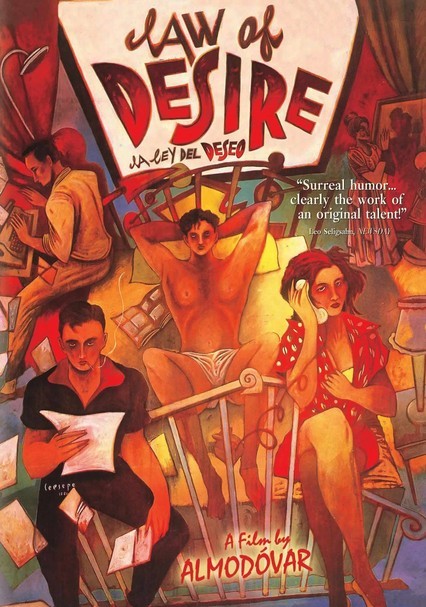
Law of Desire-1987

Law of Desire-1987

Director Pedro Almodovar

Starring Antonio Banderas, Eusebio Poncela, Carmen Maura

Scott’s Review #1,021

Reviewed May 8, 2020

Grade: B+

Law of Desire or La ley del Deseo (as translated in original Spanish) is a 1987 film written and directed by Pedro Almodóvar.

Quite groundbreaking for its time and penned by a respected director, the film was rich in offering what was rarely presented in films during the 1980s- a complex love triangle between two men and a trans woman.

The fact that the trans woman is the sister of one of the men is a bonus to the buttery soap opera premise.

In 2020, when LGBTQ+ films are more plentiful in cinema (at least at the indie level), Law of Desire suffers slightly from a dated feel and parts drag along. It’s tough to heavily criticize a piece so brazen as this one was when it was released to art-house theaters and musty metropolitan theaters.

As groundbreaking as the film must be given credit for, the story now feels sillier than it should, and more outlandish than it probably intended to be over thirty years ago.

The fabulous setting of Madrid, Spain is the backdrop for the luscious tale of love, obsession, jealousy, and revenge, think the prime-time television series Dynasty on steroids.

Cocky Pablo (Eusebio Poncela), a successful gay film director with his pick from a bevy of young, good-looking gay males, is madly in love with Juan (Miguel Molina), though he has a roving eye.

Suave Antonio (Antonio Banderas), who comes from a conservative family, is new to the gay scene and falls madly in love with Pablo when Juan goes to find himself. Tina (Carmen Maura), who likes men and women, has just been dumped and is vulnerable.

Besides the obvious daring gender-bending, this story could be a simple one told many times across many genres. Almodóvar spins things into a frenzy as the plot unfolds adding manipulations, sub-plots, and bizarre characters into the mix.

For example, Ada is Tina’s surrogate daughter and is a precocious ten-year-old girl in love with Pablo. Ada refuses to go back with her mother (Bibi Andersen) when she comes back to whisk her off to Milan to meet a man she just met.

The gay subtext is what is center stage here. Back in the 1980s, the term LGBTQ+ was on nobody’s radar, and having any representation at all in cinema was still territory barely scratching the surface.

This point kept returning to me throughout the film and I imagined how fresh the experience would have been to any gay man or gay woman fortunate enough to have seen it. I am not sure any of the characters would serve as great role models, but the representation is nice.

Almodóvar adds in a good deal of naked flesh for an added treat.

Several comic scenes arise with gusto. Antonio, who lives at home with a religious zealot of a mother, convinces Pablo to sign his letters from “Laura P”, a character from his latest play, to trick Antonio’s nosy mama.

Tina, not much of an actress, is cast in Pablo’s one-woman theatrical productions. She thinks her performance is great, but Pablo thinks she stinks. The comical moments are the ones that work best, giving the plentiful offbeat characters a chance to let loose and shine.

Towards the conclusion, Law of Desire takes a tragic and Shakespearean turn. A drunken Juan is thrown off a cliff to his death prompting an investigation with Antonio and Pablo both prime suspects.

Finally, a kidnapping and police stand-off ensues with a murder/suicide providing the film’s final moments.

I am not a fan of the title that Almodóvar chooses. Preferably would be a title that is a bit more titillating. Even Lust of Desire or Object of My Desire would have been better choices. Law of Desire screams of a tepid episode of television’s Law & Order.

For a director with such an outlandish approach and such bizarre characters, the title is bland, banal, and tough to remember.

Those seeking a kinky and provocative late-night affair will find Law of Desire (1987) a good old time. It lacks much of a clear message instead providing a sexy romp and dreary ending.

Running the gamut of adding musical score pieces as unique as the 1970s The Conformist, a film also shrouded in same-sex desire, to cheesy 1980s synth-laden beats, adds some confusion.

Nonetheless, diversity and inclusiveness are good recipes to chow down on and celebrate.

Giant Little Ones-2019

Giant Little Ones-2019

Director Keith Behrman

Starring Josh Wiggins, Darren Mann

Scott’s Review #1,000

Reviewed March 13, 2020

Grade: B+

Giant Little Ones (2019) is an independent LGBTQ film about both coming to terms with one’s sexuality and accepting and embracing other people for whom they love, and how they wish to spend their life.

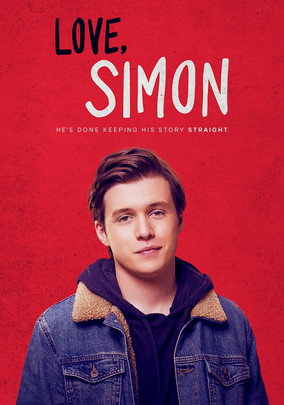
It’s an honest and resilient coming-of-age story, most reminiscent (but rawer) of the recent Love, Simon (2018), told from a teenager’s perspective and the pressures and emotions of youth.

The subject matter has been explored to death in cinema, but there is still something fresh and meaningful that is offered.

High school chums Franky Winter (Josh Wiggins) and Ballas Kohl (Darren Mann) have been best friends since diapers. They joke around, go bike-riding, and knock back a six-pack together.

They are handsome, integral parts of the swim team, and popular with girls. Each has a steady girlfriend with who they anticipate soon going all the way. Any teenage girl would love to trade their life with the boys.

On the night of Franky’s seventeenth birthday party, Franky and Ballas get drunk together and spend the night crashing in the same bed. An unclear incident of a sexual nature occurs, altering and damaging their friendship.

Each boy has one sister and a set of parents, but Franky’s are more prominent, with a story of their own. His father, Ray (Kyle MacLachlan) divorced Franky’s mother, Carly (Mario Bello) after coming to terms with being gay.

While the focal point is on the teenage set, and Franky more than Ballas, it’s nice to see parents in these types of films with more to do than just pour coffee or offer unheeded advice.

MacLachlan and Bello are fascinating to watch, carefully distant from each other, but also have mutual respect. Both characters’ struggles are pointed out by Carly angrily lashing out that Ray was certainly not gay when she married him; Ray experiences guilt at wounding Franky emotionally.

The film is careful, admiringly so, to include two high school students who are already outwardly gay. The characters are not ridiculed or repressed, and one, Franky’s best friend Mouse (Niamh Wilson), is assumed to be slowly coming to terms with being transgender.

The other is a popular boy on the swim team. These representations are strong, though both characters face some level of opposition, so their plights are not easy.

The most heartfelt and poignant scene is when Franky and Ray reconnect as father and son in a treasured dialogue, where Ray explains how he met his partner. The beautiful moment blossoms because it’s Franky who asks Ray how he and his partner met.

Any LGBTQ person can attest to the powerful and heartwarming moment when they are asked about their significant other. The proud look in Ray’s eyes and the quiet cadence with which he carefully warns Franky not to label himself, but rather stick with those he connects to, is lovely and sentimental.

I like how Giant Little Ones is not a love story between the two boys and ambiguous is not only whether their friendship can be fixed, but whether one or both is gay, bi-sexual, curious, or merely experimenting with their sexuality.

The film avoids labels and boasts no clear-cut angle, steering clear of anything too preachy or defined. This supports its overall point.

A minor criticism is that, despite the boys being best friends and on equal footing, Franky becomes the central character, while Ballas is not explored thoroughly. Ballas borders on sociopathic behavior and has a ton of anger, but why? Is it only his sexuality?

The character remains mostly a mystery, and I was eager to learn more about him and what drives him.

Giant Little Ones (2019) is a heartfelt and intimate coming-of-age story about friendship, self-discovery, and the power of love without labels. The young actors are all natural, believable, and earnest, and the seasoned supporting cast lends credibility to a tiny, low-budget picture.

The LGBTQ community will embrace this film, while anyone else will be touched by its honesty and poignancy.

Angels of Sex-2012

Angels of Sex-2012

Director Xavier Villaverde

Starring Astrid Berges-Frisbey, Alvaro Cervantes, Llorenc Gonzalez

Scott’s Review #934

Reviewed August 23, 2019

Grade: C

Angels of Sex (2012) is a Spanish LGBT drama that attempts to create an intriguing romantic relationship between its characters but slowly teeters into a plot-driven soap opera mess, leaving the viewer unsatisfied.

Casting good-looking actors and showing plenty of skin only goes so far before one’s attention span begins to wane and one starts yearning for more depth, which never comes in this film.

The filmmakers do get some props for crafting a diverse film, but the story ultimately sucks.

The urban setting of Barcelona, Spain is the backdrop of the film as a student, Bruno (Llorenc Gonzalez), is saved by karate instructor, Rai (Alvaro Cervantes), and begins to question his sexuality as the men grow attracted to one another.

Throwing a hurtle into their blissful affair is Bruno’s girlfriend, Carla (Astrid Berges-Frisbey), who is drawn to both men while shunning their romantic attraction to one another.

The three characters interact and carry on affairs with each other leading to a series of emotions that influence their decisions.

The premise is intriguing, at the beginning of the story anyway, as a “straight man meets gay man” moment immediately occurs, and sparks fly between the men.

When Bruno accepts his attraction to Rai while also continuing his attraction to Carla a unique bisexual premise is offered. Why can’t Bruno spend equal time with Rai and Carla? Which one will he decide to choose or will choose him? Will each of the three be okay with the arrangement?

These are the sorts of interesting questions offered by the film until it slips about halfway through.

Each character begins to crumble and become banal and wishy-washy, especially Carla. She accepts the “time-sharing” relationship but then gets mad when she sees Rai and Bruno kiss, finally falling for Rai and having an affair with him. Huh?

This is character assassination 101. Bruno’s motivations become unclear as he hedges on nearly every decision, while Rai becomes more brooding and indecisive.

It’s as if the writers did not know which direction to take the characters in or thought their good looks would carry the film.

Other gripes include the title of the film having nothing meaningful to do with the story and rather seems like a weak effort at gaining some attention (and viewers) by incorporating such a title.

Another irritant was the constant inclusion of unknown characters break-dancing to the song. Was this necessary? Rai has an interest in the genre, we get that, but the needless scenes seem like attempts to fill time.

Better use of time might have been additional scenes of Carla and her mother. A passing scene or two and a situation involving Carla’s father cheating on the mother is limiting and could have been an interesting sub-plot, perhaps even figuring into the main story.

Carla’s group of friends add little to the film especially her slutty friend bedding two others in the group. The situation seems more like an add-on or a time filler than rich writing.

Props go to any film with the desire to showcase an LGBT-themed story as, despite the film being made in 2012, most LGBT films are still indie projects.

I hoped for and expected more from the film especially the culturally interesting location of a European hotbed of sexuality and parties.

Angels of Sex (2012) starts well until disintegrating into a bad LGBT episode of “As the World Turns” or “Days of our Lives” with poor character writing, unnecessary supporting characters and a feeble attempt at a twist ending that merely turns into a red herring and thereby a disappointment.

BPM (Beats Per Minute)- 2017

BPM (Beats Per Minute)- 2017

Director Robin Campillo

Starring Nahuel Perez Biscayart, Arnaud Valois

Scott’s Review #884

Reviewed April 11, 2019

Grade: A-

BPM (Beats Per Minute) (2017) is an exhilarating and heartbreaking film. It elicits emotional reactions such as empathy and empowerment and channels a potential life-saving cause.

Of French language and shot documentary style, the film is not an easy watch as the viewer is transplanted back to the early 1990s when the AIDS epidemic was ravaging the world in general and the gay community specifically.

A mixture of a community-oriented movement and a love story makes this project worthwhile viewing.

The immediate focal point of the story is an impassioned and aggressive Paris-based chapter of ACT UP (AIDS Coalition to Unleash Power), a unified gay and lesbian organization intent on speeding up the French government’s response to the unwieldy AIDS epidemic.

The group resorts to extreme public protests consisting of fake bloodthrowing and invading prominent pharmaceutical company meetings. They intend to get them to release trial results immediately instead of waiting until the following year.

The various debates and infighting in the chapter are heavily featured.

As the film progresses, BPM (Beats Per Minute) slowly shifts its focus from the protests to the personal lives of the ACT UP members as a romance brews between nineteen-year-old HIV-positive Sean (Perez Biscayart), who already exhibits visible infections from the disease, and HIV negative Nathan (Valois), a newcomer to the group.

The pair quickly become inseparable as Sean’s body becomes ravaged by the disease, resulting in a poignant and dire conclusion sure to elicit tears.

Director Campillo and co-screenwriter Philippe Mangeot drew on their personal experiences with ACT UP in developing the story, enriching the authenticity of the experience.

Despite being shot in the present day, the film feels genuine, with a 1990s feel and flavor. Though gorgeous and picturesque, the gray Parisian locales also portray a hint of sadness and bleakness.

As Sean gazes outside, we sense his fear and anguish. Through this character, Campillo and Mangeot provide personal stories that represent the plight of many at that time.

A particularly racy scene erupts approximately halfway through the film as Sean and Nathan’s love story takes center stage.

Foreign-language films are not known for shying away from nudity or sexuality as many American films do. As the impassioned pair make love for the first time, little is left to the imagination.

Despite the gratuitous nudity and the overt sexual tones, the duo’s relationship is not solely physical, and the audience will undoubtedly come to care for both men the way that I did.

The two-fold story is a wise choice, and the overall message that BPM (Beats Per Minute) presents is inspiring and a good telling of the LGBT community’s struggles at notice and inclusion during the 1980s and 1990s.

This point is both positive and negative. The story beckons back to a day in the community’s history, dripping with pain and loneliness, which is evident in the film.

The film is hardly a happy experience and quite somewhat a downer.

The film’s main drawback is its length. The story and principle points become redundant at nearly two and a half hours, causing the overall message to lose some of its thunder.

The constant bickering and debate among the ACT UP group become tedious to watch as fight and clash after fight and clash resurface repeatedly.

Though painful to experience and not very uplifting, BPM (Beats Per Minute) (2017) is an important film to view, given how far the treatments of HIV have progressed over several decades.

Not taking things for granted, a trip down memory lane for those alive during the epidemic is recommended.

For those fortunate enough to have missed the 1980s and the 1990s, the film is a necessary reminder of how life once was for the unfortunate victim of a devastating epidemic.

Independent Spirit Award Nominations: Best International Film

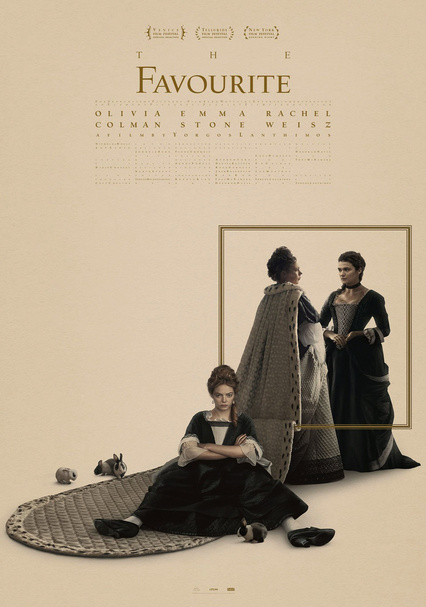
The Favourite-2018

The Favourite-2018

Director Yorgos Lanthimos

Starring Olivia Colman, Emma Stone, Rachel Weisz

Scott’s Review #843 

Reviewed December 17, 2018

Grade: A

The Favourite (2018) is a deliciously wicked comedy about greed, jealousy, and rage during early eighteenth-century England.

The primary rivalry consists of two feuding cousins, each jockeying for position and “favor” with the Queen, both resorting to dire methods to achieve these goals.

With splendid acting and grand designs, director Yorgos Lanthimos adds to his growing collection of odd and compelling works with the dark comedy offering.

The film takes place during the British and French War of 1708, as a physically and mentally ill Queen Anne (Olivia Colman) rules the country through her confidante and secret lover, Sarah, Duchess of Marlborough (Rachel Weisz).

Though deals and modifications must be made with the ruling Parliament, Anne has the final say in all decisions, including doubling the state tax to pay for the war.

When Abigail (Emma Stone), a distant cousin of the Duchess, and former royalty herself, arrives seeking work as a servant, she quickly plots her way to the bedside of the Queen at all costs.

Lanthimos, known for such bizarre treats like Dogtooth (2009), The Lobster (2015), and The Killing of a Sacred Deer (2017), is not afraid to get down and dirty and wrestle with the macabre subject matter.

The Favourite is the director’s most mainstream affair yet and is quickly becoming one of my favorite modern-day films. As he now charts into royal territory, the possibilities are endless in a world of politics and scheming.

Some morose highlights include an abused bunny, naked tomato throwing, and pheasant shooting.

The film is not kind to animals.

Despite being mainstream for Lanthimos, The Favourite is a bizarre and brazen experience. The film’s numerous award nominations are remarkable, given that not all audiences will enjoy it.

Despite being categorized as a comedy (see more below), the film is not an easy watch, and none of the characters are likable. Abigail is initially sympathetic and quite humorous, but her true colors and motivations are exposed as the plot develops.

Conversely, Anne and Sarah are initially despicable, but garner support as the story evolves.

The comic elements are the best, and clever lines come at a deliciously rapid pace. The best dialogue is the sparring between Sarah and Abigail, as the women realize they are bitter enemies and each attempts to one-up the other in a chess game for Anne’s attention.

Anne, known for fits of emotion, stuffing her face with cake and vomiting, and berating the servants, offers her comic wit. The language is salty, bordering on vulgar, but that makes the experience so stellar and morosely enjoyable.

The musical score adds muscle, and the diabolical string arrangements give The Favourite a gruesome, morbid atmosphere.

The feeling of dread is prevalent and downright haunting at times, as the audience knows that some shenanigans will soon occur, but they do not know when or how.

This quality enhances the overall product and gives ambiance to a superior piece.

Finally, the acting in The Favourite is brilliant and worth the price of admission. This is unsurprising with heavyweights like Colman, Stone, and Weisz, but the gravy is in the individual moments.

The chemistry the women share is what works best, as every scene sparkles with exceptional delivery and a sly sense of humor. When the three women appear together, these are the best scenes.

Deserving of all the accolades lauded upon it, The Favourite is an experience that contains all elements of a fine film, though one that is quite an unconventional work.

With glistening art direction, authentic set pieces, and costumes that would make Scarlett O’Hara drool with envy, The Favourite (2018) takes all of its parts and spins a crafty tale that encompasses the entire film.

Oscar Nominations: 1 win-Best Picture, Best Director- Yorgos Lanthimos, Best Actress- Olivia Colman (won), Best Supporting Actress- Emma Stone, Rachel Weisz, Best Original Screenplay, Best Production Design, Best Cinematography, Best Costume Design, Best Film Editing

Independent Spirit Award Nominations: Best International Film

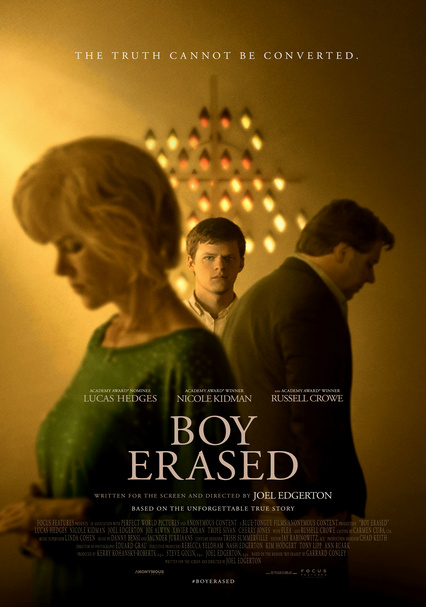
Boy Erased-2018

Boy Erased-2018

Director Joel Edgerton

Starring Lucas Hedges, Nicole Kidman, Russell Crowe

Scott’s Review #834

Reviewed November 22, 2018

Grade: A

Before I ventured to the movie theater to view Boy Erased (2018), I heard from more than a few folks who decided not to see the film due to the complicated subject matter.

While parts of the film are challenging and the true story stifling, the overall message is poignant and hopeful. The central character is one to be championed.

In other words, while the subject is serious, director Joel Edgerton (who also co-stars) is careful not to make the overall experience dour or wholly downtrodden.

The setting is rural Arkansas, based on Garrard Conley’s 2016 memoir of the same name and taking place as frighteningly recently as 2004.

Our main character is a handsome, popular young man, renamed Jared (Lucas Hedges) for the film.  Interspersed with numerous flashbacks, then back to present times, we see Jared as a high school kid and blossoming as a first-year college student, interested in writing.

He is expected to follow the word of god since his father, Marshall (Russell Crowe), is a respected preacher at their local church, and his mother, Nancy (Nicole Kidman), is a housewife.

Jared’s college experiences are both good and bad. He befriends fellow runner Henry, who ultimately rapes him, and embarks on an enlightening friendship with Xavier, who challenges Jared’s belief in god.

These scenes are preceded by the point of the film, in which Jared admits his thoughts about men to his parents and is sent to a Love In Action gay conversion therapy program. His experiences there are chronicled.

Many scenes involve the treatment the school provides the students (or instead makes the students endure), and Jared’s realization that he is gay and cannot change.

He ultimately questions and challenges the school. The chief therapist, Victor Sykes (Edgerton), teaches that God will not love anyone who is homosexual. In a bit of rich irony, the film reveals that Victor finally denounced his teachings and married a man.

Fellow students’ lives are featured, one suffers a terrible fate as he cannot come to terms with his sexuality, nor can he change.

A comparison to the popular film Love, Simon (2018) is fun to draw.

Both were released during the same year, and both feature a young, popular coming-of-age character who struggles with the repercussions of revealing their sexual preference.

Boy Erased is the heavier of the two, as Love, Simon has many comic elements, but it is worth noting that both are mainstream films garnering large audiences- a win for the LGBT community.

The acting in Boy Erased is flawless and perfectly cast all around.

With Hedges, Kidman, and Crowe in the mix, we know the performances will be outstanding, and all three characters possess their share of empathy.

Jared is the most important character to be concerned about, and Marshall and Nancy are support players. However, the film does not portray either as bad people, which is interesting. They are nurturing towards Jared and want him to be happy.

While Nancy is more instrumental in rescuing Jared, Marshall also comes around in the end, as his son’s sexuality is tougher for him to accept.

The main song used in the film is appropriately named “Revelation” by Troye Sivan. The singer also appears in the film as Gary, a student made to be “cleansed” of his sexuality.  The tune is sentimental, smoky, and acoustic, perfect for the southern setting.

Heartfelt and fraught with meaning, it encompasses Jared’s struggles and strong will to question the school’s motivations, powering through the school’s toxic approach.

As with many recent biographical films telling stories of real-life people, Boy Erased features a young Jared in homemade video clips as the movie begins. This immediately triggers a rooting value for the character as we see the child, cute, happy, and full of life, without a care.

Additionally, the conclusion shows the real adult Jared, Marshall, and Nancy.

Boy Erased (2018) is an important film firmly nestled in a crucial time period for the LGBT community. As LGBT awareness is now commonplace in cinema, this film does not necessarily share a gay character’s “coming out” story but rather depicts a brilliant story of how perilous and repressive being gay can still be for some people.

Jared is the main character who will undoubtedly be a hero to many young people wrestling with their identity.

Transamerica-2005

Transamerica-2005

Director Duncan Tucker

Starring Felicity Huffman, Kevin Zegers

Scott’s Review #795

Reviewed July 25, 2018

Grade: A

Transamerica (2005) is a brave and topical independent drama effort. By 2005 the LGBT genre was in full force with a multitude of similarly themed films gracing silver screens everywhere.

One prominent mainstream production (Brokeback Mountain-2005) was in theaters everywhere. So in a year celebrating diversity, how wonderful and touching to witness a film focused on a transgender woman come into play.

Mixing drama with some needed humor, the film succeeds in large part because it does not take itself too seriously, never becoming too preachy, it merely tells a story. The film’s brilliant casting of Felicity Huffman in the role of a pre-op male to a female transsexual is a success as the decision to cast a female rather than a male in the important role pays off in spades.

The premise allows for a story of both adventure and humor as the film mixes an important issue.

A transgender woman, Bree (Huffman) decides to go on a road trip with her long-lost son, Toby (Kevin Zegers). The intrigue is that Toby is unaware that Bree is both transgender and his father, the fun coming by way of the relationship between the individuals. Adding to the setup is that a week before Bree’s scheduled operation, she has no idea who Toby is.

Encouraged by her therapist, Bree decides to throw caution to the wind and travel to pick up her son- however, does not realize that Bree (being transgender) is his real father. Talk about complicated material!

I love the overall message of the film; the theme being one of self-discovery and a personal journey toward happiness. These qualities do not only apply to Bree but also to Toby. Being a teenage boy, abused and neglected, he has his share of issues, which the film does not skirt over.

The areas of male prostitution and gay porn are featured and the film does its best not to shy away from these sensitive matters.

Therefore, even though the tone of the film is light and more of a coming-of-age story, there are underlying painful emotions suffered by the characters. This makes their bonding easier and more fulfilling.

Without a doubt, the film belongs to Huffman, who was honored with a Best Actress Oscar nomination. No offense to that year’s winner (Reese Witherspoon for Walk the Line (2005), but the rightful owner of the statuette should be Huffman.

The actress simply comes out of nowhere and slays this role. Known for playing a different type of role on the hit television series, ABC’s Desperate Housewives, Bree is in a different league entirely.

Huffman possesses strength, vulnerability, and sarcasm, while physically undertaking a transformation that makes her both feminine and masculine while not becoming a “joke.” All of this she pours into the character.

Transamerica (2005) is an unconventional film that on the surface feels mainstream, like many other road trip films made over the years. With a twist and thus a breath of fresh air considering the importance and relevance of the time-released, the film should be championed.

When combined with the tremendous performance by Huffman, the film is a heavyweight and should be viewed and celebrated for its influence.

Oscar Nominations: Best Actress-Felicity Huffman, Best Original Song-“Travelin’ Thru”

Independent Spirit Award Nominations: 2 wins-Best Female Lead-Felicity Huffman (won), Best First Screenplay (won), Best First Feature

Love, Simon-2018

Love, Simon-2018

Director Greg Berlanti

Starring Nick Robinson

Scott’s Review #789

Reviewed July 17, 2018

Grade: B+

Love, Simon (2018) is a friendly, mainstream, LGBT film focused on a likable central character. Given the myriad dark films within this genre, the film is refreshing, usually ensconced in the independent genre.

Finally, a wholesome, family-oriented “coming out” story is upon us, and the film succeeds in spades. Perhaps a shade too “happily ever after” with a couple of stereotypes among the supporting characters, Love. Simon is a film to be heralded and certainly recommended.

Popular high school senior Simon (Nick Robinson) has a close circle of friends, hip parents, and an affluent existence in the suburban USA. Seemingly “having it all,” he is nonetheless filled with angst and harbors a deep secret—he is gay.

Closeted, he finds solace with a similarly closeted male student through the school website.

Determined to find out who his classmate is, he embarks on a way to discover his secret crush’s identity while being blackmailed by another schoolmate.

Young newcomer Nick Robinson is an absolute gem and carries the movie successfully. This is in stark contrast to another 2018 release starring a newcomer who failed (A Wrinkle in Time). Alas, Robinson has charm, charisma, wholesome looks, and an earnest persona, which are perfect traits for a coming-of-age film such as Love, Simon.

The audience will instantly root for the teen to find happiness and come to terms with the dreaded coming out to family and friends, which any gay person can relate to.

An enormous positive to the film is that Simon is okay with being gay- it’s the telling of other people that bothers him. He daydreams about starting fresh next year as an out and proud college freshman.

He worries that coming out will ruin his final year of high school and change his relationships with his circle of friends. But he is never ashamed or self-harming in his preference for men.

Lesser, but still significant, high points to the film are the rich diversity among the supporting players.

Several of Simon’s friends are black, and his parents are liberal, open-minded, and well-rounded. Of course, they will be accepting of their son’s chosen lifestyle.

Love, Simon also features diversity among the teachers. The theater teacher is not only black but also a champion for LGBT fairness. These qualities are always a breath of fresh air in film, especially when the target audience undoubtedly is younger.

The filmmakers succeed at breaking a key barrier with Love, Simon. As often is the case, LGBT-themed films target the LGBT audience, which makes sense.

In the case of Love, Simon, the film is an experience that the entire family can watch together, regardless of anyone’s sexual preferences. This detail is critical, as LGBT matters should be considered daily.

At the risk of pigeon-holing, the fact that Simon is masculine and popular and not the slightest bit effeminate or girly is undoubtedly a key to the film’s success.

On that note, the film does add an extremely effeminate and outgoing supporting character named Ethan. I am not sure this character is necessary other than to contrast with Simon.

Perhaps to drive the point home, Simon is a cool, macho guy, and Ethan is not. In one scene, it is assumed that Simon and Ethan are boyfriends, and Simon seems mildly disgusted by this. I’m not sure this subplot works or serves the film’s overall message very well.

Love, Simon contains frequently seen supporting character types that bring us seasoned filmgoers back to the days of the 1980s teen coming-of-age films like Pretty in Pink (1986) and Sixteen Candles (1984).

Several subplots involving characters having crushes on other characters, while another character likes them, are added to the mix for fun and a little drama.

The conclusion is sweet as the initial mystery of “who is the other gay student?” is finally revealed amid a lovely scene of Simon waiting on a Ferris wheel for his online admirer to arrive.

In a purely inclusive moment, the entire school surrounds the newly united couple and beams with pride as the duo tenderly kisses. Mass audience members are exposed to a heartfelt moment and an enormous lesson in dignity and spirit.

Director Greg Berlanti creates a lovely Hollywood film that is rich with diversity, a powerful story, and an inclusive element.

Sure, the film is not heavy and either skims over or misses discussions of powerful emotions that many gay youngsters face, but it is nonetheless a brave and necessary story in its own right.

Love, Simon (2018) is classy, tender, and quite a pleasant experience.

God’s Own Country-2017

God’s Own Country-2017

Director Francis Lee

Starring Josh O’Connor, Alec Secareanu

Scott’s Review #773

Reviewed June 13, 2018

Grade: B+

God’s Own Country (2017) is a British, romantic, LGBT-themed drama directed by Francis Lee, making his directorial film debut.

The setting is farming land in the Yorkshire (northern England) territory, making the film quite lovely to watch, and the pace is slow. Lee does not rush the story’s pace either, so it mirrors the slow life that farmers must endure.

The film is somewhat autobiographical of Lee’s own life.

The connection and chemistry between the two leads are palpable, and the love story is endearing. It is awe-inspiring to see two cultures come together and merge as one.

The film is a nice watch and an above-average story, making it worthy of LGBT audiences worldwide. Those who believe in true love and find their soulmate will be deeply satisfied.

Twenty-something Johnny (Josh O’Connor) lives a dull existence on his father’s farm in remote Yorkshire, England. His grandmother (Gemma Jones) also lives there, and due to his father’s recent stroke, the farm’s success is in question. Johnny is depressed, drinking regularly, and engaging in sexual encounters with men.

Romanian migrant worker Gheorghe (Alec Secareanu) is hired to help, and the two young men eventually fall in love. After some ups and downs in their relationship, they decide to live on the farm together and presumably live happily ever after.

God’s Own Country is a rich story of romance, and the only real obstacles that Johnny and Gheorghe face are internal struggles.

In a unique fashion for LGBT films, neither of the men are necessarily unhappy with their sexual identities, nor do they face hurdles by other characters because of their sexuality. Gheorghe faces harassment because he is Romanian and deemed an “outsider”.

Besides Johnny’s grandmother and perhaps his father, no characters seem aware that the men are a couple.

The cinematography is gorgeous and a perfect backdrop for the love story. The farm is lush with spacious green rolling hills for miles and miles.

The family raises lamb and cattle, and more than one scene features a beautiful birth and the nuzzling of the parent to the newborn baby. Sadly, one birth is also a breach, which is tough to watch.

The themes of life and birth perhaps mirror the feelings and emotions that Gheorghe and Johnny experience- new love.

Throughout God’s Own Country, I frequently drew comparisons to arguably the most mainstream and revolutionary film in LGBT history- that of 2005’s Brokeback Mountain.

Both films feature similar elements of animals, farming, and the outdoors. Additionally, commonalities like loneliness and loss are heavily featured. Finally, the rough-and-tumble, machismo-fueled wrestling scenes that result in rough sex between the men are used in both Brokeback Mountain and God’s Own Country.

Both films could be companion pieces.

The film does not delve too much into the back story of the main characters; at least, I did not catch many mentions. Admittedly, viewing the movie on DVD with no closed captioning or subtitle capability made capturing all of the dialogue difficult.

Especially with English and cockney accents, this was made doubly challenging. Regardless, both men are lonely, even despondent, but why? What happened to Johnny’s mother? Where are Gheorghe’s parents or his family?

Upstart Francis Lee carves a quiet, thoughtful, yet compelling story of unexpected love that develops between two lonely men in a remote area of the United Kingdom.

God’s Own Country (2017) paints a nearly perfect experience, slow, yes, but featuring exceptional acting from both leads and the two supporting turns.

The film is recommended for those seeking a poignant and fulfilling love story.

Shelter-2007

Shelter-2007

Director Jonah Markowitz

Starring Trevor Wright, Brad Rowe

Scott’s Review #758

Reviewed May 16, 2018

Grade: B+

By the mid-2000s independent LGBT films were coming fast and furious as the genre was still relatively new and ripe for the picking with good ideas.

With Shelter (2007) we have a sweet film that focuses on the new romance between two young men, one of whom is coming to terms with his sexuality.

The lead characters are not gay stereotypes and could easily pass for straight men, a characteristic impressive in LGBT film- and other mainstream films for that matter.

Rather than focusing on discrimination, the characters may face, or any obstacles from other characters (family and friends), the film wisely makes the story a character study and the demons one man wrestles with while “coming out”.

The small film is written intelligently save for one supporting character’s plot-driven decision. Also, in the modern age, we are beginning to see a bevy of similarly themed films emerge from the LGBT community, and Shelter offers nothing we have not seen before.

Set in sunny southern California, our main protagonist is Zach (Trevor Wright), an aspiring artist in his early twenties. The ultimate “good guy” he is popular with friends and girls and frequently babysits his five-year-old nephew Cody while his sister parties and has one-night stands.

When Zach meets his best friend’s older brother Shaun (Brad Rowe), the pair fall in love as Zach wrestles with his sexuality and conflicts with his plans. The sexual and family struggles of Zach are the main themes of the film.

Shelter (not sure I get the title’s meaning) is a solid slice-of-life story.

Zach initially dates a pretty girl, Tori, who is blonde, wholesome, and a girl-next-door type. This is done intentionally to show that Tori is a girl any young straight man would have an interest in.

We never see Zach show interest in any other men besides Shaun so the film leans towards a solid romantic drama once the fellas get together. Still, we see Zach’s internal struggles and accepting himself for who he is played out.

Actor Wright and director Jonah Markowitz, capture this successfully.

Shaun, arguably second fiddle to Zach, is a character that I feel is very well written. Avoiding negative stereotypes, Shaun is handsome, masculine, and charismatic. Completely confident and exuding great poise, he is a character that any gay male should look up to.

He is openly gay yet “one of the guys” as he should be. He immediately connects with Cody becoming a father or cool surrogate uncle figure for the lad. A quick concern of Zach’s sister Jeanne’s of having the boy around a gay man is trivialized in a quick form.

Another positive to the film is the multiple scenes showing Zach, Shaun, and Cody as a happy family and how normal this is. Examples of this are frolicking around the beach playing football or horseplay.

A quiet dinner of barbeque steaks and red wine for the men and macaroni and cheese for Cody elicit images of a connected family unit despite some in society still poo-pooing this idea.

The film presents the connectivity as normal.

A tiny flaw in the character of Jeanne shows her willingness (almost eagerness) to leave Cody (and her ailing father) behind when she decides to take off to Oregon with her brand new boyfriend. This point seems rushed and out of character.

While a party girl with a crappy job in a grocery store Jeanne did exhibit heart and was written as sympathetic and caring throughout the film. Surprising and unrealistic to me is that she would up and leave her life.

A paltry excuse of “Oregon not allowing kids” was left unclear and unexplained.

A part coming-of-age story, part coming out story, Shelter (2007) is an example of a little film that could with an appreciation of independent cinema.

The film tells a nice story of one man’s journey to self-discovery and the individuals he surrounds himself with.  With impressive California oceanfront and working-class principles as a backdrop, the film has a calming texture and weaves a solid experience for viewers to enjoy.

Milk-2008

Milk-2008

Director Gus Van Sant

Starring Sean Penn, Josh Brolin

Scott’s Review #744

Reviewed April 18, 2018

Grade: A

Milk is a 2008 film that successfully teaches its viewers both a valuable history lesson about the introduction of gay rights into the United States culture, as well as to the prolific leader associated with this, Harvey Milk.

The film belongs to Sean Penn, who portrays Milk, but is also a fantastic biopic and learned experience appreciating his wonderful journey through the 1970s- mainly in San Francisco and New York City.

Moreover, Milk portrays a gay character not played for laughs as many films do but portrayed as a hero.

Harvey Milk was the first openly gay person ever to be elected to any political office, winning a seat on the San Francisco Board of Supervisors in 1977.

The film, however, opens in 1978, after a stunning announcement of Harvey Milk’s assassination along with the Mayor of the city, which was met with much heartbreak.

The film then returns to 1970 as we meet Penn as Milk and follow his decade-long battles and prosperity of changing the gay culture.

Having seen actual footage of Harvey Milk, Penn perfects the mannerisms and the speech patterns of Milk giving him an immediate passionate and likable persona. The political figure had such a whimsical and innocent style all his own that Penn perfectly captures.

His determination for honesty and fairness is admirable and inspiring and Milk seems like he was an innately good person.

Particularly heartbreaking is Penn’s facial reactions during his assassination scene-a scene that director Gus Van Sant brilliantly shoots as a follow-up to a joyous scene when Proposition 6 is defeated.

As a troubled colleague, Dan White (Brolin), (rumored to be himself closeted and struggling with self-identity), fires several shots into Harvey at City Hall, the scene is filmed in slow motion for additional dramatic effect and poignancy.

The look of pain and sadness on Milk’s face will undoubtedly bring tears to even the most hard-hearted viewer.

The film shows the many close relationships that Milk formed throughout the 1970s, including his steady lover Scott Smith, played by James Franco. The two actors share solid chemistry as they are both fun-loving and driven in what they hope to achieve.

Sadly, Milk’s drive eventually outweighs Smith’s as they ultimately drift apart, but retain a special bond. Emile Hirsch is nearly unrecognizable as Cleve Jones, a young man who Harvey inspires and mentors throughout the pivotal decade.

A minute criticism noticed while watching Milk is that, except for Penn, many of the supporting characters (Hirsch, Franco, and especially Alison Pill) seem to be “dressed up” in 1970s costumes, giving a forced rather than authentic feel.

The costume designers seem intent on making them look so realistic that it backfires and looks more like actors made up to look like they are from the 1970s.

Penn, however, looks and acts spot-on and stands out from the rest of the cast by miles.

An inspiring biography of a legendary political figure, Harvey Milk, led by a fine lead actor (Penn), deserving of the Best Actor Oscar he was awarded, Milk is an astounding story of both triumph and tragedy.

The film successfully portrays a time when a class of people was not treated fairly and equal rights were barely a possibility and the uprising that occurred in large part due to one man and his followers.

Milk (2008) is a wonderful testament to a time gone by and the accomplishments achieved since then- a truly inspiring and tragic message.

Oscar Nominations: 2 wins-Best Picture, Best Director-Gus Van Sant, Best Actor-Sean Penn (won), Best Supporting Actor-Josh Brolin, Best Original Screenplay (won), Best Original Score, Best Costume Design, Best Film Editing

Independent Spirit Award Nominations: 2 wins-Best Male Lead-Sean Penn, Best Supporting Male-James Franco (won), Best First Screenplay (won), Best Cinematography

A Fantastic Woman-2017

A Fantastic Woman-2017

Director Sebastian Lelio

Starring Daniela Vega, Francisco Reyes

Scott’s Review #729

Reviewed February 27, 2018

Grade: A

A Fantastic Woman is a 2017 Chilean film that is groundbreaking in subject matter and has received many accolades, including an Oscar nomination for Best Foreign Language Film.

Especially worthy of mention is the film’s lead actress, Daniela Vega, the first transgender woman to present an award at the Oscars and a dynamo performance in her represented film.

Besides the cultural achievements, the film succeeds in its own right as a compelling drama.

The film gets off to a sweet and romantic start as we meet Marina (Vega), a young waitress and aspiring singer, and Orlando (Francisco Reyes), a mature, affluent man thirty years her senior.

After surprising her with a lovely birthday cake, the pair begin to embark on a serious relationship, as Marina has recently moved in with Orlando.

When tragedy strikes and Orlando is rushed to the hospital after collapsing, Marina must face the harsh reality of her partner’s narrow-minded family and suspicions from law enforcement.

What a wonderful starring vehicle for this astounding young talent, Vega. The film shares a story that has never been told before, though the transgender genre is slowly coming into its own—like 2015’s brilliant Tangerine.

With A Fantastic Woman, though, the storytelling is more intimate, personal, and explicit from Marina’s point of view. Faced with financial issues and losing her love, she is forced to hurdle obstacles centered around her lifestyle that she had thought had been conquered through her open life with Orlando, who loved her for who she is.

Vega expresses so much with her wide-eyed stares and introspective glazed looks. A remarkably subdued performance, she does not have a traditional blowup or dramatic, emotional scene. Instead, she calmly goes from scene to scene, her anger and heartbreak brimming under the surface.

As she is verbally insulted and degraded by Orlando’s bitter ex-wife, Marina stands her ground and calmly accepts the verbal attack. Even when Orlando’s thuggish relatives physically assault her with tape, she is calm in her reaction.

This is a testament to Vega’s talents.

Perhaps the most touching subplot involves Marina’s struggle to retain the dog that Orlando kindly gave her. When Orlando’s son refuses to let her keep the dog, Marina reaches her breaking point and begins to fight dirty, refusing to hand over the keys to Orlando’s flat until she gets her way.

The tender affection she has for the animal is wonderful. Despite having a few people in her corner, the dog is her pride and joy and best friend.

As stellar as Vega is, and the film belongs to her, credit and mention must be given to the supporting players, mainly unknown actors to me.

Though we feel no sympathy for Orlando’s ex-wife or his relatives, they are competently portrayed and we do feel their anger and spite.

We do not know much about the back-story, but we do know that Orlando has revealed his involvement with a trans woman and he is proud of Marina.

Actor Reyes is a dream as Orlando and we wistfully imagine a different film centered solely on his romance with Marina. In their short time together, the audience falls madly in love with the duo.

A Fantastic Woman (2017) succeeds as a nuanced, level-headed drama with a powerful message and a timely approach. Never veering over the top or being too preachy, the film is an excellent telling of a topical subject matter.

I only hope that more stories about this genre are told in the future. It is a goldmine of uncharted story-telling with so much potential.

Oscar Nominations: 1 win-Best Foreign Language Film (won)

Independent Spirit Award Nominations: 1 win-Best International Film (won)