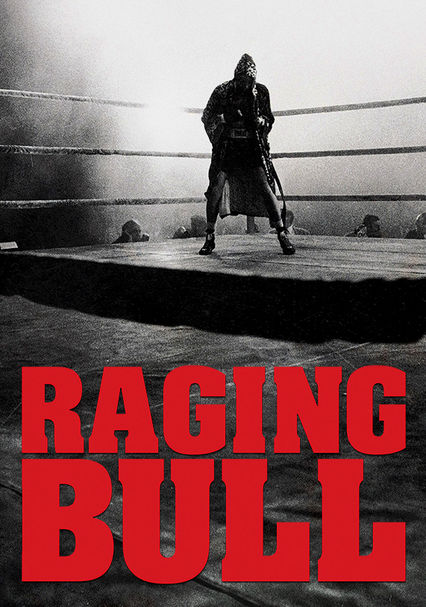
Raging Bull-1980
Director Martin Scorsese
Starring Robert De Niro, Joe Pesci, Cathy Moriarty
Top 250 Films #132
Scott’s Review #1,256
Reviewed May 14, 2022
Grade: A
Raging Bull (1980) might be director Martin Scorsese’s most personal film and his most character-driven.
His other films contain great characters, rich with life, but with the focus firmly planted on controversial real-life boxer Jake LaMotta (Robert De Niro), there is much to explore.
His descent into madness is hard to watch but also impossible to look away from.
It’s tough to top the De Niro/Scorsese pairing in Taxi Driver (1976), when the actor simply kicked the audience’s ass with his ferocious portrayal of the maniacal Travis Bickle.
LaMotta arguably surpasses that portrayal because the boxer experiences the highest of the highs with the lowest of the lows.
And the audience is whisked away with him on the journey from heaven to hell. Arguably, director and actor’s finest film, Raging Bull, is often painful to watch, but it’s a searing, powerful work about an unsympathetic hero who we can’t help but explore.
A double-pairing film extravaganza of Taxi Driver and Raging Bull is a fabulous idea, though the viewer may need a Valium to combat the resulting anxiety after watching them.
I love the title, Raging Bull, because it is so apt and central to the film. Fueled with machismo, testosterone, and anger, Jake LaMotta certainly is a raging bull.
Screenwriters Paul Schrader and Mardik Martin, frequent collaborators of Scorsese’s, adapt the story from Raging Bull: My Story, a 1970 memoir written by LaMotta.
Raging Bull tells the story of an Italian-American middleweight boxer as he struggles through the ranks to earn his first shot at the middleweight crown.
He possesses a self-destructive and obsessive rage, jealousy, and animalistic appetite that destroy his relationship with his wife and family.
Wonderfully cast as his wife, Vickie is played by Cathy Moriarty, a gorgeous girl from the Bronx who falls head over heels in love with Jake. Joe Pesci plays his well-intentioned brother and manager, who unsuccessfully tries to help Jake battle his inner demons.
Jake’s inability to express his feelings enters the ring and eventually takes over his life. He is sent into a downward spiral that costs him everything.
Comparisons to the exceptional Rocky (1976) are cute and perhaps contain some merit on paper, but. In contrast, the former is heroic and compelling; the main characters are nothing alike except that they are both struggling boxers who achieve success.
Both are sports films, but Raging Bull is much, much darker and purely a character study.
The cinematography by Michael Chapman and the Film Editing by Thelma Schoonmaker are deserving of accolades and make the picture as flawless as it is.
Scorsese includes enough boxing scenes to showcase the fantastic editing required for these difficult sequences.
The editing is lightning-quick, and the thunderous bombast makes the viewer feel each blow of the glove against the skin. The blood and sweat are legendary components of these scenes.
The black-and-white cinematography is jaw-dropping, especially powerful in the kitchen fight scene between Jake and Joey. The brutal buildup is hard to stomach as Jake’s dementia becomes evident.
Despite the other qualities of the film that bring it all together, my favorite aspect is the performance De Niro delivers, which wins him a much-deserved Best Actor Oscar.
He is powerful and animalistic, playing both subtle rage and explosive anger. His tragic final act as a much older and fat man is shrouded in heartbreak and pain for both the character and the viewer to experience.
All the pieces of Raging Bull (1980) add up perfectly into a masterpiece.
The violence and pain are enshrouded in poetic dialogue and beautiful, illuminating camerawork that explore one man’s battles and struggles, both inside the squared circle and internally.
Oscar Nominations: 2 wins-Best Picture, Best Director, Best Actor-Robert De Niro (won), Best Supporting Actor-Joe Pesci, Best Supporting Actress-Cathy Moriarty, Best Cinematography, Best Film Editing (won), Best Sound