Category Archives: Joan Blondell

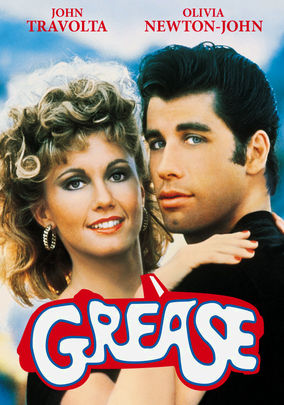
Grease-1978

Grease-1978

Director Randal Kleiser

Starring John Travolta, Olivia Newton-John, Stockard Channing

Top 250 Films #69

Scott’s Review #354

60000577

Reviewed January 9, 2016

Grade: A

Grease (1978) is the ultimate musical fantasy that comes to life and can be appreciated by anyone looking to re-live their high school days through song, or merely escape life’s stresses with a fun, bright musical that is very well made.

Is it realistic? Not, but sometimes escapism is just what the doctor ordered, and Grease is one of my favorite films that meets that criteria.

It is light-hearted and sweet, and above all, it contains wonderful legendary musical numbers.

The time is the 1950s, and we meet Danny and Sandy on a windswept beach with cascading waves and bright sunshine. It is summer break for the two high school students, who meet in California, she vacationing from Australia, and he is a local boy.

They say their goodbyes and return to normal lives, but cannot forget about each other.

Suddenly, Sandy arrives at Rydell High in Los Angeles, coincidentally, where Danny goes to school. Her parents (whom we never see) decided to stay in California.

Danny is a “tough guy” in high school, much different from who he was on the beach with Sandy. He is the leader of the infamous T-birds, a group of boys who love their black leather jackets and cars.

Torn, he maintains his tough image, and he and Sandy find their way back to each other through classmates, songs, and dancing, intermingling with fun supporting characters who encourage them to find true love.

Travolta and Newton-John have magical chemistry, which allows this film to work.

Grease has appeared on stage numerous times, but these actors are fine together. I bought them as teenagers in love, although both were well beyond their teen years.

The supporting cast is excellent- specifically Stockard Channing as the lead Pink Lady, Rizzo, and Sandy’s kind-hearted friend, Frenchy.

Interestingly, no parents ever appear in the film, as it is not about the adults.

However, Rydell’s female principal, Mrs. McGee (played by Eve Arden), and her dotty Vice Principal, Blanche (Dody Goodman), are marvelous as comic relief.

Rizzo is an interesting character and can be argued to be the only one who threatens to steal the thunder from Danny and Sandy. Containing a tough exterior, she is also vulnerable as she fears she has become pregnant mid-way through the film.

Being unmarried and pregnant in the 1950s was quite the scandal, and Channing conveys layers of emotion during her solo number, “There Are Worse Things I Could Do”.

The wonderful high school dance scene is choreographed amazingly well. The excitement of the student body at being filmed for a special television show is apparent as dance numbers and dance contests, some raunchy, follow.

The musical numbers “Grease”, “Greased Lightning”, “Hopelessly Devoted To You”, and “Beauty School Dropout” are intrinsically memorable, all of which are personal favorites of mine.

Grease is a film meant not to be analyzed but rather enjoyed for its fantastic chemistry and energy.

Sometimes, in a film, all the elements come together perfectly, and Grease (1978) is an excellent example.

Oscar Nominations: Best Song-“Hopelessly Devoted to You”
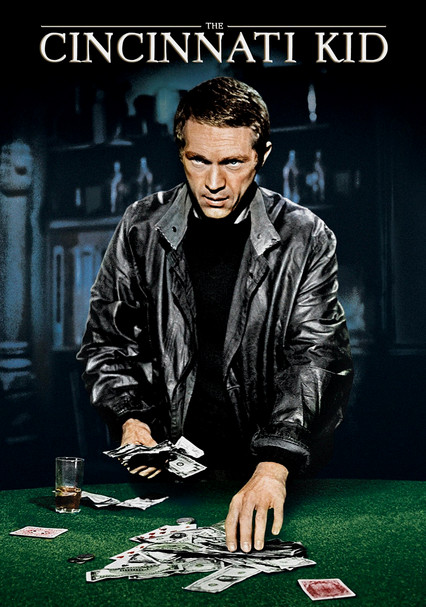
The Cincinnati Kid-1965

The Cincinnati Kid-1965

Director Norman Jewison

Starring Steve McQueen, Karl Malden

Scott’s Review #1,138

Reviewed April 29, 2021

Grade: B

I suppose anyone really into poker playing or similar casino games might be partial to The Cincinnati Kid (1965), especially if they are a die-hard Steve McQueen fan.

But for those with no interest in the ‘sport’ and who think that McQueen is a royal douche who received a modicum of film success, the film is a marginally decent effort.

For those who don’t know, Steve McQueen, the actor and not the British filmmaker, was nicknamed the “King of Cool” and played the anti-hero in most of his films.

His heyday was from the mid-1960s through the early 1970s, and he garnered success by repeatedly playing the same role. He was notorious for insisting his hair was perfect, being selfish, and being a royal prick.

He died of cancer in 1980.

An earlier film of his, The Cincinnati Kid (1965), is set in Depression-era New Orleans, though the film’s severe 1960s look makes it almost impossible to determine that it’s not the 1960s.

Eric Stoner (Steve McQueen) is a cocky poker player nicknamed the Cincinnati Kid who challenges longtime champ Lancey “The Man” Howard (Edward G. Robinson) to a showdown at the table, where a war of persistence and luck ensues.

To add energy, Rip Torn is cast as Slade, a villainous man who seeks revenge against Howard and tries to help Stoner best him.

In addition to the inevitable final poker game, Stoner is immersed in a romance with good girl Christian Rudd (Tuesday Weld) as he tries unsuccessfully to fend off the seductive advances of his best friend Shooter’s (Karl Malden) girlfriend (Ann-Margret), who is also a close friend of Christian.

Romance and double-dealing are in the air in this film.

The main draw is McQueen because he is charismatic and carries the by-the-numbers film. The story point appears to be a battle between youth (Stoner) and seasoned wisdom (Howard), but other than the fantastic finale involving (what else!) a tense game of cards, I didn’t find the primary story experience all too interesting.

There are other impressive aspects, however, such as the trimmings.

Realistic is how the actors handle the playing cards, speak the game terminology, and smoke a fat cigar, adding some good authenticity to the film. The New Orleans flavor provides some culture, and many black actors appear in minor roles that at least give some representation of the actual southern city.

Despite the talented cast, only McQueen shines.

Weld and Ann-Margret are incredibly one-note characters and opposites (good girl and bad girl) with little development. Malden is the moral compass of the film but otherwise has little importance to do.

Interestingly, Norman Jewison replaced original director Sam Peckinpah shortly after filming began. He described The Cincinnati Kid as his “ugly duckling” film that enabled him to transition from the light films he previously made and take on more serious films and subjects.

Cinema lovers know he directed the 1971s Fiddler on the Roof, a completely different film.

I wonder if Jewison’s heart was in this film or if he did the best he could with a subject that was not close to his heart.

Knowing Peckinpah’s brilliant work, I wonder if he would have made The Cincinnati Kid darker and more violent.

One scene that turns my stomach is a gruesome and violent cock-fighting scene. Any animal cruelty makes my blood boil, so I turned my head and refused to watch the scene or the group of merrymakers sitting around cheering the bloodbath.

The Cincinnati Kid (1965) is an enjoyable watch for poker lovers or fans of Steve McQueen. It is also not bad for casual fans.

Though I have not seen it, I understand that The Hustler (1961) is a similar-themed and better-made film.