Category Archives: Dick Van Patten

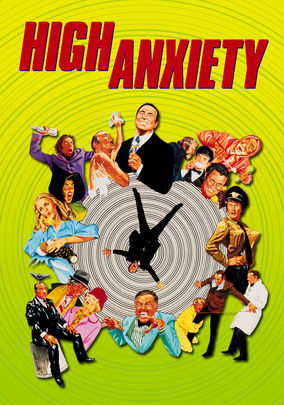
High Anxiety-1977

High Anxiety-1977

Director Mel Brooks

Starring Mel Brooks, Madeline Kahn

Top 250 Films #146

Scott’s Review #740
Reviewed April 11, 2018

Grade: A

For lovers of legendary film director Alfred Hitchcock (as this reviewer is a die-hard fan), the 1977 spoof/satirical feast High Anxiety is a must-see.

The film is simply a treat for the multitude (nearly twenty!) of fun references to Hitchcock classics that fans can easily point out. Such classics as 1964’s The Birds, 1945’s Spellbound, 1958’s Vertigo, and 1960’s fan-favorite Psycho are heavily parodied.

Producer, director, and star Mel Brooks abounds all expectations with a brilliant performance and a smattering of veteran Brooks ensemble players along for the ride.

Featured stars Madeline Kahn, Harvey Korman, and Cloris Leachman provide wonderful comic performances that are quite lively and memorable without ever being too zany or silly.

High Anxiety is a hilarious and clever production.

Brooks plays neurotic Doctor Richard Thorndyke, who has been hired by the Psycho-Neurotic Institute for the Very Very Nervous. His role is to replace Doctor Ashley, who has died mysteriously at the facility.

Transported by his nervous driver, Brophy, he meets a bevy of peculiar characters led by Doctor Charles Montague (Korman), a man with a BDSM fetish, and Nurse Charlotte Diesel (Leachman), the grizzled head nurse.

Thorndyke immediately receives death threats amid strange shenanigans seemingly following his every move.

Brilliantly, Thorndyke suffers from “high anxiety” a witty reference to Hitchcock’s character of Scotty from 1958’s Vertigo.

As he meets and falls in love with Victoria Brisbane (Kahn), a woman whose father is a patient at the facility, he becomes determined to prove the fraudulence and deceit of Montague and Diesel, while subsequently clearing himself of a murder charge orchestrated by the pair.

The murder scene- occurring in a crowded lobby- with Thorndyke caught red-handed holding the murder weapon as a camera snaps the shot for evidence, is a direct spoof of 1959’s North By Northwest.

To be clear, High Anxiety is not a high-brow film nor does it ever dare to take itself too seriously. It knows what it is and what it wants to achieve and that is to both entertain and please fans of Hitchcock.

The film is an ode and tribute to the general film-making of the director who reportedly adored the picture and the accolades that Brooks received for making it.

There is hardly a better stamp of approval than that.

I adore the casting and the odd characters Brooks writes, specifically Leachman and Korman. The duo ham it up with a script laced with great comic moments for the duo to sink their teeth into.

As Leachman, with her drill sergeant-like stiff posture and pointed bosom (Mrs. Danvers from 1940’s Rebecca), combined with the wimpy and snarky mannerisms of Korman’s character, they are the perfect combination of female dominant and male submissive as they play off of one another in a crisp style.

The sinister way that Nurse Diesel (my favorite character) utters the word “Braces”, a reference to her henchman, drizzles with dark humor and wit.

Piggybacking off of these characters, Dick Van Patten (Eight is Enough) gives a fine turn as the doomed straight man with a conscience,  Dr. Wentworth, who just knows something is up at the facility but is too timid to know exactly what it is.

His death scene is one of my favorites as derived from 1976’s Family Plot, the poor man is driven to ruptured eardrums and a subsequent stroke after his car is rigged to blast rock music, trapping him inside.

Brooks and Kahn make a lovable duo as the beleaguered romantic couple is forced into an adventure to prove innocence and rescue Victoria’s father from harm.

A favorite moment is Brooks’s wonderful rendition of the song “High Anxiety” at a hotel piano bar as he successfully woos Victoria is an entertaining romantic comedy moment.

Predictably- he gets the girl.

High Anxiety (1977) is delicious, silly, and peppered with great classic Hitchcock moments that are momentously fun to watch and pick out which movie they each reference is from.

An absolute must-see for all Hitchcock fans or those who simply want a humorous, lightweight introduction to the works of the Master.
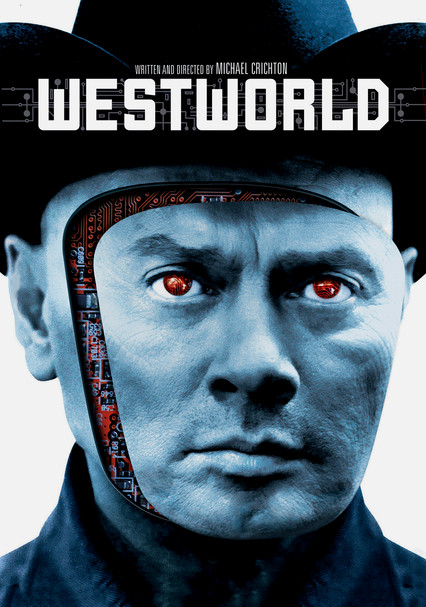
Westworld-1973

Westworld-1973

Director Michael Crichton

Starring Richard Benjamin, James Brolin, Yul Brynner

Scott’s Review #1,056

Reviewed August 25, 2020

Grade: A-

I have seen the film version of Westworld (1973) before and after having watched the current hit HBO television series, brilliant in its complexities.

Many are not even aware that the series is based on a film, and that is a pity because the film is good stuff with lots to digest in a short time.

Admittedly, watching it in present times, given the series’s extreme psychology, the film has so much more it could have offered, but it’s still a great watch.

One must always remember the time period a film was made in for proper context and comparison.

Yul Brynner nearly steals the film with a spectacular, creepy performance as a wide-eyed, futuristic android cowboy to Richard Benjamin and James Brolin’s regular guys out for an escapist good time.

Much of the film could be conceived as a buddy film with a bevy of homoerotic elements brimming beneath the surface if one is aware. These tidbits spice things up in an already escapist and futuristic world.

A titillating, high-tech adult-themed amusement park serves as the film’s backdrop. Participants can choose any of the three worlds: the Western World, the Medieval World, or the Roman World. All feature lavish, realistic trimmings and ooze realism.

The inhabitants are robots, not real people, so they can be shot, stabbed, or made love to depending on the personal tastes of those who wish to indulge in their wildest fantasies.

The island is very exclusive, and the experience comes at a high cost.

Peter (Benjamin) and John (Brolin) are businessmen who adore the Wild West, so they select the Western World. They enjoy frolicking with desperadoes, gunslingers, and dance-hall girls who appear as if they are human beings.

Enjoying their adventures, the technicians notice odd behavior from the androids. Small at first, events escalate quickly when a gunslinger (Brynner) goes on a rampage with Peter and John as his targets.

Since the television series is fleshed out so well and the motivations and the stories of the androids are examined at length, it makes it easy to ask why the film does not, or rather, wishes it had.

On the one hand, it is creepy not knowing what makes Brynner’s gunslinger tick; on the other hand, I want to know.

I also wanted to know more about the guests. Why were they there, and what are their lives in the real world like?

One way the film is superior to the series is in the way Peter and John are written.

Is it my imagination, or do the pair seem a little closer than merely friends? Do they wish to escape their lives to be together? Are the wives and children waiting at home for them?

A scene of Peter bathing is erotic, especially as he must abandon the tub mid-soak to battle a foe. He is the Marlboro man personified, though Benjamin’s too recent turn as the twit father from Diary of a Mad Housewife (1970) ruins any masculinity he has.

The climax is riveting.

Since we are unsure of the gunslinger’s motivations, we are unsure what he will do. A frightening scene unfolds as the gunslinger intently walks down a corridor, his expressionless eyes attentively stalking his prey. This still gives me the chills.

When the android is sprayed with acid, its face becomes freakish and psychotic-looking. This adds to the fright of an already frightening character. When Peter frantically traverses the park in search of help, his peril is heightened as he finds dead guests and damaged robots everywhere.

The severity of the situation is finally realized.

Crichton deserves much of the credit since he not only directed but wrote the screenplay, and this was his debut! The pacing is excellent, and something is going on at all times, making the film feel as entertaining as it is intelligent.

The dazzling cinematography of the world allows the viewer to see the differences.

Westworld is riddled with intriguing questions that go unanswered, which adds to the tension.

Impossible not to compare the film to the series as much as we might like not to. Westworld (1973) is a freakish, creative adventure that I wanted so much more from, having seen the complexities and story possibilities crafted for the series.

I am not a fan of remakes, but in this case, a modern retelling is not a bad idea. Some accuse the film of being cheesy, over-the-top, or “too 70s,” but I disagree.

I like the hidden trimmings and messages mixed with the good fun.

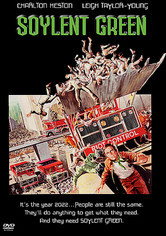
Soylent Green-1973

Soylent Green-1973

Director Richard Fleischer

Starring Charlton Heston, Leigh Taylor-Young

Scott’s Review #943

Reviewed October 8, 2019

Grade: B

Soylent Green (1973) is a rather obscure offering starring then big-named star Charlton Heston in a dystopian science-fiction film.

The story is futuristic and eerily reminiscent of Planet of the Apes (1968), though not nearly as compelling nor as layered.

The result is admirable for its progressive message, cool colors, and sets, but feels dated and of its time and treats female characters more like props than characters, leaving an uneven result.

It’s a one-and-done sort of film.

The year is 2022 and because of the Industrial Revolution, forty million people live in New York City, suffering year-round from extreme humidity because of the greenhouse effect and shortages of water, food, and housing.

Only the wealthy are afforded necessities and residents of the rich (mostly female) are referred to as “furniture” and used as slaves.

Detective Frank Thorn (Heston) is tasked with investigating the murder of an affluent and prominent man, which leads him to dire details surrounding Soylent Industries and the food they produce.

The film seems like someone’s visionary idea turned Hollywood.

Loosely based on a 1966 novel entitled “Make Room! Make Room!” by Harry Harrison, Heston is cast as the lead while his career was slowly declining, but he is still the star and quite hunky for an older gentleman.

He plays a role similar to the character of George Taylor in Planet of the Apes, especially during the final climactic reveal, which will make viewers question what is contained in what they are eating for dinner.

Heston carries the film well and mixes wonderfully with character actor Edward G. Robinson, who plays Sol Roth in his final role. The old character decides to “return to the home of God” and seeks assisted suicide at a government clinic.

The final scene between the actors is poignant and heartfelt as they say goodbye to each other. Eagle-eyed viewers will spot a young Dick Van Patten in a tiny role during this scene.

Any romantic chemistry is lacking in Soylent Green as a potential love match between Frank and Shirl (Leigh Taylor-Young) strikes out. Mismatched and having little thunder together, the couple does not appeal well.

Making matters worse is that Shirl is mere “furniture” limiting the character’s potential. She is reduced to assisting with Frank’s investigation.

The main detraction is that the film does not feel very futuristic or authentic. The characters look like actors from the 1970s dressed up to look like they are from the future always with a tint of Hollywood thrown in.

The story loses its way halfway through and teeters about between pure science-fiction and a standard detective story, seen nightly at that time on network television.

Still, the film does contain a robust amount of potential but is not reached. The progressive slant and social commentary are admirable, and the bright green nutritious synthetic canned food is almost a character.

The final scene will shock the viewer with horror and I wish more scenes this jaw-dropping existed within the entire experience and not simply at the end.

A film that attempts to do something different or provide a provocative message is worthy of a certain amount of praise.

Soylent Green (1973) carves a bit of thought provocation but seems more relevant for the 1970s than containing much interest decades later.

Heston is dazzling as the main character and the trimmings are impressive but Invasion of the Body Snatchers (1956) or The Day the Earth Stood Still (1951) resonate more as similar genre films.