Category Archives: 2022 Films

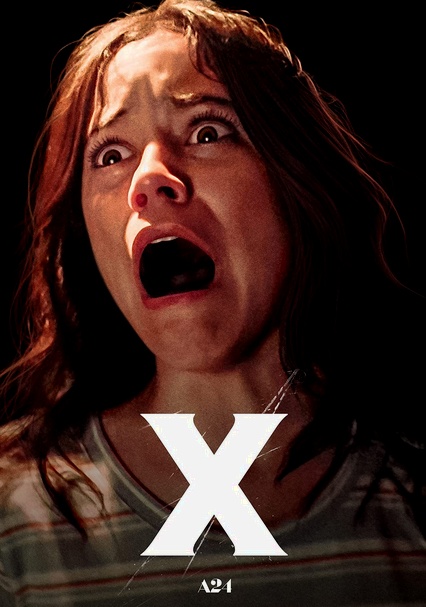
X-2022

X-2022

Director Ti West

Starring Mia Goth, Jenna Ortega

Scott’s Review #1,310
Reviewed October 20, 2022

Grade: B+

Film company A24 has become synonymous with releasing quality independent films, mainly within the horror genre. The newbie distributor, only born in 2012, has hit it out of the park on numerous occasions.

Cutting-edge and downright bizarre projects, such as Ex Machina (2014), Hereditary (2018), and Midsommar (2019), immediately spring to mind.

I’ll see anything that this company releases.

A group of young, aspiring actors set out to make an adult film named The Farmer’s Daughters in rural Texas. They rent a cabin from an unwitting elderly, reclusive couple. When the old folks catch on to what the actors are doing, all hell breaks loose as an unlikely killer begins a murder spree.

At the risk of spoiling the fun X was shot on location in New Zealand which doubles as Texas, USA.

Ah, the magic of movie-making.

The film will immediately draw comparisons to The Texas Chain Saw Massacre (1974) in its setting alone. Isn’t remote and barren farmland so effective in horror? There is something so creepy and foreboding about the stillness, animals, and miles and miles of emptiness.

Instead of a slaughterhouse or rotting meat, X uses a deadly alligator, which comes into play during the final act.

To further highlight the similarities between The Texas Chainsaw Massacre, the setting is the late 1970s, which is reflected in the characters’ dress and mannerisms. Even one long shot of the elderly couple’s house entryway is almost identical to the one used in that film, and surprise, surprise, the cast drives up in a van.

However, X is more than just a modern film patterned after a cult classic. There is proper tension and a stark 1970s, dirty grindhouse look with gritty camerawork and a grainy texture.

I felt immersed in the atmosphere and the time capsule, rather than watching people dress in current clothing in a retro style.

Very few viewers of X will likely be prudes, but there is a fair amount of nudity and sexual behavior- I mean a lot!

Since a porn film is being made, this is unsurprising, but rest assured, there is a hefty helping of tits, asses, and full-frontal nudity.

Perhaps as a response to the typically voyeuristic female-only nudity in most older slasher films, there is plenty of male nudity to balance the scales.

Another improvement to slasher films is the incorporation of character development and diversity. In lesser films, supporting nymphomaniacs like Bobby-Lynne (Brittany Snow) and Jackson (Scott Mescudi), who is black, would have been written as one-dimensional, but not in X.

Bobby-Lynne and Jackson love sex, but they also have dreams and aspirations, and are kind people, each separately trying to help the elderly couple.

Unsurprisingly, the elderly couple, especially the wife, takes center stage as the plot moves along. Suffice it to say, Pearl (the old lady) longs to be young and sexual again like she was in her prime.

She stalks Maxine (Mia Goth), touches her, and finally sneaks into bed with her, hoping to recapture her lost youth.

Things don’t exactly go well.

Goth portrays both Maxine and Pearl.

Motivations of Pearl may be a stretch, but there is a creepy fascination that works well throughout X, and the film never drags. It’s not every day that a ninety-year-old woman in a blood-soaked house dress wanders about a farm bludgeoning folks to death.

For a raw, independent, and fun foray back to the early days of the slasher genre before it became overly conventional, X is a winner.

A24 has another success on its hands since X (2022) will be followed by both a prequel and a sequel.
Halloween Ends-2022

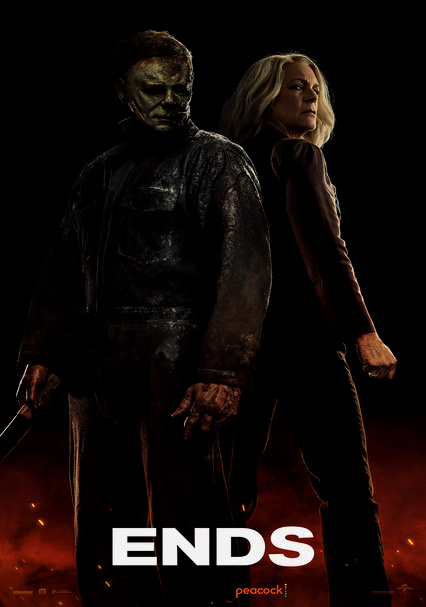
Halloween Ends-2022

Director David Gordon Green

Starring Jamie Lee Curtis, Andi Matichak, Rohan Campbell

Scott’s Review #1,309

Reviewed October 19, 2022

Grade: B+

As a bit of a rewind for newer fans of the series or altogether non-fans, Halloween Ends (2022) is a slasher film that is the sequel to Halloween Kills (2021), and the thirteenth installment in the legendary Halloween franchise.

It is reported to be the final film in the trilogy of sequels that commenced with the 2018 film, Halloween, which directly follows the 1978 film and disregards all other entries.

It’s as if nothing more happened after knife-wielding Michael Meyers toppled from a suburban terrace and escaped one Halloween night long ago.

Time will tell if this is indeed the final farewell, but the film wraps things up nicely, and it feels like a satisfying ending.

Halloween Ends is unconventional and murky in parts that intrigued me more than confused me. But rest assured, there is enough mayhem and creative kills to satisfy bloodthirsty audiences- it just takes some patience to get there.

I’m not sure all diehard fans will be satisfied with the film.

There are some twists and turns to maneuver through and some perplexities with a couple of leading characters, but I’m careful not to give too much away.

Over forty years since being terrorized while babysitting one Halloween night, Laurie Strode is writing her memoir as she tries to put the trauma of her past behind her. Since she still resides in the small town of Haddonfield, Illinois, this will not be easy when the sudden death of a young boy sets off terrifying events.

The opening sequence is compelling despite not even involving Laurie, Michael, or Laurie’s granddaughter, Allyson (Andi Matichak)!

The introduction of male babysitter Corey (Rohan Campbell) breathes fresh life into the complex family tree within the small town, and an event causes the young man to become Haddonfield’s new pariah.

Corey is a nice addition as he dates Allyson and becomes involved in the family drama with Michael Meyers, becoming a significant connection.

I’m keeping this vague so I don’t spoil the fun. Still, the romance between Corey and Allyson is particularly evident during a scene where they spend the night together outside a local radio station.

Reminiscences of Laura Dern and Kyle MacLachlan’s characters in David Lynch’s masterpiece Blue Velvet (1986) are set amid a hauntingly cerebral musical score that lends the film an arthouse look and feel. The young romance is shrouded by oncoming chaos, but they cannot stay away from each other.

A fun fact and a nod to the strong film history of the franchise is that John Carpenter, director of the original Halloween, and his son, Corey, provide the music in Halloween Ends.

Some of Corey’s and Allyson’s sequences feel poetic and dreamy, which is the opposite of what a ‘normal’ Halloween film feels like.

Not to be outdone by poetic filmmaking, the director David Gordon Green makes sure any bullies, sluts, or sexual creatures get their due by being fittingly hacked to bits or suffering crushed skulls to pay for their sins.

One even gets ensnared in barbed wire and then unceremoniously run over.

My favorite kills include a comical tongue removal that ends up making an album skip, and a stabbing and impaling onto a door, an apparent reference to Bob’s death in the original.

Inevitably, the film belongs to Laurie and Michael, and their showdown is no surprise. I was salivating for this final blood feast from the get-go, and it doesn’t disappoint.

Laurie’s kitchen is conveniently stocked with a set of sharp, shiny knives, which allows for a healthy dose of crimson-red blood soaking.

I could have used more nods to history. Besides the carbon copy killing of Bob, an old photo, and quick clips of scenes from the original, there isn’t a whole lot.

Bringing the original actors and characters to the fold in Halloween Kills worked well, but all little Lindsey Wallace (Kyle Richards) gets to do is serve drinks at the local bar and listen to other characters’ problems.

My money is that we haven’t seen the last of Michael Meyers, but Halloween Ends (2022) will satisfy those looking for the expected Halloween trimmings with a dash of creative filmmaking.

Other than a couple of missed opportunities, it remains true to its audience.

Blonde-2022

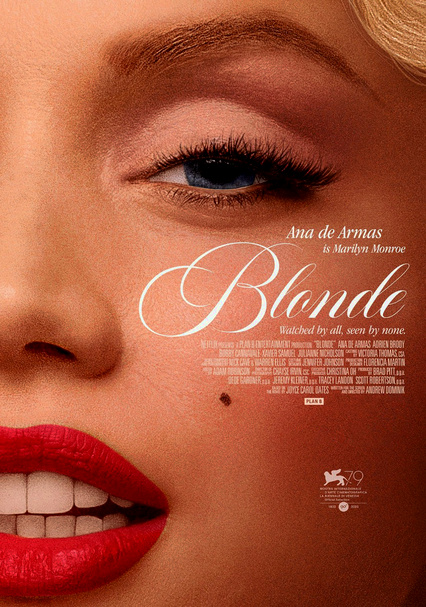
Blonde-2022

Director Andrew Dominik

Starring Ana de Armas, Adrien Brody, Bobby Cannavale

Scott’s Review #1,305

Reviewed October 7, 2022

Grade: A

Blonde (2022) is not the kind of film that I expected.

When I became aware that a new film vehicle showcasing the legendary film icon Marilyn Monroe was in the works, I assumed it would be a biographical-style effort. After all, this is hardly the first time the star’s life has been explored.

Throw in bits about her struggles, her love life, her famous screen roles, and her rise to fame, and there you’d have it.

My only real thought was who would be playing her?

Films about Marilyn have been made before, including the most recent effort I can recall, My Week With Marilyn (2011), starring Michelle Williams, a superior film but hardly groundbreaking or well remembered ten years later.

Released via the Netflix streaming service, director Andrew Dominik kicks the shit out of any preconceived notions about glamorous, happy, and prosperous Marilyn.

He creates a story focused on the dark side of the star: her failures, her insecurities, her forced abortions, and her humiliations. The result is a film that is both tragic and profound, and it should be well remembered.

Blonde delves into facts and some of the more profound thoughts of the legend herself, creating a muddy and dreamlike quality that makes the viewer apprehensive about what’s going on.

Since it’s based on Joyce Carol Oates’ 2000 fictional memoir, which is her interpretation of events, it makes truth and imagination all the muddier.

It’s not happy days watching Blonde, which left me wondering if Marilyn had a happy day in her life. From her abortions to sexual harassment, drug addiction, and physical abuse by her husband, she excitedly scampers off to a date with President Kennedy, only to be forced to give him oral sex.

Ana de Armas, known for Knives Out (2019) and No Time to Die (2021), is brilliant as Marilyn. Her mannerisms, speech patterns, and facial expressions reveal a genuine, layered portrayal rather than a carbon copy imitation of her.

Blonde boldly reimagines the life of one of Hollywood’s most enduring icons in two hours and forty-seven minutes of storytelling. It is advisable not to watch the film in one sitting, but instead spread it over three nights to let the story unfold.

Events begin with her volatile childhood as Norma Jeane, marked by an abusive mother and an absent father, and her rise to stardom and romantic entanglements. Blonde blurs the lines of fact and fiction to explore the widening split between her public and private selves.

In a way, Marilyn suffered from a split personality, longing to be Norma Jeane and despising Marilyn.

Enhancing the ambiguity, Dominik elects to use cinematography that is sometimes blurry as if in a sleepy haze, and sprinkles color with the primarily black and white filming. He even films one abortion scene from the perspective of Marilyn’s vagina.

These creative details lead me to classify Blonde as an art film and a highly interpretive one.

While not a crowd-pleaser, Blonde is not all doom and gloom either.

Tidbits about her most famous films, Gentlemen Prefer Blondes (1953) and Some Like It Hot (1959) are featured, showcasing one or two neat camera tricks, so it appears that de Armas is acting opposite Tony Curtis.

I worry that poor reviews for Blonde may hinder de Armas’s chances of receiving an Academy Award nomination. Positive reviews usually help secure Oscar recognition.

Thankfully, despite many critics and viewers having issues with the film, de Armas has received worldwide acclaim.

Bobby Cannavale and Adrien Brody are excellent as Marilyn’s husbands, controlling Joe DiMaggio and insecure artist Arthur Miller. Both actors combine effective acting with distinguished portrayals, allowing the audience to appreciate the appeal of both men.

Other interesting subplots involve Monroe’s ‘throuple’ romance with bisexual actors Cass and Eddy, and a haunting exposure of the abuse suffered by Marilyn at the hands of her mother, Gladys, wonderfully played by Julianne Nicholson.

There is little doubt that Blonde (2022) is an unconventional film that may not appeal to everyone. However, it’s the down-and-dirty texture and tour-de-force portrayal of Monroe that won me over.

It chilled me to the bone in the best possible way.

Oscar Nominations: Best Actress-Ana de Armas

Bros-2022

Bros-2022

Director Nicholas Stoller

Starring Billy Eichner, Luke Macfarlane 

Scott’s Review #1,304

Reviewed October 5, 2022

Grade: A

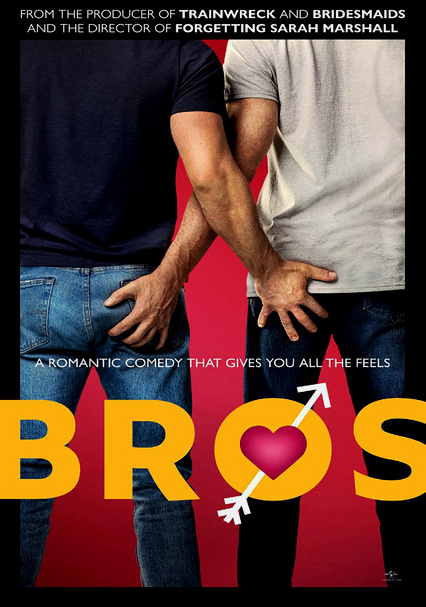
Even if Bros (2022) were a bad film, it would still hold the monumental distinction of being the first LGBTQ+-themed romantic comedy released and supported by a major distributor.

In 2022, years after the legalization of same-sex marriage in the United States and various other milestones that would take too long to list, Bros is the first of its kind.

Fortunately, Bros is not a poor film but an exceptional one with brazen confidence and a lot to say.

Led by crisp and intelligent dialogue, lovable lead actors, a cast comprised solely of the LGBTQ+ community, strong characters, and hilarious moments, it has something for everyone, whether gay, straight, or otherwise.

Before readers pigeonhole the film as one only to be seen by the  LGBTQ+ community, I will cry bullshit.

Straight audiences will fall in love with the characters and learn valuable lessons about stereotypes and deep-seated emotions of gay men who are not always comfortable in their skin.

Unfortunately, Bros was not the box office smash hit the studio had hoped it would be. Some straight viewers felt the film was not for them, and that’s a shame.

There is still more work to be done to eliminate conscious and unconscious bias and educate others to embrace differences.

Billy Eichner, who co-wrote the Bros screenplay along with director Nicholas Stoller, stars in the film, alongside Luke Macfarlane.

Eichner plays a sardonic, gay Jewish male named Bobby Leiber who resides in New York City.  We meet Bobby while he is recording another episode of his New York podcast and radio show, The Eleventh Brick at Stonewall, where he talks to callers about his written works on gay history and gay icons.

He claims to be okay with being single and not having found love, instead hooking up with random men through a dating application called Grindr, although he is successful in his career and has good friends.

He awkwardly meets Aaron Shepard (Macfarlane), a hunky, masculine guy deemed ‘hot but boring’ by those in Bobby’s circle, in a gay club.

The two men slowly develop a romantic relationship despite their commitment problems and hectic schedules, which seem designed to put the kibosh on love.

Despite all the other aforementioned wins, what makes this LGBTQ+ film stand out is that the screenwriting feels fresh and intelligent. Above all else, it wisely paints the struggles that most gay men seeking a relationship of substance face.

As in other romantic comedies, specific setups and situations create conflict that risks preventing Bobby and Aaron from getting together. Bobby feels Aaron is out of his league, preferring other muscular men to his overbearing and critical approach.

One can understand Bobby’s angst, but in one of the film’s most poignant and beautiful scenes, Aaron tearfully reveals that Bobby constantly challenges him, and it feels good.

He needs to be with Bobby because it is right. Bobby serves as a mentor to Aaron as he wrestles with being true to himself. Stuck in a depressing yet financially secure job, Aaron longs to be a chocolate maker instead.

Beauty is only skin deep. Regardless of occasional insecurities, the two men are firmly connected, and that beats everything else.

On a personal level, both characters resonated with me, evoking their angst. One would assume that Aaron the hunk would be more confident, but is that the case? Both men teach and learn from each other, which makes their relationship powerful.

In addition to the romantic moments, Bros has its share of raunchy and comical scenes, which justify its ‘R’ rating. In typical Judd Apatow (the film’s producer) form, the sex scenes are revealing.

There are enough orgies, toe-sucking, and fist-sucking to make the prudish blush. The planned ‘rimming’ scene was cut from the final cut. One wonders what that would have been like.

The film follows a distinct comedy formula and includes a helping of standard annoying, clueless, or over-the-top colorful characters that appear to justify its mainstream comedy placement.

The genius is that Bros works.

I implore straight audiences to give the film a chance, if for no other reason than to show that gay people are as different from each other as apples and oranges. As Bobby makes clear, some are nice and some are assholes.

Bros (2022) treads conventional but with a twist, and shows that gay characters are as genuinely funny as straight characters. It provides laugh-out-loud moments and teary sentimental ones.

I’m eager for the next project from Billy Eichner.

Mrs. Harris Goes to Paris-2022

Mrs. Harris Goes to Paris-2022

Director Anthony Fabian

Starring Lesley Manville, Isabelle Huppert

Scott’s Review #1,301

Reviewed September 24, 2022

Grade: B+

Mrs. Harris Goes to Paris (2022) is an endearing film enveloping the viewer in warmth and good cheer. It exudes empathy and heart while sprinkling in some good luck, chance, and a big dream.

It shows that, every once in a while, a reasonable person prevails in life.

It is the third film adaptation of the 1958 novel Mrs. Arris Goes to Paris, written by Paul Gallico. Angela Lansbury played the role in an earlier incarnation.

British actress Lesley Manville stars in the film as the title role. A talented cast surrounds her, delivering good performances, notably from the legendary French actress Isabelle Huppert in the role of the foil.

Unsurprisingly, in a film where good fortunes are the theme of the day, even she comes around in the end, though, where most characters dutifully assist in the ultimate happiness of Mrs. Harris.

There is drama encircling this film, but in the lightest of ways. The comedy elements pair well, and the romanticism aligned with Paris is palpable, as seen in other characters like young lovebirds André (Lucas Bravo), the Dior accountant, and Natasha (Alba Baptista), a Dior model, who find love for each other.

Everyone gets a happy ending.

It all begins in 1957 London, where Ada Harris, a widowed cleaning lady, becomes obsessed with one client’s haute couture Dior dress. She is impulsively inspired to buy her Dior dress one day. However, finding the money is the biggest challenge.

As fate would have it, she suddenly receives a war widow’s pension and travels to Paris to buy her dress. She stumbles into a showing of Dior’s 10th-anniversary collection and is befriended by André and Natasha.

However, the Dior director, Claudine (Huppert), resents Ada’s intrusion into the exclusive world of haute couture and schemes to prevent her purchase.

Director Anthony Fabian, who is very new to directing, wisely provides a hefty dose of the British way of living, counterbalanced with the glamour of the Parisian lifestyle that works. The character, and thus the viewer, alternates between London and Paris.

The film is a safe experience and will not ruffle even the slightest of feathers or the tightest of asses.

It’s all pure, silly fantasy, of course, but done in the best possible way.

I was immediately immersed in the film and instantly wanted to champion happiness for Ada.

Manville is perfectly cast, though I could easily see other actresses in the role. Imelda Staunton, Emma Thompson, or Helen Mirren would have been terrific. Taking nothing away from Manville, who’s got charisma and acting chops, it’s a role that others could also successfully play.

I can’t say the same for Claudia’s role. At the risk of merely being a throwaway role as the heavy, Huppert, whom I adore in films like Amour (2012) and Elle (2016), instead brings her from a full-on bitch to a sympathetic character.

Huppert is one of the greatest actresses in the world and can and has made the most despicable characters worthy. That’s tough to do.

Naturally, there is a hefty dose of exterior scenes that I find pleasing. Having visited both Paris and London, as well as the surrounding areas, it’s lovely and reminiscent to catch glimpses of the Eiffel Tower or see cobblestone streets lined with bakeries or pubs.

The musical score is fresh and atmospheric, especially during the Parisian sequences. Boisterous and cultured French music emerges from the screen.

Besides all of the pleasant trimmings, romance blossoms for Ada as well as the youngsters. Encouraged to find the love she thinks she might have with the rich and sophisticated Marquis de Chassagne (Lambert Wilson), who takes a shine to her.

But when he awkwardly tells her she reminds him of his childhood nanny, she is crushed.

I secretly enjoyed this heartbreak only because I was never convinced Ava truly belonged in that world daily.

True to form, the filmmakers teeter towards a setup between Ava and regular, beer-drinking, local friend Archie (Jason Isaacs).

Box-office receipts will likely determine whether Mrs. Harris Goes to Paris (2022) receives a sequel. But I’ll be keen to follow this richly drawn character as she lands in New York City or other interesting geographies.

Oscar Nominations: Best Costume Design

Elvis-2022

Elvis-2022

Director Baz Luhrmann

Starring Austin Butler, Tom Hanks

Scott’s Review #1,299

Reviewed September 16, 2022

Grade: B+

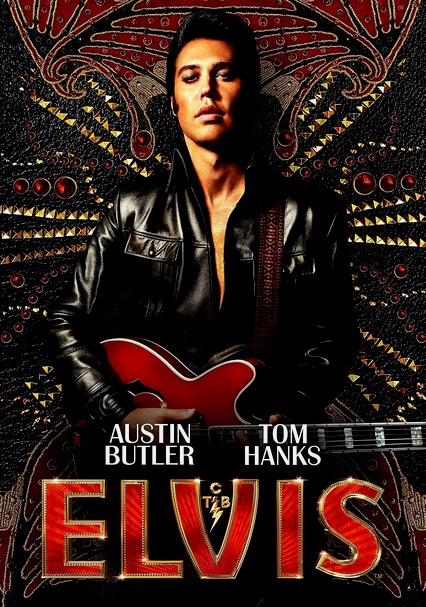
Once I knew that Australia’s own Baz Luhrmann was directing the new film Elvis (2022), I immediately formulated an expectation of what the film-watching experience would be like.

I anticipated a specific type of filmmaking, where an auteur artist merges fast-paced music videos with a dramatic biopic into a cohesive film.

Other Luhrmann offerings, such as Moulin Rouge (2001) and The Great Gatsby (2013), incorporate contemporary musical elements and are highly visual and stylistic. I knew what I was going to get and was prepared for it.

Elvis is no different, and Luhrmann’s style is an unconventional risk not for everybody.

I mostly enjoyed the film, but I didn’t quite love it either, seeing both the good and the not-so-good aspects.

At two hours and thirty-nine minutes, it goes on way too long.

Perhaps contradicting this point is that Elvis does improve as it progresses, initially feeling jarring, overwhelming, and disjointed due to rapid editing and rapid camera work.

A Dramamine is suggested until one is comfortable with the sudden bursts of turbulence. I semi-joke, but there is a period of sinking into Luhrmann’s style that is necessary, especially if you have never seen one of them.

The film explores the life and music of Elvis Presley (Austin Butler), and his complicated relationship with his opportunist manager, Colonel Tom Parker (Tom Hanks), and his wife, Priscilla (Oliva De Jonge).

The story delves into the singer’s rise to fame and the evolving cultural landscape in the United States during the 1950s and 1960s.

Like many films, the events start much later than the main story, in this case, 1997. Parker is on his deathbed, ruminating about how he first met Elvis and helped make him a legendary icon.

Much of the film takes place in glitzy Las Vegas, where Elvis had a long-term residency. However, it’s worth noting that the star’s working-class roots and impoverished upbringing in a predominantly black neighborhood had a tremendous influence on his music.

The Vegas setting applies a sparkling veneer, mixed with a sense of isolation, especially in scenes that show Elvis’s million-dollar penthouse view of Sin City. The star frequently pulls all the black curtains to reside in solitude.

Butler starts slow but ends up doing a fabulous job of portraying the iconic star, no easy feat. At first, I had difficulty buying the actor as Elvis, but as time went on, he became more immersed in the role.

The best scenes, hands down, occur during the performances. The sheer rawness of his act and the famous wiggle that left fans dizzy with eroticism are compelling and authentic, to say nothing of titillating.

The young actor exudes charisma just as the real-life star does, and this is most evident on stage. The dramatic scenes don’t work as well, and Luhrmann strangely skims over the controversial weight gain years, the 1970s, that Elvis experienced.

I expected Butler to don a fat suit, but there was none of this.

This miss can almost be forgiven when a heart-wrenching final performance of ‘Unchained Melody’ by the honest Elvis is showcased. The number is fraught with emotion and tenderness, leaving me feeling sympathy.

Hanks is good as the slimy and curmudgeonly manager, but I never felt sympathy for the character. If the film can be believed, he ruined Elvis as much as he brought him success, but Hanks never made me forgive the man. I also wasn’t interested in his backstory.

It will be hard-pressed ever to make me enjoy Hanks more than in his Oscar-winning back-to-back turns in Philadelphia (1993) and Forrest Gump (1994), his two best roles.

Elvis, the film, does better when it serves as a musical performance rather than a biography. Sure, the drug use and the disputes with family and manager are dramatic but it’s the performances of ‘All Shook Up, ‘Unchained Melody’, and ‘Can’t Help Falling Into Love’ that win me over.

In pure Luhrmann form, many of the familiar songs are done in different tempos and interpretations, but that’s part of the fun.

Comparisons to recent musical biographies, such as Bohemian Rhapsody (2018) and Rocketman (2019), are fair.

Elvis (2022) is not as good as those films, but it’s above average and succeeds when it entertains, showcasing how the star’s determination and grit prevailed despite outside influences.

Oscar Nominations: Best Picture, Best Actor-Austin Butler, Best Cinematography, Best Production Design, Best Film Editing, Best Sound, Best Costume Design, Best Makeup, and Hairstyling

The Black Phone-2022

The Black Phone-2022

Director Scott Derrickson

Starring Mason Thames, Madeleine McGraw, Ethan Hawke

Scott’s Review #1,296

Reviewed September 7, 2022

Grade: B+

The Black Phone (2022) is a compelling horror offering that delivers some effective frights and jumps. It merges classic horror with a supernatural element that walks the line very well, never straying too far into either territory.

It doesn’t redefine the genre, but nor does it feel stale or like a tired retread of other modern films. This is because of merging other genres into the action.

Some question marks surface, but the movie is an above-average effort by director Scott Derrickson, who is surprisingly most known for the superhero vehicle Doctor Strange (2016).

The 1978 cloudy suburban blue-collar United States setting works remarkably well, and Ethan Hawke is delicious as the evil ‘Grabber’, a demented masked man who snatches neighborhood boys and hides them in a dank basement.

And I’d be remiss if I didn’t mention the brilliant inclusion of the Pink Floyd song ‘On the Run’ during the final sequence.

Wonderful is how snippets of The Silence of the Lambs (1991) peek in now and then, without ever feeling like a carbon copy or even a source material.

The Black Phone feels quite like a coming-of-age story, as it revolves around a conflicted teenage boy and his numerous insecurities, from bullying to blossoming romance.

Finney, played by newcomer Mason Thames, is a shy but clever thirteen-year-old boy. He and his younger sister, Gwen (Madeleine McGraw), live with their alcoholic father and take turns looking after him.

Neighborhood boys bully Finney, but also has a protector in his friend Robin, until Robin goes missing.

Eventually, Finney is abducted and finds himself trapped in a soundproof basement where screaming is of little use. When an old disconnected black phone on the wall begins to ring, Finney discovers he can hear the voices of the killer’s previous victims.

The Black Phone was adapted from a 2004 short story of the same name and has a similar feel. Events flow quickly, and the film doesn’t drag, though I was ready for it to end when it did.

Since the film was a commercial success, rumors of a sequel or prequel are swirling. I vote for a prequel because there is a lot left to tell regarding the Grabber. The character’s backstory is barely touched, leaving many questions unanswered.

He only kidnaps and kills teenage boys, the suggestion being that the Grabber is gay. At one point, he announces that he wants to look at Finney. The suggestion is uneven, though, because it’s never revealed if he rapes the boys before killing them or what his motive even is.

The Grabber has a brother, who plays a key role in the story, but their relationship is not explored in detail. What about parents, kids, or jobs?

In a nutshell, I wanted to know more about the killer, and I was left unsatisfied.

Speaking of the Grabber, here’s where the Silence of the Lambs comparison comes into play. The villains are similar since both are presumably gay and disguise themselves in one way or another, either by creating a ‘women’s suit’ or donning a creepy mask.

Both lure their victims into a grimy van and keep them tucked away underground before killing them.

But Buffalo Bill beats the Grabber by a landslide. The line ‘it rubs the lotion on its skin- it does this whenever it is told’ will forever give me a chills.

I’ve droned on long enough about the Grabber, but only because he is a fabulous villain and I am intrigued beyond measure at the possibilities.

The editing and continuity are a win, especially in the final twenty minutes. The rescue/escape scenes are powerful and emotional without being hokey or overly predictable.

The psychic dreams are pretty good, and McGraw is a superb child actor, but those sequences didn’t enamor me as much as the scenes with Finney and the Grabber or the voices on the telephone.

I’ll bet casting Ethan Hawke against type in The Black Phone (2022) supercharged audiences into seeing the film. The independent film style and edge-of-your-seat pacing ultimately make the film a winner, even if I was left with tons of questions.

Crimes of the Future-2022

Crimes of the Future-2022

Director David Cronenberg

Starring Viggo Mortensen, Léa Seydoux

Scott’s Review #1,295

Reviewed September 2, 2022

Grade: B

Being somewhat familiar with the work of director David Cronenberg and the macabre and unsettling elements he incorporates into his films, I had a fair idea of what type of experience I was in for.

There was anticipation as I slipped the Blu-ray of Crimes of the Future (2022) into the player.

He’s responsible for such peculiar pleasures as Eastern Promises (2007), an annual Christmas time watch for my husband and me, and A History of Violence (2005) a gangster-flavored effort.

Cronenberg frequently teeters between psychological horror and science fiction, though he has dabbled in other genres.

Stalwart actor Viggo Mortensen once again graces the screen in one of Cronenberg’s films and leads the charge as the main protagonist in Crimes of the Future.

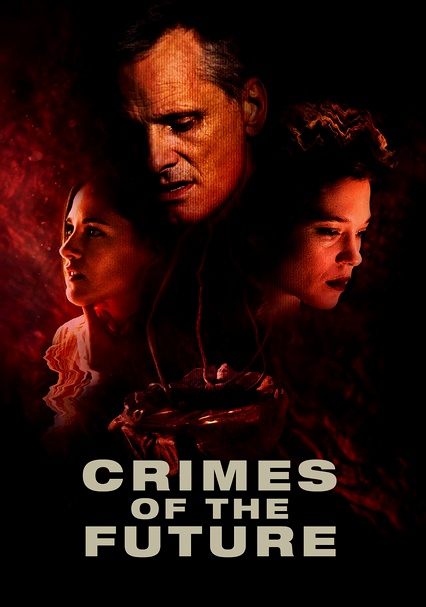
Visually, the film is astounding with creepy shapes and visceral red images floating about, mainly in the opening credits. It’s riddled with a subdued and mellow mood, taking its time to get going and allowing for somber tones and textures.

It’s a challenging and weird watch, but somehow slowly lures the viewer into its confusing web.

Be warned, though, that the story is inexplicable and impossible to figure out. I even read a post-film synopsis and was still unclear how the puzzle pieces are supposed to come together. But maybe they aren’t.

Crimes of the Future is the type of film that is recommended to be digested and left to ruminate in one’s inner being. The translation is not to overthink the events but rather to enjoy what is being served.

Sometime soon, the human species will have adapted to a new synthetic environment, causing bodies to undergo new transformations and mutations. With his partner, Caprice (Léa Seydoux), Saul Tenser (Mortensen), a celebrity performance artist, publicly showcases the metamorphosis of his organs in avant-garde performances.

In simpler terms, his body is cut open for all to see.

An odd character named Timlin (Kristen Stewart), an investigator from the National Organ Registry, obsessively tracks their movements. A mysterious group exists with a mission to use Saul’s notoriety to shed light on the next phase of human evolution.

The summary is tough to write and even more challenging to explain so that I won’t waste space on it. I’ll leave it to say that the above is the best that can be presented, and that only a fascinating story element is present in the events.

Something about science fiction and the future typically evokes mystique and wonder.

I could watch Mortensen in pretty much any film, which is the main reason to see Crimes of the Future. The actor is so keen on choosing just the right roles for himself, and each is so different from the last.

Comparing his recent films, such as Captain Fantastic (2016), Green Book (2018), and Crimes of the Future, reveals that the actor continues to challenge himself by exploring the depth of each character, rather than capitalizing on name recognition to secure a hefty paycheck, like other similarly aged Hollywood actors.

I won’t name names, but Liam Neeson could take a note or two from Mortensen.

Seydoux, a French actress, pairs well with Mortensen. She possesses a sophisticated European vibe that translates well within this distant future. She is sexy, and because of the subject matter, this is crucial to the film’s visual style.

I’m not quite sure what to make of Kristen Stewart as the nutty and nerdy Timlin, but it’s a shocking follow-up to a fabulous portrayal of Princess Diana. As she speaks rapidly with timidity, it’s a particular role, but it’s nice to see Stewart continue to go with edgy roles.

Because it’s Cronenberg, Crimes of the Future (2022) is cerebral and provocative with a fleshy and grim style. I’d expect nothing less from the director, but would have preferred a more cohesive package.

Ultimately, I couldn’t fully grasp the film, which makes it difficult for me to recommend it thoroughly.

Scream-2022

Scream-2022

Director Matt Bettinelli-Olpin, Tyler Gillett

Starring Melissa Barrera, Neve Campbell, Jack Quaid

Scott’s Review #1,284

Reviewed August 2, 2022

Grade: B+

Scream, the 2022 version, was billed as a ‘relaunch’ of the film series when it was released in the crappy month of January. However, is that so important in a COVID-19 age when hardly anyone goes to movie theaters?

The film is essentially ‘Scream 5′ because it maintains continuity from the last installment, released in 2011, and harkens back to the 1996 premiere of the original Scream.

I was pleasantly surprised by how much I enjoyed the film.

Scream ultimately follows a formula, but a formula that works exceptionally well and will please fans of the series. My expectations were superseded, and wonderful is the inclusion of series stalwarts in roles that are much more than glorified cameos.

On the flip side, the finale is underwhelming, and the killers’ (isn’t there always two??) motivations are lame, but I found that to be unimportant because the real fun is the whodunit aspect.

Scream is very faithful to that.

Twenty-five years after a streak of brutal murders shocked the quiet town of Woodsboro, California, a new killer dons the Ghostface mask and begins targeting a group of teenagers to resurrect secrets from the town’s deadly past.

The frightening release date and the first installment in the series not to be directed by Wes Craven is enough to make any Scream fan bite their nails in worry about how the end product will turn out.

In addition, there are two screenwriters and two directors, which is rarely a good sign for creativity.

But all’s well that ends, as writers James Vanderbilt and Guy Busick, and directors Matt Bettinelli-Olipin and Tyler Gillett do many things right.

I mentioned the formula before, and they wisely use an anniversary as a starting point. Vicious murders commence in poor Woodsboro at just the right time for mayhem to erupt all over again.

For those who have forgotten the titillating and flawless opening sequence of Scream circa 1996, when poor Casey Becker (Drew Barrymore) is forced to play a guessing game with an unknown phone caller to avoid death, it is reintroduced with gusto.

The film immediately begins with a nod to that history.

When teenager Tara Carpenter (Jenna Ortega) answers her landline, the audience whoops with joy at the anticipation of what’s to come. She will endure a game of horror film trivia with Ghostface before he (or she) leaps into the kitchen to cut her to bits.

Pleasurably, a new gang of fresh-faced Woodsboro teenagers is then introduced to be plucked off one by one. But could one or two of them be the killers?

A treat for all fans is the inclusion of Neve Campbell, Courtney Cox, David Arquette, and Skeet Ulrich in their original roles, with one having a significant connection to a new character.

This only reinforces the franchise’s lifeline.

The clever writing was considered unique at the time of its release for featuring characters aware of real-world horror films, which openly discussed the clichés that the film attempted to subvert.

In Scream (2022) this is heightened by a discussion of ‘source material’ and ‘requel’ which feels like a horror film progression.

If you’re thinking that Scream 2022 is a carbon copy of Scream 1996, it is, to some extent, but with some modern updates. And it works like a charm, feeling like a good visit with an old friend and watching their offspring sprout into young adults.

Scream (2022) takes a lesson from what the recent Halloween film reboot did. A reprisal franchise, once aged and tired, breathes new life into the series by using its history and legacy characters.

How clever that the characters in Scream even acknowledge this in the story!

I anxiously await the next Scream film, rumored to be released in 2023, for more fun.

Downton Abbey: A New Era-2022

Downton Abbey: A New Era-2022

Director Simon Curtis

Starring Hugh Bonneville, Michelle Dockery, Maggie Smith

Scott’s Review #1,261

Reviewed May 30, 2022

Grade: B+

Following the success of the 2019 film adaptation of the television series Downton Abbey, which aired on PBS from 2010 to 2015, a sequel was produced. This was unsurprising, given that the fan-favorite was both critically and commercially well-received.

Downton Abbey: A New Era (2022) will undoubtedly please fans of the series and may even attract new audiences who have not yet been exposed to it.

The trials and tribulations of the Crawleys, their friends, and staff are a treat as new situations and drama arise for the group to navigate, discussed over tea and crumpets.

The film is like visiting a cherished friend after a long absence.

Award-winning creator Julian Fellowes is thankfully still involved and was given screenwriting credit. This means that the formula is still the same, and nobody has tried to reinvent the wheel or veer the characters off course.

The year is 1928.

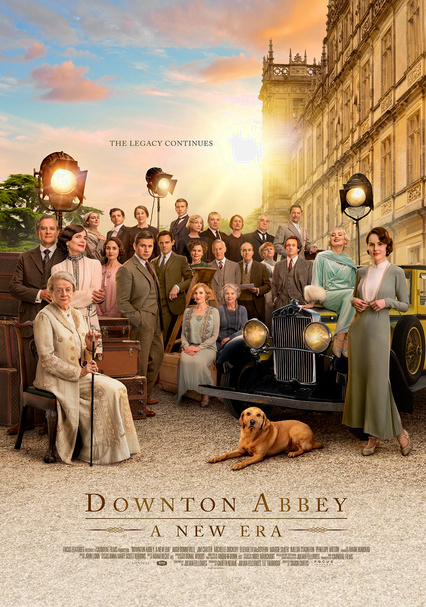
The main action centers around the sudden news that grand dame Violet Crawley, Dowager Countess of Grantham (Maggie Smith), has inherited a villa in the south of France from a former suitor who has just died. Some of the family must travel to France and figure out the mystery.

Secondly, A film production company requests to use Downton for a silent film. Robert (Hugh Bonneville) and retired butler Mr. Carson (Jim Carter) disapprove. Still, Robert’s eldest daughter and estate manager, Lady Mary Talbot (Michelle Dockery), says the income would cover the cost of replacing Downton’s leaking roof.

The household staff is eager to see the film stars and scrambles to make things as lovely as possible for the incoming actors.

The terrific thing about Downton Abbey: A New Era is that nearly all of the almost thirty principal characters are given some storyline.

Plus, there are a handful of new characters to give screen time to.

Surprisingly, as in Downton Abbey (2019), the main ‘super couple’, servants Anna (Joanne Froggatt) and Bates (Brendan Coyle) are given almost nothing to do. They are seen, but their child is not, and some drama would have been nice. Perhaps a mysterious illness or a malady for the couple to endure?

Maybe next time.

Still, everyone else is represented, and the feeling for viewers is warm and fuzzy.

Below are some highlights.

Robert frets at the possibility that he may be half French and his birth a result of a tryst between Violet and the villa owner. Mary’s absent husband allows for a flirtation to develop between her and a member of the film.

Gay butler Thomas (Robert James-Collier) finds himself pursued by the film’s big star.

Cora (Elizabeth McGovern) keeps a health secret, while a bedridden Violet’s health declines in bed. Newlywed servants Daisy (Sophie McShera) and Andy (Michael Fox) scheme to unite his lonely father with the cook, Mrs. Patmore (Lesley Nicol).

Finally, Miss Baxter (Raquel Cassidy) eagerly awaits a marriage proposal from nervous Mr. Molesley (Kevin Doyle).

In addition, new characters, such as actors Guy Dexter (Dominic West), Myrna Dalgleish (Laura Haddock), and director Jack Barber (Hugh Dancy), are instant fan favorites, immediately connecting with the mainstay characters.

This is ingenious writing that can serve as a valuable lesson for any soap opera writer. Always write new characters by sharing stories with existing ones rather than writing in silos. It works wonders.

The historical relevance of approaching the 1930s is not missed, as ‘talkies’ taking over the film industry meant the kiss of death for most silent film stars.

The popular LGBTQ+ storyline is wonderfully written. A gay man in 1928 was doomed to either a life of hiding or one of loneliness, and one character wisely references a ‘cruel world’ regarding the viewpoint of the lifestyle.

Times were not changing just yet.

I am crossing my fingers that a third Downton Abbey film will be made. The characters and storylines remain vibrant, especially as the timeline progresses into the 1930s and the dire 1940s, when World War II breaks out.

Downton Abbey: A New Era (2022) proves that in the COVID-19 era, a trusted old friend is needed tremendously, even on the silver screen.

Death on the Nile-2022

Death on the Nile-2022

Director Kenneth Branagh

Starring Armie Hammer, Tom Bateman, Gal Gadot

Scott’s Review #1,245

Reviewed April 15, 2022

Grade: B+

Death on the Nile (2022) is a modern remake of the 1978 thriller of the same name, which in turn is based on Agatha Christie’s famous 1937 novel, one of many stories the author wrote.

I love a good whodunit, and the fact that I already knew the outcome from seeing the original film did not lessen the entertainment and suspense that befell me.

It only made me salivate with anticipation about how the new incarnation would handle the inevitable big reveal during the film’s final chapter.

As the suspects are locked in a boat, bar one character boldly announces that the murderer is in this room and will be unmasked.

Death on the Nile is a meat-and-potatoes offering peppered with glamour.

Similar to the remake of Murder on the Orient Express (2017), Hercule Poirot (Kenneth Branagh) is once again enshrouded by mysterious folks with money to burn and secrets to hide. One of them has murdered a wealthy young heiress with her own set of secrets, and Poirot must quiz and entrap the perpetrators aboard a sailing vessel.

Or could there be more than one murderer?

The setting of mystical Egypt and the luminous Nile River in northern Africa puts the players amid gorgeous locales. This only enhances the juiciness and the appetite for a good, solid murder mystery.

Our hero’s lush Egyptian vacation aboard a glamorous river steamboat turns into a deadly search for a murderer when a picture-perfect couple’s idyllic honeymoon is cut short by the killing of one of them.

It turns out that almost everyone aboard has a reason to want her dead. Naturally.

Set against an epic landscape of sweeping desert vistas and the majestic Giza pyramids, Poirot peels back the onion of the lives of his fellow vacationers. He discovers jealousy and deceit as he gets to know the wealthy cosmopolitan travelers.

The trip includes the honeymooners, Simon and Linnet, played by Armie Hammer and Gal Gadot, Bouc (Tom Bateman), a long-time friend of Poirot’s, Euphemia (Anette Bening), a renowned painter and Bouc’s mother, Salome (Sophie Okonedo), a black jazz singer, and her niece Rosie (Letitia Wright), Linnet’s maid, Linnet’s godmother, and her companion, and a doctor who used to date Linnet.

It would seem as if all roads lead to Linnet, which it does since she is the character who suffers her fateful demise. What is key is that every character has a connection to her, making the puzzle all the more intriguing and interesting to figure out.

Branagh, coming directly from his Oscar-winning film Belfast (2022), deserves the most credit because he not only stars in but directs the movie as he did with Murder on the Orient Express.

Michael Green once again creates the screenplay. The consistency is crucial and satisfying to the overall product, and the two films can be watched back-to-back with ease.

There is trust that the anticipated enjoyment will be fulfilled, and for me, it was.

Death on the Nile is not high art but merely slick entertainment done quite well. There is considerable manipulation for the audience to endure, and the setup of the potential suspects and the victim’s background is presented directly to the viewer.

This was welcomed.

I didn’t mind the implausibility of every character having reason to kill the heiress, nor did I mind a mystery character racing around the ship, causing mayhem, then changing into formal evening wear in less than thirty seconds flat.

The numerous plot devices are to be expected from a film like Death on the Nile, and I happily and willingly fell for them hook, line, and sinker. The wealth of most of the characters is a splendid intrigue and only adds to the enjoyment.

Considering the time is the 1930s, a same-sex relationship and a brewing romance between the caucasian Poirot and the black Salome are fabulous additions.

Rumor has it that there will be another production of an Agatha Christie novel adaptation directed by and starring Branagh, and I can’t wait for this. He has dusted off the old whodunit storyline and updated it with a spectacle about crimes of passion that feels fresh.

The result is a modernized Death on the Nile (2022) brimming with fun and pleasure while never taking itself too seriously.