Tag Archives: Lambert Wilson

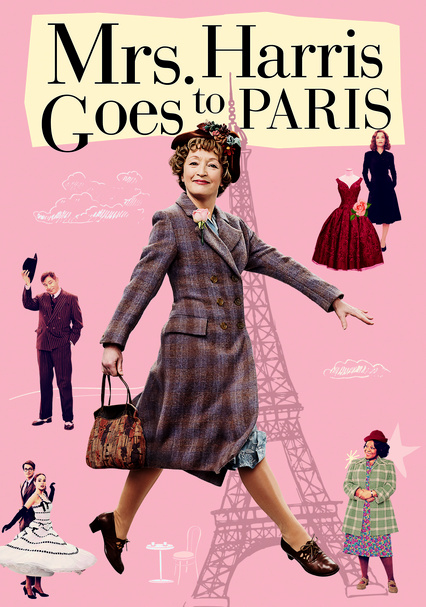
Mrs. Harris Goes to Paris-2022

Mrs. Harris Goes to Paris-2022

Director Anthony Fabian

Starring Lesley Manville, Isabelle Huppert

Scott’s Review #1,301
Reviewed September 24, 2022

Grade: B+

Mrs. Harris Goes to Paris (2022) is an endearing film enveloping the viewer in warmth and good cheer. It exudes empathy and heart while sprinkling in some good luck, chance, and a big dream.

It shows that, every once in a while, a reasonable person prevails in life.

It is the third film adaptation of the 1958 novel Mrs. Arris Goes to Paris, written by Paul Gallico. Angela Lansbury played the role in an earlier incarnation.

British actress Lesley Manville stars in the film as the title role. A talented cast surrounds her, delivering good performances, notably from the legendary French actress Isabelle Huppert in the role of the foil.

Unsurprisingly, in a film where good fortunes are the theme of the day, even she comes around in the end, though, where most characters dutifully assist in the ultimate happiness of Mrs. Harris.

There is drama encircling this film, but in the lightest of ways. The comedy elements pair well, and the romanticism aligned with Paris is palpable, as seen in other characters like young lovebirds André (Lucas Bravo), the Dior accountant, and Natasha (Alba Baptista), a Dior model, who find love for each other.

Everyone gets a happy ending.

It all begins in 1957 London, where Ada Harris, a widowed cleaning lady, becomes obsessed with one client’s haute couture Dior dress. She is impulsively inspired to buy her Dior dress one day. However, finding the money is the biggest challenge.

As fate would have it, she suddenly receives a war widow’s pension and travels to Paris to buy her dress. She stumbles into a showing of Dior’s 10th-anniversary collection and is befriended by André and Natasha.

However, the Dior director, Claudine (Huppert), resents Ada’s intrusion into the exclusive world of haute couture and schemes to prevent her purchase.

Director Anthony Fabian, who is very new to directing, wisely provides a hefty dose of the British way of living, counterbalanced with the glamour of the Parisian lifestyle that works. The character, and thus the viewer, alternates between London and Paris.

The film is a safe experience and will not ruffle even the slightest of feathers or the tightest of asses.

It’s all pure, silly fantasy, of course, but done in the best possible way.

I was immediately immersed in the film and instantly wanted to champion happiness for Ada.

Manville is perfectly cast, though I could easily see other actresses in the role. Imelda Staunton, Emma Thompson, or Helen Mirren would have been terrific. Taking nothing away from Manville, who’s got charisma and acting chops, it’s a role that others could also successfully play.

I can’t say the same for Claudia’s role. At the risk of merely being a throwaway role as the heavy, Huppert, whom I adore in films like Amour (2012) and Elle (2016), instead brings her from a full-on bitch to a sympathetic character.

Huppert is one of the greatest actresses in the world and can and has made the most despicable characters worthy. That’s tough to do.

Naturally, there is a hefty dose of exterior scenes that I find pleasing. Having visited both Paris and London, as well as the surrounding areas, it’s lovely and reminiscent to catch glimpses of the Eiffel Tower or see cobblestone streets lined with bakeries or pubs.

The musical score is fresh and atmospheric, especially during the Parisian sequences. Boisterous and cultured French music emerges from the screen.

Besides all of the pleasant trimmings, romance blossoms for Ada as well as the youngsters. Encouraged to find the love she thinks she might have with the rich and sophisticated Marquis de Chassagne (Lambert Wilson), who takes a shine to her.

But when he awkwardly tells her she reminds him of his childhood nanny, she is crushed.

I secretly enjoyed this heartbreak only because I was never convinced Ava truly belonged in that world daily.

True to form, the filmmakers teeter towards a setup between Ava and regular, beer-drinking, local friend Archie (Jason Isaacs).

Box-office receipts will likely determine whether Mrs. Harris Goes to Paris (2022) receives a sequel. But I’ll be keen to follow this richly drawn character as she lands in New York City or other interesting geographies.

Oscar Nominations: Best Costume Design
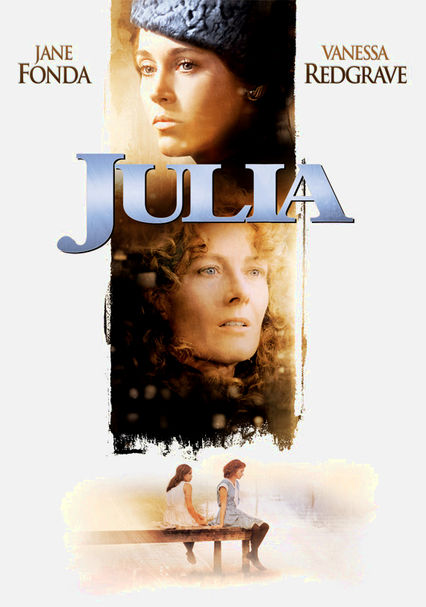
Julia-1977

Julia-1977

Director Fred Zinnemann

Starring Jane Fonda, Vanessa Redgrave, Jason Robards

Scott’s Review #1,283

Reviewed July 31, 2022

Grade: A

Jane Fonda leads the charge in a powerful, and gorgeously shot, drama named Julia (1977) centering around pre-World War II and the impending Holocaust.

The drama is based on the writing of Lillian Hellman, a famous playwright, which depicts the relationship between two close friends and its unexpected consequences when one desperately needs help from the other.

When Lillian (Fonda), a renowned playwright, reunites in Russia with her childhood friend Julia (Vanessa Redgrave), the writer is asked to smuggle funds into Germany to aid the anti-Nazi movement. In the mix is Lillian’s mentor, Dashiell Hammett (Jason Robards), who is unaware of her dangerous assignment.

I immediately relish the film mainly because the message is extremely female-empowering and a dynamic friendship between two women is examined. This does not happen enough, successfully, in films even to this day.

Given the World War II theme, one would naturally assume the film would center around men, not women, and plenty of female spies and the like, are featured.

Added to the mix is the astounding cinematography of Germany, Poland, and Russia. In truth, the film was shot in England and France for security and restrictive reasons but it could have fooled me since the countries look authentic and believable.

Julie looks polished and that’s hardly a gripe. The production design and costumes are perfectly shot and colored to perfection. It’s not a dowdy or drab film and it depicts little amount of violence or torture choosing to focus on relationships and intrigue.

The suspenseful train sequence is brilliant in every way, sprinkling in Hitchcokian bits along with enough nail-biting to make the long scene a key takeaway. Lillian must keep secret her intentions as she traverses toward Russia and each train scene whether it’s the peril of being checked while crossing the border, or eating in the dining car, is captured with perfection.

A slight suspension of disbelief is the casting of the beautiful Fonda as the plain-looking playwright Lillian Hellman. In some scenes, she is made up to look haggard, tired, and homely but the trick never works for a minute.

It’s even giggle-worthy and recommended to sit back and watch Fonda give a splendid performance forgetting altogether that she is portraying the writer.

In other movies, it might have only been about Fonda from an acting perspective but in Julia, the spoils go round and round. At the very least Redgrave, Robards, and Maximilian Schell, who plays a pivotal character named Johann, must be mentioned. Each brings professionalism and believability to their characters.

But quieter parts by a woman passenger and a girl passenger are my favorites. They go from cheery to serious, speaking in a sort of code, not stating they are helping Lillian, but obviously, they are using facial expressions to reveal true alliances.

A delightful point to make is that Julia is Meryl Streep’s first film role, albeit in a tiny part.

Speaking of Redgrave, when she won the Best Supporting Actress Academy Award she made an infamous speech that marks a great controversy.

In her acceptance speech, she thanked Hollywood for having “refused to be intimidated by the threats of a small bunch of Zionist hoodlums whose behavior is an insult to the stature of Jews all over the world and to their great and heroic record of struggle against fascism and oppression”.

This was preceded by members of the Jewish Defense League picketing the ceremony and followed by some boos and retorts to her comments.

But back to the film, Julia does not end in a happily ever after way. A major character is killed and a baby is lost forever. But, that’s part of the truth about creating a film that harkens back to a day when non-conformity led to death.

Julia (1977) is a vital film that still holds up tremendously well and in a world still filled with chaos and oppression, it’s a great reminder of the power of cinema.

Oscar Nominations: 3 wins-Best Picture, Best Director-Fred Zinnemann, Best Actress-Jane Fonda, Best Supporting Actor-Jason Robards (won), Maximilian Schell, Best Supporting Actress-Vanessa Redgrave (won), Best Screenplay-Based on Material from Another Medium (won), Best Cinematography, Best Costume Design, Best Film Editing, Best Original Score