Tag Archives: Comedy

Isle of Dogs-2018

Isle of Dogs-2018

Director Wes Anderson

Voices: Bryan Cranston, Edward Norton

Scott’s Review #831

Reviewed November 15, 2018

Grade: B+

Anybody familiar with a Wes Anderson production knows what they are in store for, and Isle of Dogs (2018) is par for the course.

With zany narratives and fantastic art direction, the film has a familiar stamp. Most resembling his other notable stop-motion film, Fantastic Mr. Fox (2009), Isle of Dogs offers what is to be expected- an intelligent and odd project by a visionary creative mind.

Anderson provides the film with a timely, corrupt government-type message that strongly resonates in 2018. In this way, Isle of Dogs, while animated, is so much more than a cookie-cutter story or a wholesome film for kids.

The director shows bravery in focusing on the corruption prevalent in today’s world and the fight for justice by ordinary people living under authoritarian control.

Set in dystopian Japan, a recent outbreak of canine flu causes corrupt Mayor Kobayashi to banish all dogs from society to the vast wasteland of Trash Island, where they will live out their days with other ostracized canines.

A brave twelve-year-old boy named Atari, who happens to be the mayor’s nephew, steals a plane and crash-lands on the island to rescue his beloved dog, Spots.

With help from a pack of dogs led by a former stray named Chief, the group sets out to find Spots and ultimately expose the government conspiracy. Obstacles abound as the mayor has sent a robot dog to return Atari and make mincemeat of any dog in its path.

Meanwhile, a professor, Tracy Walker, is on the cusp of discovering a serum as an outspoken American exchange student investigating the conspiracy.

Isle of Dogs is incredibly original and offers bravura visuals. From the lush and bright Japanese culture to the tired and haggard look of many dogs living on the island, the film is a treat for the eyes. The shimmering richness of the city is elegant and feels alive and powerful.

What I admire most about the film is its creativity and the blast of left-of-center storytelling, which blows away most animated offerings of today.

Many contain a robust helping of “cute”, which can turn off a mature viewer. With a target audience of the tween age, what is in it for adults? To sit there with a youngster and pretend to be jovial?

Isle of Dogs is not a crowd-pleaser; it is better than that. Anderson crafts a serious and timely message that begs to be absorbed by the careful viewer.

Assuredly, Anderson cannot escape providing a subtle allegory on an evil leader stirring the pot against the most helpless in our society. This point is timely and well thought out, especially in the tumultuous United States.
Could this be why an American character (Tracy) was added?

As dynamic as Anderson’s creativity is, the story in Isle of Dogs does not always embrace the viewer, and the jarring dialogue is tough to follow.

Standard in his films, the pacing is strange, the conversations between characters are odd, and the film lacks a truly welcoming or warm quality.

Therefore, the film is not an easy watch. And the dogs all speaking English rather than Japanese, with American accents, must be overlooked.

Critics and detractors of Wes Anderson need not see Isle of Dogs (2018) as they will be in store for typical Anderson fare. In addition, those seeking a standard mainstream animated feature will be disappointed.

Those with a more open-minded approach to cinema will revel in the film’s stunning look and the powerful message bubbling under the surface.

Oscar Nominations: Best Animated Feature Film, Best Original Score

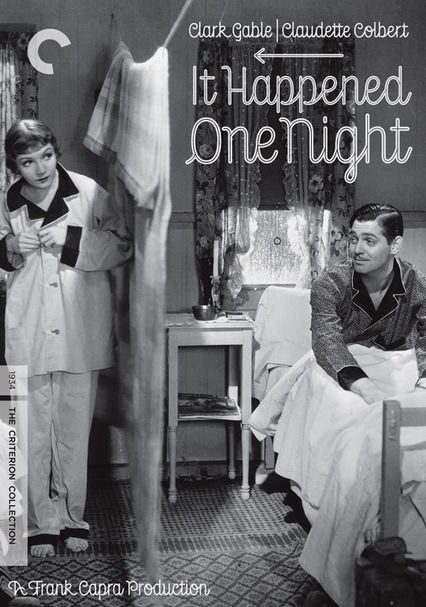
It Happened One Night-1934

It Happened One Night-1934

Director Frank Capra

Starring Clark Gable, Claudette Colbert

Scott’s Review #824

Reviewed October 25, 2018

Grade: A-

Perhaps the film that best defines the early cinematic romantic comedy and certainly the one most modern genre films can learn from, It Happened One Night (1934) is a lively, fun romp.

The film carted away the Best Picture, Best Director, Best Actor, and Best Actress Academy Awards, a rare feat, and defined what romantic tension and thoughtful dialogue should be in a quality picture. All the elements sparkle into an excellent classic film watch.

Ellie Andrews (Colbert) is a pampered socialite who recently disobeyed her overbearing and wealthy father by eloping with a blue-collar pilot who is feared to be after her money.

Determined, Ellie escapes her father’s clutches and hops on a Greyhound bus headed from Florida to New York, where her husband is. When she crosses paths with an out-of-work journalist, Peter Warne (Gable), they each find an opportunity to use the other to their advantage.

The pair’s adventures along the East Coast lead to antics and schemes as they fall madly in love with one another.

It Happened One Night successfully mixes a good romance with some screwball comedy without ever becoming silly or trite.

The film also serves as a good old-fashioned adventure story as Peter and Ellie face one hurdle after another on their trek north.

Pleasing is how the duo slowly finds romance but first begins as irritants towards each other. The chemistry between the actors is superb and never seems forced or contrived.

Frank Capra, a famous director with successes throughout the 1930s, culminating with the holiday favorite It’s a Wonderful Life (1946), had several Oscar-winning films during the decade.

It Happened One Night seems to have inspired most of them, and the acting, absurd situations, dialogue, and direction all successfully come together.

Shot in black and white and the Motion Picture Production Code, which heavily restricted details deemed too violent or sexual, It Happened One Night pushed the envelope quite a bit.

This is to the film’s credit- who can forget the adorable yet provocative scene in which Ellie shows her shapely legs to enable the duo to catch a ride? The lovable scene, non-risque in today’s modern world, was anything but in 1934.

An interesting, at that time unique, point is that supporting characters are more layered than is typical in romantic comedies. Danker, whom Peter and Ellie hitch a ride with, is seemingly a decent man but ultimately attempts to steal their luggage.

Later, Ellie’s preposterous father turns out to be a decent man, so the film also contains a few character surprises.

While not quite a pure masterpiece, It Happened One Night (1934) is nonetheless an inspired legendary film that can be viewed and enjoyed for the period in which it was made.

The film stands out among the similarly themed romantic comedies of the 1930s and 1940s and is a teachable moment for all filmmakers who explore the same genre territory.

Oscar Nominations: 5 wins– Outstanding Production (won), Best Director (won), Best Actor-Clark Gable (won), Best Actress-Claudette Colbert (won), Best Adaptation (won)

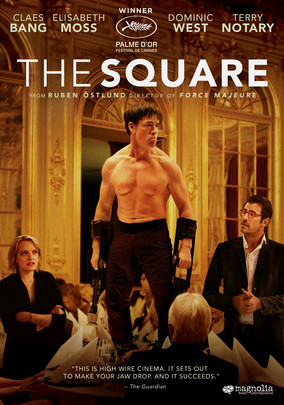
The Square-2017

The Square-2017

Director Ruben Östlund

Starring Claes Bang, Elisabeth Moss

Scott’s Review #814

Reviewed September 28, 2018

Grade: B+

The Square (2017) is an eccentric, highly interpretive Swedish-language film that does not always make perfect sense, as a more mainstream film would.

This is both a positive and a negative, as the film’s ultimate message is admirable, though some parts are perplexing and downright bizarre.

The film was undoubtedly commended for its bravery and cutting-edge approach and received an Oscar nomination for Best Foreign Language Film—subsequently, it lost to A Fantastic Woman (2017).

The film’s primary setting is the X-Royal Art Museum in Stockholm, Sweden. The action centers mainly around the museum’s new creative director, Christian (Claes Bang), attempting to introduce a new installation called “The Square.”

A misunderstanding with a youthful public relations firm hired to make the exhibit as accessible as possible leads to controversy.

The film also interjects various subplots that are generally interesting but do not always make logical sense.

Bang is quite compelling in the lead role and the film’s best part for me. He is charismatic and a good father to his two daughters. He helps people experiencing homelessness- even going so far as to help a young woman when nobody else will, only to find his wallet stolen- an unfortunate victim of a scam.

Furthermore, Christian’s desire to create “The Square” is humane and admirable- a safe zone for trust and compassion. The character is a good guy but is also concerned with his status.

Common themes of satire and human beings’ natural hypocritical nature abound. For example, in one scene, Christian, proud to drive his flashy Tesla car and give money to the homeless, is afraid to be seen in a run-down apartment house.

Later, a man with Tourettes syndrome disrupts an interview at the museum and is looked down on by “open-minded people” as a result. The latter scene is quite amusing as the man erupts with various expletives at the most inopportune times.

My favorite sequence occurs approximately midway through the film. As bizarre as the scene, it is riveting in its momentum and bravery.

When a group of well-dressed museum members gathers for a lavish dinner to watch a human art show, a bare-chested man who only grunts emerges and slowly antagonizes guests.

He begins pulling one woman’s hair while chasing an angry man from the hall. This scene is shocking, intense, and thought-provoking.

But what the scene means is perplexing.

A treat for me was viewing the famous Stockholm museum’s frequent interior and exterior scenes- which I was privy to have visited in 2016.

This experience was so fresh that it brought back wonderful memories of not only the museum but also the gorgeous city of Stockholm itself.

The chemistry between Christian (who is Swedish) and an American reporter, Anne (Elisabeth Moss), does nothing for the film. It feels wholly disjointed and unnecessary, and there is little connection between the two characters.

Engaging in a one-night stand, the duo has a dispute about a used condom. Does Christian think that Anne is desperate enough to use his sperm and impregnate herself? The resulting spat between the two seems meaningless.

The Square (2017) is a very tough film to review.

Oftentimes disjointed and impossible to make heads or tails of, one would be wise to simply “experience” the film on its own merits. I am not sure.

I mainly need to view it again and try to figure out the plot because I am uncertain if that was the intent of director Ruben Oslund.

Having directed the wonderful Force Majeure (2014), a more straightforward and superior film, The Square is worth a watch in its own right.

Oscar Nominations: Best Foreign Language Film

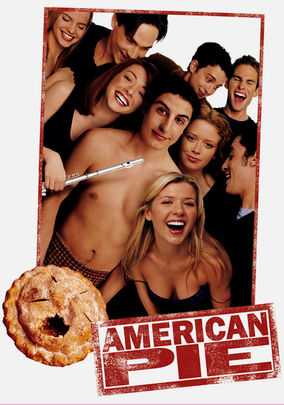
American Pie-1999

American Pie-1999

Director Paul Weitz

Starring Jason Biggs, Alyson Hannigan

Scott’s Review #813

Reviewed September 23, 2018

Grade: B+

With each generation of film, there seems to be a gross-out comedy that speaks to a young, coming-of-age generation- of the mostly male and jock persuasion.

American Pie (1999) finishes the 1990s strongly with a raunchy story that feels fresh and genuinely funny with precarious situations facing the cast, specifically the protagonist and “everyman”, played by Jason Biggs.

The film is a teen sex comedy of the crudest nature yet engulfed with characters audiences like- not mean-spirited, but rather fun-loving and endearing.

An enormous box office hit at the time, the film was all the rage and brought tawdry new meaning to the Americana staples of apple pie and band camp.

Spawning several sequels throughout the next decade, the franchise successfully brought back the teen comedy genre with strong and highly recognizable characters.

American Pie also brought back the fun to R-rated films and put a nice cherry on top of a creative decade in cinema. The film is not high art, but what it aims to do, it does quite well.

Living a middle to upper-middle-class existence in the suburban USA (presumably Michigan), five high school seniors make a pact to lose their virginity by the time they graduate. Most of the group are nerdy, insecure, and sexually naive, the central character being Jim Levenstein (Biggs).

Most events are taken from his point of view and he is continually advised by his very nerdy father, Noah (Eugene Levy).

The setup is an age-old premise with lots of room for jokes and precarious situations in hilarious form. As Jim has the hots for a sexy foreign exchange student, Nadia, she is out of his league.

In a hilarious scene, a “warm apple pie” incident leads to a webcam setup attempt to watch Nadia change clothes. When events go amiss everyone gains access to the webcam link, and Nadia is sent back to Czechoslovakia in shame.

This leads to a new pursuit for Jim, in geeky band camp girl, Michelle (Alyson Hannigan). Surprisingly, they fall madly in love and have fantastic chemistry.

Some of the supporting characters add energy and sometimes hilarity. Jennifer Coolidge is great as the mother of Stifler (the jock of the group), who has eyes for younger men, specifically Finch.

As they finally consummate their relationship on a basement pool table, Stifler walks in at the worst time and faints in horror. These antics are genuine and fresh, with great acting by all principals.

Coolidge, Hannigan, and Levy are arguably the best secondary characters. Each, in a different way from the others, provides comic relief by crafting interesting nuances to the characters.

Levy, as Jim’s father, is well-meaning, yet bumbling. Every teen cringes at the thought of having a father like Noah, yet the pair share a close bond and a classic father-son relationship, so the character is therefore enamoring.

American Pie was successful at coining new pop-culture phrases such as “warm apple pie”, “milf”, and “this one time in band camp…” that the young generation of the time (myself included) enjoyed giggling over and repeating in glee.

The film set the tone for other similar genre films, but none of them lived up to the chemistry and the charm that American Pie had. This film was better than it ever should have been!

The turn-of-the-century version of Animal House, American Pie (1999) introduces a new generation of young people into the world of comedic, R-rated, raunchy fun. Films like this have been churned out by the numbers, but rarely any are as authentic as this film feels.

The franchise was able to sustain its popularity with well-written sequels, most notably American Pie 2 (2001), which developed the situations more, but the original is a fine blueprint for what good comedy can achieve.

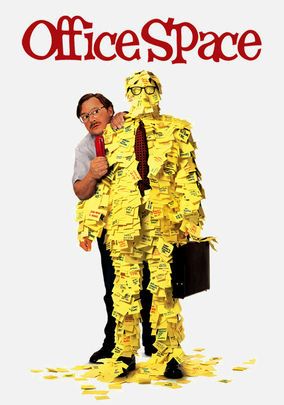
Office Space-1999

Office Space-1999

Director Mike Judge

Starring Ron Livingston, Jennifer Aniston

Scott’s Review #811

Reviewed September 16, 2018

Grade: B+

Having become somewhat of a cult classic since its theatrical release in 1999, Office Space is delightful to watch for anyone who works in a corporate environment- or ever has- they will undoubtedly “get” this movie.

The dark humor and antics may be lost on those who have not, but for the rest of us, the film is quite the treat.

One may never view a stapler or the common office cake party in the same manner. Yes, the story and characters are somewhat over-the-top but more than a few clever scenes ring with truth.

But over time will the film become dated?

Writer and Director, Mike Judge, tells a story about life within a 1990s software firm.

Reportedly, the story is based on Judge’s cartoon series Milton, and his first foray into live-action filmmaking. His first film was Beavis and Butt-Head Do America (1996) if this gives any indication of the type of humor that resounds. Fraternity boy-minded, yes, but the writing is crisp and oftentimes rife with fun.

The film was not a box-office smash at the time of release yet is well-regarded by critics.

Peter Gibbons (Ron Livingston) is a frustrated IT programmer who works for a company named Initech. Alongside two colleagues, one of whom is comically named Michael Bolton (not that Michael Bolton), they despise their sneaky boss, Lumbergh (Gary Cole).

The situation gets worse when two consultants are brought in to downsize the company, leaving everyone in panic mode.

After a failed hypnotherapy session Peter becomes relaxed and confident, even winning praise from the consultants and scoring a promotion. This puts him at odds with Lumbergh, especially after he begins dating a waitress, Joanna (Jennifer Aniston), and assumes she has also slept with him.

Office Space shines the most with the crackling dialogue and clever scenes that take place within the confines of the office. With stuffy cubicles for miles and the standard corporate jargon to make into witty lines, the subject matter is ripe for the picking.

With Cole’s sly requests for his employees to work weekends, Judge creates authenticity and freshness that is incredibly appealing to corporate workers. He successfully knocks down office politics with intelligent, wisely crafted, memorable satire.

In the supporting role of Milton Waddams, character actor Stephen Root is successful at stealing the show with his mumbling and bumbling character. Nearly invisible to all his colleagues, Milton is eventually moved to a basement desk and left out of the cake party.

When somebody borrows his prized red stapler, all hell breaks loose. Increasingly disgruntled, Milton’s fate is instrumental to the hilarious conclusion of the film and he ultimately gets his revenge satisfyingly to all.

The romantic element between Peter and Joanna is okay, but not at all the highlight of the film. The romance seems unnecessary to me but undoubtedly added since comedies of this sort usually require something heartfelt to appeal to mainstream audiences.

Aniston, popular at the time for her role on the television show Friends, was on her way to becoming a marquee movie star, but not quite yet, so she must be content with the standard “girlfriend” role.

She’s cute, but hardly anything more.

Office Space is a fun ride, but the film is not a groundbreaking experience in great film techniques, inventive ideas, or any other technical or story achievements.

What it offers to fans, it does very well and feels like a breath of fresh air in its genre.

The film is a comedy, but not a dumb comedy as a myriad of similar style offerings have been released since the beginning of cinema. With witty one-liners and comic gold, Office Space (1999) is a film to be remembered.

The Happytime Murders-2018

The Happytime Murders-2018

Director Brian Henson

Starring Melissa McCarthy, Maya Rudolph

Scott’s Review #808

Reviewed September 6, 2018

Grade: B-

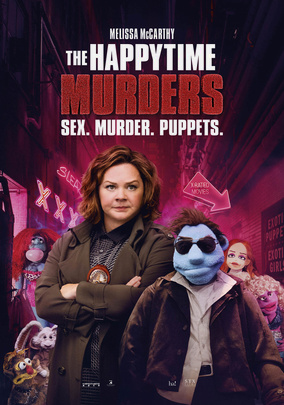
Some consider it the worst film of 2018, but I had no positive expectations as I walked into an empty movie theater.

In truth, The Happytime Murders is not that bad. It is more in tune with a fun, adult-humored late-night affair. The greatest assets are Melissa McCarthy’s comic talents and the neat whodunit that is the central part of the story.

The human actors acting opposite puppets are bizarre and take some getting used to, but the nice editing (not easy to do!) is to be commended.

Set in modern times, in the underbelly of Los Angeles, puppets live alongside humans and are not treated well. They are constantly bullied and taken for granted.

Sarcastic and angry puppet Phil Phillips (a nod to the American Idol winner?) works as a private investigator. An incident many years ago caused him to be booted from the LAPD police force forever.

When Phil is hired by a sexy blonde female puppet, Sandra, to find out who has been sending her blackmail letters, he stumbles upon a rash of puppet murders.

The killer is knocking off members of an 1980s television show, presumably for profit. Phil’s brother and grizzled ex-partner, Connie Edwards (McCarthy) become central to the story.

The first dynamic that works well in The Happytime Murders is the “chemistry” between Connie and Phil. The connection and good rapport are surprising, considering the human/puppet factor.

One might find it surprising that the two characters play well off each other, but their adult sparring and frequent vulgar language name-calling are oodles of fun to watch. McCarthy is always fantastic with comic timing, so her fans will not be disappointed.

As they shout vulgar “pleasantries” to each other, one cannot help but smirk.

Maya Rudolph plays an interesting role as Phil’s secretary. Named Bubbles, she is sexy, sultry, and coquettish—an unusual role for Rudolph, but she pulls it off in spades.

Otherwise, Elizabeth Banks, cast in the small role of Jenny, Phil’s blonde ex-girlfriend, is entertaining. Despite being a puppet, Phil is quite the lady’s man, and Sandra (a nymphomaniac) is his main conquest.

In one lewd scene, Phil beds her right in his office, spewing strands of white goo meant to be semen, and Sandra exposes her purple pubic hair.

The film is clearly for adults only, and hopefully, unwitting parents do not mistake the puppet characters for a kids’ movie. The film contains many scenes bordering on X-rated territory, yet the inclusion of puppets undoubtedly gives off a humorous, not-to-be-taken-too-seriously element.

The Handsome Joel McHale, as a Special Agent on the case along with a Lieutenant, Connie’s superior, makes it clear the characters are along for the comic ride, and the film never takes itself too seriously.

I admittedly had low expectations, so I was surprised to find myself enjoying the puppet characters and the rapport between them most of all. Phil, charismatic in a Dick Tracy sort of way, balances the other “over-the-top” puppets, including a drug lord, two puppet prostitutes, and a puppet bunny addicted to porn.

The creations are lively and unique.

Let’s not get carried away, though- The Happytime Murders is not the genius that Who Framed Roger Rabbit? (1988) is, but its crass nature is of some appeal.

I adored the Los Angeles setting as the sunny locale perfectly counterbalanced the murderous antics of a hooded killer. The big reveal I did not see coming added to my surprise.

To summarize, The Happytime Murders is not a work of art or anything spectacular.

Presumably, it will be forgotten, especially since McCarthy is appearing in another “more serious” film in 2018, Can You Ever Forgive Me?, which has enormous Oscar potential. Therefore, the focus will assuredly be on that film.

However, a work like The Happytime Murders (2018) does have its place as perhaps a fun late-night offering.

Legally Blonde-2001

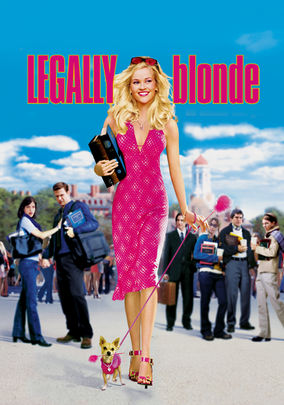
Legally Blonde-2001

Director Robert Luketic

Starring Reese Witherspoon, Luke Wilson

Scott’s Review #807

Reviewed August 30, 2018

Grade: B+

Legally Blonde (2001) is a film that by all accounts should have been a hot mess, but for some reason is a great ball of fun. High art it ain’t by any means, and the plot is implausible beyond belief, and suspension of disbelief must be securely tucked away.

Despite portraying more serious roles both before and after this film, Reese Witherspoon is largely responsible for the success and is closely associated with this role.

Quite simply, all the elements manage to align with perfection in this film.

Elle Woods (Witherspoon) is president of her sorority at a Los Angeles college. Clad in fluffy pink attire and carrying her cute dog everywhere she goes, she epitomizes the stereotypical “dumb blonde”.

However, she does carry a 4.0 grade point average in fashion.

Expecting a marriage proposal from her upper-class, snooty boyfriend, Warner, Elle instead finds herself dumped due to not being serious enough.

Determined to prove herself worthy, she manages acceptance into Harvard Law School, along with Warner, and embarks on hi-jinks and adventures.

Warner’s fiancee and a potential new love interest cause turmoil for the boisterous Elle.

Legally Blonde never takes itself too seriously and is simply a fun, silly-minded, comic adventure. Audiences will likely chuckle and smile along with Elle’s adventures as she gets into one pickle after another, always determined to prove her intelligence.

To be clear, the film itself is very formulaic and could easily have been trivial and uninspired resulting in a bomb. But Witherspoon shines in the lead role adding a likable, charming quality to the character.

The actress possesses great wit and comic timing so that her character becomes more of a champion and we root for her to overcome obstacles and succeed.

By miles, she is the standout in the film.

Suspension of disbelief is at an all-time high. In “real life” there is no way Elle would ever make her way into the elitist Ivy League school brandishing a pink resume or other silly tricks to be cute and appealing.

Nor would she ever likely be so instrumental in winning a murder case so quickly. To nobody’s surprise, Elle eventually graduates with flying colors and is honored with giving a graduation speech inspiring those around her.

But as implausible as these situations are, they are also Legally Blondes’ appeal.

The supporting characters are pure caricatures, especially the main foils (Warner and Vivian- who take Elle’s place as fiancee). Both are the villains, Vivian going so far as to embarrass Elle by inviting her to a stuffy party under the guise of it being a costume party.

In the end, one of the characters “turns good”, another common element of predictable films of this nature. But again, the film is just pure and simple fun, so these stereotypes are okay.

In more modern times (not that 2001 was so long ago), the film would have not been directed by a man, but rather by a woman.

Screenwriters Kirsten Smith and Karen McCullah Lutz prepared a female-driven film that was based on a novel by Amanda Brown.

Why a man was chosen to direct is beyond me, but, alas, this is the way things were at the time.

Interestingly, another recent film that I reviewed, My Big Fat Greek Wedding (2002) would work perfectly as a now retro romantic comedy double feature along with Legally Blonde (2001).

Both are fun and light but also celebrate strong female characters.

Legally Blonde borrows much from the 1995 brilliant similar genre Clueless but is not as great as that film. Still, the film is an inspired effort due largely to the charms of its lead star.

My Big Fat Greek Wedding-2002

My Big Fat Greek Wedding-2002

Director Joel Zwick

Starring Nia Vardalos, John Corbett

Scott’s Review #806

Reviewed August 28, 2018

Grade: B+

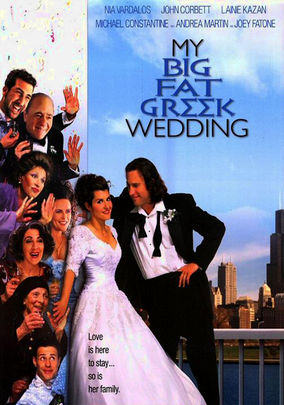
My Big Fat Greek Wedding is a romantic comedy from 2002 that became a surprising sleeper hit at the time of release. A novel story idea, the film was even recognized with a Best Original Screenplay Oscar nomination.

The film achieved success the old-fashioned way by garnering word-of-mouth buzz despite little promotion.

Good-natured, earnest, and tender, the film was nonetheless marred by an abysmal sequel and short-lived television series- a lesson learned in leaving well enough alone.

Comedian Nia Vardalos reportedly wrote the story as a one-woman play and word of mouth among Hollywood A-list celebrities led to a film version starring Vardalos herself. This casting choice adds enormous authenticity as the writer’s vision shines through on-screen.

The film has a fresh and modern feel to it. Otherwise, the supporting cast is brilliant and perfectly selected. From handsome love interest John Corbett to veterans like Lainie Kazan and Andrea Martin, everyone plays their part to the hilt and seems to be having a ball with the comic elements.

Dowdy Toula Portokalos is a lonely thirty-year-old Greek woman, considered the black sheep of her family. Of traditional roots, she is expected to marry and bear children as quickly as possible.

Toula still lives at home and works in the family restaurant in bustling Chicago, yearning for something more out of life.

When she sees dashing school teacher Ian Miller (Corbett) in the restaurant one day, she makes an embarrassing attempt to catch his attention. Through a computer class, Toula blossoms and finally lands her man, but the drama is just beginning as the couples and their individual families’ differing cultures collide.

My Big Fat Greek Wedding is written very well and, again, the authenticity is what shines through in each scene. Admittedly, it often feels like a television sitcom and many scenes play for obvious laughs, but the laughs work. The funniest of these scenes is when Toula and Ian (now engaged) decide to invite his parents to dinner at her parent’s house.

Predictably, events go awry as his parents-conservative and reserved, do not mesh well with hers-festive and bombastic.

Vardalos and Corbett may not have the greatest chemistry in film history, but the build-up and the romance are so charming that we can overlook the lack of lustful vigor or the sexual tension between the pair.

The film feels more like a PG-rated Cinderella story than anything heavier. Predictably, the couple shares a happily-ever-after ending.

As much of a jewel as My Big Fat Greek Wedding was in 2002, the risk with a film of this nature is to hold up well over time. Specifically, in the romantic comedy genre, films of this ilk have a short relevant shelf-life (if deemed relevant at all).

The humorous Windex references may be lost on audiences over time or just become stale over the years.

Some can deem My Big Fat Greek Wedding (2002) as fluff- mainly based on the romantic comedy genre it exists in. But it’s of better worth than that, mainly because of the fresh and genuine use of culture and differing backgrounds.

The film has a quality that most of the standard “rom coms” do not possess, that of authenticity. Yes, it contains Greek stereotypes, but the overall vibe of the film is that of a sunny, fun, happy experience.

An uplifting film can sometimes be just what the doctor ordered.

Oscar Nominations: Best Original Screenplay

Independent Spirit Award Nominations: 1 win-Best Debut Performance- Nia Vardalos (won)

BlacKkKlansman-2018

BlacKkKlansman-2018

Director Spike Lee

Starring John David Washington, Adam Driver

Scott’s Review #802

Reviewed August 14, 2018

Grade: A

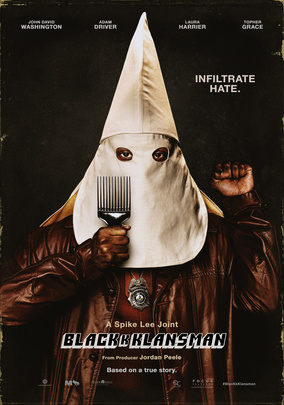
Spike Lee’s latest offering, BlacKkKlansman (2018), is a brilliant effort and oh so timely given the tumultuous political climate in the United States in 2018.

Despite the film being set in the early 1970s, the racial issues and tensions that Lee examines are sadly still an enormous problem today. Lee infuses some humor and even romance into the drama, so the film is not too preachy or heavy.

A grand and relevant effort that all should watch.

As the film commences, we are treated to a clip from the 1939 classic Gone With the Wind, and BlacKkKlansman concludes with prominent clips of racial tensions circa 2017.

The timeline is crucial and influential, as the film clearly demonstrates that racism is still alive and well.

Lee, a known liberal, clearly puts a left spin on his work. BlacKkKlansman will likely not be seen by conservative filmgoers, which is sad, as valuable lessons can be learned by viewing this piece.

The story is based on a true story memoir written by Ron Stallworth, the first black police officer to be hired by the Colorado Springs police department. He successfully infiltrates the local chapter of the Ku Klux Klan with startling results.

The film begins with a speech by a doctor (Alec Baldwin) offering a “scientific explanation” of white superiority in 1957. Fast-forward to the early 1970s, where the rest of the film occurs.

Ron is initially hired by the police force as part of a progressive initiative for diversity, but he quickly moves into a detective role. He manages to pose as a KKK member via telephone while another detective, Flip Zimmerman (Adam Driver), goes to meetings in person.

Lee’s focus is clearly on the overall content and message of the film, and therefore, little character development is achieved. I admittedly did yearn to know the “hows ” and ” whys” of many of the characters, but the film is not really about the characters individually, and I am okay with this.

Why did Ron desire so much to become a police officer? What was his childhood like? How did Patrice become President of the black student union? What was her childhood like? What upbringings did some of the KKK members have?

Indeed, not enough time would have been allowed to answer these questions—minor gripe.

Lead actor John David Washington, son of Denzel Washington, was unknown to me before watching this film. He is tremendous in his role, as is Driver in his supporting role of Zimmerman, but again, these are not character-driven roles.

Washington has tremendous chemistry with his love interest, played by Laura Harrier. Ron and Patrice discuss politics and dance the night away, but she is an activist and a cop, making their chances of a happily ever after tough to imagine. Their romance is atypical of most films as it is based on intelligence and not silly, melodramatic aspects.

On the acting front, Topher Grace as the racist David Duke is tremendous. With a kindly demeanor mixed with a bubbling under the hatred of blacks and Jewish people, Lee makes sure he is the foil.

A delicious scene towards the end of the film, when Duke gets his comeuppance of sorts, is well done and received a thunderous roar from the theater audience.

Lee is careful to ensure the bad guys get their just due and are all portrayed as complete fools. With a false sense of nationalism, many hate minorities simply because they feel they are taking over their beloved country.

Not to harp on this, but BlacKkKlansman will attract those who already agree with Lee’s beliefs and politics. If only those who disagree would give the film a chance. Unlikely.

The final five minutes of BlacKkKlansman arguably are the most pivotal experience of the entire film, but they have nothing to do with the actual story portrayed in the rest of the production.

Lee concludes the 1970s portion of the film satisfyingly, then fast forwards to the horrific events that took place in Charlottesville, Virginia, in 2017 when protesters clashed with a racist group, resulting in an innocent woman’s death.

The controversial remarks of President Trump, refusing to cast blame on the racist group, are shown. Sitting in a crowded movie theater, these clips had the most significant reaction from the audience, with some flipping Trump the finger, while others sobbed in anguish and disbelief that we have achieved so little as a nation.

Rarely has a more pertinent or meaningful film been made for the current political climate in the United States. BlacKkKlansman (2018) brilliantly ties racism spanning one hundred and fifty years together and shows how it still exists.

Amid this message, however, lies a great drama containing humor and importance.

Oscar Nominations: 1 win-Best Picture, Best Director-Spike Lee, Best Supporting Actor-Adam Driver, Best Adapted Screenplay (won), Best Original Score, Best Film Editing

Transamerica-2005

Transamerica-2005

Director Duncan Tucker

Starring Felicity Huffman, Kevin Zegers

Scott’s Review #795

Reviewed July 25, 2018

Grade: A

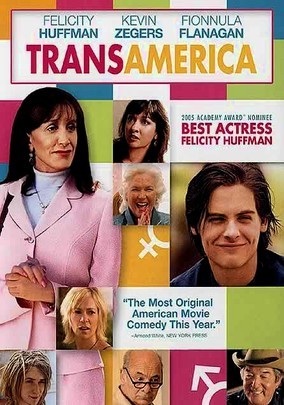
Transamerica (2005) is a brave and topical independent drama effort. By 2005 the LGBT genre was in full force with a multitude of similarly themed films gracing silver screens everywhere.

One prominent mainstream production (Brokeback Mountain-2005) was in theaters everywhere. So in a year celebrating diversity, how wonderful and touching to witness a film focused on a transgender woman come into play.

Mixing drama with some needed humor, the film succeeds in large part because it does not take itself too seriously, never becoming too preachy, it merely tells a story. The film’s brilliant casting of Felicity Huffman in the role of a pre-op male to a female transsexual is a success as the decision to cast a female rather than a male in the important role pays off in spades.

The premise allows for a story of both adventure and humor as the film mixes an important issue.

A transgender woman, Bree (Huffman) decides to go on a road trip with her long-lost son, Toby (Kevin Zegers). The intrigue is that Toby is unaware that Bree is both transgender and his father, the fun coming by way of the relationship between the individuals. Adding to the setup is that a week before Bree’s scheduled operation, she has no idea who Toby is.

Encouraged by her therapist, Bree decides to throw caution to the wind and travel to pick up her son- however, does not realize that Bree (being transgender) is his real father. Talk about complicated material!

I love the overall message of the film; the theme being one of self-discovery and a personal journey toward happiness. These qualities do not only apply to Bree but also to Toby. Being a teenage boy, abused and neglected, he has his share of issues, which the film does not skirt over.

The areas of male prostitution and gay porn are featured and the film does its best not to shy away from these sensitive matters.

Therefore, even though the tone of the film is light and more of a coming-of-age story, there are underlying painful emotions suffered by the characters. This makes their bonding easier and more fulfilling.

Without a doubt, the film belongs to Huffman, who was honored with a Best Actress Oscar nomination. No offense to that year’s winner (Reese Witherspoon for Walk the Line (2005), but the rightful owner of the statuette should be Huffman.

The actress simply comes out of nowhere and slays this role. Known for playing a different type of role on the hit television series, ABC’s Desperate Housewives, Bree is in a different league entirely.

Huffman possesses strength, vulnerability, and sarcasm, while physically undertaking a transformation that makes her both feminine and masculine while not becoming a “joke.” All of this she pours into the character.

Transamerica (2005) is an unconventional film that on the surface feels mainstream, like many other road trip films made over the years. With a twist and thus a breath of fresh air considering the importance and relevance of the time-released, the film should be championed.

When combined with the tremendous performance by Huffman, the film is a heavyweight and should be viewed and celebrated for its influence.

Oscar Nominations: Best Actress-Felicity Huffman, Best Original Song-“Travelin’ Thru”

Independent Spirit Award Nominations: 2 wins-Best Female Lead-Felicity Huffman (won), Best First Screenplay (won), Best First Feature
Love, Simon-2018

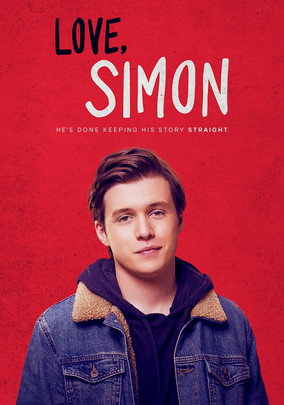
Love, Simon-2018

Director Greg Berlanti

Starring Nick Robinson

Scott’s Review #789

Reviewed July 17, 2018

Grade: B+

Love, Simon (2018) is a friendly, mainstream, LGBT film focused on a likable central character. Given the myriad dark films within this genre, the film is refreshing, usually ensconced in the independent genre.

Finally, a wholesome, family-oriented “coming out” story is upon us, and the film succeeds in spades. Perhaps a shade too “happily ever after” with a couple of stereotypes among the supporting characters, Love. Simon is a film to be heralded and certainly recommended.

Popular high school senior Simon (Nick Robinson) has a close circle of friends, hip parents, and an affluent existence in the suburban USA. Seemingly “having it all,” he is nonetheless filled with angst and harbors a deep secret—he is gay.

Closeted, he finds solace with a similarly closeted male student through the school website.

Determined to find out who his classmate is, he embarks on a way to discover his secret crush’s identity while being blackmailed by another schoolmate.

Young newcomer Nick Robinson is an absolute gem and carries the movie successfully. This is in stark contrast to another 2018 release starring a newcomer who failed (A Wrinkle in Time). Alas, Robinson has charm, charisma, wholesome looks, and an earnest persona, which are perfect traits for a coming-of-age film such as Love, Simon.

The audience will instantly root for the teen to find happiness and come to terms with the dreaded coming out to family and friends, which any gay person can relate to.

An enormous positive to the film is that Simon is okay with being gay- it’s the telling of other people that bothers him. He daydreams about starting fresh next year as an out and proud college freshman.

He worries that coming out will ruin his final year of high school and change his relationships with his circle of friends. But he is never ashamed or self-harming in his preference for men.

Lesser, but still significant, high points to the film are the rich diversity among the supporting players.

Several of Simon’s friends are black, and his parents are liberal, open-minded, and well-rounded. Of course, they will be accepting of their son’s chosen lifestyle.

Love, Simon also features diversity among the teachers. The theater teacher is not only black but also a champion for LGBT fairness. These qualities are always a breath of fresh air in film, especially when the target audience undoubtedly is younger.

The filmmakers succeed at breaking a key barrier with Love, Simon. As often is the case, LGBT-themed films target the LGBT audience, which makes sense.

In the case of Love, Simon, the film is an experience that the entire family can watch together, regardless of anyone’s sexual preferences. This detail is critical, as LGBT matters should be considered daily.

At the risk of pigeon-holing, the fact that Simon is masculine and popular and not the slightest bit effeminate or girly is undoubtedly a key to the film’s success.

On that note, the film does add an extremely effeminate and outgoing supporting character named Ethan. I am not sure this character is necessary other than to contrast with Simon.

Perhaps to drive the point home, Simon is a cool, macho guy, and Ethan is not. In one scene, it is assumed that Simon and Ethan are boyfriends, and Simon seems mildly disgusted by this. I’m not sure this subplot works or serves the film’s overall message very well.

Love, Simon contains frequently seen supporting character types that bring us seasoned filmgoers back to the days of the 1980s teen coming-of-age films like Pretty in Pink (1986) and Sixteen Candles (1984).

Several subplots involving characters having crushes on other characters, while another character likes them, are added to the mix for fun and a little drama.

The conclusion is sweet as the initial mystery of “who is the other gay student?” is finally revealed amid a lovely scene of Simon waiting on a Ferris wheel for his online admirer to arrive.

In a purely inclusive moment, the entire school surrounds the newly united couple and beams with pride as the duo tenderly kisses. Mass audience members are exposed to a heartfelt moment and an enormous lesson in dignity and spirit.

Director Greg Berlanti creates a lovely Hollywood film that is rich with diversity, a powerful story, and an inclusive element.

Sure, the film is not heavy and either skims over or misses discussions of powerful emotions that many gay youngsters face, but it is nonetheless a brave and necessary story in its own right.

Love, Simon (2018) is classy, tender, and quite a pleasant experience.

The Disaster Artist-2017

The Disaster Artist-2017

Director James Franco

Starring James Franco, Dave Franco

Scott’s Review #781

Reviewed July 2, 2018

Grade: B

The Disaster Artist (2017) is a biography-comedy that I found to be middle of the road to primarily good if I’m judging in overall terms- most I liked with a bit of criticism.

Due to the many accolades, I confess to having anticipated a bit more from the finished product and hardly finding it a masterpiece.

Still, I was both impressed and unimpressed by James Franco’s performance in the lead role. I was awed at the actor’s emergence as a director, and the Los Angeles setting is great.

At times the film teeters almost into bad slapstick or shtick, and a bit silly, and as much as I respect his performance, this criticism is directed at Franco. Nobody can deny his acting talent if he chooses the right films.

His attempt to make his character peculiar is noticeable within seconds, so it seems Franco also makes him a bit of a goof, and I was not able to take the character seriously all of the time.

And the weird accent threw me.

This film is based on the nonfiction book The Disaster Artist. The book chronicles the making of 2003’s The Room, not to be confused with the 2015 film Room. The Room was considered amateurish and one of the worst movies ever made.

Told repeatedly that his acting stinks, oddball Tommie Wiseau (James Franco), a European-American aspiring actor, decided to screw Hollywood and produce, direct, and star in his film.

Wiseau has an endless amount of bank funds, which he uses towards the film. Roommate and friend Greg Sestero (Dave Franco) stars in the movie and thus gets his big break. The duo and various others pitch in to create the project, which suffers from ineptness on the part of Wiseau.

The Los Angeles setting resonates with me, as does the recurring theme of struggle in the Hollywood scene. These are significant pluses of the film as a whole.

Los Angeles can appear to be a sunny and glamorous town, but beneath its shiny exterior, it always has a gloomy, dark underbelly.

The film realistically depicts struggle and success, from the central characters to the supporting players, making it resemble an ensemble.

Thousands struggle daily for a break, and no respect or appreciation is given. The Disaster Artist scores a win by focusing on this.

When Tommie brazenly approaches an influential producer in a restaurant, he is unceremoniously dismissed for having no talent and told he will never get anywhere. In addition to Tommie, several actors associated with the film struggle.

In a fantastic scene, an older actress states that being on a bad movie set beats any other job by miles. The message here is that people in Hollywood are there because they genuinely love it.

The sweet, empowering theme of friendship and empowerment is also to be celebrated, especially given the cutthroat backdrop. Tommie and Greg are best friends and have each other’s backs through thick and thin.

Neither gives up on the other, even during the initial audience reaction to The Room premiere.

Could the film have been slightly darker? Yes, indeed, as very few scenes of drug destruction or the porn that many hopeful talents turn to are mentioned. But the film is not about that. It’s an enchanting tale of hope and fun.

It is interesting to note, and not evident to me while watching the film, that brothers James and Dave Franco play opposite one another. While there is somewhat of a physical resemblance, the chemistry works between the two actors as best friends.

James delivers a worthy portrayal of an unusual character with a strange dialect, long, stringy brown hair, and seemingly cross-eyed. The role is comedic and ideally suited for an unusual actor like Franco- he must have had a ball with the part.

Movies about movie-making always fascinate me. What goes on behind the scenes?

The Disaster Artist (2017) provides enough good film meat to make it an overall good experience. It stays true to some fine Hollywood history—the famous James Dean is referenced, and the spot where he died is even visited—nice touch! Franco is both good and disappointing in the main role.

All in all, this one is worth watching for those who enjoy filmmaking, Hollywood, or L.A.-set films.

Oscar Nominations: Best Adapted Screenplay

Independent Spirit Award Nominations: Best Male Lead-James Franco

Girls Trip-2017

Girls Trip-2017

Director Malcolm D. Lee

Starring Regina Hall, Queen Latifah, Jada Pinkett Smith

Scott’s Review #760

Reviewed May 18, 2018

Grade: D-

I am genuinely baffled by some of the positive reviews of the film Girls Trip (2017) by viewers and respected critics.

Attempts to make females as raunchy as the guys in R-rated comedies never work, in my opinion (good writing does!), and the result is a largely unfunny, crude piece of drivel.

The fact that the film, which goes for a “female empowerment” theme, is directed by a man is as disappointing as disrespectful, especially given the fact that the writers are female- they couldn’t find a black female director?

At the risk of giving a testimonial, I fully know the importance of creating good female roles in cinema-perfect female black roles.

Unfortunately, the roles in Girls Trip do nothing to further the cause as tried and true, standardized parts commence with no well-written character to be found.

Modern films look to Black Panther (2018) or Hidden Figures (2016) as examples of positive black female role models- they exist!

The weak plot involves four forty-something lifelong friends who regroup for a reunion after years apart. Famous lifestyle guru Ryan Pierce (Regina Hall) decides to take her “Flossy Posse” to a music festival in New Orleans, where they will spend the weekend partying like it’s the 1990s once again.

Ryan is married to a man who cheats on her, Sasha (Queen Latifah) runs a failing gossip site, Lisa (Jada Pinkett Smith) is a divorced, overbearing nurse, and slutty, aggressive Dina (Tiffany Haddish), who has just been fired from her job.

In predictable form- think 2009’s The Hangover or a multitude of other raunchy comedies since then, the girls get into trouble, drink too much, have sex, and partake in other hi-jinks throughout the weekend.

The central plot is Ryan’s potential investment deal with rigid and uptight Bethany (Lara Grice) and a wisecracking agent. As events unfold, Ryan’s female nemesis shows up to cause trouble and stir up drama, testing the group’s patience.

Girls Trip is a typical American comedy film (not a compliment!) that offers weak writing and instead promotes stereotypical stock characters.

Many similar comedies have come before it, and many more will come after it. Since I disliked the film so much, I decided to ask myself a few rhetorical questions as I observed the mess.

In films with a group of women, why is there always a slutty one (Dina)? Why is there always a mousy one (Lisa)? Why is there always a fat one (Sasha)? Why is it deemed funny to watch women pee or suffer bathroom issues?

The only positives to Girls Trip come in one humorous scene when Dina mixes absinthe into the girls’ drinks before a meeting, causing them to hallucinate. As the girls begin to imagine themselves talking in deep baritone voices and Ryan imagines a waitress is her arch-enemy, the hilarity briefly ensues.

A quick wrap-up speech by Ryan after the film does send a nice message about being yourself and staying true to your loved ones, but why we have to suffer through two-plus hours of crap to get to the inspiration and point of the film is beyond me.

The success of Girls Trip (2017), which will inevitably produce a sequel, leads me to believe that the masses prefer their films idiotic, redundant, and fraught with cheap, crude laughs.

The film seems to be intended to push the envelope—not to create great art, but just to make the film as crass as possible. This is presumably to prove that girls can be as nasty as boys, which the film succeeds at portraying.

The Brady Bunch Movie-1995

The Brady Bunch Movie-1995

Director Betty Thomas

Starring Gary Cole, Shelley Long

Scott’s Review #750

Reviewed April 30, 2018

Grade: B

Capitalizing on nostalgia created from the popular 1960s-1970s television comedy “The Brady Bunch”, 1995’s The Brady Bunch Movie offers a nice treat for fans of the series, fondly reminiscing back to their youth or hours spent enjoying subsequent reruns after the show had ended.

The case with this reviewer, the film version is cute and silly, but exactly as would be expected, and the attention to detail using facets from the original series makes the film wonderful enjoyment and a job well done by director Betty Thomas.

The Brady Bunch Movie is not highbrow nor complex,  nor should it be. The work is just peppered with great jokes and a solid ode to the fun past.

Film fans looking for a good comedy and not having seen the series might miss out on some of the fun as a multitude of references only fans will appreciate abound throughout the length of the film.

The plot is not the strongest quality, but liberties must be taken since the intention is of a throwback and not much more- the story might have existed during the series but lengthened for film purposes.

Larry Dittmeyer, played by Michael McKean, schemes to coax all of his southern Californian neighborhood to sell their houses at a good price, to develop a lucrative shopping mall, presumably so they will all get rich.

When earnest Mike and Carol Brady (Gary Cole and Shelley Long) refuse the business deal, Larry embarks on a plot to use a foreclosing notice issued to the Brady’s as leverage in his deal. The Brady’s, owing $20,000 in back taxes due within a week’s time scramble to raise the money.

Predictably, the Brady kids rush to the rescue with a plan to secure the funds via a singing contest.

The film immediately gets off to a familiar start as we view the comfortable Brady house and all of the cozy qualities nestled inside- unchanged from the late 1960s- the groovy orange colors, the tie-dye, and the plaid outfits are all in tow.

Lovable Alice, in her blue and white housekeeper outfit, Mike, Carol, and all six Brady kids are back at the helm, having never missed a beat.

In short, they still live as if it were 1969 instead of 1995 and are oblivious to the outside world.

A tremendous treat for fans is the cameo appearances of a few of the original cast: Florence Henderson (Carol) and Ann B. Davis (Alice) have the more interesting parts, that of the Brady grandmother and truck driver, respectively.

Oddly, Maureen McCormick’s (Marcia), Susan Olsen’s (Cindy), and Mike Lookinland’s (Bobby’s) scenes were shot, but all cut- a major fail of the film whose fans undoubtedly would have liked to have seen all cast members.

Wouldn’t a group scene versus individual scenes have been a wonderful touch?

Missing is Robert Reed (Mike) who was deceased and Eve Plumb (Jan) who refused to appear.

The plot is silly, trivial, and completely predictable, but yet, so is the television series. As each episode was wrapped up in a nice bow with a defined conclusion and perhaps a lesson or two learned along the way, the film plays similarly.

McKean’s Larry and man-hungry wife Dina (Jean Smart) are perfect foils and play their roles with a relish only adding to the zany fun. A wonderful and timely point is how a Japanese businessman saves the day for the Bradys as a nice cultural inclusiveness touch is added- still relevant today.

An observation made while watching the film in the present time (2018), is the intended point of the film. In 1995, the point was to show how out of touch the Bradys were with “modern times”.

But in 2018 the tide has turned and 1995 now seems dated concerning the Brady years- sadly this gives the film itself more of a dated quality. This is always a risk taken when a film uses its current time as part of the plot.

The cool and hip cellular phone used by one character seems garish and uncool by today’s advanced standards.

Still, from Marcia’s flattened nose, The Monkees’ Davy Jones resurfacing, Cindy’s tattling, Jan’s insecurities, Greg’s cool suave manner, Peter’s breaking voice, and Bobby’s hall monitor job, the familiar stories and antics all resurface in a fun-filled hour and a half of comic nostalgia.

The Brady Bunch Movie (1995) is a light achievement and a nice trip down memory lane for many folks.

Working Girl-1988

Working Girl-1988

Director Mike Nichols

Starring Melanie Griffith, Harrison Ford, Sigourney Weaver

Scott’s Review #748

Reviewed April 26, 2018

Grade: B+

Released during a decade known for excess, fun, and light comedy films, especially during the latter half, 1988’s Working Girl was a blockbuster hit at the time, and in modern times is perfectly nestled as an identifier of the decade itself.

This can be both good and bad with both a dated feel and also a whimsical, basic good girl versus a bad approach that is appealing.

The film is romantic comedy fluff but is entertaining and features lovely views of New York City- one of my very favorite locales.

The film is directed by Mike Nichols, known more for the heavier subject matter (1966’s Who’s Afraid of Virginia Woolf and 1967’s The Graduate). His leading of the picture, as well as all-star casting, surely made this film better than it ought to have been.

Tess McGill (Melanie Griffith) commutes via the Staten Island Ferry each morning into vast Manhattan where she holds a secretarial job at a Wall Street investment bank.  When she has a bad experience with one of the brokers, she is reassigned to a female boss, the assertive Katharine Parker (Sigourney Weaver).

After Katharine steals Tess’s business idea and passes it off as her own to get in good with handsome Jack Trainer (Harrison Ford), Tess is determined to reveal the truth as a triangle develops between the three individuals.

In tow are Tess’s best friend Cynthia (Joan Cusack) and her cheating boyfriend, Mick (Alec Baldwin) in supporting roles.

Working Girl feels overwhelmingly like a “1980s film” and while relevant at the time and kindly nostalgic, the film does not hold up well in modern times, rather seeming to be suited for a time capsule, unlocked from time to time for kicks.

The most garish example is the hideous hairdos that Nichols has Tess and Cynthia don- frizzed out and caked with aqua net hairspray is over-the-top even for the 1980s.

Then there are the inevitable tacky outfits complete with bright colors and shoulder pads as the girls hustle to their dull jobs. With these costume tidbits in addition to the filming style the tone just screams the 1980’s.

The casting of the three leads is very good- Griffith, Ford, and Weaver all share nice chemistry and the clear rooting value is for Tess and Jack to live happily ever after- with Katharine as the obvious foil.

The conclusion of the film is of little surprise, but as a romantic comedy, this is standard fare. The point is that the relationships are dynamic and the ride is fun. Griffith is quite breathy and seductive in her role- a clear homage to the talents of Marilyn Monroe in her 1950s-era films.

Never known for great acting, Tess is the role of a lifetime for Griffith. Weaver sinks her teeth into an against-type villainous role and Ford is dashing and charismatic as the leading man.

My favorite parts of Working Girl, and the strongest aspects of the film, leaving an indelible impression even after all of these years, are the sweeping camera sequences of New York City featured throughout the film.

Lots of scenes were shot in neighboring Staten Island, but the best shots of all are the luminous skylines of Manhattan that encompass the opening sequence and later, viewpoints from the corporate offices.

There we see Tess on the Ferry heading across the Hudson River all with the wonderful soundtrack song by Carly Simon, Let the River Run, playing in the background. The soothing tune and the approaching mammoth city set a nice tone.

The story itself is a sort of rags to riches, Cinderella-style experience from the point of view of Tess. Taking night classes to better herself and clearly, a blue-collar type battling the giants of the corporate world and the more sophisticated Katherine (she speaks fluent French!) is an enormous draw of the film to sustain mainstream audiences.

Corporate greed versus the little guy is an adept comparison here. Almost borderline fairy tale, the fact that Tess gets the dashing Jack (in real life he would undoubtedly be with Katharine) makes the film good, escapist fare.

The working-class Staten Island versus the sophisticated Manhattan is another theme worth mentioning.

Thirty years beyond its original release. 1988’s Working Girl now seems dated, dusty, and of its time like many similar style films, but does still contain some of the enjoyment undoubtedly beholden to it at the time of release.

A film that is fine to take out of the vault, dust off, and enjoy for some good escapist cinema and a predictable story of good overcoming bad.

Oscar Nominations: 1 win-Best Picture, Best Director-Mike Nichols, Best Actress-Melanie Griffith, Best Supporting Actress-Joan Cusack, Sigourney Weaver, Best Original Song-“Let the River Run” (won)

Coco-2017

Coco-2017

Director Lee Unkrich

Voices Anthony Gonzalez, Benjamin Bratt

Scott’s Review #737

Reviewed April 4, 2018

Grade: B+

Winner of the 2017 Best Animated Feature Academy Award, Coco is an exuberant and colorful affair filled with marvelous lights and a Mexican cultural infusion that serves the film well, making it feel robust with diversity and inclusion.

The overall theme of family, traditions, and musical celebration is apparent, making for good razzle-dazzle with lots of upbeat songs and dance.

Mixed in is a lovely inter-generational theme, where older folks are respected, something lacking in today’s real world.

Miguel Rivera is a twelve-year-old boy living in Mexico with his extended family, including his elderly great-grandmother, Coco, who is sadly suffering from intermittent dementia.

Through flashbacks, we learn that Coco’s father (Miguel’s great-great-grandfather) was an aspiring musician who abandoned the family for greener pastures.

Subsequently, the Rivera clan banned all music in favor of a modest shoe-making business.

As Miguel realizes his passion for music, he conflicts with his family, who have other aspirations for the young man. Miguel embarks on a fantastic journey to the magical and somewhat frightening land of his deceased ancestors, coinciding with the festive Day of the Dead celebration, a tradition of Mexican culture.

There he realizes the true nature of his great-great-grandfather’s sudden departure.

Coco is a film that can be enjoyed by all family members and is structured in just that way. The blatant use of multiple generations greatly appeals to the idea of blending the family unit.

Pixar successfully sets all the correct elements in place for a successful film, and the well-written story only adds layers. The film is quite mainstream, yet appealing to the masses.

Perhaps very young viewers may become frightened by some of the skeleton-laced faces of Miguel’s ancestors in the other world where he visits. Still, these images are somewhat tame and mixed with vibrant colors and extraordinary production numbers.

These images are undoubtedly meant to entertain rather than be scary and the creatures possess a friendly vibe.

Having viewed the film on an airplane traveling cross-country (admittedly not the best way to watch a film), the lovely and touching musical number “Remember Me (Lullaby)” entranced me, so much so that I was moved to tears right on the plane.

How’s that for effectiveness?

The emotional level reached via this song impressed me immensely about Coco, even when the story occasionally is secondary to the visual or musical elements.

In fact, the story began to lag slightly until the aforementioned big musical number came into play. The song really kicked the action into high gear emotionally, and I became more enamored with the characters and their connections to one another.

Miguel and his relatives’ love became more apparent, and the conclusion is pleasing and satisfactory.

A slight miss in the film, corrected midway through, is Miguel’s bratty and entitled nature. He heaves sighs when he does not get his way, which seems more apparent early on and was quite the turn-off—at first, I did not care for the character, yet I knew I was supposed to.

Thankfully, the character becomes the hero of the film and ultimately a sweet, likable character. I pondered, “Is that what kids like these days?”

Pixar does it again, creating a family-friendly experience with a positive yet non-cliched message of belonging, forgiveness, and the importance of family connections that feels fresh.

In current times of divisiveness, especially with immigration and other cultures being attacked, how appropriate is it to experience Coco (2017), a feel-good yet not contrived project?

Oscar Nominations: 2 wins-Best Original Song-“Remember Me” (won), Best Animated Feature Film (won)

The Big Sick-2017

The Big Sick-2017

Director Michael Showalter

Starring Kumail Nanjiani, Zoe Kazan

Scott’s Review #720

Reviewed January 29, 2018

Grade: B+

The Big Sick, a 2017 independent “dramedy” film, takes what could be a standard premise and turns it upside down, offering a fresh perspective on a familiar tale about a prospering relationship.

The screenplay is the standout as the writing is intelligent and crisp. Thanks to exceptional acting by all four principal characters, The Big Sick is a success and worth watching.

The story follows an interracial couple, Emily and Kumail, played by Zoe Kazan and Kumail Nanjiani, who have recently started casually dating. Kumail is a standup comic living in Chicago who meets the flirtatious Emily after a club performance one night.

They share a one-night stand and agree never to see one another again.

As the smitten pair break their promise and form a romance, a tragedy occurs, landing Emily in a coma.

Kumail must handle Emily’s parents, Beth (Holly Hunter) and Terry (Ray Romano), who are angry with Kumail for misleading Emily and not telling her about his strict Muslim parent’s intentions of marrying him off by arranged marriage.

The screenplay (nominated for a 2017 Oscar nomination) is loosely based on the relationship between actor/writer Nanjiani (who stars), and Emily Gordon (who co-wrote the screenplay).

Especially since Nanjiani stars, the film is sincere and authentic, as if Nanjiani is living the role.

The chemistry between Nanjiani and Kazan during their many scenes at the start is a significant plus to the film. Before the drama takes off, the audience will become fully invested in the pair as a couple.

Whether the couple flirts as Kumail drives Emily home or fights when Emily learns about his Muslim culture’s belief in arranged marriage, the couple has a tremendous connection, and it shows.

The story fabric takes an interesting turn about midway through when Emily is stricken with a debilitating illness.

A medically induced coma is needed, as Kumail is forced to pretend to be her husband, this opens up many moral and legal ramifications that the film chooses essentially to ignore, instead of dealing with the relationships between Kumail and Emily’s distraught parents.

Hunter and Romano are excellent in the parent roles. Hunter is the more showy of the two and has more meat, while Romano holds his own and powers a vital comedy club scene in which he defends his wife from a callous heckler.

Admittedly, the film decides to go the “happily ever after” route, this is hardly a surprise given that Judd Apatow is the producer.

Remember, this is the same guy who produced safe films such as Superbad (2007) and Anchorman 2 (2013). Still, the story within The Big Sick is an enjoyable, character-driven ride, if not unpredictable.

A darker-tinged affair might have set this film over the top as it contains many other credible film qualities.

The addition of comic talent in the supporting roles of Kumail’s comedy club buddies adds a good balance and nicely counterbalances the drama so that it does not become too dour.

Much of the film involves Emily in a coma, so comic talent such as SNL’s Aidy Bryant and Comedy Central’s Kurt Braunohler are suitable ads.

I enjoyed the inclusion of the traditional Pakistani custom of arranged marriages, but at times this seems played for laughs rather than being a significant obstacle to the couple.

Kumail’s controlling mother parades one young Pakistani girl after another in front of her son as a way of encouraging him to select one of them. Kumail’s traditional family is played as stereotypes and the lighthearted foils of the film.

The Big Sick (2017) succeeds with crisp, witty dialogue and a solid story that nicely complements the intended comedy.

A few too many stereotypes and goofiness keep the action light even when compared to the more serious parts—great acting all around.

Oscar Nominations: Best Original Screenplay

Independent Spirit Award Nominations: 1 win-Best Supporting Female-Holly Hunter, Best First Screenplay (won)

I, Tonya-2017

I, Tonya-2017

Director Craig Gillespie

Starring Margot Robbie, Allison Janney

Scott’s Review #712

Reviewed January 10, 2018

Grade: A-

I, Tonya is a 2017 biopic telling of the life and times of the infamous American Olympic figure skater, Tonya Harding, notorious, of course, for her alleged involvement, along with her husband and his friend, in the attack of fellow skater, Nancy Kerrigan during the 1994 Winter Olympics.

The event drew monumental media coverage after the attack, with the uncertainty of Harding’s knowledge or involvement, and her subsequent guilt or innocence continues to be debated.

The film itself is a dark and violent comedy, never taking itself too seriously. It immediately presents the disclaimer that the stated “facts” in the film are open to interpretation and depend on who you ask.

I, Tonya isn’t preachy or directive to the viewer but instead offers up the skater’s life and times in story form.

The film features tremendous performances by Margot Robbie and Allison Janney, as well as Tonya and her despicable mother, LaVona.

I, Tonya, is told chronologically, culminating with “the incident” in 1994.

However, the story begins in the mid-1970s, as Tonya, just a tot at the tender age of four, is as cute as a button and shrouded in innocence. One cannot help wonder if director Craig Gillespie, known for independent films, purposely made this wise casting choice.

We see Tonya, once an innocent child, journey into a life of violence, abuse, and tumultuous living. Harding grew up cold and hard and endured an abusive, complex relationship with her mother, the pressures to be the best skater never ended.

Even upon achieving success, Tonya never felt good enough or loved by her mother.

We then experience Tonya as a fifteen-year-old girl, fittingly first meeting her boyfriend and later, husband Jeff, Gillooly played well by actor Sebastian Stan. The early scenes between the two are sweet, tender, and fraught with the emotions of first love.

As explained by the actors, this was a short-lived time of bliss, and the relationship soon disintegrated into abuse, rage, and chaos.

The main point is to debate Harding’s guilt or innocence, which Gillespie peppers throughout, so it is unclear what to believe or how the audience should think.

“Interpretation” is the key here. Some may see Harding as a victim of life’s circumstances and the hardships she had to endure and may place sympathy upon her. Others may view Harding as off-putting, potty-mouthed, and even icy and violent herself, with a big chip on her shoulder.

In one scene, she publicly belittles the hoity-toity judges who never give her a break and give her less-than-perfect scores.

A clever technique that the film delivers is to have the actors frequently speak to the camera, thus the audience. This is achieved by either interview style or for the action in the film to cease and either Robbie, Janney, Stan, or whomever, turn to the camera and express their version of the events.

I, Tonya possesses a creative, edgy, indie feel.

How brilliant are the performances of both Robbie and Janney?

Robbie, a gorgeous woman, portrays a “red-neck” to the hilt. Through her bright blue eyes, her face is quite expressive—relaying pain, anger, and a seldom triumph. The film often slants the scales in a sympathetic way towards Harding, but it is Robbie’s talents that make us feel this sympathy.

Janney hits the jackpot with a delicious role she sinks her teeth into. A cold-hearted, vicious character, through facial expressions, we occasionally glimpse LaVona, perhaps softening, but as we do, the character does something even more despicable.

A good surprise for fans who remember the real-life events and the real-life players will be treated to a sequence of the honest Tonya, LaVona, Jeff, and Shawn Eckhardt, which play over the film ending credits.

How similar in looks are Robbie to Harding, with her feathered, frizzy, 1980s-style hairdo, and Janney, a dead-ringer for the boozy, chain-smoking LaVona, with her mousy brown bob haircut, complete with scruffy bangs?

Viewers will leave theaters confused, unsure, or perhaps perplexed by what they have just seen, but they will most certainly feel thoroughly entertained and may even depart chanting some upbeat 1980s rock tunes that the film uses throughout.

Thanks to fantastic acting and a strong story, I, Tonya is a success.

Oscar Nominations: 1 win-Best Actress-Margot Robbie, Best Supporting Actress-Allison Janney (won), Best Film Editing

Independent Spirit Award Nominations: 2 wins-Best Actress-Margot Robbie, Best Supporting Female-Allison Janney (won), Best Editing (won)

Bad Moms-2016

Bad Moms-2016

Director Jon Lucas, Scott Moore

Starring Mila Kunis, Kristen Bell, Kathryn Hahn

Scott’s Review #706

Reviewed December 20, 2017

Grade: D+

Bad Moms (2016) tries to do for women what The Hangover (2009) did for men and create a raunchy, R-rated party romp that haggard mothers everywhere can relate to and appreciate.

The film’s billboard displays the three main characters boozing it up under the caption “Party Like a Mother.” Perhaps since I am not a mother, I did not entirely gravitate toward this film, but Bad Moms fell flat for me despite a smidgen of mild laughs.

Primarily because of tired characters, gimmicky situations, and an over-the-top tone.

The film, written by the same individuals who wrote The Hangover, is a direct ripoff with a different gender in the driver’s seat.

The central character is Amy Mitchell (Mila Kunis), a thirty-two-year-old mother of two who is living a busy life in the Chicago suburbs.

Considered “old” by her hipster boss and with a porn-obsessed husband, she runs around frazzled and behind schedule most of the time.

After a particularly hairy day, Amy abruptly quits the school PTA run by militant Gwendolyn (Christina Applegate). She befriends fellow moms, sex-crazed Carla (Kathryn Hahn) and timid Kiki (Kristen Bell).

After she incites Gwendolyn’s wrath, Amy decides enough is enough and embarks on a plot to win the PTA presidency while dumping her husband and dating a hunky widower, Jessie (Jay Hernandez).

Admittedly, Kunis is very likable as Amy. She’s an incredible, energetic chick who most would love to befriend, and we empathize with her predicaments and schedule.

But this can only go so far in a comedic film. The setup pieces and the supporting characters are too plot-driven and lack authenticity. The result is little more than one root-able character.

As an actress, Applegate is quite capable, but Gwendolyn, the transparent foil, is primarily written as a cartoon character. Her bitchy comments to her underlings, who inexplicably are afraid to cross her, seem too staged.

Jada Pinkett Smith, in need of a paycheck, is disposable as “second in command” crony Stacy. Furthermore, Amy’s husband, Mike (David Walton), is portrayed mainly as a buffoon and childlike.

The point of these character examples is to stress that the film contains too many caricatures rather than characters

An irritating quality of Bad Moms that I cannot shake is that the film is written and directed by a duo of men! Jon Lucas and Scott Moore are the individuals in question, and the fact that the film, painted as a female empowerment story, is not written by females is almost unforgivable.

A case in point involves a bathroom scene where the ladies discuss uncircumcised penises, a dumb scene if you ask me, that is lousy taste considering men wrote and directed it.

In this day and age of Harvey Weinstein sexual harassment suits bubbling to the surface, the scene seems icky. It should not be this hard to find women to write for other women.

Of the additional trio of females, Kathryn Hahn’s Carla has a few funny scenes but is written as so sex-obsessed that it is impossible to take the character seriously, and the same goes for Bell’s Kiki.

When mousy Kiki finally lays down the law and tells her boorish husband to deal with their kids, it is meant to be a rah-rah moment, but instead becomes eye-rolling. Not the best actress in the world, Bell continues to get roles like this in sub-par films.

An attempt by filmmakers to make a girl film on par with male-driven raunchy comedies thrust on moviegoers over the years, Bad Moms (2016) comes across as too unoriginal and too desperate for laughs.

Undoubtedly hoping to win over the same audiences who flocked to the last funny female-driven comedy hit, 2011 Bridesmaids, the film falls flat and lacks genuine fun.

Kunis’s lead role and the sweet romance her character shares with Hernandez’s Jessie slightly bolster this.

Why Him?-2016

Why Him? -2016

Director John Hamburg

Starring John Franco, Bryan Cranston

Scott’s Review #704

Reviewed December 6, 2017

Grade: D

Why Him? (2016) is epic film drivel starring quite capable actors in a mish-mash of dull, predictable stories, obnoxious characters, and a need to attempt to go raunchier and raunchier for a cheap laugh.

Why there is a market for films like this is beyond me as no thinking is required (maybe the film will please those fans!), but the film scores slightly higher than a solid “F” based solely on a few chuckles uttered thanks to the only dim bright spots in this mess, Bryan Cranston and Megan Mullally.

A story told dozens of times before in “slapstick comedy” fare, the premise is tired beyond belief. A good girl meets a bad boy, they fall head over heels in love and must deal with the aftermath of her parent’s meeting, and hating the bad boy.

The main gimmick is the rivalry between boyfriend and girlfriend’s father, like an unfunny Meet the Parents (2000).  A silly and uninteresting plot point about each character’s business success or lack thereof is mixed in as if anyone cares.

As with all films of this ilk, the story is wrapped up in a neat, tidy little bow by the time the credits roll, and all characters live happily ever after in perfect harmony.

In one of his most disappointing roles, James Franco plays Laird Mayhew, the wealthy, eccentric, thirty-something CEO of an upstart video game company.

He is foul-mouthed and comically speaks his mind or absentmindedly shows his ass on a Skype chat with his girlfriend Stephanie (Zoey Deutch) while her parents are linked to the chat at a birthday party.

Stephanie, a college student and girlfriend of Laird, invites her parents, Ned and Barb (Cranston and Mullally), along with their fifteen-year-old Scotty, for the Christmas holidays.

Predictably, Stephanie’s parents are appalled by Laird and want her to have nothing to do with him. When Stephanie arranges for Ned, Barb, and Scotty to stay at Laird’s spacious home, the antics take off as feuds and misunderstandings erupt.

The main problem with Why Him? is that director John Hamburg (famous for mainstream comedies such as Along Came Polly, 2004, and I Love You, Man, 2009) seems determined to push the raunchy comedy elements further with this idiotic film.

He makes Laird as obnoxious and crass as possible yet tries to make the character more “likable” by giving him a clueless quality; therefore, he is not mean-spirited and should be beloved by the audience.

The character does not work. Franco has played terrific roles- specifically in 127 Hours (2010) and  Howl (2010). As a fan of the talented actor, I expected more from him, but alas, some performances are only as good as the written material.

If there is a bright spot worth mentioning, it is with the casting of Cranston and Mullally.

Two actors are undeniably good at physical comedy. They do as much as they can with poorly written, stock-type roles. Cranston’s Ned, a middle-class small business owner from Grand Rapids, Michigan, is both envious and resentful of Laird, perhaps admiring the young man’s business savvy and regretting not being as successful.

Barb is a one-note, ditzy yet lovable wife, a role made slightly better by Mullally’s goofy portrayal. In one of the best scenes, Barb smokes pot and becomes a mess in her bedroom.

The following day, Ned is trapped on the toilet and has an embarrassing experience with Laird’s best friend, Gustav. While these scenes are juvenile, they are made better by the funny actors.

Suffering greatly from a tired and overused storyline that falls flat, unlikable, and dull characters, the film offers nothing of substance or worth.

Why Him? (2016) is entirely plot-driven with no character development or well-written characters.

The film is a complete waste of time. It results from a studio hoping to achieve box office success by churning out a poor comedy with wasted talent that will please only those audiences not expecting much from their films.

Three Billboards Outside Ebbing, Missouri-2017

Three Billboards Outside Ebbing, Missouri-2017

Director Martin McDonagh

Starring Frances McDormand, Woody Harrelson, Sam Rockwell

Scott’s Review #703

Reviewed December 4, 2017

Grade: A

Frances McDormand takes control of Three Billboards Outside Ebbing, Missouri, and never lets go. In the Martin McDonagh-directed 2017 vehicle, she rivetingly portrays an angry Midwestern woman seeking justice.

The up-and-coming director has also created such films as  2008’s In Bruges and 2012’s Seven Psychopaths.

Similar to these films, Three Billboards Outside Ebbing, Missouri, is peppered with dark comedic moments and vile, bitter characters. The film is a measured success because it is not your standard Hollywood production and is quite left-of-center.

The action begins as we meet McDormand’s Mildred Hayes, sitting alone in her beat-up station wagon, brooding by the side of the road, gazing at three tattered billboards.

She is both pissed off and thoughtful as she formulates a plan to purchase a year’s worth of billboards, questioning the local police’s ineptitude in finding her daughter’s rapist and killer.

Woody Harrelson portrays the Ebbing police chief, Sheriff Bill Willoughby, and Sam Rockwell plays the racist and dim-whited officer Jason Dixon, both displeased with Mildred’s activities.

Other casting decisions in small yet essential roles are Lucas Hedges as Mildred’s adolescent and depressed son, Robbie, and John Hawke as her ex-husband, Charlie, who is dating an eighteen-year-old ditz.

Peter Dinklage is well-cast as James, a local car salesman who is an earnest dwarf with a crush on Mildred.

Supporting roles are prevalent throughout the film, and small-town locales like Jason’s mother and Red, the owner of the advertising agency who rents the billboards to Mildred, shape the experience.

The casting in Three Billboards Outside of Ebbing, Missouri, is a strong point of the film.

The town of Ebbing is portrayed as dreary, blue-collar, and racist, which is just perfect for setting the tone of the film.

I suspect residents of the Midwest or the southern United States of America may have some issues with character representations. Jason is written as both racist and not too smart, and he encompasses numerous characters in the film.

Enough cannot be said for Rockwell’s performance, transforming from a hated character during the film’s first two-thirds to suddenly almost becoming the hero towards the end.

Props are also deserved by Harrelson’s Chief Willoughby- bordering on hick and racist, he also has a heart and cares about Mildred’s predicament- when a shocking event occurs, he becomes an even richer character.

It is worth pointing out and impressive to me as a viewer that the three prominent black characters—Willoughby’s replacement, Abercrombie, Mildred’s best friend and co-worker, Denise, and a kindly billboard painter—are each written as intelligent and sensitive, a fact I found to perfectly balance the other less sympathetic characters.

In this way, a nasty film becomes more satisfying.

Three Billboards Outside of Ebbing, Missouri, though, belongs to McDormand. She is successful at portraying a myriad of different emotions. From her sly eye-winking as she crafts a good verbal assault on whoever crosses her path, to an emotional breakdown scene towards the end of the film, McDormand embodies the character with depth.

In a gorgeous scene, she has a sweet conversation with a peaceful deer grazing nearby, and for a second, she imagines it could be her dead daughter reincarnated. The scene richly counterbalances other violent and brutal scenes.

McDormand manages to look downright homely in some scenes and beautiful in others.

A film will indeed divide viewers. Some will champion the film’s crisp writing and witty dialogue. Still, others will undoubtedly be turned off by some of the character’s foul language and nasty nature.

I found Three Billboards Outside Ebbing, Missouri (2017), sarcastic, gritty, and well-told. It is a versatile affair rich with layers and brimming with enjoyment.

Oscar Nominations: 2 wins-Best Picture, Best Actress-Frances McDormand (won), Best Supporting Actor-Sam Rockwell (won), Woody Harrelson, Best Original Screenplay, Best Original Score, Best Film Editing

Independent Spirit Award Nominations: 2 wins-Best Female Lead-Frances McDormand (won), Best Supporting Make-Sam Rockwell (won), Best Screenplay

Lady Bird-2017

Lady Bird-2017

Director Greta Gerwig

Starring Saoirse Ronan, Laurie Metcalf

Scott’s Review #700

Reviewed November 28, 2017

Grade: A

Lady Bird is a 2017 independent film released by actor-turned-writer/director Greta Gerwig. It is a tremendous effort in her solo directorial debut.

No stranger to the indie syndicate herself, Gerwig puts her unique stamp on the film with a rich, female-centered perspective that works quite well and seeps with charm and wit.

It is worth noting that the story is semi-autobiographical, based on Gerwig’s life and her stormy dealings with her mother. The story is well-written, well-paced, and empathetic as the audience views a slice of life through the eyes of a restless yet kindly teenager on the cusp of womanhood.

Saoirse Ronan gives a bravura performance in the title role. Her given birth name is Christine, but she defiantly changes it to Lady Bird in a show of adolescent independence, and much to her parents, Marion and Larry’s (Laurie Metcalf and Tracy Letts ) chagrin.

Christine lives in suburban Sacramento, California, and yearns for a more exciting life in New York City, far from what she considers Dullsville, USA. Now, in her senior year, she is attending a Catholic high school.

Christine applies to college after college, hoping to escape her daily dilemmas. Christine’s best friend Julie and somewhat boyfriend Danny (Lucas Hedges) are along for the ride.

The period is 2002- shortly after 9/11.

The brightest moments in Lady Bird are the plentiful scenes between Christine and her mother. The chemistry between Ronan and Metcalf is terrific, and I genuinely buy them as a real mother/daughter duo, warts and all. They fight makeup, get on each other’s nerves, fight, cry, do makeup, etc.

I especially love their knock-down drag-outs, as each actress stands her ground while allowing the other room to shine—feeding off of each other.

My favorite Metcalf scene occurs while she is alone. Having gotten into a tiff with Christine and giving her the silent treatment while Christine flies to New York, Marion reconsiders as she melts into tears. At the same time, she drives away, regretting her decision and missing her daughter already.

Metcalf fills the scene with emotional layers as she does not speak- we watch in awe as her facial expressions tell everything.

Comparably, Ronan—likely to receive her third Oscar nomination at the ripe old age of twenty-three (Atonement, 1997, and Brooklyn, 2015, are the other nods)—successfully gives a layered performance as a teenage girl struggling with her identity and restless to see different worlds and get out of what she sees as a bland city.

Of Irish descent, Ronan is remarkable in her portrayal of a California girl- sometimes selfish, sometimes sarcastic, but always likable and empathetic.

The casting from top to bottom is terrific, as the supporting players lend added meat to the story. Christine’s best friend, Julie, played by young upstart Beanie Feldstein (Jonah Hill’s sister), is compelling as the lovable, chubby, and nerdy theater geek.

Letts is perfect as Christine’s father, depressed at losing his job in the tough economy and having to compete with young talent as he sees his career slip away.

Legendary actress Lois Smith adds heart to Sister Sarah Joan’s role- a by-the-book nun who is an incredible old chick.

Finally, Hedges, seemingly in every film from 2016 to 2017, is emotionally resounding as Danny, Christine’s troubled boyfriend, struggles with his sexuality.

Gerwig does it all with this film—she directs and writes, scripting laugh-out-loud moments and eliciting heartfelt emotion from her enchanted audience.

A hilarious scene occurs as Christine attends a dreary class assembly- an anti-abortion-themed one- by a woman who almost did not exist but for her mother’s decision not to have an abortion.

When a bored Christine icily points out that had the woman’s mother had the abortion, she would not be forced to sit through the assembly, it is a laugh-out-loud moment.

Lady Bird (2017), thanks to a fantastic writer and director and superlative casting, is a film that has its all heart, emotion, humor, and great acting.

The film is intelligently written and forces the audience to embrace its characters quite willingly. Gerwig carves a story, perhaps done many times before in film, but with a fresh and energetic feel.

Oscar Nominations: Best Picture, Best Director-Greta Gerwig, Best Actress-Saoirse Ronan, Best Supporting Actress-Laurie Metcalf, Best Original Screenplay

Independent Spirit Award Nominations: 1 win-Best Feature, Best Female Lead-Saoirse Ronan, Best Supporting Female-Laurie Metcalf, Best Screenplay (won)

Little Miss Sunshine-2006

Little Miss Sunshine-2006

Director Jonathan Dayton, Valerie Faris

Starring Greg Kinnear, Steve Carell

Scott’s Review #697

Reviewed November 23, 2017

Grade: A

A film that became a sleeper hit at the time of release in 2006 and went on the achieve recognition with year-end award honors galore, Little Miss Sunshine holds up quite well after over ten years since its debut.

Combining family humor with heart, audiences will fall in love with the antics of the dysfunctional Hoover family, warts and all, as they strive to persevere endless obstacles to enable precociously, seven-year-old daughter, Olive, a chance at competing in a beauty pageant hundreds of miles away.

The film is a comedic treat with charm and contains uproarious fun.

Directors  (and husband and wife team) Jonathan Dayton and Valerie Faris start right to work kicking off the humor in style as the one hour and forty-one-minute film introduces depressed Uncle Frank (Steve Carell) to the rest of the Hoovers as he comes to live with the family after a failed suicide attempt.

Frank, who is gay and has recently been dumped, is Sheryl Hoover’s (Toni Collette) brother and has a dry sense of humor.

He fits in well with the other peculiar members of the clan- Dad Richard (Greg Kinnear), a struggling motivational speaker, Grandpa Edwin, a vulgar, irritable man, brother Dwayne, angry and refusing to speak, and finally, pudgy-faced, Olive.

The brightest spots in Little Miss Sunshine are the exceptional writing and the nuanced, non-one-dimensional characters. Each character is both good yet troubled in their way and the overall message of the film is an important one.

The plot of the film encompasses a beauty queen pageant and the lifestyle this involves- hypocrisy and plastic nature is the main theme.

When the family stops at a roadside cafe for breakfast, Olive hungrily orders ice cream and is shamed by a member of the family- she must watch her figure, she is told.

Other members instead encouraged Olive to be herself.

Little Miss Sunshine poses an interesting dissection of the pressures very young people face to be perfect, especially in the beauty pageant business, and the message society sends.

Shocking is a scene where many of the contestants, all under the age of ten, appear in sexy, glamorous makeup, and bikinis.

Little Miss Sunshine is a very funny film and this undoubtedly is due to the chemistry that exists among the cast of talented actors. Quite the ensemble, all five of the principal characters have an interesting relationship with each other.

Too many film comedies suffer immensely from forced jokes or typical “set-up” style humor, plot devices created to elicit a response from the audience- which I call “dumbing down”.

Little Miss Sunshine, however, feels authentic and fresh- a situation becomes funny because there is an honest reaction by the characters.

The film is a slice of the life experience of an average blue-collar family.

A standout scene to mention is the hysterical one in which the Hoovers are pulled over by a highway police officer. To say nothing of the fact that the Hoovers are “escorting” a corpse to their destination, along with pornographic magazines, their classic, beat-up, yellow Volkswagen bus barely runs and contains a malfunctioning horn that beeps at inopportune times.

These hilarious scenes work on all levels as the comic timing is palpable and leads to a laugh-out-loud response.

Furthermore, the climactic “beauty pageant” scene is fraught with physical humor.

Olive, the oddball in a group of hypersexualized, young starlets, takes inspiration from her grandfather to simply “be herself”. She does so in a hilarious version of “Super Freak” that is R-rated, both shocking the audience and celebrated by others- specifically her entire family.

Olive successfully proves that she can be herself and happily does so.

How wonderful and refreshing to find a comedy with honest, ample humor and real integrity that can shine many years after its first release and retain the richness and zest that originally captured legions of viewers.

As proven over time with many independent films, wonderful writing and directors sharing a vision, go a long way in achieving a quality piece of filmmaking.

Oscar Nominations: 2 wins-Best Picture, Best Supporting Actor-Alan Arkin (won), Best Supporting Actress-Abigail Breslin, Best Original Screenplay (won)

Independent Spirit Award Nominations: 4 wins-Best Feature (won), Best Director-Jonathan Dayton and Valerie Faris (won), Best Supporting Male-Alan Arkin (won), Paul Dano, Best First Screenplay (won)

Roman Holiday-1953

Roman Holiday-1953

Director William Wyler

Starring Gregory Peck, Audrey Hepburn

Scott’s Review #694

Reviewed October 26, 2017

Grade: B+

Roman Holiday, released in 1953, was a box office hit, pleasing legions of fans at the time, and a critical darling.

The film reaped Academy Award nominations, including the coveted Best Actress statuette for a young Audrey Hepburn.

A happy, uplifting story, the film is not diminished by Cinderella in the reverse storyline but rather is a charming, romantic experience immersing itself in pleasing locales of the cultural city of Rome.

Admittedly, Roman Holiday is an example of a film in which I preferred the latter half to the former, but it set the bar high in the romantic comedy genre.

Our heroine, Princess Ann (Hepburn), has it all glamorous life, gorgeous clothes, and assistants tending to her every need and want. However, she is unhappy and trapped in a rigid life that lacks freedoms or decisions, to say nothing of the fun. She catches glimpses of party-goers reveling in each night from her expansive palace window.

Simply put, she is lonely and unfulfilled.

When she sees an opportunity to escape her life for a night, she snatches it and stumbles upon an American reporter, Joe Bradley (Peck). Despite their differing backgrounds, they fall madly in love.

At first, I found something missing in the film, and the chemistry between Peck and Hepburn did not immediately embrace me. As the duo meets Ann, who is drunk from sleeping pills, and Joe is the ultimate nice guy who allows her to sleep in his apartment, the story seems lagging and lacks a good punch.

The pair drives around Rome on a scooter and acts childish and silly. Ann acts girlish because fun is an entirely new concept to her. At this point, the film is reasonable but little more than a farce.

As Roman Holiday progresses, primarily through the final act, the film sheds some of its light skin and becomes much more poignant and meaningful.

Ann and Joe, while in love, realize they will not and cannot embark on a fairy tale ending, which truthfully, would have made Roman Holiday little more than a standard romantic comedy we have all seen before- you know the type- boy meets girl, roadblocks persist, boy whisks girl away and rides off into the sunset together.

While not a dark film, it goes deeper than a transparent, predictable ending.

Related to this point is that Roman Holiday contains a realness that sets it apart from many films undoubtedly drawn from it. Still, unlike this film, it leans into contrived or predictable situations.

As Joe and Ann fall in love, the audience falls in love with them. The main plot hurdle—Joe’s temptation to profit from Ann once he realizes her true identity after a sought-after interview—is earnestly handled without pretension.

Other similar films ought to take note of this.

Indeed, the historic and culturally relevant locales of Rome are a significant selling point of the film, and if these scenes had been shot on a movie set, a lack of authenticity would undoubtedly have emerged.

Instead, we are treated to such fabulous location sequences as the Colosseum, the Tiber River, the Trevi Fountain, and Piazza Venezia. Such a delight is the long sequence of Roman escapades as Joe and Ann traverse the city in giddy bliss.

It is enjoyable to see how Roman Holiday contains no real villain.

There are no physical hurdles to the duo’s relationship—no outside forces plotting to keep Joe and Ann apart, other than their lifestyles. Ann lives in a world of royalty and pampering, but Joe is an everyman, so the chances of living happily ever after are slim.

Film lovers intent on discovering one of the early romantic comedies—one could argue that It Happened One Night (1934) was the first—should watch a feel-good Hollywood classic from 1953. It is rich in honesty, good humor, and raw emotion without being too heavy a melodrama.

After a mediocre start, the film finishes with gusto.

Oscar Nominations: 3 wins-Best Motion Picture, Best Director-William Wyler, Best Actress-Audrey Hepburn (won), Best Supporting Actor-Eddie Albert, Best Screenplay, Best Story (won), Best Art Direction, Black and White, Best Cinematography, Black and White, Best Costume Design, Black-and-White (won), Best Film Editing

Grindhouse: Planet Terror-2007

Grindhouse: Planet Terror-2007

Director Robert Rodriguez

Starring Rose McGowan, Freddy Rodriguez

Scott’s Review #692

Reviewed October 15, 2017

Grade: B-

The umbrella title of “Grindhouse” is part of a 2007 double-feature, one film directed by Quentin Tarantino (Death Proof), and the other directed by Robert Rodriguez (Planet Terror).

The gimmick was part of an attempt at something novel and also book-ending fictional trailers within the films. The term “grindhouse” refers to a cinematic specialty of either B movies or exploitation films- largely during the 1970s.

While Planet Terror gets credit for being unique and fun, it is oftentimes too cartoon-like and rather over the top throughout.

The premise of Planet Terror is not one to be taken seriously- as our heroine, Cherry Darling (Rose McGowan), quits her stripper job vowing to move on to bigger and better things, she runs into her ex-boyfriend, El Wray (Freddie Rodriguez), and the two teams up to lead a group of rebels, who are fleeing for their lives after a vicious zombie outbreak.

The attack was caused by a group of military officials, led by the vicious Lieutenant Muldoon (Bruce Willis).

The film contains an undeniable retro feel- the sets and the props traverse back to the 1970s in style and look, however, characters do use cellular phones.

Rodriguez attempts to make the film an homage or a throwback to a different time in cinema- this feat is quite impressive and the film is a marvel from a stylized perspective.

Another positive is that the film is reminiscent, by the camera styles and angles, of an actual 1970s film, with grainy elements and a comforting old-style texture, which works.

The plot, though, is the source of frustration, and many aspects of the film are just plain silly. The actors play way over the top as they were probably directed by Rodriguez to do, but the result is too much like watching a cartoon rather than a piece of art.

Rodriguez appears to be copying many aspects of Quentin Tarantino films- specifically, the mixture of violence with camp, although these attempts do not always work.

The acting and casting are fine. Bruce Willis shines in the lead villain role and plays demented to the hilt. Unquestionably “borrowed” by Rodriguez through Tarantino, Willis, who was dynamic in Pulp Fiction, knows how to do his thing well in films such as this.

Muldoon is quite a different character than boxer Butch Coolidge in 1994’s masterpiece, Pulp Fiction, but the acting style is the same.

Stars such as Josh Brolin, Kurt Russell, and Rosario Dawson also make appearances so the film is assuredly a star-studded affair.

The casting of McGowan and Freddy Rodriguez as the leads is acceptable and the pair make a decent screen coupling. Still, her artificial leg which doubles as a deadly machine gun, and his maniacal persona seem somewhat forced and, again, way over the top.

Planet Terror was a moderate box office success upon release in 2007, but watching the film in 2017, ten years later, unfortunately, some of the clusters have been tarnished and the gimmick is not as catchy as at the time of release.

Still, a decent offering in the horror, cartoon, and campy genres, but much better films exist, like anything by Tarantino.