Category Archives: Conchata Ferrell

Network-1976

Network-1976

Director Sidney Lumet

Starring Faye Dunaway, Peter Finch, William Holden

Top 250 Films #228

Scott’s Review #1,481

Reviewed May 13, 2025

Grade: A

A conceptual film laden with intelligence and satire, Network (1976) is innovative, not easily digestible, but satisfying nonetheless. It pairs well with films like All the President’s Men (1976) or Spotlight (2015), with a focus on media frenzy, ratings, and the frustrating search for the truth amid chaos.

Or, does the truth even matter? It’s a sobering question the film explores.

The film received nine Oscar nominations and won three of the four acting awards. Decades later, it holds up tremendously well and is a stark reminder of the power of television and public perception, for better or worse.

Brilliant acting, rich writing, and impressive editing make Network a timeless treasure for many generations, not to mention Lumet’s creative and sometimes shocking direction.

Over narration, we meet veteran news anchorman Howard Beale (Peter Finch). He learns from his friend and news division president, Max Schumacher (William Holden), that he has only two more weeks on the air with the UBS network due to declining ratings.

After threatening to shoot himself on live television, instead, he launches into an angry televised rant, which turns out to be a huge ratings boost for the network, and he is kept on for entertainment purposes.

But what happens when the public grows tired of his antics and craves even more outrageous programming?

Ambitious producer Diana Christensen (Faye Dunaway), obsessed with her career and ratings, takes actions to dangerous new levels.

The poignancy that immediately caught my attention was how little the bottom line has changed in almost fifty years of television since Network was released. One could argue that things have gotten worse, with ratings making or breaking a television broadcast.

Depressing still is the knowledge in 2025 politics where liars, cheats, and felons callously hold the highest offices and wield the most power; newscasts are currently created based on the truths their target audiences believe, regardless of the truth.

Lumet, well-known for creating the groundbreaking Dog Day Afternoon (1975) just a year earlier, uses split screens to show four perspectives and adds frightening, gun-toting rebels who are angry and intent on making political statements.

But Diana needs them for a significant ratings share.

Lumet’s sequences teeter between long soliloquies in which characters reveal their deepest motivations and emotions and rapid-fire editing involving shootings and bank robberies.

I loved seeing the 1970s-style corporate offices with retro telephones, notepads, pens, pencils, stylish carpets, and colorful elevators. The glamorous and polished interiors perfectly reflect the gorgeous Manhattan skyline seen in numerous sequences.

The lavish restaurants and strong cocktails provide a luminous texture to the time.

The screenplay, written by Paddy Chayefsky, was based on the idea of a live death as the film’s central focus, as he said later in an interview, “Television will do anything for a rating… anything!”

The statement hit home in frigid reality.

Dunaway and Finch are clear favorites and provide the deepest character structures. Dunaway’s Diana is frigid and opportunistic, offering the audience no vulnerability or sympathy. In a way, she is not a human being, lacking emotional depth.

I half expected her to tear her face off and reveal herself as a fembot.

Finch steals the show as the tired and depressed veteran who feels dismissed and forgotten. Even when he reveals his intent to commit suicide on live TV, the news crew tunes out his monotone voice as they do nightly.

Finally, Beatrice Straight brilliantly delivers an acting 101 tutorial as the aging housewife being cheated on by her philandering husband.

One miss is Robert DuVall in a one-note performance we’ve already seen him deliver.

Network (1976) is a top-notch film from my favorite decade in cinema. The 1970s produced many meaningful and introspective gems, and Network is one of them.

Oscar Nominations: 4 wins-Best Picture, Best Director- Sidney Lumet, Best Actor- Peter Finch (won), William Holden, Best Actress- Faye Dunaway (won), Best Supporting Actor- Ned Beatty, Best Supporting Actress- Beatrice Straight (won), Best Original Screenplay (won), Best Cinematography, Best Film Editing
Edward Scissorhands-1990

Edward Scissorhands-1990

Director Tim Burton

Starring Johnny Depp, Winona Ryder

Scott’s Review #1,198

Reviewed November 20, 2021

Grade: B+

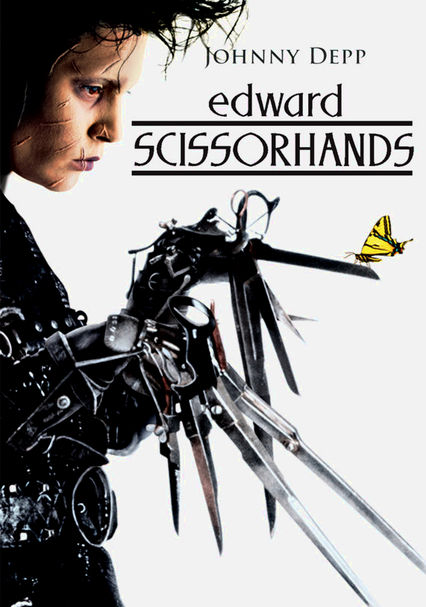
Edward Scissorhands (1990) is a Tim Burton creation, made possible only after the smash success of his 1989 film, Batman.

A creative and romantic fantasy, it is an unconventional project made as charming and whimsical as its stars were at that time.

The film is part sad, part magical, with enough science fiction and romance sprinkled in to make it work across genres.

The result was another box office hit for Burton, teen idol status for its lead stars, and an obvious Academy Award nomination for the deserving Makeup department.

As unconventional and original as it appears on the surface, the film suffers slightly from being a bit mainstream.

There is a safe, romantic comedy feel that takes the film away from a much darker tone it could (and should) have had.

Still, Edward Scissorhands is entertaining and fascinating.

An eccentric scientist, deliciously played by Vincent Price, builds an animated human being, the gentle and soft-spoken Edward (Johnny Depp).

He dies before he can finish assembling Edward, leaving the poor young man with a freakish appearance accentuated by the scissor blades he has instead of his hands.

Friendly suburban saleswoman Peg (Dianne Wiest) discovers Edward and takes him home, where he falls for Peg’s teen daughter Kim (Winona Ryder).

However, Edward’s hands make him an outcast despite his kindness and artistic talent.

This is a challenge for all of them.

By 1990, Johnny Depp was becoming a huge Hollywood star, and so was Winona Ryder. As the ‘it’ actors, this helps Edward Scissorhands tremendously by not only adding ticket sales but also a fascination with them as a couple.

The chemistry is palpable, and so is the classic good-girl-helping-boy reform. Depp’s Edward is a sympathetic hero and is instantly mysterious and likable.

Wiest, then in her prime, is a hoot as the comical Avon lady who introduces Edward to the joys and pains of suburban Americana. Particularly enjoyable are the perfectly manicured landscapes in Peg’s neighborhood, where she goes door to door selling her products.

As one can easily predict, the beautiful plants and bushes suffer at the hands of Edwards.

The Gothic mansion where Peg discovers Edward is a deliciously creative set piece that has the classic Burton stamp.

The director is so defined by his artistic sets and design that half the fun of the film is discovering and noticing these fabulous creations.

The mainstream part comes with the story, and a smattering of 1982’s E.T. sentimentality is included to win over middle-American audiences. This isn’t bad, but it does lighten the heavy drama and sinister approach that Burton could have honed in on.

Much of the credit must go to Depp because on paper the premise could easily be dismissed as silly, trivial, or outlandish. The actor brings pathos to the role and makes the audience believe in and fall in love with the character.

He makes Edward even more relatable by adding some obvious clichés: Kim’s jealous boyfriend, Jim, played by Anthony Michael Hall, and the eccentric religious fanatic who believes Edward is evil incarnate, played by O-Lan Jones.

Adding these villains and most of the rest of the neighborhood as either clueless or misunderstanding townsfolk further reduces most of the supporting cast to standard stock characters.

Burton, along with Depp, Ryder, and Wiest, gives Edward Scissorhands (1990) heart.

It’s a beautiful fairy tale that feels magical and adventurous, save for some mediocre storytelling. It’s an above-average film that won over audiences at the time of its release.

Oscar Nominations: Best Makeup

Frankenweenie-2012

Frankenweenie-2012

Director Tim Burton

Starring Catherine O’Hara, Martin Short

Scott’s Review #454

70219496

Reviewed July 23, 2016

Grade: B

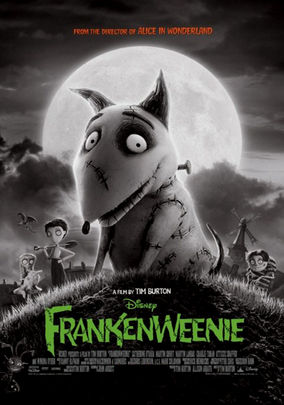
Frankenweenie is a very creative Tim Burton-made, stop-motion film that received a nomination for Best Animated Feature at the 2012 Oscars.

On the dark side, it is a pleasure to watch for the thought-invoked and left-of-center approach as compared to many safe modern animated features.

The story revolves around a lonely young man who experiments on his recently deceased dog to bring him back to life.

It is a black and white film, has nice horror references (Frankenstein, Bride of Frankenstein) and interesting characters.

It is also heartwarming as the child’s love for the dog is evident.

The movie is easy to compare to 2012’s ParaNorman in multiple ways (lonely male teen, both dark films).

As much as I give major props to this film for the creativity involved, somehow it did not completely connect with me (I liked ParaNorman better) and I’m not sure why, but I have great respect for the creative achievements it encompasses.

Oscar Nominations: Best Animated Feature Film