All posts by scottmet99

Abacus: Small Enough to Jail-2017

Abacus: Small Enough to Jail-2017

Director Steve James

Scott’s Review #768

Reviewed June 6, 2018

Grade: B+

Abacus: Small Enough to Jail (2017) is a compelling documentary that received considerable attention after earning an Academy Award nomination.

The straightforward story never dulls or drags. It stays on point by telling a gripping courtroom-style legal thriller about a Chinese family’s struggle to keep their small banking business from criminal prosecution.

The documentary features the Sung family, led by patriarch Mr. Sung, who brought the family from China to start a banking business decades ago.

Since then, the family has set up roots in downtown New York City, launching a community-style bank to help people living and working in the Chinatown section.

The bank has become tremendously popular and culturally centered as a way to help struggling neighbors, and its business has thrived.

The Abacus Federal Savings Bank became the only one to face criminal charges following the mortgage crisis in 2009.

The documentary argues that this was because the larger banks were untouchable, and prosecutors desired to make an example of the banks because they were an easier target.

The documentary wisely presents both sides, featuring family interviews as well as the prosecutor’s arguments.

I found Abacus: Small Enough to Jail to move along quite smoothly and quickly. The documentary mainly focuses on the Sungs, who are all very driven people.

They reside in upscale Greenwich, Connecticut, and consist of a mother and father and three grown daughters in their twenties and thirties. The daughters are brilliant, and the entire family is intensely loyal to each other and their business despite scenes showing them bickering over trial strategies and takeout lunches.

The documentary mainly chronicles the prolonged five-year ordeal that the Sungs endured, involving a myriad of paperwork, trial dates, and other particulars. All the while, the family continues to uphold their business with gusto, but the trial takes quite a toll on the individuals, particularly the elderly patriarch.

It is tough to imagine anyone rooting for a bank, but that is the result.

Director Steve James is superb at portraying the Sung family sympathetically. There is never a doubt that he feels they have been victimized and sought after because they are a relatively easy target compared to the big boys of the banking world.

J.P. Morgan and Chase are deemed untouchable, which is a significant source of the problem and the film’s main objective to show.

Heartbreaking is a scene containing footage of at least a dozen or so Chinese bank employees being led to processing all chained together- chain gang style. This scene, shown relatively early in the documentary, cemented my support for the Sungs.

I asked myself, even if they were guilty, why the inhuman and racist treatment? When questioned about the poor treatment of the indicted, all the prosecution could muster was that it was “unfortunate,” hardly an apology.

The key element here and the main point of the story is that wrongdoing was committed, but the question asked is whether the Sungs knew about a few of their employees’ shenanigans, and I truly think not.

As the documentary explains, the jury had extreme difficulty reaching a concrete decision, which is why the trial dragged on and on. I asked myself, “If the large banks were bailed out with no prosecutions whatsoever, why should a mom-and-pop bank be targeted?”

Steve James creates an unexpectedly fast-paced piece. It is tough to do with dry financials, spreadsheets, and other banking-type particulars, but that is just what he does.

Objectively presenting the facts on both sides and offering many interviews and courtroom drawings, Abacus: Small Enough to Jail (2017) is a treat to view and captures a terrible time in United States history and how the undertones of racism still exist.

Oscar Nominations: Best Documentary-Feature
Good Time-2017

Good Time-2017

Director Ben Safdie, Joshua Safdie

Starring Robert Pattinson, Ben Safdie

Scott’s Review #767

Reviewed June 5, 2018

Grade: B+

Every so often, an actor who is known for either making mainstream films or portraying a mediocre character risks being typecast.

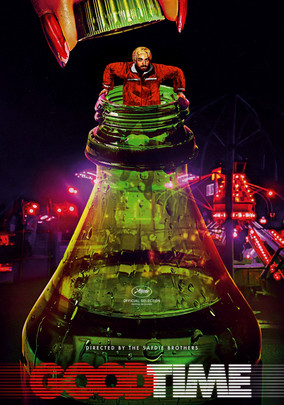
Fortunately, actor Robert Pattinson, known chiefly as the heartthrob from the trite Twilight films, has been given the best career role. The actor hits the jackpot with a challenging and edgy performance in the fast-paced, independent crime drama Good Time (2017).

The film is a perfect ride, and directors Ben and Joshua Safdie successfully provide excellent tension and compelling action scenes (Ben even gives a worthy supporting performance as a mentally challenged character).

The overall tone of the film is that of an edge-of-your-seat experience.

As enjoyable and taut as the film is, a few minor criticisms must be mentioned below.

Good Time begins with Nick Nikas (Ben Safdie) being quizzed by a therapist. They are quickly interrupted by Nick’s brother Connie (Pattinson), who removes him from the facility so that he can assist with a bank heist.

When the attempt goes awry and Nick is arrested, Connie does his best to spring his brother from jail and then from the hospital following an altercation with another inmate. All the while, Connie must also evade the police as he forms a strange connection with a sixteen-year-old girl, Crystal (Taliah Webster).

The fun part of Good Time is that the film is fast-paced and filled with twists and turns. Taking place largely over the course of one night, we are compelled by Connie’s journey and wonder if he will outrun the cops.

Although it is a standard thriller, Good Time rises slightly above this ranking due to its wonderful New York City setting and numerous exterior scenes—this is a major plus.

The film’s look also garners props. With a slick yet gritty and grainy feel, the camera angles are quick and plentiful. This is a great tool to keep the action going at lightning speed, and the editing deserves kudos, too.

The intensity and tension run rampant throughout.

A good example is the bank robbery scene—as the teller disappears into the vault to get the requested amount of money, she takes what seems like an eternity to return, leaving the audience (and Connie) wondering if she has alerted the authorities.

Otherwise, the film is helped immensely by the acting performance of Pattinson, who owns the film. Having not seen him in anything before, I was surprised at how good he was.

I thought of him as more of a matinee idol than a serious actor, but I was proven wrong. Grizzled and temperamental but a decent guy at times, Pattinson’s Connie is loyal to a fault, putting his brother first and foremost.

Fans of Captain Phillips (2013) will be delighted to see Barkhad Abdi cast in the small yet pivotal role of an amusement park security guard.

Nominated for the Best Supporting Actor award for Captain Phillips, the Somali-American actor has found steady work in film since his acclaimed debut performance. In his role in Good Time, the character is instrumental in kicking off the final act that leads to the downfall of at least one other character.

A few minor but notable flaws (somewhat unnecessary) that Good Time contains are worth mentioning.

Perplexing to me is the casting of Jennifer Jason Leigh as Connie’s girlfriend, Corey. Decades older than Connie, Corey is written pretty much as a nitwit attempting to use her mother’s credit card to bail out Nick.

The film does not mention the age difference or provide much meat to the role—Jason Leigh deserves better than a throwaway role like this.

Otherwise, none of the female characters are treated exceptionally well. Connie frequently directs or shouts at either Corey or even Crystal, eliciting a slightly off-putting “man in charge” vibe.

Also, a gay slur uttered by Connie is thrown into a scene for seemingly no reason, which surprises me in 2017. Still, something makes the audience root for Connie while we still want him to get his punishment.

Good Time (2017) provides quality entertainment in a specified genre with good acting.

With a weird Ocean’s Eleven style (only with one prominent character), the bank robbery theme will satisfy those in the mood for a good heist film.

The film’s title is a mystery (is it irony?), and I’m not sure it works, but overall, it is a perfect watch.

Independent Spirit Award Nominations: Best Director-Safdie Brothers, Best Male Lead-Robert Pattinson, Best Supporting Male-Benny Safdie, Best Supporting Female-Taliah Lennie Webster, Best Editing

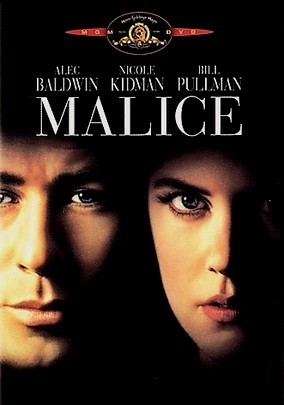
Malice-1993

Malice-1993

Director Harold Becker

Starring Alec Baldwin, Nicole Kidman, Bill Pullman

Scott’s Review #765

Reviewed May 29, 2018

Grade: B+

Malice (1993) is only one of a slew of husband and wife-themed thrillers to emerge from the early 1990’s- Unlawful Entry (1992), Sleeping with the Enemy (1991), and Deceived (1991) are other similar films that made lots of money during this time.

This slick filmmaking genre was popular as the new decade emerged and more complex storytelling graced screens.

The myriad twists and turns are both a positive and a negative for this film.

Keeping the audience guessing and on pins and needles is a key to success, eliciting a fun tone, as well as the tremendous star power of the cast (George C. Scott and Anne Bancroft are big-time heavies).

Then again, a few of the plot points become red herrings and thereby meaningless, and the overall plot and endless subplots become way more complex than they need to be.

In a plot that is dizzying to explain, Associate Dean Andy Safian (Bill Pullman) and his wife Tracy (Nicole Kidman) are embarking on a life together in Massachusetts as they purchase a grand Victorian house and plan to begin a family.

As a serial killer stalks the campus where Andy works, and implausibly results in him being the prime suspect, Tracy experiences health turmoil and is operated on by cocky yet brilliant Dr. Jed Hill (Alec Baldwin).

When dire events occur, the plot escalates, and the main characters’ motivations are called into question as truths and deceptions unravel.

When I first saw Malice in 1993 (in fact, I saw it twice the same year), I adored the multitude of plot points and devices. The film had the same effect as a speeding roller coaster ride- with endless twists and story revelations.

And to be fair, the film holds up pretty well, never seeming dated or of its time like many mainstream films.

The two startling reveals- Tracy and Jed being in cahoots and the mysterious eye witness living next door being blind- are clever bits of writing that immerse the audience on many levels.

The acting is top-notch- Kidman plays good and evil oh so well, and Bancroft’s cameo as Tracy’s mother is Oscar-worthy.

The chemistry between Pullman, Kidman, and Baldwin, and Pullman’s “nice guy” to Baldwin’s “jerk,” works quite well as the overlapping relationships play out.

Small yet meaningful roles by Bebe Neuwirth, Peter Gallagher, and Gwyneth Paltrow add layers to the wonderful casting.

And who can forget the often-parodied scene in which arrogant Dr. Jed launches into a monologue claiming to be infallible and to be God? This scene received tons of publicity and is arguably the defining moment of the film.

However, Malice’s strengths also sometimes become its weaknesses. As the events unfold, the plot becomes too confusing.

The school serial killer plot soon becomes a red herring as we realize it has little to do with the central plot- the Tracy/Jed alliance- except only to raise parenting questions.

Therefore, the big reveal of who the killer becomes is for naught. It’s the creepy janitor named Earl(Tobin Bell), hardly a surprise.

Furthermore, after the film ends and the viewer plays the events back to see if they add up, they will likely give up in frustration.

Malice is an above-average entry in a popular genre- who doesn’t like a good, solid thriller? With a talented cast and enough good medical thrills to balance with a college campus whodunit, there is plenty to please everyone who views this film.

Yes, some of the writing is preposterous and tough to believe, but Malice (1993) is a movie meant to escape with, sit back, and enjoy.

A Ghost Story-2017

A Ghost Story-2017

Director David Lowery

Starring Casey Affleck, Rooney Mara

Scott’s Review #764

Reviewed May 27, 2018

Grade: A-

It’s marvelous to support independent film. I get most of my selections via the annual Independent Spirit Award nominations, which are announced every November.

Rich, creative films that ordinarily would be overlooked are recognized and sometimes treasured instead of forgotten entirely.

A Ghost Story (2017) is a small film fortunate to land big-name stars, undoubtedly increasing its audience—I am unsure if this film ever played in theaters anywhere.

Nonetheless, the film is a thought-provoking experience that left me perplexed and fascinated but with the knowledge that I had seen something worthwhile. I may not have completely understood it, but I also adored it.

Writer and director David Lowery must be good with Hollywood A-listers Casey Affleck and Rooney Mara, who star in A Ghost Story. The pair also appeared in Lowery’s first film, Ain’t Them Bodies Saints (2013), which received critical acclaim.

Somewhere outside of Dallas, Texas, a young married couple known as “C” (Affleck) and “M” (Mara) moves into a small house. “C” is a musician with an unusual fondness for the tiny house the couple rents.

While “M” desires to leave the house, “C” wishes to stay, somehow drawn to it. After “C” is tragically killed in a car accident, his spirit returns, unable to let go of either his wife or his home, eventually stuck in time to watch generations come and go.

A Ghost Story is a cerebral experience as we watch the events from the perspective of “C.” Adding an eerie quality is that “C” is a ghost- shrouded in a plain white bed sheet with dark circles for the eyes. While “C” does not speak, we experience his perceptions and feelings through what he sees.

At first, following “M” around as she mourns his loss, eventually, she moves on and “C” is forced to watch others live in the house. Pitifully, he awaits the return of “M” as hundreds of years go by.

Lowery is good at creating an ominous and haunting tone, mainly through his classical musical score. The film is wonderfully original.

The audience feels the loss and loneliness of both “C” and “M,” but there is a scary quality, too—not in the horror genre way, but rather, we do not know what will happen next. When “M” brings a man home, “C” is furious, knocking books to the ground and turning the lights on and off.

Later, a new family is terrorized when an unhappy “C” breaks all their dishes in a rage.

A scene that gave me the creeps is when “C,” in spirit form, gazes out the window of his house and notices another ghost looking out the window next door. This ghost looks exactly like him, except it is female- we know this because her sheet has a flower pattern.

They can communicate without speaking, and “C” learns that she has been waiting for someone to come home to her, but it’s been so long that she can’t remember who it is. This scene is sad and filled with despondency.

A forewarning is that the pacing of the film is very slow—perhaps too slow for most. After “M’s” landlord brings her a pie, we watch her devour it in a very long five-minute scene, after which she vomits the contents up.

Despite its length, this scene is powerful and important, as the entire time, we view her depression and longing for “C” to return, absorbing some little comfort from the pie.

A Ghost Story reaches its creative climax towards the end as the film comes full circle, and we begin to understand the circumstances. A dynamic sequence of the passage of time occurs, showing the demolition of the house and the development of a thriving city over time. Depressed and desolate, “C” jumps off of a high rise.

However, the final scene mystified me, and I was unable to completely make A Ghost Story (2017) add up (was there a second ghost or a rebirth of “C”?), but that is also part of the film’s intrigue.

Regardless, the film is a worthy watch if only for a cerebral story that makes one think. Its central themes of loneliness and loss are depressing but also fascinating concerning the good story that Lowery creates.

Independent Spirit Award Nominations: John Cassavetes Award

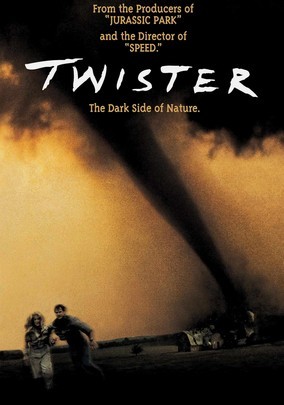
Twister-1996

Twister-1996

Director Jan de Bont

Starring Bill Pullman, Helen Hunt

Scott’s Review #763

Reviewed May 25, 2018

Grade: B+

Twister (1996) is a film with amazing, groundbreaking special effects that blew people away (pun intended!) when it was released to the masses over twenty years ago.

Moviegoers flocked to theaters everywhere to enjoy the escapist summer feel-good hit starring popular stars of the time.

The film spawned amusement park rides and lots of other fun things during its run.

The visuals are what truly deserve to be enjoyed here, not the generic, tried-and-true subplots of romance, childhood trauma, and corporate greed that are mixed in.

The film does not hold up well in the present day, as its dazzling effects now look rather dated when compared with modern blockbusters. This results in Twister being reduced to “one of those 1990’s films”.

Bill Paxton and Helen Hunt star as American storm chasers, Bill and Jo, obsessed with their craft of tracking tornadoes throughout the Midwestern United States.

Adding drama to the plot is that Bill and Jo are an estranged married couple in the midst of a divorce.

Bill brings his new fiancée, Melissa (Jami Gertz), along as numerous meteorologists converge to track storms using newly invented devices.

Predictably, a series of vicious storms commences while Bill, Jo, and Melissa play out a love triangle.

Twister gets off to a fantastic start when a wicked storm kills the five-year-old Jo’s father, prompting her to pursue her chosen career. Jo has never gotten over her father’s death, becoming fascinated by deadly storms.

The effects of this initial storm are very well done as Jo’s father’s death scene is riveting- the poor man being sucked into the deadly cyclone is memorable.

Regardless, this scene sets the tone for the ample effects to follow- most notably the terrifying sound of the swirling storm as farm tools and animals fly around onscreen.

After the initial introduction, the rest of the film mainly follows the group as they drive around and encounter storms, with Bill and Jo taking center stage.

As a child who spent many summers in the Midwest, sans tornadoes, thankfully, I felt a sense of nostalgia watching the film.

It is assumed that Twister was filmed on location (with studio help), but the authenticity is apparent. From the vastness of the plains to the dusty roads, cornfields, and the small-town U.S.A.

I enjoyed the down-home, slice-of-life feel.

The action and effects are lightning-quick and quite realistic. As mentioned, the sound effects are as strong as the visual effects, and I never doubted for a second that the twisters had a realistic quality.

This successfully merges into the summer blockbuster that Twister’s producers undoubtedly were going for. Making a ton of money, the result was successful and inspired by Hollywood.

Despite the superlative special effects, though, this is the only reason to watch Twister, and seeing the film once is enough excitement.

The writers (Michael Crichton and Anne-Marie Martin) attempt to incorporate a romance into the story, and this does nobody any good.

This negative aspect is even more apparent since the chemistry between Paxton and Hunt is non-existent, and Gertz’s Melissa is meant to be the odd woman out all along.

A large amount of suspension of disbelief is necessary to “buy” various scenes. Ludicrous are countless scenes where characters either outrun the monstrous twisters or, somehow, the storms encircle them but miraculously never touch them.

When Jo, Bill, and Melissa’s truck is captured inside the funnel cloud, the vehicle and its passengers somehow remain unharmed.  Tornadoes do not simply come out of nowhere to attack without any indication on the radar.

But alas, this is a disaster film, and liberties must be taken.

The famous “cow scene”, notoriously used twice in the film, seemed groundbreaking and cutting-edge in 1996, but in 2018 now seems hokey and unnecessary.

Times sure do change in cinema, especially with technical effects and CGI growing each year.

Admittedly, the film does contain a good, all-American rockin’ summer tune by Van Halen named “Humans Being”, which always makes me think of summertime when I hear it.

The entire Twister soundtrack was an enormous success with radio airplay, which led to further successes for the film.

Perhaps now watched as a blast from the past or a revisit to some sort of nostalgic time for folks, Twister (1996) is a great example of a once-popular popcorn movie falling into semi-obscurity.

Given another twenty years, the film will undoubtedly fall apart—a nice film for its time, but not much more.

Oscar Nominations: Best Sound, Best Visual Effects

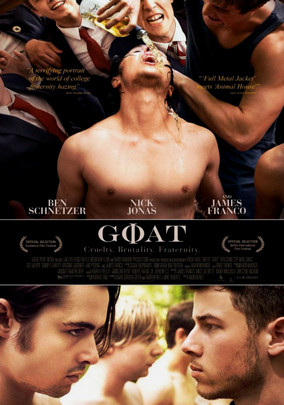
Goat-2016

Goat-2016

Director Andrew Neel

Starring Ben Schnetzer, Nick Jonas

Scott’s Review #762

Reviewed May 23, 2018

Grade: D

Goat (2016) is a film that made me angry for one hour and forty minutes. I deride it completely.

Incorporating outrageous and unnecessary scenes for no other reason than to offend, the film fails to achieve either a lesson learned or any central point.

I understand what the filmmakers were going for by portraying fraternities as evil and their members as monsters. Goat never provided logic, much character development, or any good intentions.

I was left disturbed by what I had just seen.

College student Brad Land (Ben Schnetzer) is viciously attacked by two peers following a party one summer night. As the police search for the assailants, Brad begins the fall semester at a college attended by his older brother Brett (Nick Jonas).

There, he decides to pledge a fraternity during “Hell week,” enduring one humiliation and degradation after another. When a fellow pledge dies following the fraternity’s abuse, someone rats the fraternity out, with Brad as the likely suspect.

Brad is an interesting study. The protagonist makes his first mistake by giving ominous-looking strangers a lift home. At this point, we feel sympathy for the character and should root for him throughout the film, but I didn’t.

As nasty as the fraternity brothers are, it is not until nearly the end that Brad ever stands up to any of them, and he oddly refuses to point the finger at his assailant despite being right in the police lineup.

I found the character all over the place and never knew his motivations.

Most other characters (including the victimized pledges) have little rooting value and are primarily one-dimensional “frat boys” written poorly.

The writers of the script do their best to make fraternity brothers look awful- they beat, berate, humiliate, and degrade not only the pledges, but they barely treat females or animals any better.

This isn’t comforting to witness since there is little point. The humiliation scenes continue as if we are watching the same scene repeatedly.

Ludicrous scenes of the guys drinking, acting belligerent, using anti-LGBT slurs, and taunting each other commenced almost from the get-go.

A ridiculous cameo by James Franco goes nowhere and makes little sense other than his character being a former frat boy the current members looked up to. If I had a nickel for every “bro,” “dude,” or “man” used in the film to show machismo, I’d be a rich man.

In the final segment, the film makes a feeble effort to humanize Brett, who is hot and cold towards his brother all along (this is never explained).

They also write a few of the frat boys as feeling sorry for the sudden heart attack suffered by one of the pledges, but this only fueled me with rage as unknown was whether they were genuine or wanted to save their asses (they caused his death!).

My vote goes for the latter.

The only prop I will give to Goat is that it is not a middling glossy Hollywood affair and goes for the jugular in its intensity and brutality.

But the point I thought the film was trying to make (that of a thought-provoking look at the problem of fraternities) only made me hate fraternities and develop a negative view of them.

From the despicable scenes where the frat feeds a poor goat chocolate laxatives and forces a blindfolded pledge to eat what’s thought to be excrement to the concussion they give a pledge before he succumbs to a heart attack, the film is not an easy watch.

Too many scenes feel overly hammered home and redundant, and the conclusion is unsatisfying. We are left with Brett and Brad gazing out at the spot where Brad was attacked, and this scene does nothing to wrap up the film.

From the onset, I squirmed uncomfortably during Goat and never felt connected to the film or any of the characters.

Perhaps Goat (2016) would have succeeded or appreciated more with more development and purpose, but the film failed me.

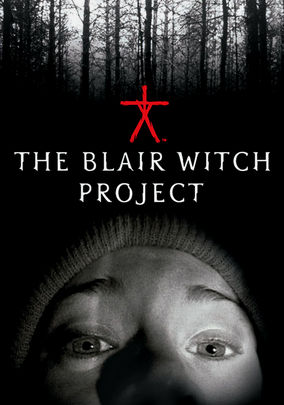
The Blair Witch Project-1999

The Blair Witch Project-1999

Director Daniel Myrick, Eduardo Sanchez

Starring Heather Donahue, Joshua Leonard, Michael Williams

Scott’s Review #761

Reviewed May 22, 2018

Grade: A

When a horror film “scares the viewer to death,” then that film has superseded what it has intended to do, since horror films are a dime a dozen these days.

Fondly remembering sitting in a crowded and very dark movie theater to see The Blair Witch Project (1999), I was left both mesmerized and clutching my seat for dear life.

This film had an enormous impact on me.

The film wisely uses hand-held cameras (black-and-white 16mm film) and Hi-8 video, manipulating the audience into using their imaginations and leading to terrifying results, making it one of the scariest horror films of the 1990s.

Sometimes what you don’t see is much more frightening than what is seen on screen.

In 1994, three college-aged amateur filmmakers (Heather, Michael, and Joshua) decided to hike to Burkittsville, Maryland, to film a documentary about a legend known as the “Blair Witch”.

The witch is reportedly responsible for mysterious deaths and disappearances over the past two hundred years. They interview, wander, and joke around with each other as a sense of dread begins to develop.

According to the film, the trio themselves disappear, but a year later, their equipment is found fully intact, and the film footage can be viewed.

The 1999 film is professed to be the footage left behind by the group.

Throughout the film, we watch the individuals conduct interviews with the townspeople and eventually get lost in the woods at nightfall, forced to stay the night as a mysterious entity terrorizes them.

Numerous creepy noises and rustlings scare the group.

In retrospect, with more insight and knowledge about the film, it may be easy for critics to dismiss The Blair Witch Project as either a hoax or a complete manipulation, but in 1999, audiences flocked to the theaters in droves as word of mouth spread.

I saw the film twice on the big screen and was frightened equally with each viewing. More importantly, with the onset of the reality television craze, the film was clever in capitalizing on this trend, so it is to be championed.

Timing is everything!

In the film genre, The Blair Witch Project used buzz and word of mouth to elicit interest before the film was even released- and then the craze began.

The film was highly influential to subsequent releases that also chose to utilize camcorders as their method of storytelling- think 2007’s Paranormal Activity and 2008’s Cloverfield.

The Blair Witch Project is similar in tone to older masterpieces such as 1974’s The Texas Chainsaw Massacre and 1968’s Night of the Living Dead- independent releases made on a shoestring budget that became enormously successful.

As with these films, the camerawork was crucial to achieving the necessary realism.

What makes The Blair Witch Project enormously authentic is the tricks used not only on the audience but also on the cast. Reportedly, the film was almost entirely improvised, including dialogue and situations that the characters faced.

The actors began to feel as if the events they were supposed to act out were happening- their map disappeared, and noises were created to frighten them.

This clever approach to Method acting elicited the perfect responses from all involved- especially as they got colder, hungrier, and more desperate.

My concern is how well 1999’s The Blair Witch Project will hold up over the years. Phenomenally effective and tremendously profitable at the time, the film has inspired dozens of imitations since its release.

So much so that it makes the original idea seem dated.

One thing remains true- the film gave the horror genre a much-needed breath of fresh air and influenced many films to come.

Independent Spirit Award Nominations: 1 win-Best First Feature (Under $500,000) (won)

Girls Trip-2017

Girls Trip-2017

Director Malcolm D. Lee

Starring Regina Hall, Queen Latifah, Jada Pinkett Smith

Scott’s Review #760

Reviewed May 18, 2018

Grade: D-

I am genuinely baffled by some of the positive reviews of the film Girls Trip (2017) by viewers and respected critics.

Attempts to make females as raunchy as the guys in R-rated comedies never work, in my opinion (good writing does!), and the result is a largely unfunny, crude piece of drivel.

The fact that the film, which goes for a “female empowerment” theme, is directed by a man is as disappointing as disrespectful, especially given the fact that the writers are female- they couldn’t find a black female director?

At the risk of giving a testimonial, I fully know the importance of creating good female roles in cinema-perfect female black roles.

Unfortunately, the roles in Girls Trip do nothing to further the cause as tried and true, standardized parts commence with no well-written character to be found.

Modern films look to Black Panther (2018) or Hidden Figures (2016) as examples of positive black female role models- they exist!

The weak plot involves four forty-something lifelong friends who regroup for a reunion after years apart. Famous lifestyle guru Ryan Pierce (Regina Hall) decides to take her “Flossy Posse” to a music festival in New Orleans, where they will spend the weekend partying like it’s the 1990s once again.

Ryan is married to a man who cheats on her, Sasha (Queen Latifah) runs a failing gossip site, Lisa (Jada Pinkett Smith) is a divorced, overbearing nurse, and slutty, aggressive Dina (Tiffany Haddish), who has just been fired from her job.

In predictable form- think 2009’s The Hangover or a multitude of other raunchy comedies since then, the girls get into trouble, drink too much, have sex, and partake in other hi-jinks throughout the weekend.

The central plot is Ryan’s potential investment deal with rigid and uptight Bethany (Lara Grice) and a wisecracking agent. As events unfold, Ryan’s female nemesis shows up to cause trouble and stir up drama, testing the group’s patience.

Girls Trip is a typical American comedy film (not a compliment!) that offers weak writing and instead promotes stereotypical stock characters.

Many similar comedies have come before it, and many more will come after it. Since I disliked the film so much, I decided to ask myself a few rhetorical questions as I observed the mess.

In films with a group of women, why is there always a slutty one (Dina)? Why is there always a mousy one (Lisa)? Why is there always a fat one (Sasha)? Why is it deemed funny to watch women pee or suffer bathroom issues?

The only positives to Girls Trip come in one humorous scene when Dina mixes absinthe into the girls’ drinks before a meeting, causing them to hallucinate. As the girls begin to imagine themselves talking in deep baritone voices and Ryan imagines a waitress is her arch-enemy, the hilarity briefly ensues.

A quick wrap-up speech by Ryan after the film does send a nice message about being yourself and staying true to your loved ones, but why we have to suffer through two-plus hours of crap to get to the inspiration and point of the film is beyond me.

The success of Girls Trip (2017), which will inevitably produce a sequel, leads me to believe that the masses prefer their films idiotic, redundant, and fraught with cheap, crude laughs.

The film seems to be intended to push the envelope—not to create great art, but just to make the film as crass as possible. This is presumably to prove that girls can be as nasty as boys, which the film succeeds at portraying.

Indiana Jones and the Temple of Doom-1984

Indiana Jones and the Temple of Doom-1984

Director Steven Spielberg

Starring Harrison Ford

Scott’s Review #759

Reviewed May 17, 2018

Grade: A

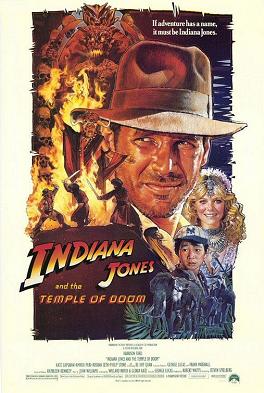
The second in the trilogy (I refused to acknowledge the middling Kingdom of the Crystal Skull in 2008), Indiana Jones and the Temple of Doom (1984) is easily my favorite of the group.

Much darker than its predecessor, Raiders of the Lost Ark, it is also better, with more flair and pizzazz.

All three (1989’s The Last Crusade added) could be watched in sequence and easily enjoyed as companion pieces for a slice of 1980’s nostalgia.

A prequel to Raiders of the Lost Ark, the action picks up a few years prior as our hero narrowly escapes the clutches of a crime boss in Shanghai, China.

Indiana Jones (Harrison Ford), along with sidekick eleven-year-old Short Round (Ke Huy Quan) and nightclub singer Willie Scott (Kate Capshaw), embarks on an adventure to retrieve a stolen sacred stone.

The poor villagers have also lost their children to a lavish palace where they are forced to work as enslaved people.

Wisely in keeping with the continuity of the first story, director Steven Spielberg and writer George Lucas return to the fold. This enriches the experience, as both men are attuned to Indiana Jones’s character and do not try to change him.

His familiar wittiness and charismatic nature return, and the dashing hero shows more skin this time around with more than one shirtless scene.

To cement the good character, Harrison Ford returns to the role he created and made famous.

Indiana Jones and the Temple of Doom is layered with positive aspects and holds special childhood memories for me. I vividly recollect going to the movie theater and excitedly watching the film on the big screen, clutching a tub of buttery popcorn.

For a young boy, this is the best- an adventure story for the ages with thrills and edge-of-your-seat sequences.

The film is perfect for the entire family.

Many gorgeous exterior sequences abound throughout the film. A prime example is when the trio encounters deadly assassins on a precarious rope bridge high atop a crocodile-infested, murky river.

This scene is fraught with tension and “how will he ever get out of this?” thinking when the killers corner dear Indie.

With lightning-quick thinking, he severs the bridge, resulting in a dangling escapade. As numerous bodies fall into the river, they are chopped to bits by the hungry reptiles. The fact that the action is all shot outdoors in lush scenery only adds to the enjoyment.

The film is admittedly filled with dark and scary aspects, necessitating a PG-13 rating rather than a PG one. As Indie, Willie, and Short Round are held hostage in the evil palace, a dangerous sacrifice occurs.

One poor man is chosen to give his life by being burned alive in a roaring fire. Indie is then forced to drink the potion and presumably suffer the same fate.  Other bloody moments include a bad guy meeting his fate after being flattened like a pancake by a steamroller.

The tone of the film is much darker than that of Raiders of the Lost Ark.

To offset the blood, guts, and voodoo, the film occasionally parleys into humor, mostly at the expense of Willie, the film’s comic relief.

Accustomed to the glamour of costumes and luxurious hotels, the singer is forced to fend for herself amid snakes, elephants, and other creatures. As she hungrily sits down for what she thinks is a scrumptious dinner, she is served soup with monkey brains and bulging eyeballs, deemed Indian delicacies.

Readily apparent, watching the film now, are glaring negative stereotypes associated with the Indian culture. As I am sure the intent was not to insult, some stereotypes do abound with the hokey cuisines and the severe poverty.

The underlying image of tribal Indians as being weird or out of touch is prevalent, to say nothing of the odd religious overtones.

Kate Capshaw as Willie is the complete opposite of the central female character, Marion, in Raiders of the Lost Ark. Whereas Marion is intelligent and serious, Willie is pampered, rich, and gullible.

I find the camaraderie between Indie and Willie much more palpable than between Indie and Marion, and the romantic overtures appealing.

Who can forget the famous “bug scene” in the palace?

Conjuring up wonderful and exciting childhood memories, Indiana Jones and the Temple of Doom (1984) is a treasure for the eyes and the strongest entry in the bunch.

If you are in the mood for a good, fun-filled experience with a healthy dose of Indian culture, adventurous antics, and a slice of darkness, this one is a must-see.

Oscar Nominations: 1 win-Best Original Score, Best Visual Effects (won)

Shelter-2007

Shelter-2007

Director Jonah Markowitz

Starring Trevor Wright, Brad Rowe

Scott’s Review #758

Reviewed May 16, 2018

Grade: B+

By the mid-2000s, independent LGBT films were coming fast and furious as the genre was still relatively new and ripe for the picking with good ideas.

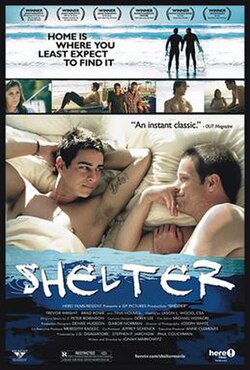
With Shelter (2007), we have a sweet film that focuses on the new romance between two young men, one of whom is coming to terms with his sexuality.

The lead characters are not gay stereotypes and could easily pass for straight men, a characteristic impressive in LGBT films- and other mainstream films for that matter.

Rather than focusing on the discrimination the characters may face or on obstacles from other characters (family and friends), the film wisely makes the story a character study of the demons one man wrestles with while “coming out”.

The small film is written intelligently, save for one supporting character’s plot-driven decision.

Also, in the modern age, we are beginning to see a bevy of similarly themed films emerge from the LGBT community, and Shelter offers nothing we have not seen before.

Set in sunny southern California, our main protagonist is Zach (Trevor Wright), an aspiring artist in his early twenties.

The ultimate “good guy,” he is popular with friends and girls and frequently babysits his five-year-old nephew Cody while his sister parties and has one-night stands.

When Zach meets his best friend’s older brother, Shaun (Brad Rowe), the pair fall in love as Zach wrestles with his sexuality and conflicts with his plans.

Zach’s sexual and family struggles are the main themes of the film.

Shelter (not sure I get the title’s meaning) is a solid slice-of-life story.

Zach initially dates a pretty girl, Tori, who is blonde, wholesome, and a girl-next-door type. This is done intentionally to show that Tori is a girl any young straight man would be interested in.

We never see Zach show interest in any men other than Shaun, so the film leans towards a solid romantic drama once the fellas get together.

Still, we see Zach’s internal struggles and his acceptance of himself for who he is play out.

Actor Wright and director Jonah Markowitz capture this successfully.

Shaun, arguably second fiddle to Zach, is a character that I feel is very well written. Avoiding negative stereotypes, Shaun is handsome, masculine, and charismatic.

Completely confident and exuding great poise, he is a character that any gay male should look up to. He is openly gay yet “one of the guys” as he should be.

He immediately connects with Cody, becoming a father or a cool surrogate-uncle figure for the lad. A quick concern of Zach’s sister, Jeanne, about having the boy around a gay man is trivialized in a quick form.

Another positive aspect of the film is the multiple scenes that show Zach, Shaun, and Cody as a happy family, and how normal that is. Examples of this are frolicking around the beach, playing football, or engaging in horseplay.

A quiet dinner of barbecue steaks and red wine for the men and macaroni and cheese for Cody elicits images of a connected family unit, despite some in society still poo-pooing this idea.

The film presents the connectivity as normal.

A tiny flaw in the character of Jeanne shows her willingness (almost eagerness) to leave Cody (and her ailing father) behind when she decides to take off to Oregon with her brand new boyfriend. This point seems rushed and out of character.

While a party girl with a crappy job at a grocery store, Jeanne exhibited heart and was portrayed as sympathetic and caring throughout the film. Surprisingly and unrealistically to me is that she would give up her life.

A paltry excuse of “Oregon not allowing kids” was left unclear and unexplained.

A part coming-of-age story, part coming-out story, Shelter (2007) is an example of a little film that could with an appreciation of independent cinema.

The film tells a nice story about one man’s journey of self-discovery and the people he surrounds himself with. With impressive California oceanfront and working-class principles as a backdrop, the film has a calming texture and weaves a solid viewing experience.

Raiders of the Lost Ark-1981

Raiders of the Lost Ark-1981

Director Steven Spielberg

Starring Harrison Ford

Scott’s Review #757

Reviewed May 15, 2018

Grade: A

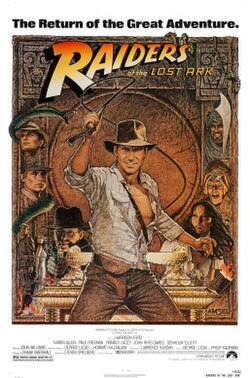
A film that kicked off the tremendously successful and ever-so-fun 1980s trilogy, Raiders of the Lost Ark (1981) is a treasure in the adventure-genre time capsule.

Director Steven Spielberg embarks on the journey of one of the most highly visible film heroes in the form of Indiana “Indie” Jones, a swashbuckling, aw-shucks kind of guy.

Harrison Ford is perfectly cast in a role that perfectly fits him and, besides Han Solo, defined him during the decade- the best role of his career, if you ask me.

Wonderful to watch in sequence with the even more superb Indiana Jones and the Temple of Doom (1984), these two films are a pure pleasure as our hero faces dangerous obstacles at every turn, either being chased by or pursuing sinister robbers and other undesirables.

All the while, Indie keeps his familiar sly grin and numerous jokes to entertain audiences.

Raiders of the Lost Ark has it all with superior writing, editing, cinematography, art direction, sound, and visual effects.

They reaped many Oscar nominations, quite uncommon for an adventure tale, but the merits were warranted. Atypical compared to other films of this type, the film is not overly saturated with phony machismo or unnecessary “guy” stuff, but rather appealing and genuine.

Set in 1936, archaeologist Indiana Jones works as a professor at a University.

Known for retrieving ancient artifacts, he is contacted by Army intelligence officers who ask him to help stop the Nazis from acquiring the Ark of the Covenant, which they believe will make their armies invincible and allow them to conquer the world in a sinister fashion.

Events lead Indy to Marion (Karen Allen), who resents him for a failed past romance.

The rest of the film follows the pair through Nepal and Cairo as they attempt to recover the Ark before the Nazis do.

Raiders of the Lost Ark contains all the elements of a successful “hit” movie and has “blockbuster” written all over it. This is not a slight against the film, but rather a testament to all involved.

Led by the successful Spielberg, who knows how to connect all the dots, Ford, first and foremost, infuses his character with charisma so that the audience enjoys his sensibilities and desire for the truth.

Indie is intent on protecting humankind, so Spielberg carves a “good versus bad” approach, making the villainous Nazis the antithesis of Jones, which creates a clear rooting value.

My favorite scene in the film is nicknamed the “face-melting scene” and contains state-of-the-art special effects that compelled and mesmerized me, and also led to light nightmares for any kid under the age of twelve.

The way that the bad guys see swirling, benevolent ghosts- first beautiful and peaceful, but soon turning deadly- causes their faces to melt off or shrivel. The scene is both inventive and dramatic.

Not to be dismissed as trite or fluff are the exciting and memorable scenes dubbed “the snake scene” and “the rolling boulder scene”.

In the former, Indy wryly admits his fear and trepidation of snakes as he must traverse a huge pit filled with thousands of them, and he comes face-to-face with a deadly King Cobra.

In the latter scene, Indie must outrun a speeding boulder as he takes an ancient artifact from a sacred spot inside a cave, causing boulders to collapse around him.

Both scenes are enormous fun, with immeasurable edge-of-your-seat sequences.

I never sensed much chemistry between actors Ford and Allen. Still, writing the characters of Indie and Marion as former lovers adds a good bit of tension and sparring between the characters- this provides some good fodder and humorous situations.

Thankfully, the romance between the two is neither the film’s focal point nor all that important, but rather, in the safety that 1980s cinema afforded, merely a necessity.

Raiders of the Lost Ark (1981) is a superb adventure film that holds up better than it should, decades beyond its release.

The film is rich with good old-fashioned action, a charismatic hero, thrills, intrigue, and a good history lesson for those interested in the build-up to World War II.

The accounts are fictional, of course, but Spielberg delivers a fine 1980s cinematic experience with it all.

Oscar Nominations: 4 wins-Best Picture, Best Director-Steven Spielberg, Best Original Score, Best Sound (won), Best Art Direction (won), Best Cinematography, Best Film Editing (won), Best Visual Effects (won)

Golden Globe Nominations: Best Director-Steven Spielberg

Witness-1985

Witness-1985

Director Peter Weir

Starring Harrison Ford

Scott’s Review #754

Reviewed May 7, 2018

Grade: A-

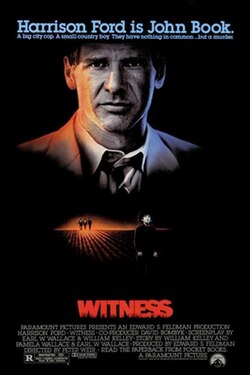
Witness (1985) is a slick crime thriller that may, at first glance, seem like a by-the-numbers genre film, but it is well above average.

As the plot unfolds, there are key nail-biting, edge-of-your-seat scenes that build tension in a way that the suspense master himself, Alfred Hitchcock, would be proud of.

Decades later, it is tough to watch the film without noticing a slightly dated quality, but at the time, it was well regarded and terrifically paced.

Charismatic Harrison Ford and novice child actor Lukas Haas make the film more than it could have been.

The film’s setting is twofold, presenting two distinct cultures: rural Pennsylvania’s Amish country and bustling metropolitan Philadelphia.

The death of her husband leads Amish woman Rachel (Kelly McGillis) and her son Samuel (Haas) to the big city to see her sister. While transferring trains, Samuel witnesses a brutal murder in the men’s room- unbeknownst to the killers.

This riveting scene (explained in more detail below) sets the rest of the story in motion.

When Detective John Book (Ford) is assigned to the case and questions Samuel, he can’t identify the assailants. After Samuel’s fingers, an unthinkable suspect, events escalate, and John uncovers a mighty corruption circuit within the police force.

Now targeted, John must assimilate into Amish culture as he tries to protect both Samuel and Rachel (and keep himself alive) while starting a relationship with Rachel.

The story wisely focuses on the principal characters’ differing lifestyles.

What I enjoy most about Witness is the mix of people from different cultures and how they can learn from one another. John is so used to and desensitized by the rat race that he often forgets the nicer things in life, peace, or even love.

Rachel and Samuel, of course, are highly sheltered, living in a bubble, and are fish out of water amid the bustling streets of Philadelphia. The counter-cultures offer a nice balance to this masculine film, bringing female sensibilities.

Not to be usurped by pure romance, Witness is, at its core, a fleshy, male-driven crime thriller. Adding softer edges, Weir pleases both male and female audiences and appeals to the masses.

John’s precinct, filled with detectives, police officers, and criminals, gives the film the right “guy elements.”

So director Peter Weir offers a good balance here.

I like how Weir portrays the Amish, not as caricatures, stereotypes, or something to be made fun of; they are sweet, stoic, and intelligent, and they accept John into their lives.

As John learns more about Amish culture and becomes one of them, this immersion in a different culture becomes even more prevalent, a good lesson to apply to other differences between people.

The acting is a strong component of Witness.

Charismatic and handsome, Ford is believable as a fast-paced, busy detective.

To add further substance, Ford transforms his character (often written as one-note in typical films of this nature) into a sympathetic and inspiring man as he slowly becomes a father figure to the wide-eyed youngster Samuel and falls in love with Rachel.

Ford is the standout, but the film would not work with fewer supporting actors.

Both innocent and gentle, McGillis and Haas add layers to their roles with pronounced toughness and resilience, saving John as much as he saves them.

Two scenes stand out and successfully build tension and dramatic effect.

As Samuel witnesses the murder in the bathroom, he is seen in a stall, peeking through a crack with only one eye exposed. When he makes a slight noise, the assailant violently goes through each stall, intent on shooting whatever he finds.

Samuel must think quickly to avoid being caught. The camera goes back and forth between Samuel’s looks of panic and the assailant getting closer and closer to catching him.

The viewer’s heart will pound during this scene.

Later, as Samuel sees a newspaper clipping framed among a case of awards, he recognizes the assailant. Weir shoots it in slow motion so John and Samuel’s reactions are palpable and effective.

The scene is tremendously done and cements the bond and trust between these characters.

Thanks to a wonderful performance by Ford and the cast surrounding him, Witness (1985) successfully widens the traditionally one-dimensional masculine crime thriller into something deeper.

With slick entertainment, a great story, and substance, the film crosses genres and offers a substantial cinematic experience the mid-1980s sorely needed.

Oscar Nominations: 2 wins-Best Picture, Best Director-Peter Weir, Best Actor-Harrison Ford, Best Screenplay Written Directly for the Screen (won), Best Original Score, Best Art Direction, Best Cinematography, Best Film Editing (won)

Golden Globe Nominations: Best Picture- Drama, Best Director-Peter Weir, Best Actor-Drama-Harrison Ford, Best Supporting Actress-Kelly McGillis, Best Screenplay, Best Original Score

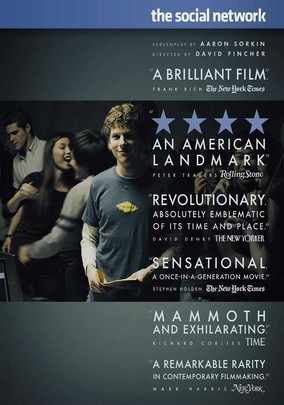
The Social Network-2010

The Social Network-2010

Director David Fincher

Starring Jesse Eisenberg

Scott’s Review #753

Reviewed May 3, 2018

Grade: A

When released in 2010, The Social Network was a timely and brazen look into the world of social media and the powers and dangers it encompassed.

Any film of this nature that chooses to incorporate either a current event or a current fad runs the risk of either being forgotten soon after or becoming irrelevant as the years go by.

So far, almost a decade later, The Social Network is even more interesting in the age of embattled political turmoil involving the social media world, with Twitter and Facebook constantly in the headlines.

Director David Fincher (Zodiac-2007, Fight Club-1999) creates a stylistic piece masked behind the biography of Facebook CEO Mark Zuckerberg (still relevant in 2018) and tells of his rise to fame from a Harvard student to an internet genius.

Throughout his meteoric success, the driven young man lets his relationships suffer as feuds and backstabbing encircle his life, resulting in bitter legal entanglements.

The film is flawless in every way- the screenplay, the score, the acting, the cinematography, and especially the editing all lend themselves to a memorable experience.

We first meet Zuckerberg (Jesse Eisenberg) as a teenager, recently dumped and bitter; he posts a scathing editorial on his blog and somehow hacks into the college site to allow the student body to read.

Along with his friends Eduardo (Andrew Garfield) and Cameron and Tyler Winklevoss  (both played by Armie Hammer), they came up with the initial concept of Facebook.

This leads to others becoming involved in the project including Napster co-founder Sean Parker (Justin Timberlake) as events spiral out of control due to deceit, jealousy, and conflicting accounts.

Fincher’s style is riveting and fast-paced, with snappy edits and lightning-fast scenes giving the film a crisp and sharp look.

The story is told through the Harvard events, interspersed with numerous courtroom scenes as legal counsel represents each of the principal characters, adding drama.

The film’s point is cynical, and despite being a biography of Zuckerberg’s rise to fame, the overall theme is the effects that social media has had on the entire world; in this way, the film elicits a message without being preachy.

Trent Reznor, from the industrial rock band Nine Inch Nails, creates an amazing musical score that adds a modern touch with both techno and electronic elements.

This is not so overdone as to take away from the main theme of the film, nor is it too distracting; rather, it provides a moody yet intense element that is highly effective for the overall film.

What riveting acting The Social Network provides!

Young upstart Eisenberg is perfectly cast as Zuckerberg, and the similarities between the two are uncanny.

With his quick wit and neurotic mannerisms, intelligent yet insensitive to others, Eisenberg not only looks the part; he seems to embody the character and deservedly received an Oscar nomination for the role.

Garfield and Timberlake are nearly as compelling in supporting yet important roles. Finally, Hammer portrays indistinguishable twins with a smug, cutting-edge perfection that fits the way the parts are written.

The Social Network (2010) is a tremendous film with modern technologies and a brilliant screenplay. Beyond the spectacular writing, the film contains other top-notch qualities that make for a memorable experience.

The film holds up exceptionally well today and features a stellar cast of young actors (Eisenberg, Garfield, Hammer, and Timberlake) who all went on to become heavy hitters in the world of cinema years later.

Oscar Nominations: 3 wins-Best Picture, Best Director-David Fincher, Best Actor-Jesse Eisenberg, Best Adapted Screenplay (won), Best Original Score (won), Best Sound Mixing, Best Cinematography, Best Film Editing (won)

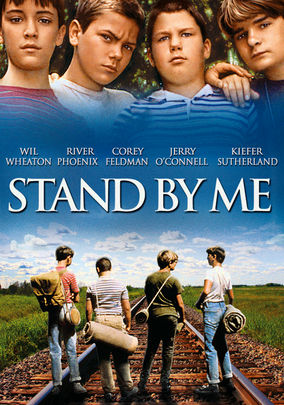
Stand By Me-1986

Stand By Me-1986

Director Rob Reiner

Starring Wil Wheaton

Scott’s Review #752

Reviewed May 2, 2018

Grade: A

Stand by Me (1986) is a sweet, coming-of-age story that every male (or female, for that matter) who grew up in small-town America will undoubtedly relate to.

Set mostly outdoors in the remote Pacific Northwest, the film shows the deep bonds of friendship as four youths set out on a journey of discovery over a Labor Day weekend.

In 1986, I could relate to the film, and today, Stand By Me still holds up well.

Stephen King, a tremendous author known mostly for horror novels, wrote a short story titled “The Body” in 1982. Stand By Me is based on this story.

Instead of traditional horror, however, the story is more of a straight-up adventure, though in pure King style- a dead body is front and center (naturally).

Rob Reiner directed Stand by Me, and its success led to other mainstream achievements for Reiner (1989’s When Harry Met Sally and 1990’s Misery, also a King novel).

Ben E. King’s legendary theme song plays over the closing credits and became a smash hit again in 1986.

The film starts intriguingly as the main character, Gordie, as an adult, learns that his childhood friend Chris Chambers has tragically been stabbed to death.

Gordie then narrates a flashback to the summer of 1959, when he and three other boys embarked on a childhood adventure on Labor Day weekend.

Along with Gordie (Wil Wheaton), we meet Chris (River Phoenix), a rebellious boy with a troubled home life, Teddy (Corey Feldman), who is scarred as a result of being burned by his mentally ill father, and Vern (Jerry O’Connell), an overweight kid insecure about his looks.

The wonderful aspect of Stand by Me is that each of the four central characters is flawed, whether physically or by some other insecurity, giving each character depth.

Each character is highly empathetic to an audience member who may see themselves in them.

This point carries through the entire film. Through conversational scenes with one another, each weakness is exposed and dissected- Teddy becomes vulnerable about his relationship with his father when a character refers to him as “loony”.

Vern’s weight bothers him, and Chris wants to be more than people expect him to be.

To avoid being weighed down by too many dramatic elements, Stand by Me incorporates much-needed humor. My favorite sequence is the delightful story in which Godie regales the other boys one night as they camp outdoors.

Town legend has it that a rotund man, who picked on a boy nicknamed “Lard-Ass,” enacts the perfect revenge on the townspeople one summer as he enters a pie-eating contest, resulting in a torrent of vomiting.

Reiner shoots this scene well and brilliantly balances the film’s differing tones, all while keeping it within a cohesive package.

The film belongs to its young actors, each of whom is cast brilliantly. Of course, Corey Feldman and River Phoenix went on to major success in the 1980s.

Phoenix, who tragically died in 1993, and Feldman, who suffered numerous setbacks in his short career, are forever youthful, with promise and poise in this film.

In Phoenix’s case, he seemed most on course for leading man status with his dashing, youthful looks and clean-cut appearance. Watching in later years, it is bittersweet to watch both actors and recollect the promise of each.

Mixing drama and comedy, and at its core a true adventure story best watched on a summer evening, Stand By Me (1985) is memorable and poignant.

Its late-summer setting, outdoor camping, and green scenery endure and stand the test of time.

Anyone who has taken a meaningful journey as a kid or made lasting memories in their youth (which should be all of us) can appreciate this timeless gem.

Oscar Nominations: Best Screenplay Based on Material from Another Medium

Golden Globe Nominations: Best Picture- Drama, Best Director-Rob Reiner

Independent Spirit Award Nominations: Best Feature, Best Director-Rob Reiner, Best Screenplay

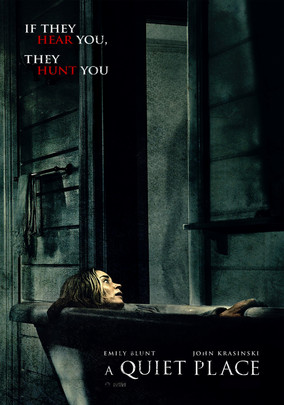
A Quiet Place-2018

A Quiet Place-2018

Director John Krasinski

Starring Emily Blunt, John Krasinski

Scott’s Review #751

Reviewed May 1, 2018

Grade: B+

A clever modern horror film, A Quiet Place (2018) offers a unique premise and novel use of sound to elicit a compelling, edge-of-your-seat story.

The film is a good offering with a science fiction slant and a “quiet” sensibility. It has ample jumps and frights that fit the story rather than being added unnecessarily.

Actor turned director, John Krasinski, shines in this film, to say nothing of the raw talents of Emily Blunt and the two child actors involved.

Only the four principles exist in the story, which is a benefit.

In the year 2020, most of the human population was decimated by vicious creatures called “Death Angels”, who have hypersensitive hearing- they cannot see but pounce on their prey at every sound made. Thus, the survivors must either whisper or communicate nonverbally.

An intelligent couple, Lee (Krasinski) and Evelyn Abbott (Blunt), an engineer and a doctor, have managed to survive with their two children, Regan and Marcus, their youngest son, Beau, having been killed after his toy rocket accidentally goes off.

The family lives on a farm in upstate New York, creating intricate ways to ward off the creatures but constantly fearing impending doom.

As Evelyn is now pregnant and due to give birth any day, in addition to Regan’s deafness, Lee attempts to create a mock ear to enable her to hear. One evening, he takes Marcus to hunt while Regan visits Beau’s grave. When Evelyn enters labor, she steps on a sharp nail, dropping a picture that alerts a nearby creature.

The remainder of the film (only ninety minutes) is spent with Evelyn alone in peril as the rest of the family tries to save her with some eventual dire results, both before and after the baby is born.

A Quiet Place immediately stands out as a unique film, especially for horror. It uses sign language and subtitles to show the characters communicating with each other and the audience. This tactic successfully absorbs the viewer into Abbott’s world and the hurdles they face.

This unconventional approach gives the film more depth than a standard horror film would usually have and is tremendously effective.

Blunt and Krasinski are such marvels, as they are protective and clever parents, that I immediately fell in love with both characters and bought them as a palpable couple. This is no stretch considering the two stars are dating in real life, but their chemistry works well in the film and makes a believable team.

Both Lee and Evelyn will do whatever it takes to protect their brood. After a lovely day of foraging for supplies in an abandoned grocery store, we feel heartbreak when the savage creature annihilates their youngest.

Lee, with Krasinski looking perfectly hunky in his beard and muscles, falls into the hero/Dad role nicely. At the same time, Blunt gives an emotional bravado performance worthy of almost an Oscar nomination if this were a different genre.

Not to be usurped by more seasoned actors, both child actors are wonderfully cast and hold their own.

Millicent Simmonds, an unknown, flawlessly portrays Regan as the young actress who is herself deaf, which translates well onto the large screen. And Noah Jupe plays sensitive yet brave to the hilt. Both assuredly have bright acting futures ahead of them.

The “creature” is a strong element of the film, but also suffers from missteps. Be careful not to be too amateurish-looking or heavy on the CGI effects; the fastness and ferocious nature are effective.

However, no apparent motivation is ever given, and no explanation of how they came to exist is mentioned. Perhaps a sequel will provide more depth. Regardless, I wanted to know more about the creature’s backstory. And how did Abbott’s hold out so long when no others did?

A Quiet Place succeeds as a frightful film with depth and intelligence. Although Paramount Pictures released the film, it may have worked better as an independent film (it could have been edgier) with more grit and less polish from the creature.

Nonetheless, Krasinski is off to a great start as a director and leading man with an impressive horror effort containing nice scares and slight gore.

Oscar Nominations: Best Film Editing

The Brady Bunch Movie-1995

The Brady Bunch Movie-1995

Director Betty Thomas

Starring Gary Cole, Shelley Long

Scott’s Review #750

Reviewed April 30, 2018

Grade: B

Capitalizing on nostalgia from the popular 1960s-1970s television comedy “The Brady Bunch”, 1995’s The Brady Bunch Movie offers a nice treat for fans of the series, fondly reminiscing about their youth or the hours spent enjoying subsequent reruns after the show ended.

For this reviewer, the film version is cute and silly. Still, as expected, the attention to detail, drawing on facets from the original series, makes the film a wonderful experience and a job well done by director Betty Thomas.

The Brady Bunch Movie is not highbrow nor complex,  nor should it be. The work is just peppered with great jokes and a solid ode to the fun past.

Film fans looking for a good comedy and not having seen the series might miss out on some of the fun, as a multitude of references only fans will appreciate abound throughout the film.

The plot is not the strongest quality, but liberties must be taken since the intention is of a throwback and not much more- the story might have existed during the series but lengthened for film purposes.

Larry Dittmeyer, played by Michael McKean, schemes to coax all of his Southern California neighbors into selling their houses at a good price to develop a lucrative shopping mall, presumably so they will all get rich.

When earnest Mike and Carol Brady (Gary Cole and Shelley Long) refuse the business deal, Larry embarks on a plot to use a foreclosing notice issued to the Brady’s as leverage in his deal.

The Bradys, owing $20,000 in back taxes due within a week, scramble to raise the money.

Predictably, the Brady kids rush to the rescue with a plan to secure the funds via a singing contest.

The film immediately gets off to a familiar start as we view the comfortable Brady house and all of the cozy qualities nestled inside- unchanged from the late 1960s- the groovy orange colors, the tie-dye, and the plaid outfits are all in tow.

Lovable Alice, in her blue-and-white housekeeper outfit, Mike, Carol, and all six Brady kids are back at the helm, having never missed a beat.

In short, they still live as if it were 1969 instead of 1995 and are oblivious to the outside world.

A tremendous treat for fans is the cameo appearances of a few of the original cast: Florence Henderson (Carol) and Ann B. Davis (Alice) have the more interesting parts, that of the Brady grandmother and truck driver, respectively.

Oddly, Maureen McCormick’s (Marcia), Susan Olsen’s (Cindy), and Mike Lookinland’s (Bobby’s) scenes were shot, but all cut- a major fail of the film whose fans undoubtedly would have liked to have seen all cast members.

Wouldn’t a group scene versus individual scenes have been a wonderful touch?

Missing is Robert Reed (Mike), who was deceased, and Eve Plumb (Jan), who refused to appear.

The plot is silly, trivial, and completely predictable, but so is the television series. As each episode was wrapped up in a nice bow with a defined conclusion and perhaps a lesson or two learned along the way, the film plays similarly.

McKean’s Larry and man-hungry wife Dina (Jean Smart) are perfect foils, playing their roles with a relish, only adding to the zany fun.

A wonderful and timely point is how a Japanese businessman saves the day for the Bradys, with a nice cultural inclusiveness touch that is still relevant today.

An observation made while watching the film in the present time (2018) is its intended point. In 1995, the point was to show how out of touch the Bradys were with “modern times”.

But in 2018, the tide has turned, and 1995 now seems dated concerning the Brady years- sadly, this gives the film itself more of a dated quality.

This is always a risk when a film uses the present as part of its plot.

The cool, hip cellular phone used by one character seems garish and uncool by today’s standards.

Still, from Marcia’s flattened nose, The Monkees’ Davy Jones resurfacing, Cindy’s tattling, Jan’s insecurities, Greg’s cool, suave manner, Peter’s breaking voice, and Bobby’s hall-monitor job, the familiar stories and antics all resurface in a fun-filled hour and a half of comic nostalgia.

The Brady Bunch Movie (1995) is a light achievement and a nice trip down memory lane for many folks.

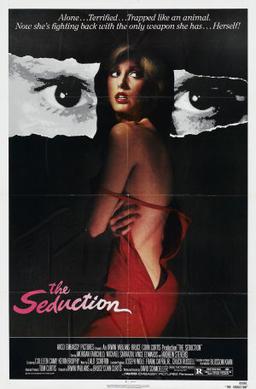
The Seduction-1982

The Seduction-1982

Director David Schmoeller

Starring Morgan Fairchild, Michael Sarrazin

Scott’s Review #749

Reviewed April 27, 2018

Grade: C

The Seduction (1982) is a slick, by-the-numbers voyeuristic thriller that could be a made-for-television Lifetime channel or Hallmark channel production- or something of that ilk.

A woman being stalked by a dangerous admirer is quite formulaic and episodic. Alas, at the time of its release, it was a major motion picture and a perfect vehicle for the upstart young actress of the time, Morgan Fairchild.

She is well cast, and the film has a smoldering,  glossy, sexy appeal, but is quite predictable in the story department, leaving little substance behind after the droll conclusion.

Gorgeous and sexy television news anchorwoman Jaime Douglas (Fairchild) has it all with a handsome beau on her arm (Michael Sarrazin); they swim, bathe, and make love many a steamy night as they reside in the lavish Los Angeles hills.

A photographer approaches Jaime, Derek (Andrew Stevens), eager to take her pictures. He slowly develops an obsession with her as events become more dangerous and sinister for the young woman, until she is finally forced to defend herself against the now-crazed stalker.

Jamie is Morgan Fairchild’s big-screen debut, and, being unaware that any other actresses were in the mix for the part, she is perfectly cast in a role that just “is her”.

In the glitzy and steamy world of Los Angeles media, how adept were the filmmakers at landing the blonde and leggy actress who screams plastic and glamour?

Posing on posters on the walls of millions of teenage boys everywhere in the 1980s, director David Schmoeller wisely incorporates multiple scenes of Jamie swimming naked,  soaping in the bathtub, or in other situations where the actress is semi-nude.

He certainly capitalizes on her looks and popularity with the sensual The Seduction.

The film’s perplexity, though, is clearly on the story front.

The chemistry between Fairchild and Stevens is readily apparent, and while chemistry is crucial between acting leads, it also makes the story far-fetched.

Call me crazy, but I did not get the fear Jaime would experience at the hands of Derek. Dashing and handsome, with much more appeal than her boyfriend, Brandon, I felt that Jamie and Derek should have been dating!

Arguably, the only reason Derek becomes obsessed with Jamie is that she refuses to give him the time of day.

I get that the film wanted a really good-looking male lead, but a homely or even average-looking actor playing Derek would have made more sense from a story perspective.

Stevens is way too handsome to elicit real terror- especially since his only crime is wanting a nice romantic date with Jamie.

The film offers a decent glimpse into the bustling corporate Los Angeles newsroom studios, where the offices exude 1980s glitz and glamour. The entire film is drizzled with sunny California excess, and it makes perfect sense to be set on the West Coast.

The Seduction does well by combining the dark voyeurism of lurking figures in the shadows and the hairspray, lipstick,  and shoulder pads shown under the hot lights of competitive L.A. television cameras.

The Seduction falls victim to being a predictable, poorly acted film, with its inevitable clichés and final scenes. As the police are of no help to her and her boyfriend brandishes a rifle, the audience knows there will be some sort of final stand-off between Jamie and Derek.

The film pulls out all of the possible female-in-peril stops- the nighttime scenes, Jamie being home alone, scantily dressed, and ready to be victimized, Derek continually lurks around (as he does through most of the film), secretly taking photos, sweating, and breathing lustfully.

The climactic conclusion was neither satisfying nor surprising.

A wise cinema friend once coined the term “craptastic” to describe an otherwise atrocious film that somehow contains some morbid appeal- perhaps being so bad it’s good?

I think the 1982 film The Seduction falls perfectly into this category- predictable and trivial, the film is an intended watch for only those seeking something shamelessly awful, that holds little appeal, yet for the gorgeous stars Fairchild and Stevens, who hold the film together while looking great.

Working Girl-1988

Working Girl-1988

Director Mike Nichols

Starring Melanie Griffith, Harrison Ford

Scott’s Review #748

Reviewed April 26, 2018

Grade: B+

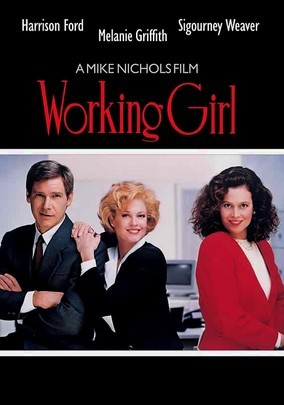
Released during a decade known for excess, fun, and light comedy films, especially in its latter half, 1988’s Working Girl was a blockbuster hit at the time and, today, stands as a defining film of the decade.

This can be both good and bad, with both a dated feel and a whimsical, basic good girl versus a bad approach that is appealing.

The film is romantic comedy fluff, but it is entertaining and features lovely views of New York City- one of my very favorite locales.

Mike Nichols directed the film, better known for heavier subject matter (1966’s Who’s Afraid of Virginia Woolf and 1967’s The Graduate).

His leading the picture, along with all-star casting, surely made this film better than it should have been.

Tess McGill (Melanie Griffith) commutes via the Staten Island Ferry each morning into vast Manhattan, where she holds a secretarial job at a Wall Street investment bank.

After a bad experience with one of the brokers, she is reassigned to a female boss, the assertive Katharine Parker (Sigourney Weaver).

After Katharine steals Tess’s business idea and passes it off as her own to get in good with handsome Jack Trainer (Harrison Ford), Tess is determined to reveal the truth as a triangle develops among the three.

In tow are Tess’s best friend, Cynthia (Joan Cusack), and her cheating boyfriend, Mick (Alec Baldwin), in supporting roles.

Working Girl feels overwhelmingly like a “1980s film,” and while it was relevant at the time and kindly nostalgic, it doesn’t hold up well today, seeming better suited to a time capsule, unlocked from time to time for kicks.

The most garish example is the hideous hairdos Nichols gives Tess and Cynthia, frizzed out and caked with Aqua Net hairspray, over-the-top even for the 1980s.

Then come the inevitable tacky outfits, bright colors and shoulder pads, as the girls hustle to their dull jobs. With these costume tidbits and the filming style, the tone screams the 1980’s.

The casting of the three leads is very good; Griffith, Ford, and Weaver all share nice chemistry, and the clear rooting value is that Tess and Jack live happily ever after, with Katharine as the obvious foil.

The film’s conclusion is unsurprising, but as a romantic comedy, it is standard fare. The point is that the relationships are dynamic and the ride is fun.

Griffith is breathy and seductive, a clear homage to Marilyn Monroe in her 1950s films.

Never known for great acting, Tess gets the role of a lifetime. Weaver sinks her teeth into an against-type villainous role, and Ford is dashing and charismatic as the leading man.

My favorite parts of Working Girl, and the film’s strongest aspects, leave an indelible impression even after all these years: the sweeping New York City camera sequences throughout the film.

Many scenes were shot in neighboring Staten Island, but the best shots are the luminous skylines of Manhattan that appear in the opening sequence and later from corporate offices.

There we see Tess on the Ferry heading across the Hudson River, all with the wonderful soundtrack song by Carly Simon, Let the River Run, playing in the background. The soothing tune and the approaching mammoth city set a nice tone.

The story itself is a sort of rags-to-riches, Cinderella-style experience from the point of view of Tess.

Taking night classes to better herself and, clearly, a blue-collar type battling the giants of the corporate world, and the more sophisticated Katherine (she speaks fluent French!), is an enormous draw for mainstream audiences.

Corporate greed versus the little guy is an apt comparison here. Almost borderline fairy-tale, Tess getting the dashing Jack (in real life, he would undoubtedly be with Katharine) makes the film good escapist fare.

The working-class Staten Island versus the sophisticated Manhattan is another theme worth mentioning.

Thirty years beyond its original release. 1988’s Working Girl now feels dated, dusty, and of its time, like many similar films, but it still retains some of the enjoyment that undoubtedly made it a hit at release.

A film that is fine to take out of the vault, dust off, and enjoy for some good escapist cinema and a predictable story of good overcoming bad.

Oscar Nominations: 1 win-Best Picture, Best Director-Mike Nichols, Best Actress-Melanie Griffith, Best Supporting Actress-Joan Cusack, Sigourney Weaver, Best Original Song-“Let the River Run” (won)

Golden Globe Nominations: 4 wins-Best Picture-Comedy or Musical (won), Best Director-Mike Nichols, Best Actress-Comedy or Musical-Melanie Griffith (won), Best Supporting Actress-Sigourney Weaver (won), Best Screenplay, Best Original Song-“Let the River Run” (won)

Lean on Pete-2018

Lean on Pete-2018

Director Andrew Haigh

Starring Charlie Plummer, Steve Buscemi

Scott’s Review #747

Reviewed April 24, 2018

Grade: B+

Lean on Pete (2018) is a heartbreaking and emotional slice-of-life film written and directed by British director Andrew Haigh.

The film centers on the relationship between a boy and a horse, so the heartstrings will be tugged a lot as the viewer is taken on a journey as the protagonist struggles through both pain and triumph.

While slow-moving and matter-of-fact, the film celebrates excellent writing and good story chapters, perfectly nestled into the independent drama genre.

Based upon the novel of the same name—reportedly a much darker experience—actor Charlie Plummer portrays Charley Thompson, a fifteen-year-old boy living outside of Portland, Oregon, with his troubled father.

His mother has taken off for parts unknown.

As his already complicated life turns upside down after a violent attack, Charley becomes increasingly attracted to the world of local horse racing and becomes involved with a shady horse trainer, Del Montgomery (Steve Buscemi).

There, he befriends and falls in love with an aging horse named Lean on Pete, who sadly is destined for the slaughterhouse in Mexico.

The film is about Charley’s journey and determination to survive while facing seemingly insurmountable odds and obstacles. The intriguing aspect of Lean on Pete is watching what Charley experiences and hoping against hope that he will come out unscathed and undamaged.

The youngster aspires to reach his estranged aunt, whom he knows only to have been living in Wyoming as a waitress. How on earth will he be able to find her? If he does reach her, will she welcome him with open arms, as he hopes, or will he suffer more defeat?

Several key aspects struck me as I watched this film. Charley embarks on his travels to find his beloved aunt, with Lean on Pete in tow, and encounters many individuals who either aid or hinder his intentions.

However, the common theme of waitresses continues to be portrayed—for starters, his aunt is referenced as working as a waitress at a bar. When Del gives Charley some fatherly advice, he implores him that the best women have always worked as waitresses.

On the road, he is treated kindly by two different waitresses—one of whom gives him free dessert, the other gives him a major break. I am not sure why Haigh chose to add this to the film, but it is a nice touch and effectively gives the story a warm, blue-collar sensibility.

Another intelligent decision Haigh makes is to keep the focus on Plummer and Charley’s facial expressions and reactions during pivotal scenes- for example, a scene where Charley is painting a house for extra money is essential.

As he hears a jovial father and son playing outside, Haigh shoots Charley’s reactions to this poignant scene rather than deciding to show the father and son. Hearing their pleasure is enough to elicit a look of pain on Charley’s face, rather than a blatant scene of said father and son shoved down the viewer’s throat.

Enough praise cannot be given to young talent Plummer, who gives a layered performance that will surely make him a star in future years.

The actor possesses an earnest, trustworthy sensibility, making him a likely hero in any film he appears in. Furthermore, he quietly gives Charley depth with various emotions, including disappointment, fear, and anger at his predicament.

The supporting cast members give well-acted performances that add to the overall meat of the story. As grizzled, yet responsible Del, Buscemi sinks his teeth into a role that allows his sarcastic humor and wit to take center stage, and he is perfect.

Chloë Sevigny, like Bonnie, a female jockey who befriends Charley, yet also gives it to him straight with lessons on life’s hard knocks, offers a satisfactory performance.

Lean on Pete (2018) is a quiet film that elicits an emotional response from its intended audience by giving firm texture to the story and fantastic cinematography of the western United States landscape.

Viewing a likable young adult in constant turmoil seems to be a complex subject, but instead, it is rather beautiful and inspiring, as captured by Haigh’s piece, instead of a complete downer as it might have been.

The film is a tale of a journey and struggle that accomplishes what it sets out to achieve.

Do the Right Thing-1989

Do the Right Thing-1989

Director Spike Lee

Starring Spike Lee

Scott’s Review #746

Reviewed April 21, 2018

Grade: A

Do the Right Thing is one of the few great films to come out of 1989, a year often remembered as a fantastic one in cinema, when most mainstream films were as glossy as tin foil and barren of quality substance.

Here’s a small, independent gem that sparked discussions about race relations in the United States and became a monumental, influential film.

Filmmaker (and star) Spike Lee carves a controversial story of racial tensions in a Brooklyn neighborhood on a hot summer day.

Starting light and comedic, then turning violent and dark, the action is set in a largely Black neighborhood, Bedford-Stuyvesant, Brooklyn, where twenty-five-year-old Mookie (Spike Lee) delivers pizzas at an Italian pizzeria owned by Sal (Danny Aiello).

With a toddler at home and a nagging girlfriend, Tina (Rosie Perez), always in his face, Mookie is unmotivated yet still a decent guy and a loyal friend.

Sal has two sons who work at the pizza place: Pino (John Turturro), who is angry and racist, and Vito, a nice guy and Mookie’s friend.

When conflicts erupt over whether Sal’s restaurant should celebrate black celebrities and white celebrities on a wall in the dining room, tensions reach their breaking point as the intense heatwave makes matters much worse.

What makes Do the Right Thing a marvel is both the film’s overall tone and the atmosphere Spike Lee conveys, who also writes, produces, and stars in it.

The elements that have little to do with the actual story immediately impress with big, bright, comic-book-style colors that scream at the big screen, eliciting both a warm, inviting feeling and an angry, contemptuous vibe.

The loud rap and hip-hop beats are instrumental in conveying the film’s specific feeling and emotion.

Made independently and on a small budget, the film feels raw and intense from the get-go.

Brooklyn and New York City, in particular, are the perfect settings, as Sal and his family are white folks living in a predominantly Black neighborhood, so the minorities in the story are the ones in the minority.

Additionally, the viewer sees the friendly neighborhood and feels a sense of belonging regardless of race; the humorous drunk, the kindly, grandmotherly people-watcher on her stoop, and the boombox-music kid all create a sense of community and togetherness.

This point is tremendously important to the film’s overall plot.

The relationship between Mookie and Sal, and Sal and his sons, is central to the film, and I found it a compelling character study.

Open-minded, Sal is a decent man and fine with the diversity in his neighborhood- yet still true to his Italian roots. Aiello does a fantastic job of portraying this complex, conflicted character.

His two sons could not be more different: Vito, a close friend of Mookie’s, is sympathetic and sweet, with nary a racist bone in his body.

Pino, on the other hand, is angry and resentful of the black community taking over what he feels is his territory.

Finally, while lazy, Mookie is also a sympathetic character, as he is conflicted when the tension reaches its boiling point.

These diverse characters make the film so dynamic.

Revered director Spike Lee crafts a story and brings it to the big screen, tackling an important topic as vital today as it was when Do the Right Thing was released in 1989.

The film is intelligent and timely without being condescending to either Black or white audiences, or preachy; instead, it tells a poignant story that is angry and sometimes painful to watch, but, more importantly, empathetic and real.

Oscar Nominations: Best Supporting Actor-Danny Aiello, Best Screenplay Written Directly for the Screen

Golden Globe Nominations: Best Picture- Drama, Best Director-Spike Lee, Best Supporting Actor-Danny Aiello, Best Screenplay

No Country for Old Men-2007

No Country for Old Men-2007

Director Ethan Coen, Joel Coen

Starring Tommy Lee Jones, Javier Bardem, Josh Brolin

Scott’s Review #745

Reviewed April 19, 2018

Grade: A

No Country for Old Men, made in 2007,  is arguably Joel and Ethan Coen’s greatest work save for the amazing Fargo (1996).

Achieving the Best Picture Academy Award and appearing on numerous Top Ten lists for its year of release, the film is one of their most celebrated.

Containing dark humor, offbeat characters, and fantastic storytelling, adding in some of the most gorgeous cinematography in film history, No Country for Old Men is one of the decade’s great films.

The time is 1980, and it’s set in western Texas as we follow the dangerous hitman Anton Chigurh, played wonderfully by Javier Bardem.

He escapes jail by strangling a deputy and is subsequently hired to find Llewelyn Moss (Josh Brolin), a hunter who has accidentally stumbled onto two million dollars in a suitcase that Mexican smugglers are desperate to find.

In the mix is Sheriff Tom Bell (Tommy Lee Jones), who is pursuing both men. Moss’s wife, Carla Jean (Kelly Macdonald), in turn becomes an important character as she is instrumental in the web of deceit the chain of events creates.

The film subsequently turns into an exciting cat-and-mouse chase with a dramatic climax.

The crux of the story and its plethora of possibilities are what make the events so exciting to watch. As characters are in constant pursuit of each other, the viewer wonders who will catch up to whom and when.

One quality that makes the film unique with an identity all its own is that the three principal characters (Moss, Bell, and Chigurh) seldom appear in the same scene, adding a layer of mystery and intrigue.

The hero and most well-liked of all the characters is, of course, Sheriff Bell- a proponent of honesty and truth. In contrast, the other two characters are less than savory types, especially the despicable Chigurh.

My favorite character in the story is Chigurh, as he is the most interesting, and Bardem plays him to the hilt with a calm malevolence- anger just bubbling under the surface.

One wonders when he will strike next or if he will spare a life, as he intimidates his prey by offering to play a game of chance, the toss of a coin to determine life or death.

He is one of cinema’s most vicious villains. With his bob-cut hairstyle and his sunken brown eyes, he is a force to be reckoned with by looks alone.

True to many other Ethan and Joel Coen films, the supporting or even the glorified extras are perfectly cast and filled with interesting quirkiness.

Examples of this include the kindly gas station owner who correctly guesses a coin toss and is spared his life. My favorite is the matter-of-fact woman at the hotel front desk, with her permed hair, who gives as good as she gets, and her monotone voice is great.

It is these smaller intricacies that truly make No Country for Old Men shine and are a staple of Coen Brothers films in general.

Many similarities abound between Fargo and No Country for Old Men, not the least of which is the main protagonist being an older and wiser police chief (Marge Gunderson and Tom Bell, respectively).

Add to this a series of brutal murders and the protagonist being from elsewhere and stumbling upon a small, bleak town. Of course, the extreme violence depicted in both must be mentioned as comparable.

Having shamefully only seen this epic thriller twice, I find No Country for Old Men (2007) a dynamic film, reminiscent of the best of Sam Peckinpah’s classics, such as The Getaway (1972) or The Wild Bunch (1967).

The Coen brothers cross film genres, blending thriller, western, and suspense that rival the greatest of Hitchcock’s films.

I cannot wait to see it again.

Oscar Nominations: 4 wins-Best Picture (won), Best Director-Joel and Ethan Coen (won), Best Supporting Actor-Javier Bardem (won), Best Adapted Screenplay (won), Best Sound Editing, Best Sound Mixing, Best Cinematography, Best Film Editing

Milk-2008

Milk-2008

Director Gus Van Sant

Starring Sean Penn

Scott’s Review #744

Reviewed April 18, 2018

Grade: A

Milk is a 2008 film that successfully teaches its viewers both a valuable history lesson about the introduction of gay rights into United States culture and about the prolific leader associated with this, Harvey Milk.

The film belongs to Sean Penn, who portrays Milk, but it is also a fantastic biopic and a learning experience that captures his wonderful journey through the 1970s, mainly in San Francisco and New York City.

Moreover, Milk portrays a gay character not played for laughs, as many films do, but portrayed as a hero.

Harvey Milk was the first openly gay person ever elected to political office, winning a seat on the San Francisco Board of Supervisors in 1977.

The film, however, opens in 1978, after a stunning announcement of Harvey Milk’s assassination along with the Mayor of the city, which was met with much heartbreak.

The film then returns to 1970 as we meet Penn as Milk and follow his decade-long battles and prosperity of changing the gay culture.

Having seen actual footage of Harvey Milk, Penn perfects the mannerisms and the speech patterns of Milk, giving him an immediate, passionate, and likable persona. The political figure had such a whimsical and innocent style all his own that Penn perfectly captures.

His determination for honesty and fairness is admirable and inspiring, and Milk seems like he was an innately good person.

Particularly heartbreaking is Penn’s facial reaction during his assassination scene, a scene that director Gus Van Sant brilliantly shoots as a follow-up to a joyous scene when Proposition 6 is defeated.

As a troubled colleague, Dan White (Brolin), (rumored to be himself closeted and struggling with self-identity), fires several shots into Harvey at City Hall, the scene is filmed in slow motion for additional dramatic effect and poignancy.

The look of pain and sadness on Milk’s face will undoubtedly bring tears to even the hardest-hearted viewer.

The film shows the many close relationships that Milk formed throughout the 1970s, including his steady lover Scott Smith, played by James Franco.

The two actors share solid chemistry, as they are both fun-loving and driven in their hopes for what they aim to achieve.

Sadly, Milk’s drive eventually outweighs Smith’s, and they ultimately drift apart while retaining a special bond.

Emile Hirsch is nearly unrecognizable as Cleve Jones, a young man whom Harvey inspires and mentors throughout the pivotal decade.

A minute criticism noticed while watching Milk is that, except for Penn, many of the supporting characters (Hirsch, Franco, and especially Alison Pill) seem to be “dressed up” in 1970s costumes, giving a forced rather than authentic feel.

The costume designers seem intent on making them look so realistic that it backfires and makes them look more like actors made up to look like they are from the 1970s.

Penn, however, looks and acts spot-on and stands out from the rest of the cast by miles.

An inspiring biography of a legendary political figure, Harvey Milk, led by a fine lead actor (Penn), deserving of the Best Actor Oscar he was awarded, Milk is an astounding story of both triumph and tragedy.

The film successfully portrays a time when a class of people was not treated fairly, when equal rights were barely a possibility, and when the uprising occurred largely due to one man and his followers.

Milk (2008) is a wonderful testament to a time gone by and the accomplishments achieved since then- a truly inspiring and tragic message.

Oscar Nominations: 2 wins-Best Picture, Best Director-Gus Van Sant, Best Actor-Sean Penn (won), Best Supporting Actor-Josh Brolin, Best Original Screenplay (won), Best Original Score, Best Costume Design, Best Film Editing

Independent Spirit Award Nominations: 2 wins-Best Male Lead-Sean Penn, Best Supporting Male-James Franco (won), Best First Screenplay (won), Best Cinematography

The Lure-2015

The Lure-2015

Director Agnieszka Smoczynska

Starring Michalina Olszanska, Marta Mazurek

Scott’s Review #741

Reviewed April 12, 2018

Grade: B

2015’s The Lure is as odd a film as one can imagine- dreamlike and sometimes even absurd.

The story mixes a strange blend of the horror genre with musical numbers, but I would wobble to the side of gothic horror for classification purposes.

Oddly enough, some of the choreography numbers are reminiscent of 2016’s La La Land, but that is where the comparison ends, as the former musical numbers are dark and the latter cheery.

A tough film to review, The Lure is rather disjointed, but kudos for creativity and unpredictability.

Bravely directed by a female (more kudos!),  Agnieszka Smoczynska, a Polish filmmaker, the story is a cross between an autobiography of her troubled youth and a retelling of the Hans Christian Anderson fairy tale, The Little Mermaid.

Beyond the obvious Polish-language content, the film doesn’t feel particularly Polish; it might have been nice to see more of the culture.

The film immediately gets off to a mysterious start as two teenage girls, later revealed to be mermaids/vampires named Silver and Golden, emerge from the water and follow a rock band back to a tacky nightclub where the band regularly performs for patrons there for the strippers.

It is sometime in the 1980s.

The girls perform music and strip, becoming an act called “The Lure”. While Golden continues to thirst for blood, Silver falls in love with a bassist, causing her to yearn to be a real girl, and subsequently has surgery to remove her tail and grow real-girl legs.

As part of the fairy tale, if her intended marries someone else, Silver will turn into sea foam and die.

The story is perplexing and hard to follow, yet something about it is mesmerizing and escapist.

I wonder if Smoczynska intended the film to make total sense or left it open to a bit of interpretation. The film is a mix of fairy tales and real-life experiences.

Some portions feel dreamlike; for example, the nightclub singer has thoughts or visions involving Silver and Golden, but it is unclear whether she is experiencing reality or imagination.

Props must be given to The Lure for originality alone. The film stirs up multiple genres and creates something truly unique.

In particular, the characters of Silver and Golden are transfixing; at times they are sweet and kind, then their fangs come out at a moment’s notice, revealing evil and a carnivorous bloodthirst and a grotesque, haunting countenance.

Smoczynska’s creation of these characters is awe-inspiring, and the up-and-coming director must have a wealth of imagination.

On the other hand, the plot never really comes together enough to hold the viewer’s attention in a riveting way.

While Silver and Golden are clever characters and we feel some empathy for them, I never felt completely gripped by them. I felt no connection to any of the supporting characters either.

Trying to figure out the plot will only leave the viewer frustrated. I would advise taking The Lure as an experience, not a puzzle to unravel.

The Lure (2015) has elements of immeasurable fascination and an enormous creative edge. Its attempt to blend a unique fable with a disturbing central theme succeeds.

The overall story is too confusing for the average viewer and ultimately drags toward the end, with the climax a wee bit unsatisfying.

A brave and inventive attempt at achieving something fresh and imaginative in cinema.

Jigsaw-2017

Jigsaw-2017

Director The Spierig Brothers

Starring Matt Passmore, Tobin Bell

Scott’s Review #739

Reviewed April 9, 2018

Grade: C-

As a fan of the horror genre, and specifically of the Saw film franchise, which debuted in brutal form in 2004 and was directed by James Wan, I am sad to say that it has sadly become a lesser version of what was once clever writing mixed with astounding, tortuous kills.

Jigsaw is the eighth installment in a series that has now run out of steam. It is simply riding on the coattails of what was once its glory days.

The 2017 film can only be appreciated by die-hard fans of the series; it will be unsuccessful in attracting new fans.

Admittedly, Jigsaw does begin significantly as the viewer is thrust into the midst of a compelling rooftop police chase that results in a fleeing criminal, Edgar Munsen, being shot by detectives.

Unknown if events are connected, the action shifts to a remote barn where (in typical Saw fashion) five individuals are held captive, each with a noose around their neck.

Throughout the film, we get backstories-stories of each victim as well as a connecting story of a pathologist, Logan Nelson (Matt Passmore), his sister, and the possibility that John Kramer has either returned from the grave or a copycat killer is on the loose, emulating his shenanigans.

The basic premise and tone of 2017’s Jigsaw are similar to those of the preceding seven installments. However, this version seems a bit watered down and glossy by comparison.

My recurring thought throughout the feature was a reminiscence of a horror version of a network episodic drama- think CBS’s Criminal Minds or the like. This is not a compliment.

The camera style is of a slick production with nary a raw or authentic moment- incredibly produced with good-looking people in peril.

Fans of the previous Saw films will undoubtedly expect the now-familiar twist towards the end of the film- a clever story turn to make one character revealed to be not what they appear to be or even in cahoots with the serial killer, “Jigsaw” (John Kramer).

This quality does surface in Jigsaw, but the surprise is so lame and inexplicable that it is hardly worth mentioning.  Suffice it to say the expected resurfacing of Kramer is an absolute sham. Instead, we are fed a less-than-satisfying riddle of one character faking his death and another sequence occurring ten years earlier.

This twist might be worth its salt if better written, but the reasoning seems thrown together without much thought to staying true to the characters or history.

Other familiar elements in Jigsaw abound, so a fan of Saw, Saw II, or Saw III will undoubtedly find tidbits that will satisfy them.

The film is like a trip to McDonald’s or a neighborhood burger joint- one will more or less get what is expected.

As the barn victims are given choices via a tape-recorded message by a sinister John Kramer voice, each is given a test and must ultimately confess their sins. As fans know, Saw victims are far from innocent and always harbor a neatly tucked away secret.

Such horrific acts like a haggard young mother smothering her screaming baby and framing her husband for the deed or a thief stealing a woman’s wallet and causing her to die when her asthma medicine is missing were thought of by the writers.

Another character once sold a motorcycle with a faulty brake line to an innocent man who later crashed and was killed. These aspects are the fun in a film like Jigsaw in that the tortures the victims endure have elements of “serves him or her right”.

Another solid point about Jigsaw is the kills, which is what fans of the Saw franchise have come to know and love.

In this one, we delightfully witness a victim’s leg severed, another impaled with needles, and yet another gleefully attempting to shoot one of the other victims trapped in the barn to allow her freedom, only to realize the gun is rigged to shoot herself instead.

These are fun moments that make Jigsaw less than all bad.

Having created the eighth version of a once great franchise that introduced the world to the term “torture horror”, by 2017 has grown ultimately stale and tired with a few glimpses of former glory created in the familiarity aspects.

All great things must end, and the Saw series has more than crumbled from its former days of glory.

Loving Vincent-2017

Loving Vincent-2017

Director Dorota Kobiela, Hugh Welchman

Voices Douglas Booth, Saoirse Ronan

Scott’s Review #738

Reviewed April 5, 2018

Grade: B+

Loving Vincent (2017) is a unique animated feature that is quite the artistic experience and vastly different from any typical film of this genre.

Being the first of its kind to be a wholly painted animated feature, hopefully, other films will follow suit, resulting in an exuberance in creativity.

While Vincent van Gogh’s biography is fascinating, the dramatic plot often left me wondering about the accuracy of all the details.

Still, the film is to be celebrated for its progressive and edgy nature.

Cleverly, the actors starring in the vehicle act while they are subsequently drawn so that the viewer can imagine the action as if it were a standard film since the drawings mirror the actors involved.

For example, Saoirse Ronan can clearly be distinguished as the daughter of a local boatman, who was rumored to be keeping close company with van Gogh before his death. We know it is the actress, but in painting form, eliciting a surreal experience.

The action begins one year following tortured artist, Vincent van Gogh’s, tragic suicide. Postman Joseph Roulin asks his son Armand to deliver Van Gogh’s last letter to his brother, Theo.

Suspicion surrounds the artist’s death as mere weeks earlier his mood was calm and level-headed, making his death cause for alarm. From this point, Armand traverses throughout France to spend time with those who had dealings with Van Gogh during the last days of his life.

Those characters include his doctor, an innkeeper, and others who may hold clues to his death’s mystery.

From a story perspective, Loving Vincent is a compelling piece as mystery and suspicion are cast around the actual death of the artist. This is not so much a whodunit as we know of the resulting suicide, however, the film casts some doubt about the why of that fateful night.

Did someone drive Van Gogh to take his own life suddenly? What was the romantic situation between either Marguerite or perhaps even Adeline? The supposed copying of Van Gogh’s art by his doctor, Dr. Paul Gachet, is fascinating.

Through these dramatic and intriguing facets, I began to wonder what was factual and what was not.

The brilliant part of Loving Vincent is the unusual and artistic method by which the film is created.

The fact that the film is about one of the most respected and appreciated artists of all time is no accident, and this perfectly encapsulates the overall tone of the film.

Throughout the one hour and thirty-four-minute duration of the film, I was continually enamored by its ” look.” Exquisite and quite beautiful, the filmmakers chose classically trained painters over traditional animators, and I feel this makes all the difference.

The use of actual Van Gogh paintings was an instrumental part of the film, which was modified to fit into the allotted screen room. The cast performed the film, as if it were a play, in front of a green screen, and then the painters created their magic—pretty incredible!

Also, mind-blowing uses colors to change the time of day (brightness and darkness), which results in a highly effective tone.

By creating a visual masterpiece of cinematic beauty, Loving Vincent (2017) is a feast for the eyes.

Although it is unclear whether the story is true to form or whether facts are embellished, the film succeeds as a work of art and provides a good glimpse into the life of one of the world’s most beloved and tortured artists.

Oscar Nominations: Best Animated Feature Film