Category Archives: John Gielgud

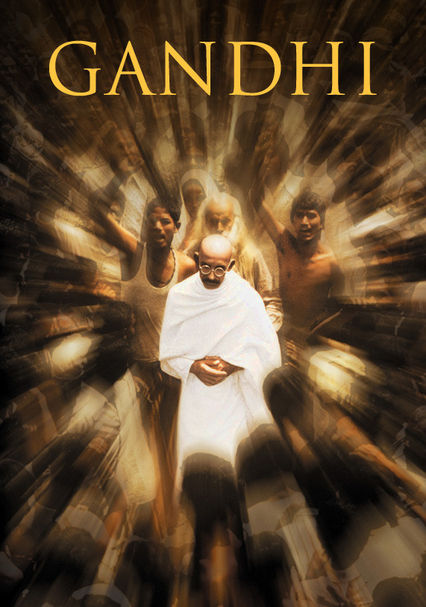
Gandhi-1982

Gandhi-1982

Director Richard Attenborough

Starring Ben Kingsley

Scott’s Review #1,189
Reviewed October 30, 2021

Grade: A

Ben Kingsley delivers an astonishing performance as Mahatma Gandhi,  the steady-handed lawyer who stood up against British rule in India and became an international symbol of nonviolence and peaceful understanding until his tragic assassination in 1948.

Entitled simply Gandhi (1982) the film is directed by Richard Attenborough who has created masculine offerings such as The Great Escape (1963) and The Sand Pebbles (1966) before.

Calmly, the director creates a grandiose epic but one that is thought-provoking and introspective in its humility.

I was incredibly affected by this picture.

As beautiful as the cinematography and other such trimmings are the message is what stands out to me most. One man’s spirit and thirst for fairness and human equality are beyond inspiring decades after the film was made.

Thanks to Kingsley, the biography infuses an infectious channeling of what being a human being is all about and how human decency is the desired goal.

The film belongs to Kingsley. Despite hosting a cast of literally thousands he is the only name worth mentioning. He is that superior.

Attenborough, who teams with screenwriter John Briley presents major events in the life of Mohandas Gandhi (Kingsley). The film starts suddenly in January 1948, when an elderly Gandhi is on his way to an evening prayer service and is shot point-blank in the chest in front of a large number of dumbfounded greeters and admirers.

His state funeral is shown, the procession attended by millions of people from all walks of life, with a radio reporter speaking beautifully about Gandhi’s world-changing life and projects.

The film then returns to decades earlier when Gandhi, a young man, has a violent and racist experience. He vows to dedicate himself to the concept of nonviolent resistance. Initially dismissed, Gandhi was eventually internationally renowned, and his gatherings of passive protest moved India towards independence.

Gandhi has been criticized for its extraordinary length with a running time of three hours and ten minutes. A suggestion is to watch the film in multiple sittings though the best recommended approach would be to see it on the big screen.

Unfortunately, I didn’t but fantasize about the massive sequences and how gorgeous they would appear at the cinema.

The story, acting, production, and pretty much everything else about Gandhi is a ravishing spectacle.

It’s worth its weight to sit back and watch Kingsley completely immerse himself in the role. The actor deservedly won the Best Actor Academy Award and despite his oodles of other film roles is best remembered for this one.

I’m half surprised that it didn’t typecast him since he is so identifiable in the role.

I’d like to mention two aspects that some might not notice as much as others but that is simply astounding. The cinematography of the deserts, towns, and cities of India is plush with detail and accuracy. If one cannot go on a trip to India the next best thing is to watch this film instead. You’ll get a good dose of realism.

South Africa is also featured.

The costumes brilliantly showcase Indian flair and culture so well that I felt that I had been to an interesting country at the time that the film portrayed the events and felt nestled amid the luxurious colors and good taste.

Post-1982, the film genre of the epic exists rarely if ever anymore.

Long gone are the days of brilliance like Gone With the Wind (1939) or Lawrence of Arabia (1962) which are truly a delight to simply lay one’s eyes on.

Gandhi deserves to be appreciated as much as those other films despite being released in less than an artistic decade in cinema.

Gandhi (1982) is a wonderfully tragic film and leaves the viewer feeling sad but also inspired to carry the torch picked up by one brave man.

A history lesson it’s also as much a lesson in humanity and the courageous fight that one man fought. Military power is not the way to achieve change in the world.

Oscar Nominations: 7 wins-Best Picture (won), Best Director-Richard Attenborough (won), Best Actor-Ben Kingsley (won), Best Screenplay-Written Directly for the Screen (won), Best Art Direction, Best Cinematography (won), Best Costume Design (won), Best Film Editing (won), Best Makeup, Best Original Score, Best Sound
Murder on the Orient Express-1974

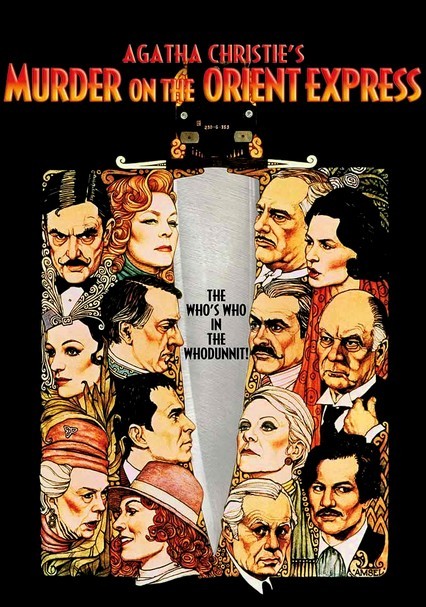
Murder on the Orient Express-1974

Director Sidney Lumet

Starring Albert Finney, Lauren Bacall, and Ingrid Bergman

Scott’s Review #928

Reviewed August 7, 2019

Grade: A-

Based on the 1934 novel of the same name by Agatha Christie, Murder on the Orient Express (1974) brings the story to the big screen with a robust and eccentric cast of characters, all steeped in suspicion.

The classic whodunit of all whodunits, the film adds a Hollywood flair with rich costumes and an authentic feel to a budget-blasting extravaganza that keeps the audience guessing as to who the killer or killers may be.

The film was recognized with a slew of Oscar nominations that year.

The hero of the film is Hercules Poirot (Albert Finney), a well-respected yet bumbling Belgian detective, who is solicited to solve the mysterious death of a business tycoon aboard the famous and luxurious Orient Express train.

On his way to the train’s destination, he encounters such delicious characters as the glamorous Mrs. Hubbard (Lauren Bacall), the nervous Greta Ohlsson (Ingrid Bergman), and his friend Bianchi (Martin Balsam), the director of the company who owns the enormous vessel.

Many other characters are introduced to the layered story.

As the complicated plot unravels, most of the characters have something to hide or a connection to other characters.

The fun for the viewer is to live vicariously through Poirot and await the big final reveal after the film that, unless one has already viewed the film or read the novel, one will not see coming.

With a film of this type, a detective thriller, the audience can be assured of a resolution, as a big murder mystery dinner theater production brought to the big screen.

Formulaic, the film never drags nor feels dull.

Amid the first few minutes of Murder on the Orient Express, the intrigue is unleashed at full-throttle speed, leaving one bedazzled and hooked.

The sequence is brilliantly done and thrusts the audience into a compelling backstory, prompting wonder about how these events connect to a train pulling out of the Orient.

Quickly edited film clippings of a news story explain the mysterious Long Island, New York, abduction and murder of the infant daughter of a famed pilot.

It is suggested that the Orient Express trip embarks from Istanbul, Turkey, and is destined for London. This means that several countries will be included in the trek, creating opportunities for both geographical accompaniments and new cultural experiences, which director Sidney Lumet offers in generous amounts.

Moments following the murder, the train has the unfortunate fate of colliding with an avalanche, leaving the passengers in double peril, with a killer on the loose and cabin fever to contend with.

To the compelled viewer, this is snug comfort, as the atmospheric locales are gorgeous and the thought of a dozen strangers trapped together with so much to hide brings the story into a frenzy.

Who did what to the murder victim is slowly revealed as several red herrings (or are they?) are revealed. Who is the mysterious woman strutting down the corridor shortly before the murder, spotted by Poirot? Is she a staged pawn or merely an innocent victim? Could she be the murderer?

The wonderful part of Murder on the Orient Express is the number of entangled possibilities.

The film’s conclusion turns the thriller into a moralistic story, to its credit. The fact that the murder victim was hateful and diabolical is a key part of the story and makes the viewer wonder if the killer or killers are justified in their actions.

Does the fact that Ratchett was stabbed a dozen times with varying degrees of severity play into the motivation?

A very compelling and unrecognizable Finney does a fantastic job of carrying the film among such a troupe of good actors.

Murder on the Orient Express (1974) sets out to entertain and succeeds on every level, bringing the book to the silver screen with a fresh interpretation that still honors Christie’s intent.

Stylistic and thought-provoking, the film has gorgeous costumes, a good story, and fine acting. Knowing who the killer is does little to detract from the enjoyment a repeated viewing provides.

Oscar Nominations: 1 win-Best Actor-Albert Finney, Best Supporting Actress-Ingrid Bergman (won), Best Screenplay Adapted from Other Material, Best Original Dramatic Score, Best Costume Design, Best Cinematography