Category Archives: 2017 Films

Loving Vincent-2017

Loving Vincent-2017

Director Dorota Kobiela, Hugh Welchman

Voices Douglas Booth, Saoirse Ronan

Scott’s Review #738
Reviewed April 5, 2018

Grade: B+

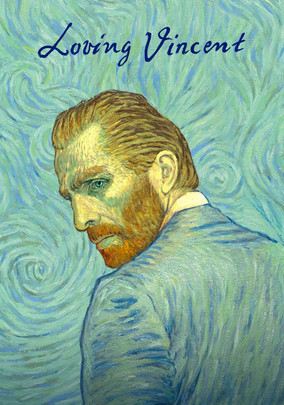
Loving Vincent (2017) is a unique animated feature that is quite the artistic experience and vastly different from any typical film of this genre.

Being the first of its kind to be a wholly painted animated feature, hopefully, other films will follow suit, resulting in an exuberance in creativity.

While Vincent van Gogh’s biography is fascinating, the dramatic plot often left me wondering about the accuracy of all the details.

Still, the film is to be celebrated for its progressive and edgy nature.

Cleverly, the actors starring in the vehicle act while they are subsequently drawn so that the viewer can imagine the action as if it were a standard film since the drawings mirror the actors involved.

For example, Saoirse Ronan can clearly be distinguished as the daughter of a local boatman, who was rumored to be keeping close company with van Gogh before his death. We know it is the actress, but in painting form, eliciting a surreal experience.

The action begins one year following tortured artist, Vincent van Gogh’s, tragic suicide. Postman Joseph Roulin asks his son Armand to deliver Van Gogh’s last letter to his brother, Theo.

Suspicion surrounds the artist’s death as mere weeks earlier his mood was calm and level-headed, making his death cause for alarm. From this point, Armand traverses throughout France to spend time with those who had dealings with Van Gogh during the last days of his life.

Those characters include his doctor, an innkeeper, and others who may hold clues to his death’s mystery.

From a story perspective, Loving Vincent is a compelling piece as mystery and suspicion are cast around the actual death of the artist. This is not so much a whodunit as we know of the resulting suicide, however, the film casts some doubt about the why of that fateful night.

Did someone drive Van Gogh to take his own life suddenly? What was the romantic situation between either Marguerite or perhaps even Adeline? The supposed copying of Van Gogh’s art by his doctor, Dr. Paul Gachet, is fascinating.

Through these dramatic and intriguing facets, I began to wonder what was factual and what was not.

The brilliant part of Loving Vincent is the unusual and artistic method by which the film is created.

The fact that the film is about one of the most respected and appreciated artists of all time is no accident, and this perfectly encapsulates the overall tone of the film.

Throughout the one hour and thirty-four-minute duration of the film, I was continually enamored by its ” look.” Exquisite and quite beautiful, the filmmakers chose classically trained painters over traditional animators, and I feel this makes all the difference.

The use of actual Van Gogh paintings was an instrumental part of the film, which was modified to fit into the allotted screen room. The cast performed the film, as if it were a play, in front of a green screen, and then the painters created their magic—pretty incredible!

Also, mind-blowing uses colors to change the time of day (brightness and darkness), which results in a highly effective tone.

By creating a visual masterpiece of cinematic beauty, Loving Vincent (2017) is a feast for the eyes.

Although it is unclear whether the story is true to form or whether facts are embellished, the film succeeds as a work of art and provides a good glimpse into the life of one of the world’s most beloved and tortured artists.

Oscar Nominations: Best Animated Feature Film
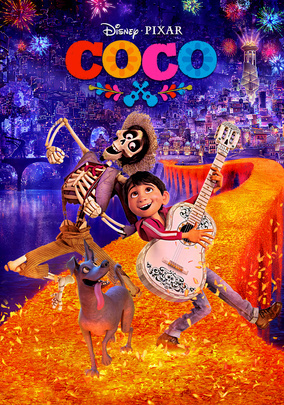
Coco-2017

Coco-2017

Director Lee Unkrich

Voices Anthony Gonzalez, Benjamin Bratt

Scott’s Review #737

Reviewed April 4, 2018

Grade: B+

Winner of the 2017 Best Animated Feature Academy Award, Coco is an exuberant and colorful affair filled with marvelous lights and a Mexican cultural infusion that serves the film well, making it feel robust with diversity and inclusion.

The overall theme of family, traditions, and musical celebration is apparent, making for good razzle-dazzle with lots of upbeat songs and dance.

Mixed in is a lovely inter-generational theme, where older folks are respected, something lacking in today’s real world.

Miguel Rivera is a twelve-year-old boy living in Mexico with his extended family, including his elderly great-grandmother, Coco, who is sadly suffering from intermittent dementia.

Through flashbacks, we learn that Coco’s father (Miguel’s great-great-grandfather) was an aspiring musician who abandoned the family for greener pastures.

Subsequently, the Rivera clan banned all music in favor of a modest shoe-making business.

As Miguel realizes his passion for music, he conflicts with his family, who have other aspirations for the young man. Miguel embarks on a fantastic journey to the magical and somewhat frightening land of his deceased ancestors, coinciding with the festive Day of the Dead celebration, a tradition of Mexican culture.

There he realizes the true nature of his great-great-grandfather’s sudden departure.

Coco is a film that can be enjoyed by all family members and is structured in just that way. The blatant use of multiple generations greatly appeals to the idea of blending the family unit.

Pixar successfully sets all the correct elements in place for a successful film, and the well-written story only adds layers. The film is quite mainstream, yet appealing to the masses.

Perhaps very young viewers may become frightened by some of the skeleton-laced faces of Miguel’s ancestors in the other world where he visits. Still, these images are somewhat tame and mixed with vibrant colors and extraordinary production numbers.

These images are undoubtedly meant to entertain rather than be scary and the creatures possess a friendly vibe.

Having viewed the film on an airplane traveling cross-country (admittedly not the best way to watch a film), the lovely and touching musical number “Remember Me (Lullaby)” entranced me, so much so that I was moved to tears right on the plane.

How’s that for effectiveness?

The emotional level reached via this song impressed me immensely about Coco, even when the story occasionally is secondary to the visual or musical elements.

In fact, the story began to lag slightly until the aforementioned big musical number came into play. The song really kicked the action into high gear emotionally, and I became more enamored with the characters and their connections to one another.

Miguel and his relatives’ love became more apparent, and the conclusion is pleasing and satisfactory.

A slight miss in the film, corrected midway through, is Miguel’s bratty and entitled nature. He heaves sighs when he does not get his way, which seems more apparent early on and was quite the turn-off—at first, I did not care for the character, yet I knew I was supposed to.

Thankfully, the character becomes the hero of the film and ultimately a sweet, likable character. I pondered, “Is that what kids like these days?”

Pixar does it again, creating a family-friendly experience with a positive yet non-cliched message of belonging, forgiveness, and the importance of family connections that feels fresh.

In current times of divisiveness, especially with immigration and other cultures being attacked, how appropriate is it to experience Coco (2017), a feel-good yet not contrived project?

Oscar Nominations: 2 wins-Best Original Song-“Remember Me” (won), Best Animated Feature Film (won)

The Blackcoat’s Daughter-2017

The Blackcoat’s Daughter-2017

Director Oz Perkins

Starring Emma Roberts, Kiernan Shipka

Scott’s Review #732

Reviewed March 12, 2018

Grade: B+

The Blackcoat’s Daughter is an eerie 2017 independent horror film that combines various chilling elements to achieve its goal.

While slow at times, the film is primarily a fusion of the supernatural, the occult, and the psychological. It offers a unique experience and is unpredictable in nature.

Parts of the film are downright scary and spooky as religion meets satanism, always a safe bet for an unsettling experience.

Writer/Director Oz Perkins should be well on his way to a successful career in the industry with this, almost full-on artsy, film.

The action begins in a prestigious Catholic boarding school in a quiet, wintry area of upstate New York. As students (largely unseen) leave the school for a February break, Kat (Kiernan Shupka), and Rose (Lucy Boynton) are left behind when their parents do not arrive to pick them up.

While the girls hunker down for the night, hoping their parents show up the next day, a third girl, Joan (Emma Roberts), who may be a psychopath, is en route towards the school, enlisting the help of a strange married couple (Bill and Linda), whose daughter had died years ago and was the same age as Joan.

Also in the mix are two school nuns who are rumored to be Satanists.

Little is known about the town, but the fact that nobody is around making the setting a significant plus.

This may very well be due to budgetary restrictions associated with the film. Still, regardless, the use of very few characters or extras is a score, with the number of principal characters below ten.

The cold and bleak nature of the town and Joan’s stark journey create a very successful ambiance.

Many scenes throughout The Blackcoat’s Daughter are set during nighttime in relative seclusion. Given the icy texture of upstate New York in the middle of winter, the setting chosen by Perkins is spot on and quite atmospheric.

The overall story of The Blackcoat’s Daughter is peculiar and mysterious and does not always make complete sense.

In fact, by the time the film concludes and the credits roll, not much of the film adds up from a story perspective, leaving me somewhat unsatisfied.

Since Bill and Linda’s daughter looks identical to Rose, are we to assume that the events at the school occurred a decade before the events involving Joan? What ends up happening to Kat is perplexing, haunted by spirits, and forced to kill, is she healed at the end of the film? Or is Kat Joan?

Too many loose ends are left.

The film is heavy on the violence and the gore and dares not hold back in showcasing the victim’s pain and suffering before they cease to exist. More than one character lies bleeding and immobile as the killer calmly approaches to finish the deed.

Three characters are decapitated in horrific form as we later see their severed heads lined up in a boiler room. The demonic chanting “Hail, Satan!” may turn some viewers off, as would the overall storyline.

Those who feel that 1973’s The Exorcist is disturbing need not see this film as similar elements abound.

Also worthy of a quick mention is the cool, unique musical soundtrack created by singer/songwriter Elvis Perkins, brother of the director.

With goth/techno elements, the score is noticed (in a good way) at various points throughout the running time and adds to the film’s overall feel.

The Blackcoat’s Daughter (2017) succeeds as a disturbing and experimental piece of independent horror-making that will pique the interests of horror aficionados.

With plenty of blood-letting and squeamish parts, Oz Perkins knows what works. The story, though, would have been improved by a clear, definitive beginning, middle, and end, to avoid a confusing outcome.

Still, I look forward to more works from this up-and-coming director.

The Florida Project-2017

The Florida Project-2017

Director Sean Baker

Starring Willem Dafoe, Brooklynn Prince

Scott’s Review #730

Reviewed February 28, 2017

Grade: A

Incorporating a realism and authenticity rarely found in mainstream films, the 2017 independent drama film The Florida Project offers the viewer a glimpse into the underbelly of society, largely from a child’s perspective.

We meet a group of poverty-stricken folks residing in a crummy hotel outside of Disney World.

Shot almost entirely on location, the film is humorous, dramatic, pathetic, and compelling—a must-see. The balance between a child’s carefree outlook and the real-life adult reality is key.

Director Sean Baker, famous for the ground-breaking and brilliant transgender-themed indie from 2015, does it again with a gritty flavored location shot feast of a story involving the welfare-stricken, prostitute-laden Floridians holing up at a cheap motel.

The plot follows six-year-old Moonee, played by Brooklynn Prince, as she and her problem-prone mother, Halley (Bria Vinaite), attempt to avoid trouble and the police.

They while away the hot summer months, pandering and stealing from tourists as Halley dabbles in prostitution after failing to get a job at a nearby Waffle House.

In addition to Moonee and Halley, other prominent characters rounding out the hotel community are Bobby Hicks (Willem Dafoe), who manages the Magic Castle Motel, and is the father figure and voice of reason to the others, Ashley, Halley’s friend, Jancey, and Scooty, friends of Moonee’s.

The group holds a special bond since they are all barely existing on limited funds in a world laden with drugs, violence, and various unsavory characters.

With initial thoughts of an R-rated Little Rascals, the early scenes involve only the children as they create juvenile pranks including car spitting, bed jumping, and more serious mischief like setting fire to abandoned condos.

All non-actors, the child scenes are genuinely brilliant, and enough praise cannot go to little Brooklynn Prince, the sweet yet precocious six-year-old central child character.

The film’s final scene involving this treasured little girl is heart-wrenching and poignant, as the scene is fraught with raw emotion on the part of Prince.

Dafoe is brilliant in the role of Bobby and the actor chooses a character he does not often play. Frequently playing villains, he shines as a good man attempting to keep things together in an evil world.

On the lookout for child predators and the police, he watches out for the kids, as he sadly knows their lives will only get worse as they grow into teenagers and adults, sure to experience misery or tragic lives.

The most successful and riveting component of The Florida Project is the honest portrayal of the characters and the gritty, realism the viewer experiences.

The fact that Baker shot the film entirely on location is immeasurable and key to the story.

In a slice-of-life way, we are brought into this world for the duration of the film and learn the inner workings of the hotel, the streets, and the hotel parking lots. We live the characters’ lives and feel their struggles and small triumphs.

Most importantly, we empathize with their hopelessness—they are basically stuck, with little hope of finding a better life.

To avoid a complete downer of a film, Baker incorporates a few humorous moments, mainly the light and fun scenes between Halley and Moonee. As they dance around in their hotel room or outside on the hotel lawn as an unexpected downpour erupts, the close bond between mother and child is apparent.

The boisterous trio of kids also breaks up the monotonous adult tension of the other characters as they frolic and play without a care in the world.

The adults versus kids outlook is apparent.

Surely one of the best films of 2017, The Florida Project examines a forgotten and depressing segment of the American population and provides a sobering reality of the world in modern times.

With the Trump era in full swing, this film’s release is timely in American history and gives a sobering look at the United States in general.

Oscar Nominations: Best Supporting Actor-Willem Dafoe

Independent Spirit Award Nominations: Best Feature, Best Director-Sean Baker

A Fantastic Woman-2017

A Fantastic Woman-2017

Director Sebastian Lelio

Starring Daniela Vega, Francisco Reyes

Scott’s Review #729

Reviewed February 27, 2018

Grade: A

A Fantastic Woman is a 2017 Chilean film that is groundbreaking in subject matter and has received many accolades, including an Oscar nomination for Best Foreign Language Film.

Especially worthy of mention is the film’s lead actress, Daniela Vega, the first transgender woman to present an award at the Oscars and a dynamo performance in her represented film.

Besides the cultural achievements, the film succeeds in its own right as a compelling drama.

The film gets off to a sweet and romantic start as we meet Marina (Vega), a young waitress and aspiring singer, and Orlando (Francisco Reyes), a mature, affluent man thirty years her senior.

After surprising her with a lovely birthday cake, the pair begin to embark on a serious relationship, as Marina has recently moved in with Orlando.

When tragedy strikes and Orlando is rushed to the hospital after collapsing, Marina must face the harsh reality of her partner’s narrow-minded family and suspicions from law enforcement.

What a wonderful starring vehicle for this astounding young talent, Vega. The film shares a story that has never been told before, though the transgender genre is slowly coming into its own—like 2015’s brilliant Tangerine.

With A Fantastic Woman, though, the storytelling is more intimate, personal, and explicit from Marina’s point of view. Faced with financial issues and losing her love, she is forced to hurdle obstacles centered around her lifestyle that she had thought had been conquered through her open life with Orlando, who loved her for who she is.

Vega expresses so much with her wide-eyed stares and introspective glazed looks. A remarkably subdued performance, she does not have a traditional blowup or dramatic, emotional scene. Instead, she calmly goes from scene to scene, her anger and heartbreak brimming under the surface.

As she is verbally insulted and degraded by Orlando’s bitter ex-wife, Marina stands her ground and calmly accepts the verbal attack. Even when Orlando’s thuggish relatives physically assault her with tape, she is calm in her reaction.

This is a testament to Vega’s talents.

Perhaps the most touching subplot involves Marina’s struggle to retain the dog that Orlando kindly gave her. When Orlando’s son refuses to let her keep the dog, Marina reaches her breaking point and begins to fight dirty, refusing to hand over the keys to Orlando’s flat until she gets her way.

The tender affection she has for the animal is wonderful. Despite having a few people in her corner, the dog is her pride and joy and best friend.

As stellar as Vega is, and the film belongs to her, credit and mention must be given to the supporting players, mainly unknown actors to me.

Though we feel no sympathy for Orlando’s ex-wife or his relatives, they are competently portrayed and we do feel their anger and spite.

We do not know much about the back-story, but we do know that Orlando has revealed his involvement with a trans woman and he is proud of Marina.

Actor Reyes is a dream as Orlando and we wistfully imagine a different film centered solely on his romance with Marina. In their short time together, the audience falls madly in love with the duo.

A Fantastic Woman (2017) succeeds as a nuanced, level-headed drama with a powerful message and a timely approach. Never veering over the top or being too preachy, the film is an excellent telling of a topical subject matter.

I only hope that more stories about this genre are told in the future. It is a goldmine of uncharted story-telling with so much potential.

Oscar Nominations: 1 win-Best Foreign Language Film (won)

Independent Spirit Award Nominations: 1 win-Best International Film (won)

Oscar Nominated Animated Short Films-2017

Oscar-Nominated Animated Short Films-2017

Directors Glen Keane, Florian Babikian, Dave Mullins, Ru Kuwahata, Jan Lachauer

Scott’s Review #727

Reviewed February 21, 2018

Grade: A-

It was amazing to have the honor of viewing the five short films nominated for the 2017 Academy Award for Best Animated Short Film at my local art theater.

Far too often dismissed as irrelevant or completely flying under the radar of animated offerings, it is time to champion these fine little pieces of artistic achievement.

Each of the five offers a vastly different experience, on par with or even superseding the full-length animated features. Still, each offers inspired or hopeful messages or dark, devious, and edgy stories.

Below is a review of each Short.

Garden Party-2016

Perhaps the strangest of all the shorts,  the viewer is transported into an eerie world of amphibians.

It seems like a pair, but it is unclear if this is so. They seem to expand or multiply as they follow their primal instincts, navigating a wealthy mansion.

Containing spilled champagne, a revolver, various items, and evidence of a party, the amphibians jump around and communicate from room to room.

When eventually they descend on a dead and bloated fat man in a vast swimming pool, the film ends mysteriously.

The short was impressively a French animation school’s graduation project. Grade: A-

Lou-2017

An impressive Pixar product, Lou is the more accessible of all the entries with a heartfelt and uplifting message.

In this age of school bullying awareness, the piece is essential. Chubby J.J. enjoys snatching other kids’ toys on the playground, keeping them for himself.

A sweet creature named Lou collects lost toys and shapes himself using the toys, returning them to various parts of the playground for the kids to find the next day. When Lou and J.J.’s worlds collide, Lou teaches J.J. a valuable lesson in goodness and fairness.

Lou is an excellent short film that must be seen by small children and adults alike to experience a humanistic, wonderful tale. Grade: A

Dear Basketball-2017 (won)

The shortest of all the entries, Dear Basketball, is a piece written by NBA superstar Kobe Bryant. It features a lovely narrative by a young boy (presumably Bryant himself) who develops a love for the game of basketball and his inevitable rise among the ranks of athletes.

As he ages, his body wears down, and he realizes his time on the court has ended.

The storytelling in Dear Basketball inspires young boys and girls everywhere. Although it is a piece about basketball, it can be an inspired message about anything.

My one slight gripe to this Short is its minimal length and I wonder if it could have been fleshed out slightly. Grade: B+

Revolting Rhymes-2016

By far my favorite of the bunch and also by far the longest in length, Revolting Rhymes is based on the book of the same name by legendary author Roald Dahl.

It is a dark and disturbing collection of intertwined fairy tales.

As a wolf engages an older woman in a coffee shop and regales her with stories of his two nephews, he incorporates the stories of Little Red Riding Hood, Snow White, and the Three Little Pigs into his storytelling until the wolf does something dire to the woman.

The short is only part one of a two-part collection as part one concludes with a cliffhanger assuring the viewer will see the next chapter.

With a crisp written story and intelligent premise, Revolting Rhymes is the most unique and deserving of the Oscar statuette since its complexities make it the most cerebral. Grade: A

Negative Space-2017

Negative Space, another wonderful French nugget, is an exemplary stop-motion story about an odd relationship between a father and son.

The pair’s psychological elements are not too heavily dissected, but with a longer piece, they could have some bonding issues. The father works as a frequently traveling businessman, and father and son strangely bond solely over packing a suitcase and the efforts to never leave an inch of suitcase space underutilized.

As the father eventually dies and lies in a coffin, the son is bothered by the leftover space the coffin leaves.

A macabre and humorous Short, I was left wanting more backstory of said father and son, but what a clever tale Negative Space is. Grade: A

Happy Death Day-2017

Happy Death Day-2017

Director Christopher B. Landon

Starring Jessica Rothe, Israel Broussard

Scott’s Review #726

Reviewed February 20, 2018

Grade: C+

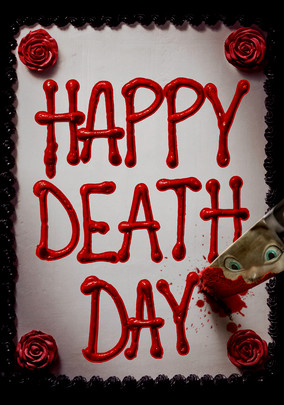
Happy Death Day is a 2017 horror/slasher film that cleverly incorporates the “Groundhog Day” theme into its story.

Oddly, the film was released in October instead of February, a missed marketing opportunity.

Despite a unique premise, the film is overly complicated, especially for this genre. Rather than succeeding as a late Friday night treat, Happy Death Day becomes tough to follow, leaving too many questions and puzzling thoughts in the after-effects.

We first meet snobbish and sarcastic sorority sister, Theresa “Tree” Gelbman (Jessica Rothe), as she awakens with a pounding headache and a bad attitude one morning in the dorm room of a handsome classmate, Carter Davis (Israel Broussard).

She barely remembers the drunken tryst as she haggardly goes about her morning. Today is her birthday! Irritated by the day, she dismisses her kindly roommate and her father.

She is rude to a former one-night stand, finally going to a party, where she is followed and brutally murdered by a figure wearing a campus mascot mask.

She suddenly awakens to the same morning she has just experienced!

Perplexed, Tree spends the remainder of the film on the hunt to figure out who killed her and unravel the mystery of halting the events by going on a continuous “loop” of the same night, each time uncovering more clues.

Mixed in with the events, Tree realizes she has feelings for Carter and should become a more sociable person.

Star Jessica Rothe is excellent in a breakout film role, though she had a small part in the musical La La Land in 2016.

Her chemistry with Broussard is adequate, though when we talk horror, romance is not at the top of the list, blood is.

Unfortunately, Happy Death Day offers few accurate kills or scares—the film is rated PG-13, for heaven’s sake.

A nice aside and testament to the character of Tree is her possession of both “good girl” and “bad girl” qualities. Trendy in slasher films is that the girl who parties and has sex is offed before very long, but in Happy Death Day, we are served both in the same character.

Tree is, in fact, butchered, but when brought back to life, the character eventually blossomed into the clear heroine. This is a nice twist on a traditionally written character.

I enjoyed the perpetual whodunit factor that screenwriter Scott Lobdell carves into the fabric. A bevy of suspects is introduced and the tale changes direction with each loop.

The story becomes more complex with each loop, and characters’ stories or motivations shift each time. Furthermore, a few more characters are introduced giving the story more layers.

This is both a strength and a problem—Trees professor Dr. Gregory Butler, her secret lover, is a suspect.

Is Tree’s sweet roommate, Lori, who wants nothing more than to treat her friend to a lovely birthday cupcake, too good to be true?

Things spiral out of control from a story perspective at a certain point.

What is the point of the local serial killer, John Tombs, injured and conveniently staying at the campus hospital, other than to serve as a red herring? Who is the masked killer and why do they suddenly disappear from the story? How is Tree able to seemingly change the details of her murder so much so that it ends up never happening?

The reveal of the actual killer is perfect, but how did we get to this point? By the big reveal at the end, I had stopped trying to figure out the film.

Slightly above par, Happy Death Day (2017), while spirited and reaching for something different, becomes muddled and senseless, leaving the viewer wondering how all the various “groundhog day” stories add to a satisfying conclusion.

Sadly, by the film’s conclusion, one will likely not wish to waste time bothering to care. Still, some props for creativity must be awarded.

Mudbound-2017

Mudbound-2017

Director Dee Rees

Starring Carey Mulligan, Garrett Hedlund

Scott’s Review #724

Reviewed February 12, 2018

Grade: B+

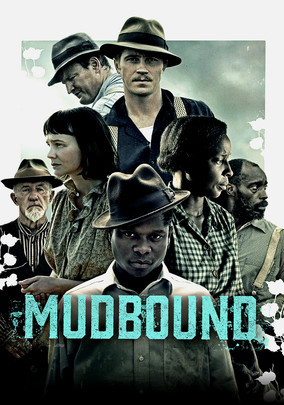
Mudbound is a 2017 Netflix period drama that transports viewers to a time of racism and struggles as World War II ravaged Europe.

The piece is set mainly in rural Mississippi; however, during the 1940s, most people, especially black people, had a vastly different way of life.

The film depicts the hardships and struggles of two families living on the same land, one white and one black, and how their lives intersect dramatically.

The film received several Oscar nominations, including for Adapted Screenplay, Supporting Actress, Song, and Cinematography. I will suffice it to say I support the latter two mentions in the group but not the former.

While the final act kicks the film into much-needed high gear, and the filming detail of the rural southern terrain is quite apt, I kept waiting for a stunning scene involving the usually excellent Mary J. Blige to erupt, but sadly nothing ever came.

While inspired, the writing would not get my vote in the screenplay category either, especially when other, more worthy films (think Mother!) were bypassed.

The mood of Mudbound is immediately impressive as we are introduced to the grizzled and muddy town of Marietta, Mississippi, a sort of farm wasteland. Brothers Henry and Jamie McAllan struggle to bury their recently deceased “Pappy” as the lands are ravaged by a driving storm.

When Henry briefly leaves Jamie in the watery grave the pair has dug, Jamie is panic-stricken that Henry will not return. In this way, director Dee Rees reveals a significant clue to tension between the brothers as the film rewinds to sometime earlier when times were happier for the brothers.

Mixed in with the trials and tribulations of brothers McAllan, is Henry’s wife Laura (Carey Mulligan), who shares a loveless marriage with him, while secretly lusting after Jamie.

A poor black family resides and works on the McAllan farm, and must endure hardship and racism from the white residents of Marietta, especially when their son Ronsel returns from World War II, a celebrated hero.

Old habits die hard as the Ku Klux Klan rears its ugly head, targeting the young soldier for daring to bed with a German woman abroad.

As most of the film meanders during the first hour or so with odd edits and pacing, I did not easily connect with many of the characters, though I wanted desperately to.

There seemed to be not enough buildup to the ultimate drama. The film is shot in a way that you know you are watching something of substance, but it takes a long, long time to reach a crescendo.

The aforementioned criticism of Mary J. Blige, who portrays long-suffering matriarch Florence Jackson, is not of the part itself or her acting; rather, I expected a gritty, meat-and-potatoes-style performance from the talented lady.

I disagree with her Oscar nomination, and instead would have chosen the brilliant Michelle Pfeiffer from Mother!

Praise must be written for Mulligan’s performance, shamefully overlooked, like the haggard, intellectually unfulfilled housewife, Laura. As she wistfully buries her nose in a novel to escape her dull life, or longingly looks at Jamie, disappointed with her loneliness, we feel every emotion that Mulligan plays.

A consistent problem with Mudbound was that it lacked a grand emotional scene from either Blige or Mulligan.

The film’s racist subject matter can be utterly challenging to watch as a significant character sees their tongue removed and another character forced to make a difficult choice. This action leads to a deadly turn of events and the murder of another character, resulting in a lifetime of secrets.

The final thirty minutes are the best part of Mudbound.

A must-notice historical feat is Rachel Morrison’s nomination in the cinematography category. She is the first female to receive this honor, and it is certainly about time. Morrison successfully fills Mudbound with the perfect mood—both picturesque greenery and a depressing, downtrodden aura.

This is not as easy as one might imagine, but creative talent achieves this effortlessly.

Mudbound has received much attention but is not the masterpiece some are touting it as. It takes way too long to hit its stride, the film has good aspects and some missed opportunities.

Perhaps a better-put-together film would have resulted in a brilliant experience instead of “only” a good watch. I recommend Mudbound, but I expected and hoped for much more than I was given.

Oscar Nominations: Best Supporting Actress-Mary J. Blige, Best Adapted Screenplay, Best Original Song-“Mighty River”, Best Cinematography

Independent Spirit Award Nominations: 1 win-Robert Altman Award (won)

Phantom Thread-2017

Phantom Thread-2017

Director Paul Thomas Anderson

Starring Daniel Day-Lewis, Vicky Krieps, Lesley Manville

Scott’s Review #722

Reviewed January 31, 2018

Grade: A

Phantom Thread is a 2017 gem that should ideally be studied in film schools and remembered for decades to come, or at the very least discussed and dissected among those fortunate enough to see it currently.

Set in England during the 1950s and centering on the dress-making industry, the film mixes romance with a bizarre psychological element that leaves the viewer breathless as the final act comes to a dramatic and startling conclusion.

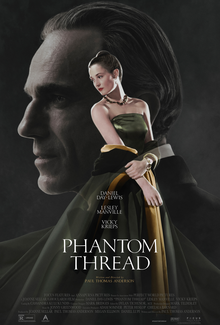
Daniel Day-Lewis brilliantly portrays Reynolds Woodcock, an esteemed and famous dressmaker who lived and worked in London in the 1950s.

He creates lavish dresses for the members of high society, including the wedding gown for the famous Belgian princess. Masterful at his work, he is also controlling and demanding, requiring plenty of support and attention from his equally controlling sister, Cyril (Lesley Manville).

When he meets Alma Elson, a waitress from a countryside resort, the pair fall into a relationship. She acts as his assistant, muse, and lover. Complexities develop between Reynolds, Alma, and Cyril as the plot progresses in cerebral and nail-biting fashion.

The film is ravishing and a feast for the eyes if only for the classic costumes alone.  Each dress that Reynolds creates is exceptional and at the height of glamour. His domineering nature only makes this realistic as perfection is his modus operandi and his dresses are evidence of this.

In one particularly fantastic sequence, Reynolds begrudgingly creates a dress for the boozy Barbara Rose, a rich and mature woman who promptly falls asleep drunk at her wedding and soils the garment.

A livid Reynolds, along with Alma, strips Barbara of the dress, rather than see her sleep in and tarnish it.

However, the main draw to the film is the excellent, intricate main plot involving Reynolds, Cyril, and Alma.

This weaving of personalities and their nuances must be attributed to the fabulous direction of Paul Thomas Anderson,  known for edgy, dark films such as 1997’s Boogie Nights and 1999’s Magnolia.

He comes up with a masterpiece in Phantom Thread.

The three principal characters are pretty unlikeable and the viewer’s allegiances may change throughout the tale. Appearing to be the innocent, debutante character of the film, the character of Alma will be surprised, especially in the film’s final act.

A successful nuance is the scenes involving characters breaking bread with others as events unfold over Danishes, omelets, and crisp asparagus. Sometimes the banter involves discussions and debates about the preparation of the food.

This characteristic is a dream for any foodie and the meals aid in the progression of the plot.

Earlier in the film, Alma is scolded by a maid for nearly picking poisonous mushrooms, which later becomes a major clue and part of the film’s conclusion.

During a pivotal scene between Reynolds and Alma, she prepares a delicious mushroom omelet for her love as motivations, secrets, and desires surface.

The grand twist that Anderson reveals at the end of the film will only leave the viewer open-mouthed and quickly reviewing the events and circumstances of the entire movie.

Anderson’s close-up scenes are magical, and each actor is allowed to be very expressive. The camerawork in several breakfast scenes—Alma and Cyril gazing at each other, revealing emotions that border between hatred and mutual respect—is effectively done.

Manville, in particular, does so much with her blue eyes as she sips coffee and peers over her cup with venomous indignation at her foe.

How splendid is the comparison of Cyril to the famous Hitchcock villainous Mrs. Danvers from the classic 1940 film in her cold and creepy mannerisms?

I hope that Phantom Thread will eventually be appreciated and analyzed as a cinematic work of art.

Deservedly honored with a 2017 Best Picture, Best Actor, Best Supporting Actress, Best Director, and Best Costume Academy Award nomination, the film is a lesson in excellent writing, bizarre angles, and essential effects.

Let’s hope that this film will be recognized as the great work it is.

Oscar Nominations: 1 win-Best Picture, Best Director-Paul Thomas Anderson, Best Actor-Daniel Day-Lewis, Best Supporting Actress-Lesley Manville, Best Original Score, Best Costume Design (won)

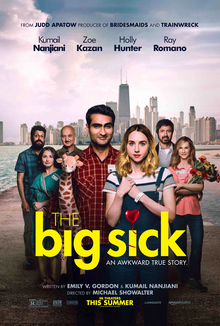
The Big Sick-2017

The Big Sick-2017

Director Michael Showalter

Starring Kumail Nanjiani, Zoe Kazan

Scott’s Review #720

Reviewed January 29, 2018

Grade: B+

The Big Sick, a 2017 independent “dramedy” film, takes what could be a standard premise and turns it upside down, offering a fresh perspective on a familiar tale about a prospering relationship.

The screenplay is the standout as the writing is intelligent and crisp. Thanks to exceptional acting by all four principal characters, The Big Sick is a success and worth watching.

The story follows an interracial couple, Emily and Kumail, played by Zoe Kazan and Kumail Nanjiani, who have recently started casually dating. Kumail is a standup comic living in Chicago who meets the flirtatious Emily after a club performance one night.

They share a one-night stand and agree never to see one another again.

As the smitten pair break their promise and form a romance, a tragedy occurs, landing Emily in a coma.

Kumail must handle Emily’s parents, Beth (Holly Hunter) and Terry (Ray Romano), who are angry with Kumail for misleading Emily and not telling her about his strict Muslim parent’s intentions of marrying him off by arranged marriage.

The screenplay (nominated for a 2017 Oscar nomination) is loosely based on the relationship between actor/writer Nanjiani (who stars), and Emily Gordon (who co-wrote the screenplay).

Especially since Nanjiani stars, the film is sincere and authentic, as if Nanjiani is living the role.

The chemistry between Nanjiani and Kazan during their many scenes at the start is a significant plus to the film. Before the drama takes off, the audience will become fully invested in the pair as a couple.

Whether the couple flirts as Kumail drives Emily home or fights when Emily learns about his Muslim culture’s belief in arranged marriage, the couple has a tremendous connection, and it shows.

The story fabric takes an interesting turn about midway through when Emily is stricken with a debilitating illness.

A medically induced coma is needed, as Kumail is forced to pretend to be her husband, this opens up many moral and legal ramifications that the film chooses essentially to ignore, instead of dealing with the relationships between Kumail and Emily’s distraught parents.

Hunter and Romano are excellent in the parent roles. Hunter is the more showy of the two and has more meat, while Romano holds his own and powers a vital comedy club scene in which he defends his wife from a callous heckler.

Admittedly, the film decides to go the “happily ever after” route, this is hardly a surprise given that Judd Apatow is the producer.

Remember, this is the same guy who produced safe films such as Superbad (2007) and Anchorman 2 (2013). Still, the story within The Big Sick is an enjoyable, character-driven ride, if not unpredictable.

A darker-tinged affair might have set this film over the top as it contains many other credible film qualities.

The addition of comic talent in the supporting roles of Kumail’s comedy club buddies adds a good balance and nicely counterbalances the drama so that it does not become too dour.

Much of the film involves Emily in a coma, so comic talent such as SNL’s Aidy Bryant and Comedy Central’s Kurt Braunohler are suitable ads.

I enjoyed the inclusion of the traditional Pakistani custom of arranged marriages, but at times this seems played for laughs rather than being a significant obstacle to the couple.

Kumail’s controlling mother parades one young Pakistani girl after another in front of her son as a way of encouraging him to select one of them. Kumail’s traditional family is played as stereotypes and the lighthearted foils of the film.

The Big Sick (2017) succeeds with crisp, witty dialogue and a solid story that nicely complements the intended comedy.

A few too many stereotypes and goofiness keep the action light even when compared to the more serious parts—great acting all around.

Oscar Nominations: Best Original Screenplay

Independent Spirit Award Nominations: 1 win-Best Supporting Female-Holly Hunter, Best First Screenplay (won)

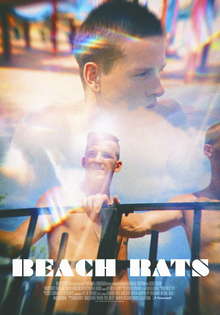
Beach Rats-2017

Beach Rats-2017

Director Eliza Hittman

Starring Harris Dickinson

Scott’s Review #719

Reviewed January 26, 2018

Grade: A-

Beach Rats is a 2017 coming of age film penned and directed by Eliza Hittman, a young female director from Brooklyn, New York, who incorporates her familiar geographical settings into only her second feature film.

2013’s It Felt Like Love received two Independent Film nominations, and Beach Rats has followed suit, garnering a Best Actor nomination and a Best Cinematography mention.

The film is a terrific story of conflict that its target audience will surely relate to.

The film is very low-budget but a successful character study of a young man named Frankie, played by newcomer Harris Dickinson, who wrestles with family issues and his sexuality while hanging out with his troubled friends and dating his sometime girlfriend.

Beach Rats is not a downer but rather an interesting glimpse into a teenager’s life and struggle with self-identity.

Mirroring It Felt Like Love, Hittman uses plenty of locales unique to Brooklyn, the most identifiable being the borough’s watery, nighttime beaches, which gives the film an authentic feel.

Many scenes are shot outdoors, which is a strong point of the film. Like many independent films, Beach Rats uses several “non-actors” in small roles, adding depth to the blue-collar, sometimes harsh, Brooklyn feels.

With only two features to her credit, Hittman is successful at having her hand-print on her films, making them identifiable as her own.

It is interesting how the director chooses a male character to write for. Similar to the female Liza in It Felt Like Love, both she and Frankie are vulnerable and coming to terms with their sexual feelings and desires.

The fact that Liza is straight and Frankie, at most, bisexual, is the only strength of the complex writer/director.

Dickinson is perfectly cast as Frankie. Good-looking, with chiseled features and a lithe, toned body, his bright blue eyes are expressive, as the audience empathizes with his many dilemmas.

Beach Rats is much more than a traditional “gay film”, which is admirable, it is more complex than that.

By 2017, the common theme of coming to terms with one’s sexuality has been explored.

According to Frankie, he “just has sex with men” and refuses to identify as either gay or bisexual. It is implied that because of his group of trouble-making friends, who only want to get high, he might be faced with resistance if he ever came out to them.

The supporting cast is well represented, Frankie’s mother, Donna (Kate Hodge), is faced with a tricky predicament as her husband, Frankie’s father, has just died of cancer, ripping the family apart.

She knows that Frankie keeps things from her, is she figuring out Frankie’s sexual secrets?

Donna implies that it is okay for Frankie to tell her anything, admirable, combined with her problems. Frankie’s girlfriend, Simone, is coming into her own as Frankie is, and even though the duo shares a sweet relationship, it appears doomed for failure.

The most interesting scenes in Beach Rats occur between Frankie and the mostly older men he meets virtually or in person. Though Frankie is quite nervous, Dickinson always makes the character appear confident and well beyond his years.

Being street-smart, he is never taken advantage of, as he is familiar with young men and older men. Why he mostly prefers older men is never explained, but it might have anything to do with seeking to fill the void left by his deceased father.

Or is it simply to reduce the risk of running into anyone he might know within his age group?

Hittman is not shy about featuring nudity, yet each scene is tastefully done and never seems to be for either shock value or to elicit a gasp. Full frontal nudity is featured, as well as scenes of Frankie engaging in sexual acts with both the men and his girlfriend.

Sure, Dickinson has a perfect body, but his assets are not on display unnecessarily.

More often than many “box office” films, independent films are given much creative freedom to tell a good story. Thankfully, in the case of Beach Rats, the audience is lucky enough to view a quiet, introspective tale of a conflicted adolescent and how he deals with demons and complex feelings.

Particularly for the predominantly LGBT audience who will see the film, Beach Rats (2017) will have much to offer.

Independent Spirit Award Nominations: Best Male Lead-Harris Dickinson, Best Cinematography

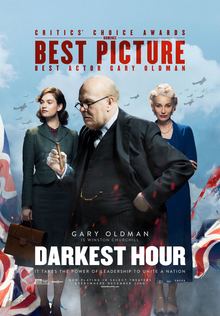
Darkest Hour-2017

Darkest Hour-2017

Director Joe Wright

Starring Gary Oldman, Kristin Scott Thomas

Scott’s Review #718

Reviewed January 24, 2018

Grade: A-

Darkest Hour (2017) is a British historical film that showcases legendary actor Gary Oldman’s astounding portrayal of Winston Churchill.

Known for numerous other fine-acting performances in films such as the Harry Potter series (2001-2011), JFK (1991), and Batman Begins (2005), this performance easily transcends all of the others as he brings perfection to complex role-infusing humor, drama, and many idiosyncrasies of the storied historic figure.

Churchill is the best role of Oldman’s lengthy career.

Director Joe Wright, famous for classy European films such as Pride and Prejudice (2005), Atonement (2007), and Anna Karenina (2012), traditionally offers rich, intelligent experiences with an upper-crust, often British theme and fills his characters with wry humor and wit.

In Darkest Hour, a film that belongs to Oldman, by the way, Churchill is the master of gruff sarcasm and cantankerous charm.

During the tumultuous time of 1940,  with the barbaric grips of Nazi Germany settling upon both England and France (Allies in World War II), a disheveled England is frustrated with their current Prime Minister, Neville Chamberlain, for being weak.

Chamberlain begrudgingly appoints Winston Churchill as his successor, amid limited support.

The film discusses Churchill’s early days in charge as the war and the Nazi presence loomed larger and larger- especially as the historic Dunkirk situation comes into fruition.

Darkest Hour is a good quality film —it has a certain historic richness and the feeling of experiencing a worthy and relevant film. For those of us who did not live during the 1940s, the film will likely serve as an educational experience into the events of the day.

Hundreds of films have been made over time that have explored the events during World War II in fantastic detail, but this film is unique in that it not only provides a perspective of the Allied countries “back against the wall” situation but the ups and downs and pressures that Churchill, the man, faced.

Despite a few quick clips of Hitler and very old black-and-white footage and newspaper headlines of the crazed leader, the focus is not on the enemy country. No actor was used to play Hitler; rather, the focus is on Churchill and the decisions he made and the influences he was faced with.

Pressured to appease the militant German country and reach a “peaceful” deal, Churchill instead listened to the voices of the ordinary, everyday, British people to get his decision to fight the Germans and not back down.

Clever and relevant to 2017 cinema, the film spotlights the famous Dunkirk situation, when British forces were trapped on the shores of Dunkirk, with German planes looming overhead.

Many men were saved, thanks in large part to Churchill and British and French civilian boats that aided in the rescue.

The 2017 film Dunkirk would make an excellent companion piece to Darkest Hour because its subject matter is similar to that of Darkest Hour.

Not surprisingly, both films received Academy Award nominations for Best Picture.

A great lesson I carried away from the film is with Churchill himself.

Sure, I knew that he was the Prime Minister of England during the 1940s and was instrumental in the events of the bloody war, but I knew little about the man himself.

Thanks to Wright and, of course, Oldman, the viewer will learn the good and bad characteristics of this man. A heavy drinker, commonly downing champagne with lunch and brandy the rest of the day, he was initially not well-liked, nor taken very seriously by British royalty.

With Churchill’s bubbling personality, Oldman is fantastic at filling the role with humor, frustration, and just the correct amount of empathy and concern.

Despite his temper, we can tell that he loves his country and is proud of the people living there—that is why he is adamant about conquering the enemy. So, we know he is a good man despite his temper tantrums.

Oldman also successfully embodies the mannerisms that this historical figure contained.

Kristin Scott Thomas also gives a worthy performance, albeit in a small role, as the mature and graceful wife, who can both support and match wits with her husband.

Thanks to a brilliant acting performance by Gary Oldman, who takes on a difficult role that could easily be botched by lesser talent, Darkest Hour is a 2017 historical drama worth seeing.

He makes a film that could have been dull and flat into a worthy watch to both learn something and be amazed at a truly great acting performance.

Oscar Nominations: 2 wins-Best Picture, Best Actor-Gary Oldman (won), Best Production Design, Best Cinematography, Best Makeup and Hairstyling (won), Best Costume Design

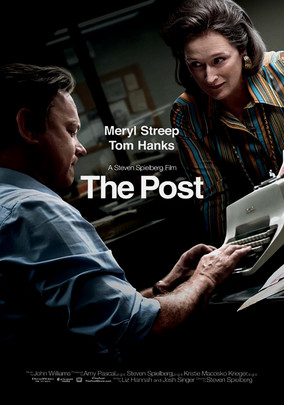
The Post-2017

The Post-2017

Director Steven Spielberg

Starring Meryl Streep, Tom Hanks

Scott’s Review #715

Reviewed January 15, 2018

Grade: A-

Amid the current political upheaval in the 2017 United States, comes a fresh and timely film named The Post, created by esteemed director Steven Spielberg and starring two of today’s biggest Hollywood film stars: Tom Hanks and Meryl Streep.

The film is a political, historical thriller set during the tumultuous year 1971, as the controversial Vietnam War raged on. It tells of the bravery of a female newspaper owner (Streep) who risked everything to publish the truth with her team of mostly male editors and staff.

The film is an intelligent piece of writing.

Its crisp script and quick editing allow for a believable foray into a different time, when newspapers were hot and rotary telephones, telephone booths, and polyester outfits were all the rage.

Spielberg is brilliant at setting just the right mood and tone to transport the audience back to 1971, on the eve of the enormous Watergate scandal.

While all of the elements are in play, and the truthful story is important, the film is very good but not quite brilliant—it falls just shy of that bombastic one or two scenes that would land it over the top.

The Post begins in the jungles of Vietnam in 1965, as military analyst Daniel Ellsberg documents the progress of military activities among the soldiers during battle.

On the journey home, he briefs then-President Lyndon Johnson that the war is hopeless and should be stopped. As history unfortunately shows, the brutal war continued with thousands of lives lost.

The film then continues on a journey of uncovering top-secret Pentagon papers documenting the White House’s knowledge of the war’s useless nature. Each administration chose to continue with the bleeding to avoid the United States being “humiliated.”

Streep gives her best performance in years as Katharine Graham, the Washington Post newspaper heiress, a woman who struggles to be taken seriously in a man’s world, especially given the period, many men were uncomfortable taking direction from a woman.

Streep infuses the role with the perfect amount of emotion, insecurity, and charm. Despite her wealth and control, she is frequently overruled by the all-male board of directors, so much so that she often doubts her confidence.

Hanks, however, underwhelms as the gruff editor-in-chief of the Post, Ben Bradlee. Given the actor’s enormous talents, I was expecting a meatier performance, which does not materialize.

I also anticipated an equal balance of Hanks and Streep, but the film belongs to Streep.

Perhaps because Hanks (the ultimate nice guy) portrays Bradlee as a challenging, yet family man, the performance does not quite work.

Also, the chemistry between Hanks and Streep is not the specialty of the film.

Evident is the correlation between 1971’s President Nixon and 2017’s President Trump—both administrations were shrouded in controversy.

A neat trick Spielberg creates is to only show Nixon in shadows, wildly gesturing and threatening, similar to Trump’s mannerisms—this is no accident.

The entire work of The Post seems to be a big call-out by Spielberg, a devout liberal, to the Trump administration.

This comparison of past and present makes The Post incredibly timely and topical for 2017.

Clever is the intriguing ending—as the Watergate scandal begins with a security guard catching intruders at the complex, Spielberg seems to be saying, “Watch out, Trump!”

In 2017, the current state of the media versus the White House has never been more controversial, disdainful, and even hateful, as the “truth” is often tough to come by or even to distinguish.

“Fake news” is now a thing and Twitter rants are now a daily occurrence, making the “truth” a precious commodity.

For this reason alone, The Post (2017) must be a film we celebrate and model ourselves after—how timely indeed.

Oscar Nominations: Best Picture, Best Actress-Meryl Streep

The Boss Baby-2017

The Boss Baby-2017

Director Tom McGrath

Voices Alec Baldwin, Tobey Maguire

Scott’s Review #713

Reviewed January 12, 2018

Grade: C

True confession- I was not expecting much from the 2017 offering of the animated film entitled The Boss Baby (a brooding, sarcastic newborn offered no appeal).

However, since the film was nominated for a Golden Globe award, I decided to throw caution to the wind and settle down for a viewing.

Predictably, the film fulfilled my hunch and resulted in a fair to middling experience—the attempt at a nice message was offset by cliched and silly characters and an overproduced film rather than a directed one, but it still held interesting and sometimes even beautiful visuals.

Seven-year-old Tim Templeton (voiced by Tobey Maguire), as an adult, narrates a story of his childhood days, living with his parents Ted and Janice, both busy marketing professionals, who work at Puppy Co.

One day, his parents return home with a bundle of joy in tow, Theodore Lindsey Templeton (voiced by Alec Baldwin), who immediately monopolizes their time and attention.

Isolated, Tim is envious and begins a rivalry with his baby brother, who is secretly a spy named “The Boss Baby” and has the mind of an adult in a baby’s body.

It is revealed that he is working undercover as a spy to investigate why puppies are now receiving more love than babies.

The duo eventually teams up and forges a bond to prevent corporate America from ruining all of the love in the world. The Boss Baby presents a positive, good message of love and acceptance, which is nice to see, but this message can only carry a film so far, and there is little else of substance.

As with many animated films, the story here has a “good versus evil” slant, which renders the film rather one-dimensional. We are instructed who to root for and who not to root for.

While challenging corporate greed is certainly a cause worth championing, too often I found The Boss Baby causing my mind to wander elsewhere instead of keeping me engaged in the story, which is not a good sign.

The target audience is relatively young because many sappy or juvenile scenes remain.

Closeups of Theodore and whimsical shots of his bulging eyes give the film cute, too wholesome quality, and predictably, there are the standard doody and poop jokes, which comedies do all too often to account for sloppy writing.

Comedy stalwart Alec Baldwin voices the character of Theodore, which makes the baby a bit more interesting.

Baldwin, fusing assertion and a touch of sarcasm into Theodore, makes him witty and energetic, but again, this can only go so far. By the time the film has concluded in happily ever after fashion, the once tough character has disintegrated into a hammy kid.

Older brother Timothy is excellent, and having Maguire narrate him as an adult is nice.

The central theme of sibling rivalry between brothers, especially the difficulty of some kids adjusting to a newborn debuting into the family, may encourage parents to make it a family outing and see The Boss Baby.

Sadly, the creative and unique sets of animations may be wasted on viewers seeking a good story. What a pity that The Boss Baby does not possess both qualities. The film is little more than adequate and will undoubtedly be forgotten.

Oscar Nominations: Best Animated Feature Film
I, Tonya-2017

I, Tonya-2017

Director Craig Gillespie

Starring Margot Robbie, Allison Janney

Scott’s Review #712

Reviewed January 10, 2018

Grade: A-

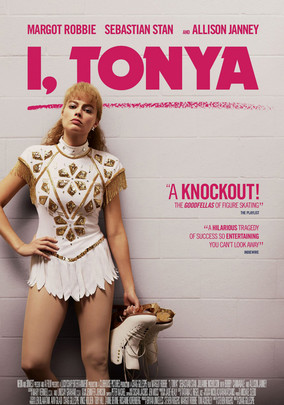
I, Tonya is a 2017 biopic telling of the life and times of the infamous American Olympic figure skater, Tonya Harding, notorious, of course, for her alleged involvement, along with her husband and his friend, in the attack of fellow skater, Nancy Kerrigan during the 1994 Winter Olympics.

The event drew monumental media coverage after the attack, with the uncertainty of Harding’s knowledge or involvement, and her subsequent guilt or innocence continues to be debated.

The film itself is a dark and violent comedy, never taking itself too seriously. It immediately presents the disclaimer that the stated “facts” in the film are open to interpretation and depend on who you ask.

I, Tonya isn’t preachy or directive to the viewer but instead offers up the skater’s life and times in story form.

The film features tremendous performances by Margot Robbie and Allison Janney, as well as Tonya and her despicable mother, LaVona.

I, Tonya, is told chronologically, culminating with “the incident” in 1994.

However, the story begins in the mid-1970s, as Tonya, just a tot at the tender age of four, is as cute as a button and shrouded in innocence. One cannot help wonder if director Craig Gillespie, known for independent films, purposely made this wise casting choice.

We see Tonya, once an innocent child, journey into a life of violence, abuse, and tumultuous living. Harding grew up cold and hard and endured an abusive, complex relationship with her mother, the pressures to be the best skater never ended.

Even upon achieving success, Tonya never felt good enough or loved by her mother.

We then experience Tonya as a fifteen-year-old girl, fittingly first meeting her boyfriend and later, husband Jeff, Gillooly played well by actor Sebastian Stan. The early scenes between the two are sweet, tender, and fraught with the emotions of first love.

As explained by the actors, this was a short-lived time of bliss, and the relationship soon disintegrated into abuse, rage, and chaos.

The main point is to debate Harding’s guilt or innocence, which Gillespie peppers throughout, so it is unclear what to believe or how the audience should think.

“Interpretation” is the key here. Some may see Harding as a victim of life’s circumstances and the hardships she had to endure and may place sympathy upon her. Others may view Harding as off-putting, potty-mouthed, and even icy and violent herself, with a big chip on her shoulder.

In one scene, she publicly belittles the hoity-toity judges who never give her a break and give her less-than-perfect scores.

A clever technique that the film delivers is to have the actors frequently speak to the camera, thus the audience. This is achieved by either interview style or for the action in the film to cease and either Robbie, Janney, Stan, or whomever, turn to the camera and express their version of the events.

I, Tonya possesses a creative, edgy, indie feel.

How brilliant are the performances of both Robbie and Janney?

Robbie, a gorgeous woman, portrays a “red-neck” to the hilt. Through her bright blue eyes, her face is quite expressive—relaying pain, anger, and a seldom triumph. The film often slants the scales in a sympathetic way towards Harding, but it is Robbie’s talents that make us feel this sympathy.

Janney hits the jackpot with a delicious role she sinks her teeth into. A cold-hearted, vicious character, through facial expressions, we occasionally glimpse LaVona, perhaps softening, but as we do, the character does something even more despicable.

A good surprise for fans who remember the real-life events and the real-life players will be treated to a sequence of the honest Tonya, LaVona, Jeff, and Shawn Eckhardt, which play over the film ending credits.

How similar in looks are Robbie to Harding, with her feathered, frizzy, 1980s-style hairdo, and Janney, a dead-ringer for the boozy, chain-smoking LaVona, with her mousy brown bob haircut, complete with scruffy bangs?

Viewers will leave theaters confused, unsure, or perhaps perplexed by what they have just seen, but they will most certainly feel thoroughly entertained and may even depart chanting some upbeat 1980s rock tunes that the film uses throughout.

Thanks to fantastic acting and a strong story, I, Tonya is a success.

Oscar Nominations: 1 win-Best Actress-Margot Robbie, Best Supporting Actress-Allison Janney (won), Best Film Editing

Independent Spirit Award Nominations: 2 wins-Best Actress-Margot Robbie, Best Supporting Female-Allison Janney (won), Best Editing (won)

Wonder Wheel-2017

Wonder Wheel-2017

Director Woody Allen

Starring Kate Winslet, Jim Belushi

Scott’s Review #709

Reviewed December 31, 2017

Grade: B+

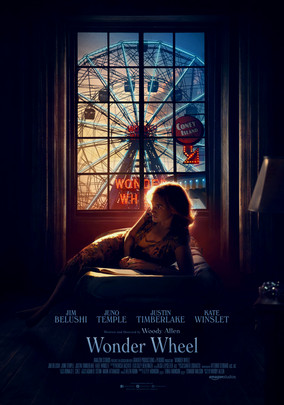
Woody Allen typically releases a new film each year, and 2017’s project is Wonder Wheel.

Set in 1950s Coney Island, a seaside beach in Brooklyn, New York, the film is an authentic-looking period drama, with lovely costumes and legitimate New York accents from all principal actors.

The story is pretty depressing, though, as a likable character is tough to find. However, Wonder Wheel contains fantastic acting, mainly on the part of star Kate Winslet, whose troubled character is the film’s focal point.

Winslet portrays Ginny Rannell, a struggling forty-year-old woman living in the seaside neighborhood and working as a waitress at a dingy Clam House. She despises her life and longs for a way out of the doldrums, yearning for the life she had years ago as an aspiring actress.

Her husband, Humpty (Jim Belushi), a carousel operator, has alcoholism. Together they raise Ginny’s son, Richie, a young boy who loves to start fires.

When Humpty’s estranged daughter, Carolina (Juno Temple), shows up on their doorstep, having provided information about her mobster husband, and subsequently “marked”, Ginny’s life slowly begins to unravel as she and Carolina pursue the same man, hunky lifeguard, Mickey (Justin Timberlake).

The film’s New York setting is an enormous plus and a standard of many Woody Allen films—the authenticity is apparent. The summer mood of the beach, sand, sunny boardwalk and beach scenes make the viewer feel transported in time.

The 1950s period worked as beachwear, and the amusement park sets were used to their advantage. The actors’ New York accents and the language and sayings are appropriate for the times.

The apartment that the Rannells rent is an excellent treat to the film. The set features a wonderful beach landscape during daytime and nighttime scenes so that the mood change can be noticed—these are all enticing elements to Wonder Wheel.

Enough cannot be said for Winslet’s talents, who make the character of Ginny come to life.

Undoubtedly a tough role for her to play, Winslet, who can make reading the phone book sound interesting, tackles the complex part and arguably gives one of the best performances of her career—my vote would still go to her portrayal of Hannah Schmitz from 2008’s The Reader.

Initially a sympathetic character, she longingly desires to return to the stage and perhaps find stardom as an actress and sees Mickey as her last chance. When events curtail her dreams, her character takes a sharp turn and does an unspeakable act.

I love Justin Timberlake’s acting talents. By 2017, he had successfully proven himself a major star in both the film and music worlds.

As the hunky, charismatic, yet studious and intelligent lifeguard, Mickey, he teeters between womanizer and earnest, love-stricken, young man.

Timberlake has taken on more interesting film roles beginning with the 2010s, The Social Network, and let’s hope there are more to come.

Juno Temple is just perfect as the naive Carolina. With an innocent, sweet personality, she yearns for love and a fresh start. Temple, known mainly for quirky independent film roles, fits a Woody Allen creation perfectly.

Finally, legendary actor James Belushi fills his character of Humpty with dedication, loyalty, and alcoholic rage. He adores Ginny but sometimes takes her for granted.

What a treat for fans of The Sopranos to see a couple of familiar faces appear as (what else?) mobsters. Tony Sirico and Steve Schirripa make cameo appearances as Angelo and Nick, henchmen for Carolina’s unseen husband, who is intent on tracking down and killing her.

Despite minimal parts, the actors seem to have a ball reprising similar roles that made them famous.

Wonder Wheel, shot in a similar tone to a stage production, draws comparisons to A Streetcar Named Desire, both with four principal characters- two male and two female, Ginny, Carolina, Mickey, and Humpty, all with some similarities to and some differences with storied characters Blanche, Stella, Stanley, and Mitch.

However, the comparisons can easily be studied and analyzed.

Woody Allen creates a film that can be appreciated chiefly for its top-notch acting talent, which is not surprising given the actor’s cast, and it is a compelling, never boring story.

The film is a downer, however, with no heroic characters. Thankfully, this is counterbalanced perfectly by a great New York setting, which is a high point of Wonder Wheel (2017) and cheers up the otherwise dour tone of the film.

The Greatest Showman-2017

The Greatest Showman-2017

Director Michael Gracey

Starring Hugh Jackman, Michelle Williams, Zac Efron

Scott’s Review #707

Reviewed December 26, 2017

Grade: A-

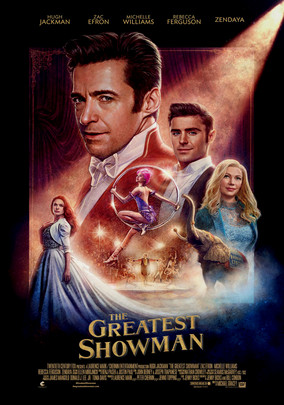
A pure musical escapist film, The Greatest Showman (2017) holds a dear and relevant message. It elicits hope for outcasts everywhere by leading a story of acceptance and perseverance in the feel-good film of 2017.

Hugh Jackman leads the pack, starring as P.T. Barnum, a man struggling to create an entertainment show with live and unusual performers- deemed “freaks” in New York in those days- the 1800s.

The film is quite joyful and light, with many cheery musical numbers sure to leave audience members humming along for hours after the conclusion.

The Greatest Showman is a rags-to-riches story and a thoroughly enjoyable film.

Jackman is as charismatic and likable as Barnum, the entrepreneur and showman we meet as a young boy, the son of a poor tailor. He becomes enamored with wealthy young Charity (Michelle Williams), and the two eventually marry, much to the chagrin of her pompous parents.

Barnum and Charity initially struggle to make ends meet as they begin to raise a family, but eventually, they find success and wealth when the show succeeds.

The film chronicles Barnum’s rise to fame and the trials and tribulations (romantic, business) for several years, mainly through musical numbers.

Zac Efron is excellent as Barnum’s eventual business partner, Phillip Carlyle.

Director Michael Gracey’s supporting characters are creative, if not typical, mainstays of carnivals and circuses everywhere—the bearded lady, the fat man, and a man covered in tattoos are featured prominently.

It is unclear whether these characters existed or were created simply for plot purposes. Still, rumor has it that The Greatest Showman has taken great liberties with the factual accuracy of the real P.T. Barnum and his escapades.

This would be bothersome if not for this film’s wonderful message- acceptance and celebrating diversity.

Indeed, this is important for young people everywhere in today’s chaotic world.

Those expecting anything more substance than a cheery and bright holiday slice of enjoyment may be disappointed—some mainstream critics did not rate this film highly. Still, I am okay with a bit of escapist adventure on occasion.

The message throughout The Greatest Showman is quite good.

The best musical number is the show-stopping and anthemic “This Is Me,” Keala Settle is fabulous as the bearded lady who leads this important song. The number is empowering and energetic.

The chemistry between Jackman and Williams is not remarkable, but it is not altogether vacant either. Instead, it is simply decent and not the film’s strongest point. I sense better chemistry between Jackman and Rebecca Ferguson as grand Swedish singer Jenny Lind.

However, their “romance” is unfulfilled, and we will need to imagine its possibilities.

I adore seeing Efron in quality roles (think 2012’s exceptional The Paperboy), and his performance as Phillip is great. He shares a good bond with Barnum and has his romance with acrobat (and of mixed race) Anne Wheeler.

His values and earnestness make the character appealing as he is torn between riches and standing on principle.

The Greatest Showman (2017) may not go down in history as the ultimate top in filmmaking or even one of the best musicals. Still, the film dazzles the audience and provides a couple of hour’s worth of fun and entertainment—similar to how P.T. Barnum energized the crowds with a slice of make-believe; this is more than appropriate.

Oscar Nominations: Best Original Song-“This Is Me”

The Shape of Water-2017

The Shape of Water-2017

Director Guillermo del Toro

Starring Sally Hawkins, Richard Jenkins, Michael Shannon

Scott’s Review #705

Reviewed December 16, 2017

Grade: A

Director Guillermo del Toro created a lovely Beauty and the Beast-style film, The Shape of Water (2017). It is gorgeous to look at, and the story is intelligent and sweet to experience.

Thanks to a talented cast led by Sally Hawkins, the film is part drama, part science fiction, even part thriller, but touching to one’s heart and a lesson in true love regardless of outward appearances.

Vanessa Taylor co-wrote the story, giving it a needed female perspective to perfectly balance the traditional male machinations.

The setting is Baltimore, Maryland, in the early 1960s. The Cold War is ongoing, pitting the United States and the Soviet Union against each other.

Both sides are mistrustful of the other.

Kindly and mute, Elisa Esposito (Hawkins) is a curious and whimsical young woman who works as a cleaning lady at an Aerospace Research Center.

When she stumbles upon a mysterious “shape” being held prisoner for experimentation, she slowly communicates with and befriends the creature, eventually falling madly in love with him.

The “asset,” as the scientists like to call him, is an amphibian/humanoid that needs saltwater to survive. Elisa sees an opportunity to help her love escape captivity, and off she goes.

Hawkins exudes warmth and fills Elisa with courage and astounding determination. Not uttering a word is a tricky feat for an actor to challenge, but instead of words, Hawkins successfully provides a vast array of emotions to reveal how Elisa feels.

Despite her “handicap,” she is a strong woman who speaks her mind on more than one occasion, using sign language to express her frustration. Hawkins gives a fantastic and believable performance.

In excellent and vital supporting roles are Richard Jenkins as Elisa’s friend and neighbor, Giles, a closeted gay man who works as a commercial artist. Jenkins fills this character with intelligence, heart, and empathy as he struggles with his issues of alcoholism and loneliness- unable to be accepted for who he is.

Octavia Spencer shines as witty and stubborn Zelda Fuller, Elisa’s best friend and co-worker. Zelda has her domestic problems but is forever there for her friend, and Spencer gives her character zest, humor, and energy.

Finally, Michael Shannon plays the dastardly and menacing Colonel Richard Strickland, the man who found the “asset” in the rivers of South America and has a lovely family.

Each character is written exceptionally well and has a storyline rather than simply supporting Hawkins’s character.

The audience becomes involved in Giles, Zelda, and Strickland’s private lives, and we get to know and care for them—or hate them, as the case may be.

Giles, harboring a crush on a handsome pie shop owner, is afraid to reveal his feelings. Zelda, with a lazy husband, dutifully takes care of her man, though she is as sassy as they come. And Strickland lives in an all-American family with a pretty wife and two kids, unaware of his shenanigans.

The film is a gorgeous and lovely experience with a magical element. The opening and closing sequences, shot underwater, resound in beauty as objects float along in a dreamy way.

The narrator (Jenkins) takes us on a journey to explain the events of the story.

At its core, The Shape of Water is a romantic love story, and my favorite scenes—those of Hawkins and the “asset”—are to be treasured. Yes, the two do make love, which may be too much for some, but the scenes are tasteful and important, showing the depth of the characters’ love for one another.

Cherishing is how Elisa uses music and hard-boiled eggs to communicate with the “asset.” When Elisa imagines the two characters dancing, the sequence is an enchanting experience reminiscent of Beauty and the Beast.

Other underwater scenes involving Elisa and the “asset” are tender, graceful, and filled with loveliness.

A key part of the film involves a story of intrigue between the Americans and the Soviets. While both are portrayed negatively, the Americans are arguably written as more unsympathetic than the Soviets.

Thanks to Strickland—abusive and vicious—and his uncaring superior, General Holt, we do not root for the government officials at all but rather for ordinary folks like Elisa, Zelda, and Giles, who are outcasts.

Interestingly, Dmitri (Michael Stuhlbarg), a Soviet spy scientist, is the only character working at the center who wants to keep the “asset” alive and is written sympathetically.

My overall assessment of The Shape of Water is that it is a film to be enjoyed on many levels and by particular varied tastes- the film will cater to those seeking an old-style romance, complete with some tasty French music.

Then again, the film can be considered a political espionage thriller, with a cat-and-mouse chase and other nail-biting elements.

Overall, the film has heart and truth and will appeal to vast audiences seeking an excellent movie.

Oscar Nominations: 4 wins-Best Picture (won), Best Director-Guillermo del Toro (won), Best Actress-Sally Hawkins, Best Supporting Actor-Richard Jenkins, Best Supporting Actress-Octavia Spencer, Best Original Screenplay, Best Original Score (won), Best Sound Editing, Best Sound Mixing, Best Production Design (won), Best Cinematography, Best Costume Design, Best Film Editing

Three Billboards Outside Ebbing, Missouri-2017

Three Billboards Outside Ebbing, Missouri-2017

Director Martin McDonagh

Starring Frances McDormand, Woody Harrelson, Sam Rockwell

Scott’s Review #703

Reviewed December 4, 2017

Grade: A

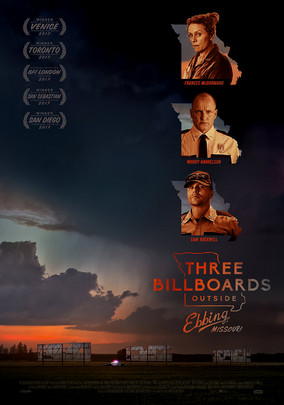
Frances McDormand takes control of Three Billboards Outside Ebbing, Missouri, and never lets go. In the Martin McDonagh-directed 2017 vehicle, she rivetingly portrays an angry Midwestern woman seeking justice.

The up-and-coming director has also created such films as  2008’s In Bruges and 2012’s Seven Psychopaths.

Similar to these films, Three Billboards Outside Ebbing, Missouri, is peppered with dark comedic moments and vile, bitter characters. The film is a measured success because it is not your standard Hollywood production and is quite left-of-center.

The action begins as we meet McDormand’s Mildred Hayes, sitting alone in her beat-up station wagon, brooding by the side of the road, gazing at three tattered billboards.

She is both pissed off and thoughtful as she formulates a plan to purchase a year’s worth of billboards, questioning the local police’s ineptitude in finding her daughter’s rapist and killer.

Woody Harrelson portrays the Ebbing police chief, Sheriff Bill Willoughby, and Sam Rockwell plays the racist and dim-whited officer Jason Dixon, both displeased with Mildred’s activities.

Other casting decisions in small yet essential roles are Lucas Hedges as Mildred’s adolescent and depressed son, Robbie, and John Hawke as her ex-husband, Charlie, who is dating an eighteen-year-old ditz.

Peter Dinklage is well-cast as James, a local car salesman who is an earnest dwarf with a crush on Mildred.

Supporting roles are prevalent throughout the film, and small-town locales like Jason’s mother and Red, the owner of the advertising agency who rents the billboards to Mildred, shape the experience.

The casting in Three Billboards Outside of Ebbing, Missouri, is a strong point of the film.

The town of Ebbing is portrayed as dreary, blue-collar, and racist, which is just perfect for setting the tone of the film.

I suspect residents of the Midwest or the southern United States of America may have some issues with character representations. Jason is written as both racist and not too smart, and he encompasses numerous characters in the film.

Enough cannot be said for Rockwell’s performance, transforming from a hated character during the film’s first two-thirds to suddenly almost becoming the hero towards the end.

Props are also deserved by Harrelson’s Chief Willoughby- bordering on hick and racist, he also has a heart and cares about Mildred’s predicament- when a shocking event occurs, he becomes an even richer character.

It is worth pointing out and impressive to me as a viewer that the three prominent black characters—Willoughby’s replacement, Abercrombie, Mildred’s best friend and co-worker, Denise, and a kindly billboard painter—are each written as intelligent and sensitive, a fact I found to perfectly balance the other less sympathetic characters.

In this way, a nasty film becomes more satisfying.

Three Billboards Outside of Ebbing, Missouri, though, belongs to McDormand. She is successful at portraying a myriad of different emotions. From her sly eye-winking as she crafts a good verbal assault on whoever crosses her path, to an emotional breakdown scene towards the end of the film, McDormand embodies the character with depth.

In a gorgeous scene, she has a sweet conversation with a peaceful deer grazing nearby, and for a second, she imagines it could be her dead daughter reincarnated. The scene richly counterbalances other violent and brutal scenes.

McDormand manages to look downright homely in some scenes and beautiful in others.

A film will indeed divide viewers. Some will champion the film’s crisp writing and witty dialogue. Still, others will undoubtedly be turned off by some of the character’s foul language and nasty nature.

I found Three Billboards Outside Ebbing, Missouri (2017), sarcastic, gritty, and well-told. It is a versatile affair rich with layers and brimming with enjoyment.

Oscar Nominations: 2 wins-Best Picture, Best Actress-Frances McDormand (won), Best Supporting Actor-Sam Rockwell (won), Woody Harrelson, Best Original Screenplay, Best Original Score, Best Film Editing

Independent Spirit Award Nominations: 2 wins-Best Female Lead-Frances McDormand (won), Best Supporting Make-Sam Rockwell (won), Best Screenplay

Lady Bird-2017

Lady Bird-2017

Director Greta Gerwig

Starring Saoirse Ronan, Laurie Metcalf

Scott’s Review #700

Reviewed November 28, 2017

Grade: A

Lady Bird is a 2017 independent film released by actor-turned-writer/director Greta Gerwig. It is a tremendous effort in her solo directorial debut.

No stranger to the indie syndicate herself, Gerwig puts her unique stamp on the film with a rich, female-centered perspective that works quite well and seeps with charm and wit.

It is worth noting that the story is semi-autobiographical, based on Gerwig’s life and her stormy dealings with her mother. The story is well-written, well-paced, and empathetic as the audience views a slice of life through the eyes of a restless yet kindly teenager on the cusp of womanhood.

Saoirse Ronan gives a bravura performance in the title role. Her given birth name is Christine, but she defiantly changes it to Lady Bird in a show of adolescent independence, and much to her parents, Marion and Larry’s (Laurie Metcalf and Tracy Letts ) chagrin.

Christine lives in suburban Sacramento, California, and yearns for a more exciting life in New York City, far from what she considers Dullsville, USA. Now, in her senior year, she is attending a Catholic high school.

Christine applies to college after college, hoping to escape her daily dilemmas. Christine’s best friend Julie and somewhat boyfriend Danny (Lucas Hedges) are along for the ride.

The period is 2002- shortly after 9/11.

The brightest moments in Lady Bird are the plentiful scenes between Christine and her mother. The chemistry between Ronan and Metcalf is terrific, and I genuinely buy them as a real mother/daughter duo, warts and all. They fight makeup, get on each other’s nerves, fight, cry, do makeup, etc.

I especially love their knock-down drag-outs, as each actress stands her ground while allowing the other room to shine—feeding off of each other.

My favorite Metcalf scene occurs while she is alone. Having gotten into a tiff with Christine and giving her the silent treatment while Christine flies to New York, Marion reconsiders as she melts into tears. At the same time, she drives away, regretting her decision and missing her daughter already.

Metcalf fills the scene with emotional layers as she does not speak- we watch in awe as her facial expressions tell everything.

Comparably, Ronan—likely to receive her third Oscar nomination at the ripe old age of twenty-three (Atonement, 1997, and Brooklyn, 2015, are the other nods)—successfully gives a layered performance as a teenage girl struggling with her identity and restless to see different worlds and get out of what she sees as a bland city.

Of Irish descent, Ronan is remarkable in her portrayal of a California girl- sometimes selfish, sometimes sarcastic, but always likable and empathetic.

The casting from top to bottom is terrific, as the supporting players lend added meat to the story. Christine’s best friend, Julie, played by young upstart Beanie Feldstein (Jonah Hill’s sister), is compelling as the lovable, chubby, and nerdy theater geek.

Letts is perfect as Christine’s father, depressed at losing his job in the tough economy and having to compete with young talent as he sees his career slip away.

Legendary actress Lois Smith adds heart to Sister Sarah Joan’s role- a by-the-book nun who is an incredible old chick.

Finally, Hedges, seemingly in every film from 2016 to 2017, is emotionally resounding as Danny, Christine’s troubled boyfriend, struggles with his sexuality.

Gerwig does it all with this film—she directs and writes, scripting laugh-out-loud moments and eliciting heartfelt emotion from her enchanted audience.

A hilarious scene occurs as Christine attends a dreary class assembly- an anti-abortion-themed one- by a woman who almost did not exist but for her mother’s decision not to have an abortion.

When a bored Christine icily points out that had the woman’s mother had the abortion, she would not be forced to sit through the assembly, it is a laugh-out-loud moment.

Lady Bird (2017), thanks to a fantastic writer and director and superlative casting, is a film that has its all heart, emotion, humor, and great acting.

The film is intelligently written and forces the audience to embrace its characters quite willingly. Gerwig carves a story, perhaps done many times before in film, but with a fresh and energetic feel.

Oscar Nominations: Best Picture, Best Director-Greta Gerwig, Best Actress-Saoirse Ronan, Best Supporting Actress-Laurie Metcalf, Best Original Screenplay

Independent Spirit Award Nominations: 1 win-Best Feature, Best Female Lead-Saoirse Ronan, Best Supporting Female-Laurie Metcalf, Best Screenplay (won)

Murder on the Orient Express-2017

Murder On The Orient Express-2017

Director Kenneth Branagh

Starring Kenneth Branagh, Johnny Depp, Michelle Pfeiffer

Scott’s Review #698

Reviewed November 25, 2017

Grade: B+

Kenneth Branagh leads and directs an all-star cast in a 2017 remake of the 1974 thriller Murder On The Orient Express.

The film is based on the famous 1934 Agatha Christie novel of the same name. With a ritzy cast that includes Judi Dench, Johnny Depp, Michelle Pfeiffer, Penelope Cruz, and Willem Defoe, top-notch acting is assured.

The cinematography is tremendous, and the film looks gorgeous from start to finish. The story is an effective, good, old-fashioned whodunit that will satisfy audiences.

We meet our hero, Hercule Poirot (Branagh), in Jerusalem. He has recently solved a murder mystery and is anticipating a good rest. A friend invites Poirot to travel back to his homeland of London via the lavish Orient Express.

Amid a group of thirteen strangers, all inhabiting the luxurious first-class accommodations, one of them is savagely murdered in the middle of the night as a blustery blizzard and subsequent avalanche derails the train atop mountainous terrain.

The strangers are trapped together with a murderer on the loose. Poirot must deduce who has committed the crime and why.

Murder On The Orient Express has all the trimmings for a good, solid murder mystery, and director Branagh sets all of these elements in motion with a good flow.

Paced quite nicely, each principal character is introduced intriguingly, so much so that each contains a measure of juicy intrigue. The film briefly describes each character as they board the grandiose train.

Judi Dench broods as rich and powerful Princess Dragomiroff oozing with jewels and a chip on her shoulder. Corrupt American businessman, Samuel Ratchett (Johnny Depp), is suave and shady as he seems destined to cause trouble.

Finally, Penelope Cruz gives her character, repressed Pilar Estravados, enough shame and guilt that we cannot think something may be off with her motivations.

The details of the characters are rich and compelling.

The playing field is set very high with actors such as Dench and Depp, and all actors play their parts with gusto.

An excellent experience with Murder On The Orient Express demonstrates the true nature of an ensemble cast—each character is relevant in his or her own way, regardless of screen time, and the casting works well.

The cast must have enjoyed working together on this lovely project. Each character is written so that the individual actor can sink his or her teeth into the role, and the wonderful reveal at the end of the film allows each a chance to shine, giving each part equal weight.

After the actual murder is committed, the story takes off as each character is interviewed by Poirot and given a glance of suspicion.

The first half of the film is just the buildup, and, at times, the story slightly lags, but this is fixed when the movie kicks into high gear midway through.

Sometimes, a climactic conclusion makes up for any slight lag in the film’s first portion, and Murder On The Orient Express is an excellent example of this.

My standouts are Branagh himself as Poirot and Pfeiffer as the sexy Caroline Hubbard, an American man-crazed older woman.  How wonderful to see Pfeiffer back in the game in 2017- with fantastic roles in Murder On The Orient Express and Mother!

She has the acting chops to pull off sex appeal, vulnerability, and toughness. Branagh’s acting never disappoints in any film he appears in, but seeing him in a leading role is fantastic, and he can carry a film with such a dynamic cast.

Branagh’s Poirot is classy, intelligent, and charismatic.

I adored the film’s conclusion and found the explanation and reasoning of the murderer or murderers quite effective and believable. The use of black-and-white flashback scenes perfectly balances the action aboard the grandiose yet slightly claustrophobic train scenes.

Furthermore, the explanation and motivations of the killer or killers make perfect sense, and much sympathy is evoked. The story is moralistic and not a black-and-white subject matter.

Murder On The Orient Express succeeds as a wonderfully shot and star-studded affair. The filming is grandiose, and the production values are high. It is a caper film with a mystique and class.

The film may not be a true masterpiece or necessarily remembered ten years from now, but what it does, it does well.

The original film from 1974 is a tad bit better, but as remakes go, the 2017 offering is quite good.

A rumored sequel, Death on the Nile, is planned.

Wonder Woman-2017

Wonder Woman-2017

Director Patty Jenkins

Starring Gal Gadot, Chris Pine

Scott’s Review #696

Reviewed November 20, 2017

Grade: B

Wonder Woman is a 2017 summer offering (and a mega success) firmly nestled in the comfort of the superhero adventure genre. It is unique because it is directed by a woman in a male-dominated field.

This must be championed, and the film has a palpable, female-empowering quality that I adore since it is still lacking in most mainstream movies.

However, at times, the film teeters too much around predictability and possesses many traditional superhero elements, such as good versus evil, climactic fight scenes, and stock villains.

But liberties must be taken, and overall, I saw the film as a female-driven work.

The fact that the masses celebrated Wonder Woman is terrific news.

Director Patty Jenkins, notable for having previously tackled weighty subject matter in films such as 2003’s Monster, is at the helm of this project and embodies her lead character with a good blend of earnestness, pizzazz, and heart.

“Wonder Woman” is a likable character, and newcomer Gal Gadot, who is unknown to me, is interesting casting. There are a myriad of young Hollywood “names” who could have championed the part—Scarlett Johansson or Jennifer Lawrence may have been palpable in the role.

Seemingly brave, Gadot takes command of the character and fills her with substance.

We meet “Princess Diana” as a young girl living on the protected Amazon island of Themyscira, inhabited only by females. It is around 1918, amid the harsh reality of World War I, though the members of the tribe know nothing about the war or any other current events—nor do any males live on the island.

Most women are trained warriors, presumably to protect the island from potential dangers. It is soon revealed that Diana has special powers, and after meeting a lost American soldier, Steve Trevor (Chris Pine), she embarks on a mission to save the world from the ravages of war.

Mixed in with the main story is a briefly mentioned ancient legend of Zeus’s son Ares plotting to return and destroy the Amazons, whom Zeus created.

My only issue with Wonder Woman as a whole is with the story.  The plot is not weak, but simply put- it is nestled in Hollywood predictability rather than containing surprises.

Despite deserved kudos for the characterization of Diana, the story ultimately turns ho-hum like many superhero films—peppered with the inevitable battle scenes.

The genre-specific “save the world” is played to the hilt as Diana takes it upon herself to stop the war, believing that people are not entirely bad. With this thought, Diana finally learns a valuable lesson about the complexities of human beings.

Wonder Woman contains a moralistic tale, but then there are more battle scenes.

The villains are mainly cartoon-like, which is what one might expect for a film of this kind.  Chemist Isabel Maru/Doctor Poison (Elena Anaya) dons a mask to hide a disfigured face (intentionally to test the poison gas), and General Erich Ludendorff (Danny Huston) plans to destroy all of humanity.

These characters are straight out of comic books and contain no redeeming qualities.

Contrary to where the main story may be a tad lacking, the romantic element is nicely done. The scenes involving Diana and Steve are sweet and romantic, making them fun to watch and a good balance against the action sequences.

Gadot and Pine have great chemistry, adding humor, so the scenes are not forced. As Diana sees Steve naked for the first time, a clever sexual flirtation develops, and a sly lesbian backstory is briefly hinted at.

Diana remarks with a smirk that men are only needed for procreation and that the women on the island “can satisfy themselves.” The duo also has a play of words about his “manhood.”

Due to Wonder Woman’s success, a sequel, again directed by Jenkins, is in the works. My hope is that because of the box office performance, the talented director can take many more liberties and push the envelope further, as she did with Monster.

Wonder Woman (2017) is a good film, so we hope the next installment will be great.

Battle of the Sexes-2017

Battle of the Sexes-2017

Director Jonathan Dayton, Valerie Faris

Starring Emma Stone, Steve Carell

Scott’s Review #691

Reviewed October 11, 2017

Grade: A

Battle of the Sexes (2017) is a film worth watching on many levels. Equal parts sports film, drama, and biography, it excels across all genres with exceptional acting and crowd-pleasing storytelling.

To boot, the film is a true story based not only on the very famous pro tennis match of 1973, termed the “Battle of the Sexes,” but also a story of the sexual identity conflict of one of the opponents in a time where being ones true self was not easy, especially for a public figure.

Emma Stone might have given her best portrayal of her young career as Billie Jean King, the talented tennis pro featured in the film.

She was kind and fair but a fierce proponent of women’s rights in the United States when feminism began taking shape and women and their male supporters demanded equal treatment.

Although initially uncertain whether Stone could pull the role off (not because of a lack of talent, but because the women seem so different), she truly shines as the tomboy athlete with shaggy, feathered locks and a toothy grin.

Equally worthy of praise is Steve Carell, who bolsters his film credo by tackling the role of King’s opponent and foe in the big match, Bobby Riggs.

Portrayed as a certifiable “jerk” and a sexist pig, Carell somehow pours the perfect amount of sympathy and likability into the part.

We witness scenes of Riggs’ playfulness with his young son and tender yet troubled relationship with his wife, Priscilla (Elisabeth Shue in a well-cast role), that never seem trite or contrived but rather quite genuine.

The acting in Battle of the Sexes is, across the board, good.

Sarah Silverman drips with confidence and humor as Gladys Heldman, founder of World Tennis magazine and leader of the troupe of female tennis players who parade around southern California seeking the same respect and pay as their male counterparts.

Bill Pullman makes the most of his one-dimensional role as Jack Kramer, a wealthy and male chauvinistic promoter, while the talented Andrea Riseborough is brilliant as Marilyn, Billie Jean’s bisexual, closeted lover—giving her role a blend of vulnerability and toughness.

The romantic scenes between Stone and Riseborough smolder with tenderness and heart as they forge ahead with their forbidden romance.

The film makes clear that a same-sex romance in those days, while accepted by those around them, would be met with shame and rejection by a large part of King’s legions of fans- this is a heartbreaking reality.

One of the most tear-jerking scenes comes at the end of the film when a victorious King is unable to acknowledge Marilyn. Her openly gay male dresser earnestly whispers to her that one day, she will be free to love who she truly loves.

The scene is poignant.

Directors Dayton and Faris carve a finale that is careful not to fall into the cliched territory. Given that Battle of the Sexes is a sports film, this is a real risk, as typically, these genre films teeter into the “good guys beat bad guys” fairy tale land.

While the film does champion King in the end, the moment is laced with good humor, drama, and sentimentality that does not seem forced but rather honest and real—I enjoyed the final act immensely.

As the film progressed, I found myself drawing parallels to the ever-dramatic and historic 2016 Presidential election—sure to have films made in years ahead- and King, in many ways, mirrors Hillary Clinton, while Riggs resembles Donald Trump in the sexist department.

The political and sports “Battles of the Sexes” warrants much analysis.

My point is a sad one. As much as I love the film, I was left with a cold feeling that forty-five years after the famous Billie Jean King versus Bobby Riggs match, male superiority, and chauvinism are alive and well in the United States—we still have so much progress to make.

Battle of the Sexes (2017) is a film with fantastic acting, stellar casting, passion, excitement, and a telling of a historical, true story.

The film contains all the elements of a compelling cinematic experience.

Mother!-2017

Mother! -2017

Director Darren Aronofsky

Starring Jennifer Lawrence, Javier Bardem, Ed Harris, Michelle Pfeiffer

Scott’s Review #687

Reviewed October 4, 2017

Grade: A

Mother! is an intense, disturbing, and brilliant 2017 work by acclaimed director Darren Aronofsky.

Having crafted left-of-center works such as 2000’s Requiem for a Dream, 2008’s The Wrestler, and 2010’s Black Swan, I shudder to think this film rivals the other in the insanity department.

With four principal characters portrayed by Hollywood mainstays, this film generated much buzz upon its release.

The film is thought-provoking and analytical, and we will discuss it after the conclusion. I appreciate the complex watches and Mother! succeeds in spades.

The film is set entirely within the confines of one enormous house in the middle of a vast field of land. Aronofsky never reveals the location, adding mystery to the already intriguing premise.

A young couple known only as Him (Javier Bardem) and Mother (Jennifer Lawrence) cheerfully enjoy married life together and seem very much in love. He is a renowned author suffering from writer’s block, and his mother fixed the house after it had burned long ago.

One day, a Man (Ed Harris) arrives looking for a place to stay. While Him is delighted by the visitor and encourages Man to stay, the mother is not as pleased.

When Man’s wife, Woman (Michelle Pfeiffer) arrives, the houseguests turn Him and mother’s lives upside down. This is merely the beginning of a complex puzzle.

As the plot unfolds, Mother! is oozing with one bizarre event after the other. Mother witnesses unsettling images such as a beating heart within the walls and a bloodstain on the floor that will not go away.

When relatives of a Man and a Woman overtake the house, and a violent event occurs, things go from dark to downright chaotic.

Giving too many plot points away would ruin the element of surprise, making Mother! a difficult film to review. The film is polarizing and mesmerizing, and each of the principal characters’ motivations can be analyzed and questioned.

Why do he and his mother react differently to the visitors? What manifests their resentment towards the mother?

Each actor gives a compelling turn, and Aronofsky admits that the mother’s character is the one he most relates to. Logically, one might assume that Bardem’s Him might receive that honor since the character is a famous writer. How strange, and this revelation by the director will only result in more character analysis.

How wonderful to see Michelle Pfeifer back in the forefront of a Hollywood film—it seems eons have passed since we last saw her grace the silver screen, and she is back with a vengeance.

Her bitchy portrayal is purely delicious, and she encompasses Woman with the perfect amount of venom, toughness, and mystery. As she icily quizzes mother about her intentions of starting a family, she slowly immerses herself in mother’s life without missing a beat.

The film is unconventional and layered with symbolism and differing interpretations. Is Aronofsky’s message biblical? Is it political? Or could it reference the obsessions everyday folk have with celebrities?

After much pondering, all three possibilities came to mind. The biblical message seems the most solid and plausible explanation, but with Aronofsky films, the pleasure is in the analysis.

The film’s final act is particularly macabre, as the action has exclusively focused on the four principal characters until this point, and the setting is mainly bright.

A slow burn, if you will, suddenly, all hell breaks loose as mobs, blood, fire, death, and darkness take over. The brutality and cannibalism involved will churn anyone’s stomach.

Quickly note the lurid closeups of Jennifer Lawrence’s face during most scenes. Indeed, the camera loves her, but more is happening here. Is the intention to make the viewer focus more on her character or to sympathize more with her character?

Mother! has stirred controversy among film-goers. Some have ravished its elements and themes, while others have reviled and revolted against it.

Time will tell if Mother! (2017) holds up well, but my hope and guess would be that it will become a film studied in film schools everywhere.

My Cousin Rachel-2017

My Cousin Rachel-2017

Director Roger Michell

Starring Rachel Weisz, Sam Claflin

Scott’s Review #685

Reviewed September 25, 2017

Grade: B-

My Cousin Rachel (2017) has the advantage of providing wonderful, scenic locales in Florence, Italy, and lovely scenes filmed around England, which make the film a joy to watch from a cinematic perspective.

The acting, especially by seasoned veteran Rachel Weisz,  is also stellar and noteworthy.

The plot, however, is a big negative to the film as My Cousin Rachel suffers from weak dramatic storytelling, an anti-climactic conclusion, and missed opportunities with the plot.

The film is based on Daphne du Maurier’s 1951 novel of the same name. I have yet to read the book, but I am certain the film does it no justice. The overall tone of the film contains little mystique, to say nothing of lacking any sort of haunting elements as one might expect to receive with titillating anticipation.

The story begins well enough as, through narration, we learn that a young man named Philip, having been orphaned as a child and raised by his older cousin, Ambrose, returns home from school to his childhood home in lavish Cornwall.

Through a letter, he learns that Ambrose has married his widowed cousin, Rachel, and has moved to Florence. He also cryptically writes that he is in fear for his life and suspects Rachel of poisoning him.

The main plot starts after Philip finally meets Rachel and astonishingly falls madly in love with her.

To be fair, the film is shot beautifully and glimmers with interesting camera angles. In a few hallucination scenes, the filmmaker uses a blurry, almost magical film-making style.

The aforementioned locales give My Cousin Rachel a sophisticated, graceful look. On the negative side of this filming evaluation, the lighting is much too bright, appearing more like an episode of the PBS series Downton Abbey rather than the mysterious, cryptic film that My Cousin Rachel is promoted as.

The best thing about the film is the outstanding acting performance by Rachel Weisz as the title character, Rachel. While not played quite as mysterious, Weisz envelopes her character with a passionate, earnest quality that sells the character as enchanting.

With a winning smile and a polite, dutiful manner, Rachel is tough to imagine as a murderess, which helps the lackluster plot just a bit. She happily makes a “special” tea or performs other household tasks with cheerful, uniform pizzazz.

Without Weisz in the role, I shudder to think how bleak the result might have been.

Early on in the story, Philip’s wealthy family, the Kendalls, are surprised that Ambrose married, as he was never known to be in or enjoy the company of women. It also must be noted that in flashbacks, Ambrose is portrayed as somewhat effeminate or, at most, less than manly.

This seems a blatant attempt to question the character’s sexuality, yet the film chooses never to pursue this topic again. I know how the novel handled this plot item, but it seems like a wasted opportunity.

Chemistry, or lack thereof, is also an issue with My Cousin Rachel. No connection between Weisz and Claflin exists throughout, nor is there any between either character and Philip’s intended love interest, Louise Kendall, played by Holliday Grainger.

The actress is acceptable in a role given little meat or substance.

Uneven at best, My Cousin Rachel is a beautiful-looking period piece, but it is mostly just mediocre filmmaking. The ending is quite sudden and definitively answers none of the main plot questions.

Released in 2017, the film will likely be forgotten by 2018.