Category Archives: Thriller

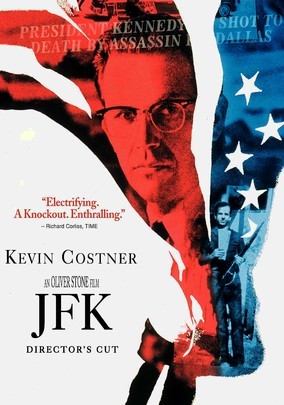
JFK-1991

JFK-1991

Director Oliver Stone

Starring Kevin Costner

Scott’s Review #536

60031474

Reviewed December 4, 2016

Grade: B+

JFK (1991) is a very well-made film. Still, it must be taken with a grain of salt, as the director, Oliver Stone, reportedly took many liberties, and the film is open to interpretation about what is true and what is embellished.

At three hours and twenty-six minutes, the film is epic in proportion.

The film recounts the events leading up to the assassination of President John F. Kennedy through the eyes of a former District Attorney from New Orleans, James Garrison, played by Kevin Costner.

Garrison filed charges against New Orleans businessman, Clay Shaw (Tommy Lee Jones), and in his view, was in cahoots with Lee Harvey Oswald to kill the president.

Stone suggested that President Lyndon B. Johnson was involved in the coup, which led to considerable controversy.

The plot is quite intricate and at times tough to follow, but the editing alone is impressive. I loved the authentic, real-life footage that Stone immerses throughout the film.

As we know, the assassination in 1963 was tragic and fraught with controversy that still abounds today.

Stone was wise to make a film of this caliber despite the lack of clarity about what is true and what is not.

I guess we may never know.

Oscar Nominations: 2 wins-Best Picture, Best Director-Oliver Stone, Best Supporting Actor-Tommy Lee Jones, Best Screenplay Based on Material Previously Produced or Published, Best Original Score, Best Sound, Best Cinematography (won), Best Film Editing (won)

Salt-2010

Salt-2010

Director Phillip Noyce

Starring Angelina Jolie

Scott’s Review #522

70118402

Reviewed November 20, 2016

Grade: B+

Salt (2010) is a very good, fast-paced, political thriller starring Angelina Jolie as a woman accused of being a Russian sleeper agent, who must go on the run to clear her name, all the while being chased by officials attempting to accost her.

The film offers nothing that has not been seen countless times before in movies like this, but seeing Jolie in a role typically played by a male (the role was originally written for Tom Cruise), is cool and makes the film unique in itself.

She is great in the role.

There are some twists and surprises along the way that keep the viewer on edge- numerous action and car chase scenes abound and will keep the action flick viewer quite pleased.

It is quite fast-paced and very big budget.

On the downside, I couldn’t help but think are they making movies about the United States vs. Russia again?

They are, but I could not help but enjoy it for what it was.

Oscar Nominations: Best Sound Mixing

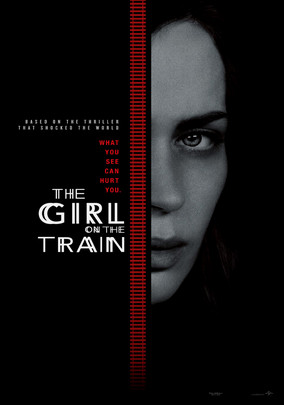
The Girl on the Train-2016

The Girl on the Train-2016

Director Tate Taylor

Starring Emily Blunt, Justin Theroux

Scott’s Review #493

80105068

Reviewed October 12, 2016

Grade: B+

The blockbuster was the apparent must-see film of the fall of 2016. Almost everyone flocked to see it, and I happily saw it shortly after its release.

While containing some flaws, The Girl on a Train (2016) is an excellent thriller and companion to Gone Girl (2014). It is similar in style, tone, and, in a way, story.

A whodunit with psychological, almost Hitchcockian elements, it navigates twists and turns to an unfortunate, disappointing finale.

Still, it is a more than adequate offering that does not bore.

Based on the hit novel of the same name, which I understand is superior to the film.

First and foremost, how gorgeous was the scenic eye candy of suburban New York City, where the train chugs along the Hudson River in breathtaking beauty?

The film’s point is that affluent houses are nestled along the river banks, hidden with secrets. Beautiful neighborhoods are often riddled with affairs, drama, and backstabbing.

The train’s setting and element—peering through windows to witness smoldering events—were perfect.

The film’s standout is Emily Blunt, who gives a compelling, sometimes heartbreaking turn as a boozy, jobless, young woman fraught with heartbreak after heartbreak.

She finds solace on the Metro-North train as she peers into a particular well-to-do house, making up stories about a young woman she re-names daily, usually inebriated.

Though The Girl on the Train is not the typical “Oscar-type film,” I’d argue that a potential nomination is warranted for Blunt, who is brilliant on her emotional roller coaster.

Rachel fantasizes about being the stranger’s friend, revealing her desperation. We quickly learn about her life circumstances and feel empathy.

I anticipated an experience like Hitchcock’s classic Rear Window (1954), in which Rachel notices a crime and somehow becomes involved. This is partly true, but it is also different.

I was, however, treated to a film that never lags or waivers, and the action is plenty, not in bombs or car-chase way, but instead a circulating array of plot twists and emotions.

How wonderful to see Allison Janney, Lisa Kudrow, and Justin Theroux in a big-budget, mainstream film rather than independent small films for a change.

All three knock the material they are given out of the park, and kudos to the writers for making Kudrow, in little more than a cameo, a significant part of the grand reveal.

Arguably, Janney’s character of Detective Riley is the weakest written and seems to change motivations depending on the story shift. This is perplexing and too plot-driven.

In a way, the same might be said for Theroux’s character of Tom Watson, but, alas, it is a thriller, which sometimes happens in this genre.

Without giving much away, the conclusion to the film is unsatisfactory. We are given an ending wrapped in a neat, tidy bow, which contradicts the rest of the film.

The film is confusing, dream-like, and muddled—in a good way. Rachel’s thoughts disturb us, and we wonder what reality is. The climax is too clear, and instead of leaving much to the imagination, we are fed a linear, straightforward story ending, almost geared toward a Hallmark television movie (gag).

Wise would have been to write Rachel as still vague about her surroundings, but this does not occur.

The Girl on the Train (2016) will not redefine cinema or go down in history as fine art, but it is not intended to be the type of film designed to keep you on the edge of your seat and does so.

The story is above average and slick, but Blunt is worth heaps of praise and is head and shoulders above the rest of the film and the cast, which is no small feat considering the talent involved.

Great acting job, but the writing could have been slightly better.

Mother-2009

Mother-2009

Director Bong Joon-ho

Starring Hye-Ja Kim

Scott’s Review #480

70118372

Reviewed September 11, 2016

Grade: A

Mother (2009) is brilliant! I loved it and implored people to give the film a chance.

Years later, just desserts would be served. Director, Bong Joon-ho would win the Oscar for Parasite (2019).

It is a South Korean film- made in 2009 that almost nobody has heard of-let alone seen, but it is fantastic. It’s a shame that it did not get more notice, but sadly, some of the best films do not.

The plot revolves around a mysterious murder that occurs in a small South Korean village and a poor village woman’s mission to exonerate her mentally challenged son, who is convicted of the crime in a botched case.

The plot twists and turns and is compelling beyond belief. The real crux of the film is what lengths a mother will take to protect her son, a question many viewers can ask themselves.

Why Hye-Ja Kim, who plays the title character was not nominated for an Oscar for this role is beyond me and quite a shame. She is a goldmine and gives a terrific, memorable performance.

The movie is stylistic and has moments that resemble Hitchcock and David Lynch combined. One does not know what will transpire from scene to scene and that is the beauty of the film- besides the wonderful acting.

Once the film ends viewers will feel compelled to discuss, which is an accomplished feat.

I highly recommend it.

Independent Spirit Award Nominations: Best Foreign Film

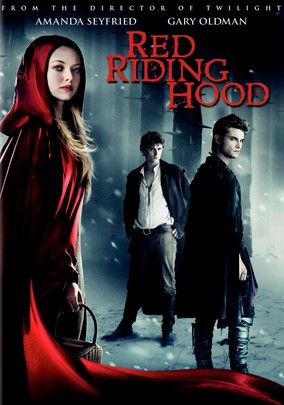
Red Riding Hood-2011

Red Riding Hood-2011

Director Catherine Hardwicke

Starring Amanda Seyfried, Gary Oldman, Julie Christie

Scott’s Review #477

70167073

Reviewed September 10, 2016

Grade: B-

I was hesitant to see Red Riding Hood (2011) in the theater because it seemed like more of a rental to me.

While it is far from high art, it is an above-mediocre thriller riding the current popularity of the vampire-lite genre.

It tells the tale of a teenage girl living in a medieval village that is being attacked by a mysterious wolf. The wolf, however, is human at times.

The fact that it stars young actors known in current American cinema, it is unsurprising that a love story is written.

I thought the movie was decent, but not great. The whodunit is good as we wonder who the wolf in disguise is, and the cinematography is excellent.

I bought the period’s authenticity.

Being treated to Julie Christie in a current film is always a treat, but at times the movie is quite sappy and Twilight-ish. It is directed by the same director Catherine Hardwicke so this is not surprising.

Overall, Red Riding Hood (2011) is not a bad watch.

The Purge: Anarchy-2014

The Purge: Anarchy-2014

Director James DeMonaco

Starring Frank Grillo

Scott’s Review #466

70299747

Reviewed August 16, 2016

Grade: B

As a fan of the original The Purge (2013), a creative, fresh modern horror film with a distinct message, I did not expect the sequel to match expectations nor to be as powerful as the original.

I was right on both counts.

As a stand-alone film, though, it is a decent flick, having almost nothing to do with the original, save for the same premise.

I hesitate to call The Purge: Anarchy a horror film as it contains little blood, gore, or true horror elements- it is much more of a thriller.

The premise is simple- the Government sanctioned holiday of March 21st has come around again, meaning twelve hours of sanctioned mayhem, where murder, rape, and assault are all allowed without punishment to the criminals, and no police or rescue teams are available.

The period is 2023, though I am unsure why this is relevant since nothing distinguishes the year from the current year, 2016, in the story.

Several protagonists fearfully hunker down for a night of safety in their dwellings, but circumstances force them onto the streets.

A mother and her teen daughter, a young couple, and a vigilante are the characters. The backstories of these folks are not all that important or relevant to the film. They form a group and bond with each other.

Whereas the original kept the audience in one house, The Purge: Anarchy does anything but. As the group commences, the streets of Los Angeles serve as the backdrop for the action as they endlessly traverse the dark and mainly deserted streets, hiding in garbage dumpsters, tunnels, and other sources of protection.

The vigilante, who is revealed to be an off-duty police officer, has the motivation, as his son was killed one year ago today, not as a result of the Purge, but by a drunk driver. The police officer seeks revenge via the freedom the annual Purge allows him.

The film is purely plot-driven and little character development exists, however, the group is mostly likable, especially the mother and daughter.

Interestingly, the filmmakers feature multiple races and ethnic groups, giving it a dose of diversity, which gets big kudos from me.

I could not help but draw comparisons to the popular television series The Walking Dead (2010-2022), at several points of the film, as the group, brandishing weapons, continuously encounters thugs and enemies of every kind as they wander the streets.

A creative twist to The Purge: Anarchy involves a group of Anti-Purgers, all black, who have a following of people supporting them against the government’s protocol of allowing an annual purging.

It is made clear that the main victims of the purge holiday are the poor and the sick.

Correlating with this, our group finds themselves kidnapped and taken to a lavish party where wealthy folks arrange a night of champagne and hunting as the victims are lured to their deaths as the onlookers cheer and feast in celebration.

Think of an Oscar party with gruesome results.

The Purge: Anarchy (2014) is a fun, Saturday night popcorn film worth pondering. Would society succumb to a fetish such as the annual purge if the government condoned it?

Undoubtedly the film must have been influenced by the popularity of The Hunger Games (2012-2023) in tone and theme.

It is a decent film, no more no less.

Theeb-2015

Theeb-2015

Director Naji Abu Nowar

Starring Jacir Eid

Scott’s Review #459

80017216

Reviewed August 4, 2016

Grade: B+

An Arabic-spoken foreign language film that received a 2015 nomination for Best Foreign Language Film, Theeb is an old-world film set in 1916 during the Ottoman Empire.

The event is  World War I as an Englishman battles Arabs and nobody can be trusted.

The film is largely shot in the smoldering Arabian desert (in Jordan) and told from the perspective of a child named Theeb.

Despite the slow pace, the moments of action are even more important. It has a grainy quality to it that makes it somewhat of a bizarre Arabian western.

Theeb lives in a small village run by his father and older brother, Hussein. One night a mysterious Arab man and an Englishman arrive seeking a guide to take them to a Roman well, close to the Ottoman railway.

The mission is feared a dangerous one, as the trail they must take is riddled with bandits, not to mention, the Englishman owns a box containing gold, making him a vulnerable target.

Theeb, left behind because he is so young, follows and joins them, much to the group’s chagrin. Predictably, trouble ensues and Theeb must fend for himself.

What I enjoyed about this film is its unpredictability in what happens after the group faces danger. Sure, when the foursome sets out on a trail led by camels, we know bad stuff will happen.

But, finally left to his own devices, I was intrigued as to how Theeb would face his new challenges, having up until now been protected by his family.

In ways, Theeb reminded me of another adventure film, Life Of Pi (2012), though Theeb is much darker. Both feature a young, non-American male of Indian or Middle Eastern background, forced to survive largely alone.

The John Boorman classic, Deliverance (1972), also came to mind during one dark scene, as Theeb and Hussein cower amongst rocky caves while their devilish pursuers taunt and whistle at them mockingly from below.

The hunter vs. victim component is front and center and it is killed or be killed.

Later, an interesting bond develops between Theeb and one of the raiders (Hassan) as both mistrust each other. Will they forge the bond or will one betray the other?

The answer to this question emerges during the final moments and the buildup is compelling. I became aware of the father and son dynamic mixed in with the friend and enemy.

When Theeb treats Hassan’s wounds there is tenderness on the exterior, but is Theeb fully kind to Hassan?

A slight negative for me existed in that I did not buy that the period was the early Twentieth century, but rather, everyone looked and acted so modern as if they were merely dressed up for their parts….as they were. Perhaps it had to do with the hairstyles or mannerisms.

Shot entirely in Wadi Rum, Jordan, a gorgeous part of the world, the desert and big sky lend much to the ambiance this creates. It was almost like being in the old, wild west and an ode to old Western films, only set in the Arabic world.

The entire cast, save for the Englishman, are non-actors, an amazing achievement, and a measure that creates an obvious level of realism that rehearsed actors cannot always bring to the table.

Originally meant to be a short film only, Theeb emerged as a full-length feature and I am glad it did, as it has enough meat to warrant a longer duration.

The film is a cinematic wonder with a psychological edge.

Oscar Nominations: Best Foreign Language Film

The Tall Man-2012

The Tall Man-2012

Director Pascal Laugier

Starring Jessica Biel

Scott’s Review #457

70242985

Reviewed July 30, 2016

Grade: B-

The Tall Man (2012) is a cross between a horror/thriller/message movie that stars Jessica Biel as a nurse named Julia Denning, who lives in rural Washington. The town children begin disappearing and are abducted by a mysterious creature named “The Tall Man”.

Is he a legend or a reality? When Julia’s son is the next victim, she sets out to solve the mystery.

The aging mining town of Cold Rock is the setting for the events of the film and it is perfect, containing all the necessary elements: the remote, secluded location, and the various creepy townspeople.

Additionally, The Tall Man has an interesting premise, and the ending is somewhat of a surprise, though rushed, so it’s an interesting experience.

The plot is so far-fetched and convoluted at times that it is tough to follow and take seriously.

I am not a fan of Jessica Biel’s and I find her acting to be subpar, but she is adequate in her starring turn and gives a compelling performance as a haggard mom.

Given the actress’s good looks, I didn’t buy her as a blue-collar, small-town type.

Throughout the film, I found something missing, but could not put my finger on it.

A decent thriller, but nothing more.

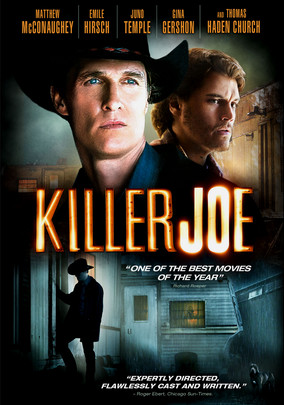
Killer Joe-2011

Killer Joe-2011

Director William Friedkin

Starring Matthew McConaughey, Emile Hirsch

Scott’s Review #450

70209632

Reviewed July 14, 2016

Grade: A-

Killer Joe (2011) is a must-see for any fan of director Quentin Tarantino because this small, independent, gem of a feature is worth checking out.

Tarantino’s films influence the film in style, characters, and violence. The violence mixed with humor, wit, and great writing is stamped on the film.

Surprisingly, given the influence of another director, Killer Joe is directed by William Friedkin, who is a very acclaimed filmmaker in his own right. Classics such as The Exorcist (1973) and The French Connection (1971) were created by this talent.

Matthew McConaughey owns Killer Joe and he has thankfully graduated from silly, fluffy, romantic comedies to smart, delicious roles in independent films of late. He has come to be a respected Hollywood actor.

His lengthy nude scene is daring for such an A-list actor.

The film is satirical, without being too campy, and the setting of a suffocating, trailer-trash, Texas town is extremely well done.

I loved the violent and gruesome fried chicken dinner table scene the best.

I especially liked the overall food references throughout the film which adds even more macabre comedy to this dark (on the surface) film.

Independent Spirit Award Nominations: Best Male Lead-Matthew McConaughey

House at the End of the Street-2012

House at the End of the Street-2012

Director Mark Tonderai

Starring Jennifer Lawrence, Elisabeth Shue

Scott’s Review #438

70215438

Reviewed July 2, 2016

Grade: B

House at the End of the Street (2012) is a perfect example of a horror/thriller film that has excellent effects and great potential, but the storytelling brings it down.

It is also a film starring Jennifer Lawrence before she was the Oscar-winning star. Her performance is an adequate effort, and she does what she can in the lead role.

Lawrence is likable in this role and is the clear hero of the film.

The film itself looks great. It has all of the necessary horror elements: a creepy house in the woods, darkness, and sudden scares.

The buildup during the first half of the movie is very interesting and the audience is not quite sure what’s to come and what mysteries and secrets lurk in the title house.

During the final thirty minutes, however, when the twist is revealed, the film becomes predictable, by the numbers, and disappoints at the end.

The story becomes so convoluted it hardly matters anymore.

The first half is great but the second half fails.

I was happy to see Elisabeth Shue in this movie, as she has been out of the limelight for years, her character, though,  is quite one-dimensional.

Film summary- great-looking horror film, with mediocre writing.

Compliance-2012

Compliance-2012

Director Craig Zobel

Starring Dreama Walker, Ann Dowd

Scott’s Review #435

70229062

Reviewed June 30, 2016

Grade: A

Compliance (2012) is a ninety-minute riveting experience that will leave you thinking, talking, and feeling for days or weeks after viewing it.

The film is that intense.

The fact that it is based on true events is even more startling. It is, at times, quite disturbing and unsettling to watch, and if one likes their movies happy and wrapped in a bow, this will not be for you, but for film fans who truly want an emotional experience check it out.

At times I wanted to scream at the characters, look away from the screen, and shake my head in disbelief.

A truly riveting experience.

Major props to actress Ann Dowd, who does a bang-up job as the restaurant manager, and main character. What an amazing talent this actress is.

My range of emotions toward this character (sympathy, confusion, anger, disbelief) blew me away.

Compliance (2012) is one of the best modern films of late.

Independent Spirit Award Nominations: Best Supporting Female-Ann Dowd

Ex Machina-2015

Ex Machina-2015

Director Alex Garland

Starring Domhnall Gleeson, Alicia Vikander, Oscar Isaac

Scott’s Review #410

80023689

Reviewed June 17, 2016

Grade: B+

Ex Machina (2015) reminds me of another recent science-fiction film, Her (2013), with more of a female empowerment edge. The latter is more of a romantic drama with undercurrents of love.

In contrast, Ex Machina has a cynical tone and elements of imprisonment and psychosis, even narcissism.

The film features excellent visual effects and a futuristic mystique, making it a successful treatment.

Directed by first-timer Alex Garland, who could very well be a director to watch rise the ranks with subsequent projects.

Young, fresh-faced computer programmer, Caleb Smith (Domhnall Gleeson), wins a week-long trip to remote Alaska, to spend it with his mysterious boss, Nathan Bateman (Oscar Isaac), the CEO of a software company.

Caleb must arrive at the luxurious, sprawling estate via helicopter as it is in a deserted area of the world and exists on mile after mile of the gorgeous landscape.

Nathan, played by Oscar Isaac, is both charismatic and creepy. He lives alone save for a beautiful Asian servant named Kyoko, who speaks no English, and a female robot named Ava (played by rising star Alicia Vikander).

Caleb’s assigned task is to study Ava and determine whether he can relate to her as a human while knowing she is a robot. It is soon revealed that Nathan plans to reprogram Ava, thereby killing her. Caleb schemes to rescue Ava, but is all that it seems?

With a cast of only four principals, it is not difficult to assess each character and their relations with each other. Caleb is the least complex of the four or rather, the one with motivations readily apparent.

The others are shrouded in mystery. Caleb expects a fun getaway but instead finds himself amid experimentation. Is Nathan’s desire to perform psychological tests on Ava, by way of Caleb, genuine?

The audience can sense immediately that there is something off about Nathan. Merely in his thirties, how could he amass such financial success so soon?

Why is he, a servant, and a robot the only inhabitants? Why does the helicopter pilot refuse to venture further than the drop-off point?

Some of these questions are answered, some remain unanswered. It is part of what makes the film mysterious and complex. Could Ava be the one doing her share of experimentation or manipulation?

Alicia Vikander deserves much praise for her role as Ava and some would argue that the talented young actress should have won the Best Supporting Actress trophy for this role instead of for The Danish Girl (2015).

I’m not sure I would leap to the same conclusion, but she does amass a ton of subdued emotion as Ava. She is complex and profound. She longs for exposure to the outside world and would love to cross a crowded street to see all the faces and different types of people.

Like Nathan, there is also something not right about Ava.

Is she calculating or simply soulful? But how can she be, she is a robot.

I compared her to another famous film robot/computer- HAL from 2001: A Space Odyssey (1968).

Along with Vikander, Isaac steals the film in a role that mixes creep with genius. He sits around his estate in comfy clothes a blue-collar man might wear drinking beer and studying Ava. He has sexual relations with his servant and she is expressionless.

He does not treat her well so we do not root for his character. At the same time, his character is tough to read. Is he experimenting on Ava or Caleb?

Visually, Ex Machina has a sleek blend of modern, crisp CGI, not at all usurping the story. There is also a scene of bloodletting that chills as much as any good horror film would.

Garland was heavily influenced by 2001: A Space Odyssey and Altered States (1980) and made the film with as little budget as possible and without outside influences that might change his vision.

I commend this and wish more filmmakers would follow suit.

Ex Machina (2015), while perhaps not perfect, could be a blueprint for what is to come from this young director.

Oscar Nominations: 1 win-Best Original Screenplay, Best Visual Effects (won)

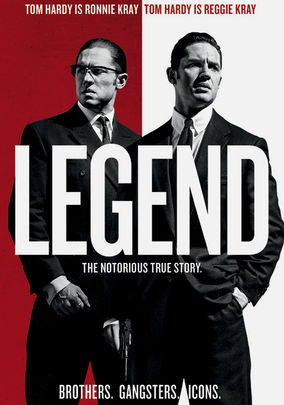
Legend-2015

Legend-2015

Director Brian Helgeland

Starring Tom Hardy

Scott’s Review #405

80057599

Reviewed May 24, 2016

Grade: B+

Tom Hardy is one of my favorite modern film actors (he should have won the 2015 Oscar for his riveting performance in The Revenant, in my humble opinion) and in Legend (2015) fans are treated to a dual role by the handsome Brit.

Hardy portrays Reggie and Ronald Kray, two of London’s most feared and brutal gangsters.

The film belongs to Hardy in every way, shape, and form, the locales of London are fantastic, and more than one scene is jaw-dropping violent, but the film meanders quite a bit and the vocals of Ron Kray are quite difficult to understand.

Still, impressive effort as a whole.

The time is late 1950s London. Reggie Kray, the more mainstream of the Kray brothers, is a feared member of the organized crime community.  He is coddled by his mother and can do no wrong in her eyes. This makes any relationships difficult as his mum disapproves of his mates.

He falls in love with Frances Shea, a young woman who narrates most of the film, so it is told from an outsider’s perspective. Reggie’s brother Ron has recently been released from a mental hospital and if off of his medications, is certifiably crazy, and very volatile.

He is gay and makes no bones about it.

Ron and Reggie have a love/hate relationship, and this dynamic is the most interesting aspect.

Thanks to Hardy, as the writing is not Legend’s strongest suit, we see two very different characters, even though they look alike. In the myriad of scenes shared between the brothers, it appears that two actors are playing the roles which is to Hardy’s credit.

An important scene emphasizes the relationship between the two. When a rival dares to mention Reggie’s wife’s name disparagingly, he points a gun and fires at the man’s head.

Fortunately, the gun is not loaded, so the audience breathes a sigh of relief. Yet, a worse fate awaits the victim. After the deed is done, Reggie whispers in Ron’s ear that he killed the man “because I can’t kill you”.

This means Reggie would kill Ron if he could- shocking since they are brothers. To add to this, it is implied that he would kill his brother with the same savageness as his victim.

This makes the audience ponder.

Impressive is Ron’s sexuality, especially since he is not written stereotypically. He is brutal, masculine, and hardcore. The fact that Ron Kray was a real figure is important to note. His entourage of boyfriends follows him around in dedication.

Who can blame them as his charisma oozes- think of an unstable James Bond.

The twin’s relationship is the best part of the film, but as a mob film, Legend meanders quite a bit, so much so that it becomes tough to identify what the point is, if not for Hardy.

Save for Frances, none of the supporting characters are written with interest and are all rather forgettable.

The wonderful Chazz Palminteri is wasted in the role of Angelo Bruno, head of a Philadelphia crime family and friend of the Krays. There is little meaning or interest in his role.

A mediocre story, but with leading characters with depth, makes Legend (2015) an interesting film that flies under the radar and receives little notice.

Hopefully, if nothing else, it continues the success that Tom Hardy is currently achieving in modern film.

Violette Noziere-1978

Violette Noziere-1978

Director Claude Chabrol

Starring Isabelle Huppert, Stéphane Audran, Jean Carmet

Scott’s Review #378

Reviewed February 16, 2016

Grade: B+

Another in the legion of thrilling and mysterious films by French director Claude Chabrol, Violette Nozière (1978) tells the true story of an eighteen-year-old Parisian girl who plots her parents’ murder in 1930s France.

The fact that the tale is true to life makes it even more horrific and mesmerizing.

It is beautifully shot, though the action largely takes place in interior settings.

This film is a cerebral experience.

The film is classy in every way- like French films typically are, and Isabelle Huppert (Violette) takes center stage. She is gorgeous and interesting-looking (reminiscent of a young Jennifer Jason Leigh) in the lead role.

Violette appears to be a typical French teen, but harbors a dark secret, and something always seems glum about the character. She works nights as a prostitute accosting wealthy men.

When she meets handsome but spendthrift Jean Francois, a young man she fancies, she becomes his main source of income and slowly begins to plot the murder of her low-income yet stable parents in an attempt to inherit their apparent savings.

The story is somewhat murky as Violette’s version of events (mainly in the past and concerning her father) is accusatory. She insists that her father sexually abused her as a child, but is this in her fantasy world, or did this happen?

One never knows.

Making the film compelling is that Violette’s parents are quite likable. Struggling to make ends meet and provide a quality of life, they prepare home-cooked meals, enjoy life, and appear to be decent people.

What is the reality?

Later, we witness a rivalry between Violette and her mother. In one scene, we see Violette’s father bouncing his daughter on his knee while the mother looks on, filled with hatred.

When she attempts to seduce her husband, she looks on amused. Is this solely in Violette’s mind?

Chabrol, an admirer of Alfred Hitchcock, keeps the suspense going throughout the film, but the heart of the film belongs to Huppert.

From the start of the film, amid meaningless banter with her more refined girlfriend, the audience can tell there is something amiss about Violette. She seems lonely, like a lost little girl yearning for excitement, her eyes staring into the distance.

Her true colors are slowly exposed, yet Chabrol never makes her all-out crazy. Violette always has a cool, calm demeanor, and that is why the film succeeds.

For fans of Chabrol, or film fans eager for a foreign-language treat, Violette Nozière (1978) is a rare find, a welcome addition to the growing number of his films I have watched with interest and heartily enjoyed.

The mystique, the beauty of the artistry, and the twists and turns are top-notch.

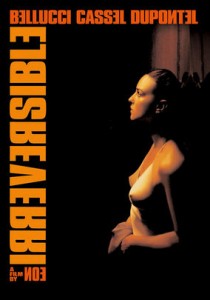
Irréversible-2002

Irréversible-2002

Director Gaspar Noé

Starring Monica Bellucci, Vincent Cassel

Top 10 Most Disturbing Films #4

Scott’s Review #375
60026141

Reviewed February 7, 2016

Grade: C+

As I ponder my review of Irréversible,  a 2002 French thriller and “art film”, I am attempting (as I always do) to look at the film critically, from a story and a technical standpoint, as well as a myriad of other aspects that make up a film.

This is admittedly a toughie.

On the surface, I despised the film wholeheartedly (more on that later), but from a critical standpoint, I found characteristics to admire and give credit to.

One thing is for certain- I never want to see this film again.

The story is told in a non-linear style, begins after the story, and works backward, which I credit the film for, giving it a unique storytelling experience, cleverly done.

Two Parisian friends, Marcus and Pierre, go on a rampage after Marcus’s girlfriend is brutally raped and beaten.

In panic mode, they learn the name of the attacker (Le Tenia) and go to a gay BDSM club aptly named “The Rectum”, a place the attacker requests, where they fervently search for him all the while beating club-goers and cause havoc.

Since the story is told in reverse, the audience is initially in a state of confusion at the events transpiring, and the jagged, shaky camera work, a very creative technique, only adds to the chaos.

We only know that two maniacs are running rampant, destroying everything in their path.

Slowly, we realize what their motivation is as we work backward.

We are introduced to Alex, a beautiful young woman- in the early stages of pregnancy, who is Marcus’s steady, but used to date, Pierre. They are all very good friends.

We see the romance between Marcus and Alex, and, working even further backward, we see Alex sitting alone in a park, reading a novel, and enjoying a bright, pleasant day in the park.

This peaceful closing scene contrasts drastically with the rest of the dark film. The film then becomes a flashing, frenetic, black-and-white experience, which I do not understand.

The film is quite bizarre and intensely brutal. The rape of Alex in a dark, gloomy underpass is one of the most intense and disturbing scenes I have ever witnessed in the film, and at one point I needed to leave the room briefly.

The scene is ten minutes in length and Alex is anally raped and then beaten into a comatose state. It is a sickening scene and we witness her pain, misery, and humiliation.

When Pierre and Marcus avenge her rape on who they think is Le Tenia, the scene is also extremely brutal.

After (supposed) Le Tenia is captured by them, he attempts to rape Marcus, and Pierre grabs a fire extinguisher and bashes the victim to death as the face is repeatedly destroyed in full detail.

It is a tough scene to watch.

I question the motivations of the director wholeheartedly and wonder if he intended to story-tell, or simply make as gruesome and shocking a film as possible.

I have read that when the film was shown at the Cannes Film Festival, many people walked out of the auditorium in disgust- I can see why.

Irréversible is severely homophobic, with repeated gay slurs being used throughout the gay club scenes, and is also anti- Asian as evidenced by Pierre’s and Marcus’s racial slurs directed at a taxi driver.

The motivations of the character of Le Tenia make no sense to me as it is revealed he is a gay man. Why a gay man would brutally rape a female is unclear to me.

This, combined with the extreme brutality, anti-gay, anti-minority, and anti-women, renders the film rather pointless from a story perspective.

My assumption after processing the film is that the director wants us to sympathize with nobody in the film, except Alex. Pierre, Marcus, and Le Tenia are all hateful characters.

It is interesting how, at first, since the beginning is the end, the motivations of the characters are unclear and confused.

My admiration of Irréversible (2002) comes solely from the unique camera work, the clever pacing of the film in the form of backward chapters, and the frenetic style of the opening work.

However, the homophobia, racism, and brutality left me cold and I could not shake the feeling that this film is shocking for the sake of being shocking, and one that I ultimately cannot applaud.

Showgirls-1995

Showgirls-1995

Director Paul Verhoeven

Starring Elizabeth Berkley

Scott’s Review #372

962109

Reviewed January 31, 2016

Grade: D

Having heard much about the infamously poorly reviewed Showgirls (1995) and its reputation as one of the worst films ever made, I finally got around to watching it (twenty years after its release).

Now considered something of a camp classic, I am glad I did.

While I recognize the dubious distinction it holds and do not disagree with it, I also found something slightly entertaining about the film, and my thought process throughout was “this film is so bad that it might be good”, but in the end, it is pretty much just a bad film.

Nomi Malone (Elizabeth Berkley) hitchhikes to Las Vegas, intending to find success as a showgirl.

After her belongings are stolen, she is befriended by a kind-hearted woman named Molly, who works as a seamstress at the topless dance revue Goddess.

Molly takes her in and introduces her to the star of the show, Cristal (Gina Gershon).

A rivalry immediately develops between the women as Cristal mocks Nomi’s job at another topless club.

The main story centers on this rivalry as Nomi attempts to climb the ranks and succeed in the shady world of adult entertainment.

Along the way, she becomes involved with various men, specifically the entertainment director (and Cristal’s boyfriend), Zack, played by Kyle MacLachlan, leading to further tensions.

Let me be honest here- Showgirls is a bad film in every way. I observed three major flaws in the film: poor acting, poor writing, and an over-the-top tone on every level.

Let’s break it down.

Within minutes, I knew the acting was subpar, and I wondered whether that was the fault of the director (Paul Verhoeven), the actors, or a combination.

Known for directing Basic Instinct (a sexy, smoldering film), he may have had the same success in mind for Showgirls.

Berkeley gets the brunt of the mention since she is the lead character, but, wow, what a bad performance.

From the overdramatic delivery to the phony earnestness, I did not buy the performance for a minute and, on more than one occasion, fantasized about how a different actress might have tackled the role (Nicole Kidman and Julia Roberts came to mind).

Gershon was almost worse, as an irritating, brooding pout marred her sexiness and vixen-like character.

The writing is one-dimensional- a poor girl tries to achieve success in a bad, bad world and meets challenge after challenge. Nothing new here.

The predictability was apparent almost immediately, and most of the characters were unlikable. When Nomi takes an interest in a man, he becomes a player, keeping another aspiring female star on the side and feeding her the same lines he gave Nomi.

Even the one sympathetic character (Molly) exists only to make Nomi more likable, as when Molly is attacked and Nomi races to her bedside.

Forced and formulaic, this scene is a prime example of poor and contrived writing.

Most scenes play over the top.

Brimming with nudity and sexual excitement, the film is bawdy and party-friendly. In one scene, dancers take a line of coke before hitting the stage, and a feud between two of them results in one sabotaging the production, causing the other to break her hip.

The larger-than-life (in more than one way) x-rated, well-endowed, mama dancer, while entertaining, is also silly and foolish.

Chaotic and pointless, each scene was hard to believe and take seriously.

You may be wondering what positives can be found in Showgirls- the answer is not many, but there is a charm I found in the film, but perhaps I am gluttonous for punishment.

I think the film “feels” like it wants to have fun, and a certain level of entertainment can be found in viewing it, but this is like trying to find a needle in a haystack to see any good in Showgirls.

I do not disagree that Showgirls (1995) is one of the worst films ever made, but I found a sliver of charm, interest, and fun mixed in with the more prevalent drivel, poor quality, and painfully bad acting.

But perhaps that is because it is so bad.

The Hand That Rocks the Cradle-1992

The Hand That Rocks The Cradle-1992

Director Curtis Hanson

Starring Rebecca De Mornay, Annabella Sciorra, Matt McCoy

Scott’s Review #360

569891

Reviewed January 9, 2016

Grade: A

One may argue that the slick 1992 thriller The Hand That Rocks The Cradle is a direct rip-off of the 1987 blockbuster hit Fatal Attraction, which spawned countless imitators, and they may be accurate, but I adore this film.

It contains great tension and is well-acted, but above all, The Hand That Rocks The Cradle features Rebecca De Mornay in a wonderful performance as one of the screen’s most memorable villains, Peyton Flanders.

This is a film that will admittedly not win any awards for originality, but that I love all the same.

Peyton Flanders is very pregnant when we meet her. Her husband is creepy Dr. Mott, an obstetrician who sexually molests Claire Bartel (Sciorra) in his office during an exam.

Humiliated and upset, Claire, after being encouraged by her husband, Michael, files charges against Dr. Mott. He commits suicide, and Peyton loses her child.

Filled with vengeance, she vows to destroy Claire.

The plot may sound like a tawdry daytime soap plot device, but The Hand That Rocks The Cradle somehow works like a charm.

Unlike Fatal Attraction, there is little rooting value between Peyton and Michael- we know she is a crazed lunatic- the fun is seeing how she gets hers.

She manipulates him and insinuates herself into their home- she pretends to be a nanny and subsequently manipulates Michael and Claire’s daughter.

Julianne Moore, in an early role in her storied film career, is believable as Claire’s best friend, who is the only one who sees Peyton for the monster she truly is.

Sadly, her screen time is limited.

Regardless of the other fine performances from the rest of the cast, this is De Mornay’s film- she is psychotic, then sweet, and plays both to the hilt.

I suppose a film like The Hand That Rocks The Cradle (1992) isn’t meant to be analyzed too much, since it tries to thrill, scare, and make the audience uneasy, but boy, is it sure fun.

The Visit-2015

The Visit-2015

Director M. Night Shyamalan

Starring Olivia DeJonge, Ed Oxenbould, Kathryn Hahn

Scott’s Review #276

80045505

Reviewed September 24, 2015

Grade: B

A modern-day thriller/horror/comedy hybrid (admittedly it is tough to classify this film as exclusive horror with the dreaded and watered-down PG-13 rating) directed by M. Night Shyamalan, The Visit (2015) has its moments of genuine scary frights and surprises.

It contains a wonderful twist at the end but suffers from some clichés, one severely unlikeable character, and suspensions of disbelief.

Bringing grandparents to the forefront of the film is a clever idea, albeit, stereotypically, The Visit is a decent watch, but laden with a few misfires.

Paula (Kathryn Hahn), a single mother on the outs with her parents for some years, but recently reunited, sends her two children- Rebecca and Tyler, for a week, to stay at their grandparent’s farmhouse, whom they have never met.

At the kids prompting, Paula decides to go on a romantic vacation with her new boyfriend.

Naturally, when the kids arrive at Grandma and Grandpa’s strange events happen. The children are warned never to go into the basement, not to leave their bedrooms after nine-thirty pm, plus the grandparents have a creepy, weird, look to them.

Rebecca and Tyler, in true modern horror fashion, arguably contrived at this point, record all the events (think Paranormal Activity from 2007) and begin to realize there is something rotten in the state of Denmark.

The Visit contains positives and negatives.

The mother and the two kids live in New Jersey and the grandparents in Pennsylvania. That is one state away, yet Rebecca and Tyler have never met, seen photographs, spoken to their grandparents on the phone, not even to discuss the impending visit.

The kids constantly use Skype to communicate with Mom throughout their visit, but doesn’t occur to anyone to chat with the grandparents before embarking on a week-long visit to introduce themselves.

This is a convenient plot manipulation.

Another negative is the film contains one of the most annoying characters in recent memory, Tyler. I am baffled as to whether this was intentional or unintentional.

The kid is about twelve years old and is written as dumb as possible. There are at least three to four endless scenes of him rapping, mostly to the video camera, that I found to be an utter waste of valuable screen time and lends nothing to the plot.

Filler and for a ninety-minute movie, unnecessary.

In the end, though, I got the last laugh, as the character, a germophobe, has his face smeared with human excrement.

The third negative I observed is the constant “old people jokes”, which bordered on the offensive after a while. The grandparent’s unusual behavior was blamed numerous times on their age as if all elderly people were scatterbrained, daffy, or just downright strange.

Many seniors are intelligent, useful, and lively so there was a feeling of disrespect towards the elderly that I could not shake. The film could have portrayed the grandparents with more dignity than it chose to.

Now for some positives, the compelling twist at the end of the film I did not see coming and I loved that about The Visit.

Rarely is the audience surprised anymore, especially in the horror genre, and I was. Having replayed the film in my mind the plot makes perfect sense, but is a positive in the heart of the climax.

On the subject of the conclusion, The Visit has a unique slow-motion/dreamlike feel and an odd, classical-type musical score playing throughout the ending that adds much depth to the typical thriller-type music heard in most genre films.

The oven scene inevitably viewed by all during early trailers for The Visit is excellent. When Grandma convinces Rebecca to crawl completely inside her oven to clean it we know this will not end well.

Additionally, the look and texture of the setting, an old deserted farmhouse in a small, rural town in the middle of nowhere has a feeling of being trapped.

This successfully provides a scary backdrop for the film and all the elements scream horror.

The Visit (2015) has genuine scares and will make the viewer jump, and perhaps even shriek. That is what good horror does yet I am still unsure if this film is more horror or comedy.

Unintentionally so, perhaps.

The Gift-2015

The Gift-2015

Director Joel Edgerton

Starring Jason Bateman, Joel Edgerton

Scott’s Review #264

80046694

Reviewed August 9, 2015

Grade: A-

The Gift (2015) is a throwback to the type of psychological thriller made famous by Fatal Attraction in 1987 and similar films throughout their heyday into the 1990s.

An unstable psycho threatens a happy couple.

Interestingly, The Gift is similar in genre to a film also released in 2015, The Boy Next Door. The Gift is worlds superior to that film and contains surprises, frights, twists, and turns that I pleasantly did not see coming.

The film is not predictable which is refreshing in this particular genre.

Jason Bateman and Rebecca Hall star as Simon and Robyn, a successful young couple who have relocated from Chicago to sunny California, near Simon’s childhood hometown, to begin a new life with the intent of starting a family.

They soon run into a man named Gordo, played by actor/director Joel Edgerton, a high school chum of Simon’s from twenty years ago whom Simon barely remembers. Simon and Gordo plan to re-connect over dinner, but the audience can sense that something is not right with Gordo.

As Simon, Gordo, and Robyn get to know each other again, Gordo begins leaving pleasant little gifts on Simon and Robyn’s doorstep as well as showing up at their house unannounced, which is particularly unnerving to Robyn as she is home alone all day long. Simon is consumed with his new career and possible promotion.

Interestingly, their home is located in a secluded area.

The film soon reveals that Gordo was nicknamed “Gordo the Weirdo” in high school and that an incident involving Gordo occurred, though nobody seems to remember the exact circumstances.

Perhaps they choose not to remember?

The vagueness of this situation is appealing because the audience is sure that these circumstances will be revealed later in the story and play a large part in the climax, which it does.

We also learn that another incident took place with Robyn in Chicago and that she suffered a miscarriage. She does not drink and avoids pills. Could she be unstable, imagining things, or overly cautious?

It is revealed that she does not handle stress well.

A wonderful aspect of The Gift is its surprise factor. As the plot twists and turns, I switched alliances and wondered who the villain was. Gordo? Simon? Robyn?

Edgerton (along with a great acting performance) compellingly directed the film and was undoubtedly influenced by Alfred Hitchcock.

The camera angles and score are excellent in establishing the correct level of tension at just the right moment. In more than a few scenes the audience knows something will jump out at the screen, so there is anticipation, but when and how it will happen is a surprise.

Many scenes are when Robyn is alone, during the day thank goodness, and she hears a noise or notices the water running. These scenes are traditional fare in horror or the thriller genre but are well done in The Gift.

Simon is an interesting character. Sophisticated, educated, and with a high-level executive job, he has a strange fear of monkeys.

The past is a common theme of the film- past events encase the three lead characters leading to conflict and ultimately these events come back to haunt them. Most of Simon’s friends are unlikable and appear interested in style over substance. They seem drawn to Simon more for his success than because they care about him.

This contradicts his wife’s character. Robyn is down-to-earth, and kind, and does not place as much stock in wealth and achievements as she does with personality and being a kind individual. She and Simon bicker and disagree about Gordo and their conflict increases.

It is not often in films anymore that one is truly frightened and “jumps out of your seat”, but two intense scenes, one involving a dog, and the other a shower, made me jump, and the hairs on my arm stand on end. Everyone in the audience gasped together.

Now that is fun!

The only negatives in The Gift are continuity issues and the suspension of disbelief in some scenes. Without giving anything away, how is Gordo able to do some things he can do?

The Gift (2015) is an old-fashioned thriller with excellent acting, compelling characters, and a wonderful debut for Edgerton in the director’s chair.

The film will leave the viewer pondering moral questions, and relating to each of the three main characters.

The Passenger-1975

The Passenger-1975

Director Michelangelo Antonioni

Starring Jack Nicholson, Maria Schneider

Scott’s Review #259

70042799

Reviewed July 19, 2015

Grade: A

A true art film in every sense of the word, The Passenger (1975) is a thinking man’s film, not for those content to munch on popcorn and escape the day’s stressors.

It’s custom-made for a film fan willing to ponder its meaning, revel in its slow pace, and appreciate it as an art form.

The Passenger is tough to “get” for most of its over-two-hour running time, but its complexities are also its most beautiful qualities.

To say that the film will leave the viewer with questions is quite an understatement, but it is pleasing to analyze and draw conclusions about its meaning.

Michelangelo Antonioni directed this film and is well known for Blowup (1966) and Zabriskie Point (1970), neither of which I have seen as of this writing.

Jack Nicholson stars as a journalist named David Locke, who is on location in Africa (specifically the Sahara Desert in Chad).

David’s assignment is to produce a documentary film. While there, he mysteriously assumes the identity of a businessman named Robertson, who he finds dead in his hotel room.

This task is easy because David and Robertson look very much alike. As events unfold, it becomes clear that Robertson is involved in arms dealing and smuggling related to the ongoing civil unrest in the country.

Flashbacks reveal David’s former life, including his friendship with the businessman and his relationship with his wife, Rachel, and these scenes are interwoven with the current action until the narrative becomes more linear.

The film is complex, to say the least. The initial scene, in which David spontaneously decides to switch identities, is excellent. We wonder what David’s motivations are, and what is the appeal of his taking over another man’s life? Who is the man? Why is David so unhappy in his own life?

The film succeeds immeasurably because the plot is not simply told to the audience, as in so many other mainstream films. Events seem genuine and not forced for plot purposes.

In the current time, wherever in London, Rachel sadly mourns the assumed “death” of her husband David, though we learn that Rachel has secrets of her own she has been hiding and suffers from tremendous guilt.

To further complicate matters for everyone, she is attempting to find the businessman, since she has learned that he was the last person to see her husband alive. Also mixed into the story is a mysterious young woman whom David meets when the story moves to Barcelona, Spain.

What makes The Passenger so compelling to me is its intricacies- story as well as camera styles. The seven-minute-long shot towards the end is brilliant filmmaking, and the climax is quietly intense.

The camera focuses on a hotel room, then switches to the parking lot, and returns to the hotel room. I was transfixed by the character of David, struggling to empathize with him while all the while enjoying an intelligent character study interwoven with a story of political intrigue.

I do not claim to understand everything about The Passenger and will surely need more viewings to make sense of it all, but the film fascinates me.

In a time of mediocre films, how refreshing to stumble upon a forgotten relic from 1975 and have a renewed appreciation for film as an art form.

The Nanny-1965

The Nanny-1965

Director Seth Holt

Starring Bette Davis

Scott’s Review #256

70089620

Reviewed July 11, 2015

Grade: B

The Nanny is a 1965 Hammer productions thriller starring legendary film icon Bette Davis as a mysterious nanny caring for a ten-year-old boy named Joey.

Joey has recently been released from a mental institution and returned home to resume everyday life, but has he been “cured”?

There is obvious tension between Joey and Nanny, but the audience doesn’t know what that tension is precisely. Why do they dislike each other? Why is Joey afraid of her?

As the plot unfolds, the suspense and tensions thicken as various events occur and Joey’s parents and Aunt Pen are further fleshed out. Past events are revisited, and the story becomes thrilling.

At one point, long before Joey’s return home, his younger sister has drowned, and the circumstances are vague. It has devastated the family, including Nanny. Joey has been blamed for her death, though he insists that Nanny is the culprit.

Nobody except the neighbor girl believes Joey, and the audience wonders who to believe and who to root for: Joey or Nanny. Davis, like Nanny, brings a warmness to her character, but is she sincere? Is it an act? Is Joey a sweet boy or maniacal?

These questions race through the audience’s minds as the film progresses. When Virginia, the mother, eats tainted food, the obvious conclusion is that the Nanny poisoned it since she prepared it. But why? Did she do this?

As the plot is slowly explained, there are a few chills, though the ending is not too surprising.

Any film starring Bette Davis is a treasure, though admittedly, it is not her finest work. Still, her finest work is challenging to match.

The Nanny is a good film, though not great. It is shot in black and white, which is a nice touch for a thriller.

The main reason to watch Davis’s performance is that it is always mesmerizing. Traditionally playing gruff, mean, or bitchy parts (especially in her later years), The Nanny allows Davis to play a sympathetic role.

She is seemingly sweet, proper, well-organized, and a perfect nanny on paper.

The role of Virginia, played by Wendy Craig, is a bit too neurotic and slightly over-acted. She is rather one-note as the fretting mother worried about her son. The character of the father is also a bit one-dimensional.

The Nanny is more of a classic thriller from the 1960s that is often lumped together with some of Bette Davis’s other films around the same period (Dead Ringer-1964, Hush, Hush, Sweet Charlotte-1964, and Whatever Happened to Baby Jane? -1966), and are in large part superior to The Nanny. As a stand-alone, it is a decent film.

The Boy Next Door-2015

The Boy Next Door-2015

Director Rob Cohen

Starring Jennifer Lopez

Scott’s Review #254

80013272

Reviewed July 5, 2015

Grade: C-

A steamy direct rip-off of the 1987 classic film Fatal Attraction, The Boy Next Door (2015) is a mainstream thriller starring Jennifer Lopez as a separated suburban Mom raising her son alone.

One day a handsome young man, Noah (Ryan Guzman), moves in next door. He makes friends with her son and develops an unhealthy obsession with her.

The film is your basic thrill ride with some jumps mixed in but predictable as they come and is safe mainstream fare.

Claire Peterson (Lopez) lives a cozy suburban existence with her socially awkward teenage son Kevin (Ian Nelson) and works as a literature teacher at the local high school.

She lives a modest yet successful life.

Her estranged husband Garrett (John Corbett) has cheated on her with his secretary.

One day a hunky twenty-year-old neighbor, Noah, moves in, takes a shine to Kevin and an attraction develops between Noah and Claire, despite him being half her age. The audience knows that there is something off.

The inevitable happens, a lonely Claire winds up in bed with Noah after a disastrous blind double date with her friend and confidant Vicky (Kristin Chenoweth), also the vice-principal of Claire’s school.

The sex scenes are titillating and sensual with lots of skin.

I went into my viewing not expecting an invigorating or thought-provoking film and was not disappointed.

The film is lightweight, predictable, and has a lifetime television movie feel. The acting is not great and the setups are seen a mile away. When Claire and Noah meet there is instant chemistry between them but there is also a sinister quality to Noah that the audience is aware of.

There is no doubt he will make trouble for Claire.

As we progress we become aware that Noah has a temper, another setup for things to come. If he feels wronged he strikes back. Once Claire realizes their passionate night was a mistake, Noah becomes obsessed with and vengeful of Claire and everyone around her.

The plot is filled with one implausibility after another. I could list silly nuances for hours, but here are a few that immediately come to mind.

I do not buy Jennifer Lopez as an intelligent, sophisticated, literature genius (despite the film hysterically having her wear nerdy glasses) nor the good-looking Ryan Guzman (Noah) as a scholarly expert in literature either.

This is done to construct the plot with no believability whatsoever.

Throughout the film, Noah can do whatever he wants, somehow hacking into Claire’s computer, arranging for printouts of his liaison with her to fly endlessly from the ceilings, tampering with brakes, and seamlessly splicing Claire’s voice into conversations.

The entire film is ridiculous and unbelievable, but, again, it’s what I expected it to be.

The ending surprised me abruptly with no cliffhanger or hint at a sequel as is common with thrillers. Perhaps the filmmakers had low expectations for audience turnout.

One jarring point is that Jennifer Lopez, clearly Latina, plays a character in a suburban neighborhood, named Claire Peterson. Nowhere is her Latina heritage mentioned. The character is about as white as you can get.

A dumb, entertaining ninety minutes of escapism, The Boy Next Door is not a good film (2015) but fun. Some thrilling moments, some fun to kick back relax, and take it for what it is.

It is comparable to a McDonald’s hamburger, you know what you will get and expect nothing more.

The Captive-2014

The Captive-2014

Director Atom Egoyan

Starring Ryan Reynolds

Scott’s Review #235

80013547

Reviewed April 18, 2015

Grade: C-

The Captive is a 2014 thriller that reminds me quite a bit of a 2013 thriller, Prisoners, which must have been an influence.

A similar plot involving a blue-collar, working-class family attempting to track down a missing child as the father takes matters into his own hands and is also considered a prime suspect in the crime by detectives, is used.

Set in snowy upstate New York, the film tells the tale of Matthew (Ryan Reynolds) and Tina Lane (Mireille Enos), a struggling young couple whose nine-year-old daughter, Cassandra, is snatched out of Matthew’s truck while he runs into a store to buy her a pie.

Told using flashbacks, the story picks up several years later as the defeated couple is periodically taunted by Cassandra’s abductors, who leave clues to indicate she may still be alive.

Via video cameras, the abductors watch the parent’s emotional reactions to the clues and sell this “entertainment” to subscribers.

As the film moves along we learn of a major crime syndicate involved in the kidnapping of Cassandra and other similar-aged girls.

At times the plot of The Captive is compelling with a few nice twists and surprises- other times the plot moves quite slowly and plods too much.

The film sets the story in a cold, wintry season emitting a tone of darkness, loss, and harshness. The cinematography is beautiful and deserves major recognition for the mood.

The major problem with the film, though, is the extreme plot holes throughout and the ludicrous nature of the story- I still do not understand the pivotal childhood ice-skating message at the end.

As the film progresses the plot becomes tough to follow and many questions resonate. Who is paying to watch parents emotionally tortured? How can Cassandra seemingly come and go as she pleases and remain a prisoner? Why, years later, is Matthew still a suspect?

These points seem too plot-driven for my taste and seem to be created to further the plot. The main villain- Mika- is a weird guy but what is his motivation? Why is he part of the kidnapping syndicate? What is anyone’s motivation besides Matthew and Tina striving to get their daughter back?

This is not explained.

The casting of some of the actors is problematic- I had difficulty buying Enos working as a maid in a small town- she is way too glamorous a woman for that to be believed.

Similarly, casting Rosario Dawson and Scott Speedman as central detectives in the case seems unrealistic. The film is pure fantasy- these actors are too good-looking to be believable as upstate New York, small-town, detectives.

While very handsome, Ryan Reynolds is the only actor I bought as a grizzled, broken father with a glimmer of hope that his daughter is still alive.

Besides some interesting turns, The Captive (2014) is too unrealistic and convoluted to follow closely and is a bit of a mess.

For this type of film (kidnapping thriller?), I would recommend Prisoners (2013), though the plot holes are prevalent in that film too.

Nightcrawler-2014

Nightcrawler-2014

Director Dan Gilroy

Starring Jake Gyllenhaal, Rene Russo

Scott’s Review #225

70295182

Reviewed March 1, 2015

Grade: B+

Nightcrawler (2014) is best described as an intense crime-thriller set in Los Angeles featuring a wonderful performance by Jake Gyllenhaal as an unstable thief named Lou. He cons and manipulates his way to success videotaping accident scenes and selling them to news stations.

The film is the directorial debut of Dan Gilroy, who could become a household name in the future. Nightcrawler was deservedly awarded the Best Screenplay and the Best First Feature Independent Spirit award honors.

The film is set mainly at night as Lou courses the city in search of accidents, crimes, and violence- the bloodier the better. Later, he is told by Nina Romina, successfully played by Rene Russo that violent crimes in affluent neighborhoods are the best, as they garner the highest ratings.

Lou sells video footage of the crimes to the highest bidder and Nina becomes his main customer. Lou is eventually assisted by Rick Carey, a desperate accomplice in need of money, played by Riz Ahmed.

The interesting thing about Nightcrawler is its moody setting and dim lighting. It reminds me of the 2004 film Collateral, starring Jamie Foxx and Tom Cruise, also set in Los Angeles.

Mostly set at night time and heavily set on the streets of L.A., I found this mood excellent and a compelling aspect of the film.

It makes Nightcrawler look great.

Gyllenhaal deserves praise for his role as Lou and is largely responsible for the success. He was a co-producer.

From an acting standpoint, he is excellent and reminiscent of the frightening performance that Robert DeNiro gave in Taxi Driver (1976). With an angular face and eyes that seemingly never blink, he is intense and driven on every level.

He is a sociopath.

When he quietly threatens Nina and Rick on separate occasions one can tell he means business. Why Lou has become a thief desperate for money is never explained- does he have a family? Is he a convict? He seems highly educated, but is he? How did he land in this predicament and resort to the life that he does?

As Lou becomes more manipulative and adjusts crime scenes to make them shocking, he seems to teeter over the edge of sanity. In one scene he sneaks into a victim’s home and videotapes photos of the victims from their refrigerator to promote an empathetic angle and therefore make more money from them.

This is a brilliant performance by Gyllenhaal.

Another fascinating performance I admired is that of Rene Russo- absent from films for what seems like years, Nightcrawler is a nice return for her. Her character also has a little backstory.

We know she is a driven newswoman who has trouble maintaining success at individual news stations and moves around a lot. Nina is a cut-throat news director eager for violent stories and determined to keep her existing job. She also becomes begrudgingly fascinated and enamored with Lou.

Does she like bad boys or does she admire his talent?

The third major character is Riz Ahmed’s Rick. Rick comes across as a sweet, yet gullible guy strapped for cash. Like Lou, we do not know why he is broke, but it is hinted that he may do or have done some male prostitution- he is desperate.

As the film goes along the character develops tough skin and realizes he is attracted to this new lifestyle and excitement, but will not be bullied by Lou.

On a social level, the film presents an interesting, albeit disturbing take on the relationship between the media and the viewers. What will news channels do for a good story? How bloodthirsty are news audiences? How often is a positive news story presented? It makes the audience reflect and ponder.

Nightcrawler is a dark thriller, which deservedly garnered an Oscar nomination for Best Screenplay and a slew of Independent Spirit Awards.

Intense, rich, and visually appealing, it is one of the success stories of 2014 cinema.

Oscar Nominations: Best Original Screenplay

Independent Spirit Award Nominations: 2 wins-Best Male Lead-Jake Gyllenhaal, Best Supporting Male-Riz Ahmed, Best Screenplay (won), Best First Feature (won), Best Editing

The One I Love-2014

The One I Love-2014

Director Charlie McDowell

Starring Mark Duplass, Elisabeth Moss

Scott’s Review #221

70299863

Reviewed February 18, 2015

Grade: C+

Reminiscent of a modern-day Twilight Zone episode, The One I Love (2014) tells the story of a young married couple (Ethan and Sophie), played by Mark Duplass and Elisabeth Moss, who seek the assistance of a therapist, played by Ted Danson.

The therapist realizes the couple is out of sync and recommends a weekend away. The therapist has an excellent reputation for rekindling faltering marriages and turning them into successful ones.

He sends them to a sunny, beachfront house with a guest house, pool, and various trails along the water. It is simply a paradise.

I admire the creativity of the screenplay.

The couple meets their ideal, perfect versions of each other while basking at the vacation house. Ethan’s alter-ego is suave, athletic, and sensitive to Sophie’s needs while Sophie’s is sexy, flirtatious, and invested in Ethan’s life.

The real versions are bored, lazy, and a bit disheveled.

The flaws they once saw in each other are replaced with the perfect spouses. It is fantasy-like. As one half of the couple slowly falls in love with the fantasy version, the other half begins to get jealous and the film dives into a tale of who winds up with whom.

But is it a fantasy? Are the perfect versions real people or something reminiscent of Invasion of the Body Snatchers?

It is tough to know the intentions of the film.

A weakness I felt the film has is it plods too much. At a brief ninety minutes, the film somehow has a sleepy, slow-moving undertone and could have easily been a short film or wrapped up within forty-five or fifty minutes.

I did not feel the chemistry between Duplass and Moss as strongly as I would have liked. Individually fine actors, the spark did not ignite for me.

I wish Ted Danson had a larger role. The focal point was the young couple, but the mysteriousness surrounding the paradise was never really explained and Danson’s character could have been the key to the story. Did he contrive the entire situation? Was it fantasy? His brief part left many plot holes unexplained.

The One I Love (2014) is a creative effort and an imaginative angle, but I wanted more clarity than I was served up.

The film is mysterious, yes, but also confusing and slightly dull and uneven.

Independent Spirit Award Nominations: Best First Screenplay