Category Archives: Thriller

No Country for Old Men-2007

No Country for Old Men-2007

Director Ethan Coen, Joel Coen

Starring Tommy Lee Jones, Javier Bardem, Josh Brolin

Scott’s Review #745

Reviewed April 19, 2018

Grade: A

No Country for Old Men, made in 2007,  is arguably Joel and Ethan Coen’s greatest work save for the amazing Fargo (1996).

Achieving the Best Picture Academy Award and appearing on numerous Top Ten lists for its year of release, the film is one of their most celebrated.

Containing dark humor, offbeat characters, and fantastic storytelling, adding in some of the most gorgeous cinematography in film history, No Country for Old Men is one of the decade’s great films.

The time is 1980 and set in western Texas as we follow dangerous hitman, Anton Chigurh, played wonderfully by Javier Bardem.

He escapes jail by strangling a deputy and is subsequently hired to find Llewelyn Moss (Josh Brolin), a hunter who has accidentally stumbled onto two million dollars in a suitcase that Mexican smugglers are desperate to find.

In the mix is Sheriff Tom Bell (Tommy Lee Jones), who is pursuing both men. Moss’s wife, Carla Jean (Kelly Macdonald) in turn becomes an important character as she is instrumental in the web of deceit the chain of events creates.

The film subsequently turns into an exciting cat-and-mouse chase with a dramatic climax.

The crux of the story and its plethora of possibilities is what makes the events so exciting to watch. As characters are in constant pursuit of each other the viewer wonders who will catch up to whom and when.

One quality that makes the film unique with an identity all its own is that the three principal characters (Moss, Bell, and Chigurh) seldom appear in the same scene adding a layer of mystery and intrigue.

The hero and most well-liked of all the characters is, of course, Sheriff Bell- a proponent of honesty and truth while the other two characters are less than savory types, especially the despicable Chigurh.

My favorite character in the story is Chigurh as he is the most interesting and Bardem plays him to the hilt with a calm malevolence- anger just bubbling under the surface.

One wonders when he will strike next or if he will spare a life- as he intimidates his prey by offering to play a game of chance- the toss of a coin to determine life or death- he is one of cinema’s most vicious villains. With his bob-cut hairstyle and his sunken brown eyes, he is a force to be reckoned with by looks alone.

True to many other Ethan and Joel Coen films the supporting or even the glorified extras are perfectly cast and filled with interesting quirkiness.

Examples of this are the kindly gas station owner who successfully guesses a coin toss correctly and is spared his life. My favorite is the matter-of-fact woman at the hotel front desk, with her permed hair, she gives as good as she gets, and her monotone voice is great.

It is these smaller intricacies that truly make No Country for Old Men shine and are a staple of Coen Brother films in general.

Many similarities abound between Fargo and No Country for Old Men, not the least of which is the main protagonist being an older and wiser police chief (Marge Gunderson and Tom Bell, respectively).

Add to this a series of brutal murders and the protagonist being from elsewhere and stumbling upon a small, bleak town. Of course, the extreme violence depicted in both must be mentioned as comparable.

Having shamefully only seen this epic thriller two times, No Country for Old Men (2007) is a dynamic film, reminiscent of the best of Sam Peckinpah classics such as The Getaway (1972) or The Wild Bunch (1967).

The Coen brothers cross film genres to include thriller, western, and suspense that would rival the greatest in Hitchcock films.

I cannot wait to see it again.

Oscar Nominations: 4 wins-Best Picture (won), Best Director-Joel and Ethan Coen (won), Best Supporting Actor-Javier Bardem (won), Best Adapted Screenplay (won), Best Sound Editing, Best Sound Mixing, Best Cinematography, Best Film Editing

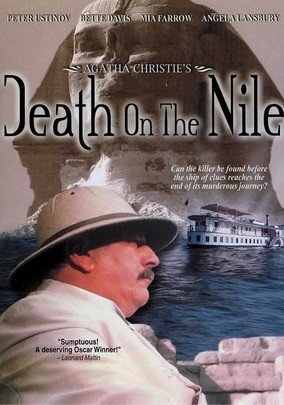
Death On The Nile-1978

Death On The Nile-1978

Director John Guillermen

Starring Peter Ustinov, Mia Farrow, Lois Chiles

Scott’s Review #714

Reviewed January 14, 2018

Grade: B+

Death On The Nile is a 1978 British thriller that follows up the successful 1974 offering, Murder On The Orient Express- both films based on the fabulous Agatha Christie novels of the 1930s.

This time around, Belgian detective Hercules Poirot (Peter Ustinov) investigates a string of deaths aboard a luxurious steamer carrying the lavishly wealthy and their servants.

The film is a good, old-fashioned whodunit, perhaps not on the level of storytelling as its predecessor, the murder mystery, does not contain the oomph expected, but features exquisite Egyptian historical locales, worth its weight in gold.

Featuring a who’s who of famous stars and tremendous actors of the day, Death On The Nile carves a neat story right off the bat in such a way that the murder victim is fairly obvious right away- most of the characters have reason to celebrate her demise.

Rich and reviled heiress, Linnet Ridgeway (Lois Chiles), has stolen best friend Jacqueline’s (Mia Farrow) beau, Simon, sparking a bitter feud between the women. While honeymooning in Egypt, the newlyweds are continually taunted by angry Jacqueline.

Once the cruise ship departs with all on board, Jackie is the prime suspect when Linnet is murdered.

Poirot must find the killer as numerous other suspects, all with grudges against Linnet, begin to emerge.

Death On The Nile features a stellar cast, including legendary Bette Davis as Marie Van Schuyler, an eccentric American socialite with an eye for Linnet’s necklace.

Davis’s casting is reason enough to watch the film, though the character is not center stage but rather a supporting role.

The lead female honor goes to Farrow, who has the meatiest and most complex role in the film.

Jackie’s unstable actions make her the most likely to commit the deed, but the fun is to figure out the “whys” and the “hows” of the murder. Is there more than one killer? Are they working in cahoots or independently? As the body count increases, these questions begin to resonate more and more.

The costumes and sets are gorgeous, and it is no wonder the film won the Oscar for Best Costume Design. At a ball, the women are dripping with jewels and gorgeous gowns.

Along with Davis, boozy author Salome Otterbourne, hilariously played by Angela Lansbury, is granted the prize of wearing the most luxurious and interesting of all the costumes. She drips with jewels and, with a cocktail always in hand, is the film’s comic relief.

Director John Guillermin makes the film an overall light and fun experience and, despite the murderous drama, does not take matters too seriously.

Offering humorous moments, this balances nicely with the inevitable murders.

The fun for the audience is deducing whodunit- most of the characters have the motive, and the cast of characters is hefty.

I had memories of the famous board game Clue- Was it Jackie in the ballroom with the revolver? You get the idea. The film makes for a good, solid mystery game.

Comparisons to 1974’s Murder On The Orient Express cannot help but be drawn, especially in the lead casting of Hercule Poirot.

Truth be told, Albert Finney’s portrayal in “Murder” is superior to Peter Ustinov’s Poirot in “Death,” and I am not sure what purpose Colonel Race (David Niven) as Poirot’s friend offers other than to be a loyal sidekick and present a character that Poirot can explain events to, think what Watson was to Sherlock Holmes.

Regardless, Finney is the superior Poirot, as he musters more strength and charisma than Ustinov.

How lovely and historic to witness the wonderful Egyptian locales- the Sphinx and the Great Pyramids are featured amid an attempt on the life of the romantic pair by way of falling rocks- this sets the tone for the perilous cruise about to be embarked upon.

Perhaps a perfect film for a Saturday stay-at-home evening with friends, complete with a serving of quality wine and cheese, Death On The Nile is a sophisticated, yet fun, British mystery film, fantastic to watch in a party setting where the audience can be kept guessing until the nice conclusion and the big reveal of who killed whom and why.

Oscar Nominations: 1 win-Best Costume Design (won)

The Shape of Water-2017

The Shape of Water-2017

Director Guillermo del Toro

Starring Sally Hawkins, Richard Jenkins, Michael Shannon

Scott’s Review #705

Reviewed December 16, 2017

Grade: A

Director Guillermo del Toro created a lovely Beauty and the Beast-style film, The Shape of Water (2017). It is gorgeous to look at, and the story is intelligent and sweet to experience.

Thanks to a talented cast led by Sally Hawkins, the film is part drama, part science fiction, even part thriller, but touching to one’s heart and a lesson in true love regardless of outward appearances.

Vanessa Taylor co-wrote the story, giving it a needed female perspective to perfectly balance the traditional male machinations.

The setting is Baltimore, Maryland, in the early 1960s. The Cold War is ongoing, pitting the United States and the Soviet Union against each other.

Both sides are mistrustful of the other.

Kindly and mute, Elisa Esposito (Hawkins) is a curious and whimsical young woman who works as a cleaning lady at an Aerospace Research Center.

When she stumbles upon a mysterious “shape” being held prisoner for experimentation, she slowly communicates with and befriends the creature, eventually falling madly in love with him.

The “asset,” as the scientists like to call him, is an amphibian/humanoid that needs saltwater to survive. Elisa sees an opportunity to help her love escape captivity, and off she goes.

Hawkins exudes warmth and fills Elisa with courage and astounding determination. Not uttering a word is a tricky feat for an actor to challenge, but instead of words, Hawkins successfully provides a vast array of emotions to reveal how Elisa feels.

Despite her “handicap,” she is a strong woman who speaks her mind on more than one occasion, using sign language to express her frustration. Hawkins gives a fantastic and believable performance.

In excellent and vital supporting roles are Richard Jenkins as Elisa’s friend and neighbor, Giles, a closeted gay man who works as a commercial artist. Jenkins fills this character with intelligence, heart, and empathy as he struggles with his issues of alcoholism and loneliness- unable to be accepted for who he is.

Octavia Spencer shines as witty and stubborn Zelda Fuller, Elisa’s best friend and co-worker. Zelda has her domestic problems but is forever there for her friend, and Spencer gives her character zest, humor, and energy.

Finally, Michael Shannon plays the dastardly and menacing Colonel Richard Strickland, the man who found the “asset” in the rivers of South America and has a lovely family.

Each character is written exceptionally well and has a storyline rather than simply supporting Hawkins’s character.

The audience becomes involved in Giles, Zelda, and Strickland’s private lives, and we get to know and care for them—or hate them, as the case may be.

Giles, harboring a crush on a handsome pie shop owner, is afraid to reveal his feelings. Zelda, with a lazy husband, dutifully takes care of her man, though she is as sassy as they come. And Strickland lives in an all-American family with a pretty wife and two kids, unaware of his shenanigans.

The film is a gorgeous and lovely experience with a magical element. The opening and closing sequences, shot underwater, resound in beauty as objects float along in a dreamy way.

The narrator (Jenkins) takes us on a journey to explain the events of the story.

At its core, The Shape of Water is a romantic love story, and my favorite scenes—those of Hawkins and the “asset”—are to be treasured. Yes, the two do make love, which may be too much for some, but the scenes are tasteful and important, showing the depth of the characters’ love for one another.

Cherishing is how Elisa uses music and hard-boiled eggs to communicate with the “asset.” When Elisa imagines the two characters dancing, the sequence is an enchanting experience reminiscent of Beauty and the Beast.

Other underwater scenes involving Elisa and the “asset” are tender, graceful, and filled with loveliness.

A key part of the film involves a story of intrigue between the Americans and the Soviets. While both are portrayed negatively, the Americans are arguably written as more unsympathetic than the Soviets.

Thanks to Strickland—abusive and vicious—and his uncaring superior, General Holt, we do not root for the government officials at all but rather for ordinary folks like Elisa, Zelda, and Giles, who are outcasts.

Interestingly, Dmitri (Michael Stuhlbarg), a Soviet spy scientist, is the only character working at the center who wants to keep the “asset” alive and is written sympathetically.

My overall assessment of The Shape of Water is that it is a film to be enjoyed on many levels and by particular varied tastes- the film will cater to those seeking an old-style romance, complete with some tasty French music.

Then again, the film can be considered a political espionage thriller, with a cat-and-mouse chase and other nail-biting elements.

Overall, the film has heart and truth and will appeal to vast audiences seeking an excellent movie.

Oscar Nominations: 4 wins-Best Picture (won), Best Director-Guillermo del Toro (won), Best Actress-Sally Hawkins, Best Supporting Actor-Richard Jenkins, Best Supporting Actress-Octavia Spencer, Best Original Screenplay, Best Original Score (won), Best Sound Editing, Best Sound Mixing, Best Production Design (won), Best Cinematography, Best Costume Design, Best Film Editing

Murder on the Orient Express-2017

Murder On The Orient Express-2017

Director Kenneth Branagh

Starring Kenneth Branagh, Johnny Depp, Michelle Pfeiffer

Scott’s Review #698

Reviewed November 25, 2017

Grade: B+

Kenneth Branagh leads and directs an all-star cast in a 2017 remake of the 1974 thriller Murder On The Orient Express.

The film is based on the famous 1934 Agatha Christie novel of the same name. With a ritzy cast that includes Judi Dench, Johnny Depp, Michelle Pfeiffer, Penelope Cruz, and Willem Defoe, top-notch acting is assured.

The cinematography is tremendous, and the film looks gorgeous from start to finish. The story is an effective, good, old-fashioned whodunit that will satisfy audiences.

We meet our hero, Hercule Poirot (Branagh), in Jerusalem. He has recently solved a murder mystery and is anticipating a good rest. A friend invites Poirot to travel back to his homeland of London via the lavish Orient Express.

Amid a group of thirteen strangers, all inhabiting the luxurious first-class accommodations, one of them is savagely murdered in the middle of the night as a blustery blizzard and subsequent avalanche derails the train atop mountainous terrain.

The strangers are trapped together with a murderer on the loose. Poirot must deduce who has committed the crime and why.

Murder On The Orient Express has all the trimmings for a good, solid murder mystery, and director Branagh sets all of these elements in motion with a good flow.

Paced quite nicely, each principal character is introduced intriguingly, so much so that each contains a measure of juicy intrigue. The film briefly describes each character as they board the grandiose train.

Judi Dench broods as rich and powerful Princess Dragomiroff oozing with jewels and a chip on her shoulder. Corrupt American businessman, Samuel Ratchett (Johnny Depp), is suave and shady as he seems destined to cause trouble.

Finally, Penelope Cruz gives her character, repressed Pilar Estravados, enough shame and guilt that we cannot think something may be off with her motivations.

The details of the characters are rich and compelling.

The playing field is set very high with actors such as Dench and Depp, and all actors play their parts with gusto.

An excellent experience with Murder On The Orient Express demonstrates the true nature of an ensemble cast—each character is relevant in his or her own way, regardless of screen time, and the casting works well.

The cast must have enjoyed working together on this lovely project. Each character is written so that the individual actor can sink his or her teeth into the role, and the wonderful reveal at the end of the film allows each a chance to shine, giving each part equal weight.

After the actual murder is committed, the story takes off as each character is interviewed by Poirot and given a glance of suspicion.

The first half of the film is just the buildup, and, at times, the story slightly lags, but this is fixed when the movie kicks into high gear midway through.

Sometimes, a climactic conclusion makes up for any slight lag in the film’s first portion, and Murder On The Orient Express is an excellent example of this.

My standouts are Branagh himself as Poirot and Pfeiffer as the sexy Caroline Hubbard, an American man-crazed older woman.  How wonderful to see Pfeiffer back in the game in 2017- with fantastic roles in Murder On The Orient Express and Mother!

She has the acting chops to pull off sex appeal, vulnerability, and toughness. Branagh’s acting never disappoints in any film he appears in, but seeing him in a leading role is fantastic, and he can carry a film with such a dynamic cast.

Branagh’s Poirot is classy, intelligent, and charismatic.

I adored the film’s conclusion and found the explanation and reasoning of the murderer or murderers quite effective and believable. The use of black-and-white flashback scenes perfectly balances the action aboard the grandiose yet slightly claustrophobic train scenes.

Furthermore, the explanation and motivations of the killer or killers make perfect sense, and much sympathy is evoked. The story is moralistic and not a black-and-white subject matter.

Murder On The Orient Express succeeds as a wonderfully shot and star-studded affair. The filming is grandiose, and the production values are high. It is a caper film with a mystique and class.

The film may not be a true masterpiece or necessarily remembered ten years from now, but what it does, it does well.

The original film from 1974 is a tad bit better, but as remakes go, the 2017 offering is quite good.

A rumored sequel, Death on the Nile, is planned.

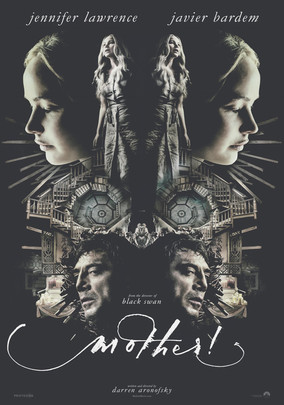
Mother!-2017

Mother! -2017

Director Darren Aronofsky

Starring Jennifer Lawrence, Javier Bardem, Ed Harris, Michelle Pfeiffer

Scott’s Review #687

Reviewed October 4, 2017

Grade: A

Mother! is an intense, disturbing, and brilliant 2017 work by acclaimed director Darren Aronofsky.

Having crafted left-of-center works such as 2000’s Requiem for a Dream, 2008’s The Wrestler, and 2010’s Black Swan, I shudder to think this film rivals the other in the insanity department.

With four principal characters portrayed by Hollywood mainstays, this film generated much buzz upon its release.

The film is thought-provoking and analytical, and we will discuss it after the conclusion. I appreciate the complex watches and Mother! succeeds in spades.

The film is set entirely within the confines of one enormous house in the middle of a vast field of land. Aronofsky never reveals the location, adding mystery to the already intriguing premise.

A young couple known only as Him (Javier Bardem) and Mother (Jennifer Lawrence) cheerfully enjoy married life together and seem very much in love. He is a renowned author suffering from writer’s block, and his mother fixed the house after it had burned long ago.

One day, a Man (Ed Harris) arrives looking for a place to stay. While Him is delighted by the visitor and encourages Man to stay, the mother is not as pleased.

When Man’s wife, Woman (Michelle Pfeiffer) arrives, the houseguests turn Him and mother’s lives upside down. This is merely the beginning of a complex puzzle.

As the plot unfolds, Mother! is oozing with one bizarre event after the other. Mother witnesses unsettling images such as a beating heart within the walls and a bloodstain on the floor that will not go away.

When relatives of a Man and a Woman overtake the house, and a violent event occurs, things go from dark to downright chaotic.

Giving too many plot points away would ruin the element of surprise, making Mother! a difficult film to review. The film is polarizing and mesmerizing, and each of the principal characters’ motivations can be analyzed and questioned.

Why do he and his mother react differently to the visitors? What manifests their resentment towards the mother?

Each actor gives a compelling turn, and Aronofsky admits that the mother’s character is the one he most relates to. Logically, one might assume that Bardem’s Him might receive that honor since the character is a famous writer. How strange, and this revelation by the director will only result in more character analysis.

How wonderful to see Michelle Pfeifer back in the forefront of a Hollywood film—it seems eons have passed since we last saw her grace the silver screen, and she is back with a vengeance.

Her bitchy portrayal is purely delicious, and she encompasses Woman with the perfect amount of venom, toughness, and mystery. As she icily quizzes mother about her intentions of starting a family, she slowly immerses herself in mother’s life without missing a beat.

The film is unconventional and layered with symbolism and differing interpretations. Is Aronofsky’s message biblical? Is it political? Or could it reference the obsessions everyday folk have with celebrities?

After much pondering, all three possibilities came to mind. The biblical message seems the most solid and plausible explanation, but with Aronofsky films, the pleasure is in the analysis.

The film’s final act is particularly macabre, as the action has exclusively focused on the four principal characters until this point, and the setting is mainly bright.

A slow burn, if you will, suddenly, all hell breaks loose as mobs, blood, fire, death, and darkness take over. The brutality and cannibalism involved will churn anyone’s stomach.

Quickly note the lurid closeups of Jennifer Lawrence’s face during most scenes. Indeed, the camera loves her, but more is happening here. Is the intention to make the viewer focus more on her character or to sympathize more with her character?

Mother! has stirred controversy among film-goers. Some have ravished its elements and themes, while others have reviled and revolted against it.

Time will tell if Mother! (2017) holds up well, but my hope and guess would be that it will become a film studied in film schools everywhere.

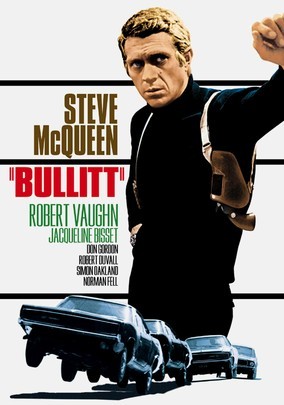
Bullitt-1968

Bullitt-1968

Director Peter Yates

Starring Steve McQueen, Robert Vaughn, Jacqueline Bisset

Scott’s Review #660

Reviewed July 7, 2017

Grade: B+

Bullitt (1968) is one of the ultimate “guy movies”, hardly a stretch considering it stars the “regular guy” hero of the time, Steve McQueen.

With his macho, tough-guy persona and his cool, confident swagger, he was a marquee hero during the late 1960s and into the 1970s.

While the film is rife with machismo stereotypes and is not precisely a women ‘s-lib film, it is also a good old-fashioned action thriller with plenty of chase and fight scenes to make most guys (and some girls) happy.

The story is not particularly thought-provoking, but the film works as escapist fare and is an example of good late-1960s cinema.

Set in San Francisco, Lieutenant Frank Bullitt (Steve McQueen) is assigned to watch a Chicago gangster, Johnny Ross, over a long weekend, before the criminal is set to testify against his brother on Monday morning.

Robert Vaughn plays ambitious politician, Walter Chalmers, who is determined to see the case go off without a hitch and see convictions in the organized crime syndicate.

Predictably, the weekend does not go as planned, and hitmen attack Ross. This, in turn,  sets off a cat-and-mouse game of deception and intrigue. As expected, the action is virtually non-stop with many action sequences lighting up the screen.

The plot of Bullitt does not matter, and one does not need to completely understand what is going on to enjoy the film for what it is. The intent of a movie like Bullitt is not good storytelling, but rather good action.

This is not meant as a put-down, but rather good, honest critiquing. One can sit back, relax, and enjoy the testosterone-laden affair.

Bullitt contains some riveting scenes that raise it above an average, middling action flick. The muscle car chase involving a then-state-of-the-art, flashy Ford Mustang and a Dodge Charger is fantastic and one of the film’s high points.

The quick, edgy camera angles as the cars zip down the windy, narrow San Francisco roads build compelling tension.

Will one of the cars careen off the side of the road or blow up? Since one of the cars holds Frank Bullitt and the other car is the bad guy, it is not tough to guess how the sequence will end.

But it’s good fun all the same, and well filmed.

The other spectacular sequence is the finale: as Frank and company overtake a busy San Francisco airport in pursuit of a baddie about to board a transcontinental flight, the chase leads them throughout the airport, onto a taxiing plane, and finally onto the runway as a plane is about to take off.

It is action at its finest and a treat for the viewer, bringing us back to airport days, pre-9/11, when airports were just different—the luxurious flight crew, the innocence, and the glamour- all a distant memory.

The scene is such that it shows all of the airport elements- the people, the employees, the airport, and the planes, giving it a slice-of-life feel, circa late 1960s airport days.

Appealing is the period in which the film is made. 1968 was an excellent year for cinema; Bullitt capitalized on the newly liberal use of blood in films, making it an influential action film.

Dozens of imitators (some admittedly with superior writing) followed, including classics Dirty Harry and The French Connection (both 1971). These contain the exact basic blueprint that Bullitt has.

A negative of Bullitt is the trite way women are portrayed. Female characters are written as dutiful nurses, gasping in fear and helplessly running away when an assailant runs rampant in the hospital, praying for a man to save the day.

Or, they are written, in the case of Bullitt’s girlfriend, as a gorgeous yet insignificant character, given a laughable scene in which she questions whether or not she knows Frank after witnessing the violence in his job- hello?

He is in the San Francisco Police Department after all.

Bullitt is a meat-and-potatoes kind of filmmaking. An early entry into what would become the raw 1970s and the slick formulaic 1980s action genre, the film deserves credit for being at the front of the pack in style and influence.

The story and character development are secondary to other aspects of the film, and Bullitt (1968) is just OK as escapism fare.

Oscar Nominations: 1 win-Best Sound, Best Film Editing (won)

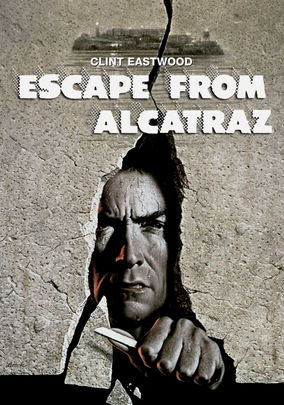
Escape from Alcatraz-1979

Escape from Alcatraz-1979

Director Don Siegel

Starring Clint Eastwood, Patrick McGoohan

Scott’s Review #656

Reviewed July 2, 2017

Grade: B+

Made during the heyday (the 1970s and the early 1980s) of a slew of action and thriller films starring popular actor Clint Eastwood, Escape from Alcatraz is a gritty, man-focused film with not a single female character in sight.

The film is directed by Don Siegel, who also directed Eastwood in several previous films, most notably Dirty Harry in 1971, and contains a grittiness frequently used in this genre of film during the period.

Reminiscent in style of 1975’s One Flew Over the Cuckoo’s Nest in its authority, repression, and exploitation of the victimized commoner, the film is also a good historical account of one of the most famous prison escapes ever achieved in 1962.

Having recently visited the long-since-shut-down Alcatraz prison near San Francisco, California, I found the film wonderful to watch, as much of it was shot inside and around the actual prison grounds.

We immediately meet Frank Morris (Eastwood) as he is unceremoniously led to the infamous Alcatraz prison on a stormy, chilly night in foggy San Francisco. The dark, harsh weather perfectly sets the tone for the dreary prison experience he will face.

Morris is stripped, searched, intimidated by the warden and the guards, and paraded around naked, finally taken to his tiny cell, where he will presumably spend the rest of his life.

The film does not reveal what crimes Morris committed to warrant his tenure at Alcatraz; as a result, the character is more sympathetic.

Slowly, Morris befriends other inmates and devises a plan to escape the impossible prison by digging through the concrete walls with spoons and using the pipes.

The other inmates featured in the film are the Anglin brothers, in for robbery, a kindly older man named Doc, who fervently paints the time away, nervous Charlie Butts, and English, an intelligent black man serving two life sentences for killing two white men in self-defense.

All of these men, in some way, aid Morris in his escape from the torturous Alcatraz.

A side story involves a bully named Wolf, who has designs on Morris from day one. Whether Wolf is actually gay or merely a menace is unknown and not explored.

Throughout the film, Wolf and Morris fight and spend time in solitary confinement, and their rivalry is an interesting subplot.

The film wants the viewer to be on the prisoners’ side, and I am not sure whether, in real life, the prisoners would be as sympathetic as portrayed in the film. Most of them seem to be confined to Alcatraz for robberies or crimes they did not commit, or for circumstances that deem the crimes inevitable in some way.

Furthering a liberal slant to the film is the friendship between Morris and English. An interracial friendship between the men reveals that our hero, Morris, is progressive-thinking and a “good guy”.

Conversely, most of the guards and certainly the Warden (Patrick McGoohan) are written as terrible, unsympathetic people. When an inmate drops dead of a heart attack, the warden coldly remarks, “Some men are destined never to leave Alcatraz alive”.

The Warden is the foil of the film, and in the final scene, the Warden gets a bit of comeuppance when a mocking souvenir is left for him.

To further compare Escape from Alcatraz to One Flew Over the Cuckoo’s Nest, the Warden is a similar character to the infamous Nurse Ratched in their mutual, diabolical sadism.

I am unsure if in “real life” the distinctions between the prisoners and the authority figures were so black and white, but it sure makes for good film drama. It is “the heroes versus the villains” but in reverse.

The inevitable escape sequence is predictable yet highly compelling as Morris and Company enact their escape plan over the course of an overnight.

The usage of papier-mache dolls to fool the guards is heavily dramatic and compelling.

Escape from Alcatraz (1979) is not high art, but it works as a historical account of a real-life incident in one of the most discussed prisons in United States history.

The film is also a perfect vehicle for Eastwood, as he is well cast in the gritty yet likable role of prisoner Morris.

The film is a good, solid late-1970s thriller.

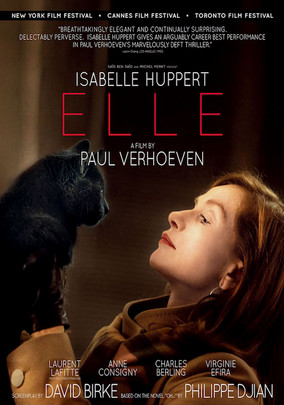
Elle-2016

Elle-2016

Director Paul Verhoeven

Starring Isabelle Huppert

Scott’s Review #644

Reviewed May 17, 2017

Grade: A-

Sure to evoke both disgust and intrigue from viewers brave enough to watch it all the way through and hopefully ponder the character dynamics, Elle is a titillating French film that was showered with heaps of praise upon its release in 2016.

Controversial without question, in large part by the film’s main character, Elle, will undoubtedly divide film fans- some heralding the picture as greatness, others detesting it as too exploitive.

It is not an easy watch by any measure, but one aspect is cemented in truth-Isabelle Huppert gives a fantastic performance in a complex and perverse role.

Unique even in its first scene, Michele Leblanc (Huppert) is a ruthless, alpha businesswoman who is raped and beaten by an intruder in her lavish Paris home.

The violent act occurs in the first scene, immediately giving the film an “in your face” presence. When the rapist, who wears a ski mask, flees, Michele shakes off the incident with nary an emotional scar.

Through backstory, we learn that years ago, Michele’s father brutally murdered many people and was imprisoned for life. Michele’s mother is an aging glamour girl who hires sexy male escorts. Michele’s son is engaged to a domineering pregnant woman, and her ex-husband is dating a younger woman.

Michele lives a complicated life.

At first, Michele seems sympathetic, and we feel her pain as she is taunted by a woman in a coffee shop for her father’s past deeds.

To say nothing of her rape, we cringe when Michele hears noises and imagines the masked intruder returning to rape again, empathizing with the character.

When the mystery man harasses Michele, he sends notes and leaves “gifts” in her home, and we are scared for her. However, as the film goes along, Michele’s obsession and other questionable actions make the character challenging to like.

I also began to wonder if Michele was perhaps dreaming the entire film!

As a fan of acclaimed film director Claude Chabrol, Elle appears to be heavily influenced by him.

Director Paul Verhoeven certainly must have studied his works. He is no slouch himself—female-empowering sex films such as Basic Instinct (1992) and Showgirls (1995) that he directed come to mind. He gives Elle a sleek and sexy feel.

The fact that it is set in romantic Paris helps make the film glamorous and cultured. Verhoeven even weaves a whodunit into the story for much of the movie until the rapist is revealed shockingly.

If the film had ended with the big reveal, this would have made for a compelling, if not mainstream, Lifetime television-type film, but Elle takes off from this point. Michele, already fancying her handsome rapist, actually begins a macabre relationship with the man, going so far as to act out the rape again- her fantasies coming true!

This story turn may repel the average viewer, but to me, this turns the film into a completely left-of-center, layered, psychologically themed story.

Elle is not a revenge tale or a film about a victimized woman; it is much more.

What a dynamic performance Ruppert gives, and here is why- she successfully makes Michele both sympathetic and reviled.

Besides the aforementioned rape complexities, she despises her mother and sleeps with her best friend’s husband. In a scene that arguably makes Michele cross the line in reprehensible behavior, she confesses her affair to a best friend, Anna, when Anna is at her happiest moment- this is downright cruel!

So, no, the audience does not entirely sympathize with this character, but how layered this makes the character, and what a treat it is for actress Ruppert to sink her teeth into a character like this one.

With a wounded yet cold central character, partly thanks to exceptional direction by Verhoeven and a brilliant portrayal by Huppert, he takes Elle into largely unchartered territory and brave waters to create a film that will make the viewer both think and loathe.

Part nymphomaniac wounded bird and vicious shark, Elle contains a complex and memorable leading character.

Oscar Nominations: Best Actress-Isabelle Huppert

Independent Spirit Award Nominations: 1 win-Best Female Lead-Isabelle Huppert (won)

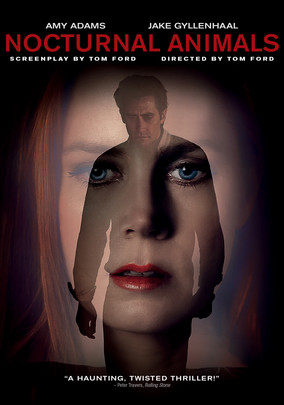
Nocturnal Animals-2016

Nocturnal Animals-2016

Director Tom Ford

Starring Amy Adams, Jake Gyllenhaal, Michael Shannon

Scott’s Review #640

Reviewed April 30, 2017

Grade: A-

Nocturnal Animals (2016) blurs the lines between fantasy and reality in a revenge-themed thriller directed by Tom Ford, in only his second directorial effort- 2009’s A Single Man was his first.

While not constantly hitting the mark and, at times, very difficult to follow, the film is unusual, mesmerizing, and lovely to look at from a visual perspective. Some scenes blur together splendidly, so they seem interposed—a brilliant touch.

David Lynch influences the film in tone and style.

Events are divided between “The Real World” and “The Novel”.

The film begins strangely as a bevy of nude, obese women prance and dance on video screens during an art exhibit opening.

The gallery is owned by Susan Morrow (Amy Adams), a successful woman living a glossy life in Los Angeles. We quickly learn that Susan is involved in a loveless marriage with hunky Hutton (Armie Hammer), a business person who is inattentive towards Susan.

Before Hutton, Susan was briefly married to Edward (Jake Gyllenhaal), a novelist who dedicates his latest manuscript to Susan, received via mail. As Susan reads the manuscript, she is transported down a dark path of memories and fantasies concerning Edward and their past.

The film’s locales are mainly between Los Angeles (the real world) and western Texas (where the novel occurs). This compelling aspect of the film separates the two worlds.

Los Angeles is featured mainly at nighttime as Susan, presumed to be suffering from insomnia, is compelled by her reading. She also rubs shoulders with sophisticated artist types and colleagues at her studio.

Conversely, western Texas is worlds apart from the Los Angeles setting—like night and day. In Texas, we are introduced to the protagonist of the story Susan reads.

Tony, traveling through Texas with his wife, Laura, and their daughter, India, are accosted and terrorized, bypassing local motorists.

Clearly from out of town, the family is stranded in the middle of nowhere and kept at bay by the rednecks- the story has a tragic ending. The stories intersect interestingly as we see the differing worlds.

The scenes in western Texas were frightening and tense—so much so that my heart beat quickly. I pictured myself as Tony in a situation of peril and danger.

As the family attempts to reason with the thugs, they get deeper and deeper into trouble. The feeling of being vulnerable and unsafe with no help around is tremendous in the film.

The acting in Nocturnal Animals is excellent overall, which is no surprise given the tremendous cast. Adams and Gyllenhaal are especially worthy of mention. Through flashbacks, we see their scenes and find them both sympathetic and vulnerable (at first— he is a sensitive writer, and she is a college girl with aspirations of love and family life.

As the plot thickens, both characters become more nuanced and complex- the subject of betrayal and revenge certainly comes into play, and both characters, now older and more pessimistic, intersect again as mature adults.

Michael Shannon, though believable as Detective Bobby Andes, assigned to Tony’s case and suffering from stage four lung cancer, is not the standout for me. I disagree with his Oscar nomination for Best Supporting Actor.

Indeed, it is an acceptable performance. I would have much rather Gyllenhaal or Aaron Taylor-Johnson (as one of the rednecks) be awarded the nomination.

I was reminded of David Lynch’s masterpiece, Mulholland Drive (2001), mainly during the Los Angeles scenes. The slick night air and the trials and tribulations of the wealthy mirrored each other quite readily.

The sequences contain a gothic, haunting, moody vibe.

The central theme of revenge is present in both worlds. Tony and Bobby seek revenge on the criminals in western Texas, while revenge also focuses on Los Angeles, though much more subtly.

A hint is given several times in Susan’s art gallery, where a large ” Revenge ” exhibit is a focal point. However, what the Los Angeles revenge is is not revealed until the very last scene.

One thing is sure about Nocturnal Animals- the film is dreamy, complex, and worthy of conversation.

Tom Ford is an up-and-coming director with visual sensibilities and a dream-like vision. I hope we see more from this fascinating director.

Oscar Nominations: Best Supporting Actor-Michael Shannon

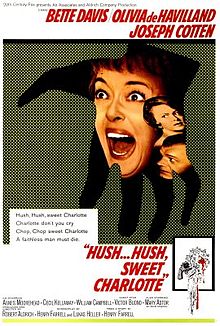
Hush…Hush, Sweet Charlotte-1964

Hush…Hush, Sweet Charlotte-1964

Director Robert Aldrich

Starring Bette Davis, Olivia de Havilland

Scott’s Review #632

Reviewed April 8, 2017

Grade: B+

The follow-up film, but not a direct sequel, to the surprise 1962 hit, What Ever Happened To Baby Jane? Hush…Hush, Sweet Charlotte (1964) is a psychological thriller directed by Robert Aldrich.

The film was intended to reunite Aldrich with stars Bette Davis and Joan Crawford. Crawford filmed several scenes, but the tension between the stars proved too much, and Crawford dropped out.

Olivia de Havilland took her place, and reportedly, the filmmakers scrambled to re-shoot the film nearly from scratch.

Shot in black and white, just like What Ever Happened To Baby Jane?, the film is very similar in style and tone, and, rather than Los Angeles as the setting, the setting is now the sprawling southern landscape of the deep south- Louisiana to be exact, a vast estate with a lavish mansion is the featured ominous setting.

The action begins in 1927 at a grand party at the well-to-do Hollis family mansion.

The night is fraught with tension, and secrets are harbored- most notably, southern belle Charlotte (Davis) and her married beau, John (Bruce Dern), plan to elope and steal away into the night together.

When John is threatened by Charlotte’s father, Sam (Victor Buono), he regrettably breaks up with Charlotte, destroying her. Later, John is decapitated and his hand severed, leaving all of the guests only to assume that Charlotte was murdered after she appears wearing a blood-soaked dress.

Due to a lack of evidence, Charlotte is set free.

The remainder of the film takes place during present times (1964) and in the same mansion, now slated to be demolished by the town in favor of a highway.

Charlotte is old and haggard, having lived a life of seclusion. Her father is long dead, and her only company is her dedicated and faithful housekeeper, Velma (Agnes Moorehead).

Frantic at the thought of leaving the safety of her estate, Charlotte asks her cousin Miriam (de Havilland) to visit. Events then become stranger and stranger as past secrets and jealousies are revealed.

Taking nothing away from the talents of Olivia de Havilland, I cannot help but imagine how much better Hush…Hush, Sweet Charlotte would have been if Joan Crawford had settled into the role of cousin Miriam.

The real-life rivalry between Crawford and Davis made What Ever Happened to Baby Jane? It is a compelling work, and the angry emotions are fresh and authentic.

Interestingly, the characters are reversed in this film—Davis plays the victimized Charlotte, while Crawford would have played the villainous Miriam, and the results would have been delicious.

The plot is decent, but nothing spectacular, and not nearly as splendid as What Ever Happened To Baby Jane? , although certain similarities abound between the two films: a giant mansion, black and white cinematography, a mentally unstable (or assumed to be) character, a character being either drugged or victimized, and two female characters who are related.

To compare the two films, which is impossible not to, What Ever Happened To Baby Jane? Wins in spades. It is the more compelling of the two films.

What sets Hush…Hush, Sweet Charlotte, well above mediocrity (with fewer actors, it may have been), is the casting of one of the greatest actresses to grace the big screen.

Bette Davis’s portrayal of the victimized Charlotte is fantastic. She encompasses vulnerability, anger, fear, and energy. Her facial expressions and those passionate eyes give so much to Charlotte.

The clever resolution to the film and the plot twist after the film is pretty well-written and surprising, given that the characters assumed to be involved in the murder are not as guilty as one might think, or at least not in the way one might think, and by the time the credits roll, the story has a satisfying, hopeful ending.

Another success of the film is its use of two gruesome scenes, which is surprising since the film predates the lifting of the film censorship rules.

When a severed head comes tumbling down the grand staircase of the mansion, it frightens and is not in the least campy or over-the-top. As John is hacked to death in the opening sequence, his hand is severed from his arm, and it dramatically tumbles to the floor.

The scenes resonate because they were rarely done in mainstream film as early as 1964.

Hush…Hush, Sweet Charlotte is a fantastic companion piece to the superior What Ever Happened To Baby Jane?

Watching back-to-back is a fantastic late-night viewing.

Successful to the film are top-notch talents such as de Havilland, Victor Buono, Bruce Dern, Agnes Moorehead, and the superior film queen, Bette Davis, which makes any film worth watching.

Oscar Nominations: Best Supporting Actress-Agnes Moorehead, Best Song-“Hush, Hush, Sweet Charlotte,” Best Music Score-Substantially Original, Best Art Direction, Black-and-White, Best Cinematography, Black-and-White, Best Costume Design, Black and White, Best Film Editing

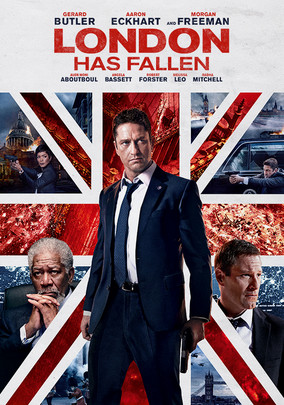
London Has Fallen-2016

London Has Fallen-2016

Director Babak Najafi

Starring Gerard Butler, Aaron Eckhart

Scott’s Review #608

Reviewed January 13, 2017

Grade: D

Save for many enjoyable, incredible London shots of mostly aerial views, London Has Fallen (2016) is a complete drivel of an experience.

The film’s attempt at being a red-blooded, patriotic film comes across as insulting and racist, with a machismo that is cringe-worthy.

The dialogue is terrible, and the “us against them” mantra has been done to death in film, mainly in the 1980s and 1990s. To quote one reviewer, “London Has Fallen is Donald Trump in film form.”

I don’t understand how the film convinced such a talented cast to appear (it must have been money), and several parts are so small (Robert Forster, Melissa Leo, Jackie Earle Haley) that they are nearly glorified extras.

The plot is painfully contrived, to say nothing of the ludicrous nature of the entire story.

To retaliate against a drone strike killing a Pakistani leader, terrorists take advantage of the death of the UK Prime Minister to assassinate several world leaders who have gravitated to London to attend funeral services.

The President of the United States (played by Aaron Eckhart) is naturally in attendance, and his murder is thwarted by top Secret Service official Mike Banning (Gerard Butler), our film’s hero.

The rest of the film involves the President and Mike running throughout London, attempting to catch the terrorists and bring them to justice while avoiding death.

The London locales are superb, but sadly, they mainly appear at the film’s beginning and end. The London Eye, the Thames River, the Underground, and various metro stations are featured.

The numerous London bridges also get some exposure.

The best part is how the film showcases London’s vastness, not just the up-close shots of historic places like Westminster Abbey or Buckingham Palace.

Undoubtedly, London is known for those gems, but the aerial views give the viewer an appreciation of all London offers.

I loved only this aspect of the film.

The supporting roles are abysmal, and given the more artistic parts they’ve received in the past; one imagines the actors cringing as they read the scripts for some of them.

I hesitate to think what possessed Leo, Forster, and Haley to accept meaningless roles save for a hefty paycheck. Each played a member of the President’s staff and was reduced mainly to reactionary shots.

As an ill-fated Secret Service Director, Angela Bassett and Radha Mitchell, as Banning’s weary-looking, pregnant wife, get more screen time but are treated to equally uninteresting roles.

Overall, the performances are forgettable. Respectable actors Butler and Eckhart merely phone in their vapid, dull lines, failing to make any of them believable.

The film never bothers with character development or anything beyond fundamental good and evil roles. Every character is either 100% good or 100% bad.

It is made crystal clear that the Americans are the good guys, and the foreigners (all Middle Eastern or Asian actors, of course) are simply the bad guys.

The motivations of the “bad guys” are never explained, and one cheesy line after another is written for the “good guys.”

During the finale, Banning professes that “we have been here for thousands of years and always will be” as he beats a lousy guy senselessly. Good grief. I’ve seen better dialogue on a network television drama.

And there is never any doubt about how the film will end. There is an American mole who has used his power to enable all of the assassinations, but when the mole is revealed, it is a character we have never seen before, so who cares?

Indeed, the film will soon be forgotten for its poor story, cliche-ridden script, and numerous stereotypes, but the fantastic London shots were inspiring and lovely.

I would have been happy with one hour and forty minutes of those.

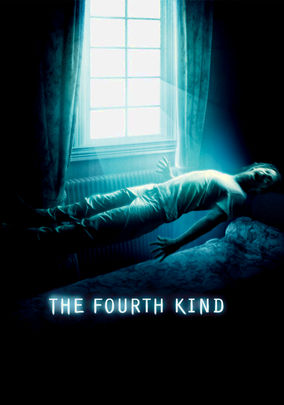
The Fourth Kind-2009

The Fourth Kind-2009

Director Olatunde Osunsanmi

Starring Milla Jovovich, Will Patton

Scott’s Review #583

Reviewed January 4, 2017

Grade: B-

I went into the theater to see The Fourth Kind (2009) not expecting a classic, but rather, a few frights, chills, and something compelling. I ended up completely entertained and believing it was a good movie.

However, after the credits rolled, I was left with an unsatisfying and misrepresented feeling.

The premise of the film is admittedly a bit trite. An Alaskan female psychiatrist, Dr. Abigail Tyler (Milla Jovovich) videotapes her therapy sessions with patients and discovers some sort of alien has possibly abducted them.

Yes, this sounds crazy, but the film is well-made and rather believable.

The look of the film is similar to the Paranormal Activity films, a craze that was happening when the film was released in 2009.

The documentary look and the interviews with the actors will be looked back on as “of its time”, to be sure.

The style and interspersing of “real” events with fictitious events were interesting. However, I was disappointed when I read that the supposed “real” events were entirely made up, a fact the movie never admits, and, in fact, time and time again reminds the audience are real events.

I enjoyed the movie but felt duped afterward, rendering The Fourth Kind (2009) trivial and forgettable.

Shutter Island-2010

Shutter Island-2010

Director Martin Scorsese

Starring Leonardo DiCaprio

Scott’s Review #567

Reviewed December 27, 2016

Grade: A-

Shutter Island (2010) is a great, psychological thriller, that being a Scorsese film, I had high expectations for. Lo and behold, I was not disappointed in the slightest.

Scorsese has a knack for making taut films, very violent, and with an edge. This film does not have the gore nor the blood that some of his other films have- especially since the subject matter is not mafia-related.

After Teddy Daniels (DiCaprio), a World War II veteran, turned U.S. Marshall investigates the disappearance of a female patient at a local psychiatric hospital, the case develops unforeseen layers.

The time is the 1950s.

Shutter Island is not your typical, run-of-the-mill thriller- it is much more than that and the complexities build and build. Not to be secondary to the interesting web of plot, but the art and set designs and visual effects are quite impressive- particularly during the storm scenes.

Leonardo DiCaprio is quite the gem, carrying the film in a demanding role, and working so well with Scorsese, as proven by his being a repeat player in his films.

All the performances (even tiny roles) were played with perfection- with flawless nuances- I mainly mean the hospital staff and patients.

The unpleasant violent images may upset some as well as the ending, but I found it to be an edge-of-your-seat, extremely well-made film. I hope that it is remembered for some time.

The Secret in Their Eyes-2009

The Secret in Their Eyes-2009

Director Juan Jose Campanella

Starring Soledad Villamil, Ricardo Darin

Scott’s Review #565

Reviewed December 26, 2016

Grade: A

The Secret in Their Eyes is a wonderful film and one of the best of the year 2009- deservedly it won the Best Foreign Language Film of that year.

Argentinian-spoken, the film is a multi-faceted story with twists and turns, leaving the audience guessing.

The remarkable characteristic of the film is that it crosses genres. It lies somewhere between a thriller and a romantic film, with much depth.

The story concerns a criminal investigator who decides to write a memoir of a case that happened twenty-five years ago as he reflects on the present as well as the past. This story angle in itself is highly appealing.

The film contains many flashbacks- a young newlywed was raped and murdered years ago in an unsolved case, and the film is influenced heavily by both Alfred Hitchcock and Dirty Harry.

The tale has a few surprises and twists, especially as the plot moves along. I adored the use of mirrors, reflections, shadows, and eyeglasses. Hitchcock lovers will know all about that.

I was fortunate to see this film at my local art theater and close to three hours, it can be slow-moving at times, but well worth the payoff.

The Secret in Their Eyes (2009) is a very, very well-made film.

Oscar Nominations: 1 win-Best Foreign Language Film (won)

Splice-2009

Splice-2009

Director Vincenzo Natali

Starring Adrien Brody, Sarah Polley

Scott’s Review #564

Reviewed December 26, 2016

Grade: B-

If you are looking for a realistic, character-driven movie, this film is not for you. Rather, Splice, a 2009 effort, is a science-fiction, thriller, that must be viewed while suspending all disbelief.

It’s not a work of art and has lots of plot holes, but it provides decent entertainment, bordering on fluff.

The two main characters, Clive and Elsa, played by Adrien Brody and Sarah Polley, while admittedly neurological scientists are not the brightest people in the world, and their motivations change with the weather.

The basic plot involves a married couple (above-said scientists) who conduct an experiment to splice human and animal DNA into a new creation, a female hybrid named Dren.

Predictably, things go awry, once Dren is let loose on the world.

The plot is thin and there are questionable actions, motivations, and subplots, but somehow I still found it entertaining once I simply went with it.

There are cliches such as the scientists ignoring instructions, the one-dimensional supporting characters, and so on.

As a comical aside, I overheard the guy sitting behind me in the theater mutter as the closing credits rolled,  “This was the worst movie ever”. I understand where he is coming from, but did not think the film was that bad.

For fans of horror or thrillers I recommend it, anyone else might want to skip this one.

Inception-2010

Inception-2010

Director Christopher Nolan

Starring Leonardo DiCaprio, Ellen Page

Scott’s Review #558

Reviewed December 22, 2016

Grade: A-

Inception (2010) is the type of film that will leave you astounded, baffled, confused, bewildered, and many other adjectives. To put it more simply, this film needs to be pondered after the fact.

This is a high compliment as it is tough to remember such a complex (in a good way!), savory film.

Inception is visionary and meant to be processed.

A highly intelligent film, of sorts, that will leave you thinking afterward. The story is immeasurably complex and will leave many completely confused, but just go with it.

In a nutshell, it tells the story of a man who intercepts people’s subconscious minds through dreams. Different layers of their minds are revealed as the film goes along. There are also virtual levels to each person’s mind- complex, yes.

The film reminds me quite a bit of The Matrix- but better.

The film has many twists and turns throughout and will keep the viewer both perplexed and fascinated. My only slight criticism is the dream sequences do not feel like dreams at all but are highly stylized action sequences.

Many props have been given for being so inventive, though.

Oscar Nominations: 4 wins-Best Picture, Best Original Screenplay, Best Original Score, Best Sound Editing (won), Best Sound Mixing (won), Best Art Direction, Best Cinematography (won), Best Visual Effects (won)

Repulsion-1965

Repulsion-1965

Director Roman Polanski

Starring Catherine Deneuve

Scott’s Review #554

Reviewed December 21, 2016

Grade: A

Repulsion is an excellent British film, an early film by the great director Roman Polanski, made in 1965. The film was shot on a low budget, and the action mainly takes place inside a small London apartment.

Repulsion is part of Polanski’s “Apartment Trio,” along with Rosemary’s Baby (1968) and The Tenant (1976), which are all set in apartments.

The film tells the story of Carol (Catherine Deneuve), a beautiful young woman who slowly goes insane throughout a weekend while left alone by her vacationing sister.

Carol is a beauty parlor worker who is seemingly sweet and shy but gradually becomes violent, volatile, and unbalanced. She experiences hallucinations, and it is alluded to that she may have been sexually abused as a child.

She loathes men.

The film is shot in black and white, with eerie camera shots, background noises, and very little music. Its claustrophobic atmosphere makes it all the more disturbing.

These characteristics make the film a challenging experience to watch, but that is to its credit.

We see Carol unravel and are mystified by the aspects that make her this way. The bathtub scene and the scene with Carol’s landlord are highlights of their brutality.

Repulsion (1965) is challenging to watch but an excellent piece of cinema. It is an in-depth character study of an unhinged woman reaching her psychological breaking point.

The Bridesmaid-2004

The Bridesmaid-2004

Director Claude Chabrol

Starring Benoit Magimel, Laura Smet

Scott’s Review #548

Reviewed December 14, 2016

Grade: B+

A more modern offering by Claude Chabrol, (many of his films were made in the 1960s and 1970s), his 2004 film entitled, The Bridesmaid, continues the tradition of compelling, macabre, story-telling immersing the viewer in strange behavior by the central characters, as they obsess over each other in one way or another.

The film is in the French language.

The Bridesmaid contains two plots- one explored fully, the other not explored as much as might have been hoped- the latter being the more interesting of the two.

Philippe is the only son of his mother, Christine, and the only male in the household- his two other sisters live there as well. Christine is divorced and works as a hairdresser.

The family is a rather typical one save for a creepy incestuous bond between Philippe and Christine-very romantic in their conversations with each other, and Philippe’s penchant for carrying around a head statue carved to resemble his mother.

He regularly sleeps with the statue and kisses it on the lips.

As the youngest daughter is to be married, Philippe meets and bonds with one of the bridesmaids- Senta. The two embark on a torrid love affair and become inseparable. As their love flourishes, Senta becomes obsessive in her undying love for Philippe and asks him to kill a stranger as a way of proving his love for her.

This leads to confusion as Senta kills another character, thinking this is what Philippe wants. Philippe becomes both afraid and titillated by the young girl.

The main plot is very reminiscent of the Hitchcock classic, Strangers on a Train, as one party is bloodthirsty and the other a more innocent victim of the plot, yet in Chabrol’s film, the other party suffers from issues of their own in the emotional sense.

Senta is unbalanced, and a mysterious figure from her past- Rita- described as her stepmother, appears a few times, as she dances with her much younger partner.

A local girl mysteriously disappears early on in the film, which may be a red herring to the stories, or perhaps related to all the events of the film.

I was more intrigued by the mommy/son angle, but perhaps that is Chabrol’s way of confusing the audience. Oddly, the duo has simmering chemistry, yet each character never fesses up to being obsessed with the other- it is merely implied.

Philippe dislikes Christine’s beau, who figures prominently in the main story of Senta’s machinations, but I wanted more of Christine and Philippe.

Stylistically, The Bridesmaid is dreamy and builds at a slow momentum, similar to Chabrol’s earlier films- we are aware that the story will play out in a strange, interesting fashion, but we do not always know just what road Chabrol might take, nor what plot points may or may not be revealed.

Perhaps less developed than some of his fantastic earlier efforts, but a recommended watch for someone in the mood for a morbid, left of center, story to sink one’s teeth into.

Claude Chabrol is a director I admire greatly for his use of fascinating elements that keep the audience guessing as to what is coming next, and this is a joy in itself.

The Believers-1987

The Believers-1987

Director John Schlesinger

Starring Martin Sheen, Helen Shaver

Scott’s Review #547

Reviewed December 12, 2016

Grade: B

The Believers is a very obscure film that I had never heard of before viewing it. Given that it was made in 1987 (not a great time for movies), I was skeptical about this one but was pleasantly surprised.

It has some edge to it, is mysterious, and is set in New York City- always a plus for me.

Martin Sheen- merely a youngster when this was made-plays a police psychologist, Cal Jamison, involved in a voodoo serial killer cult.

He moves from Minnesota to New York City following the death of his wife by electrocution when her coffeemaker malfunctions.

Is this key to the case or a red herring?

The plot is a bit convoluted as the serial killer targets Cal’s son, and when a frazzled police officer, Tom Lopez (Jimmy Smits),  takes center stage.

I did not find Smits all that believable in this role, and the film has a striking 1980s feel.

The locales, since it was shot in New York, are fantastic, and the plot contains some scares, surprises, and spooky effects along the way.

I was also very impressed by the satisfying ending.

The Believers (1987) is a very good thriller/horror film.

JFK-1991

JFK-1991

Director Oliver Stone

Starring Kevin Costner, Tommy Lee Jones

Scott’s Review #536

60031474

Reviewed December 4, 2016

Grade: B+

JFK (1991) is a very well-made film but must be taken with a grain of salt, as reportedly many liberties were taken by the director, Oliver Stone, and the film can be open to interpretation as to what is true and what is embellished.

At three hours and twenty-six minutes, the film is of epic proportions.

The film recounts the events leading up to the assassination of President John F. Kennedy through the eyes of a former District Attorney from New Orleans, James Garrison, played by Kevin Costner.

Garrison filed charges against New Orleans businessman, Clay Shaw (Tommy Lee Jones), and in his view, was in cahoots with Lee Harvey Oswald to kill the president.

Stone suggested that President Lyndon B. Johnson was involved in the coup, which led to much controversy indeed.

The plot is quite intricate and, at times, tough to follow, but the editing techniques alone are impressive. I loved the authentic, real-life, footage that Stone immerses throughout the film.

As we know, the assassination, in 1963, was tragic and fraught with controversy that still abounds today.

Stone was wise to make a film of this caliber despite the lack of clarity of what is true and not true. I guess we may never know.

Oscar Nominations: 2 wins-Best Picture, Best Director-Oliver Stone, Best Supporting Actor-Tommy Lee Jones, Best Screenplay Based on Material Previously Produced or Published, Best Original Score, Best Sound, Best Cinematography (won), Best Film Editing (won)

Salt-2010

Salt-2010

Director Phillip Noyce

Starring Angelina Jolie

Scott’s Review #522

70118402

Reviewed November 20, 2016

Grade: B+

Salt (2010) is a very good, fast-paced, political thriller starring Angelina Jolie as a woman accused of being a Russian sleeper agent, who must go on the run to clear her name, all the while being chased by officials attempting to accost her.

The film offers nothing that has not been seen countless times before in movies like this, but seeing Jolie in a role typically played by a male (the role was originally written for Tom Cruise), is cool and makes the film unique in itself.

She is great in the role.

There are some twists and surprises along the way that keep the viewer on edge- numerous action and car chase scenes abound and will keep the action flick viewer quite pleased.

It is quite fast-paced and very big budget.

On the downside, I couldn’t help but think are they making movies about the United States vs. Russia again?

They are, but I could not help but enjoy it for what it was.

Oscar Nominations: Best Sound Mixing

The Girl on the Train-2016

The Girl on the Train-2016

Director Tate Taylor

Starring Emily Blunt, Justin Theroux

Scott’s Review #493

80105068

Reviewed October 12, 2016

Grade: B+

The blockbuster was the apparent must-see film of the fall of 2016. Almost everyone flocked to see it, and I happily saw it shortly after its release.

While containing some flaws, The Girl on a Train (2016) is an excellent thriller and companion to Gone Girl (2014). It is similar in style, tone, and, in a way, story.

A whodunit with psychological, almost Hitchcockian elements, it navigates twists and turns to an unfortunate, disappointing finale.

Still, it is a more than adequate offering that does not bore.

Based on the hit novel of the same name, which I understand is superior to the film.

First and foremost, how gorgeous was the scenic eye candy of suburban New York City, where the train chugs along the Hudson River in breathtaking beauty?

The film’s point is that affluent houses are nestled along the river banks, hidden with secrets. Beautiful neighborhoods are often riddled with affairs, drama, and backstabbing.

The train’s setting and element—peering through windows to witness smoldering events—were perfect.

The film’s standout is Emily Blunt, who gives a compelling, sometimes heartbreaking turn as a boozy, jobless, young woman fraught with heartbreak after heartbreak.

She finds solace on the Metro-North train as she peers into a particular well-to-do house, making up stories about a young woman she re-names daily, usually inebriated.

Though The Girl on the Train is not the typical “Oscar-type film,” I’d argue that a potential nomination is warranted for Blunt, who is brilliant on her emotional roller coaster.

Rachel fantasizes about being the stranger’s friend, revealing her desperation. We quickly learn about her life circumstances and feel empathy.

I anticipated an experience like Hitchcock’s classic Rear Window (1954), in which Rachel notices a crime and somehow becomes involved. This is partly true, but it is also different.

I was, however, treated to a film that never lags or waivers, and the action is plenty, not in bombs or car-chase way, but instead a circulating array of plot twists and emotions.

How wonderful to see Allison Janney, Lisa Kudrow, and Justin Theroux in a big-budget, mainstream film rather than independent small films for a change.

All three knock the material they are given out of the park, and kudos to the writers for making Kudrow, in little more than a cameo, a significant part of the grand reveal.

Arguably, Janney’s character of Detective Riley is the weakest written and seems to change motivations depending on the story shift. This is perplexing and too plot-driven.

In a way, the same might be said for Theroux’s character of Tom Watson, but, alas, it is a thriller, which sometimes happens in this genre.

Without giving much away, the conclusion to the film is unsatisfactory. We are given an ending wrapped in a neat, tidy bow, which contradicts the rest of the film.

The film is confusing, dream-like, and muddled—in a good way. Rachel’s thoughts disturb us, and we wonder what reality is. The climax is too clear, and instead of leaving much to the imagination, we are fed a linear, straightforward story ending, almost geared toward a Hallmark television movie (gag).

Wise would have been to write Rachel as still vague about her surroundings, but this does not occur.

The Girl on the Train (2016) will not redefine cinema or go down in history as fine art, but it is not intended to be the type of film designed to keep you on the edge of your seat and does so.

The story is above average and slick, but Blunt is worth heaps of praise and is head and shoulders above the rest of the film and the cast, which is no small feat considering the talent involved.

Great acting job, but the writing could have been slightly better.

Mother-2009

Mother-2009

Director Bong Joon-ho

Starring Hye-Ja Kim

Scott’s Review #480

70118372

Reviewed September 11, 2016

Grade: A

Mother (2009) is brilliant! I loved it and implored people to give the film a chance.

Years later, just desserts would be served. Director, Bong Joon-ho would win the Oscar for Parasite (2019).

It is a South Korean film- made in 2009 that almost nobody has heard of-let alone seen, but it is fantastic. It’s a shame that it did not get more notice, but sadly, some of the best films do not.

The plot revolves around a mysterious murder that occurs in a small South Korean village and a poor village woman’s mission to exonerate her mentally challenged son, who is convicted of the crime in a botched case.

The plot twists and turns and is compelling beyond belief. The real crux of the film is what lengths a mother will take to protect her son, a question many viewers can ask themselves.

Why Hye-Ja Kim, who plays the title character was not nominated for an Oscar for this role is beyond me and quite a shame. She is a goldmine and gives a terrific, memorable performance.

The movie is stylistic and has moments that resemble Hitchcock and David Lynch combined. One does not know what will transpire from scene to scene and that is the beauty of the film- besides the wonderful acting.

Once the film ends viewers will feel compelled to discuss, which is an accomplished feat.

I highly recommend it.

Independent Spirit Award Nominations: Best Foreign Film

Red Riding Hood-2011

Red Riding Hood-2011

Director Catherine Hardwicke

Starring Amanda Seyfried, Gary Oldman, Julie Christie

Scott’s Review #477

70167073

Reviewed September 10, 2016

Grade: B-

I was hesitant to see Red Riding Hood (2011) in the theater because it seemed like more of a rental to me.

While it is far from high art, it is an above-mediocre thriller riding the current popularity of the vampire-lite genre.

It tells the tale of a teenage girl living in a medieval village that is being attacked by a mysterious wolf. The wolf, however, is human at times.

The fact that it stars young actors known in current American cinema, it is unsurprising that a love story is written.

I thought the movie was decent, but not great. The whodunit is good as we wonder who the wolf in disguise is, and the cinematography is excellent.

I bought the period’s authenticity.

Being treated to Julie Christie in a current film is always a treat, but at times the movie is quite sappy and Twilight-ish. It is directed by the same director Catherine Hardwicke so this is not surprising.

Overall, Red Riding Hood (2011) is not a bad watch.

The Purge: Anarchy-2014

The Purge: Anarchy-2014

Director James DeMonaco

Starring Frank Grillo

Scott’s Review #466

70299747

Reviewed August 16, 2016

Grade: B

As a fan of the original The Purge (2013), a creative, fresh modern horror film with a distinct message, I did not expect the sequel to match expectations nor to be as powerful as the original.

I was right on both counts.

As a stand-alone film, though, it is a decent flick, having almost nothing to do with the original, save for the same premise.

I hesitate to call The Purge: Anarchy a horror film as it contains little blood, gore, or true horror elements- it is much more of a thriller.

The premise is simple- the Government sanctioned holiday of March 21st has come around again, meaning twelve hours of sanctioned mayhem, where murder, rape, and assault are all allowed without punishment to the criminals, and no police or rescue teams are available.

The period is 2023, though I am unsure why this is relevant since nothing distinguishes the year from the current year, 2016, in the story.

Several protagonists fearfully hunker down for a night of safety in their dwellings, but circumstances force them onto the streets.

A mother and her teen daughter, a young couple, and a vigilante are the characters. The backstories of these folks are not all that important or relevant to the film. They form a group and bond with each other.

Whereas the original kept the audience in one house, The Purge: Anarchy does anything but. As the group commences, the streets of Los Angeles serve as the backdrop for the action as they endlessly traverse the dark and mainly deserted streets, hiding in garbage dumpsters, tunnels, and other sources of protection.

The vigilante, who is revealed to be an off-duty police officer, has the motivation, as his son was killed one year ago today, not as a result of the Purge, but by a drunk driver. The police officer seeks revenge via the freedom the annual Purge allows him.

The film is purely plot-driven and little character development exists, however, the group is mostly likable, especially the mother and daughter.

Interestingly, the filmmakers feature multiple races and ethnic groups, giving it a dose of diversity, which gets big kudos from me.

I could not help but draw comparisons to the popular television series The Walking Dead (2010-2022), at several points of the film, as the group, brandishing weapons, continuously encounters thugs and enemies of every kind as they wander the streets.

A creative twist to The Purge: Anarchy involves a group of Anti-Purgers, all black, who have a following of people supporting them against the government’s protocol of allowing an annual purging.

It is made clear that the main victims of the purge holiday are the poor and the sick.

Correlating with this, our group finds themselves kidnapped and taken to a lavish party where wealthy folks arrange a night of champagne and hunting as the victims are lured to their deaths as the onlookers cheer and feast in celebration.

Think of an Oscar party with gruesome results.

The Purge: Anarchy (2014) is a fun, Saturday night popcorn film worth pondering. Would society succumb to a fetish such as the annual purge if the government condoned it?

Undoubtedly the film must have been influenced by the popularity of The Hunger Games (2012-2023) in tone and theme.

It is a decent film, no more no less.