Category Archives: Rachel Roberts

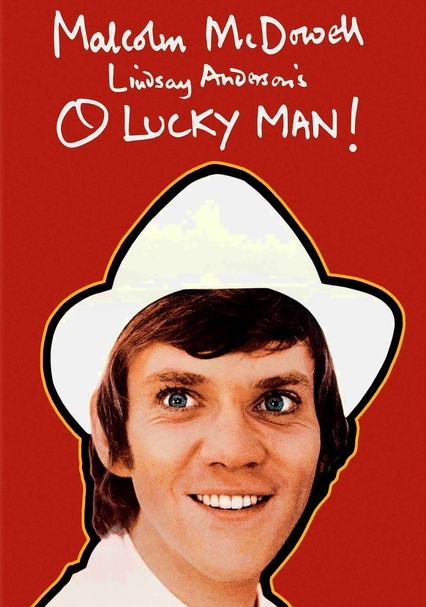
O Lucky Man!-1973

O Lucky Man! -1973

Director Lindsay Anderson

Starring Malcolm McDowell, Ralph Richardson, Helen Mirren

Scott’s Review #1,174
Reviewed September 1, 2021

Grade: A-

O Lucky Man! (1973) is a satirical black comedy that mixes musical numbers with a message about capitalism from the driven protagonist. Like a great fine wine, the film has aged well and is still relevant decades later.

The film is a slow build, but by the end of its nearly three-hour running time, I was enamored and hummed the title song repeatedly.

I’m still humming it as I write this review.

It is suggested that O Lucky Man! be watched in two or three segments for full appreciation. One sitting would be incredibly tough, since some of the events require reflection and thought.

An ambitious young British man, Mick Travis (Malcolm McDowell), is determined to be successful at all costs. Debuting as a coffee salesman, Mick is quickly promoted within his company. Events take a series of bizarre turns when a military agency abducts Mick.

Later, he becomes smitten with the gorgeous Patricia (Helen Mirren) and winds up working for her father, sinister executive Sir James Burgess (Ralph Richardson). As Mick’s tale continues, his experiences get progressively stranger.

The clever aspect is that just when you think Mick’s life is dour and drab, he rebounds more successful than ever. Hence the title of the film. So, there is an element of adventure and romance amid the capitalist plot.

Lindsay Anderson, who directed O Lucky Man!, re-casts McDowell again in the same role he first played as a disaffected public schoolboy in his first film performance in If… (1968).

I did not realize this when I watched O Lucky Man!, and I think this knowledge would have made me catch on to the events and subtext even more.

Now, I need to rewatch If…

I did, however, ruminate constantly on McDowell’s other iconic role in A Clockwork Orange (1971) as Alex. The characters are quite similar, save that Alex is a juvenile delinquent rather than a rising corporate guy like Mick.

This is in large part due to McDowell’s looks and acting style. His trademark sneer and bright blue eyes make him mesmerizing in both roles.

I even spotted an actor who played one of the infamous droogs!

A plus for the film is that several actors appear in multiple roles, some of whom are difficult to distinguish. Part of the fun is trying to figure out who’s who.

There isn’t a whole lot of chemistry between McDowell and Mirren, but it’s interesting to see the shifting characteristics of the characters.

And Patricia is fascinating. When she asks why people work so hard for things instead of just taking them, we realize she places no value on things because she’s never had to work for them. She’s a rich daddy’s girl.

There are reasons not to like her, but I still did. When she winds up in a homeless lot, it’s shocking. And I also loved the character of Mick and his epic journey. He is imprisoned and then reformed in a humanistic way, just like Alex was in A Clockwork Orange.

But the best part of O Lucky Man! is the music. Anderson takes periodic breaks from the drama to treat his audience to a musical number, performed by Alan Price.

It’s comforting to sit back and enjoy the unforgettable tunes that pepper the film. One could argue that the songs almost usurp the main action, but I found them to be great companions to the other.

As if there was any doubt, the soundtrack was widely lauded and was a huge financial success.

A surreal effort, sometimes happy or tragic but always insightful and oftentimes delightful, McDowell, Price, and Anderson are at the top of their respective games.

O Lucky Man! (1973) is a terrific watch, brimming with good juices if one has the patience to let events marinate.
When a Stranger Calls-1979

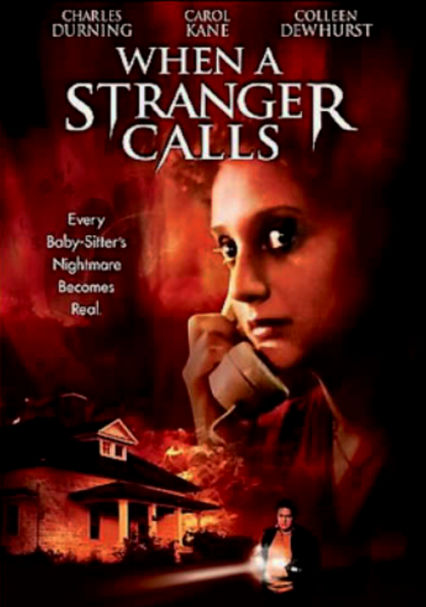
When a Stranger Calls-1979

Director Fred Walton

Starring Carol Kane, Charles Durning

Scott’s Review #1,046

Reviewed July 29, 2020

Grade: B+

When a Stranger Calls (1979) has the great honor of possessing one of the most frightening twenty minutes in horror film history, kicking the daylights out of the stunned and transfixed viewer from the first frame.

While still a very good film, the pacing slows and shifts into a different kind of film before kicking back into high gear for the final twenty minutes of action.

This results in some imbalance and imperfections throughout.

Carol Kane, Tony Beckley, and Colleen Dewhurst make the film as good as it is, and they are the standouts for me.

Teenage babysitter Jill Johnson (Carol Kane) calmly walks through an affluent California neighborhood for a quiet evening of watching two children.

The doctor and his wife are embarking on a night of dinner and a movie, and the children will be no trouble, Jill is told, since they are recovering from colds and are already fast asleep in their beds.

Shortly after they leave, Jill begins receiving odd phone calls from a man who asks, “Have you checked the children?” At first, assumed to be a practical joke, the calls become more menacing, prompting Jill to get the police involved.

Now terrified, Jill is told by the alarmed police to calmly get out of the house because the calls she is receiving are coming from inside the house!

She flees and is met head-on by Detective John Clifford (Charles Durning), who apprehends an English merchant seaman named Curt Duncan (Tony Beckley), who has ripped the children to shreds with his bare hands.

He is subsequently sent to an asylum, only to escape seven years later, prompting Clifford to hunt him down like an animal.

The film is sectioned into two segments and multiple genres. The beginning and conclusion are standard horror sequences, while the guts of the film delve into a psychological thriller or crime-drama territory, with similarities to Dirty Harry (1971).

Clifford spends much of his time trying to track down Duncan in a cat-and-mouse game throughout Los Angeles. Colleen Dewhurst plays a middle-aged woman who catches the eye of Duncan one night in a seedy downtown nightclub.

Director Fred Walton makes Clifford a hard-edged, grizzled detective who has seen it all and has no mercy for Duncan, intent on killing him rather than capturing him.

Durning is not the best part of the film, and the role might have been cast with a more charismatic actor.

Perplexing is what Duncan’s motivation is for killing others, other than simply being crazy, which is not a good enough explanation. Was he abused as a child? During some scenes, he is sympathetic, more like a wounded child than a crazed killer.

He wants a friend, whereas Clifford, the good guy, is sometimes unsympathetic and tough to root for.

With “deer caught in headlight’s eyes” expressions and emotions, Kane’s Jill is brilliant at using her eyes to great benefit. The audience feels her peril, fear, and panic during her scenes. When Duncan resurfaces looking for her again (though it’s not clear why he obsesses over her), her nice life, two children, and husband’s lives are all placed in jeopardy.

Dewhurst, who could have easily been cast as the lead in Gloria (1980), is tough as nails and no-nonsense, though she does feel sympathy and some attraction for Duncan.

In 1996, when Scream was released and provided the oomph that the horror genre desperately needed, thanks were justifiably given to When a Stranger Calls for its mighty influence.

The first twelve minutes of Scream (1996) are a direct homage to this film when a stranger calls (pun intended!), and the leading lady’s life spirals out of control due to a phone call and a menacing voice.

Parts of the opening sequence are influenced by Black Christmas (1974), a brilliant horror film instrumental in the making of so many others. The revelation that the killer is inside the house is a plot device that remains scary and satisfying.

Offering a cross-genre approach that works best with its terrifying horror elements, When a Stranger Calls (1979) is a sometimes terrific, sometimes uneven picture.

Thanks to compelling acting, the slowed-down middle portion does not ruin the entire experience, but what an erupting and memorable beginning and end.

Followed by an unsuccessful sequel and an even more disappointing remake in 2006.

Murder on the Orient Express-1974

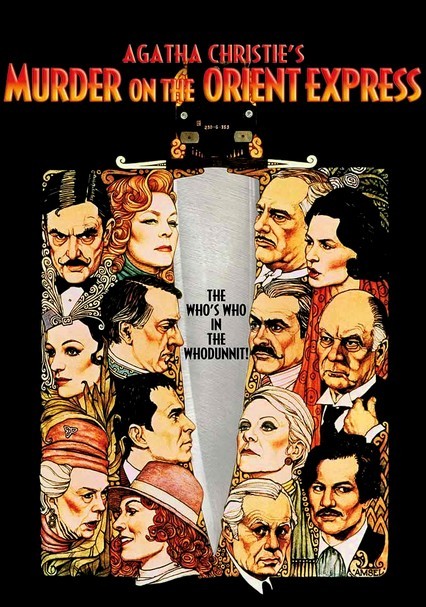
Murder on the Orient Express-1974

Director Sidney Lumet

Starring Albert Finney, Lauren Bacall, and Ingrid Bergman

Scott’s Review #928

Reviewed August 7, 2019

Grade: A-

Based on the 1934 novel of the same name by Agatha Christie, Murder on the Orient Express (1974) brings the story to the big screen with a robust and eccentric cast of characters, all steeped in suspicion.

The classic whodunit of all whodunits, the film adds a Hollywood flair with rich costumes and an authentic feel to a budget-blasting extravaganza that keeps the audience guessing as to who the killer or killers may be.

The film was recognized with a slew of Oscar nominations that year.

The hero of the film is Hercules Poirot (Albert Finney), a well-respected yet bumbling Belgian detective, who is solicited to solve the mysterious death of a business tycoon aboard the famous and luxurious Orient Express train.

On his way to the train’s destination, he encounters such delicious characters as the glamorous Mrs. Hubbard (Lauren Bacall), the nervous Greta Ohlsson (Ingrid Bergman), and his friend Bianchi (Martin Balsam), the director of the company who owns the enormous vessel.

Many other characters are introduced to the layered story.

As the complicated plot unravels, most of the characters have something to hide or a connection to other characters.

The fun for the viewer is to live vicariously through Poirot and await the big final reveal after the film that, unless one has already viewed the film or read the novel, one will not see coming.

With a film of this type, a detective thriller, the audience can be assured of a resolution, as a big murder mystery dinner theater production brought to the big screen.

Formulaic, the film never drags nor feels dull.

Amid the first few minutes of Murder on the Orient Express, the intrigue is unleashed at full-throttle speed, leaving one bedazzled and hooked.

The sequence is brilliantly done and thrusts the audience into a compelling backstory, prompting wonder about how these events connect to a train pulling out of the Orient.

Quickly edited film clippings of a news story explain the mysterious Long Island, New York, abduction and murder of the infant daughter of a famed pilot.

It is suggested that the Orient Express trip embarks from Istanbul, Turkey, and is destined for London. This means that several countries will be included in the trek, creating opportunities for both geographical accompaniments and new cultural experiences, which director Sidney Lumet offers in generous amounts.

Moments following the murder, the train has the unfortunate fate of colliding with an avalanche, leaving the passengers in double peril, with a killer on the loose and cabin fever to contend with.

To the compelled viewer, this is snug comfort, as the atmospheric locales are gorgeous and the thought of a dozen strangers trapped together with so much to hide brings the story into a frenzy.

Who did what to the murder victim is slowly revealed as several red herrings (or are they?) are revealed. Who is the mysterious woman strutting down the corridor shortly before the murder, spotted by Poirot? Is she a staged pawn or merely an innocent victim? Could she be the murderer?

The wonderful part of Murder on the Orient Express is the number of entangled possibilities.

The film’s conclusion turns the thriller into a moralistic story, to its credit. The fact that the murder victim was hateful and diabolical is a key part of the story and makes the viewer wonder if the killer or killers are justified in their actions.

Does the fact that Ratchett was stabbed a dozen times with varying degrees of severity play into the motivation?

A very compelling and unrecognizable Finney does a fantastic job of carrying the film among such a troupe of good actors.

Murder on the Orient Express (1974) sets out to entertain and succeeds on every level, bringing the book to the silver screen with a fresh interpretation that still honors Christie’s intent.

Stylistic and thought-provoking, the film has gorgeous costumes, a good story, and fine acting. Knowing who the killer is does little to detract from the enjoyment a repeated viewing provides.

Oscar Nominations: 1 win-Best Actor-Albert Finney, Best Supporting Actress-Ingrid Bergman (won), Best Screenplay Adapted from Other Material, Best Original Dramatic Score, Best Costume Design, Best Cinematography