Julia-1977
Director Fred Zinnemann
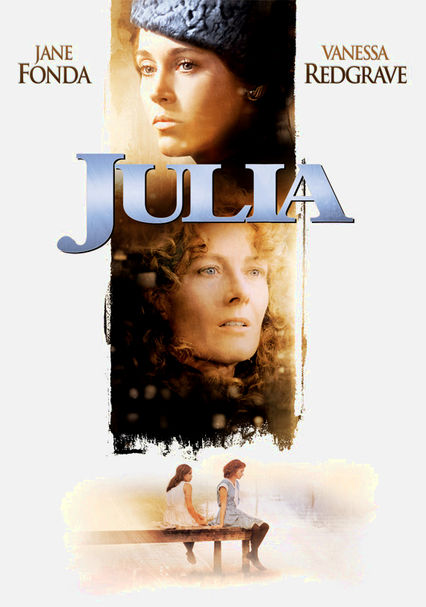
Starring Jane Fonda, Vanessa Redgrave
Scott’s Review #1,283
Reviewed July 31, 2022
Grade: A
Jane Fonda leads the charge in a powerful, gorgeously shot drama named Julia (1977), set in pre-World War II and amid the impending Holocaust.
Based on the play by Lillian Hellman, a famous playwright, the drama depicts the relationship between two close friends and the unexpected consequences when one desperately needs help from the other.
When Lillian (Fonda), a renowned playwright, reunites with her childhood friend Julia (Vanessa Redgrave) in Russia, the writer is asked to smuggle funds into Germany to aid the anti-Nazi movement.
In the mix is Lillian’s mentor, Dashiell Hammett (Jason Robards), who is unaware of her dangerous assignment.
I immediately relish the film mainly because the message is extremely female-empowering, and a dynamic friendship between two women is examined.
This still doesn’t happen enough, successfully, in films today.
Given the World War II theme, one would naturally assume the film would center around men, not women, and plenty of female spies and the like are featured.
Added to the mix is the astounding cinematography of Germany, Poland, and Russia. In truth, the film was shot in England and France for security and restrictive reasons, but it could have fooled me since the countries look authentic and believable.
Julie looks polished, and that’s hardly a gripe. The production design and costumes are perfectly shot and colored.
It’s not a dowdy or drab film, and it depicts a little violence or torture, choosing instead to focus on relationships and intrigue.
The suspenseful train sequence is brilliant in every way, sprinkling in Hitchcockian touches and enough nail-biting to make the long scene a key takeaway.
Lillian must keep her intentions secret as she travels toward Russia, and each train scene, whether it’s the peril of being checked at the border or eating in the dining car, is captured perfectly.
A slight suspension of disbelief is the casting of the beautiful Fonda as the plain-looking playwright Lillian Hellman. In some scenes, she is made up to look haggard, tired, and homely, but the trick never works for a minute.
It’s even giggle-worthy, and it’s recommended to sit back and watch Fonda deliver a splendid performance, forgetting altogether that she is portraying the writer.
In other movies, it might have only been about Fonda from an acting perspective, but in Julia, the spoils go round and round.
At the very least, Redgrave, Robards, and Maximilian Schell, who plays a pivotal character named Johann, must be mentioned.
Each brings professionalism and believability to their characters.
But my favorites are the quieter parts by a woman passenger and a girl passenger. They go from cheery to serious, speaking in a sort of code, not stating that they are helping Lillian, but obviously using facial expressions to reveal true alliances.
A delightful point to make is that Julia is Meryl Streep’s first film role, albeit in a tiny part.
Speaking of Redgrave, when she won the Best Supporting Actress Academy Award, she made an infamous speech that marked a great controversy.
In her acceptance speech, she thanked Hollywood for having “refused to be intimidated by the threats of a small bunch of Zionist hoodlums whose behavior is an insult to the stature of Jews all over the world and to their great and heroic record of struggle against fascism and oppression”.
This was preceded by members of the Jewish Defense League picketing the ceremony and followed by some boos and retorts to her comments.
But back to the film, Julia does not end in a happily-ever-after way. A major character is killed, and a baby is lost forever. But that’s part of the truth about creating a film that harkens back to a day when non-conformity led to death.
Julia (1977) is a vital film that still holds up tremendously well, and in a world still filled with chaos and oppression, it’s a powerful reminder of cinema’s power.
Oscar Nominations: 3 wins-Best Picture, Best Director-Fred Zinnemann, Best Actress-Jane Fonda, Best Supporting Actor-Jason Robards (won), Maximilian Schell, Best Supporting Actress-Vanessa Redgrave (won), Best Screenplay-Based on Material from Another Medium (won), Best Cinematography, Best Costume Design, Best Film Editing, Best Original Score
Golden Globe Nominations: 2 wins-Best Picture-Drama, Best Director-Fred Zinnemann, Best Actress-Drama-Jane Fonda (won), Best Supporting Actor-Jason Robards, Maximilian Schell, Best Supporting Actress-Vanessa Redgrave (won), Best Screenplay