Tag Archives: Musical Drama

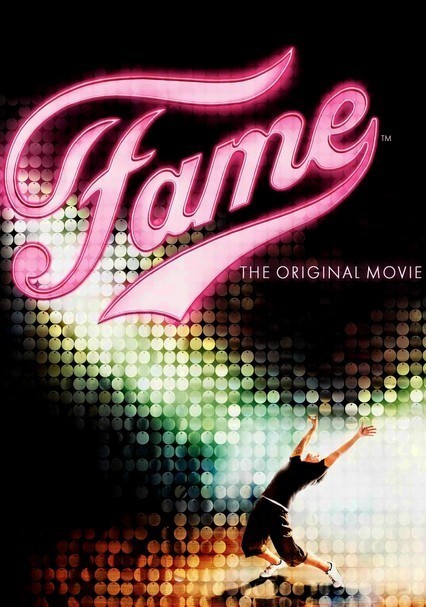
Fame-1980

Fame-1980

Director Alan Parker

Starring Irene Cara, Paul McCrane, Maureen Teefy

Scott’s Review #1,143

Reviewed May 18, 2021

Grade: A-

Fame (1980) is a teen high school musical drama centering around the trials and tribulations of gifted New York City kids. Anyone with musical, theatrical, or dance talent can relate to the film.

The rest of us can merely live vicariously through these kids and the potential careers that lie ahead of them wishing we had half of their talent and drive.

This is not your standard musical from the 1950s or 1960s and the pace is quite frenetic. Fasten your seatbelts because there is a lot packed in.

The film oozes with an upbeat musical score and the flavor of New York City, quite gritty and dangerous circa 1980. The now-legendary musical numbers where the cast dances together with faculty and strangers alike atop Manhattan taxi cabs are silly beyond belief but the title song by star Irene Cara is a danceable and hummable classic.

These scenes offset the muscular dramatic scenes with lightness and comedy, but in another way, they diminish the credibility of the serious moments.

Events get off to a chaotic start as we witness a mass of teenagers frenetically scrambling to remember audition lyrics and dance numbers as they vie for entry into the High School of Performing Arts, with free admission for only the cream of the crop.

The film chronicles the lucky lives from their auditions to their freshman, sophomore, junior, and senior years.

The main group features Montgomery MacNeil (Paul McCrane), a closeted gay male; Doris Finsecker (Maureen Teefy), a shy Jewish girl; Ralph Garci (Barry Miller), and Bruno Martelli (Lee Curreri) an aspiring keyboardist whose electronic equipment horrifies the conservative music teachers.

They align with Lisa Monroe (Laura Dean), Coco Hernandez (Irene Cara), and Leroy Johnson (Gene Anthony Ray) a gifted dancer who cannot read.

All have interesting backstories or problems to work through during their four years in school and this is the main appeal of the film. The dance numbers, of course, are fabulous too.

I immediately became enamored with sensitive Doris, whose mother’s (Tresa Hughes) emotions elicit viewer emotion simply with her own emotions. Her passion for her daughter and her talent is infectious.

Alan Parker, who directs Fame, offers extremely heavy topics that the students must face. It’s not all fun and dance. The youngsters grapple with issues such as homosexuality, abortion, interracial dating, class systems, attempted suicide, and illiteracy.

Their pain is readily offered to audiences who become entangled in their worlds.

A negative is that as much as the issues are brought to the forefront, the sheer number of them results in few resolutions.

On top of their unique struggles, the students must deal with the mundane pressures of adolescence like homework, heartbreak, and rejection. Their talent doesn’t make them any more special than anyone else in the growing-up department.

My favorite moments in Fame are the quiet ones. When Doris and Montgomery share a chat on the stairs that skirts around the talk of his absent mother I thought what a delightful couple they would make. Montgomery’s repressed sexuality slowly surfaces while Doris develops a crush on an older popular boy.

As if the heavy topics eventually subside, they don’t. As the student’s age and start to plan careers, Coco is lured by a man claiming to be a director only to realize he is a porn film “director”. He coaxes her into taking off her shirt and photographs her sobbing.

The scene is heartbreaking in its power.

The atmosphere of Fame also works well. There is a strong and suffocating feeling of heat and humidity. Anyone who has spent time in New York City during the summer months knows the stench and thickness of the stuffy weather.

I got the impression the school had no air conditioning as the running perspiration of the music teacher is evidence of.

A coming-of-age film that delivers hard-hitting messages only offset by the climactic dance-celebration numbers, Fame (1980) is a winner and gives teen angst its due.

This film ages well and stands the test of time.

Oscar Nominations: 2 wins-Best Original Screenplay, Best Original Score (won), Best Original Song-“Fame” (won), Out Here on My Own”, Best Film Editing, Best Sound


Across the Universe-2007

Across the Universe-2007

Director Julie Taymor

Starring Evan Rachel Wood, Jim Sturgess

Scott’s Review #1,057

Reviewed August 27, 2020

Grade: A

Across the Universe (2007) is a film that some will deem sappy or trite or classify as a cliched love story, and admittedly some of those elements exist. But the film offers so much more.

Truthfully, the romance genre is not usually for me, for those very reasons. Somehow the inclusion of The Beatles songs and the psychedelic backdrop of musical compositions makes the film beautiful, lovely, and charismatic.

The war effects and the healthy dose of chemistry by the lead actors make this a winner in my book.

I adore the pairing of lovebirds Lucy and Jude, played by Evan Rachel Wood and Jim Sturgess. The chemistry between them sizzles from the moment they appear together, though this takes a while to happen.

When it did, over a savory Thanksgiving meal and while bowling, I was hooked, and most audiences were too. The beauty is that we experience the characters separately first and get to know them well.

The love story is the meat and potatoes of Across the Universe. If the connection between Jude and Lucy were not there the film would not work.

This is far from merely a love story, though. That is only one facet. A hefty thirty-four Beatles compositions are included throughout the film, all strategically placed cleverly to match the scene.

For example, when Jude is working in a Liverpool shipyard in the 1960s, he reminisces about a girl he has loved and lost to the tune of “Girl”.

In a matching sequence, Lucy frets about her current boyfriend heading off to the Vietnam War while singing “Hold Me Tight”.

The 1960s period is brilliantly placed to add not only a clear juxtaposition to when the Beatles ruled the world but during a frightening time in world history when many young soldiers died needlessly during the ravaging war.

The mixture of the war, the songs, and the hybrid of live-action and animation provide a magical, other-worldly quality that is perfect. It provides a feeling of escapism to the deadly war. The visuals and the gorgeous colors are a complete contrast to the grey and dark war elements.

Julie Taymor takes an anti-war, activist stance created through the main characters when Jude and Lucy proclaim themselves revolutionaries. This occurs when the war hits home after Lucy’s brother is drafted. They sadly realize they may never see Daniel again, and they are right.

Taymor gives a personal touch to the characters and a political decision is made that shapes the film. I found the stance perfectly logical given the characters and their viewpoints, but some audience members could be turned off or feel slighted depending on their beliefs.

I love the point she makes that war is bad.

Twenty-five of the vocal tracks are performed by one or more of the six lead cast members. My favorite treasures are the new takes on classic songs, especially “Come Together” and “With a Little Help from My Friends” which are unusual and elegant.

When Daniel is killed in Vietnam and Detroit, a young boy is killed in the 1967 riot (combined “Let It Be”), the moment is sentimental and powerful.

A dry eye will not be left.

Locales such as Greenwich Village, and New York City show the creative artists who inhabit those streets. The riot-fueled streets of Detroit, Michigan are featured, and finally, the dirty and jungle-killing fields of Vietnam provide a diverse slate of experiences.

The love story and musical soundtrack provide exceptional emotion to an important and timeless film.

Across the Universe (2007) is artistic and inspirational.

Oscar Nominations: Best Costume Design

The Lion King-2019

The Lion King-2019

Director Jon Favreau

Voices: Donald Glover, Alfre Woodard, Seth Rogen

Scott’s Review #981

Reviewed January 17, 2020

Grade: B

An impossible feat would have been to eclipse the magic of the stage version or the loveliness of the animated version. Still, The Lion King (2019) offers a different approach as well.

Arguably, this version is both animated and not, infused with computer-generated animation (CGA) and marvelous visual effects, showcasing creativity.

Partial to the two-former offering, this telling is lovely and perfect for the entire family.

The realism of the animals and scenery is remarkable.

To recap, new viewers, the story centers on a den of lions living among the creatures in the “Pride Lands of Africa”. They hunt, prance, love, and guard their territory, mainly from the hungry hyenas, who are kept at bay during peaceful times.

King Mufasa (James Earl Jones) and Queen Sarabi (Alfre Woodard) are fair rulers and anticipate their son, Simba (Donald Glover), taking over the throne one day, much to the chagrin of Mufasa’s evil brother, Scar (Chiwetel Ejiofor), who was passed over for the crown.

Envious of Simba, Scar tricks him and his friend Nala (Beyoncé) into wandering into the land of the hyenas, hoping to cause their deaths. When a heroic Mufasa foils his plot, Scar ups the ante and hatches a scheme to kill his brother.

He not only succeeds but also makes Simba believe he caused his father’s death. Ashamed, the youngster runs away to begin a new life, unaware that he will one day return to save the day.

Props must be given to the filmmakers for their inclusion and cultural authenticity, as many of the characters, especially those at the forefront, are voiced by African-American talent.

This is a notable achievement, considering the film is set in Africa, and it’s unusual for the voices to be Caucasian.

Heavyweights like Jones and Woodard sound polished, especially Jones with his deep and dominant, yet fatherly voice, perfectly cast as the King. Woodard provides gentle warmth and confident complexity.

The musical numbers are terrific.

The film begins with an energetic and tribal rendition of “Circle of Life,” where a legion of wild animals dances together in a warm display of diversity.

The song appears later in the film. The powerful and romantic “Can You Feel the Love Tonight” is performed against a lovely moonlit sky with decadent stars.

The new song “Spirit” performed by Beyoncé is adequate but does not figure into the story as much as it should, seeming more like an afterthought.

The best parts of The Lion King, however, are the astounding visuals.

The contrasting sequences of bright, sprawling African terrain and a magical oasis of colorful flowers and running water, set against the dark and foreboding landscape of the dangerous hyenas, offer the viewer a multitude of delights to savor.

The orange and red colors during the climactic finale are unrivaled in the dazzling bombast of adventure.

As realistic as the elements are in the film, they are also negative. Watching the animals talk and prowl amid the lush landscape felt wonderful, until I realized that all of it is fake.

Real animals were never used; instead, it is a virtual reality tool that creates the illusion of reality.

This aspect slightly saddens me as the genuine quality left me feeling robbed. The possibility of another alternative would have meant a reboot of the animated classic, and I am not sure that would have been wise.

Favreau, once an actor and now a director, known for creating films such as Iron Man (2008) and Iron Man 2 (2010), certainly knows his way around an adventure film.

The story, while containing some menacing moments, also feels a bit safe and lacks the freshness or edginess that the 1994 version possessed. Something seems watered down, and the excitement and heart of the original feel missed.

I will always go back to the animated 1994 treasure for a cinematic feast, but while The Lion King (2019) could have been a disaster, it isn’t. With modernized songs and enough CGA to last a lifetime, I could easily see some people hating the film, but I embraced it for what it is.

Spectacular visual treats await any fan of cinema, as one will ponder how the project all came together.

Oscar Nominations: Best Visual Effects

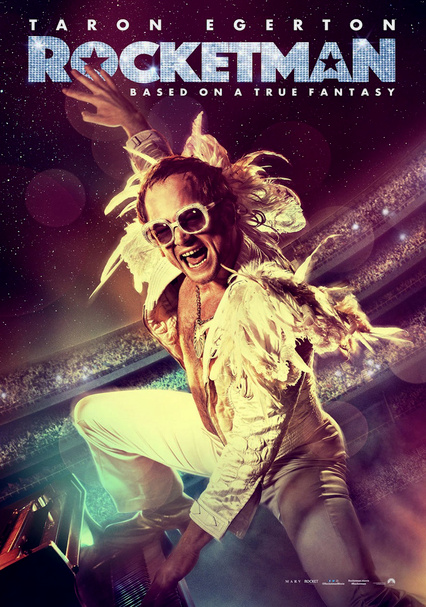
Rocketman-2019

Rocketman-2019

Director Dexter Fletcher

Starring Taron Egerton, Jamie Bell

Scott’s Review #906

Reviewed June 5, 2019

Grade: A

Following the unexpected success of 2018’s rock biography Bohemian Rhapsody comes the similarly themed Rocketman (2019).

This time, the subject at hand is Elton John, rather than Freddie Mercury, but both storied figures share unquestionable comparisons, as their successes, failures, and struggles are well-documented.

Both films take their names from popular title songs, and both feature the same director, Dexter Fletcher.

Freddie Mercury and Elton John are both larger-than-life onstage personas, yet both reportedly suffered from shyness, creating characters to portray that helped ease their difficulties.

Rocketman gets the slight edge over Bohemian Rhapsody when comparing the two, with experimental and psychedelic sequences making the experience more left of center than the latter and lacking a hefty feel-good component.

I would venture to assess that Rocketman has darker overtones.

The film opens impressively as an adult, successful Elton John (Taron Egerton) attends a support group therapy session in rehab, begrudgingly. This scene will recur throughout the film as John slowly reveals more to the group about his childhood, rise to fame, and struggles with numerous demons.

This is key to the enjoyment of the film, as it frequently backtracks in time, allowing us to see John’s development both as a musician and on a personal level.

Many scenes unfold like a Broadway play, which is an ingenious approach, not only a treat for fans of John’s vast catalog of songs but also immensely creative from a cinematic perspective.

At the film’s high point, the scenes are not only showy but also propel the direction of the film, rather than slowing down the events.

Fantastic are the offerings of hit songs like “Tiny Dancer”, as shown during John’s first trip to Los Angeles, where he is forced to witness the then-crush, Bernie Taupin (Jamie Bell), take up with a supermodel at an LSD-infused Hollywood party.

The musical numbers offer glimpses into the mind and heart of Elton and other characters through song. A teary number occurs early on when a pained, boyish Elton is learning to play the piano, facing struggles at home.

When the song begins, it is Elton’s tune to carry, but then his father sings a few lines, followed by his mother and then his grandmother. Each person offers their perspective based on the lyrics they are singing.

The beauty of this scene is powerful and sets the tone for the scenes to follow.

Rocketman is an emotionally charged film, evoking laughter and tears throughout its duration. Thanks to Egerton, who carries the film, the audience cares for him as a human being instead of a larger-than-life rock star.

We feel his pain, cry his tears, and smile during rare moments when he is content. He faces insecurity, sex addiction, drug and alcohol addiction, and an eating disorder. Through Egerton, we face the battles alongside him.

Elton John serves as Executive Producer of the film, providing a measure of truth and honesty in storytelling, something Bohemian Rhapsody was accused of not containing. John’s parents are portrayed accurately and decidedly, and both mother and father are dastardly, nearly ruining Elton’s self-esteem for life.

Dallas Bryce-Howard, as his mother, is happy to capitalize financially on his fame, but sticks a dagger in his heart when she professes he will never be loved since he is a gay man.

His father is nearly as bad. Abandoning his loveless marriage to Elton’s mother, he eventually finds happiness with another woman and produces two boys. He can never love his eldest son, despite Elton’s efforts to reconnect.

To add insult to injury, his father asks him to cross out the words “to Dad” on an album autograph, instead requesting that it be given to a colleague. Elton is devastated.

Events are not all dire and dreary, as with his parents and a major suicide attempt. Happier times are shown, and his grandmother (wonderfully played by Gemma Jones) remains an ardent supporter.

His relationship with Taupin is one of the most benevolent and life-long causes of trust and respect, and once his act is cleaned up, Elton can appreciate the finer things in life more completely.

Egerton performs beautifully in both acting and singing capabilities, but lacks the singing chops that Elton John has. The decision was made not to have Egerton lip-sync, which deserves its measure of praise.

It’s interesting to wonder what the opposite choice would have resulted in. Like with Bohemian Rhapsody, we are left with a brilliant portrayal of John by Egerton.

Watched in tandem with Bohemian Rhapsody, a great idea given the back-to-back releases, is one recommendation for comparison’s sake.

Offering a more creative experience, again, the musical numbers are superb. Both switching through the back and forth timelines, Rocketman (2019) squeaks out the victory for me, and doesn’t the victor get the spoils?

If Rami Malek won the coveted Best Actor Oscar statuette, what would that mean for the tremendous turn that Egerton gives?

Oscar Nominations: 1 win-Best Original Song-“(I’m Gonna) Love Me Again (won)

Song of the South-1946

Song of the South-1946

Director Harve Foster, Wilfred Jackson

Starring James Baskett, Billy Driscoll

Scott’s Review #893

Reviewed May 4, 2019

Grade: B+

Song of the South (1946) is a Walt Disney film buried in the chambers of cinema history, reportedly an embarrassment never too soon forgotten by the legendary producer and his company.

The reason for the ruckus is the numerous overtones of racism that emerge throughout an otherwise darling film.

Admittedly, the film contains a racial cheeriness that cannot be interpreted as anything other than condescension to black folk, and numerous stereotypes abound.

The mysterious appeal of the film during modern times is undoubted because of the surrounding controversies that hopefully can be put aside in favor of a resoundingly positive message and glimmering childlike innocence that resonates throughout the film.

The hybrid choice of live-action and animation is superlative, eliciting a new progressive experience. Given the surrounding controversies, it would be shameful to spoil it.

The film takes place during the Reformation Era in Georgia, the United States of America, a period of American history shortly after the end of the Civil War and the abolition of slavery. It has a pretty Southern flavor and feel.

Seven-year-old Johnny (Bobby Driscoll) is excited to visit his grandmother’s (Lucile Watson) lavish plantation outside of Atlanta along with his mother, Sally (Ruth Warrick), and father (Erik Rolf). He is soon devastated to learn that his father will return to Atlanta for business, leaving Johnny behind.

Johnny plots to run away from the plantation and return to Atlanta but develops a special friendship with kindly Uncle Remus (James Baskett). Uncle Remus enchants the young boy with sentimental lesson stories about Br’er Rabbit and his foils, Br’er Fox and Br’er Bear.

Drama ensues when Johnny feuds with two poor neighbor boys and develops friendships with their sister, Ginny. He also bonds with Toby, a young black boy who lives on the plantation.

Thunderous applause must go to the creative minds who thought of mixing the animations with the live-action drama, resulting in positive and compelling effects.

As Uncle Remus repeatedly embarks on a new story for Johnny to listen to, the audience knows they will be transported into a magical land of make-believe as a precise lesson results from these stories.

Uncle Remus is an inspiring character- it is rare to find a black character written this way in 1946. Often, black characters were reduced to maids, butlers, farmhands, or other servant roles.

While the film does not stray from the course by casting many of these roles, including Uncle Remus himself, his character is different because he is beloved by little Johnny, respected by the grandmother, and treated as part of the family. His opinion counts for something and is not merely dismissed as rubbish.

The musical soundtrack to Song of the South is particularly cheery and easy to hum along to. The most recognizable song is “Zip-a-Dee-Doo-Dah,” which recurs several times throughout the feature. The best rendition is at the end, when the mix of live-action and animation culminates with the sing-along.

My favorite appearance is when the “bluebird” referenced in the lyric comes into play, resting on one character’s shoulder, true to the lyrical content.

The accusations of racism are justified as keen viewers will understand the condescension towards blacks in several scenes.

More than once, a parade of black people is seen traipsing through the plantation, singing songs, not precisely cheerfully but not despondent.

The scenes have eerie slavery overtones- despite the black character’s all presumably being free to come and go, the reality is they all work for white folk. The black plight and struggle are completely sugar-coated and dismissed.

The animated characters are voiced by strong ethnic voices and are presumed to be ridiculous. The usage of a Tar-Baby character, ultimately enshrined in black tar, seems offensive, almost teetering on the implication of promoting a blackface minstrel show moment as the character, once white, is then turned black because of the tar.

Song of the South is not the only film of its time to face racist accusations- the enormous Gone with the Wind (1939) and Jezebel (1938) faced similar heat.

Song of the South (1946) is recommended for those who recognize the existing racism and appreciate the film’s artistic merits. Wise and resounding friendships between white and black characters are evident, and it is a lovely story about determination, fairness, and respect.

The film should be treasured for its lovely moments and scolded for racist overtones.

Oscar Nominations: 1 win-Best Original Song-“Zip-a-Dee-Doo-Dah” (won)

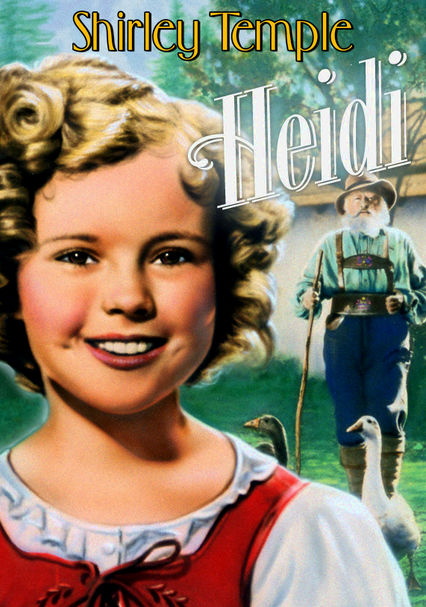
Heidi-1937

Heidi-1937

Director Allan Dwan

Starring Shirley Temple, Jean Hersholt

Scott’s Review #826

Reviewed November 2, 2018

Grade: A-

During the 1930s and 1940s, Shirley Temple was the most prominent and profitable child star around, starring in dozens of films deemed “wholesome” and “cute.”

Heidi (1937) is one of her most popular and best-regarded treasures of earnest and sentimental riches.

The film is forever known in pop culture as the ruination of the 1968 Super Bowl when the Oakland Raiders and New York Jets game was interrupted at a crucial moment due to the film’s scheduled airing.

An interesting side note is that, amazingly, Temple relinquished her Hollywood title with dignity and without scars. She left the scene entirely and became a successful world diplomat.

In an era in American cinema when child stars were treated as property and sometimes like cattle, her relatively healthy exit was a remarkable feat.

The story of Heidi is based on the 1880 Swiss story of the same name. In the title role, Temple plays an orphan living in the cold mountains with her grizzled grandfather, Adolf (Jean Hersholt). At first bitter for being saddled with raising a child, Adolf finally accepts the girl, and he and Heidi become fast friends, exhibiting a warm and tender bond.

Heidi’s self-absorbed aunt ruins the dynamic and whisks the child away to live with a wealthy family. The little girl will be a companion for their disabled daughter, Klara, as Heidi and Adolf are determined to find each other.

Adding drama to the story is Klara’s evil housekeeper and her jealousy of Heidi, leading to attempts to sell Heidi off to gypsies for profit.

By 1937, Temple was beginning to be deemed “too old” for cute roles, but Heidi is one of her best-remembered films, and the actress is in top form.

As one might expect from any Shirley Temple film, musical numbers are included- a dream sequence in Holland culminates with Temple belting out the charming “In My Little Wooden Shoes.”

There are millions of Shirley Temple fans worldwide, but there are also her detractors. Some feel her films are completely dated and that the young star was not as talented as they thought she was.

Admittedly, watching her films approaching the one-hundred-year mark can be peculiar. On the surface, they seem a bit hammy and overly sentimental, but my personal experience elicits a return to childhood days.

Despite being decades before my existence, Shirley Temple films were commonplace in my childhood household.

Heidi is not a groundbreaking cinematic experience or all that deep. What the film does provide, though, is comfort. The audience assuredly must know a film like Heidi has a happy ending, as the child provides warmth and spirit to every person she meets, making their lives better.

Even during peril, the girl has an “awe-shucks” manner of being and makes the best of her lousy situation.

The strongest appeal of Heidi comes from her friendship with Klara, a disabled woman. Klara is kind and naive, unaware of her servant’s jealousy and rage. Helpless, she comes to depend on Heidi, and we root for Heidi to rescue Klara and bring her to a better life.

The film has sappily written all over it but somehow works simultaneously.

Films such as Heidi, the best of all the Temple films, can be watched and enjoyed as an ode to days gone by or a tribute to someone’s grandmother’s favorite film.

Despite being irrelevant and too sappy in today’s modern world, they undoubtedly provide comfort and support to some, which cannot be such a bad thing.

Heidi (1937) can easily be enjoyed because of the film’s popularity and its warm message.

La Vie en Rose-2007

La Vie en Rose-2007

Director Olivier Dahan

Starring Marion Cotillard

Scott’s Review #790

Reviewed July 18, 2018

Grade: A

As a true fan of French actress Marion Cotillard, La Vie en Rose (2007) is the tremendously talented lady’s finest role to date- and I would venture to say one of the best in film history.

She immerses herself into the pivotal role of singer Edith Piaf and churns out a breathtaking performance.

Besides the vehicle to showcase her acting chops, the film as a whole is lovely, offering the poignant life story of the troubled star, adding enough French zest to offer more than just a biography.

The way that the plot is constructed is quite interesting as the story of Edith Piaf is told in a non-linear fashion. The highly complex singer’s biography is recounted first telling elements of her childhood and concluding with events occurring shortly before her death.

Her childhood is difficult so she is raised by her grandmother in a bordello and discovered on the streets to begin her meteoric rise to acclaim. The events of the film are known to be fairly accurate making the song-stresses life story awe-inspiring.

The visual aspects and cinematography elements of La Vie en Rose are lovely.  With soft, muted tones, the film is rich with culture and has a wonderful French way about it.

Since the story commences in 1918 the period is fraught with a rich history including World War II and a lavish trip to New York City where Edit performs.

To say nothing of the lavish Parisian settings, the “look” of the film is enough reason to watch in wonderment.

Enough praise cannot be reaped upon Cotillard as Piaf and as enjoyable and profound as the film itself is, the casting of the French actress is both perfect and unimaginable to think of anyone else in the role.

As treasured a performance as Cotillard gives, the filmmakers wisely choose to leave Piaf’s actual voice in the musical numbers. Anyone else mimicking her would be unimaginable and frankly insulting. And an imitator would not have served the film well.

Regardless of the voice-overs, Cotillard delivers such a flawless and brave performance that it makes the film what it is. Piaf was known as a very difficult woman to deal with both personally and professionally, though there were many sympathetic qualities to her given her tough life.

Cotillard’s facial expressions and mannerisms perfectly mimic the star’s qualities so much so that the actress seemingly becomes the singer. The actress deservedly won the Best Actress Academy Award for her layered performance.

The final scene of the film is both profound and ghastly. A very ill Edith, looking haggard, clown-like with heavy makeup, decides to take the stage for the final time, aware that she is dying.

Refusing to cancel her show, she performs her well-known number, “Non, Je ne regrette rien”. She then exits the stage in a frail manner and dies shortly thereafter. She was the consummate professional and star until the moment of her death. This particular scene is a wonderful culmination of the film.

La Vie en Rose (2007) solely judged as a biopic is a very good piece of filmmaking that tells a graceful, sometimes moving story of incredible talent.

With a performance such as Cotillard’s the film goes to another level and the performance becomes the main event. The emotions and the characteristics the actress undertakes are astounding and go down as one of the finest depictions in cinematic history.

Oscar Nominations: 2 wins-Best Actress-Marion Cotillard (won), Best Makeup (won), Best Costume Design

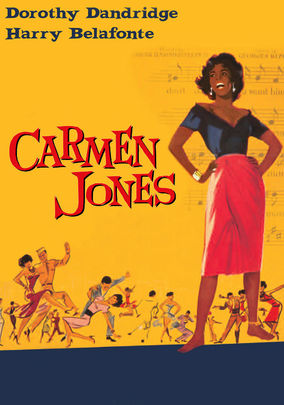
Carmen Jones-1954

Carmen Jones-1954

Director Otto Preminger

Starring Dorothy Dandridge, Harry Belafonte

Scott’s Review #736

Reviewed April 3, 2018

Grade: B+

It was pretty taboo at the time of release (1954) because it featured an all-black cast with no white members. Carmen Jones is to be celebrated for contribution to film history for this groundbreaking feat alone.

Directed by Otto Preminger (who ironically is Caucasian),  the film features legendary actress Dorothy Dandridge in a Marilyn Monroe-style performance worthy of the talents of the stars.

The film is a musical with an inevitable tragedy at the conclusion.

The 1954 feature is based on a 1943 stage production of the same name, based on the music of the famous 1875 Georges Bizet production of Carmen. These facets add to the richness of the film as it is layered with good history, and the well-known tragic elements make the conclusion unsurprising.

Brazen and beautiful, Carmen is a seductress who works in a parachute factory in North Carolina during World War II. After trading fists with a co-worker, Carmen is jailed and assigned handsome Corporal Joe (Harry Belafonte) to escort her to the authorities.

While Carmen is not shy about pursuing the young man, his fiancee, virginal Cindy Lou, fumes and schemes to keep her man.

The result is a triangle. Carmen and Joe eventually fall madly in love, leaving poor Cindy Lou behind, but their love faces hurdles.

The somewhat lighthearted first portion of the film, with coquettish humor mixed in, is offset by a much darker path the film takes. As Carmen and Joe finally profess their love and share a night of passion, she leaves him in the middle of the night, unable to endure prison time.

This results in Joe being imprisoned as the couple ultimately cannot stay away from one another despite repeated obstacles to their happiness. An additional character, a boxer named Husky, with designs on Carmen, is introduced, complicating matters.

In sad form, much like the opera Carmen, the final scene is devastating and startling as Joe treads down a dark and gloomy path of destruction. The character of Joe is nuanced- at first, a “nice guy”; the character is an example of complexity and what a man will do for love.

The viewer wonders what will become of Joe and how he could risk his life performing an act in the heat of passion.

In 1954, what a profound and fantastic role for a female, let alone a black female. Typically cast in roles such as maids, servers, or even less glamorous parts, how wonderful for Dandridge to capture a challenging role of this caliber.

She is a vixen as she sinks her teeth into the meaty and flirtatious Carmen. Dandridge’s pizzazz, flare, and singing and dancing performances made her a star, and she is forever known as a groundbreaking talent.

There cannot be enough said about the importance of casting all-black actors in Carmen Jones. Monumental, of course, given the time. The result is a film of significance to black culture, showing that they no longer needed to appear in “white films” as supporting players but could carry a movie on their own.

How profound and remarkable this was!

My only criticism of the film is undoubtedly related to the progress made for black actors and characters, though there is still plenty more work.

At times, the filming feels a shade dated (presently, there are more great roles for black actors) and has a slightly grainy look.

Some of the supporting characters’ acting is also not the strongest, but as Carmen Jones is a historical film, liberties must be taken.

Thanks to the genius and the funding of Preminger, who needed to produce the film independently due to lack of interest, the result is a film that has gone down in history as worthy, edgy, and open-minded.

Wisely casting talented stars with great pipes, the film is a solid success.

Oscar Nominations: Best Actress-Dorothy Dandridge, Best Scoring of a Musical Picture

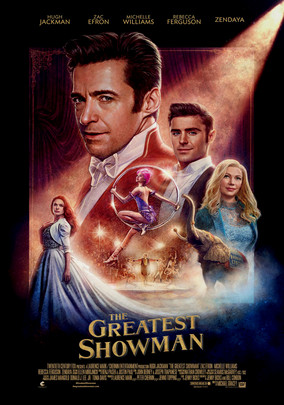
The Greatest Showman-2017

The Greatest Showman-2017

Director Michael Gracey

Starring Hugh Jackman, Michelle Williams, Zac Efron

Scott’s Review #707

Reviewed December 26, 2017

Grade: A-

A pure musical escapist film, The Greatest Showman (2017) holds a dear and relevant message. It elicits hope for outcasts everywhere by leading a story of acceptance and perseverance in the feel-good film of 2017.

Hugh Jackman leads the pack, starring as P.T. Barnum, a man struggling to create an entertainment show with live and unusual performers- deemed “freaks” in New York in those days- the 1800s.

The film is quite joyful and light, with many cheery musical numbers sure to leave audience members humming along for hours after the conclusion.

The Greatest Showman is a rags-to-riches story and a thoroughly enjoyable film.

Jackman is as charismatic and likable as Barnum, the entrepreneur and showman we meet as a young boy, the son of a poor tailor. He becomes enamored with wealthy young Charity (Michelle Williams), and the two eventually marry, much to the chagrin of her pompous parents.

Barnum and Charity initially struggle to make ends meet as they begin to raise a family, but eventually, they find success and wealth when the show succeeds.

The film chronicles Barnum’s rise to fame and the trials and tribulations (romantic, business) for several years, mainly through musical numbers.

Zac Efron is excellent as Barnum’s eventual business partner, Phillip Carlyle.

Director Michael Gracey’s supporting characters are creative, if not typical, mainstays of carnivals and circuses everywhere—the bearded lady, the fat man, and a man covered in tattoos are featured prominently.

It is unclear whether these characters existed or were created simply for plot purposes. Still, rumor has it that The Greatest Showman has taken great liberties with the factual accuracy of the real P.T. Barnum and his escapades.

This would be bothersome if not for this film’s wonderful message- acceptance and celebrating diversity.

Indeed, this is important for young people everywhere in today’s chaotic world.

Those expecting anything more substance than a cheery and bright holiday slice of enjoyment may be disappointed—some mainstream critics did not rate this film highly. Still, I am okay with a bit of escapist adventure on occasion.

The message throughout The Greatest Showman is quite good.

The best musical number is the show-stopping and anthemic “This Is Me,” Keala Settle is fabulous as the bearded lady who leads this important song. The number is empowering and energetic.

The chemistry between Jackman and Williams is not remarkable, but it is not altogether vacant either. Instead, it is simply decent and not the film’s strongest point. I sense better chemistry between Jackman and Rebecca Ferguson as grand Swedish singer Jenny Lind.

However, their “romance” is unfulfilled, and we will need to imagine its possibilities.

I adore seeing Efron in quality roles (think 2012’s exceptional The Paperboy), and his performance as Phillip is great. He shares a good bond with Barnum and has his romance with acrobat (and of mixed race) Anne Wheeler.

His values and earnestness make the character appealing as he is torn between riches and standing on principle.

The Greatest Showman (2017) may not go down in history as the ultimate top in filmmaking or even one of the best musicals. Still, the film dazzles the audience and provides a couple of hour’s worth of fun and entertainment—similar to how P.T. Barnum energized the crowds with a slice of make-believe; this is more than appropriate.

Oscar Nominations: Best Original Song-“This Is Me”

Love and Mercy-2015

Love and Mercy-2015

Director Bill Pohlad

Starring John Cusack, Paul Dano

Scott’s Review #258

80017274

Reviewed July 17, 2015

Grade: B+

The life and times of the Beach Boys’ famous and troubled lead singer, Brian Wilson, is finally played out on the big screen (apparently many attempts were made to make a film) as Love and Mercy (2015) chronicles his difficult upbringing, unrivaled success, and his interesting life in later years.

He suffered from schizophrenia, traveled down a paranoid, nervous path, and was manipulated by a family friend who served as his doctor and main caregiver.

Thankfully, he weathered the storm due to his future wife, and remarkably still performs and entertains in 2015.

His musical career began in the 1960s.

The biopic features many well-known Beach Boys tunes to hum along to and be entertained by. It’s not a happy film nor a downer either.

It’s somewhere in the middle of the two and the life story of a rock star.

There is a risk in this. If the film is too sentimental it will fail. Love and Mercy do it correctly.

The film is not a sing-along, trip-down-memory lane film for lighthearted film fans. Rather, it is dark, murky, and troubling at times (the psychedelic scene when a young Brian is imagining different voices and noises in his head is rather frightening).

Wilson is played by two actors, first in the 1960s and later in the 1980s.

Paul Dano stars as a young Wilson in the early stages of his career, filled with passion for life, art, music, and talent beyond belief, but clearly in the onset stages of paranoia, thanks to his critical father. He is a demanding, angry man, possibly envious of Brian’s talents as a songwriter, who always wanted more from Brian.

Wilson’s father managed Brian and his brothers success but at a huge cost, and was ready to bail when the “next big thing” came along.

Miraculously, through conflict with his father and other members, Wilson completed the Beach Boys masterpiece, Pet Sounds, a groundbreaking album from the late 1960s. The film shows the struggles faced to achieve this success.

In later years John Cusack takes over the role of Brian. By this point in his life, he is damaged and he is a full-blown neurotic, insecure, and dependent on his psychotherapist, Dr. Landy, brilliantly played by Paul Giamatti.

Landy has control of Wilson’s assets and will destroy anyone who interferes in this.

The scenes in which he screams at and berates a drugged-out Brian Wilson to create music are tough to stomach. When Wilson romances their future wife Melinda Ledbetter, played by Elizabeth Banks, she ultimately saves his life as she is determined to rescue Brian from the wicked abuse and adjust the toxic levels of medications he was kept on.

I left the movie theater unsure of the factual accuracy and pondered the following questions.

Did Brian’s wife swoop into his life and “save” him as neatly as the film explains? How instrumental was the maid in this process? Was the Wilson brothers’ father as much a monster as the movie portrayed him? Was Giamatti’s vicious psychotherapist role true to life or were the aspects of Love and Mercy embellished ever so slightly for moviemaking magic?

One wonders, but from a film perspective, Love and Mercy (2015) works well as a work that takes risks, does not go for softness or niceness, and gives a character study that is quite admirable.

Independent Spirit Award Nominations: Best Supporting Male-Paul Dano

Whiplash-2014

Whiplash-2014

Director Damien Chazelle

Starring Miles Teller, J.K. Simmons

Scott’s Review #192

70299275

Reviewed November 13, 2014

Grade: A

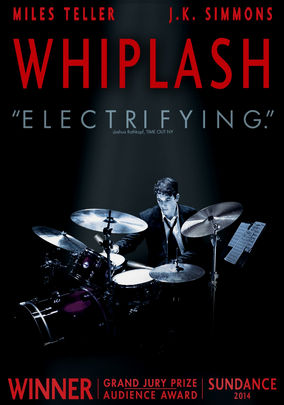
Whiplash (2014) is a film about an aspiring nineteen-year-old Jazz drummer, Andrew Neyman, played by rising star Miles Teller (known for 2013’s indie teen drama The Spectacular Now), who is attending one of the most revered musical schools in the country, the Schaffer Conservatory in New York.

He is mentored and terrorized by his intense and sometimes sadistic conductor, Terence Fletcher, portrayed by J.K. Simmons.

Andrew aspires to be the best drummer and worships Buddy Rich, a famous Jazz drummer from the 1930s and 1940s, who he constantly listens to and emulates.

While Andrew aspires to make the school orchestra that desperately needs a new drummer, he meets a cute girl, Nicole, at the concession stand of his favorite movie theater, and they bond.

Also in the mix is Andrew’s father, played by Paul Reiser. Once an aspiring writer, who never made it big, he struggles as a high school teacher. Andrew’s mother left the family when Andrew was just a toddler leaving just father and son.

The film mainly centers on the tumultuous relationship between Andrew and Terence and Andrew’s determination to be the best drummer in the world.

J.K. Simmons is mesmerizing in his role of Terence and is wonderful to see as Simmons has struggled as a character actor for years.

He gives a powerhouse performance and plows full steam ahead in his viciousness and extreme brutality towards the students, and on more than one occasion reduces a student to tears. If the tempo is not to his liking he shakes his clenched fist in disapproval.

The audience wonders if Terence is mean and sadistic or is tough on the students to make them work harder and achieve great things.

Throughout the film, I wondered if I should hate this character or sympathize with him for wanting the students to excel.

The sexuality of Fletcher is ambiguous.

He belittles and ridicules the students with fat jokes. He hatefully taunts an overweight student about Mars bars and happy meals, uses Irish digs, and inevitably gay slurs on other students, but is he hiding something in his personal life? Is he a closet case? His private life remains a mystery.

As brutal as Terence can be, there are moments of sensitivity that the character exhibits. He tearfully tells the orchestra a heartbreaking story of a former student, whom he admired, who recently died in a car accident.

In another scene, he warmly bonds with a friend’s young daughter.

As brilliant as Simmons is we must not forget to recognize the immense talent of Teller. The young actor does a fantastic job of portraying determination, drive, anger, and vengeance.

Andrew has a wonderful relationship with his dedicated father, a love/hate relationship with Terence, (are they bitter enemies or do they have the respect of a mentor/student?), and a sweet yet uneven relationship with Nicole.

He successfully portrays a myriad of different emotions throughout the film.

Paul Reiser is wonderful in an overlooked and thankless role as Andrew’s unsuccessful, yet forever faithful father.

Thankfully the film chose to center on the conductor/student dynamic. The romantic relationship with Nicole did not take center stage and usurp the main story, as I felt that the dynamic between the two was of lesser importance to the whole.

The finale, an intense concert performance scene focusing on the intensity between Terence and Andrew, is superbly done. The close-up camera shots of the two add much to the climax.

In fact, throughout Whiplash, extreme close-up shots of sweat and blood and intensity during performances and practices add to the overall rawness of the film.

Whiplash (2014) is an intense, sometimes brutal, assaulting experience, but an amazing film.

Oscar Nominations: 3 wins-Best Picture, Best Supporting Actor-J.K. Simmons (won), Best Adapted Screenplay, Best Sound Mixing (won), Best Film Editing (won)

Independent Spirit Award Nominations: 2 wins-Best Feature, Best Director-Damien Chazelle, Best Supporting Male-J.K. Simmons (won), Best Editing (won)

A Star is Born-1954

A Star is Born-1954

Director George Cukor

Starring Judy Garland, James Mason

Scott’s Review #175

995474

Reviewed September 25, 2014

Grade: B+

A Star Is Born (1954) was considered Judy Garland’s much-touted comeback film and was very expensive for Warner Bros. to produce.

Garland delivers her finest career performance, even better than her portrayal of Dorothy in The Wizard of Oz (1939). The performance is multi-faceted, complex, comical, silly, poised, emotional, dramatic, and heartfelt.

Playing Esther Blodgett- later changed to Vicki Lester for more Hollywood potential, she is a struggling lounge singer who meets a successful actor named Norman Maine, played wonderfully by James Mason.

Esther saves Norman from public humiliation at a function where he attempts to take the stage while inebriated.  They strike up a friendship, and he convinces her to pursue films. However, through a series of misunderstandings, she assumes he has ditched her.

Determined to become a star anyway, Esther forges her path to success. They reconnect, and Norman recognizes her talent and pursues her professionally and romantically. They marry, and she becomes a star while his career hits the skids, mainly due to his alcoholism.

The talented Mason and Garland are at the forefront of the film and are the reasons for its success.

A few key scenes stand out to me as powerful or essential- The scene involving a musical number over a dinner of sandwiches in their posh living room is wonderfully merry and light; a delivery boy who does not know who Norman is ruins the mood and causes jealousy to come to a head in his marriage to Esther.

Garland’s emotional scenes are excellent, especially in her dressing room, where she crumbles when she realizes Mason has hit rock bottom.

The best scene is the Academy Awards scene, where a drunken Norman causes a public spectacle as Esther receives her top honor, spoiling her night and accidentally hitting her in the face in front of millions.

What a forgiving woman Esther is for staying with him and ultimately choosing him at the risk of ruining her career.

An interesting aspect of the story is that Garland’s character is not some ugly duckling transformed into Hollywood royalty—she already has the talent. She needs a break but is not down on her luck or starving. She makes a decent living with a touring band and is torn about leaving them.

The musical numbers are inspiring and one is reminded why Garland is such a star as she belts them out of the park like nobody’s business, however, they do little to further the plot.

The film sometimes drags a bit, as is often the case in the first half, but the second half (post-intermission) is brilliant, and the ending is tragic yet heartwarming.

Will Esther’s career continue to flourish?

A major flaw with the film is the usage of still frames with dialogue overlapping due to lost footage. This makes following the story very tough, and the continuity is affected. It also looks ridiculous, and for the viewer to be captured by the story and only view a discolored still shot with audio is disappointing.

Indeed, this can be corrected.

A Star Is Born (1954) is the perfect vehicle for Garland to return to her grand position among the Hollywood treasures.

Oscar Nominations: Best Actor-James Mason, Best Actress-Judy Garland, Best Scoring of a Musical Picture, Best Song-“The Man That Got Away,” Best Art Direction, Color, Best Costume Design, Color

Jersey Boys-2014

Jersey Boys-2014

Director Clint Eastwood

Starring John Lloyd Young

Scott’s Review #95

70299748

Reviewed July 5, 2014

Grade: B+

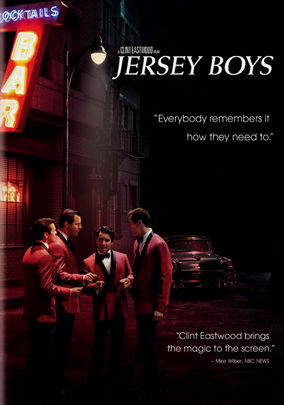
Jersey Boys (2014) is a film version of the hit Broadway show of the same name, directed by Clint Eastwood.

It tells the story of Frankie Valli and his friends (later becoming the Four Seasons) growing up in 1950s mob-laden New Jersey and their journey through hardships and petty crime to musical success.

The film is a mainly feel-good experience as the songs alone resonate with the audience and immediately stick in one’s head as catchy as they are (Sherry, Walk Like a Man, Big Girls Don’t Cry, Can’t Take My Eyes Off of You) are prominently featured throughout the film making it tough not to toe-tap along with the musical numbers.

Most of the boys grow up in a heavily Italian neighborhood, which is a delight as Eastwood’s authenticity is impressive: the food, the fights, gangster mob ties.

Admittedly, I found the first thirty minutes a bit slow, but then, the film takes off.

The cast is good- John Lloyd Young is excellent as Frankie Valli, a role he also portrayed on Broadway, and it is very nice to see Christopher Walken as a kindly mob boss who looks out for the kids.

The film is wonderfully shot and the 1950s nostalgia is apparent via set pieces, costumes, etc.

Is this film edgy? Not in the least. Is it a safe crowd-pleaser? Absolutely!

It is a fun musical experience that does not delve into schmaltz and is lots of fun.

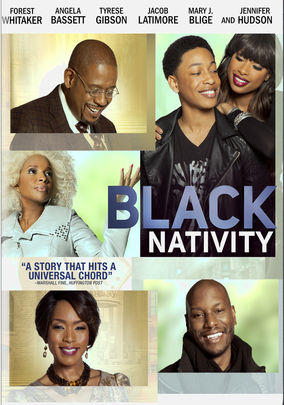
Black Nativity-2013

Black Nativity-2013

Director Kasi Lemmons

Starring Jennifer Hudson, Forest Whitaker

Scott’s Review #46

70279001

Reviewed June 18, 2014

Grade: C-

Black Nativity (2013) is a family holiday movie about a poor Baltimore teen sent to live with his affluent, estranged grandparents (Forest Whitaker and Angela Basset) in Harlem.

Jennifer Hudson plays the teen’s financially struggling mother.

The estrangement stems from a silly misunderstanding years ago when Hudson’s character was pregnant with her now teenage son.

I enjoyed the performances of Whitaker, Bassett, and Hudson, and the sprinkling of songs performed by the leads was nice, but the story was incredibly sappy and predictable and wrapped up in a nice bow at the end of the film.

Scene one screams predictable and safe.

I did not sense any real conflict or grit throughout the movie and it felt like watching a Hallmark-made-for-television movie- not a compliment.

Black Nativity (2013) is a nice family story, but a little more.

Skip unless you enjoy the watered-down family fare.