Category Archives: Herbert Ross

Pennies from Heaven-1981

Pennies from Heaven-1981

Director Herbert Ross

Starring Steve Martin, Bernadette Peters, Christopher Walken

Scott’s Review #1,480

Reviewed May 10, 2025

Grade: A

Pennies from Heaven (1981) may be Steve Martin’s best film role and Bernadette Peters’s most excellent cinematic performance. Audiences did not receive the film well upon release, but many of the best movies are not.

Critics, however, applauded the film, which earned writer Dennis Potter an Academy Award nomination for Best Adapted Screenplay.

Watching (for the first time) in 2025, the film doesn’t feel dated, as many 1980s films do. Furthermore, Pennies from Heaven doesn’t feel like a 1930s set film in the 1980s either.

The opening sequence features credits amid clouds, later dances on the tops of bars, and kids in a schoolhouse playing white pianos, which is fresh and authentic.

These aspects enhance the dazzling musical production numbers. The songs are lip-synced, which strangely works after a brief period of adjustment, given that they are popular songs of the 1920s–30s, such as ‘Let’s Misbehave,’ ‘Life Is Just a Bowl of Cherries,’ ‘Let’s Face the Music and Dance,’ and the terrific ‘Pennies from Heaven’.

Unconventional in film, sometimes the action in a scene suddenly stops, and a musical number begins. The songs reflect the times with an overpowering sadness.

The story follows Arthur Parker (Steve Martin), a Depression-era sheet-music salesman with dreams of becoming a big success. When Arthur faces relationship problems with his wife, Joan (Jessica Harper), he begins an affair with a shy and beautiful teacher, Eileen (Bernadette Peters).

Though Arthur and Eileen connect, societal and financial obstacles threaten their happiness.

The film is highly stylized and looks stunning. The darker lighting, especially during musical numbers, looks muted to reflect the bleak nature of the Depression period.

I was continually surprised by this film. Situations arose that threw me for a loop, especially Eileen’s pregnancy and subsequent journey into the world of prostitution. At first meek and virginal, she becomes a savvy and more demanding character as the film progresses.

Eileen is my favorite character.

Peters was robbed of an Oscar nomination, which is surprising because she is emotionally invested in the character. Although she expects to hate sleeping with men for money, she doesn’t find it so bad, and it’s an easy way to make money during a time when most had no resources.

I adore Peter’s facial expressions as she embarrassingly looks away or her eyes well with tears.

A shocking death devastated me towards the film’s end, even though the character was minor.

I wasn’t as enamored with Arthur’s character as with Martin’s performance. Arthur, horny and a bit of a cad, disappoints me when he is mean to troubled and struggling accordion player (played wonderfully by Vernal Bagneris). He also doesn’t treat his wife very well.

Nonetheless, his dramatic turn is refreshing compared with his typical slapstick roles, and he and Peters have great chemistry.

Christopher Walken, in a small role as Tom a stylish pimp, brings down the house with a wacky dance.

The rich and complex writing showcases an anti-hero with layers of complexities and supporting characters looking to survive. The 1930s setting is crucial as characters scramble like mice to find a bit of cheese and navigate a complex maze.

Pennies from Heaven (1981) is not a film for mainstream moviegoers. Instead, the film will be a surprising treat for those eager to peel back an onion and immerse themselves in good cinema.

Oscar Nominations: Best Adapted Screenplay
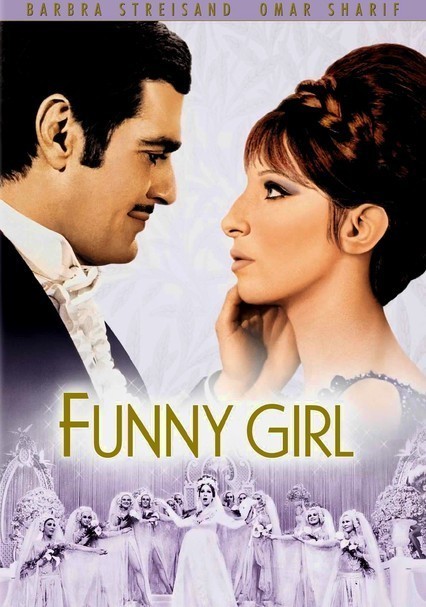
Funny Girl-1968

Funny Girl-1968

Director William Wyler

Starring Barbra Streisand, Omar Sharif

Scott’s Review #1,022

Reviewed May 11, 2020

Grade: B+

Barbra Streisand won the Academy Award for Best Actress for her outstanding portrayal of Fanny Brice in Funny Girl (1968). She reprises a role that she made famous on the Broadway stage, bringing her to the big screen.

The role is vitally important and sends a powerful message, teaching viewers that an unconventional woman with extraordinary talent can succeed in showbiz, leaving prim and proper starlets salivating with jealousy.

Features the classic tunes “People” and “Don’t Rain on My Parade” as well as the title track.

Fanny (Streisand) is an unhappy Jewish New Yorker, living in semi-poverty and dreaming of the big time. Her mother (Kay Medford) and others in the community try to persuade Fanny to live an everyday life far from the hot, judgmental glare of the stage, but she will have none of it.

Finding success on her terms in Ziegfeld Follies throughout World War I, she also finds love and passion with the suave Nick Arnstein (Sharif) following her debut performance.

The story is loosely based on the life and career of the honest Fanny and her stormy relationship with the entrepreneur and gambler, Nick.

Taking nothing away from Sharif, who is more than adequate, the film belongs to Streisand. Despite being a novice, producers wanted no one but Streisand in the role, since she had hit a home run in the stage version.

A brief consideration to have Shirley MacLaine star in hindsight seems laughable and unimaginable.

Sharif’s suave, dangerous, swarthy characterization balances perfectly with Streisand’s naivety and innocence. The Jewish woman and the Muslim man must also have raised an eyebrow or two at the time.

Streisand is a breath of fresh air in a role that could be said to mimic real life and reflects film in 1968 and beyond. Glamour girls were the height of fashion throughout the 1950s and 1960s, where looks sometimes usurped talent.

With the lifting of the Hollywood Code, grittier and dirtier roles were to be found for women. Streisand, as Fanny, proves that a self-proclaimed ugly duckling can rise to the top of the cream.

Refusing to get a nose job or otherwise alter her appearance or name, she mirrors Fanny in many ways, inspiring both women and men to be themselves to achieve truth.

Director William Wyler, no stranger to Hollywood success with pictures such as Mrs. Miniver (1942) and The Best Years of Our Lives (1946), knows how to pace and balance a film, and to present a cheery, splendid offering, careful not to make the movie too lightweight.

Comic scenes, such as when Fanny upstages everyone and prances around the stage as a pregnant newlywed, becoming the talk of the town, are the best ones.

The film succeeds when it is fun.

Sharif does his best with a small role, surprising given the character’s importance, but the dramatic moments are not the best scenes. They are okay and certainly not overacted by the stars, but do not work as well as when Streisand belts out “People” on a lonely sidewalk.

The issue is that Streisand is Funny Girl, and even prominent actors like Sharif never had a chance. The one exception is Medford, who goes toe to toe with Streisand in every scene with gusto and humor.

Funny Girl (1968) may suffer from a few overly melodramatic moments that slow it down, especially in the central romance, but its central message is to stay true to one’s colors.

Refusing to be influenced by elders or even her beau, Fanny is an inspiration to all viewers. With delightful musical numbers and zesty wardrobe pieces, the film has a cheery and fun veneer, but more lies beneath the surface.

Whether the intention is a sing-along experience or a deeper meaning, the film has something for everyone.

Oscar Nominations: 1 win-Best Picture, Best Actress-Barbra Streisand (won), Best Supporting Actress-Kay Medford, Best Score of a Musical Picture-Original or Adaptation, Best Song Original for the Picture-“Funny Girl”, Best Sound, Best Cinematography, Best Film Editing

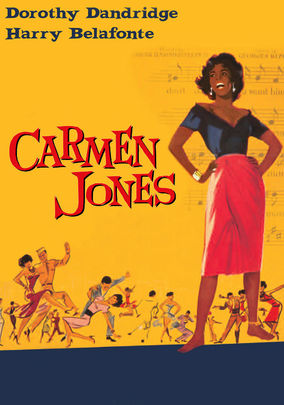
Carmen Jones-1954

Carmen Jones-1954

Director Otto Preminger

Starring Dorothy Dandridge, Harry Belafonte

Scott’s Review #736

Reviewed April 3, 2018

Grade: B+

It was pretty taboo at the time of release (1954) because it featured an all-black cast with no white members. Carmen Jones is to be celebrated for contribution to film history for this groundbreaking feat alone.

Directed by Otto Preminger (who ironically is Caucasian),  the film features legendary actress Dorothy Dandridge in a Marilyn Monroe-style performance worthy of the talents of the stars.

The film is a musical with an inevitable tragedy at the conclusion.

The 1954 feature is based on a 1943 stage production of the same name, based on the music of the famous 1875 Georges Bizet production of Carmen. These facets add to the richness of the film as it is layered with good history, and the well-known tragic elements make the conclusion unsurprising.

Brazen and beautiful, Carmen is a seductress who works in a parachute factory in North Carolina during World War II. After trading fists with a co-worker, Carmen is jailed and assigned handsome Corporal Joe (Harry Belafonte) to escort her to the authorities.

While Carmen is not shy about pursuing the young man, his fiancee, virginal Cindy Lou, fumes and schemes to keep her man.

The result is a triangle. Carmen and Joe eventually fall madly in love, leaving poor Cindy Lou behind, but their love faces hurdles.

The somewhat lighthearted first portion of the film, with coquettish humor mixed in, is offset by a much darker path the film takes. As Carmen and Joe finally profess their love and share a night of passion, she leaves him in the middle of the night, unable to endure prison time.

This results in Joe being imprisoned as the couple ultimately cannot stay away from one another despite repeated obstacles to their happiness. An additional character, a boxer named Husky, with designs on Carmen, is introduced, complicating matters.

In sad form, much like the opera Carmen, the final scene is devastating and startling as Joe treads down a dark and gloomy path of destruction. The character of Joe is nuanced- at first, a “nice guy”; the character is an example of complexity and what a man will do for love.

The viewer wonders what will become of Joe and how he could risk his life performing an act in the heat of passion.

In 1954, what a profound and fantastic role for a female, let alone a black female. Typically cast in roles such as maids, servers, or even less glamorous parts, how wonderful for Dandridge to capture a challenging role of this caliber.

She is a vixen as she sinks her teeth into the meaty and flirtatious Carmen. Dandridge’s pizzazz, flare, and singing and dancing performances made her a star, and she is forever known as a groundbreaking talent.

There cannot be enough said about the importance of casting all-black actors in Carmen Jones. Monumental, of course, given the time. The result is a film of significance to black culture, showing that they no longer needed to appear in “white films” as supporting players but could carry a movie on their own.

How profound and remarkable this was!

My only criticism of the film is undoubtedly related to the progress made for black actors and characters, though there is still plenty more work.

At times, the filming feels a shade dated (presently, there are more great roles for black actors) and has a slightly grainy look.

Some of the supporting characters’ acting is also not the strongest, but as Carmen Jones is a historical film, liberties must be taken.

Thanks to the genius and the funding of Preminger, who needed to produce the film independently due to lack of interest, the result is a film that has gone down in history as worthy, edgy, and open-minded.

Wisely casting talented stars with great pipes, the film is a solid success.

Oscar Nominations: Best Actress-Dorothy Dandridge, Best Scoring of a Musical Picture