Category Archives: Paul Sparks

The Bikeriders-2024

The Bikeriders-2024

Director Jeff Nichols

Starring Austin Butler, Jodie Comer, Tom Hardy

Scott’s Review #1,431

Reviewed July 1, 2024

Grade: A-

The Bikeriders (2024) immediately informs the audience of the time and place the film will be told. A dry and dusty midwestern USA between 1965-1973 is the window explored and the defiance of the characters drawn.

This period is the Vietnam War, Civil Rights, assassinations, Woodstock, and many other historical moments. Dangerous, the culture and people were changing and very rebellious.

Director Jeff Nichols, who also wrote the screenplay based on ‘The Bikeriders’ by Danny Lyon, wonderfully presents a time capsule of a group of bikers who forged their subculture away from the uncertainty of the rest of the world.

After a chance encounter at a local biker bar, strong-willed Kathy (Jodie Comer) is drawn to handsome and mysterious Benny (Austin Butler), the newest member of the Midwestern motorcycle club, the Vandals, led by the enigmatic Johnny (Tom Hardy).

Much like the country around it, the club changes with time, transforming from an essential gathering place for local outsiders into an underworld of violence. This forces Benny to choose between Kathy and his loyalty to the club.

The most vital parts of The Bikeriders are the beginning and end, with portions in the middle section, making it drag and lowering a potential ‘A’ rating to an ‘A-.’

But the other sections are so rich with characterization and events that they usurp the dull parts.

Nichols, who has also directed Take Shelter (2011), Mud (2012), and Loving (2016), likes to focus on the decade of the 1960s in America with conflicted characters. He likes to work with Michael Shannon, who has a small yet pivotal role as a man who ponders life.

We meet Benny in a bar, where he sips a drink. Two local thugs hastily tell him to remove his biker jacket. After a bloody fight in the parking lot, we realize how much the biker club means to him and what it symbolizes.

It’s a club where the vermin, weirdos, undesirables, and those cast aside by society find a place and are cared for by one another. That is until the years pass and things change by meaner and less loyal bikers.

The symbolism resonates with all because time never stands still, and good things always come to an end.

The Bikeriders is told from Kathy’s perspective through interviews with her friend Danny (Mike Faist). He is the real-life author of the book on which the film is based.

Comer is outstanding in the lead female role. She is strong and resilient, attracted to the dangerous lifestyle and the bikers, but only has eyes for Benny and will not be taken advantage of.

She chronicles specific events like fights, death, and rape in painful yet thoughtful detail, inviting the audience into her dark world.

Butler and Hardy are also terrific. Arguably co-leads, Butler’s Benny is childless and more accessible than Hardy’s Johnny, a family man. Johnny sees Benny as the next leader of the Vipers, but Benny wants none of that.

Comparisons to the club and life outside the club torture both men. During a long homoerotic scene, Johnny and Benny are dangerously close to kissing as Johnny discloses the reasons why Benny should lead the club.

The scene is smoldering as the unspoken connection can be felt in raw form. Nichols doesn’t dare to make the film into anything LGBTQ+ related, but the nuances and subtleties exist.

Besides the acting, the gritty environment oozes with richness. The soiled biker bars, sticky floors laden with blood, beer, and vomit, emit from the silver screen.

You can almost smell the environment.

The bad teeth, foul language, and tacky Midwestern accents all portray the loneliness of these characters and their clinging to the club for dear life.

Nichols and the author Lyon depict a fresh look into the world of motorcyclists and the culture they lived and died in for a brief time. The Bikeriders (2024) presents violence mixed with brotherhood and loyalty, which is fascinating to watch.
Rachel Getting Married-2008

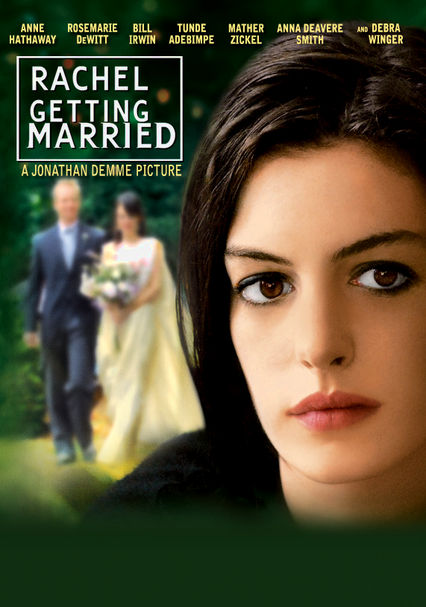
Rachel Getting Married-2008

Director Jonathan Demme

Starring Anne Hathaway, Rosemarie DeWitt

Scott’s Review #1,153

Reviewed June 17, 2021

Grade: A-

Rachel Getting Married (2008) is the film that put Anne Hathaway on the map as a powerful and respected actress. Deserving the heaps of praise put upon her she was congratulated with an Oscar nomination for the role and would win a few years later for Les Miserables (2012).

Hathaway proves that good nuts-and-bolts acting never goes out of style.

Director Jonathan Demme goes for simplicity with his project. The film is a quiet family drama with members gathered for a specific event. As the film progresses we witness deep-seated emotions and history bubble to the surface through terrific scenes exposing quality acting chops by the entire cast.

Pain, truth, and wry humor are explored as a naturalistic approach is possessed. Not all the characters are likable and debatable is if any of them are.

Thankfully, humorous moments are added to lighten the mood.

The screenplay was written by Jenny Lumet, the daughter of famed director Sidney Lumet and granddaughter of Lena Horne.

Filming took place in Stamford, Connecticut, a small city outside of New York City.

The Buchmans, an affluent New England family, prepare for the wedding of their daughter, Rachel (Rosemarie DeWitt). Their other daughter, Kym (Anne Hathaway), is permitted to attend the wedding despite being in the middle of a stint at rehab- she’s been there before.

As Kym causes upheaval and drama, Rachel resents her sister, causing family tensions to resurface.

Parents Paul and Abby, played by Bill Irwin and Debra Winger do their best to calm the flames created by the bickering siblings. Unfortunately, tensions begin to erupt between Rachel and Abby and away from Rachel.

Events come to a head on Rachel’s wedding day, hence the title.

Under different circumstances, Rachel Getting Married could have been a standard lifetime television film. A girl with a drug addiction returning to the fold to stir up family drama is hardly a novel idea and has been told many times before in almost every medium.

I even cringed at first when I read the premise.

But, the film feels as fresh and energetic as a new idea. The pacing is the first notice as it moves at a brisk pace and the running time is under two hours. Kym is frenetic acting which also helps the allusion of a faster pace.

A dark secret is quickly revealed. Due to drunkenness, Kym caused the car she was driving to careen off a bridge, killing her younger brother. She has harbored guilt ever since and endured the wrath of her family.

It has made her struggle with addiction even worse.

I don’t think enough praise can be given to Hathaway for quite simply kicking the film’s ass. Nearly destined for wimpy romantic comedies, Kym gives the actress a role she can not only sink her teeth into but infuse with emotion and empathy.

At times the audience will hate Kym and other times will sob along with her.

DeWitt and especially Winger, returning to the cinematic spotlight after a long absence, have plenty to infuse their characters with. Anger, jealousy, and unbridled sympathy are just a few of the emotions their characters experience.

Demme creates an independent film that feels raw and is filled with naturalistic settings and emotions. He takes a basic story and ravages it completely with great acting, handheld cameras that provide a real-life approach, and a story that will leave audiences thinking about the events and perhaps their own lives after the credits roll.

Oscar Nominations: Best Actress-Anne Hathaway

Independent Spirit Award Nominations: Best Film, Best Director-Jonathan Demme, Best Female Lead-Anne Hathaway, Best First Screenplay, Best Supporting Female-Rosemarie DeWitt, Debra Winger

Thoroughbreds-2018

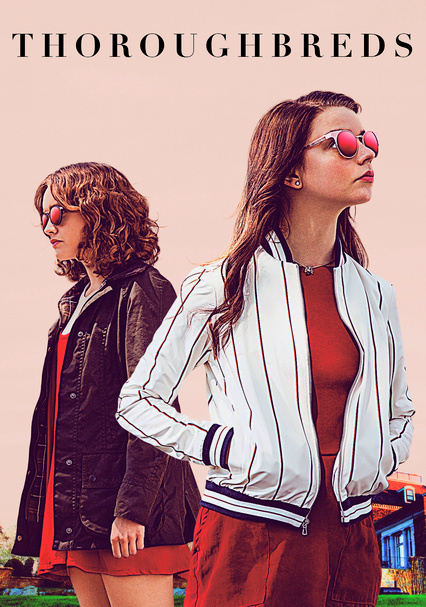
Thoroughbreds-2018

Director Cory Finley

Starring Olivia Cooke, Anya Taylor-Joy

Scott’s Review #880

Reviewed March 26, 2019

Grade: B

Thoroughbreds (2018) is an independent dark comedy with snippets of creative filmmaking and an intriguing premise that loses steam towards the conclusion, closely mirroring too many other similarly themed indies.

An enjoyable geographical setting, but the lackluster, monotone dialogue never allows the film to stand out on its own and is therefore deemed unmemorable.

The lead actors are fine, but the experience falls short of raising the bar, suffering from an odd title that has little to do with the story.

Lily (Anya Taylor-Joy) and Amanda (Olivia Cooke) are former childhood friends whose differing levels of popularity have strained their relationship over the years. When Amanda’s mother pays Lily to socialize with Amanda under the guise of tutoring, Amanda catches on to the plot and confronts Lily.

This event brings the girls closer and, in a macabre fashion, they begin to hatch a scheme to plan the death of Lily’s stepfather, wealthy Mark (Paul Sparks), whom she perceives as abusive.

It is revealed via flashback that Amanda euthanized her crippled horse to spare his suffering which resulted in animal cruelty charges.

The setting of affluent Fairfield County, Connecticut, and presumably wealthy Greenwich is a high point of the film and an immediate comparison to the 1997 masterpiece, The Ice Storm.

Bored rich kids who perceive themselves to shoulder all the world’s problems, while subsequently attending the best boarding school imaginable, is delicious and a perfect starting point for drama and intrigue.

Lily’s domineering stepfather and her passive and enabling mother are clever additions without making them seem like caricatures.

The dynamic between the girl characters is intelligently written and believable, especially as they crack witty dialogue with each other. Lily is academic and stoic, humorously said to suffer from an unnamed condition that prevents her from feeling or showing any emotion.

Amanda is the perfect counterbalance as she is sarcastic, witty, and serves up one analytical observation after another.

From a physical perspective, the statuesque Lily is believable as the more popular of the two and the perceived leader.

As the girls elicit the participation of local drug dealer Tim (Anton Yelchin) into their plans, at first voluntary and ultimately by blackmail, the plot takes a turn for the formulaic and the redundant.

The setup seems too much like a standard dramatic story arc and becomes clichéd as the once-willing participant is subsequently thrust into the scheme. There are no romantic entanglements between the three main characters, and subsequently, there are no characters to root for, one strike against the film.

Otherwise, the “been there, done that” monotone dialogue has become standard in dark comedies so that in 2018, the element seems dated and a ploy to develop offbeat characters.

Director Cory Finley borrows heavily from fellow director Wes Anderson (The Royal Tenenbaums, 2001, and The Moonrise Kingdom) in this regard, so that the freshness of the characters and story wears thin mid-stream.

The title of the film could be better, as a quick scene featuring Amanda and a horse at the beginning, and a brief mention of horses in a dream by one character, is all there is about the animals.

I expected more incorporation between animal and human, or at least a more poignant connection.  The privileged lives of Lily and Amanda seem a perfect correlation to bring horses into the central story in a robust way.

Finley is on the cinematic map, crafting an effort that proves he possesses some talent and an eye for a wicked and solid offering.

Thoroughbreds (2018) represents a film like many others in the same genre that rises to the top of the pack, but it is not without merits and sound vision. It will be interesting to see what this up-and-coming director chooses for his next project.

Independent Spirit Award Nominations: Best First Screenplay

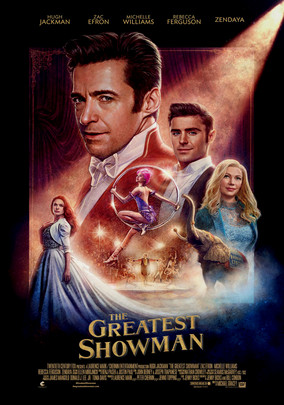
The Greatest Showman-2017

The Greatest Showman-2017

Director Michael Gracey

Starring Hugh Jackman, Michelle Williams, Zac Efron

Scott’s Review #707

Reviewed December 26, 2017

Grade: A-

A pure musical escapist film, The Greatest Showman (2017) holds a dear and relevant message. It elicits hope for outcasts everywhere by leading a story of acceptance and perseverance in the feel-good film of 2017.

Hugh Jackman leads the pack, starring as P.T. Barnum, a man struggling to create an entertainment show with live and unusual performers- deemed “freaks” in New York in those days- the 1800s.

The film is quite joyful and light, with many cheery musical numbers sure to leave audience members humming along for hours after the conclusion.

The Greatest Showman is a rags-to-riches story and a thoroughly enjoyable film.

Jackman is as charismatic and likable as Barnum, the entrepreneur and showman we meet as a young boy, the son of a poor tailor. He becomes enamored with wealthy young Charity (Michelle Williams), and the two eventually marry, much to the chagrin of her pompous parents.

Barnum and Charity initially struggle to make ends meet as they begin to raise a family, but eventually, they find success and wealth when the show succeeds.

The film chronicles Barnum’s rise to fame and the trials and tribulations (romantic, business) for several years, mainly through musical numbers.

Zac Efron is excellent as Barnum’s eventual business partner, Phillip Carlyle.

Director Michael Gracey’s supporting characters are creative, if not typical, mainstays of carnivals and circuses everywhere—the bearded lady, the fat man, and a man covered in tattoos are featured prominently.

It is unclear whether these characters existed or were created simply for plot purposes. Still, rumor has it that The Greatest Showman has taken great liberties with the factual accuracy of the real P.T. Barnum and his escapades.

This would be bothersome if not for this film’s wonderful message- acceptance and celebrating diversity.

Indeed, this is important for young people everywhere in today’s chaotic world.

Those expecting anything more substance than a cheery and bright holiday slice of enjoyment may be disappointed—some mainstream critics did not rate this film highly. Still, I am okay with a bit of escapist adventure on occasion.

The message throughout The Greatest Showman is quite good.

The best musical number is the show-stopping and anthemic “This Is Me,” Keala Settle is fabulous as the bearded lady who leads this important song. The number is empowering and energetic.

The chemistry between Jackman and Williams is not remarkable, but it is not altogether vacant either. Instead, it is simply decent and not the film’s strongest point. I sense better chemistry between Jackman and Rebecca Ferguson as grand Swedish singer Jenny Lind.

However, their “romance” is unfulfilled, and we will need to imagine its possibilities.

I adore seeing Efron in quality roles (think 2012’s exceptional The Paperboy), and his performance as Phillip is great. He shares a good bond with Barnum and has his romance with acrobat (and of mixed race) Anne Wheeler.

His values and earnestness make the character appealing as he is torn between riches and standing on principle.

The Greatest Showman (2017) may not go down in history as the ultimate top in filmmaking or even one of the best musicals. Still, the film dazzles the audience and provides a couple of hour’s worth of fun and entertainment—similar to how P.T. Barnum energized the crowds with a slice of make-believe; this is more than appropriate.

Oscar Nominations: Best Original Song-“This Is Me”