Category Archives: Geoffrey Keen

Berserk! -1968

Berserk! -1968

Director Jim O’Connolly

Starring Joan Crawford

Scott’s Review #1,534
Reviewed May 25, 2026

Grade: B

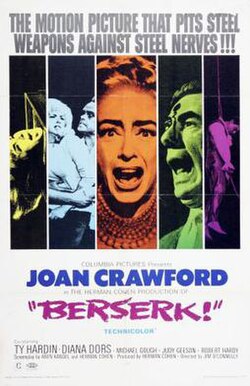
Joan Crawford, legendary Hollywood screen star, appears in Berserk! (1968), a British horror-thriller vehicle that was one of her last roles.

Trog (1970) was her final film role.

She portrays Monica Rivers, a ringmistress of a traveling circus in the London area. Monica is no-nonsense and man-hungry, known to bed some of the talent as she confidently hunts her prey.

As the co-owner of the circus, Monica is always preoccupied with filling seats and making money, a bottom-line gal.

Following the suspicious ‘accidental’ death of a tightrope walker, Rivers is pleased to see her profits increase because of the drama. She soon hires handsome Frank Hawkins (Ty Hardin) to replace him.

But when performers start to meet gruesome deaths, it becomes apparent that a killer is on the loose. Monica must juggle pesky detectives lurking around with accusations that she may be the killer.

While I enjoyed the film, which serves as a compelling whodunit first and foremost, not to mention Crawford’s appeal, it is only moderately above mediocre.

As expected, Crawford leads the charge and gives the project her best effort. Deliciously callous and self-serving, the role of Monica is one Crawford can sink her teeth into as unsympathetic as she is.

Her many outfits are glamorous, especially given the circus setting, and her cigarette smoking, nearly a trademark, makes her look powerful.

An aging star, her romantic pairing with Hardin, young and muscular, is borderline silly since she could easily be his grandmother. Weirdly, in a couple of scenes with him, Crawford looks much older and more ragged than in other scenes, while Hardin is bare-chested and buff.

There is little chemistry between the two.

The whodunit works well, as a myriad of suspects have both the cause and the motivation for the killings.

Monica, Frank, performer Matilda (Diana Dors), and others are suspects.

A colorful yet dark circus setting is wonderful in any horror film. The peculiar yet stereotypical characters, such as the strongman, the bearded lady, and others, are incorporated, as are scenes of characters following one another or lurking in the shadows.

The mostly nighttime scenes work well.

The final reveal of the killer is startling and surprising, which greatly improves the film. There is satisfaction when a viewer is genuinely surprised by a whodunit rather than having guessed the killer from the start.

However, the killer’s motivations are lackluster and hard to believe. The sequence is also very rushed and wrapped within five minutes of screentime.

Rather than systematically kill victims off one by one, the killer might have had a sit-down conversation over tea to flesh out the issues that are the motivation for the murders.

Another perplexity is Crawford’s lack of a British accent. Having grown up in England and with the circus in her family for 50 years, Monica wouldn’t be American.

While a real circus was used for the myriad scenes involving elephants, dog performers, and others, director Jim O’Connell overdoes it to the detriment of the action.

The scenes are cute, but they slow down the plot.

Berserk! (1968) is a watchable effort largely due to Crawford’s stunning screen presence and a solid whodunit. It is hardly on her greatest-hits film reel, but it is not disastrous either.
Doctor Zhivago-1965

Doctor Zhivago-1965

Director David Lean

Starring Julie Christie, Omar Sharif, Rod Steiger

Top 250 Films #31

Scott’s Review #42

449931

Reviewed June 18, 2014

Grade: A

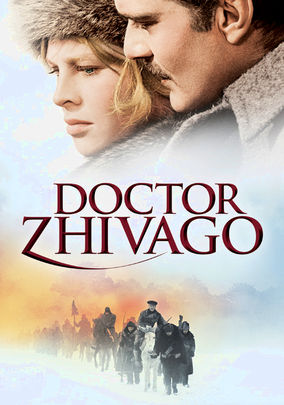
Doctor Zhivago (1965) is a great film to watch on a cold night or throughout the crisp winter or holiday season.

The film is a classic masterpiece directed by the talented David Lean (Lawrence of Arabia, 1962, A Passage to India, 1986), whose perfectionism is evident in his epic films.

Nearly every scene could be a painting, so the cinematography alone is reason enough to become enchanted with art.

Of course, the story is also a goldmine as a sprawling decades-long love story unfolds amid the ravages of the bloody Bolshevik Revolution.

The film is set in the bitter cold of Russia (though all scenes were shot in Spain), and the harshness of the climate and the war combine with a doomed love story set against the backdrop of numerous battles and wartime conditions.

Nearly all sequences are set in winter, and the blustery, icy effects are set against numerous scenes of cozy, candlelit cabins or more extravagant, glowing surroundings.

Viewers must be surrounded by fire, flaming candles, or another form of warmth as a snowstorm or blizzard rages outside for a perfect viewing experience.

A large-screen television or a cinema is simply a must to watch this film, as it is epic on the grandest scale.

Omar Sharif and Julie Christie (a gorgeous star in her day) are cast perfectly as Uri and Lara, young forbidden lovers enthralled with one another but involved with significant others.

The film dissects their initial meeting and their story over the years, experiencing marriages, births, and deaths throughout the ravages of Russia in the early twentieth century.

Despite their affairs, neither is deemed unsympathetic—quite the contrary.

Audiences will fall in love with the pair and become enchanted as they watch their love-tortured adventures unfold.

Sharif and Christie are just magnificent and utterly believable as a couple.

The set pieces are magnificent and flawless in design and detail (my favorite is the Ice Palace).

The cinematography is breathtaking, and the content is remarkably close to the superior novel by Boris Pasternak, evoking a sense of “really being there” in the viewer.

Doctor Zhivago (1965) is a brilliant film, perfect for a snowy winter evening.

Oscar Nominations: 5 wins-Best Picture, Best Director-David Lean, Best Supporting Actor-Tom Courtenay, Best Screenplay Based on Material from Another Medium (won), Best Music Score-Substantially Original (won), Best Art Direction, Color (won), Best Cinematography, Color (won), Best Costume Design, Color (won), Best Film Editing

The Spy Who Loved Me-1977

The Spy Who Loved Me-1977

Director Lewis Gilbert

Starring Roger Moore, Barbara Bach

Top 250 Films #137

Scott’s Review #637

Reviewed April 27, 2017

Grade: A-

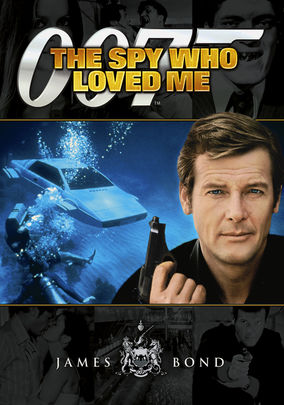
The Spy Who Loved Me (1977) is pure James Bond- an installment of the franchise that successfully contains all of the elements of an exceptional Bond film- and then some.

By this time, Roger Moore was firing on all cylinders and had made the character of James Bond his own- Sean Connery, who?

With his third appearance in the role, Bond exudes charisma and wry wit, combined with a fabulous story, sexy Bond girls, and a villain worthy of his role, The Spy Who Loved Me achieves near perfection, save for being too drawn out in the ending- otherwise, an excellent, memorable film that does not feel dated in the least.

When Soviet and British submarines begin to vanish, the two sides team up and send their best agents forward to uncover the circumstances surrounding the disappearances.

Barbara Bach plays Major Anya Amasova, also known as Agent Triple X, a Soviet agent, and naturally, Bond becomes enamored with her beauty and intelligence.

Together they face off against a megalomaniac named Karl Stromberg, who is intent on destroying the world with nuclear missiles and creating his underwater world. Stromberg’s sidekicks are Jaws, a giant with steel teeth, and a deadly vixen named Naomi.

Interestingly, if watched as a companion piece to a 1960s Bond film, as I did this time around (You Only Live Twice), one notices a change in how Bond’s female characters are treated.

No longer servile and obedient to the male characters (Bond specifically), Bond women are now his equals in every way, matching him in career success and intelligence.

The main “Bond girl”, (Anya), is a shining example of this, which the film immediately offers. In one of my favorite scenes, Anya is in bed with a handsome man- when “Agent Triple X” is paged, we assume the agent is the man until Anya slyly responds to the message- it is nonchalant, yet a brazen way to make the point that women have emerged as powerful and sexy figures in the modern Bond world.

The chemistry between Moore and Bach is immeasurably important to the success of the film, and their romance is dynamic- they have “it,” and their scenes smolder with sensuality.

To complicate matters, Bond has killed an agent whom Anya was in love with, and she plans to kill Bond as soon as their mission is victorious.

Director Gilbert also adds a slice of Bond’s backstory, lending the story truth and rich history, and mentions Bond’s deceased wife (married and killed in On Her Majesty’s Secret Service), a subject Bond deems off-limits.

This ode to the past only enhances the connection between these two characters.

Villains play an important part in the success of The Spy Who Loved Me.

Take Stromberg (Curd Jürgens), he is sophisticated, mature, worldly, and rich- and quietly insane. He also has a lavish dining room in his underwater submarine with exotic fish swimming about through visible tanks- a gorgeous element to this film.

Through a trap door,  victims meet their demise at the hands of a vicious killer shark swimming about. One unlucky female assistant, who has double-crossed Stromberg, meets her maker in bloody fashion. Later, Bond sees a severed hand floating about in one of the tanks.

This is great creative writing and adds nuances to the film.

Hulking henchman, Jaws, who would return in the next installment, Moonraker, dazzles and impresses with his deadly, steel teeth.

A great scene, aboard a high-speed train, and a throwback to 1963’s From Russia With Love, is action-packed.

Naomi meets her demise after an ill-fated helicopter chase scene. I would have liked to have had more screen time and to have gotten to know this character. Her brief, but obvious flirtation with Bond is all too short- and he never even gets to share a bed with her!

Not to be outdone, the locales in the film are lavish and gorgeous- Egypt and Italy are countries explored, and scenes are shot on location in each country in grand fashion.

The Egyptian pyramids are featured in a chase, and a murder occurs during a nighttime exhibit. Also fantastic are the gorgeous shots of Sardinia, a beautiful region in Italy where Stromberg’s hideout is set.

A mini gripe is a lengthy conclusion to the film. As Bond struggles to recalculate the two nuclear missiles set to destroy New York and Moscow, Bond must rush to make sure they do not hit their intended target.

The “final act” of the film goes on too long with way too many soldiers and men running around in a panic. The action is great, but by the end, enough is enough.

Roger Moore once commented that The Spy Who Loved Me (1977) was his favorite of all the Bond films to make- it is easy to see why he felt this way.

The film contains all the necessary elements to make it one of the top entries in its franchise and has a magnificent feel.

Oscar Nominations: Best Original Score, Best Original Song-“Nobody Does It Better”, Best Art Direction

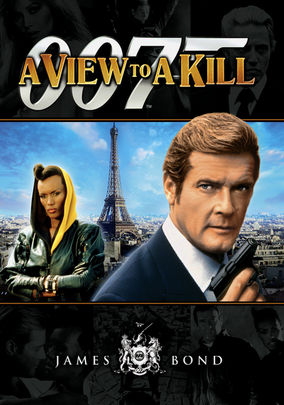
A View to a Kill-1985

A View to a Kill-1985

Director John Glen

Starring Roger Moore, Grace Jones, Tanya Roberts

Top 250 Films #151

Scott’s Review #484

60002473

Reviewed September 21, 2016

Grade: A

Not exactly deemed a masterpiece or even a treasured favorite among the masses of James Bond lovers, A View to a Kill (1985) holds a soft spot for me.

It is one of the first Bond films that I was fortunate enough to see in the movie theater, and it has continued to enchant me all these decades later.

Yes, it has flaws (to be mentioned later), but it is a classic, fun, exciting, mid-1980s Bond offering.

It contains Roger Moore- in his final Bond appearance, the exotic Grace Jones, a great villain, and on-location treats such as Paris and Iceland- who could ask for anything more?

We are reintroduced to MI-6 agent James Bond on the snowy slopes of Siberia as he discovers the body of 003, along with a Soviet microchip believed to belong to the wealthy Max Zorin (Christopher Walken).

Bond attends a horse sale hosted by Zorin and discovers he is drugging the horses to make them perform better.

It is also revealed that he intends to destroy Silicon Valley to rule the microchip industry. In Zorin’s camp is a mysterious woman named May Day and an odd Nazi scientist named Dr. Carl Mortner.

Events conclude in San Francisco as the action-packed finale takes place in a mine overlooking (via blimp) the historic Golden Gate Bridge.

I completely get the criticisms hurled at this film- both Roger Moore and, as a secondary character, Lois Maxwell as Miss Moneypenny, had gotten quite long in the tooth by this point in the franchise (1985), which is a shame because both are favorites of mine.

Most glaring in the “bad” department is Tanya Roberts as the main Bond girl, Stacy Sutten, almost rivaling Halle Berry (Die Another Day) as screamingly awful.

Not appearing as a major character until quite late in the film, Stacey is a wealthy heir to whom Zorin attempts to pay $5 million to relinquish her shares in Silicon Valley (she refuses).

Robert’s acting is quite poor- she has no chemistry with Moore, and comes across as a dimwit, despite being written as a doctor or scientist of some sort. Regardless, she does not work as a Bond girl.

Yes, the cartoon-like chase around San Francisco with the brooding police chief is unintentionally funny- another negative to the film.

But here are some strengths- Fantastic is Walken as the main villain role of Zorin. Psychotic, Looney Tunes, and such a pleasure to watch. With his bleached blonde hair and grimacing sneer, a particularly controversial, and favorite scene of mine is when Zorin, machine gun in hand, sprays bullets from left to right, undoubtedly killing dozens, as he gleefully laughs.

This was unprecedented in Bond films up to this point, as most villains contained a safer personality- Zorin is positively monstrous and to be feared.

Also worth mentioning is Jones as May Day, simply mesmerizing in the role- although sadly her character is weakened toward the end, did she believe Zorin was capable of love??

Countering the anemic chemistry between Bond and Roberts, the chemistry between Jones and Moore sizzles.

This is not the first time Bond has explored an interracial (white and black) romance- far from it. Live and Let Die- circa 1973 takes this honor. I would have enjoyed much more emotional exploration between Bond and May Day, rather than the animalistic physical attraction.

One may wonder, with all the recognizable flaws in the film, why the A rating? Because, simply put, this film is fun and contains all the elements a Bond film ought to. The action is plentiful- who can forget the nail-biting Eiffel Tower chase or the Paris car chase- sans car roof?

Not high art, but a grand favorite of mine, A View to a Kill (1985) is entertainment personified.

The pop title-theme song, performed by Duran Duran, which became a #1 hit in the summer of 1985, is a wonderful aspect of the film and immediately takes me back to a different time.

I suppose the film does as well, and that is a great part of my fondness for it.

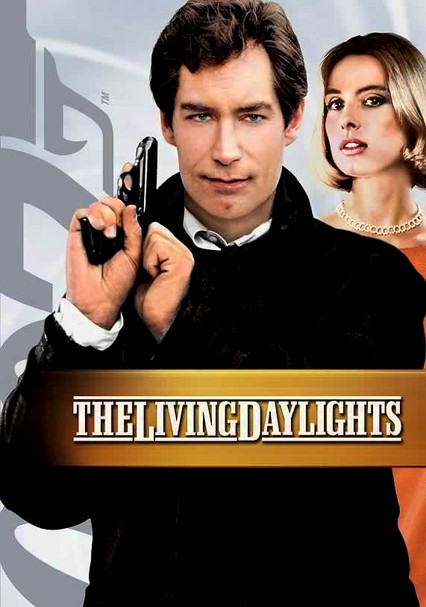
The Living Daylights-1987

The Living Daylights-1987

Director John Glen

Starring Timothy Dalton, Maryam d’Abo

Scott’s Review #1,194

Reviewed November 12, 2021

Grade: B+

It’s 1987, and Timothy Dalton is the new James Bond, having replaced the aging Roger Moore. Moore made seven Bond films.

Dalton’s reign was brief, and he made only two films: The Living Daylights (1987) and License to Kill (1989).

The Living Daylights is a fine Bond film ranking somewhere midstream with Best Of lists.

I completely agree with this sentiment, as it mostly borrows from other Bond films or stays true to the course, delivering a quality action film with all the typical trimmings a fan would expect from the franchise.

Nothing wrong with that.

This is unsurprising since director John Glen is at the helm once again. Responsible for directing the three prior Bond films- For Your Eyes Only (1981), Octopussy (1983), and A View To A Kill (1985)- he knows how to create a decent picture, and he does just that.

The main issue is with Dalton himself. Handsome, dashing, and British, he doesn’t quite possess the charisma that other Bonds like Moore, Connery, or Lazenby had. There is a seriousness to the actor and a lack of a smirk or wink in his eye that makes fans melt like putty in his hands.

The action commences with British secret agent James Bond (Dalton) helping KGB officer Georgi Koskov (Jeroen Krabbé) defect during a symphony performance. A mysterious blonde woman who plays cello immediately catches Bond’s attention for more than one reason.

She is Russian assassin Kara Milovy (Maryam d’Abo). Predictably, as events unfold, they become madly in love (or lust).

Koskov reveals that the new KGB head has instated a policy of assassinating defectors, Leonid Pushkin (John Rhys-Davies). But as Bond explores this threat, a counterplot surfaces, involving a shady American arms dealer (Joe Don Baker). Bond must thwart the evildoer’s fiendish plans and save the world from disaster.

The plot is secondary and difficult to follow, but the gist is the same as any other Bond film.

The fun (for me, anyway) is in enjoying the exquisite locales the film takes Bond to.

I salivated at the gorgeous concert hall and the surrounding areas of Czechoslovakia (pre-Czech Republic) and was mesmerized as the action moved to the stark desert lands of Afghanistan and Morocco, and finally into historic Austria.

The pre-title sequence was filmed on the Rock of Gibraltar and is utterly fabulous.

With every Bond film, this is a real treat and a major source of enjoyment. The Living Daylights doesn’t disappoint in this regard.

The finale aboard a speeding airplane is pulsating, edge-of-your-seat fun. Fights, ticking time bombs, and impending peril keep the action moving at a breakneck speed.

The villains lack much gusto, save for a hunky blonde assassin named Necros (Andreas Wisniewski), who enjoys prancing around in skimpy swimwear and who may or may not be gay.

In a more progressive Bond, they might have had a dalliance.  The main antagonists, Brad Whitaker, an arms-dealing General, and Koskov, are too goofy to pose any real danger or feel diabolical.

Also forgettable is the main Bond girl. Maryam d’Abo is an okay actress, but lacks much chemistry with Dalton. Their adventures are appealing, but more as buddies, and the romance didn’t work for me. He does respect her more than other Bonds would, so that is a win.

Delightful is the title theme song performed by the band A-Ha, which is catchy enough to stick in my head as I write this review. It is exotic and upbeat. Its standard inclusion in the opening credits makes the cheesy sequence more bearable.

Undoubtedly intended to launch a long and storied career as the new James Bond, Dalton lasted only briefly in the role.

The Living Daylights (1987) presents a Cold War theme that remains relevant but feels slightly tired by today’s standards. As usual, unless we’re talking about one of the superior Bond films, the locales are the real highlight.

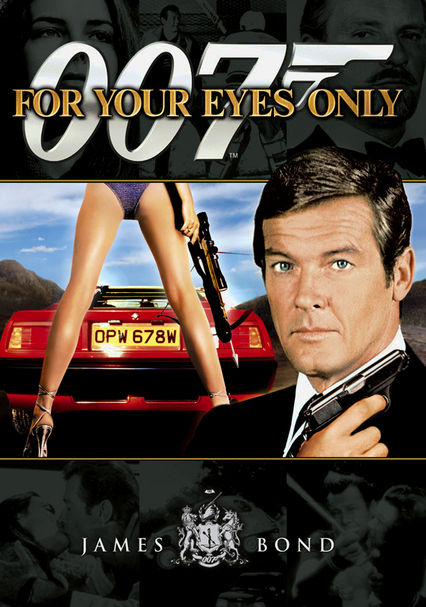
For Your Eyes Only-1981

For Your Eyes Only-1981

Director John Glen

Starring Roger Moore, Carole Bouquet

Scott’s Review #1,185

Reviewed October 10, 2021

Grade: B+

Following the outrageousness of 1979’s Moonraker, a film I nonetheless find enjoyable, the decision was made to bring James Bond back to earth in the next chapter.

For Your Eyes Only (1981) has matured well over the years and is an above-average entry among my all-time James Bond list.

The main Bond girl and the villain are not as top-notch as other Bond films, but the action, suspense, and nods to Bond history are fantastic, as is the grittier look and feel.

And, the locales of Italy and Greece are breathtaking.

The title song, a sleek and syrupy love ballad performed by Sheena Easton, is a favorite of mine and is instantly recognizable in association with the film. It charted at number one and sold a gazillion copies.

The plot is typical of a James Bond film.

After a British ship is sunk in foreign waters, the world’s superpowers begin a feverish race to find its cargo: a nuclear submarine control system.

And 007 (Roger Moore) is thrust into the middle of the action as he aligns with Melina Havelock (Carole Bouquet), Milos Columbo (Topol), and others to thwart the fiendish plans of the villainous Kristatos (Julian Glover).

The story is rather secondary to the enjoyment of the film, and I quickly stopped trying to follow every plot point or detail. It’s not that important to know who every bad guy is or what their motivations are.

There is a plot to take over the world, and there you have it.

I adore the opening sequence when Bond visits the gravestone of his deceased wife, Teresa. This tender moment immediately made me reflect on the merits of On Her Majesty’s Secret Service (1969) and the humanistic tone the film conveyed.

Bond then engages in a thrilling helicopter chase with arch-rival Blofeld, which parleys into the opening credits with the title song as a backdrop.

This first sequence has nothing to do with the rest of the film, but the London shots of Big Ben and other historical treats are fabulous. And it’s just dessert to see Blofeld dumped into a massive chimney and presumably to his death.

Bond historians will love this.

The film is recommended to be watched in the winter months, as the snowy and icy scenes work better then. It could be a warm-up act to On Her Majesty’s Secret Service or From Russia With Love (1963), also cold-feeling Bond films.

I didn’t perceive much chemistry between Moore and Bouquet, but their lack of it didn’t ruin the film for me. The thirty-year age difference didn’t help matters, but at least James Bond had the decency not to bed the horny underage figure skater, Bibi Dahl (Lynn-Holly Johnson).

Her character is played for laughs, and her schoolgirl crush on Bond is cute.

Kristatos isn’t the most memorable villain either. His true colors aren’t revealed until late in the game, and his motivations are a stretch. I didn’t buy him as a former war hero and an ally-turned-smuggler.

Nonetheless, Glover plays him straightforwardly, and a compelling sequence occurs when he attempts to kill Bond and Melina with his massive boat and hungry sharks.

Topol, well-known for his role as Tevye in Fiddler on the Roof (1971), is great to see as one of Bond’s allies. The actor’s distinctive voice is tough to miss, though I half-expected him to break into “If I Were a Rich Man” at any moment.

The final sequence atop the Monastery of the Holy Trinity, an Eastern Orthodox monastery in Greece, is terrific and quite justifiably the highlight.

Bond dangles for his life as a henchman slowly breaks each of Bond’s rock climbing stakes, which is a nail-biting and suspenseful scene, even though you know that Bond will find his escape.

Flying under the radar, For Your Eyes Only (1981) is delightful for the locales and action sequences alone.

Dragging slightly midway and lacking a memorable Bond girl or villain, it offers a darker story and fewer cheeky moments. This is refreshing following a silly trip to the moon.

The villains are more dangerous than cartoonish, and the extreme locales and historical throwbacks make this an appreciated effort.

Oscar Nominations: Best Original Song-“For Your Eyes Only”

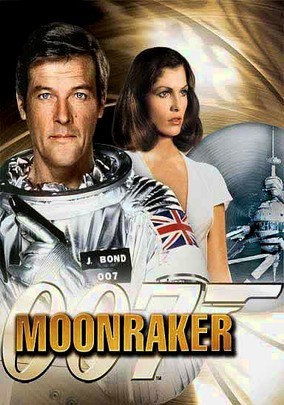
Moonraker-1979

Moonraker-1979

Director Lewis Gilbert

Starring Roger Moore, Lois Chiles, Michael Lonsdale

Scott’s Review #770

Reviewed June 8, 2018

Grade: A-

Moonraker (1979) is an installment in the James Bond film franchise, not usually well regarded and rarely appearing on critics’ top-ten lists.

Perhaps a reason for this is the film’s timing, hot on the heels of the late 1970’s Star Wars craze. Plans for a different Bond film were scrapped in favor of an outer space story.

Regardless, I adore most of Moonraker, save for the final thirty minutes when the plot gets way too far-fetched for anyone’s good.

The rest of the film is a superior entry and holds up quite well in the modern age of all things Bond.

Many of the familiar elements remain intact following the successful and lavish The Spy Who Loved Me (1975). An even heftier budget featuring gorgeous locales like Venice, Rio de Janeiro, and the Amazon rainforest is on display, as is a capable, intelligently written “Bond girl”.

The villains, compelling and suave, including the return appearance of Jaws (Richard Kiel), and handy, dandy gadgets make Moonraker a treat for fans.

Therefore, I find the non-love for the film rather mystifying.

The action begins when a jumbo jet carrying a Drax Industries Moonraker space shuttle is hijacked midair, causing the plane to crash and the shuttle to disappear.

Since the space shuttle was on loan to the United Kingdom from the wealthy and powerful Hugo Drax (Michael Lonsdale), 007 (Roger Moore) is tasked with finding its whereabouts. He visits the grand shuttle-manufacturing plant in California, where he learns that Drax and his bodyguard Chang are sinister and plotting global destruction.

Bond befriends the gorgeous and highly intelligent Dr. Holly Goodhead (Lois Chiles), an astronaut who works at the facility, and Corinne Dufour (Corinne Clery), the beautiful personal pilot of Drax.

As events roll along, Jaws returns to the story seeking revenge on Bond and subsequently serves as Drax’s new bodyguard.

Of course, treasured favorites like M (Bernard Lee), Q (Desmond Llewelyn), and Miss Moneypenny (Lois Maxwell) return to the fold.

To explain the weakest portion of the film first, producers were attempting to capitalize on the tremendous success of 1977’s Star Wars by featuring a space exploration theme.

Only in the final half-hour does this come into play, as Bond and Goodhead, and nearly the entire cast, don bright yellow spacesuits. Drax’s evil plan is to eradicate all humankind and begin a new world with only beautiful people existing and reproducing.

The inevitable final battle scenes take place in a sprawling space station amid laser guns shooting bright beams- a direct rip-off from Star Wars.

The entire sequence is too long and quite reminiscent of my criticism of the tedious finale from the otherwise brilliant The Spy Who Loved Me, Moonraker’s predecessor.

Otherwise, the film is top-notch.

Fantastic sequences involve Bond’s midair fight with a bad guy and a dangerous struggle for a parachute, a fight scene high atop a Cable Car during Rio Carnival, vicious sparring in a Venice museum, and a female character chased and torn to bits by Drax’s carnivorous dogs, all of which make for great action sequences.

The highlight, though, may very well be Bond’s harrowing ordeal inside an out-of-control centrifuge chamber.

The return of Jaws is certainly a highlight of Moonraker, especially as the popular villain turns “good” and finds a love interest! When he sees the cute blonde girl with pigtails and glasses, both characters’ eyes light up in a “love at first sight” moment.

As Jaws realizes Drax’s plans for both of them to exterminate his alliances have suddenly switched, a touching scene unfolds between the two over champagne.

Moore and Chiles have tremendous chemistry as the MI-6 agent teams with the capable female CIA agent. Holly Goodhead is portrayed exceptionally well: female, intelligent, gorgeous, and savvy.

Impressive (and progressive) is how Goodhead takes charge as she and 007 make a harrowing journey back to planet Earth and then work nicely together to destroy Drax’s deadly missiles.

Sure, the romance is there, but also the mutual respect between the two.

Fondly recalling childhood memories of watching this film numerous times, I have good memories of Moonraker (1979).

More importantly, it possesses wonderful Bond qualities that will enchant many Bond fans seeking fun and entertainment.

The film has a ludicrous plot that attempts to fit the times, but thanks to lavish sets and a competent main Bond girl, it is quite memorable.

Oscar Nominations: Best Visual Effects

Octopussy-1983

Octopussy-1983

Director John Glen

Starring Roger Moore, Maud Adams

Scott’s Review #716

Reviewed January 17, 2018

Grade: A-

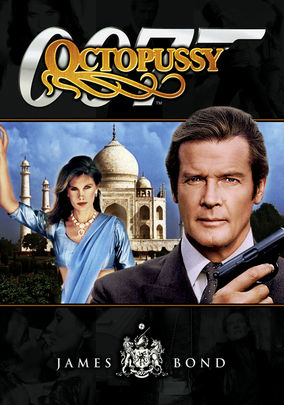
Hardly regarded as one of the most stellar of entries in the James Bond franchise, 1983’s Octopussy is nonetheless a guilty pleasure of mine.

This is undoubtedly because the film was the first installment I was allowed to see in the movie theater, and it is filled with exciting memories.

As the film stands in the current days, it is perfectly fine, containing all of the enjoyable elements necessary for a good Bond film- interesting villains, solid action, and gorgeous women.

Perhaps at times a bit silly, Octopussy is still quite the fantastic watch.

Roger Moore, admittedly looking slightly aged and sagging, returns to the fold as 007, the shaken, but not stirred action hero known as James Bond. However, he is, true to form, as witty and suave as he always is with witty one-liners and a mischievous smirk.

Moore ritualistically infuses the character with a measure of comedy- a wink of the eye or a raised eyebrow adds humor to the character so that any other actor who has portrayed Bond.

In this installment, Faberge eggs, clowns, and gorilla suits are featured.

Attempting to escape from East Berlin to West Berlin, 009- dressed as a circus clown- is murdered on the estate of a British Ambassador while attempting to deliver a fake Faberge egg.

Assuming the Soviets are involved, MI6 instructs Bond to investigate the matter, and a complex smuggling ring is uncovered- featuring a gorgeous female smuggler named Octopussy (Maud Adams), along with sinister Afghan exiled prince Kamal Kahn (Louis Jourdan), and his bodyguard, Gobinda.

Watching the film in 2018, even though it was made in 1983, Octopussy does not suffer from the dreaded “1980s look” that so many other films do; it seems surprisingly clean and fresh.

The colors are vibrant- especially in the prevalent circus and clown scenes, and the best two scenes- the airplane and train scenes- still bristle and crackle with good action.

As the climax to Octopussy culminates, the inevitable heroine and main Bond girl- Adams’s “Octopussy”- has been bound and gagged and taken hostage by the baddies in a fleeing airplane, Bond grabs hold of the fuselage, and begins a harried flight over the mountains of remote India, clinging for dear life.

The scene climaxes with an exciting fight scene atop the rooftop of the speeding plane as Bond and Gobinda fight to the death, as Kamal unsuccessfully attempts to twist and turn the plane and rid themselves of pesky Bond.

The scene is still compelling and loses none of its appeal over the years, never appearing dated.

The train sequence is still relevant but does suffer from a small dose of silliness.

The action is plentiful as Bond races against time to prevent a Russian missile from detonating and killing thousands of American citizens, and worthy of note is the timely Cold War subject matter of the Russians versus the Americans, plentiful in American cinema during this time.

As Bond dons a phony-looking gorilla outfit- embarrassing even for the comical Roger Moore- he can successfully take off the costume and sneak out of a train car, all before the three seconds that it takes for Gobinda to turn around and slice the head off of the gorilla, thinking it is Bond.

Suspension of disbelief is required.

Impressive is the female empowerment slant evident. From the strong businesswoman character that Adams portrays- she is decisive, intelligent, and savvy, she is neither cowering nor impressionable, and cannot be bullied or pushed around.

Albeit her name, “Octopussy”, does teeter on male chauvinism. Be that as it may, her gang of feminist followers, all wielding assault rifles, are quite inspiring and, at this point, unusual for a Bond film- typically masculine leaning.

Octopussy (1983) is an overlooked, under-appreciated, too easily dismissed slice of goodness served up with a bit of comedy, plenty of action, and good, solid villains- everything that makes a Bond film a Bond film.

The film is worthy of a viewing.