Category Archives: Art Malik

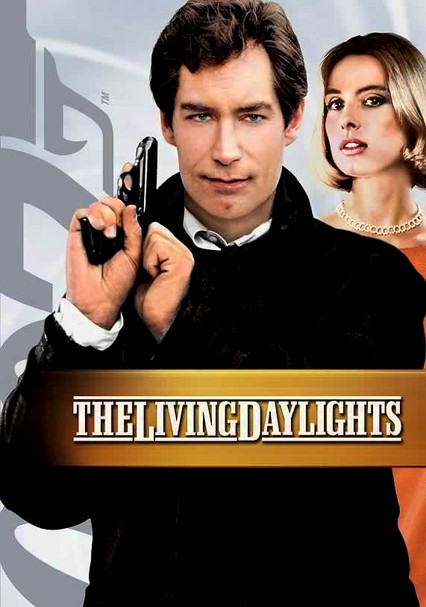
The Living Daylights-1987

The Living Daylights-1987

Director John Glen

Starring Timothy Dalton, Maryam d’Abo

Scott’s Review #1,194
Reviewed November 12, 2021

Grade: B+

It’s 1987, and Timothy Dalton is the new James Bond, having replaced the aging Roger Moore. Moore made seven Bond films.

Dalton’s reign was brief, and he made only two films: The Living Daylights (1987) and License to Kill (1989).

The Living Daylights is a fine Bond film ranking somewhere midstream with Best Of lists.

I completely agree with this sentiment, as it mostly borrows from other Bond films or stays true to the course, delivering a quality action film with all the typical trimmings a fan would expect from the franchise.

Nothing wrong with that.

This is unsurprising since director John Glen is at the helm once again. Responsible for directing the three prior Bond films- For Your Eyes Only (1981), Octopussy (1983), and A View To A Kill (1985)- he knows how to create a decent picture, and he does just that.

The main issue is with Dalton himself. Handsome, dashing, and British, he doesn’t quite possess the charisma that other Bonds like Moore, Connery, or Lazenby had. There is a seriousness to the actor and a lack of a smirk or wink in his eye that makes fans melt like putty in his hands.

The action commences with British secret agent James Bond (Dalton) helping KGB officer Georgi Koskov (Jeroen Krabbé) defect during a symphony performance. A mysterious blonde woman who plays cello immediately catches Bond’s attention for more than one reason.

She is Russian assassin Kara Milovy (Maryam d’Abo). Predictably, as events unfold, they become madly in love (or lust).

Koskov reveals that the new KGB head has instated a policy of assassinating defectors, Leonid Pushkin (John Rhys-Davies). But as Bond explores this threat, a counterplot surfaces, involving a shady American arms dealer (Joe Don Baker). Bond must thwart the evildoer’s fiendish plans and save the world from disaster.

The plot is secondary and difficult to follow, but the gist is the same as any other Bond film.

The fun (for me, anyway) is in enjoying the exquisite locales the film takes Bond to.

I salivated at the gorgeous concert hall and the surrounding areas of Czechoslovakia (pre-Czech Republic) and was mesmerized as the action moved to the stark desert lands of Afghanistan and Morocco, and finally into historic Austria.

The pre-title sequence was filmed on the Rock of Gibraltar and is utterly fabulous.

With every Bond film, this is a real treat and a major source of enjoyment. The Living Daylights doesn’t disappoint in this regard.

The finale aboard a speeding airplane is pulsating, edge-of-your-seat fun. Fights, ticking time bombs, and impending peril keep the action moving at a breakneck speed.

The villains lack much gusto, save for a hunky blonde assassin named Necros (Andreas Wisniewski), who enjoys prancing around in skimpy swimwear and who may or may not be gay.

In a more progressive Bond, they might have had a dalliance.  The main antagonists, Brad Whitaker, an arms-dealing General, and Koskov, are too goofy to pose any real danger or feel diabolical.

Also forgettable is the main Bond girl. Maryam d’Abo is an okay actress, but lacks much chemistry with Dalton. Their adventures are appealing, but more as buddies, and the romance didn’t work for me. He does respect her more than other Bonds would, so that is a win.

Delightful is the title theme song performed by the band A-Ha, which is catchy enough to stick in my head as I write this review. It is exotic and upbeat. Its standard inclusion in the opening credits makes the cheesy sequence more bearable.

Undoubtedly intended to launch a long and storied career as the new James Bond, Dalton lasted only briefly in the role.

The Living Daylights (1987) presents a Cold War theme that remains relevant but feels slightly tired by today’s standards. As usual, unless we’re talking about one of the superior Bond films, the locales are the real highlight.


A Passage to India-1984

A Passage to India-1984

Director David Lean

Starring Judy Davis, Peggy Ashcroft

Scott’s Review #971

Reviewed December 24, 2019

Grade: A-

David Lean, famous for his sweeping, masterpiece epics including Lawrence of Arabia (1962) and Doctor Zhivago (1965), returns with his swan song, a grandiose and lavish film, A Passage to India (1984).

Though not quite on the same level as the two other mentions, the brilliant cinematography alone makes this one a winner.

The story is compelling with a mystery, and he said/she said rape story that deepens, exploring racism and religion, assuredly switching viewer allegiances between characters.

A Passage to India is based on the famous E.M. Forster novel from 1924. Along with A Room with a View (1908) and Howards End (1910), the three make up a series that examines class differences and hypocrisy among the British.

All three are set at least partially in England and were all adapted to film with immeasurable success. While the film is potent and meaningful, it is the least brilliant of the three, but only by a hair.

Set in the 1920s, the story depicts the British controlling India, creating tension in the air.

Adela Quested (Judy Davis) sails from England to India with Mrs. Moore (Peggy Ashcroft), the mother of her intended bridegroom, whom they plan to see when they arrive at their destination.

The women have a wonderful relationship and excitedly anticipate their adventure.

After Mrs. Moore meets the kindly Dr. Aziz Ahmed (Victor Banerjee) and becomes enamored and enraptured, the women accompany him on an exploration of ancient caves with a guide.

When Adela and Ahmed are left alone, she suddenly appears frantic, accusing the Indian Doctor of attempted rape, setting off a blistering scandal that causes public debate and divides the townspeople, culminating in a trial.

The story is naturally the focal point of the film, but not the strongest part.

At first, left aghast at the accusations hurled at Aziz, by all appearances a wonderful man, the intention is for the viewer to be unclear of what transpires when Aziz and Adela are alone. The events, if any exist, take place off-screen, so we only see a disheveled Adela flee the caves in panic.

The rest is left to the viewer’s imagination and to wonder what happened. As the truth is eventually revealed, we wonder about the intended motivations and the ramifications the accusations will have on the central characters.

The film successfully and interestingly explores racism and assumptions, leading major characters to disagree. Adela and Mrs. Moore end up at odds after the events, with Mrs. Moore refusing to believe that Aziz did anything wrong.

This is a bold stance to take, as the women are good friends, and we would assume one would support the other. While Moore is liberal and open-minded, Adela is conservative and buttoned-up, making the ideological differences clearer.

Did Adela imagine the attack? Did somebody else attack her?

The cinematography is brilliant, and so is the film’s pure excellence. The plentiful exterior scenes are delectable and simmer with beauty within each frame. Since many of them take place in the grandiose mountains or caves, the results are exquisite.

One can easily sit back and revel in the majestic sequences, and many scenes are still and quiet, which enhances the effects. As with other Lean epics, it is advisable to see this film on the largest screen available.

At 164 minutes, the film is hardly non-stop action, but rather slightly laborious and lumbering. Some parts are a tad too slow, but the payoff is mighty, and there is a measure of intrigue throughout, especially once the cave incident occurs.

I hate to say the film drags, but perhaps fifteen to twenty minutes could have been shaved off. When Lean is at the helm, a hefty running time is a guarantee.

A Passage to India (1984) is a film by a respected director that boldly concludes a lengthy and inspired career. While not his best film, it should not detract from the excellent experience it provides.

Grandiose sequences and a sophisticated style make the film worth viewing more than once, a marvel for a film released in the lackluster 1980s.

Oscar Nominations: 2 wins-Best Picture, Best Director-David Lean, Best Actress-Judy Davis, Best Supporting Actress-Peggy Ashcroft (won), Best Screenplay Based on Material from Another Medium, Best Original Score (won), Best Sound, Best Art Direction, Best Costume Design, Best Cinematography, Best Film Editing

Diana-2013

Diana-2013

Director Oliver Hirschbiegel

Starring Naomi Watts, Naveen Andrews

Scott’s Review #63

70291112

Reviewed June 24, 2014

Grade: C+

Assuming all the details of Diana (2013) are accurate, this film was an interesting account of Princess Diana’s last two years of life and her transition from married royalty to single woman, all the while being the most famous woman on earth.

While the film was interesting, I felt something was missing and it was not as gripping as I had hoped.

I also did not quite buy Naomi Watts as Diana. Her mannerisms were off to me and the real Diana was taller.

Also, I didn’t quite believe that Diana could throw on a brown wig and walk freely around London unrecognized.

There was no chemistry between Watts and Naveen Andrews (TV’s Lost), who played a successful heart surgeon with whom Diana begins a romance.

These criticisms do not mean the film was a total failure,(there was a sincere likability and charisma that Watts brought to the role), but not as good as one would have hoped.