Tag Archives: Drama

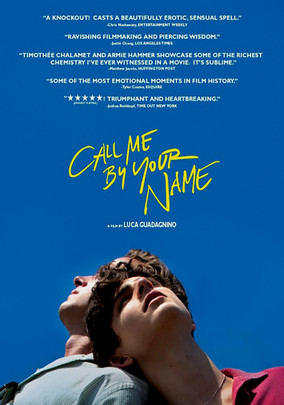
Call Me By Your Name-2017

Call Me By Your Name-2017

Director Luca Guadagnino

Starring Timothée Chalamet, Armie Hammer

Top 250 Films #118

Scott’s Review #708

Reviewed December 27, 2017

Grade: A

Call Me by Your Name (2017) is a gorgeous film. It is simply beautiful in storytelling, cinematography, and acting.

A humanistic film that crafts a lovely tale of young love, friendship, and emotions, which is breathtaking to experience.

In fact, in the LGBT category, I would venture to proclaim that this film is groundbreaking. It leaves behind any tried-and-true homophobic elements and instead tells a good story that is fresh, sincere, and simply flawless.

The period is the summer of 1983, and the landscape is the beautiful Italian Riviera.

Seventeen-year-old Italian-American Elio (Timothée Chalamet) dreams of spending the summer away, living with his affluent parents in a small village. His world is rich with culture and learning—his father (Michael Stuhlbarg) is a professor, and his mother is a translator.

A brilliant student, Elio wiles away the days reading, playing music, and flirting with his girlfriend, Marzia.

When a handsome twenty-four-year-old American student, Oliver (Armie Hammer), arrives for a six-week stay to assist Elio’s father on a project, desire and first love blossom between the young men as they struggle with their burgeoning relationship.

Directed by Luca Guadagnino, who has also directed the lovely 2009 film, I Am Love, is a man known for stories of desire in small Italian villages.

Call Me By Your Name is the third in a trilogy, I Am Love and 2015’s A Bigger Splash being the others.

The setting is crucial to the story, as both the summer heat and the world of the intellectual scholars are nestled into a grand shell of culture. The philosophical nature of the story is palpable—the film exudes intelligence and sophistication.

By 2017, the LGBT genre had become populated with films in the romantic, drama, and comedy sub-genres, but many use the standard homophobic slant to elicit drama and conflict.

Not to diminish the importance of homophobic discussions to teach viewers, Call Me By Your Name stands alone in that homophobia is not an issue in this story.

Given the time of 1983, this may be surprising—at the very cusp of the AIDS epidemic, this topic is also not discussed; rather, the subject matter is simply a love story between two males and the coming-of-age story that their love expresses.

The film is quite moving; Elio and Oliver are characters filled with texture and raw emotion. Oliver is confident, charismatic, and a great catch for any lucky young lady in the village.

Hammer fills the role with poise and humanity.

Chalamet, a beautiful young man, gives the complex role his all, as so much can be conveyed not by dialogue, but by expressions on the actor’s face.

As Oliver slow dances with a local girl, the wounded look that Chalamet reveals, his eyes welling up with tears, is heartbreaking. Seventeen is a tough age for most young men, but when coming to terms with one’s sexuality, it can be excruciating.

The final scene is poignant, as it features a five-minute-long sequence of gazing into Chalamet’s eyes, during which many emotions are expressed.

Enough credit cannot be given to Stuhlbarg as Elio’s father, as he gave one of the best speeches ever performed in film history. The actor gives a subtle and poignant performance as the sympathetic and knowing father.

His speech, marked by understanding and warmth, is riveting and inspirational—to be cherished. Mr. Perlman is a role model to fathers everywhere and the ideal parent for any gay son.

One scene that could stir controversy is the sure-to-be-controversial “peach scene”. Involving an innocent peach used during a sex act, the scene is erotic and borders on “icky”, but is also vital to foster the connection between Oliver and Elio.

Another potential risk to the film is that Oliver is twenty-four, while Elio is seventeen, making Elio underage. However, the film never portrays Oliver as more of an aggressor, and the relationship remains tender and consensual.

Call Me By Your Name (2017) is not just a great LGBT film but a film for the ages.  Beautifully crafted with gorgeous landscapes and nuanced, powerful acting, the sequences are subtle and carefully paced.

The film is simply a treasure.

Oscar Nominations: 1 win-Best Picture, Best Actor-Timothée Chalamet, Best Adapted Screenplay (won), Best Original Song-“Mystery of Love”

Independent Spirit Award Nominations: 2 wins-Best Feature, Best Director-Luca Guadagnino, Best Male Lead-Timothée Chalamet (won), Best Supporting Male-Armie Hammer, Best Cinematography (won), Best Editing

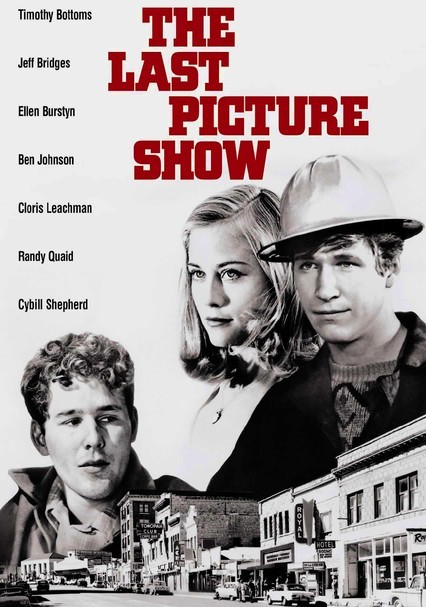
The Last Picture Show-1971

The Last Picture Show-1971

Director Peter Bogdanovich

Starring Timothy Bottoms, Jeff Bridges, Cybill Shepherd

Top 250 Films #121

Scott’s Review #1,349

Reviewed March 9, 2023

Grade: A

1971 was a great year in American cinema, from The French Connection to Willy Wonka and the Chocolate Factory to Fiddler on the Roof to Dirty Harry.

The list goes on and on.

The brilliantly filmed and directed The Last Picture Show is easily ensconced in the year’s top ten, featuring an embarrassment of riches across the board. An important thing to promote is the successful use of the dusty setting and time, which is the film’s secret sauce.

Peter Bogdanovich crafts a dreary coming-of-age tale set in landlocked Texas. The film is loosely based on a 1966 novel of the same name written by Larry McMurtry.

The film includes many songs by Hank Williams Sr. and other country & Western and 1950s popular music recording artists to reflect the era.

Most of the townsfolk are bored to tears in the windswept hamlet of Anarene, Texas. Their saving grace is a local cinema (the picture show) run by the popular Sam the Lion (Ben Johnson), which is about to close its doors forever.

Others frequent the café run by sultry waitress Genevieve (Eileen Brennan), who knows everyone’s business.

The gossip and scandals run wild throughout town, following several principal characters and their trials and tribulations. High school students Sonny (Timothy Bottoms) and Duane (Jeff Bridges) lust after flirty Jacy Farrow (Cybill Shepherd) while trying to figure out their futures.

Sonny also finds time for an affair with depressed housewife Ruth Popper (Cloris Leachman), twenty years his senior, who is married to the school gym teacher, Coach Popper (Bill Thurman), who may be gay.

The year is 1951, when the Korean War is raging, and the once-prosperous oil town is in significant decline.

Bogdanovich’s apt camerawork, shot in black and white, is central to the film and the winning recipe (well, one of them). If The Last Picture Show were shot in color or worse yet, colorized, it would detract from the proper mood of sadness.

The exterior scenes involve swirling dust and wide-angle shots of the main street, often enough to relay a comparison to a ghost town, especially as events go along. There are also some sequences featuring vehicles or highway scenes, evoking thoughts of escape or departure.

The other key ingredient is the ensemble of characters led by exceptional acting. Sonny is the handsome lead character with a lifetime ahead of him and the kindest of all the players. His all-American good looks infuse a vulnerability into the character with vulnerability, especially in scenes with his mentor, Sam, and his friend, Billy.

Other quiet scenes reveal much about the supporting characters. Ruth sadly hangs the wash on her clothesline, looking worn and weary, while Genevieve grills a cheeseburger in the café, cigarette dangling and her once youthful aspirations slipping away.

Leachman and Johnson, both Academy Award winners in the supporting categories, deserve their awards. They successfully portray their anger in quiet ways, and both have dignity and self-worth, making their characters complex and revered.

The heartiest scenes belong to the younger set as they deal with simmering sexuality and hopes for college. Jacy experiments with sex, even sleeping with the man who her mother Lois (Burstyn) is having an affair with.

Shepherd also presents Jacy as vulnerable as she awkwardly strips off her clothes during a pool party, encouraged by a handsome boy she hopes to impress. At times, she is childish, other times a selfish bitch. It’s mentioned that her family is wealthy, so it’s assumed she is spoiled.

The 1950s usually provide a level of nostalgia and good, old-fashioned, carefree Americana.

The Last Picture Show (1971), thanks to the flawless direction and screenwriting of Bogdanovich and McMurtry, instead paints a perfect portrait of misspent youth and shattered dreams.

Oscar Nominations: 2 wins-Best Picture, Best Director-Peter Bogdanovich, Best Supporting Actor-Ben Johnson (won), Jeff Bridges, Best Supporting Actress-Cloris Leachman (won), Ellen Burstyn, Best Screenplay-Based on Material from Another Medium, Best Cinematography

Fellini’s Roma-1972

Fellini’s Roma-1972

Director Federico Fellini

Starring Peter Gonzales, Britta Barnes

Top 250 Films #122

Scott’s Review #649

Reviewed June 5, 2017

Grade: A-

Fellini’s Roma (1973) is a trippy experience set in Rome across two different periods.

As with all Fellini films, the film is meant to be experienced rather than analyzed.

One must nestle into the life that Fellini offers on-screen- in this instance, the fabulous city of Rome, Italy, in both positives and negatives.

The experience was very good for me, as both a world of odd characters and of ancient Rome oozed from the screen appealingly and absurdly.

From a plot narrative- there is a rot one. Arguably, the only character portrayed is Rome herself. The film takes place in both the 1930s and the 1970s and is said to be an autobiographical tale of director Fellini’s experiences growing up in Rome.

We see little Fellini as a youngster, experiencing the vast city for the first time, and as a teenager, now living in the city. Interestingly, the film moves back and forth between the two periods with no rhyme or reason.

Throughout the film, we see both the beauty and the ugliness of Rome- the majestic Colosseum and the dirty entrails of the gloomy city. Scenes of seedy brothels, mainly in the 1930s, and a myriad of strange and scantily clad females prance before the cameras, looking for a lucky score amid the droves of men lusting after them.

Another depicts a fashion show, of sorts, taking place at the Vatican, involving nuns and priests in bizarre costumes.

The 1930’s setting is my personal favorite. Gritty, cold, and harsh, Rome’s bleakness is depicted. Unsurprisingly, this has much to do with the historical period: since Mussolini was in power and on the eve of World War II, the darkness was apparent.

In a frightening scene, bomb sirens wail while a woman shrieks in panic. The brothel scenes are downright creepy, and the subsequent theatre scenes involving drunken, rowdy, young men leering and cursing at the entertainment are a particular slice of a life sequence.

In contrast, the 1970s sequences are layered with more beautiful depictions of the city. Brighter colors predominate, and there appear to be scientists or explorers digging into ancient ruins, finding gorgeous art that is subsequently damaged by the wind. We also see hippy types basking in the sunlight.

Again, much of this film is largely open to interpretation.

I adore Fellini’s Roma in terms of an expression of the city of Rome as an art form, but the film is highly unconventional- another plus for me.

Sure, I may have wanted to learn more about the bevy of creepy and potentially interesting characters. Still, I finished the film with an appreciation for Rome unlike any I have ever known.

A startling final scene, in which legendary Italian film star Anna Magnani appears scantily clad, implied to be a prostitute, was filmed shortly before her untimely death at the age of sixty-five.

As a film, Fellini’s Roma (1972) is a wonderful history lesson, but also a lesson in interpretation and film appreciation. Most filmgoers are accustomed to a beginning, middle, and end, as well as some semblance of a plot.

Roma contains none of that; rather, it is mind-opening and still fresh many years after its release, which is a true testament.

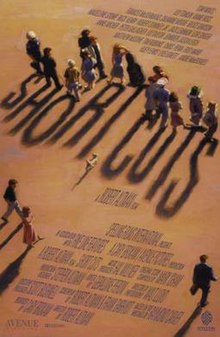
Short Cuts-1993

Short Cuts-1993

Director Robert Altman

Starring Tim Robbins, Julianne Moore, Lily Tomlin

Top 250 Films #123

Scott’s Review #1,400

Reviewed September 20, 2023

Grade: A

I am such a fan of acclaimed director Robert Altman because he typically features an enormous cast with richly composed characters all serving a story purpose. Frequently, with much character development and investment.

Short Cuts (1993) is a latter-day Altman offering set in Los Angeles, California, the City of Angels that is nearly as good as my all-time favorite of his, Nashville made in 1975.

Similarities burst to the screen with twenty-two principal characters to Nashville’s twenty-four. Their lives frequently intersect and the fun is peeling back the layers of their lives and discovering who is connected to whom.

Comparisons to 1992’s The Player (also Altman) and 1999’s Magnolia, directed by Paul Thomas Anderson can also be made for obvious Los Angeles setting reasons.

But, Magnolia is much weirder than Short Cuts.

The irony is that most characters are anything but angels as they suffer from insecurities, deaths, infidelity, and various shenanigans as they attempt to get through California life amid an earthquake and a fleet of helicopters spraying for medflies.

Altman based the film on the nine short stories and a poem by Raymond Carver.

Some of the tales include a waitress Doreen (Lily) who is married to an alcoholic limo driver (Tom Waits) who accidentally runs into a boy with her car. Soon after walking away, the child lapses into a coma. While at the hospital, the boy’s grandfather (Jack Lemmon) tells his son, Howard (Bruce Davison), about his past affairs.

Meanwhile, a baker (Lyle Lovett) starts harassing the family when they fail to pick up the boy’s birthday cake.

Dr. Ralph Wyman (Matthew Modine) and his wife, Marian (Moore), meet Stuart Kane (Fred Ward), an unemployed salesman, and Claire Kane (Anne Archer), a party clown, at a cello concert.

They impulsively decide to have a Sunday dinner date. seemingly having nothing in common.

Meanwhile, Marian’s sister, Sherri (Madeleine Stowe), is married to a cheating cop named Gene (Tim Robbins), who is having an affair with Betty Weathers (Frances McDormand), while Betty is divorcing one of the helicopter pilots, Stormy (Peter Gallagher).

There are other stories and connections to round out the fabulous cast.

The juicy and dramatic storylines play out like a terrific story arc on Days of Our Lives or As the World Turns with some needed comedic elements to balance things out.

Anyone who knows Altman will salivate with the name recognition among the cast most notably Tomlin and Robbins. Actors frequently chomped at the bit to appear knowing that he was an actor’s director.

This means he allowed his cast open range to create dialogue appropriate for their characters.

There’s no better example than when Jack Lemmon tells a story in the film. His improv and free dialogue are a dream to watch and a lesson in good and natural acting.

Despite the enormous cast everyone has something of quality to do. Nobody is languishing on the back burner with throwaway scenes or unimportant activities. All characters connect to others in some way.

Fans who fancy Los Angeles both in film and in real life with its bursting sunshine and cheery perception will revel in the down and dirty sub texture of Short Cuts.

The fun is getting there.

Some characters are wealthy but most struggle with day-to-day routine so the film contains a harsh realism. They try to find some shreds of happiness wherever they can get them.

Like real life which is part of the mastery of Short Cuts. The audience can relate to the characters because we all know people like them which makes the film a beautiful and treasured experience.

Or some may even be like us. The writing is brilliant and the characters are true to form.

One day I’ll create a list of my Top Ten Robert Altman films and I bet Short Cuts (1993) lands in the Top Five.

Oscar Nominations: Best Director-Robert Altman

Independent Spirit Award Nominations: 3 wins-Best Feature (won), Best Director-Robert Altman (won), Best Screenplay (won), Best Supporting Actress-Julianne Moore

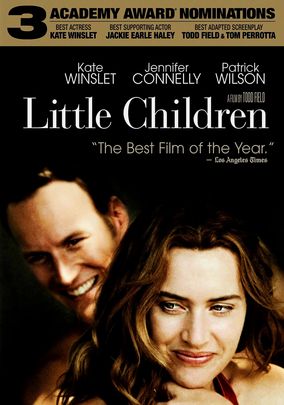
Little Children-2006

Little Children-2006

Director Todd Field

Starring Kate Winslet, Patrick Wilson

Top 250 Films #126

Scott’s Review #334

70052692

Reviewed January 9, 2016

Grade: A

Little Children is a subtle, dark drama from 2006 that reminds me a great deal of The Ice Storm and American Beauty- both equally quiet masterpieces. All are similar films about dysfunctional, interpersonal relationships that are damaged.

The great film is one of my more modern all-time favorites.

On the surface, the small suburban Boston town in which the members of the film reside is whimsical, peaceful, and quiet. Spacious colonial and Victorian houses similarly line the sleepy streets.

The small town (unnamed) is affluent and, we learn very early on, is rife with scandal. A child-molester, Ronnie, (Jackie Earle Haley), who is also a resident of the town, living with his mother, has recently been let loose to resume his life, which makes the neighborhood tense and angry.

It is summertime, and the air is thick with heat and secrets.

Other than the child-molester story, the main drama involves Sarah Pierce (Kate Winslet), an intelligent, bored, stay-at-home housewife. She is angry and frustrated.

She cares for her three-year-old daughter Lucy, while her husband is addicted to porn and regularly sniffs panties that he purchases online, even risking his job to immerse himself in his addiction to porn.

They have a sex-less marriage.

Soon, Sarah embarks on a relationship with the resident hunk, Brad (Patrick Wilson), a stay-at-home Dad to four-year-old Aaron. His wife, Katherine (Jennifer Connelly), a “knockout”, produces documentaries and is the breadwinner of the family.

Thrown in the mix is crazed ex-cop, Larry, obsessed with protecting the neighborhood from Ronnie, and a trio of suburban house-wives, who are friendly with Sarah and secretly lust after Brad.

Little Children is a film about relationships, insecurities, and dreams remaining unfulfilled. How these relationships are damaged, filled with angst, or yearning for a resolution far out of reach, are explored and every character is sad in some way.

Each character is unfulfilled and in the middle of all of it is the torrid romance between Sarah and Brad. They while away the summer in romance that we just know will not last. They find some happy moments, but how will this continue?

Tragic is the situation with Ronnie- despite being a child molester he is portrayed as a sympathetic character. The entire town is against him- a sad scene involves the townspeople fleeing the community pool when Ronnie dares to go for a swim.

When he tearfully tells the police that he just wanted to cool down, there is such sadness in his eyes.

Despite being supporting characters in the film, my favorite performances are by Haley and Phyllis Somerville, as Ronnie’s feisty yet haggard mother, May.

Determined to ensure her son has a decent life, she lashes out at anyone who bullies her poor Ronnie. Somerville’s performance is heartbreaking and, in a perfect Hollywood world, she would have received an Oscar nomination.

Happily, Haley did, as injecting any sympathy in a character such as his is a difficult task, but Haley does so in spades.

The film is filled with narrative- in not dissimilar fashion to the classic Barry Lyndon (1975)- as the narrator explains the thoughts and inner turmoil of the characters in regular intervals. This adds layers and clarity to the film.

A masterful scene involves one centered around the dinner table, successfully done. Curious about husband Brad’s daytime life when she is away at work, Katherine invites Sarah and her daughter to join them for a cozy dinner.

As everyone eats and converses, the light bulb suddenly goes on in Katherine’s head and she pieces together events, realizing Brad and Sarah’s true relationship.

All of those days when she knew not where Brad was now came flowing back to her. A similar scene was played out in 2008’s The Kids Are Alright, working successfully in that film too.

The stories eventually intersect and I love this point of the film, especially being that it takes place in a smothering small town.

Character-driven, cynical, tragic, and dark. Little Children (2006) is a humanistic masterpiece that I never tire of watching- one of my favorites.

Oscar Nominations: Best Actress-Kate Winslet, Best Supporting Actor-Jackie Earle Haley, Best Adapted Screenplay

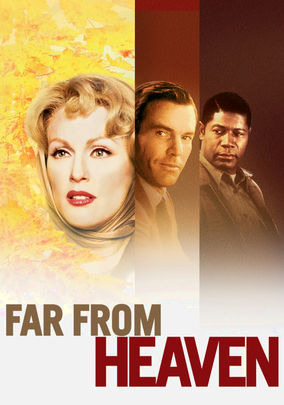
Far From Heaven-2002

Far From Heaven-2002

Director Todd Haynes

Starring Julianne Moore, Dennis Haysbert

Top 250 Films #127

Scott’s Review #332

60025011

Reviewed January 8, 2016

Grade: A

Far From Heaven (2002) is a gorgeous film, set in 1950’s upper-class and sophisticated Connecticut, that tackles not one, but two, separate social issues, in a wonderful story-telling fashion.

An interracial couple fraught with discrimination, and a homosexual husband hiding his secret lifestyle encompass this amazing film by acclaimed director Todd Haynes.

In years to follow, Haynes would also direct such masterpieces similar to the period (and story) of Carol (2015).

For starters, the cinematography and art direction are simply breathtaking- the beautiful and colorful small town in Connecticut, on the surface, prim and proper, is oozing with secrets and scandal just waiting to bubble to the surface.

An aerial view of the town allows the viewer to see this perfectly carved town in a sweeping motion.

Far From Heaven contains many similarities to All That Heaven Allows, made in 1955, and also focuses on a great scandal in a small, seemingly idyllic New England town.

Cathy Whitaker (Julianne Moore) seems to have everything perfectly styled and kept at home in affluent Connecticut, a successful husband named Frank (Dennis Quaid), who is an advertising executive, beauty, and a neighborhood filled with friends.

One night when Frank is working late, Cathy surprises him with dinner at the office, only to be surprised herself by catching Frank passionately kissing another man. In an awkward scene, Frank admits to Cathy that he needs conversion therapy, but instead turns to alcohol and continues to secretly see men.

Devastated, Cathy befriends her gardener, Raymond Deagan (Haysburt), a handsome black man, and slowly begins a relationship with him. Needless to say, this causes gossip and scandal amongst the townspeople.

Far From Heaven is fantastic story-telling, weaving, in essence, two main social stories together.

Frank questions his sexuality, afraid to admit he is gay and risking his reputation and career. Undoubtedly, he is a tormented individual and we see him slowly come to terms with his sexuality.

Haynes, fantastic at crafting a worthy story, carves a similar tale in 2015’s Carol, only she is a woman confident about her sexuality, but hiding it from society. Since the time in both films is the 1950s, the sexual revolution has not occurred, let alone anything gay-related.

The center story though belongs to Cathy and Julianne Moore portrays her to perfection. I would argue that Cathy is Moore’s best role- along with Amber Waves from Boogie Nights.

Hurt and betrayed by her husband, she suddenly is filled with new and dangerous emotions- falling in love with a black man in a not very open-minded time.

Moore and Haysbert have fantastic chemistry from their very first scene together.

I love how Haynes showcases the perfection of the town- the lawns are perfectly mowed, the flower beds flawless, and everyone appears cheerful and colorful. But when something in their little town becomes amiss (in this case Cathy going against the grain) the fangs come out and the animals bear their teeth.

A wonderful scene showcases Cathy and Raymond’s slow dancing in a solely black bar. They sway as one and Cathy is accepted by the black patrons. Raymond (and his daughter) are not treated the same way by the white folks of the town once they catch wind of the shenanigans going on between the interracial couple.

Far From Heaven (2002) is a beautiful film- from the way it looks and is shot, to the powerful acting performances all around. Moore may be the star and the central character of the film, but Quaid and Haysbert certainly deserve their due.

They each give layered performances as wounded and tortured men- and the conclusion of the film- perceived as open-ended- is also not a happily ever after climax.

Oscar Nominations: Best Actress-Julianne Moore, Best Original Screenplay, Best Original Score, Best Cinematography

Independent Spirit Award Nominations: 5 wins-Best Feature (won), Best Director-Todd Haynes (won), Best Female Lead-Julianne Moore (won), Best Supporting Male-Dennis Quaid (won), Best Cinematography (won)

Bambi-1942

Bambi-1942

Director David Hand

Starring Various voices

Top 250 Films #129

Scott’s Review #556

Reviewed December 22, 2016

Grade: A

Bambi (1942) is one of my favorite classic Disney animated features. It is simply a lovely, endearing, and heartbreaking tale.

Gorgeous and flawless, the film conveys a clear message about animals yearning for peace in a world where hunters seek to disturb and kill the graceful deer.

After all these years, this message still resonates loud and clear, sad, heartbreakingly. All deer hunters should watch this film and dare to take a shot.

Bambi was released during the Golden Age of Disney films, which was led by notable films such as Snow White, Dumbo, and Pinocchio, among others.

We first meet baby Bambi as his dear mother nurtures and nestles him, fawning over him with pride and teaching him the joys of the forest. Bambi’s father is the Great Prince of the Forest- protector of all the creatures of the land.

Bambi’s mother (unnamed) warns an exuberant Bambi to be cautious of the gorgeous yet dangerous meadows, where the deer are vulnerable and unprotected.

During the film’s famous gut-wrenching scene, tragedy occurs, and violence disrupts the peaceful forest, leaving Bambi alone, lost, and devastated, forced into a cruel world of tragedy, realism, and responsibility.

The scene gets to me every time, as we see the pain and harshness of life for the sweet deer, to say nothing of the other animals in the forest —namely, Thumper (a rabbit) and Flower (a young Skunk).

These characters are Bambi’s best friends. The dripping teardrop that oozes from Bambi’s eye can never be forgotten.

To counterbalance the film’s darkness, Disney successfully incorporates cheerful scenes of the animals dancing and interacting with each other as a unified community.

This is nice, as it shows the power and bond between the creatures – they are united as a family and take care of one another. I love this message, especially as young people will watch the film for the first time.

There is also a sweet romance offered between Bambi and Faline.

Watching the film and listening to the musical score is a way to experience sheer beauty. The music makes the film powerful- its classical and operatic elements are gorgeous and will elicit emotions.

Visually, each frame is a drawing set against a still, and it is magical to watch and marvel at the amount of work that undoubtedly went into this preparation.

In the end, the circle of life comes full circle. Bambi becomes the Great Prince of the Forest, replacing his father as the protector. Now, all grown up with two tiny babies of his own, he must protect his family and friends.

Life goes on. This is a sad yet realistic message. How brave Disney was in creating a masterpiece like Bambi.

Personal satisfaction is observing my beloved female feline friend, Thora, become mesmerized and attentive to the film each time I watch it.

Disney’s Bambi is a wonderful, cherished treasure that evokes emotions and conveys a valuable, poignant message. It is a timeless masterpiece to be enjoyed for generations to come.

One will not escape the film with dry eyes, a testament to the marvelous filmmaking involved.

Oscar Nominations: Best Scoring of a Dramatic or Comedy Picture, Best Original Song-“Love Is a Song”, Best Sound Recording

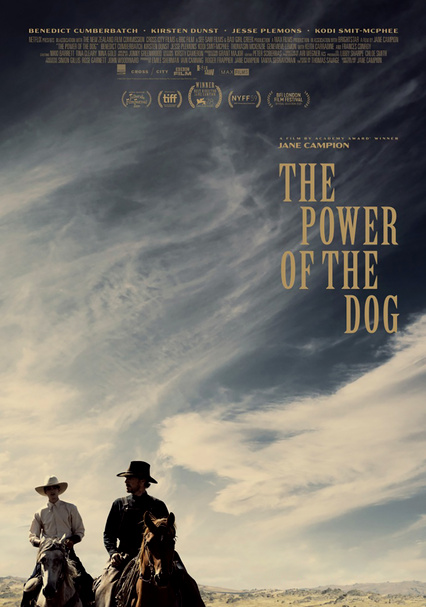
The Power of the Dog-2021

The Power of the Dog-2021

Director Jane Campion

Starring Benedict Cumberbatch, Kirsten Dunst, Jesse Plemons

Top 250 Films #134

Scott’s Review #1,199

Reviewed November 21, 2021

Grade: A

Benedict Cumberbatch delivers a harrowing and brutally honest performance in The Power of the Dog (2021), a thought-provoking and layered film by Jane Campion. Parts western, gothic, and drama, Cumberbatch leads the charge, but all players associated with the film knock it out of the park.

If the superior acting is not enough, the eerie subtext and gorgeous cinematography firmly place the viewer in 1925 Montana, where a vast and open range serves as the primary setting. Characters are riddled with secrets, and the fun lies in peeling back the layers to reveal their motives and true desires.

There are enough bare male butts to titillate most viewers, and Cumberbatch himself did not use the aid of a body double. He stated he wanted to be as raw and vulnerable as his character, the dastardly and cruel Phil Burbank.

Campion, who hasn’t made a film in over a decade, is back with a vengeance, paying homage to Ang Lee and his movie Brokeback Mountain (2006).

From the first moment on screen, we know something is mesmerizing about Phil. He is handsome and severe, an alpha male if there ever was one, and attributes his savvy to his deceased father figure, Bronco Henry. His relationship with this man is key to the whole story.

Along with his brother George (Jesse Plemons), the Burbank brothers are wealthy ranchers. One day, at the Red Mill restaurant on their way to market, the brothers meet Rose (Kirsten Dunst), the widowed proprietress, and her impressionable and effeminate son Peter (Kodi Smit-McPhee).

Phil behaves cruelly to Rose and Peter, but George becomes enamored with Rose and they marry, much to Phil’s chagrin. Now all living together, Phil taunts Peter and terrorizes Rose, but slowly begins to take the boy under his wing.

But what are his true intentions, and what will Peter do to save his mother from a complete breakdown?

The acting is so brilliant that I immediately became immersed in their lives. Particularly fascinating is Phil, but Rose, George, and Peter are all substantial characters. All the characters intertwine and have special relationships with each other, and all the principal actors are central to our fascination with them.

Rose may be Dunst’s best role yet, and Plemons is terrific as the kind and steady George. Smit-McPhee, unknown to me, is a revelation as the androgynous young intellectual.

There are enough homoerotic scenes to make the viewer question Phil’s sexuality. His secret stash of strong man magazines and his long gazes at nude male sunbathers may be enough to unlock the key. Still, when he rubs a handkerchief belonging to Bronco all over his body, the relationship between the two men oozes to the surface.

Campion has a lot of guts in taking on the male-driven western genre, and she brilliantly succeeds. Forgetting the storyline for a moment, the ravishing and oftentimes lonely landscape makes the film gorgeous to look at, especially on the big screen.

Plenty of long shots of the mountainous regions will inevitably captivate viewers and transport them to a bygone era.

The Power of the Dog was shot in New Zealand, but I was completely fooled into thinking Montana was the real filming location.

I adored seeing the costumes, whether it be Rose in a housedress or more distinguished characters like the governor and his wife dressed for a dinner party. All costumes appear authentic, peppered with a touch of glamour amidst the dirtiness of the range. Even the grubby ranch hands look great.

Discussions will certainly erupt once the film ends, and isn’t that the point of great films? The Power of the Dog (2021) takes the tried-and-true Western genre and infuses it with psychological depth.

Thanks to Campion and the team, she masterfully uses no gimmicks to draw the viewer into the world of the characters, instead offering authenticity and edge-of-your-seat drama.

Oscar Nominations: 1 win-Best Picture, Best Director-Jane Campion (won), Best Actor-Benedict Cumberbatch, Best Supporting Actor-Kodi Smit-McPhee, Jesse Plemons, Best Supporting Actress-Kirsten Dunst, Best Adapted Screenplay, Best Film Editing, Best Cinematography, Best Production Design, Best Original Score, Best Sound

Lawrence of Arabia-1962

Lawrence of Arabia-1962

Director David Lean

Starring Peter O’Toole, Alec Guinness, Omar Sharif 

Top 250 Films #139

Scott’s Review #355

60028312

Reviewed January 9, 2016

Grade: A

Lawrence of Arabia (1962) is quite a grand film that must be seen on a large screen. This will ensure full appreciation of the enormous scale of the production.

Numerous shots of objects in the distance are featured, and the small screen dulls the experience.

An excellent film from top to bottom and groundbreaking at the time, due to the scope and vast proportions of the production, Lawrence of Arabia achieves its place in cinematic history.

It’s a treat to revisit from time to time.

The film is divided into two parts with an intermission, as with epics that last nearly four hours.

Peter O’Toole stars as T.E. Lawrence, a bored British Army Lieutenant who talks his way into a transfer to the Arabian desert.

As the film opens, it is 1935, and Lawrence has just been killed in a motorcycle accident. While this concept of revealing the ending and working backward is common in current films, it was novel in 1962 when the film was made.

While in Arabia, Lawrence successfully bonded bitter rival tribes to unite against Turkish oppression during World War I. He meets two young guides and other central characters there: Prince Faisal (Alec Guinness) and Sherif Ali (Omar Sharif).

Much of the film features the battles between the rival tribes and Lawrence’s struggle to achieve peace.

Many location sequences of Lawrence and company traveling miles and miles of hot desert are featured.

Some complain that Lawrence of Arabia is too slow-moving a film, but that is its selling point. I find the scenes of the group languishing across the desert incredibly lush and rich in meaning.

The intense heat and beating sun are fantastic in their cinematic grandeur. The film is meant to take its time—precisely what an experience in the Arabian desert would be like—and the mountainous dunes and swirling winds are brilliantly filmed.

David Lean is the king of the sprawling epic, and Lawrence of Arabia is his crowning achievement.

Lawrence is a well-written, layered, and complex character. He is not easy to describe or understand, which is also to the film’s credit.

The sheer weight loss that O’Toole underwent over the two years it took to film Lawrence of Arabia is impressive enough, but he was also a tortured soul emotionally.

The epic film Lawrence of Arabia (1962) requires a half-day of dedicated viewing, but it is worth every minute.

For a reminder of what an actual, breathtaking film looks like sans the oversaturated CGI and quick edits, one should take a deep breath and appreciate this work of art for its majestic look.

Oscar Nominations: 7 wins-Best Picture (won), Best Director-David Lean (won), Best Actor-Peter O’Toole, Best Supporting Actor-Omar Sharif, Best Screenplay Based on Material from Another Medium, Best Music Score-Substantially Original (won), Best Sound (won), Best Art Direction, Color (won), Best Cinematography, Color (won), Best Film Editing (won)

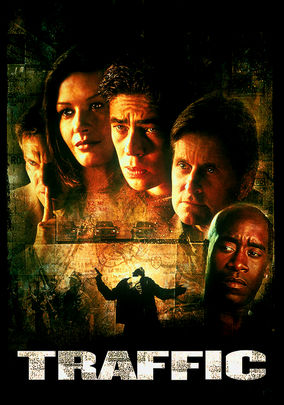
Traffic-2000

Traffic-2000

Director Steven Soderbergh

Starring Michael Douglas, Catherine Zeta-Jones, Benicio del Toro

Top 250 Films #143

Scott’s Review #333

60003243

Reviewed January 8, 2016

Grade: A

Simply put, I adore this film. I loved Traffic when it was first released in 2000 and I still love it in present times.

During an age where the overlapping stories with hefty casts were still in the infancy stage (Crash-2006, and Babel-2006, similar films, would not be released for several years), Traffic was groundbreaking, compelling, thought-provoking, and just a damned good drama!

With drug use still a continuing problem in the United States, the film remains both relevant and important.

Featuring three main, intersecting stories with a central theme of drug trafficking, each is told from various perspectives: users, political figures, law enforcement, and criminal traffickers.

Traffic also wisely shows how the drug problem knows no specific classes- affluent, middle-class, and poor are all represented in the film.

A strong political story is represented- led by conservative Ohio judge Robert Wakefield (Michael Douglas), who is appointed “drug czar” as the President’s Office of National Drug Policy leader, he vows to end all drug trafficking and is the moral center of the film.

However, his prep school daughter, Caroline, (played exceptionally well by Erika Christensen) and her equally affluent friends are dabbling in cocaine, heroin, and other drugs, so much so that their lives are slowly spiraling out of control.

The Mexico story involves the riveting tale of Mexican police office Javier Rodriguez (played convincingly by Benicio del Toro). He becomes heavily involved in a web of deceit, money, and drugs. His partner, Sanchez, makes a deal with the devil and his fate is thereby sealed. Javier has moral questions to ask himself and only wants to do right by some local, neighborhood boys.

Finally, San Diego is the setting for a story of corruption involving the DEA’s investigation of a drug lord, Carl Ayala. After being arrested, his wife Helena (Catherine Zeta-Jones) faces a moral dilemma- either carry on the illegal proceedings or come clean. She,  up until this point unaware of her husband’s business, faces enormous pressure, both financially and through the threat of violence.

My favorite aspect of Traffic is that all of the aforementioned stories are fascinating in their own right- and could make terrific films on their own, but as the film progresses they begin to intersect and keys to the puzzle slowly unlock themselves.

I love how many of the central characters (Helena, Javier, and Wakefield) begin as “good” people only to have their moral intentions challenged, and in some cases, threatened.

They are each conflicted in some way.

The film poses an interesting, crucial question of what can be done about the United States drug trafficking problem. The answer at the end of the film is a disappointing and perhaps even depressing realization.

Drugs will never stop being a problem and Traffic wisely explains how drugs show no barriers when it comes to either wealthy or more financially challenged individuals.

How wonderful to see a stellar cast, even in smaller roles (Dennis Quaid and Amy Irving immediately come to mind) with all of the characters having a purpose in a wonderful example of how a mainstream Hollywood film can achieve a true ensemble effort that works.

Great job Steven Soderbergh!

Oscar Nominations: 4 wins-Best Picture, Best Director-Steven Soderbergh (won), Best Supporting Actor-Benicio del Toro (won), Best Adapted Screenplay (won), Best Film Editing (won)

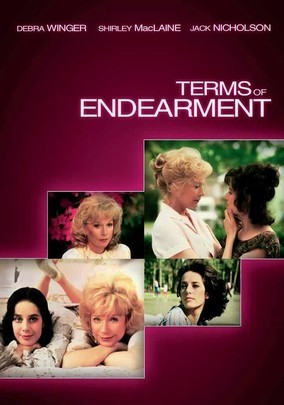
Terms of Endearment-1983

Terms of Endearment-1983

Director James L. Brooks

Starring Shirley MacLane, Debra Winger, Jack Nicholson

Top 250 Films #152

Scott’s Review #368

60004508

Reviewed January 9, 2016

Grade: A

Terms of Endearment (1983) is a sentimental favorite of mine, and while I am slightly embarrassed to include this chick-flick to end all chick-flicks on my favorites list, it is also a damned good sentimental film and makes me a bit weepy each time I see it.

It is pure Hollywood mainstream formula, but somehow Terms of Endearment works (romantic films are not usually at the forefront) and even won the coveted Best Picture Oscar in 1983. That must say something.

So if it is so sappy what makes it so great? For starters, it has some exceptional acting all around, especially by leads Shirley MacLaine, Jack Nicholson, and Debra Winger.

How can you go wrong with a talent of that caliber?

MacLaine and Winger play Aurora and Emma Greenway, a mother and daughter, (the father is deceased) who share a lifelong love/hate relationship, living in the mid-west in present times.

Nicholson plays Garrett, a retired astronaut (and womanizer) and the object of Aurora’s affection.

The chemistry among all three is apparent- I sinfully find it delicious that Winger and MacLaine despised each other throughout filming, adding a layer of curiosity and intrigue to the film, and during their scenes.

Director James L. Brooks wisely balances the heavy drama with comedy so the film does not become too overwrought. For example, Garrett and Aurora have a humorous courtship, constantly bickering or misunderstanding each other- he is a womanizing playboy type and Aurora a domineering, insecure woman- they end up needing each other, nonetheless.

Unforgettable is the hilarious drive along with the beach scene that the two share.  Even though the duo is tenuous and difficult, I love them all the same.

The tear-jerker scenes are emotional, especially the deathbed scene at the end of the film. There is so much raw emotion going on at once and, a rarity in film, the child actors involved are real, believable, and flawless.

The film feels like watching a true, real-life, drama play out. The heartache feels real and the film as a whole feels very genuine.

Also interesting is Emma’s failing marriage to Flap (Jeff Daniels) and her subsequent affair with kind-hearted Sam (John Lithgow) as well as her departure from her mother’s hometown, the constant phone calls, and being in one another’s life, just like a real mother and daughter relationship is oftentimes like.

Terms of Endearment (1983) incorporates all of the elements that make a good, old-fashioned, dramatic tear-jerker, and I find myself a sucker for it each time that I watch it.

Oscar Nominations: 5 wins-Best Picture (won), Best Director-James L. Brooks (won), Best Actress-Shirley MacLaine (won), Debra Winger, Best Supporting Actor-Jack Nicholson (won), John Lithgow, Best Screenplay Based on Material Based on Another Medium (won), Best Original Score, Best Sound, Best Art Direction, Best Film Editing

The Color Purple-1985

The Color Purple-1985

Director Steven Spielberg

Starring Whoopi Goldberg, Oprah Winfrey

Top 250 Films #153

Scott’s Review #358

60026621

Reviewed January 9, 2016

Grade: A

Steven Spielberg, admittedly a director who focuses more on sentimentality, mixes heartbreak with the courage to blend a recipe that makes for a perfect, mainstream film from 1985.

It is a different direction for him- far extreme from the summer blockbusters he was known for until this time.

Exceptional acting and cinematography lend themselves to The Color Purple, a film based on the much darker novel by Alice Walker. Certainly, one of the best films of the 1980s.

A relative unknown when the film was made, Whoopi Goldberg gives an astounding performance in the lead role.

The film spans approximately forty years in the early twentieth century and is set in rural Georgia.

Celie Harris (Goldberg) is an oppressed black woman, her sister and best friend Nettie is sent away, leaving Celie a virtual prisoner with a man, Albert Johnson (Danny Glover), whom she is forced to marry and care for in addition to his children.

Raped and beaten, Celie is left with little self-worth until two women, rotund, feisty, Sophia (Oprah Winfrey), and Shug (Margaret Avery) inspire her to be something better.

The Color Purple is a very sentimental film filled with inspiration for anyone beaten down or otherwise abused by people or by society.

The depiction of southern life for blacks, especially black women is depicted well, though softened I have no doubt. Liberties must be taken for the sake of film as black men, in particular, are not portrayed well- surely there must have been some decent black men in this time?

But, despite Spielberg being a male, The Color Purple is told from a definite female perspective.

Her role of Celie is Goldberg’s finest and hers is a case of the Academy getting it all wrong; she should have won an Oscar for this performance instead of a conciliation win a few years later for her secondary (and unremarkable) role in Ghost.

Goldberg never achieved any roles as great as Celie.

Her expressions and mannerisms spoke volumes and her occasional wide, beaming smile would melt the coldest heart.

Winfrey, equally brilliant as Sophia (and also robbed at Oscar’s time), is a completely different character. Angry, abrasive, and outspoken, she fills Sophia with life and energy, which makes her big scene heartbreaking to watch.

Defying a white man she is beaten and arrested and reduced to living out her days as a limping maid to a white woman- who she swore she would never serve.

The cinematography and direction of The Color Purple are grand.

Spielberg does a believable job of depicting time accurately. The costumes worn by the cast and the lighting, in general, are bright and colorful, and I think this gives the film a flavor that is nice to watch.

Again, Walker’s novel and the real-life experience were undoubtedly much darker, but for the film’s sake, this adaptation (numerous stage versions preceded and followed) makes for a wonderful film.

Oscar Nominations: Best Picture, Best Actress-Whoopi Goldberg, Best Supporting Actress-Margaret Avery, Oprah Winfrey, Best Screenplay Based on Material from Another Medium, Best Original Score, Best Original Song-“Miss Celie’s Blues (Sister)”, Best Art Direction, Best Cinematography, Best Makeup, Best Costume Design

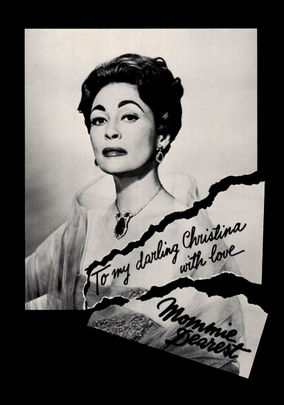
Mommie Dearest-1981

Mommie Dearest-1981

Director Frank Perry

Starring Faye Dunaway

Top 250 Films #154

Scott’s Review #195

60020629

Reviewed November 20, 2014

Grade: A

Camp, camp, camp!

By this point in film history, Mommie Dearest and this description go hand in hand, but when made in 1981, it was meant to be a much more serious film than it turned out to be.

Sadly, due to a few very over-the-top lines, it is forever inducted into the halls of cult classic memory.

Based on the scandalous tell-all book written by Christina Crawford (Joan’s adopted daughter), Mommie Dearest tells the story of Joan Crawford, a Hollywood screen legend, from her heyday in the 1930s, until she died in 1977, and mostly focuses on the tumultuous relationship with Christina- played as an adult by Diana Scarwid.

Convinced a baby was missing from her life and unable to conceive after several miscarriages with a former flame, Crawford’s beau at the time, an attorney, wrangles a way for her to adopt both Christina and later, Christopher Crawford.

Dealing with her mother’s demands and abuse, Christina goes from a happy little girl to a rebellious teen sent to live in a convent and later struggling to find her way as an actress in New York City with no financial support from Mom.

The film also wonderfully describes the career of Crawford- from highs (winning the Academy Award for Mildred Pierce) to lows (being cut from MGM and reduced to screen tests). The film also recounts Joan Crawford’s continuing battles with booze and neuroses.

From start to finish the film belongs to Dunaway as she simply becomes Crawford- the eyelashes, the mannerisms, every detail is spot on.

Unfortunately for Dunaway, due to the unintentional comedic view of this film, she was robbed of an Oscar nomination, shamefully so. The film was awarded several Razzies- a derogatory honor given to the year’s worst films. Dunaway must have put her heart and soul into this performance.

During the infamous wire hanger scene, Dunaway looks frightening as her face, caked with cold cream, reveals a grotesque mask- reminiscent of Batman character The Joker- as she shrieks at her daughter in the middle of the night, during a drunken tirade, after finding beautiful clothes on wire hangers.

She then trashes her daughter’s bathroom insisting it is already filthy.

One will shriek with gales of laughter as Crawford berates her maid Helga for not scrubbing beneath a potted plant, only to insist, “I’m not mad at you Helga, I’m mad at the dirt”.

In another haunting scene, Joan throws a birthday party for Christina complete with a merry-go-round, balloons, presents, and the paparazzi. Joan’s attire is a little girl dress matching young Christina’s- a morbid foreshadowing of the competition that is to exist between them as the years go by.

The secondary characters are merely an extension of Dunaway’s character and do their best to support her- her harried live-in assistant, Carol Ann, played by Rutanya Alda, both of her love interests, lawyer, Greg Savitt, played by Steve Forrest, and later, Pepsi-Cola mogul Alfred Steele, played by Harry Goz.

The actors do their best with the material given and are neither exceptional nor flawed. None of these supporting characters have any backstory other than to react to Crawford’s drama and, if written better, may have given the film a bit more depth.

The look of the film is pleasing- Crawford’s house is beautifully decorated with lavish furniture and the colors throughout the film are both bright and vivid. The now-legendary lines of “No wire hangers ever!”, “Christina! Bring me the ax!”, and “Don’t fuck with me fellas, this ain’t my first time at the rodeo” are hysterical in their melodrama and effect.

Crawford is portrayed as an obsessive-compulsive, demanding, control freak. One may debate the authenticity of the claims Christina made against Joan Crawford until the end of time.

Not the masterpiece it was intended to be, Mommie Dearest (1981) can be enjoyed viewing after viewing for some campy silliness, with one hell of a great performance by Dunaway mixed in.

All About Eve-1950

All About Eve-1950

Director Joe Mankiewicz

Starring Bette Davis, Anne Baxter

Top 250 Films #155

Scott’s Review #73

242142

Reviewed June 27, 2014

Grade: A

All About Eve is a cynical masterpiece from 1950 set in the competitive world of the New York theater.

Insecure Margo Channing, played to perfection by Bette Davis, is an aging actress whose career is declining. She meets naïve Eve Harrington, played by Anne Baxter, who insinuates herself into Margo’s life and career.

One interesting aspect of this film is the opening scene of Eve’s acceptance speech. The look of anger and disdain on the front table indicates what is to come.

The film backtracks from the first time the two women meet, and the story begins.

It is undoubtedly a dark film, and jealousy and back-stabbing are common themes throughout, as had never been done before, set in the world of theater.

One by one, each of Margo’s friends catches on to Eve’s plot, but at what cost?

This is Bette Davis’s comeback performance as a talented Broadway star, and she makes the most of the opportunity as she deliciously utters her famous revenge-minded line, “Fasten your seat belts. It’s going to be a bumpy night”.

Marilyn Monroe has a cameo role as a debutante in her first film role.

The film deservedly won the 1950 Best Picture Oscar.

Oscar Nominations: 7 wins-Best Motion Picture (won), Best Director-Joseph L. Mankiewicz (won), Best Actress-Anne Baxter, Bette Davis, Best Supporting Actor-George Sanders (won), Best Supporting Actress-Celeste Holm, Thelma Ritter, Best Screenplay (won), Best Scoring of a Dramatic or Comedy Picture, Best Sound Recording (won), Best Art Direction-Set Decoration, Black-and-White (won), Best Cinematography, Black-and-White, Best Costume Design, Black-and-White (won), Best Film Editing

From Here to Eternity-1953

From Here to Eternity-1953

Director Fred Zinnemann

Starring Burt Lancaster, Deborah Kerr, Montgomery Clift

Top 250 Films #156

Scott’s Review #875

Reviewed March 7, 2019

Grade: A

Based on a popular novel of the same name, written by James Jones in 1952, From Here to Eternity (1953) tells a powerful story of romance and drama set against the gorgeous backdrop of Hawaii.

The film is poignant and sentimental for its build-up to the World War II Pearl Harbor attacks, further enhancing the storytelling.

With great acting and a compelling story, the film is a bombastic Hollywood creation that has endured and remains timeless.

A trio of United States Army personnel is stationed on the sunny island of Oahu. The primary principals are First Sergeant Milton Warden (Burt Lancaster), Private Robert E. Lee Prewitt (Montgomery Clift), and Private Angelo Maggio (Frank Sinatra). Their lives in the Schofield Army Barracks are chronicled.

Respective love interests join them, Alma Lorene (Donna Reed) and Karen Holmes (Deborah Kerr), and the triumphs and sorrows of each are explored dramatically before the devastating incident set to take place.

The film’s perspective is centered around the male characters, which risks the film being classified as a “guy’s movie.” Enough melodrama and romance exist to offset the testosterone and masculinity, and as the characters weave in and out of each other’s lives, a broader canvas is painted.

This point is to the film’s credit as each character is rich with development, sympathy, or sometimes pure anger.

Many films have been told, and continue to be informed throughout the decades, of the terrors and after-effects of World War II, but From Here to Eternity remains at the top of the heap. While not going full throttle with too much violence or grit, the film tells of the trials and tribulations of people affected and soon to be affected by the war.

The characters co-exist peacefully in their little slice of the world. Though there is the occasional bullying or insubordination among the ranks, the romance soon takes center stage, followed by the dire attacks.

The smoldering beach scene featuring Burt Lancaster and Deborah Kerr on the ravaging shores of Halona Cove is as iconic as any cinematic moment. Rumors of the star’s torrid love affair and the need to run off to make love after shooting the scene could be myths, but they have never been disproven.

The camera crew reportedly shot the scene quickly, leaving the duo to their desires. Regardless, the scene may cause the iciest of hearts to turn into a torrent of heart-pounding flutters.

The film suddenly turns dark, as if realizing it is about a devastating war. A central character dies, and another character hunts for revenge. Despite these deaths not being at the hands of an enemy or a battle, they are powerful and dim.

Finally, the attack on Pearl Harbor is upon us, just as the audience will no doubt sense it coming. The film ends sadly with a simple dialogue between the two main female characters.

Thanks to fine direction by novice director Fred Zinnemann, From Here to Eternity (1953) elicits a pure breadth of emotions and subject matters.

At its core, it is a cynical film, but the picture is also rich with courage, integrity, and love of one’s country without suffering from phony false patriotism.

With a dash of romance and sexuality, the film is utterly memorable and deserving of the hefty Academy Awards it achieved.

Oscar Nominations: 8 wins– Best Motion Picture (won), Best Director-Fred Zinnemann (won), Best Actor-Montgomery Clift, Burt Lancaster, Best Actress-Deborah Kerr, Best Supporting Actor-Frank Sinatra (won), Best Supporting Actress-Donna Reed (won), Best Screenplay (won), Best Musical Score of a Dramatic or Comedy Picture, Best Sound Recording (won), Best Cinematography, Black-and-White (won), Best Costume Design, Black-and-White, Best Film Editing (won)
Dreamgirls-2006

Dreamgirls-2006

Director Bill Condon

Starring Beyonce, Jennifer Hudson, Eddie Murphy

Top 250 Films #159

Scott’s Film Review #792

Reviewed July 20, 2018

Grade: A

Dreamgirls (2006) is a glossy show business-style drama with plenty of glitz and glamour. Adapted from the Broadway production of the same name, the story is loosely based on the trials and tribulations of The Supremes, a popular all-girl group from the 1960s.

Despite the film being heavily focused on the drama and tension between the characters, it boasts a wonderful soundtrack and fantastic acting- most notably newcomer Jennifer Hudson, who garnered a surprising Best Supporting Actress Oscar win for her role.

The film tells the story of the evolution of American R&B music during the 1960s and the 1970s- the action mainly taking place in Detroit, Michigan, where the genre began.

Taking center stage is the incarnation of a girl group called The Dreams, who are controlled by their manipulative record label executive.

A womanizer and creep, Curtis Taylor (Jamie Foxx), guides the girls to stardom, but beds both the beautiful Deena (Beyonce) and the talented yet overweight Effie White (Jennifer Hudson). This leads to conflict as Curtis decides that less talented Deena is more marketable and thus should be the central figure of the band.

With a stellar cast in tow, Dreamgirls contains a plethora of talent and a good history lesson to boot. The main draw in the acting department is the revelation of the talented Jennifer Hudson.

Winner of the talent show American Idol, many pooh pooed her film direction, apparently assuming she was a flash in the pan and a “reality television” star. The challenging role of Effie is perfectly suited for Hudson- brazen, pipes for days, and plenty of attitude.

Her acting aside, Hudson scorches through an unforgettable rendition of “And I Am Telling You I’m Not Going”, which is assuredly what won her the Oscar.

Otherwise, the supporting cast is worthwhile and impressive is Beyonce in a pivotal role. Surely, the singer/actress faced her share of detractors, along with Hudson, but their chemistry is amazing and she nails all of her songs.

Eddie Murphy is a gem in the role mirrored after James Brown, James “Thunder” Early.  The role is perfect for Murphy- a far cry from his standard comedic roles that have grown stale over the years.

This role rejuvenates the actor’s credibility.

Dreamgirls does at times falter a bit with the drama, almost soap opera-like situations. A triangle develops between Effie, Curtis, and Deena, which leads to tension, bad blood, cattiness, and melodrama.

If the film were a standard drama this would undoubtedly make the film suffer from a tired script or generic writing.

But the musical numbers are so riveting that these flaws can be overlooked completely. The ritzy glamour and sparkles that erupt during “Dreamgirls” and “One Night Only” are wonderful fun and the songs are memorable leaving audiences humming along as they dance in the aisles.

The story has been told many times before. A dream of rising to musical stardom and the many trials and tribulations that go along with these hopes and desires.

Comparisons can be made to Chicago (2002), Valley of the Dolls (1967), or even Gypsy (1962), but the mostly black cast and the 1960s Motown theme is interesting, particularly as the Civil Rights movement of the time was upon us.

The film does not invest much time in politics, sticking mainly with drama and music, which may be a wise move to avoid too much of a message theme.

As the film concludes in 1975, Effie is reaffirmed as a meaningful member of The Dreams after her career has tanked and she has wound up on welfare.

A paternity twist is also thrown in for good measure, but the film has a clear “happily after ever” vibe to it which softens the film and keeps it more on the PG-13 level instead of going for darker themes.

Dreamgirls (2006) is a musical that is highly memorable for me because it made Jennifer Hudson a household name and confirms the talent and glory that she is rightfully due.

In subsequent years the star lost weight, softened her image a bit, and became, well, more generic. But thankfully we have a gorgeous performance to always appreciate her for.

Oscar Nominations: 2 wins-Best Supporting Actor-Eddie Murphy, Best Supporting Actress-Jennifer Hudson (won), Best Original Song-“Listen”, “Love You I Do”, “Patience”, Best Sound Mixing (won), Best Art Direction, Best Costume Design

Beaches-1988

Beaches-1988

Director Garry Marshall

Starring Bette Midler, Barbara Hershey

Top 250 Films #162

Scott’s Review #352

60011617

Reviewed January 9, 2016

Grade: A

Beaches (1988) is a film that can easily be described as sentimental, sappy, and a chick flick- all in a derogatory fashion- but that regardless, is a treasure to me. I fall for this tearjerker every single time that I watch it.

It is not necessarily a great film, not high art, nor particularly edgy, but a good, old-fashioned, conventional film about friendship.

Bette Midler and Barbara Hershey give the film believability whereas other similar films would appear contrived.

C.C. Bloom (Midler) and Hillary Whitney (Hershey) are lifelong friends from opposite backgrounds. Besides, they could not have more opposite personalities. C.C. is blue-collar, outrageous, and brash, Hillary, is demure, rich, and sophisticated.

We meet our friends as young girls on the boardwalk of Atlantic City, C.C. hiding from her overbearing stage Mom, and Hillary lost and wandering the boardwalk.

The two become fast friends despite their vastly different upbringings and stay connected through ups and downs and life’s trials and tribulations, for over thirty years.

The chemistry between Midler and Hershey is great. I completely buy them as best friends through the years, despite having little in common.

Throughout their tender, emotional scenes, and the knock-down-drag-out fight they have at the mall (a fantastic scene!), there is never doubt about what they have.

They compete over a man, which ordinarily is a lame plot device, but in Beaches, it works because the two stars make it work.

Each actress puts her mark on the individual role. Midler’s C.C. is arrogant, feisty, and interesting as she begins a “have not” and becomes a “have”.

She becomes spoiled and pampered- all of the things she envies about Hillary. She does not handle wealth as well as Hillary because she lacks education. Hillary, an attorney, is classy and graceful.

These characteristics are why it is believable that the women would be at odds.

The last act is a weepy one as one of the women dies, leaving the other to pick up the pieces and move on- alone. This is a sad moment in the film, but the women’s devotion and loyalty are admirable.

Beaches (1988) may not be high art, but boy will it get you reaching for the tissues.

Oscar Nominations: Best Art Direction

Moonlight-2016

Moonlight-2016

Director Barry Jenkins

Starring Trevante Rhodes, Andre Holland

Top 250 Films #167

Scott’s Review #512

80121348

Reviewed November 6, 2016

Grade: A

Moonlight (2016) is an excellent film rich in character and grit. It tells the story of one man’s life, from childhood to teenage years to adulthood, sharing the bonds he forms and the demons he wrestles with.

The acting is fantastic, and the story is poignant and truthful.

The film is not preachy but instead tells a story, leaving the audience to sit and observe, quietly formulating their opinions.

Moonlight is a mixture of beauty and heartbreak and is told very well.

The film is divided into three chronological chapters that describe the central character’s life.

Chiron is a shy, docile young boy of six or seven living in the drug-filled world of Miami, Florida, in the 1980s. He is bullied for being “different,” though he does not know why he is shunned. Chiron is introverted and distrustful.

A kind-hearted drug dealer named Juan (Mahersala Ali) takes a shine to Chiron, whose own mother becomes more and more absent and emotionally abusive to her son.

Naomie Harris plays Paula, mother to Chiron and herself a drug addict. Juan and his girlfriend Theresa (Janelle Monae) become surrogate parents to Chiron and share their home with him as needed.

Chapter two focuses on Chiron as a teenager, still bullied and coming to terms with his sexuality and feelings of insecurity. By this time, his mother has spiraled out of control, and his life is a sad one.

He is filled with emotions such as rage, despair, and confusion. An experience with his best friend, Kevin, changes the direction of his life. Kevin is his saving grace and a decent person amidst his troubled life.

In chapter three, we are re-introduced to Chiron as an adult, having wholly reinvented himself and become a changed man, but is he changed for better or worse? People from his past resurface at this time, and Chiron must face various demons and emotions and come to terms with himself and the others surrounding him.

Does his story have a sad or a happy ending? This is the question we are left wondering.

The aspect that impressed me the most is the storytelling and the ground broken with this film.

From an LGBTQ+ perspective, by this time (2016), we have experienced numerous offerings on the subject. Still, the fact that Moonlight is not only a character study but a love story between two black men has not yet been done to this degree in cinema, or arguably at all, especially in mainstream fare.

Happily, Moonlight is receiving critical praise. The fact that Chiron lives in a macho, male-driven society makes his self-acceptance all the more challenging for him.

The direction in Moonlight is impressive, and director Barry Jenkins deserves much praise.

Quiet scenes of Chiron as a boy asking Juan and Theresa why the bullies call him a specific name are heartbreaking. Another scene muted and in slow motion, reveals an abusive Paula calling Chiron a degrading name, leaving him confused and hurt.

The tender scenes between Chiron and Kevin are sweet and passionate and are told on a humanistic level.

Moonlight delves into such territory as loneliness and self-identity. It is an interesting film for anyone who has struggled with these issues or is empathetic to those who have.

Moonlight (2016) breaks stereotypes and molds a subtle and low-key film that speaks volumes.

Oscar Nominations: 3 wins-Best Picture (won), Best Director-Barry Jenkins, Best Supporting Actor-Mahershala Ali (won), Best Supporting Actress-Naomie Harris, Best Adapted Screenplay (won), Best Original Score, Best Cinematography, Best Film Editing

Independent Spirit Award Nominations: 6 wins-Best Feature (won), Best Director-Barry Jenkins (won), Best Screenplay (won), Best Cinematography (won), Best Editing (won), Robert Altman Award (won)

The Hours-2002

The Hours-2002

Director Stephen Daldry

Starring Nicole Kidman, Julianne Moore, Meryl Streep

Top 250 Films #169

Scott’s Review #803

Reviewed August 17, 2018

Grade: A

The Hours (2002) is a film containing the ultimate in acting riches. With names like Nicole Kidman, Meryl Streep, and Julianne Moore associated with the film this is not surprising.

Not solely belonging to the ladies, however, Ed Harris, in particular, is dynamic in his role as are all the other males who appear in the film.

Told in three different sections in chronological order, but going back and forth, the stories all share connections via the novel Mrs. Dalloway, written by Virginia Woolf.

One of the best films of the decade!

Each segment of the film takes place within a single day, but decades apart. Wisely, director Stephen Daldry switches between the stories frequently leaving sort of a cliffhanger, making the drama more compelling and spicy.

In 1923, a depressed Virginia Woolf is portrayed by an unrecognizable Nicole Kidman in a role that won her the Best Actress Oscar.

Woolf resides outside of London and struggles to complete her novel amid nervous breakdowns and the watchful eye of her husband, who is aware of her mental pain.

In 1951, Laura Brown (Julianne Moore) seemingly has it all, living the “American Dream”. Residing in a nice neighborhood with a loving husband, she is pregnant with her second child, spending the days at home raising her young son, Richie, whom she is very close to yet does not understand.

After a fleeting lesbian dalliance with a neighbor, Laura goes off to a hotel with bottles of pills, intending to kill herself. She changes her mind after reading Woolf’s novel and dozing off, deciding instead to make a different decision.

Finally, in 2001, Clarissa (Meryl Streep), is bisexual and in a same-sex relationship. She lives with Richard (Harris), whom she dated in college, now the best of friends. He is gay, stricken with the AIDS virus, and close to committing suicide as he plans to jump out of a window.

This story (present times) is crucial to the film because it involves two characters from the 1951 story. These characters intersect with others in a touching and heart-wrenching way.

The greatest parts of The Hours are the brilliant acting and the richly written storytelling. Arguably, Kidman, Streep, and Moore all could have won Oscars for their performances, and I must mention that as brilliant as Kidman is (she is the sole Oscar recipient), and Streep is just universally good, I would have given the Oscar to Moore- the standout in my opinion.

Glamorous and intelligent, warm to her son, she makes a monumental and controversial decision. The character should not be sympathetic- yet she is. This is a testament to Moore’s infusing the character with confidence, reasonable thoughts, and even some empathy. We finally understand why she does what she does.

May I boast for a moment about Harris’s performance? Richard, once known as Richie as a kid (this will give something away), has lived a difficult life.

Abandoned, wounded, and suffering much loss, he is a tragic figure, pained beyond belief. His suffering is so monumental that we almost welcome his demise, and Harris offers so much of himself in this difficult role. He is both physically and emotionally hurt and Harris portrays this in spades.

Uniquely, all three stories work independently of each other. Yes, characters from one appear in another, but they are like well-crafted vignettes. Similarly, they each begin with breakfast, then involve the planning of a party or celebration of some sort, and culminate in sadness.

Yet, the film does not feel like a downer or preachy in any way, but rather, good, solid, humanistic story-telling, which I adore.

Sure, the film is considered a drama, but it also contains multiple gay or bisexual characters and therefore must be included in the chambers of LGBT filmmaking.

With an A-list cast, the film helps lead the charge (successfully so) to bring more rich LGBT films to center stage and garner mainstream audiences.

The great aspect of The Hours is that it is a mainstream film- a good solid drama.

Based on a Pulitzer Prize-winning novel by Michael Cunningham, The Hours (2002) does not try to draw parallels with each story or necessarily connect them in an obvious fashion.

Rather, the film version provokes thought both with LGBT and feminist approaches. Each female central character lives in a world run by men, as Woolf argues in her novel.

The film brilliantly adapts the novel and brings it to large audiences in a fantastic, riveting fashion.

Oscar Nominations: 1 win-Best Picture, Best Director-Stephen Daldry, Best Actress-Nicole Kidman (won), Best Supporting Actor-Ed Harris, Best Supporting Actress-Julianne Moore, Best Adapted Screenplay, Best Original Score, Best Costume Design, Best Film Editing
Philadelphia-1993

Philadelphia-1993

Director Jonathan Demme

Starring Tom Hanks, Denzel Washington

Top 250 Films #171

Scott’s Review #782

Reviewed July 3, 2018

Grade: A

Having the powerful distinction of being one of the first Hollywood LGBT films to deal with heavy issues such as HIV/AIDS and homophobia, Philadelphia (1993) is a film to champion.

The film does contain some less-than-positive stereotypes across the board, but was a tremendous box office success and more importantly introduced a large audience to a still (at that time) taboo subject.

Hopefully, this had a tremendous effect on creating an understanding of a vicious disease and its ramifications.

Tom Hanks deservedly won the Best Actor Oscar for his lead performance of an AIDS and discrimination victim as did the heartbreaking theme song “Streets of Philadelphia”, penned by Bruce Springsteen, win for Best Original Song.

Director Jonathan Demme creates a world quite realistic in portrayal at the corporate level. Hotshot attorney Andrew Beckett (Hanks) has a promising future at one of the country’s largest law firms in Philadelphia.

Assigned a high-profile case, it is noticed that Andrew has developed lesions across his body and is subsequently fired from the firm. After deciding to sue the firm and having no luck finding an attorney to represent him, he finally meets struggling black attorney, Joe Miller (Denzel Washington), who begrudgingly takes the case to gain exposure.

Philadelphia is a film that is a courtroom drama with a cause and is firmly ensconced in the “message movie” genre.  A lesser version, and perhaps one made even a decade or so after 1993, might be reduced to the Hallmark television movie category.

Fortunately, the timing is perfect and Philadelphia can be remembered as a film championing LGBT rights.

Hanks’s performance is just dynamic- his character is meant to be empathetic, a victimized man unjustly suffering not only discrimination but a death sentence. The audience knows what is to come and as Andrew loses more weight and appears more sullen and haggard, the tale increases in sadness.

The final act of Andrew’s court victory is to be celebrated, but also is heartbreaking as a feeble and dying Andrew now lies close to death.

Hanks brilliantly infuses Andrew with courage, heart, and values, so much so that he becomes a hero to the audience even if their sexuality is different than his.

As much as the undying love for Hanks is deserved, the powerful supporting cast is a treasure. Washington is not as sympathetic a character as Andrew is, but learns a lesson and eventually leaves his machismo on the sidelines.

The heart-wrenching death scene culminating in the hospital room involves lover Miguel (Antonio Banderas), surrounded by Andrew’s family, all-embracing as one. There is beauty mixed with tragedy in this one scene alone.

Even Mary Steenburgen as the tough defense lawyer shows some heart. And who can say more about the dynamic Joanne Woodward as Andrew’s mother?

Unfortunately, there are a few stereotypes to endure, and sadly many early LGBT films (and some still do!) include these for emphasis- or perhaps ignorance? Nonetheless, these make the film seem slightly dated given the LGBT progress made in the decades since the film was released.

Joe Miller is portrayed as a macho guy afraid to be viewed as gay- he even jokes around about being a “man” with his wife. Joe also grimaces when he shakes hands with Andrew and suddenly realizes Andrew has AIDS.

Nearly all of Andrew and Miguel’s gay friends are effeminate- this hardly seems possible.

Such is a monumental achievement when a film breaks barriers by telling a story of critical importance. Philadelphia (1993) does just that by patiently asking its audience for tolerance, understanding, and heart.

In return, the film educates, floods with emotion, and breaks hearts. Other LGBT films would come along that were arguably even better, but Philadelphia is a groundbreaking experience sure to be remembered as the first of its kind.

Oscar Nominations: 2 wins-Best Actor-Tom Hanks (won), Best Original Screenplay, Best Original Song-“Streets of Philadelphia” (won), “Philadelphia”, Best Makeup

La La Land-2016

La La Land-2016

Director Damien Chazelle

Starring Emma Stone, Ryan Gosling

Top 250 Films #173

Scott’s Review #538

80095365

Reviewed December 6, 2016

Grade: A

La La Land (2016) breathes new life into the classic musical genre of the 1950s and offers a fresh glimpse into Hollywood.

The film explores the glitz and glamour, triumphs and heartbreaks, and dreams both broken and fulfilled in a town laden with broken hearts.

The bright, colorful film stars two of today’s top young, talented actors: Emma Stone and Ryan Gosling. The chemistry between the leads and the dynamic musical numbers is incredible.

It’s a masterful nod to old Hollywood.

Mia (Stone) is an aspiring young actress struggling to survive the Hollywood scene. She serves lattes in a coffee shop on a studio lot and auditions endlessly for film and television parts without much luck.

Her passion is acting, but she also writes a one-woman play she plans to star in.

On the other hand, Sebastian (Gosling) is a dedicated jazz musician, struggling to make ends meet by playing demoralizing gigs that ruin the essence of jazz, meeting many people who tell him that jazz is a dying genre.

Sebastian’s dream is to open his nightclub one day.

Through circumstances, Mia and Sebastian meet and continue to run into each other, forging a wonderful friendship that eventually leads to romance.

The film is a gorgeous experience with bright sets, creative sequences, and numerous song and dance numbers to keep you humming. Mia and Sebastian even tap-dance one beautiful night following a Hollywood party under the moonlight with the Los Angeles skyline in view as they bond.

It is one of the best scenes in the film.

La La Land is seasonal and begins in the winter, though this is strictly an attempt to separate the chapters. Los Angeles is always warm, but the timing is Christmas, which is engaging in a warm climate.

In the first scene, we are immediately treated to a musical number. Stuck in stifling freeway traffic, the car drivers get out in unison, sing and dance, and then return to their cars to continue their mundane day.

Director Damien Chazelle cleverly balances the cheerful tone with the everyday redundant tasks and the struggles of artists hoping for a dream.

La La Land excels during the scenes of Sebastian and Mia as the chemistry is palpable. Gosling and Stone have something.

Supporting players like J.K. Simmons and Rosemarie Dewitt add pizzazz to their small but meaningful parts.

I adore the odes to classic Hollywood films that director Chazelle incorporates into his movie.

Classics such as Alfred Hitchcock’s Notorious (1946) and the legendary film Casablanca (1940) are mentioned twice.

During a sweet moment, Sebastian takes Mia to see Rebel Without a Cause (1956) at an old-style theater; he is shocked that she has never seen the film and eagerly excited to introduce her to it.

This continues as he shares his love for jazz music with her.

Later, the theater closes, and the film takes a more dour tone as the struggles of both characters overwhelm them.

The film’s finale is terrific.

Suddenly, five years later, many events have happened. In a brilliant sequence, the characters’ lives are explained through a song as we see the period play out until we reach the point of the film where the song began, a treasure of an ode to the truth of the characters.

The sequence is emotional, heartbreaking, and choreographed without missing a beat,

Gosling and Stone sing all their songs, not live as in Les Miserables (2012), but wisely on a sound stage. They are neither novices nor Grammy winners, but they are honest, truthful, and with heart.

It is refreshing to see classic Hollywood told in such a riveting fashion, as seen through the young’s eyes.

Films and styles of decades past are renewed through this excellent piece of cinema.

I noted similarities to An American in Paris (1951) and countless other gems from years ago and stood proudly, knowing that a nostalgic piece of cinema is precisely what we need.

Oscar Nominations: 6 wins-Best Picture, Best Director-Damien Chazelle (won), Best Actor-Ryan Gosling, Best Actress-Emma Stone (won), Best Original Screenplay, Best Original Score (won), Best Original Song-“City of Stars” (won), “Audition (The Fools Who Dream),” Best Sound Editing, Best Sound Mixing, Best Production Design (won), Best Cinematography (won), Best Costume Design, Best Film Editing
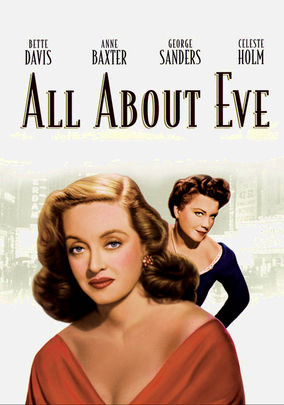
Monster-2003

Monster-2003

Director Patty Jenkins

Starring Charlize Theron, Christina Ricci

Top 250 Films #174

Scott’s Review #347

60032559

Reviewed January 9, 2016

Grade: A

Monster (2003) may feature one of the best acting performances of all time-Charlize Theron simply embodies the role of the notorious female serial killer, Aileen Wuornos, in a simply astounding triumph.

The mannerisms, the anger, and the charisma that Theron portrays are nothing short of brilliance.

This brazen acting is simply the best aspect of Monster and the main reason to witness the film.

Besides this, the film itself is also great.

The film immediately focuses on Theron- we meet the down-on-her-luck prostitute sitting in tatters underneath an overpass.

Suicidal and with five dollars to her name, she goes to a dive bar for one last beer- having blown someone for the five dollars she reasons that the money will go to waste if she does not spend it.

Her older confidante is Thomas, a grizzled man assumed to be an occasional client of hers, who is played by Bruce Dern. She goes to a gay bar and meets Selby Wall (Christina Ricci), a lesbian.

Aileen insists she is not gay but winds up spending the night with her in Selby’s family home. The two form a connection and bond immediately, spending more time together and becoming immersed in each other’s lives.

When Aileen is brutally raped and beaten by a client, she begins down a dark and murderous path, killing men she meets after she steals their money.

Selby eventually catches on to this and is conflicted over whether to turn her friend in or serve as an accomplice to her crimes as the police close in on the pair.

Enough cannot be said of Theron’s performance. She simply becomes Wournos- from her walk to her infamous manic mannerisms, and her hair flip.

Theron, a gorgeous woman, gained weight, used false teeth, and became simply unrecognizable in the role of a brutal, angry, and trashy-looking woman.

Ricci also deserves praise, but plays her role as a bit clueless or dimwitted, counterbalancing Theron’s manic, in-your-face role. It works well. Both characters are longing for love and companionship and both are misfits.

In a sweet scene, the pair go roller skating together, hand in hand, to the famous rock song, “Don’t Stop Believin”.

This is a great scene.

One can argue the fact that director, Patty Jenkins, softens the way that Wournos is written. Known as a hardened, mean woman, Jenkins writes her as much more sympathetic.

This can also be attributed to the fact that Theron emits some vulnerability to the character- the woman never knew love until she met and bonded with Selby.

Needless to say, Monster (2003) is a dynamic, energetic film, thanks in large part to the powerful performance of Charlize Theron- a role that awarded her the Best Actress Academy Award.

Oscar Nominations: 1 win-Best Actress-Charlize Theron (won)

Independent Spirit Award Nominations: 2 wins-Best First Feature (won), Best Female Lead-Charlize Theron (won), Best First Screenplay

Last Exit to Brooklyn-1989

Last Exit to Brooklyn-1989

Director Uli Edel

Starring Stephen Lang, Jennifer Jason Leigh

Top 250 Films #176

Scott’s Review #152

70141619

Reviewed August 13, 2014

Grade: A-

Last Exit to Brooklyn is a slice-of-life type film that takes place in the early 1950s and is set in lower-class Brooklyn, NY.

It tells the story of a group of struggling neighborhood people- sex workers, union members, drag queens, etc. whose lives intersect. Also in the neighborhood is a military base where soldiers come and go on their way to war-torn Korea.

The central characters, though there are several with small yet interesting stories, are Harry, played by Stephen Lang, a sexually conflicted union worker with a wife and newborn child.

He is in love with a selfish drag queen, and Marilyn Monroe lookalike, Tralala, played superbly by Jennifer Jason Leigh, a prostitute whose best days are behind her, and who will do anything for attention.

The sets and cinematography in the film are very well done- the feeling of despair and hopelessness are accomplished by the dowdy streets, homes, and bars that the cast frequents.

Some of the characters are sympathetic- the aforementioned plus Tralala’s love interest, the Diner boy madly in love with Tralala, and the virginal seeming (but not really), Donna, portrayed by a young Rikki Lake. Other characters are abhorrent in their violence and hatred.

Last Exit to Brooklyn is quite a dark film and sometimes tough to watch but captures a dreary time and atmosphere. The Brooklyn set is excellent in its dreariness.

Jennifer Jason Leigh is the standout as the tough-talking, boozy prostitute who is losing her luster and the final scene of the film is truly a heartbreaker.

The topics of union, strike, bisexuality, gangs, and drag queens are covered and unique characters and conflict/loneliness are presented.

This film is an overlooked gem from 1989.

Boys Don’t Cry-1999

Boys Don’t Cry-1999

Director Kimberly Peirce

Starring Hilary Swank, Chloe Sevigny

Top 250 Films #177

Top 10 Most Disturbing Films #10

Scott’s Review #340

27422770

Reviewed January 9, 2016

Grade: A

Boys Don’t Cry (1999) is a fitting tribute to real-life figure Brandon Teena, a transgender man from Nebraska, who adopts a male identity and attempts to find love with Lana, played by Chloe Sevigny. Brandon is played by Hilary Swank.

Sadly, Brandon was brutally raped and murdered at the hands of some local men- a fact that the film does not gloss over.

Boys Don’t Cry is a heartbreaking and tragic film that will disturb some with its shocking and violent content- sadly it is a true story.

Swank deservedly walked away with the Best Actress Oscar statuette.

Set in working-class Nebraska and in the heartland, Brandon has the cards stacked against him from the start. Not exactly the most open-minded of areas, the film also sets a working-class environment for Brandon as most of his friends are poor factory or bar workers.

Born as Teena Brandon and female, Brandon (Swank) is a drifter and in trouble with the law for various unpaid tickets. He befriends ex-convicts John and Tom and becomes part of their crowd, falling in love with Lana- they are all unaware of Brandon being a female.

When Brandon’s secret is revealed, Lana is accepting and the pair decide to run away together, but Tom and John decide to murder Brandon.

Swank’s portrayal of Brandon is brilliant and believable and very few actresses could successfully pull this off. Swank has angular, androgynous features to begin with, but her drastic physical transformation is jaw-dropping.

Having closed-cropped hair and a male swagger, Swank immerses herself in the role, so much so, that as I watched the film I completely forgot that Brandon was not physically male.

Her physical transformation is not the sole reason for the fantastic performance though- Swank is emotionally there in the role and in a heartbreaking scene, after being beaten and raped, is treated poorly by a sheriff handling the accusations- just when Brandon could use an understanding ear.

What a cold world it can be for someone different from most others as Boys Don’t Cry reveals in a brutal, honest fashion.

Anyone who knows the true story of Brandon Teena knows he led a painful, tragic life, but was also filled with life and love- mainly for Lana.

Worth mentioning is Sevigny’s performance as Lana- in love with the person that was Brandon, not so much the gender. Sevigny portrays Lana as supportive, confused, and loving.

Director, Kimberly Peirce, became obsessed with the real-life case and does a fantastic job at tackling the film in a true, compelling way. To say nothing of the writing and the acting, Peirce also successfully uses a hand-held camera during Brandon’s strip scene and a surreal, muted light to portray the gloomy mid-west and the cold, hard lives that most of the characters lived.

Impressively, Peirce accomplished all of this on a shoe-string budget and took a wealth of inspiration from independent film legend John Cassavetes, who proved that gorgeous films can be made for very little money.

Many scenes take place in bars as Lana, a devoted karaoke singer, croons one tune after another, the highlight being Restless Heart’s 1988 country hit, “The Bluest Eyes In Texas”, which Lana sings in Brandon’s presence.

The use of somber songs gives the film a tragic soundtrack.

Famed film critic, Roger Ebert, described Boys Don’t Cry as “Romeo and Juliet set in a Nebraska trailer park”.

Boys Don’t Cry (1999) is an enormous victory in film for the LGBT community and, along with Brokeback Mountain (2006), is a perfect double-feature, as both are similar films, only one featuring males, the other females.

Both are tragic, bleak and all too real.

Oscar Nominations: 1 win-Best Actress-Hilary Swank (won), Best Supporting Actress-Chloe Sevigny

Independent Spirit Award Nominations: 2 wins-Best First Feature (Over $500,000), Best Female Lead-Hilary Swank (won), Best Supporting Female-Chloe Sevigny (won), Best First Screenplay, Producers Award

Schindler’s List-1993

Schindler’s List-1993

Director Steven Spielberg

Starring Liam Neeson, Ben Kingsley, Ralph Fiennes

Top 250 Films #179

Scott’s Review #775

Reviewed June 19, 2018

Grade: A

Schindler’s List (1993) is a film that is arguably Steven Spielberg’s finest directorial work and Liam Neeson’s finest acting performance.

The film is as disturbing as it is awe-inspiring as many emotions will undoubtedly envelop any viewer- most of them dark and dire.

Spielberg’s most personal story centers on the devastating Holocaust of World War II that will grip and tear audiences to pieces.

The work deservedly secured the Oscar award for Best Picture and Best Director as well as numerous other accolades.

Oskar Schindler (Neeson) is a powerful German businessman who arrives in Krakow, Poland during the antics of World War II, presumably to make his fortune. Handsome and respected, he is charismatic and feared by the German army, who have forced most of the Polish Jews into the overcrowded ghettos where they await their fates.

Schindler himself is a Nazi, but becomes more humanistic than most and ultimately against the Holocaust killings. He establishes a factory and hires a Jewish accountant (Ben Kingsley) to assist.

As he is tremendously affected by the inhumanity he sees throughout the city, he makes arrangements to hire and thus save the lives of over a thousand Polish refugees.

He does so by allowing them to safely work and be productive in his factory. The story is reportedly true and was a rare instance of humanity in a cold and ugly chapter in world history.

To be clear, Schindler does not start as a hero and is admittedly rather an unlikely one. The man is a businessman, greedy, and undoubtedly flawed. He plans to use the Jews because they are cheap labor and can be used to his advantage.

Because of the very long running time of the film (over three hours), Spielberg slowly depicts Schindler’s complex character growth and eventual determination to save these poor people from the Auschwitz gas chambers.

Spielberg shoots Schindler’s List entirely in black and white with tremendous results. The camera work adds such ambiance and style to the 1990s film- so much so that throughout the film I felt as if I were watching a documentary from the 1940s.

The film is epic and choreographed with precision and timeliness- some of the best camera work in cinema history as far as successfully creating the perfect solemn and dreary mood.

Supporting turns by Ben Kingsley and Ralph Fiennes must be noted. In vastly different types of roles, both shine.

As the understandably nervous, Jewish accountant for Schindler’s factory, Itzhak Stern is most notable for creating the famous “list”. This contains the names of those who would be transferred to the factory and thus have their lives spared.

Kingsley, a brilliant actor, fills the character with empathy and heart.

Conversely, Fiennes plays a dastardly character in that of Amon Goth, a commander at the concentration camp. Evil and known for taking glee from killings, he is the man instrumental in deciding to exterminate all of the people in the ghetto.

A pivotal character, Goth is important because he is the man who makes Schindler realize how sickening and inhumane the treatment is.

Fiennes carves the character with so much hate that he is believable in the part.

One of the most beautiful scenes is aptly named “the girl in red” and is highly symbolic and worthy of analysis. Oskar watches as prisoners are escorted, presumably to their executions. He notices a three-year-old girl walking by herself- she is clad in a bright red coat.

The coat is Spielberg’s only use of color throughout the entire film.

The scene is incredibly important as the girl stands out, proving that all the Nazi commanders are accepting of her death. In tragic form, Oskar later sees her dead body draped in her red coat.

The scene is sad and powerfully distressing.

Schindler’s List (1993) is an outstanding film that elicits such raw emotion from anyone who views the masterpiece. By no means an easy watch and most assuredly “a heavy”, the film depicts the true struggles and catastrophic events occurring not all too long ago.

A film for the ages that simply must be seen by all to appreciate the terror and inhumanity that occurs throughout the world.

Oscar Nominations: 7 wins-Best Picture (won), Best Director-Steven Spielberg (won), Best Actor-Liam Neeson, Best Supporting Actor-Ralph Fiennes, Best Adapted Screenplay (won), Best Original Score (won), Best Sound, Best Art Direction (won), Best Makeup, Best Costume Design, Best Cinematography (won), Best Film Editing (won)