Category Archives: Eleonora Giorgi

Fellini’s Roma-1972

Fellini’s Roma-1972

Director Federico Fellini

Starring Peter Gonzales, Britta Barnes

Top 250 Films #122

Scott’s Review #649

Reviewed June 5, 2017

Grade: A-

Fellini’s Roma (1973) is a trippy experience set in Rome across two different periods.

As with all Fellini films, the film is meant to be experienced rather than analyzed.

One must nestle into the life that Fellini offers on-screen- in this instance, the fabulous city of Rome, Italy, in both positives and negatives.

The experience was very good for me, as both a world of odd characters and of ancient Rome oozed from the screen appealingly and absurdly.

From a plot narrative- there is a rot one. Arguably, the only character portrayed is Rome herself. The film takes place in both the 1930s and the 1970s and is said to be an autobiographical tale of director Fellini’s experiences growing up in Rome.

We see little Fellini as a youngster, experiencing the vast city for the first time, and as a teenager, now living in the city. Interestingly, the film moves back and forth between the two periods with no rhyme or reason.

Throughout the film, we see both the beauty and the ugliness of Rome- the majestic Colosseum and the dirty entrails of the gloomy city. Scenes of seedy brothels, mainly in the 1930s, and a myriad of strange and scantily clad females prance before the cameras, looking for a lucky score amid the droves of men lusting after them.

Another depicts a fashion show, of sorts, taking place at the Vatican, involving nuns and priests in bizarre costumes.

The 1930’s setting is my personal favorite. Gritty, cold, and harsh, Rome’s bleakness is depicted. Unsurprisingly, this has much to do with the historical period: since Mussolini was in power and on the eve of World War II, the darkness was apparent.

In a frightening scene, bomb sirens wail while a woman shrieks in panic. The brothel scenes are downright creepy, and the subsequent theatre scenes involving drunken, rowdy, young men leering and cursing at the entertainment are a particular slice of a life sequence.

In contrast, the 1970s sequences are layered with more beautiful depictions of the city. Brighter colors predominate, and there appear to be scientists or explorers digging into ancient ruins, finding gorgeous art that is subsequently damaged by the wind. We also see hippy types basking in the sunlight.

Again, much of this film is largely open to interpretation.

I adore Fellini’s Roma in terms of an expression of the city of Rome as an art form, but the film is highly unconventional- another plus for me.

Sure, I may have wanted to learn more about the bevy of creepy and potentially interesting characters. Still, I finished the film with an appreciation for Rome unlike any I have ever known.

A startling final scene, in which legendary Italian film star Anna Magnani appears scantily clad, implied to be a prostitute, was filmed shortly before her untimely death at the age of sixty-five.

As a film, Fellini’s Roma (1972) is a wonderful history lesson, but also a lesson in interpretation and film appreciation. Most filmgoers are accustomed to a beginning, middle, and end, as well as some semblance of a plot.

Roma contains none of that; rather, it is mind-opening and still fresh many years after its release, which is a true testament.
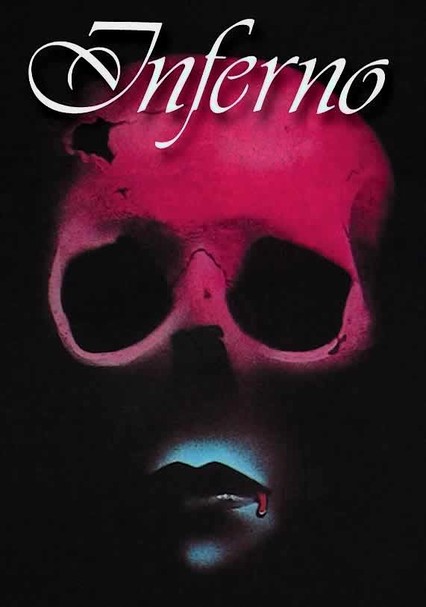
Inferno-1980

Inferno-1980

Director Dario Argento

Starring Leigh McCloskey, Irene Miracle

Scott’s Review #1,372

Reviewed June 27, 2023

Grade: B+

Any fan of the famous Italian horror director Dario Argento knows to expect a visual extravaganza from his films.

They reek of color and a weird atmosphere that makes them distinguishable from other, less crafty directors, and that’s worth a lot to a cinema fan.

Inferno (1980) is no exception, but, to be fair, the plot is brutal to follow, as the visuals easily overshadow the storytelling. On the flip side, despite being set mainly in New York City, Inferno has a definitive Italian vibe.

And why shouldn’t it, since it’s shrouded in Italian creativity?

Fans of Argento will know what I’m saying and leap into the film as I did, immersed in art direction rather than a defined plot.

The film is the second in his “Three Mothers” trilogy, and Inferno focuses on a Manhattan apartment building inhabited by a deadly spirit that murders the tenants in sadistic ways.

The other two films in the collection are Suspiria (1977) and Mother of Tears (2007).

When a poet named Rose (Irene Miracle) discovers a book suggesting she’s living in a building built for one of three evil sisters to rule the world, she begs her brother, Mark (Leigh McCloskey), to visit her from Rome.

But when he arrives, she’s disappeared without a trace. Mark encounters several creepy characters as he attempts to unravel the mystery and find his sister, either dead or alive.

It takes some time to figure out who the main character is supposed to be. Is it Rose, Mark, Mark’s friend Sara, or Rose’s neighbor, Elise? Before long, three of the four are sliced into bits.

The kills are superior, with my personal favorite being the death of one character guillotined with the glass of a broken window. This is nearly usurped by a pack of snarling cats with murder on their minds, attacking another victim.

As a cat lover, I grinned with pleasure.

As alluded to earlier, the story is too hard to follow. Therefore, the showdown between the main character and the witch is a letdown, and it is uncertain what becomes of the witch.

I also desired to see the witch more.

But maybe I wasn’t paying too close attention. The gorgeous sets caught my attention more than any plot point did.

I was especially enamored by the gothic New York City apartment set, which takes center stage during most of the film. The blue velvet curtains and dimly lit corridors, combined with desolate corners and few inhabitants, made me want to stay there.

Especially appealing is a secret hole in the wall that carries sounds throughout the behemoth building.

The colors and camerawork successfully create eerie, memorable sequences. One can easily dine on a bright green wall and gush over a deep blood-red drape or shadow.

The gloomy, downright scary underwater sequence when Rose dives to grasp a secret key is a brilliant piece of camerawork.

Alida Valli, so good as one of the witches in Suspiria, makes her return in Inferno, but in a limited part. As Carol, an employee of the apartment building, she has little to do, and adding insult to injury, Valli’s voice is dubbed by an American voice.

Sure, it’s not the best in the Argento collection, and Suspiria will always remain my number one, but Inferno (1980) is for the Argento fans only. I wouldn’t suggest it to novice fans, nor stress that one needs to see the trilogy in order.

The labyrinthine settings and elaborate deaths make the film a winner.