Category Archives: 2015 Films

The New Girlfriend-2015

The New Girlfriend-2015

Director Francois Ozon

Starring Romain Duris, Anais Demoustier

Scott’s Review #382

80017300

Reviewed March 5, 2016

Grade: B

The New Girlfriend (2015) is a French, and lighter, version of The Danish Girl, a similarly themed film also released in 2015.

The story involves gender identification confusion among the central character, though the time in The Danish Girl is the 1920s, The New Girl is set in present times.

The film begins with a brief montage of the lives of two best friends,  Laura and  Claire, inseparable as children, young adults, and even as married women.

Sadly, we learn that Laura has recently died of a terminal illness and this is where the film begins. Claire embarks on a unique friendship with Laura’s husband David when she catches him wearing female clothing and acting as a “mommy” to his infant daughter.

They form a bond and Claire agrees to harbor David’s secret and even accompany him in public as he slowly takes on the persona of “Virginia”.

I found the film quite compelling throughout most of the running time as we see David’s burning desire to dress as a woman and feel like a woman.

We mostly see the bond develop between Claire and David, who sometimes is Virginia, and other times David. Claire is happily married to her successful, handsome, husband Gilles and the three individuals are friends. They share dinners, tennis matches, and evenings consuming wine.

Gilles is unaware of David’s secret and begins to fear an affair between his wife and friend. Likewise, during moments, Claire imagines David and Gilles beginning a torrid affair.

Interestingly, the film does not go full steam ahead with the love triangle between Claire/Gilles/David (Virginia), a wise choice. That would have made the film more typical and perhaps even one-note.

Rather, the point is struggles by David to feel like a woman and how his friends support him. When he kisses Claire and snuggles with her, it is not sexual, it is to feel close to another woman.

This makes the film more character-driven.

As with many foreign-language films, The New Girlfriend is liberal with nudity, male and female. When nudity is featured in American films typically it is gratuitously or sexually.

This film is French, so the nudity is tasteful and even beautiful. When Claire is topless it is more expressive as the mystique of the female body than in a showing of a chesty woman, which Claire is not.

The ending slightly disappointed me. The idyllic, fairy tale way it wrapped was romanticized and unrealistic. I would have liked to have seen more of David/Virginia’s struggles and how his in-laws might have wrestled with their granddaughter being raised by a single man dressing as a woman.

Another flaw was the lack of explanation as to whether David, as a male, desired and yearned biologically to become a woman or if he was satisfied to dress up and publicly look like a woman.

The film chose not to go this route and undoubtedly would have made the film darker, containing a much deeper story.

Instead, The New Girlfriend (2015) was light, fun, and wholesome in its overall story.
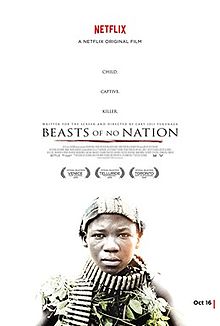
Beasts of No Nation-2015

Beasts of No Nation-2015

Director Cary Fukunaga

Starring Idris Elba, Ama Abebrese

Scott’s Review #380

Beasts_of_No_Nation_poster

Reviewed February 21, 2016

Grade: B+

Having been made aware of this film following the healthy number of independent film award nominations heaped upon it in 2015, Beasts of No Nation is a war drama, set in an unnamed West African country.

It tells of dire events from the perspective of a young boy, who has lost his family.

He is forced into a life of brutality and death, taken under the wing of a charismatic commander.

Beasts of No Nation is sometimes raw, sometimes gorgeous, but at all times thoughtful and a powerful telling of the devastation of human life, in a world very few can comprehend.

We first meet Agu (approximately aged eight or nine), wonderfully played by unknown child actor Abraham Attah, during happy times.

He plays with his childhood chums and adores his older brother who is attempting to woo a pretty girl. His father is a leader and the family lives in a small village protected by troops.

They allow refugees in for care.

Their country is in a civil war, but the family happily survives and makes a life for themselves, sharing meals. Suddenly, the government has fallen and rebels seize the area.

Soon, Agu’s family is gone, leaving him alone and scared.

His world turns upside down, he becomes involved with a militia commandant, played by Idris Elba, and a fellow child soldier named Strika, who takes him in.

The film belongs to two actors, Attah and Elba, though all actors perform their roles with precision. The relationship between the characters is interesting and complex, like a father/son mixed with mentor/protégé, and is the most compelling part of the film.

The commander is a father figure to Agu. He sees a warrior in him, taking him under his wing, feeding, and caring for him. He is never violent or abusive towards Agu and in one powerful scene, Agu is sodomized ( mostly off-screen yet very much implied) and Agu seeks comfort in his best friend Strika, who has also met the same actions prior.

One cannot help but think sexual assaults like this are perceived and handled differently in Africa.

Rape is a subject that comes up numerous times in the film, mostly against women.

I noticed throughout the film the beauty of the cinematography as most scenes are set outside. Lush, green forests and the villages are tranquil and beautiful, contrasting starkly with the violence.

Agu does some terrible things- in one brutal scene an innocent student is hacked to bits by Agu and Strika at the commander’s coaching as a sort of initiation.

Agu sees the student as responsible for his family’s fates and goes berserk.

Agu then tearfully mistakes a village woman for his mother and angrily shoots her dead as she is being raped by his cohorts. The film is not soft and contains lots of violence. But again, this is a world unknown to most viewers.

At times we despise Agu and the violent rage he emits, but then we remember he is a young boy being turned into a warrior by savages.

He talks to God and his mother and knows what he does (and what is happening to his country) is wrong.

I would have liked to have learned more background about Elba’s character. What makes him tick? Has he lost loved ones long ago as Agu has?

I surmised that the answer is yes. He is brutal, but a calm, calculating, thoughtful man, but one that is in control at all times.

As war rages on Agu and his fellow tribe question what they are doing. Such smarts for a young boy and the audience admires his views. He is intellectual and worldly way beyond his years.

That is what makes Beasts of No Nation a compelling character study. I more than once thought that I had seen this type of film before (Last King of Scotland, 2006, comes to mind in recent times), but never to the extent of what a character-driven story it was, especially in the eyes of a child.

Beasts of No Nation (2015) takes the viewer to an unpleasant world of brutality and a world where there is no rule book. We are exposed to a once innocent child’s experiences and conflicted feelings in the face of danger and heartbreak, and learn its complications.

Independent Spirit Award Nominations: 2 wins-Best Feature, Best Director-Cary Joji Fukunaga, Best Male Lead-Abraham Attah (won), Best Supporting Male-Idris Elba (won), Best Cinematography

The Martian-2015

The Martian-2015

Director Ridley Scott

Starring Matt Damon, Jessica Chastain

Scott’s Review #379

80058399

Reviewed February 19, 2016

Grade: C-

The latest film from heralded director Ridley Scott (notable for classics Blade Runner-1981, and Alien, 1979), The Martian (2015), is a science-fiction/space adventure about a believed-dead astronaut (Matt Damon) trapped on Mars after his fellow team members thought he was dead.

NASA and a crew of rescuers fervently attempt to save him as supplies run out.

Extremely resourceful, Mark Watney (Matt Damon) cleverly avoids death by using his wits to survive and prosper on the challenging planet.

Hot on the heels of several other high-profile modern science fiction offerings, such as Interstellar (2014) and Gravity (2013), The Martian features a big Hollywood star in the lead role.

Much of the action is Watney on his own, attempting to grow to produce, ration food, and keep his sanity- think Tom Hanks in Castaway (1996) except on another planet, and with a “Hab”, an indoor operations station left by his abandoned crew.

The Martian has received accolades, even winning the Golden Globe for Best Musical or Comedy Film, though that is poor categorization.

The film has snippets of humor and a few songs in the background, but that is it. Maybe some late 1970s disco songs constitute a musical?

I found The Martian to be a Hollywood mainstream film in every sense. That may be a high compliment to some, but I expect more.

It is not that The Martian is a bad film, it is not, but it is mediocre, and has all the elements of an average offering. The film was going for an emotional experience that I did not experience.

I had little doubt that the ending would be sweet and wrapped in a bow.

Mark Watney is the typical all-American character in a “guy film”. He hates disco and loves ketchup. The film makes him a guys guy, so therefore the average film-goer will relate to him.

He is in good shape, cracks jokes, and is likable.

But that is also a problem with the character and The Martian. He lacks substance. We know little about him except he has parents who never appear on-screen.

The way that the film touts him as the hero and is cheered and praised, while in real life would be warranted, it just feels forced and contrived.

This is not a knock against Matt Damon, who does a decent job.

My beef is that the character is not fleshed out.  The well-built Damon at the beginning of the film versus the scrawny Damon at the conclusion is a facade as a body double was used in the later scenes.

This lack of authenticity disappointed me.

I expected more from the supporting cast. Jessica Chastain, Jeff Daniels, Chiwetel Ejiofor, and Kristen Wiig play one-note types that any actor could have played.

Why were big stars cast at all?

Chastain as a mission commander, Daniels as Director of NASA, Ejiofor as NASA mission commander, and Wiig as a Public Relations specialist. The casting, in particular, of Wiig in the straight-laced, stale was mysterious to me, and it was not a particularly good portrayal….and I am a Wiig fan.

The humorous parts in The Martian are contrived and not dissimilar to countless other films with the smart-ass remarks all containing a bland quality. Lines like “Eat your heart out Neil Armstrong” seem silly and unnecessary.

I expected more wit.

Let me be fair- the visual effects (it is space after all) are impressive, and it was fairly interesting to see what is supposed to be the planet of Mars, but really in this day and age of CGI effects the film is not that spectacular.

 I would much rather be given a compelling story than visual treats any day of the week.

My review of The Martian may seem harsh, but only because I expected more from it than I was given.

With several Oscar nominations including Best Picture, I anticipated a top-notch film, and The Martian did not come close.

Mediocrity, straightforward, and predictable describe The Martian (2015) film.

I have heard that the novel is fantastic and added it to my reading list.

Oscar Nominations: Best Picture, Best Actor-Matt Damon, Best Adapted Screenplay, Best Sound Editing, Best Sound Mixing, Best Production Design, Best Visual Effects

Amy-2015

Amy-2015

Director Asif Kapadia

Starring Amy Winehouse

Scott’s Review #376

80049094

Reviewed February 8, 2016

Grade: B

Amy (2015) is an informative documentary telling the story of immensely talented, yet troubled, pop singer, Amy Winehouse.

Her childhood, rise to fame, and ultimate downfall as a result of drug, alcohol, and weight battles, are all chronicled in her documentary.

Despite the information, however, I never got the sense that I knew the singer well, and in the conclusion, she still seemed mysterious.

Possessing a unique jazz/soul-infused sound and a wonderful British accent to boot, Winehouse burst onto the pop scene like gangbusters in 2003 as a talented artist with many layers of genres in her music.

A diamond in the rough you might say, and a breath of fresh air in modern music.

The fact that she wrote her songs only added to the level of talent oozing from her.

The documentary wisely tells of her upbringing and her abandoned father, who later resurfaced in her life. Her mother, while decent, could not control Amy, who was full of life and energy.

The main crux of the film, however, is to show her difficulty with fame, a sad, tried and true story of celebrities near and dear, artist types, who do not do well with the attention and adoration thrown their way and Amy Winehouse is no different.

As her popularity grew, all she wanted was to be left alone, and, unfortunately, her life became very public, including her tumultuous relationship with her boyfriend who wound up in prison.

Sadly, Winehouse did not have the best support system and her father was perhaps an opportunist. Amy was a tortured, pure artist who sadly wasted away due to outside circumstances.

Throughout most of the film, she seems lost or overwhelmed by the success that comes her way. In a cruel irony, her biggest hit “Rehab” became fodder for late-night television comics to poke fun at her.

The documentary, while informative, is also quite basic and I felt like I was given more of an overview of Winehouse’s life than anything personal. I did not feel a sense of her inner thoughts and dreams.

Yes, she did not want to be famous and it bothered her, but I wanted to see more of the real Amy Winehouse.

Amy (2015) is an adequate documentary about the life and times of Amy Winehouse and I finished the piece knowing more about her, but not nearly as much about her as I wished I had learned.

Good effort, but more would have been nice.

Oscar Nominations: 1 win-Best Documentary-Feature (won)

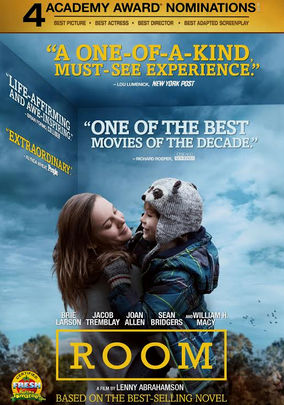
Room-2015

Room-2015

Director Lenny Abrahamson

Starring Brie Larson, Jacob Tremblay

Scott’s Review #373

80073823

Reviewed January 31, 2016

Grade: A

Room (2015) is a compelling story of a woman’s battle in captivity with her five-year-old son in tow.

The film also tells of the after-effects of reclusive living as they both strive to adapt to their changing world.

Receiving a slew of Academy Award nominations, the film is more than a one-dimensional story of peril or rescue, but rather, a smartly woven tale that delves into the psychological issues involved with being confined in a room for years, giving the film a deeper meaning.

Room is adapted from the novel of the same name, written by Emily Donoghue.

We meet twenty-four-year-old Joy (Larson) and her five-year-old son Jack, who live in squalor in a shed made into one room. They exist from food and supplies delivered by their captor “Old Nick”, who abducted Joy seven years prior.

He periodically rapes her and is Jack’s father, though there is no affection on either side. Joy has attempted escape before but has failed.

She is determined to break free once and for all and allow her and Jack a normal life.

In the first half, we learn about Joy and Jack and how they exist and forge a life together. Joy tells Jack they are real and the outside world and people on television are not.

They live in a fantasy world and Jack periodically treats objects (chair, toilet, bed) as real-life things, giving morning greetings to these objects- this is both cute and sad. His only channel to the outside world is a small skylight, which he endlessly gazes at.

I love how the film suddenly changes course at the halfway point and shifts focus to the aftereffects taking a dark, complex, psychological turn.

The first half takes place entirely in the “room”, and suddenly, a new world has blossomed. A monumental event changes the course of the film.

From this point, the film deals with the traumatic effects of being shut away for years. Joy suffers from depression. Jack sees a new world. We see how other characters deal with the turn of events.

Joy’s parents, wonderfully played by Joan Allen and William H. Macy react in completely different ways.

How have their lives changed because of Joy’s abduction? Will they see Old Nick every time they lay eyes on Jack? How will Joy’s mother’s new boyfriend react?

There is a strong theme of coping throughout the film and how all the characters cope with life events and attempt to resume a life of normalcy. There is such a unique humanistic feel to the film that makes it deeper than I would have expected.

Sure, Brie Larson gives a dynamic performance, but the film offers reflection and thought.

The direction and camera work are a marvel. We see a blurred view of what Jack sees in “the real world”.  It is almost like the audience is reawakening to life and we see it through a child’s eyes- the sights, the sounds.

Jack has created an imaginary dog in his mind and the film introduces more than one real dog that plays a pivotal role. We see Jack’s joy and terror at the new experiences.

Room (2015) encompasses thought-provoking ideas making what might only have been a basic story and turning it into an intricate journey into human psychology through many different nuances and facets.

What a wonderful, dark experience this is.

Oscar Nominations: 1 win-Best Picture, Best Director-Lenny Abrahamson, Best Actress-Brie Larson (won), Best Adapted Screenplay

Independent Spirit Award Nominations: 2 wins-Best Female Lead-Brie Larson (won), Best First Screenplay (won), Best Editing

The Revenant-2015

The Revenant-2015

Director Alejandro G. Iñárritu

Starring Leonardo DiCaprio, Tom Hardy

Scott’s Review #371

80064516

Reviewed January 27, 2016

Grade: A

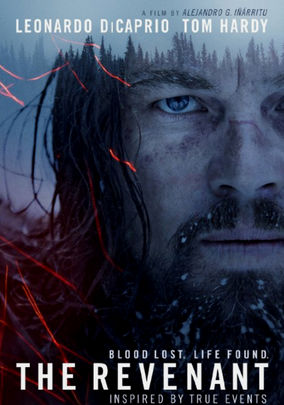
The Revenant is a fantastic 2015 film filled with intensity, great visual camera work/direction, and the acting talents of one of modern cinema’s dynamic performers Leonardo DiCaprio.

He shines every minute he is on-screen.

Almost all of the filming takes place outdoors (the American frontier period), and is a revenge tale, only adding to the excitement and beauty of the film.

The film is set in the 1820s, and we are immediately introduced to a large party of hunters and trappers in remote Wyoming as the film opens.

Right off the bat, I was struck by the picturesque scenery.

We are treated to a compelling (and bloody) battle between the trappers and a tribe of Native American Indians. The Louisiana Purchase has just passed, leading to tensions between various parties causing conflict and blood to spill.

The hunters are decimated so the remaining group must flee on foot, hoping to return to safety hundreds of miles away. The main character, Glass (DiCaprio), later receives a terrible injury and the main crux of the story develops as we embark on a tale of his desperation to survive and exact revenge on the men responsible for leaving him to die.

The film is a lesson in endurance. Glass is arguably put through almost every punishment imaginable and we wonder what more he can endure.

The film belongs to two actors. Dicaprio, and Tom Hardy as the villainous John Fitzgerald, a hunter with a major rivalry with Glass.

The film parlays into a revenge tale between the two characters.

DiCaprio is a gem in this film, not only is he compelling from a physical standpoint, he also looks broken, battered, and bruised, but DiCaprio gives a performance that I am fond of.

He acts non-verbally.

In one crucial scene, Glass is unable to move or speak as a violent act is committed. He is desperate yet helpless. The range of emotions portrayed by DiCaprio is astounding. The pain, hurt, and frustration are evident on his face and we sympathize greatly.

This is a powerful performance by DiCaprio.

Tom Hardy is compelling in his own right as the scoundrel he portrays. We despise this character and all his dirty deeds and Hardy successfully pours all his energy into this grizzled role.

Hardy, quite handsome in real life, is transformed into a partially scalped, dirty man. His fate at the end of the film is a clever aspect of The Revenant that helps make it not a typical run-of-the-mill western, but something so much more.

The infamous “bear scene” is second to none. How this compelling scene was shot is beyond me, but the result is a realism I have seldom witnessed in film. The scene is so prolonged and violent that one wishes it would conclude quickly.

A surprise comes that rivals any horror film.

Directed by Alejandro G. Iñárritu he follows a vastly different type of film (Birdman-2013) and does a wonderful job.

The Revenant is arguably a “guy’s movie”.

There are almost no women featured and the ones that are not treated well, which is unfortunate, however, sadly likely true of the times.

Interesting to note though, is Inarritu decided to have a female victim enact revenge on her abuser in a satisfying (though squeamish moment for the male viewer).

I found The Revenant to have definite left-wing leanings. The age-old controversy of the white man taking the Indian’s land is explored and the film has a way of bringing this up more than once as well as not making the Indian tribes “bad”, but rather sympathetic.

Especially since the character of Glass marries an Indian woman and bears a son with her.

Gorgeous cinematography morphed with a wonderful and intriguing story and peppered with brutality. The Revenant (2015) succeeds on every level and sets an important precedent for a film about perseverance in the face of hopelessness.

Oscar Nominations: 3 wins-Best Picture, Best Director-Alejandro G. Iñárritu (won), Best Actor-Leonardo DiCaprio (won), Best Supporting Actor-Tom Hardy, Best Sound Editing, Best Sound Mixing, Best Production Design, Best Cinematography (won), Best Makeup and Hairstyling, Best Costume Design, Best Film Editing, Best Visual Effects

The Big Short-2015

The Big Short-2015

Director Adam McKay

Starring Christian Bale, Steve Carell

Scott’s Review #369

80075560

Reviewed January 10, 2016

Grade: A-

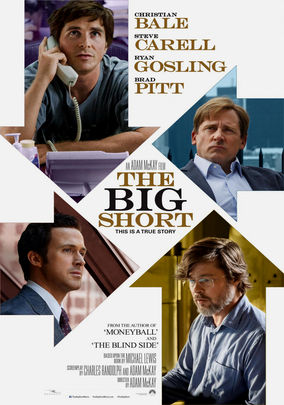
The Big Short (2015) is a confusing film and is its intention and also its genius.

Throughout some of the film, I was uncertain how much I liked it (or got it) and found many of the characters unlikeable, but at the conclusion, I realized that is exactly what the filmmakers intended is a clever tactic and makes The Big Short a success.

On the surface, the film has some humor but a very dark story at its core and left me a bit depressed and terrified at the conclusion.

I am happy that the film is receiving accolades and is the “thinking man’s” hit movie of the season.

To attempt to summarize the film, the film begins in 2005, approximately two years before the financial crisis of 2007-2008.

Eccentric hedge fund manager Michael Burry (Christian Bale), realizes the U.S. housing market is unstable and predicts a crash.

He attempts to profit by betting against the market, a move laughable to all around him, especially the banks who anticipate a windfall at Michael’s expense. Trader and fellow market managers, Jared Vennett and Mark Baum (played by Ryan Gosling and Steve Carrell) catch wind of Michael’s theory and try to get in on the action.

There is a sub-plot involving two younger investors also attempting to profit through the guidance of a retired banker (played by Brad Pitt).

The financial collapse is a tender subject and certainly no laughing matter, especially since it is so recent and affects many people.

The Big Short is touted as a comedy, which is strange. I found the audience didn’t know exactly what to laugh at or when. The film’s “laughs” were cynical, witty, and sometimes wicked. Many people do not get this type of humor.

In real life, people were kicked out of their homes and lost their jobs, pensions, etc. and it was all the result of greed, which The Big Short hammers home.

Several scenes include frat-boy investor/trader types getting rich by enabling almost anyone to afford a new house. Little did these people realize that there was a catch.

The film paints a jaded picture of Wall Street. The rich get richer at the expense of the middle class and the poor. It is an age-old sad tale.

Performance-wise, Carrell and Bale are the standouts. They both play characters who are damaged. Bale’s Michael is socially awkward, and has a false eye, but is also a genius. Carrell’s Mark is angry, grizzled, and is in therapy as a result of his brother’s suicide.

Both actors are great and have developed into worthy, credible acting talents. Worth mentioning, are small, but meaningful roles by Melissa Leo and Marisa Tomei.

The Big Short is shot interestingly, and highly unusual. From time to time, the action will stop and a famed celebrity (Selena Gomez, a world-renowned chef, or a model in a bubble bath) will explain the events, thus far, or give some review.

Also, more than once the actors will turn to the camera and speak directly to the audience. A personal touch that I found effective.

In the end, not much in life has changed, which is the message, and a frightening one. As one character brilliantly puts it “people will go back to blaming the poor and the immigrants”, which is a sad message.

After millions lost everything, not much has changed in the world and The Big Short makes that very clear. The people responsible have gotten away with crime, the banks bailed out, and a new scheme is undoubtedly in place.

It’s a sad world.

The Big Short (2015) is a gritty, harsh look at reality and a terrific film.

Oscar Nominations: 1 win-Best Picture, Best Director-Adam McKay, Best Supporting Actor-Christian Bale, Best Adapted Screenplay (won), Best Film Editing

The Danish Girl-2015

The Danish Girl-2015

Director Tom Hooper

Starring Eddie Redmayne, Alicia Vikander

Scott’s Review #310

80058477

Reviewed December 29, 2015

Grade: A-

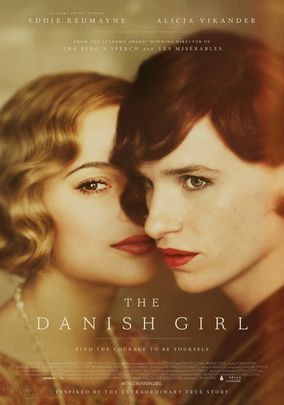
The Danish Girl (2015) tells the loosely based story of Danish painters and married couple Lili Ebe and Gerda Wegener and Lili’s struggles as the first known recipient of sex reassignment surgery, unheard of at the time that it was (1930).

The film showcases terrific acting (Eddie Redmayne and Alicia Vikander especially) and a journey of one person’s struggle with gender identity.

The subject matter is important and timely as the recent transgender movement has emerged at the forefront of social issues today.

A happy, young couple living in Copenhagen, and married for six years, Gerda and Einar are inseparable and madly in love. They are best friends and help each other with their art. Because of a female model’s tardiness, Gerda convinces Einar to stand in for the female model.

This event triggers a lifelong identification as a female named Lili Elbe. Lili has emerged sporadically since childhood.

Through painful self-assessment and encouragement from progressive loved ones, Lili decides to go through with a highly experimental and risky sex change operation.

Gushing with sensitivity and tenderness and groundbreaking, though I bet even more so if made ten years ago, one feels for both lead characters as it is important to note that they both go through emotional turmoil.

It would be easy to lessen Gerda’s emotions and, perhaps with a lesser actress this might have happened, but Vikander (unknown to me before seeing this film) gives an emotional performance that is raw and exudes empathy.

One can imagine how they would feel if their spouse identified as the opposite sex. Confusion, blame, anger, and sorrow, would all be common reactions. Gerda is strong, brave, and helpful while crumbling beneath the surface.

Vikander brings all of this to the screen flawlessly.

Similarly, Redmayne brings depth and empathy to his role.  Redmayne’s Einar is masculine, but there is something sensitive and slightly feminine to him from the start.

Was this purposely done to soften the blow? He also appears to be very slightly built. Redmayne lost weight to portray this role and have a softer appearance.

Actors can easily dress up in drag, but the emotional investment needs to be there and Redmayne makes the viewer care about Lili. One is teary-eyed along with Lili as she sees no other choice but to undergo the risky operation. We see the desperation in Lili’s eyes thanks to Redmayne’s acting skills.

I loved how supportive the characters are in the film. Granted, Einar/Lili and Gerda travel in liberal and progressive circles, but for 1930, this was wonderful to see.

Of course, Copenhagen and Paris are open-minded cities, but Lili’s childhood friend Hans, a sophisticated, macho guy, offers support. The same goes for the Doctor taking on Lili’s surgery.

These aspects lend to a delicate, peaceful film of encouragement.

To be clear, Lili is not gay, and this is made crystal clear during the film as she meets a gay man, and the distinction between them is made. She does, however, identify and feel that she is a woman. She was born with the wrong parts.

The greatest aspect of The Danish Girl is its powerhouse acting and compelling subject matter. One’s gender is a given for most, but watching a riveting drama about someone who is unrestful with their gender is eye-opening and still rather taboo.

2015 was a year of progressive transgender films and The Danish Girl is towards the top in its class and graceful in dealing with the subject matter in a judgmental-free way.

Oscar Nominations: 1 win-Best Actor-Eddie Redmayne, Best Supporting Actress-Alicia Vikander (won), Best Production Design, Best Costume Design

Jurassic World-2015

Jurassic World-2015

Director Colin Trevorrow

Starring Chris Pratt, Bryce Dallas Howard

Scott’s Review #307

80029196

Reviewed December 23, 2015

Grade: C

Jurassic World (2015) is a film I expected to like much more than I did.

Sure, it is a summer, blockbuster, popcorn flick. Based on the success of the earlier franchise efforts,  and, if memory serves, finding enjoyment in the 1993 original, Jurassic Park, I expected a fun ride.

Unfortunately, I was treated to a formulaic, escapade with uninteresting characters and mediocre writing.

The premise is standard. A behemoth of an amusement park exists in Central America, on Isla Nublar, where a dinosaur theme park has been running without incident for ten years.

A genetically modified dinosaur, created because a magnificent new attraction is needed, breaks loose and runs rampant.

A silly love story exists between the two leads Owen and Claire (Chris Pratt and Dallas Bryce Howard), as well as the inclusion of two young boys (Zach and Gray) sent by their divorcing parents to be with their Aunt Claire, who works as the Operations Manager at the park.

Owen is the dinosaur trainer. Predictably, there are “bad guys” who are greedy and desire to advance science at the risk of human life.

The special effects are fine, albeit completely CGI-laden, which is to be expected because the main stars are dinosaurs after all. I did anticipate better writing or, at least, more of a creative attempt at coming up with something a bit edgy.

The story was completely redundant. Where was the character development? There was none. We know very little about any of the principal characters.

One might argue that an adventure film does not necessitate this but it’s important. We know that Claire is a workaholic and has none time for her nephews- why? What makes her tick?

Here is a slight complaint. Why kill off only extremely minor characters or villains? I could see this (and the ending) a mile away. The whole film seems forced and sloppy.

Jurassic World is also filled with clichés. Owen and Claire initially dislike each other having had one unsuccessful first date back in the day. The film tries to push the love/hate, opposites attract element and it feels contrived.

How many times have we seen this in film history?

Also, Chris Pratt is perfect as the hunky, muscular “hero saves the day” type, and Dallas Bryce Howard running through the forest in a tight tank top is not unintentional.

This is not to say that the film is bad. It is a decent adventure film and the special effects are cool. I did enjoy the homage to the original 1993 version as the boys stumble upon the original visitor station complete with the 1992 jeep from the original Jurassic Park film.

I thought this was a neat little nod to history and I love that in a franchise film, but that is it for the positives.

Yes, this film was a blockbuster smash and made oodles of money. It, however, feels forced and clichéd and quite formulaic.

I was hoping for much more and deeper, stronger, material.

The Peanuts Movie-2015

The Peanuts Movie-2015

Director Steve Martino

Starring Noah Schnapp, Francesca Capaldi

Scott’s Review #304

80057058

Reviewed December 20, 2015

Grade: B-

Having adored the Peanuts comic strips in the “funnies” papers every Sunday as a wee child, as well as the wonderful classic A Charlie Brown Christmas special (1965) that aired every holiday season, I was eager to see a full-length film released in theaters.

The Peanuts Movie commemorates the Fiftieth anniversary of the Christmas special.  The Peanuts gang is so All-American and ingrained in our culture that I could not resist seeing it.

I expected “cute” and that is exactly what I received. The film is nice but quite safe and predictable.

The Peanuts gang is much more than just the antics of Charlie Brown and his faithful dog Snoopy, who take center stage in the film.

The entire beloved gang is featured. Woodstock, Peppermint Patty, Marcie, Linus, Lucy, Frieda, Pig-Pen, and others, albeit in supporting roles.

There are two main stories featured in the film. The long-suffering and (in his mind) friendless (despite actually being loved by the gang), Charlie Brown is enamored with his new neighbor, the Little Red-Haired Girl, well-known from the original comic strips as Charlie Brown’s schoolyard crush-yet never seen.

The other is Snoopy’s writing of a book about the Flying Ace, in which he saves his crush, Fifi, also a pilot, from the dangerous Red Baron and his army.

As usual, the film is really about Charlie Brown’s endless insecurities prompted by bad luck and always screwing things up no matter that his intentions are noble.

When the Little Red-Haired Girl moves in across the street from Charlie Brown, he is immediately smitten and does numerous things to impress and acquire her attention, with difficulties arising.

A talent show in which he plays a magician goes wrong. To his delight, he is partnered with the Little Red-Haired Girl on a book report, but when she is called out of town he is forced to write the report himself, thereby foiling his attempts at getting close to her.

As usual, all parents remain unseen and speak garbled as the story is about the kids.

An interesting element is, that while the Little Red-Haired Girl is seen and does indeed speak, most of this occurs towards the end. For most of the film, we see her only from behind allowing an element of mystery to surround her.

It would have been interesting to see some of the supporting characters explored more- is Peppermint Patty gay and is Marcie her love interest? How about a love interest or background for some of the others? A side story explored is a growing romance between Pig-Pen and Patti.

The film does a nice job of featuring the familiar settings of the original comic strip- Lucy’s psychiatrist’s booth, the wall,  and the skating pond are prominently featured, which is a treat for long-time fans.

The Peanuts Movie (2015) is a nice film. I would have preferred a bit more of an edge or more creativity as original creator Charles Schultz had, but it is nice to be reminded of a simple time in life and this film is a good time.

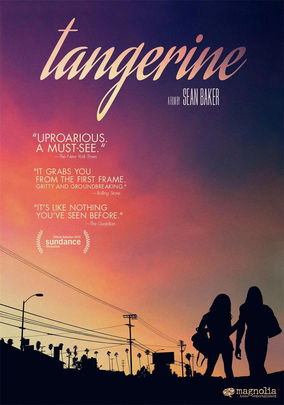
Tangerine-2015

Tangerine-2015

Director Sean Baker

Starring Mya Taylor, Kitana Kiki Rodriguez, James Ransone

Scott’s Review #301

80037676

Reviewed December 17, 2015

Grade: A

On the rare occasion that I am lucky and privileged enough to stumble upon a gem like Tangerine (2015), it reaffirms my faith in film and creative filmmakers in general.

Here is a universal lesson- it does not require oodles of money to make a great film. This film was shot with three smartphones!!

It takes talent and creativity.

Tangerine is a groundbreaking film- the first (that I am aware of anyway) to feature transgender actresses at the forefront of the feature.

The film has been honored with multiple Independent Spirit Award nominations.

Shot documentary style, with grittiness and a frenetic pace, while mixing in unique styles of music (hip hop to classic) as the musical score (a child-like tune begins the film), Tangerine is unique from both a story perspective and a visual style.

The film’s first scene begins with two transgender sex workers- Sin-Dee Rella and Alexandra, having a conversation in a coffee shop. Sin-Dee has just been released from jail and learns that her boyfriend, and pimp, Chester (James Ransone), has been cheating on her.

It is Christmas Eve.

The film explores Sin-Dee’s rage and subsequent search all over Los Angeles for Chester, and the girl he has been with. She vows revenge on them both.

However, beyond this story point, the heart of the film is of loneliness and isolation that most of the characters (trans and otherwise), share, in one form or another.

Interspersed with the Sin-Dee story, are stories involving Alexandra’s feud with a “john”, and her pursuit of a singing career.

Another interesting story is that of a straight male, Razmik, an Armenian cab driver who is enamored with transgender sex workers.

This may sound bizarre or too out there for some, but Razmik’s story is quite tender and compelling. He has a wife, child, and other relatives and is the breadwinner. He is also very conflicted. He does not “use” the sex workers, but rather cares for them and admires them.

I found all three principal characters interesting in different ways- Sin-Dee and Alex are over-the-top, yet sensitive. While Sin-Dee is aggressive and vengeful, Alex is the kinder of the two and the more sensible and rational.

She is a sex worker but aspires for more out of life. Razmik is even more interesting- does he have a fetish? Is he shameful for spending money on prostitutes while supporting a wife and child?

All of the characters are victimized in one form or another and all are dysfunctional- at the same time, they are all weirdly likable.

I witnessed moments of Quentin Tarantino’s film style coming across the screen- most notably in the coffee-shop scenes (the beginning and final scenes) as all hell breaks loose, and the characters delve into all sorts of crazy behavior.

Tangerine is a sweet tale about friendship too.

It is a memorable and powerful film experience.

In the end, all the characters are hurting, living such sad lives, especially since the time is present-day Christmas Eve, which might make this film sound depressing, but it is not.

I found it almost uplifting in a way.

Tangerine (2015) is a completely original, groundbreaking film that I hope will be remembered and appreciated fifty years from now.

Independent Spirit Award Nominations: 1 win-Best Feature, Best Director-Sean Baker, Best Female Lead-Kitana Kiki Rodriguez, Best Supporting Female-Mya Taylor (won), Piaget Producers Award

Brooklyn-2015

Brooklyn-2015

Director John Crowley

Starring Saoirse Ronan

Scott’s Review #298

80037688

Reviewed December 12, 2015

Grade: A

Brooklyn (2015) is a classic-style Hollywood film that I adored watching. It has a genuine innocence to it with wonderful, powerful acting and perfect cinematography/art direction.

The film is conventional and mainstream, but never sappy.

Based on Colm Toubin’s popular novel, Brooklyn takes place in the early 1950s and is set in Ireland and New York City.

Eilis Lacey, played by Saoirse Ronan, is a young Irish girl with good morals and traditional values. She is faithful and Catholic, with a good upbringing. Not rich by any means, she is intelligent and uses good sense, working hard on weekends in a grocery run by an unkind woman, to save money.

Thankfully, her older sister Rose, whom Eilis adores, has scrimped and saved enough for her to study in the United States, via a church program. Rose does not want Eilis to be trapped in the small Irish town.

While in New York City, an event occurs that necessitates Eilis’s return to Ireland. While home she develops a romantic dilemma that causes her to ponder whether to return to her new life in New York City or stay in Ireland.

Eilis is conflicted, which is the main focus of the story.

On paper, one might assume that Brooklyn is sappy, “chick flick” or a trite romance with predictability for miles- it isn’t. Everything about the film is perfect and is very detail-oriented.  The pieces somehow fit together- good direction, good camerawork, good acting, and good story-telling.

Throughout the film, I found myself in an emotional state.

When Eilis meets the young and charming Tony, a working-class Italian American, who becomes infatuated with her, I worried how their different backgrounds will be handled. Their courtship is sweet and tender and I cheered for them as their slow romance builds.

She is taught to eat pasta correctly to impress his traditional parents. He walks her home every night. Tony and Eilis have a sweetness and purity that is tough not to fall in love with as an onlooker.

On the other hand, when dramatic events unfold, the excellent acting makes Brooklyn a delight and quite emotionally powerful. One might find themselves in a flood of tears by the end.

Thanks to Ronan, an impressive talent since my discovery of her work in 2007’s Atonement, she elicits in Eilis a strength and stoicism that is tested when she breaks down at one point in the film.

Important to mention is the awe-inspiring performances by Fiona Glascott as Eilis’s sister Rose, and Jane Brennan as Eilis’s mother.

Unknown actresses (to me), both give dramatic and dynamic performances in their respective roles.

Wonderful to see are veteran character actors Jim Broadbent and Julie Walters as Father Flood and Madge, respectively.

What a visual treat Brooklyn is! As the title reveals, most of the action does take place in this New York City borough, and the influx of Irish and Italian immigrants during this period of history is apparent in the clothing and the cinematography.

The lush green and vast landscape of Ireland makes this divine to view.

A story of bravery, romance, and kindness, Brooklyn (2015) is a wholesome and feel-good film, but, I was immersed in the story and the look of the film from the very first shot.

Oscar Nominations: Best Picture, Best Actress-Saoirse Ronan, Best Adapted Screenplay

Spotlight-2015

Spotlight-2015

Director Thomas McCarthy

Starring Michael Keaton, Mark Ruffalo, Rachel McAdams

Scott’s Review #294

80061341

Reviewed December 9, 2015

Grade: B+

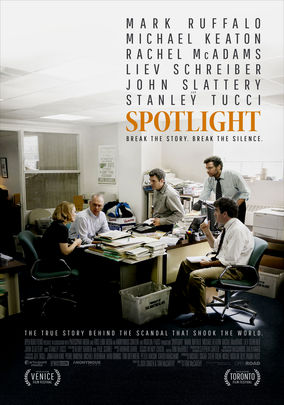
Spotlight (2015) is a film with an important story to tell.

A telling of true events that occurred within the Catholic Archdiocese for ages, Spotlight’s focus is specifically on the Boston scandals, as a team of reporters working for the Boston Globe uncovered and exposed a multitude of child molestation cases committed by priests.

They were subsequently covered up, leaving victims paid off to keep quiet. The number of proven cases in Boston alone is staggering.

Starring are a plethora of talents including Michael Keaton, Mark Ruffalo, and Rachel McAdams, who lead the pack.

They make up the “Spotlight” team at the newspaper,  an investigative unit that works on special stories as they arise.

Their new boss, Marty Baron (ironically a Jewish man), played compellingly by Liev Schrieber, takes over as head of the department. He quizzically asks why the story is not already a priority. Suddenly it is a hot-burner issue and the film delves into an investigation to uncover the facts.

Spotlight is a minimalist film. There is nothing cinematically unique or razzle-dazzle about it, but somehow that is okay.

In some aspects, the film reminds me of the 1975 thriller All The Presidents Men, starring Dustin Hoffman.

For instance, the bleak, bare news rooms-sterile in their look, are similar- cubicle after cubicle,  harsh lighting, and generic conference rooms.

This is the filmmaker’s intent.

Also, the fast, energetic pacing, successfully emitting the tight deadlines newspaper folks face, transfers perfectly on film.

The sexual abuse scandal is a cold, harsh reality and the film introduces several victims, who, now as adults, are forever scarred. Some attend support groups, some take drugs, one is sadly not “all there”. Another, now a gay man, was singled out by a priest during a vulnerable period in the then-young boy’s, life.

It is a heartbreaking reality that many victims in the film are based on real cases.

Let’s focus on Schrieber’s character for a minute.  He gives such an understated yet compelling performance there is a risk it will wind up being overlooked. He calmly, yet passionately initiates the case. It is not a showy performance and subdued but a compelling one if enough attention is paid to it. He is a standout.

Unfortunately, the film does not delve much into the defense (if any) of the Catholic church. Did they do anything but deny the allegations? Why were the victims paid off? Not much is noted from the church’s point of view.

In real life, the Catholic church did hide the abuse that transpired for decades.

A slight negative is that the film does not delve into the characters’ personal lives.

Michael Keaton’s character, Robby Robinson, is arguably the lead character, spearheading the case,  though very little is known about him.

Is he married? happily? Yes, he is a workaholic, but what else?

Ruffalo’s Michael Rezendes is separated from his wife, but little is known to the reasons.

Finally, McAdam’s Sacha is probably the most fleshed-out. She is happily married, close with her religious grandmother, and hurt by the scandal. But we do not know her in-depth either.

I found myself wanting to know more about these people.

All in all, Spotlight (2015) is a superior film deserving of the recognition it is receiving. Intense, gritty, and filled with honesty, it is a story that needed to be told and has been told well.

Oscar Nominations: 2 wins-Best Picture (won), Best Director-Tom McCarthy, Best Supporting Actor-Mark Ruffalo, Best Supporting Actress-Rachel McAdams, Best Original Screenplay (won), Best Film Editing

Independent Spirit Award Nominations: 5 wins-Best Feature (won), Best Director-Tom McCarthy (won), Best Screenplay (won), Best Editing (won), Robert Altman Award (won)

Suffragette-2015

Suffragette-2015

Director Sarah Gavron

Starring Carey Mulligan, Helena Bonham Carter

Scott’s Review #291

80046819

Reviewed December 1, 2015

Grade: A-

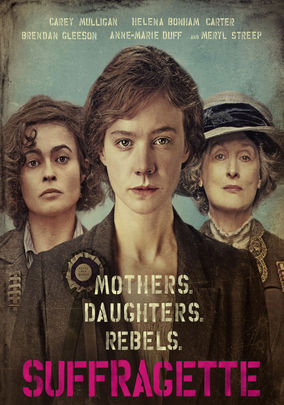
Led by an excellent performance by Carey Mulligan, Suffragette (2015) is a British film that tells the true story of the fight for women’s suffragette, as a team of women fought endlessly to obtain their right to vote, a vote that today most (men and women) take for granted.

Several characters are real-life portrayals, however, Mulligan’s central character Maud Watts is fictional. She is assumed to be a hybrid of other real-life characters.

Perfectly shot and giving a fantastic impression of life in England in 1912, the film centers around a bevy of working-class women- many of whom work endless and thankless hours in a sewing factory, working for and forced to tolerate a vicious, unkind man.

Their lives are bleak.

A women’s movement has developed, led by the mysterious Emmeline Pankhurst (Meryl Streep) and Edith Ellyn (Helena Bonham Carter), both financially successful, but very passionate women, spearheading the “women’s movement”.

The main character is Maud. The film is told from her perspective.

She is a hard-working laundress in her early twenties, married to her husband, Sonny, and with a young son. Plain, yet pretty, the audience knows this is all her life will ever be.

She has worked at the same sewing shop since a young age and has been sexually abused by her boss for years. While delivering a package, she witnesses a co-worker smashing a window protesting the women’s movement.

Initially reluctant to join the movement, Maud realizes the importance and loses her family and job because of her devotion to the cause.

When women were finally granted the right to vote in England in 1928, sixteen years after the movement began,  this took a brave group of women who risked (and lost) their families, and jobs and were imprisoned, and in one heartbreaking scene, loss of one’s life, all in powerful devotion to what they felt was right and just, despite numerous powerful figures beating them down.

How sad to think this happened.

The film accurately portrays the might and courage that the women possessed.

One of two of the most powerful scenes in the film is as follows and belongs to Mulligan. Left by her husband and community and having been imprisoned more than once, Sonny decides to give their son away to an affluent couple. The boy is ripped from Maud’s arms and we realize she will likely never see the boy again.

It is tragic and painful to watch and Mulligan nails it from an acting standpoint. I have always admired Carey Mulligan, she chooses wonderful and challenging parts, never succumbing to mainstream mediocrity.

Think portrayals in Shame (2011), Never Let Me Go (2010), and An Education (2009).

The second powerful scene comes at the end of the film. When a character sacrifices her life (a real-life person, mind you) at the Epsom Derby where King George V is present, simply so that the women’s movement can get major exposure by running onto the track and wielding a sign, she is brutally trampled to death.

Subsequently, a funeral parade results, finally leading the masses to take notice and realize how important an issue this was.

The filmmakers of Suffragette wisely dedicated real-life footage of the parade that occurred at the time.

An important film with a message, Suffragette (2015) is beautifully shot and led by bravura acting and a true, real-life historical story, to be appreciated for its honesty.

Magic Mike XXL-2015

Magic Mike XXL-2015

Director Gregory Jacobs

Starring Channing Tatum, Amber Heard 

Scott’s Review #290

80031499

Reviewed November 27, 2015

Grade: F

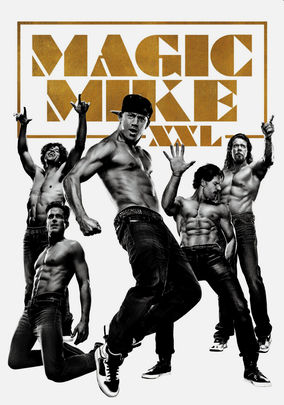
Magic Mike XXL might be the worst film of 2015.

In the follow-up to 2012’s Magic Mike (a predictable yet decent flick), this version has neither novelty nor the basic storyline that the original contained.

Instead, audiences are treated to a lame mess of nonsense, lack of a story that makes sense or is realistic, plot holes galore, and, to nitpick a bit given the subject matter at hand, scarcely any skin!

A road trip kind of movie, I can’t quite decide if the film was targeting frat guys looking for a buddy movie or teen girls and soccer moms looking for escapism.

Even in a less-than-adequate film, I always try to find something positive to mention, whether the characters, the story, or the cinematic elements, I cannot find any redeeming value to Magic Mike XXL.

Fortunately, Matthew McConaughey had the good sense not to sign on to appear in this drivel. The same is not the case with Channing Tatum as he is the star of this installment.

Poor guy. I hope the paycheck was worth it.

The premise is as follows: Mike (Tatum), who is out of the stripper business and now runs a furniture business, receives a call that his former boss is “gone”. Mistaking this to mean he has died, Mike returns to Florida to see his old buddies, who convince him to join a stripper convention in Myrtle Beach, South Carolina, to end their careers on a high note.

While on the road en route to the convention, problems, secrets, and past faces resurface to add to the drama.

Mike’s love interest from the first film is barely mentioned and dismissed in a weak story-dictated explanation. This is an attempt for Mike to have a new love interest in the character of Zoe, a photographer headed to New York, played by Amber Heard.

The film is messy from start to finish, but here are highlights (or low-lights). The silliness in conflict over coming up with a new routine fails miserably.

The character of Richie (Joe Manganiello) slinks into a convenience store and razzle dazzles a brooding cashier, making her burst with delight because she thinks he is dancing for her.

This scene is completely juvenile, watered down,  and unrealistic.

The stereotypes flow from Magic Mike XXL. En route to Myrtle Beach, the fellas make two stops that are the most ridiculous parts of the film and feature name actresses in silly roles.

When their van breaks down after an accident, a plot-driven way to allow the group to be sans vehicle,  Mike looks up an ex named Rome (a severely miscast and unappealing Jada Pinkett Smith), who runs a weird male stripper house for bachelorette’s in the middle of nowhere.

After a lame strip scene (PG-rated at best) to impress Rome, the boys are on their way again.

What was the point of introducing Rome to the story at all? And there is zero chemistry between Tatum and Smith. It seems like complete filler and the dancing scene is endless.

As if the film wasn’t bad enough already, one of the dancers looks up his love interest and the group winds up at her mother’s house.

Andie MacDowell plays a boozy fifty-something, sophisticate who is the mother of Nancy. With her group of cougar friends in tow, they flirt with the boys conjuring up every negative female stereotype imaginable.

The women are misunderstood by their husbands and feel needy and desperate.

And of course, they are all horny and drooling over the guys.

And what is with the lack of nudity or much skin? Is Magic Mike XXL not a stripper film?  Besides  Manganiello’s bare bum in one brief pool scene, there is nothing else and barely any stripping going on.

This truly makes the film weak.

Magic Mike XXL is a complete dud and I hope against hope that there will not be a third installment. If the target audience is giggly teen girls, the horrific bad writing does not say much for society these days.

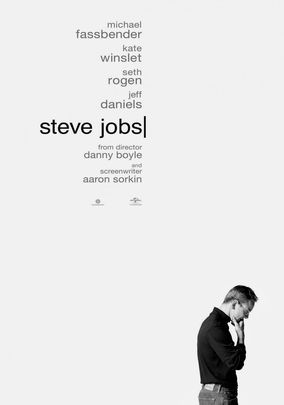
Steve Jobs-2015

Steve Jobs-2015

Director Danny Boyle

Starring Michael Fassbender, Kate Winslet

Scott’s Review #288

80049358

Reviewed November 25, 2015

Grade: B+

Steve Jobs is a name that almost everyone has heard of. Most associate him with Apple products or at least know that he is some technological genius who has influenced the modern world in some fashion.

His name is a household one.

The film Steve Jobs (2015) presents a slice of his life, mostly focusing on his professional leap to success, his damaged personal life, and his inability to stay close to people within his circle.

Michael Fassbender plays the title role. He looks nothing like Steve Jobs, but this did not bother me.

It is quickly revealed that Steve Jobs is a competitive, cut-throat, and sometimes unkind man. He is driven, ambitious, and willing to do what it takes to succeed in business. He is also complex and as the film rolls along we witness the complexities of this man, arguably deemed a “genius”.

But where he has flaws is in his personal life as the film makes abundantly clear.

Kate Winslet is excellent in the supporting role she plays. Joanna Hoffman, Jobs’s loyal marketing executive, stays in his corner through the years, enduring ups and downs, yet their relationship never goes beyond the platonic. They are colleagues and both are absorbed in their creations.

Her character is a bit under-explored as we never are exposed to much of her personal life. Winslet in a rare “dowdy” role, makes the most of Joanna as she is the type of woman who throws herself into her work at the expense of her private life.

The film is primarily set during the three important software launches and, predictably, all are filled with issues and stress.

The bulk of the first act occurs in 1984 when Jobs and Hoffman struggle and fret during an Apple Macintosh launch in front of an auditorium filled with industry types eager to see the new technology.

The scene is tense as the new computer will not say “hello” as advertised and Jobs demands lead engineer, Andy Hertzfeld, fix it.  The scene escalates in its intensity.

We immediately bear witness to the fact that Steve Jobs is a shark. He is demanding and unlikable and the film is not afraid to stress that fact as the action continues.

We are next introduced to Jobs’s personal life. A beautiful young woman arrives at his office with a young girl. They are both on the brink of being destitute and thrown out of their home, yet Jobs refuses to help them and coldly calculates the probability that the young girl (Lisa) is biologically not his.

As the film chugs along Steve Jobs has a turbulent relationship with Lisa as the film spans the period from 1984-1998.

The film is a character study of sorts and we learn the complexities of Jobs. Fassbender gives a nuanced performance allowing the audience to absorb these character traits and ultimately feel emotional sympathy for him.

I admire this character study of Steve Jobs and feel that I know him quite a bit more, on a human level, than I once did.

Perhaps the supporting characters might have been fleshed out a bit more, but in large part, Michael Fassbender’s portrayal of a real-life person makes this film successful.

Oscar Nominations: Best Actor-Michael Fassbender, Best Supporting Actress-Kate Winslet

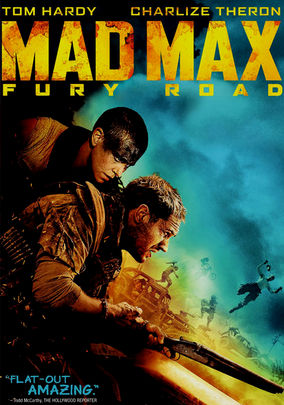
Mad Max: Fury Road-2015

Mad Max: Fury Road-2015

Director George Miller

Starring Tom Hardy, Charlize Theron

Scott’s Review #287

80025919

Reviewed November 20, 2015

Grade: C-

Having almost nothing to do with the original (and far superior) 1979 version of Mad Max, the 2015 Mad Max, sub-titled Fury Road (presumably for the endless car chases across the desert), looks great from a visual perspective.

The charisma of Tom Hardy and Charlize Theron is appealing, the story is non-existent and the film grows tedious after the initial admiration I first felt for the camera work and the dream-like vision the film possesses.

Initially, and admittedly, I was quite impressed with the film- a dreamlike, glossy look makes it a fantasy that one can escape into.

However, after some time, I began growing tired of the visuals, viewing it as a somewhat video game, instead of noticing the lack of story, which glared.

Sure, the thinly laid plot-line involved a rebel, Max Rockatansky (Tom Hardy), escaping the War Boys, where he has been kept as a blood donor against his will, joined by Furiosa (Charlize Theron) and a group of young, beautiful females escaping a life of breeding.

The group joins forces to allude, Immortan Joe, who chases them throughout the barren desert as they strive to reach safety in the beautiful “Green Place”, a land of prosperity that Furiosa remembers from childhood.

But this synopsis is similar to countless other action or adventure tales that have come and gone without distinction.

Again, compared to the original, I was expecting more from Mad Max: Fury Road and did not receive it.

The story fails because there is no rooting value. Since the film is a fantasy, per se, I did not find much investment in the characters getting to the “Green Place”.

The sweltering heat of the post-apocalyptic desert gives the film a roasting, tense look, and the action is almost non-stop.

Cartoon-like characters come and go, writhing on tops of cars or simply looking sinister with sneers and evil smirks, adding little to the story. Who are they? What is their purpose other than to look menacing?

I did admire the character of Furiosa. With a buzz-cut and a bad-ass swagger, the character is no-nonsense and in control throughout the film.

Certainly an inspirational female character, she adds zest to the film, which, on the surface, seems male-dominated. A female who can inspire and impress in this day and age is reasoning enough to mention.

Inexplicably, the reviews for Mad Max: Fury Road were positive and I do not get that. My overall perspective disagrees with these findings. I do not mean to imply that the film is “run of the mill” in an overall critique. It’s not.

There are fits and starts of creativity, as the glossy look of the film is admittedly a treat and a spectacle, but, alas, without a compelling story, this only goes so far before it begins to wear thin as an overall production.

Little chemistry or much dialogue between Hardy and Theron exists. Both are top-notch talents in their own right. Rather, grunts and facial expressions run rampant between the pair.

If the film was going for any sexual connection between the two, especially given the hot, steamy desert atmosphere, this intention fell flat as I noticed none.

To admire visually, the latest Mad Max (2015) may be worth a glimmer, but as a film that contains the entire package, this one is not worth its salt.

Oscar Nominations: 6 wins-Best Picture, Best Director-George Miller, Best Sound Editing (won), Best Sound Mixing (won), Best Production Design (won), Best Cinematography, Best Makeup and Hairstyling (won), Best Costume Design (won), Best Film Editing (won), Best Visual Effects

Black Mass-2015

Black Mass-2015

Director Scott Cooper

Starring Johnny Depp, Joel Edgerton

Scott’s Review #278

Black_Mass_(film)_poster

Reviewed September 28, 2015

Grade: B+

A dark tale of crime, corruption, and Irish mob ties encompass Black Mass (2015), a drama based on the life and times of infamous Boston crime lord Whitey Bulger.

Set primarily in Boston, with a segue to sunny Miami during the 1970s and 1980s, the film mainly focuses on the intricate dealings between Bulger and childhood friend John Connelly. Now FBI, he uses Bulger as an “informant” to secretly bring down an Italian mafia figure, but slowly becomes more involved in Bulger’s sinister world.

Beginning in 1975, the film is authentic in its use of the styles, cars, and looks of the times in Boston during that period. Plausibility is apparent, and powerful acting is shown from top to bottom.

The stellar cast of Black Mass and the hefty cast features an array of well-known and capable actors, adding realism.

Led by Johnny Depp as Whitey, Depp gives an eerie, hypnotic performance as his bright blue eyes sparkle in a devious way.

Whitey is ruthless and will do whatever is needed to keep power and control. Like Connelly, Joel Edgerton is arguably the film’s lead character, though Depp gets top billing. Edgerton, in real life handsome, appears frumpy, and as a regular Joe type.

Supporting turns by Benedict Cumberbatch, as Whitey’s powerful Senator brother, is crafty and sleek, but corruption shrouds him.

Kevin Bacon, Dakota Johnson, Peter Sarsgaard, and Julianne Nicholson portray smaller yet pivotal roles and all do a fine job.

The screenplay is intelligently written. The story is quite dark and there are no laughs or light moments.

There are numerous deaths, the victims shot at point-blank range, but also two deaths in particular, where the victim’s suffering is prolonged and the scenes are cringe-worthy. The film is very violent and given the subject matter, is riddled with foul language.

One impressive aspect of Black Mass is the character-driven tale and that it is based on a real-life person adds to this.

Not only is Bulger fleshed out, but John Connelly is written very well. Gradually becoming immersed in the crime world as opposed to the world of law, we see Connelly sink deeper and deeper into Bulger’s world, and not so unwillingly either.

He loses his wife Marianne (Nicholson) along the way as she tires of the danger and corruption surrounding her. A chilling scene occurs when Bulger confronts Marianne in her bedroom, after observing negative vibes from her, and warns her in a flirtatious way, never to cross him.

As he caresses her face and slowly firms his grip, it is a rather frightening scene.

The dialogue is crisp. When Bulger is invited to a steak dinner at Connelly’s house, there is awkward tension at the dinner table. Jovial small talk over the preparation of the delicious marinated steak everyone is eating comes to the forefront as Bulger asks Connelly’s partner to reveal his family secret recipe for the favorite steak he has ever eaten.

When the partner eagerly confesses the recipe, he is coldly quizzed whether he would give up Bulger’s secrets as easily.

This is one of the best scenes in the film.

Comparisons to Goodfellas (1990) are evident but without the fun. I thought of The Departed (2006) throughout the viewing as well.

I think director Scott Cooper goes for and successfully achieves, good straight-forward, dark story-telling. Take the number of killings. The organized crime world is dirty, intense, and unkind and Black Mass portrays this well.

Black Mass (2015) is a success on many levels. The superior acting, detailed writing, and truthfulness create a good film. Just be sure to remember it’s a heavy one.

The Visit-2015

The Visit-2015

Director M. Night Shyamalan

Starring Olivia DeJonge, Ed Oxenbould, Kathryn Hahn

Scott’s Review #276

80045505

Reviewed September 24, 2015

Grade: B

A modern-day thriller/horror/comedy hybrid (admittedly it is tough to classify this film as exclusive horror with the dreaded and watered-down PG-13 rating) directed by M. Night Shyamalan, The Visit (2015) has its moments of genuine scary frights and surprises.

It contains a wonderful twist at the end but suffers from some clichés, one severely unlikeable character, and suspensions of disbelief.

Bringing grandparents to the forefront of the film is a clever idea, albeit, stereotypically, The Visit is a decent watch, but laden with a few misfires.

Paula (Kathryn Hahn), a single mother on the outs with her parents for some years, but recently reunited, sends her two children- Rebecca and Tyler, for a week, to stay at their grandparent’s farmhouse, whom they have never met.

At the kids prompting, Paula decides to go on a romantic vacation with her new boyfriend.

Naturally, when the kids arrive at Grandma and Grandpa’s strange events happen. The children are warned never to go into the basement, not to leave their bedrooms after nine-thirty pm, plus the grandparents have a creepy, weird, look to them.

Rebecca and Tyler, in true modern horror fashion, arguably contrived at this point, record all the events (think Paranormal Activity from 2007) and begin to realize there is something rotten in the state of Denmark.

The Visit contains positives and negatives.

The mother and the two kids live in New Jersey and the grandparents in Pennsylvania. That is one state away, yet Rebecca and Tyler have never met, seen photographs, spoken to their grandparents on the phone, not even to discuss the impending visit.

The kids constantly use Skype to communicate with Mom throughout their visit, but doesn’t occur to anyone to chat with the grandparents before embarking on a week-long visit to introduce themselves.

This is a convenient plot manipulation.

Another negative is the film contains one of the most annoying characters in recent memory, Tyler. I am baffled as to whether this was intentional or unintentional.

The kid is about twelve years old and is written as dumb as possible. There are at least three to four endless scenes of him rapping, mostly to the video camera, that I found to be an utter waste of valuable screen time and lends nothing to the plot.

Filler and for a ninety-minute movie, unnecessary.

In the end, though, I got the last laugh, as the character, a germophobe, has his face smeared with human excrement.

The third negative I observed is the constant “old people jokes”, which bordered on the offensive after a while. The grandparent’s unusual behavior was blamed numerous times on their age as if all elderly people were scatterbrained, daffy, or just downright strange.

Many seniors are intelligent, useful, and lively so there was a feeling of disrespect towards the elderly that I could not shake. The film could have portrayed the grandparents with more dignity than it chose to.

Now for some positives, the compelling twist at the end of the film I did not see coming and I loved that about The Visit.

Rarely is the audience surprised anymore, especially in the horror genre, and I was. Having replayed the film in my mind the plot makes perfect sense, but is a positive in the heart of the climax.

On the subject of the conclusion, The Visit has a unique slow-motion/dreamlike feel and an odd, classical-type musical score playing throughout the ending that adds much depth to the typical thriller-type music heard in most genre films.

The oven scene inevitably viewed by all during early trailers for The Visit is excellent. When Grandma convinces Rebecca to crawl completely inside her oven to clean it we know this will not end well.

Additionally, the look and texture of the setting, an old deserted farmhouse in a small, rural town in the middle of nowhere has a feeling of being trapped.

This successfully provides a scary backdrop for the film and all the elements scream horror.

The Visit (2015) has genuine scares and will make the viewer jump, and perhaps even shriek. That is what good horror does yet I am still unsure if this film is more horror or comedy.

Unintentionally so, perhaps.

Grandma-2015

Grandma-2015

Director Paul Weitz

Starring Lily Tomlin, Marcia Gay Harden

Scott’s Review #275

Grandma_Movie_Poster

Reviewed September 21, 2015

Grade: B+

Grandma (2015) is clearly and deservedly, a showcase for the talented and interesting legendary Hollywood actress Lily Tomlin.

Years (twenty-seven to be precise) since she has had a starring turn in a film, the role of Grandma is custom-made for Tomlin, with the character’s sarcasm, wit, and downright bluntness emerging to the forefront.

The film is labeled a comedy/drama, which it is. It’s themed around a heavy topic of abortion and runs the risk of offending pro-life individuals, as the film undoubtedly contains a pro-choice slant.

Ellie (Tomlin) is a poet and former college professor in her seventies living in California. She is a lesbian and is mourning the recent death of her long-time partner. She has recently been dating a lovely young woman named Olivia (played by Judy Greer), whom she unceremoniously, and cruelly dumps, referring to Olivia as little more than a footnote in her life.

Afterward, Ellie breaks down in tears of guilt while showering.

One day her granddaughter, Sage, (her daughter Judy being the product of a one-night stand), appears on her doorstep asking for money for an abortion. Having just paid off her debts and destroyed her credit cards, Ellie is therefore broke.

The duo embarks on a quest for cash, and race against time to make the appointment in time for the scheduled procedure.

The film belongs to Tomlin but is enhanced by excellent supporting turns, specifically by Marcia Gay Harden as daughter Judy, and veteran actor Sam Elliot, as Ellie’s former flame Karl, to cite examples.

Judy and Ellie have experienced a tumultuous relationship their entire lives while Karl harbors resentment for Ellie for long-ago aborting their child. Harden is thrilling as a borderline, one-dimensional bitch character.

She is driven, angry, and self-centered, and it is mentioned that she has gone through numerous administrative assistants in her high-level corporate role.

I have not seen Harden in a role quite like this before. As unsympathetic as the character is, one cannot help wondering if Ellie’s mothering skills may have made Judy turn out this way.

Karl on the other hand is sympathetic. He is still wounded from his ages-ago relationship with Ellie and may still hold a flame for her, as unlikely a romance between them would be.

The film is darker than expected and is not the syrupy, mainstream, family story one might expect from the fuzzy one-word title.

Still, Tomlin’s cantankerous, sarcasm kept me in stitches and perfectly balanced the tough subject matter displayed in Grandma.

The relationships between the main characters are complex and tough to watch as they argue, swear, and insult each other.

Love is mixed in but complexities arise due to the controversial subject matter. The history of and, in many cases, painful memories are dredged up between characters.

Impressively, Grandma is not a film that debates the hot-button issue of abortion as one might assume. Sage never really considers keeping her baby and will have the procedure done as quickly as possible.  Ellie and Judy never try to persuade Sage to keep the child nor does Sage seriously contemplate keeping the baby.

The only instance of a pro-life perspective is when two ridiculous characters- a young mother and her ten-year-old daughter- suggest Sage not kill her baby. When Ellie steps in the young girl punches her in the face. Is this intended as comic relief or to make these characters appear as buffoons?

These characters are laughable.

The father of Sage’s baby is unsympathetic and a very minor blip on the radar. My theory is that the film chooses to go this route intentionally to avoid a debate over the abortion issue.

A debate is not the point, but the relationships between the characters are.

The scenes involving Ellie becoming irritated and sarcastic are priceless, successfully utilizing Tomlin. As she hilariously goes from situation to situation in an attempt to earn the $600 for Sage she resorts to various means as diverse as selling books, giving a kiss, or collecting an old debt.

This is the main draw of the witty little film, Grandma (2015).

Inside Out-2015

Inside Out-2015

Director Pete Docter

Starring Amy Poehler, Diane Lane

Scott’s Review #272

80030684

Reviewed September 8, 2015

Grade: B+

Frequently, when I view a modern animated feature, (and by contemporary, I mean 1990 and beyond), I am either bored or left with a “meh” feeling, or both. It seems the trend is “Let’s create a manufactured film that will appeal to kids who will drag their parents to it”.

It is almost as if mediocrity is accepted in the animated film, but Inside Out (2015) challenges this trend with a thoughtful, interesting slab of story.

With this latest Pixar offering, we find a refreshing, intelligent film that makes the viewer think, containing a genuine cute factor, with lots of colors and interesting animation interspersed throughout.

Our story finds eleven-year-old Riley Anderson, and her five different personalities, working within her brain in unison. The emotions are five distinct little people representing (and named) Joy, Sadness, Disgust, Fear, and Anger. They overlap, conflict, and humorously strive to take control of Riley’s mind and thought processes.

Joy is central, and the happiest of emotions. They all live in Riley’s conscious mind, named Headquarters.

One day, Riley and her family pack up and move from Minnesota to the unknown and overwhelming city of San Francisco to capitalize on a job opportunity offered to Riley’s father.

The city is bustling and the family is thrown for a loop. Riley in particular has difficulty adjusting to this vastly different world and finds herself friendless and acting out of character.

Sadness accidentally begins touching other emotions within Riley’s mind, which sets off strange emotions causing her to behave erratically and become irritable.

Joy and Sadness struggle to return to Headquarters and fix the issues.

Inside Out is a complex animated film and will go way above the heads of many youngsters who will undoubtedly see it.

I find this rather refreshing.

It is a coming-of-age tale for adults and mature kids that challenges its audience rather than spitting out a retread or formulaic family story that we have seen countless times.

Riley and her parents are arguably supporting players in the story, taking a back seat to the small, interesting creatures in Riley’s mind. Her mind is a carnival of riches and cool characters emerge. I smiled as more characters were introduced. Riley’s imaginary friend from years ago, Bing Bong, was pulled to the forefront of her emotions, as he was sadly forgotten in her mind.

Who cannot relate to this? A childhood ritual of creating a friend.

I adored the trip through Riley’s mind and marveled at the revelation of the inner workings of her mind, with creative colors and bright interesting lights.

What a super-cool adventure for a young film lover to experience! Inside Out is quite sophisticated.

The main concern is the level of patience that this film requires. It is not a force-fed story but encourages one to experience and feel.

Touching scenes prevail, but the message I receive from Inside Out is important. A multitude of emotions in every human being is normal and the way the film shows them overlap and work together is ingenious. Nobody is one emotion, nor should they be as the movie promotes successfully.

Human beings are meant to feel.

The film also contains humor. I laughed out loud when one character saw a button labeled “puberty” and assumed it was unimportant. This inside joke is also alluded to after the film- a sequel perhaps? Since Riley is only eleven, puberty will be a natural progression.

Inside Out challenges the norm in animated films and entices audiences to think. It feels genuine, which is impressive in itself. It is sentimental without feeling contrived or corny.

The film succeeds on many levels.

Oscar Nominations: 1 win-Best Original Screenplay, Best Animated Feature Film (won)

Lake Placid vs. Anaconda- 2015

Lake Placid vs. Anaconda- 2015

Director A.B. White

Starring Robert Englund

Scott’s Review #267

80058483

Reviewed August 16, 2015

Grade: D

To say that Lake Placid vs. Anaconda (2015) is a bad film is being generous. It is poorly made, written, and acted.

Containing every horror and comedy cliché in the book, it is not a film to take seriously and is best watched late at night amongst adult spirits.

The premise is ludicrous, the acting way overdone, and all characters are “types” and one-dimensional.

Having seen the original Lake Placid (1999) and Anaconda (1999) films (and they were not so great themselves), I was unaware that this is the fifth film for both franchises and is a crossover.

Premiering on the Syfy network in mid-2015, it is a made-for-television feature, and the lack of any real gore is apparent for this reason.

Robert Englund and Yancy Butler, stars of other franchise installments, make return appearances. Sadly, this one has no Betty White or Jennifer Lopez (stars of the original Lake Placid and Anaconda, respectively).

Lake Placid vs. Anaconda is not trying to be great or necessarily art, but rather an idiotic late-night experience. I did not rate the film a solid ‘F’ since it knew what it was and did not try to take itself too seriously, which I respect at least.

The story begins in the middle of the woods near Clear Lake, Maine, as an illegal experiment occurs inside a truck. The serum is being illegally extracted from a sedated crocodile to sell to a giant corporation for profit.

Jim Bickerman (played by horror legend Englund) has been paid handsomely to provide information for the plot to happen.

A villainous corporate schemer is on hand to oversee the events. Inevitably, something goes wrong and the crocodile wakes up and gets loose, encountering large anacondas, also on the loose.

From this point, we are introduced to other inane characters that round out the film, including a group of bitchy sorority sisters on their way to Clear Lake presumably to pledge and party, and Sheriff Reba (Yancy Butler) and her bumbling team of police officers.

Also integral to the story is one of the sorority sisters (Bethany) fathers, Will, who attempts to help Sheriff Reba rescue everyone from the killer reptiles.

Side stories include the laugh-out-loud pledge attempts by some of the sorority wannabees (one is forced to dig a hole in the sand large enough for her to hide in within twenty minutes), a friendship between the only two sensible girls, Bethany and Margot, a high leveled female executive intent on capturing the serum for riches, and a burgeoning romance between Reba and Will.

Silly personified, the film is meant to be goofy and the actors play their roles as they are foolishly written. There is not a shred of realism to the film and none of the characters have any depth.

The worst offender from a character standpoint is humorously my favorite. Tiffani is the comically vicious sorority queen. With her constant berating of the new pledges, she regularly demands that they get in the water and swim for her entertainment.

Ultimately, the girls are attacked by the crocodile in the water, allowing for multiple camera shots of the girls swimming underwater while scantily clad.

Is this a 1980s low-budget horror throwback? When the crocodile emerges to land the remaining girls flee for safety.

In a hilarious scene, Tiffani and one of her minions are cornered by the vicious crocodile. The minion asks what they should do and Tiffani replies with, “I have an idea”, and promptly pushes the minion towards the crocodile where she is chewed to bits allowing Tiffani to escape.

Later, predictably, Tiffani receives her comeuppance.

I find myself perplexed as to why this film was even made. With a shoestring budget, dated CGI effects, little blood, and a silly plot one assumes that the franchise’s predecessors were similar ventures.

Laced with one dumb scene after another and tough to take seriously, Lake Placid vs. Anaconda (2015) is as poor filmmaking as they come, but certainly to be taken with a grain of salt and enjoyed for its campy badness.

Horror-comedy for a boozy Saturday night.

The Gift-2015

The Gift-2015

Director Joel Edgerton

Starring Jason Bateman, Joel Edgerton

Scott’s Review #264

80046694

Reviewed August 9, 2015

Grade: A-

The Gift (2015) is a throwback to the type of psychological thriller made famous by Fatal Attraction in 1987 and similar films throughout their heyday into the 1990s.

An unstable psycho threatens a happy couple.

Interestingly, The Gift is similar in genre to a film also released in 2015, The Boy Next Door. The Gift is worlds superior to that film and contains surprises, frights, twists, and turns that I pleasantly did not see coming.

The film is not predictable which is refreshing in this particular genre.

Jason Bateman and Rebecca Hall star as Simon and Robyn, a successful young couple who have relocated from Chicago to sunny California, near Simon’s childhood hometown, to begin a new life with the intent of starting a family.

They soon run into a man named Gordo, played by actor/director Joel Edgerton, a high school chum of Simon’s from twenty years ago whom Simon barely remembers. Simon and Gordo plan to re-connect over dinner, but the audience can sense that something is not right with Gordo.

As Simon, Gordo, and Robyn get to know each other again, Gordo begins leaving pleasant little gifts on Simon and Robyn’s doorstep as well as showing up at their house unannounced, which is particularly unnerving to Robyn as she is home alone all day long. Simon is consumed with his new career and possible promotion.

Interestingly, their home is located in a secluded area.

The film soon reveals that Gordo was nicknamed “Gordo the Weirdo” in high school and that an incident involving Gordo occurred, though nobody seems to remember the exact circumstances.

Perhaps they choose not to remember?

The vagueness of this situation is appealing because the audience is sure that these circumstances will be revealed later in the story and play a large part in the climax, which it does.

We also learn that another incident took place with Robyn in Chicago and that she suffered a miscarriage. She does not drink and avoids pills. Could she be unstable, imagining things, or overly cautious?

It is revealed that she does not handle stress well.

A wonderful aspect of The Gift is its surprise factor. As the plot twists and turns, I switched alliances and wondered who the villain was. Gordo? Simon? Robyn?

Edgerton (along with a great acting performance) compellingly directed the film and was undoubtedly influenced by Alfred Hitchcock.

The camera angles and score are excellent in establishing the correct level of tension at just the right moment. In more than a few scenes the audience knows something will jump out at the screen, so there is anticipation, but when and how it will happen is a surprise.

Many scenes are when Robyn is alone, during the day thank goodness, and she hears a noise or notices the water running. These scenes are traditional fare in horror or the thriller genre but are well done in The Gift.

Simon is an interesting character. Sophisticated, educated, and with a high-level executive job, he has a strange fear of monkeys.

The past is a common theme of the film- past events encase the three lead characters leading to conflict and ultimately these events come back to haunt them. Most of Simon’s friends are unlikable and appear interested in style over substance. They seem drawn to Simon more for his success than because they care about him.

This contradicts his wife’s character. Robyn is down-to-earth, and kind, and does not place as much stock in wealth and achievements as she does with personality and being a kind individual. She and Simon bicker and disagree about Gordo and their conflict increases.

It is not often in films anymore that one is truly frightened and “jumps out of your seat”, but two intense scenes, one involving a dog, and the other a shower, made me jump, and the hairs on my arm stand on end. Everyone in the audience gasped together.

Now that is fun!

The only negatives in The Gift are continuity issues and the suspension of disbelief in some scenes. Without giving anything away, how is Gordo able to do some things he can do?

The Gift (2015) is an old-fashioned thriller with excellent acting, compelling characters, and a wonderful debut for Edgerton in the director’s chair.

The film will leave the viewer pondering moral questions, and relating to each of the three main characters.

Fifty Shades of Grey-2015

Fifty Shades of Grey-2015

Director Sam Taylor-Johnson

Starring Jamie Dornan, Dakota Johnson

Scott’s Review #262

80013872

Reviewed August 5, 2015

Grade: B-

To quote a humorous phrase I once coined years ago, when I decided to give in and see Fifty Shades of Grey (2015), despite negative reviews, “I was not expecting Citizen Kane” fit perfectly with this film as I pondered my review after the conclusion.

Based on the titillating book series by author E.L. James, the film is sudsy, steamy, and poorly acted. However, something is charming and sexy about the badness of it.

It’s not a terrible film, but the negatives outweigh the positives.

Dakota Johnson, daughter of Melanie Griffith and Don Johnson, and granddaughter of Hollywood royalty Tippi Hedren plays a shy literature student named Anastasia Steele.

She is pretty and grounded and meets and becomes enamored with a twenty-seven-year-old billionaire named Christian Grey after driving to Seattle to interview him for a sick friend.

The chemistry between the two is palpable and an instant romance ensues.

Christian courts Anastasia mercilessly, becoming somewhat controlling, and she is willing to be his “victim” as she adores his attention.

As the two get to know each other better, it is revealed that Christian is “dominant” and desires Anastasia to sign a contract, becoming his “submissive” and “belonging” to him. Anastasia is conflicted by this notion.

She loves Christian but wants a traditional romance with flowers and chocolates, something Christian has admitted he does not do.

I confess to having gotten caught up in the kinky romanticism of it.

The film has a smoldering, dreamlike style. The scenes in the “playroom” are hot and the film does its best to make the entire production erotic, but not going so far as to make it pure smut.

Boy meets girl, girl falls head over heels, boy conquers girl.

The film makes sure to portray Anastasia and Grey as complete opposites. He is wealthy, sophisticated, calm, cool, and collected while she is a struggling, naive girl ripe for the picking.

Perhaps this was part of her appeal to Grey.

The acting is not great, especially on the part of Johnson.

I did not find Jamie Dornan (Grey) to be so bad and he is likable enough to me. For the most part, the character of Anastasia irritates me, and I find her quite unlikeable.

Anastasia becomes enamored with Christian, allows herself to be pursued, showered with gifts, considers, then more or less accepts his offer to be his “submissive”, then gets furious and dumps him.

Huh?

Fifty Shades of Grey is told from a female point of view as evidenced by the marketing and the strategic opening on Valentine’s Day weekend.

I sense that the character of Anastasia is made to be sympathetic while Grey is drawn to be the cad and the bad character.

A brief backstory is mentioned as to what turned him into a dominant male who likes to have females submit to his desires coupled with his lack of desire for any affection, but this was not too deeply explored.

The film does not want the audience to really “get him” or delve too deep into the psychological reasons, instead of going for the kinkiness and the female side of the story.

A poorly structured film that made a ton of money and will undoubtedly spawn at least another sequel, Fifty Shades of Grey (2015) is a guilty pleasure and one I shamefully confess to having somewhat enjoyed.

Oscar Nominations: Best Original Song-“Earned It”

Love and Mercy-2015

Love and Mercy-2015

Director Bill Pohlad

Starring John Cusack, Paul Dano

Scott’s Review #258

80017274

Reviewed July 17, 2015

Grade: B+

The life and times of the Beach Boys’ famous and troubled lead singer, Brian Wilson, is finally played out on the big screen (apparently many attempts were made to make a film) as Love and Mercy (2015) chronicles his difficult upbringing, unrivaled success, and his interesting life in later years.

He suffered from schizophrenia, traveled down a paranoid, nervous path, and was manipulated by a family friend who served as his doctor and main caregiver.

Thankfully, he weathered the storm due to his future wife, and remarkably still performs and entertains in 2015.

His musical career began in the 1960s.

The biopic features many well-known Beach Boys tunes to hum along to and be entertained by. It’s not a happy film nor a downer either.

It’s somewhere in the middle of the two and the life story of a rock star.

There is a risk in this. If the film is too sentimental it will fail. Love and Mercy do it correctly.

The film is not a sing-along, trip-down-memory lane film for lighthearted film fans. Rather, it is dark, murky, and troubling at times (the psychedelic scene when a young Brian is imagining different voices and noises in his head is rather frightening).

Wilson is played by two actors, first in the 1960s and later in the 1980s.

Paul Dano stars as a young Wilson in the early stages of his career, filled with passion for life, art, music, and talent beyond belief, but clearly in the onset stages of paranoia, thanks to his critical father. He is a demanding, angry man, possibly envious of Brian’s talents as a songwriter, who always wanted more from Brian.

Wilson’s father managed Brian and his brothers success but at a huge cost, and was ready to bail when the “next big thing” came along.

Miraculously, through conflict with his father and other members, Wilson completed the Beach Boys masterpiece, Pet Sounds, a groundbreaking album from the late 1960s. The film shows the struggles faced to achieve this success.

In later years John Cusack takes over the role of Brian. By this point in his life, he is damaged and he is a full-blown neurotic, insecure, and dependent on his psychotherapist, Dr. Landy, brilliantly played by Paul Giamatti.

Landy has control of Wilson’s assets and will destroy anyone who interferes in this.

The scenes in which he screams at and berates a drugged-out Brian Wilson to create music are tough to stomach. When Wilson romances their future wife Melinda Ledbetter, played by Elizabeth Banks, she ultimately saves his life as she is determined to rescue Brian from the wicked abuse and adjust the toxic levels of medications he was kept on.

I left the movie theater unsure of the factual accuracy and pondered the following questions.

Did Brian’s wife swoop into his life and “save” him as neatly as the film explains? How instrumental was the maid in this process? Was the Wilson brothers’ father as much a monster as the movie portrayed him? Was Giamatti’s vicious psychotherapist role true to life or were the aspects of Love and Mercy embellished ever so slightly for moviemaking magic?

One wonders, but from a film perspective, Love and Mercy (2015) works well as a work that takes risks, does not go for softness or niceness, and gives a character study that is quite admirable.

Independent Spirit Award Nominations: Best Supporting Male-Paul Dano