Category Archives: Dark Comedy

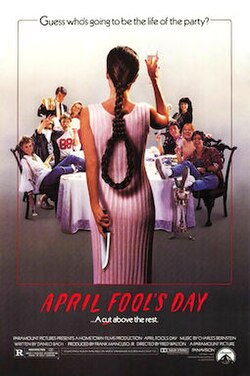
April Fool’s Day-1986

April Fool’s Day-1986

Director Fred Walton

Starring Thomas F. Wilson, Deborah Foreman

Scott’s Review #498
Reviewed October 24, 2016

Grade: B-

Emerging at the tail end of the late 1970s and early 1980s slasher film craze that defined that period in cinema (for better or worse), April Fool’s Day (1986) capitalized on the “holiday theme” marketing tool that had propelled Halloween (1978) and Black Christmas (1974) to superstar status.

Unfortunately, this film is not a traditional horror flick; it has plenty of comic elements but also contains the standard slasher characteristics, thereby making it a blockbuster failure.

It does not know what its identity truly is.

From a storytelling perspective, the film has one great twist, but otherwise suffers from mediocre writing and unmemorable characters nobody cares about.

We are treated to an ensemble of actors, most of whom are unknown, except for horror maven Amy Steel (Friday the 13th Part 2), who portrays Kit, arguably the most relatable of the female characters.

A clever facet, woven by director Fred Walton, is the casting of eight principals in April Fool’s Day, all with similar amounts of screen time, rather than one obvious “final girl” surrounded by minor characters, who we know will be offed.

The setup is all too familiar in the slasher genre- the group of college-aged kids escapes mundane life for a spring break weekend getaway at their wealthy classmates’, Muffy St. John’s, island estate.

Conveniently, her family is away- leaving the friends to have the run of the mansion, with a dinner party as part of the plan.

Even more convenient is that the ferry the group takes does not run on weekends, so once they are dropped off at the island, they stay until Monday.

This sense of foreshadowing sets the anticipated peril and dread in motion.

We also sense that there is something very off with Muffy- despite being everyone’s friend. When Muffy finds a jack-in-the-box in her attic and recalls a childhood memory, we know this is the setup for the mystery.

Is she mentally unstable? Is someone out to get Muffy for a childhood prank or an event that once occurred?

Since it is April Fool’s Day weekend, the groups spend most of the film playing pranks and amateurish jokes on each other (a whoopee cushion, an exploding cigar), mixed with a dash of intrigue- someone is leaving trails of history as part of the jokes.

One girl had an abortion, so the prankster left an audiotape of a baby crying. In another room, heroin paraphernalia is left for someone with a former drug habit.

Slowly, one by one, the college kids disappear, but is it just a hoax? Or is the hoax just a hoax?

The final twenty minutes or so are really the main reason to watch this film.

As Kit and boyfriend Rob are the last remaining “alive,” there is suddenly a startling twist that changes the entire dynamic of the film- in one moment, everything the audience thinks of the story is turned upside down.

This is wise writing, but it comes too late in the game.

Sadly, some parts of the film are downright silly, and most of the characters are of the stock variety- the flirtatious blonde, the obnoxious jocks, the stuck-up preppy, which ruins the creative twist that is aforementioned.

With glimpses of genius and a striving for something more clever than the standard run-of-the-mill 1980s horror film, April Fool’s Day (1986) has some potential but ultimately leaves something missing.

The Witches-1990

The Witches-1990

Director Nicolas Roeg

Starring Angelica Huston, Mai Zetterling 

Scott’s Review #483

20282991

Reviewed September 20, 2016

Grade: B-

The Witches (1990) is a G-rated family film with a slightly dark tone, handled softly, as it is targeted at children. However, it is a film that adults may love too.

I found the film entertaining, with impressive special effects and a dazzling comedic performance by Angelica Huston. Still, ultimately, The Witches has a silly quality, though admittedly not trite, that does not quite make it a success in my book.

The film is based on a Roald Dahl children’s book, with a child as the central character, similar to other Dahl novels that were adapted into films such as James and the Giant Peach and Charlie and the Chocolate Factory.

I cannot help but wonder whether my mediocre rating of The Witches is due to not having read the novel, even though I have read the other aforementioned novels in his collection.

Our hero in the story is Luke- a kindly, innocent young boy living in Norway with his parents and grandmother, Helga. When his folks are tragically killed, his grandmother takes him to London to begin a new life for themselves.

When Helga falls ill, they stay at a seaside resort where they stumble upon a convention of witches disguised as the Royal Society for the Prevention of Cruelty to Children.

Luke and his plump friend Bruno fall victim to the witch’s plot to turn children into mice. The witch group is led by the Grand High Witch (Huston), whom the other witches fawn over with grandiose praise.

Huston is fantastic as she overacts the part she plays- this is not a bad thing, but it makes the role quite fun and energetic.

When she transforms from a glamorous woman to a shriveled monster, the transformation is interesting to watch and an impressive part of the film.

Furthermore, the way Luke and Bruno interact as mice is also cute and a positive aspect of the film.

I enjoyed the aspect that, if watched closely, reveals that numerous witches are men wearing female wigs. This successfully gives the witches a grotesque, obviously mannish quality and emits a chuckle of pleasure at the same time.

Still, there is something slightly childish or juvenile about the offering, while the film appears dark on the surface. The subject is played for laughs rather than going full steam ahead as a dark film.

Undoubtedly, this is due to the target audience that the film is going for. For instance, the hotel manager’s affair with a hotel maid seems slightly unnecessary.

The Witches (1990) is a decent offering due to respect for the creative aspects that it elicits- I just felt the story might have been done a bit more seriously.

Additionally, the ending feels slightly forced and abrupt- a Hollywood-intended ending perhaps?

Bernie-2011

Bernie-2011

Director Richard Linklater

Starring Jack Black, Shirley MacLaine, Matthew McConaughey

Scott’s Review #472

70189906

Reviewed August 30, 2016

Grade: C-

Bernie (2011) is a film that, surprisingly, received critical acclaim and Golden Globe and Independent Spirit Award nominations, but I was left quite disappointed.

Categorized as a dark comedy, it has a morbid premise, which isn’t the issue; I didn’t find it very good overall.

Despite being a true story of Bernie (Jack Black) marrying and murdering millionaire Marjorie Nugent (Shirley MacLaine) in Texas, the film is not compelling and is written too over-the-top.

Inexplicably, the townspeople refuse to believe Bernie’s obvious guilt.

The film has a few funny, interesting moments and is based on real events, but I didn’t feel as connected to it as I expected and, honestly, found it a bit dull.

Jack Black is impressive as the title character, but only because it is a departure from his usual slapstick film roles. I don’t get the accolades being heaped on him for his performance.

Shirley MacLaine and Matthew McConaughey are capable of the parts written for them, but they are one-note characters.

Meh.

Independent Spirit Award Nominations: Best Feature, Best Male Lead-Jack Black

Anomalisa-2015

Anomalisa-2015

Directors Charlie Kaufman, Duke Johnson

Starring David Thewlis

Scott’s Review #469

80080269

Reviewed August 27, 2016

Grade: A-

Anomalisa (2015) is one of the most creative offerings I have seen recently.

Animation is not my forte- typically I find them much too nice, and the old “family-friendly” tags make me cringe. Anomalisa has received heaps of buzz, so I decided to check it out.

I am glad I did.

The stop-motion film is quite adult-themed, though not the slightest bit raunchy. Instead, it is an intelligent tale about loneliness and how people connect through it.

It’s also a bit melancholy, based on a 2005 play.

The central character is Michael Stone, a depressed customer service expert, who travels to Cincinnati to deliver a seminar on his expertise.

Michael is riddled with anxiety, and his life is rather mundane, though he checks into a stylish hotel that is presumably hosting his convention.

He is a bit of a big name within his industry. Oddly, every person he encounters looks and sounds the same- that of a white man- even his wife and son.

He is haunted by the memory of an old flame, Bella, whom he jilted years ago, and who now lives in Cincinnati.

The story gets interesting when Michael hears a woman’s voice singing; up until now, all voices are male, remember, and he is desperate to find the voice.

He meets Lisa (voiced by Jennifer Jason Leigh), an insecure, rather dowdy woman, with whom he becomes infatuated.

A customer service representative at the hotel to witness Michael’s seminar, Lisa is instantly smitten, though wary of Michael’s intentions.

They bond, and the film tells of their romance and insecurities.

The film is highly creative and unique. It is also mysterious. My first question was why all the characters, regardless of gender, share the same voice.

Michael is lonely and sees everyone else as monotonous or meaningless until he meets Lisa.

The film is unclear about what Michael sees in Lisa, perhaps her realness in a world of phoniness. She is an ordinary girl, but what is the point? I am still not sure of this.

I didn’t find Michael likable or someone I’d root for. He is dismissive of some characters and a bit condescending, but he’s not a hated either.

He and Lisa, as a duo, are to root for.

Anomalisa has some humor too, albeit dark humor.

When Michael mistakes an adult toy store for a traditional toy store and purchases a Japanese sex doll for his son, Michael’s wife hilariously wonders about some foreign substance around the doll’s mouth.

A nervous male passenger on Michael’s flight clutches Michael’s hand, even after landing safely.

The explicit sex scene between Michael and Lisa is as shocking as it is tender. I think showing this graphic edge in animation threw me for a loop, since this rarely happens in animated films, perhaps incorrectly, assuming they are for children only, with their parents to endure.

Anomalisa is not true animation- felt puppets are used, giving a great, human-looking feel and making the characters more life-like.

Anomalisa (2015) is not a perfect ten but damn close for its left-of-center approach alone.

A journey into the art of creativity and thought. A bit far out there for most, and perhaps the sarcasm may be lost on some, but a unique experience, nonetheless.

Oscar Nominations: Best Animated Feature Film

Independent Spirit Award Nominations: Best Feature, Best Director-Charlie Kaufman and Duke Johnson, Best Supporting Female-Jennifer Jason Leigh, Best Screenplay

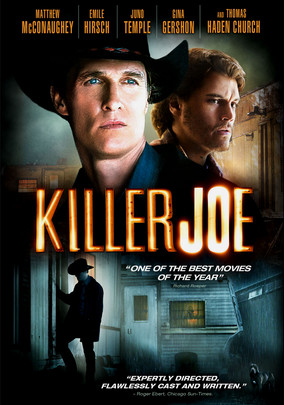
Killer Joe-2011

Killer Joe-2011

Director William Friedkin

Starring Matthew McConaughey

Scott’s Review #450

70209632

Reviewed July 14, 2016

Grade: A-

Killer Joe (2011) is a must-see for any fan of director Quentin Tarantino because this small, independent gem of a feature is worth checking out.

Tarantino’s films influence the film in style, characters, and violence. The mix of violence, humor, wit, and strong writing is stamped on the film.

Surprisingly, despite the influence of another director, William Friedkin directs Killer Joe, and he’s a highly acclaimed filmmaker in his own right.

This talent created classics such as The Exorcist (1973) and The French Connection (1971).

Matthew McConaughey stars in Killer Joe, and he has thankfully graduated from silly, fluffy romantic comedies to smart, delicious roles in independent films of late.

He has become a respected Hollywood actor, and his lengthy nude scene is daring for such an A-list actor.

The film is satirical, without being too campy, and the setting of a suffocating, trailer-trash Texas town is extremely well done.

I loved the violent, gruesome fried chicken dinner table scene most.

I especially liked the overall food references throughout the film, which add even more macabre comedy to this dark (on the surface) film.

Independent Spirit Award Nominations: Best Male Lead-Matthew McConaughey

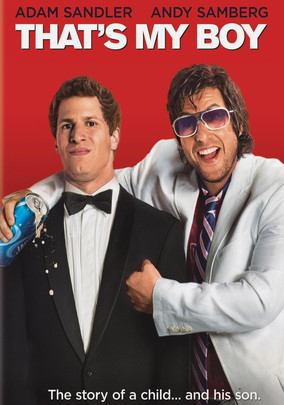
That’s My Boy-2012

That’s My Boy-2012

Director Sean Anders

Starring Adam Sandler, Andy Samberg

Scott’s Review #423

70220030

Reviewed June 19, 2016

Grade: D

That’s My Boy (2012) is an incredibly bad film, yet something strangely kept my attention.

With oodles of stereotypes and either sexist, homophobic, or racist jokes throughout the film, it should have made me angry, but somehow it did not.

This movie was so completely over the top that it couldn’t possibly be taken seriously.

One laughable aspect that I did enjoy was the, albeit odd, cameos by Vanilla Ice and Todd Bridges who seem to have no problem degrading themselves, and the references to the 1980s.

Otherwise, That’s My Boy is pretty rock bottom for filmmaking.

This isn’t a knock on the dumb comedy genre, as other recent similar films are well written (like This is 40-2011).

But alas, That’s My Boy (2012) isn’t one of those films and will not go down in history as such.

True to form, the ending is predictable and uninteresting.

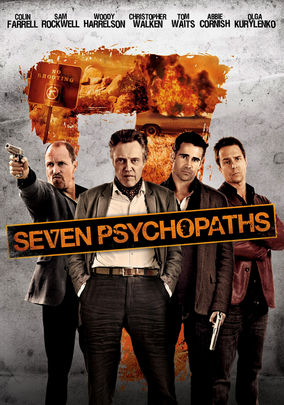
Seven Psychopaths-2012

Seven Psychopaths-2012

Director Martin McDonagh

Starring Colin Farrell, Sam Rockwell

Scott’s Review #422

70241756

Reviewed June 19, 2016

Grade: B-

Seven Psychopaths (2012) is a film that I truly wanted to like more than I did.

It started well with a Quentin Tarantino-style that was appealing, and the film does contain an interesting premise.

Colin Farrell plays the straight man in a cast of offbeat, quirky characters and tries to complete a screenplay entitled “Seven Psychopaths” based on them.

Sounds great, but halfway through the movie, it stopped delivering. I found myself slightly bored.

The film has a unique concept, to be sure, but fizzles during the second act, so much so that it stopped making much sense and lost my interest.

I did admire the creativity, though, and the chemistry among the cast is great, but the overall story in Seven Psychopaths (2012) disappointed me.

Independent Spirit Award Nominations: Best Supporting Male-Sam Rockwell, Best Screenplay

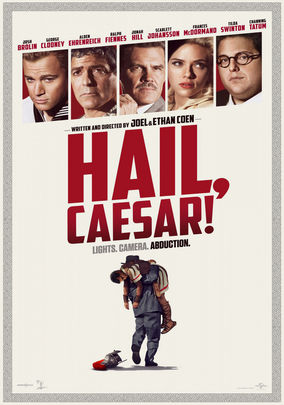
Hail, Caesar!-2016

Hail, Caesar! -2016

Director Ethan Coen, Joel Coen

Starring George Clooney, Channing Tatum

Scott’s Review #377

80074084

Reviewed February 16, 2016

Grade: B+

Hail, Caesar! (2016) is a quirky film created and directed by the Coen Brothers, who are known for offbeat films such as Fargo (1996), No Country for Old Men (2007), and Raising Arizona (1987).

Hail, Caesar is a satirical comedy about the Hollywood film industry during the post-World War II period of the 1950s.

The film features a bevy of current Hollywood talent, including George Clooney, Channing Tatum, Josh Brolin, and Scarlett Johannsen, including singing, dancing, and scandalous matters.

All give fine performances and add humor and wit to the film.

The plot centers on the character of Eddie Mannix (Brolin), a celebrity “fixer” and real-life person who works as an executive for Capitol Pictures and whose primary responsibility is to ensure that famous Hollywood stars remain out of trouble.

The period is 1951, a particularly scandalous time in pictures. One of the biggest stars of the time, Baird Whitlock (Clooney), is suddenly kidnapped and held for ransom while completing a big epic film for the studio.

Mannix must race to keep the crisis out of the news and safely get Whitlock back.

Indeed, there are interesting subplots, including handsome yet talent-less Western actor Hobie Doyle, hired by the studio to appear in a sweeping period piece directed by suave Laurence Laurentz (Ralph Fiennes), and DeeAnna Moran (Johannsen), unmarried and with a “bun in the oven,” determined to keep herself out of the tabloids.

I loved the look of the film, as numerous films occur within it. The 1950s set pieces and designs are exquisite, particularly the period piece set, lavishly designed with classic doors, a staircase, flowers, and a cast dressed to the nines.

It brings back an extravagant time.

The film is a satire, to be sure. Still, it also addresses the serious subject of communism (especially for that period), Russia, and Russian defectors, all involved in a plot to prove a valuable point.

Despite the film being a comedy, this is worth serious consideration. Many Hollywood writers make money for the studios and are rewarded with underwhelming salaries.

The same holds true in Hollywood today.

This point can spill over into other walks of life as well, and the point of the “little man gets screwed” is explored. Communism is also explored throughout the film as the central message- an important message that resonates.

Another interesting tidbit that Hail, Caesar!Mentionss, though only on the surface, is the burgeoning onslaught of television programming.

Suddenly, an increasing number of people were purchasing TVs and avoiding the glamour of films, opting instead for the comfort of their couches.

What a different time it was!

An intriguing, favorite character of mine belongs to Channing Tatum’s portrayal of Burt Gurney, a Gene Kelly-like character famous for singing and dancing numbers. A sizzling sailor dance gives edge and sexuality to the film.

A revealing scandal involving Burt and Laurence is fantastic and delicious.

My favorite scene belongs to Frances McDormand, who shamefully only appears in one scene- quite memorable. As film editor C.C. Calhoun, she diligently shows Mannix film dailies in the hopes of discovering a clue in the disappearance of Whitlock. When her scarf gets caught in the projector, hilarity and grotesqueness ensue.

It is a classic Coen Brothers comedy.

Hail Caesar! (2016) succeeds as a witty, comical throwback to a wonderful time in film history, with a political edge that historians will appreciate and Coen Brothers fans will relish.

Perhaps not their most creative or memorable, but enjoyable all the same.

Oscar Nominations: Best Production Design

Wild Tales-2014

Wild Tales-2014

Director Damián Szifron

Starring Ricardo Darín, Oscar Martínez

Scott’s Review #374

80013561

Reviewed February 5, 2016

Grade: A

What a crazy adventure!

With a well-deserved 2015 Best Foreign Language Film Academy Award nomination, Wild Tales is a Spanish film that weaves together six unique vignettes.

Each tale features conflict between characters and centers on revenge. Each reminds me of a foreign-language version of a Twilight Zone episode, albeit much darker, mixed with a prevalent Quentin Tarantino influence.

A psychopath arranges for all of his enemies to be on the same flight (“Pasternack”), a hit-and-run accident among a wealthy family turns murderous (“The Proposal”), a bomb expert turns his expertise onto a corrupt towing company (“Little Bomb”).

A disturbed bride and groom bizarrely celebrate their wedding reception (“Until Death Do Us Part”), a revenge-driven waitress waits on her rival (“The Rats”) a brutal tale of road rage (“The Strongest”) are the stories told in this fantastic film.

Wild Tales is an outrageous journey, and as each chapter unfolds, we are treated to the unexpected, and each is cleverly written.

Bear in mind that they are independent stories and have nothing to do with each other chronologically or otherwise.

The vignettes also vary vastly. One is as short as ten minutes and another hovers around the forty-minute mark.

Some characters are sympathetic and hateful, which is interesting in itself. The diner in “The Rats” is despised and we wish for his demise.

After “Little Bomb”, the protagonist (or antagonist, depending on how you look at it) receives a hero’s welcome for standing up to corruption.

In other stories, particularly in “The Strongest”, all the characters are unlikeable.

Famed director Pedro Almodovar (The Skin I Live In, Volver)  does not direct Wild Tales but does produce the project, and his imprint is all over it. Almodovar has a thing for the weird and, as in 2013’s I’m So Excited, a thing for passengers in peril inside airplanes.

After “Pasternack,” the first installment, you will experience an “OMG!” moment that wisely sets the tone for the entire movie.

We wait and wonder what can happen next.

My favorite tale is between “The Proposal” and “The Strongest”. I love the class distinction evident in the former as a wealthy father struggles to cover up his family’s dirty deeds initially at any cost necessary, but has he finally had enough?

Will the wealthy once again victimize the poor?

In the latter, class distinction is again explored, as a hotshot in a slick car angers a simple man in a battered car, only to regret his outburst of road rage.

The story turns into a Lord of the Flies situation where it is “kill or be killed”. The clever ending is fantastic, as the officials completely misinterpret the events.

The most bizarre tale is “Until Death Do Us Part”, which is also the finale.  A glorious and festive Jewish wedding reception turns bitter and bloody as the bride’s jealousy is tested. But is the bride the unstable partner, or is the groom? Or perhaps both?

This chapter reminds me of a Quentin Tarantino film (must have been The Bloody Bride), as the tone and the texture are reminiscent of his films (and yes, the blood too!).

Unusual, delightful, and sometimes even deranged, Wild Tales (2014) is a nice reminder that creative, left-of-center projects still get made in modern film and deserve to be experienced and enjoyed.

This isn’t an ordinary, predictable film, which makes it a real gem.

Oscar Nominations: Best Foreign Language Film

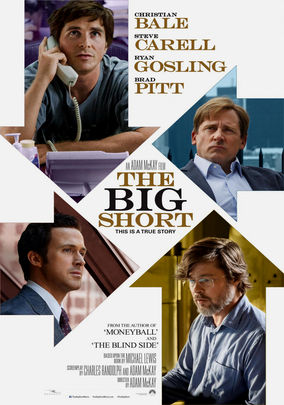
The Big Short-2015

The Big Short-2015

Director Adam McKay

Starring Christian Bale, Steve Carell

Scott’s Review #369

80075560

Reviewed January 10, 2016

Grade: A-

The Big Short (2015) is a confusing film and is its intention and also its genius.

Throughout some of the film, I was uncertain how much I liked it (or got it) and found many of the characters unlikeable, but at the conclusion, I realized that is exactly what the filmmakers intended is a clever tactic and makes The Big Short a success.

On the surface, the film has some humor but a very dark story at its core and left me a bit depressed and terrified at the conclusion.

I am happy that the film is receiving accolades and is the “thinking man’s” hit movie of the season.

To attempt to summarize the film, the film begins in 2005, approximately two years before the financial crisis of 2007-2008.

Eccentric hedge fund manager Michael Burry (Christian Bale), realizes the U.S. housing market is unstable and predicts a crash.

He attempts to profit by betting against the market, a move laughable to all around him, especially the banks who anticipate a windfall at Michael’s expense. Trader and fellow market managers, Jared Vennett and Mark Baum (played by Ryan Gosling and Steve Carrell) catch wind of Michael’s theory and try to get in on the action.

There is a sub-plot involving two younger investors also attempting to profit through the guidance of a retired banker (played by Brad Pitt).

The financial collapse is a tender subject and certainly no laughing matter, especially since it is so recent and affects many people.

The Big Short is touted as a comedy, which is strange. I found the audience didn’t know exactly what to laugh at or when. The film’s “laughs” were cynical, witty, and sometimes wicked. Many people do not get this type of humor.

In real life, people were kicked out of their homes and lost their jobs, pensions, etc. and it was all the result of greed, which The Big Short hammers home.

Several scenes include frat-boy investor/trader types getting rich by enabling almost anyone to afford a new house. Little did these people realize that there was a catch.

The film paints a jaded picture of Wall Street. The rich get richer at the expense of the middle class and the poor. It is an age-old sad tale.

Performance-wise, Carrell and Bale are the standouts. They both play characters who are damaged. Bale’s Michael is socially awkward, and has a false eye, but is also a genius. Carrell’s Mark is angry, grizzled, and is in therapy as a result of his brother’s suicide.

Both actors are great and have developed into worthy, credible acting talents. Worth mentioning, are small, but meaningful roles by Melissa Leo and Marisa Tomei.

The Big Short is shot interestingly, and highly unusual. From time to time, the action will stop and a famed celebrity (Selena Gomez, a world-renowned chef, or a model in a bubble bath) will explain the events, thus far, or give some review.

Also, more than once the actors will turn to the camera and speak directly to the audience. A personal touch that I found effective.

In the end, not much in life has changed, which is the message, and a frightening one. As one character brilliantly puts it “people will go back to blaming the poor and the immigrants”, which is a sad message.

After millions lost everything, not much has changed in the world and The Big Short makes that very clear. The people responsible have gotten away with crime, the banks bailed out, and a new scheme is undoubtedly in place.

It’s a sad world.

The Big Short (2015) is a gritty, harsh look at reality and a terrific film.

Oscar Nominations: 1 win-Best Picture, Best Director-Adam McKay, Best Supporting Actor-Christian Bale, Best Adapted Screenplay (won), Best Film Editing

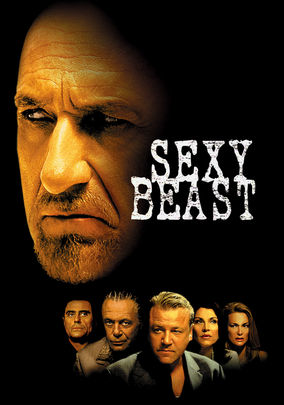
Sexy Beast-2001

Sexy Beast-2001

Director Jonathan Glazer

Starring Ray Winstone, Ben Kingsley

Scott’s Review #286

60020863

Reviewed November 13, 2015

Grade: B+

Sexy Beast is an interesting little indie gem that has garnered quite a cult following, deservedly so, since the year of its release, 2001, and I have recently viewed it for the first time.

In large part, the film belongs to Ben Kingsley, who gives a bravura and frightening performance as a crime lord attempting to convince a retired hitman, now sworn to the straight and narrow, to resurrect his career for one last heist.

The other principal characters are wonderful in their own right, as the film successfully mixes elements of Quentin Tarantino with Ocean’s Eleven- bank heist meets quirkiness, with smart and witty dialogue sprinkled in.

Gary Dove is happily retired and living a life of contentment with his ex-porn-star wife, Deedee, and his best friends, Aitch and Jackie.

Having all been involved in “the biz”, they are long since removed from their respective careers. They now enjoy evening parties of wine and martinis, and days relaxing by the pool in their Spanish villas.

One day, a former criminal associate, Don Logan (Kingsley), who is also a sociopath, arrives to disrupt their peaceful lives and to coordinate a bank heist in London, hoping to lure Gary back into the game.

As Gary and company nervously decline Don Logan’s offer to participate in his sinister plan, a wonderful and important scene unfolds early in the film.

The quartet sits around the dinner table at a swanky Spanish restaurant, anticipating a scrumptious meal.

Jackie reveals that Don has contacted her, and the scene’s tone immediately shifts to dread. All of them both fear and despise Logan.

They agonize over this sudden disruption to their lives, and we, the audience, fear Don Logan before he ever appears on-screen.

What fantastic storytelling.

Kingsley portrays a menacing character and brilliantly so. The character harbors frightening brutality beneath his normally calm demeanor, making the viewer shudder when he appears on-screen.

Lest we forget, Ian McShane also gives a nuanced performance as Teddy Bass, Logan’s right-hand man and wise businessman.

The cat-and-mouse scene towards the end, as Teddy and Gary have an important discussion in a car, is both chilling and integral to the film’s plot.

As Teddy slowly figured out certain events, I was left intensely anticipating his reactions.

The film introduces an intriguing sub-plot involving Don’s long-ago fling with Jackie and subsequent love for her, which adds layers to the plot and the dynamic and tension between Don and Gary.

Upon finishing the film, I loved the foreshadowing it contains. I found myself rewinding the events in my mind, pleasurably so.

From the pool to the young Hispanic kid to the thunderous boulder- all of these elements were crucial to the conclusion and fit like a puzzle.

A dark comedy of sorts, I chuckled after the film at the final reveal involving a double-heart insignia and a pool that gives the villain comeuppance and pleases the viewer.

Having alluded to viewing Sexy Beast (2001) over the years, I am glad that I finally found the time to witness a darkly comical gem that, admittedly, may take repeated viewings to absorb and therefore fully “get”, and I look forward to doing just that.

Oscar Nominations: Best Supporting Actor-Ben Kingsley

Independent Spirit Award Nominations: Best Foreign Film

The Visit-2015

The Visit-2015

Director M. Night Shyamalan

Starring Olivia DeJonge, Ed Oxenbould, Kathryn Hahn

Scott’s Review #276

80045505

Reviewed September 24, 2015

Grade: B

A modern-day thriller/horror/comedy hybrid (admittedly it is tough to classify this film as exclusive horror with the dreaded and watered-down PG-13 rating) directed by M. Night Shyamalan, The Visit (2015) has its moments of genuine scary frights and surprises.

It contains a wonderful twist at the end but suffers from some clichés, one severely unlikeable character, and suspensions of disbelief.

Bringing grandparents to the forefront of the film is a clever idea, albeit, stereotypically, The Visit is a decent watch, but laden with a few misfires.

Paula (Kathryn Hahn), a single mother on the outs with her parents for some years, but recently reunited, sends her two children- Rebecca and Tyler, for a week, to stay at their grandparent’s farmhouse, whom they have never met.

At the kids prompting, Paula decides to go on a romantic vacation with her new boyfriend.

Naturally, when the kids arrive at Grandma and Grandpa’s strange events happen. The children are warned never to go into the basement, not to leave their bedrooms after nine-thirty pm, plus the grandparents have a creepy, weird, look to them.

Rebecca and Tyler, in true modern horror fashion, arguably contrived at this point, record all the events (think Paranormal Activity from 2007) and begin to realize there is something rotten in the state of Denmark.

The Visit contains positives and negatives.

The mother and the two kids live in New Jersey and the grandparents in Pennsylvania. That is one state away, yet Rebecca and Tyler have never met, seen photographs, spoken to their grandparents on the phone, not even to discuss the impending visit.

The kids constantly use Skype to communicate with Mom throughout their visit, but doesn’t occur to anyone to chat with the grandparents before embarking on a week-long visit to introduce themselves.

This is a convenient plot manipulation.

Another negative is the film contains one of the most annoying characters in recent memory, Tyler. I am baffled as to whether this was intentional or unintentional.

The kid is about twelve years old and is written as dumb as possible. There are at least three to four endless scenes of him rapping, mostly to the video camera, that I found to be an utter waste of valuable screen time and lends nothing to the plot.

Filler and for a ninety-minute movie, unnecessary.

In the end, though, I got the last laugh, as the character, a germophobe, has his face smeared with human excrement.

The third negative I observed is the constant “old people jokes”, which bordered on the offensive after a while. The grandparent’s unusual behavior was blamed numerous times on their age as if all elderly people were scatterbrained, daffy, or just downright strange.

Many seniors are intelligent, useful, and lively so there was a feeling of disrespect towards the elderly that I could not shake. The film could have portrayed the grandparents with more dignity than it chose to.

Now for some positives, the compelling twist at the end of the film I did not see coming and I loved that about The Visit.

Rarely is the audience surprised anymore, especially in the horror genre, and I was. Having replayed the film in my mind the plot makes perfect sense, but is a positive in the heart of the climax.

On the subject of the conclusion, The Visit has a unique slow-motion/dreamlike feel and an odd, classical-type musical score playing throughout the ending that adds much depth to the typical thriller-type music heard in most genre films.

The oven scene inevitably viewed by all during early trailers for The Visit is excellent. When Grandma convinces Rebecca to crawl completely inside her oven to clean it we know this will not end well.

Additionally, the look and texture of the setting, an old deserted farmhouse in a small, rural town in the middle of nowhere has a feeling of being trapped.

This successfully provides a scary backdrop for the film and all the elements scream horror.

The Visit (2015) has genuine scares and will make the viewer jump, and perhaps even shriek. That is what good horror does yet I am still unsure if this film is more horror or comedy.

Unintentionally so, perhaps.

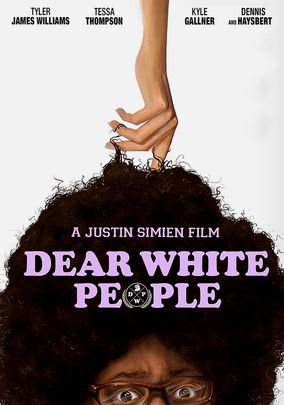
Dear White People-2014

Dear White People-2014

Director Justin Simien

Starring Tessa Thompson

Scott’s Review #274

70298948

Reviewed September 18, 2015

Grade: B+

Dear White People (2014) is a highly creative, independent satire that begs to be watched for its message about racism today, homophobia, and class distinctions.

Set at an Ivy League college and written tongue-in-cheek, but also with a direct message from newly discovered director Justin Simien, it is a meaningful gem that challenges audiences to think, be entertained, and occasionally chuckle at the wit and comical lines.

Set in the present day- assuming 2013 or 2014- and well beyond the Civil Rights era, the film features a hip, sharp look and a myriad of characters, all with differing perspectives, all Caucasian or black in racial identity.

All the characters attend the affluent, sophisticated Winchester University, a mostly white, conservative school with a small community of black students who curiously all seem to live in the same dorm house.

The Dean is a Black man (played by Dennis Haysbert).

Sam White (Tessa Thompson) is a rebellious female student of mixed race who runs a radio show entitled “Dear White People”, which challenges the current state of racism in America, specifically at Winchester University.

Supporting characters include Lionel Higgins, a gay, bookish student with an enormous afro, excluded from almost all the sub-groups. Lionel is intrigued by Sam’s radio show.

Other characters include Coco- an attractive black girl with typically “white” mannerisms and friends, who try to fit in with the white culture. Troy, a very handsome black student (who tries to act “white”), dates a white girl (who tries to act “black”).

Finally, the film features Kirk, a white student whose father is the school president, who values an old-style way of thinking.

Shockingly, Kirk hosts a blackface party, which sparks major controversy at the school and drives much of the film’s drama.

The main theme is race, but different characters have different viewpoints on it, and the film explores all of them, which makes it unique and interesting.

Sam, for example, is a true advocate for racial equality and constantly challenges white people’s motivations and actions, blatantly so.

Coco, on the other hand, is resistant to being stereotyped as a woman of color and, in one scene, is incorrectly assumed to be from the hood by a reality television producer she is auditioning for.

She is envious of white people and the advantages they have, even going so far as to have straight hair and blue contact lenses.

Then we have Lionel, who is both gay and black, and considered an outcast. He fits in with no group and, curiously, seems okay being his own person.

What is unique and compelling about Dear White People is that it brings up a controversial issue, mixes it with satire, humorously, but presents compelling arguments against stereotypes, also bringing those stereotypes center stage, which most films avoid like the plague.

One black character is frustrated that, in their mind, most black people are content watching dumb black comedies, thereby supporting a negative racial stereotype.

One interesting aspect regarding the score is the use of lily-white classic film music- such as Barry Lyndon (1975)- the most lily-white of lily-white films (British and Irish).

Famous film director Quentin Tarantino is called out as being a racist director.

What wonderful irony!

Dear White People (2014) is a witty, intelligent slice of inventive filmmaking worth seeing, if only for its controversial subject of inequality and racism, which is too often forgotten.

An indie treat for those inclined to think a little.

Independent Spirit Award Nominations: 1 win-Best First Screenplay (won), Best First Feature

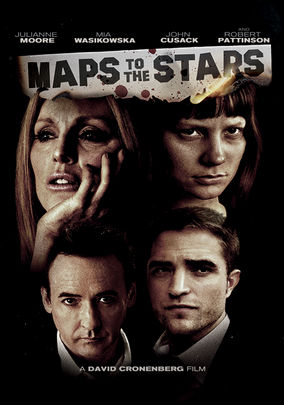
Maps to the Stars-2014

Maps to the Stars- 2014

Director David Cronenberg

Starring Julianne Moore, Mia Wasikowska

Scott’s Review #266

80013474

Reviewed August 14, 2015

Grade: A-

Maps to the Stars (2014) is a bizarre, unpleasant film that is as dark and perverse as it is provocative and fascinating to observe and ponder.

It feels more like an independent art film than a blockbuster Hollywood project, and it was made by an arguably mainstream director, David Cronenberg (Crash-1996, The Fly-1986).

I am surprised it could be made on a large-scale budget given its negative portrayal of actors and celebrity types, specifically troublesome starlets and child stars.

One must be wary of biting the hand that feeds.

Maps to the Stars is a film where almost all the central characters are unlikable- difficult, unstable, self-absorbed, or all of the above.

The subject matter is ugly but fascinating to me.

The wealthy and glamorous are interesting and, at times, the film is like a Greek tragedy containing Shakespearean elements- think Romeo and Juliet in an incestuous way times two.

You have to watch this film to see what I mean. Hint: it contains the ick factor.

The plot centers on a Hollywood family in which the son is a famous child star and the primary breadwinner. They are the Weiss family- all struggling to either find success or hang on to it, all the while each of them is neurotic.

The father, Dr. Samuel Weiss, played by John Cusack, is a TV psychologist, hired by Havannah Legrand (Julianne Moore), a highly self-centered, aging actress, struggling to land a coveted role-playing her mother.

Her mother was a young actress in her day, who tragically died in a fire. Havannah despises her due to claimed childhood abuse.

Cristina Weiss (Olivia Williams) is Samuel’s wife. This controlling, ambitious woman strives to get the most money out of her son Benjie, a Justin Bieber-type character with a troubled streak.

Rounding out the family is Agatha Weiss, a troubled teenager, sent away for years after giving her brother pills and setting her parents’ house on fire.

Though not directly related to the Weiss family, Havannah and the limo driver, Jerome Fontana (Robert Pattinson), become heavily involved as events unfold.

It reminded me of a myriad of other influential film directors in peculiar ways.

I noticed elements of David Lynch’s Mulholland Drive (1992), for instance, in a dark, clever mood and the obvious setting of Los Angeles- even the score is similar during parts of the film, as the moody, monotone sounds play in the background.

The Ice Storm (1997), American Beauty (1999), and Magnolia (1997) also sprang to mind for their dark, strange worlds (Magnolia) and their inclusion of the dysfunctional-family element (The Ice Storm and American Beauty).

Furthermore, to a lesser extent, I saw some Robert Altman ingrained in Maps to the Stars.

These aspects are a major reason I loved the film so much.

A prevalent theme throughout Maps to the Stars is one of burning- a victim of burning, a fire set, a character setting oneself on fire. Some characters see dead people. Havannah regularly sees her dead mother.

Benjie sees a young girl whom he visited in the hospital before she died; her last wish was to meet the big star.

She suffered from non-Hodgkin’s lymphoma, which he foolishly thought was AIDS. He sees her in visions and tries to strangle her, instead of strangling an innocent living person.

The film is a weird trip, and the viewer dreads an oncoming dark moment.

When Benjie carelessly plays with a gun that he assumes is unloaded, we know trouble will occur. He is showing off at an actor friend’s party along with equally obnoxious starlets while talking about poop, all selfish and wanting to party.

When Havannah belittles Agatha, her assistant, we see Agatha’s past anger come back into play as she slowly unravels with rage- Havannah is unaware of Agatha’s knowledge of her betrayal.

One small gripe is the continued use of gross toilet talk in multiple scenes, including a raunchy discussion of a fan buying a well-known actor’s waste for thousands of dollars.

What was Cronenberg’s motivation for this? This was a silly, tasteless, unnecessary element of an otherwise great film.

Maps of the Stars (2014) is dirty and ugly but is also a quirky treasure about bad people in Hollywood. Unpleasant characters whom I could not take my eyes off of.

A brilliant film that delves into Hollywood shallowness and madness and does it in a daring, twisted, wonderful sort of way.

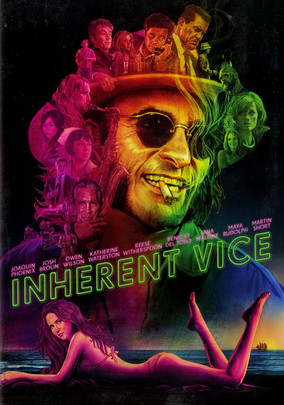
Inherent Vice-2014

Inherent Vice-2014

Director Paul Thomas Anderson

Starring Joaquin Phoenix

Scott’s Review #255

80013545

Reviewed July 7, 2015

Grade: A-

Inherent Vice (2014) is a bizarre, detective-film-noir-type experience set in Los Angeles in 1970.

Directed by the superb Paul Thomas Anderson (Boogie Nights, 1997; Magnolia, 1999), the film is a marvel of weirdness and incoherence.

Fans of a straightforward plot will not be thrilled, but Anderson fans won’t be disappointed. It has a complex plot, but the payoff is grand, and it’s a thinking-man’s film.

The protagonist is Larry “Doc” Sportello (Joaquin Phoenix), a stoner private detective whom his mysterious ex-girlfriend, Shasta, contacts. She is worried about attempts by her boyfriend’s ex-wife and new lover to kidnap him and have him committed.

Mickey, Shasta’s boyfriend, is a wealthy real-estate developer.

Doc is also hired by two other people- one a former heroin addict looking for her missing husband, and the other a former convict looking for a prison mate who owes him money and is a former henchman of Mickey’s.

All of the stories intersect, and such oddities as a peculiar massage parlor and a ship named the Golden Fang come into play throughout.

The intersecting stories lead to the revelation of a drug ring. I had little idea what was happening, but I was still enthralled.

Inherent Vice has an unpredictability that is so pleasing and captivating. Joaquin Phoenix is compelling as Doc, a damaged character with an unclear past.

When Doc is, by all accounts, framed for the murder of a convict and interrogated by the police, we wonder what history he has with them and what led him to branch out on his own as a private investigator.

Detective “Bigfoot” Bjornsen, wonderfully played by Josh Brolin, is a rival of Doc’s, though it is unclear why. “Bigfoot” is frequently seen with chocolate-covered phallic objects in his mouth and is married to a severe, overbearing woman.

Most characters are peculiar and have strange nuances, yet are never fully fleshed out, instead remaining curious and thought-provoking.

Reese Witherspoon, Benicio Del Toro, and Owen Wilson appear in small yet pivotal roles.

Quite reminiscent of Roman Polanski’s Chinatown (1974) and Robert Altman’s The Long Goodbye (1973), in both the California setting and the plodding, slow-paced, magnificent storytelling, Inherent Vice is a confusing gem, but by all means a gem worth seeing and reveling in the intrigue.

Just don’t try to make too much sense of it all.

Oscar Nominations: Best Adapted Screenplay, Best Costume Design

Independent Spirit Award Nominations: 1 win-Robert Altman Award (won)

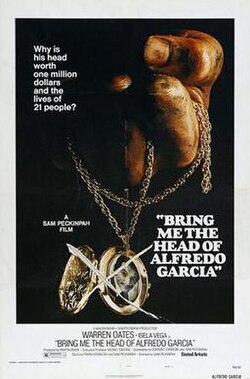
Bring Me the Head of Alfredo Garcia-1974

Bring Me the Head of Alfredo Garcia-1974

Director Sam Peckinpah

Starring Warren Oates, Isela Vega

Scott’s Review #222

Reviewed February 20, 2015

Grade: B+

Bring Me the Head of Alfredo Garcia is a 1974 Mexican cult action film directed by Sam Peckinpah that influenced famed modern movie director Quentin Tarantino in multiple ways.

The film itself is violent, bloody, and traditionally Peckinpah in tone and look, similar to his other films (Straw Dogs from 1971 and The Wild Bunch from 1967).

The premise of the film is intriguing- a powerful man known simply as “The Boss” turns furious and places a bounty on the head of the man who impregnated his daughter, whom he, by the way, tortures to garner this information out of.

He offers the enormous sum of 1 million dollars to the person who can “bring him the head of Alfredo Garcia”.

From this point, the action centers mostly on Bennie, a retired military officer intrigued by the bounty on offer.

Bennie, along with his prostitute girlfriend, Elita, traverses the lands of Mexico in search of Alfredo Garcia, whether he is already dead or still alive, which is a mysterious and fun element of the film.

I have a tough time taking the film too seriously as much as I enjoyed it- it seems an action farce and, without giving too much away, the scenes involving the carrying of a severed head, arguably the lead character, are as much comical as ghastly.

The illustrious lighting is a major focal point, especially during the outdoor scenes and specifically the nighttime desert scenes, when two bikers almost rape Elita. The moonlight radiates onscreen.

Elita’s character is a fascinating to me. On the one hand, she is an aging prostitute madly in love with Bennie and intrigued by a life with him, living off their spoils. However, she almost enjoys the sexual experience with one of the bikers, played wonderfully by Kris Kristofferson, despite being roughed up by him.

The scene, while certainly violent, is, in a way, almost tender as the biker and Elita realize their attraction for one another. It’s a surreal scene and has almost a sense of clarity for both characters. Are they in lust?

Peckinpah women are traditionally not treated well, but Elita is an exception.

The Tarantino influence is undeniable- the mixture of humor amid violence- a severed head being treated as a comical prop, is immeasurable in comparison to later Tarantino films such as the Kill Bill chapters.

Daring and pure genius, the film has a dark tone but does not take itself too seriously, avoiding melodrama or overwroughtness.

It is only a film and has fun with that fact. It tries to be nothing more and embraces being bizarre.

Tarantino films are like Peckinpah films, just made 20-30 years apart.

Bring Me the Head of Alfredo Garcia has evolved into a cult classic after flopping commercially and critically in 1974.

How wonderful when a gem is rediscovered and laden with influence, in this case as much stylistically as otherwise.

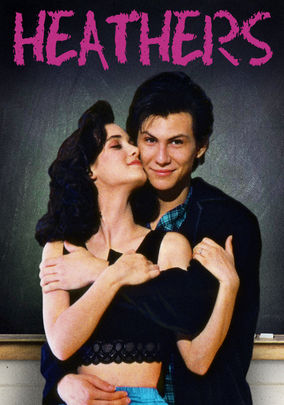
Heathers-1989

Heathers-1989

Director Michael Lehman

Starring Winona Ryder, Christian Slater

Scott’s Review #207

580335

Reviewed December 25, 2014

Grade: B

My gut tells me that Heathers was quite controversial and influential upon release in 1989 and has sustained a cult following that continues to this day, 2014.

Having seen the film only once in 2014, I found it good, but it now suffers from a slightly dated look and feel. Still, it is a brave and unique expression of creativity.

It is a film that sends the message that the popular kids are bad and that the meek shall inherit the earth.

The uncool kids will rise.

To summarize the plot, Heathers is told from the perspective of high school student Veronica Sawyer, played by a young Winona Ryder. She is a second-tier popular girl- she is lieutenant to the generals, if you will.

The school is run by three popular girls named Heather. As popular as they are, they are also despised and feared by the other students, but carry great influence.

They enjoy playing cruel jokes on other students and ridiculing anyone beneath them.

A rebellious male student, J.D., played by Christian Slater, befriends Veronica, and they hatch a plan to destroy the popular clique, including another pair of popular jocks.

Shannon Doherty plays the second-in-command, Heather.

The tone of Heather’s is surreal and dream-like. For example, in the opening scene, all three Heathers- along with Veronica- are on a perfectly manicured lawn in the suburbs playing croquet.

The hierarchy is established when Veronica is buried up to her neck and becomes the target of the croquet balls, making her, without question, the lowest of the four girls.

Whether or not this is a dream or real is unclear.

The film is well-written and edgy. It reminds me, at times, of The Ice Storm (1997) and American Beauty (1999), which Heathers preceded and are, in my opinion, superior.

Heathers is a teen angst film and quite dark at times- the various deaths are committed viciously (drain cleaner poisoning, concocting a setup for the jocks to appear to be having a love affair with each other, and then passionately shooting each other), but with sly wit and humor.

Veronica is, at heart, a good girl, albeit misguided and heavily influenced by J.D., but her intentions of having a fair, just school society are noble. The character is likable.

All the parents are hilariously portrayed as buffoons and have no idea of the darkness that exists in their kids’ lives- Veronica’s parents in particular.

Fearing that Veronica has committed or soon will attempt suicide, they fret that it is their fault stemming from childhood negligence; however, their concern has more to do with themselves than with Veronica’s well-being.

Small gripes about the film are the 1980s-style outfits and hairstyles, which, since they were made in the 1980s, are not a particular fault of the film, though it does contain a slightly dated feel while watching in the present.

Also, Christian Slater mimicking Jack Nicholson’s voice is odd- was this a decision by the film or by the actor himself? Either way, the imitation is both distracting and confusing. What is the point?

The ending of the film is a happy and satisfying conclusion- however, different from the dark tone of the rest of the movie- rumor has it that the studio had some influence in toning down the original ending.

1989 was not a stellar year for film, so Heathers deserves major props for thinking outside the box and doing something dark and creative.

Brave, inventive, and unique, Heathers is a cult classic worth a look.

Independent Spirit Award Nominees: 1 win-Best Female Lead-Winona Ryder, Best Screenplay, Best First Feature (won)

Birdman-2014

Birdman-2014

Director Alejandro G. Iñárritu

Starring Michael Keaton

Scott’s Review #190

80000643

Reviewed November 6, 2014

Grade: A

Birdman (2014) is a unique art film that, happily, has garnered major exposure and publicity because a movie like this risks receiving praise and notice only from the art-house crowd.

The film’s star, Michael Keaton, portrays Riggan Thomson, a former action-hero superstar from the 1990s, made famous for the “Birdman” character he created.

Having made sequels to the film, his career has since dried up, and he hopes to establish credibility and prove himself a real actor by writing, directing, and starring in his play.

The film is set in and around the Broadway theater in New York City.

As opening night approaches, he struggles to pull everything together and mount a successful production while dealing with an injured, terrible actor; a difficult actor; his insecurities; and a miserable theatre critic destined to ruin his big chance.

To make matters worse, his daughter Sam, played by Emma Stone, is a recovering drug addict who hangs around the theatre distracting actors with her charm and good looks.

Naomi Watts and Edward Norton play Leslie and Mike, other cast members in the production. Watts is sympathetic as the emotional actress with a heart of gold who finally realizes her dream of performing on Broadway.

Norton, outstanding as Mike, is blunt yet socially awkward and can only perform truthfully on stage.

Keaton is a marvel as he plays a dark, vulnerable man. He hates and wants to shed his ridiculous movie persona of yesteryear and secretly cringes when fans recognize him.

He uses a voice in his head when he played “Birdman” years earlier.

The film’s uniqueness lies in what seems like one long take, as the action rarely stops.

The film belongs to Keaton, who wonderfully relays vulnerability, pain, and fear within an outward persona of bravery and masculinity.

Throughout the film I wondered, is Riggan suicidal? What is real and what is imagined? Are certain scenes foreshadowing later events?

The film has much depth.

One marvels at how art imitates life: is Keaton portraying himself? He was the original Batman in the successful superhero franchise beginning in 1989, and his career tanked shortly after.

Birdman is a comeback film for him, and he is devastatingly good.

Norton’s character Mike impressed me. He is blunt, flawed, scared, and addicted to the stage.

Stone has one particularly brilliant scene where she lambasts her father and later, with regret, tells him the world has moved on without him and that he is irrelevant, like everyone else. It is a powerful scene.

In another, Riggan is locked outside the theater during the performance, clad only in his underwear. How on earth will he get back on stage and finish the show?

The quick jabs at current Hollywood superhero stars, especially Robert Downey Jr., are deliciously naughty.

It is impossible to predict what comes next, and the film feels very New York theater-style.

Keaton’s run-in with a theater critic in a cocktail bar is the best scene in the film, as the critic’s vicious critique of “You’re a celebrity, not an actor” resonates with both pain and tremendous anger for Riggan.

Riggan is a sensitive, struggling man, and Keaton shows his vulnerability beautifully in every scene.

Oscar Nominations: 4 wins-Best Picture (won), Best Director-Alejandro G. Iñárritu (won), Best Actor-Michael Keaton, Best Supporting Actor-Edward Norton, Best Supporting Actress-Emma Stone, Best Original Screenplay (won), Best Sound Editing, Best Sound Mixing, Best Cinematography (won)

Independent Spirit Award Nominations: 3 wins-Best Feature (won), Best Director-Alejandro G. Inarritu, Best Male Lead-Michael Keaton (won), Best Supporting Male-Edward Norton, Best Supporting Female-Emma Stone, Best Cinematography (won)

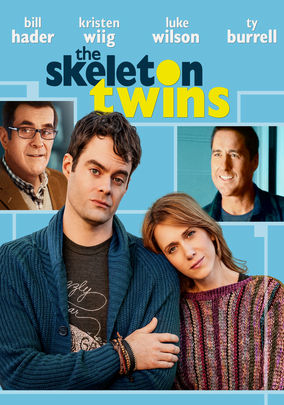
The Skeleton Twins-2014

The Skeleton Twins-2014

Director Craig Johnson

Starring Bill Hader, Kristen Wiig

Scott’s Review #179

70299272

Reviewed October 2, 2014

Grade: A-

The Skeleton Twins (2014) is a tremendous, character-driven, family drama that focuses on character development rather than standard plot devices.

The film stars Bill Hader and Kristen Wiig from Saturday Night Live, but don’t be fooled into thinking The Skeleton Twins is a light comedy; it is not.

There are laugh-out-loud scenes throughout, but this is a serious story about depression, suicide, and anger, and at times, very dark.

Wiig plays Maggie, a woman in her thirties who seemingly has it all.

Lance, her handsome, loyal husband, played by Luke Wilson, adores her. She has a stable job as a dental hygienist and lives a quiet, quaint life in upstate New York- seemingly enjoying a happy middle-class existence.

Hader plays Milo, Maggie’s estranged twin brother, who lives in Los Angeles and is a struggling actor with no agent, reduced to waiting tables in a lousy restaurant.

Presumably, just out of a relationship, Milo attempts suicide by slitting his wrists.

Maggie flies to Los Angeles to visit Milo in the hospital and invites him to recuperate with Maggie and Lance in New York.

Having grown up as best friends, they reconnect once Milo moves in.

The Skeleton Twins is so jam-packed with interesting stories, both current and backstory, that it becomes effortless to fall in love with Maggie and Milo.

When the twins were fourteen, their father committed suicide by jumping off a bridge, a father they were very connected to.

Their mother, played by Joanna Gleason, was a horrible mother growing up and, in present times, is a hippie involved in an interracial marriage. She awkwardly visits Maggie and Milo and attempts to heal them through meditation.

Other character history is revealed.

Milo, who is gay, was molested by his teacher when he was fifteen years old, a teacher he is still in love with, and is wonderfully played against type by Ty Burrell.

Maggie has carried on affairs with various men throughout her marriage to Lance and is secretly using birth control pills to avoid becoming pregnant. Lance happily thinks they are trying to conceive.

Milo and Maggie are incredibly layered and well-written. They are both damaged from a difficult childhood, suffer from depression, and now only have each other.

Scenes in The Skeleton Twins range from hysterical- a scene in a dentist’s office with laughing gas rolling on the floor and a lip-syncing scene to the hit “Nothing’s Gonna Stop Us Now”- to wonderful.

Dramatic and shocking scenes where Milo and Maggie go at each other with gusto, dredging up childhood wounds, are brilliantly acted by Wiig and Hader.

The chemistry between Wiig and Hader is incredible, and both actors successfully balance hysterical comedy with dark drama, which impressed me.

Luke Wilson is great in support as the straight-laced, nice guy married to Maggie.

A slight criticism: the character of Milo is written as stereotypically gay- man-hungry and hardly a man’s man. He has trouble clearing brush because, presumably, he is too girly to handle the task.

I wish more films would avoid these stereotypes.

Ty Burrell’s character, Rich, is so complex that I wish they’d explored him more: as a gay man, how can he work with his girlfriend while harboring so many secrets? Is he still in love with Milo despite repeatedly pushing him away?

I would have loved more depth to this complex character.

After the film, I felt the filmmakers didn’t go as dark as they could have, and audiences will know what I mean after the final scene.

There is no fairy tale ending either.

Milo and Maggie are damaged goods who only have each other, making for a dynamic, character-rich film.

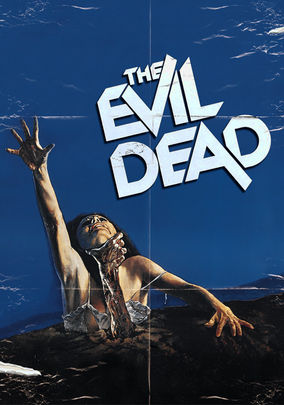
The Evil Dead-1981

The Evil Dead-1981

Director Sam Raimi

Starring Bruce Campbell

Scott’s Review #144

484369

Reviewed July 31, 2014

Grade: B+

For its time, The Evil Dead (1981) was a unique, creative, visually impressive horror classic, far different from the wave of mediocre slasher films of the era.

In the story, five teenagers head to a remote cabin in Tennessee for spring break.

From the beginning of the trip, there is trouble: they are almost killed in a head-on collision, their car almost falls off a rickety bridge, and, finally, at the cabin, they stumble upon a haunted book.

From this point, even stranger events unfold, and the haunting, crazy action begins.

Director Sam Raimi does an excellent job from a visual standpoint- the camera racing through the woods from the demon’s point of view is very effective and scary.

The ambiance is creepy- fog, mist, smoke, and the lighting is great.

The film has all the elements- darkness, a remote cabin, and woods coming alive for a genuinely scary horror flick.

Yes, the film seems a bit campy to watch now, but at the time, the special effects were brilliant.

My personal favorite is the long shot of the twitching, dismembered body and the various, hysterically funny chattering and gibberish among the demons.

The ending of the film is very well done.

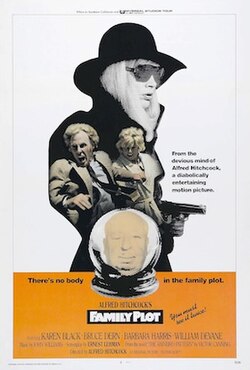
Family Plot-1976

Family Plot-1976

Director Alfred Hitchcock

Starring Bruce Dern, Karen Black, Barbara Harris

Scott’s Review #99

Reviewed July 9, 2014

Grade: B

Family Plot is sadly Alfred Hitchcock’s final film, made in 1976.

It is certainly not one of his greats, but it is not bad either, and it is a fitting way for a viewer to conclude his career.

The film is a jewel caper and has a vastly different feel from many of his other, earlier films. It has a slick quality to it and is reminiscent of a 1970s television movie, which is not a knock.

It feels more television-like than film, perhaps because it stars notable television stars, William Devane and Katherine Helman.

It also features some big film stars of the time- Karen Black, Bruce Dern, and Barbara Harris.

The film is a departure from other Hitchcock films in that it is a macabre comedy. It is a tongue-in-cheek story of a fake psychic (Harris) and her boyfriend (Dern) who become involved in a search for a missing heir, a jewel heist, and a murder.

All of the characters intersect as the film moves along, and it contains some nice Hitchcock elements- the speeding car with no brakes down a hilly road is pure Hitchcock.

For me, the film has a slightly melancholy feel, as it is, sadly, Hitchcock’s final farewell.

Golden Globe Nominations: Best Actress-Comedy or Musical-Barbara Harris

Blue Jasmine-2013

Blue Jasmine-2013

Director Woody Allen

Starring Cate Blanchett

Scott’s Review #92

70270362

Reviewed July 3, 2014

Grade: A

Blue Jasmine (2013) is Woody Allen’s latest offering and one of his best since the 1970s.

I have heard from several people who aren’t typical Woody Allen fans but loved this film, and I wonder why.

My theory is that Cate Blanchett, who stars as neurotic Jasmine, is the heart and soul of this movie.

Allen’s films usually center on neurotic characters, and this film is no different.

Set primarily in San Francisco, it shows how Jasmine has lost all her money because of bad investments by her ex-husband (played in flashbacks by Alec Baldwin).

She is a socialite used to a life of excess and extravagance.

Now Jasmine is reduced to making a clean start by rooming with her blue-collar sister, played by Sally Hawkins, and trying to scrape by.

Jasmine struggles to find success and the means to survive.

The film is hysterical, heartbreaking, and even a downer at moments.

With the help of pills and martinis, Jasmine is snobbish and ego-centric, yet the audience falls in love with her and roots for her.

She is high-class yet broke. She keeps up appearances, and her wit, usually at the expense of others, never falters.

Blanchett is responsible for the love of this character and, thankfully, won the Best Actress Oscar for her portrayal.

The dialogue is sharp, witty, and filled with laugh-out-loud moments. Thanks to much of it taking place in flashbacks, the audience sees Jasmine’s life as it once was, having everything and then some, then back to her current reality, back and forth.

This is a wise choice, showing both of her lives.

Blue Jasmine (2013) is one of Woody Allen’s best.

Oscar Nominations: 1 win-Best Actress-Cate Blanchett (won), Best Supporting Actress-Sally Hawkins, Best Original Screenplay

Independent Spirit Award Nominations: 1 win-Best Female Lead-Cate Blanchett (won), Best Supporting Female-Sally Hawkins, Best Screenplay

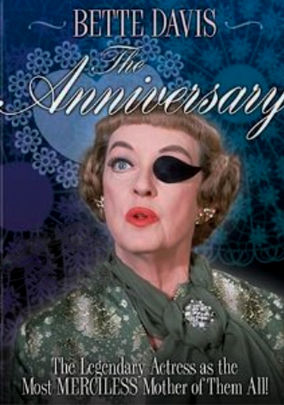
The Anniversary-1968

The Anniversary-1968

Director Roy Ward Baker

Starring Bette Davis

Scott’s Review #52

70047116

Reviewed June 21, 2014

Grade: B+

The Anniversary (1968) is a British film based on a play of the same name.

The story centers on the Taggert family reunion, celebrating the anniversary of the matriarch (Bette Davis) and the deceased patriarch.

The film is set like a play, and most of the action takes place inside the Taggert family mansion.

The film is all Davis, and she gives a deliciously over-the-top performance as a vicious mother intent on controlling her son’s life and terrorizing their wives or significant others with cutting remarks and insults.

Davis must have had fun with this role, as her storied career was clearly on the downturn, and this role allowed her to let loose.

One must wonder if Davis chewed up the actors in the cast as much as the characters- rumor has it she was pretty intimidating to her fellow actors and a terror to work with, which adds to the macabre enjoyment.

Her physical appearance, with an eye patch, wig, cigarette, and bright red lipstick, all work in her favor. Her maniacal laugh is incredibly campy and wonderful to watch.

Bette Davis is one of the greats, and The Anniversary (1968) serves as a late-career romp that is fun to watch.

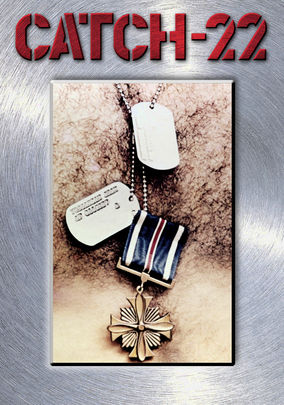
Catch-22-1970

Catch-22-1970

Director Mike Nichols

Starring Alan Arkin, Bob Balaban, Martin Balsam

Scott’s Review #41

60020883

Reviewed June 18, 2014

Grade: B

Catch-22 (1970) is a satirical film similar in subject matter to Robert Altman’s M*A*S*H, released the same year, though admittedly, I have not seen that film yet.

It does remind me of Dr. Strangelove (1964) and Slaughterhouse-Five (1972) in their anti-war theme.

This film is well-made and certainly effectively portrays the outrageousness and lunacy of war.

Most of the characters are portrayed as crazy, albeit in a darkly humorous, over-the-top way.

Alan Arkin is wonderful as the protagonist trying to find a way out of the island of Italy, where he and his fellow pilots are stationed.

At times, the film feels disjointed and hard to follow, which I understand the novel is too (I have not read the entire book), but Catch-22’s (1970) message comes across loud and clear.

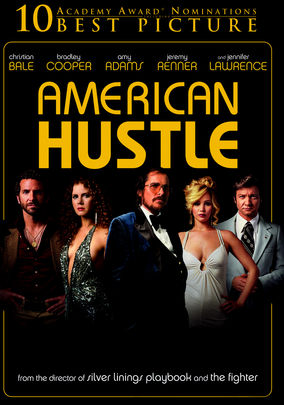
American Hustle-2013

American Hustle-2013

Director David O. Russell

Starring Christian Bale, Amy Adams

Scott’s Review #39

70281530

Reviewed June 18, 2014

Grade: A

Having seen American Hustle (2013) a month ago and finally getting around to reviewing it, it’s a perfect time, as it a reaped a slew of Oscar nominations; more people will undoubtedly be seeing it in the weeks ahead.

I loved this film.

Some were underwhelmed, but I found it quite authentic and stylish.

I loved the 1970’s period and felt the hairstyles, clothes, and props were spot on.

I also felt the film had great acting and, though I’m not a fan, Jennifer Lawrence enraptured me.

The same with Cooper, Bale, and Adams, who all deserve their Oscar nods.

I found it stylistically similar to Boogie Nights, a 1997 masterpiece directed by Paul Thomas Anderson.

The 1970s musical rock score was perfect.

The subject matter of political corruption and cat-and-mouse intrigue was effective and resounding.

Oscar Nominations: Best Picture, Best Director-David O. Russell, Best Actor-Christian Bale, Best Actress-Amy Adams, Best Supporting Actor-Bradley Cooper, Best Supporting Actress-Jennifer Lawrence, Best Original Screenplay, Best Production Design, Best Costume Design, Best Film Editing