Category Archives: Robert DoQui

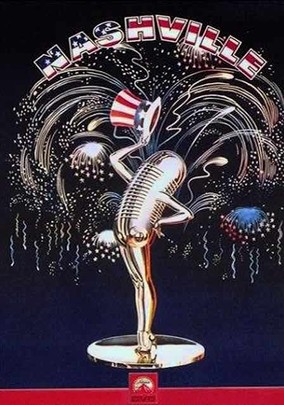
Nashville-1975

Nashville-1975

Director Robert Altman

Starring Lily Tomlin, Keith Carradine, Karen Black

Top 250 Films #3

Scott’s Review #47
60001541

Reviewed June 19, 2014

Grade: A

Nashville (1975)  is a brilliant film.

I have found that with each subsequent viewing, it creeps higher and higher on my list of favorite movies of all time.

The style is unique (largely improvised) and epitomizes the film’s creative freedom in the 1970s.

Director Robert Altman lets his actors express themselves, even allowing them to write their own songs; the overlapping dialogue creates a natural feel as the viewer watches the cast of twenty-four principals intersect over five days at a political rally/country music festival.

It is pure Robert Altman at his finest.

Nashville is a satire of the political arena of the early 1970s, particularly the Vietnam conflict and its politicians.

The film certainly questions and challenges the government with an ironic patriotic setting (Nashville).

The country music industry was in uproar upon the film’s initial release. It is a layered film that can be discussed and appreciated, with every character cared for.

I cannot adequately describe the multitude of nuances in each scene that are noticed over time.

Each character, even those with limited screen time, is vital to the story, as are the political elements —the questions of war, policies, and so on.

The chaotic bits and individual storylines come together at the end, and many background events are exciting to watch and note throughout each viewing.

With each experience, the audience will notice more and more. I certainly do.

Lily Tomlin, for example, plays Linnea, a haggard mother of deaf children with a supportive husband, a woman who, on the surface, is heroic, yet a complex character. She is bored with her life and falls in love with a young musician despite the guilt and repercussions.

The musician in question is Tom Frank, played by Keith Carradine. Handsome and self-absorbed, he arrives in Nashville to dump his bandmates in hopes of a solo career and beds many willing females.

He also lashes out at a soldier at the airport, saying, “Kill anyone lately?”

Despite his unlikable character, Carradine delivers one of the film’s most beautiful performances when he sings “I’m Easy”.

Several of the female characters assume he is singing the song for them, but who is he truly singing it for — if anyone?

Another character to analyze is Barbara Jean, played by Ronee Blakley. A frail yet very successful country singer, she is in and out of hospitals as she frets that her replacement singer will steal her thunder.

Her insecurities rise to the surface.

Insecurity is a common theme among the characters. Many of them are unsure, afraid, or lack confidence in their musical talent, relationships, or themselves.

These are only three examples of the twenty-four richly layered characters- some ambitious, some falling apart, others meandering through life.

Many songs throughout were written and performed by the actors themselves.

Nashville (1975) is storytelling and filmmaking at its best. A creation by Altman that is deservedly admired, revered, and heralded as a significant influence.

It is studied in film schools as it should be.

Oscar Nominations: 1 win-Best Picture, Best Director-Robert Altman, Best Supporting Actress-Ronee Blakley, Lily Tomlin, Best Original Song-“I’m Easy” (won)
Short Cuts-1993

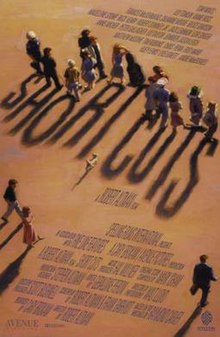
Short Cuts-1993

Director Robert Altman

Starring Tim Robbins, Julianne Moore, Lily Tomlin

Top 250 Films #123

Scott’s Review #1,400

Reviewed September 20, 2023

Grade: A

I am such a fan of acclaimed director Robert Altman because he typically features an enormous cast with richly composed characters all serving a story purpose. Frequently, with much character development and investment.

Short Cuts (1993) is a latter-day Altman offering set in Los Angeles, California, the City of Angels that is nearly as good as my all-time favorite of his, Nashville made in 1975.

Similarities burst to the screen with twenty-two principal characters to Nashville’s twenty-four. Their lives frequently intersect and the fun is peeling back the layers of their lives and discovering who is connected to whom.

Comparisons to 1992’s The Player (also Altman) and 1999’s Magnolia, directed by Paul Thomas Anderson can also be made for obvious Los Angeles setting reasons.

But, Magnolia is much weirder than Short Cuts.

The irony is that most characters are anything but angels as they suffer from insecurities, deaths, infidelity, and various shenanigans as they attempt to get through California life amid an earthquake and a fleet of helicopters spraying for medflies.

Altman based the film on the nine short stories and a poem by Raymond Carver.

Some of the tales include a waitress Doreen (Lily) who is married to an alcoholic limo driver (Tom Waits) who accidentally runs into a boy with her car. Soon after walking away, the child lapses into a coma. While at the hospital, the boy’s grandfather (Jack Lemmon) tells his son, Howard (Bruce Davison), about his past affairs.

Meanwhile, a baker (Lyle Lovett) starts harassing the family when they fail to pick up the boy’s birthday cake.

Dr. Ralph Wyman (Matthew Modine) and his wife, Marian (Moore), meet Stuart Kane (Fred Ward), an unemployed salesman, and Claire Kane (Anne Archer), a party clown, at a cello concert.

They impulsively decide to have a Sunday dinner date. seemingly having nothing in common.

Meanwhile, Marian’s sister, Sherri (Madeleine Stowe), is married to a cheating cop named Gene (Tim Robbins), who is having an affair with Betty Weathers (Frances McDormand), while Betty is divorcing one of the helicopter pilots, Stormy (Peter Gallagher).

There are other stories and connections to round out the fabulous cast.

The juicy and dramatic storylines play out like a terrific story arc on Days of Our Lives or As the World Turns with some needed comedic elements to balance things out.

Anyone who knows Altman will salivate with the name recognition among the cast most notably Tomlin and Robbins. Actors frequently chomped at the bit to appear knowing that he was an actor’s director.

This means he allowed his cast open range to create dialogue appropriate for their characters.

There’s no better example than when Jack Lemmon tells a story in the film. His improv and free dialogue are a dream to watch and a lesson in good and natural acting.

Despite the enormous cast everyone has something of quality to do. Nobody is languishing on the back burner with throwaway scenes or unimportant activities. All characters connect to others in some way.

Fans who fancy Los Angeles both in film and in real life with its bursting sunshine and cheery perception will revel in the down and dirty sub texture of Short Cuts.

The fun is getting there.

Some characters are wealthy but most struggle with day-to-day routine so the film contains a harsh realism. They try to find some shreds of happiness wherever they can get them.

Like real life which is part of the mastery of Short Cuts. The audience can relate to the characters because we all know people like them which makes the film a beautiful and treasured experience.

Or some may even be like us. The writing is brilliant and the characters are true to form.

One day I’ll create a list of my Top Ten Robert Altman films and I bet Short Cuts (1993) lands in the Top Five.

Oscar Nominations: Best Director-Robert Altman

Independent Spirit Award Nominations: 3 wins-Best Feature (won), Best Director-Robert Altman (won), Best Screenplay (won), Best Supporting Actress-Julianne Moore

The Cincinnati Kid-1965

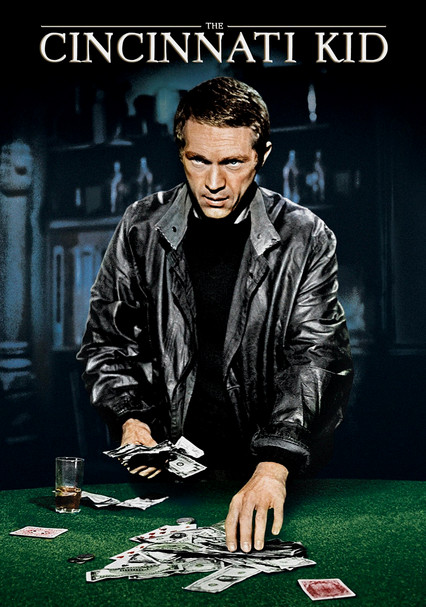
The Cincinnati Kid-1965

Director Norman Jewison

Starring Steve McQueen, Karl Malden

Scott’s Review #1,138

Reviewed April 29, 2021

Grade: B

I suppose anyone really into poker playing or similar casino games might be partial to The Cincinnati Kid (1965), especially if they are a die-hard Steve McQueen fan.

But for those with no interest in the ‘sport’ and who think that McQueen is a royal douche who received a modicum of film success, the film is a marginally decent effort.

For those who don’t know, Steve McQueen, the actor and not the British filmmaker, was nicknamed the “King of Cool” and played the anti-hero in most of his films.

His heyday was from the mid-1960s through the early 1970s, and he garnered success by repeatedly playing the same role. He was notorious for insisting his hair was perfect, being selfish, and being a royal prick.

He died of cancer in 1980.

An earlier film of his, The Cincinnati Kid (1965), is set in Depression-era New Orleans, though the film’s severe 1960s look makes it almost impossible to determine that it’s not the 1960s.

Eric Stoner (Steve McQueen) is a cocky poker player nicknamed the Cincinnati Kid who challenges longtime champ Lancey “The Man” Howard (Edward G. Robinson) to a showdown at the table, where a war of persistence and luck ensues.

To add energy, Rip Torn is cast as Slade, a villainous man who seeks revenge against Howard and tries to help Stoner best him.

In addition to the inevitable final poker game, Stoner is immersed in a romance with good girl Christian Rudd (Tuesday Weld) as he tries unsuccessfully to fend off the seductive advances of his best friend Shooter’s (Karl Malden) girlfriend (Ann-Margret), who is also a close friend of Christian.

Romance and double-dealing are in the air in this film.

The main draw is McQueen because he is charismatic and carries the by-the-numbers film. The story point appears to be a battle between youth (Stoner) and seasoned wisdom (Howard), but other than the fantastic finale involving (what else!) a tense game of cards, I didn’t find the primary story experience all too interesting.

There are other impressive aspects, however, such as the trimmings.

Realistic is how the actors handle the playing cards, speak the game terminology, and smoke a fat cigar, adding some good authenticity to the film. The New Orleans flavor provides some culture, and many black actors appear in minor roles that at least give some representation of the actual southern city.

Despite the talented cast, only McQueen shines.

Weld and Ann-Margret are incredibly one-note characters and opposites (good girl and bad girl) with little development. Malden is the moral compass of the film but otherwise has little importance to do.

Interestingly, Norman Jewison replaced original director Sam Peckinpah shortly after filming began. He described The Cincinnati Kid as his “ugly duckling” film that enabled him to transition from the light films he previously made and take on more serious films and subjects.

Cinema lovers know he directed the 1971s Fiddler on the Roof, a completely different film.

I wonder if Jewison’s heart was in this film or if he did the best he could with a subject that was not close to his heart.

Knowing Peckinpah’s brilliant work, I wonder if he would have made The Cincinnati Kid darker and more violent.

One scene that turns my stomach is a gruesome and violent cock-fighting scene. Any animal cruelty makes my blood boil, so I turned my head and refused to watch the scene or the group of merrymakers sitting around cheering the bloodbath.

The Cincinnati Kid (1965) is an enjoyable watch for poker lovers or fans of Steve McQueen. It is also not bad for casual fans.

Though I have not seen it, I understand that The Hustler (1961) is a similar-themed and better-made film.