Tag Archives: Musical

La Vie en Rose-2007

La Vie en Rose-2007

Director Olivier Dahan

Starring Marion Cotillard

Scott’s Review #790

Reviewed July 18, 2018

Grade: A

As a true fan of French actress Marion Cotillard, La Vie en Rose (2007) is the tremendously talented lady’s finest role to date- and I would venture to say one of the best in film history.

She immerses herself into the pivotal role of singer Edith Piaf and churns out a breathtaking performance.

Besides the vehicle to showcase her acting chops, the film as a whole is lovely, offering the poignant life story of the troubled star, adding enough French zest to offer more than just a biography.

The way that the plot is constructed is quite interesting as the story of Edith Piaf is told in a non-linear fashion. The highly complex singer’s biography is recounted first telling elements of her childhood and concluding with events occurring shortly before her death.

Her childhood is difficult so she is raised by her grandmother in a bordello and discovered on the streets to begin her meteoric rise to acclaim. The events of the film are known to be fairly accurate making the song-stresses life story awe-inspiring.

The visual aspects and cinematography elements of La Vie en Rose are lovely.  With soft, muted tones, the film is rich with culture and has a wonderful French way about it.

Since the story commences in 1918 the period is fraught with a rich history including World War II and a lavish trip to New York City where Edit performs.

To say nothing of the lavish Parisian settings, the “look” of the film is enough reason to watch in wonderment.

Enough praise cannot be reaped upon Cotillard as Piaf and as enjoyable and profound as the film itself is, the casting of the French actress is both perfect and unimaginable to think of anyone else in the role.

As treasured a performance as Cotillard gives, the filmmakers wisely choose to leave Piaf’s actual voice in the musical numbers. Anyone else mimicking her would be unimaginable and frankly insulting. And an imitator would not have served the film well.

Regardless of the voice-overs, Cotillard delivers such a flawless and brave performance that it makes the film what it is. Piaf was known as a very difficult woman to deal with both personally and professionally, though there were many sympathetic qualities to her given her tough life.

Cotillard’s facial expressions and mannerisms perfectly mimic the star’s qualities so much so that the actress seemingly becomes the singer. The actress deservedly won the Best Actress Academy Award for her layered performance.

The final scene of the film is both profound and ghastly. A very ill Edith, looking haggard, clown-like with heavy makeup, decides to take the stage for the final time, aware that she is dying.

Refusing to cancel her show, she performs her well-known number, “Non, Je ne regrette rien”. She then exits the stage in a frail manner and dies shortly thereafter. She was the consummate professional and star until the moment of her death. This particular scene is a wonderful culmination of the film.

La Vie en Rose (2007) solely judged as a biopic is a very good piece of filmmaking that tells a graceful, sometimes moving story of incredible talent.

With a performance such as Cotillard’s the film goes to another level and the performance becomes the main event. The emotions and the characteristics the actress undertakes are astounding and go down as one of the finest depictions in cinematic history.

Oscar Nominations: 2 wins-Best Actress-Marion Cotillard (won), Best Makeup (won), Best Costume Design

The Lure-2015

The Lure-2015

Director Agnieszka Smoczynska

Starring Michalina Olszanska, Marta Mazurek

Scott’s Review #741

Reviewed April 12, 2018

Grade: B

2015’s The Lure is as odd a film as one can imagine- dreamlike and sometimes even absurd. The story mixes a strange blend of the horror genre with musical numbers, but I would wobble to the side of gothic horror for classification purposes.

Oddly enough, some of the choreography numbers are reminiscent of 2016’s La La Land, but that is where the comparisons between those films end as the former musical numbers dark and the latter cheery.

A tough film to review, The Lure is rather disjointed, but kudos for creativity and unpredictability.

Bravely directed by a female (more kudos!),  Agnieszka Smoczynska, a Polish filmmaker, the story is a cross between an autobiography of her troubled youth, and a retelling of the Hans Christian Anderson fairy tale, The Little Mermaid.

Besides the obvious Polish language content the film does not appear overly Polish- it might have been nice to be exposed to some of the cultures.

The film immediately gets off to a mysterious start as two teenage girls, later revealed to be mermaids/vampires named Silver and Golden, emerge from the water and follow a rock band back to a tacky nightclub where the band regularly performs for patrons there for the strippers.

It is sometime in the 1980s.

The girls perform music and strip, becoming an act called “The Lure”. While Golden continues to thirst for blood, Silver falls in love with a bassist causing her to yearn to be a real girl, and subsequently has surgery to remove her tail and grow real-girl legs.

As part of the fairy tale, if her intended marries someone else Silver will turn into sea foam and die.

The story is perplexing and difficult to follow, yet something is mesmerizing and escapist about it.

I wonder if Smoczynska intended the film to make total sense or left it open to a bit of interpretation. The film is a mix of fairy tales and real-life experiences.

Some portions appear to be rather dream-like, for example, the nightclub singer has thoughts or visions involving Silver and Golden, but what is unclear is whether she is experiencing reality or imagination.

Props must be given to The Lure for originality alone. The film stirs up multiple genres and creates something truly unique.

In particular, the characters of Silver and Golden are transfixing, at times they are sweet and kind, then fangs come out at a moment’s notice revealing evil and a carnivorous bloodthirst revealing a grotesque, haunting countenance.

How Smoczynska created these characters is awe-inspiring and the up-and-coming director must have a wealth of imagination deep within.

On the other hand, the plot never really comes together enough to grab hold of the viewer in a riveting way.

While Silver and Golden are clever characters and we feel some empathy for them, I also never felt completely gripped by them either. I felt no connection to any of the supporting characters either.

Any attempt at figuring out the plot will only leave the viewer frustrated. I would advise taking The Lure as an experience, not a puzzle to unravel.

The Lure (2015) has elements of immeasurable fascination and an enormous creative edge. Attempts to create a unique fable meshed with a disturbing central theme are successful.

The overall story is way too confusing for the average user and ultimately ends up dragging towards the final portion with the final climax a wee bit unsatisfying.

A brave and inventive attempt at achieving something fresh and imaginative in cinema.

Carmen Jones-1954

Carmen Jones-1954

Director Otto Preminger

Starring Dorothy Dandridge, Harry Belafonte

Scott’s Review #736

Reviewed April 3, 2018

Grade: B+

It was pretty taboo at the time of release (1954) because it featured an all-black cast with no white members. Carmen Jones is to be celebrated for contribution to film history for this groundbreaking feat alone.

Directed by Otto Preminger (who ironically is Caucasian),  the film features legendary actress Dorothy Dandridge in a Marilyn Monroe-style performance worthy of the talents of the stars.

The film is a musical with an inevitable tragedy at the conclusion.

The 1954 feature is based on a 1943 stage production of the same name, based on the music of the famous 1875 Georges Bizet production of Carmen. These facets add to the richness of the film as it is layered with good history, and the well-known tragic elements make the conclusion unsurprising.

Brazen and beautiful, Carmen is a seductress who works in a parachute factory in North Carolina during World War II. After trading fists with a co-worker, Carmen is jailed and assigned handsome Corporal Joe (Harry Belafonte) to escort her to the authorities.

While Carmen is not shy about pursuing the young man, his fiancee, virginal Cindy Lou, fumes and schemes to keep her man.

The result is a triangle. Carmen and Joe eventually fall madly in love, leaving poor Cindy Lou behind, but their love faces hurdles.

The somewhat lighthearted first portion of the film, with coquettish humor mixed in, is offset by a much darker path the film takes. As Carmen and Joe finally profess their love and share a night of passion, she leaves him in the middle of the night, unable to endure prison time.

This results in Joe being imprisoned as the couple ultimately cannot stay away from one another despite repeated obstacles to their happiness. An additional character, a boxer named Husky, with designs on Carmen, is introduced, complicating matters.

In sad form, much like the opera Carmen, the final scene is devastating and startling as Joe treads down a dark and gloomy path of destruction. The character of Joe is nuanced- at first, a “nice guy”; the character is an example of complexity and what a man will do for love.

The viewer wonders what will become of Joe and how he could risk his life performing an act in the heat of passion.

In 1954, what a profound and fantastic role for a female, let alone a black female. Typically cast in roles such as maids, servers, or even less glamorous parts, how wonderful for Dandridge to capture a challenging role of this caliber.

She is a vixen as she sinks her teeth into the meaty and flirtatious Carmen. Dandridge’s pizzazz, flare, and singing and dancing performances made her a star, and she is forever known as a groundbreaking talent.

There cannot be enough said about the importance of casting all-black actors in Carmen Jones. Monumental, of course, given the time. The result is a film of significance to black culture, showing that they no longer needed to appear in “white films” as supporting players but could carry a movie on their own.

How profound and remarkable this was!

My only criticism of the film is undoubtedly related to the progress made for black actors and characters, though there is still plenty more work.

At times, the filming feels a shade dated (presently, there are more great roles for black actors) and has a slightly grainy look.

Some of the supporting characters’ acting is also not the strongest, but as Carmen Jones is a historical film, liberties must be taken.

Thanks to the genius and the funding of Preminger, who needed to produce the film independently due to lack of interest, the result is a film that has gone down in history as worthy, edgy, and open-minded.

Wisely casting talented stars with great pipes, the film is a solid success.

Oscar Nominations: Best Actress-Dorothy Dandridge, Best Scoring of a Musical Picture

Cinderella-1950

Cinderella-1950

Director Clyde Geronimi, Hamilton Luske, Wilfred Jackson

Voices Ilene Woods, Eleanor Audley

Scott’s Review #731

Reviewed March 7, 2018

Grade: A-

Cinderella is a lovely 1950 Walt Disney production that rejuvenated the animated film genre after a sluggish 1940s.

The film glistens with goodness and bright colors, offering a charming fairy tale-based story based on hope and “happily ever after.”

Cinderella is enchanting on all levels.

The story is told mainly in narration, especially to explain its history. We learn that Cinderella’s parents have both died, leaving her an orphan who lives with her wicked stepmother, Lady Tremaine.

Her stepsisters, Drizella and Anastasia, are jealous of Cinderella’s natural beauty. She is regularly abused and berated, and forced to work as a servant in a rundown chateau, tending to the trio’s needs and demands.

Despite her unhappy life, Cinderella makes the most of it and befriends mice, birds, and many other animals she meets, singing and dancing merrily.

Life chugs along for our heroine until one day, the King of the royal palace decides to throw a lavish Ball for his son, the Prince, to find his soulmate and marry her finally. The King requests that all eligible unmarried women attend.

As Cinderella excitedly requests to go, Lady Tremaine cruelly grants her request, provided all of her work is done. She has no intention of making things easy on her.

In proper fairy tale form, the Prince falls madly in love with Cinderella while facing many hurdles on the pair’s way to happiness.

Given the time when Cinderella was made (1950), the timing was excellent for a lavish production, to say nothing of the fantasy that many young girls undoubtedly experienced a handsome prince rescuing them, whisking them away from a life of doldrums to undying love.

Female empowerment had not yet taken hold during the 1950s, so the male-rescuing female message was palpable and appealing to many. Dated not the least bit, a story of true love overcoming hardship can always find an audience.

The production’s colors and animations are lush and powerful, oozing perfection and dripping with fantastic elements of romance and spectacular wealth.

An example of this is the lavish ball at the palace. As Cinderella’s Fairy Godmother transforms the young girl and her transportation into a magical fantasy of horses, gowns, and carriages, the ball is pretty extravagant in its beauty.

Engaging, with a bit of humor mixed in, are the supporting characters of the three evil ladies and the bumbling Grand Duke- interestingly voiced by the same person as the King. As Drizella and Anastasia attempt to impress Prince Charming, their awkward and haphazard mannerisms and scowls perfectly counterbalance the charm and grace of Cinderella in a sometimes comical fashion.

Comparisons must be made to 1937’s masterpiece, Snow White and the Seven Dwarfs. Both could easily be companion films, watched sequentially to better study and marvel at their similarities.

Snow White and Cinderella are purely “good” characters, singing lovely tunes, embracing animal friends and various forms of wildlife- they are both more or less “saved” by men.

In the present day, instead of being offensive or “old-fashioned,” it remains enchanting and a celebration of true love.

Cinderella is a treasure to be enjoyed after all these years. It never ages or becomes dated or irrelevant, which is a true testament to the power of film. Carving a story of values, honesty, hard work, and good payoff, generations of fans can appreciate this everlasting treasure.

Oscar Nominations: Best Scoring of a Musical Picture, Best Original Song-“Bibbidi-Bobbidi-Boo,” Best Sound Recording

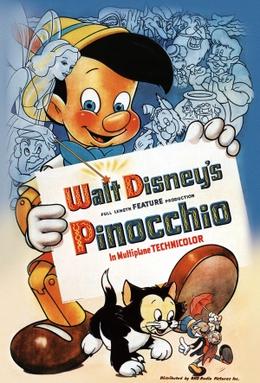
Pinocchio-1940

Pinocchio-1940

Director Ben Sharpsteen, Hamilton Luske

Voices Cliff Edwards, Dickie Jones

Scott’s Review #723

Reviewed February 1, 2018

Grade: B+

As a follow-up to the marvelous 1937 Walt Disney production of Snow White and the Seven Dwarfs, 1940’s Pinocchio is a darling tale of a wooden puppet longing to become a real boy.

The film vastly differs from its predecessor in that the protagonist is male, and the thematic elements are Italian (based on an Italian children’s novel). Still, similarly, Pinocchio is a touching experience and is magical and whimsical, telling a humanistic story about wishes and dreams coming true.

As narrated by a fantastic, cheerful little insect named Jiminy Cricket, an elderly woodcarver named Geppetto creates a wooden puppet named Pinocchio and wishes upon a star for the puppet to become a little boy.

A mysterious yet lovely Blue Fairy arrives one night and tells Pinocchio that he must be brave and truthful for the desired effect to occur- Jiminy serves as his conscience. Throughout the remainder of the film, Pinocchio’s morals are tested by unsavory characters who attempt to steer him down a dark path.

Certainly, Pinocchio is intended to be a message film for little boys and girls everywhere about the importance of honesty and truthfulness. However, some comic elements are mixed to avoid making the experience too dark or scary.

This is evidenced by the legendary way Pinocchio’s nose grows longer with each fib he tells. The film preaches a valuable lesson, which is why the adorable story holds up so well in the present.

Some values never go out of flavor.

In superb Disney form, Pinocchio features an emotional tearjerker of a scene towards the end of the film as Geppetto mourns the loss of his son.

The scene is sweet and touching and will fill even the hardest of hearts with feelings- regardless of age. In this way, Pinocchio becomes even more of a timeless treasure and is a film that the entire family, generations upon generations, can enjoy together.

Films of this nature are so important as a bonding form.

Enough praise cannot be given to Pinocchio’s incredibly effective theme song, “When You Wish Upon A Star,” belted out by Jiminy Cricket. The resounding tune is as emotional as it is timeless and bold. It is belted out at just the ideal time during the film and is still associated with the legendary film.

In fact, over the years, the song has become synonymous with the Walt Disney Company itself.

One slight oddity of the film is that Geppetto—clearly at the grandfather’s age—is the father of a young boy. This might have been perceived as sweet in 1940, but in 2018, it may have been perceived as a bit creepy or at least unusual.

Still, this is a minor flaw that can be easily overlooked. I have come to assume Geppetto is the grandfather in the story.

For those in the mood for a charming, classic animated Disney picture, 1940s Pinocchio is a mesmerizing and creative experience. At its core, it is a timeless benevolent lesson in goodness and purity.

Pinocchio is artistically filmed and told, and it can be enjoyed by anyone, regardless of age or gender.

Oscar Nominations: 2 wins Best Original Score (won), Best Original Song-“When You Wish Upon a Star” (won)

Sleeping Beauty-1959

Sleeping Beauty-1959

Director Clyde Geronimi, Les Clark, Wolfgang Reitherman, Eric Larson

Voices Mary Costa, Bill Shirley

Scott’s Review #721

Reviewed January 30, 2018

Grade: B+

Sleeping Beauty is a 1959 musical fantasy film and Walt Disney’s sixteenth animated production. By this point, Disney was a master at crafting wonderful and magical productions, and Sleeping Beauty was a solid work.

However, due to mixed reviews and poor box office performance, Disney films were retired for many years. The effort achieves a lighter tone than heavies like Dumbo and Bambi but is enjoyable nonetheless.

In a magical land of royalty, fairies, and both good and evil, King Stefan and Queen Leah, the benevolent leaders of the land, finally conceive their first child, Princess Aurora.

After proclaiming a memorable holiday and celebration, a festive scene turns dark when an evil and powerful fairy, Maleficent, jealous with rage, puts a curse on the innocent baby.

Thanks to a kindly fairy, the curse of death on Aurora’s sixteenth birthday is slightly blocked in favor of Aurora falling into a deep sleep- only to be awakened by true love’s kiss.

The characters in Sleeping Beauty are pretty lovely and, overall, sweet and kind. My favorite characters are the three fairies: Flora, Fauna, and Merryweather. Each has her personality but wields special magical powers—all good-natured.

While Flora and Fauna possess song and beauty, which they bestow on Aurora, Merryweather arguably saves the young girl’s life. The three women are also instrumental in being the unsung heroes of the film, while the handsome Prince Phillip gets star billing.

Compared to many other Disney films, Sleeping Beauty is quite the show. It is lush with colors as bright as stars, and the sparkles that drizzle from the fairies’ wands ooze magic that will make children giggle with delight and adults marvel with adoration.

In this regard, Sleeping Beauty is extravagant and the most expensive Disney production to date.

Maleficent is a fantastic villain, and when she finally turns into a lethal, fire-breathing dragon, this is sure to scare youngsters watching the film for the first time. Sure to mention, Maleficent’s web of thorns that she uses to surround Aurora’s castle is a spectacle in and of itself.

Upon watching the film, I continue to draw comparisons to another of Walt Disney’s famous films, 1937’s Beautiful Snow White and the Seven Dwarfs, as both films resemble each other in a sheer mass of ways.

The beautiful and innocent main female characters, both in peril from devious, older women, clearly jealous of Snow White’s and Aurora’s goodness, are apparent.

Besides, both contain dashing princes who come to the rescue in just the nick of time and kindly little things who assist in the drama.

Perhaps Sleeping Beauty’s similarities to Snow White and the Seven Dwarfs—in fact, the pair would be perfect to watch together on a rainy Saturday afternoon—led me to conclude that Snow White is the more charming and grabbing of the two films.

Also, Sleeping Beauty does not triumph in the important humanistic lessons that the Dumbo and Bambi (my favorites of all the Disney films) have.

Sleeping Beauty contains elements of an empathetic, feel-good animated experience. A King, a Queen, a Prince, a vicious villain, giddy fairies, and a beautiful heroine are all represented in this delicate and satisfying Disney venture- not the greatest in the pack, but assuredly a good time.

Oscar Nominations: Best Scoring of a Musical Picture

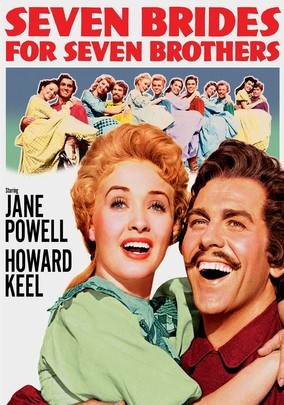
Seven Brides For Seven Brothers-1954

Seven Brides For Seven Brothers-1954

Director Stanley Donen

Starring Howard Keel, Jane Powell

Scott’s Review #711

Reviewed January 7, 2018

Grade: B-

Seven Brides For Seven Brothers (1954) is a musical and another in a string of Metro-Goldwyn-Meyer productions, ever so present during the “Golden Age of Hollywood.”

The songs are not quite as memorable as similar musicals of the day, and the film has a sexist slant that is jarring by today’s gender-equal standards. Given the time that the film was made and the timed setting of the mid-nineteenth century, however, things were very different, and the film does contain one semi-strong female character.

Seven Brides for Seven Brothers is a lovely film, but in the present day, it is pretty dated and irrelevant—little more than an ode to yesteryear.

Adam Pompitee (Howard Keel), is a dashing, rugged man, living in the Oregon Territory in 1850. He struts into town and proclaims his desire for a wife- presumably to cook and clean for him and his six younger brothers, all living together in a cabin in the rural mountains.

When he falls head over heels for tavern worker Milly (Jane Powell), they impulsively marry, but she is disappointed to learn she will be caring for seven men- not one. Milly then plots to marry off the unruly bunch to local girls.

Throughout the film, characters partake in song and merriment as the hi-jinks play out.

At its core, Seven Brides For Seven Brothers is meant to be a lighthearted romp, and it succeeds at that. It contains a strong romantic angle, and the message of finding one’s soulmate is palpable- Milly is the sensible female counterpart to erratic Adam, and there is chemistry between the actors.

Milly is strong-willed and eventually puts her foot down, but still accepts her role as the domestic and the caretaker.

Fun is how each of the brothers finds the one girl in town meant for him as the duo pairs off in unison. This is a cute aspect of the film- and perhaps a film such as this one is not entirely meant to be over-analyzed.

Humorous, if not slightly overdone,  is the luscious red hair that each Pontipee brother has- dyed hair or wigs were used as needed.

The film succeeds when it sticks to the song and dancing numbers, which are far more entertaining than the storyline. MGM used actors who were classically trained singers or dancers, giving the film a more authentic choreography.

Given the fourteen principal characters in the production, this must have been a beast to achieve without making things look ridiculous. Keel, as the main character Adam, is a professional singer who has appeared in several musicals, such as Kiss Me Kate and Showboat. Powell, as Milly, holds her own with a gorgeous singing voice and has appeared in other musicals.

Still, Seven Brides For Seven Brothers contains a bothersome sexist story, and women are treated more as objects for men to conquer rather than real people with feelings or emotions. The overall implication within the film is that women are desperate to get married and should be flattered to be chosen by any man.

This is readily apparent when the brothers accost the girls from their homes and take them unwillingly to the cabin, where, predictably, the women succumb to the men’s desires and fall in love with them.

A film to be taken with a grain of salt and a trip back to olden times, Seven Brides For Seven Brothers is a dated picture, but it is fun. It contains grand production numbers such as “Lonesome Polecat,” “When You’re In Love,” and “June Bride.”

These songs are light and airy and a high point of the film.

For those seeking a liberal-minded affair, this film will disappoint, as the film is very conservative with traditional male/female roles and expectations, as much as one could imagine.

Oscar Nominations: 1 win-Best Motion Picture, Best Screenplay, Best Scoring of a Musical Picture (won), Best Cinematography, Color, Best Film Editing

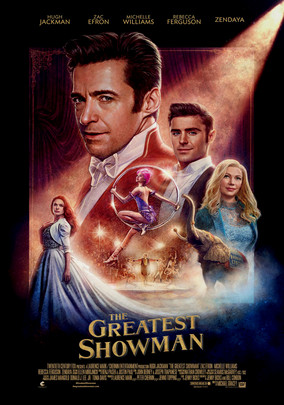
The Greatest Showman-2017

The Greatest Showman-2017

Director Michael Gracey

Starring Hugh Jackman, Michelle Williams, Zac Efron

Scott’s Review #707

Reviewed December 26, 2017

Grade: A-

A pure musical escapist film, The Greatest Showman (2017) holds a dear and relevant message. It elicits hope for outcasts everywhere by leading a story of acceptance and perseverance in the feel-good film of 2017.

Hugh Jackman leads the pack, starring as P.T. Barnum, a man struggling to create an entertainment show with live and unusual performers- deemed “freaks” in New York in those days- the 1800s.

The film is quite joyful and light, with many cheery musical numbers sure to leave audience members humming along for hours after the conclusion.

The Greatest Showman is a rags-to-riches story and a thoroughly enjoyable film.

Jackman is as charismatic and likable as Barnum, the entrepreneur and showman we meet as a young boy, the son of a poor tailor. He becomes enamored with wealthy young Charity (Michelle Williams), and the two eventually marry, much to the chagrin of her pompous parents.

Barnum and Charity initially struggle to make ends meet as they begin to raise a family, but eventually, they find success and wealth when the show succeeds.

The film chronicles Barnum’s rise to fame and the trials and tribulations (romantic, business) for several years, mainly through musical numbers.

Zac Efron is excellent as Barnum’s eventual business partner, Phillip Carlyle.

Director Michael Gracey’s supporting characters are creative, if not typical, mainstays of carnivals and circuses everywhere—the bearded lady, the fat man, and a man covered in tattoos are featured prominently.

It is unclear whether these characters existed or were created simply for plot purposes. Still, rumor has it that The Greatest Showman has taken great liberties with the factual accuracy of the real P.T. Barnum and his escapades.

This would be bothersome if not for this film’s wonderful message- acceptance and celebrating diversity.

Indeed, this is important for young people everywhere in today’s chaotic world.

Those expecting anything more substance than a cheery and bright holiday slice of enjoyment may be disappointed—some mainstream critics did not rate this film highly. Still, I am okay with a bit of escapist adventure on occasion.

The message throughout The Greatest Showman is quite good.

The best musical number is the show-stopping and anthemic “This Is Me,” Keala Settle is fabulous as the bearded lady who leads this important song. The number is empowering and energetic.

The chemistry between Jackman and Williams is not remarkable, but it is not altogether vacant either. Instead, it is simply decent and not the film’s strongest point. I sense better chemistry between Jackman and Rebecca Ferguson as grand Swedish singer Jenny Lind.

However, their “romance” is unfulfilled, and we will need to imagine its possibilities.

I adore seeing Efron in quality roles (think 2012’s exceptional The Paperboy), and his performance as Phillip is great. He shares a good bond with Barnum and has his romance with acrobat (and of mixed race) Anne Wheeler.

His values and earnestness make the character appealing as he is torn between riches and standing on principle.

The Greatest Showman (2017) may not go down in history as the ultimate top in filmmaking or even one of the best musicals. Still, the film dazzles the audience and provides a couple of hour’s worth of fun and entertainment—similar to how P.T. Barnum energized the crowds with a slice of make-believe; this is more than appropriate.

Oscar Nominations: Best Original Song-“This Is Me”

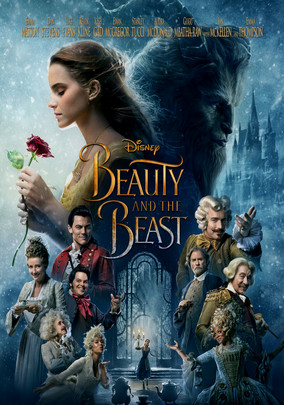
Beauty and the Beast-2017

Beauty and the Beast-2017

Director Bill Condon

Starring Emma Watson, Dan Stevens

Scott’s Review #634

Reviewed April 18, 2017

Grade: A-

When I went to see the live-action version of the Disney animated classic Beauty and the Beast, which was released in the spring of 2017, I was unsure what to expect.

Would it be a cheesy or amateurish retread of the 1991 animated smash only with human beings? Why the lackluster March release date? Indeed, this is telling; otherwise, why not release the film in the coveted fourth quarter with potential Oscar buzz?

I do not have the answers to all these questions, but this version of Beauty and the Beast is enchanting, romantic, and lovely- a spring treat for the entire family to enjoy.

Our protagonist, Belle (producers wisely casting Harry Potter legend Emma Watson), is a kindly farm girl living with her father, Maurice (Kevin Kline),  in a quaint village outside of Paris.

Considered a bit odd by her village mates because she loves to read, she rebuffs the advances of the dashing soldier, Gaston (Luke Evans), because he is arrogant- the other village ladies (as well as Gaston’s gay companion, LeFou) flaunt over Gaston’s good looks.

When Maurice ventures into unknown parts and stumbles upon a dilapidated castle, he is locked up by a vicious beast. Having once been a handsome prince, he has since been cursed by a beggar woman.

The only way the beast can return to his former self is to find true love before a wilted rose loses all of its petals—enter Belle to the rescue. Belle convinces the Beast to let her stay in prison and release her father.

Will Beast and Belle fall madly in love?

Of course they will. The fated romance is part of what makes the film heartwarming and lovely.

The now-legendary classic fairy tale feels fresh and energized with the Disney-produced project. Director Bill Condon carefully and successfully crafts an honest effort, making sure that while providing a fairy tale happy ending, not to make the film seem contrived, overblown, or overdramatized.

I fell for the film hook, line, and sinker. It is an uplifting experience. The song and dance numbers abound with gusto and good costumes—my personal favorites are the rousing “Be Our Guest” and the sentimental “Beauty and the Beast.”

The crucial romance between Watson’s Belle and the Beast, earnestly played by Dan Stevens (of Downton Abbey fame), works in spades. Their chemistry feels authentic and passionate. As Belle is at first held captive by the misunderstood bad boy instead of Maurice, the pair at first loathe each other, but this is done with innocence and no malice.

Condon wonderfully exudes the right amount of slow build to make the pair beloved by audiences with the correct pacing.

The CGI in Beauty and the Beast is heavy, as expected. However, the Beast’s distraction is a bit confusing. Was the Beast a complete CGI creation save for the close-ups, or was Watson dancing with Stevens when filming commenced in certain scenes?

I am unsure.

The controversial “gay storyline”, which helped the film be banned in the southern United States and Russia, as well as other countries, is pure and utter rubbish.

The subject is explored extremely superficially and not worthy of all the fuss.

Worthier of mention is the tremendous diversity that is featured in the film, most notably in the opening sequence. Interracial couples appear in the form of Madame de Garderobe (Audra McDonald), the opera singer turned wardrobe, and Maestro Cadenza (Stanley Tucci), turned harpsichord.

On the gay issue, it is sweet that the implied gay character of LeFlou finds love with another man at the end of the film.

A minor complaint is the scattered authentic French accents of many of the household staff and village people, but Belle and Maurice speak in the British tongue. Being a fairy tale, liberties must be taken, and suspending disbelief is necessary, but this was noticed.

Beauty and the Beast (2017) is a lovely experience that combines fantastic musical numbers with romance, with a side of diversity thrown in for good measure.

Since the film will undoubtedly be seen by many youngsters and teens, this is a wonderful aspect of the film and, hopefully, a shining, positive example in filmmaking.

Oscar Nominations: Best Production Design, Best Costume Design
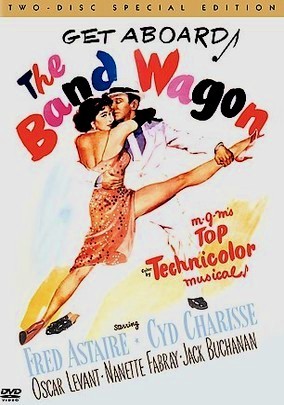
The Band Wagon-1953

The Band Wagon-1953

Director Vincente Minnelli

Starring Fred Astaire, Cyd Charisse

Scott’s Review #549

Reviewed December 15, 2016

Grade: B

The Band Wagon, made in 1953, is a second-tier MGM (Metro-Goldwyn-Mayer) production- and by that, I mean it is not as stellar as other musicals of its time.

It lacks the majestic appeal of similar musicals like An American in Paris and Singin’ in the Rain.

Directed by Vincente Minnelli- a legendary music director of the 1950s, and starring Fred Astaire, The Band Wagon tells the story of a washed-up movie star trying to revive his career on Broadway.

He meets opposition from his co-star and prima ballerina, Gabrielle, played by Cyd Charisse, ironically, an actress who appeared in Singin’ in the Rain.

The Band Wagon is a fun movie, but it is not nearly as good as the film mentioned above. Instead, it is a pale imitator. While other musicals of similar style can be watched numerous times, The Band Wagon is a one-and-done affair.

The story starts slowly but gets much better towards the end.

The film has a few memorable musical numbers, notably “That’s Entertainment.”

Oscar Nominations: Best Story and Screenplay, Best Scoring of a Musical Picture, Best Costume Design, Color

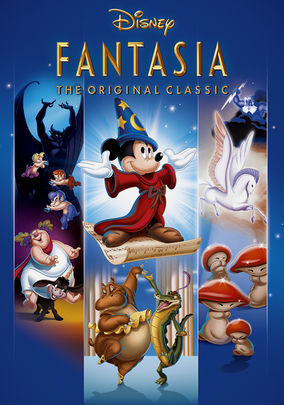
Fantasia-1940

Fantasia-1940

Director James Algar, Various

Starring Leopold Stokowski, Walt Disney

Scott’s Review #544

Reviewed December 11, 2016

Grade: B+

Before viewing this 1940 gem by Walt Disney, I was naive about precisely what Fantasia was about. Indeed, I had heard of it and knew it was an animated production, but I was also mystified by it. Now embarrassed, I realize what a creative treat I missed out on.

Better late than never.

I expected a Walt Disney animated story like Snow White or Pinocchio, but this assumption mistook me. While the film took me a bit to get into, it is a marvel and quite extravagant.

The combination of classical pieces and the animated story is brilliant and visually impressive. There are eight pieces in total, all with stories to tell.

Animated films are not typically my genre of choice, but this one impressed me quite a bit if nothing more than the imagination involved.

A Fantasia reboot emerged in 2000.

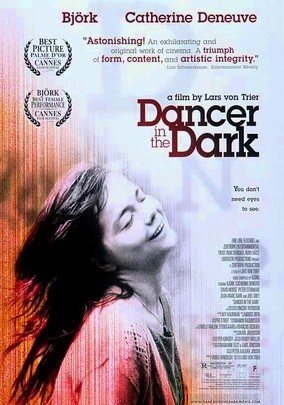
Dancer in the Dark-2000

Dancer in the Dark-2000

Director Lars von Trier

Starring Björk, Catherine Deneuve

Scott’s Review #365

60002276

Reviewed January 9, 2016

Grade: A

Dancer in the Dark is in my opinion one of the most important, inventive films of the 2000s and proudly is one of my favorites of all time.

However, the film is not pleasant to watch, and is quite painful and depressing, if the truth be told. But the relevance and sheer emotion the film elicits is more than enough reason to be exposed to it- if only, but perhaps, once.

Director, Lars von Trier, is a master at creative and disturbing, dream-like films that are either odd, non-linear, or otherwise open to interpretation in some way.

He has directed such gems as 2011’s Melancholia and 1996’s Breaking the Waves, to name but two.

With Dancer in the Dark, he uses handheld cameras which add much grit to the film so it almost feels documentary style, and a grainy, shaky look.

The addition of musical numbers mostly written and performed by the star, Bjork, is a wonderful touch.

Speaking of Bjork, words cannot express what a brilliant performance she gives in the film, and the raw emotion she expresses in her starring role is awe-inspiring.

So much was the stress of filming Dancer in the Dark, that she, to my knowledge, has never made another film.

She was shamefully overlooked in the Best Actress Oscar category- an omission that is one of the biggest fails in Oscar history.

Tensions were reportedly high on the set of Dancer in the Dark, as Bjork reportedly despised her director, never missing a chance to tell him so, disappeared from the set for days on end, and spat in his face. Co-star Deneuve, a former French mega-film star, reportedly did not get along well with Bjork.

Despite all the drama, the stars managed to pull together a masterpiece.

Bjork plays Selma, a Czech immigrant, living in Seattle with her young son. The year is 1964. Selma is poor, struggling to survive by working in a clothing factory along with her best friend Cvalda (Deneuve).

Selma and Cvalda escape their dull lives by watching classic musical films at their local cinema. To make matters worse, Selma is suffering from a degenerative eye disease causing her to gradually lose her sight. She struggles to save enough for surgery for her son, who is sure to suffer the same fate without it.

Selma frequently imagines musical numbers in her day-to-day life involving friends and co-workers. When a tragic turn of events occurs and Selma is accused of a crime, the film goes in a very dark direction.

The conclusion of the film will always require handkerchiefs as it is as powerful as it is gloomy.  The aspect I love most about Dancer in the Dark is that it smashes barriers about what film art is and throws all of the rules out the window.

Lars von Triers, famous for this created a dreamy, independent hybrid musical and drama, a dynamic, tragic, emotional experience all rolled up into one great film.

Oscar Nominations: Best Original Song-“I’ve Seen It All”

Independent Spirit Award Nominations: 1 win-Best Foreign Film (won)

Love and Mercy-2015

Love and Mercy-2015

Director Bill Pohlad

Starring John Cusack, Paul Dano

Scott’s Review #258

80017274

Reviewed July 17, 2015

Grade: B+

The life and times of the Beach Boys’ famous and troubled lead singer, Brian Wilson, is finally played out on the big screen (apparently many attempts were made to make a film) as Love and Mercy (2015) chronicles his difficult upbringing, unrivaled success, and his interesting life in later years.

He suffered from schizophrenia, traveled down a paranoid, nervous path, and was manipulated by a family friend who served as his doctor and main caregiver.

Thankfully, he weathered the storm due to his future wife, and remarkably still performs and entertains in 2015.

His musical career began in the 1960s.

The biopic features many well-known Beach Boys tunes to hum along to and be entertained by. It’s not a happy film nor a downer either.

It’s somewhere in the middle of the two and the life story of a rock star.

There is a risk in this. If the film is too sentimental it will fail. Love and Mercy do it correctly.

The film is not a sing-along, trip-down-memory lane film for lighthearted film fans. Rather, it is dark, murky, and troubling at times (the psychedelic scene when a young Brian is imagining different voices and noises in his head is rather frightening).

Wilson is played by two actors, first in the 1960s and later in the 1980s.

Paul Dano stars as a young Wilson in the early stages of his career, filled with passion for life, art, music, and talent beyond belief, but clearly in the onset stages of paranoia, thanks to his critical father. He is a demanding, angry man, possibly envious of Brian’s talents as a songwriter, who always wanted more from Brian.

Wilson’s father managed Brian and his brothers success but at a huge cost, and was ready to bail when the “next big thing” came along.

Miraculously, through conflict with his father and other members, Wilson completed the Beach Boys masterpiece, Pet Sounds, a groundbreaking album from the late 1960s. The film shows the struggles faced to achieve this success.

In later years John Cusack takes over the role of Brian. By this point in his life, he is damaged and he is a full-blown neurotic, insecure, and dependent on his psychotherapist, Dr. Landy, brilliantly played by Paul Giamatti.

Landy has control of Wilson’s assets and will destroy anyone who interferes in this.

The scenes in which he screams at and berates a drugged-out Brian Wilson to create music are tough to stomach. When Wilson romances their future wife Melinda Ledbetter, played by Elizabeth Banks, she ultimately saves his life as she is determined to rescue Brian from the wicked abuse and adjust the toxic levels of medications he was kept on.

I left the movie theater unsure of the factual accuracy and pondered the following questions.

Did Brian’s wife swoop into his life and “save” him as neatly as the film explains? How instrumental was the maid in this process? Was the Wilson brothers’ father as much a monster as the movie portrayed him? Was Giamatti’s vicious psychotherapist role true to life or were the aspects of Love and Mercy embellished ever so slightly for moviemaking magic?

One wonders, but from a film perspective, Love and Mercy (2015) works well as a work that takes risks, does not go for softness or niceness, and gives a character study that is quite admirable.

Independent Spirit Award Nominations: Best Supporting Male-Paul Dano

The Young Girls of Rochefort-1967

The Young Girls of Rochefort-1967

Director Jacques Demy

Starring Catherine Deneuve, George Chakiris

Scott’s Review #252

60020331

Reviewed June 30, 2015

Grade: B

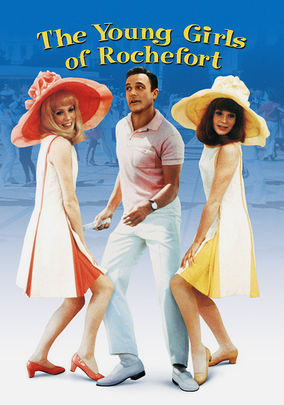
The Young Girls of Rochefort (Les Demoiselles de Rochefort) is a musical fantasy set in a small French town outside of Paris.

The story focuses on a pair of gorgeous twin sisters, Delphine and Solange, played by real-life sisters Catherine Deneuve and Françoise Dorléac, who yearn to escape their small town for the bright lights of Paris and hope for romance.

The twins can have any man they want, but enjoy the thrill and excitement of conquests and being chased and sought after by seemingly all available French men. They spend their spare time discussing and fretting over various loves.

The film is so French and pure musical fantasy, and logic is not the primary focus. Much of it does not make much sense, in fact, nor does it need to. It is pure fantasy.

The film excels by being dreamlike, bright, and sunny. The vivid, bursting colors and lovely sets enhance the film’s look.

In particular, the coffee shop set is a dream. All the central characters gravitate to the café for drinks, gossip, and song and dance.

A great deal of the action takes place here, which is a significant plus to the film.

The Young Girls of Rochefort, made in 1967, is very state-of-the-art in terms of art direction and color.

The loose plot, which is not at all a reason to watch this film, is silly. The twins, longing for love, meet several men, all possible suitors, but their true motivation is to get out of Rochefort and find genuine excitement in the big city of Paris.

One cannot help but realize that the men are a means to an end for the girls.

The heartfelt part of the story belongs to that of the twins’ mother, Yvonne, who also longs for love. Yvonne runs the café and still pines for a long-lost love whom she jilted because of a funny last name. She now regrets her decision, and the audience is rooting for her to find happiness.

She is a wholesome character, whereas Delphine and Solange are selfish and are attempting to further their careers as musical artists.

My main criticism of the film is casting Gene Kelly as one of the sisters’ love interests. Far too old and well past his prime at this point, the casting doesn’t work. Yes, he is a fantastic dancer, but the age is too great to be believable.

In the end, the main reason to watch The Young Girls of Rochefort (1967) is to escape, let loose, and enjoy a bright, cheery, fantasy film.

Certainly not to be analyzed, the film succeeds in providing good escapist, cultured French fare.

Oscar Nominations: Best Score of a Musical Picture- Original or Adaptation

Into the Woods-2014

Into the Woods-2014

Director Rob Marshall

Starring Emily Blunt, Meryl Streep

Scott’s Review #241

70305948

Reviewed May 8, 2015

Grade: B

Based on the stage production of the same name, Into the Woods (2014) is a feature-length Disney film that incorporates several different fairy tales into the main story.

The film is a fantasy musical with numerous songs performed by the cast, featuring a large ensemble of seasoned actors.

The classic fairy tales are modern versions of Little Red Riding Hood, Rapunzel, Jack and the Beanstalk, and Cinderella.

The action mainly revolves around a baker and his wife (James Cordon and Emily Blunt) who are sad and lonely because they cannot conceive a child due to a long-ago curse put upon the baker’s family by a witch- played by Meryl Streep.

Circumstances surrounding the baker’s father caused the once beautiful witch to be turned ugly. The witch offers a bargain to the baker and his wife- if they bring her four items (a white cow, a red cape, yellow hair, and a gold slipper) for a special potion, she will lift the curse, enabling them to conceive a child and live happily ever after.

This prompts the couple into the dark forest to obtain the requested items. From this point, the couple intersects with other characters from the fairy tales as they all question various aspects of their lives.

There are subsequent stories- the witch is Rapunzel’s adoptive mother and keeps her locked in a tower to prevent her from being hurt by the world.

Cinderella (Anna Kendrick) escapes her taunting stepsisters and attends a ball only to flee when noticed by the handsome prince (Chris Pine).

Jack attempts to sell beans to provide food for his mother- and Little Red Riding Hood brings sweets to her Grandmother but is confronted by the Big, Bad, Wolf (Johnny Depp), a strange Woman Giant is stomping through the forest searching for Jack.

All these stories revolve around the baker and his wife’s efforts to retrieve the witch’s requests.

The production and art direction in the film is great. I love the dark, gloomy forest, which translates so well on the screen and gives the magical effect of a mysterious, secret forest.

I enjoyed the songs quite a bit- especially the catchy “Into the Woods”. However, some of the songs are quite one-dimensional and bland and not discernible from each other, let alone memorable.

The duet of the Prince’s, “Agony” is silly and useless to the plot, with gyrations, and dance moves.

Meryl Streep- dynamic in anything she appears in again steals the show as the vile witch turns beautiful at the end. She has a fantastic solo number mid-story, entitled “Stay with Me”.

One drawback I found with the film is, at times it drags a bit and I was not sold on the casting of Anna Kendrick as Cinderella.  Something about her performance was lacking, perhaps she was not as sympathetic or convincing as another actress might have been.

Also, I would have enjoyed seeing Johnny Depp as the Wolf be more prominently featured and a larger role for the Woman Giant. As integral as she is to the plot, it was tough to get a clear glimpse of her face let alone anything more substantial.

An entertaining feast of fairy tales immersed in one film, Into the Woods (2014) has some compelling moments but lost opportunities that bring it far from the reaches of a masterpiece level.

A solid film, but not a great film.

Oscar Nominations: Best Supporting Actress-Meryl Streep, Best Production Design, Best Costume Design

Annie-2014

Annie-2014

Director Will Gluck

Starring Quvenzhane Wallis, Jamie Foxx

Scott’s Review #231

220px-Annie2014Poster

Reviewed March 25, 2015

Grade: D-

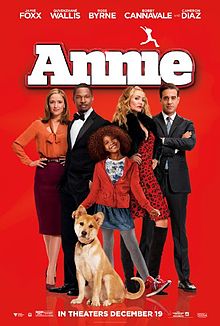
The latest remake of the film version of Annie, the last film production in 1982, though at least one variation in television exists, and all based on the Broadway hit of the same name, is a saccharin-laden mess of a film.

Annie stars Quvenzhane Wallis, Jamie Foxx, and Cameron Diaz as Annie, William Sparks (changed from Daddy Warbucks), and Miss Hannigan, respectively, and features Rose Byrne and Bobby Cannavale in supporting roles.

Let me begin with the one redeeming quality of the film, though admittedly a bit of a stretch. I found the musical numbers okay, not great, but far from the worst parts of the film.

The numbers are remixed into hip-hop-type songs with a trendy approach, presumably to add a modern element. While not great, some songs are catchy and not dreadful, especially “It’s A Hard Knock Life” over the closing credits.

Whether the actors sing their songs is another question, which I might not want to know the answer to.

The rest of Annie is terrible.

The casting is poor. Wallis, very believable in Beasts of the Southern Wild (2012), portrays Annie as an intelligent, social-climbing child and I sensed awkwardness to the part. Regardless it did not work.

I did not buy her in the role and how she was awarded a Golden Globe nomination for Best Actress in a Musical Comedy speaks volumes for the limited choices in 2014.

Jamie Foxx completely phones in his performance as Cell-phone technical mogul, running for mayor, William Sparks. Why the film changed the character from Daddy Warbucks is a mystery. He is unbelievable as a germaphobe, an aggressive yet sensitive, powerful man who amazingly develops a soft spot for Annie.

Cameron Diaz completely overacts and turns Miss Hannigan into an obnoxious, hysterical shrew, who towards the end of the movie somehow “turns good”, with no real motivation for doing so.

Rose Byrne and Bobby Cannavale give uninteresting, very one-note performances in their respective roles of Sparks’s assistant, love interest, and right-hand man.

The film chooses to change so many aspects of the original stage version of Annie, that it is barely recognizable.

It takes place in present times rather than the Depression-era 1930s, Annie is no longer an orphan but is in foster care. Miss Hannigan’s first name is changed to Colleen instead of Agatha and now a former pop performer whose career subsequently died.

Hannigan’s brother Rooster and his girlfriend Lily are not featured at all.

The story has zero interest and zero believability.

But the worst part of the film is the corniness of it. It is so overwrought with contrived scenes that it is tough to take seriously.

At a Mayoral function, Annie (an untrained singer) suddenly leaps onstage and belts out a perfectly sung, choreographed number melting the hearts of the wealthy powerhouses in attendance.

The film is pure fantasy with no realism to speak of.

Miss Hannigan fosters an apartment full of children that she hates, to collect $150 a week, but her apartment is pretty spacious and beautiful by Manhattan standards.

The film contains one inconsistency after another and is a horrendous modern take of a long-loved treasure, the 2014 version of Annie should be seen once, snarled at, and put back on the shelf, and forgotten for good.

A Star is Born-1954

A Star is Born-1954

Director George Cukor

Starring Judy Garland, James Mason

Scott’s Review #175

995474

Reviewed September 25, 2014

Grade: B+

A Star Is Born (1954) was considered Judy Garland’s much-touted comeback film and was very expensive for Warner Bros. to produce.

Garland delivers her finest career performance, even better than her portrayal of Dorothy in The Wizard of Oz (1939). The performance is multi-faceted, complex, comical, silly, poised, emotional, dramatic, and heartfelt.

Playing Esther Blodgett- later changed to Vicki Lester for more Hollywood potential, she is a struggling lounge singer who meets a successful actor named Norman Maine, played wonderfully by James Mason.

Esther saves Norman from public humiliation at a function where he attempts to take the stage while inebriated.  They strike up a friendship, and he convinces her to pursue films. However, through a series of misunderstandings, she assumes he has ditched her.

Determined to become a star anyway, Esther forges her path to success. They reconnect, and Norman recognizes her talent and pursues her professionally and romantically. They marry, and she becomes a star while his career hits the skids, mainly due to his alcoholism.

The talented Mason and Garland are at the forefront of the film and are the reasons for its success.

A few key scenes stand out to me as powerful or essential- The scene involving a musical number over a dinner of sandwiches in their posh living room is wonderfully merry and light; a delivery boy who does not know who Norman is ruins the mood and causes jealousy to come to a head in his marriage to Esther.

Garland’s emotional scenes are excellent, especially in her dressing room, where she crumbles when she realizes Mason has hit rock bottom.

The best scene is the Academy Awards scene, where a drunken Norman causes a public spectacle as Esther receives her top honor, spoiling her night and accidentally hitting her in the face in front of millions.

What a forgiving woman Esther is for staying with him and ultimately choosing him at the risk of ruining her career.

An interesting aspect of the story is that Garland’s character is not some ugly duckling transformed into Hollywood royalty—she already has the talent. She needs a break but is not down on her luck or starving. She makes a decent living with a touring band and is torn about leaving them.

The musical numbers are inspiring and one is reminded why Garland is such a star as she belts them out of the park like nobody’s business, however, they do little to further the plot.

The film sometimes drags a bit, as is often the case in the first half, but the second half (post-intermission) is brilliant, and the ending is tragic yet heartwarming.

Will Esther’s career continue to flourish?

A major flaw with the film is the usage of still frames with dialogue overlapping due to lost footage. This makes following the story very tough, and the continuity is affected. It also looks ridiculous, and for the viewer to be captured by the story and only view a discolored still shot with audio is disappointing.

Indeed, this can be corrected.

A Star Is Born (1954) is the perfect vehicle for Garland to return to her grand position among the Hollywood treasures.

Oscar Nominations: Best Actor-James Mason, Best Actress-Judy Garland, Best Scoring of a Musical Picture, Best Song-“The Man That Got Away,” Best Art Direction, Color, Best Costume Design, Color

A Hard Day’s Night-1964

A Hard Day’s Night-1964

Director Richard Lester

Starring The Beatles

Scott’s Review #154

60023947

Reviewed August 18, 2014 

Grade: C

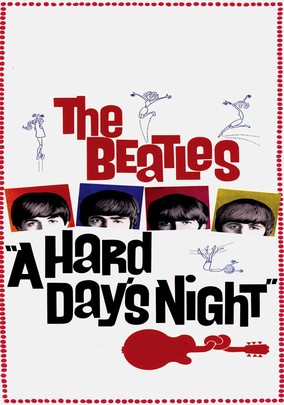
Why this rock documentary, a day in the life film, is considered among the Top 100 films of all time completely escapes me. I’m a huge fan of the band The Beatles, but this is a letdown.

The segments consisting of musical numbers performed by the band are excellent, and, humming along, I enjoyed the black and white filming of the “documentary.” Still, the film is not a documentary in the traditional sense and is very difficult to categorize.

Is it a rock opera, a comedy, a documentary, or a musical? It is somewhat of a hybrid as the viewer journeys through a typical day in the life of a Beatle.

But everything else seems fluff to the point of silliness. Countless scenes of the band running through the streets with adoring fans screaming and chasing after them become irritating. The film has little plot.

The Beatles were a huge band. We get it.

Paul, George, Ringo, and John do a capable job in the film, considering they are non-actors. I’d much rather have been exposed to a straightforward documentary focusing on the background of some of the songs or the band members themselves instead of a lightweight tale of a day in the life of The Beatles with silly attempts at humor thrown in.

A Hard Day’s Night (1964) influenced the 1960s television comedy starring The Monkees.

Oscar Nominations: Best Story and Screenplay Written Directly for the Screen, Best Scoring of Music-Adaptation or Treatment

Rebecca of Sunnybrook Farm-1938

Rebecca of Sunnybrook Farm-1938

Director Allan Dwan

Starring Shirley Temple

Scott’s Review #113

70040593

Reviewed July 16, 2014

Grade: B

Rebecca of Sunnybrook Farm (1938) is one of several Shirley Temple films released in the 1930s and 1940s.

In this story, Rebecca (Temple) is a confident child singer auditioning for a New York City radio gig with her opportunistic Uncle. Through a series of mishaps, she winds up outside the city with her aunt and other people living on or near the farm.

The radio people race to find Rebecca in time and make her a star. Other romantic subplots involving the supporting characters occur.

The film is innocent and cutesy, but you must be a Shirley Temple fan to enjoy it truly. If not, you might find it contrived and sentimental.

It falls somewhere in the middle for me. While I enjoyed the Shirley Temple musical numbers and the star’s talent, the story was predictable, and no surprises were in store. It felt more like a pleasant trip down memory lane.

The film is harmless and contains the standard Temple curls, smiles, and joyfulness. The supporting cast includes Jack Haley (The Wizard of Oz) and Gloria Stuart (Titanic-1997).

Jersey Boys-2014

Jersey Boys-2014

Director Clint Eastwood

Starring John Lloyd Young

Scott’s Review #95

70299748

Reviewed July 5, 2014

Grade: B+

Jersey Boys (2014) is a film version of the hit Broadway show of the same name, directed by Clint Eastwood.

It tells the story of Frankie Valli and his friends (later becoming the Four Seasons) growing up in 1950s mob-laden New Jersey and their journey through hardships and petty crime to musical success.

The film is a mainly feel-good experience as the songs alone resonate with the audience and immediately stick in one’s head as catchy as they are (Sherry, Walk Like a Man, Big Girls Don’t Cry, Can’t Take My Eyes Off of You) are prominently featured throughout the film making it tough not to toe-tap along with the musical numbers.

Most of the boys grow up in a heavily Italian neighborhood, which is a delight as Eastwood’s authenticity is impressive: the food, the fights, gangster mob ties.

Admittedly, I found the first thirty minutes a bit slow, but then, the film takes off.

The cast is good- John Lloyd Young is excellent as Frankie Valli, a role he also portrayed on Broadway, and it is very nice to see Christopher Walken as a kindly mob boss who looks out for the kids.

The film is wonderfully shot and the 1950s nostalgia is apparent via set pieces, costumes, etc.

Is this film edgy? Not in the least. Is it a safe crowd-pleaser? Absolutely!

It is a fun musical experience that does not delve into schmaltz and is lots of fun.

Black Nativity-2013

Black Nativity-2013

Director Kasi Lemmons

Starring Jennifer Hudson, Forest Whitaker

Scott’s Review #46

70279001

Reviewed June 18, 2014

Grade: C-

Black Nativity (2013) is a family holiday movie about a poor Baltimore teen sent to live with his affluent, estranged grandparents (Forest Whitaker and Angela Basset) in Harlem.

Jennifer Hudson plays the teen’s financially struggling mother.

The estrangement stems from a silly misunderstanding years ago when Hudson’s character was pregnant with her now teenage son.

I enjoyed the performances of Whitaker, Bassett, and Hudson, and the sprinkling of songs performed by the leads was nice, but the story was incredibly sappy and predictable and wrapped up in a nice bow at the end of the film.

Scene one screams predictable and safe.

I did not sense any real conflict or grit throughout the movie and it felt like watching a Hallmark-made-for-television movie- not a compliment.

Black Nativity (2013) is a nice family story, but a little more.

Skip unless you enjoy the watered-down family fare.

Frozen-2013

Frozen-2013

Director Chris Buck, Jennifer Lee

Starring Kristen Bell, Idina Menzel

Scott’s Review #43

70279000

Reviewed June 18, 2014

Grade: B

The adjective that springs to mind about the latest hit animated film Frozen (2013) that has overtaken the nation is “cute”.

The story is loosely based on the Hans Christian Anderson story (which is modified immensely) and tells the story of two royal sisters (Elsa and Anna), one of whom has special “ice” powers and accidentally injures the other causing a rift.

From this point, there are a series of misunderstandings, love interests, a handsome prince, an adventure through the snow, and a Snow White-type theme.

The story is uplifting, sweet, and targeted to kids and parents seeking a wholesome, safe experience, but is it too safe?

My one criticism is the lack of diversity and culture in the main characters as they are all similar in looks, which doesn’t set the best example for kids watching.

The musical numbers stuck in my head as I hummed them for days. The songs are very trendy, and pop-leaning which may make this film age quickly and have an overly current flavor.

I loved the frozen, icy, wintry animation sets that are perfect while watching in the winter months.

Olaf, the sidekick, the mini snowman is witty and steals the show.

Oscar Nominations: 2 wins-Best Animated Feature Film (won), Best Original Song-“Let It Go” (won)

The King and I-1956

The King and I-1956

Director Walter Lang

Starring Yul Brynner, Deborah Kerr

Scott’s Review #26

671936

Reviewed June 17, 2014

Grade: B

The King and I (1956) is another of the many Rodgers and Hammerstein musicals that dominated the 1950s and 1960s film era.

Having seen the stage version, the film contained two gigantic stars of the period (Yul Brynner and Deborah Kerr), Brynner having made this role his legacy.

The story is similar to The Sound of Music, as the teacher takes on the children of the King, but it is not quite as gripping, and the chemistry among the leads is not entirely there.

The Bangkok palace set, and the costumes are stylish and fantastic in design.

As a whole, the songs are not as memorable as some other similar musicals, but that is compared to magnificence.

Much of the cast is not Asian, a characteristic of the stage version that is often overlooked and accepted. This is not a criticism, merely a notice.

It’s a lovely musical, but not as enjoyable as others, but still worth watching.

Oscar Nominations: 5 wins-Best Motion Picture, Best Director-Walter Lang, Best Actor-Yul Brynner (won), Best Actress-Deborah Kerr, Best Scoring of a Musical Picture (won), Best Sound Recording (won), Best Art Direction-Color (won), Best Cinematography, Color, Best Costume Design, Color (won)

Godspell-1973

Godspell-1973

Director David Greene

Starring Victor Garber, Katie Hanley

Scott’s Review #23

549055

Reviewed June 17, 2014

Grade: C+

Although Godspell (1973) is a popular and legendary Broadway musical production, the film left me with very mixed reactions.

The positives for me are the songs- they are memorable, and they stay in your head for days to come.

My absolute favorite is “Day by Day”.

I also enjoy the cast travels throughout NYC as I love when films are set here.

For the first thirty minutes of the film, I did not like it at all.

There is no plot, but simply a group of college-aged people leaving their crummy jobs and celebrating Jesus as they aimlessly flitter about the city, with nobody else in sight, singing songs of savior and celebration.

Then I started to realize this is not a “message” movie or an attempt to convert people towards religion. Many devout Christians despise the film.

The film left me with questions.

Is it tongue-in-cheek or meant to be taken seriously?

By the end of the film, I simply took it for a fun musical with great songs. It offers nothing more, nothing less.