Category Archives: Melanie Griffith

Body Double-1984

Body Double-1984

Director Brian De Palma

Starring Craig Wasson, Gregg Henry, Melanie Griffith

Scott’s Review #1,475

Reviewed April 5, 2025

Grade: A-

Brian De Palma is one of my favorite directors. His stylistic body of work in the psychological thriller/horror genre is masterful, with treats such as Carrie (1976) and Dressed to Kill (1980) as my favorite films.

Body Double (1984) allowed De Palma much creative freedom because of the success of these films and the underwhelming but successful Scarface (1983).

It is a fly-under-the-radar type of film that pays direct homage to 1950s Alfred Hitchcock films, most notably Vertigo (1958) and Rear Window (1954).

I get triple pleasure from watching Body Double. I compare scenes to the above-mentioned Hitchcock films and scenes to De Palma’s own films, especially Dressed to Kill. Plus, it stars Melanie Griffith, daughter of Hitchcock star Tippi Hedren.

The setting is Los Angeles, with B-movie film sets, posh Hollywood mansions, and hilly views of the vast City of Angels landscape. I am fascinated by the city and its mixture of glitzy glamour and dark subtext, which is a perfect recipe for watching this film.

While not De Palma’s very best work it is pretty damned good and somehow isn’t as revered as other films.

Craig Wasson plays Jake Scully, a struggling actor who loses his acting role and his girlfriend, Carol (Barbara Crampton), on the same day. While taking a Method acting class, his friend Sam (Gregg Henry) offers him a gig house-sitting an ultra-modern home that overlooks mansions.

While peering through the beautiful home’s telescope one night, he spies a gorgeous blonde, Gloria (Deborah Shelton), dancing in her window. Becoming obsessed with her, it leads to a vicious crime and into the world of adult entertainment along with porn star Holly Body (Melanie Griffith).

Fans of De Palma will undoubtedly love Body Double because it feels like a De Palma film. At other times, he veered too far away from his brand for my tastes, but the sultry and glossy voyeurism is fully displayed.

Who won’t instantly think of the museum scene in Dressed to Kill during the mall scene in Body Double? It’s a titillating cat-and-mouse chase scene with Jake following Gloria through a parking garage, a Fredericks of Hollywood-type store, and ultimately watching her try on panties, which he steals.

The panties serve as a version of the glove in Dressed to Kill, while the final shower scene in Body Double made me think of the steamy shower scene in Dressed to Kill.

I often thought of Rear Window and Vertigo, but De Palma honors them instead of stealing from the treasures. Jake is obsessed with Gloria yet knows nothing of her. Is she who she appears to be? Is she in danger? Is Jake being set up like Scottie was in Vertigo?

The telescope that Jake peers through is a modern version of the one from Rear Window. In both films, a murder is attempted while the protagonist helplessly watches from afar.

Anyone who enjoys acting will be satisfied with a dose of a method acting class being showcased, as well as nifty low-budget sets and set pieces reminiscent of a Hammer Horror set.

Finally, the overarching theme of a ‘body double’ frequently used in films when the ‘star’ is replaced by a stand-in, usually for nude scenes, is cleverly referenced in the final scene when a girl with perfect breasts is used while filming a shower scene.

The trickery of filmmaking is celebrated.

The camera work and musical score are a large part of the appeal. The eroticism smolders while Jake and the audience watch Gloria and Holly dance amid moody, electronic 1980s dance beats. The camera captures the moment perfectly.

The glossy, sensual elements forever link De Palma with Hitchcock, 1980s style.

1980s films are often dismissed as cheesy or mainstream affairs, but Body Double’s look is 1980s in the best possible ways. The expensive cars, the big hair, the cocaine, and the L.A. porn world all mesh together fabulously. Incorporating the monster hit, ‘Relax’ and the band Frankie Goes to Hollywood is a significant win.

With Body Double (1984), De Palma provides slick entertainment and thrilling sensuality and helped launch the career of Melanie Griffith, a star of the 1980s and 1990s.
The Disaster Artist-2017

The Disaster Artist-2017

Director James Franco

Starring James Franco, Dave Franco

Scott’s Review #781

Reviewed July 2, 2018

Grade: B

The Disaster Artist (2017) is a biography-comedy that I found to be middle of the road to primarily good if I’m judging in overall terms- most I liked with a bit of criticism.

Due to the many accolades, I confess to having anticipated a bit more from the finished product and hardly finding it a masterpiece.

Still, I was both impressed and unimpressed by James Franco’s performance in the lead role. I was awed at the actor’s emergence as a director, and the Los Angeles setting is great.

At times the film teeters almost into bad slapstick or shtick, and a bit silly, and as much as I respect his performance, this criticism is directed at Franco. Nobody can deny his acting talent if he chooses the right films.

His attempt to make his character peculiar is noticeable within seconds, so it seems Franco also makes him a bit of a goof, and I was not able to take the character seriously all of the time.

And the weird accent threw me.

This film is based on the nonfiction book The Disaster Artist. The book chronicles the making of 2003’s The Room, not to be confused with the 2015 film Room. The Room was considered amateurish and one of the worst movies ever made.

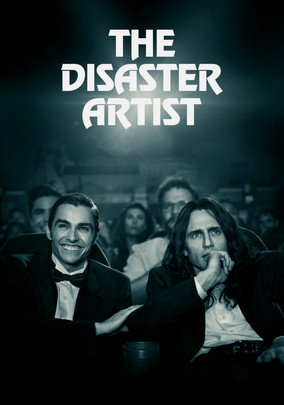
Told repeatedly that his acting stinks, oddball Tommie Wiseau (James Franco), a European-American aspiring actor, decided to screw Hollywood and produce, direct, and star in his film.

Wiseau has an endless amount of bank funds, which he uses towards the film. Roommate and friend Greg Sestero (Dave Franco) stars in the movie and thus gets his big break. The duo and various others pitch in to create the project, which suffers from ineptness on the part of Wiseau.

The Los Angeles setting resonates with me, as does the recurring theme of struggle in the Hollywood scene. These are significant pluses of the film as a whole.

Los Angeles can appear to be a sunny and glamorous town, but beneath its shiny exterior, it always has a gloomy, dark underbelly.

The film realistically depicts struggle and success, from the central characters to the supporting players, making it resemble an ensemble.

Thousands struggle daily for a break, and no respect or appreciation is given. The Disaster Artist scores a win by focusing on this.

When Tommie brazenly approaches an influential producer in a restaurant, he is unceremoniously dismissed for having no talent and told he will never get anywhere. In addition to Tommie, several actors associated with the film struggle.

In a fantastic scene, an older actress states that being on a bad movie set beats any other job by miles. The message here is that people in Hollywood are there because they genuinely love it.

The sweet, empowering theme of friendship and empowerment is also to be celebrated, especially given the cutthroat backdrop. Tommie and Greg are best friends and have each other’s backs through thick and thin.

Neither gives up on the other, even during the initial audience reaction to The Room premiere.

Could the film have been slightly darker? Yes, indeed, as very few scenes of drug destruction or the porn that many hopeful talents turn to are mentioned. But the film is not about that. It’s an enchanting tale of hope and fun.

It is interesting to note, and not evident to me while watching the film, that brothers James and Dave Franco play opposite one another. While there is somewhat of a physical resemblance, the chemistry works between the two actors as best friends.

James delivers a worthy portrayal of an unusual character with a strange dialect, long, stringy brown hair, and seemingly cross-eyed. The role is comedic and ideally suited for an unusual actor like Franco- he must have had a ball with the part.

Movies about movie-making always fascinate me. What goes on behind the scenes?

The Disaster Artist (2017) provides enough good film meat to make it an overall good experience. It stays true to some fine Hollywood history—the famous James Dean is referenced, and the spot where he died is even visited—nice touch! Franco is both good and disappointing in the main role.

All in all, this one is worth watching for those who enjoy filmmaking, Hollywood, or L.A.-set films.

Oscar Nominations: Best Adapted Screenplay

Independent Spirit Award Nominations: Best Male Lead-James Franco

Working Girl-1988

Working Girl-1988

Director Mike Nichols

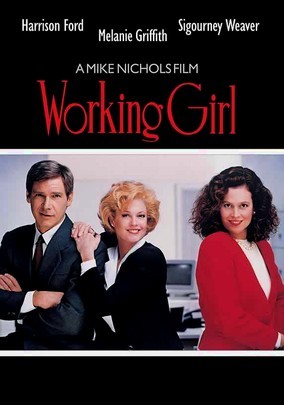
Starring Melanie Griffith, Harrison Ford, Sigourney Weaver

Scott’s Review #748

Reviewed April 26, 2018

Grade: B+

Released during a decade known for excess, fun, and light comedy films, especially during the latter half, 1988’s Working Girl was a blockbuster hit at the time, and in modern times is perfectly nestled as an identifier of the decade itself.

This can be both good and bad with both a dated feel and also a whimsical, basic good girl versus a bad approach that is appealing.

The film is romantic comedy fluff but is entertaining and features lovely views of New York City- one of my very favorite locales.

The film is directed by Mike Nichols, known more for the heavier subject matter (1966’s Who’s Afraid of Virginia Woolf and 1967’s The Graduate). His leading of the picture, as well as all-star casting, surely made this film better than it ought to have been.

Tess McGill (Melanie Griffith) commutes via the Staten Island Ferry each morning into vast Manhattan where she holds a secretarial job at a Wall Street investment bank.  When she has a bad experience with one of the brokers, she is reassigned to a female boss, the assertive Katharine Parker (Sigourney Weaver).

After Katharine steals Tess’s business idea and passes it off as her own to get in good with handsome Jack Trainer (Harrison Ford), Tess is determined to reveal the truth as a triangle develops between the three individuals.

In tow are Tess’s best friend Cynthia (Joan Cusack) and her cheating boyfriend, Mick (Alec Baldwin) in supporting roles.

Working Girl feels overwhelmingly like a “1980s film” and while relevant at the time and kindly nostalgic, the film does not hold up well in modern times, rather seeming to be suited for a time capsule, unlocked from time to time for kicks.

The most garish example is the hideous hairdos that Nichols has Tess and Cynthia don- frizzed out and caked with aqua net hairspray is over-the-top even for the 1980s.

Then there are the inevitable tacky outfits complete with bright colors and shoulder pads as the girls hustle to their dull jobs. With these costume tidbits in addition to the filming style the tone just screams the 1980’s.

The casting of the three leads is very good- Griffith, Ford, and Weaver all share nice chemistry and the clear rooting value is for Tess and Jack to live happily ever after- with Katharine as the obvious foil.

The conclusion of the film is of little surprise, but as a romantic comedy, this is standard fare. The point is that the relationships are dynamic and the ride is fun. Griffith is quite breathy and seductive in her role- a clear homage to the talents of Marilyn Monroe in her 1950s-era films.

Never known for great acting, Tess is the role of a lifetime for Griffith. Weaver sinks her teeth into an against-type villainous role and Ford is dashing and charismatic as the leading man.

My favorite parts of Working Girl, and the strongest aspects of the film, leaving an indelible impression even after all of these years, are the sweeping camera sequences of New York City featured throughout the film.

Lots of scenes were shot in neighboring Staten Island, but the best shots of all are the luminous skylines of Manhattan that encompass the opening sequence and later, viewpoints from the corporate offices.

There we see Tess on the Ferry heading across the Hudson River all with the wonderful soundtrack song by Carly Simon, Let the River Run, playing in the background. The soothing tune and the approaching mammoth city set a nice tone.

The story itself is a sort of rags to riches, Cinderella-style experience from the point of view of Tess. Taking night classes to better herself and clearly, a blue-collar type battling the giants of the corporate world and the more sophisticated Katherine (she speaks fluent French!) is an enormous draw of the film to sustain mainstream audiences.

Corporate greed versus the little guy is an adept comparison here. Almost borderline fairy tale, the fact that Tess gets the dashing Jack (in real life he would undoubtedly be with Katharine) makes the film good, escapist fare.

The working-class Staten Island versus the sophisticated Manhattan is another theme worth mentioning.

Thirty years beyond its original release. 1988’s Working Girl now seems dated, dusty, and of its time like many similar style films, but does still contain some of the enjoyment undoubtedly beholden to it at the time of release.

A film that is fine to take out of the vault, dust off, and enjoy for some good escapist cinema and a predictable story of good overcoming bad.

Oscar Nominations: 1 win-Best Picture, Best Director-Mike Nichols, Best Actress-Melanie Griffith, Best Supporting Actress-Joan Cusack, Sigourney Weaver, Best Original Song-“Let the River Run” (won)