Category Archives: Horror

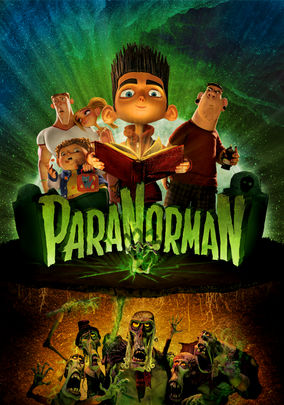
ParaNorman-2012

ParaNorman-2012

Directors Chris Butler, Sam Fell

Starring Kodi Smit-McPhee, Anna Kendrick

Scott’s Review #453

70217914

Reviewed July 23, 2016

Grade: B+

ParaNorman (2012) is a highly imaginative and very enjoyable animated film that I admired a great deal.

Creative colors and images are key, and the film is stop-motion.

Despite being animated, it is not a kid’s movie but rather geared toward the teenage or older demographic.

It is among the strongest of the five films nominated for Best Animated Feature in 2012, along with Frankenweenie, a similar type of film.

ParaNorman is so similar to Frankenweenie that they could almost be simultaneously reviewed or watched on the same day.

Both center around an isolated young male coping with his surroundings, and both contain a light horror feel.

In ParaNorman, an army of zombies invades a small, suburban town, and our hero, Norman, a strange young man who can communicate with the dead, must save the day.

The film features sympathetic peers, but the adults present various obstacles.

I have gone on record as being not much of an animated film fan, but I do view the best of each year, and this one impressed me immensely.

Oscar Nominations: Best Animated Feature Film

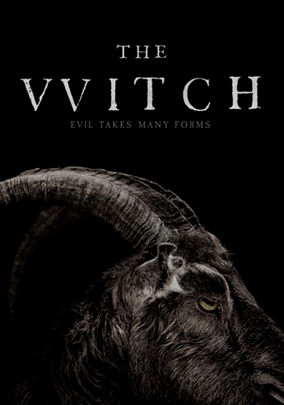
The Witch-2016

The Witch-2016

Director Robert Eggers

Starring Anya Taylor Joy, Ralph Ineson, Kate Dickie

Scott’s Review #446

80037280

Reviewed July 7, 2016

Grade: B+

The Witch is a slow-build 2016 horror film that plods with sinister wickedness and leaves viewers thinking well beyond the credits.

Is it a message movie?

Good versus evil, with a definite religious umbrella encompassing the entire film, is God against the devil. Guess which one wins out?

To be transparent, this film will undoubtedly offend the staunch religious.

Set in 1600s New England and entitled “The Witch—A New England Folktale,” the story follows a Puritan family banished from the village they inhabit.

They are forced to begin a life on their own and build a farm, struggling to survive by secretly selling family heirlooms. William and Katherine are the parents, followed by a teenage daughter, Thomasin (Anya Taylor-Joy), a son, Caleb, and youngsters, Mercy and Jonas.

Their recent addition to the family, Samuel, is snatched by a mysterious creature in the shape of a witch. We only see her draped in red as she sneaks into the woods holding the infant.

From the family’s perspective, they do not know who (or what) has taken Samuel) and tell themselves that it was a wolf, but soon they are not so convinced, and Thomasin is assumed to be a witch.

I adore the fact that this film is not set in modern times, which undoubtedly turns off some viewers. The thick English dialect is almost Shakespearean at times and challenging to follow at others, but it is also rich in culture.

The period and the absolute purity of the family are unsettling. Is it too good to be true? Unlike many horror films, much of the film is shot in the daytime, which adds to the tension.

It is combined with the creepy musical score- strings are used.

At one hour and thirty-two minutes, the very short film feels longer- it truly does move at a snail’s pace, but the final act makes up for this as something told me it would.

It has a creepy feel, and nightmarish events occur at the film’s finale.

Some of The Witch is open to interpretation. Sometimes, I suspected one family member or another of perhaps evil, but the film is not that straightforward, and some complexities arise.

For instance, do spirits possess animals? When Thomasin milks a goat and blood runs out, is this supposed to represent female menstruation?

A thinking man’s horror film, which is refreshing within the horror genre or any other genre for that matter, The Witch (2016) is unorthodox and thought-provoking, which makes it a winner in my book.

Independent Spirit Award Nominations: 2 wins-Best First Screenplay (won), Best First Feature (won)

The Fog-2005

The Fog-2005

Director Rupert Wainwright

Starring Tom Welling, Maggie Grace

Scott’s Review #444

70038804

Reviewed July 4, 2016

Grade: D

The Fog is a 2005 remake of the 1980 film The Fog, and overall, it is not very good.

It sucks.

Why the original creators, John Carpenter and Debra Hill, had anything to do with it is completely beyond me, unless they needed some fast cash.

It is so modernized that it loses the mystique that the original had.

The credit it does deserve is for a few good scares and for keeping with the same characters as the original. Otherwise, it is largely a disaster.

For starters, the ending is completely different from the original and includes some ridiculous, silly fantasy elements that don’t work at all.

An interesting actress in the television series Lost (2004-2010), Maggie Grace, attempting to embark on a film career, is wooden and one-dimensional.

There is no good acting in the entire movie. Not that I expect great acting in a horror film, but it just adds to the mess of storytelling and writing.

A big fail.

House at the End of the Street-2012

House at the End of the Street-2012

Director Mark Tonderai

Starring Jennifer Lawrence

Scott’s Review #438

70215438

Reviewed July 2, 2016

Grade: B

House at the End of the Street (2012) is a perfect example of a horror/thriller film that has excellent effects and great potential, but the storytelling brings it down.

It is also a film starring Jennifer Lawrence before she became an Oscar-winning star. Her performance is adequate, and she does what she can in the lead role.

Lawrence is likable in this role and is clearly the film’s hero.

The film itself looks great. It has all of the necessary horror elements: a creepy house in the woods, darkness, and sudden scares.

The buildup in the first half is very interesting, and the audience isn’t quite sure what’s to come or what mysteries and secrets lurk in the title house.

During the final thirty minutes, however, when the twist is revealed, the film becomes predictable, by the numbers, and disappoints.

The story becomes so convoluted it hardly matters anymore.

The first half is great, but the second half fails.

I was happy to see Elisabeth Shue in this movie, as she has been out of the limelight for years; her character, though,  is quite one-dimensional.

Film summary: great-looking horror film, with mediocre writing.

The Woman in Black-2012

The Woman in Black-2012

Director James Watkins

Starring Daniel Radcliffe

Scott’s Review #429

70206133

Reviewed June 21, 2016

Grade: C

The Woman in Black (2012) is an example of a recent trend in modern horror films.

The positives include great effects (shadows, lighting, ghosts, some scares), but the story is uncompelling and makes no sense, which is a negative.

The eerie setting of foggy London and a creepy seaside village are perfect.

The cinematography instantly elicits dread, coldness, and a sense of secrets.

From that point, the story sinks into a chaotic mess of unbelievable twists that, instead of being compelling, only confuse the viewer until he or she no longer cares.

That is a shame.

I give Daniel Radcliffe credit for trying to shake his Harry Potter image by going the horror route.

I suspect that is the entire point of the film, since it centers on Radcliffe, but it still felt like I was watching a Harry Potter movie.

Nice effects, but poor story.

The Woman in Black (2012) will be forgotten before long.

Evil Dead-2013

Evil Dead-2013

Director Fede Álvarez

Starring Jane Levy, Shiloh Fernandez

Scott’s Review #425

70243679

Reviewed June 21, 2016

Grade: B

Having recently seen the original Evil Dead, directed by horror master Sam Raimi, from the early 1980s, I found the remake fine but not as compelling as the original.

It’s hardly the most terrifying film you will ever experience either.

While the original was quite a low-budget film, the remake is modern and glossy-looking, though with only a tiny cast.

The film is set almost entirely inside a cabin in the middle of nowhere at night, has a wonderful mood, and includes all the necessary horror elements.

A Book of the Dead is unearthed, and evil spirits possess the youngsters one by one.

The film is entertaining, has lots of well-done gore (loved the bathroom face-cutting scene), and, while over-the-top, doesn’t feel overly cartoonish.

It has fresh energy.

It takes some liberties (in reality, someone with a torn-off limb wouldn’t keep walking around as if nothing happened).

A silly drug-addiction subplot feels unnecessary.

There are some genuine scares, and all in all, Evil Dead (2013) is an enjoyable horror movie-going experience.

Paranormal Activity 4-2012

Paranormal Activity 4-2012

Directors Henry Joost, Ariel Schulman

Starring Kathryn Newton

Scott’s Review #424

70243451

Reviewed June 19, 2016

Grade: B

Circa 2012, and at this point in the Paranormal Activity film franchise (with part 5 on its way), one pretty much knows what to expect.

To me, the plot is almost secondary.

In the story, the newborn from the first installment is now aged 7 and living next door to the family at the center of the film.

What makes these films entertaining is the camera angles and the occasional scares.

The ending to Paranormal Activity 4 is effective and a bit scary.

The original Paranormal Activity (2007) was a huge hit and a novel idea at the time (though The Blair Witch Project in 1999 originally did the hand-held videotape) and was a water-cooler movie.

I’m not sure how much life remains in the franchise, but for fans of it and horror fans seeking some good thrills, this one is worth checking out.

Bone Tomahawk-2015

Bone Tomahawk-2015

Director S. Craig Zahler

Starring Kurt Russell

Scott’s Review #403

80075001

Reviewed May 10, 2016

Grade: B+

Bone Tomahawk is a 2015 film almost nobody has seen or heard of, and it’s a unique independent horror/western hybrid.

It draws heavily on Quentin Tarantino and features an impressive cast for such a low-profile film.

Bone Tomahawk is the proverbial diamond in the rough and is worth seeing for film fans with patience enough to sit through the slow-moving pace to get to the good stuff.

The best of it comes in the final thirty minutes.

Notably, the film was recognized by the Independent Film Committee and received two Spirit Awards, for Best Supporting Male (Richard Jenkins) and Best Screenplay.

It won neither.

The film does not have a “star”, but rather a myriad of heavy hitters in a clear ensemble.

Kurt Russell plays Franklin Hunt, sheriff of a tiny town named Bright Hope, presumably somewhere in the West (Wyoming?) circa 1890.

His deputy sheriff, Chicory,  is played by Jenkins.

When drifters kill some travelers, they accidentally stumble upon a mysterious Native American burial ground and taint its contents, leaving one brutally murdered by the tribe.

The other (played by David Arquette) stumbles into Bright Hope and is immediately deemed suspicious.

When he, a female Doctor’s assistant, and a young local man disappear, it is realized that they have been abducted by the owners of the burial ground, who are feared to be cannibalistic savages.

Hunt, Chicory, a foreman named Arthur (the doctor’s assistant’s wife), played by Patrick Wilson, and a local playboy played by Matthew Fox decide to trek through rugged terrain to find and rescue the missing.

The pace is slow and will undoubtedly turn off some folks seeking slicker, high-tech viewing, or even some CGI, but the payoff for patience is immense.

The group’s trek through the desert in pursuit of the accosted feels endless, and I did wonder what the point was, but the forthcoming turn of events makes the tedium worth it.

In defense of the long, plodding journey, this aspect lets the audience get to know and begin to care about the characters; some make it out alive, and others are not as lucky.

The fun part is finding out who does and doesn’t.

Bone Tomahawk contains one of the most gruesome scenes that I have ever witnessed in my thousands of viewed films.

A male character, nude, is brutally scalped, and a spear is hammered into his throat in full view of the prisoners.

As if this is not shocking enough, he is then turned upside down, split down the middle, and chopped in half, as his insides spill to the ground.

The snapping sounds of his bones and the visual horror of the guts are even too much for the non-squeamish to view.

It is uncanny that Kurt Russell plays a similar character in another 2015 film, the much higher-profile The Hateful Eight. Sure, he is a bounty hunter, but the period, setting, and costumes are almost identical.

One might wonder which was made first.

Bone Tomahawk is a guy’s movie, but not in the traditional sense; there are no explosions, no unnecessary machismo, and no obvious clichés.

But at the end of the day, it is a Western, and the cast is mainly male. Besides the Doctor’s assistant, the only other females are wives with small roles.

The most glaring is Sean Young- given hardly anything to do in a cameo appearance. Otherwise, the only other females in sight are Native American women who are blind, deaf, pregnant, or missing appendages.

A unique hybrid of film genres, Bone Tomahawk (2015) is a clever, different experience.

I am a champion of independent film, and this film is a good example of why.

Evidently, with a stellar cast of A-list or former A-list stars banding together to make a piece of art, it seems others champion good films too.

Independent Spirit Award Nominations: Best Supporting Male-Richard Jenkins, Best Screenplay

Five Dolls For An August Moon-1970

Five Dolls For An August Moon-1970

Director Mario Bava

Starring William Berger, Ira von Fürstenberg

Scott’s Review #393

Reviewed April 9, 2016

Grade: B-

Five Dolls For An August Moon is a 1970 Italian horror film by horror maestro Mario Bava, a well-regarded director of the genre.

As a relatively new fan of his work, I expected a bit more from the movie than I got.

From a critic’s consensus, Five Dolls For An August Moon is not considered to be one of his better films- not even close. I found some positive elements in the film, but ultimately it didn’t come together cohesively or compellingly.

The Italian-to-English dubbing is poor, and I would have preferred more authenticity in the original Italian.

Containing a fascinating and mysterious premise, a group of gorgeous people gathers on a sunny, remote desert island- somewhere off the coast of the Mediterranean Sea.

Owned by wealthy industrialist George Stark, the weekend is intended for socializing, fun, and relaxation.

It appears to be summer(hence the title), and the vacationers exude sexuality and a sense of good style. The beach house is lavish and sophisticated, and it is suggested that all are brilliant, or at least, riding on the coattails of those who are.

One of the guests is the famed chemist Professor Gerry Farrell (William Berger), who has recently developed a revolutionary formula, and it quickly becomes clear that all the guests are industrialists eager to buy it from him at any price.

Incensed, Farrell refuses to budge and, suddenly, one by one, the guests are killed off in typical gruesome horror fashion.

I am a sucker for a good whodunit, and Five Dolls For An August Moon appears to be in Agatha Christie’s And Then There Were None style of intrigue, but this aspect of the film proves to be the most trivial and uninteresting as the plot moves along.

The characters’ motives were unclear (yes, I get they all wanted the secret formula). Still, the absolute necessity of having it, besides, presumably, money, which they all appeared to have plenty of already, was dull.

The ending of the film and the “big reveal”, while clever, was also overly complicated for this type of film.

For its time (1970), the film was provocative in its look and style, and that impresses.

Featuring a groovy, psychedelic soundtrack, bright, trendy clothing, and a sunset, the film challenges the tried-and-true horror elements, especially those of foreign horror (darkness, rain, fog, gloom), which makes it work from a cinematic perspective.

One cannot help but watch this film and think of director Russ Meyer as a heavy influence.

The casting of good-looking Italian actors, both male and female- the females busty and gorgeous; the men stylish and cool, reminiscent of Meyer’s male actors- is noteworthy.

Interestingly, another glaring example of how other countries’ progressive sexual viewpoints contrast with the more conservative United States is that many of the couples on the island are involved sexually with other people on the island, including a lesbian romance, which was highly unusual to show in 1970.

These shenanigans give Five Dolls For An August Moon a more creative, suave, and sexual intrigue.

A highly effective, and creepy, aspect of the film is the keeping of the corpses in a freezer with plastic bags over the victims’ heads- meat locker style.

Eyes bulging, with the clear bags giving a ghastly view, I immediately thought of the still-to-come masterpiece, Black Christmas (1974), and how this film might have been influenced by a similar scene of a victim wrapped in plastic with a gruesome facial expression.

This is good horror stuff.

Five Dolls For An August Moon (1970) isn’t a great film, but it has some edgy elements, a cool look, and, thanks to great direction from Mario Bava, it influenced some movies to come.

A decent horror flick and a worthwhile investment for fans of Italian horror- Bava is a heavy hitter and, next to Dario Argento, is the master of Italian horror films.

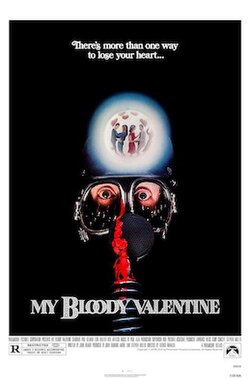
My Bloody Valentine-1981

My Bloody Valentine-1981

Director George Mihalka

Starring Paul Kelman, Lori Hallier, Neil Affleck

Top 20 Horror Films #20

Scott’s Review #367

Reviewed January 9, 2016

Grade: A

My Bloody Valentine (1981) is a perfect slasher film to watch on the romantic holiday of Valentine’s Day or, in fact, any day during the cold and snowy month of February.

The film loses something if watched in summer or at any other time of year, since its dark, harsh feeling is the perfect atmosphere when it’s watched at the right time.

My Bloody Valentine is an underrated gem of the early 1980s- just as Black Christmas was to the 1970s- and both ironically are heralded so by directors such as Quentin Tarantino.

Other, less gritty films received greater exposure and commercial success, but I am proud to name My Bloody Valentine among my Top 20 favorite horror films.

Both are also “holiday-themed” films.

The plot is basic, yet layered, with a unique setting. Rather than a creepy house, a summer camp, or some other tried and true device, we have the ingenious coal mine setting- immediately fraught with great potential.

Think about it- a coal mine is dark, suffocating, creepy, with countless secret passages, the fear of being lost, and running out of oxygen. It is also underground, where help cannot easily be obtained.

The town is aptly named Valentine Bluff (how clever), so Valentine’s Day is a major holiday. The Mayor and police chief figure prominently in the story, and the use of town history makes the film engaging.

Typical for the slasher genre, we have a bunch of horny teens, partying to the max, who decide that the coal mine is the perfect place to throw a Valentine’s Day party, and they do so with gusto.

There are a few middle-aged characters with meaty stuff to do, and the main plot is of the whodunit sort. The killer’s get-up is simply genius.

He (or she) is wearing a completely dark miner’s outfit with an oxygen mask, which emits a heavy breathing sound, adding to the great atmosphere of My Bloody Valentine.

One of my favorite scenes involves the offing of Mabel Osbourne, the earnest, sweet-natured party planner, who is excitedly preparing the annual Valentine’s Day town dance.

She marvels at receiving a box of chocolates with a wonderful poem, only to read it. “Roses are red, violets are blue- two are dead and so are you”! Poor Mabel then has her heart removed, and it is sent (gift-wrapped naturally) to the Mayor and police chief.

The scene is both horrific and comical.

My Bloody Valentine (1981) is a favorite of mine in the genre and carries that genre with its bloodiness, fun storytelling, and wicked charm.

Burn Witch Burn (Night of the Eagle)-1962

Burn Witch Burn (Night of the Eagle)- 1962

Director Sidney Hayers

Starring Peter Wyngarde, Janet Blair

Scott’s Review #316

220px-Night-of-the-eagle-poster

Reviewed January 1, 2016

Grade: B

Burn Witch Burn, retitled for U.S. release from the original British title Night of the Eagle, is a 1962 black-and-white horror film.

It is based on a 1943 novel entitled Conjure Wife.

The film is quite decent and delves into the fascinating and arguably unusual subject of witchcraft. It’s careful not to be too dark a film, and it resembles more of an extended episode of the Twilight Zone. It’s a good episode.

I enjoyed the film’s wit and charm. It never took itself too seriously and added humor and lightness.

Norman, a psychology professor at the local university, is intelligent, successful, and well-adjusted. He has a blonde, pretty, sophisticated wife named Tansy.

The perfect housewife, she coordinates Friday night bridge parties with fellow professors and staff and a Mrs. Cleaver type, the mother character from the famous 1950s television series Leave it to Beaver.

When Norman discovers Tansy is practicing witchcraft and possesses various charms, dolls, and weird things, he forces her to destroy all of them.

This leads to a series of bad events.

Norman is accused of rape by a student, and other dire circumstances occur. Tansy assumes this is a result of the destruction of her witchcraft.

Burn Witch Burn is a fun film that doesn’t take itself too seriously despite its heavy subject matter. Tansy certainly does not look like the stereotypical witch. She is more like a PTA mom; we almost cheer for her.

At the same time, the film is not so over-the-top that it becomes ridiculous, either. I found it entertaining but not a masterpiece or scary.

As the film progressed, I found the action confusing from a story-line perspective, but that was admittedly okay. I went with it and enjoyed it.

For instance, the plot thickens when an enormous eagle affixed to the front of the university building comes into play or the sinister university secretary’s motives are revealed.

The special effects and ambiance of the thunderstorm are worth mentioning. The heavy storm was crucial in making Burn Witch Burn a compelling horror film. It added a heavy dose of spookiness to the events, and the atmosphere was spot on.

Burn Witch Burn (1962) is a fun, late-night horror flick that does not take itself too seriously. It is a worthy film for horror fans to enjoy.

An underappreciated British horror flick.

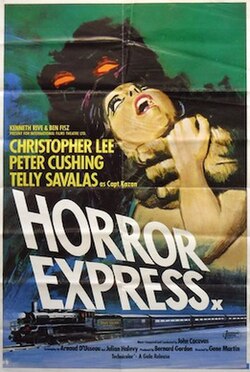
Horror Express-1974

Horror Express-1974

Director Eugenio Martin

Starring Christopher Lee, Peter Cushing, Telly Savalas

Scott’s Review #311

Reviewed December 30, 2015

Grade: B

Horror Express (1974) is a fun 1970s Spanish/British horror film starring legendary horror actors Christopher Lee and Peter Cushing.

A horror version of Agatha Christie’s Murder On The Orient Express, with a bit of camp thrown in, it is an entertaining late-night experience on a low budget.

It is the early 1900’s, and while traveling from Shanghai to Moscow via the Trans-Siberian Express, a British anthropologist named Professor Alexander Saxton (Lee) brings an enormous, mysterious crate on board containing a creature he discovered in a cave.

What we know is that it has something to do with human evolution.

A fellow passenger, Doctor Wells (Cushing), and other passengers become suspicious of the crate and demand that it be opened.

Things go awry, and victims begin to be murdered by the creature (an ape-like monster) and left with eyes completely white with missing pupils and irises.

The best part of Horror Express is the setting. The cozy train is a perfect backdrop for the events, and it makes the film exciting as the different cars are nicely set-decorated.

This lends itself to a sense of entrapment and being unable to escape the creature as it roams freely from car to car.

For a low-budget film, the train sets are quite believable, as are the train sounds. It feels like the actors are on a real train as the tooting horns and the sounds of the tracks are authentic.

Having actors as big as Lee and Cushing lends the film respect in horror circles, and both deliver believable performances.

This film would not have been as good without the talents (and name recognition) of both.

There are also interesting supporting characters, and I didn’t find the acting to be too over-the-top, as is common in similar horror films.

Specifically, the countess’s role and Telly Savalas’s appearance as a Cossack officer investigating the events are interesting.

Fans of this genre of horror will understand that suspension of disbelief is necessary as the plot gets a bit goofy- something about the creature taking the information from the victim’s brain and the victims subsequently turning into zombies- it doesn’t make a whole lot of sense.

Especially towards the end, as some drunken Russians and some weird resurrections happen, but that is somehow okay.

For a late-night viewing with some spirits, you can’t ask too many questions, and Horror Express (1974) is a decent flick.

It Follows-2014

It Follows-2014

Director David Robert Mitchell

Starring Maika Monroe

Scott’s Review #306

It_Follows_(poster)

Reviewed December 23, 2015

Grade: A-

It Follows (2014) is a mysterious, unique, dreamlike (or shall I say nightmarish!) independent horror film that is a pleasant throwback to old-school horror films (my favorites!), with a supernatural twist thrown in.

Newcomer David Robert Mitchell directs the film very well, with wonderful cinematography and creative camera angles.

This film isn’t glossy; it has a raw, almost videotaped feel, which I found wonderful. The film was shot entirely in and around Detroit, giving it a cold, industrial look.

The film begins on a dramatic note, leaving the viewer immediately curious.

A young woman flees her suburban home and nervously stands on the street looking back at her house.  A neighbor asks if she needs help.

She returns, collects her things, and hurriedly drives to the beach. She suspects something or someone is watching her. She tearfully phones her father and tells him she loves him.

The next scene appears to be the following morning, and the woman is lying murdered on the beach in a grotesque position- her leg strangely bent.

This is a fantastic way to begin the film, and it quickly reveals the premise.

The main character is Jay (Maika Monroe), an attractive college-aged girl. She lives with her sister, Kelly, and is good friends with their next-door neighbors, Paul and Yara. Another neighbor and classmate, Greg, also plays a role in the plot.

Jay is on a date with Hugh, and things are going well. They attend a classic film. They sneak into a deserted lot and have sex. Afterward, Hugh chloroforms Jay and the weirdness begins.

A strange woman appears, and Hugh tells Jay she must pass on a curse. Otherwise, an entity in the form of another person that nobody else can see but the victim will get Jay, and she will be doomed.

I love the throwback elements to 1970s and 1980s horror, but it’s vague when the film is set- purposely so, I imagine- as many cars are 1970s and 1980s models.

Only one cell phone is used throughout, but most of the time it could be present or past.

Even the houses appear dated.

Story-wise, It Follows is tough to figure out and open to a certain level of interpretation. Is the film anti-sex? Is the story a metaphor for sexually transmitted diseases?

The victims become possessed by the entity after sex and then must pass it to another unwitting victim, sexually.

I notice some similarities to John Carpenter films- specifically the classic Halloween from 1978. Jay sits in a classroom (ironically in the back row next to the window, à la Jamie Lee Curtis in Halloween) and sees a strange older woman slowly lumbering towards her, eyes fixed on her.

Later, the three main girls casually walk around the neighborhood, engaging in small talk similar to Laurie, Lynda, and Annie on Halloween.

The ending- a scene in the indoor community swimming pool where the kids try to catch the spirit is a bit hokey and unresolved. However, I did enjoy the final scene- a peaceful one in which I was unsure if the entity had been destroyed or remained.

A sequel perhaps?

I give It Follows (2014) major props for its styling and creativity, while giving classic horror fans a good old-fashioned treat without much CGI.

Independent Spirit Award Nominations: Best Director-David Robert Mitchell, Best Cinematography, Best Editing

A Serbian Film-2010

A Serbian Film-2010

Director Srđan Spasojević

Starring Srđan Todorović, Sergej Trifunović

Top 10 Most Disturbing Films #6

Scott’s Review #282

Serbian-film-poster-325x460

Reviewed October 13, 2015

Grade: B

A Serbian Film is a 2010 Serbian horror film that attempts, and succeeds, in breaking down every possible taboo barrier, albeit in a stylish, admirable, artistic way.

The film is not for the faint of heart, and even die-hard, gross-out horror fans might find it too shocking to view.

It is not so much the gore that is challenging- horror aficionados have seen this before.

But rather the blatant display of the subject matter at hand, which delves full speed ahead into pornography, including rape (both sexes), necrophilia (sex with corpses), and child sexual abuse, that is both tough and sickening to watch.

Priding myself on being able to take anything thrown my way in the world of film, I admired A Serbian Film’s bravery in going places rarely explored before.

I felt, however, that the story wasn’t very compelling or particularly well written, and that its primary goal was to shock the audience rather than tell a great story.

Intriguingly, Serbian films have been banned in several countries for their obviously controversial content.

Milos is a semi-retired porn star, now happily married to the beautiful Marija and living a peaceful existence. Although they struggle financially, they manage to get by while raising their six-year-old son, Petar.

One day Milos runs into a fellow porn star, Lejla, who suggests he contact a powerful porn producer and return to the business, citing an enormous windfall to be had since the producer is making more “artistic” films these days.

Milos cannot resist the potential money and meets with the mysterious man named Vukmir. One thing leads to another, and he is once again lured back into the porn industry.

What he is not told is the premise or details of the film he is to appear in, only to show up at the designated filming location.

Predictably, this leads to disaster, and the film’s main plot emerges. Milos is drugged to become a “stud”, bedding and beating almost anything that breathes…..or doesn’t breathe if you catch my drift.

Brazen is a polite way of describing this film. It is perverse and goes way out there. Milos, while drugged, begins to do crazy stuff, not realizing what he is doing, and spirals further out of control as the drugs increase.

The producer, in the film’s brief attempt at a social slant, cites child pornography as being in popular demand, as online viewers clamor for this new form of “art”.

Two scenes stand out as especially gruesome. One involves a pregnant porn star giving birth- she does so, and her counterpart proceeds to rape the screaming baby; the new mother grins in sinister pleasure.

In another, Milos rapes his son, Petar, while Milos’s brother rapes Milos’s wife. Of course, being heavily under the influence, Milos does not realize what he is doing, but the film succeeds in shocking and disgusting the audience.

Both of these horrific scenes have nothing to do with the story and are included to shock the viewer and elicit a reaction.

My criticism is that the grotesque scenes have little to do with the story and are arguably unnecessary to further the plot.

Shocking for the sake of being shocking, the film reminds me in a way of Salo, a brutal art film from 1975, which focuses not on horror, but on the horrific time of Nazi-ism.

Salo is a masterpiece because it contains a powerful, thought-provoking story.

A Serbian Film (2010) is a brave film, but ultimately the story achieves nothing more than being a disturbing, and I never need to see it again.

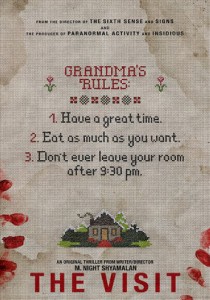
The Visit-2015

The Visit-2015

Director M. Night Shyamalan

Starring Olivia DeJonge, Ed Oxenbould

Scott’s Review #276
80045505

Reviewed September 24, 2015

Grade: B

A modern-day thriller/horror/comedy hybrid (admittedly, it is tough to classify this film as pure horror with the dreaded, watered-down PG-13 rating), M. Night Shyamalan’s The Visit (2015) has moments of genuine scares and surprises.

It delivers a strong twist at the end but relies on clichés, one severely unlikeable character, and a few suspension-of-disbelief moments.

Putting grandparents at the forefront is a clever idea, though it leans on stereotypes. The Visit is a decent watch, but laden with a few misfires.

Paula (Kathryn Hahn), a single mother who has been on the outs with her parents for years but has recently reunited, sends her two children, Rebecca and Tyler, to stay for a week at their grandparents’ farmhouse, whom they have never met.

At the kids’ prompting, Paula decides to go on a romantic vacation with her new boyfriend.

Naturally, when the kids arrive at Grandma and Grandpa’s, strange events happen.

The children are warned never to go into the basement or leave their bedrooms after nine-thirty pm, and the grandparents have a creepy, weird look to them.

Rebecca and Tyler, in true modern horror fashion, arguably contrived at this point, record everything (think Paranormal Activity from 2007) and start to realize something is rotten in the state of Denmark.

The Visit contains positives and negatives.

The mother and the two kids live in New Jersey and the grandparents in Pennsylvania.

They are one state apart, yet Rebecca and Tyler have never met, seen photographs, or spoken to their grandparents by phone, not even to discuss the upcoming visit.

The kids constantly use Skype to communicate with Mom throughout their visit, but no one thinks to chat with the grandparents before embarking on a week-long visit to introduce themselves.

This is a convenient plot manipulation.

Another downside is that the film features one of the most annoying characters in recent memory: Tyler. I am baffled as to whether this was intentional or unintentional.

The kid is about twelve years old and written to be as dumb as possible.

There are at least three to four endless scenes of him rapping, mostly to the video camera, that I found to be an utter waste of valuable screen time and lend nothing to the plot.

Filler, and unnecessary for a ninety-minute movie.

In the end, though, I got the last laugh, as the character, a germophobe, has his face smeared with human excrement.

The third negative I observed is the constant “old people jokes,” which became offensive after a while. The grandparents’ unusual behavior was blamed repeatedly on their age, as if all elderly people were scatterbrained, daffy, or downright strange.

Many seniors are intelligent, useful, and lively, so a couldn’t shake the feeling that the film disrespected older people. The film could have portrayed the grandparents with more dignity.

Now for some positives: the film’s compelling twist at the end was one I didn’t see coming, and I loved that about The Visit.

Rarely is the audience surprised anymore, especially in the horror genre, and I was. Having replayed the film in my mind, the plot makes perfect sense, but is a positive in the heart of the climax.

As for the conclusion, The Visit has a unique slow-motion/dreamlike feel and an odd, classical-type musical score that plays throughout the ending, adding depth to the typical thriller music heard in most genre films.

The oven scene, seen by everyone in early trailers for The Visit, is excellent. When Grandma convinces Rebecca to crawl completely inside her oven to clean it, we know this will not end well.

Additionally, the look and texture of the setting, an old, deserted farmhouse in a small, rural town in the middle of nowhere, create a trapped feeling.

This creates a scary backdrop for the film, and every element screams horror.

The Visit (2015) has genuine scares and will make the viewer jump, and perhaps even shriek. That is what good horror does, yet I am still unsure if this film is more horror or comedy.

Unintentionally so, perhaps.
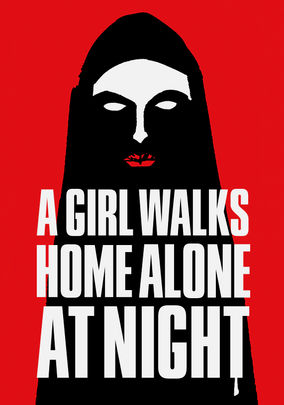
A Girl Walks Home Alone at Night-2014

A Girl Walks Home Alone at Night- 2014

Director Ana Lily Amirpour

Starring Sheila Vand

Scott’s Review #271

70301280

Reviewed August 24, 2015

Grade: A-

A Girl Walks Home Alone At Night is a highly creative, unique, independent horror film from 2014.

One of the many reasons I am a fan of independent cinema is to discover and promote little-seen gems.

The dialogue is in Persian, and the black-and-white cinematography is unique in modern film.

I notice similarities between this film and Let the Right One In (2008) (both the English and Swedish versions) in the frigid mood and love story it envelops.

This film is the debut of director Ana Lily Amirpour, and what a marvel she could become. Despite obvious influences by other directors, A Girl Walks Home At Night has a brilliant freshness and seems original and unpredictable.

The title accurately depicts the main story. A teenage girl (Sheila Vand) walks around the dark streets of a city aptly named Bad City in the Iranian underworld.

The film is shot in Southern California and could double for Detroit.

The girl, who has no name, has strange encounters with a myriad of peculiar individuals, including what appears to be a transgender prostitute, a vicious drug dealer, a nice yet mysterious young man named Arash, Arash’s father, who is hooked on drugs, and a mysterious cat.

She then embarks on a tender flirtation with Arash.

The overall plot, which I found secondary to the film’s look, centers on the Girl’s encounters with these individuals and their relationships with each other.

The Girl is a lonely vampire and feels isolated from society, but it is unclear what she is looking for. She is both destructive and sweet depending on the circumstance.

She takes her aggression out on the bad.

The most striking and impressive aspect is its dark, moody atmosphere. Brooding and cold-looking, the city reeks of death and loneliness.

The Girl speaks very little, so the viewer notices her expressions. Her eyes delve into her soul.

She is the most interesting of the characters, but the others, specifically Arash and the transgender prostitute, have potential, and we are curious to explore more about them.

Arash and his father have more depth than any of the supporting characters- Arash painfully lets his drug-riddled father stay with him and attempts to assist him with his issues.

One assumes that since the father’s wife (Arash’s mother) has died suddenly, he has taken a downward spiral, but this is only suggested to the audience.

We do know for sure where she is- in one scene we see the father angrily look at a photo of a middle-aged woman and is destroyed by her absence. He believes that the woman has taken on the body of the mysterious cat.

Arash caring for his father is a fascinating role reversal.

Wouldn’t we expect the young man to have a drug problem and the father the caregiver? This is interesting in itself.

The influences are plentiful, but most notable from a director’s standpoint is David Lynch. The black-and-white filming, along with the viewer’s point of view in one scene of a car driving down a dark highway, resembles Lynch’s Lost Highway (1997).

The moody background music and slow, methodical pacing give A Girl Walks Home Alone At Night a Lynch feel.

One curious element is The Girl’s interest in 1980s pop music- her bedroom wall is riddled with Madonna and similar pop stars from the 1980s posters.

The Girl even admits to listening to a sappy Lionel Richie tune.

It is unclear whether it even could be the 1980s, as time seems unimportant. The film strangely combines edgy, alternative filmmaking with commercial pop references.

I half expected The Girl to break into a rendition of “Pour Some Sugar On Me”.

I think Amir may be portraying the Girl’s desire to fit into mainstream society, knowing a vampire never can. This theory is proven when The Girl is melancholy when Arash buys her a hamburger, knowing she cannot enjoy it as he does.

Creative, with a dreary atmosphere and intelligent, well-thought-out, A Girl Walks Home Alone At Night (2014) is a strange, murky experience in film experimentation.

Amirpour is a fresh director worth watching.

Independent Spirit Award Nominations: Best First Feature, Best Cinematography

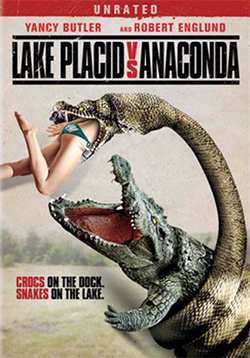
Lake Placid vs. Anaconda- 2015

Lake Placid vs. Anaconda- 2015

Director A.B. Stone

Starring Robert Englund, Yancy Butler

Scott’s Review #267

Reviewed August 16, 2015

Grade: D

Calling Lake Placid vs. Anaconda (2015) a bad film is generous. It is poorly made, written, and acted.

It contains every horror and comedy cliché in the book, so it’s not a film to take seriously; it’s best watched late at night with adult spirits.

The premise is ludicrous, the acting is way overdone, and all characters are “types” and one-dimensional.

Having seen the original Lake Placid (1999) and Anaconda (1999) films (and they weren’t great either), I wasn’t aware this was the fifth film in both franchises and a crossover.

Premiering on the Syfy network in mid-2015, it is a made-for-television feature, and the lack of any real gore is apparent for this reason.

Robert Englund and Yancy Butler, stars of other installments in the franchise, return.

Sadly, this one has no Betty White or Jennifer Lopez (stars of the original Lake Placid and Anaconda, respectively).

Lake Placid vs. Anaconda isn’t trying to be great or even art; it’s an idiotic late-night experience. I didn’t rate the film a solid ‘F’ because it knew what it was and didn’t take itself too seriously, which I respect, at least.

The story begins in the woods near Clear Lake, Maine, as an illegal experiment takes place inside a truck. The serum is being illegally extracted from a sedated crocodile to sell to a giant corporation for profit.

Jim Bickerman (played by horror legend Englund) is paid handsomely to provide information that sets the plot in motion.

A villainous corporate schemer oversees the events. Inevitably, something goes wrong, and the crocodile wakes up and gets loose, encountering large anacondas that are also on the loose.

From this point, we meet other inane characters who round out the film, including a group of bitchy sorority sisters heading to Clear Lake, presumably to pledge and party, and Sheriff Reba (Yancy Butler) and her bumbling team of police officers.

Also integral to the story is one of the sorority sisters’ (Bethany) fathers, Will, who attempts to help Sheriff Reba rescue everyone from the killer reptiles.

Side stories include the laugh-out-loud pledge attempts by some of the sorority wannabees (one is forced to dig a hole in the sand large enough for her to hide in within twenty minutes).

A friendship between the only two sensible girls, Bethany and Margot, a high-level female executive intent on capturing the serum for riches.

And a burgeoning romance between Reba and Will.

Silly personified, the film is meant to be goofy, and the actors play their roles as written.

The film has a shred of realism, and none of the characters have any depth.

From a character standpoint, the worst offender is humorously my favorite. Tiffani is the comically vicious sorority queen. With her constant berating of the new pledges, she regularly demands that they get in the water and swim for her entertainment.

Ultimately, the girls are attacked by the crocodile in the water, giving the camera multiple shots of them swimming underwater while scantily clad.

Is this a 1980s low-budget horror throwback? When the crocodile emerges onto land, the remaining girls flee for safety.

In a hilarious scene, Tiffani and one of her minions are cornered by the vicious crocodile.

The minion asks what to do, and Tiffani replies, “I have an idea,” then promptly pushes the minion toward the crocodile, where it is chewed to bits, letting Tiffani escape.

Later, predictably, Tiffani receives her comeuppance.

I find myself perplexed as to why this film was even made. With a shoestring budget, dated CGI effects, little blood, and a silly plot, one assumes that the franchise’s predecessors were similar ventures.

Laced with one dumb scene after another and hard to take seriously, Lake Placid vs. Anaconda (2015) is as poor filmmaking as it gets, but it’s best taken with a grain of salt and enjoyed for its campy badness.

Horror-comedy for a boozy Saturday night.

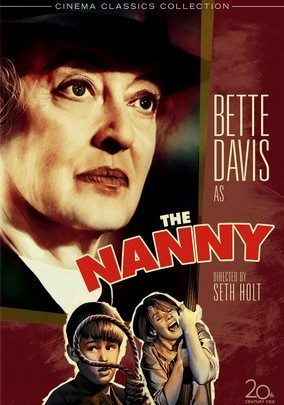
The Nanny-1965

The Nanny-1965

Director Seth Holt

Starring Bette Davis

Scott’s Review #256

70089620

Reviewed July 11, 2015

Grade: B

The Nanny is a 1965 Hammer productions thriller starring legendary film icon Bette Davis as a mysterious nanny caring for a ten-year-old boy named Joey.

Joey has recently been released from a mental institution and returned home to resume everyday life, but has he been “cured”?

There is obvious tension between Joey and Nanny, but the audience doesn’t know what that tension is precisely. Why do they dislike each other? Why is Joey afraid of her?

As the plot unfolds, the suspense and tensions thicken as various events occur and Joey’s parents and Aunt Pen are further fleshed out. Past events are revisited, and the story becomes thrilling.

At one point, long before Joey’s return home, his younger sister has drowned, and the circumstances are vague. It has devastated the family, including Nanny. Joey has been blamed for her death, though he insists that Nanny is the culprit.

Nobody except the neighbor girl believes Joey, and the audience wonders who to believe and who to root for: Joey or Nanny. Davis, like Nanny, brings a warmness to her character, but is she sincere? Is it an act? Is Joey a sweet boy or maniacal?

These questions race through the audience’s minds as the film progresses. When Virginia, the mother, eats tainted food, the obvious conclusion is that the Nanny poisoned it since she prepared it. But why? Did she do this?

As the plot is slowly explained, there are a few chills, though the ending is not too surprising.

Any film starring Bette Davis is a treasure, though admittedly, it is not her finest work. Still, her finest work is challenging to match.

The Nanny is a good film, though not great. It is shot in black and white, which is a nice touch for a thriller.

The main reason to watch Davis’s performance is that it is always mesmerizing. Traditionally playing gruff, mean, or bitchy parts (especially in her later years), The Nanny allows Davis to play a sympathetic role.

She is seemingly sweet, proper, well-organized, and a perfect nanny on paper.

The role of Virginia, played by Wendy Craig, is a bit too neurotic and slightly over-acted. She is rather one-note as the fretting mother worried about her son. The character of the father is also a bit one-dimensional.

The Nanny is more of a classic thriller from the 1960s that is often lumped together with some of Bette Davis’s other films around the same period (Dead Ringer-1964, Hush, Hush, Sweet Charlotte-1964, and Whatever Happened to Baby Jane? -1966), and are in large part superior to The Nanny. As a stand-alone, it is a decent film.

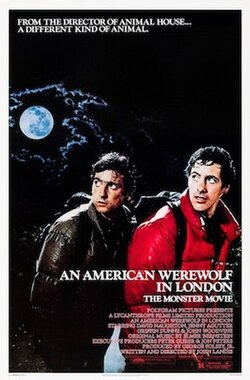
An American Werewolf in London-1981

An American Werewolf in London-1981

Director John Landis

Starring David Naughton, Jenny Agutter

Scott’s Review #253

Reviewed July 2, 2015

Grade: B+

A melding of British-American horror and comedy, An American Werewolf in London (1981) provides entertainment while also being a campy and silly.

Two American buddies, Jack (Griffin Dunne) and David (David Naughton), traverse the English countryside with backpacks in tow on a spring break jaunt of sorts.

One is viciously attacked and killed by a strange werewolf, setting off a series of strange occurrences that play out over the remainder of the film.

The other is wounded.

From this point on, the film is told from the perspective of one of the men, as the other appears to him in visions, warning him of his inevitable transformation into a werewolf.

An American Werewolf in London does not intend to mock the horror genre, but it is certainly campy and over-the-top.

Despite the cult-classic accolades thrust upon the film, which I respect, it is not among my favorites, though it has grown on me.

I would have preferred it to lean more toward horror than comedy, because it comes across as a spoof, with the main characters overacting.

The film has a silly quality. It is light fare instead of dark or morbid, and even the kills are meant to be fun, not horrific. In a way, it is almost cheesy.

This is not to say that the film is completely subpar. It is decent, but not very believable, and I think that is a distraction and a missed opportunity.

However, my favorite characteristics of this film are the makeup/special effects and the musical score, which features such fitting tracks as “Moondance”, “Bad Moon Rising”, and “Blue Moon”.

Does it have an intelligent theme? The makeup, especially during the reanimation sequences, is creative and still impressive today, considering the film was made in 1981.

Besides, the best scene of the film is undoubtedly the “Slaughtered Lamb” scene when Jack and David stumble upon the aptly named pub filled with interesting, blue-collar-looking locals.

When one of the tourists inquires about a mysterious five-pointed star on the wall, the pub dwellers grow angry and cold, leaving the young men confused and intrigued.

This scene is full of interest, and I only wish the pub characters had more of a chance to shine, as they seem benevolent and have potential backstory.

I would have enjoyed learning more about these folks’ history.

Sadly, the focus is by and large on Jack and David and a poorly constructed love interest- Nurse Alex Price, who is not to be taken at all seriously and played for one-dimensional laughs.

A lighthearted, sort-of fun late-night flick, An American Werewolf in London is a cult film, though I would not agree with the “cult classic” distinction.

Oscar Nominations: 1 win-Best Makeup (won)

The Babadook-2014

The Babadook-2014

Director Jennifer Kent

Starring Essie Davis

Scott’s Review #247

70300205

Reviewed June 14, 2015

Grade: B

The Babadook (2014) is an Australian (English-language) psychological horror film about a mysterious, haunted book that torments its owner or owners.

Touted as one of the scariest films of 2014, I kindly beg to differ, though admittedly the film does contain some genuine frights and jumps.

What happened to the horror genre, where frightening films haven’t been made since the 1970s?

Exceptions like The Conjuring (2008) deserve mention.

The Babadook tries to be scary without CGI or extravagant effects, but it has a classic feel.

Amelia, the mother in the story, has tragically lost her husband, Oskar, in a terrible car crash on the way to the hospital to give birth to her son Samuel.

Now six years old, Samuel begins to exhibit signs of psychological problems as he becomes terrified of an imaginary monster.

After a children’s book, Mr. Babadook mysteriously appears in their home, and Amelia reads it to Samuel; even stranger events occur throughout their house.

The film has remnants of The Sixth Sense (1999)- a loner, bullied kid is haunted, and a disbelieving single mom follows along as a ghost story, and questions of who is alive or dead are explored.

The father, Oskar, is instrumental in the storytelling. Because of this, the viewer is often confused throughout, but that is not necessarily a knock on The Babadook.

It is not exactly clear to me if Amelia is the central character or if that honor belongs to Samuel- the interesting part of the film is the relationship between mother and son.

The Babadook is a scary story. Can a book come to life and haunt? So says the film and that is worth thinking about.

In horror, there can be some ridiculous premise that is so unrealistic it cannot even be fathomed.

Where the film suffers in my view is that it is not that scary. Having something jump out at you or some other surprise is nice, but where is the terror? The exact motivations of the book also remain unclear.

I admire The Babadook for attempting to bring back old-school horror to modern audiences and telling a solid, haunting story.

However, the film did not quite measure up to the hype surrounding it.

The great film reviews are a bit much as I do not believe The Babadook (2014) is quite on the level of one of the scariest films ever made.

Madhouse-1974

Madhouse-1974

Director Jim Clark

Starring Vincent Price, Peter Cushing, Adrienne Corri

Scott’s Review #233

220px-Madhouseposter[1]

Reviewed April 3, 2015

Grade: B-

Madhouse, a 1974 British horror film, stars horror icon Vincent Price, who portrays a sympathetic Hollywood actor who is unsure of his sanity after the grisly murder of his trophy fiancée, whom he may or may not have been responsible for murdering.

Mainly set in London, Madhouse also stars famed British actors in the latter stages of their careers, such as Peter Cushing, and is a treat for classic British horror fans.

The look of the film is stylistic and effective in the mood- the story, while silly, is also fun.

Paul Toombes (Price) is a renowned actor best known for his portrayal of Dr. Death in a successful film franchise. He seemingly has it all and is the envy of his contemporaries- wealth, notoriety, and a glamorous blonde fiancée named Ellen.

After Ellen is murdered by someone dressed as Dr. Death, Paul is unable to remember the circumstances or his whereabouts during the murder.

After spending years in a mental institution in a confused state, he is summoned to London to mount an acting comeback of sorts, reprising his Dr. Death alter-ego.

As the bodies begin to pile up, a whodunit commences- is Paul Toombes the killer, or is someone impersonating him?

The film itself is quite pleasing to a horror fan like me. The deaths, while silly, are fun and campy.

Mostly all female victims, a comical aspect is how the victims, when cornered by the killer, simply scream and stand there waiting to be sliced.

Wouldn’t they fight back in real life?

This film is certainly not realism at its finest, but it is a fun horror film. It is a bit exaggerated and over-the-top in a campy way, but it is also true to the 1970s style, with point-of-view scenes from the killer’s perspective.

A wonderful aspect of this film is the inclusion of real clips from old Vincent Price films (The Raven, The Pit and the Pendulum, and House of Usher), to name a few, featuring the deceased horror god Boris Karloff and Basil Rathbone.

Since the plot features Price as a former horror actor, this is a wonderful opportunity to showcase classic horror films from long ago, and it works perfectly.

I enjoyed the television scenes within the film plot as Paul revives his career and shoots a series for the BBC. The film chooses interesting, haunting sets, and Cushing’s character, Herbert Flay, and his zany wife reside in a spooky, vast mansion with eerie spiders that the wife is obsessed with.

The set pieces are great and very Halloween-like. And the spider-eating-flesh scene is excellent!

The tag team of Price and Cushing is fun to watch- both horror stalwarts connect well, and both actors play off of each other successfully.

They had a ball while making this film.

Towards the end of the film, the plot becomes confusing, and the big reveal of the killer’s identity and the surrounding motivations is a disappointment.

The conclusion to the film is silly and makes little sense, although that is secondary to a film of this genre that borders on camp.

Madhouse (1974) is an enjoyable midnight flick starring two of the classic horror genre’s top icons.

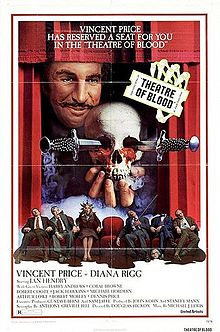
Theatre of Blood-1973

Theatre of Blood-1973

Director Douglas Hickox

Starring Vincent Price, Diana Rigg, Ian Hendry

Scott’s Review #230

220px-Theatreofbloodposter

Reviewed March 23, 2015

Grade: B

Theatre of Blood (1973) stars Vincent Price, a long-time fixture in the classic/campy horror scene, as a demented Shakespearean theatre actor who enacts revenge on critics who fail to recognize him for a coveted award he cherishes.

Price, as always, frighteningly good, delivers a campy, but not ridiculous, turn as the crazed actor.

Price’s appearance alone- tall, wiry, with sinister facial expressions- poises him perfectly to believability in any dastardly role he portrayed in his heyday, and the performance he gives as Edward Lionheart is no exception.

Not solely a campy, melodramatic horror film, Theatre of Blood rises above that categorization with humorous tributes to Shakespeare and a unique chronicle of the Shakespearean works used to systematically take out the critics one by one, about the Shakespearean story, quite frankly, in a comical and witty way.

Price eerily dresses in many different elaborate costumes to commit the murders- a wine-tasting expert, a television host, among other interesting characters, and oftentimes, taunts his victims before permanently dispensing them.

The film is quite British in tone and humor, and is done in a tongue-in-cheek manner, so that the murders are not to be taken at all too seriously.

The critics themselves- seven or eight of them- are deliciously fun. One is a loud, boisterous, fat man who always has his beloved poodles at his side.

What happens to him and the dogs is better left unsaid.

Another is an uptight, sophisticated woman (played by Price’s real-life wife Coral Browne). Several of the critics are depicted as comic villains, so their demises are not particularly devastating for the audience, as they are, to begin with, rather unlikable.

I found myself rooting for Lionheart and looking forward to the next murder!

One criticism involves Diana Rigg, who plays Price’s daughter Edwina, accomplice to his dirty deeds. Well known for her starring role in On Her Majesty’s Secret Service and the 1960s Avengers series, Rigg has little substance to do in Theatre of Blood.

Perhaps by 1973, her film career was on the decline, and she was no longer winning the coveted roles. I would have loved to see her sink her teeth into a meatier role.

A sidekick, Edwina, could have done much more.

The film belongs to Price, and the unique storytelling of Shakespeare’s works was made possible only by this great actor.

Not overly serious and played for some laughs, Theatre of Blood (1973) is successful in its telling of an interesting British horror story.

It’s a nice late-night treat for fans of the British horror genre, especially.

Annabelle-2014

Annabelle-2014

Director John R. Leonetti

Starring Annabelle Wallis

Scott’s Review #186

80013775

Reviewed October 17, 2014 

Grade: B+

Annabelle (2014) is a classic, edge-of-your-seat ghost story that delivers on creepiness and surprise.

Set in California circa 1969, John (Ward Horton) and Mia Gordon (Annabelle Wallis) are a happy, all-American young couple.

He is a doctor, and she is beautiful and pregnant with their first child. They attend church each Sunday, are friendly with the neighbors, and have a strong sense of community.

As a surprise, John gives Mia a life-sized doll as a gift, adding to her existing collection of interesting dolls.

Soon, strange events begin to occur: a home invasion, a fire, a bizarre elevator experience, and creepy drawings by the neighbor’s children.

The film eventually dives into murkier territory when a strange, religious woman, played by Alfre Woodard, is introduced, and the focus shifts to spirits, soul-taking, and the occult.

What sets Annabelle apart from similar horror contemporaries is its suspense.

As the audience, we know something bad will happen, but we don’t know when.

Unlike many horror films that slice and dice for shock value, Annabelle does not. Instead, the film relies on foreshadowing and anticipation, making the eventual jumps scarier!

Mia’s constant use of an electric sewing machine and Mia’s attentive watching of news coverage of the Manson murders are clues as to what will come next.

A scene set in the middle of the night as a home invasion takes place next door is shot exceptionally well, like Alfred Hitchcock’s Rear Window (1955), with no dialogue.

What the audience sees inside the house from across the yard as violence occurs is frightening.

In the same scene, we know the home invasion will target Gordon’s house, but when will it strike?

Another effective scene shows a seemingly innocent little girl running toward another character in a separate bedroom. Still, she turns into a maniacal fiend, and the thudding footsteps make it terrifying.

I genuinely got scared during a few scenes!

Wisely avoiding the all-too-frequent CGI effects, Annabelle instead takes the traditional route, using genuine scares drawn from the unknown and the anticipation and dread of what’s to come.

The fantastic musical score composed by Joseph Bishara adds to the anticipation.

Annabelle is a prequel to the equally scary The Conjuring (2013). The first scene is the same as that from the earlier film, where two nurses explain how they obtained the doll, Annabelle, and cannot get away from her.

The final act delves into the spiritual world of evil- a soul (presumably Mia’s or her babies’) must be sacrificed to relinquish the curse put upon her by Annabelle’s original owner.

A surprising figure helps bring this film to a close.

Annabelle (2014) is an old-school horror film done very well.

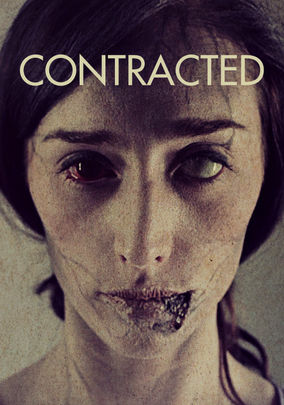
Contracted-2013

Contracted-2013

Director Eric England

Starring Najarra Townsend

Scott’s Review #184

70296585

Reviewed October 12, 2014

Grade: B-

It seems that many reviewers of Contracted (2013) are looking for a deeper meaning to the film or debating whether a particular scene was a rape or a consensual sexual act.

I looked for neither and just took the 2013 independent horror film at face value.

I don’t view the film as worth overanalyzing or digging too deep beneath the surface.

The plot is rather basic.

Samantha is a young woman on the outs with her girlfriend Nikki. She goes to a party where her friend Alice gets her drunk, and Samantha winds up talking to a handsome stranger named BJ.

Samantha agrees to have sex with him in his car, but at one point begs him to stop. It is unclear what transpires.

The next morning, Samantha wakes up feeling strange- she assumes she is hungover, but gradually her hair, teeth, and fingernails begin to fall out, and her eyes are hideously bloodshot.

Her symptoms slowly worsen as she transforms into a strange monster.

In the mix are supporting characters, Riley, who is in love with Samantha even though she is a lesbian and rebuffs all of his advances, and Samantha’s Mom, who is convinced that Samantha is using drugs again (which she is).

I did not find the film to be a metaphor for punishing women or lesbians for a one-night stand. I viewed it as a fun, Saturday late-night horror flick.

If I were to dissect the film critically, the premise is rather absurd- a young woman turning into a zombie/monster after having sexual relations with a stranger.

Silly, but I am not expecting highbrow art from this type of film. The acting, especially of the actress portraying Samantha, is below average at best, and horrid at worst.

The three central female characters (Samantha, Nikki, and Alice) are presumably all lesbians or bisexual; especially Nikki is irritated when a man dares to hit on her, as if they should magically already know she is a lesbian.

Nikki is very unlikeable. She seldom returns Samantha’s calls and keeps pushing her away.

I did not buy any of the three as lesbians- not to be stereotypical, but they each had feminine-only qualities.

The way Samantha’s mother kept insisting that Samantha was on drugs became irritating by the fifth time she brought it up.

Why did Riley pursue Samantha ad nauseam when he was aware that she was a lesbian? What is BJ’s motivation for presumably giving Samantha a drug? She was already drunk enough to have sex with him- why did he want to turn her into a monster?

This plot point is unclear.

The film is not character-driven; it is strictly plot-driven, and like most horror films, is meant to be that way. The finale is quite satisfying, as Samantha’s fate, along with her mother’s, is left up in the air.

The same cannot be said for Nikki or Alice, as both receive their just desserts.

Contracted (2013) isn’t a masterpiece, but it’s a fun little horror film to enjoy. Just don’t ask too many questions.

Argento’s Dracula-2012

Argento’s Dracula-2012

Director Dario Argento

Starring Thomas Kretschmann

Scott’s Review #158

70242567

Reviewed August 22, 2014

Grade: C-

As a huge fan of Dario Argento, his classic horror films such as Suspiria (1977) and Deep Red (1975) would surely land in my Top fifty of all time, not just in the horror genre; this film is a bit of a mess.

As I understand it, the story follows a young man named Harker, whom Count Dracula hires to work in his castle as a Librarian.

His wife, Mina, arrives later in the story and becomes the focal point of the film from that point on.

Another female named Tania rises from the dead to seduce and bite Harker. Dracula intervenes and wants to claim Harker as his own.

From this point on, Harker’s wife Mina attempts to look for her husband within the halls of Dracula’s castle.

The plot is hard to follow, uncompelling, and not one of Argento’s finest efforts.

An homage to Hammer horror films of the 1950s and 1960s, the film comes across as too campy, poorly performed, and miscast in places.

The actor who plays Count Dracula is not convincing and seems a strange choice for the part- too nice-looking?

It feels like Argento didn’t know whether to make the film serious or go completely over the top. Since when can Dracula change forms into a grasshopper, owl, and other creatures besides a bat?

Other characters like the Priest were introduced for no other purpose than to be killed.

On the positive side, the art direction is unsurprisingly amazing.

The film is filled with creepy sets, especially inside the mansion, and has a distinct 1970s feel. The ambiance effectively portrays a spooky, dark setting.

All in all, though, Argento’s Dracula (2012) is a disappointing experience, and much better films of the same subject matter have been covered in the past.