Category Archives: John Kapelos

The Breakfast Club-1985

The Breakfast Club-1985

Director John Hughes

Starring Judd Nelson, Molly Ringwald, Emilio Estevez

Top 250 Films #131

Scott’s Review #755
Reviewed May 8, 2018

Grade: A

The Breakfast Club (1985) is one of the most beloved films of the 1980s and perfectly captures what it was like to be a teenager at the time.

Containing both innocence and authenticity rarely found in films targeted at younger audiences (and there were plenty in the 1980s), the film is timeless and holds up exceptionally well, still feeling fresh.

Director John Hughes avoids cliches and creates genuine truth in cinema. The theme song, “(Don’t You) Forget About Me,” is nearly impossible to hear without associating it with this film.

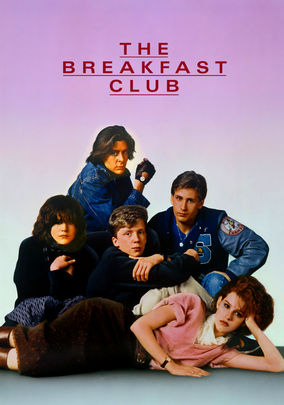
The storyline is uncomplicated: five high school students (Bender, Claire, Andy, Brian, and Allison) from different social classes gather one Saturday morning in the high school library for a day of detention.

Each student appears to know the others, but only peripherally, having little in common.

Assistant Principal Vernon (Paul Gleason) assigns them to complete a thousand-word essay by the end of the day. The group engages in mischievous antics, squabbles, and discusses their respective roles and troubles in life throughout the day.

The film looks and feels like a small, independent feature rather than a big-budget offering, which is a great compliment. The cast is very small- only the aforementioned six principles and two minor characters.

The setting is almost entirely inside the walls of a suburban high school, with only a few exterior shots. Mainly, what succeeds is the characters’ interactions, rich dialogue, and good texture, along with underlying insecurities that make the screenplay bristle with genuine angst.

It is tough to pinpoint who the lead characters would be, but arguably Claire and Bender (Molly Ringwald and Judd Nelson) are the pair expected to unite as a couple, as they do in the conclusion- this is predictable yet sweet.

Unexpectedly, however, the film pairs Andy and Allison (Emilio Estevez and Allie Sheedy).

Both couples are complete opposites; Claire and Bender even despise each other for most of the film, yet they realize their mutual attraction.

Careful not to weigh down the film with too much heavy drama, Hughes, who also wrote and produced the work, peppers in some comedic moments.

Gleason is the easy foil as the sole authority figure, a bit too dedicated to his job of humiliating and disciplining the students, but he does get his due humorously.

Either on-screen or off-screen, no adult figures are written in a positive light, giving The Breakfast Club a complete teenage perspective.

But the main appeal lies with teenagers and the message that Hughes successfully relays: that of the misunderstood young adult.

Each character is unhappy in some way and feels placed into a category or defined by the cliques they belong to, whether they want to or not.

Hughes makes the film a treasure in terms of relating to the characters- everyone remembers high school and the insecurities wrestled with while attempting to get good grades and obtain acceptance.

Hughes brings these aspects to life with his slice-of-life tale.

Even if not every character is immediately recognized by the viewers, each is empathetic nonetheless.

When Andy reveals his father’s criticisms, or Bender painfully recounts his father’s physical abuse, we feel for them, suddenly seeing the strong athlete or the burnout from our high school days in an entirely new way.

Mousy Allison gets a makeover from Claire and suddenly shines like a new dime- finally not being ignored. Brian’s overbearing parents’ pressures are almost too much for him to bear.

After the film, we are left to wonder what will happen on Monday morning during homeroom. Will the group continue their new friendships (or more) or return to the normalcy of their respective peer groups?

Hughes wisely does not satisfy our piqued curiosity but rather leaves it to our imagination.

The Breakfast Club (1985) holds appeal for the masses without feeling cliched or put upon- only feeling insightful and inspired to accept others we may have preconceived notions about.
Tootsie-1982

Tootsie-1982

Director Sydney Pollack

Starring Dustin Hoffman

Scott’s Review #1,449

Reviewed November 2, 2024

Grade: A

Dustin Hoffman is perfectly cast in the romantic comedy Tootsie (1982), a blockbuster hit from 1982 with much going on within its cinematic walls and a progressive-leaning slant.

Sydney Pollack directs and also has a supporting role in the film.

In addition to Hoffman, Jessica Lange, Teri Garr, Dabney Coleman, and Charles Durning give all-star performances.

Tootsie is genuinely funny and a treat for anyone who has ever auditioned or been interested in acting or theater. The popular soap opera, or daytime drama, genre features directors, producers, and actors who intertwine.

Romance, drag, wacky setups, insecurities, and social commentary on gender inequality are analyzed, making Tootsie more relevant than most romantic comedies and an unforgettable experience.

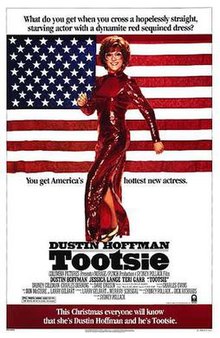
Hoffman plays New York actor Michael Dorsey (Dustin Hoffman), a talented yet opinionated perfectionist unable to find work. His flustered agent (Pollack) sends him on a soap opera audition that goes poorly.

Michael decides to reinvent himself as actress Dorothy Michaels and wins the part. What was supposed to be a short-lived role turns into a long-term contract, but when Michael falls for his castmate Julie (Jessica Lange), complications develop.

Hoffman flawlessly merges with Dorothy, a feminist,  to make her a character the audience loves and champions. This is a risky assignment and could easily make the character a goof or cause them not to be taken seriously.

Not only does Hoffman look convincing in a dress, wig, heels, and a feminine southern accent, but he also makes us forget he’s a man.

The hilarity of other characters not knowing Dorothy is Michael is there when a romantic quadrangle develops. Neurotic Sandy Lester (Garr) is in love with Michael, while he is in love with Julie, who thinks Michael is Dorothy. Finally, Julie’s father, Les (Durning), falls for Dorothy.

The New York setting works wonderfully as struggling actors, greedy agents, and temperamental directors co-exist on tense sets, over dinners, and at many schmoozy parties. This presents the grit of New York show business in the 1980s, when the city was crime-infested and dangerous.

The hustle and bustle perfectly showcases the time.

Pollack and screenwriters, Larry Gelbart and Murray Schisgal, add satire to the soap opera, or as mentioned in the film, the politically correct, daytime drama world.

The horny and inept longtime cast member, John Van Horn (George Gaynes), needs a teleprompter while the sexy ingenue April (Geena Davis) prances around in underwear. Hurried script rewrites and pages of dialogue to memorize make the cast frazzled and rushed.

Tootsie takes an important, though lighthearted, approach to sexism, and at least it’s recognized. Dorothy scolds her boss and director, Ron (Coleman), for calling her demeaning nicknames like ‘Tootsie’ and for treating Julie, whom he’s casually dating, poorly.

Michael begins to realize that he doesn’t treat Sandy well either, so he learns from his experience of being judged as a woman on beauty rather than anything else.

It forces the audience to realize this, too. Tootsie was released in the early 1980s when women’s liberation was strong, and more women were in the workplace, so the message was timely.

The producer of the fictional soap opera is female, which enhances the gender message brought across.

Still, the comedy takes center stage, and the film isn’t a message movie. The funny moments feel fresh as the characters work their magic. Julie first assumes Dorothy is a lesbian when they nearly kiss, and Sandy thinks Michael is having an affair with Dorothy, which means he is having an affair with himself.

The antics go on and on, resembling the classic Some Like It Hot (1959), especially the tender moments between Les and Dorothy.

Tootsie (1982) holds up well decades after its release. Smart dialogue, witty sequences, and strong characters make it a timeless treasure to revisit often.

Oscar Nominations: 1 win-Best Picture, Best Director-Sydney Pollack, Best Actor-Dustin Hoffman, Best Supporting Actress-Jessica Lange (won), Teri Garr, Best Screenplay-Written Directly for the Screen, Best Cinematography, Best Film Editing, Best Original Song-“It Might Be You”, Best Sound

Sixteen Candles-1984

Sixteen Candles-1984

Director John Hughes

Starring Molly Ringwald, Michael Schoeffling, Anthony Michael Hall

Scott’s Review #1,389

Reviewed August 14, 2023

Grade: B

While recently re-watching a string of John Hughes-produced or directed films from the 1980s, I set upon them with fresh eyes.

Some scenes or themes that worked in the mid-1980s would be inappropriate in a more sensitive, post-Me Too! era. movement.

Hughes, of course, was the king of the teen angst, coming-of-age, romantic comedies that usually starred Molly Ringwald.

Sixteen Candles, Hughes’s first directorial effort, was released in 1984 and launched him to superstardom and immense popularity. Films like The Breakfast Club (1985) and Pretty in Pink (1986) would follow to much acclaim.

What he did so well was provide maturity and a message to the otherwise dumb and raunchy comedies that populated the decade. He brought a fresh female perspective, whereas others were typically male and hormone-driven.

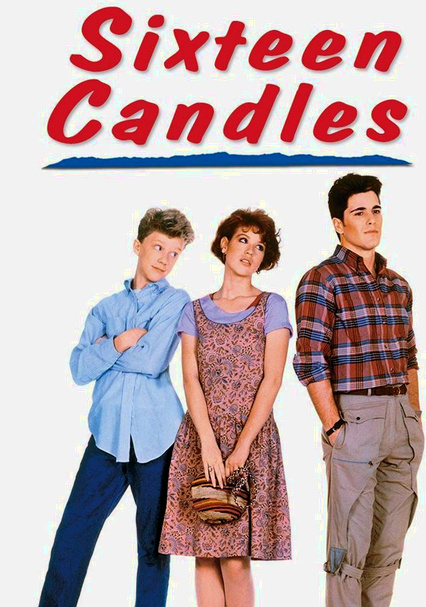
Already angst-ridden Samantha (Molly Ringwald) wakes up on the morning of her sixteenth birthday to find her busy family has completely forgotten her special day.

Samantha already pines for the handsome senior Jake (Michael Schoeffling), but worries that her dorkiness and lack of sexual experience will be a turnoff for the popular boy.

Meanwhile, Samantha must constantly rebuff the affections of nerdy Ted (Anthony Michael Hall), the only boy in the school who seems interested in her.

As enjoyable as Sixteen Candles is, I’d list it as the weakest of the Hughes films. It serves as more of a blueprint for the genius he would become.

Ringwald carries the film with ease, which is all the more impressive since this was one of her first film roles. She infuses Samantha with a blend of confidence, insecurity, and worry, so that most American teenage girls could see themselves in her.

Pretty but not a pinup blonde, Samantha is intelligent and the girl next door. She lives in a suburban neighborhood, is middle-class, has loving but distracted parents, and siblings focused on their trials and tribulations.

Most can relate to that.

A wonderful and tender moment between Samantha and her father, Jim, played brilliantly by Paul Dooley, nearly moved me to tears. His wisdom and kindness, as Samantha emotionally reveals her love for Jake to her dad, are warm and solid, epitomizing what a dad should be to his daughter.

A series of tepid misunderstandings occurs between Samantha and Jake, who, ironically, has noticed her and shares her attraction. She freezes when face-to-face with him and flees, so he naturally assumes she is a bitch and has no interest in him.

It takes so long for the lovebirds to connect that many possibilities and scenes go unexplored. The film ends as soon as they reveal their feelings, leaving the audience with little to celebrate.

We also know almost nothing about Jake. He is a rich kid whose parents are vacationing in Europe, but what makes him tick? He could have any girl in high school and date the pretty blonde girl, but what makes him so drawn to Samantha?

The casting of the four grandparents serves no purpose other than to provide comic relief and to convey an inaccurate message about how bumbling older people are.

One refers to Samantha’s ‘boobies’ while another stinks up the bathroom.

Worse yet, the inclusion of a foreign exchange Asian student named Long Duk Dong (Gedde Watanabe) is riddled with cliches and stereotypes only played for laughs.

These characters are caricatures.

Finally, the groping and taking advantage of drunk female characters now feels dated if not flat-out inappropriate. In 1984, the scenes are meant to be funny.

Still, Sixteen Candles (1984) accurately depicts the loneliness and problems that nearly every teenager has faced throughout history. With a warm message of belonging and a sweet subtext, the film is a recommended watch, but be wary of its stereotypes.

Legally Blonde-2001

Legally Blonde-2001

Director Robert Luketic

Starring Reese Witherspoon, Luke Wilson

Scott’s Review #807

Reviewed August 30, 2018

Grade: B+

Legally Blonde (2001) is a film that by all accounts should have been a hot mess, but for some reason is a great ball of fun. High art it ain’t by any means, and the plot is implausible beyond belief, and suspension of disbelief must be securely tucked away.

Despite portraying more serious roles both before and after this film, Reese Witherspoon is largely responsible for the success and is closely associated with this role.

Quite simply, all the elements manage to align with perfection in this film.

Elle Woods (Witherspoon) is president of her sorority at a Los Angeles college. Clad in fluffy pink attire and carrying her cute dog everywhere she goes, she epitomizes the stereotypical “dumb blonde”.

However, she does carry a 4.0 grade point average in fashion.

Expecting a marriage proposal from her upper-class, snooty boyfriend, Warner, Elle instead finds herself dumped due to not being serious enough.

Determined to prove herself worthy, she manages acceptance into Harvard Law School, along with Warner, and embarks on hi-jinks and adventures.

Warner’s fiancee and a potential new love interest cause turmoil for the boisterous Elle.

Legally Blonde never takes itself too seriously and is simply a fun, silly-minded, comic adventure. Audiences will likely chuckle and smile along with Elle’s adventures as she gets into one pickle after another, always determined to prove her intelligence.

To be clear, the film itself is very formulaic and could easily have been trivial and uninspired resulting in a bomb. But Witherspoon shines in the lead role adding a likable, charming quality to the character.

The actress possesses great wit and comic timing so that her character becomes more of a champion and we root for her to overcome obstacles and succeed.

By miles, she is the standout in the film.

Suspension of disbelief is at an all-time high. In “real life” there is no way Elle would ever make her way into the elitist Ivy League school brandishing a pink resume or other silly tricks to be cute and appealing.

Nor would she ever likely be so instrumental in winning a murder case so quickly. To nobody’s surprise, Elle eventually graduates with flying colors and is honored with giving a graduation speech inspiring those around her.

But as implausible as these situations are, they are also Legally Blondes’ appeal.

The supporting characters are pure caricatures, especially the main foils (Warner and Vivian- who take Elle’s place as fiancee). Both are the villains, Vivian going so far as to embarrass Elle by inviting her to a stuffy party under the guise of it being a costume party.

In the end, one of the characters “turns good”, another common element of predictable films of this nature. But again, the film is just pure and simple fun, so these stereotypes are okay.

In more modern times (not that 2001 was so long ago), the film would have not been directed by a man, but rather by a woman.

Screenwriters Kirsten Smith and Karen McCullah Lutz prepared a female-driven film that was based on a novel by Amanda Brown.

Why a man was chosen to direct is beyond me, but, alas, this is the way things were at the time.

Interestingly, another recent film that I reviewed, My Big Fat Greek Wedding (2002) would work perfectly as a now retro romantic comedy double feature along with Legally Blonde (2001).

Both are fun and light but also celebrate strong female characters.

Legally Blonde borrows much from the 1995 brilliant similar genre Clueless but is not as great as that film. Still, the film is an inspired effort due largely to the charms of its lead star.

The Shape of Water-2017

The Shape of Water-2017

Director Guillermo del Toro

Starring Sally Hawkins, Richard Jenkins, Michael Shannon

Scott’s Review #705

Reviewed December 16, 2017

Grade: A

Director Guillermo del Toro created a lovely Beauty and the Beast-style film, The Shape of Water (2017). It is gorgeous to look at, and the story is intelligent and sweet to experience.

Thanks to a talented cast led by Sally Hawkins, the film is part drama, part science fiction, even part thriller, but touching to one’s heart and a lesson in true love regardless of outward appearances.

Vanessa Taylor co-wrote the story, giving it a needed female perspective to perfectly balance the traditional male machinations.

The setting is Baltimore, Maryland, in the early 1960s. The Cold War is ongoing, pitting the United States and the Soviet Union against each other.

Both sides are mistrustful of the other.

Kindly and mute, Elisa Esposito (Hawkins) is a curious and whimsical young woman who works as a cleaning lady at an Aerospace Research Center.

When she stumbles upon a mysterious “shape” being held prisoner for experimentation, she slowly communicates with and befriends the creature, eventually falling madly in love with him.

The “asset,” as the scientists like to call him, is an amphibian/humanoid that needs saltwater to survive. Elisa sees an opportunity to help her love escape captivity, and off she goes.

Hawkins exudes warmth and fills Elisa with courage and astounding determination. Not uttering a word is a tricky feat for an actor to challenge, but instead of words, Hawkins successfully provides a vast array of emotions to reveal how Elisa feels.

Despite her “handicap,” she is a strong woman who speaks her mind on more than one occasion, using sign language to express her frustration. Hawkins gives a fantastic and believable performance.

In excellent and vital supporting roles are Richard Jenkins as Elisa’s friend and neighbor, Giles, a closeted gay man who works as a commercial artist. Jenkins fills this character with intelligence, heart, and empathy as he struggles with his issues of alcoholism and loneliness- unable to be accepted for who he is.

Octavia Spencer shines as witty and stubborn Zelda Fuller, Elisa’s best friend and co-worker. Zelda has her domestic problems but is forever there for her friend, and Spencer gives her character zest, humor, and energy.

Finally, Michael Shannon plays the dastardly and menacing Colonel Richard Strickland, the man who found the “asset” in the rivers of South America and has a lovely family.

Each character is written exceptionally well and has a storyline rather than simply supporting Hawkins’s character.

The audience becomes involved in Giles, Zelda, and Strickland’s private lives, and we get to know and care for them—or hate them, as the case may be.

Giles, harboring a crush on a handsome pie shop owner, is afraid to reveal his feelings. Zelda, with a lazy husband, dutifully takes care of her man, though she is as sassy as they come. And Strickland lives in an all-American family with a pretty wife and two kids, unaware of his shenanigans.

The film is a gorgeous and lovely experience with a magical element. The opening and closing sequences, shot underwater, resound in beauty as objects float along in a dreamy way.

The narrator (Jenkins) takes us on a journey to explain the events of the story.

At its core, The Shape of Water is a romantic love story, and my favorite scenes—those of Hawkins and the “asset”—are to be treasured. Yes, the two do make love, which may be too much for some, but the scenes are tasteful and important, showing the depth of the characters’ love for one another.

Cherishing is how Elisa uses music and hard-boiled eggs to communicate with the “asset.” When Elisa imagines the two characters dancing, the sequence is an enchanting experience reminiscent of Beauty and the Beast.

Other underwater scenes involving Elisa and the “asset” are tender, graceful, and filled with loveliness.

A key part of the film involves a story of intrigue between the Americans and the Soviets. While both are portrayed negatively, the Americans are arguably written as more unsympathetic than the Soviets.

Thanks to Strickland—abusive and vicious—and his uncaring superior, General Holt, we do not root for the government officials at all but rather for ordinary folks like Elisa, Zelda, and Giles, who are outcasts.

Interestingly, Dmitri (Michael Stuhlbarg), a Soviet spy scientist, is the only character working at the center who wants to keep the “asset” alive and is written sympathetically.

My overall assessment of The Shape of Water is that it is a film to be enjoyed on many levels and by particular varied tastes- the film will cater to those seeking an old-style romance, complete with some tasty French music.

Then again, the film can be considered a political espionage thriller, with a cat-and-mouse chase and other nail-biting elements.

Overall, the film has heart and truth and will appeal to vast audiences seeking an excellent movie.

Oscar Nominations: 4 wins-Best Picture (won), Best Director-Guillermo del Toro (won), Best Actress-Sally Hawkins, Best Supporting Actor-Richard Jenkins, Best Supporting Actress-Octavia Spencer, Best Original Screenplay, Best Original Score (won), Best Sound Editing, Best Sound Mixing, Best Production Design (won), Best Cinematography, Best Costume Design, Best Film Editing