Category Archives: Wilfrid Hyde-White

Let’s Make Love-1960

Let’s Make Love-1960

Director George Cukor

Starring Marilyn Monroe, Yves Montand, Frankie Vaughn

Scott’s Review #1,520

Reviewed February 22, 2026

Grade: C+

Let’s Make Love (1960) is a mediocre musical comedy starring Marilyn Monroe in one of her last film roles.  It would be her final musical film performance before she died in 1962.

Ironically, the iconic star plays a strong character, too frequently known for playing dimwits or money-hungry women. While refreshing, her role is almost a supporting turn for the star, playing a love interest to an uninteresting character portrayed by Yves Montand.

A very wealthy businessman, Jean-Marc Clement (Montand), has all the material possessions money can buy, but he has no love life. He seeks someone who loves him for who he is, not for his fortune.

One day, Clement learns that he is the subject of a satirical theater production and visits the set during a rehearsal. Unrecognized, the show’s unwitting producers offer him the part as himself, and he takes the gig to be close to the gorgeous yet down-to-earth actress Amanda Dell (Monroe).

This leads to a series of hijinks, misunderstandings, and, finally, an unfulfilling, predictable conclusion.

Monroe is terrific, of course, playing a character rich with honesty, integrity, and support for her theatre company. Amanda is not looking for a sugar daddy or a meal ticket and is content to while away the days doing what she loves on stage.

The film’s highlights occur when Monroe performs in showy outfits sparkling with glitter and color, oozing with sex appeal. Visually, she does not look as good as she did five years prior, appearing washed out and tired, but this can be attributed to knowing the personal turmoil she was in.

Numbers like the Cole Porter song “My Heart Belongs to Daddy,” and the title track, “Let’s Make Love,” are moderately memorable and, because Monroe performs them, are worth hearing.

It’s also cool to see exterior shots of New York City in the early 1960s grace the screen, and the backdrop of a low-key theatre is appealing.

I couldn’t help but find Clement’s character harshly unlikable and incapable of sympathy. We are asked to root for a rich man who wants a loving woman but doesn’t treat others very well.

When female staff who take dictation are called into his office, he isn’t particularly warm to them. His assistant, Alexander Kaufman, played by Tony Randall in a tepid performance, caters to Clement’s every whim but isn’t treated kindly in return.

In fact, the irritation is increased because the character of Tony Danton, Amanda’s boozy co-star, is very likable and a perfect match for Amanda.

Why the writers decided Clement and Amanda were better suited for each other is a mystery we’ll probably never figure out.

The biggest mistake is the lack of chemistry between Clement and Amanda, who have none. On the other hand, in the few scenes they share, Tony and Amanda have a tremendous connection.

What a missed opportunity.

Besides the main storyline, there is a silly side story about financing the production and a pissing match over who controls the theatre and its show. This was terribly unnecessary and would have been better if Amanda had been given her own side story, or better yet, a triangle between Amanda/Clement/Tony.

Troubles surrounded the production with various starts and stops, restarts, and proposed reshoots. This affects the film’s look and feel, and it’s apparent that the pacing is terribly uneven.

Even the incorporation of big stars like Milton Berle and cameos by Gene Kelly and Bing Crosby does nothing for the film.

It’s hard to believe that, aside from the outfits and musical numbers, George Cukor directed the film, since he would direct the sensational My Fair Lady in 1964.

Since I adore Marilyn Monroe, I desperately wanted to like Let’s Make Love (1960), but didn’t. The misplaced characters, the lukewarm pacing, and missed opportunities for a better story led to boredom and disappointment.

Oscar Nominations: Best Original Score
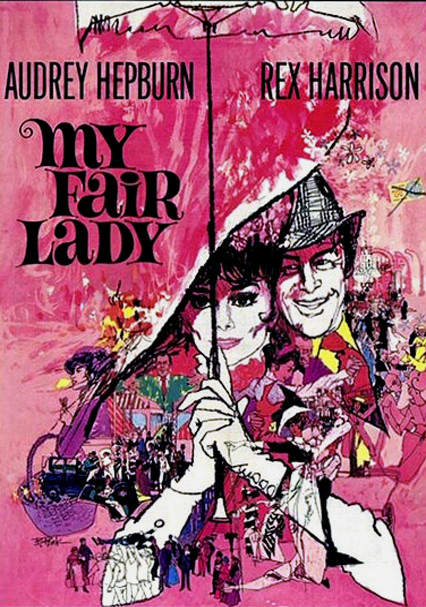
My Fair Lady-1964

My Fair Lady-1964

Director George Cukor

Starring Audrey Hepburn, Rex Harrison

Scott’s Review #938

Reviewed September 6, 2019

Grade: A-

Winner of the Best Picture Academy Award (it would not have been my choice), My Fair Lady (1964) is a good product that is based on the stage version, in turn, based on the famous 1913 stage play Pygmalion by George Bernard Shaw.

The musical’s central negative aspect is its casting choices. Hepburn and Harrison have only mediocre chemistry, and Hepburn does not sing. However, the film is enchanting and filled with lavish sets, colorful costumes, and earnest songs, making it entertaining for the whole family.

The iconic Eliza Doolittle (Hepburn) and Henry Higgins (Harrison) are household names to every fan of the musical genre.

Set in London, sophisticated and arrogant Professor Higgins, a scholar of phonetics, is intent on proving that the tone and accent of one’s voice determine one’s lot in society.

As an experiment, he chooses flower saleswoman Eliza, with her horrid Cockney accent, and is determined to crown her duchess of a ball.

Unaware of his scheme but soon to find out she has been had, romance eventually blooms as the song “I’ve Grown Accustomed to Her Face” becomes essential.

My Fair Lady is quite the epic, with a runtime of two hours and fifty-two minutes, which is lofty for a film.

The misty London setting adds layers of mystique and atmosphere, and the cinematography drizzles with color and pizzazz, making the overall content look fantastic.

Because of the length of the film and the magnificent trimmings, the production looks like a spectacle, reminiscent of the elegant extravagance of the 1950s and 1960s, when musicals made into films were grand and robust.

It’s no wonder this helped it win Best Picture, Best Director, and many other awards. Hollywood loves this film.

When dissected and analyzed, social and class systems are a large part of the film amid the cheery singing, dancing, and big-screen bombast. Social status and hints of socialism pepper the production, rising way above the fluff it could have been if just a “boy from the good side of the tracks meets girls from the wrong side.”

Eliza’s father, Alfred (Stanley Holloway), a waste collector, is also an opportunist. He sings his story during “With a Little Bit of Luck.” The differences between the “haves” and the “have nots” are evident.

Since the chemistry is limited, I never bought Harrison and Hepburn as a romantic duo. The teacher/student angle somewhat works, though always bothersome, but Henry’s self-assured behavior and superior attitude make him tough to root for.

The controversy surrounding the film includes the decision to dub nearly all of Hepburn’s singing with another singer’s voice. This devastated the actress and cost her an Academy Award nomination. Her snub is especially jarring, given the dozen other nominations it received.

The story is heartwarming and follows the like-minded theme of a hero rescuing a damsel in distress. Hints of Cinderella (1950) and even Pretty Woman (1990) glisten, with only a hint of male chauvinism that does not ruin the experience or reduce the film to a dated guy film, as with Pretty Woman.

“I’m an Ordinary Man” describes how women ruin men’s lives and are not the most progressive or female-friendly of all the numbers.

My Fair Lady (1964) is a film from the past that begs to be viewed on the big screen so that all its qualities can be enjoyed. Like Lawrence of Arabia (1963), it is best viewed in a wide-angle, enormous theater setting to ensure that all its aspects are noticed and enjoyed.

It’s a Hollywood film done tremendously well. Young viewers would be wise to be exposed to this film to delight in the cinematic treats.

Oscar Nominations: 8 wins-Best Picture (won), Best Director-George Cukor (won), Best Actor-Rex Harrison (won), Best Supporting Actor-Stanley Holloway, Best Supporting Actress-Gladys Cooper, Best Screenplay Based on Material from Another Medium, Best Scoring of Music-Adaptation or Treatment (won), Best Sound (won), Best Art Direction, Color (won), Best Cinematography, Color (won), Best Costume Design, Color (won), Best Film Editing