Tag Archives: Dark Comedy

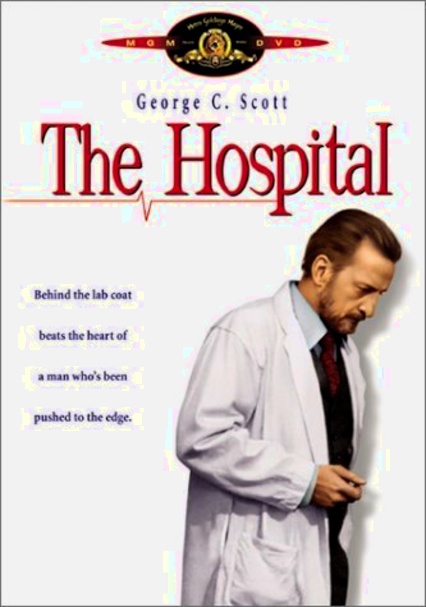
The Hospital-1971

The Hospital-1971

Director Arthur Hiller

Starring George C. Scott, Diana Rigg

Scott’s Review #1,369

Reviewed June 11, 2023

Grade: A

An example of the freedom to craft one’s vision allowed in cinematic works during the first half of the1970s, The Hospital (1971) is a testament to the creativity and exceptional writing and what can happen when studios and producers leave the creatives alone to make the film they want to make.

One can dismiss any preconceived notions of the classic medical dramas that flooded television networks during the 1970s and 1980s. The Hospital is not formulaic or contrived.

No, The Hospital is a dark work drooling with satirical examples of the politics and shenanigans within the medical community. Oftentimes, secondary activities come at the cost of good care and quality medicines.

Before you imagine a doctor and nurse cavorting in a janitor’s closet, it’s a deeper film than it appears on the surface despite the inclusion of witty comedy. A lax patient care, staff deaths, and the dismissal of nearby residents because of a new drug rehabilitation project are explored in this fascinating film.

At a rundown Manhattan teaching hospital, chief of staff Herb Bock (George C. Scott) is riddled with multiple personal and professional problems after two doctors and one nurse are found dead almost simultaneously.

He assumes the rash of deaths is due to dimwitted staff who are overworked amid the chaos.

Suicidal, he meets the intelligent daughter of a patient who knocks him off his feet with her studious personality and reflections of the world. Barbara Drummond is played by Diana Rigg.

Immediately noticeable is the clever and well-paced screenplay while I was unknowledgeable of the fact that Paddy Chayefsky had won the Oscar for writing the film. Immediately, the chaos of a city hospital is exposed but not in a cliched way like a series like ER or Grey’s Anatomy might show.

Nobody is going into cardiac arrest on the operating table or having convulsions in the waiting room amid lame dramatic music.

The Hospital is more cerebral than that.

Unknown patients and little-known hospital staff go about their everyday business like clockwork until confusion with daily tasks causes events to go awry.

Like real-life.

The brilliance is how director Arthur Hiller casts regular-looking actors in almost all the roles. They look and act like everyday hospital staff so that the proper tone is set. This is even before we meet and get to know Herb and Barbara. They answer phones, walk around with charts, and hustle after emergencies.

Chayefsky and Hiller mirror director Robert Altman in many ways mostly in the dialogue and how seemingly unimportant scenes mean a whole lot.

In robust soliloquy-style scenes between Herb and Barbara the audience ‘gets them’. They are both desperate, wounded, and unhappy yet possess the sophistication and awareness to realize how similar they are.

They immediately connect, fall in love, and nearly run off together. It’s that simple. They are willing to flee their lives after meeting for five minutes. But will they ultimately take that plunge?

A key character is revealed to be Barbara’s father and a whodunit begins after it comes to light that the deaths are not accidents. Who is responsible and what their motivation is is the key to the story.

Scott does wonderful work with his character and rivals his excellent performance a year earlier in Patton (1970). Herb is more introspective with the world on his shoulders.

The Hospital has more than one daring scene. Herb, though impotent, basically throws Barbara down on the table and rapes her. The shocker is she makes light of it the next day and almost seems to have enjoyed it.

Barbara and Herb are both complex characters that the audience needs to ruminate over.

My favorite part of The Hospital (1971) is the setting. That Hiller puts you inside what a real urban hospital was like in 1971 is brilliance. The satire comes into play with the writing which questions decision-making and incompetence within the hospital walls.

Only, the result is a scathing look at hospital practices and will hit home to anyone terrified of entering a hospital only to never come out again.

Oscar Nominations: 1 win-Best Actor-George C. Scott, Best Original Screenplay (won)

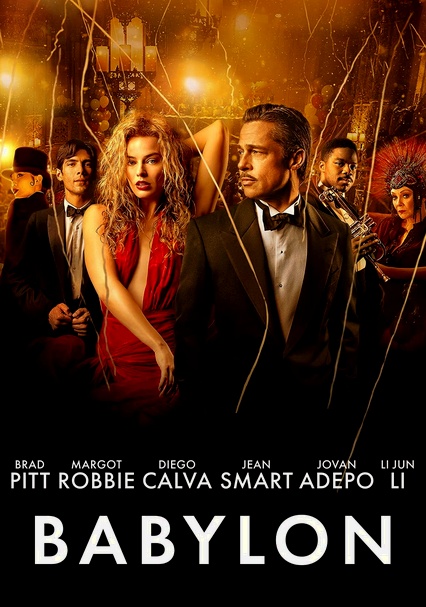
Babylon-2022

Babylon-2022

Director Damien Chazelle

Starring Margot Robbie, Brad Pitt

Scott’s Review #1,365

Reviewed June 4, 2023

Grade: A-

Babylon (2022) is a film that will likely divide audiences broadly. Slightly late to the table, I viewed the film after the awards season hoopla had ended, and the film came up empty-handed.

Sure, a few nominations were received, but much more was expected from the epic Hollywood-themed venture.

I’m a fan of director Damien Chazelle, most famous for the similarly set Los Angeles film La La Land (2016), which I adore.

His direction style reminds me a great deal of Baz Luhrmann’s, with the incorporation of intense musical numbers during many scenes and a strong, chaotic, and frenetic nature.

I realize this style is not for everyone, so I’m not surprised that Babylon is both revered and reviled. This isn’t always a bad thing, as a good film debate can be fun.

I adore Babylon primarily for the potent silent-era Hollywood story and the terror stars of the 1920s faced with the realization that sound had entered their pictures and they were expected to keep up with the times.

Sadly, many careers ended devastatingly, sinking one-time big stars into depression and despair.

The acting is superb, and major props go especially to Margot Robbie as debaucherous film star Nellie LaRoy and newcomer (to me) Diego Calva as handsome Mexican immigrant Manny Torres.

Both actors elicit superb performances that should have landed them Oscar nominations.

The major themes that Chazelle incorporates into Babylon are those of ambition and outrageous excess, as well as belonging and acceptance. The rise and fall of multiple characters during an era of unbridled decadence and depravity in early Hollywood are explored.

As Hollywood transitions from silent films to talkies, ambitious up-and-coming actress Nellie and aging superstar Jack Conrad (Brad Pitt) each struggle to adapt to the new medium, as well as a rapidly changing world.

And Manny wants a seat at the table.

Another reason I love the film is the dedication and exposure given to pre-sound Hollywood movies, which are often forgotten. I struggle to recall ever having viewed a film from that era, with my earliest film being the 1930 film “All Quiet on the Western Front.”

The hit film The Artist (2011) may have paid tribute, but it’s not the same, and Babylon goes for the jugular in showcasing an entire movement that is now largely forgotten.

Cinema fans will respect Babylon.

Besides the film’s characters, there is much to appreciate in the movie itself. A Hollywood movie set, repeated takes, scripts, dialogue, lighting equipment, and rehearsals make for a feast of riches for any cinephile.

The weak point is the film’s excessive length. At three hours and nine minutes, an epic length, the erratic structure is a challenge to get through. A piecemeal approach can sometimes affect the continuity, and it did detract a bit in this case for me.

If one can sit still long enough, the final thirty minutes are superb. A tidy wrap-up and truthful storytelling give several characters a proper sendoff.

The film ends in 1952, so a fitting conclusion is in order.

Before we get to this point, though, a nailbiting sequence involving Manny and a fiendish Los Angeles gangster played by Toby Maguire is second to none. Fake money, a rat-eating entertainer, and pornographic dwarves make for an odd adventure that one can’t look away from.

A fascinating and bombastic experience, Babylon (2022) delves loudly into the silent film world and pays a proper head nod to a long-forgotten era.

The film has made me appreciate Hollywood and its history even more than I already do.

Oscar Nominations: Best Musical Score, Best Production Design, Best Costume Design

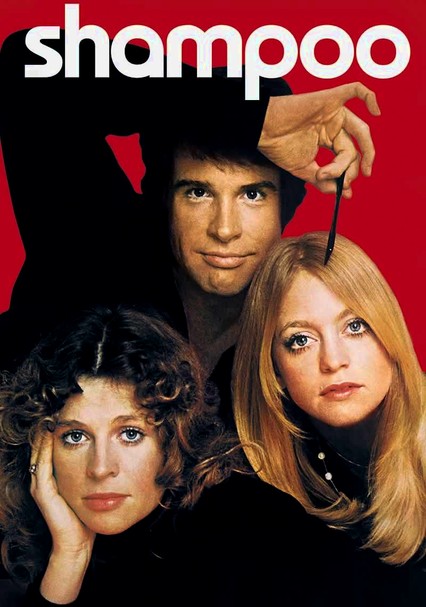
Shampoo-1975

Shampoo-1975

Director Hal Ashby

Starring Warren Beatty, Julie Christie, Goldie Hawn

Scott’s Review #1,362

Reviewed May 19, 2023

Grade: A-

Shampoo (1975) is a drama and comedy hybrid that reminds me greatly of a Robert Altman film without the customary overlapping dialogue common in his works.

The political environment against the posh Los Angeles backdrop emotes the vibes of The Long Goodbye (1973) and Nashville (1975) with enough sly satire and humor to generate a comparison.

Of course, the film, nestled in mid-1970s cinema greatness is in the right decade. Further, the 1968 setting is perfect for the Los Angeles mood where the Manson killings, hippies, sex, drugs, and rock n roll were all commonplace.

Listening to the soundtrack of The Beatles, Jimi Hendrix, Jefferson Airplane and other familiar bands of the late 1960s makes Shampoo a grand slam of authenticity and richness.

Director, Hal Ashby, who created the dark comic genius Harold and Maude in 1971, hits it out of the park again with Shampoo, a study of love and loneliness and a sense of belonging and fulfillment.

I wasn’t won over right away and the film took me a while to warm up to if I’m being honest but by the end, I was a big fan, especially of the writing. But, some of the slow-build films are the best.

The film takes place against the backdrop of Election night in 1968 when eventually shamed former president Richard Nixon won the presidency. The characters bounce from one election party to the next but barely notice the outcome choosing booze and lust over politics.

Beverly Hills hairdresser and notorious cad George Roundy (Warren Beatty) runs into trouble when his bedroom antics interfere with a possible business deal with the influential Lester (Jack Warden). George is sleeping with Lester’s wife Felicia (Lee Grant) and his best friend and ex-girlfriend, Jackie (Julie Christie), in addition to his current girlfriend, Jill Haynes, played by Goldie Hawn.

Part of why Shampoo sneaks up on the viewer is that it’s not a laugh-out-loud comedy in a physical way. Instead, the intelligent dialogue and the development of its characters are the winning formula.

We first meet George in bed with his older mistress, Felicia, who we assume might be his girlfriend. When he makes an excuse to check on Jill, we realize he is playing the field, but with no ill intent. He genuinely likes the women he beds and despite his antics is feeling empty and mindlessly trudging along.

A wonderful scene atop the Hollywood Hills brings George’s peril to a climax when he professes his love for one of the women but is it too late?

Beatty, who co-wrote the screenplay, fleshes his character’s motivations out well. He really only wants happiness and a successful business. Some of the action takes place in his salon where he meets his conquests.

The scenes between Beatty and Warden work particularly well especially when Lester discovers George in a precarious situation or three assuming he is gay.

Let’s not forget the ladies. The triple bill of Christie, Hawn, and Grant is a force to be reckoned with. Grant is an interesting character since she has all the wealth she wants but instead loves the financially struggling George. Should we feel sympathy for her?

Jill presumably will find happiness with a director smitten with her. They seem like a quality pair and Christie’s Jackie also makes out well at the conclusion of the film.

Surprisingly and effectively, the presidential election is more of a background effect and is largely ignored by the characters who have better things to worry about.

Ashby mostly has the news telecasts and election returns blurred intentionally. The point made is that Nixon’s cheating is a reflection of the self-obsession affecting the United States during that time.

Despite his flaws, the audience nonetheless roots for George. This is a testament to the writing of Beatty and Robert Towne and the rich slow build that Ashby provides to Shampoo (1975) amid a shiny yet tarnished Los Angeles veneer.

Oscar Nominations: 1 win-Best Supporting Actor-Jack Warden, Best Supporting Actress-Lee Grant (won), Best Original Screenplay, Best Art Direction

Violent Night-2022

Violent Night-2022

Director Tommy Wirkola

Starring David Harbour, John Leguizamo

Scott’s Review #1,355

Reviewed April 9, 2023

Grade: B

Violent Night (2022) isn’t the straight-ahead slasher flick with a holiday theme that I thought it might be. Part magic, part action, and part dark comedy make the film a peculiar yet strangely satisfying experience.

In a warped way, of course.

I’m not sure what director Tommy Wirkola was specifically going for, but Violent Night is an entertaining one-hour-and-fifty-two-minute experience. Best watched around the Christmas holidays, I watched the film on a cross-country flight from Los Angeles to New York City in April and still enjoyed it.

It’s a cool concept with lots of gore, a ritzy mansion as the primary setting, and a pleasing interracial element that adds diversity. The film is also a strange take on a jovial Christmas message, like a Lifetime television movie.

A lot is going on in Violent Night, and it openly patterns itself after Home Alone (1990), which one character has just watched for the first time.

David Harbor plays a not-so-jolly Santa Claus who guzzles beer in a London pub on Christmas Eve just before he is set to traverse the world distributing toys to children.

Depressed at the state of the world and the overwhelming amount of naughty people on his list, Santa arrives in upper-crust Greenwich, Connecticut, and witnesses a team of mercenaries breaking into a wealthy family compound and taking everyone inside hostage.

Led by Scrooge (John Leguizamo), the bad guys, dressed as Christmas characters, take the family hostage, demanding money they know is hidden on the estate. St. Nick must save the day and kick some ass to maintain the spirit of Christmas.

The characters, though mostly over-the-top, are my favorite part of Violent Night.

The audience is meant to like seven-year-old Trudy (Leah Brady), a darling innocent with interracial parents who are separated. Jason (Alex Hassell) is part of a wealthy family, and his wife, Linda (Alexis Louder), is a kind woman who has her daughter’s best interests at heart.

All Trudy wants for Christmas is for her parents to be back together.

The other characters are played for laughs, especially grand dame Gertrude, deliciously played by Beverly D’Angelo. She’s terrific as the queen, rich bitch whose family kisses her ass at every turn, hoping to keep in her good graces.

Leguizamo pairs well with Harbour’s Santa, who is effective as the beefy, boozy man. He is a good fellow, but has lost his belief in the magic of Christmas. The relationship between Santa and Trudy also works well.

A couple of belly chuckles exist, which is always a good thing. As Santa takes off on his reindeer-led sleigh to deliver toys, he promptly vomits on the pub bartender’s head. Soaked with barf, she proudly exclaims, ‘He is Santa!’

Violent Night is good fun, though severely unrealistic. The film gets a bit too hammy towards the conclusion when the bad guys get their comeuppance on the spacious mansion’s snowy exterior. One character’s decision to burn money to keep warm is too far-fetched, and the villains quickly disintegrate into caricatures.

The happily-ever-after conclusion and the resurrection of a character are underwhelming and worthy of a Hallmark television-movie send-off.

The Connecticut mansion is a cool set, and the Christmas trimmings make it flourish with strong design. The plentiful rooms and secret attics are fun to watch.

I’ve never seen the film Bad Santa (2003), but from what I know of it, Violent Night (2022) seems on par. Be forewarned, the ‘violent’ in the title is true to form, and the violence is fast and furious at times, with a snug message wrapped within.

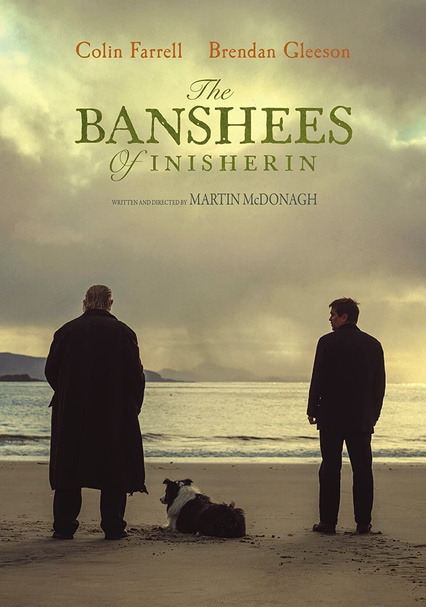
The Banshees of Inisherin-2022

The Banshees of Inisherin-2022

Director Martin McDonagh

Starring Colin Farrell, Brendan Gleeson, Kerry Condon

Scott’s Review #1,348

Reviewed March 2, 2023

Grade: A

Martin McDonagh, who directed The Banshees of Inisherin (2022), is known for films such as In Bruges (2008) and Three Billboards Outside Ebbing, Missouri (2017).

His films typically feature dark humor stories about humanity and unpleasantness, and require some reflection to consider the characters’ true nature.

This film stars Colin Farrell and Brendan Gleeson, who reunite after their collaboration in In Bruges for another turn playing men dealing with depression, loneliness, and the complexities of friendship.

McDonagh is British/Irish, so the period and surroundings likely resonate well with him. The gorgeous islands off the coast of Ireland are integral to the story and serve as a counterbalance to the troubles and tribulations of the characters.

Pádraic (Farrell) and Colm (Gleeson), are lifelong friends and inhabitants of an island off of mainland Ireland. They find themselves embroiled in a feud after Colm one day announces he is ending their friendship.

This confuses Pádraic, who vows to mend the relationship at all costs.

Their reunion is thwarted by severed fingers, a fire, and the mysterious death of Pádraic’s beloved pet donkey, Jenny.

Mixed into the events are Pádraic’s sister, Siobhán (Kerry Condon), and the troubled young islander, Dominic (Barry Keoghan), who have their own problems to face.

The Banshees of Inisherin is a slow-paced and cerebral film, and many questions will be pondered but left unanswered. This will likely disappoint viewers who prefer a clear conclusion to the characters’ lives.

However, this is a key part of the film’s beauty. I might have liked a big, no-holds-barred argument scene between Pádraic and Colm, or more closure in Dominic’s or Siobhán’s stories. Instead, McDonagh challenges the audience to feel perplexed or unsure and use their interpretations.

For example, I wonder if Dominic was being sexually abused by his policeman father, who has a penchant for sitting naked in the living room chair and masturbating.

Or, what does Siobhán leave the island for, and will she ever return?

On a separate note, I wonder if McDonagh was influenced by the epic 1970 gem Ryan’s Daughter, directed by David Lean. The flowing Irish landscapes and unpleasant, embittered townspeople have key similarities.

The winning formula is ambiguity. The audience is treated to terrific acting all around, particularly among the four principals (Farrell, Gleeson, Condon, and Keoghan), all of whom were awarded Academy Award nominations.

Each provides subdued performances dripping with contained emotion and complexities buried beneath the surface.

Audiences can draw their conclusions, but my takeaways were loneliness, longing for new adventures, depression, and begrudgingly accepting a meager existence amid the most lavish countryside one can find.

The 1920s Irish Civil War serves as the backdrop, although those events are not central to the plot.

Since Colm’s desire to create music is a central part of the story, the accompanying music is crucial to the film. The use of fiddles is incorporated rather than traditional Irish music, except in the sprinkling of pub scenes.

A hearty round of applause is due to McDonagh and company for crafting and performing a thinking man’s film. The comic bits are not syrupy but tragic in their honesty and cadence.

The Banshees of Inisherin (2022) separates cinematic thinkers from passive viewers with a quiet story about the friendship between two men and the layers that exist beneath the surface.

Oscar Nominations: Best Picture, Best Director-Martin McDonagh, Best Actor-Colin Farrell, Best Supporting Actor-Brendan Gleeson, Barry Keoghan, Best Supporting Actress-Kerry Condon, Best Original Screenplay, Best Film Editing, Best Original Score

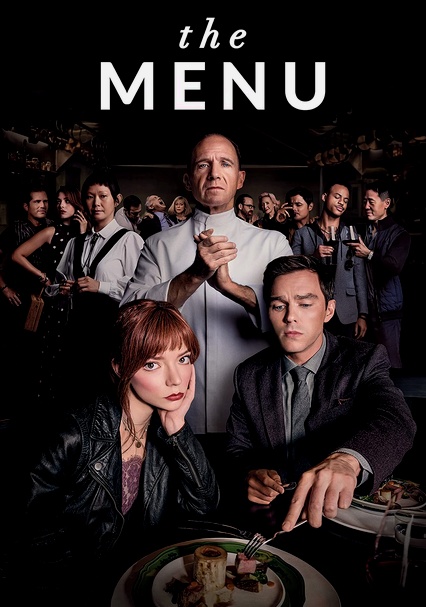
The Menu-2022

The Menu-2022

Director Mark Mylod

Starring Ralph Fiennes, Anya Taylor-Joy

Scott’s Review #1,345

Reviewed February 20, 2023

Grade: B+

The premise of The Menu (2022) immediately elicited my utmost pleasure. A self-proclaimed ‘foodie’ with a long way to go in being an expert, a film about a high-caliber restaurant with an extravagant and sophisticated tasting menu was impossible to ignore.

Throw in the horror and dark humor genres, and you’ve got the icing on the cake.

After all, being fortunate enough to have experienced fine dining, as depicted in the film, makes me repeatedly reminisce about those adventures. Those enchanted by such tasting menus, rich in flavor and style, must see The Menu.

Cinematically, the film reminds me of parts of Saw (2004) and Knives Out (2018), with a dash of novelist Agatha Christie’s Ten Little Indians story and a sprinkling of a Jordan Peele project for its social commentary.

A young couple Margot (Anya Taylor-Joy) and Tyler (Nicholas Hoult) travels to a sunny coastal island to eat at an exclusive restaurant named Hawthorn, where the chef (Ralph Fiennes) has prepared a lavish menu.

They are joined by other guests, including a food critic, her editor, wealthy regulars, three business people, a washed-up movie star and his assistant, and the chef’s alcoholic mother.

As the evening commences and the dishes are served, the chef has some diabolical surprises in store for the guests. Secrets are soon revealed as it becomes apparent they have been summoned to the island for a reason.

Mark Mylod, a new director to me, peppers the film with dark, macabre humor, mostly related to the food, which is slyly placed and pairs well. Those who savor fine dining and tasty ingredients will smirk with delight.

The title and ingredients of each course are named, and by the third course, the sins of the diners are revealed on tortilla shells for all to see. The audience knows they are not innocent people, and the chef and his team are intent on punishing them a la carte style.

The revelation that Margot is not supposed to be there is satisfying because, so far, the chef, his assistant, and a guest have been eying her mysteriously. Tyler was initially scheduled to bring another woman with him.

Instead of limiting the story, this only enhances it. Could Margot be convinced to align with the chef, or does she hate him? Jealousy among the staff and guests quickly spirals out of control.

Another win for The Menu is the incorporation of class distinction. The haves and the have-nots, and how they feel about each other, is a crucial sidebar, and it is easy to understand the motivations of the characters.

The Menu loses its way during the final thirty minutes, with an unsatisfying and perplexing ending that hardly wraps up the story for the audience in a neat doggy bag.

I was left with more questions than answers regarding the plot.

The analysis can be somewhat forgiven with a deathly serving of s’mores for dessert, with the bodies of the guests as the marshmallows and their heads mirroring the chocolate tops.

A laugh-out-loud moment occurs when a spoiled guest fails to understand the quality difference between cod and halibut. Every foodie should be aware of the superiority of halibut.

It’s not all polish and high cuisine, as the preparation and consumption of a good old-fashioned greasy cheeseburger are made with such precision that I could nearly smell the wonderful indulgence.

The sizzling meat, combined with the heavenly melted American cheese, made me want to reach for my phone and order Grubhub.

Fiennes and Taylor-Joy are the standouts as their complex relationship and chemistry are palpable. Special notice must be given to Hung Chau, Judith Light, Janet McTeer, and John Leguizamo, who make the ensemble quite good.

With a terrific idea and enough tastes and smells that almost emerge from the screen, The Menu (2022) is a winner. It’s unsatisfying at the conclusion, but the experience is enjoyable and the creativity is championed.

I felt like a guest at a restaurant myself.

Cinderella-1977

Cinderella-1977

Director Michael Pataki

Starring Cheryl Smith

Scott’s Review #1,333

Reviewed January 14, 2023

Grade: B

This telling of the legendary fairy tale Cinderella (1977) differs significantly from the sentimental and wholesome story of a rags-to-riches Disney princess that we all know and love.

It’s for adults only; even many adults will scurry to grab the remote and turn it off before their significant other or, god forbid, children, catch them slyly peeking at what emerges from the screen.

The film is pornographic. This fact doesn’t offend me or influence my critique and in reality, piques my interest tremendously in how the filmmakers turn Cinderella into a porn film.

It’s 1970s-style pornography with the bulk of the nudity going to the female characters with barely any male flesh to view though there is some. During the fleshy numbers, there is music and dancing to be had usually with the female performers singing while topless.

The familiar story involves a lonely prince (Brett Smiley) who tries several young women in his kingdom in his search for the one he met at a royal ball. Naturally, it’s Cinderella (Cheryl Smith) the gorgeous yet abused waif who sings and dances while doing her chores, longing for a better life.

The prince is jaded and feels no satisfaction from traditional sex as he boldly reveals in the musical number ‘My Kingdom Won’t Come’. His sex-crazed father the King (Boris Moris) decides to host a lavish ball so that his son can find what he wants.

You see, the weapon that Cinderella possesses is a special snapping female genitalia that the prince experiences at the ball while blindfolded and in an orgy. This quality is irresistible to him and he must find and be with the woman who is the one who has the magic vagina.

The film is naughtily personified and the fun is seeing how far out director Michael Pataki and screenwriter Frank Ray Perilli will go for a shock. Pataki was mostly an actor who dabbled in directing which makes sense since Cinderella feels widely experimental.

Events get off to a perfectly indecent start when the royal chamberlain played by Kirk Scott wanders the forest encountering nude females who coquettishly make out with each other for fun and the affection of the handsome man.

There is more than the sex scenes to keep one thrilled. The costumes and the makeup, specifically the disgraceful pancake colors applied to Cinderella’s devilish stepsisters are in your face and gratifying. The gowns at the ball are professional and stylish.

The film teeters into art film territory at times like when Cinderella performs a musical number while soaping in the tub and while parading through the forest.

Her wacky Fairy Godmother is a black man played by Sy Richardson who is just a burglar intent on robbing Cinderella’s home but he does provide her with her special ‘gift’.

These many idiosyncrasies make the film Cinderella a cross between a lewd John Waters film and a bombastic Russ Meyers party film.

Cheryl Smith is excellent in the title role providing a gorgeous face and figure with a lovely voice. She perfectly delivers the numbers and carries the film.

Among all the many incarnations of Cinderella, circa 1977 is the most outrageous and courageous. How this film was even made and with an R rating baffles me. It’s nearly impossible to find on streaming or in stores and a mere spontaneous purchase was how I was even able to see it.

My suggestion is for cinematically creative film fans to give Cinderella (1977) a whirl but with extreme caution. Viewed with the wrong companions could be disastrous and a 3 am start time with adult nibbles is highly encouraged.

No kiddies allowed.

Bodies Bodies Bodies-2022

Bodies Bodies Bodies-2022

Director Halina Reijn

Starring Amandla Sternberg, Maria Bakalova

Scott’s Review #1,321

Reviewed December 11, 2022

Grade: B

Bodies Bodies Bodies (2022) is an admirable attempt at merging straight-ahead slasher whodunit with a good dose of dark comedy and camp. It doesn’t always hit the mark, but it provides entertainment and is thought-provoking.

The film is never dull and will keep the viewer guessing. There is plenty of diversity with a twist at the end, which I’m still not sure is satisfying or not.

While watching the film, I wasn’t always sure if the dialogue was intended to be played for laughs (it’s sometimes terrible). I’m still uncertain whether the debut director, Halina Reijn, was poking fun at 1980s-style slasher flicks or paying homage to them.

The inclusion of Saturday Night Live alumnus Pete Davidson provides a bit of humor. He pushes the film toward comedy territory, though his character is more of an asshole than comic relief. It’s other characters who deliver the funny lines.

Having not heard of the film before, the premise was intriguing and made me watch it during a long international flight. I needed to spend about ninety minutes.

When a group of wealthy twenty-somethings plans a dubious hurricane party at a remote family mansion, they drink and use drugs. A party game goes awry.

I knew right away that an incident would occur, one that would see them knocked off unceremoniously, one by one.

A hefty dose of cattiness between both the male and female characters will make the viewer smirk with pleasure. The backstabbing and fake friends angle is as delicious as the offing of several characters.

I love that Sophie (Amandla Sternberg) and Bee (Maria Bakalova), the central characters, are a lesbian couple. Bee is from Eastern Europe, while Sophie is of mixed race and affluent, and Bee is working class.

There are many differences to explore, which can lead to an insecure relationship.

It’s suggested that they are a new couple, early in their relationship, and one of the other girls, Jordan (Myha’la Herrold), has previously had a relationship with Sophie. On top of all that, Sophie is a recovering drug addict.

I’m not sure the myriad of drama elements is all that necessary, but it does reinforce the complexities of the characters. At the end of the day, what the audience wants to see is violence and dripping blood, and I felt a bit cheated in that department.

Don’t get me wrong, people do die, but nobody is shown squealing or running for their life. Because they are playing a game, aptly titled ‘bodies bodies bodies’, the victims pretend to die but then wind up dead.

Besides Bree and Sophie, the other characters are unlikable. I slowly realized that’s the fun of Bodies Bodies Bodies. Since the characters are whiny, rich, and spoiled rotten, we want them to get their just desserts.

My main criticism of Bodies Bodies Bodies is that its intention is not always clear, which can be confusing. Is it a message movie, a slasher flick, or an argument over a spoiled and clueless generation?

As the credits rolled, I wasn’t even sure who the killer was or why. Turns out, my immediate hunch was correct, but I second-guessed myself.

In hindsight, I like the ultimate twist, but there are so many aspects to Bodies Bodies Bodies. Generation Z hatred, societal clashes, love triangles, and a potential serial killer all rolled into one. That’s a bit much for a ninety-minute affair.

Comparisons to April Fool’s Day (1986) and Scream (1996) come to mind. And, Agatha Christie’s novels, in which a group of characters flocks to a remote locale for a good whodunit, also occur.

As I absorb Bodies Bodies Bodies (2022) more and more, I realize that Reijn brings a fresh perspective to a sorely oversaturated genre, and that’s a good thing.

The film could have been fleshed out more.

Independent Spirit Award Nominations: Best Director-Halina Reijn, Best First Screenplay

Up the Sandbox-1972

Up the Sandbox-1972

Director Irvin Kershner

Starring Barbra Streisand, David Selby

Scott’s Review #1,308

Reviewed October 18, 2022

Grade: B

Up the Sandbox (1972) is likely the least successful film in the Barbra Streisand collection and more obscure than likely desired. The star performs no songs and the film is experimental but it’s unclear if it was intended to be or not.

Streisand takes a break from comedies and musicals and ventures into unknown territory, taking a risk that doesn’t always pay off.

On the flip side, she never looked more beautiful in a film.

The film has its moments. It’s shrouded in early progressive feminism which provides intrigue and it’s tough to go wrong with a bankable star like Streisand in a lead role.

Still, the fantasy sequences get too weird and sometimes unnecessary, and the film doesn’t always make a lot of sense.

The film gets taken down at least a notch for two anti-gay slurs that are shamefully unnecessary to any plot direction.

I award Up the Sandbox credit for thinking outside the box and being unconventional but all the parts don’t come together in a cohesive unit leaving me unfulfilled but recognizing the superior qualities.

The cover art (see above) is wacky and thought-provoking.

Margaret (Streisand) is a young wife and mother who is bored with her day-to-day life in New York City playing second fiddle to her successful and too-busy husband, Paul (David Selby).

He is a professor at Columbia University and they reside in a cramped yet fairly sophisticated apartment.

To combat boredom, she regularly escapes into increasingly outrageous fantasies: her mother breaking into the apartment, an explorer’s demonstration of tribal fertility music at a party causing strange transformations, and somehow joining terrorists to plant explosives in the Statue of Liberty.

Streisand is well cast and while other actresses could have given a fine performance she plays New York Jewish better than anyone. Her plight to break out of her life of doldrums is perfectly conveyed as she yearns to equal the balance between men and women.

She has resentment for going down the path of housewife, just like her mother did, and vowing to be nothing like her, as the women bicker and feud throughout the film.

The sequences involving her mother are the best in the film. Played by Jane Hoffman, Margaret’s mother provides all of the expected Jewish mother stereotypes like nagging and judging, hilariously.

The funniest mother/daughter sequence sees Margaret smash her mother’s head into a giant birthday cake. Naturally, it’s just her fantasy.

Up the Sandbox wins big by the lofty amount of location sequences showing early 1970s New York City, absolutely fascinating to view. One with an appreciation for Manhatten can be assured of a pleasant viewing experience.

The most heartfelt and sentimental moments occur during a long shot of the still-under-construction World Trade Center. Seeing the Twin Towers still being erected brings back teary memories of 9/11.

Lavish sequences are set in and around Columbia University in upper Manhattan and the campus can frequently be seen as Margaret and her friends trudge their baby strollers around the campus and surrounding areas.

Where the film fails is when it teeters too far out in fantasy land. It makes little sense why Margaret would join terrorists intent on blowing up Lady Liberty or what the group’s intentions are.

Perhaps it is a metaphor for something that went over my head.

Even when the screenplay is a dud Ms. Streisand holds her head high and plays the comedy or drama with sincerity and professionalism. With her well-known perfectionism, she would have been aware when things were not working.

A film not remembered well, Up the Sandbox (1972) scores some points with its locales, progressivism, and star power but stumbles off course too many times to recommend.

If only Streisand would have belted out a number or two amid her scripted fantasies the film might have worked better.

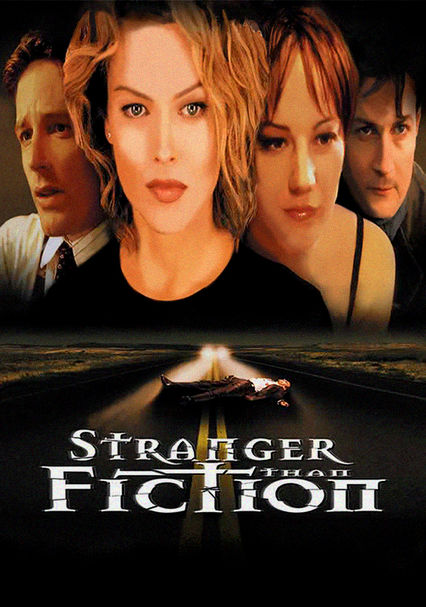
Stranger Than Fiction-2000

Stranger Than Fiction-2000

Director Eric Bross

Starring Mackenzie Astin, Todd Field, Dina Meyer

Scott’s Review #1,298

Reviewed September 14, 2022

Grade: B+

An interesting note about Stranger Than Fiction (2000) is that it stars director Todd Field in a dual-acting role. The director is not a household name, at least not yet, but is known for directing two gems-In the Bedroom (2001) and Little Children (2006). Rewarded with Oscar nominations for both, he acts too.

This is not a set-up to a joke that he should not act and stick to directing because he does a decent job.

The irony is that he doesn’t direct the featured film Stranger Than Fiction, Eric Bross does.

The film has its share of intrigue which carries through until the end when the plot gets messy and ridiculous. I mean messy and ridiculous.  I’m all for twists and turns in a good film but sometimes a speeding train can derail and that’s what ultimately happens with Stranger Than Fiction.

But for most of the running time, it’s solid entertainment, black humor, and thrills.

I was immediately interested in the story when an author named Donovan Miller, with hours to kill at an airport bar because of a delayed flight, explains the story of his novel, Stranger Than Fiction, to a curious patron.

As I drifted off to the world of Salt Lake City where the events of the book take place I anticipated juicy drama.

An interesting bit of advice is to pay very close attention to this first bar scene.

Four twenty-something friends, Jared (Mackenzie Astin), Austin (Todd Field), Emma (Dina Meyer), and Violet (Natasha Gregson Wagner) meet for drinks at the local bar. They pull a prank on Violet’s boss for fun and call it a night.

Later, Jared shows up at Austin’s place injured and covered in blood, declares he’s gay, and spews a strange story about a dead guy in his apartment. The foursome investigates and things get interesting.

The cinematography has a muted, dull style that feels sort of like an independent film but also looks amateurish and made for television. Even though it was made in 1999 it feels quite 1980s to me.

Unclear is if or why this style was used or if the budget was just low. I love independent filming but this didn’t do Stranger Than Fiction any favors.

None of the characters are fascinating, and writers Tim Garrick and Scott Russell unsuccessfully try to give the camaraderie between the four principals a sitcom feel. The constant bantering and bickering get tired fast.

It feels like NBC’s Will and Grace meets Friends.

Where Stranger Than Fiction excels is at the twists and this makes me forgive the other mistakes and forced chemistry between the actors. I salivated for the next plot reveal and couldn’t wait to see how the events would unfold.

Once the friends agreed and made the foolish decision to dispose of the dead guy instead of calling the police, I knew I was in for hijinks or a caper.

As the gang gets deeper and deeper into shit like hitting a homeless guy with their car and parking illegally and getting their car towed, more characters are introduced and threaten their plans.

This is all well and good until things spiral out of control with a dizzying explanation of events that involve blackmail, suicide, backstabbing, and jealousy. Since the author is explaining a fictitious novel this might have been okay until it’s revealed that the events might have occurred.

By that time I didn’t care anymore.

Nice effort for a while by Stranger Than Fiction (2000) and fans of black comedy should take notice. With a strong premise and mostly good build-up, the follow-through failed and I was left bewildered rather than completely satisfied.

Zola-2021

Zola-2021

Director Janicza Bravo

Starring Taylour Paige, Riley Keough, Colman Domingo

Scott’s Review #1,290

Reviewed August 16, 2022

Grade: A-

I’ve said this before when speaking about cinema, but it bears repeating. I treasure the independent film genre and the creativity it allows. Usually, it’s a small group or sometimes even only one person with a vision and the ability to bring it to the big screen.

Budgets are almost always tight, but that’s a good thing. Remember how 1978’s Halloween was made on a shoestring budget and took over the world?

Zola (2021) is an outstanding example of the freedom allowed in independent filmmaking.

The film is not for everyone, and I think it knows this. Marketed as a black comedy, it’s a blend of drama, humor, and a dark story that can be difficult to watch at times.

Comic moments are contained within, but sometimes it’s unclear whether we are supposed to laugh or cringe.

I was enthralled by the film, not only for its compelling story but also for its instances of visual magnificence, such as the dazzling opening shot of lead character Zola (Taylour Paige) in multiple forms of bubbles and sparkles, surrounded by quick editing shots.

She boldly asks the audience, “Y’all wanna hear a story about why me and this bitch here fell out? It’s long but full of suspense.”

From the moment the first line is uttered, we know we are in for something sassy, salty, and dangerous.

Gorgeous and technically superior cinematography mixed with sex, drugs, and foul language would resurface throughout the film.

The story is loosely based on a viral Twitter thread from 2015 by Aziah “Zola” King and the resulting Rolling Stone article “Zola Tells All: The Real Story Behind the Greatest Stripper Saga Ever Tweeted” by David Kushner.

Eventually, portions of the tale would prove to be embellished.

Zola (Paige) is a Detroit waitress who strikes up a new friendship with a customer, Stefani (Riley Keough), who convinces her to join a road trip weekend of dancing and partying in Florida.

What at first seems like a fun trip quickly turns into a deadly journey involving a pimp, Stefani’s clueless boyfriend, some Tampa gangsters, and other unexpected adventures.

Director Janicza Bravo, a New York University graduate, is someone to watch out for. Zola is her first full-length feature and reminds me quite a bit of Tangerine (2015) and American Honey (2016), two superior independent films.

At other times, the film contains a sprinkling of the underappreciated 2019 film Hustlers starring Jennifer Lopez.

Bravo is not afraid to delve into the down-and-dirty lives of characters that most people would quickly dismiss or avoid altogether. Stories about strippers, prostitutes, and pimps can be a tough sell.

The sex work industry is not always pretty.

Zola contains the raunchiest scene I have ever seen. As Zola and Stefani sit on the toilet, going to the bathroom, the camera pans from overhead, revealing not only their naked bums but also the waste excreted into the toilet.

The setting of Florida, where much of the action takes place, hits home to me, as I recall several boozy vacations in various parts of the state. A somber gloominess enshrouds the characters as they traverse an otherwise bright and sunny landscape.

I love the detail and mixture of pretty and poisonous, but I was left knowing very little about the personal lives of the characters. I wanted to know how Zola and Stefani ended up where they did.

Considering the subject matter, Bravo thankfully doesn’t make the film violent or abusive. Instead, she peppers the dark comedy and over-the-top turns with her characters, especially the pimp (Domingo) and Stefani.

When Zola (2021) ends, I am left with an unsettling feeling of uncertainty and a lack of conclusion that I wish were different. Still, the creativity and the ability to create desperate characters willing to do anything to make some cash is fascinating.

Independent Spirit Award Nominations: 1 win-Best Film, Best Director-Janicza Bravo, Best Female Lead-Taylour Paige (won), Best Supporting Male-Colman Domingo, Best Screenplay, Best Cinematography, Best Editing

Raising Arizona-1987

Raising Arizona-1987

Director Joel Coen

Starring Nicholas Cage, Holly Hunter

Scott’s Review #1,286

Reviewed August 5, 2022

Grade: B+

Raising Arizona (1987) is the second film to be created by the Coen brothers (Joel and Ethan) with the independent offering, Blood Simple (1984) being the first.

The siblings would later become household names and trailblazers in the world of cinema.

It’s rough around the edges storytelling with the severe desire to create something different. Maybe too different since sometimes Raising Arizona works and sometimes it doesn’t.

The film is to be championed mostly for its creativity though it’s not on par at all with the Coen brothers’ best films, Fargo (1996) and No Country for Old Men (2007). However, it does serve as a blueprint for films to come, if one is to look at it in hindsight.

I’m not the biggest Nicholas Cage fan of all time so it doesn’t help that he stars in Raising Arizona. The actor was achieving enormous recognition the same year for his appearance in Moonstruck (1987) which won Cher the Best Actress Oscar.

The film mostly gets props for its original writing and quirkiness in the sets and visual effects, but the comedy is way out in the left field and difficult to make sense of.

As with many Coen Brothers films, the plot centers on a crime and people on the run desperately trying to evade capture.

Hi McDunnough (Cage) is a convenience store robber who meets and falls in love with an ex-cop named Edwina “Ed” (Holly Hunter) during a stint in prison. After they move to a mobile home in the middle of the desert they decide to kidnap a baby since they cannot have one of their own.

While keeping their secret, friends, co-workers, and a bounty hunter look to use the child for their purposes.

The setting works quite well and is an important part of the film like other Coen offerings. The blazing hot desert is a familiar sight and pivotal to the story events with sizzling highways and roadside dives a focal point throughout. Hi and Ed’s tacky mobile home is dusty and cracked which enhances the extreme heat.

Cage and Hunter have tremendous chemistry which kept me invested in their characters. Both quirky-looking, they act well against each other and invoke sympathy from the audience- at least I did. Despite being kidnappers, they have the best of intentions of keeping their stolen baby safe and cared for.

Delightful to see is actress Frances McDormand in an early role as Dot. She would become a frequent star and collaborator in later Coen Brothers films.

Forgetting the uneven storytelling for a minute, Raising Arizona’s finest moment comes at the very end. Through a series of prophetic dreams about the future, the fates of all the characters are determined.

It’s a trippy and magnificent sequence and quite well-known to fans.

A clever offering that at times spins out of control with ridiculousness, Raising Arizona (1987) is nonetheless recommended to view and absorb the zany characters that the Coen Brothers are famous for creating.

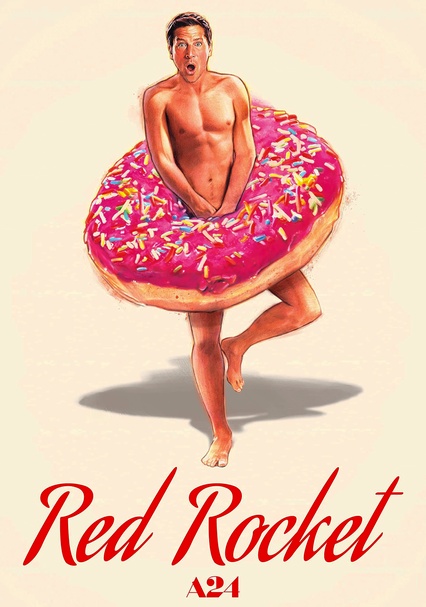
Red Rocket-2021

Red Rocket-2021

Director Sean Baker

Starring Simon Rex, Suzanna Son

Scott’s Review #1,277

Reviewed July 15, 2022

Grade: A-

Sean Baker has become a director I am intrigued by. Firmly planted in the independent circuit, recent films like Tangerine (2015) and The Florida Project (2017) offer a slice-of-life look at troubled or otherwise forgotten or discarded groups of people.

His works are fascinating and humanistic, admittedly skewing darker or daring avenues like the transgender community, the homeless, or, in the case of Red Rocket (2021), a former male porn star.

And while his characters may not always be likable, they are complex, requiring exploration and consideration.

There are also enough butts, boobs, and fornicating to remind us what the subject matter at hand is.

Baker has an incredible way of providing depth to the people considered dregs of society and a voice with a story to tell. He treats them like human beings, oftentimes using real people who are non-actors in pivotal roles.

This elevates the authenticity and realism to new heights, successfully getting his audience to empathize with the characters and see them as living beings with fears, thoughts, and emotions.

Mikey Saber (Simon Rex) is a charismatic con man and washed-up porn star who returns to rural southeast Texas to shack up with his depressed and estranged wife, Lexi (Bree Elrod).

He plots his triumphant return to Los Angeles and the porn industry after meeting a teenager named Strawberry (Suzanna Son) who works at the local donut shop. They connect and plot ways to escape their depressing small-town existence and enter the adult film world.

Like other Baker films, the city of Los Angeles is portrayed as a place of grandeur, where the characters’ lives are expected to improve. Mikey and Strawberry feel their destiny lies outside of the daily doldrums of their surroundings, and they are convinced their lives will change.

Red Rocket is a film about longing for a better life and being frustrated with the present. That’s a message many audiences can connect with.

Even though Rex and Son are successful with their lead roles, it’s the supporting characters who I found even more interesting. I liked Mikey and Strawberry, but never loved them together. What interested me was Mikey’s relationships with other characters.

Lexi and her mother are fascinating characters. It’s mentioned that before Mikey returned to town, Lexi would meet men on Craigslist to pay the rent. Along with her mother, Lil (Brenda Deiss), who smokes pot to ease some health pain, they exist in a dilapidated house.

Their neighbors, a black family, sell drugs to make ends meet and appear to do alright for themselves, respected around town.

I love how there is small-town harmony and the neighbors seem fond of each other, united with pleasantries. There’s a sense of having one’s back, and there is no mention of racism.

I adore these surface characters and long to know more about their stories. Of course, since Mikey and Strawberry are the core characters, there is not enough time to go into much detail.

Baker provides political overtones about American life that are both noticeable and depressing. News clips of former President Donald Trump boasting and pandering to his blue-collar base are included in various scenes.

A ‘Make America Great’ fixture covers the side of a building.

These points are oxymorons of what the characters’ lives are and always will be. They are poor and stuck, clinging to a false hope instilled in them by a crooked salesman turned politician who promised to make their lives great.

It’s heartbreaking and scary in its realism, and Baker makes his point clear without having to hammer it over the heads of the audience.

Red Rocket (2021) makes it a solid trifecta for Baker and his earlier works. With a sometimes brutal depiction of small-town life in poverty, he shows there is always hope and heart despite the many obstacles that many people continue to face.

Independent Spirit Award Nominations: 1 win-Best Male Lead-Simon Rex (won), Best Supporting Female-Suzanna Son

Young Adult-2011

Young Adult-2011

Director Jason Reitman 

Starring Charlize Theron, Patrick Wilson, Patton Oswalt

Scott’s Review #1,267

Reviewed June 17, 2022

Grade: A-

I am a big fan of Jason Reitman films.

Though classified as comedies, they lack the qualities I most dislike in many mainstream comedies: slapstick, formulaic, gag setups, and potty jokes, that feel completely staged and redundant.

Instead, he incorporates wry, sardonic humor, cynicism, and intelligence into his films that enhance the writing and make the characters’ motivations clear.

Most of his characters are damaged and unhappy, suffering from inner conflict or instability, but the result is witty humor providing laughs to those able to think outside the box and immerse themselves into the character’s heads.

Thanks to a brilliant screenplay by Diablo Cody the thoughts and conflicts of a female character take center stage.

Reitman’s best films are Juno (2007), Up in the Air (2009), and Young Adult (2011) right up there with the others providing a darker tone than especially Juno contained.

Along with Reitman and Cody is a terrific performance by Charlize Theron who rightfully should have received an Oscar nomination. This is tough to achieve with a comedy performance and she had to settle for a Golden Globe nomination instead.

Just looking at the movie poster for Young Adult reveals a lot about her character. With an annoyed and flabbergasted look, wearing pajamas, she immediately gives off the vibe of being slovenly, fed up, and looking for a fight.

Theron is great at playing take-no-prisoners, tough characters with a bit of edge and a no-bullshit attitude.

Mavis Gary (Theron) is a successful but frustrated writer of teen literature who realizes that her high school sweetheart Buddy Slade (Patrick Wilson) has just become a father with his wife Beth (Elizabeth Reaser).

Mavis decides to return to her small hometown and cause trouble.

She feels her life is getting away from her and she’d love to steal Buddy away from Beth and ride off into the sunset for presumed happiness. She also knows that life usually doesn’t work this way.

Mavis forms an unusual bond with a former classmate Matt (Patton Oswalt), who has also found it difficult to move past high school.

The two connect in the unlikeliest of ways since they didn’t exactly travel in the same circles during high school. Matt has his own powerful story since he was gay-bashed causing him to be permanently disabled.

Matt and Mavis are both relatable characters to most of the audience. Who hasn’t ruminated over their past life in high school? For some high schools are glorious years filled with memories of pep rallies, parties, and graduation.

For others, the mere thought conjures up memories of insecurity, moodiness, and awkward experiences. There can also be some of both for most people.

Mavis, Matt, and Buddy have each not closed out their high school chapters in different ways so the fun is seeing the feelings of each character come to the surface shrouded in conflict. With Matt and Mavis turning to all-night drinking binges eases their pain.

The best scene that showcases Mavis’s anger and Theron’s exceptional acting skills occurs at an outdoor party in celebration of naming Buddy’s daughter.

As the entire town is gathered on the front lawn Beth spills punch on Mavis’s dress causing Mavis to fly into a rage, insulting Beth, and finally confessing that she was once pregnant with Buddy’s child but had a miscarriage.

The hateful Mavis, the hurt Beth, and the embarrassment of the townspeople are on full display. The scene is wonderful and shows the cohesive value of the events to the rest of the story.

Reitman brings complexity to his characters in Young Adult (2011) and proves that dark comedy, especially character-driven, provides emotional power amid the laughs.

I love that the ending is ambiguous rather than wrapped up in a nice bow like too many comedies.

Thanks to wonderful acting, insightful writing, and wise direction, the film is well-remembered and undoubtedly a source of inspiration for upcoming comedy writers and directors.

I Love You Phillip Morris-2009

I Love You Phillip Morris-2009

Director John Requa, Glenn Ficarra

Starring Jim Carey, Ewan McGregor

Scott’s Review #1,235

Reviewed March 5, 2022

Grade: A-

Easily the most daring and arguably the best film role of Jim Carey’s career, I Love You Phillip Morris (2009) is a delightful romantic comedy featuring same-sex characters in the central roles.

At the risk of being too fluffy, there is a sardonic and wry wittiness that I fell in love with.

Those criticizing the film as ‘gay porn’ are silly since there is hardly a sex scene to be critical of or anything more than would appear in a traditional male/female romantic comedy.

Prudes wouldn’t see a film as I Love You Phillip Morris anyway.

It is based on the 1980s and 1990s real-life story of Texas con artist, impostor, and multiple prison fugitive Steven Jay Russell who was clever beyond belief and successful at outwitting his opponents.

I Love You, Phillip Morris, is the directorial debut by John Requa and Glenn Ficarra who received a nomination from the Writers Guild of America Award for Best Adapted Screenplay.

Steven Russell  (Carrey) becomes a cop, gets married, and starts a family, but after a terrible car accident, he vows to be true to himself. Thus far in his life, he has played by the rules and done what is expected of him and because of the crash, he pivots to an emotional bloodletting.

The key irony is that Steven is telling the audience his story from his deathbed so most of the activity is in the past. This is the hook because it made me wonder how and why he died. But is there a twist?

He comes out of the closet, moves to Florida, and finances a luxurious lifestyle with bad checks and credit cards. Arrested and now in prison, Steven meets Phillip (Ewan McGregor), a mild-mannered inmate who becomes the love of his life.

Determined to build a beautiful life with his partner, Steven embarks on another crime spree.

The film caters to the LGBTQ+ audience but has a crossover appeal so that all audiences can enjoy it. This is in large part thanks to the screenwriters and whoever had Carey and McGregor in mind for the film.

Too often films centering around gay characters are deemed second fiddle and not profitable but with bigger stars, the audiences will come.

I Love You Phillip Morris is an independent film that builds momentum when the message is that big stars are comfortable in gay roles, something Heath Ledger and Jake Gyllenhaal taught us a few years earlier in Brokeback Mountain (2005).

Jim Carey, fabulous in The Mask from 1994, and having his share of hits and misses over the years, is perfect in the role of Steven. It’s the most interesting role he has portrayed since he gets to provide his usual physical humor in a role that matters.

LGBTQ+ audiences see a character who makes them laugh without the typical gay stereotypes.

Straight audiences will see a character whose sexual identity doesn’t matter to them.

Props go to McGregor as well who makes a perfect counterpart for Carey as the calm, cool, and collected ‘straight man’. The film could not have worked without him.

He meshes so well with Carey that the audience instantly roots for Steven and Phillip to ride off into the sunset despite being criminals.

The stereotypes are limited but the subject matter of AIDS, especially given the time in which the film is set, is given notice. This is a win and Requa and Ficarra are very careful not to teeter too close to the edge of doom and gloom while respecting the disease.

At its core, I Love You Phillip Morris (2009) is a romantic comedy, and the trials and tribulations of Steven and Phillip are told. I immediately fell in love with them and viewers will too.

It’s a film that feels fresh and alive with the exploration of character richness that is not easy to come by.

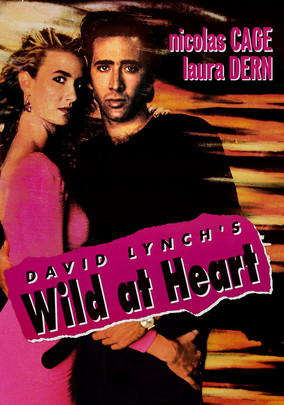
Wild at Heart-1990

Wild at Heart-1990

Director David Lynch

Starring Nicolas Cage, Laura Dern

Scott’s Review #1,230

Reviewed February 19, 2022

Grade: B+

David Lynch has created some weird films. Blue Velvet (1986) and Mulholland Drive (1992) are masterpieces that skew the odd and peculiar facets of human behavior. But Wild at Heart (1990) takes the cake as the strangest in the lot.

Fascinatingly unhinged, yet hard to understand, it’s got the Lynch handprint from start to finish, but only a warm-up act as stacked against those other films.

Somehow the film is classified as a comedy. It’s got to be one of the darkest of dark comedies. Anyone who is not a Lynch fan will not appreciate or get this film- I am a Lynch fan and I’m not sure I even got it. I do appreciate it though.

It’s also the best role of Diane Ladd’s career in which she plays a fiendish, witchy mama. The graceful actress belts a home run in her storied performance.

A situation occurs during the opening sequence that sets the tone for the rest of the film. Sailor Ripley (Nicolas Cage) serves prison time for a self-defense killing and reunites with his girlfriend Lula Fortune (Laura Dern) when he is released.

Lula’s mother, Marietta (Diane Ladd), is desperate to keep them apart and hires a hitman to kill Sailor. But those are only the start of his troubles when he and Bobby Peru, played by Willem Dafoe, an old buddy who’s also out to get Sailor, try to rob a store.

When Sailor lands in jail again, he may be destined never to reunite with Lula ever again.

Wild at Heart is a love story about Sailor and Lula and the many obstacles they must overcome to live happily ever after.

Cage and Dern are terrific though I fantasized while watching how nice it would have been to see Kyle MacLachlan in the role of Sailor. A Blue Velvet reunion would have been splendid since his chemistry with Dern in that film was top-notch. Nonetheless, I enjoyed watching Cage and Dern as the romantic leads.

The many references to The Wizard of Oz are delightful like when an image of Marietta flying through the air on a haggard broomstick appears just like the Wicked Witch of the West. When Lula desperately clicks her red heels three times to no avail we strangely wonder where the home she wants to return to is.

The film is one of those that is hard to take seriously or focus on the plot too much. This is evidenced by the inclusion of Twin Peaks (1990-1991; 2017) alumni Sheryl Lee, Sherilyn Fenn, and Grace Zabriskie. They play The Good Witch, Girl in Accident, and Juana Durango, respectively.

Each character is indescribable in their strangeness.

The nuttiness continues with bizarre turns from Crispin Glover and Harry Dean Stanton.

Interesting is how Wild at Heart was released the same year as Twin Peaks was. The inclusion of a seedy bar named One-Eyed Jacks which appears in both productions is about all that is comparable with each other. The main events in Wild at Heart are in Texas and Washington for Twin Peaks.

Forgetting the storylines, the best part about Wild at Heart is the cinematography. Enough dark and dusty highway sequences emerge using glowing and moody lighting and foreboding cracks and crevices in other visceral scenes. Cigarette smoking has never looked as sexy or dangerous as it does in this film.

Despite there being admirable and perfectly Lynch-y elements to Wild at Heart (1990) the film is just too far overboard for me to fall in love with.

I’ll pull out my copies of Blue Velvet and Mulholland Drive any day before Wild at Heart.

Oscar Nominations: Best Supporting Actress-Diane Ladd

Independent Spirit Award Nominations: 1 win-Best Supporting Male-Willem Dafoe, Best Cinematography (won)

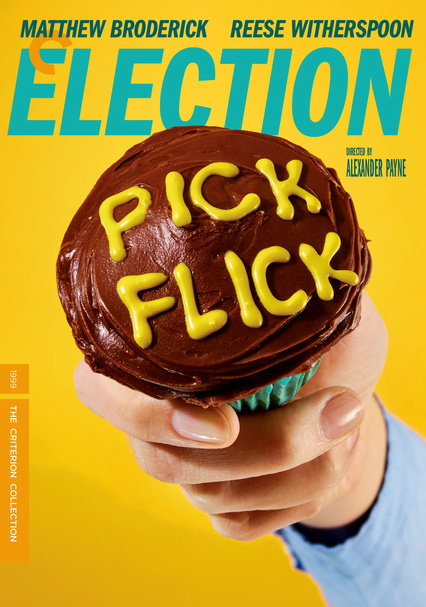
Election-1999

Election-1999

Director Alexander Payne

Starring Reese Witherspoon, Matthew Broderick

Scott’s Review #1,225

Reviewed January 30, 2022

Grade: A

Election is a 1999 black comedy film directed by Alexander Payne. He co-wrote the screenplay with Jim Taylor, and it’s based on Tom Perrotta’s 1998 novel of the same name.

Anyone film fan who knows Payne’s work can attest that they are noted for their dark humor and satirical depictions of contemporary American society. His best is About Schmidt (2002), Sideways (2004), and Nebraska (2013).

And Election ranks among his finest works.

The subject matter at hand this time out is politics and education with the familiar Payne setting of Omaha, Nebraska. Right smack in the middle of the American Heartland.

Only his second film, Election stars Reese Witherspoon in her breakthrough role that built momentum toward her becoming a superstar. She is utterly fantastic and this would rank as one of her best roles, if not the best.

And, no, that is not a slight against her iconic portrayal of Elle Woods in Legally Blonde (2001), which I love, but Tracy Flick gets my vote.

The film itself is a masterpiece and has become a cult classic. Payne takes a subject matter, a rivalry between a teacher and student, still considered somewhat taboo. He takes into question authority and tomfoolery and then spins everything around.

Jim McAllister (Matthew Broderick), is a straight-and-narrow, well-liked high school government teacher who notices that successful student Tracy Flick (Witherspoon) uses unethical tactics and manipulation to get exactly what she wants.

Since Jim believes that Tracy has ruined his friend’s marriage he already despises the girl. Though, could he also be in love with her?

When Tracy decides to run for school president, Jim feels that she will be a horrible influence on the student body. He convinces Paul (Chris Klein), a dull but popular student-athlete, to run against Tracy.

When she becomes aware of Jim’s secret involvement in the race, a bitter feud develops between teacher and student as they try to outsmart the other.

The writing in Election is brilliant. The audience may see Jim or Tracy as the villain or perhaps both. They resort to drastic machinations to get their way. Tracy wants to win at all costs while Jim becomes obsessed with ensuring that Tracy does not win.

I love the high school setting and the normal goodie two-shoes Jim resorting to ballot cheating and affairs to best his rival. Tracy is no better as she manipulates and conspires to win the election.

I also worry that the viewers who should see this film either won’t or won’t get the message that Payne is sending.

The editing is flawless and the quick cuts that allow each character a chance to narrate and share their perspective is a major win. We see each motivation and understand what makes each character tick-especially Jim and Tracy.

The acting is wonderful and enough praise cannot be reaped upon Witherspoon and Broderick for their sick and twisted performances. They each radiate desperation and dark comedy and delightful is the perkiness and drive that Witherspoon gives Tracy.

When she bakes cupcakes in the hopes of bribing her classmates for votes, this counterbalances Broderick’s angry and grizzled Jim. He is at war with a student and goes for the jugular instead of being the role model a teacher should be.

It’s delightfully fun though many high school teachers may not appreciate the deviousness.

There’s also a cool LGBTQ+ inclusion which is a positive.

I’d venture to compare Election to American Beauty (1999), made the same year and with a similar tone. Cynical and witty, they both question morality and ethics, especially with the sugar coating of a high school or small-town Americana.

Satire never looked finer in both films.

Made in 1999, how dubious the realization is that Election continues to have relevance as time goes by.

In the current state of United States politics where lying, cheating, and a blatant refusal to accept election results unless one side is the victor is running rampant, and shockingly tolerated by some, Payne’s message has never been more powerful.

Oscar Nominations: Best Adapted Screenplay

Independent Spirit Award Nominations: 3 wins-Best Feature (won), Best Direction-Alexander Payne (won), Best Screenplay (won), Best Female Lead-Reese Witherspoon, Best Debut Performance-Jessica Campbell

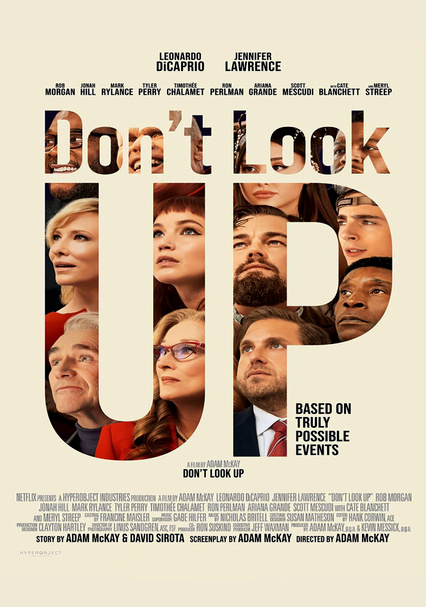
Don’t Look Up-2021

Don’t Look Up-2021

Director Adam McKay

Starring Leonardo DiCaprio, Jennifer Lawrence, Meryl Streep

Scott’s Review #1,220

Reviewed January 16, 2022

Grade: A

In the times of the COVID pandemic, ‘water cooler’ films have ceased to exist. Once, employees would gather around the water cooler to discuss a current film or television show. These days, with many working from home, this activity has waned.

Too bad, because Don’t Look Up (2021) is one of those films.

It was not on my radar until a flurry of scuttlebutt and controversy brought the film to the forefront of my mind and many others. Super topical and mired in irony, everyone should see it, but those who need to won’t.

It’s a brazen and in-your-face look at how science and facts are dismissed by some who can’t see the forest for the trees, or in this case, a giant comet speeding towards planet Earth. In the year 2021, amid controversy over COVID-19, including the prevention of mask-wearing and vaccinations, Don’t Look Up portrays those as simply stupid.

As they are.

Those viewers who are conspiracy theorists, Trump supporters, or I daresay even too self-absorbed to look past their own lives are the ones who should see the film the most. You will be mocked and used as fodder for the entertainment of the more intelligent species of human beings.

But perhaps learn a thing or two?

Led by director Adam McKay, famous for satirical works such as 2015’s The Big Short, he satirizes the current state of worldly affairs masterfully, using political comparisons and the world-weary science versus non-science approach.

McKay also writes and produces.

He enlists an all-star cast who were chomping at the bit to be part of his relevant and brilliant project. Leonardo DiCaprio, Jennifer Lawrence, Meryl Streep, Mark Ryland, and Cate Blanchett are just a handful of participating stars.

Kate Dibiasky (Jennifer Lawrence) is an astronomy graduate student who, along with her professor, Doctor Randall Mindy (Leonardo DiCaprio), makes a discovery of a comet on a collision course with Earth. It is expected to arrive within six months and destroy most of the planet.

They are shocked and dismayed when their attempts to get anyone to pay any attention are hijacked by the media and the President of the United States of America, President Orlean (Streep). Instead, folks in high power attempt to use the ‘story’ for either ratings or political gain.

With the help of Doctor Oglethorpe (Rob Morgan), Kate and Randall embark on a media tour that takes them to the airwaves of The Daily Rip, an upbeat morning show hosted by Brie (Cate Blanchett) and Jack (Tyler Perry). While Randall embarks on an affair with Brie, the scientists attempt to gain the attention of the social media-obsessed public before it’s too late.

As the title states, look up?!

President Orlean and her psychopathic son, and Chief of Staff, Jason (Jonah Hill), are patterned after former President Donald J. Trump and his son. Their nastiness and dismissive attitude, driven solely by personal gain, are despicable.

Hysterically and satisfying, they each get their proper comeuppance.

Orlean’s demise at the end of the film is particularly satisfying. Stay post-credits for this treat.

Don’t Look Up is not a conventional film- it’s better than that. Its special sauce is its powerful message and reassurance for viewers to not take good old-fashioned common sense for granted. Despite the naysayers, the use of one’s brain is a valuable commodity.

The urgency of the matter is not meant to be taken for granted, but there are enough comedic elements to classify it as such- a dark comedy.

DiCaprio is terrific in the lead role. Nervous and struggling to express himself, his frustration is palpable as he tries to warn the world of impending doom. The actor can play any character, and it’s great seeing him add a sexy, middle-aged nerd to his repertoire.

Lawrence is a killer. Her character has no filter and is known to burst into rage, making her outbursts particularly engaging. Kate will call an idiot an idiot. Her outburst at the President is a remarkably terrific scene.

Despite the laughter, Don’t Look Up (2021) sends a dire message. It mirrors the current times and what trouble we are in.

The grim final sequence, when Randall, Kate, and family sit around the dinner table enjoying a Thanksgiving-style meal, is also a reminder to keep loved ones close and treasure every moment.

Oscar Nominations: Best Picture, Best Original Screenplay, Best Film Editing, Best Original Score

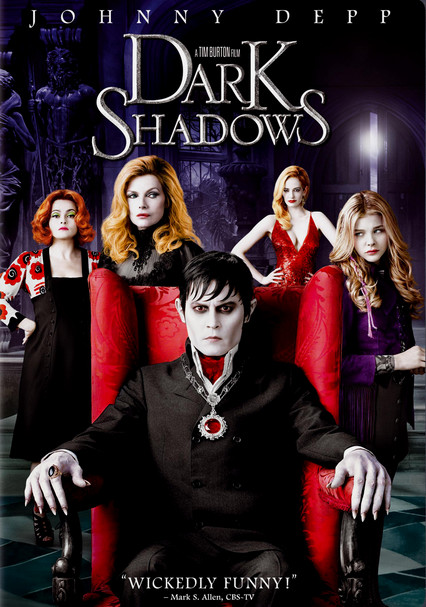
Dark Shadows-2012

Dark Shadows-2012

Director Tim Burton

Starring Johnny Depp, Michelle Pfeiffer, Helena Bonham Carter

Scott’s Review #1,203

Reviewed December 3, 2021

Grade: C+

Sometimes a great idea doesn’t pan out. On paper, relaunching the unique and gothic 1960s daytime television series Dark Shadows with a tribute on the big screen with even bigger stars sounds wonderful.

The endless possibilities and the inevitable nods to history are head-spinning.

Sadly, the film version of Dark Shadows (2012) directed by Tim Burton is miscategorized and misunderstood by all involved. It’s billed as a dark comedy rather than horror or even fantasy and comes across as more of a mockery than a real nod to the series.

It’s completely over-the-top and misses any of the wonder and the spookiness that made the long-ago black and white show a daily adventure.

I do not profess to have seen the entire series but I have watched much of the first season and understand the appeal. Fans will be disheartened by Burton’s botched attempts to recreate a great idea.

Depp, a frequent guest star in Burton’s film works, strikes out as the iconic character Barnabas Collins, the eighteenth-century vampire who awakens in the twentieth century though he’s not as bad as he was when he feebly stepped into the Willy Wonka character in 2005.

Yikes.

The only saving grace is the creative and magical visual effects and set design which provides enough imagination and macabre fascination to at least partly save this otherwise messy experience.

The plot gives a brief explanation of the history.

In eighteenth-century Maine, Barnabas Collins (Depp) presides over the town of Collinsport. A rich and powerful playboy, Barnabas breaks the heart of a witch named Angelique (Eva Green) who deviously makes him pay.

Angelique turns Barnabas into a vampire and buries him alive.

Two centuries later, Barnabas escapes from his tomb when builders are erecting a Mcdonald’s and finds the current 1970s Collinsport a very different place. His once-grand estate has fallen into ruin, and the dysfunctional remnants of his family have fared no better.

His resurrection creates complications and drama for the entire family.

Burton knocks it out of the park with the visuals.

The gothic mansion, in particular, is right up his alley and he embraces the possibilities with gusto. Every creak or wind sound heard within the mansion co-aligns with the dark and dreary purples and brown colors.

Frequent candles mark the proper mood and investigating the vast number of rooms was something to look forward to.

Since the rest of the film sucked I had nothing better to do than fully embrace and focus on the art and set designs.

Heavyweights like Michelle Pfeiffer, Helena Bonham Carter, and Depp do their best but oddly overact in nearly every scene. Their direction must have been skewed toward comedy instead of adding any meat or emotional relevance to the characters.

The original series created something strangely dramatic and compelling on a shoestring budget. There was a delicious haunting and grabbing nature that made you anticipate the next episode and who might fall victim to the vampire.

The film veers into a vastly different territory.

Burton and Depp’s Barnabas struts around emitting one-liners for intended giggles. The other characters appear to be dressed for Halloween and are dumb and morose.

The feeling I got was that of a retread to a situation comedy like The Addams Family rather than a horror soap to be taken seriously.

The sexual references and the occasional bloody vampire effects are okay but seem peppered in to justify the dark comedy.

Even an uninspired cameo by shock rocker Alice Cooper is perceived as a weak attempt to add something frightening or dangerous.

Unsurprisingly, Dark Shadows (2012) performed poorly at the box office and was derided by true fans of the series and almost every other film critic.

This caused Barnabas and his family to slink back into their coffins possibly for good.

What a shame.

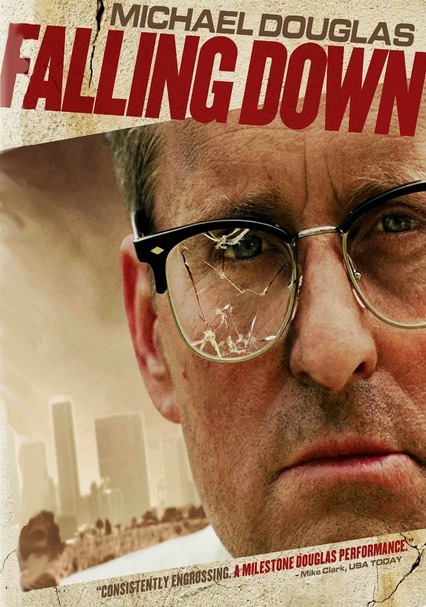
Falling Down-1993

Falling Down-1993

Director Joel Schumacher

Starring Michael Douglas, Robert Duvall

Scott’s Review #1,192

Reviewed November 6, 2021

Grade: B+

Falling Down (1993) is a film with a message or arguably several messages. It’s about one man who is fed up with almost everything and is on the brink of a full-throttle meltdown.

What the film does is mix entertainment with this message about socio-economic unfairness, inequality, etc.

Whether or not people take these elements as seriously as they should is at risk from the popcorn qualities. It’s almost like it doesn’t know what it is.

Is it a kick-ass thriller, a black comedy, or a fantasy?

The film certainly entertains.

This is unsurprising because director Joel Schumacher is at the helm as director. The man is a mainstream director churning out hits like The Client (1994), Batman Forever (1995), and Batman & Robin (1997) throughout the 1990s.

Some were more successful than others but Falling Down is his best work.

I am a big fan of Falling Down with the awareness that the messages peppered throughout may not be taken as seriously as they ought to be. And the reason is that there are too many of them. It’s almost as if they are boxes being checked off a list.

But it bears repeating that the entertainment factor is fabulous.

One scorching summer day in Los Angeles William Foster (Michael Douglas) an already frustrated middle-aged man who is unemployed and divorced is having a terrible day.

When his car breaks down on the freeway, he leaves his vehicle and begins a trek across the city to attend his daughter’s birthday party.

As he makes his way through urban neighborhoods, William’s frustration and bitterness are tested at every turn resulting in violent encounters with various people, including a vengeful gang and a pursuant veteran police sergeant Martin Prendergast (Robert Duvall).

Unfortunately for Prendergast, today is the day before his long-awaited retirement.

Douglas delivers an excellent performance as Foster. He makes the character relatable to every viewer who has ever felt so fed up they want to discharge the people responsible for the unfairness. He only takes his anger out on those who deserve it and that makes the character somewhat of a hero.

The white supremacist, the belligerent Korean grocery store owner, the gang members, and the lazy construction workers all deserve their just desserts.

Throughout the film, I cheered Foster mightily and chuckled at his wit.

My favorite sequence occurs at the fast-food joint named Whammy Burger. All Foster wants is his breakfast but he arrives one minute past the cut-off as the unsympathetic cashier smugly tells him.

He proceeds to ravage the restaurant in anger.

Despite the humor that Schumacher adds the message must be taken seriously. Minority characters are aptly shown as repressed or not treated well and that point sticks with me until the end.

The least interesting story point is the entanglement between Foster and his ex-wife Beth, played by a woefully underutilized Barbara Hershey.

The Oscar-nominated actress can do so much but her talents are wasted in a throwaway role as the underdeveloped wife character.

I never warmed to Robert Duvall’s police sergeant character either and while sympathetic to Foster’s cause because of a situation with his son, the plot point never develops fully. Prendergast’s overbearing wife and a young police officer he seems obsessed with are never explored well.

Despite great talent, the film belongs to Michael Douglas.

The mood and cinematography deserve accolades. The humidity is suffocating and the layers of smog overlooking Los Angeles hammer home the stuffy nature of the film. One can imagine the sweaty environment leading to explosions of anger.

What Schumacher does besides entertain the audience is show them that a once successful man who once had a great job and happy family life can lose it all and snap.

Falling Down (1993) shows that what happens to Foster can happen to anyone.

Let’s live each happy day to the fullest while we can.

French Exit-2020

French Exit-2020

Director Azazel Jacobs

Starring Michelle Pfeiffer, Lucas Hedges

Scott’s Review #1,188

Reviewed October 29, 2021

Grade: C+

French Exit (2020) is a mediocre effort that left me disappointed. I expected to be dazzled by the eccentric French culture and sequences that I had anticipated.

While there are some location shots in historic Paris, they are not enough to compensate for the lackluster writing and unlikable characters the film offers.

Plot-wise, the intriguing premise teeters into the far-fetched, to the point where the result becomes banal and silly.

The film is a miss and should be skipped in favor of other films, such as Midnight in Paris (2011) and Last Tango in Paris (1972), which both offer a better French flair and superior storytelling.

A widowed New York socialite named Frances (Pfeiffer) and her meandering son Malcolm (Hedges) move to Paris after she spends the last of her husband’s inheritance.

Sixty years old and now penniless, she borrows a friend’s apartment where she plans to live out the rest of her days anonymously. Her husband, Franklin, has been dead for twelve years, and all that’s left of him is a cat named Small Frank, who may or may not embody his spirit.

Based on the previews, I anticipated an adventure involving cobblestone Parisian streets, delicious bakeries, and cultural French music. A glimpse of the famous Louve or Eifel Tower would have been a cherry on top.

While there are a few sequences of Frances and Malcolm walking along Parisian streets and an apartment that provides good French flavor, there is not enough to be considered an achievement.

Michelle Pfeiffer plays the main character.

As a fan of some of her more recent projects, like Mother! (2017), a brilliant film directed by Darren Aronofsky, the character didn’t catch fire for me. She’s pretty snobbish throughout and never really gets her comeuppance or learns any lesson.

As the protagonist, I was baffled as to why I was expected to root for a woman who is a bitch.

Hedges, a fantastic actor, plays his part according to the script. Still, the morose, one-dimensional Malcolm is uninteresting, and a so-so romantic plot involving his girlfriend Susan (Imogen Poots) is even less so.

On the plus side, Valerie Mahaffey steals the show with her quirky, comedic performance as Reynard.

A fan of Frances’s, she befriends the woman who initially shows no interest in her and dismisses her coldly. An eccentric, her odd demeanor and style are infectious, and she won me over immediately, especially when placed side by side with the other, less flavorful characters.

She was deservedly rewarded with recognition and received a Spirit Award nomination. Hopefully, this leads to more juice roles from Mahaffey.

Azazel Jacobs, who has had modest success on the independent film circuit, offers moderately impressive direction but loses me with the addition of not one but two tired seance sequences. A cat inhabiting a dead body and coming to life with the deceased person’s voice is drab and better suited for low-brow light comedy.

To make matters worse, the inclusion of a plump medium Madeleine (Danielle Macdonald) is about as clichéd as you can get.

There is not enough substance to give French Exit (2020) higher than average marks. Pfeiffer, taking center stage and doing her best, deserves better roles as she enters her senior years. She’s got gusto, so let’s give her better material.

Independent Spirit Award Nominations: Best Supporting Female-Valerie Mahaffey

O Lucky Man!-1973

O Lucky Man! -1973

Director Lindsay Anderson

Starring Malcolm McDowell, Ralph Richardson, Helen Mirren

Scott’s Review #1,174

Reviewed September 1, 2021

Grade: A-

O Lucky Man! (1973) is a satirical black comedy that mixes musical songs with a message of capitalism by the driven protagonist. Like a great fine wine, the film has aged well and is still relevant decades later.

The film is a slow build but by the end of the lengthy running time of nearly three hours, I was enamored and hummed the title song repeatedly.

I’m still humming it as I write this review.

Suggested is to watch O Lucky Man! in two or three segments for full appreciation. One sitting would be incredibly tough since some of the events require some level of reflection and thought.

An ambitious young British man, Mick Travis (Malcolm McDowell) is determined to be successful at all costs. Debuting as a coffee salesman, Mick is quickly promoted within his company. Events take a series of bizarre turns when Mick is abducted by a military agency.

Later, he becomes smitten with the gorgeous Patricia (Helen Mirren) and winds up working for her father, sinister executive Sir James Burgess (Ralph Richardson). As Mick’s tale continues, his experiences get progressively stranger.

The clever aspect is that just when you think Mick’s life is dour and drab he rebounds more successful than ever. Hence the title of the film. So, there is an element of adventure and romance amid the capitalist plot.

Lindsay Anderson, who directed O Lucky Man! re-casts McDowell again in the same role he first played as a disaffected public schoolboy in his first film performance in Anderson’s film If… (1968).

I did not realize this at the time I watched O Lucky Man! and I think this knowledge would have made me catch on to the events and the subtexture even more.

Now, I need to rewatch If…

I did however ruminate constantly on McDowell’s other iconic role in A Clockwork Orange (1971) as Alex. The characters are quite similar save for Alex being a juvenile delinquent instead of a rising corporate guy like Mick is.

This is in large part due to McDowell’s looks and acting style. His trademark sneer and bright blue eyes make him mesmerizing in both roles.

I even spotted an actor who played one of the infamous droogs!

A plus to the film is that several actors appear in multiple roles, some difficult to distinguish. Part of the fun is trying to figure out who’s who.

There isn’t a whole lot of chemistry between McDowell and Mirren but it’s interesting the shifting characteristics of the characters. And Patricia is fascinating. When she inquires why people work so hard for things instead of just taking them we realize that she places no value in things because she’s never had to work for them. She’s a rich, daddy’s girl.

There are reasons not to like her but I still did. When she winds up in a homeless lot it’s shocking. And I also loved the character of Mick and his epic journey. He is imprisoned and then reformed in a humanistic way just like Alex was in A Clockwork Orange.

But the best part of O Lucky Man! is the music. Anderson takes periodic breaks from the drama to simply treat his audience to a musical number all performed by Alan Price.

It’s comforting to sit back and enjoy the unforgettable tunes that pepper the film. One could argue that the songs almost usurp the main action but I found them, great companions, to the other.

As if there was any doubt, the soundtrack was widely lauded and was a huge financial success.

A surreal effort, sometimes happy or tragic but always insightful and oftentimes delightful, McDowell, Price, and Anderson are at the top of their respective games.

O Lucky Man! (1973) is a terrific watch brimming with good juices if one just has the patience to let events marinate.

Promising Young Woman-2020

Promising Young Woman-2020

Director Emerald Fennell

Starring Carey Mulligan, Bo Burnham

Scott’s Review #1,132

Reviewed April 13, 2021

Grade: A

Emerald Fennell, making her film directorial debut, kicks her viewers in the ass with significant help from star Carey Mulligan, with Promising Young Woman (2020).

The actress gives the best performance of her career.

The film is a sexy and haunting experience, mixing black comedy and witty dialogue with an important and timely subject matter- the abuse and victimization of young women by men.

Both men and women can be held responsible, as Fennell makes abundantly clear. Predators often have a share of people who choose to “look the other way” and thereby enable.

This is a constant theme throughout the film involving many characters who are called out for their passivity.

Fennell makes this point during two of the film’s most compelling scenes, calling out a high-powered dean and attorney for their betrayals. The scenes are so powerful that I wanted the characters to suffer as much as the revenge seeker does.

There is also a wackiness in the pacing and dialogue that reminds me quite a bit of the 1999 masterpiece, American Beauty.

The film is depravity, bizarreness, and brilliance all rolled into one. I felt this film in my bones.

Almost every scene is a treat in the mysterious and unexpected, and the film features peculiar characters and creative musical score renditions, and includes a scene and music from the underappreciated masterpiece The Night of the Hunter (1955). Fennell knows her classic cinema.

Mulligan stars as a woman named Cassie who seeks to avenge the death of her best friend, who was a victim of rape when they were in medical school, and their young lives had potential, and such possibility lay ahead of them.

Cleverly, we never see her friend, named Nina Fisher, but she is of vital importance and nearly a central character herself despite her absence.

Everyone said Cassie was a “promising young woman” until a mysterious event abruptly derailed her future. But now, at thirty and still living at home, her parents suggest, via a giant suitcase for her birthday, that it may be time for her to move on.

Cassie is tough to figure out since she’s wickedly clever, sometimes wisecracking, and tantalizingly cunning, and she’s living a secret double life by night. She goes to nightclubs looking drop-dead gorgeous and lures men to her rescue, pretending to be inebriated.

What happens when they go back to their pad is shocking, dark, and justified. The men will never see this coming.

Before the presumption is that Cassie is nothing more than a bad-ass, her intentions are not only admirable, but she has a heart and desires love. Promising Young Woman is a dark character study.

Besides the powerful story, Promising Young Woman is riddled with interesting cinematic techniques. Cassie’s parents lounge in their afternoon, watching The Night of the Hunter, a dark fairy tale for adults.

Later, a haunting version of Britney Spears “I’m a Slave 4 U”, complete with a string arrangement, is featured most uniquely.

All the supporting players add pizzazz and strength, some in odd or unclear ways, until certain revelations bubble to the surface.

Jennifer Coolidge as Cassie’s strange mother, Bo Burnham as the smitten Ryan Cooper, and Alison Brie as Cassie’s college friend Madison McPhee are the best examples.

Bo and Madison have the most to hide, but will they or won’t they face Cassie’s wrath? Not much is worse than a woman scorned.

But the main draw is Mulligan. Startlingly good, with an astonishingly powerful, deeply layered performance by her. She showcases a remarkable acting range, effortlessly shifting from brash to darkly humorous and, at times, emotionally vulnerable in her best performance to date.

Two scenes stand out to me.

The first is a delicious scene between Cassie and the female dean of her school, played by Connie Britton. At first dismissive and annoyed by Cassie’s accusations, Dean Elizabeth Walker finally takes notice when she believes that Cassie had kidnapped her teenage daughter and left her with a group of drunken frat boys. What comes around goes around!

The second is the finale wedding scene, interestingly not featuring Cassie other than by text messages. As the happy young couple says their vows a parade of police cars ruins the moment and the audience cheers victory. It’s a satisfying moment.

The screenplay is original, fresh, and timely. In the “Me Too” movement, the timing is vital and makes the subject matter relevant. Fennell wrote the screenplay- is there anything she can’t do?

Promising Young Woman (2020) is an exceptional film. It’s a controversial revenge film, but it’s so much more. Taking a powerful subject matter and examining the hypocrisy of men and women is telling and eye-opening.

That is why this film is critical to see and brings awareness to a situation that society still too often deems as okay.

Oscar Nominations: 1 win-Best Picture, Best Director-Emerald Fennell, Best Actress-Carey Mulligan, Best Original Screenplay (won), Best Film Editing

Independent Spirit Award Nominations: 2 wins-Best Director-Emerald Fennell, Best Female Lead- Carey Mulligan (won), Best Screenplay (won)
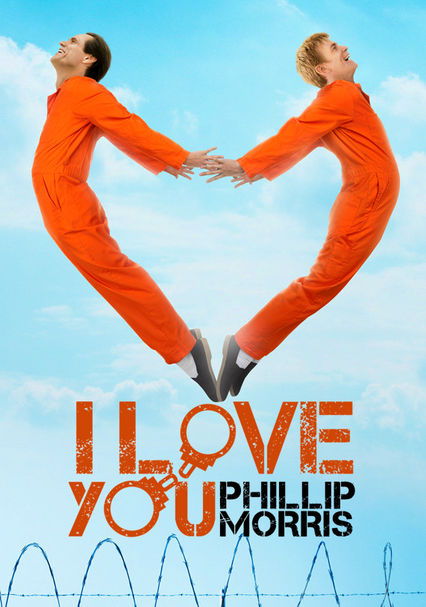
Bone-1972

Bone-1972

Director Larry Cohen

Starring Yaphet Kotto, Andrew Duggan, Joyce Van Patten

Scott’s Review #1,121

Reviewed March 12, 2021

Grade: B+

It’s tough to review a film like Bone (1972) because it’s a tough film to categorize. Is it a satire or does it dissect racism and classism?

The truth is it does all of the above and offers a bizarre and jagged cinematic experience that will leave the viewer perplexed, scratching his or her head, and ruminating about the experience long after the credits roll.

I was originally expecting Bone to be a 1970s exploitation film but it’s not that at all.

One lazy sunny day, in Los Angeles’s illustrious Beverly Hills, local salesman Bill (Andrew Duggan) and his wife Bernadette (Joyce Van Patten) bicker beside their luscious pool.

They are horrified when they realize a filthy rat has become stuck in the filter. This provides some symbolism as the film chugs along. When they rush to call the exterminator a threatening black man named Bone (Yaphet Kotto) suddenly appears.

Frightened, they first assume he is with the exterminator company but when he terrorizes them with the now-dead rat they offer him money to leave. While they search for banking materials, Bone realizes that Bernadette and Bill are not as wealthy as appearances would dictate.

Bone sends Bill to the bank to withdraw cash or else he will rape and beat Bernadette. At the same time, Bernadette becomes suspicious of Bill’s financial intentions.

There are moments in the film that left me feeling like I was watching something bizarre or of little sense. I’m still not sure what the opening scene of Bill filming a television commercial featuring cars involved in wrecks with dead bodies inside meant.

The images are bloody and horrific- artistic but unclear is the message.

The conclusion also is unclear. When one character appears to murder another, a third character vanishes. Naming the characters would ruin the story but suffice it to say one may wonder if the entire film was a dream.

The realization that Bill and Bernadette make individually is that they don’t care for one another and would happily leave the other to die. We know little about their life from before but assume, while rich, they live a life of boredom, each yearning for some spice.

How many nights does Bernadette sit alone by the pool drowning her sorrows in Chardonnay?

Yaphet Kotto is wonderfully cast. Soon to be well-known as a James Bond villain in Live and Let Die (1973), his character in Bone starts as menacing and slowly becomes sympathetic almost rootable.

When he reveals to Bernadette that he cannot maintain an erection unless he is raping someone, the thought is sickening, but he also appears vulnerable and feeble.

He gradually becomes my favorite character of the three whereas in a conventional film, he would be the one not to root for.

Bill’s experiences are a mind-fuck.

Tasked with withdrawing money from his bank to save his wife, he thinks why should he? He meets a gregarious woman at a bar played by Brett Somers and a chatty young woman online at the bank, who beds him and makes him a salted steak. They frolic away the afternoon as, for all he knows, his wife could be dead!

The issues of classism and racism are the meat and potatoes of Bone and where the film succeeds. We feel the pain of Bone when he as a black man must stand out like a sore thumb in swanky Beverly Hills.

He has had to struggle for every crumb he has gotten while he sees spoiled brats like Bill and Bernadette getting everything and working half as hard. It’s not fair and the audience is meant to empathize with him.

Larry Cohen, well-known for the low-budget campy circuit, creates a perplexing project with added black comedy. The rat, the chatty girl, the X-Ray lady, everyone in the film is wacko!

Bone is a weird film that I don’t know what to make of.  I took it as a glimpse into social issues and I loved the food references, the steak, and eggs mostly.

The plot and conclusion will leave you wondering but I guess that’s better than forgetting the film five minutes later. I’m still trying to make heads or tails of it.

After Hours-1985

After Hours-1985

Director Martin Scorsese

Starring Griffin Dunne, Rosanna Arquette

Scott’s Review #1,069

Reviewed October 9, 2020

Grade: A-

After Hours (1985) is a gem of a film.

When thoughts of director Martin Scorsese are conjured, Taxi Driver (1976), Raging Bull (1980), or Goodfellas (1993) are films that immediately spring to mind.

Scorsese’s decision to create a pared-down independent film was met with enormous success and accolades for the very first Best Feature indie film victory and Best Director honors.

The experience is a black comedy set within the gritty and unpredictable underbelly of Soho-New York City in the 1980s.

Mixing comedy with satire, Scorsese leapfrogs from similar content in The King of Comedy (1983) to this film made only two years later.

Any fan of New York City will cheer with joy at the authenticity achieved since the film was shot on location there. The Big Apple in the 1980s was a notoriously violent cesspool so the genuine setting and the use of dark streets and alleys is an immeasurable treat and adds much zest to this unusual film.

A nice guy, Paul Hackett (Griffin Dunne), works hard as a computer data entry worker by day and shares an encounter with a quirky young woman named Marcy Franklin (Rosanna Arquette) in a Manhattan coffee shop.

After she gives him her number and leaves, he is unable to stop thinking about her and embarks on a late-night adventure to go and see her at her apartment.

The night does not end how he thinks it will. Not by a long shot, as he spends the rest of the long night meeting various women and other strange characters as he traverses around the city attempting to get back home. He has lost his money and is broke.

The great aspects of After Hours are its bizarre characters and the cinematography that offers a tantalizing view of downtown Manhattan. The film is atmospheric and zany in its gloomy and steamy side streets and odd locales sprinkled with color.

A dingy bar, a sophisticated artist’s apartment, and a man sculpture that follows Paul everywhere are usurped by the film’s strangest and most interesting set, Club Berlin, an “after-hours” club inhabited by punks who want to shave Paul’s head into a mohawk.

I enjoyed this film as a sort of “A Day in the Life of Paul” adventure story, albeit a gothic one. The film concludes wonderfully as the sun begins to rise just as the film ends and thus Paul’s wild night finally ends.

I was chomping at the bit with the thought of what a new morning would bring and the possibilities of reuniting with any of the women he encountered the night before, either dead or alive.

Particularly charming to me while watching After Hours, the decade of decadence well into the past, are the relics once commonplace in everyday life. A phone booth, the traditional yellow cabs, and desktop personal computers are heavily featured.

These items, relevant when the film was made, now seem like throwback niceties that make the film endearing and like a glimpse into someone’s time capsule.

I did not pick up on much authentic romance between Paul or any of the female characters- Marcy, June, Gail (Catherine O’Hara), or Julie (Teri Garr), but maybe that’s the point. While one winds up dead, not one, but two of them pursue him, and not in a good way.

The film is mystical, weird, and energetic. The inclusion of Cheech & Chong only adds to the revelry.

Sadly, underappreciated and too often forgotten, After Hours (1985) is a Scorsese treat worth dusting off now and then. The birth of the Independent Spirit Awards has a lot to owe to this film for grabbing top honors and the admiration works both ways.

For a glimpse at the creative genius that is Martin Scorsese, this film gets an enormous recommendation.

Independent Spirit Award Nominations: 2 wins-Best Feature (won), Best Director-Martin Scorsese (won), Best Female Lead-Rosanna Arquette, Best Screenplay, Best Cinematography