Category Archives: International

Once Upon a Time in Anatolia-2011

Once Upon a Time in Anatolia-2011

Director Nuri Bilge Ceylan

Starring Muhammet Uzuner

Scott’s Review #445

70189288

Reviewed July 4, 2016

Grade: B+

Once Upon a Time in Anatolia is a Turkish film that, circa 2011, has received notice and recognition during awards season.

The film is very slow-moving and requires some patience, but it is worth the effort and I found myself savoring the experience by the end.

It is a cerebral, thoughtful experience about life and human nature and is philosophical in its message. The main characters reflect on their lives while searching for a mysterious dead body in the plains of Turkey in the middle of the night.

The cinematography is wonderful and some of the camerawork is amazing.

It’s quite a unique film.

The only drawback is its extremely slow pace, but upon its conclusion will leave you pondering for some time.

No bombs and no car chases are involved, just honest, truthful dialogue.

Independent Spirit Award Nominations: Best International Film

Mustang-2015

Mustang-2015

Director Deniz Gamze Erguven

Starring Güneş Şensoy

Scott’s Review #417

80058482

Reviewed June 18, 2016

Grade: A-

Mustang (2015) is a powerful, relevant, Turkish film released in 2015 and nominated for many awards, including the Best Foreign Language Film Oscar.

I fully support the nomination as I feel it is a top-notch piece.

A coming of age story but with no clichés, and a real, true-to-life feel to it. It tells of various generational beliefs and how these conflict with other viewpoints and ideas.

It also focuses on blossoming life, and sadly, tragic death.

The story tells of five beautiful young sisters living in a remote village in Turkey, a thousand long miles outside of Istanbul. The girls range in age from eight to eighteen and live with their Grandmother and Uncle Erol.

The sister’s parents had died years earlier.

The main protagonist is Lale (Güneş Şensoy), the youngest of the siblings, who is wise well beyond her years as the plot unfolds. We first meet her as she bids an emotional farewell to her teacher when she moves to Istanbul.

The film is told largely from Lale’s point of view, but each of the girls plays an important role.

As the girls play an innocent game in a lake with a group of boys, the game causes a scandal in their “old world” village, and the girls are banished inside the house by their Grandmother and Uncle, who fear their progressive ideas will hurt and shame them.

The main crux of the story is the conflict between different generations and the yearning of the girls to be free and independent, both sexually and intellectually.

Their older relatives, and others in the town, prefer the old ways and are prudish.

The oldest daughters enter into arranged marriages, while the younger ones fear the same will soon happen to them.

The film wisely does not portray these conflicts in a clichéd way or make them over-obvious.

Rather, the film feels real, fresh, and like a slice of small-town Turkish life. Istanbul is mentioned as a paradise of open-minded thinkers and progressive ways, and “the place to be”.

The girls fear life in the doldrums, cooking and cleaning for their men, married off to older men without any love.

It is unclear if the Uncle is molesting any of the girls- the film alludes to it, but the point is not made obvious. What is clear, though, is the girl’s desire for sexual freedom, experimentation, and love.

They are modern thinkers.

The young actress who plays Lale is a marvel. So natural, earnest, and clever, she befriends an older man who teaches her to drive and they embark on a sweet friendship.

The film is shown through Lale’s eyes and her reactions to situations. Knowing nothing of sex, she sneaks a peek at a sex education book and is fascinated by her older sister’s sex discussions.

The ending leaves events open to interpretation, and I believe happiness awaits those featured at the conclusion.

Mustang (2015) is a wonderful film, filled with truth, conflict, great acting, and food for thought. A must-see for foreign language film lovers.

Oscar Nominations: Best Foreign Language Film

Independent Spirit Award Nominations: Best International Film

The Kid with a Bike-2011

The Kid With A Bike-2011

Director Jean-Pierre Dardenne, Luc Dardenne

Starring Thomas Doret

Scott’s Review #416

70189306

Reviewed June 18, 2016

Grade: B

The Kid with a Bike is a small French film from 2011 that has received acclaim and recognition worldwide.

The film tells the story of a troublesome young boy abandoned by his struggling father and various dramas that unfold.

I found the film somewhat disappointing as I expected a bit more than I was given.

Throughout the very short one hour and twenty-seven-minute run-time the young boy broods and defies either authority or his caregivers, or fights with various people he encounters as he attempts to find his father.

The boys bond with a local hairdresser who takes him in and is interesting, but her motivations are not made clear other than being kind.

Why would she take in a strange kid? We do not learn all that much about this character and that is a shame.

There is one element towards the end of the film that was shocking and well done, but overall I expected something a bit deeper from this movie given all of the praise surrounding it.

Independent Spirit Award Nominations: Best International Film

Gett: The Trial of Vivian Amsalem-2014

Gett: The Trial of Vivian Amsalem-2014

Director Ronit Elkabetz, Shlomi Elkabetz

Starring Ronit Elkabetz, Simon Abkarian

Scott’s Review #409

80013601

Reviewed June 9, 2016

Grade: B+

Gett: The Trial of Vivian Amsalem (2014) is the third in a trilogy of films focusing on the title character Vivian Amsalem and her unhappy marriage to her husband, Elisha.

The unhappiness is hers and he sees no reason to end the marriage.

It is a film about culture, religion, and modern views versus traditional ones.

I was unaware the film was a trilogy until after I finished watching and began conducting some research as I prepared to review it. It is not required to view the first two films  (To Take A Wife and Shiva) to enjoy this film as I suspect they are each a chapter not continuations.

Vivian is a tall, beautiful woman, though she is weary and haggard when we first lay eyes on her in the stifling courtroom, where she sits and spends much of her time. She has long dark hair and intense eyes- she appears driven and quite modern and of liberal thinking, a feminist perhaps.

She is frustrated because her yearning for an independent life has been thwarted by her husband. She would like a divorce after over twenty years. Having met him at age fifteen, his is the only life she has known.

Since he will not agree to the divorce, the courts will not grant her the decision she wants. Since he has not abused her and gives her everything she desires, the judges have no grounds to grant her the divorce.

This is the conflict of the film.

Gett: The Trial of Vivian Amsalem has a clear religious message, which is an interesting component for an American viewer.

How simple it is to divorce somebody in Western civilization and how different the measure is in Israel. Jewish religious law is quite restrictive.

Vivian faces an enormous ordeal. She does not love her husband yet cannot end her loveless marriage. The film is fraught with a clear conflict and one’s interpretation of right and wrong.

Almost set as a play since the film has merely one set- the courtroom- this aspect is effective at showing frustration, exasperation, and even rage.

All the while, Gett, has a sly sense of humor, and I could not help but smirk at a few of the supporting character portrayals.

I sensed a Pedro Almodovar (a famous Spanish director) influence in the quirky, sly writing, and his themes of political freedom.

Character after character is called into the courtroom to testify as witnesses to Vivian and Elisha’s happy marriage- each attorney looking for evidence to cement their client’s point of view.

In contrast, to Vivian’s fierce independence, a mature neighbor couple of Vivian and Elisha heralds them as the perfect couple. Soon, the wife is grilled revealing that she is submissive to her husband and lives in an entirely different world than Vivian.

To be critical, the film drags slightly, but I wonder if this is the director’s intent. The tone is a suffocating one- Vivian and her attorney languish in the same courtroom for five long years as delay after delay occurs.

Throughout the numerous testimonies, an accusation is raised that is an interesting component of the film and an aspect I wondered about very early on- was an affair brewing between Vivian and her attorney? It is alluded to, but never confirmed, rather shrouded in mystery.

One wonders.

From an acting perspective, Ronit Elkabetz is fantastic, I am saddened she did not receive an Oscar nomination, but some buzz about this actress was expressed when the film was released. Her scene of pure rage towards the end of the film is brilliant. All the years of bottled-up emotions come flowing out in one great performance.

Gett: The Trial of Vivian Amsalem (2014) is an intense experience in tedium, frustration, and ultimately rage, but is never stuffy or too serious as evidenced by humorous supporting characters. It is for patient film fans seeking an emotional, human experience.

The Way He Looks-2014

The Way He Looks-2014

Director Daniel Ribeiro

Starring Fabio Audi, Ghilherme Lobo

Scott’s Review #408

70307130

Reviewed June 4, 2016

Grade: B+

The Way He Looks is a foreign language film (Brazilian) from 2014 that tells a coming-of-age story about a blind high school student, who develops feelings for the new kid in town. The other boy has rapidly become his new best friend and the boys, while unsure of the other’s sexual preferences, fall in love.

The film is a charming story about a modern romance, now becoming more prevalent today.

Leonardo (known as Leo) is a blind high school student struggling to be his true self.  His close friend Giovana (Tess Amorim) is in a similar situation as neither has ever been kissed, yet they feel adolescent desires- they are lonely but share a close bond.

Regardless of his disability, Leo is quite independent, despite having parents who border on smothering. One day, a new student named Gabriel volunteers to sit behind Leo in class and strike up a friendship.

Giovana, unaware of Leo’s sexual preferences, develops a crush on Gabriel.

The film then tells a sweet story about a young, blossoming, romance. The main characters do not face particularly tough obstacles from outside sources, but rather from each other as their feelings and emotions are fragile.

In addition to romance, the film focuses on the friendships between Leo, Gabriel, and Giovana.

The Way He Looks is a warm film. It is sweet, compassionate, and tenderhearted. The viewer witnesses a budding romance between two teenagers and the fact that they are both males is secondary- that is how charming the film is.

The audience will root for Leo and Gabriel because they are nice kids. Giovana, the outsider, also has a rooting factor- she is in no way a villain, nor does she harbor resentment for either Leo or Gabriel, but rather yearns for her first romance and happiness.

The film wisely does not turn her into an emotional wreck, or a psycho. Sure, she gets drunk at a party, but this is only to escape her feelings.

I recoiled at the scene after scene of Leo’s parents either fretting about something, worried sick about Leo coming home late or worried that something may happen to their son.

Relax already. Life is not meant to be spent frazzled because your son is blind.

The parents are not the strongest written characters in the film and are rather secondary characters. The case is the same for the bullies, the slutty girl, and the teacher.

The film belongs to Leo, Gabriel, and Giovana.

The supporting characters in The Way He Looks are meant to react to the central characters.

The Way He Looks is about a same-sex, young romance. Charming, not too heavy, with likable characters, who one can root for. There are no bombs, car chases, or explosions needed.

The Way He Looks (2023) is a slice of life that is simple, pure, and true.

The Girls-1968

The Girls-1968

Director Mai Zetterling

Starring Bibi Andersson, Harriet Andersson

Scott’s Review #404

70052262

Reviewed May 11, 2016

Grade: B+

The Girls is a 1968 Swedish film that is political, surreal, dreamlike, and feminist. These may seem like too many adjectives to describe a movie, but they all happen to be warranted and work to categorize it, which is tough- it is a complex film.

The film left me deep in thought about what I had just viewed- that is a positive for me.

Directed by Mai Zetterling, a woman, the film is told from a female perspective and is quite tricky to follow. However, the message portrayed is a compelling thought of a woman repressed, whether in reality or fantasy, by men.

In my attempt to describe The Girls accurately, it appears to feature a boys-versus-girls element throughout, told by the girls. The plot centers around three women: Liz (Bibi Andersson), Marianne (Harriet Andersson), and Gunilla (Gunnel Lindblom).

The women are hired to star in a touring production of Lysistrata, and each faces conflict and concern over leaving their respective families, but for differing reasons.

Liz’s husband, who is having an affair, cannot get rid of her soon enough. Marianne has recently dumped her married boyfriend. Gunilla has four children and suffers from guilt.  All of the women are very friendly with each other.

All three principal actresses are familiar to eagle-eyed Ingmar Bergman fans as each of them has appeared in numerous films of his-in very different types of roles.

Wild Strawberries and The Seventh Seal (both 1957) feature these actresses.

The women go on tour and have various surreal experiences based on the play in which they are stars. The film, made in black and white, has very overexposed cinematography. The blacks and the whites look very sharp, and this is no doubt done deliberately.

On the surface, it would appear that the women hate men and yearn to be free of them. Is that the point of the film? It seems to go in other directions as well. Do they hate their lives and feel confined with men and free without them, when they are touring their play?

How do they feel about their children? Do they miss them on tour, love them, resent them, or perhaps a bit of each? They yearn to be free of restraint.

We are treated to numerous scenes that seem to be a dreamlike state or a fantasy of one of the women. One runs through the forest and comes upon a grizzled, dirty child on the ground. Is it hers? She then sees her husband sitting in a living room chair in the middle of the forest.

The symbolism resonating through The Girls is countless. We also see the women fantasize about a handsome, young man. Are they tired of the doldrums- looks and otherwise- that their husbands have caused them?

Many political protests occur throughout the film. In one, the women march in unison- Nazi-style and chant. In another, the women lead what appears to be a charge of women-suffragette style, until the women start attacking each other and punching and kicking each other in the streets.

These scenes and countless others are tough to analyze, but perhaps this is the point. I decided to escape into the film and not try to figure out what everything meant.

Fantastic to see the exterior scenes shot in Stockholm, Sweden, which reminds us what a liberal, democratic city it is. Yet the women are repressed. Made in 1968, during the sexual revolution, the film’s timing is perfect.

The Girls (1968) left me pondering the story and the viewpoint, and I will need further viewings for the film to sink in more successfully and for me to get it, if I ever do, but I enjoyed it nonetheless.

The film is the kind of film that requires further viewing to understand. I look forward to watching this film again, which is high praise.

Les Cousins-1959

Les Cousins-1959

Director Claude Chabrol

Starring Gerard Blain, Jean-Claude Braily

Scott’s Review #402

70200457

Reviewed May 5, 2016

Grade: A-

Les Cousins is a 1959 Claude Chabrol French-language film.

Made in black and white and set in Paris, the focus is on metropolitan life as seen from the perspective of one of the main characters, who is from the country and far removed from the bustle and complexities of city life.

The focal point is contrasting traits- personality, background, and otherwise. The film delves into psychological aspects that lend themselves to making the film a character-driven, thought-provoking experience.

Les Cousins is open to many interpretations. The film, therefore, has many nuances to ponder and sink one’s teeth into deep thought.

Les Cousins is about two male cousins, Charles and Paul.

They appear to be similar in age and are both law students, but they are opposites in almost every other way. Paul is the alpha male—self-centered, quick-tempered, and forceful. Living an affluent life in the heart of Paris, he has many friends, is a social butterfly, and has no filter on his criticisms and judgments of others.

On the other hand, Charles has an entirely different set of qualities. Sent by his mother to live with Paul and study for the agonizing, impending law exam, Charles is meek, quiet, and insecure.

When Charles meets Florence, a beautiful friend of Paul’s, who has a reputation for “sleeping around”, Charles falls madly in love with her, almost love at first sight, unaware of her reputation.

What follows is a strange triangle between Paul, Florence, and Charles that is laced with jealousy, revenge, and ultimately violence.

The relationships between the three principal characters are interesting to consider and are at the film’s heart.

When Paul realizes Charles is in love with Florence, does this turn of events disturb him? Does he feel sorry for Charles or elicit some perverse joy in bedding Florence in front of Charles? If so, why does he resent Charles?

Is Florence in love with Charles, or is it a guise? Does she even realize the extent of his love for her? A sexually expressive woman, she is not outlandish in her appearance and seems quite virginal to the outside viewer.

Does she enjoy the fact that the unwitting Charles sees her as pure? Does she wish that she was virginal?

Finally, the complexity of Charles’ character is mysterious. We learn that he writes letters to his mother to give updates on his studying habits and exams.

Does he harbor resentment toward his mother? Is he a “mama’s boy”? Is he overwhelmed in the city? Does he genuinely love Florence (tough to believe after one or two dates) or yearn for the freedom that she represents?

We see countless scenes of Paul and his good-looking friends engaging in various forms of merriment, usually in his modern apartment overlooking the city.

He is affluent. Is this the main reason for his popularity?

The partygoers are all well-dressed and very good-looking—sort of a fraternity party for the exceptionally tailored, if you will.

Interestingly, a female couple- appearing to be a lesbian couple- featured numerous times at the parties. Is this meant to show Paul and Parisians as open-minded and progressive?

A revolver- with only one bullet in a six-chamber gun prevalent throughout the film in a Russian roulette sequence comes into play after the film.

In the last sequence, someone is mortally wounded without ultimately revealing the ending, and we are left to ponder what is happening now.

Are the survivors lives forever changed and ruined? A knock at the door just before the credits roll leaves us wondering who is there.

My one complaint about Les Cousins is that exploring its complexities takes a long time. After the film ended, I was left pondering more than wholly engaged.

I also wondered if the pompous and over-indulgences were slightly overdone to elicit more audience reaction and contrasting elements between Paul and Charles.

A French new wave experience by one of France’s best directors, Les Cousins (1959) is a character study of three fascinating characters that leave the audience thinking about their lives past, present, and future, comparing their idiosyncrasies, actions, and thoughts to delve deeper into their psyches.

Girlhood-2015

Girlhood-2015

Director Céline Sciamma

Starring Karidja Touré, Assa Sylla

Scott’s Review #398

80013602

Reviewed April 24, 2016

Grade: B

Girlhood (2015) is a coming-of-age foreign language, French drama that tells the story of a sixteen-year-old French girl, living in a poor area (the projects) just outside Paris.

She faces numerous conflicts and tough decisions on how to live her life. School, gangs, and romance are the main issues she tackles, as well as troubled home life.

Wisely, the film uses a female director, Céline Sciamma, which lends some authenticity to the largely female issues discussed. For all its good intentions and some interesting nuances, the film suffers from a lack of grit and has a safe feel making it less compelling than it could have been.

I felt I was watching a glossy film rather than any harsh reality.

Still, worth the effort.

Marieme is a tall, gorgeous teenager living near Paris. She struggles academically and is rejected from attending high school, instead of being sent on a vocational track to be able to find a job.

Her mother works long hours as an office cleaner, and Marieme’s abusive brother is in charge of the household. Marieme also has two younger sisters.

Upset to learn she will not be attending high school, she is approached by a gang of girls, led by Lady, who asks her to go to the city with them.

She agrees to join their gang when she realizes that her brother’s best friend, Ismael, whom she has a crush on, is friendly with the other girls. Marieme and the girls begin to while away the days by stealing, fighting, and terrorizing anyone in their path.

Partying in hotels, they make the rounds. Marieme must ultimately decide if this is the life she wants.

What I found most interesting about the film is its use of an all-black cast. Sciamma (who ironically is white) felt that the female black population in Paris is underrepresented.

This is accurate and scores point with me. I love the camaraderie among the girls. They always have each other’s backs and when Marieme fights a rival girl to defend the recently beaten Lady, there is a sense of sisterhood that is appealing and is at the heart of the film.

Friendship, loyalty, and bonding are explored.

Also worth noting is that most of the cast are either unknown actors or non-actors picked off the streets to appear in the film. To this effect, the acting is surprisingly good for most novice or non-actors.

The romance between Marieme and Ismael is another strong point. They share an undeniable attraction but are forced to spend time in secret. Marieme’s brother appears to run a gang of all boys and forbids anyone from being with his sister.

The scenes shared between Marieme and Ismael are tender, sweet, and believable. They have a rooting factor.

The positives are also the negatives to Girlhood. The film lacks real grit or dirt and the friendship and romantic elements are also played safely.

Everything is glossy and bright.

For example, two fight scenes occur, one with Lady and a rival girl, and one with Marieme and the rival girl. A group of spectators gathers in a circle egging the girls on. They are in a hot, deserted parking lot.

The scenes could have been brutal, bloody, and fierce. Instead, they are short, lack blood or bruising, and feel safe. When Marieme pulls out a knife, it is intended to cut the rival girl’s bra, not to stab her. This seems unrealistic and not how things would play out in an urban gang situation.

And on a nitpicky level, why was the mother absent from the family life? Sure she had a night job, but the film presented her as being all but out of the picture. She tried to help Marieme get a job working with her, so why so much turmoil due to her busy schedule?

Also, the silly scene of the girls playing miniature golf added nothing to the plot and should have been dropped.

Girlhood (2015) is a nice, albeit sweet, coming-of-age, female gang story, that might have been more intense, but the decision was to make a soft film rather than a harsh one.

An effort that mainly focuses on bonding, friendship, and life choices over the realistic brutality it could have dealt with.

Independent Spirit Award Nominations: Best International Film

The New Girlfriend-2015

The New Girlfriend-2015

Director Francois Ozon

Starring Romain Duris, Anais Demoustier

Scott’s Review #382

80017300

Reviewed March 5, 2016

Grade: B

The New Girlfriend (2015) is a French, and lighter, version of The Danish Girl, a similarly themed film also released in 2015.

The story involves gender identification confusion among the central character, though the time in The Danish Girl is the 1920s, The New Girl is set in present times.

The film begins with a brief montage of the lives of two best friends,  Laura and  Claire, inseparable as children, young adults, and even as married women.

Sadly, we learn that Laura has recently died of a terminal illness and this is where the film begins. Claire embarks on a unique friendship with Laura’s husband David when she catches him wearing female clothing and acting as a “mommy” to his infant daughter.

They form a bond and Claire agrees to harbor David’s secret and even accompany him in public as he slowly takes on the persona of “Virginia”.

I found the film quite compelling throughout most of the running time as we see David’s burning desire to dress as a woman and feel like a woman.

We mostly see the bond develop between Claire and David, who sometimes is Virginia, and other times David. Claire is happily married to her successful, handsome, husband Gilles and the three individuals are friends. They share dinners, tennis matches, and evenings consuming wine.

Gilles is unaware of David’s secret and begins to fear an affair between his wife and friend. Likewise, during moments, Claire imagines David and Gilles beginning a torrid affair.

Interestingly, the film does not go full steam ahead with the love triangle between Claire/Gilles/David (Virginia), a wise choice. That would have made the film more typical and perhaps even one-note.

Rather, the point is struggles by David to feel like a woman and how his friends support him. When he kisses Claire and snuggles with her, it is not sexual, it is to feel close to another woman.

This makes the film more character-driven.

As with many foreign-language films, The New Girlfriend is liberal with nudity, male and female. When nudity is featured in American films typically it is gratuitously or sexually.

This film is French, so the nudity is tasteful and even beautiful. When Claire is topless it is more expressive as the mystique of the female body than in a showing of a chesty woman, which Claire is not.

The ending slightly disappointed me. The idyllic, fairy tale way it wrapped was romanticized and unrealistic. I would have liked to have seen more of David/Virginia’s struggles and how his in-laws might have wrestled with their granddaughter being raised by a single man dressing as a woman.

Another flaw was the lack of explanation as to whether David, as a male, desired and yearned biologically to become a woman or if he was satisfied to dress up and publicly look like a woman.

The film chose not to go this route and undoubtedly would have made the film darker, containing a much deeper story.

Instead, The New Girlfriend (2015) was light, fun, and wholesome in its overall story.

Violette Noziere-1978

Violette Noziere-1978

Director Claude Chabrol

Starring Isabelle Huppert

Scott’s Review #378

70067611

Reviewed February 16, 2016

Grade: B+

Another in the legion of thrilling and mysterious films by French director Claude Chabrol, Violette Noziere (1978) tells the true story of an eighteen-year-old Parisian girl, who plots her parent’s murder in 1930’s France.

The fact that the tale is true to life makes it even more horrific and mesmerizing.

It is beautifully shot, though the action largely takes place in interior settings.

This film is a cerebral experience.

The film is classy in every way- like French films typically are, and Isabelle Huppert (Violette) takes center stage. She is gorgeous and interesting-looking (reminiscent of a young Jennifer Jason Leigh) in the lead role.

Violette appears to be a typical French teen but harbors a dark secret and something always appears glum about the character. She works nights as a prostitute accosting wealthy men.

When she meets handsome but spendthrift, Jean Francois, a young man she fancies, she becomes his main source of income and slowly begins to plot the murder of her low-income, yet stable parents, in an attempt to inherit their apparent savings.

The story is somewhat murky as Violette’s version of events (mainly in the past and concerning her father) is accusatory. She insists that her father sexually abused her as a child, but is this in her fantasy world, or did this happen? One never knows.

Making the film compelling is that Violette’s parents are quite likable. Struggling to make ends meet and provide quality life, they prepare home-cooked meals, enjoy life, and appear to be decent people.

What is the reality?

Later, we witness a rivalry between Violette and her mother. In one scene we see Violette’s father bouncing his daughter on his knee while the mother looks on filled with hatred.

When she attempts to seduce her husband, unsuccessfully, Violette looks on amused. Is this solely in Violette’s mind?

Chabrol, an admirer of Alfred Hitchcock, keeps the suspense going throughout the film, but the heart of the film belongs to Huppert.

From the start of the film, amid meaningless banter with her more refined girlfriend, the audience can tell there is something amiss about Violette. She seems lonely, like a lost little girl yearning for some excitement as her eyes stare into the distance.

Her true colors are slowly exposed, yet Chabrol never makes her all-out crazy. Violette always has a cool, calm, demeanor and that is why the film succeeds.

For fans of Chabrol, or film fans eager for a foreign language treat, Violette Noziere is a rare find, a welcome addition to the growing number of his films I have watched with interest, and heartily enjoyed.

The mystique, the beauty of the artistry, and the twists and turns are top-notch.

Irreversible-2002

Irreversible-2002

Director Gaspar Noe

Starring Monica Bellucci, Vincent Cassel

Top 10 Most Disturbing Films #4

Scott’s Review #375

60026141

Reviewed February 7, 2016

Grade: C+

As I ponder my review of Irreversible,  a 2002 French thriller and “art film”, I am attempting (as I always do) to look at the film critically, from a story and a technical standpoint, as well as a myriad of other aspects that make up a film.

This is admittedly a toughie.

On the surface, I despised the film wholeheartedly (more on that later), but from a critical standpoint, I found characteristics to admire and give credit to. One thing is for certain- I never want to see this film again.

The story is told in a non-linear style, begins after the story, and works backward, which I credit the film for, giving it a unique storytelling experience, cleverly done.

Two Parisian friends, Marcus and Pierre, go on a rampage after Marcus’s girlfriend is brutally raped and beaten. In panic mode, they learn the name of the attacker (Le Tenia) and go to a gay BDSM club aptly named “The Rectum”, a place the attacker requests, where they fervently search for him all the while beating club-goers and cause havoc.

Since the story is told in reverse, the audience is initially in a state of confusion at the events transpiring, and the jagged, shaky camera work, a very creative technique, only adds to the chaos. We only know that two maniacs are running rampant, destroying everything in their path.

Slowly, we realize what their motivation is as we work backward.

We are introduced to Alex, a beautiful young woman- in the early stages of pregnancy, who is Marcus’s steady, but used to date, Pierre. They are all very good friends. We see the romance between Marcus and Alex, and, working even further backward, we see Alex sitting alone in a park, reading a novel, and enjoying a bright, pleasant day in the park.

This peaceful closing scene contrasts drastically with the rest of the dark film. The film then becomes a flashing, frenetic, black-and-white experience, which I do not understand.

The film is quite bizarre and intensely brutal. The rape of Alex in a dark, gloomy underpass is one of the most intense and disturbing scenes I have ever witnessed in the film, and at one point I needed to leave the room briefly.

The scene is ten minutes in length and Alex is anally raped and then beaten into a comatose state. It is a sickening scene and we witness her pain, misery, and humiliation.

When Pierre and Marcus avenge her rape on who they think is Le Tenia, the scene is also extremely brutal. After (supposed) Le Tenia is captured by them, he attempts to rape Marcus, and Pierre grabs a fire extinguisher and bashes the victim to death as the face is repeatedly destroyed in full detail. It is a tough scene to watch.

I question the motivations of the director wholeheartedly and wonder if he intended to story-tell, or simply make as gruesome and shocking a film as possible.

I have read that when the film was shown at the Cannes Film Festival, many people walked out of the auditorium in disgust- I can see why.

Irreversible is severely homophobic, with repeated gay slurs being used throughout the gay club scenes, and is also anti- Asian as evidenced by Pierre’s and Marcus’s racial slurs directed at a taxi driver.

The motivations of the character of Le Tenia make no sense to me as it is revealed he is a gay man. Why a gay man would brutally rape a female is unclear to me. This, combined with the extreme brutality, anti-gay, anti-minority, and anti-women, renders the film rather pointless from a story perspective.

My assumption after processing the film is that the director wants us to sympathize with nobody in the film, except Alex. Pierre, Marcus, and Le Tenia are all hateful characters.

It is interesting how, at first, since the beginning is the end, the motivations of the characters are unclear and confused.

My admiration of Irreversible (2002) comes solely from the unique camera work, the clever pacing of the film in the form of backward chapters, and the frenetic style of the opening work, however, the homophobia, racism, and brutality left me cold and I could not shake the feeling that this film is shocking for the sake of being shocking, and one that I ultimately cannot applaud.

Wild Tales-2014

Wild Tales-2014

Director Damian Szifron

Starring Liliana Ackerman

Scott’s Review #374

80013561

Reviewed February 5, 2016

Grade: A

What a crazy adventure!

Receiving a well-deserved 2015 Best Foreign Language Film Academy Award nomination, Wild Tales is a Spanish film that weaves six unique vignettes together.

Each tale involves conflict between characters and centers around the subject of revenge. Each reminds me of a foreign language version of a Twilight Zone episode, albeit much darker, mixed with a prevalent Quentin Tarantino influence.

A psychopath arranges for all of his enemies to be on the same flight (“Pasternack”), a hit-and-run accident among a wealthy family turns murderous (“The Proposal”), a bomb expert turns his expertise onto a corrupt towing company (“Little Bomb”), a disturbed bride and groom bizarrely celebrate their wedding reception (“Until Death Do Us Part”), a revenge-driven waitress waits on her rival (“The Rats”) a brutal tale of road rage (“The Strongest”) are the stories told in this fantastic film.

Wild Tales is an outrageous journey and as each chapter unfolds we are treated to the unexpected and each is cleverly written- bear in mind that they are independent stories and have nothing to do with each other chronologically or otherwise.

The vignettes also vary vastly. One as short as ten minutes and another hovering around the forty-minute mark.

Some characters are sympathetic and hateful, which is interesting in itself. The diner in “The Rats” is despised and we wish for his demise.

After “Little Bomb”, the protagonist (or antagonist depending on how you look at it) receives a hero’s welcome for standing up to corruption.

In other stories, particularly in “The Strongest”, all the characters are unlikeable.

Famed director Pedro Almodovar (The Skin I Live In, Volver)  does not direct Wild Tales but does produce the project and his imprint is all over it. Almodovar has a thing for the weird and, as in 2013’s I’m So Excited, a thing for passengers in peril inside airplanes.

After “Pasternack”, the first installment, one will experience an “OMG!” moment, which wisely sets the tone for the entire movie.

We wait and wonder what can happen next.

My favorite tale is between “The Proposal” and “The Strongest”. I love the class distinction evident in the former as a wealthy father struggles to cover up his family’s dirty deeds initially at any cost necessary, but has he finally had enough?

Will the wealthy once again victimize the poor?

In the latter, class distinction is again explored, as a hotshot in a slick car angers a simple man in a battered car, only to regret his outburst of road rage.

The story turns into a Lord of the Flies situation where it is “kill or be killed”. The clever ending for this one is fantastic as the officials completely misinterpret the events.

The most bizarre tale is “Until Death Do Us Part”, which is also the finale.  A glorious and festive Jewish wedding reception turns bitter and bloody as the bride’s jealousy is tested. But is the bride the unstable partner or is the groom? Or perhaps both?

This chapter reminds me of a Quentin Tarantino film (must have been The Bloody Bride), as the tone and the texture are reminiscent of his films (and yes, the blood too!).

Unusual, delightful, and sometimes even deranged, Wild Tales (2014) is a nice reminder that there are still creative and left-of-center projects being made in modern film that must be experienced and enjoyed.

This is not an ordinary, predictable film making it quite a gem.

Oscar Nominations: Best Foreign Language Film

Leviathan-2014

Leviathan-2014

Director Andrey Zvyagintsev

Starring Elena Lyadova, Vladimir Vdovichenkov

Scott’s Review #370

80013610

Reviewed January 16, 2016

Grade: B+

Nominated for the 2015 Best Foreign Language Film (Russian), Leviathan is a tale of governmental corruption at the expense of the “little man”, mixed in with a family drama- and is quite heavy.

The film is above average. It’s a standard, tense drama, if you will, though a bit slow-moving at times. This is not so much a complaint as it is an observation.

As with many Foreign language films versus American films, there is more nudity (not in a gratuitous way) and fewer explosions, which is admiration, and hats off to foreign language films as a whole.

Leviathan made me think of the overall foreign language film genre in that assessment as it did not need CGI or any other “bells and whistles” commonplace in current American films.

Set in a gorgeous coastal area of Russia, featuring landscapes and outdoor shots, Leviathan is a story with religious overtones mixed with drama. “Good vs. evil” and both sides questioning God or defending their actions for god are featured message points.

The protagonist, Koyla, lives with his second wife, Lilya, and his son Roma in a coastal fishing town. Koyla is hot-headed and sometimes expresses rage, but is a good man living a simple life as a mechanic.

The corrupt Mayor is determined to take Koyla’s land and build a villa, offering Koyla an insulting sum of money to sell his land. The disputed land is currently in legal hands, and Koyla’s handsome lawyer friend, Dima, arrives from Moscow to handle the case and support the family in their uneasy times.

A secondary plot involves a love triangle between Koyla/Dima/Lilya, and Roma’s hatred for Lilya that, while somewhat interesting on its terms, did not do much to further the main plot and I am not sure how necessary it was to the film as a whole.

It has nothing to do with the land dispute and was left unresolved.

The clear “hero” of the film is Koyla, but he is no saint himself. He drinks heavily, at one point smacks his son (albeit deservedly so), and has a temper. But his land is being taken from him by a corrupt figure making Koyla empathetic and likable.

Leviathan is a compelling film as the clear message received is “bully vs. beleaguered working man”. The mayor is a fat, unattractive, drunken bully and the audience is instructed to root against him. He has the town justice department in his back pocket and uses blackmail to achieve success.

The film brings religion into the plot as a priest tells the mayor he is doing “God’s work”, thereby justifying his motivations (at least in his mind). Later, a defeated Koyla converses with a religious man questioning God and God’s actions.

The film is cold despite being set in what I believe to be the summer or fall. There is a chill in the air, it always looks windy, and the look of the film is dark. This is effective as Leviathan is a dreary film with an unhappy ending.

Life is harsh and cruel and the film extends that message.

I did not quite understand Lilya’s motivations and not much is known about her character, despite being involved in the events. What motivates her to have an affair with Dima? Why does she return to Koyla? Is she unhappy and seeking a more glamorous life?

This can be assumed but is never made clear so she is a mysterious character.

Enjoyable to me most is the final thirty minutes or so. When a character’s sudden death occurs, I wondered if a particular character was responsible for the death before it was revealed what truly happened.

A cinematic treat and an interesting premise, mixed with a bit of religion and a whodunit, make the Russian film Leviathan, a worthy viewing experience.

Oscar Nominations: Best Foreign Language Film

Independent Spirit Award Nominations: Best International Film

Les Biches (Bad Girls)-1968

Les Biches (Bad Girls)-1968

Director Claude Chabrol

Starring Stephane Audran, Jaqueline Sassard, Jean-Louis Trintignant

Scott’s Review #292

Reviewed December 3, 2015

Grade: B+

Les Biches (translated as “Bad Girls” in English) is a French-Italian film from 1968 about a peculiar relationship between two women: one a wealthy, gorgeous, sophisticated woman named Frederique; the other a poor, waif-like, struggling street artist named Why.

They embark on a tumultuous love affair marred by competition for handsome Paul Thomas, the local architect.

At its core, the film delves into the class struggle, lust, and violence.

The beginning of the film sets the tone as Frederique gives a large sum of money to Why as she stops to admire her art on the streets of Paris. She invites Why back to her lush villa in gorgeous Saint Tropez, where Frederique lets two outrageous gay men cohabitate with her.

The household is a circus of sorts as the men prance around wildly, but Frederique teaches Why about high society and good living.

Soon, Paul is introduced to the story and takes a shine to Why. She calmly rejects him, and Frederique then begins to fancy him, thereby emotionally rejecting Why and leaving her feeling out in the cold.

The film then takes a psychologically dramatic turn as the characters turn against one another.

I admire this film for its unorthodox story, especially for 1968. Same-sex stories are not the norm these days, and the interesting key is that the classes are different.

Frederique has control and power over Why because she has money. Paul admires Why, but he cavorts with Frederique. Is he genuinely interested in her, or does he value her money most of all?

The film never makes the distinction crystal clear, but one speculates it is the latter. Frederique uses her wealth (and beauty) to obtain what she wants- namely, Paul to spite Why.

Why is younger and fresher, and has not been marred by the world… yet? The gay men are cartoon-like. It is not clear exactly who they are or why they live in the villa. Little background is known about any of the characters.

Foreign-language films, especially of the 1960s and 1970s, are fascinating- filled with life and interesting facets, and Les Biches is a prime example of interesting filmmaking.

A trip down the bi-sexuality lane with two gorgeous women at the forefront of the story, both struggling for power over the other, though one with a clear advantage.

Interesting to note that at the time of release, the film was touted as a lesbian skin-flick and humorously mis-thought to be entitled “Les Bitches” (perhaps to get audiences in the door), but it is hardly a sex romp- quite the contrary, as the psychological elements overtake everything else.

Les Biches (1968) is an odd little adventure, but one to be appreciated and traveled with an open mind if the mood is right. Stylish, interesting, and certainly non-mainstream, it challenges the social norms of the day and offers Hitchcock-like elements, especially in the final chapter.

Mad Max: Fury Road-2015

Mad Max: Fury Road-2015

Director George Miller

Starring Tom Hardy, Charlize Theron

Scott’s Review #287

80025919

Reviewed November 20, 2015

Grade: C-

Having almost nothing to do with the original (and far superior) 1979 version of Mad Max, the 2015 Mad Max, sub-titled Fury Road (presumably for the endless car chases across the desert), looks great from a visual perspective.

The charisma of Tom Hardy and Charlize Theron is appealing, the story is non-existent and the film grows tedious after the initial admiration I first felt for the camera work and the dream-like vision the film possesses.

Initially, and admittedly, I was quite impressed with the film- a dreamlike, glossy look makes it a fantasy that one can escape into.

However, after some time, I began growing tired of the visuals, viewing it as a somewhat video game, instead of noticing the lack of story, which glared.

Sure, the thinly laid plot-line involved a rebel, Max Rockatansky (Tom Hardy), escaping the War Boys, where he has been kept as a blood donor against his will, joined by Furiosa (Charlize Theron) and a group of young, beautiful females escaping a life of breeding.

The group joins forces to allude, Immortan Joe, who chases them throughout the barren desert as they strive to reach safety in the beautiful “Green Place”, a land of prosperity that Furiosa remembers from childhood.

But this synopsis is similar to countless other action or adventure tales that have come and gone without distinction.

Again, compared to the original, I was expecting more from Mad Max: Fury Road and did not receive it.

The story fails because there is no rooting value. Since the film is a fantasy, per se, I did not find much investment in the characters getting to the “Green Place”.

The sweltering heat of the post-apocalyptic desert gives the film a roasting, tense look, and the action is almost non-stop.

Cartoon-like characters come and go, writhing on tops of cars or simply looking sinister with sneers and evil smirks, adding little to the story. Who are they? What is their purpose other than to look menacing?

I did admire the character of Furiosa. With a buzz-cut and a bad-ass swagger, the character is no-nonsense and in control throughout the film.

Certainly an inspirational female character, she adds zest to the film, which, on the surface, seems male-dominated. A female who can inspire and impress in this day and age is reasoning enough to mention.

Inexplicably, the reviews for Mad Max: Fury Road were positive and I do not get that. My overall perspective disagrees with these findings. I do not mean to imply that the film is “run of the mill” in an overall critique. It’s not.

There are fits and starts of creativity, as the glossy look of the film is admittedly a treat and a spectacle, but, alas, without a compelling story, this only goes so far before it begins to wear thin as an overall production.

Little chemistry or much dialogue between Hardy and Theron exists. Both are top-notch talents in their own right. Rather, grunts and facial expressions run rampant between the pair.

If the film was going for any sexual connection between the two, especially given the hot, steamy desert atmosphere, this intention fell flat as I noticed none.

To admire visually, the latest Mad Max (2015) may be worth a glimmer, but as a film that contains the entire package, this one is not worth its salt.

Oscar Nominations: 6 wins-Best Picture, Best Director-George Miller, Best Sound Editing (won), Best Sound Mixing (won), Best Production Design (won), Best Cinematography, Best Makeup and Hairstyling (won), Best Costume Design (won), Best Film Editing (won), Best Visual Effects

A Serbian Film-2010

A Serbian Film-2010

Director Srdan Spasojevic

Starring Sergej Trifunovic

Top 10 Most Disturbing Films #6

Scott’s Review #282

Serbian-film-poster-325x460

Reviewed October 13, 2015

Grade: B

A Serbian Film is a 2010 Serbian horror film that attempts, and succeeds, in breaking down every possible taboo barrier, albeit in a stylish, admirable, artistic way.

The film is not for the faint of heart and even die-hard, gross-out horror fans might find it too shocking to view.

It is not so much the gore that is challenging- horror aficionados have seen this before, but rather the blatant display of the subject matter at hand, which delves full speed ahead into pornography, including rape (both sexes), necrophilia (sex with corpses), and child sexual abuse, that is both tough and sickening to watch.

Priding myself in being able to take anything that is thrown my way in the world of film, I admired A Serbian Film’s bravery in going places rarely gone before in film.

I felt, however, that the story was not too compelling or particularly well written and that the primary goal was to shock the audience rather than tackle a great story.

Intriguing to note is A Serbian film has been banned in several countries, for the obvious controversial content.

Milos is a semi-retired porn star, now happily married to the beautiful Marija and living a peaceful existence. While they struggle financially, they share an adequate life while raising their six-year-old son Petar.

One day Milos runs into a fellow porn star, Lejla, who suggests he contact a powerful porn producer and return to the business, citing an enormous windfall to be had since the producer is making more “artistic” films these days.

Milos cannot resist the potential money and meets with the mysterious man named Vukmir. One thing leads to another and he is once again lured back into the porn industry. What he is not told is the premise or details of the film he is to appear in, only to show up at the designated filming location.

Predictably this leads to disaster and the main plot of the film emerges. Milos is drugged to become a “stud”, bedding and beating almost anything that breathes…..or doesn’t breathe if you catch my drift.

Brazen is a polite way of describing this film. It is perverse and goes way out there. Milos, while drugged, begins to do crazy stuff, not realizing what he is doing, and spirals further out of control as the drugs increase.

The producer, in the film’s brief attempt at a social slant, cites child pornography as in popular demand as online viewers clamor for this new form of “art”.

Two scenes stand out as gruesome to view. One involves a pregnant porn star giving birth- she does so and her counterpart proceeds to rape the screaming baby- the new mother grins in sinister pleasure.

In another, Milos rapes his son, Petar, while Milos’s brother, rapes Milos’s wife. Of course, being heavily under the influence, Milos does not realize what he is doing, but the film succeeds in shocking and disgusting the audience.

Both of these horrific scenes have nothing to do with the story and are included to shock elicit a reaction from the viewer.

My criticism of the film is that the grotesque scenes have little to do with the story and are arguably not needed to further the plot.

Shocking for the sake of being shocking, the film reminds me in a way of Salo, a brutal art film from 1975, which focuses not on horror, but on the horrific time of Nazi-ism.

Salo is a masterpiece because it contains a powerful, thought-provoking story.

A Serbian Film (2010) is a brave film, but ultimately the story achieves nothing more than being a disturbing film that I never need to see again.

Force Majeure-2014

Force Majeure-2014

Director Ruben Östlund

Starring Johannes Bah Kuhnke, Lisa Loven Kongsli

Scott’s Review #280

80007252

Reviewed October 4, 2015

Grade: A

As a huge fan of foreign language films, I was delighted to stumble upon this inventive and thought-provoking treat Force Majeure (2014).

A Swedish film set in the Alps of eastern France, the film is a family drama that is powerful, emotional, and especially psychological. The best films leave you absorbed in thoughtful conversation or introspection, and this film successfully did both for me.

Tomas (Johannes Bah Kuhnke) and Ebba (Lisa Loven Kongsli) are an attractive couple in their mid-thirties vacationing with their two young children, Vera and Harry. Everyone is excited about the holiday as Tomas is away from work for a full week.

They are a family of affluence and sophistication based on the luxurious mountaintop hotel they stay in.

However, there is a subdued level of tension among them.

On the second day, they enjoy lunch at the hotel on an outdoor patio along the snowy mountainside. As a controlled avalanche begins to head their way there is suddenly panic as everyone flees for safety.

The avalanche is feared out of control, but thankfully only mist, and everyone safely returns to lunch.

However, Tomas’s instinctual reaction to the terror sets off a wave of debate for the remainder of the film. The family experiences a range of emotions and subsequently engages their friends in the conflict as they discuss and analyze the event.

The heart of the film is Ebba’s rage and Tomas’s guilt.

What I adore most about this film is its intelligence. It is smart and well-written. From a pacing perspective, it is slow and may turn some viewers off.

Simple scenes feature the family brushing teeth or napping- scenes in which not much happens.

But the intense psychological aspect lying beneath the surface makes up for these uneventful scenes. Smart dialogue between characters is my favorite. Ebba sits in the lobby sipping a drink with her friend, a sophisticated, promiscuous woman, who is vacationing alone to get a break from her husband and children.

She picks up men for fun and has no hang-ups about it. This particular scene is laced with interesting discussion. Ebba cannot understand her friend’s life choices and freedom and reveals that she is afraid of being left alone- she comes across as judgmental and insecure whereas the friend is confident and secure.

It is a “coffee talk” moment but reveals so much about the characters.

Later, Tomas and Ebba chat with their friends Matts and Fanni. When the discussion turns to the avalanche experience, the situation is analyzed by Matts, leading to tension for all. Matts sides with Tomas, whereas Fanni sympathizes with Ebba.

The disagreement stays with Matts and Fanni throughout the night as they reveal their conflict and put themselves in the other couple’s shoes.

Towards the end of Force Majeure events become strange as Matts and Tomas embark on a relaxing guy’s day out on the ski slope. As they sip drinks and listen to music an attractive female flirtatiously tells Tomas that her friend thinks he is the sexiest man she has ever seen.

Tomas feels like a million bucks and the audience is happy for him- however, the woman quickly returns and informs them that she was mistaken and her friend was referring to another man.

This escalates into a near fight and little dialogue is used throughout the scene. Rather, expressions are widely used. Later, a bizarre scene involves Tomas being accosted by frat boys and forced to guzzle beer- is this imagined or real?

We never find out.

Force Majeure is a spectacle. Scenes of the crisp, white, cascading snow are beautiful. The avalanche scene is amazing and creepy as the snow rapidly comes into view and gets closer and closer to the diners.

Will they be killed we wonder? The climactic scene as the departing vacationers travel by bus down a windy road is quite scary as the inept bus driver has difficulty navigating the bus. Will it crash killing everyone? Is he purposely driving recklessly on a suicide mission? The looming mountainside to the bottom is frightening and fascinating.

Intellectual, curious, and bizarre, Force Majeure (2014) is an international film worth checking out for a unique, cerebral experience.

Independent Spirit Award Nominations: Best International Film

A Girl Walks Home Alone at Night-2014

A Girl Walks Home Alone At Night-2014

Director Ana Lily Amirpour

Starring Sheila Vand

Scott’s Review #271

70301280

Reviewed August 24, 2015

Grade: A-

A Girl Walks Home Alone At Night is a highly creative, unique, independent horror film from 2014.

One of the many reasons I am a fan of independent cinema is to discover and promote little-seen gems.

The dialogue is in Persian and the cinematography is in black and white, which is unique in modern film. I notice similarities between this film and Let the Right One In, 2008, (both the English and the Swedish versions) in the frigid mood and love story enveloped within.

This film is the debut of director Ana Lily Amirpour and what a marvel she could become. Despite obvious influences by other directors, A Girl Walks Home At Night has a brilliant freshness and seems original and unpredictable.

The title accurately depicts the main story. A teenage girl (Sheila Vand) walks around the dark streets of a city aptly named Bad City in the Iranian underworld.

The film is shot in southern California and could double for Detroit.

The girl, who has no name, has strange encounters with a myriad of peculiar individuals, including what appears to be a transgender prostitute, a vicious drug dealer, a nice yet mysterious young man named Arash, Arash’s father, who is hooked on drugs, and a mysterious cat.

She then embarks on a tender flirtation with Arash.

The overall plot, which I found secondary to the look of the film, centers around The Girl’s encounters with these individuals and their encounters and relationships with each other.

The Girl is a lonely vampire and feels isolated from society, but it is unclear what she is looking for. She is both destructive and sweet depending on the circumstance.

She takes her aggression out on the bad.

The most striking and impressive aspect is its dark moody atmosphere. Brooding and cold-looking, the city reeks of death and loneliness. The Girl speaks very little so her expressions are what the viewer will notice.

Her eyes delve into her soul.

She is the most interesting of the characters, but the others, specifically Arash and the transgender prostitute have potential and we are curious to explore more about them.

Arash and his father have more depth than any of the supporting characters- Arash painfully lets his drug-riddled father stay with him and attempts to assist him with his issues.

One assumes that since the father’s wife (Arash’s mother) has died suddenly, he has taken a downward spiral, but this is only suggested to the audience.

We do know for sure where she is- in one scene we see the father angrily look at a photo of a middle-aged woman and is destroyed by her absence. He believes that the woman has taken on the body of the mysterious cat.

Arash caring for his father is a fascinating role reversal.

Wouldn’t we expect the young man to have a drug problem and the father the caregiver? This is interesting in itself.

The influences are plentiful, but most notable from a director standpoint is David Lynch. The black and white filming along with the viewer’s point of view in one scene involving a car driving down a dark highway resembles the Lynch film Lost Highway (1997).

The moody background music and the slow but methodical pacing give A Girl Walks Home Alone At Night a Lynch feel. One curious element is The Girl’s interest in 1980′ pop music- her bedroom wall riddled with Madonna and similar pop stars from the 1980’s posters.

The Girl even admits to listening to a sappy Lionel Richie tune.

It is unknown if it even could BE the 1980’s as time seems unimportant. The film strangely combines edgy, alternative filmmaking with commercial pop references.

I half expected The Girl to break into a rendition of “Pour Some Sugar On Me”.

My thought is that perhaps Amir intends to portray the Girl’s desire to fit into mainstream society knowing that a vampire never can. This theory is proven when The Girl is melancholy when Arash buys her a hamburger, knowing she cannot enjoy it as he does.

Creative, with a dreary atmosphere, and intelligently thought out, A Girl Walks Home Alone At Night (2014) is a strange, murky experience in film experimentation.

Amirpour is a fresh, new director worth watching for.

Independent Spirit Award Nominations: Best First Feature, Best Cinematography

Venus in Fur-2013

Venus in Fur-2013

Director Roman Polanski

Starring Emmanuelle Seigner, Mathieu Amalric 

Scott’s Review #270

70275370

Reviewed August 23, 2015

Grade: C

Venus in Fur is a French-language film from 2013, directed by the enormously talented Roman Polanski, and based on the American play by David Ives.

Interesting to note that Ives’s play is itself based on a novel by Leopold von Sacher-Masoch entitled Venus in Furs.

Polanski’s film adaptation is a filmed play and takes place entirely within the walls of a theater, except for the opening shot, as the camera pans inside the doorway of the theater as if the audience were the eyes of an approaching theater-goer.

The subject matter is quite adult- sadomasochism and dominance, though there is little nudity, and is not perverse in any way.

The story surrounds Thomas, a stressed-out writer-director of a new play set to open soon in Paris. Finishing touches must be handled as well as casting the lead actress!

His play is an adaptation of Venus in Furs and a frustrated Thomas is on the phone complaining about an unsuccessful day attempting to cast the lead role of Wanda.

A disheveled actress named Vanda wanders into the theater and attempts to convince Thomas to let her read for the part, which she desperately wants.

Initially, Thomas is turned off by Vanda as she is dressed slutty and is on the middle-aged side and, in his mind, wrong for the part. When she finally does convince him to let her read for the part, she becomes Wanda and a strong, bizarre, sadomasochistic, attraction develops between the pair as they run lines together.

Roman Polanski might very well rank within my Top 10 favorite directors of all time list (Rosemary’s Baby-1968, is one of my favorite films), but this work disappointed me.

Containing a cast of only two characters, I found the story to be limiting and became tedious as the story developed. It was tough to distinguish when Thomas and Vanda were in character and when they were expressing their true selves and I did not find either particularly likable.

This may have been intentional, but confusing and dull nonetheless.

The sexual-fetish subject matter is prevalent, but not in a tasteless way. The initial roles reverse as Vanda goes from a whimpering, pleading actress needing some work to a dominatrix, who obtains control over Thomas, who in essence becomes her slave.

Thomas begins as a powerful director with an ego and ends up catering to Vanda’s every whim. They develop a deep emotional connection that they simultaneously realize.

The main issue was not feeling much connection towards either character. I detected no chemistry between them. The dominant soon becomes submissive, but who cares when you are invested in neither character?

On the plus side, I loved the basic theater set. This instantly reminded me fondly of my college days and rehearsing/performing in a theater similar to the one in Venus in Fur, complete with the rustic red audience seats and the moody ambiance of the theater.

Venus in Fur (2013) has an interesting premise as people immerse themselves in the roles they play, but a disappointing film, especially coming from one of the greats.

Whatever the exact reasons, the film did not work for me. Interesting premise, but ultimately failed for me.

Two Days, One Night-2014

Two Days, One Night- 2014

Director Luc Dardenne, Jean-Pierre Dardenne 

Starring Marion Cotillard, Fabrizio Rongione

Scott’s Review #268

70297803

Reviewed August 21, 2015

Grade: B

Two Days, One Night (2014) is a French-language drama starring the wonderful and highly talented Marion Cotillard, who received an Academy Award nomination in 2015 for this role and is the main draw.

I never tire of viewing any of her film performances, however, I felt the film itself lacked something special. Adequate, but below the standards I was expecting given the award recognition.

The film is good, with an interesting tale of morality, but becomes redundant as it goes along.

Sandra, played by Cotillard, is a working-class woman living in an industrial town in Belgium. She works in a factory and struggles to make ends meet with her supportive husband, Manu. They have two young children.

It is revealed early on that Sandra has a history of suffering from depression and has recently been forced to take a leave of absence from her job due to her struggles.

Now recovered, she is ready to resume normalcy but her boss forces a vote among her sixteen colleagues who decide to either save her job or eliminate her position, thereupon each will receive a hefty bonus.

Sandra and a co-worker she feels close with, convinced the boss to allow an anonymous vote the following Monday, leaving Sandra with one weekend to convince the others to save her job.

The conflict is that during Sandra’s absence, the department was able to run successfully so why is she needed?

The plot has an interesting moral concept. Will people sacrifice personal gain to assist someone else? The fact that Sandra is a kind woman makes the decision seem easy. However, many of her colleagues struggle to put food on the table for their families and could use any extra wages manageable.

The audience is on the side of Sandra and her equally kind husband, who continually talks her out of giving up and instead encourages her to spend the weekend convincing the others to vote for her come Monday morning.

The weak point is that it contains one basic formulaic story and does not branch into anything more. The plot is simple but I expected a bit more from this film.

The action takes place throughout one weekend and the entire plot is that of Sandra traversing the town looking for colleagues to persuade them to vote for her. Most of the people she encounters are sympathetic and, if they cannot help her, they empathize with her.

Soon, we get that she needs their votes. It becomes the same scene over and over.

The character of Manu is undeveloped. We learn nothing about him except he is a devoted husband and father, but what about his feelings? How did he deal with Sandra’s depression? Strangely, many co-workers Sandra looks for are not home at the time, requiring her to go to the park, the laundromat, or the pub to track them down.

I question the authenticity of the story.

Sandra’s boss has the power to pit colleagues against each other (supposedly approved by management) and to assume the destiny of one employee.

There is no Human Resources department mentioned throughout the story until almost the final scene when a manager appears, and it is never explained why the boss can get away with this. There is also no mention of a union, which in factory work is common.

Furthermore, Sandra and Manu never mention consulting an attorney- yes, they are poor, but surely a conversation might have occurred.

The title also does not make sense- Two Days, One Night- the film begins on a Friday and ends on a Monday morning. What does the title mean?

Two Days, One Night (2014) is a film featuring an honest performance from a talented actress (Cotillard), but a tad bit slow and tedious at times, and repeats similar scenes over again.

The film is a nice, simple, quiet story, but nothing spectacular.

Oscar Nominations: Best Actress-Marion Cotillard

The Young Girls of Rochefort-1967

The Young Girls of Rochefort-1967

Director Jacques Demy

Starring Catherine Deneuve, George Chakiris

Scott’s Review #252

60020331

Reviewed June 30, 2015

Grade: B

The Young Girls of Rochefort (Les Demoiselles de Rochefort) is a musical fantasy set in a small French town outside of Paris.

The story focuses on a pair of gorgeous twin sisters, Delphine and Solange, played by real-life sisters Catherine Deneuve and Françoise Dorléac, who yearn to escape their small town for the bright lights of Paris and hope for romance.

The twins can have any man they want, but enjoy the thrill and excitement of conquests and being chased and sought after by seemingly all available French men. They spend their spare time discussing and fretting over various loves.

The film is so French and pure musical fantasy, and logic is not the primary focus. Much of it does not make much sense, in fact, nor does it need to. It is pure fantasy.

The film excels by being dreamlike, bright, and sunny. The vivid, bursting colors and lovely sets enhance the film’s look.

In particular, the coffee shop set is a dream. All the central characters gravitate to the café for drinks, gossip, and song and dance.

A great deal of the action takes place here, which is a significant plus to the film.

The Young Girls of Rochefort, made in 1967, is very state-of-the-art in terms of art direction and color.

The loose plot, which is not at all a reason to watch this film, is silly. The twins, longing for love, meet several men, all possible suitors, but their true motivation is to get out of Rochefort and find genuine excitement in the big city of Paris.

One cannot help but realize that the men are a means to an end for the girls.

The heartfelt part of the story belongs to that of the twins’ mother, Yvonne, who also longs for love. Yvonne runs the café and still pines for a long-lost love whom she jilted because of a funny last name. She now regrets her decision, and the audience is rooting for her to find happiness.

She is a wholesome character, whereas Delphine and Solange are selfish and are attempting to further their careers as musical artists.

My main criticism of the film is casting Gene Kelly as one of the sisters’ love interests. Far too old and well past his prime at this point, the casting doesn’t work. Yes, he is a fantastic dancer, but the age is too great to be believable.

In the end, the main reason to watch The Young Girls of Rochefort (1967) is to escape, let loose, and enjoy a bright, cheery, fantasy film.

Certainly not to be analyzed, the film succeeds in providing good escapist, cultured French fare.

Oscar Nominations: Best Score of a Musical Picture- Original or Adaptation

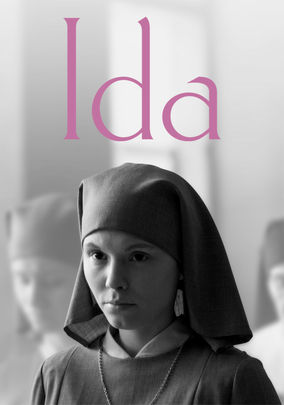
Ida-2014

Ida-2014

Director Pawel Pawlikowsi

Starring Agata Kulesza, Agata Trzebuchowska

Scott’s Review #238

70293721

Reviewed April 24, 2015

Grade: A

Ida (2014), the winner of several Best Foreign Language statuettes, including the first-ever Best Foreign Language Oscar for Poland, is a black and white film, containing beautiful cinematography. It offers a fascinating story that is both moving, sad, and very character-driven and centers around not one, but two compelling characters.

The ravages and after-effects of war have been explored in film before, but Ida brings a fresh spin to the subject matter.

The film takes place sometime in the 1960s, years after the cruelties of World War II and the brutality of the holocaust occurred, and explores the long-lasting pain and sadness that the incredible time in history left on the survivors, both mentally and physically.

The focus is on Anna (Agata Kulesza), a young nun about to take her coveted vows and begin a life serving the Lord. Quite beautiful, she was left as a toddler at a convent. Before she takes her vows she is instructed to spend time with her only known relative, Aunt Wanda (Agata Trzebuchowska).

Wanda is a former judge who battles depression and alcoholism. Her brother, Anna’s father, was murdered along with Wanda’s young son, so she is a tortured soul. As Anna (real name Ida and Jewish) and Wanda begin a road trip to find the whereabouts of their deceased family’s bodies, they both face personal demons.

What struck me most about Ida is the cinematography- the black and white is lovely, especially when Ida and Wanda travel across the Polish countryside, exquisite to look at.

The farms, land, and roads are so crisp and perfectly lit that it is easy to fall in love with them.

Many scenes resemble paintings giving the film an artistic quality. Ida is simply elegant and peaceful in style.

The story itself of Ida is wonderful. Ida- the title character nun is torn. She knows no other life than the church that saved her life. But she is a gorgeous young woman filled with desires. She sees her promiscuous aunt flaunt men and dress to the nines in flashy outfits and makeup.

Ida, almost always dressed in her nun’s garb, secretly dresses in Wanda’s dresses and makeup and is transformed. When she meets a handsome saxophone player, her desires begin to brim over and her conflict increases especially as the truth about her heritage unfolds.

As interesting a character study as Ida is, the character of Wanda is equally, if not more so, interesting. Damaged, hurt, and depressed she needs men to feel good about herself.

An alcoholic she has not gotten over the death of her young son and has become a bitter woman. Ida is about loss.

Visually and creatively enticing, Ida is as good as they get. It deserves the many awards that were bestowed upon it.

Oscar Nominations: 1 win-Best Foreign Language Film (won), Best Cinematography

Independent Spirit Award Nominations: 1 win-Best International Film (won)

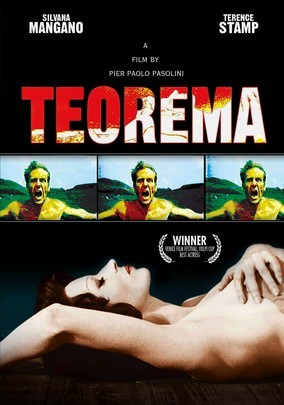
Teorema-1968

Teorema-1968

Director Pier Paolo Pasolini

Starring Terence Stamp, Silvana Mangano

Scott’s Review #234

70039263

Reviewed April 10, 2015

Grade: A-

Teorema is a 1968 Italian art film directed by Pier Paolo Pasolini, who later went on to direct the dark and disturbing 1975 masterpiece, Salò- 120 Days of Sodom.

If one is looking for a concise, mainstream plot with a fixed, to-the-point beginning and ending, one will be disappointed. Rather, Teorema is an exhibition in artistic style and interpretation, and it succeeds in mesmerizing this viewer with thought and contemplation.

A mysterious stranger, known as “the visitor”, suddenly arrives to stay with an affluent Italian family in their sprawling estate. The family consists of a father, mother, son, daughter, and maid, all of whom experience loneliness, boredom, fear, rage, or repression.

The handsome stranger successfully beds all the family members, and just as suddenly as he arrives, he disappears from the household, leaving the family members with different thoughts, feelings, and actions upon his departure.

The film is highly interpretive, and every character can be analyzed.

The stranger seduces all the characters, and the family’s wealth is examined. Is Teorema (which translates to the theorem in Italian) a commentary on the bourgeois society? The father, Paolo, owns a factory and appears to be in turmoil- is he a repressed homosexual?

The father’s story concludes with him turning his factory over to the workers, stripping naked, and roaring with anger and frustration.

Is the mother simply a wealthy, bored housewife or much more than that? This character might have been explored more thoroughly.

The maid, devoutly religious, becomes suicidal after her tryst with the stranger. The others confide in the stranger about how they feel about themselves, and at times, the film feels like a therapy session as each character delves deeper into their personal feelings.

Only the maid is a bit different from the others, but could this be because she is working-class, while the others are affluent?

The daughter, Odessa, approximately sixteen years old, becomes depressed after her liaison. The frightened, weak son appears to have a crisis and is consoled by the stranger in a loving, tender fashion.

Interestingly, the film at the time was resoundingly denounced by the Vatican, which took offense at the controversial tone of the film and its focus on “obscenity”.

Could this be because of some people’s interpretation of “the visitor” as being a Christ-like figure? One must argue for the distinction between “obscenity” and “art” after viewing this groundbreaking, visionary film. I found Teorema to be a thought-provoking film and did not feel the movie was going for shock value.

The film is lightweight in this regard compared to the hauntingly brutal Salo (1975), which followed years later.

Teorema (1968) delves into the psychological abyss and portrays an Italian family as more than wealthy- they are people with emotions, fears, desires, and complexities.

Not for mainstream audiences, but meant for lovers of interpretive film, it can be debated and discussed for ages to come.

Peau d’Ane (Donkey Skin)-1970

Peau d’Ane (Donkey Skin)-1970

Director Jacques Demy

Starring Catherine Deneuve

Scott’s Review #227

70032096

Reviewed March 11, 2015

Grade: B

Peau d’Ane (English-Donkey Skin) is a 1970 French musical film that is a fairy tale for adults- seemingly happy, but very dark beneath the surface.

To say this film is bizarre would be an understatement. The film is a strange retelling of the classic story of Cinderella.

The film is set in a peculiar medieval world and centers on a dying Queen, her husband The King, and the heroine of the story, the beautiful Princess.

The Queen is dying. Her last wish is for The King to marry the most beautiful woman in the land. Coincidentally, that is their daughter The Princess! Eager to produce an heir to the throne, he is determined to marry and reproduce with his daughter.

The Princess, wanting none of it, turns herself into an ugly creature, by way of wearing the skin of a donkey and moves to a neighboring kingdom to exist in a life of exclusion and revulsion, farming pigs and being berated by those around her.

A handsome Prince decides to pursue the woman who has baked him a delicious cake, but knows not who she is. Ironically enough it is the Princess.

I found the film to be quite interesting, albeit in a warped way. Unusual and tough to analyze, one must watch with an open mind.

Certainly, Donkey Skin delves headfirst into the icky world of incest and makes no apologies for its controversial nature all the while interspersing the film with cheery tunes with singing roses and hatching chicks.

The donkey skin that the Princess wears is fake and unbelievably laughable and how nobody is aware that there is a beautiful Princess underneath is silly.

And yet the film somehow works. I was transported into a magical world where nothing is normal and one surprise after another ensues.

A couple of oddities worth mentioning- some of the music from the film is a piece of contemporary, upbeat music. Also, strangely, the final scene involves a helicopter, which is completely implausible given the period.

I get the sense that this film is going for absurd and unique and succeeds on both counts.

Visually the film is gorgeous- bright and cheerful with loads of colors. The film has awe-inspiring art direction as the set pieces within the castle are odd, interesting, and colorful. I especially enjoyed the Prince’s bedroom set.

As eccentric and seemingly dark as the film is, often a character will burst into a cheerful song as evidenced by the Princess singing a happy tune while making a meal, all the while dressed in her donkey skin, almost like a scene out of Mary Poppins or My Fair Lady or any other wholesome musical.

To be sure a unique film, Donkey Skin is eccentric, lively, and interestingly perverse with a French flair. Fantasy for adults and a journey into the weird.

The Past-2013

The Past-2013

Director Asghar Farhadi

Starring Berenice Bejo, Tahar Rahim

Scott’s Review #171

70275523

Reviewed September 16, 2014

Grade: B+

The Past (2013) is an international film directed by acclaimed Iranian director Asghar Farhadi, who directed the brilliant A Separation in 2012.

Despite being directed by an Iranian director, the film is written in French and set in France.

While not quite on the level of A Separation, The Past is still a good, layered, and quite compelling film, though admittedly slow-paced in spots, similar to real life.

The film centers on a couple, Marie and Ahmad, amid a divorce. Marie lives in France with her two daughters from a relationship before Ahmad so they have no children. He lives in Iran and comes to visit and finalize the divorce proceedings.

Further complicating the situation is that Marie is in a relationship with another man, Samir, who has a son with his current wife, who is a vegetable in a coma after a suicide attempt.

What were the events that led her to attempt suicide? Did someone reveal something of importance to her? If so, who?

Questions such as these compel viewers to invest in the characters.

The Past is an excellent family drama done right- there are no needless stereotypes and the children serve more of a purpose than being cute or attractive wallpaper like in many family dramas.

Each child involved- there are 3- has real feelings and realistically expresses themselves. All three principal adult characters are mature, complicated, and have depth. Nobody is the villain and the intent is not to make the audience root for one couple over the other- the film is more mysterious than that.

Rather, the audience spends the film trying to figure out secrets that the characters keep.

Is Marie ready to divorce Ahmad or does she still love him? Does Samir blame Marie for his wife’s condition? Why does the oldest daughter hate Samir so much?

These are questions that arise more and more as The Past unfolds.

Another interesting facet of the film is there are no red herrings introduced to manipulate the viewer. The film is simply a detailed, complex drama.

All three leads (Berenice Bejo, Tahar Rahim, and Ali Mosaffa) give wonderful performances, though I’m not sure why Bejo’s performance is considered the standout.

Upon completion and thought, I noticed many similarities to A Separation.

The Past (2013) is a good, solid, family drama, with rich writing and honest, compelling situations.