Category Archives: Thriller

Showgirls-1995

Showgirls-1995

Director Paul Verhoeven

Starring Elizabeth Berkley

Scott’s Review #372

962109

Reviewed January 31, 2016

Grade: D

Having heard much about the infamously poorly reviewed Showgirls (1995) and its reputation as one of the worst films ever made, I finally got around to watching it (twenty years after its release).

Now considered something of a camp classic, I am glad I did.

While I recognize the dubious distinction it holds and do not disagree with it, I also found something slightly entertaining about the film, and my thought process throughout was “this film is so bad that it might be good”, but in the end, it is pretty much just a bad film.

Nomi Malone (Elizabeth Berkley) hitchhikes to Las Vegas, intending to find success as a showgirl.

After her belongings are stolen, she is befriended by a kind-hearted woman named Molly, who works as a seamstress at the topless dance revue Goddess.

Molly takes her in and introduces her to the star of the show, Cristal (Gina Gershon).

A rivalry immediately develops between the women as Cristal mocks Nomi’s job at another topless club.

The main story centers on this rivalry as Nomi attempts to climb the ranks and succeed in the shady world of adult entertainment.

Along the way, she becomes involved with various men, specifically the entertainment director (and Cristal’s boyfriend), Zack, played by Kyle MacLachlan, leading to further tensions.

Let me be honest here- Showgirls is a bad film in every way. I observed three major flaws in the film: poor acting, poor writing, and an over-the-top tone on every level.

Let’s break it down.

Within minutes, I knew the acting was subpar, and I wondered whether that was the fault of the director (Paul Verhoeven), the actors, or a combination.

Known for directing Basic Instinct (a sexy, smoldering film), he may have had the same success in mind for Showgirls.

Berkeley gets the brunt of the mention since she is the lead character, but, wow, what a bad performance.

From the overdramatic delivery to the phony earnestness, I did not buy the performance for a minute and, on more than one occasion, fantasized about how a different actress might have tackled the role (Nicole Kidman and Julia Roberts came to mind).

Gershon was almost worse, as an irritating, brooding pout marred her sexiness and vixen-like character.

The writing is one-dimensional- a poor girl tries to achieve success in a bad, bad world and meets challenge after challenge. Nothing new here.

The predictability was apparent almost immediately, and most of the characters were unlikable. When Nomi takes an interest in a man, he becomes a player, keeping another aspiring female star on the side and feeding her the same lines he gave Nomi.

Even the one sympathetic character (Molly) exists only to make Nomi more likable, as when Molly is attacked and Nomi races to her bedside.

Forced and formulaic, this scene is a prime example of poor and contrived writing.

Most scenes play over the top.

Brimming with nudity and sexual excitement, the film is bawdy and party-friendly. In one scene, dancers take a line of coke before hitting the stage, and a feud between two of them results in one sabotaging the production, causing the other to break her hip.

The larger-than-life (in more than one way) x-rated, well-endowed, mama dancer, while entertaining, is also silly and foolish.

Chaotic and pointless, each scene was hard to believe and take seriously.

You may be wondering what positives can be found in Showgirls- the answer is not many, but there is a charm I found in the film, but perhaps I am gluttonous for punishment.

I think the film “feels” like it wants to have fun, and a certain level of entertainment can be found in viewing it, but this is like trying to find a needle in a haystack to see any good in Showgirls.

I do not disagree that Showgirls (1995) is one of the worst films ever made, but I found a sliver of charm, interest, and fun mixed in with the more prevalent drivel, poor quality, and painfully bad acting.

But perhaps that is because it is so bad.
The Hand That Rocks the Cradle-1992

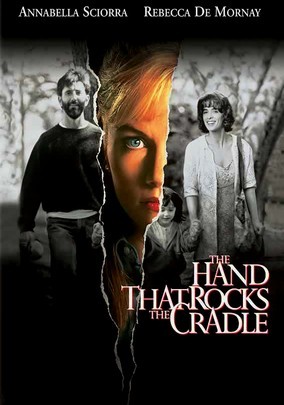
The Hand That Rocks The Cradle-1992

Director Curtis Hanson

Starring Rebecca De Mornay, Annabella Sciorra, Matt McCoy

Scott’s Review #360

569891

Reviewed January 9, 2016

Grade: A

One may argue that the slick 1992 thriller The Hand That Rocks The Cradle is a direct rip-off of the 1987 blockbuster hit Fatal Attraction, which spawned countless imitators, and they may be accurate, but I adore this film.

It contains great tension and is well-acted, but above all, The Hand That Rocks The Cradle features Rebecca De Mornay in a wonderful performance as one of the screen’s most memorable villains, Peyton Flanders.

This is a film that will admittedly not win any awards for originality, but that I love all the same.

Peyton Flanders is very pregnant when we meet her. Her husband is creepy Dr. Mott, an obstetrician who sexually molests Claire Bartel (Sciorra) in his office during an exam.

Humiliated and upset, Claire, after being encouraged by her husband, Michael, files charges against Dr. Mott. He commits suicide, and Peyton loses her child.

Filled with vengeance, she vows to destroy Claire.

The plot may sound like a tawdry daytime soap plot device, but The Hand That Rocks The Cradle somehow works like a charm.

Unlike Fatal Attraction, there is little rooting value between Peyton and Michael- we know she is a crazed lunatic- the fun is seeing how she gets hers.

She manipulates him and insinuates herself into their home- she pretends to be a nanny and subsequently manipulates Michael and Claire’s daughter.

Julianne Moore, in an early role in her storied film career, is believable as Claire’s best friend, who is the only one who sees Peyton for the monster she truly is.

Sadly, her screen time is limited.

Regardless of the other fine performances from the rest of the cast, this is De Mornay’s film- she is psychotic, then sweet, and plays both to the hilt.

I suppose a film like The Hand That Rocks The Cradle (1992) isn’t meant to be analyzed too much, since it tries to thrill, scare, and make the audience uneasy, but boy, is it sure fun.

The Visit-2015

The Visit-2015

Director M. Night Shyamalan

Starring Olivia DeJonge, Ed Oxenbould, Kathryn Hahn

Scott’s Review #276

80045505

Reviewed September 24, 2015

Grade: B

A modern-day thriller/horror/comedy hybrid (admittedly it is tough to classify this film as exclusive horror with the dreaded and watered-down PG-13 rating) directed by M. Night Shyamalan, The Visit (2015) has its moments of genuine scary frights and surprises.

It contains a wonderful twist at the end but suffers from some clichés, one severely unlikeable character, and suspensions of disbelief.

Bringing grandparents to the forefront of the film is a clever idea, albeit, stereotypically, The Visit is a decent watch, but laden with a few misfires.

Paula (Kathryn Hahn), a single mother on the outs with her parents for some years, but recently reunited, sends her two children- Rebecca and Tyler, for a week, to stay at their grandparent’s farmhouse, whom they have never met.

At the kids prompting, Paula decides to go on a romantic vacation with her new boyfriend.

Naturally, when the kids arrive at Grandma and Grandpa’s strange events happen. The children are warned never to go into the basement, not to leave their bedrooms after nine-thirty pm, plus the grandparents have a creepy, weird, look to them.

Rebecca and Tyler, in true modern horror fashion, arguably contrived at this point, record all the events (think Paranormal Activity from 2007) and begin to realize there is something rotten in the state of Denmark.

The Visit contains positives and negatives.

The mother and the two kids live in New Jersey and the grandparents in Pennsylvania. That is one state away, yet Rebecca and Tyler have never met, seen photographs, spoken to their grandparents on the phone, not even to discuss the impending visit.

The kids constantly use Skype to communicate with Mom throughout their visit, but doesn’t occur to anyone to chat with the grandparents before embarking on a week-long visit to introduce themselves.

This is a convenient plot manipulation.

Another negative is the film contains one of the most annoying characters in recent memory, Tyler. I am baffled as to whether this was intentional or unintentional.

The kid is about twelve years old and is written as dumb as possible. There are at least three to four endless scenes of him rapping, mostly to the video camera, that I found to be an utter waste of valuable screen time and lends nothing to the plot.

Filler and for a ninety-minute movie, unnecessary.

In the end, though, I got the last laugh, as the character, a germophobe, has his face smeared with human excrement.

The third negative I observed is the constant “old people jokes”, which bordered on the offensive after a while. The grandparent’s unusual behavior was blamed numerous times on their age as if all elderly people were scatterbrained, daffy, or just downright strange.

Many seniors are intelligent, useful, and lively so there was a feeling of disrespect towards the elderly that I could not shake. The film could have portrayed the grandparents with more dignity than it chose to.

Now for some positives, the compelling twist at the end of the film I did not see coming and I loved that about The Visit.

Rarely is the audience surprised anymore, especially in the horror genre, and I was. Having replayed the film in my mind the plot makes perfect sense, but is a positive in the heart of the climax.

On the subject of the conclusion, The Visit has a unique slow-motion/dreamlike feel and an odd, classical-type musical score playing throughout the ending that adds much depth to the typical thriller-type music heard in most genre films.

The oven scene inevitably viewed by all during early trailers for The Visit is excellent. When Grandma convinces Rebecca to crawl completely inside her oven to clean it we know this will not end well.

Additionally, the look and texture of the setting, an old deserted farmhouse in a small, rural town in the middle of nowhere has a feeling of being trapped.

This successfully provides a scary backdrop for the film and all the elements scream horror.

The Visit (2015) has genuine scares and will make the viewer jump, and perhaps even shriek. That is what good horror does yet I am still unsure if this film is more horror or comedy.

Unintentionally so, perhaps.

The Gift-2015

The Gift-2015

Director Joel Edgerton

Starring Jason Bateman, Joel Edgerton

Scott’s Review #264

80046694

Reviewed August 9, 2015

Grade: A-

The Gift (2015) is a throwback to the type of psychological thriller made famous by Fatal Attraction in 1987 and similar films throughout their heyday into the 1990s.

An unstable psycho threatens a happy couple.

Interestingly, The Gift is similar in genre to a film also released in 2015, The Boy Next Door. The Gift is worlds superior to that film and contains surprises, frights, twists, and turns that I pleasantly did not see coming.

The film is not predictable which is refreshing in this particular genre.

Jason Bateman and Rebecca Hall star as Simon and Robyn, a successful young couple who have relocated from Chicago to sunny California, near Simon’s childhood hometown, to begin a new life with the intent of starting a family.

They soon run into a man named Gordo, played by actor/director Joel Edgerton, a high school chum of Simon’s from twenty years ago whom Simon barely remembers. Simon and Gordo plan to re-connect over dinner, but the audience can sense that something is not right with Gordo.

As Simon, Gordo, and Robyn get to know each other again, Gordo begins leaving pleasant little gifts on Simon and Robyn’s doorstep as well as showing up at their house unannounced, which is particularly unnerving to Robyn as she is home alone all day long. Simon is consumed with his new career and possible promotion.

Interestingly, their home is located in a secluded area.

The film soon reveals that Gordo was nicknamed “Gordo the Weirdo” in high school and that an incident involving Gordo occurred, though nobody seems to remember the exact circumstances.

Perhaps they choose not to remember?

The vagueness of this situation is appealing because the audience is sure that these circumstances will be revealed later in the story and play a large part in the climax, which it does.

We also learn that another incident took place with Robyn in Chicago and that she suffered a miscarriage. She does not drink and avoids pills. Could she be unstable, imagining things, or overly cautious?

It is revealed that she does not handle stress well.

A wonderful aspect of The Gift is its surprise factor. As the plot twists and turns, I switched alliances and wondered who the villain was. Gordo? Simon? Robyn?

Edgerton (along with a great acting performance) compellingly directed the film and was undoubtedly influenced by Alfred Hitchcock.

The camera angles and score are excellent in establishing the correct level of tension at just the right moment. In more than a few scenes the audience knows something will jump out at the screen, so there is anticipation, but when and how it will happen is a surprise.

Many scenes are when Robyn is alone, during the day thank goodness, and she hears a noise or notices the water running. These scenes are traditional fare in horror or the thriller genre but are well done in The Gift.

Simon is an interesting character. Sophisticated, educated, and with a high-level executive job, he has a strange fear of monkeys.

The past is a common theme of the film- past events encase the three lead characters leading to conflict and ultimately these events come back to haunt them. Most of Simon’s friends are unlikable and appear interested in style over substance. They seem drawn to Simon more for his success than because they care about him.

This contradicts his wife’s character. Robyn is down-to-earth, and kind, and does not place as much stock in wealth and achievements as she does with personality and being a kind individual. She and Simon bicker and disagree about Gordo and their conflict increases.

It is not often in films anymore that one is truly frightened and “jumps out of your seat”, but two intense scenes, one involving a dog, and the other a shower, made me jump, and the hairs on my arm stand on end. Everyone in the audience gasped together.

Now that is fun!

The only negatives in The Gift are continuity issues and the suspension of disbelief in some scenes. Without giving anything away, how is Gordo able to do some things he can do?

The Gift (2015) is an old-fashioned thriller with excellent acting, compelling characters, and a wonderful debut for Edgerton in the director’s chair.

The film will leave the viewer pondering moral questions, and relating to each of the three main characters.

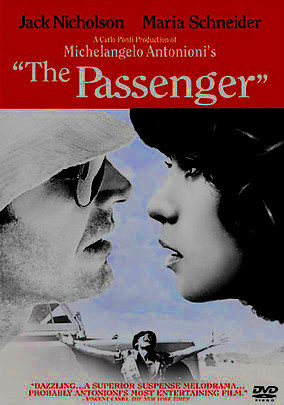
The Passenger-1975

The Passenger-1975

Director Michelangelo Antonioni

Starring Jack Nicholson, Maria Schneider

Scott’s Review #259

70042799

Reviewed July 19, 2015

Grade: A

A true art film in every sense of the word, The Passenger (1975) is a thinking man’s film, not for those content to munch on popcorn and escape the day’s stressors.

It’s custom-made for a film fan willing to ponder its meaning, revel in its slow pace, and appreciate it as an art form.

The Passenger is tough to “get” for most of its over-two-hour running time, but its complexities are also its most beautiful qualities.

To say that the film will leave the viewer with questions is quite an understatement, but it is pleasing to analyze and draw conclusions about its meaning.

Michelangelo Antonioni directed this film and is well known for Blowup (1966) and Zabriskie Point (1970), neither of which I have seen as of this writing.

Jack Nicholson stars as a journalist named David Locke, who is on location in Africa (specifically the Sahara Desert in Chad).

David’s assignment is to produce a documentary film. While there, he mysteriously assumes the identity of a businessman named Robertson, who he finds dead in his hotel room.

This task is easy because David and Robertson look very much alike. As events unfold, it becomes clear that Robertson is involved in arms dealing and smuggling related to the ongoing civil unrest in the country.

Flashbacks reveal David’s former life, including his friendship with the businessman and his relationship with his wife, Rachel, and these scenes are interwoven with the current action until the narrative becomes more linear.

The film is complex, to say the least. The initial scene, in which David spontaneously decides to switch identities, is excellent. We wonder what David’s motivations are, and what is the appeal of his taking over another man’s life? Who is the man? Why is David so unhappy in his own life?

The film succeeds immeasurably because the plot is not simply told to the audience, as in so many other mainstream films. Events seem genuine and not forced for plot purposes.

In the current time, wherever in London, Rachel sadly mourns the assumed “death” of her husband David, though we learn that Rachel has secrets of her own she has been hiding and suffers from tremendous guilt.

To further complicate matters for everyone, she is attempting to find the businessman, since she has learned that he was the last person to see her husband alive. Also mixed into the story is a mysterious young woman whom David meets when the story moves to Barcelona, Spain.

What makes The Passenger so compelling to me is its intricacies- story as well as camera styles. The seven-minute-long shot towards the end is brilliant filmmaking, and the climax is quietly intense.

The camera focuses on a hotel room, then switches to the parking lot, and returns to the hotel room. I was transfixed by the character of David, struggling to empathize with him while all the while enjoying an intelligent character study interwoven with a story of political intrigue.

I do not claim to understand everything about The Passenger and will surely need more viewings to make sense of it all, but the film fascinates me.

In a time of mediocre films, how refreshing to stumble upon a forgotten relic from 1975 and have a renewed appreciation for film as an art form.

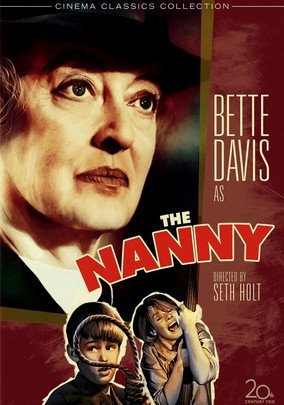
The Nanny-1965

The Nanny-1965

Director Seth Holt

Starring Bette Davis

Scott’s Review #256

70089620

Reviewed July 11, 2015

Grade: B

The Nanny is a 1965 Hammer productions thriller starring legendary film icon Bette Davis as a mysterious nanny caring for a ten-year-old boy named Joey.

Joey has recently been released from a mental institution and returned home to resume everyday life, but has he been “cured”?

There is obvious tension between Joey and Nanny, but the audience doesn’t know what that tension is precisely. Why do they dislike each other? Why is Joey afraid of her?

As the plot unfolds, the suspense and tensions thicken as various events occur and Joey’s parents and Aunt Pen are further fleshed out. Past events are revisited, and the story becomes thrilling.

At one point, long before Joey’s return home, his younger sister has drowned, and the circumstances are vague. It has devastated the family, including Nanny. Joey has been blamed for her death, though he insists that Nanny is the culprit.

Nobody except the neighbor girl believes Joey, and the audience wonders who to believe and who to root for: Joey or Nanny. Davis, like Nanny, brings a warmness to her character, but is she sincere? Is it an act? Is Joey a sweet boy or maniacal?

These questions race through the audience’s minds as the film progresses. When Virginia, the mother, eats tainted food, the obvious conclusion is that the Nanny poisoned it since she prepared it. But why? Did she do this?

As the plot is slowly explained, there are a few chills, though the ending is not too surprising.

Any film starring Bette Davis is a treasure, though admittedly, it is not her finest work. Still, her finest work is challenging to match.

The Nanny is a good film, though not great. It is shot in black and white, which is a nice touch for a thriller.

The main reason to watch Davis’s performance is that it is always mesmerizing. Traditionally playing gruff, mean, or bitchy parts (especially in her later years), The Nanny allows Davis to play a sympathetic role.

She is seemingly sweet, proper, well-organized, and a perfect nanny on paper.

The role of Virginia, played by Wendy Craig, is a bit too neurotic and slightly over-acted. She is rather one-note as the fretting mother worried about her son. The character of the father is also a bit one-dimensional.

The Nanny is more of a classic thriller from the 1960s that is often lumped together with some of Bette Davis’s other films around the same period (Dead Ringer-1964, Hush, Hush, Sweet Charlotte-1964, and Whatever Happened to Baby Jane? -1966), and are in large part superior to The Nanny. As a stand-alone, it is a decent film.

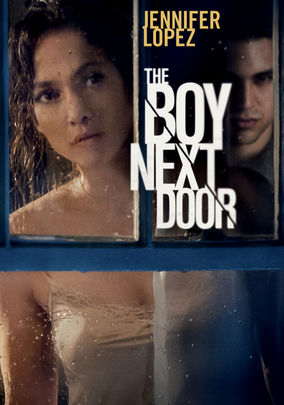
The Boy Next Door-2015

The Boy Next Door-2015

Director Rob Cohen

Starring Jennifer Lopez

Scott’s Review #254

80013272

Reviewed July 5, 2015

Grade: C-

A steamy direct rip-off of the 1987 classic film Fatal Attraction, The Boy Next Door (2015) is a mainstream thriller starring Jennifer Lopez as a separated suburban Mom raising her son alone.

One day a handsome young man, Noah (Ryan Guzman), moves in next door. He makes friends with her son and develops an unhealthy obsession with her.

The film is your basic thrill ride with some jumps mixed in but predictable as they come and is safe mainstream fare.

Claire Peterson (Lopez) lives a cozy suburban existence with her socially awkward teenage son Kevin (Ian Nelson) and works as a literature teacher at the local high school.

She lives a modest yet successful life.

Her estranged husband Garrett (John Corbett) has cheated on her with his secretary.

One day a hunky twenty-year-old neighbor, Noah, moves in, takes a shine to Kevin and an attraction develops between Noah and Claire, despite him being half her age. The audience knows that there is something off.

The inevitable happens, a lonely Claire winds up in bed with Noah after a disastrous blind double date with her friend and confidant Vicky (Kristin Chenoweth), also the vice-principal of Claire’s school.

The sex scenes are titillating and sensual with lots of skin.

I went into my viewing not expecting an invigorating or thought-provoking film and was not disappointed.

The film is lightweight, predictable, and has a lifetime television movie feel. The acting is not great and the setups are seen a mile away. When Claire and Noah meet there is instant chemistry between them but there is also a sinister quality to Noah that the audience is aware of.

There is no doubt he will make trouble for Claire.

As we progress we become aware that Noah has a temper, another setup for things to come. If he feels wronged he strikes back. Once Claire realizes their passionate night was a mistake, Noah becomes obsessed with and vengeful of Claire and everyone around her.

The plot is filled with one implausibility after another. I could list silly nuances for hours, but here are a few that immediately come to mind.

I do not buy Jennifer Lopez as an intelligent, sophisticated, literature genius (despite the film hysterically having her wear nerdy glasses) nor the good-looking Ryan Guzman (Noah) as a scholarly expert in literature either.

This is done to construct the plot with no believability whatsoever.

Throughout the film, Noah can do whatever he wants, somehow hacking into Claire’s computer, arranging for printouts of his liaison with her to fly endlessly from the ceilings, tampering with brakes, and seamlessly splicing Claire’s voice into conversations.

The entire film is ridiculous and unbelievable, but, again, it’s what I expected it to be.

The ending surprised me abruptly with no cliffhanger or hint at a sequel as is common with thrillers. Perhaps the filmmakers had low expectations for audience turnout.

One jarring point is that Jennifer Lopez, clearly Latina, plays a character in a suburban neighborhood, named Claire Peterson. Nowhere is her Latina heritage mentioned. The character is about as white as you can get.

A dumb, entertaining ninety minutes of escapism, The Boy Next Door is not a good film (2015) but fun. Some thrilling moments, some fun to kick back relax, and take it for what it is.

It is comparable to a McDonald’s hamburger, you know what you will get and expect nothing more.

The Captive-2014

The Captive-2014

Director Atom Egoyan

Starring Ryan Reynolds

Scott’s Review #235

80013547

Reviewed April 18, 2015

Grade: C-

The Captive is a 2014 thriller that reminds me quite a bit of a 2013 thriller, Prisoners, which must have been an influence.

A similar plot involving a blue-collar, working-class family attempting to track down a missing child as the father takes matters into his own hands and is also considered a prime suspect in the crime by detectives is used.

Set in snowy upstate New York, the film follows Matthew (Ryan Reynolds) and Tina Lane (Mireille Enos), a struggling young couple whose nine-year-old daughter, Cassandra, is snatched from Matthew’s truck while he runs into a store to buy her a pie.

Told through flashbacks, the story picks up years later as the defeated couple is periodically taunted by Cassandra’s abductors, who leave clues suggesting she may still be alive.

Via video cameras, the abductors watch the parents’ emotional reactions to the clues and sell this “entertainment” to subscribers.

As the film moves along, we learn of a major crime syndicate involved in the kidnapping of Cassandra and other similarly aged girls.

At times, The Captive’s plot is compelling, with a few nice twists and surprises; other times, it moves slowly and drags.

The film sets the story in a cold, wintry season, emitting a tone of darkness, loss, and harshness. The cinematography is beautiful and deserves major recognition for the mood it creates.

The film’s major problem, though, is its extreme plot holes and ludicrous story; I still don’t understand the pivotal childhood ice-skating message at the end.

As the film progresses, the plot becomes hard to follow, and it raises many questions. Who is paying to watch parents emotionally tortured? How can Cassandra seemingly come and go as she pleases and remain a prisoner? Why, years later, is Matthew still a suspect?

These points feel too plot-driven for my taste and seem designed to move the plot along.

The main villain, Mika, is a weird guy, but what is his motivation? Why is he part of the kidnapping syndicate? What motivates anyone besides Matthew and Tina trying to get their daughter back?

This is not explained.

Some casting is problematic; I had difficulty buying Enos as a maid in a small town; she is way too glamorous a woman for that to be believable.

Similarly, casting Rosario Dawson and Scott Speedman as the central detectives seems unrealistic. The film is pure fantasy- these actors are too good-looking to be believable as upstate New York, small-town detectives.

While very handsome, Ryan Reynolds is the only actor I bought as a grizzled, broken father with a glimmer of hope that his daughter is still alive.

Despite some interesting turns, The Captive (2014) is too unrealistic and convoluted to follow closely, and it’s a bit of a mess.

For this type of film (kidnapping thriller?), I would recommend Prisoners (2013), though it has plot holes too.

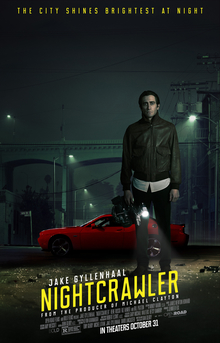
Nightcrawler-2014

Nightcrawler-2014

Director Dan Gilroy

Starring Jake Gyllenhaal

Scott’s Review #225

Reviewed March 1, 2015

Grade: B+

Nightcrawler (2014) is an intense crime thriller set in Los Angeles, featuring a wonderful performance by Jake Gyllenhaal as an unstable thief named Lou.

He cons and manipulates his way to success, videotaping accident scenes and selling them to news stations.

The film is the directorial debut of Dan Gilroy, who could become a household name.

Nightcrawler was deservedly awarded the Best Screenplay and the Best First Feature Independent Spirit awards.

The film is set mainly at night as Lou courses the city in search of accidents, crimes, and violence- the bloodier the better.

Later, Nina Romina, played by Rene Russo, tells him that violent crimes in affluent neighborhoods are best because they get the highest ratings.

Lou sells the footage to the highest bidder, and Nina becomes his main customer. Lou is eventually helped by Rick Carey, a desperate accomplice who needs money, played by Riz Ahmed.

Nightcrawler’s interesting elements are its moody setting and dim lighting. It reminds me of the 2004 film Collateral, starring Jamie Foxx and Tom Cruise, also set in Los Angeles.

Mostly set at night and heavily set on the streets of L.A., I found this mood excellent and a compelling aspect of the film.

It makes Nightcrawler look great.

Gyllenhaal deserves praise for his role as Lou and is largely responsible for the success. He was a co-producer.

As an actor, he is excellent and reminiscent of the frightening performance Robert De Niro gave in Taxi Driver (1976). With an angular face and eyes that never seem to blink, he is intense and driven on every level.

He is a sociopath.

When he quietly threatens Nina and Rick on separate occasions, one can tell he means business. Why Lou has become a thief desperate for money is never explained- does he have a family? Is he a convict?

He seems highly educated, but is he? How did he land in this predicament and resort to the life that he does?

As Lou becomes more manipulative and adjusts crime scenes to make them shocking, he seems to teeter over the edge of sanity.

In one scene, he sneaks into a victim’s home and videotapes photos of the victims from their refrigerator to promote an empathetic angle and therefore make more money from them.

This is a brilliant performance by Gyllenhaal.

Another fascinating performance I admired is Rene Russo’s, absent from films for what seems like years; Nightcrawler is a nice return for her.

Her character also has a little backstory.

We know she is a driven newswoman who struggles to maintain success at individual news stations and moves around a lot. Nina is a cutthroat news director who craves violent stories and is determined to keep her job.

She also becomes begrudgingly fascinated by Lou.

Does she like bad boys or does she admire his talent?

The third major character is Riz Ahmed’s Rick. Rick comes across as a sweet, yet gullible guy strapped for cash. Like Lou, we do not know why he is broke, but it is hinted that he may do or have done some male prostitution- he is desperate.

As the film goes along the character develops tough skin and realizes he is attracted to this new lifestyle and excitement, but will not be bullied by Lou.

On a social level, the film presents an interesting, albeit disturbing take on the relationship between the media and the viewers. What will news channels do for a good story? How bloodthirsty are news audiences? How often is a positive news story presented? It makes the audience reflect and ponder.

Nightcrawler is a dark thriller, which deservedly garnered an Oscar nomination for Best Screenplay and a slew of Independent Spirit Awards.

Intense, rich, and visually appealing, it is one of the success stories of 2014 cinema.

Oscar Nominations: Best Original Screenplay

Independent Spirit Award Nominations: 2 wins-Best Male Lead-Jake Gyllenhaal, Best Supporting Male-Riz Ahmed, Best Screenplay (won), Best First Feature (won), Best Editing

The One I Love-2014

The One I Love-2014

Director Charlie McDowell

Starring Mark Duplass, Elisabeth Moss

Scott’s Review #221

70299863

Reviewed February 18, 2015

Grade: C+

Reminiscent of a modern-day Twilight Zone episode, The One I Love (2014) follows a young married couple (Ethan and Sophie), played by Mark Duplass and Elisabeth Moss, who seek help from a therapist (Ted Danson).

The therapist realizes the couple is out of sync and recommends a weekend away. The therapist has an excellent reputation for rekindling faltering marriages and turning them into successful ones.

He sends them to a sunny, beachfront house with a guest house, pool, and various trails along the water. It is simply a paradise.

I admire the screenplay’s creativity.

The couple meets their ideal, perfect versions of each other while basking at the vacation house. Ethan’s alter ego is suave, athletic, and sensitive to Sophie’s needs, while Sophie’s is sexy, flirtatious, and invested in Ethan’s life.

The real versions are bored, lazy, and a bit disheveled.

The flaws they once saw in each other are replaced with the perfect spouses. It is fantasy-like.

As one half of the couple slowly falls in love with the fantasy version, the other half grows jealous, and the film dives into a tale of who ends up with whom.

But is it a fantasy? Are the perfect versions real people or something reminiscent of Invasion of the Body Snatchers?

It is tough to know the film’s intentions.

A weakness I felt the film has is that it plods too much. At a brief ninety minutes, the film somehow has a sleepy, slow-moving undertone and could have easily been a short film or wrapped up within forty-five or fifty minutes.

I did not feel the chemistry between Duplass and Moss as strongly as I would have liked. Individually, they were fine actors, but the spark didn’t ignite for me.

I wish Ted Danson had a larger role. The young couple was the focal point, but the mystery surrounding paradise was never really explained, and Danson’s character could have been the key to the story.

Did he contrive the entire situation? Was it fantasy? His brief part left many plot holes unexplained.

The One I Love (2014) is a creative effort with an imaginative angle, but I wanted more clarity than I got.

The film is mysterious, yes, but also confusing, slightly dull, and uneven.

Independent Spirit Award Nominations: Best First Screenplay

The Guest-2014

The Guest-2014

Director Adam Wingard

Starring Dan Stevens, Maika Monroe

Scott’s Review #220

70300664

Reviewed February 7, 2015

Grade: C-

The Guest is a 2014 thriller that can perhaps be classified under the adage “it’s so bad that it’s good,” though as I pondered writing this review, that might be a bit of a stretch.

As poor as the film is, I still enjoyed something about it.

The premise is simple. A Midwestern family, the Petersons, is suddenly visited by a veteran soldier named David, who claims to be a friend of the parents’ deceased son, Caleb.

David easily insinuates himself into their lives, and the Petersons invite him to stay a few days to rehash details about Caleb.

The family is middle-class yet struggling financially, and it consists of a mother and father, a college-aged daughter named Anna, an actress eerily resembling a young Gwen Stefani, and a bullied, timid, high school-aged son named Luke.

From the get-go, something feels off about David, but his motives remain unclear to the audience.

The film has plenty of issues.

For starters, the acting is rather poor. The most notable actors are Dan Stevens (Downton Abbey), Sheila Kelley (L.A. Law), and a collection of unknowns.

Stevens and Kelley give better performances, and I found Stevens particularly believable in a role opposite his Downton Abbey alter ego.

The rest of the cast is wooden and uncompelling.

The weakest parts of The Guest are the inane plot points and the 1980s-style soundtrack. Were the filmmakers going for a retro throwback? The film is set in present times, so this aspect remains a mystery.

The story starts interestingly. Is it a Fatal Attraction (1987) type of film? What is David’s motive? What was his relationship with the deceased Caleb? Does he intend to help or harm the family?

The reveal towards the end of the film is implausible, ridiculous, and disappointing. Without giving too much away, the government plays a major role in the film, but it does little to provoke sympathy for any of the characters, only eliciting more confusion.

The attempted (and botched) love story between David and Anna does not work. They have little chemistry, and the rooting value is not there, especially as he picks up her drunken best friend at a party.

Is the audience supposed to root for David and Anna, or is it merely a weak sub-plot to the thrill aspect of the film? I suspect the latter.

Despite all these negatives, I didn’t despise the film as it trucked along; rather, I found it more of a mess than anything else.

It is not a good film, but there is something slightly appealing about it. Some of the death scenes are well done, and the budding friendship between David and the bullied son is rather sweet.

The son is enamored with the strong, masculine David, and David, in turn, serves as a protector, humiliating the bullies who gave the kid a black eye.

The film doesn’t delve into a sexual angle, but it is a bond that is cheerful to see. It has a nice, warm element.

Another impressive point of The Guest is that it ends with a surprise that leaves room for a sequel. However, because the film didn’t achieve success, I doubt a sequel will ever see the light of day.

A poorly written, weakly acted film, The Guest (2014) has moments of interest but fails miserably as a viewing experience.

By the end, I still had no idea what the main character was motivated by, which is a huge problem.

Confusing and convoluted are the adjectives best to describe this film.

Independent Spirit Award Nominations: Best Editing

The Imitation Game-2014

The Imitation Game-2014

Director Morten Tyldum

Starring Benedict Cumberbatch

Scott’s Review #213

70295172

Reviewed January 15, 2015

Grade: A

The Imitation Game (2014) follows Alan Turing, a confident, brilliant British mathematician who cracked Nazi Germany’s Enigma code and helped the Allies win World War II.

The film also delves into Turing’s complex, sad personal life, and the audience learns about his upbringing, largely through flashbacks a his childhood at boarding school.

The film is tragic yet wonderfully made, and it’s a powerful human story.

The film has two storylines.

The first is the hiring of Turing by the Government Code and Cipher School at Bletchley Park to crack the code and the numerous struggles faced in accomplishing this feat.

Turing is not easy-going. He is arrogant, quick-witted, and even smug. However, through his friendship with Joan (Keira Knightley), an intelligent woman on the team of scholars, we see a human side to him as they forge a lifelong bond.

The other is his personal life, which is a bit more mysterious and comes into play during the second half. Keeping a secret about his personal life, he is homosexual, which, in the time the film is set (1940’s England), is illegal.

Alan and Joan agree to marry, largely to appease her parents, but circumstances change their plans.

Benedict Cumberbatch, who portrays Turning, deserves praise for his impressive portrayal. He gives the character depth and a wide range of emotions.

He begins as a self-centered man but becomes layered, guarded, and protective because of his private life, which he is forced to hide a great deal.

Keira Knightley’s character supports Cumberbatch’s Alan as she becomes engaged to him and, later in life, becomes his biggest champion. Besides being quite intelligent, her character is also kind and giving.

The ending will bring many tears and make viewers reflect on the enormity of World War II and its vast number of casualties. The facts listed just before the credits roll are awe-inspiring and gut-wrenching.

The Imitation Game is not a war movie per se because it doesn’t show battle scenes. It is more of a drama dealing with the effects of war. It presents many figures, and some characters are affected.

For instance, in one scene, the group (led by Turing) must make a heartbreaking decision not to stop an impending attack, which will cause many deaths- including a character’s brother- instead of choosing to keep mum to save thousands more.

It is a powerful scene.

The Imitation Game (2014) successfully and heartbreakingly tells the story of a heroic figure who received no accolades in life, was ostracized, and only posthumously received his due.

Sadly, this was too little too late.

Oscar Nominations: 1 win-Best Picture, Best Director-Morten Tyldum, Best Actor-Benedict Cumberbatch, Best Supporting Actress-Keira Knightley, Best Adapted Screenplay (won), Best Original Score, Best Production Design, Best Film Editing

Foxcatcher-2014

Foxcatcher-2014

Director Bennett Miller

Starring Steve Carell

Scott’s Review #210

220px-Foxcatcher_First_Teaser_Poster

Reviewed January 2, 2015

Grade: A

Foxcatcher (2014) is a dark, disturbing psychological thriller that succeeds through its bleak look and strong performances.

It is a superb, character-driven story based on true events, led by Steve Carell, Channing Tatum, and Mark Ruffalo, all of whom are excellent.

It is a sports film, but hardly as predictable as many in the genre.

The film is set in 1987. Brothers Mark and Dave Schultz (Tatum and Ruffalo, respectively) are former Olympic gold-medal-winning wrestlers preparing to compete in the 1988 Olympics.

Despite winning a gold medal, Mark (Tatum) lives in squalor and is reduced to giving pep rallies at elementary schools, jobs meant for Dave (Ruffalo), for very little money.

Dave is the more successful brother, a family man living a happy existence. He is more talented and more driven than Mark.

One day, wealthy philanthropist John du Pont (Carell) contacts Mark and invites him to live with him at his expansive estate in Pennsylvania and train with other aspiring Olympic wrestlers.

John’s initial attempts to woo Dave also fail.

From this point in the story, the film delves into psychologically dark territory, mainly the controlling, disturbing behavior of John, as he attempts to control Mark and woo Dave.

John has a damaged relationship with his mother, Jean, wonderfully played by Vanessa Redgrave. Jean feels that John’s obsession with the wrestling world is far beneath him, and their relationship is tense and unloving.

The three principal actors in the film are worth discussing, as the film wouldn’t be as complex or compelling without them.

Let’s begin with Channing Tatum- known primarily as a hunky movie star with questionable acting ability- he proves the naysayers wrong.

I cannot help but compare him to a younger Brad Pitt. It took years and many films for him to be recognized as more than a pretty face and abs to die for.

His performance is understated and calm, but his laid-back demeanor is nuanced. Sometimes anger bubbles under the surface.

Carell is downright creepy as the affluent yet insecure Du Pont.

Throughout the film, the character seems off. Known mostly for silly comedies, he delivers a breakout performance that, I hope, leads to similar meaty roles. Carell shows he has what it takes to appear in quality films.

Lastly, Mark Ruffalo, who always plays interesting, everyman-type characters, again brings strong emotion to Dave Schultz, a successful, driven athlete who is also a dedicated husband and father.

With a different cast, Foxcatcher wouldn’t have been as interesting.

Questions will arise at the end of the film. What were John du Pont’s motivations? What effect did his mother have on his actions? How could a man with all his power and wealth end up this sad? Did John make inappropriate sexual overtures toward the wrestlers?

Foxcatcher (2014) excels at portraying a dark, layered, moody true story and shows that wealth does not equal happiness; in many cases, the opposite occurs.

The film is an immense success.

Oscar Nominations: Best Director-Bennett Miller, Best Actor-Steve Carell, Best Supporting Actor-Mark Ruffalo, Best Original Screenplay, Best Makeup and Hairstyling

Independent Spirit Award Nominations: 1 win-Special Distinction Award (won)

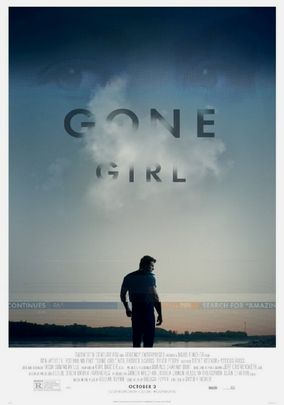
Gone Girl-2014

Gone Girl-2014

Director David Fincher

Starring Ben Affleck, Rosamund Pike

Scott’s Review #181

70305893

Reviewed October 6, 2014

Grade: A-

Gone Girl (2014), directed by dark-yet-mainstream filmmaker David Fincher, offers a simple premise.

An affluent woman disappears without warning and a loved one is suspected of the crime.

This type of story has been done many times before in film; think Prisoners (2013) as a recent example, but Gone Girl stands out for its storytelling, pacing, and plenty of twists and turns.

The film is based on the best-selling novel, written by popular novelist Gillian Flynn, who also wrote the screenplay.

Ben Affleck plays Nick Dunne, a man in his 30s whose wife, Amy, magnificently played by Rosamund Pike, mysteriously disappears, sparking a media frenzy.

After clues are revealed, Nick is thought to be a sociopath and responsible for Amy’s disappearance.

Nick and Amy have the perfect marriage… or so it appears. Until fairly recently, Nick and Amy have lived an idyllic, well-to-do lifestyle in New York City.

Amy’s family is wealthy and writes as successful children’s authors.

After the 2010 recession, which causes Nick and Amy to lose their jobs and all their money, and with Nick’s parents’ health problems, they find themselves in a state of peril, and their marriage is severely tested.

They are forced to move to a small town in Missouri where Nick grew up, and their lifestyle completely changes.

The film reveals these facts as it progresses through flashbacks, mostly from Amy’s perspective, as she chronicles events in her diary.

The story is so smart and layered that the audience continually asks questions throughout the film.

Is Amy dead? Did she fake her death? Is Nick involved or innocent? Could Amy’s parents be involved in her disappearance? Can we trust Nick’s sister Margo? What involvement does Amy’s wealthy college sweetheart Desi Collings (Neil Patrick Harris) have?

As more of the plot unfolds, new questions arise.

Intelligently written, with twists and turns galore, after a slow start, the film is a thrill ride. The slow start is necessary to lay the film’s groundwork, and it wisely keeps the audience guessing throughout.

The film feels like a puzzle (literally and figuratively), as each layer unravels and raises new questions and theories.

Trent Reznor (Nine Inch Nails) composes the film’s score, adding a dark, techno-gloomy feel that heightens the mood.

The acting in Gone Girl is exceptional.

Affleck is capable in the lead male role, though I didn’t find the part as meaty as one might expect. Affleck is handsome and charismatic, though unlikeable too, and I think that is all the part requires.

The standout and breakout performance belongs to Rosamund Pike. After years of struggling in support roles as someone’s wife or friend, Pike finally has a complex role that lets her sink her teeth in.

Pike displays almost every emotion- kindness, anger, rage, deception, humor.

Amy is nuanced and resourceful, and more than one moviegoer’s mouth dropped open at her actions in a couple of scenes, think wine bottle and hammer.

Neil Patrick Harris is dynamic as Desi and brings a healthy dose of creepiness mixed with childlike sweetness.

Gone Girl features one of the most shocking scenes involving a bedroom, a box cutter, and lots of blood.

Fincher’s setting of North Carthage, Missouri, is interesting. Hardly the Manhattan intelligentsia Nick and Amy are accustomed to, the film effectively portrays the perfect mix of homespun kindness that turns into a lynch mob of townspeople.

The sweet neighbors, who happily offer Nick casseroles and hugs one minute, suddenly turn into sharks when the details are revealed.

The media is, almost ironically, portrayed as menacing and ready to pounce. Sela Ward and Missy Pyle play female reporters who are, deliciously and comically, menacing and ready to pounce.

More than a handful of female characters are written as borderline man-hating and eager to either castrate, figuratively speaking, or bed (or both!), Nick Dunne.

Gone Girl contains a few plot holes. How could there be no recorded tapes of the goings-on at Desi’s lake house? The entire plot is so far-fetched when one decides to ponder it.

Gone Girl (2014) is a mainstream yet dark Hollywood thrill ride with a theme of dishonesty, and a film exceptionally well-written and layered.

Oscar Nominations: Best Actress-Rosamund Pike

The Loneliest Planet-2011

The Loneliest Planet-2011

Director Julia Loktev

Starring Hani Furstenberg, Gael García Bernal

Scott’s Review #131

70212162

Reviewed July 24, 2014

Grade: B-

The Loneliest Planet (2011) is an independent film with incredibly gorgeous cinematography of the Georgian landscape (outside Russia), where the entire movie is set.

The story centers around a young couple, Alex (Gael García Bernal) and Nica (Hani Furstenberg), on a backpacking excursion through the mountains.

Their relationship is tested along the way, mainly because of their camping guide, a man who comes between them as the plot unfolds and a romantic triangle begins to emerge.

All three characters are complex, likable at times, and annoying at other times, so that is a satisfying part of the film.

The dynamic between the three individuals is interesting when action happens, which leads to my major gripe with The Loneliest Planet.

The biggest negative is that the story moves at a painfully slow pace, and while I don’t mind slow-moving films, the extremely long sequences of watching the three characters trek across the countryside with backpacks and absolutely no dialogue mean nothing happens.

When the story does develop, the audience empathizes with each character.

The ending is abrupt and ultimately unsatisfying.

As a film with lavish footage of picturesque landscapes, few are fortunate enough to see, I’d give this film a solid A, but for the compelling storytelling, the film is lackluster as a whole.

Independent Spirit Award Nominations: Best Director-Julia Loktev

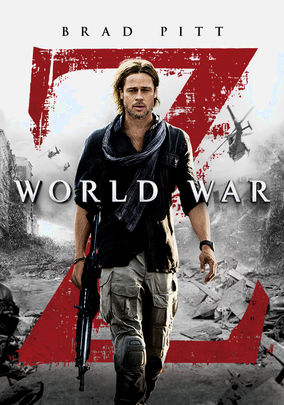
World War Z-2013

World War Z-2013

Director Marc Forster

Starring Brad Pitt

Scott’s Review #121

70262639

Reviewed July 20, 2014

Grade: B

World War Z (2013) is the type of film that is a summer hit but will most likely be forgotten over the years.

It is a slightly above-average, enjoyable action/ zombie thriller, but not much more.

It stars Brad Pitt as a former United Nations investigator called in to save the world from a zombie pandemic. The crisis spreads simultaneously across major cities worldwide.

The film sees Pitt traversing the globe in an attempt to find a cure for the epidemic before it is too late and the zombies make the world extinct of humans.

The zombies are super zombies: they can fly and move at lightning speed, making them ultra-dangerous.

The story is implausible and plot-driven, but it doesn’t matter and works on some level. My theory for this success is that the film is fast-paced, the action starts almost immediately, and Brad Pitt is charismatic.

He is the star, and all the action centers around him.

The film contains exciting, tense scenes, including a plane crash sequence and a chase around a medical lab.

World War Z (2013) is a popcorn film meant to be sat back and enjoyed, not overanalyzed or taken too seriously.

It is a perfect summer hit.

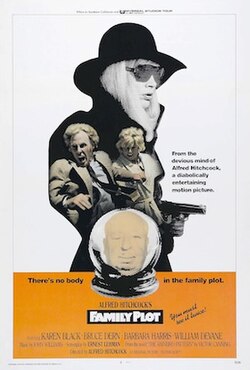
Family Plot-1976

Family Plot-1976

Director Alfred Hitchcock

Starring Bruce Dern, Karen Black, Barbara Harris

Scott’s Review #99

Reviewed July 9, 2014

Grade: B

Family Plot is sadly Alfred Hitchcock’s final film, made in 1976.

It is certainly not one of his greats, but it is not bad either, and it is a fitting way for a viewer to conclude his career.

The film is a jewel caper and has a vastly different feel from many of his other, earlier films. It has a slick quality to it and is reminiscent of a 1970s television movie, which is not a knock.

It feels more television-like than film, perhaps because it stars notable television stars, William Devane and Katherine Helman.

It also features some big film stars of the time- Karen Black, Bruce Dern, and Barbara Harris.

The film is a departure from other Hitchcock films in that it is a macabre comedy. It is a tongue-in-cheek story of a fake psychic (Harris) and her boyfriend (Dern) who become involved in a search for a missing heir, a jewel heist, and a murder.

All of the characters intersect as the film moves along, and it contains some nice Hitchcock elements- the speeding car with no brakes down a hilly road is pure Hitchcock.

For me, the film has a slightly melancholy feel, as it is, sadly, Hitchcock’s final farewell.

Golden Globe Nominations: Best Actress-Comedy or Musical-Barbara Harris

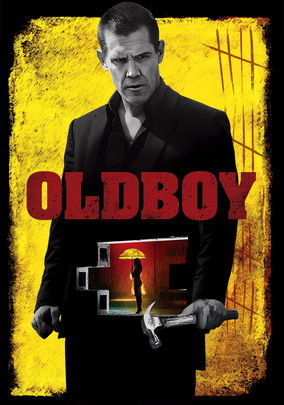
Oldboy-2013

Oldboy-2013

Director Spike Lee

Starring Josh Brolin

Scott’s Review #97

70274810

Reviewed July 8, 2014 

Grade: B-

Oldboy (2013) is a United States remake of the original South Korean film from 2003, telling the story of a successful advertising executive named Joe Doucett, played wonderfully by Josh Brolin.

He is mysteriously kidnapped and kept prisoner in a private one-room facility, where he is served the same three meals daily for twenty years, while framed for the murder of his wife.

Over the years, he keeps up with his daughter’s life through videos.

He is just as mysteriously released after twenty years and sets out to exact revenge on his former captors.

Brolin is charismatic and appealing in the lead role (kudos for his multiple nude scenes), and it is nice to see Michael Imperioli in an offbeat supporting role.

The premise is interesting, but it is the kind of film where everything is plot-driven, the villains completely manipulate events, and the film becomes implausible and, via flashbacks, reminds me of the CBS series Cold Case.

Forgetting that Brolin’s character becomes superhero-like and chiseled after twenty years in captivity, the film is a good, solid, fun thrill ride, and bloody at times.

It has aspects of a nice whodunit, a least a first.

It has so many plot holes that I lost count, but somehow it is enjoyable at the same time.

Oldboy (2013) is never boring and even unpredictable at times.

Many questions run through the viewer’s head. Who is the villain? What could the villain’s motivation be? Friend or foe?

The film is unrealistic and ludicrous at times, but also highly enjoyable.

No Way Out-1987

No Way Out-1987

Director Roger Donaldson

Starring Kevin Costner

Scott’s Review #96

Reviewed July 5, 2014

Grade: B+

No Way Out is a slick political thriller from 1987 starring Kevin Costner as a U.S. Naval Officer investigating a Washington D.C. murder.

Gene Hackman and Sean Young are co-stars.

Costner is at the top of his game in the film and is quite charismatic and charming.

The plot has several twists and turns that keep the viewer guessing and engaged, making it a classic edge-of-your-seat thriller.

The film is paced very well, gradually picking up steam with each plot turn until it builds to a frenetic finish. Specifically, the final forty-five minutes at the CIA are quite a cat-and-mouse game.

It’s a film about sex, murder, love affairs, politics, and backstabbing.

Hugely successful in the 1980s, and as much as I still enjoy it, the film unfortunately now appears quite dated as the soundtrack, hair, and clothes all scream late 1980’s, and that is not to its credit.

It now seems all too similar, though a cut above, to other countless themed films of the same period. Truly great films are timeless.

Kevin Costner was in his prime with No Way Out (1987), and Sean Young has a wonderful turn as the mysterious Susan Atwell.

Crush-2013

Crush-2013

Director Malik Bader

Starring Lucas Till

Scott’s Review #87

70263209

Reviewed July 2, 2014

Grade: C-

Crush (2013) tells a story told since almost the beginning of cinematic history: that of the stalker.

It’s a teen stalker film similar to Swimfan (2002) and The Roommate (2011), which I admit I’ve seen and enjoyed as guilty pleasures.

A teen soccer jock injures his knee and decides to break up with his girlfriend to focus on rehab. From there, someone begins stalking him and leaving secret admirer notes.

Several red herrings ensue, and the final thirty minutes contain a twist that, unfortunately, if you bother to look at the cover art on the DVD, reveals the stalker.

This particular genre is a guilty pleasure of mine, so it’s tough to be completely objective.

On the surface, Crush is a terrible movie- it is by the numbers with no character development, but just plain old fun.

I suppose it is loosely a remake of the Alicia Silverstone film from the 1990s.

In any event, the appeal (good or bad) is that the filmmakers played this film seriously instead of fessing up to a poor script and playing it for laughs.

The acting is awful, the teen outcasts look like they could easily be the popular kids and were made up to appear nerdy, and the film has a Hallmark television movie-of-the-week badness.

But in a goofy, trashy way, I enjoyed Crush (2013).

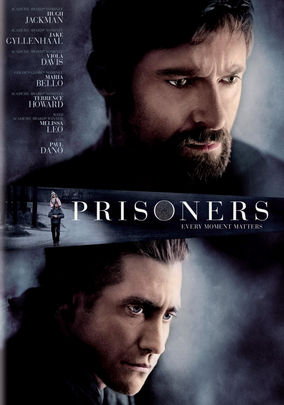
Prisoners-2013

Prisoners-2013

Director Denis Villeneuve

Starring Hugh Jackman, Jake Gyllenhaal

Scott’s Review #75

70273235

Reviewed June 27, 2014

Grade: B+

The film Prisoners (2013) weaves a gripping, taut psychological tale amid a stellar cast, including Hugh Jackman, Jake Gyllenhaal, Maria Bello, Viola Davis, and Paul Dano.

That is what separates it from other similar, yet mediocre, thrillers.

The gray, somber Pennsylvania town is a perfect backdrop for a story involving child abduction and a father who seeks a confession from the presumed kidnapper.

The mood and cinematography are impressive, and the bleakness fits the tone: a cold Thanksgiving holiday weekend in a working-class steel town.

At two hours and twenty-six minutes, the film is long, but it keeps you on the edge of your seat.

What intrigued me most was the audience conflict of whom to root for. Is the father purely innocent? Is the kidnapper guilty? Is someone else involved?

These questions go through the viewer’s mind during the film.

Prisoners has a major drawback: too many plot holes and questions left unanswered after the film.

The kidnapper’s motivations are weak and never fully explained. Parts of the story don’t add up and make little sense.

The film’s style is similar to Zodiac (2006) and Mystic River (2003).

Prisoners (2013) is an intense, thrilling ride to enjoy, but not over-analyze.

Oscar Nominations: Best Cinematography

Gravity-2013

Gravity-2013

Director Alfonso Cuarón

Starring Sandra Bullock, George Clooney

Scott’s Review #69

70274337

Reviewed June 24, 2014

Grade: B

Gravity (2013) has become a film that has divided people- some have described it as “brilliant”, “groundbreaking”, and “phenomenal”.

Because of the hype, I expected something of a masterpiece. Not being a 3-D fan (usually unnecessary), I gave in and saw it in 3-D, which did help the film.

I have discovered the theory- the techies will love it; the storytellers will not.

Yes, the film is inventive, and the space scenes are magnificent, so much so that I felt like I was floating in space looking down at planet Earth.

Sandra Bullock is excellent as a lost astronaut, fearful and desperate.

But the story is quite basic and, frankly, weak. I kept waiting for the plot to thicken and was left wanting much more than the movie delivered.

The backstory for Clooney and Bullock was limited.

I must stress, though, that technically this film is astounding and deserves the praise heaped on it, but as a complete movie, it didn’t deliver.

Oscar Nominations: 7 wins-Best Picture, Best Director- Alfonso Cuarón (won), Best Actress-Sandra Bullock, Best Original Score (won), Best Sound Editing (won), Best Sound Mixing (won), Best Production Design, Best Cinematography (won), Best Film Editing (won), Best Visual Effects (won)

Dead Ringer-1964

Dead Ringer-1964

Director Paul Henreid

Starring Bette Davis, Karl Malden

Scott’s Review #67

70001706

Reviewed June 24, 2014

Grade: B+

Dead Ringer (1964) is a black-and-white thriller starring Bette Davis in her final leading role before she took on the character and supporting roles.

Davis plays an interesting dual role, and as a massive fan of hers, I believe two are better than one.

The story centers on a wealthy widow and her twin sister, a struggling bar owner. The two have not spoken in decades and renewed their feud at a funeral.

One sister schemes to cause the other’s death, which results in an entertaining game of mistaken identity.

Davis carries this film and is dynamic in every scene. With her eyes, facial expressions, and throaty voice, her characteristic sexy pose with the cigarette is often utilized.

She is simply dynamic.

The story and plot are carefully crafted, and the angles that show both characters are impressive for the time (1964).

The differing lifestyles of the characters also make for a more challenging performance by Davis.

Karl Malden is a treat as a love interest of one of the sisters.

And Then There Were None-1945

And Then There Were None-1945

Director René Clair

Starring Barry Fitzgerald, Judith Anderson

Scott’s Review #66

255772

Reviewed June 24, 2014

Grade: C+

And Then There Were None (1945) is adapted from a famous Agatha Christie novel of the same name from the 1930s, the first of 3 film adaptations over the years.

A group of 10 individuals from all walks of life is summoned for a weekend of merriment at a secluded mansion on a lonely island.

The premise is perfectly set up for a fascinating whodunit as the characters are knocked off one by one in sometimes bizarre fashion- the bee sting death is great.

There is a wide range of characters- the rich movie star, the spinster, the doctor, the house servant, and his wife). I was very disappointed with the DVD quality (no Blu-Ray is available for this film).

The picture and sound are abhorrent. The quality is quite grainy and faded making watching an unpleasant experience. However, a great film might withstand those issues.

The film has some appeal that the novel had- an interesting whodunit. The character histories are similar to the ones in the book and, to be fair, the film is well-acted, and the wonderful Judith Anderson (Rebecca) is always a treat to watch.

But the most disappointing aspect is the blatantly changed and completely upbeat, romantic comedy ending, vastly different from the dark novel ending, and lost major points with me for the adjustment.

Passion-2012

Passion-2012

Director Brian De Palma

Starring Rachel McAdams, Noomi Rapace

Scott’s Review #58

70257722

Reviewed June 23, 2014

Grade: A

Passion (2012) is a must-see for all Brian De Palma fans, Carrie (1976), and Dressed to Kill (1980).

Unfortunately, the film received little fanfare and has largely been forgotten, but it deserves a viewing.

The film is set in the world of advertising, where backstabbing and scheming are commonplace.

Rachel McAdams stars as an executive who steals her assistant’s (Noomi Rapace) ideas regularly.

Fed up, the assistant plots revenge.

McAdams is delicious as the callous, calculating, little girl over her head in the corporate world.

The praise goes to De Palma, though, for creating yet another stylistic gem similar in tone to many of his other successful films.

The plot is almost secondary to the direction- twists and turns, and cool camera angles make the film an enjoyable experience.

A common De Palma trait is a dreamlike feel, which I love in his films.

The ending is a direct homage to Dressed to Kill.