Category Archives: Jay Roach

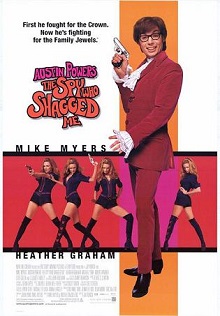
Austin Powers: The Spy Who Shagged Me-1999

Austin Powers: The Spy Who Shagged Me-1999

Director Jay Roach

Starring Mike Meyers, Heather Graham, Michael York

Scott’s Review #1,454
Reviewed December 7, 2024

Grade: C

The silly comedy franchise Austin Powers, which gripped the nation in the late 1990s, never tickled me pink like it did so many others. International Man of Mystery debuted in 1997 and provided a smirk or two, but the follow-up ran out of gas by using more or less the same schtick as the first in the series.

I’ll never forget people mimicking taglines like ‘Yeah, baby’ to delightful laughter during this time, which I found more irritating than humorous.

Mike Meyers is talented and gives his all in the title role and two others. He infuses his natural comic talents into ridiculous, over-the-top, loud characters. He also does triple duty and portrays the main villain and henchman.

He deserves props for solid performances with mediocre writing.

Poor Heather Graham, excellent as ‘roller girl’ in Paul Thomas Anderson’s brilliant Boogie Nights (1997), is reduced to a scantily clad love interest. Besides being eye candy, her character has little worth to offer, undoubtedly frustrating to the then-rising star.

The film isn’t a total failure since the visuals and makeup are to be admired. Colorful sets and groovy designs replicate the 1960s in zany design, making watching the film better than listening to it.

It also serves as a modest treat for James Bond fans since the satire and parodies give credence.

Jay Roach, the director, must have advised his actors to perform as outrageously as possible, especially Robert Wagner, Rob Lowe, and Mindy Sterling, and Meyers does so on his own.

Blessedly, the running time is one hour and thirty-five minutes.

In the second installment, British super spy Austin Powers (Meyers) must return to 1969, as arch-nemesis Dr. Evil (Meyers) has ventured back to that year and successfully stolen Austin’s “mojo,” set up a powerful laser and aimed it at Earth.

With the help of gorgeous agent Felicity Shagwell (Graham), the newly single Austin must now contend not only with Dr. Evil but also Evil’s vicious, pint-size attack clone, Mini-Me (Verne Troya).

The point of the franchise is to spoof the legendary James Bond series while incorporating a Swinging London, free-love vibe, which on paper sounds good. However, the situations play more like sketch comedy or Saturday Night Live setups than a flowing screenplay.

Even the title greedily borrows the title of the 1977 The Spy Who Loved Me Bond film.

As with many comedy or romantic comedy films, screenwriters Mike Meyers and Michael McCullers desperately incorporate bathroom humor and countless sly sex sequences for laughs.

Also, keeping with a popular theme of comedy films, celebrity cameos run rampant. Jerry Springer, Willie Nelson, Woody Harrelson, and others appear as themselves.

I like the Bond references and themes the best, but the jokes mostly don’t work.

To its credit, Austin Powers: The Spy Who Shagged Me (1999) is not as bad as its follow-up, Goldmember (2002), but the gags fall flat most of the way.

Oscar Nominations: Best Makeup
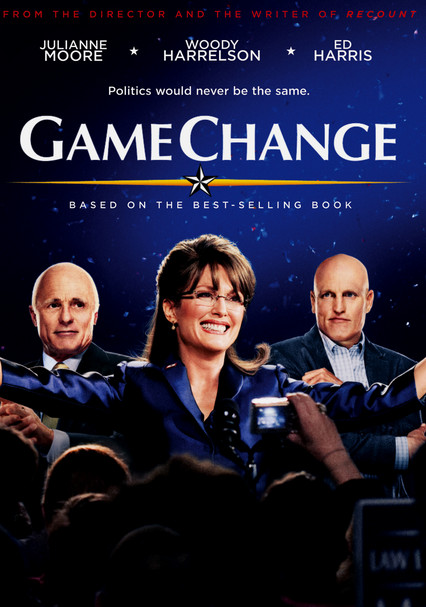
Game Change-2012

Game Change-2012

Director Jay Roach

Starring Julianne Moore, Woody Harrelson, Ed Harris

Scott’s Review #1,094

Reviewed December 23, 2020

Grade: B

Sarah Palin is an idiot. John McCain is not. We didn’t know that in 2008. We do now.

Somehow their different worlds collided as partners in crime for the 2008 United States Presidential election, she was the vice-presidential nominee to his.

McCain’s people wanted a fresh face, someone with charisma, who could help defeat the surging U.S. Senator from Illinois, named Barack Obama.

Game Change (2012), an HBO film, chronicles how an unknown female governor from Alaska was chosen as McCain’s running mate without proper vetting, leading to one of the biggest political fiascos of the twenty-first century.

The production is a well-acted, well-paced affair that makes even the most liberal viewer (me!) sympathize, ever so slightly, with Palin, who was thrust into the spotlight at lightning speed.

Julianne Moore takes center stage, giving the political figure empathy and some heart. Supporting turns by Woody Harrelson as the campaign’s senior strategist, Steve Schmidt, and Ed Harris as John McCain provide levity.

The acting is the best part of the film. Otherwise, the film might have been best served as a documentary (more about that below).

As believable as Moore, Harrelson, and Harris are, they feel like performances rather than authenticity. They try to give their best interpretations of the players instead of immersing themselves in their bodies.

Maybe that’s the point of the film?

I love how the film opens.

In 2010, after the debacle has ended, Steve Schmidt sits uncomfortably before Anderson Cooper from CNN. He asks Schmidt if Palin was chosen as the VP candidate because she would make the best vice president or because she could win the election.

The question is quite poignant and the basis for the entire film.

Another excellent sequence is set during the Republican National Convention. Palin’s speech is well received, bombastic even, and energetic, catapulting her as the potential saving grace of the party.

Sadly, for her, the campaign becomes concerned that she is ignorant about many political issues and grossly unprepared. These scenes are the weakest- the audience laughably realizes she believes Korea is one country, and many other gaffs follow.

But, unless you’ve been hiding under a rock, this is common knowledge.

Game Change makes a mistake by editing too many snippets of real-life interviews and other news media moments. This detracts from the dramatization that is the intention and makes me wonder why a solid documentary wasn’t made instead.

Jay Roach, who directs Game Change, revels in close-ups, especially of Palin, perhaps as a nod to her being thrust onto every television station in the United States.

Danny Strong screen writes the project.

The duo sets up the predictable situations nicely. Palin’s disagreements with McCain, the woman, not his choice. For reference, he wanted Joe Lieberman, a moderate from Connecticut who was considered “boring”.

Let’s give the most credit to Moore. The actress doesn’t exactly embody Palin. She is more like a dressed-up impersonator, hardly Charlize Theron flawlessly playing Aileen Wuornos.

But what she does do is successfully make the audience care about her and feel sorry for her. Palin had no idea what she was in store for, nor knew what she signed up for. Moore portrays the emotions well.

Moore carries the film. Palin became a source of venom and mockery after her embarrassing interview with Katie Couric in which she was unable to name any magazines.

She quickly became the whipping girl rather than the ‘it” girl.

The message is competent without feeling preachy or overpowering, but there is something a bit dull about Game Change. Schmidt and Nicole Wallace chose Palin, making the enormous mistake of knowing very little about the woman.

Game Change (2012) is recommended for those who want to be entertained or who desire a history lesson without seeing the real people.

I still think a documentary would have worked better.

Bombshell-2019

Bombshell-2019

Director Jay Roach

Starring Charlize Theron, Margot Robbie, Nicole Kidman

Scott’s Review #972

Reviewed December 26, 2019

Grade: B+

Bombshell (2019) is the type of film that, depending on your political affiliation, you will either refuse to see or see and have a love/hate reaction to.

As a non-lover of the “news” network Fox News, I am firmly ensconced in the latter camp, so my opinion of the film is mixed.

The importance of releasing the film during a time of political turmoil in 2019 is crucial and intentional, which is why I commend the film.

Still, the subject matter of sexual harassment against women is complex to watch and a sobering reminder that this behavior continues to occur.

The performances of the principal players — Charlize Theron, Nicole Kidman, Margot Robbie, Kate McKinnon, and John Lithgow — are outstanding and key to the film’s success. Theron and Lithgow receive the lion’s share of makeup and prosthetic work, making them look identical to their real-life counterparts.

Beneficial is a myriad of Fox News political figure portrayals (Sean Hannity, Jeanine Pirro, and Bill O’Reilly) with frighteningly good accuracy, creating a surreal effect.

The film centers on female Fox News personnel in Manhattan and their sexual harassment allegations against founder Roger Ailes (Lithgow).

The central figure- Megyn Kelly (Theron) is conflicted over the risks to both her career and her financial stability if she comes forward and admits her harassment by Ailes years ago, after Gretchen Carlson sues the network.

Margot Robbie plays Kayla, a young Fox employee whom Ailes also harasses.

McKinnon plays a closeted lesbian and confidante to Kayla, who works for the network despite being liberal and a massive admirer of Hillary Clinton.

The plot is fast-paced and unfolds like a quick page-turner, with some sections narrated by Kelly. Bombshell feels timely and has a distinct “ripped from the headlines” makeup.

The fact that the real-life events occurred as recently as 2016 is a striking aspect that will captivate the viewer, especially those who follow United States politics or current events.

The story is fresh and vibrant, with a sense of familiarity, rather than a tale from an event decades ago that many viewers have forgotten or were too young to remember.

I had difficulty feeling much sympathy for most of the characters, which detracts from the film’s overall impact.

The standard definition that the term “Fox News” usually conjures is one of male chauvinism and the good old boys club, with old-fashioned machismo ruling the roost.

Why would any woman choose to work for them or align themselves with the Conservative party, which is not a fan of women or women’s rights?

With this fact in mind, it was difficult for me to watch the film.

To build on this, CEO Roger Ailes is written as the clear villain with no redeeming value. During one scene, he salivates over Kayla when she visits him in his office and instructs her to lift her skirt higher and twirl for him. The scene is sickening, and we feel Kayla’s embarrassment and humiliation.

In a cheer-out-loud moment at the end of the film, she quits, unable to remain in such a corrupt corporation.

One of the only likable characters is Jess Carr (McKinnon), probably fictitious. Hardly fitting the mold of the female staff, not perky or showing leg, she goes out for drinks with Kayla and admits to being gay; the two end up having a one-night stand.

The character is unique, and McKinnon makes wise acting choices.

Worth mentioning is Ailes’s long-time secretary Faye (Holland Taylor). Surely, she knows the antics that go on in her boss’s office, but she almost serves as an accomplice. Why?

Sad to realize that, as recently as 2016, women were still having to face discrimination in the workplace. Industries with powerful men still can be toxic and poisonous to women attempting to climb the ranks.

If the women harassed at Fox News were not top anchors, there is no way the accusations would have even been heard. What about the receptionists, cleaning staff, or administrators who are harassed?

Would anyone listen to them? This message crossed my mind while watching Bombshell.

With fantastic acting and incredible makeup, time will tell if Bombshell (2019) remains a relevant film. Leaving the viewer with an unsatisfying ending rather than a hopeful one, it isn’t easy to sympathize with most of the characters, even when they are supposed to be sympathetic.

Bombshell would make a perfect companion piece to Vice (2018), a similar political, yet superior film.

Oscar Nominations: 1 win-Best Actress-Charlize Theron, Best Supporting Actress-Margot Robbie, Best Makeup and Hairstyling (won)

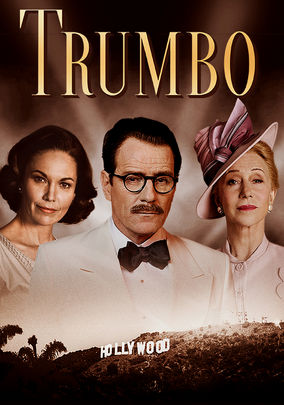
Trumbo-2015

Trumbo-2015

Director Jay Roach

Starring Bryan Cranston, Diane Lane

Scott’s Review #449

80057100

Reviewed July 11, 2016

Grade: B+

Trumbo, starring Bryan Cranston, who is suddenly in everything these days, is a 2015 biography drama about Dalton Trumbo, a famed, talented Hollywood screenwriter blacklisted in the 1950s.

Cranston is center stage in the film, and very good.

The film has a crisp, glossy look and excited me with its ode to old Hollywood and its mixture of real-life interspersed newsreels.

Great stuff for a classic film buff!

The sets, costumes, and art direction travel back to the 1940s and 1950s, but throughout I had a constant feeling of a modern film dressed to resemble an older one and never felt true authenticity.

Still, good effort and a well above-average Hollywood film.

A treat for cinema lovers or even those folks interested in seeing some classic black-and-white footage- a young Ronald Reagan is seen testifying, presumably against those feared to be communists.

Following World War II there was panic throughout the United States, including liberal Hollywood, to oust anyone with thinking deemed “un-American”.

If this sounds like a dated way of thinking now, the United States was not always as diverse as in 2016.

The infamous “Hollywood 10”, included ten screenwriters who were Communists, or at least had communist beliefs and sympathies. The story in Trumbo focuses on Dalton Trumbo, a quirky screenwriter, always with a classy cigarette, and holder, in hand.

His story is told and the audience sees his passion for fairness in the United States. He sees nothing wrong with being a communist.

The supporting characters are excellent. John Goodman, in the role of Frank King, B movie director, who gives Trumbo a chance to write under a pseudonym, and Helen Mirren and David James Elliott, as villainous Hedda Hopper and John Wayne, respectively.

Diane Lane could have been given more to do as the loyal wife of Trumbo, but sadly, Hollywood is not a woman’s world.

If I were to have any criticism of this film it is that Trumbo is mainstream fare and not high on the edgy factor, which is only a mild complaint.

There is nothing wrong with that, but the film screams Hollywood branded.

For instance, throughout Trumbo’s two-year prison sentence, he faces no real threats, no beatings, no abuse, nothing. He emerges from prison with a few gray hairs and life goes on. When Trumbo’s friend battles, and finally succumbs to lung cancer, there are no long-suffering scenes, making the film on the soft side.

Again, an observation of the type of film Trumbo is more than a complaint.

The scenes of Trumbo with his three children as the film periodically ages the children with older actors are touching, especially scenes with his oldest daughter, Nikola, are sweet. She grows up to be just like her father.

Trumbo earnestly explains to young Nikola, why he is a communist and asks what she would do if someone else was without food- her response is to share- a simplistic and sweet scene.

Ah, through the eyes of a child, the world is so innocent.

Trumbo goes back to the Hollywood of old- clean, glamorous, and extravagant, both in the film and the retro use of old footage.

It is a nonthreatening film that explains the story of Dalton Trumbo in a safe, thorough way.

I enjoyed it tremendously.

Oscar Nominations: Best Actor-Bryan Cranston