Tag Archives: Drama

Up the Sandbox-1972

Up the Sandbox-1972

Director Irvin Kershner

Starring Barbra Streisand, David Selby

Scott’s Review #1,308

Reviewed October 18, 2022

Grade: B

Up the Sandbox (1972) is likely the least successful film in the Barbra Streisand collection and more obscure than likely desired. The star performs no songs, and the film is experimental, but it’s unclear whether it was intended to be.

Streisand takes a break from comedies and musicals to venture into unknown territory, risking a payoff that doesn’t always come through.

On the flip side, she never looked more beautiful in a film.

The film has its moments. It’s shrouded in early progressive feminism, which provides intrigue, and it’s tough to go wrong with a bankable star like Streisand in a lead role.

Still, the fantasy sequences get too weird and sometimes unnecessary, and the film doesn’t always make a lot of sense.

The film gets taken down at least a notch for two anti-gay slurs that are shamefully unnecessary to any plot direction.

I award Up the Sandbox credit for thinking outside the box and being unconventional. Still, the parts don’t come together into a cohesive unit, leaving me unfulfilled while recognizing the superior qualities.

The cover art (see above) is wacky and thought-provoking.

Margaret (Streisand) is a young wife and mother who is bored with her day-to-day life in New York City, playing second fiddle to her successful and too-busy husband, Paul (David Selby).

He is a professor at Columbia University, and they reside in a cramped yet fairly sophisticated apartment.

To combat boredom, she regularly escapes into increasingly outrageous fantasies: her mother breaking into the apartment, an explorer’s demonstration of tribal fertility music at a party causing strange transformations, and somehow joining terrorists to plant explosives in the Statue of Liberty.

Streisand is well cast, and while other actresses could have given a fine performance, she plays New York Jewish better than anyone. Her struggle to break out of her life of doldrums is perfectly conveyed as she yearns to achieve a balance between men and women.

She resents going down the path of a housewife, just like her mother did, and vows to be nothing like her, as the women bicker and feud throughout the film.

The sequences involving her mother are the best in the film. Played by Jane Hoffman, Margaret’s mother provides all of the expected Jewish mother stereotypes, like nagging and judging, hilariously.

The funniest mother/daughter sequence sees Margaret smash her mother’s head into a giant birthday cake. Naturally, it’s just her fantasy.

Up the Sandbox wins big for the large number of location sequences set in early 1970s New York City, which is absolutely fascinating to watch. One with an appreciation for Manhattan can be assured of a pleasant viewing experience.

The most heartfelt and sentimental moments occur during a long shot of the still-under-construction World Trade Center. Seeing the Twin Towers still being erected brings back teary memories of 9/11.

Lavish sequences are set in and around Columbia University in upper Manhattan, and the campus is frequently seen as Margaret and her friends trudge their baby strollers through the campus and surrounding areas.

Where the film fails is when it teeters too far out in fantasy land. It makes little sense why Margaret would join terrorists intent on blowing up Lady Liberty, or what the group’s intentions are.

Perhaps it is a metaphor for something that went over my head.

Even when the screenplay is a dud, Ms. Streisand holds her head high and plays the comedy or drama with sincerity and professionalism. With her well-known perfectionism, she would have been aware when things were not working.

A film not remembered well, Up the Sandbox (1972) scores some points with its locales, progressivism, and star power, but stumbles off course too many times to recommend.

If only Streisand had belted out a number or two amid her scripted fantasies, the film might have worked better.
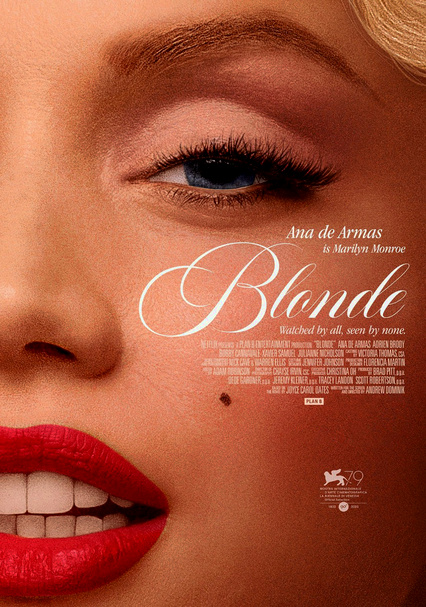
Blonde-2022

Blonde-2022

Director Andrew Dominik

Starring Ana de Armas, Adrien Brody, Bobby Cannavale

Scott’s Review #1,305

Reviewed October 7, 2022

Grade: A

Blonde (2022) is not the kind of film that I expected.

When I became aware that a new film vehicle showcasing the legendary film icon Marilyn Monroe was in the works, I assumed it would be a biographical-style effort. After all, this is hardly the first time the star’s life has been explored.

Throw in bits about her struggles, her love life, her famous screen roles, and her rise to fame, and there you’d have it.

My only real thought was who would be playing her?

Films about Marilyn have been made before, including the most recent effort I can recall, My Week With Marilyn (2011), starring Michelle Williams, a superior film but hardly groundbreaking or well remembered ten years later.

Released via the Netflix streaming service, director Andrew Dominik kicks the shit out of any preconceived notions about glamorous, happy, and prosperous Marilyn.

He creates a story focused on the dark side of the star: her failures, her insecurities, her forced abortions, and her humiliations. The result is a film that is both tragic and profound, and it should be well remembered.

Blonde delves into facts and some of the more profound thoughts of the legend herself, creating a muddy and dreamlike quality that makes the viewer apprehensive about what’s going on.

Since it’s based on Joyce Carol Oates’ 2000 fictional memoir, which is her interpretation of events, it makes truth and imagination all the muddier.

It’s not happy days watching Blonde, which left me wondering if Marilyn had a happy day in her life. From her abortions to sexual harassment, drug addiction, and physical abuse by her husband, she excitedly scampers off to a date with President Kennedy, only to be forced to give him oral sex.

Ana de Armas, known for Knives Out (2019) and No Time to Die (2021), is brilliant as Marilyn. Her mannerisms, speech patterns, and facial expressions reveal a genuine, layered portrayal rather than a carbon copy imitation of her.

Blonde boldly reimagines the life of one of Hollywood’s most enduring icons in two hours and forty-seven minutes of storytelling. It is advisable not to watch the film in one sitting, but instead spread it over three nights to let the story unfold.

Events begin with her volatile childhood as Norma Jeane, marked by an abusive mother and an absent father, and her rise to stardom and romantic entanglements. Blonde blurs the lines of fact and fiction to explore the widening split between her public and private selves.

In a way, Marilyn suffered from a split personality, longing to be Norma Jeane and despising Marilyn.

Enhancing the ambiguity, Dominik elects to use cinematography that is sometimes blurry as if in a sleepy haze, and sprinkles color with the primarily black and white filming. He even films one abortion scene from the perspective of Marilyn’s vagina.

These creative details lead me to classify Blonde as an art film and a highly interpretive one.

While not a crowd-pleaser, Blonde is not all doom and gloom either.

Tidbits about her most famous films, Gentlemen Prefer Blondes (1953) and Some Like It Hot (1959) are featured, showcasing one or two neat camera tricks, so it appears that de Armas is acting opposite Tony Curtis.

I worry that poor reviews for Blonde may hinder de Armas’s chances of receiving an Academy Award nomination. Positive reviews usually help secure Oscar recognition.

Thankfully, despite many critics and viewers having issues with the film, de Armas has received worldwide acclaim.

Bobby Cannavale and Adrien Brody are excellent as Marilyn’s husbands, controlling Joe DiMaggio and insecure artist Arthur Miller. Both actors combine effective acting with distinguished portrayals, allowing the audience to appreciate the appeal of both men.

Other interesting subplots involve Monroe’s ‘throuple’ romance with bisexual actors Cass and Eddy, and a haunting exposure of the abuse suffered by Marilyn at the hands of her mother, Gladys, wonderfully played by Julianne Nicholson.

There is little doubt that Blonde (2022) is an unconventional film that may not appeal to everyone. However, it’s the down-and-dirty texture and tour-de-force portrayal of Monroe that won me over.

It chilled me to the bone in the best possible way.

Oscar Nominations: Best Actress-Ana de Armas

Magic Mike-2012

Magic Mike-2012

Director Steven Soderbergh

Starring Channing Tatum, Matthew McConaughey

Scott’s Review #1,302

Reviewed September 28, 2022

Grade: B

In 2012, Channing Tatum was a major Hollywood star. He was cast in starring roles focused on his looks but parts that also allowed him to showcase sensitivity and even some acting chops.

Magic Mike (2012) takes Tatum’s beefcake body and makes a likable hero out of his title character. He is not just brawn but possesses intelligence and a worldly quality that is sometimes lacking in comedic roles.

Unfortunately, the screenplay isn’t developed well and we get just a glimpse of what Tatum, the good actor, could do. Fortunately, two years later he would play his best role to date in Foxcatcher (2014).

Magic Mike teeters a tad too soft for my liking and gives the stripper world a glossy, lightweight haze. Given the subject matter and the director, Steven Soderbergh, the film could have gone much darker as Boogie Nights did with the porn industry in the late 1990s.

Still, Tatum is a star and boogies and shakes his muscular body enough to warrant the price of admission. Matthew McConaughey is also appealing and shockingly plays against type as an older and wiser former stripper, now the manager of club Xquisite.

By day, Mike (Tatum) works as a struggling employee of odd jobs-handyman, car detailing, or designing furniture. But when the sun goes down and the hot spotlight comes on Mike is the star attraction in an all-male revue.

Mike mentors a nineteen-year-old named the Kid (Alex Pettyfer) and teaches him the tricks of the trade. However, Mike’s blossoming romance with the Kid’s sister Joanna (Olivia Munn) is threatened when the drama begins.

Most viewers are not going to see a film like Magic Mike for the dramatic bits or any other measure of story. We’re not discussing The Conversation (1974), Chinatown (1974), or other heady and smartly written dialogue.

That’s a relief because the plot is banal. Who cares if Mike and the Kid are at odds or if Mike and Joanna break up, make up, or launch a mission to the moon?

No, the recipe of the day is flesh and there is plenty of it. Nobody goes full monty or anything but between Tatum, McConaughey, Matt Bomer, and Joe Manganiello, who plays a character aptly named Big Dick Richie, the audience will be left aflutter and quite satisfied.

Soderbergh, an impressive director, knows this and the best sequences occur on the stage. There is music, lights, and razzle-dazzle, as the troupe dance and strips with gusto. With each tie or vest shed amid a shimmering dance routine, pulsating energy makes the sequences appealing.

As showy as these numbers are, and there are plenty of them, I longed for some down-and-dirty drug use or ‘gay for pay’ situations but Soderbergh doesn’t dare copy Boogie Nights with any seriousness.

He intends to entertain and he does.

I wanted more darkness and more investment in the characters. We know little about the supporting characters except for McConaughey’s Dallas, who sadly will never leave the industry.

In the end, I was okay with the stories being secondary. This one has plenty of buff dudes taking their shirts off, and more, for the camera.

And who doesn’t like that?

Magic Mike (2012) was followed by the disastrous and stupid Magic Mike XL (2015) which makes the former seem like a masterpiece.

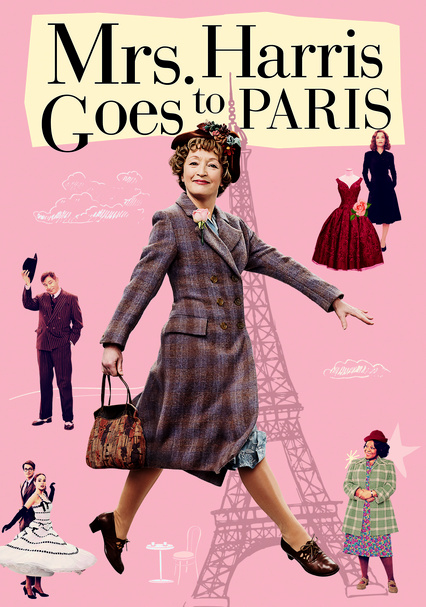
Mrs. Harris Goes to Paris-2022

Mrs. Harris Goes to Paris-2022

Director Anthony Fabian

Starring Lesley Manville, Isabelle Huppert

Scott’s Review #1,301

Reviewed September 24, 2022

Grade: B+

Mrs. Harris Goes to Paris (2022) is an endearing film enveloping the viewer in warmth and good cheer. It exudes empathy and heart while sprinkling in some good luck, chance, and a big dream.

It shows that, every once in a while, a reasonable person prevails in life.

It is the third film adaptation of the 1958 novel Mrs. Arris Goes to Paris, written by Paul Gallico. Angela Lansbury played the role in an earlier incarnation.

British actress Lesley Manville stars in the film as the title role. A talented cast surrounds her, delivering good performances, notably from the legendary French actress Isabelle Huppert in the role of the foil.

Unsurprisingly, in a film where good fortunes are the theme of the day, even she comes around in the end, though, where most characters dutifully assist in the ultimate happiness of Mrs. Harris.

There is drama encircling this film, but in the lightest of ways. The comedy elements pair well, and the romanticism aligned with Paris is palpable, as seen in other characters like young lovebirds André (Lucas Bravo), the Dior accountant, and Natasha (Alba Baptista), a Dior model, who find love for each other.

Everyone gets a happy ending.

It all begins in 1957 London, where Ada Harris, a widowed cleaning lady, becomes obsessed with one client’s haute couture Dior dress. She is impulsively inspired to buy her Dior dress one day. However, finding the money is the biggest challenge.

As fate would have it, she suddenly receives a war widow’s pension and travels to Paris to buy her dress. She stumbles into a showing of Dior’s 10th-anniversary collection and is befriended by André and Natasha.

However, the Dior director, Claudine (Huppert), resents Ada’s intrusion into the exclusive world of haute couture and schemes to prevent her purchase.

Director Anthony Fabian, who is very new to directing, wisely provides a hefty dose of the British way of living, counterbalanced with the glamour of the Parisian lifestyle that works. The character, and thus the viewer, alternates between London and Paris.

The film is a safe experience and will not ruffle even the slightest of feathers or the tightest of asses.

It’s all pure, silly fantasy, of course, but done in the best possible way.

I was immediately immersed in the film and instantly wanted to champion happiness for Ada.

Manville is perfectly cast, though I could easily see other actresses in the role. Imelda Staunton, Emma Thompson, or Helen Mirren would have been terrific. Taking nothing away from Manville, who’s got charisma and acting chops, it’s a role that others could also successfully play.

I can’t say the same for Claudia’s role. At the risk of merely being a throwaway role as the heavy, Huppert, whom I adore in films like Amour (2012) and Elle (2016), instead brings her from a full-on bitch to a sympathetic character.

Huppert is one of the greatest actresses in the world and can and has made the most despicable characters worthy. That’s tough to do.

Naturally, there is a hefty dose of exterior scenes that I find pleasing. Having visited both Paris and London, as well as the surrounding areas, it’s lovely and reminiscent to catch glimpses of the Eiffel Tower or see cobblestone streets lined with bakeries or pubs.

The musical score is fresh and atmospheric, especially during the Parisian sequences. Boisterous and cultured French music emerges from the screen.

Besides all of the pleasant trimmings, romance blossoms for Ada as well as the youngsters. Encouraged to find the love she thinks she might have with the rich and sophisticated Marquis de Chassagne (Lambert Wilson), who takes a shine to her.

But when he awkwardly tells her she reminds him of his childhood nanny, she is crushed.

I secretly enjoyed this heartbreak only because I was never convinced Ava truly belonged in that world daily.

True to form, the filmmakers teeter towards a setup between Ava and regular, beer-drinking, local friend Archie (Jason Isaacs).

Box-office receipts will likely determine whether Mrs. Harris Goes to Paris (2022) receives a sequel. But I’ll be keen to follow this richly drawn character as she lands in New York City or other interesting geographies.

Oscar Nominations: Best Costume Design

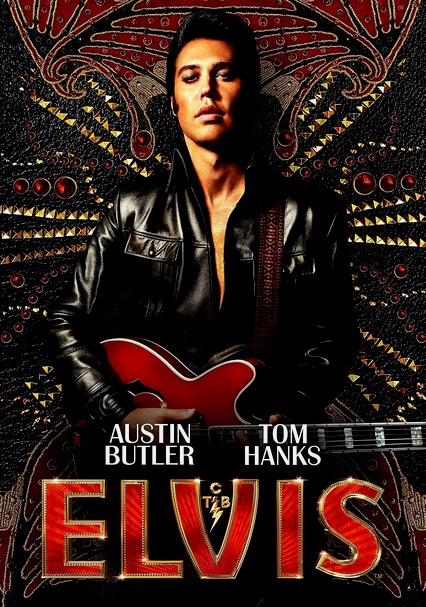
Elvis-2022

Elvis-2022

Director Baz Luhrmann

Starring Austin Butler, Tom Hanks

Scott’s Review #1,299

Reviewed September 16, 2022

Grade: B+

Once I knew that Australia’s own Baz Luhrmann was directing the new film Elvis (2022), I immediately formulated an expectation of what the film-watching experience would be like.

I anticipated a specific type of filmmaking, where an auteur artist merges fast-paced music videos with a dramatic biopic into a cohesive film.

Other Luhrmann offerings, such as Moulin Rouge (2001) and The Great Gatsby (2013), incorporate contemporary musical elements and are highly visual and stylistic. I knew what I was going to get and was prepared for it.

Elvis is no different, and Luhrmann’s style is an unconventional risk not for everybody.

I mostly enjoyed the film, but I didn’t quite love it either, seeing both the good and the not-so-good aspects.

At two hours and thirty-nine minutes, it goes on way too long.

Perhaps contradicting this point is that Elvis does improve as it progresses, initially feeling jarring, overwhelming, and disjointed due to rapid editing and rapid camera work.

A Dramamine is suggested until one is comfortable with the sudden bursts of turbulence. I semi-joke, but there is a period of sinking into Luhrmann’s style that is necessary, especially if you have never seen one of them.

The film explores the life and music of Elvis Presley (Austin Butler), and his complicated relationship with his opportunist manager, Colonel Tom Parker (Tom Hanks), and his wife, Priscilla (Oliva De Jonge).

The story delves into the singer’s rise to fame and the evolving cultural landscape in the United States during the 1950s and 1960s.

Like many films, the events start much later than the main story, in this case, 1997. Parker is on his deathbed, ruminating about how he first met Elvis and helped make him a legendary icon.

Much of the film takes place in glitzy Las Vegas, where Elvis had a long-term residency. However, it’s worth noting that the star’s working-class roots and impoverished upbringing in a predominantly black neighborhood had a tremendous influence on his music.

The Vegas setting applies a sparkling veneer, mixed with a sense of isolation, especially in scenes that show Elvis’s million-dollar penthouse view of Sin City. The star frequently pulls all the black curtains to reside in solitude.

Butler starts slow but ends up doing a fabulous job of portraying the iconic star, no easy feat. At first, I had difficulty buying the actor as Elvis, but as time went on, he became more immersed in the role.

The best scenes, hands down, occur during the performances. The sheer rawness of his act and the famous wiggle that left fans dizzy with eroticism are compelling and authentic, to say nothing of titillating.

The young actor exudes charisma just as the real-life star does, and this is most evident on stage. The dramatic scenes don’t work as well, and Luhrmann strangely skims over the controversial weight gain years, the 1970s, that Elvis experienced.

I expected Butler to don a fat suit, but there was none of this.

This miss can almost be forgiven when a heart-wrenching final performance of ‘Unchained Melody’ by the honest Elvis is showcased. The number is fraught with emotion and tenderness, leaving me feeling sympathy.

Hanks is good as the slimy and curmudgeonly manager, but I never felt sympathy for the character. If the film can be believed, he ruined Elvis as much as he brought him success, but Hanks never made me forgive the man. I also wasn’t interested in his backstory.

It will be hard-pressed ever to make me enjoy Hanks more than in his Oscar-winning back-to-back turns in Philadelphia (1993) and Forrest Gump (1994), his two best roles.

Elvis, the film, does better when it serves as a musical performance rather than a biography. Sure, the drug use and the disputes with family and manager are dramatic but it’s the performances of ‘All Shook Up, ‘Unchained Melody’, and ‘Can’t Help Falling Into Love’ that win me over.

In pure Luhrmann form, many of the familiar songs are done in different tempos and interpretations, but that’s part of the fun.

Comparisons to recent musical biographies, such as Bohemian Rhapsody (2018) and Rocketman (2019), are fair.

Elvis (2022) is not as good as those films, but it’s above average and succeeds when it entertains, showcasing how the star’s determination and grit prevailed despite outside influences.

Oscar Nominations: Best Picture, Best Actor-Austin Butler, Best Cinematography, Best Production Design, Best Film Editing, Best Sound, Best Costume Design, Best Makeup, and Hairstyling

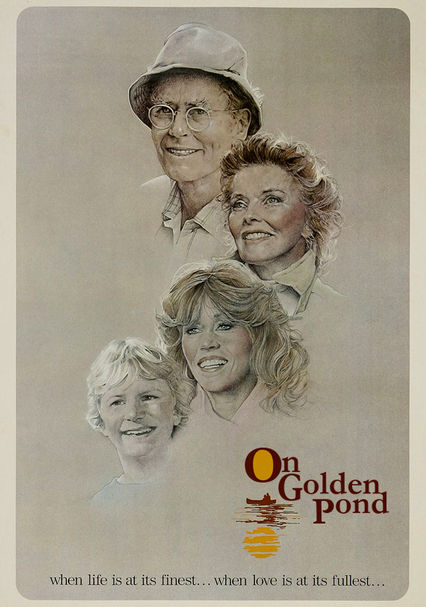
On Golden Pond-1981

On Golden Pond-1981

Director Mark Rydell

Starring Henry Fonda, Katharine Hepburn, Jane Fonda

Scott’s Review #1,297

Reviewed September 8, 2022

Grade: A

A beautiful and quiet family drama, On Golden Pond (1981) is a brilliantly acted and written story about life, specifically aging and dying. It tells one lovely story arc after another, involving the relationships between its principal characters.

With heavyweights like Katharine Hepburn, Henry Fonda, and Jane Fonda signed on to star, how could the film not be a success?

It was not only a blockbuster in the summer of 1981, but it also earned 10 Academy Award nominations and numerous other awards, showing that sometimes subdued stories about human relationships win big.

The anticipation of legendary stars Fonda and Hepburn, golden icons of Hollywood, finally appearing opposite each other in a film must have made film lovers salivate back in 1981.

Norman Thayer (Fonda) is a grumpy older man trying to enjoy his golden years. He and his nurturing wife, Ethel (Hepburn), spend summers at their New England vacation home on the shores of idyllic Golden Pond.

Norman is experiencing memory problems and frets about dying, while Ethel makes the most of it, enjoying the beautiful loons on the water and chatting with the local mailman.

One year, their adult daughter, Chelsea (Jane Fonda), visits with her new fiancée (Dabney Coleman) and his teenage son, Billy (Doug McKeon), on their way to Europe.

After leaving Billy behind to bond with Norman, Chelsea returns, attempting to repair the long-strained relationship with her aging father before it’s too late.

The greatest part of On Golden Pond is that it is believable. The tender love that Norman and Ethel share, the tensions between Norman and Chelsea, and the burgeoning friendship between Norman and Billy Jr. feel so very real and poignant.

Beautiful scenes emerge between the older man and a young man when Norman turns Billy Jr. on to literary classics like A Tale of Two Cities and Treasure Island.

 The viewers can easily see themselves in real-life situations like this or when Ethel and Chelsea discuss a strained relationship.

Years and years of memories and situations between the characters spring to life, making the dialogue rich with flavor. Moving sequences, like when Norman suffers a heart attack and is involved in a boating accident, are teary and sentimental but fresh with emotion.

They do not feel manipulated.

As if the richly acted scenes are not enough, screenwriter Ernest Thompson, who wrote the film based on his play, provides credibility. He felt the passion the story would bring to the big screen, and he was right.

As I grow older, I appreciate the characters of Norman and Ethel. They stick together through thick and thin, sometimes quarrel, but love each other with a bond that can never be severed.

We all know and love couples like them.

The cinematography bristles with sweet nature. From the loons to the other sounds of summer, the camerawork elicits the light of late summertime. I constantly had to remind myself that I wasn’t really in the countryside but was in my living room.

A tearjerker that carefully combines heavy drama with comical moments that lighten the load, On Golden Pond (1981) is a truthful and emotional extravaganza about death that never feels sad or downtrodden.

It’s much too clever for that; instead, it’s an uproarious crowd-pleaser.

Oscar Nominations: 3 wins-Best Picture, Best Director-Mark Rydell, Best Actor-Henry Fonda (won), Best Actress-Katharine Hepburn (won), Best Supporting Actress-Jane Fonda, Best Screenplay-Based on Material from Another Medium (won), Best Cinematography, Best Film Editing, Best Original Score, Best Sound

Zola-2021

Zola-2021

Director Janicza Bravo

Starring Taylour Paige, Riley Keough, Colman Domingo

Scott’s Review #1,290

Reviewed August 16, 2022

Grade: A-

I’ve said this before when speaking about cinema, but it bears repeating. I treasure the independent film genre and the creativity it allows. Usually, it’s a small group or sometimes even only one person with a vision and the ability to bring it to the big screen.

Budgets are almost always tight, but that’s a good thing. Remember how 1978’s Halloween was made on a shoestring budget and took over the world?

Zola (2021) is an outstanding example of the freedom allowed in independent filmmaking.

The film is not for everyone, and I think it knows this. Marketed as a black comedy, it’s a blend of drama, humor, and a dark story that can be difficult to watch at times.

Comic moments are contained within, but sometimes it’s unclear whether we are supposed to laugh or cringe.

I was enthralled by the film, not only for its compelling story but also for its instances of visual magnificence, such as the dazzling opening shot of lead character Zola (Taylour Paige) in multiple forms of bubbles and sparkles, surrounded by quick editing shots.

She boldly asks the audience, “Y’all wanna hear a story about why me and this bitch here fell out? It’s long but full of suspense.”

From the moment the first line is uttered, we know we are in for something sassy, salty, and dangerous.

Gorgeous and technically superior cinematography mixed with sex, drugs, and foul language would resurface throughout the film.

The story is loosely based on a viral Twitter thread from 2015 by Aziah “Zola” King and the resulting Rolling Stone article “Zola Tells All: The Real Story Behind the Greatest Stripper Saga Ever Tweeted” by David Kushner.

Eventually, portions of the tale would prove to be embellished.

Zola (Paige) is a Detroit waitress who strikes up a new friendship with a customer, Stefani (Riley Keough), who convinces her to join a road trip weekend of dancing and partying in Florida.

What at first seems like a fun trip quickly turns into a deadly journey involving a pimp, Stefani’s clueless boyfriend, some Tampa gangsters, and other unexpected adventures.

Director Janicza Bravo, a New York University graduate, is someone to watch out for. Zola is her first full-length feature and reminds me quite a bit of Tangerine (2015) and American Honey (2016), two superior independent films.

At other times, the film contains a sprinkling of the underappreciated 2019 film Hustlers starring Jennifer Lopez.

Bravo is not afraid to delve into the down-and-dirty lives of characters that most people would quickly dismiss or avoid altogether. Stories about strippers, prostitutes, and pimps can be a tough sell.

The sex work industry is not always pretty.

Zola contains the raunchiest scene I have ever seen. As Zola and Stefani sit on the toilet, going to the bathroom, the camera pans from overhead, revealing not only their naked bums but also the waste excreted into the toilet.

The setting of Florida, where much of the action takes place, hits home to me, as I recall several boozy vacations in various parts of the state. A somber gloominess enshrouds the characters as they traverse an otherwise bright and sunny landscape.

I love the detail and mixture of pretty and poisonous, but I was left knowing very little about the personal lives of the characters. I wanted to know how Zola and Stefani ended up where they did.

Considering the subject matter, Bravo thankfully doesn’t make the film violent or abusive. Instead, she peppers the dark comedy and over-the-top turns with her characters, especially the pimp (Domingo) and Stefani.

When Zola (2021) ends, I am left with an unsettling feeling of uncertainty and a lack of conclusion that I wish were different. Still, the creativity and the ability to create desperate characters willing to do anything to make some cash is fascinating.

Independent Spirit Award Nominations: 1 win-Best Film, Best Director-Janicza Bravo, Best Female Lead-Taylour Paige (won), Best Supporting Male-Colman Domingo, Best Screenplay, Best Cinematography, Best Editing

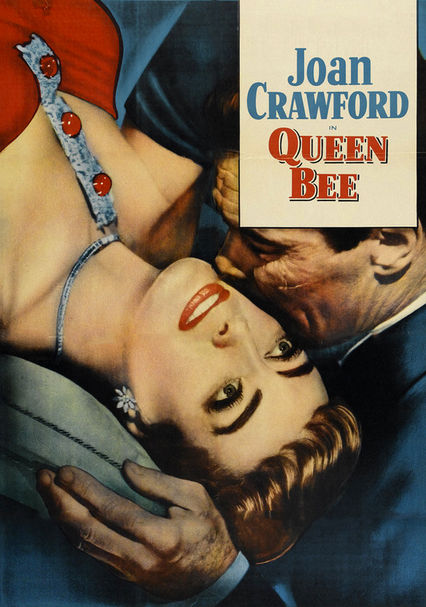
Queen Bee-1955

Queen Bee-1955

Director Ranald MacDougall

Starring Joan Crawford, Barry Sullivan, Betsy Palmer

Scott’s Review #1,288

Reviewed August 10, 2022

Grade: B+

Queen Bee (1955) is a drama served in a straight-up Southern style. It is highly recommended only for fans of legendary screen actress Joan Crawford. Made during her career’s downward turn, the character is tailor-made for the actress and her fans.

She struts across the silver screen in flashy gowns and heavy makeup, admiring herself in the mirror and firmly ensconced in bitch mode. With matching garish eyebrows and a sassy smirk, she chews up and spits out every character she crosses paths with.

Otherwise, audience members unfamiliar with or otherwise turned off by Crawford should probably avoid Queen Bee. There is little character development or interesting story other than watching her cause havoc.

Set in the 1950s American South, the vicious and conniving Eva Phillips (Crawford) takes pleasure in making the lives of those around her miserable, especially her husband, Avery (Barry Sullivan), who is so depressed he resorts to heavy drinking and becomes an alcoholic.

Meanwhile, when Eva discovers her sister-in-law (Betsy Palmer) intends to wed her former lover Judson (John Ireland), she decides to ruin their engagement for no reason other than being nasty.

Eva’s niece, Jennifer Stewart (Lucy Marlow), arrives in town and moves in with the family. She becomes Eva’s confidante. Everyone warns her not to cross paths with the scheming vixen, but she must learn how deadly Eva is.

At some point early on, Queen Bee turns from high drama into soap opera camp and becomes silly and plot-driven. It’s also melodramatic and stagey, especially once events spin out of control.

Despite a talented supporting cast, Crawford is the headliner. The part is written with her in mind and intended as a comeback vehicle when her career was dusty and needed a dash of drama.

It’s a delight to watch Crawford as Eva, pouring her heart and soul into a role that allows her to be as vicious as she wants. I guess, in some way, you could say Eva’s manipulative motivation is her claim for love, but that’s a stretch and hardly justifies leading one character to suicide.

At the end of the film, Eva gets her due in proper form, which left me—and likely most audiences—clapping with happiness.

Speaking of the supporting cast, I practically squealed with delight at the appearance of Betsy Palmer, forever known to horror audiences as the knife-wielding maniac on Friday the 13th (1980). Jaw-dropping is to see her play a weak, vulnerable character with no bloody ax anywhere in sight.

Barry Sullivan’s performance as Avery is also noteworthy, as is Fay Wray’s small and odd cameo appearance (King Kong, 1933).

Director Ranald MacDougall wrote the screenplay for Mildred Pierce (1945), which won Crawford the Academy Award and was deemed a significant comeback for her. He also wrote Queen Bee clearly with the idea that she would star and perhaps lightning would strike twice.

It didn’t save for two surprising technical Academy Award nominations.

Palmer’s Carol offers the most poignant character summarization of Eva.  She tells Jennifer that she once read a book about bees and feels that Eva is like a queen bee who stings all her competitors to death.

Queen Bee (1955) is highly recommended for late-night satisfaction. It immerses the reader in an hour and a half of delightful wickedness from Joan Crawford.

Her scheming Atlanta socialite Eva is towards the top of a list of characters one loves to hate.

Oscar Nominations: Best Cinematography, Best Costume Design, Black-and-White

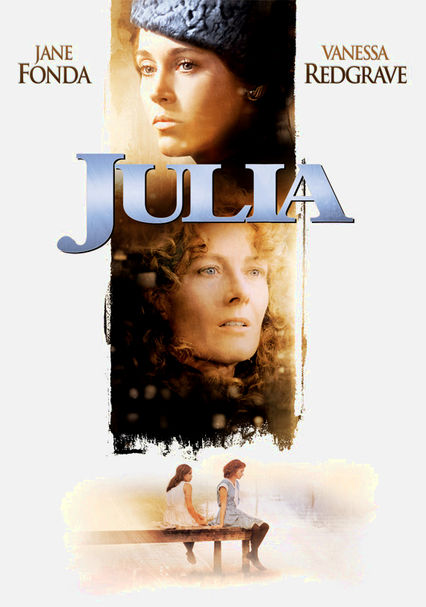
Julia-1977

Julia-1977

Director Fred Zinnemann

Starring Jane Fonda, Vanessa Redgrave, Jason Robards

Scott’s Review #1,283

Reviewed July 31, 2022

Grade: A

Jane Fonda leads the charge in a powerful and gorgeously shot drama named Julia (1977), centering around pre-World War II and the impending Holocaust.

The drama is based on the playwriting of Lillian Hellman, a famous playwright, which depicts the relationship between two close friends and the unexpected consequences that arise when one desperately needs help from the other.

When Lillian (Fonda), a renowned playwright, reunites with her childhood friend Julia (Vanessa Redgrave) in Russia, the writer is asked to smuggle funds into Germany to aid the anti-Nazi movement.

In the mix is Lillian’s mentor, Dashiell Hammett (Jason Robards), who is unaware of her dangerous assignment.

I immediately relish the film mainly because the message is extremely female-empowering, and a dynamic friendship between two women is examined. This does not happen enough, successfully, in films even to this day.

Given the World War II theme, one would naturally assume the film would center around men, not women, and plenty of female spies and the like are featured.

Added to the mix is the astounding cinematography of Germany, Poland, and Russia. In truth, the film was shot in England and France for security and restrictive reasons, but it could have fooled me since the countries look authentic and believable.

Julie looks polished, and that’s hardly a gripe. The production design and costumes are perfectly shot and colored. It’s not a dowdy or drab film, and it depicts a little amount of violence or torture, choosing to focus on relationships and intrigue.

The suspenseful train sequence is brilliant in every way, sprinkling in Hitchcockian touches and enough nail-biting to make the long scene a key takeaway. Lillian must keep her intentions secret as she travels toward Russia, and each train scene, whether it’s the peril of being checked at the border or eating in the dining car, is captured perfectly.

A slight suspension of disbelief is the casting of the beautiful Fonda as the plain-looking playwright Lillian Hellman. In some scenes, she is made up to look haggard, tired, and homely, but the trick never works for a minute.

It’s even giggle-worthy, and it’s recommended to sit back and watch Fonda deliver a splendid performance, forgetting altogether that she is portraying the writer.

In other movies, it might have only been about Fonda from an acting perspective, but in Julia, the spoils go round and round. At the very least, Redgrave, Robards, and Maximilian Schell, who plays a pivotal character named Johann, must be mentioned. Each brings professionalism and believability to their characters.

But quieter parts by a woman passenger and a girl passenger are my favorites. They go from cheery to serious, speaking in a sort of code, not stating that they are helping Lillian, but obviously using facial expressions to reveal true alliances.

A delightful point to make is that Julia is Meryl Streep’s first film role, albeit in a tiny part.

Speaking of Redgrave, when she won the Best Supporting Actress Academy Award, she made an infamous speech that marked a great controversy.

In her acceptance speech, she thanked Hollywood for having “refused to be intimidated by the threats of a small bunch of Zionist hoodlums whose behavior is an insult to the stature of Jews all over the world and to their great and heroic record of struggle against fascism and oppression”.

This was preceded by members of the Jewish Defense League picketing the ceremony and followed by some boos and retorts to her comments.

But back to the film, Julia does not end in a happily-ever-after way. A major character is killed, and a baby is lost forever. But that’s part of the truth about creating a film that harkens back to a day when non-conformity led to death.

Julia (1977) is a vital film that still holds up tremendously well, and in a world still filled with chaos and oppression, it’s a powerful reminder of cinema’s power.

Oscar Nominations: 3 wins-Best Picture, Best Director-Fred Zinnemann, Best Actress-Jane Fonda, Best Supporting Actor-Jason Robards (won), Maximilian Schell, Best Supporting Actress-Vanessa Redgrave (won), Best Screenplay-Based on Material from Another Medium (won), Best Cinematography, Best Costume Design, Best Film Editing, Best Original Score

Tender Mercies-1983

Tender Mercies-1983

Director Bruce Beresford

Starring Robert Duvall, Tess Harper

Scott’s Review #1,279

Reviewed July 22, 2022

Grade: B+

Tender Mercies (1983) is a quiet, down-home film about a country musician struggling with alcohol addiction, god, and a tepid musical career. Anyone starting to elicit a yawn will have the same reaction I did when reading the premise.

It’s not the most original idea but the film works surprisingly better than I initially expected. The 1983 film is largely forgotten at this point but has a Cinderella story as its legacy.

Funding and a marketing push were limited, resulting in low box-office returns but the Academy sure took notice heaving five nominations it’s way.

It’s quite the departure for those expecting actor Robert Duvall to mirror his The Godfather (1972) and The Godfather: Part II (1974) characters.

Tender Mercies is an actor’s film, and it belongs squarely to Duvall who delivers a wonderful performance perfectly carved out for an Oscar nomination. He instills himself into the role of a drunken, washed-up, country star vowing to stay straight.

Duvall does more than act in it, crafting and performing his songs in a role standing side by side with his role in The Apostle (1998) as his very best.

He won the coveted Academy Award for Tender Mercies.

Though the tone is low-key, filming was anything but, and reports of disagreements and blow-ups between Duvall and director, Bruce Beresford, surfaced.

The Australian director was later made famous for Driving Miss Daisy (1989) at one point even considered quitting the production.

The story tells of alcoholic drifter Mac Sledge (Duvall), who awakens one day in the middle of rural Texas after a night of heavy drinking.

His surroundings are a run-down roadside motel and gas station.

He meets the owner, a young widow named Rosa Lee (Tess Harper), and offers to perform maintenance work at the motel in exchange for a room. Rosa, whose husband was killed in the Vietnam War, is raising her young son, Sonny (Allan Hubbard), on her own.

Mac and Rosa become smitten with one another, attending church, and forging a life of solitude together. Demons surface when it is revealed that Mac is a once-famous country singer with a currently famous ex-wife, Dixie Scott (Betty Buckley).

When the opportunity for a career comeback surfaces, Mac must choose between his new life and the life he let slip through his hands.

The story is very good for several reasons. At the forefront, Mac is a likable guy whom the audience pulls for. Instead of the tried-and-true story of a man battling his demons and being ‘saved’ by a woman, Mac is already on the road to recovery and has the desire to stay sober.

Rosa Lee and Sonny merely serve as steady influences versus the bright lights and broken hearts of the country music world.

Mac also has a chance to be a father figure to someone. The bad stuff has already transpired in the past, so the audience is spared having to endure a pile of shit in exchange for a big payoff at the end of the film.

There are a couple of negatives that keep the film from being a masterpiece.

On the wagon, Mac is tempted to down a bottle of whiskey after a tragedy, but he resists the urge choosing to pour the devil’s juice out onto the ground. Is that a big surprise?

Buckley does her best with a one-note character, clearly in existence as an obstacle to Mac’s happiness.

But, at its core, Tender Mercies is about relationships, and though a slow under texture, delicious are the low-key scenes between Mac and Rosa Lee, and Mac and Sonny. The scenes prove that good crisp dialog with grace and heart trumps car chases any day.

They discuss life!

The cinematography of remote Texas is magical in its vastness and its loneliness. Key expressions on the face of Duvall perfectly match the Western landscape.

I’m not a religious guy and I’m not a country & western guy but I enjoyed the story I was served up by Tender Mercies (1983) quite a bit.

The combination of superb acting, an emotionally charged character-driven story, and a fabulous glimpse at the dry state of Texas, made for a compelling, and relatively short viewing time of ninety minutes.

Oscar Nominations: 2 wins-Best Picture, Best Director-Bruce Beresford, Best Actor-Robert Duvall (won), Best Screenplay-Written Directly for the Screen (won), Best Original Song-“Over You”

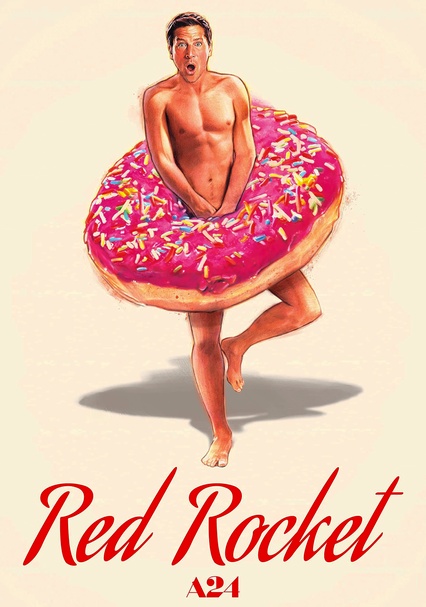
Red Rocket-2021

Red Rocket-2021

Director Sean Baker

Starring Simon Rex, Suzanna Son

Scott’s Review #1,277

Reviewed July 15, 2022

Grade: A-

Sean Baker has become a director I am intrigued by. Firmly planted in the independent circuit, recent films like Tangerine (2015) and The Florida Project (2017) offer a slice-of-life look at troubled or otherwise forgotten or discarded groups of people.

His works are fascinating and humanistic, admittedly skewing darker or daring avenues like the transgender community, the homeless, or, in the case of Red Rocket (2021), a former male porn star.

And while his characters may not always be likable, they are complex, requiring exploration and consideration.

There are also enough butts, boobs, and fornicating to remind us what the subject matter at hand is.

Baker has an incredible way of providing depth to the people considered dregs of society and a voice with a story to tell. He treats them like human beings, oftentimes using real people who are non-actors in pivotal roles.

This elevates the authenticity and realism to new heights, successfully getting his audience to empathize with the characters and see them as living beings with fears, thoughts, and emotions.

Mikey Saber (Simon Rex) is a charismatic con man and washed-up porn star who returns to rural southeast Texas to shack up with his depressed and estranged wife, Lexi (Bree Elrod).

He plots his triumphant return to Los Angeles and the porn industry after meeting a teenager named Strawberry (Suzanna Son) who works at the local donut shop. They connect and plot ways to escape their depressing small-town existence and enter the adult film world.

Like other Baker films, the city of Los Angeles is portrayed as a place of grandeur, where the characters’ lives are expected to improve. Mikey and Strawberry feel their destiny lies outside of the daily doldrums of their surroundings, and they are convinced their lives will change.

Red Rocket is a film about longing for a better life and being frustrated with the present. That’s a message many audiences can connect with.

Even though Rex and Son are successful with their lead roles, it’s the supporting characters who I found even more interesting. I liked Mikey and Strawberry, but never loved them together. What interested me was Mikey’s relationships with other characters.

Lexi and her mother are fascinating characters. It’s mentioned that before Mikey returned to town, Lexi would meet men on Craigslist to pay the rent. Along with her mother, Lil (Brenda Deiss), who smokes pot to ease some health pain, they exist in a dilapidated house.

Their neighbors, a black family, sell drugs to make ends meet and appear to do alright for themselves, respected around town.

I love how there is small-town harmony and the neighbors seem fond of each other, united with pleasantries. There’s a sense of having one’s back, and there is no mention of racism.

I adore these surface characters and long to know more about their stories. Of course, since Mikey and Strawberry are the core characters, there is not enough time to go into much detail.

Baker provides political overtones about American life that are both noticeable and depressing. News clips of former President Donald Trump boasting and pandering to his blue-collar base are included in various scenes.

A ‘Make America Great’ fixture covers the side of a building.

These points are oxymorons of what the characters’ lives are and always will be. They are poor and stuck, clinging to a false hope instilled in them by a crooked salesman turned politician who promised to make their lives great.

It’s heartbreaking and scary in its realism, and Baker makes his point clear without having to hammer it over the heads of the audience.

Red Rocket (2021) makes it a solid trifecta for Baker and his earlier works. With a sometimes brutal depiction of small-town life in poverty, he shows there is always hope and heart despite the many obstacles that many people continue to face.

Independent Spirit Award Nominations: 1 win-Best Male Lead-Simon Rex (won), Best Supporting Female-Suzanna Son

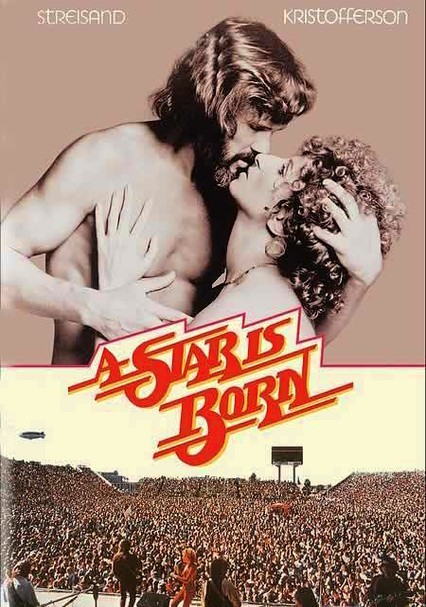
A Star Is Born-1976

A Star Is Born-1976

Director Frank Pierson

Starring Barbra Streisand, Kris Kristofferson

Scott’s Review #1,276

Reviewed July 13, 2022

Grade: B

Four incarnations of A Star Is Born: 1937, 1954, 1976, and 2018 have been created. Strangely enough, the most recent film starring Bradley Cooper and Lady Gaga is worlds above the others, though I haven’t yet seen the 1937 version.

The fourth time is rarely the charm in film remakes.

The focus of this review, however, is largely on the 1976 film starring Barbra Streisand and Kris Kristofferson. A hit movie at the time, and nonetheless despised by some, the film is perfectly fine, though it bears multiple rewatchings, and it’s inferior to the 2018 film.

There is no question about that.

Amazingly, it was nominated for four Academy Awards and deservedly won for Best Song. The other nominations are generous.

Watching A Star Is Born circa 2022, the 1976 rendition suffers severely from a dated tone, mostly because of the jaw-droppingly hideous perm hairdo worn by Streisand.

Did somebody think it was flattering in 1976?

The chemistry between Streisand and Kristofferson starts tepid but intensifies as the film plods along. The ending is underwhelming, and I expected more emotional pizazz than I was given, leaving me with almost a ‘so what’ reaction to a devastating turn of events.

Until that is, Barbra sings her heart out in one unbroken, gut-wrenching shot of seven or eight minutes.

For those unfamiliar, the story surrounds John Norman Howard (Kristofferson), a troubled rock star on the decline, frequently indulging in excessive drugs and drinking and trying to write hit records.

He drunkenly wanders into a club one night and watches aspiring singer Esther Hoffman (Streisand) perform, and is instantly smitten. The two begin dating, and soon John lets Esther take the spotlight during his concerts.

However, even as Esther finds fame and success with her singing, John continues his downward spiral.

Let’s face it. The main draw is who is playing the lead roles in a film like A Star Is Born. To make a love story work, there must be sizzling chemistry so that the audience is invested in the romance. Streisand commands the center stage, and her singing is the selling point.

Otherwise, Ms. Streisand suffers another bout of miscasting as she did in 1969’s Hello, Dolly. She’s too talented and established to be believable as an aspiring singer.

Her singing saves the film.

The gorgeous song “Evergreen” is quite a powerful moment and a great strength. Without it, the film would have felt lacking and mediocre.

The tune raises the overall experience a notch.

The chemistry is merely the warm-up act. It’s ho-hum until a smoldering bathtub scene occurs where John and Esther soap each other down and fall madly between the sheets for a night of passion.

It’s Streisand’s sexiest scene, and the romance takes off.

Back to Streisand’s vocals, the scene is preceded by a gorgeous songwriting sequence at the piano between John and Esther, as they craft a new song. As they collaborate, a connection and bond between the characters form.

Those are the romantic highlights.

Otherwise, the scene in which John becomes infatuated with Esther lacks appeal, since he is drinking and arguing with another patron and barely has time to notice her. This was thankfully changed in the 2018 version when John was mesmerized by the rising talent.

Additionally, when John invites Esther to his concert, and she watches from backstage, nothing happens. In the 2018 version, he drags her out to perform with him, and it’s a moment. 

Some films are best reviewed on their own merits, but what great fun to compare renditions of the same film, because why not?

The supporting characters have little to do except for an impressive turn by Gary Busey as John’s drug-pushing manager.

There is little reason to watch A Star Is Born (1976) more than once, or at most twice, to confirm that the film lacks a bit. It’s not terrible, but hardly memorable unless the desire is to giggle over an incredibly bad 1970s hairstyle by one of the greatest divas.

Then, move on to the outstanding Cooper/Gaga 2018 version.

Oscar Nominations: 1 win-Best Cinematography, Best Original Score, Best Original Song-“Evergreen” (won), Best Sound

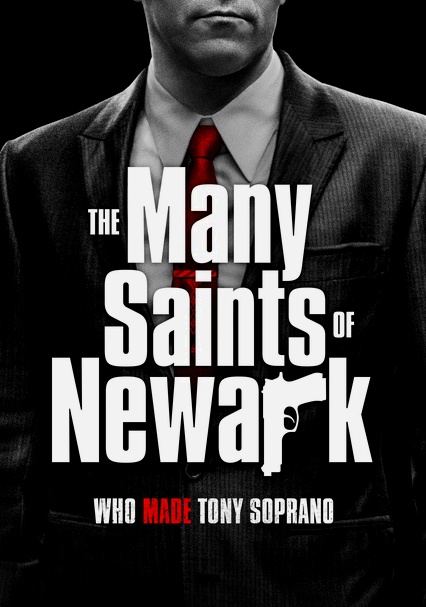
The Many Saints of Newark-2021

The Many Saints of Newark-2021

Director Alan Taylor

Starring Michael Gandolfini, Alessandro Nivola, Vera Farmiga

Scott’s Review #1,272

Reviewed July 4, 2022

Grade: B

Fans of the iconic HBO series The Sopranos, which ran from 1999 to 2007, have been chomping at the bit since the announcement of the soon-to-be-released The Many Saints of Newark (2021).

The film is a prequel to the series, centering on a young Tony Soprano. The kicker is that the actor who portrays Tony in the movie (Michael Gandolfini) is the real-life son of James Gandolfini, who played Tony in the series.

To add mustard to the on-paper perfect setup is that the film is written by David Chase, the writer and creator of The Sopranos. This ensures rich character development and dedication to the rich history.

What could go wrong?

The answer is that nothing is ‘wrong’ with The Many Saints of Newark. It’s not as brilliant as the series, and it seems unnecessary to have been made, especially after such a long gap.

While the film meanders at times, this gave me time to thoughtfully ruminate that perhaps The Many Saints of Newark would have been better as a limited series.

There are so many characters, and too few of them are familiar to audiences of The Sopranos. The two-hour and change running time couldn’t possibly provide enough time to get to know many of them, and I longed to.

On the upside, the film is shot exceptionally well, and the costumes, sets, and design of the 1960s and 1970s are incredible with superior accuracy.

It succeeds in transporting the audience to what Newark, New Jersey, was like during that time. Additionally, the film bears a striking resemblance to The Sopranos and is influenced by the legendary 1991 offering Goodfellas and other mafia-laden films.

Young Anthony Soprano (Gandolfini) is growing up in one of the most tumultuous eras in Newark’s history, as rival gangsters begin to challenge and desecrate the powerful DiMeo crime family.

As the year 1967 emerges and Newark is now an increasingly race-torn city, events take on a violent and historical tone.

Conflicted by the changing times is Tony’s Uncle Dickie (Alessandro Nivola), whom he idolizes much more than his own father, Johnny (Jon Bernthal), or domineering mother, Livia (Vera Farmiga).

The Many Saints of Newark depicts how Tony will eventually become the mob figure Tony Soprano!

Besides looking like his father, Gandolfini is not the best actor in the world, but he does his best with a small role billed as the lead. He hardly appears until thirty minutes before the film concludes, and he never carries the movie as one would expect the character to.

The real star of the film is Dickie (Nivola), who is terrific. The storyline follows his conflict and a damaged relationship with his father, wonderfully played by Ray Liotta, and his father’s horny wife, Giuseppina, who later becomes his mistress.

A shocking scene occurs when Dickie beats a significant character to death by repeatedly slamming their head against a steering wheel. The death will hold forever repercussions for Dickie, emotionally and otherwise.

The problem is that even though Dickie is a great character, the audience doesn’t know him, which is a significant issue.

Despite flaws with the marginally adequate casting, the uneven writing, and the focus on unfamiliar characters, there are other small treats to enjoy.

The film is peppered with familiar characters like Paulie, Big Pussy, and Carmella as younger people. Even though they don’t have much to do with the story, their mere presence feels like an old home week.

The racial tensions are another win, and actor Leslie Odon Jr. adds a winning formula to his character of Harold McBrayer, a black associate of Dickie’s.

I haven’t watched an episode of The Sopranos since it ended in 2007, and it may be advantageous to watch The Many Saints of Newark immediately after. Situations, history, and characters will be fresher in one’s mind, and it may result in more cohesiveness.

Or maybe the film shouldn’t have been made fourteen years after the series ended.

Regardless, The Many Saints of Newark (2021) is a pretty solid effort but completely underwhelming, especially when compared with such a groundbreaking television series.

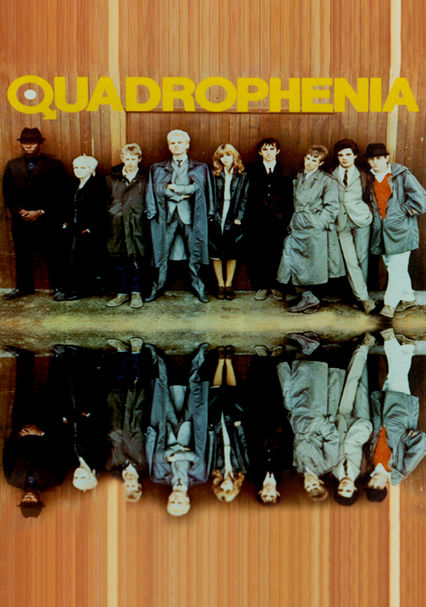
Quadrophenia-1979

Quadrophenia-1979

Director Franc Roddam

Starring Phil Daniels, Leslie Ash

Scott’s Review #1,269

Reviewed June 23, 2022

Grade: A-

Fans of the British rock band, The Who, will perhaps be mystified by the film Quadrophenia (1979). More specifically, The Who and fans of the exceptional, oddity-filled musical film Tommy (1975) will be surprised and somewhat disappointed that Quadrophenia is not patterned after Tommy.

I was uneasy when I realized that very few of the songs from the groundbreaking album of the same name would not be incorporated, and that the band itself would not be appearing.

But that apprehension was short-lived.

Instead, Quadrophenia, the film, quickly grasped me for the storyline alone and makes up for the lack of music with a gripping tale of teenage angst and conflict amid the streets of London.

Reportedly, the story is at least somewhat derived from the life of Who member Pete Townshend, and the concept behind Quadrophenia in the album is the same in the film.

To classify Quadrophenia as a musical or a musical drama (I decided to do both) is most generous, because it only underscores the fact that it almost isn’t either. But since it is based on the album and was co-written by Townsend, I decided to throw caution to the wind.

An insecure and angry London youth, Jimmy Cooper (Phil Daniels), escapes the dullness of his mailroom job and the chilliness of London and joins the Mods, a sharply dressed gang constantly feuding with their rivals, the Rockers.

When the Mods and Rockers clash in the coastal town of Brighton, England, it leads to trouble, and an encounter with the lovely Steph (Leslie Ash), whom Jimmy has become smitten with during grocery store encounters where she works.

Returning to London and his life of drudgery, Jimmy, who aspires to be like handsome and charismatic Mod leader Ace Face (Sting), becomes even more disillusioned and longs to return to Brighton.

Quadrophenia, the film, is exceptional because it captures the lead character’s mood perfectly, and the audience will undoubtedly respond in turn. He feels that his life is going nowhere, and most people can relate to being stuck in first gear or reverse, unable to get out of the mud.

In Jimmy’s mind, his parents are assholes, and the girl he longs for is out of his league and therefore out of reach. It’s typical adolescence 101. All he needs are the pimples and a bad hairstyle, and he encompasses what it feels like to be a teenager.

This may sound comical, but anyone who remembers their youth will undoubtedly find a glimmer of pain and panic.

Filmmaker Franc Roddam gets it right.

The best part of the film occurs in the final fifteen minutes when, finally and blessedly, superior songs by The Who commence, most notably the astounding Love, Reign O’er Me.

In addition to the brilliance of the actual song is the way it’s included. As the camera provides a bird’s-eye view of the stunning cliffs while Jimmy rides recklessly on his scooter, the scene is perilous, with hints of danger.

Will he crash and burn?

Finally, the scooter is seen crashing over the cliff top, where the film begins with Jimmy walking back against a sunset backdrop. It’s unclear what happens to Jimmy, and interpretation is possible.

It raised Quadrophenia from a very good film to an exceptional one.

Another treasured Who song, The Real Me, is included early on amongst the title credits. Other songs appear but are either shortened and/or different versions of what’s expected.

Sometimes fun and comic, other times showing the ugliness of gloomy London and the pains of growing up, Quadrophenia (1979) excels at reminding its audience what it’s like to be restless and unhappy.

Life usually changes for the better, but the film is an important reminder of feelings at that age.

War Horse-2011

War Horse-2011

Director Steven Spielberg

Starring Jeremy Irvine, Emily Watson

Scott’s Review #1,268

Reviewed June 19, 2022

Grade: B+

Director Steven Spielberg has an enormous catalog of films to rank and paw over. From his dabble into the horror genre with Jaws (1975) to fantastical melodramas like E.T. the Extraterrestrial (1982), his best work to me is the dark and powerful Schindler’s List made in 1993.

The recent remake of West Side Story (2021) is also brilliant.

My point in mentioning a few of his films is to compare them to War Horse (2011). The film is mediocre when comparing it to the great director’s filmography but there is no doubt the film is extremely well made, lavishly directed, with a wonderful and heartfelt storyline that will make suckers of most viewers.

The main result is that the film doesn’t resonate very much beyond the closing credits especially when matched against Spielberg’s other films.

War Horse did achieve several Oscar nominations mainly because it’s a Spielberg film after all but came away empty-handed. This is not surprising because it’s the type of film that is trying to get awards notice.

A successful Broadway adaptation preceded the film which was also based on a novel of the same name from 1982.

Albert (Jeremy Irvine) and his beloved horse, Joey, live on a farm in the British countryside. At the outbreak of World War I, Albert and Joey part ways after Albert’s father sells the horse to the British cavalry out of necessity.

Against the backdrop of the war, the horse begins a journey full of danger, joy, and sorrow, as he transforms everyone he meets along the way.

Meanwhile, Albert, unable to forget his friend, searches the battlefields of France to find Joey and bring him home.

It’s interesting to see the different settings and situations the horse gets into. From England to Germany to France, so many cultures are explored. Joey even bonds with another horse named Tophorn, a black stallion.

The film is as syrupy and sentimental as the summary suggests and that is okay. I fell for the story hook, line, and sinker. Seeing the film in a movie theater on the big screen was a wise choice because the sentimentality oozes to audiences leaving not a dry eye in the house.

Spielberg polishes and shines his film like nobody’s business utilizing all the lavish Hollywood trappings like superior editing, sound, and cinematography.

It’s a Hollywood film plus a hundred.

Despite a safe-leaning film Spielberg wisely does not skate over the ravages of war. Several characters that the horse encounters die tragically leaving him in a state of temporary peril.

Unsurprisingly, War Horse satisfies those audiences seeking a fairy tale ending but the fun is the journey we are taken on.

Actor Jeremy Irvine appearing in his big-screen film debut is exceptional and quite likable. War Horse may be his pinnacle film since he hasn’t done all that much since this meaty role.

The main takeaway is friendship and the bond between human beings and animals which cannot be severed. The mere thought of this brings a tear to my eye and Spielberg wisely manipulates the audience, whisking them away on a journey of forever friendship.

This is not exactly a bad thing.

The war backdrop is a fine addition and the exquisite beach scenes and the glossy images of the horse are fantastic. Hundreds of horses were used and clever editing provided rich and authentic texture.

War Horse (2011) is a film with all the standard characteristics of an old-style film that Hollywood used to make. The sum of the parts doesn’t add up to much beyond the experience and it’s not a film worth seeing over and over.

It’s a one-and-done affair but a lavish production of heartfelt ideals.

Oscar Nominations: Best Picture, Best Art Direction, Best Cinematography, Best Original Score, Best Sound Editing, Best Sound Mixing

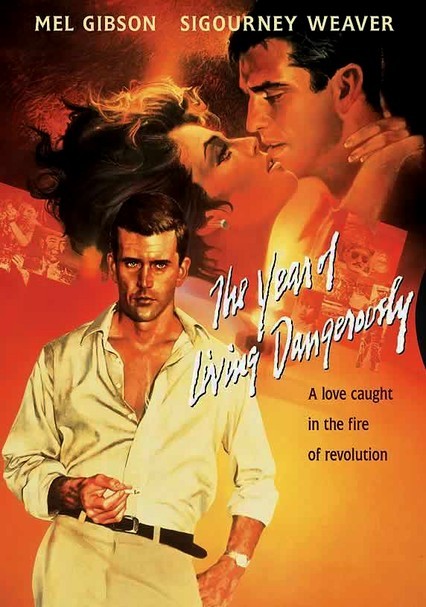
The Year of Living Dangerously-1982

The Year of Living Dangerously-1982

Director Peter Weir

Starring Mel Gibson, Sigourney Weaver, Linda Hunt

Scott’s Review #1,266

Reviewed June 16, 2022

Grade: B+

The Year of Living Dangerously (1982) is a solid political drama with enough intrigue, romance, and superior cinematography by Russell Boyd, to recommend it. It’s not an American film but Australian which gives it an authentic flavor even though events are primarily set in Indonesia.

If Mad Max (1979) didn’t make Mel Gibson a full-fledged pinup star The Year of Living Dangerously certainly did because it made him a romantic ladies’ man in addition to a rugged action star. He has a ton of good looks and charisma at this point in his career and arguably has never looked better.

One could say (okay, I flat out will) that Gibson is upstaged, unintentionally so, by stage actress Linda Hunt who gets the role of her life as a highly intelligent Chinese-Australian man suffering from dwarfism and key to the entire plot.

Hunt won the Academy Award for flipping gender norms on its head and making the film more progressive and memorable than it deserves to be. Her performance is timeless and rich in character flavor.

If not for Hunt and Gibson as the standouts the film is lost in the shuffle amongst the myriad of similar political dramas to emerge in the 1980s.

Missing (1982) starring Jack Lemmon and Sissy Spacek and Victory (1981) starring Sylvester Stallone are the films that The Year of Living Dangerously reminds me of.

Blow Out (1981) and No Way Out (1987) are two of the best political drama films to come out of the decade and all are assuredly influenced by All the President’s Men (1976) which is one of the best from the genre.

There are so many others that The Year of Living Dangerously feels forgotten and too similar to a standard formula to stand out. It also suffers at times from being either a romantic drama or a political thriller and it struggles to mesh the two satisfyingly.

After journalist Guy Hamilton (Gibson) arrives in Jakarta, Indonesia, he forms a friendship with dwarf photographer Billy Kwan (Hunt), through whom he meets British diplomat Jill Bryant (Sigourney Weaver).

Bryant falls in love with Hamilton, and she gives him key information about an approaching Communist uprising. As the city becomes more dangerous, Hamilton stays to pursue the story. However, he faces more threats as he gets closer to the government putting him and others passionate about the political turmoil, in great peril.

The romance between Guy and Jill is not bad but Weaver has had so many better roles than this one that it feels throwaway. She’s a smart lady who falls madly in love with Guy so easily that the formulaic context is obvious.

The movie poster makes the pair look like Rhett and Scarlett in Gone with the Wind (1939), unintentionally providing humor and ambiguity about what the film is going for.

It does best when it sticks to the political message.

The film is laden with foreign mystique and intrigue largely due to the exotic locale of Indonesia (the film was shot in the Phillippines which is a good double).

The plot is absorbing for what it is and the peril the journalists face is exciting. This parlays well with the real-life situation in which the film is based. In 1965, Indonesia was a hotbed of corruption and danger, and director, Peter Weir, managed to pull these sequences together well.

The main flaw is Weir doesn’t seem to know if he is crafting a political thriller or a romantic drama.

Back to the astounding Linda Hunt, the best scene of the film occurs when her character dies in Guy’s arms. Forget Weaver, the emotional core of the film belongs to Gibson and Hunt who have tremendous chemistry. The ambiguity of Billy, mostly because we know the gender of Hunt, is delicious.

In the end, the conclusion is mostly a happy one albeit predictable and the storyline feels unsatisfying.

A nice effort and relevant in 1982, The Year of Living Dangerously has energy and polish. It just feels too familiar and similar to other genre films to stand out, save for Linda Hunt and Mel Gibson.

Oscar Nominations: 1 win-Best Supporting Actress-Linda Hunt (won)

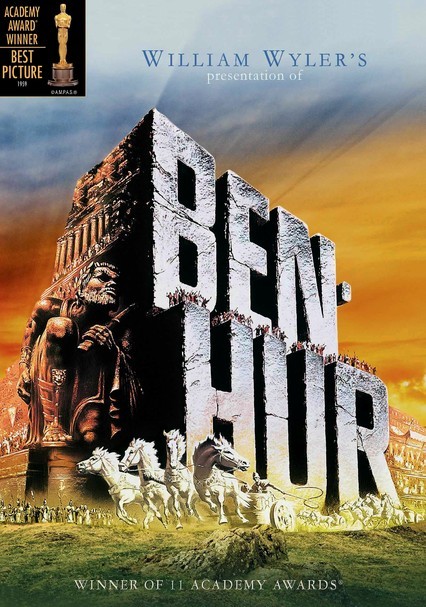
Ben-Hur-1959

Ben-Hur-1959

Director William Wyler

Starring Charlton Heston, Stephen Boyd, Haya Harareet

Scott’s Review #1,265

Reviewed June 9, 2022

Grade: A

One of the many pleasures of watching Ben-Hur (1959) is marveling at the extensive cinematic brilliance of the entire cast and crew.

Saying it’s a spectacle is not enough, and a must-see.

It had the largest budget ($15.175 million) and the most extensive sets built of any film produced at the time, allowing enormous spending to create one of cinema’s most lavish and grand films.

I shudder to think of how powerful it was to see this film on the large screen in a movie theater and the sheer mesmerizing quality it had on audiences.

I’ve anticipated viewing the film for years and finally did. Why I waited so long is beyond me. It does not disappoint, and the extravagance is immeasurable. I sat in awe at the many aspects of the film created before CGI, making it as impressive in 2022 as it was over sixty years ago.

Charlton Heston plays Judah, a Palestinian Jew who fought the Roman Empire during Christ’s time. He becomes involved in a vicious feud with his ambitious boyhood friend Messala (Stephen Boyd).

Their hatred culminates in an exciting yet vicious chariot race.

Condemned to life as an enslaved person, Judah swears vengeance against Messala. He escapes, later crossing paths with a gentle prophet named Jesus, who helps Judah save his family despite his death.

The film made a household name out of Heston and, other than its big budget, is legendary for its use of homoeroticism and an unspoken love story between two men who are at first the best of friends and who later become bitter rivals.

The film had several screenwriters, and if looking closely, some uneven storytelling is largely overlooked by the enormous spectacle of the finished product. Gore Vidal, who was openly gay, insisted on a homosexual interlude, conspicuously, of course, between Judah and Messala.

Giggle worthy to those in the know is that Boyd played his character as a spurned gay lover of Heston’s, with Heston unaware of the underlying romantic angle. This is rumored to be because Heston couldn’t handle it had he known.

This knowledge made me enjoy the subtext of the scenes between the two men even more than I should have.

To prove the above point, the written romance between Judah and Esther (Haya Harareet) lacks much chemistry, and I didn’t view them as brothers and sisters or good friends.

Other scenes of shimmering, muscular men sitting around in towels are further proof of Ben-Hur’s homoeroticism.

These juicy intrigue tidbits provide tingles, but the main draw is the famous chariot scene, which is as exciting as an action scene in a movie. The outdoor arena, packed with thousands of onlookers, provides a perfect setup for the round-and-round racetrack, as dozens of horses are whipped into a dizzying frenzy and go faster and faster.

The peril is prominent as numerous riders drop to their death, mangled into pieces from being stampeded by the horses.

Other sequences, like the leper colony and the crucifixion of Jesus, are beautiful and astounding.

Director William Wyler, a heavy hitter at the time with gems like Mrs. Miniver (1942) and The Best Years of Our Lives (1946), easily usurps those excellent films with Ben-Hur.

It won eleven of its twelve Oscar nominations and employed ten thousand extras!

Ben-Hur (1959) is the definition of an epic film. Expensive and expansive, the breathtaking chariot scene is one of the best I’ve ever seen in a film.

Not feeling dated, it’s a marvel of exquisiteness and magnificence.

Oscar Nominations: 11 wins-Best Picture (won), Best Director-William Wyler (won), Best Actor in a Leading Role-Charlton Heston (won), Best Actor in a Supporting Role-Hugh Griffith (won), Best Adapted Screenplay, Best Art Direction-Set Direction-Color (won), Best Cinematography (won), Best Costume Design-Color (won), Best Film Editing (won), Best Sound Recording (won), Best Music-Scoring of a Dramatic or Comedy Picture (won), Best Special Effects (won)

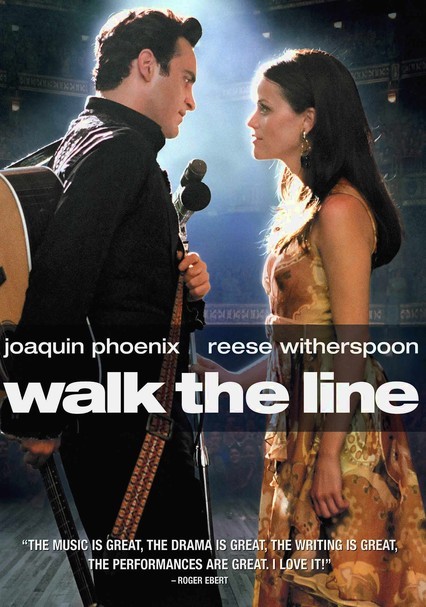
Walk the Line-2005

Walk the Line-2005

Director James Mangold

Starring Joaquin Phoenix, Reese Witherspoon

Scott’s Review #1,264

Reviewed June 8, 2022

Grade: A-

An example of exceptional casting, Joaquin Phoenix and Reese Witherspoon, flawlessly depict country music stars Johnny Cash and June Carter Cash, respectively. Both embody the real-life troubled stars, he more than she, and bring to life the biopic Walk the Line (2005).

Perturbing only slightly is Witherspoon’s win for Best Actress and Phoenix’s lack of a win for Best Actor. He deserved the win, up against the stiff competition, and she perhaps won because of a soft year in the Best Actress category.

I also think her performance teeters on a supporting turn but the decision was made to include her in the lead actress category.

But one could argue Oscar’s imbalances or missteps all day long.

Nonetheless, they both shine especially during any scenes they appear in together especially music-related. The chemistry is the main reason for the film’s success and recognition of the figures it portrays.

Walk the Line begins with the examination of the rise of country music legend Johnny Cash (Phoenix) beginning with his humble days as a boy growing up on the family farm in rural Arkansas, where he struggles with his father’s (Robert Patrick) anger and bullying.

As the years quickly go by, Cash ends up in Memphis, Tennessee., with his wife, Vivian (the underrated Ginnifer Goodwin), and breaks into the music scene after finding his successful country sound.

While on tour, Cash meets the love of his life, singer June Carter (Witherspoon), but Cash’s volatile lifestyle threatens to keep them apart.

The risk of rock star biographies is that they can suffer from relying too heavily on cliches or become a one-trick pony with a predictable ending. Towing the standard line is fine but a truly great film needs something to blow the viewers away.

The story is rather standard since we know the pair get together and face rough times, but the sweet spot is Phoenix and Witherspoon. They make the audience believe every nook and cranny of their relationship, warts and all.

Both actors reportedly sang, played their instruments, and seemed to live the lives of the country stars, all without help, giving Walk the Line much credibility.

Since Phoenix is a method actor this is unsurprising.

My only disappointment with the film is Witherspoon winding up with Oscar gold and Phoenix not. Thankfully, this would change with his win for the brutal portrayal of The Joker in Joker (2019).

I love how the beginning of Walk the Line starts with a legendary performance in Folsom State Prison in 1968. Events then backtrack to 1944 before finally culminating with present times again.

Director, James Mangold plays the safe route with the finale. Cash unsurprisingly performs “Ring of Fire” on stage and after the song, Cash invites June to a duet and stops in the middle and proposes.

June accepts and they share a passionate embrace on stage. Johnny and his father reconcile their relationship.

This is a warm and satisfying ending and rather refreshing after having to squirm through various scenes of Johnny’s drug abuse and scrapes with the law. Mangold also prominently features dark storylines like the loss of Johnny’s brother and his father’s abuse.

Hats off by the way to Robert Patrick for a powerful performance as Ray Cash.

Walk the Line (2005) is a Hollywood film but one made well and pleasing to the eyes and ears. It pays tribute to the legendary stars because of dynamic acting performances and duets that make one fall in love with the songs all over again.

Oscar Nominations: 1 win-Best Actor-Joaquin Phoenix, Best Actress-Reese Witherspoon (won), Best Costume Design, Best Film Editing, Best Sound Mixing

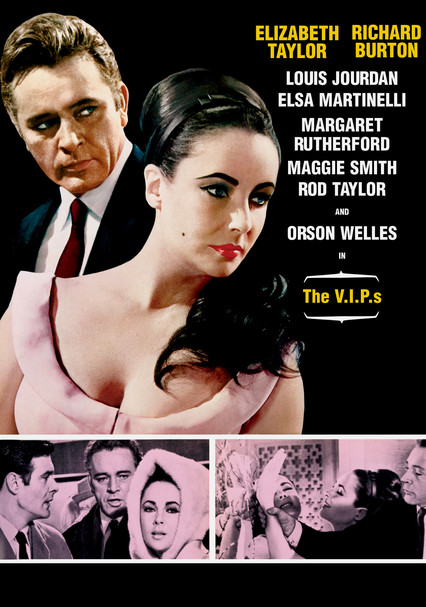
The V.I.P’s-1963

The V.I.P’s-1963

Director Anthony Asquith

Starring Elizabeth Taylor, Richard Burton, Louis Jourdan

Scott’s Review #1,263

Reviewed June 4, 2022

Grade: B+

The V.I.P.’s (1963) is a sweeping drama set against a foggy London airport. It’s a good film but hardly a masterpiece, as the trials and tribulations of the stranded passengers are explored and sometimes intersect in standard ways.

The film is formulaic and offers little surprise, but I enjoyed it and was entertained by the parade of stars shuffling through the vast airport.

Some stories are more interesting than others, and the film is in a soap opera style with glamorous and rich characters.

One wonders if The V.I.P. influenced the creation of the film Airport (1970) seven years later. The film is patterned after 1932’s Grand Hotel, both of which were distributed by Metro-Goldwyn-Mayer.

Real-life couple and Hollywood A-listers Elizabeth Taylor and Richard Burton star and are the main draws of the film.

The all-star cast also features Louis Jourdan, Maggie Smith, Rod Taylor, Orson Welles, and the scene-stealing Margaret Rutherford.

Inclement weather has delayed a flight from London’s fabulous Heathrow Airport to New York City. A cross-section of elite passengers (V.I.P.s) impatiently wait to board the plane as they experience various life crises in the airport.

The main storyline revolves around Frances (Taylor), a gorgeous woman who is fleeing a loveless marriage to her millionaire husband, Paul (Richard Burton), and is in love with the dashing Marc Champselle (Jourdan).

Supporting stories feature a dotty duchess (Rutherford) who has fallen on hard times and a handsome businessman (Rod Taylor) trying to thwart a hostile takeover.

At the same time, his secretary (Smith) lusts after him, and Gloria (Elsa Martinelli), an aspiring actress, and her money-grubbing producer, Max (Welles).

Despite the heavy-sounding plots, the film is not overly severe and provides comical moments in small doses, which secures the pacing and offsets too much doom and gloom.

Liz and Richard have big, soapy moments, and writer Terence Rattigan was reportedly inspired to write the screenplay by a real-life situation.

Actress Vivien Leigh was planning to leave her husband Laurence Olivier for another man but was delayed at Heathrow Airport.

How scandalous!

Nonetheless, Taylor stoically gives an acceptable performance as a conflicted actress in love with a man other than her husband. The setup plays out as tired as it sounds, except for the juicy reality that Taylor and Burton were married, providing the only interest.

Taylor and Burton have terrific chemistry, though she also does with Jourdan. Still, there is something uncompelling and unsatisfying about the story.

Shockingly, they are all upstaged by Rutherford, who steals the entire film, resulting in her surprising Best Supporting Actress victory. She may have won because of the Academy’s tendency to sometimes award an older actor with the prize for a lifetime body of work.

Her riveting story is my favorite as she desperately seeks a way to save her historic home.

The actress hits a home run, providing much-needed comic relief and the liveliest of performances. Her peril offsets her cleverness, and her performance is filled with heart.

Many critics hastily insisted that Rutherford was the only reason to see The V.I.P.’s. Personally, the combination of an airport, peril, and big stars was more than enough to have me hooked.

The only addition that might have made the film better was an enormous fire or a hijacking crisis.

The V.I.P.’s (1963) will only appeal to fans of Taylor and Burton or those seeking something sudsy. Otherwise, the film is not too well remembered.

Oscar Nominations: 1 win-Best Supporting Actress-Margaret Rutherford (won)

Downton Abbey: A New Era-2022

Downton Abbey: A New Era-2022

Director Simon Curtis

Starring Hugh Bonneville, Michelle Dockery, Maggie Smith

Scott’s Review #1,261

Reviewed May 30, 2022

Grade: B+

Following the success of the 2019 film adaptation of the television series Downton Abbey, which aired on PBS from 2010 to 2015, a sequel was produced. This was unsurprising, given that the fan-favorite was both critically and commercially well-received.

Downton Abbey: A New Era (2022) will undoubtedly please fans of the series and may even attract new audiences who have not yet been exposed to it.

The trials and tribulations of the Crawleys, their friends, and staff are a treat as new situations and drama arise for the group to navigate, discussed over tea and crumpets.

The film is like visiting a cherished friend after a long absence.

Award-winning creator Julian Fellowes is thankfully still involved and was given screenwriting credit. This means that the formula is still the same, and nobody has tried to reinvent the wheel or veer the characters off course.

The year is 1928.

The main action centers around the sudden news that grand dame Violet Crawley, Dowager Countess of Grantham (Maggie Smith), has inherited a villa in the south of France from a former suitor who has just died. Some of the family must travel to France and figure out the mystery.

Secondly, A film production company requests to use Downton for a silent film. Robert (Hugh Bonneville) and retired butler Mr. Carson (Jim Carter) disapprove. Still, Robert’s eldest daughter and estate manager, Lady Mary Talbot (Michelle Dockery), says the income would cover the cost of replacing Downton’s leaking roof.

The household staff is eager to see the film stars and scrambles to make things as lovely as possible for the incoming actors.

The terrific thing about Downton Abbey: A New Era is that nearly all of the almost thirty principal characters are given some storyline.

Plus, there are a handful of new characters to give screen time to.

Surprisingly, as in Downton Abbey (2019), the main ‘super couple’, servants Anna (Joanne Froggatt) and Bates (Brendan Coyle) are given almost nothing to do. They are seen, but their child is not, and some drama would have been nice. Perhaps a mysterious illness or a malady for the couple to endure?

Maybe next time.

Still, everyone else is represented, and the feeling for viewers is warm and fuzzy.

Below are some highlights.

Robert frets at the possibility that he may be half French and his birth a result of a tryst between Violet and the villa owner. Mary’s absent husband allows for a flirtation to develop between her and a member of the film.

Gay butler Thomas (Robert James-Collier) finds himself pursued by the film’s big star.

Cora (Elizabeth McGovern) keeps a health secret, while a bedridden Violet’s health declines in bed. Newlywed servants Daisy (Sophie McShera) and Andy (Michael Fox) scheme to unite his lonely father with the cook, Mrs. Patmore (Lesley Nicol).

Finally, Miss Baxter (Raquel Cassidy) eagerly awaits a marriage proposal from nervous Mr. Molesley (Kevin Doyle).

In addition, new characters, such as actors Guy Dexter (Dominic West), Myrna Dalgleish (Laura Haddock), and director Jack Barber (Hugh Dancy), are instant fan favorites, immediately connecting with the mainstay characters.

This is ingenious writing that can serve as a valuable lesson for any soap opera writer. Always write new characters by sharing stories with existing ones rather than writing in silos. It works wonders.

The historical relevance of approaching the 1930s is not missed, as ‘talkies’ taking over the film industry meant the kiss of death for most silent film stars.

The popular LGBTQ+ storyline is wonderfully written. A gay man in 1928 was doomed to either a life of hiding or one of loneliness, and one character wisely references a ‘cruel world’ regarding the viewpoint of the lifestyle.

Times were not changing just yet.

I am crossing my fingers that a third Downton Abbey film will be made. The characters and storylines remain vibrant, especially as the timeline progresses into the 1930s and the dire 1940s, when World War II breaks out.

Downton Abbey: A New Era (2022) proves that in the COVID-19 era, a trusted old friend is needed tremendously, even on the silver screen.

Dear Evan Hansen-2021

Dear Evan Hansen-2021

Director Stephen Chbosky

Starring Ben Platt, Kaitlyn Dever, Amy Adams

Scott’s Review #1,258

Reviewed May 25, 2022

Grade: A-

From the very first scene, Dear Evan Hansen (2021) grabbed me by the collar and never let me go. Providing an emotional wallop that mixes perfectly with meaningful and catchy pop songs, the film is one that nearly everyone can relate to.

The oftentimes painful world of teenage angst is the central storyline, and the dangerous and unfortunately too timely pandemic of mental illness is examined in heartwrenching form.

Dear Evan Hansen has a relevance that I found to be powerful and profound, leaving me not soon forgetful of the experience.

I had never seen the hugely popular Broadway stage version, so I only had a limited understanding of what the story was about going in.

Still, as much as the subject matter is of great importance, the film’s follow-through is what is tremendous and emotional, with superb acting all around.

Tony, Grammy, and Emmy Award winner Ben Platt reprises his stage role as the anxious, isolated high schooler named Evan Hansen who craves companionship and understanding.

He suffers the same quandary that many fellow teenagers face in a world rendered impersonal and heartless. He tries to survive the pressures and the chaos of the social-media age.

Lonely, he meets a young man named Connor Murphy (Colton Ryan) who is as wounded as Evan is. They have an odd first (and only) exchange after which Connor steals a therapy assignment of Evan’s, a letter to himself.

Soon after, Connor commits suicide, and his parents, played by Amy Adams and Danny Pino, assume that the boys were best friends.

Evan lies about the events to spare Connor’s parents, which ultimately leads to events spiraling out of control.

I’m well aware of the outpouring of negative reviews that have been hurled at the film, and I don’t understand nor agree with any of them.

My hunch is that the stage version may have been even more potent because it’s a live production and the raw emotion is right there, but the film does right by it.

Sure, Platt looks older than a teenager. The actor was twenty-seven years old when he filmed Dear Evan Hansen and a mere twenty-two or so when it appeared on Broadway, but so what? With talent as superior as he is, why cast a movie star?

I didn’t hear anyone complain when Olivia Newton-John played the iconic role of Sandy, a seventeen-year-old in Grease (1978) at the ripe old age of thirty.

Sometimes a suspension of disbelief is required.

Platt is a terrific casting choice and encompasses the role of Evan completely. He is shockingly good in dramatic scenes or when he comically fumbles over his words. His dramatic voice perfectly infuses the production’s most recognizable number You Will Be Found.

Besides, there are big stars in Dear Evan Hansen. Amy Adams plays the emotionally drained but hopeful Cynthia Murphy, blessed with affluence at the price of losing a son. Julianne Moore plays the haggard nurse and financially struggling mother of Evan.

Both are fabulous.

The film is directed by Stephen Chbosky, who is responsible for the terrific and sorely underappreciated film adaptation of the novel The Perks of Being a Wallflower (2012), which he also wrote. He knows how to tell a coming-of-age story.

There are a couple of foul balls to be aware of, but the emotion to be felt far exceeds these pesky matters.

The film occasionally overplays its casting with the inclusion of a few stock characters, like the Indian technology wizard and the perky, straight-A student with the same problems as everyone else. Still, the characters don’t have enough to do to make them bothersome.

The chemistry between Platt and Kaitlyn Dever as the romantic interest is only tepid, but I didn’t watch this film for the teen romance.

I could not disagree with the torrent of negative reviews for Dear Evan Hansen (2021) more, and urge anyone reading this review to take in the film and be prepared for a tearjerker that feels authentic and justified in its existence.

The Sand Pebbles-1966

The Sand Pebbles-1966

Director Robert Wise

Starring Steve McQueen, Candice Bergen, Richard Attenborough

Scott’s Review #1,257

Reviewed May 18, 2022

Grade: A-

The 1950s and 1960s can collectively be defined as the two decades representing the grandiose film epic, instantly recognizable cinematic sprawling, lengthy efforts, frequently encompassing a time.

The Sand Pebbles (1966) safely falls into this category, mainly because it’s a war film and one minute shy of a three-hour extravaganza.

The film was a critical and commercial success at its release and received several Academy Award nominations (see more below). Still, despite being a fantastic watch, it is not remembered as well as one might expect.

Something makes the film fly under the radar, and I’m unsure why. It might be that an anti-war message film was not as typical as it would become. In 1966, a United States movement had only begun to question the government and war in general.

It wasn’t fantastic or acceptable yet.

Robert Anderson adapted the screenplay from Richard McKenna’s 1962 novel, which is very similar.

Robert Wise, famous for directing the memorable The Sound of Music just one year prior in 1965 and the legendary West Side Story in 1961, is at the helm, resulting in superior direction, especially in the exterior and lush, oceanic sequences.

Star Steve McQueen was at the height of popularity when this film was made, which undoubtedly helped get butts in the seats to drool over the blue-eyed actor in his Navy attire.

The Sand Pebbles has a heavier touch and promotes an anti-war viewpoint from its main character. Therefore, it has a solid message that goes with the expected aspects of a war film.

It’s similar to The Bridge on the River Kwai (1957), made nearly a decade earlier.

The Asian locales and the parallels with the controversial Vietnam conflict of the time will not be lost on the viewer.

We go back to 1926 when the USS San Pablo was patrolling the Yangtze River during the clashes between Chiang Kai-shek’s communists and Chinese warlords.

Eight-year veteran machinist Jake Holman (McQueen), new to the self-named “sand pebbles” crew, immediately draws deep suspicion due to his independent streak.

Ordered to protect Americans, including schoolteacher Shirley Eckhart (Candice Bergen), Jake and the gunboat crew are unwittingly drawn into a bitter nationalistic feud that holds grim consequences.

Besides his unforgettable turn in The Getaway in 1972, the role is McQueen’s finest, and I’m not the biggest fan of his, nor do I feel he is the most outstanding actor.

He has tremendous material to work with in The Sand Pebbles and hits all cylinders throughout. The character is rootable and relatable to the audience.

The film also presents a fascinating look at Navy life with the camaraderie and depth of the supporting characters. There is comedy and drama, and the additions of Richard Attenborough and Richard Crenna are stellar.

Naturally, Bergen is McQueen’s romantic love interest, as Shirley and Jake have fledging feelings for each other.

Though the film ends abruptly, there is enough pain, death, and confusion to leave the viewer thinking afterward, and I always champion that aspect of the film.

The Sand Pebbles (1966) is an underrated production that simmers beneath some other classics from the same decade but is a terrific watch for many reasons. Despite being extremely timely, it has an old-world feel, representing a foray into the dangerous early 1970s cinema history that is yet to come.

Oscar Nominations: Best Picture, Best Actor-Steve McQueen, Best Supporting Actor-Mako, Best Art Direction-Color, Best Cinematography-Color, Best Film Editing, Best Original Music Score, Best Sound

The Queen-2006

The Queen-2006

Director Stephen Frears

Starring Helen Mirren, Michael Sheen

Scott’s Review #1,253

Reviewed May 8, 2022

Grade: A

Before the Netflix series, The Crown (2016-2023), loudly stomped into existence and took the world on a historical journey through the trials and tribulations of British royalty there was The Queen (2006).

Starring Helen Mirren, the film is a quiet telling of the life and times of Queen Elizabeth II, especially immediately after the death of Princess Diana and the conflict and contention that took place.

Ironically, The Crown was created and primarily written by Peter Morgan, who also wrote The Queen. He created The Crown because of The Queen so there is an instant correlation between the two brilliant projects and the handwriting is very similar.

Stephen Frears, who also directed Judi Dench to an Oscar nomination for Philomena (2013) is at the helm and won himself an Oscar nomination for directing as well as scoring a win for Mirren.

The Queen is a terrific film across the board and Mirren is phenomenal in her portrayal of the grand dame. She cleverly fuses stiffness and stoicism with subtle warmth and humanity few see from the queen, at least publicly.

Layers of complexity are provided to an already mysterious public figure.

Following the death of Princess Diana in a fiery auto accident, Great Britain’s Queen Elizabeth II (Mirren) and Prime Minister Tony Blair (Michael Sheen) struggled to reach a compromise on how the royal family should publicly respond to the tragedy.

The family’s need for privacy and the public’s demand for an outward show of mourning are in the balance. This causes mayhem and drama behind the sacred walls of Buckingham Palace.

The acting of Mirren and the direction are what make The Queen pure magic and a standout among the many royalty-themed films to emerge since the beginning of motion pictures.

First of all, Mirren looks like the part of Queen Elizabeth II and this goes way beyond wearing glasses and a sweater or having the same hairdo. She encompasses the role and this is no small feat.

The mannerisms, the speech patterns, and the lowkey attitude are the amazing nuances that the actress can somehow channel.

It feels more than Mirren dressing up like royalty and showing up scene after scene. She does something much more with the unspoken looks and inner workings of the queen that become apparent to the viewer.

Frears chooses to include many closeups of characters, mainly of Mirren, which only encircles what each character is thinking and pondering.

The film is very subdued with a lovely musical score adding texture and appeal to each frame. The inclusion of archival footage is powerful realism.

Merely nine years after the real-life death of the uber-popular Diana the event was still so fresh in the minds of viewers that releasing The Queen at this time was a stroke of genius.

It’s no secret that while Queen Elizabeth II is respected she is worlds away from wildly popular Diana and emits a coolness that baffles the public.

Thanks to Mirren, the public gets a glimpse into the heart and soul of a mysterious person and that’s a good feeling indeed.

However, Mirren couldn’t have delivered fully if not for the talents of Michael Sheen as Prime Minister Tony Blair. Generations apart and with differing views they spar and respect each other, slowly forging a friendship of sorts.

The Queen (2006) hardly needs bombs, bombast, or quick editing to get its point across, though speaking of editing, a fantastic job of it with family scenes of Diana.

The film lures the viewer into its web and makes them feel like an insider amongst the walls of royalty.

Oscar Nominations: 1 win-Best Picture, Best Director-Stephen Frears, Best Actress-Helen Mirren (won), Best Original Screenplay, Best Costume Design, Best Original Score

Death on the Nile-2022

Death on the Nile-2022

Director Kenneth Branagh

Starring Armie Hammer, Tom Bateman, Gal Gadot

Scott’s Review #1,245

Reviewed April 15, 2022

Grade: B+

Death on the Nile (2022) is a modern remake of the 1978 thriller of the same name, which in turn is based on Agatha Christie’s famous 1937 novel, one of many stories the author wrote.

I love a good whodunit, and the fact that I already knew the outcome from seeing the original film did not lessen the entertainment and suspense that befell me.

It only made me salivate with anticipation about how the new incarnation would handle the inevitable big reveal during the film’s final chapter.

As the suspects are locked in a boat, bar one character boldly announces that the murderer is in this room and will be unmasked.

Death on the Nile is a meat-and-potatoes offering peppered with glamour.

Similar to the remake of Murder on the Orient Express (2017), Hercule Poirot (Kenneth Branagh) is once again enshrouded by mysterious folks with money to burn and secrets to hide. One of them has murdered a wealthy young heiress with her own set of secrets, and Poirot must quiz and entrap the perpetrators aboard a sailing vessel.

Or could there be more than one murderer?

The setting of mystical Egypt and the luminous Nile River in northern Africa puts the players amid gorgeous locales. This only enhances the juiciness and the appetite for a good, solid murder mystery.

Our hero’s lush Egyptian vacation aboard a glamorous river steamboat turns into a deadly search for a murderer when a picture-perfect couple’s idyllic honeymoon is cut short by the killing of one of them.

It turns out that almost everyone aboard has a reason to want her dead. Naturally.

Set against an epic landscape of sweeping desert vistas and the majestic Giza pyramids, Poirot peels back the onion of the lives of his fellow vacationers. He discovers jealousy and deceit as he gets to know the wealthy cosmopolitan travelers.

The trip includes the honeymooners, Simon and Linnet, played by Armie Hammer and Gal Gadot, Bouc (Tom Bateman), a long-time friend of Poirot’s, Euphemia (Anette Bening), a renowned painter and Bouc’s mother, Salome (Sophie Okonedo), a black jazz singer, and her niece Rosie (Letitia Wright), Linnet’s maid, Linnet’s godmother, and her companion, and a doctor who used to date Linnet.

It would seem as if all roads lead to Linnet, which it does since she is the character who suffers her fateful demise. What is key is that every character has a connection to her, making the puzzle all the more intriguing and interesting to figure out.

Branagh, coming directly from his Oscar-winning film Belfast (2022), deserves the most credit because he not only stars in but directs the movie as he did with Murder on the Orient Express.

Michael Green once again creates the screenplay. The consistency is crucial and satisfying to the overall product, and the two films can be watched back-to-back with ease.

There is trust that the anticipated enjoyment will be fulfilled, and for me, it was.

Death on the Nile is not high art but merely slick entertainment done quite well. There is considerable manipulation for the audience to endure, and the setup of the potential suspects and the victim’s background is presented directly to the viewer.

This was welcomed.

I didn’t mind the implausibility of every character having reason to kill the heiress, nor did I mind a mystery character racing around the ship, causing mayhem, then changing into formal evening wear in less than thirty seconds flat.

The numerous plot devices are to be expected from a film like Death on the Nile, and I happily and willingly fell for them hook, line, and sinker. The wealth of most of the characters is a splendid intrigue and only adds to the enjoyment.

Considering the time is the 1930s, a same-sex relationship and a brewing romance between the caucasian Poirot and the black Salome are fabulous additions.

Rumor has it that there will be another production of an Agatha Christie novel adaptation directed by and starring Branagh, and I can’t wait for this. He has dusted off the old whodunit storyline and updated it with a spectacle about crimes of passion that feels fresh.

The result is a modernized Death on the Nile (2022) brimming with fun and pleasure while never taking itself too seriously.

House of Gucci-2021

House of Gucci-2021

Director Ridley Scott

Starring Lady Gaga, Adam Driver, Jared Leto

Scott’s Review #1,244

Reviewed April 10, 2022

Grade: B+

Upon the release of 2021’s House of Gucci, much award buzz surrounded the film, especially for Lady Gaga’s performance. A story of a once lofty Italian fashion family of the 1970s, 80s, and 90s seemed a prime winner on many levels.

Sadly, reviews quickly turned mediocre or downright lethal as more and more people saw the film, reducing it to a meager one lonely Oscar nomination in a category viewed as minor.

The accolades were expected to be much loftier, but the buzz was tarnished very quickly. Critics largely dismissed the work as too campy and melodramatic for its own good but did praise the acting. Some ripped it to shreds entirely.

Mainstream audiences were a bit kinder than the average critic.

While I recognize the criticisms and even agree with some, mostly its uneven pacing, I find House of Gucci a resounding guilty pleasure. The main appeal is Lady Gaga, who takes charge, playing an unlikable manipulator whom you shouldn’t root for but will anyway.

Here is a brief synopsis for those not familiar with the real-life story of the rise and crumble of the Gucci empire.

The shocking true story of the family behind the Italian fashion empire inspires the film. When Patrizia Reggiani (Lady Gaga), an outsider from humble beginnings, marries Maurizio Gucci and all his wealth, her unbridled ambition and manipulations tear the once close-knit family apart.

The family legacy quickly unravels and triggers a domino effect of betrayal, decadence, revenge, and murder.

With a cast including heavyweights such as Al Pacino, Jeremy Irons, Salma Hayek, and Jared Leto, there is much to focus on in the acting department. Besides Hayek, who plays a psychic, all contain Gucci blood.

All are terrific except Leto, who suffers from overreaching for the stars in terms of the emphasis he puts on being a red-blooded Italian man. He overacts.

Notably, all the principal cast members are American, not Italian, which is why I found their language, culture, and mannerisms to be authentic, a testament to their talent.

The fact that the legendary Ridley Scott directs House of Gucci is a surprise. Known for either science fiction or different sorts of offerings like Alien (1979), Blade Runner (1982), and Gladiator (2001), House of Gucci feels like a stretch for the seasoned director by way of subject matter.

Perhaps he phoned it in? There is little that is a cinematic spectacle in House of Gucci and its straight-ahead drama. Some argue it’s shot like a television movie. While I disagree that it’s as dismal as all that, I do get the point.

From the camera lens, the film is saved tremendously by the juicy and lavish sequences that transpire in Milan, Italy. The decadence of the 1980s is never more apparent than amid the fashion capital of the world.

With luxurious estates, nightclubs, and enough exterior scenes to satisfy anyone who has been to Milan (I have!), it’s enough to save most viewers from the ho-hum story.

I’ve mentioned earlier how House of Gucci feels uneven. It’s hard to pinpoint precisely, but there’s a feeling of a gaping hole or something missing from the film. Sure, there is enough drama and schemes to make television’s The Bachelor proud, but there is a glaring misfire throughout.

I would have assured that Lady Gaga made the Best Actress Oscar list, but sadly, this was not to be. This is too bad because she gives it her all as badass Patrizia. She is a woman not to be fucked with, and when she turns the tables on her husband and the love of her life, he had better watch out.

It’s a shame that all the dots didn’t connect for House of Gucci (2021).

With such a terrific cast, juicy locales, and a respected director, the film could have been a contender. Instead, it’s a pretty good film that does not need to be watched a second time.

Oscar Nominations: Best Makeup and Hairstyling