Tag Archives: 2019 Films

The Farewell-2019

The Farewell-2019

Director Lulu Wang

Starring  Awkwafina, Tzi Ma

Scott’s Review #927
Reviewed August 6, 2019

Grade: A-

Any film with a dark premise, such as The Farewell (2019), runs the risk of resulting in a bleak and depressing outcome, but the film is anything but a downer.

Surprisingly, to many, the film is classified as both a drama and a comedy, with snippets of humor and sadness prevalent throughout.

Met with widespread critical acclaim, the film successfully furthers the much-needed presence of quality Asian representation in modern cinema well into the twenty-first century.

Young upstart/comedienne Awkwafina, memorable for her humorous turn in Crazy Rich Asians (2018), returns to the big screen in a more subdued role, crafting a passionate and dramatic character that strongly leads the charge in an ensemble project exploring the family dynamic.

The film succeeds remarkably as a multi-generational glimpse into humanity, although it occasionally suffers from a slow pace.

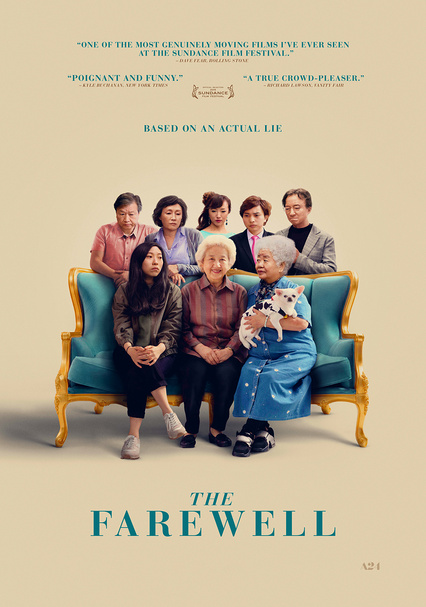
A thirty-something struggling writer, Billi (Awkwafina), lives in New York City near her parents, all of whom are ex-pats from China. Billi is particularly close with her grandmother, Nai Nai (Zhao Shuzhen), who still resides in her birth land as they speak regularly via telephone.

When Billi is informed that her grandmother has terminal lung cancer and has weeks to live, the entire family reunites and decides to hold a mock wedding as an excuse to be all together.

The family makes the decision not to tell Nai Nai she is dying, preferring to let her live out her days in happiness rather than fear.

Awkwafina is the main draw of the film, and much of the action is told from her point of view.

One wonders if perhaps director Lulu Wang drew from personal experience when she wrote the screenplay. The audience is not aware of Billi’s sexuality, nor is it relevant to the film, but the vagueness was noticeable.

She does not date, nor does she look particularly interested in men. She does her laundry at her parents’ apartment and attempts, but fails, to secure a prestigious writing scholarship.

The supporting characters add tremendous depth, making the film more than just Billi’s story, and provide unique perspectives from her mother, father, and aunt, each of whom holds a distinct viewpoint about Nai Nai’s illness.

I adore this technique in rich storytelling, as it not only fleshed out secondary characters but also provides interesting ideas.  Nai Nai is not written as a doting old lady nor a victim; she is strong, witty, and full of life.

Shuzhen, unknown to me before viewing this film, brings tremendous poise to a crucial role, portraying it perfectly.

The Farewell is a quiet film that combines both comic and dramatic elements, often within the same scene, thereby providing relief from the dour subject matter.

Wang strikes the balance just right, ensuring the film does not become too heavy.

A hysterical bowing marathon ensues as the entourage decides to visit the grandfather’s grave, preparing the essentials to comfort him during the afterlife.

In stark contrast to the physical comedy, not a dry eye can be found when Billi and her parents depart China by taxi for the airport. Nai Nai tearfully waves goodbye to them, not knowing that it will undoubtedly be her final goodbye.

Any audience member with an elderly relative whom they seldom see will be deeply moved by this poignant scene. Questions such as “Would you keep a loved one unaware of a terminal disease?” will gnaw at the viewer, the central theme of the story.

Influenced by the buzz and word of mouth surrounding the film, I yearned for a single, powerful, emotional scene, but one clearly defined, bombastic moment never materialized.

Instead, the film offers small tidbits, careful not to overpower the audience or risk making the movie too sentimental or overwrought. I still think a pivotal teary scene might have been added for good measure.

A scene where Billi breaks down in front of her parents was adequate, but never catapulted the film over the top.

The Farewell (2019) is a fantastic film rich with emotion and importance.

Like Black Panther (2017), which brought Black characters to the forefront of the mainstream film genre, this film provides exposure to the Asian population, typically relegated to stereotypical roles such as doctors or Chinese takeout owners.

Wang delights with an independent film steamrolling itself across Middle America.

Independent Spirit Award Nominations: 2 wins-Best Feature (won), Best Supporting Female- Zhao Shu-zhen (won)

Gloria Bell-2019

Gloria Bell-2019

Director Sebastian Lelio

Starring Julianne Moore, John Turturro

Scott’s Review #924

Reviewed July 29, 2019

Grade: B+

An English remake of the successful 2013 Chilean film, titled Gloria, Gloria Bell (2019) stars Julianne Moore, and the setting is relocated to Los Angeles.

The film is directed by Sebastian Lelio, fresh off a Best Foreign Language Film win for A Fantastic Woman (2017), and both movies contain similar themes of oppression and loneliness.

Preferring the original by only a hair, Gloria Bell is nonetheless a worthy offering with Moore perfectly cast in the title role.

Middle-aged divorcee Gloria Bell (Moore) resides in Los Angeles, working an office job of some respectability, but is unfulfilled. She spends many nights at a nightclub, where she is considered a regular.

The club caters to middle-aged singles who dance and drink while looking for love. When she meets Arnold (John Turturro) one evening and they share a night of passion, the pair begin dating.

However, Gloria realizes that he still supports his ex-wife and grown daughters, which limits his time and commitment to her, leaving her frustrated.

Moore is honest and understated in her performance, and the highlight of the film.

With another casting choice, the character might not have worked so well. She is full of life, singing in her car, attending laughter therapy, and smoking pot in her apartment. She has a warm yet limited relationship with her millennial kids and her ex-husband and his new wife.

Moore gives the character an earnestness and likability that work and get the audience on her side during her trials and tribulations.

This is not to say that Gloria doesn’t occasionally frustrate the audience.

After inviting Arnold to meet the whole crew over dinner and wine at her son’s house, what begins as a meet-and-greet quickly turns into a reminiscing trip down memory lane and whimsical looks at Gloria and her ex’s wedding pictures.

Her disregard for Arnold’s feelings is disappointing, but there is no bad intention behind it.

Gloria has baggage and is caught up in the moment, simply reliving a happier time at the expense of the current moment.

Arnold has his demons and is both likable and unlikable to the audience. Tending to bail on Gloria when either his family requires his assistance or he feels left out, he hardly exhibits grown man behavior or anyone Gloria would want to date.

The first red flag is his confession of being enamored of Gloria over their first dinner date. From there, his on-again-off-again presence makes him the odd man out. Lelio intends to make Gloria the sympathetic one. It’s her movie after all.

Watching A Fantastic Woman sequentially is a wise idea. Numerous comparisons are apparent, beginning with the feelings shared by both central characters.

Both are searching for happiness, but are unsure of how to attain it, especially given that they once had it and it was taken away from them.

Scenes of both characters driving in their cars and singing songs are included, and the look of both films is the same.

Very few comparisons or contrasts can be made between Gloria of 2013 and Gloria Bell of 2019, as both are above average, except that the character is slightly more vivacious in the former than in the latter.

This could be attributed to the Chilean and South American free-thinking and sexual openness compared to the more reserved American way of thinking, but this is merely a suggestion.

It is interesting to note how Lelio remade his film only six years later, rather than another director putting their stamp on it.

Gloria Bell (2019) paints a vivid portrait of a modern woman dealt a bad hand who struggles to find happiness and fulfillment in any way she knows how.

Thanks in large part to Moore’s portrayal and filling the character with kindness and care, she wins over the audience. The character is written as intelligent and interesting, and not desperate in any way for a man; he needs to be the right man.

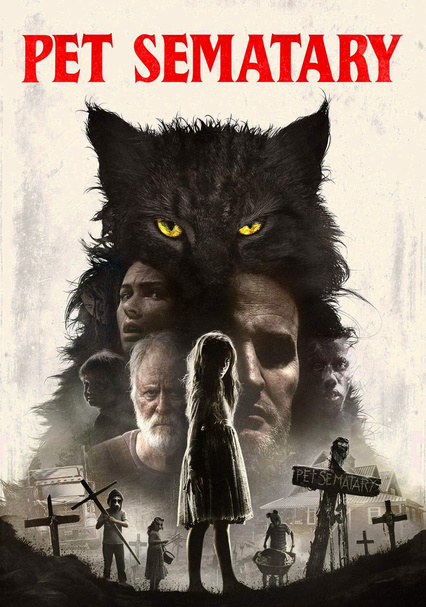
Pet Sematary-2019

Pet Sematary-2019

Director Kevin Kolsch, Dennis Widmyer

Starring Jason Clarke, John Lithgow

Scott’s Review #923

Reviewed July 26, 2019

Grade: B

In the age of movie remakes, especially within the horror genre, it was only a matter of time before Pet Sematary, first released in 1989, would resurface with its fangs bared.

Paramount Pictures presents Pet Sematary (2019), a by-the-numbers affair that’s perfect for viewing on a late Saturday night.

It is an improvement over the disappointing ’89 version, but hardly recreates the genre, feeling more like a remake than offering much in the way of new storytelling or frightening effects.

The conclusion is somewhat disappointing, offering a hybrid of slasher and zombie genres.

To compare either film to the chilling and suspenseful page-turner written by esteemed novelist Stephen King would be ridiculous. The book is a quick read that will leave its reader breathless and scared, perhaps even fearing their pets, so the bar is set way too high for a cinematic offering to match up with.

The book delves much more into the feelings and emotions of all the principal characters, something that is severely limited in the film.

The Creed family, consisting of Louis (Jason Clarke), Rachel (Amy Seimetz), and their children, Ellie and Gage, relocates from bustling Boston, Massachusetts, to rural Maine, allowing Louis the opportunity to practice medicine at a university hospital.

Their friendly neighbor Jud Crandall (John Lithgow) befriends Ellie after she stumbles across a funeral procession of children taking a deceased dog to a cemetery called Pet Sematary.

He warns her and Rachel that the woods are dangerous. When tragedy strikes the family, the cemetery unleashes a supernatural force contained in an ancient burial ground that sits beside it.

The first half of the film is superior to the second as the buildup offers more perilous moments than when all hell breaks loose. Mysterious is when an accident victim in Louis’s care dies and begins to show up in his visions, warning him of something sinister.

The victim is mangled and bloody, and quite frightening are these foreboding scenes. When a curious Ellie traipses throughout the woods with curious wondermen, the audience is nervous about what (or who) she might stumble upon.

The film also earns praise for the suspenseful birthday party scene, which culminates in a grisly death. The scene begins cheerfully with lively party music and festive balloons amid a warm summer afternoon in Maine.

In a clear example of foreshadowing, earlier in the film, Louis curses the truck drivers who drive recklessly past his house at high speed. Excitedly running after their cat named Church, Ellie and Gage pay no attention to the looming truck with the texting driver until it is too late.

The scene drips with good terror.

After the speeding tractor-trailer, the predictability of the surface strikes down one family member. Jud has already warned Louis that “sometimes dead is better”, but we know Louis will surrender to temptation out of desperation and tempt the evil spirits.

When the once-dead character returns with a droopy eye and calm, devious demeanor, the film becomes a standard slasher film and is no longer as compelling.

The final thirty minutes feel very rushed, as if the careful pacing of the buildup is all for naught.

As in most horror films, now deemed a cliché, the last sequence often allows for a sequel if box-office profits are substantial enough. I do not recall a similar ending in the chilling novel or any reference to the family living out their days as a family of the undead.

The apparent attempt at a zombie reference was unsatisfying and much different from what I expected.

From a casting point of view, Jason Clarke (usually cast in supporting roles) gives a strong performance as the main character. He is a good father figure and provides charisma to the film. Well-mannered but also somewhat outdoorsy and a “regular joe,” he is intelligent and humorous with the kids.

The child actors are fine, but hardly the main attraction, and Seimetz as the mother, Rachel, is not the best casting choice.

She plays the challenging role much too brooding and angry for my taste, especially given that she is written as the most sympathetic of all the characters.

Pet Sematary (2019) is a satisfactory horror offering with a solid first half that teeters into difficult-to-believe territory rather quickly.

A stalwart veteran like Lithgow helps immensely, lending the film some respectability, and a child actor cast in a pivotal role is enough to avoid ruining the experience.

There is little reason to see the film a second time, but it is recommended to snuggle with the King novel for some good scares.

Spider-Man: Far From Home-2019

Spider-Man: Far From Home-2019

Director Jon Watts

Starring Tom Holland, Jake Gyllenhaal, Samuel L. Jackson

Scott’s Review #916

Reviewed July 5, 2019

Grade: B

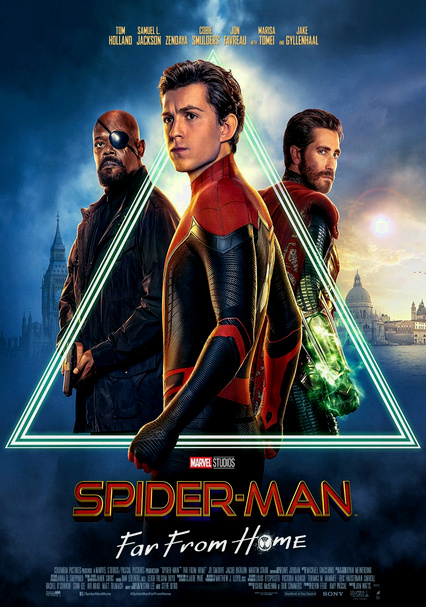
Having not seen the first two installments of the latest Spider-Man franchise, nor with any prior knowledge of the Avengers franchise or the cross-sectional connections of the characters to other films, I walked into Spider-Man: Far From Home (2019) with little expectation.

And an admittedly limited understanding of the Marvel universe altogether.

The film is no better or worse than a summer popcorn flick with enough adventure and lovely locales to keep a non-super-hero buff entertained for over two hours without fidgeting too much.

The film begins with a nod to a past film, where a mysterious “Blip” occurred, erasing people for five years, and then returning them to normalcy, with no aging.

Shots of various Avengers characters, including Tony Stark (Iron Man), who have died, appear on the screen amid a musical tribute to Whitney Houston’s “I Will Always Love You.”

Peter Parker (Spider-Man) (Tom Holland) still mourns his mentor as he embarks on a two-week European vacation with his classmates as part of a school trip. He plans to confess his love for MJ (Zendaya) atop the Eiffel Tower in Paris.

Peter’s Aunt May (now reduced in age and sexy with the casting of Marisa Tomei) quickly packs his Spider-Man suit as Nick Fury (Samuel L. Jackson), a former director of S.H.I.E.L.D. attempts to enlist Peter’s help on a mission and provide him with Stark’s special glasses, named E.D.I.T.H. which possess all the databases of Stark Industries.

Quentin Beck/Mysterio (Jake Gyllenhaal), a master of Illusions, is recruited to help Spider-Man and serve as a fabulous Uncle figure.

These events all happen as Peter travels abroad.

The film is undeniably light and fun, with a bright and safe ambiance. The perilous scenes are not particularly scary or dangerous, despite the characters being at risk of death.

The teen romance angle enhances this assessment as it is a central component of the film, even as much as the adventure and superhero antics are.

Even before the teenage classmates traverse Europe, a triangle develops between Peter, MJ, and Peter’s hunky high school football rival, as does love at thirty-five thousand feet between lovebirds Ned and Betty Brant.

Tom Holland is very well cast in the lead role and is charismatic and believable. Charming with youthful innocence, he is part nerd and part hero, yet always empathetic and benevolent without feeling forced.

As a viewer unfamiliar with the first two chapters, I was immediately catapulted into his world of teen angst, romance, and his responsibility of saving the world. The young actor could have a promising future ahead of him if he avoids typecasting and chooses well-chosen roles.

The guts of the film, meaning the action sequences and the standard genre elements, are palpable and worthy of admiration on their own merits.

The visual effects are tremendous and crowd-pleasing, especially whenever Mysterio is involved. With a twisting, tornado-like blue and green swirling motion, he flies in and out of sequences with enough pizzazz to put the Wicked Witch of the West to shame.

Similarly, the gusty, unnatural storm, Earth Elemental, and the dangerous Fire provide magical and atmospheric power that enhances the film’s look.

Comedy, rather than dark and foreboding scenes, appears to be the filmmakers’ goal with this project.

As class trip chaperones and the students’ teachers, the comic duo of Julius Dell and Roger Harrington trade barbs with themselves and the kids, part bumbling and part incompetent, always offering comic moments of relief.

When Harold “Happy” Hogan becomes smitten with Aunt May, his awkwardness is cute and fresh rather than sappy and clichéd. The supporting characters have the substance to do so, but I would have preferred a bit more darkness or gloominess.

The sequences that raise Spider-Man: Far from Home above mediocrity are the excellent and plentiful European scenes, a feast of riches for this fan of world travel and culture.

The canals of Venice and the magnificence of Prague are nearly rivaled by the sophistication of London and the history of Berlin. Sadly, the film does not culminate in Paris as I had hoped and was hinted at, causing a slight hiccup in my vicarious travel pleasures.

Spider-Man: Far From Home (2019) is a film perfectly crafted for summer, and it was fittingly viewed on a scorching hot July day.

The film is not a masterpiece, sticking to a tried-and-true formula and limiting the dangerous possibilities when one threatens to destroy the world in favor of humor.

The cast is likable, the villain is compelling, and the romance showcases more than just the main couple, being careful not to limit the cash cow of special effects and adventure that the film provides in abundance.

Rocketman-2019

Rocketman-2019

Director Dexter Fletcher

Starring Taron Egerton, Jamie Bell

Scott’s Review #906

Reviewed June 5, 2019

Grade: A

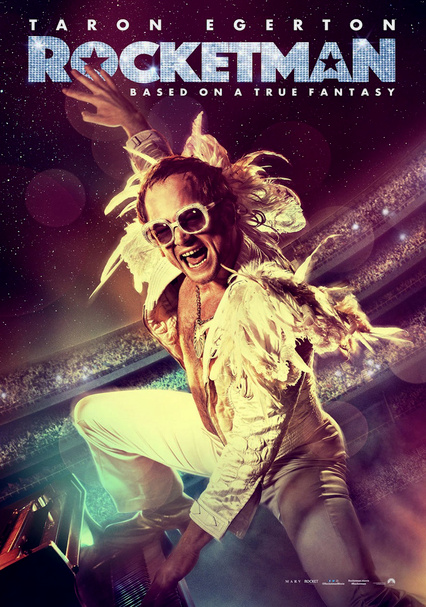
Following the unexpected success of 2018’s rock biography Bohemian Rhapsody comes the similarly themed Rocketman (2019).

This time, the subject at hand is Elton John, rather than Freddie Mercury, but both storied figures share unquestionable comparisons, as their successes, failures, and struggles are well-documented.

Both films take their names from popular title songs, and both feature the same director, Dexter Fletcher.

Freddie Mercury and Elton John are both larger-than-life onstage personas, yet both reportedly suffered from shyness, creating characters to portray that helped ease their difficulties.

Rocketman gets the slight edge over Bohemian Rhapsody when comparing the two, with experimental and psychedelic sequences making the experience more left of center than the latter and lacking a hefty feel-good component.

I would venture to assess that Rocketman has darker overtones.

The film opens impressively as an adult, successful Elton John (Taron Egerton) attends a support group therapy session in rehab, begrudgingly. This scene will recur throughout the film as John slowly reveals more to the group about his childhood, rise to fame, and struggles with numerous demons.

This is key to the enjoyment of the film, as it frequently backtracks in time, allowing us to see John’s development both as a musician and on a personal level.

Many scenes unfold like a Broadway play, which is an ingenious approach, not only a treat for fans of John’s vast catalog of songs but also immensely creative from a cinematic perspective.

At the film’s high point, the scenes are not only showy but also propel the direction of the film, rather than slowing down the events.

Fantastic are the offerings of hit songs like “Tiny Dancer”, as shown during John’s first trip to Los Angeles, where he is forced to witness the then-crush, Bernie Taupin (Jamie Bell), take up with a supermodel at an LSD-infused Hollywood party.

The musical numbers offer glimpses into the mind and heart of Elton and other characters through song. A teary number occurs early on when a pained, boyish Elton is learning to play the piano, facing struggles at home.

When the song begins, it is Elton’s tune to carry, but then his father sings a few lines, followed by his mother and then his grandmother. Each person offers their perspective based on the lyrics they are singing.

The beauty of this scene is powerful and sets the tone for the scenes to follow.

Rocketman is an emotionally charged film, evoking laughter and tears throughout its duration. Thanks to Egerton, who carries the film, the audience cares for him as a human being instead of a larger-than-life rock star.

We feel his pain, cry his tears, and smile during rare moments when he is content. He faces insecurity, sex addiction, drug and alcohol addiction, and an eating disorder. Through Egerton, we face the battles alongside him.

Elton John serves as Executive Producer of the film, providing a measure of truth and honesty in storytelling, something Bohemian Rhapsody was accused of not containing. John’s parents are portrayed accurately and decidedly, and both mother and father are dastardly, nearly ruining Elton’s self-esteem for life.

Dallas Bryce-Howard, as his mother, is happy to capitalize financially on his fame, but sticks a dagger in his heart when she professes he will never be loved since he is a gay man.

His father is nearly as bad. Abandoning his loveless marriage to Elton’s mother, he eventually finds happiness with another woman and produces two boys. He can never love his eldest son, despite Elton’s efforts to reconnect.

To add insult to injury, his father asks him to cross out the words “to Dad” on an album autograph, instead requesting that it be given to a colleague. Elton is devastated.

Events are not all dire and dreary, as with his parents and a major suicide attempt. Happier times are shown, and his grandmother (wonderfully played by Gemma Jones) remains an ardent supporter.

His relationship with Taupin is one of the most benevolent and life-long causes of trust and respect, and once his act is cleaned up, Elton can appreciate the finer things in life more completely.

Egerton performs beautifully in both acting and singing capabilities, but lacks the singing chops that Elton John has. The decision was made not to have Egerton lip-sync, which deserves its measure of praise.

It’s interesting to wonder what the opposite choice would have resulted in. Like with Bohemian Rhapsody, we are left with a brilliant portrayal of John by Egerton.

Watched in tandem with Bohemian Rhapsody, a great idea given the back-to-back releases, is one recommendation for comparison’s sake.

Offering a more creative experience, again, the musical numbers are superb. Both switching through the back and forth timelines, Rocketman (2019) squeaks out the victory for me, and doesn’t the victor get the spoils?

If Rami Malek won the coveted Best Actor Oscar statuette, what would that mean for the tremendous turn that Egerton gives?

Oscar Nominations: 1 win-Best Original Song-“(I’m Gonna) Love Me Again (won)

Dumbo-2019

Dumbo-2019

Director Tim Burton

Starring Colin Farrell, Danny DeVito, Eva Green

Scott’s Review #889

Reviewed April 24, 2019

Grade: C+

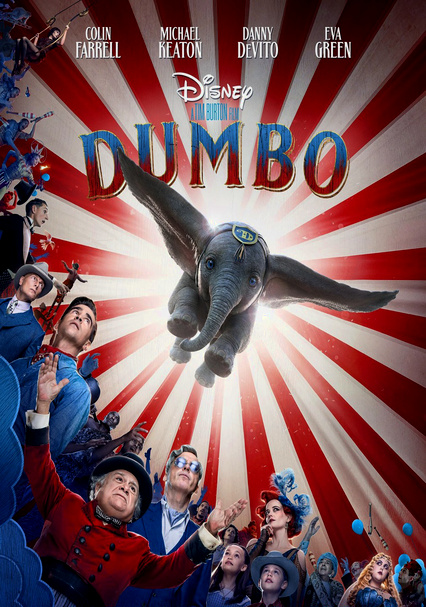
Dumbo (2019), the live-action remake of the charming and emotionally charged animated original from 1941, contains some positives but ultimately underwhelms, coming up with less than a stacked deck.

The problematic and gnawing element that persisted throughout the Disney film was its overly cute or child-leaning quality, which was not to my taste.

Nevertheless, for an afternoon at the theater with young children under the age of twelve, the film is a recommended and utterly appropriate activity for fun.

My expectation, knowing that Tim Burton was at the director’s helm, was for a darker, perhaps murkier interpretation, given some of his films in the catalog.

After all, Beetlejuice (1988) and Dark Shadows (2012), though flawed, contain some wicked charm and naughty humor. Dumbo is considerably softer as the director chooses a safe, more accessible path.

Creating magic from nearly eighty years ago is a challenging task for anyone to achieve.

World War I veteran and amputee, Holt Farrier (Colin Farrell) returns from the war to rejoin the financially problematic traveling circus owned by Max  Medici (Danny DeVito).

A widower, reunited with his two children, Holt is assigned to oversee the pregnant elephant, Mrs. Jumbo, as she gives birth to an unusual-looking elephant with giant ears who comes to be known as Dumbo.

The children discover that Dumbo can fly when aided by a feather, as the evil V.A. Vandevere (Michael Keaton) attempts to profit from Dumbo’s talents at any cost, adding to his fabulous creation, Dreamland.

The art direction and the look of the film are where Burton succeeds.

With dark, visually striking creations and intricate, spider-like sets, especially in Dreamland, the film bears the director’s unmistakable signature.  The costumes and styles are well-suited to the year 1919, and the wardrobe and hairstyles are in line with the times.

The circus stars and characters, from the fat lady to the exotic jugglers, are well-cast, adding good texture and multicultural flavor to the production.

The standout musical number is the poignant and sentimental “Baby Mine,” wisely featured twice during the film. Since the song is so lovely, this proves a bold move and my favorite part of what is otherwise a mediocre experience.

Sharon Rooney sings the version featured during a touching and painful scene between separated elephants Dumbo and Mrs. Jumbo, and the rock band Arcade Fire performs a different rendition over the end credits.

Anyone needing a good cry would be advised to check out the emotionally charged song.

While the acting among Farrell, DeVito, and Eva Green as Colette, the French trapeze artist who falls for the sexy Holt, is all admirable, two performances left me with critical fire. Keaton, typically a standout performer, goes full-throttle with an over-the-top and one-note performance as the villainous Vandevere.

Cartoon-like with herky-jerky head snaps and tic-like movements, the actor appears silly and ineffectual at creating any sort of robust character. Young actress, Nico Parker as Milly, Holt’s daughter, gives a dreadfully wooden performance in what could have been the film’s most likable character.

Besides one or two tender scenes the film largely goes for a cutesy vibe, not feeling fresh nor especially genuine. A Disney production, the film feels quite mainstream, lacking edginess, like the producers had dollar signs and major success on their minds over artistic merit or staying true to the original.

Other than a quick shot of the number “41” on the front of a train, a clear tribute to the animated original’s year of release, the remake strays very far from the first Dumbo with a few new characters and sadly no gossipy female elephants anywhere.

A disappointing offering, the live-action Dumbo (2019), the year’s first in a series of five expected Disney releases (Aladdin, The Lion King, Maleficent: Mistress of Evil, and Lady and the Tramp being the others) lacks much more than a couple of sweet scenes, an adorable elephant, and admirable sets, feeling utterly ordinary in flavor.

This is a misfire compared to the legendary, teary 1941 version of Dumbo.

Us-2019

Us-2019

Director Jordan Peele

Starring Lupita Nyong’o, Winston Duke

Scott’s Review #882

Reviewed April 1, 2019

Grade: A

Hot on the heels of his critically acclaimed and shockingly Oscar-nominated horror film Get Out (2017), Jordan Peele does it again with an even more thought-provoking creation.

Us (2019) combines classic horror elements with macabre and insightful qualities, crafting an ambitious project that can be dissected and discussed at length following the climactic and psychologically perplexing ending.

One thing is for sure: Peele has earned his spot among the most influential and elite directors circling Hollywood.

The film begins in 1986 as an event entitled “Hands Across America,” a publicity campaign encouraging people to hold hands to create a human chain to fight hunger and poverty, gripped the United States.

Nine-year-old Adelaide Thomas goes on vacation to Santa Cruz, California, with her parents, only to wander off into a deserted house of mirrors.

When she meets her doppelganger, she is terrified beyond comprehension and requires therapy to resume an everyday life.

Events return to the present day as Adelaide (now played by Lupita Nyong’o) is married to Gabe Wilson (Winston Duke) with two young children, Zora and Jason. Coaxed into a weekend getaway to none other than Santa Cruz to visit their wealthy friends Josh and Kitty Tyler (Tim Heidecker and Elisabeth Moss), Adelaide is apprehensive about the trip with a dreading sensation that her doppelganger is returning to get her.

When a strange family dressed in red jumpsuits appears on Wilson’s driveway, the plot transforms in a bizarre direction, especially since the family looks precisely like the Wilsons.

Us is exceptionally layered and reminiscent of the expression “peeling back the onion” in analysis and discussion possibilities. For starters, a character thought to be one person is revealed to be another, causing the audience to spin into confusion and not know who they were rooting for or against all along.

The astounding questions are endless and, in Peele’s brilliant fashion, can be asked at different times during the film. Why do the doppelgangers exist? What do they want? What does Hands Across America have to do with anything? What do the rabbits symbolize?

One gruesome scene and a favorite is the barbaric scene when the Tylers are suddenly attacked by their doppelgangers, home invasion style.

Reminiscent of the infamous Charles Manson murders, the family is slain quickly and mercilessly as the audience is left agape at the brutal slaughter. So much happens in this scene, first and foremost is the realization that there are more doppelgangers than we initially thought.

To lighten the mood a bit, Peele adds morbid comic relief as the family’s voice-controlled Siri system misunderstands the dying victim’s plea to call for police and mistakenly plays “F#@$ the Police” by N.W.A. instead.

Nyong’o has the most opportunities to showcase her acting ability by tackling two very different types of roles. As Adelaide, she is kind, capable, and your typical suburban Mom, but as her doppelganger Red, she is grizzled and desperate with a dry, throaty voice filled with pain and defeat.

At first thought a villain, the audience eventually learns the complexities of Red’s story more clearly, and the Oscar winner delivers both parts with exceptional grace.

The supporting actors bring their characters to life with gusto, with special mention going to Duke and Moss. Duke’s character of Gabe contains inept humor, coming across as slightly incompetent and the typical goofball dad-type character.

Moss takes her one-note character of Kitty, a spoiled, never-made-it-as-an-actress whiner with a wealthy husband, and infuses naughty passion into her doppelganger.

As she playfully applies lipstick while coquettishly watching herself in the mirror, she soon gives the term “plastic surgery” a new definition as she curiously carves her face.

Peele delivers a treasure with Us (2019), and I salivate at the thought that the film is only the novice director’s second attempt. Not suffering from the dreaded sophomore slump, he is becoming a modern director whose works are more like events than mere film releases.

Quentin Tarantino is a director who has also achieved this status because his directorial style is vastly different from that of other directors. I cannot wait to feast on Peele’s next attempt.