Category Archives: Mckenna Grace

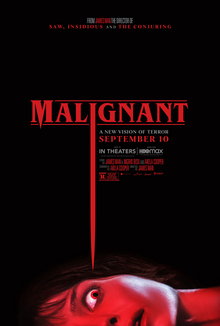
Malignant-2021

Malignant-2021

Director James Wan

Starring Annabelle Wallis, George Young

Scott’s Review #1,294
Reviewed August 30, 2022

Grade: B

James Wan is a fantastic director responsible for co-creating the Saw (2003-2017) and Insidious (2010-2018) franchises.

Anyone familiar with those films will likely enjoy Malignant (2021), as it borrows from them and incorporates elements reminiscent of those films.

In particular, it taps into supernatural elements of Insidious and the mood and score from Saw. Malignant even copies the gruff and robotic phone caller’s voice that was Jigsaw’s trademark and used in Saw.

It’s not as threatening, but it brings back those memories.

The result of Malignant is mixed, with a mostly positive outcome. It’s not one bit scary like Insidious was, but not gratuitously gory like the Saw films, though it has its moments of butchery.

Though utterly ridiculous, the conclusion of Malignant contains a terrific twist and a weird supernatural CGI contortionist choreography extravaganza that somehow reminded me of The Matrix (1999).

The storyline twist must have been influenced by Sisters (1973), an early effort by director Brian DePalma. It may seem silly, but somehow it’s my favorite part of the film.

Wan reaches into his magical bag of tricks and pulls out some wins. He also demands suspension of disbelief, which is okay in supernatural horror films, but many points of the story do not add up.

Malignant begins in 1993 when Dr. Florence Weaver (Jacqueline MacKenzie) and her colleagues treat a violent, disturbed patient named Gabriel at Simion Research Hospital. Gabriel can control electricity and broadcast his thoughts via speakers. He kills several staff members, but Weaver survives and deems him untreatable.

Years later, Madison Lake (Annabelle Wallis) becomes paralyzed by fear from shocking visions. She slowly realizes that when a murder victim dies, she is in the room with them, witnessing their gruesome death.

Gabriel is on the loose and intent on killing Dr. Weaver and her colleagues for calling him cancer, and Madison is somehow involved.  She and her sister, Sydney (Maddie Hasson), must work alongside the police to get to the bottom of the mystery.

Malignant does well with the mood and tone of the filming. It has a dark grey quality plentiful in modern horror films, and fans of Insidious and Saw will enjoy this familiar style of filmmaking. It’s set in Seattle, which is a wise choice, though all we get are some aerial views of the city, specifically the Space Needle.

Because Wan directs it, it’s professional and contains the horror elements to be expected. There’s even a giant window fan that I swear I’ve seen in a Saw film. Wan knows what he is doing, and the name recognition alone was enough to get me to see the movie.

It’s not an ‘A’, but it does what a modern horror film is supposed to do, and that’s to entertain. Malignant is not groundbreaking, but it sounds good.

The plot holes are not worth dissecting beyond asking why there are no other patients in a large city hospital —a device that has existed since at least Halloween II in 1981 —but that’s just the beginning.

Malignant annoyed me when it decided to add some humor.

A sidekick character, Detective Regina Moss (Michole Briana White), bears an uncanny resemblance to the funny lady Wanda Sykes. Unfortunately, her one-liners feel thrown in for kicks, and a blossoming romance between Sydney and Detective Kokoa (George Young) goes nowhere.

During these scenes, I felt like I was watching Chicago Med or Chicago Fire or any one of those other generic network television shows.

Fortunately, the scenes were brief, and Wan returned to the point of the film- blood, killing, and chaos.

Lead actress Wallis is a fine casting choice. Pretty but relatable, she carries the film as the victim, especially as more of her backstory is revealed.

Films like Malignant (2021) require putting the brakes on any deep analysis and merely going along for the ride. It’s entertaining and that’s good enough for me. With Wan at the helm, I anticipated a particular type of horror film and was ultimately satisfied with what I was served.
Annabelle Comes Home-2019

Annabelle Comes Home-2019

Director Gary Dauberman

Starring Mckenna Grace, Patrick Wilson, Vera Farmiga

Scott’s Review #1,008

Reviewed April 7, 2020

Grade: B

Annabelle Comes Home (2019) was made as a sequel to 2014’s Annabelle and 2017’s Annabelle: Creation, and as the seventh installment in The Conjuring Universe franchise overall.

Lest we forget the uninspiring The Nun (2018) it is not necessary to view the films in sequence and with this version, it can serve as a stand-alone film just fine.

At this point in the series, it’s becoming increasingly challenging to connect all the dots from previous offerings. The film is a fun, scary-light experience, which works well.

Borrowing the babysitting theme from the 1978 horror masterpiece Halloween, the film is neither dull nor formulaic, providing some visual creativity to an otherwise B-movie experience.

Franchise fan favorites Patrick Wilson and Vera Farmiga return to their popular roles, but only in the beginning and end of the film, letting the younger set take center stage as they bear the brunt of angry demons.

Presumed to take place sometime after Annabelle but before Annabelle: Creation, demonologists Ed (Wilson) and Lorraine Warren (Farmiga) are determined to stop the frightening Annabelle from wreaking further havoc and drag the possessed doll to the safety of their locked artifacts room, placing her behind sacred glass and enlisting a priest’s holy blessing.

After a curious teenage girl snoops, Annabelle is reawakened angrier than usual and unleashes a torrent of evil spirits into the Warren house. Ten-year-old daughter, Judy (Mckenna Grace), must be savvy and outsmart the dangerous demons before it’s too late.

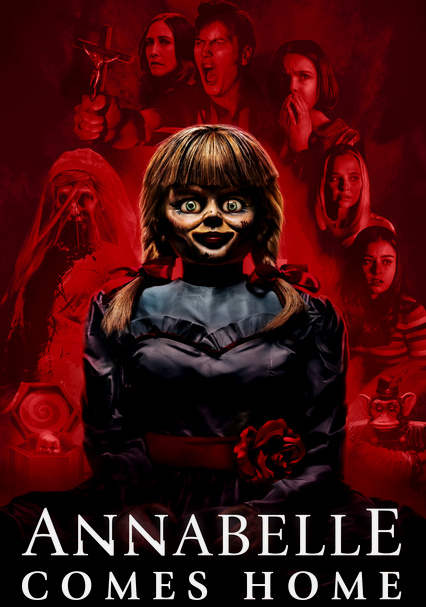
Annabelle herself, the doll statuesque and holding a grotesque smirk on its made-up face, with bright blue/green eyes, has quietly become a fixture within the horror community, now easily recognizable to mainstream audiences everywhere.

That Annabelle does not speak or walk, but only stares, unless possessed by a spirit, is a big part of the fun and the scares. She tends to appear rather than move around, which is part of her appeal.

And the pretty red ribbons in her hair are a bonus.

The 1970s time period is fabulous, as the set and art design teams deserve major props for authenticity. Warren’s house, for example, is a fantastic showcase for the yellow and brown trimmings prevalent in any middle to upper-middle-class residence during this decade.

The flowered wallpaper enshrouding the downstairs hallway and the pink frosted birthday cake are delightful additions. The standard feathered hairstyles and plaid-patterned clothes are timeless trademarks and always a hoot.

From a fright perspective, the film provides a perfect balance of buildup and edge-of-your-seat thrills.

The best example of this is when nosy Daniela (Katie Sarife), already curious about the Warrens, breaks into the artifacts room, determined to talk to the dead.

Her motivations are believable, given that her father recently died in a car accident, and she is a fan favorite. Chaos ensues as she unleashes such evil forces as the Black Shuck, the Ferryman, and the Bride.

The film tries a bit too hard to appeal to a tween or teenage audience with a silly romance between the main character, Mary Ellen (Madison Iseman), a perfect, virginal babysitter, and her high school crush, Bob (Michael Cimino).

He even serenades her after an idea by the pizza deliveryman, and conveniently lives across the street.

This portion of the story is unnecessary and feels like filler, as Mary Ellen is responsible enough not to let a boy into the house she is looking after.

Annabelle Comes Home (2019) is a commendable horror effort, intelligently blending both supernatural and classic horror subgenres with ease and perfect balance.

Staying true to its franchise roots and incorporating groovy production and musical score elements representing the decade it celebrates, the film holds up well in a myriad of similar films that rely on gimmicks and cheap thrills more than this one does.

I, Tonya-2017

I, Tonya-2017

Director Craig Gillespie

Starring Margot Robbie, Allison Janney

Scott’s Review #712

Reviewed January 10, 2018

Grade: A-

I, Tonya is a 2017 biopic telling of the life and times of the infamous American Olympic figure skater, Tonya Harding, notorious, of course, for her alleged involvement, along with her husband and his friend, in the attack of fellow skater, Nancy Kerrigan during the 1994 Winter Olympics.

The event drew monumental media coverage after the attack, with the uncertainty of Harding’s knowledge or involvement, and her subsequent guilt or innocence continues to be debated.

The film itself is a dark and violent comedy, never taking itself too seriously. It immediately presents the disclaimer that the stated “facts” in the film are open to interpretation and depend on who you ask.

I, Tonya isn’t preachy or directive to the viewer but instead offers up the skater’s life and times in story form.

The film features tremendous performances by Margot Robbie and Allison Janney, as well as Tonya and her despicable mother, LaVona.

I, Tonya, is told chronologically, culminating with “the incident” in 1994.

However, the story begins in the mid-1970s, as Tonya, just a tot at the tender age of four, is as cute as a button and shrouded in innocence. One cannot help wonder if director Craig Gillespie, known for independent films, purposely made this wise casting choice.

We see Tonya, once an innocent child, journey into a life of violence, abuse, and tumultuous living. Harding grew up cold and hard and endured an abusive, complex relationship with her mother, the pressures to be the best skater never ended.

Even upon achieving success, Tonya never felt good enough or loved by her mother.

We then experience Tonya as a fifteen-year-old girl, fittingly first meeting her boyfriend and later, husband Jeff, Gillooly played well by actor Sebastian Stan. The early scenes between the two are sweet, tender, and fraught with the emotions of first love.

As explained by the actors, this was a short-lived time of bliss, and the relationship soon disintegrated into abuse, rage, and chaos.

The main point is to debate Harding’s guilt or innocence, which Gillespie peppers throughout, so it is unclear what to believe or how the audience should think.

“Interpretation” is the key here. Some may see Harding as a victim of life’s circumstances and the hardships she had to endure and may place sympathy upon her. Others may view Harding as off-putting, potty-mouthed, and even icy and violent herself, with a big chip on her shoulder.

In one scene, she publicly belittles the hoity-toity judges who never give her a break and give her less-than-perfect scores.

A clever technique that the film delivers is to have the actors frequently speak to the camera, thus the audience. This is achieved by either interview style or for the action in the film to cease and either Robbie, Janney, Stan, or whomever, turn to the camera and express their version of the events.

I, Tonya possesses a creative, edgy, indie feel.

How brilliant are the performances of both Robbie and Janney?

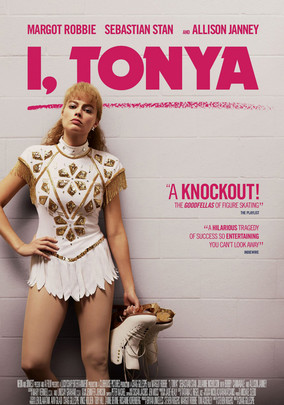
Robbie, a gorgeous woman, portrays a “red-neck” to the hilt. Through her bright blue eyes, her face is quite expressive—relaying pain, anger, and a seldom triumph. The film often slants the scales in a sympathetic way towards Harding, but it is Robbie’s talents that make us feel this sympathy.

Janney hits the jackpot with a delicious role she sinks her teeth into. A cold-hearted, vicious character, through facial expressions, we occasionally glimpse LaVona, perhaps softening, but as we do, the character does something even more despicable.

A good surprise for fans who remember the real-life events and the real-life players will be treated to a sequence of the honest Tonya, LaVona, Jeff, and Shawn Eckhardt, which play over the film ending credits.

How similar in looks are Robbie to Harding, with her feathered, frizzy, 1980s-style hairdo, and Janney, a dead-ringer for the boozy, chain-smoking LaVona, with her mousy brown bob haircut, complete with scruffy bangs?

Viewers will leave theaters confused, unsure, or perhaps perplexed by what they have just seen, but they will most certainly feel thoroughly entertained and may even depart chanting some upbeat 1980s rock tunes that the film uses throughout.

Thanks to fantastic acting and a strong story, I, Tonya is a success.

Oscar Nominations: 1 win-Best Actress-Margot Robbie, Best Supporting Actress-Allison Janney (won), Best Film Editing

Independent Spirit Award Nominations: 2 wins-Best Actress-Margot Robbie, Best Supporting Female-Allison Janney (won), Best Editing (won)