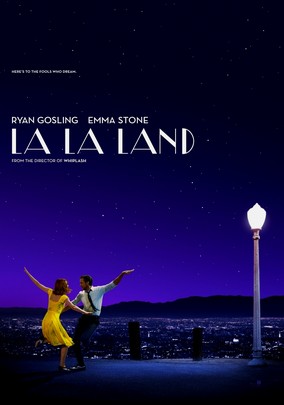
La La Land-2016
Director Damien Chazelle
Starring Emma Stone, Ryan Gosling
Top 250 Films #173
Scott’s Review #538
Reviewed December 6, 2016
Grade: A
La La Land (2016) breathes new life into the classic musical genre of the 1950s and offers a fresh glimpse into Hollywood.
The film explores the glitz and glamour, triumphs and heartbreaks, and dreams both broken and fulfilled in a town laden with broken hearts.
The bright, colorful film stars two of today’s top young, talented actors: Emma Stone and Ryan Gosling. The chemistry between the leads and the dynamic musical numbers is incredible.
It’s a masterful nod to old Hollywood.
Mia (Stone) is an aspiring young actress struggling to survive the Hollywood scene. She serves lattes in a coffee shop on a studio lot and auditions endlessly for film and television parts without much luck.
Her passion is acting, but she also writes a one-woman play she plans to star in.
On the other hand, Sebastian (Gosling) is a dedicated jazz musician, struggling to make ends meet by playing demoralizing gigs that ruin the essence of jazz, meeting many people who tell him that jazz is a dying genre.
Sebastian’s dream is to open his nightclub one day.
Through circumstances, Mia and Sebastian meet and continue to run into each other, forging a wonderful friendship that eventually leads to romance.
The film is a gorgeous experience with bright sets, creative sequences, and numerous song and dance numbers to keep you humming. Mia and Sebastian even tap-dance one beautiful night following a Hollywood party under the moonlight with the Los Angeles skyline in view as they bond.
It is one of the best scenes in the film.
La La Land is seasonal and begins in the winter, though this is strictly an attempt to separate the chapters. Los Angeles is always warm, but the timing is Christmas, which is engaging in a warm climate.
In the first scene, we are immediately treated to a musical number. Stuck in stifling freeway traffic, the car drivers get out in unison, sing and dance, and then return to their cars to continue their mundane day.
Director Damien Chazelle cleverly balances the cheerful tone with the everyday redundant tasks and the struggles of artists hoping for a dream.
La La Land excels during the scenes of Sebastian and Mia as the chemistry is palpable. Gosling and Stone have something.
Supporting players like J.K. Simmons and Rosemarie Dewitt add pizzazz to their small but meaningful parts.
I adore the odes to classic Hollywood films that director Chazelle incorporates into his movie.
Classics such as Alfred Hitchcock’s Notorious (1946) and the legendary film Casablanca (1940) are mentioned twice.
During a sweet moment, Sebastian takes Mia to see Rebel Without a Cause (1956) at an old-style theater; he is shocked that she has never seen the film and eagerly excited to introduce her to it.
This continues as he shares his love for jazz music with her.
Later, the theater closes, and the film takes a more dour tone as the struggles of both characters overwhelm them.
The film’s finale is terrific.
Suddenly, five years later, many events have happened. In a brilliant sequence, the characters’ lives are explained through a song as we see the period play out until we reach the point of the film where the song began, a treasure of an ode to the truth of the characters.
The sequence is emotional, heartbreaking, and choreographed without missing a beat,
Gosling and Stone sing all their songs, not live as in Les Miserables (2012), but wisely on a sound stage. They are neither novices nor Grammy winners, but they are honest, truthful, and with heart.
It is refreshing to see classic Hollywood told in such a riveting fashion, as seen through the young’s eyes.
Films and styles of decades past are renewed through this excellent piece of cinema.
I noted similarities to An American in Paris (1951) and countless other gems from years ago and stood proudly, knowing that a nostalgic piece of cinema is precisely what we need.
Oscar Nominations: 6 wins-Best Picture, Best Director-Damien Chazelle (won), Best Actor-Ryan Gosling, Best Actress-Emma Stone (won), Best Original Screenplay, Best Original Score (won), Best Original Song-“City of Stars” (won), “Audition (The Fools Who Dream),” Best Sound Editing, Best Sound Mixing, Best Production Design (won), Best Cinematography (won), Best Costume Design, Best Film Editing