Category Archives: Corin Redgrave

Four Weddings and a Funeral-1994

Four Weddings and a Funeral-1994

Director Mike Newell

Starring Hugh Grant, Andie MacDowell

Scott’s Review #1,444

Reviewed October 8, 2024

Grade: A-

Four Weddings and a Funeral (1994) is a surprisingly fresh and delightful romantic comedy and one of the better offerings of the 1990s. It is likely an inspiration for Love, Actually, from 2003, which I have seen recently, and they would be paired well together.

Both are British or set in the London area and have an English sophistication often lacking in American rom-coms.

The key to Four Weddings and a Funeral’s success is the writing. Storylines about real life emerge and relatable, awkward, and flawed characters grace the page. Lovelorn audience members who may have lost love or suffered from loneliness may relate most.

This is a huge win for a genre that often plays it safe or revels in predictability. Crisp writing goes a long way.

The main couple are played by Hugh Grant and Andie MacDowell and made them household names plummeting them to a successful decade in similar films, especially Grant.

Lovable Englishman Charles (Grant) and his group of friends seem to be unlucky in love. They frequently gather at parties or weddings never finding what they truly want, linking them together for life.

When Charles meets a beautiful American named Carrie (Andie MacDowell) at a wedding, he thinks his luck may have changed. But, after one magical night, Carrie, deemed ‘slutty’ returns to the States, ending what might have been a wonderful long-term relationship.

As Charles and Carrie’s paths continue to cross usually at someone’s wedding and one funeral, Charles believes they are meant to be together, even if their timing always seems to be off.

Grant shines in his role despite believing his performance was hideous, at least before the film received many accolades. Mike Newell, the director, provided conflicting direction making it hard for Grant to play the role in a particular way.

His stuttering and confusion, though, are what makes his character so endearing.

MacDowell is good too. It’s not clear why she doesn’t drop everything right away and date Charles or why she chooses an older Scottish guy to marry but the story-dictated situations only make the characters shine brighter.

Once the first wedding occurred I found myself hooked. I couldn’t wait to find out what three nuptials would be forthcoming and who the funeral was for.

Could it be a main character or even Charles or Carrie?

That makes Four Weddings and a Funeral compelling especially as the supporting characters are fleshed out.

We get to know Fiona (Kristin Scott Thomas), a bitchy friend who seems to judge everyone she meets. Her snobbery is slowly replaced with vulnerability when it’s revealed that she has always loved Charles.

Other characters like Tom (James Fleet) and Scarlett (Charlotte Coleman) are comic relief while a same-sex couple, Gareth and Matthew (Simon Callow and John Hannah), and Charles’s deaf brother David (David Bower) are part of the group with no judgments about their sexuality or disability.

In 1994 this was a searing victory and a feeling of inclusion is apparent.

The icing on the cake is a spectacular soap opera moment when a bride and groom are about to take their vows only for one party to admit their love for another character. Hysterics, a meltdown, and good old-fashioned drama commence and make the scene satisfying.

I didn’t expect to enjoy Four Weddings and a Funeral (1994) as much as I did. Audiences agreed and the film was rewarded with two surprising Oscar nominations.

Oscar Nominations: Best Picture, Best Original Screenplay
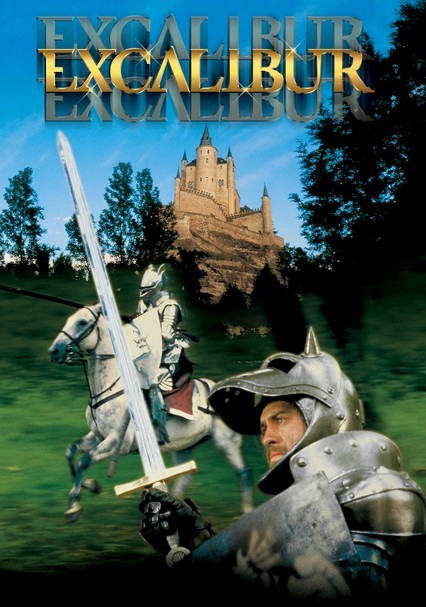
Excalibur-1981

Excalibur-1981

Director John Boorman

Starring Nigel Terry, Helen Mirren, Nicholas Clay

Scott’s Review #1,108

Reviewed February 4, 2021

Grade: B+

John Boorman, best known for directing the 1972 disturbing classic Deliverance, returns to the fold with a steamy fantasy rich in lavish sets, visual treats, and an incredible atmosphere.

This is where the film succeeds.

We are taken to a medieval world where we embrace jealousy, sex, and schemes.

Boorman not only directs but also produces and co-writes the project along with the screenwriter Rospo Pallenberg.

Excalibur (1981) retells the legend of King Arthur, a British leader from the fifth and sixth centuries, largely passed down through folklore, and the Knights of the Round Table, based on the 15th-century Arthurian romance Le Morte d’Arthur by Thomas Malory, at behemoth length.

The table is symbolic because it implies that there is no head and, therefore, a democratic forum.

This telling is quite adult and not suitable or comprehensible for children.

Famous legends like Merlin (Nicol Williamson), Lancelot (Nicholas Clay), Queen Guenevere (Cherie Lunghi), and Morgana (Helen Mirren) appear alongside Arthur (Nigel Terry) in a furious battle for control.

In a flurry of handsome European actors who would later become famous, Patrick Stewart and Liam Neeson both appear.

Most of the male cast are masculine, hunky, and very handsome. These traits cascade into how good they look in full-body armor, shields, and swords, fighting bloody battles with each other.

Homoerotic scenes exist just as they did in Deliverance. Lest we only focus on the male cast, Helen Mirren is delightful as an evil seductress who oozes sex appeal.

The magical sword of Excalibur starts in the hands of a British lord, Uther Pendragon (Gabriel Byrne), and then, years later, finds its way to his bastard son, Arthur, who is destined to become king but doesn’t realize why.

Merlin helps Arthur fulfill his fate by bringing together the Knights of the Round Table at Camelot and unifying the country.

Years later, Arthur faces greater tests in pursuit of love, the Holy Grail, and his nation’s survival, as some attempt to steal the treasure for their own advantage.

Excalibur had me with its visuals, and I immersed myself in the spectacular style and artistic set design, with gorgeous sequences.

Several creative, glimmering shots of someone emerging from or submerged underwater are featured. They are startlingly beautiful.

I pretended I had been whisked away to an otherworld of enchantment that I could sit back and enjoy.

The knowledge that the entire film was shot in Ireland captivated me. The breathtaking greenery and waterfalls are dreamlike. When Lancelot beds Guenevere in the forest, they both appear nude. Their pale white flesh against the green is both magical and seductive.

And a treat for one’s curious eyes.

The story is overly complicated, with reality mixed with either dreams or fantasy, and some of the plots confused me. I finally got to a point where the intricacies became too much for me to comprehend, especially against the stunning backdrops.

The plot became too jumbled and messy, so it is advisable to drift off and take it all in rather than trying to make sense of everything.

A visual marvel, Excalibur (1981) will delight the apt film fan. I fantasized about how the picture would look and feel on the big screen, but I wasn’t that lucky.

The story is obviously far-fetched and ludicrous at times, but somehow that doesn’t matter, and it didn’t hinder my enjoyment.

I was treated to good-looking people in armor, unique costumes, and various states of undress. And that’s just fine with me.