Category Archives: Horror

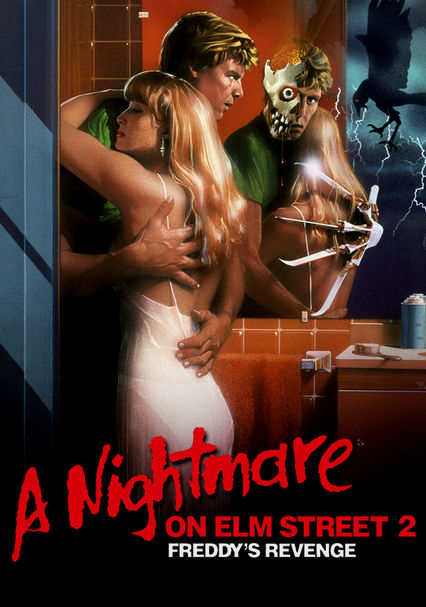
A Nightmare on Elm Street 2: Freddy’s Revenge-1985

A Nightmare on Elm Street 2: Freddy’s Revenge-1985

Director Jack Sholder

Starring Mark Patton, Kim Myers, Robert Englund

Scott’s Review #1,024

Reviewed May 18, 2020

Grade: B

While producing a surprising and tantalizing sexual subtext to a standard story and including a male protagonist instead of the generic female, A Nightmare on Elm Street 2: Freddy’s Revenge (1985) sometimes feels overwrought.

With stock characters and not enough scary moments to satisfy bloodthirsty appetites, the effort and aching for something a bit different is apparent if viewers are sharp enough to take a curious peek.

The glossy 1980s cinematic look is cringe-worthy and very “of the time” which usurps the creative tidbits nestled beneath the surface, as deserving of their merits as they are.

Nonetheless, the film is not at all bad, almost feeling fresh by today’s standards, and the familiar villain is worth the price of admission. Once again Freddy baits and taunts his victims, who never stand a chance, with his trademark sneer and razor-sharp nails.

Five years following the events of the first A Nightmare on Elm Street (1984), a new family arrives on the cursed block, happily anticipating a new life filled with baked cookies and warm fires.

Parents Ken and Cheryl Walsh (film legend Hope Lange) raise two kids, Angela and Jesse (Mark Patton). The latter is haunted in his dreams by a killer driving a school bus. Jesse is joined by his friend and romantic interest, Lisa (Kim Meyers), school chum Grady (Robert Rusler), and Coach Schneider (Marshall Bell), who may or may not be gay.

An obvious comparison to the similar-themed Friday the 13th franchise, a hot ticket during the 1980s, is the return to a familiar setting.

Elm Street is to A Nightmare on Elm Street what Camp Crystal Lake is to Friday the 13th. The locale is a character itself and knowing that bad stuff will occur there is pleasing to the viewer.

Elm Street is supposed to be a quiet and safe place for families to snuggle in their beds with pets, dreaming the nights away, not worrying about an evil force turning their pleasant dreams into nightmares come to life.

A clever homoerotic tidbit lost on most viewers, emerges nonetheless, especially in hindsight. Let’s remind ourselves that 1985 was not a hotbed of LGBTQ cinematic activity, especially as the horrific A.I.D.S epidemic was front-page news.

Gay-themed films were not the norm, not even in the independent film circuit yet, so any mention of a gay character was a win for the community.

A riveting scene has Jesse dreaming of indulging in a drink at a gay bar and is caught by Schneider, who sends him to the showers. The sexual overtones, obvious now, were not then.

Sadly, this is as far as the film goes with this subject.

The remainder of the story is mostly standard fare, featuring a lively teenage pool party, aqua-net-infused hairstyles, up-tempo pop music, and familiar written characters, most of whom turned up with different faces in the droves of horror films that peppered suburban movie theaters in those days.

Not daring to make Jesse a gay character, though someone humorously made the character’s name androgynous, Jesse and Lisa share a tender kiss in her cabana.

Most sequels pale in comparison to their originals. A Nightmare on Elm Street 2: Freddy’s Revenge (1985) is an adequate follow-up that dares to incorporate as much diversity and inclusiveness as could be mustered in a mainstream film during the mid-1980s.

Let’s not kid ourselves that the studios did not have profit on the mind over credibility and creativity, but the stakes are not exactly played safe which is to its credit.

There were far worse sequels in this franchise yet to come!

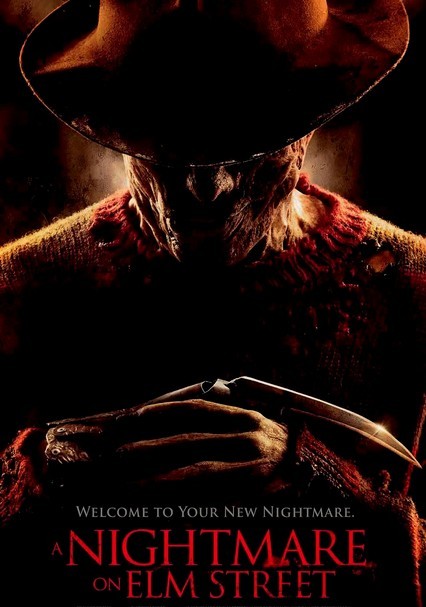
A Nightmare on Elm Street-2010

A Nightmare on Elm Street-2010

Director Samuel Bayer

Starring Jackie Earle Haley

Scott’s Review #1,023

Reviewed May 14, 2020

Grade: C-

Rather a pointless remake, but unsurprising given the speedy attempts at re-doing almost every successful horror franchise in recent memory, A Nightmare on Elm Street (2010) offers nothing that the original did not provide better.

Any film that is considered a dud with the word “nightmare” in the title is ripe for the picking as far as jokes and mockery go. The film is not too terrible but is rather mediocre and average to the taste.

There is no reason to watch this offering over the 1984 original, besides perhaps a moment of curiosity.

A quick recap or re-introduction. Freddy Krueger (Jackie Earle Haley), a serial killer who crosses the worlds of dreams and reality to slice and dice his victims with his razor-sharp blade-fingered glove, is on the loose in small-town America.

As Nancy (Rooney Mara) and her pals fight for their lives, they also uncover clues to a shocking secret from their past. Freddy was a known child molester decades earlier and was tracked down and burned alive by angry parents seeking revenge after he escaped prison.

He has vowed to destroy the children of those parents who all conveniently still live in the same town.

Capitalizing on the box-office success of a commercially successful yet critically sub-par 2009 offering of Friday the 13th, the light bulb went off and A Nightmare on Elm Street was green-lit and born.

The intention was to make Freddy and the film harsher and scarier than the 1984 original.

This is a severe misstep as what made the original so good was the character of Freddy. What 1980s teenager doesn’t fondly recall oozing with delight at Freddy’s one-liners and quips as he playfully toys with his pray before slitting their throats?

New Freddy is sinister, violent, and banal. Boring!

Earle Haley, a character actor known for 1977’s Breaking Away and finding a well-deserved career resurgence with the brilliant Little Children (2006) is cast as the brutal villain, sans any of the humor.

The actor, small in stature, is cast well on paper and doesn’t purposely ruin the role. It’s just that he is not Robert Englund and therefore never has a chance.

While admittedly Earle Haley is menacing, he lacks the charisma and charm to do very much with the role except try to recreate something that is not his to begin with.

The rest of the teens in the cast are decent but hardly spectacular. The “final girl” is Nancy Thompson (Rooney Mara) changed to Nancy Holbrook in this version in another eye-rolling mistake since no reason is explained for the name change.

It’s like changing Freddy Krueger’s name to Freddy Kelly.

Regardless, Mara champions on in a role she is way too good for. The actress, about to reach stardom for gems like The Girl with the Dragon Tattoo (2011) and Carol (2015) needed a start.

Fair enough.

From a visual standpoint, the film has some jump scares and frights that are stock fare for slick, mainstream horror films, almost now becoming clichés.

The sets are decent with some of the houses and, a church, worthy of mention. Darkness is the main ingredient of this film- it is horror after all, and the filming has a very dark texture even during bright scenes.

Some nice kills flesh out the rest of the experience.

If there is money to be made in Hollywood, it will be made. The true motivator of remaking A Nightmare on Elm Street (2010) was profit over art. This is a reality and not so much a criticism, after all, it’s called the entertainment biz for a reason.

The changes made to the script do it no favors and if a remake had to be done, it was better left alone and not fooled with.

Jackie Earle Haley does his best, but he is not and never will be the real Freddy Krueger. Robert Englund has that dubious honor.

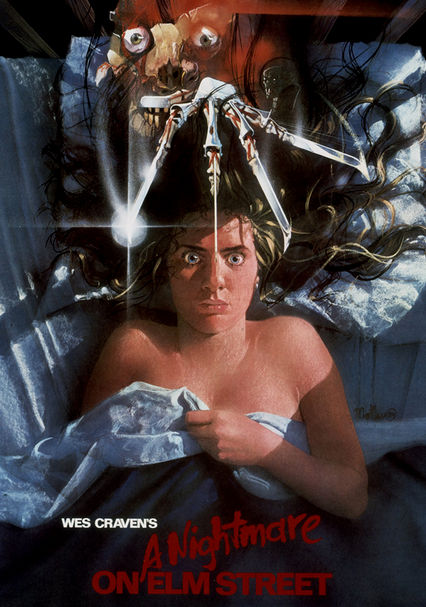
A Nightmare on Elm Street-1984

A Nightmare on Elm Street-1984

Director Wes Craven

Starring Heather Langenkamp, John Saxon

Scott’s Review #1,019

Reviewed May 4, 2020

Grade: A-

Pioneer horror director Wes Craven, famous for reinvigorating the slasher genre with humor, wit, and satirically ponderous situations, created the iconic A Nightmare on Elm Street (1984), which introduced the legendary character of Freddie Kruger (Robert Englund) to audiences.

Followed by eight sequels or re-introductions, the debut is a clever affair and a breath of fresh air in the too-often formulaic world of slashers. And who could deny the satisfaction of seeing future Hollywood royalty, Johnny Depp, succumb to the villainous Kruger?

A group of unsuspecting teenagers is tortured both consciously and unconsciously as they dream the nights away, by a hideously disfigured man clad in a striped shirt and a gloved hand with razors.

He taunts and teases the teens unmercifully as they reside, party, and have sex in small-town America, mainly spending their time in high school or on the cursed Elm Street. The main girl to experience Freddie’s devious wrath is Nancy Thompson (Heather Langenkamp), who uses caffeine and more drastic measures to stay awake and alive!

To review A Nightmare on Elm Street without mentioning the Friday the 13th or Halloween franchises would be foolhardy since combined, they make up the “Big Three” of the entertaining slasher genre, each living on in infamy.

To provide a quick chronology, A Nightmare on Elm Street ran from (1984-1994) adding a crossover with Friday the 13th in 2003, and an unnecessary remake in 2010. Friday the 13th hit cinemas in 1980, never looking back until the uninspired remake in 2009.

Finally, Halloween debuted in 1978 and is still churning out relevant chapters.

Whereas Friday the 13th and Halloween chose to stick with a more realistic formula- a crazed killer wielding a butcher knife or an ax, the brief foray into outer space with Jason X (2002) notwithstanding, A Nightmare on Elm Street is the more cerebral of the three, mixing dreams and reality so the viewer is left perplexed and filled with thoughtful questions and is scared.

As each victim is gleefully toyed with, invaded, and killed in their dreams, and thus killed, by the burnt killer, more complexities exist.

Released right smack in the middle of the 1980s- the decade of decadence, where a snug suburban life meant safety and sweet dreams, the target audience is the teenage crowd.

In the height of the Reagan years when everyone and their neighbor had a vacation house, boat, or BMW, this film scared the daylights out of most viewers. Sleep did not come easy for those who took Freddie’s taunts to heart.

While frightening, A Nightmare on Elm Street does not take itself as seriously as Friday the 13th or Halloween does. Infusing humor and snickering fun is a great recipe to differentiate itself from its brethren by taking on straight-ahead horror.

The film can blur the boundaries between the imaginary and the real, toying with audience perceptions at every turn and making them think.

Imaginative, this is not always the film’s key to success. Craven needs to be careful that his story does not teeter off into the absurd or the outlandish, which it did in later installments.

Credit must be given to Englund, who takes crazy Freddie off to orbit with dizzying rapidity, going too over-the-top only once or twice. And who can ever forget the frightening child’s rhyming song featured in the film?

The story always eclipses effects, and Craven is wise to craft a backstory for Kruger to enjoy almost making him sympathetic, but then harshly bringing reality back and making the killer a child murderer.

Still, the parents who took their brand of vengeance and burned Freddie alive are not saints but sinners. This allows Kruger just enough empathy to keep audiences engaged. He’s a fun villain!

A Nightmare on Elm Street (1984) is a timeless classic that introduced the world to one of the horror genre’s best villains.

Unlike Jason and Michael Myers, who are faceless, Freddie Kruger was played by one actor, Robert Englund, who gave him energy, zest, and charm.

He will forever live on in the hearts of slasher fans everywhere.

Annabelle Comes Home-2019

Annabelle Comes Home-2019

Director Gary Dauberman

Starring Mckenna Grace, Patrick Wilson, Vera Farmiga

Scott’s Review #1,008

Reviewed April 7, 2020

Grade: B

Annabelle Comes Home (2019) was made as a sequel to 2014’s Annabelle and 2017’s Annabelle: Creation, and as the seventh installment in The Conjuring Universe franchise overall.

Lest we forget the uninspiring The Nun (2018) it is not necessary to view the films in sequence and with this version, it can serve as a stand-alone film just fine.

At this point in the series, it’s becoming increasingly challenging to connect all the dots from previous offerings. The film is a fun, scary-light experience, which works well.

Borrowing the babysitting theme from the 1978 horror masterpiece Halloween, the film is neither dull nor formulaic, providing some visual creativity to an otherwise B-movie experience.

Franchise fan favorites Patrick Wilson and Vera Farmiga return to their popular roles, but only in the beginning and end of the film, letting the younger set take center stage as they bear the brunt of angry demons.

Presumed to take place sometime after Annabelle but before Annabelle: Creation, demonologists Ed (Wilson) and Lorraine Warren (Farmiga) are determined to stop the frightening Annabelle from wreaking further havoc and drag the possessed doll to the safety of their locked artifacts room, placing her behind sacred glass and enlisting a priest’s holy blessing.

After a curious teenage girl snoops, Annabelle is reawakened angrier than usual and unleashes a torrent of evil spirits into the Warren house. Ten-year-old daughter, Judy (Mckenna Grace), must be savvy and outsmart the dangerous demons before it’s too late.

Annabelle herself, the doll statuesque and holding a grotesque smirk on its made-up face, with bright blue/green eyes, has quietly become a fixture within the horror community, now easily recognizable to mainstream audiences everywhere.

That Annabelle does not speak or walk, but only stares, unless possessed by a spirit, is a big part of the fun and the scares. She tends to appear rather than move around, which is part of her appeal.

And the pretty red ribbons in her hair are a bonus.

The 1970s time period is fabulous, as the set and art design teams deserve major props for authenticity. Warren’s house, for example, is a fantastic showcase for the yellow and brown trimmings prevalent in any middle to upper-middle-class residence during this decade.

The flowered wallpaper enshrouding the downstairs hallway and the pink frosted birthday cake are delightful additions. The standard feathered hairstyles and plaid-patterned clothes are timeless trademarks and always a hoot.

From a fright perspective, the film provides a perfect balance of buildup and edge-of-your-seat thrills.

The best example of this is when nosy Daniela (Katie Sarife), already curious about the Warrens, breaks into the artifacts room, determined to talk to the dead.

Her motivations are believable, given that her father recently died in a car accident, and she is a fan favorite. Chaos ensues as she unleashes such evil forces as the Black Shuck, the Ferryman, and the Bride.

The film tries a bit too hard to appeal to a tween or teenage audience with a silly romance between the main character, Mary Ellen (Madison Iseman), a perfect, virginal babysitter, and her high school crush, Bob (Michael Cimino).

He even serenades her after an idea by the pizza deliveryman, and conveniently lives across the street.

This portion of the story is unnecessary and feels like filler, as Mary Ellen is responsible enough not to let a boy into the house she is looking after.

Annabelle Comes Home (2019) is a commendable horror effort, intelligently blending both supernatural and classic horror subgenres with ease and perfect balance.

Staying true to its franchise roots and incorporating groovy production and musical score elements representing the decade it celebrates, the film holds up well in a myriad of similar films that rely on gimmicks and cheap thrills more than this one does.

Countdown-2019

Countdown-2019

Director Justin Dec

Starring Elizabeth Lail, Jordan Calloway

Scott’s Review #999

Reviewed March 12, 2020

Grade: B

Countdown (2019) is a modern horror film that accomplishes what it intends to do- it entertains the audience.

With jumps, frights, and some comedic elements, it borrows heavily from the Final Destination (2000-2011) and Happy Death Day (2017-2019) franchises.

The film does not reinvent the wheel, conventionally steering the course. The superstitious elements become hokey and unbelievable, but the film has enough momentum to offer a solid product, especially pleasing to genre fans.

When a young nurse (Elizabeth Lail) downloads an app that claims to predict precisely when a person is going to die, it tells her she only has three days to live. With time ticking away and death closing in, she must find a way to save her life before time runs out.

She struggles to figure out how to delete the app while piecing together the puzzle to break a curse and thwart a threatening demonic spirit. Her sister is also threatened.

Director Justin Dec, a newcomer to the cinema, does not waste any time beginning the action, as events debut at a college keg party. A group of revelers decides to play a drinking game after downloading the new Countdown app, which is supposed to determine how long you have left to live.

Thinking the app is a joke, unlucky Courtney (Anne Winters) is startled to see that she has only three hours to live. After refusing to drive home with her drunken boyfriend, Ethan, she is murdered at home by an evil spirit, while Ethan crashes his car, a tree spearing through the seat that Courtney would have been sitting in.

With this sequence, the audience is hooked, as the pacing is well-maintained. With the app clock ticking down dangerously towards zero, a theme heavily promoted throughout the film, we can’t wait to see how or if Courtney is killed.

Red herrings, like a man following her or a shower curtain that moves, are presented for good suspense. Assumed to be the “main girl”, Courtney’s death is surprising, and the main title then appears, fooling the audience. There is more to come.

Carrying a horror film is not easy, but actor Lail rises to the occasion. Resembling a young Christina Applegate, Quinn is strong and independent. Many of the scenes take place at the hospital where she works, though she also makes time to see her father and sister.

Quinn’s mother has recently died, and Quinn blames herself. She connects with Matt (Jordan Calloway), who lost his brother after stealing his toy. Quinn is a character that viewers can admire and emulate.

Countdown deserves credit for incorporating a wide range of diversity. Matt is black, making his romance with Quinn an interracial one. Several Asian, Latino, or Black characters are featured in many scenes, showcasing a diverse representation of multiculturalism.

Unfortunately, and surprisingly, no LGBTQ characters are featured. Comic relief store owner, Derek (Tom Segura), would have been the perfect character to make gay, but this was not to be.

To build on this, a timely and progressive Me Too side story is added, when a well-respected doctor at the hospital makes a move on Quinn. He reports the incident to Human Resources when she rebuffs his advances. She is suspended, without an investigation, until other women come forward throughout the film.

While this would be an essential message in another type of film, the relevance does not work or fit the rest of the story.

The ninety-minute running time is a splendid approach, so the film never drags or dulls. The final twenty minutes or so are a letdown as Quinn and a priest realize that to break the curse, one must trick it by having someone else die out of sequence.

This is all too like Final Destination, but not as good, as Quinn ends up fighting with the spirit, killing herself with an overdose of morphine, while drawing a circle on her arm where a syringe with Naloxone can subsequently revive her.

For a new director eager to break into the horror genre, Justin Dec borrows heavily from previous films, presenting a copycat story that is paced perfectly. It provides enough interest and good casting to warrant a follow-up.

Due to low box-office returns, I doubt Countdown (2019) will become a mainstay franchise, but Dec may have a promising future ahead of himself.

Scary Stories to Tell in the Dark-2019

Scary Stories to Tell in the Dark- 2019

Director Andre Ovredal

Starring Zoe Colletti, Michael Garza

Scott’s Review #997

Reviewed March 10, 2020

Grade: C+

Admittedly, not having read the series of books that Scary Stories to Tell in the Dark (2019) is based on, nor knowing the books even existed, may have influenced my opinion. Still, the film is lackluster at best, serving up some creative moments, but more silly ones.

The film is too polished, uneven, and feels too similar to modern projects like It (2017) or the television series Stranger Things to have its individuality.

A few interesting moments or sequences exist, but not enough to recommend.

The creepy children’s books written by Alvin Schwartz are adapted into film form, as the 1968 Halloween period is brought to life.

The small town of Mill Valley, Pennsylvania, serves as the backdrop for the historic Bellows family mansion, which has loomed over the city for decades and holds a haunting mystery.

Sarah, a young girl with dark secrets, has transformed her troubled life into a series of terrifying stories, written in a book that has transcended time.

After a group of impressionable teenagers discover Sarah’s terrifying home, they uncover her stories, and they become all too real.

The visual effects and images are the film’s high point.

Several visceral and stylistic sequences deserve admiration and mention. When one of the panicked teenagers scrambles into a mental institution, he is met with a horrific, blood-red glowing image that surrounds him.

As he attempts to escape, a ghastly, bloated figure slowly approaches him from all sides.

Later, a freakish person known as The Jangly Man, able to reconstruct itself from separate body parts, pursues one of the teens. These scenes are credible and inventive. The look of the film is its only real success.

The late 1960s time period both works and doesn’t work. Getting off to a splendid start, the theme song performed by Donovan, “Season of the Witch”, also incorporated over the closing credits, is a positive and provides a nice mystique.

Since the date is supposed to be Halloween, this is fitting, though too few other seasonal reminders ever exist so that the viewer soon forgets it is Halloween at all.

Attempts to make the characters look the part are feeble, resulting in modern actors clad in 1960s attire, which reduces authenticity.

Mentions of the Vietnam War, while politically left-leaning, are only added for story purposes, feeling staged.

Once and for all, a note to filmmakers: making a character wear glasses to appear intelligent is a gimmick done to death and no longer works.

Actor Zoe Margaret Colletti is fine in the central role of Stella and does her best with the material she is given.

Still, the realism is lacking, resulting in an overwrought quality. The character feels more like a Nancy Drew-type than anything more profound.

Viewers are supposed to believe the convoluted story that Sarah was abused and now resides, as an older woman, in a secret room and scripts a book of horror stories that come to life and wreak havoc on those who enter the haunted house.

Stella manages to channel Sarah, as an adult, and convinces her to stop writing and cease the terror with a weak message of female empowerment. The events are so far-fetched, and the storyline is dictated that it eliminates any character development from the film.

Scary Stories to Tell in the Dark (2019) struggles to determine its target audience. Is it young adults or an older audience seeking a Halloween-themed scare?

The story is too complex and confusing for both the audience and anyone else.

The visual effects are fantastic, especially the stylistic red and black end credits, but the overall context suffers from a lack of continuity and becomes a forgettable experience.

30 Days of Night-2007

30 Days of Night-2007

Director David Slade

Starring Josh Hartnett, Melissa George

Scott’s Review #993

Reviewed February 25, 2020

Grade: B-

During the decade when 30 Days of Night (2007) was released, the trend leaned towards the vampire-horror genre, where bloodthirsty tyrants would do battle with the good folks of the land.

The film has outstanding elements: a tiny town, total darkness, and chaos.

The gritty conclusion is a predictable letdown as the film spins out of control into the silly and the formulaic.

Hartnett, at the time, was an A-list actor, whose film career was dwindling, reduced to the horror circuit.

In Barrow, Alaska said to be the northernmost town in the United States, the winter sunsets and does not rise for 30 days and nights providing a full month of complete blackness. An evil force emerges from the black atmosphere and strikes terror on the town, and all hope rests on a husband-and-wife cop team, Sheriff Eben (Oleson (Hartnett) and Stella Oleson (Melissa George).

The duo must protect a handful of survivors from a pack of vampires and battle the lack of communication and blizzard conditions in the frigid arctic.

The film is based on a comic book miniseries of the same name, but 30 Days of Night is mostly influenced by two better films; 28 Days Later (2002) and 28 Weeks Later (2007), the former a groundbreaking film within the sub-genre- even the title is a copycat!

The result is nothing groundbreaking and rather run-of-the-mill story-wise. It seems patterned too closely after other films rather than having an identity all its own.

The best part of the film is the fantastic elements and trimmings created to provide an atmosphere. Highly effective, it carries the film and intrigues the compelled audience when the story lacks.

What is more frightening than a blinding whiteout, hungry vampires, or a town fraught with perilous fear? The spooky atmospheric trimmings make the lack of payoff even more jarring and make the film adequate, but little more.

The casting is mediocre and unrealistic.

I doubt any sheriff in a tiny, forgotten town would be as good-looking as Hartnett, nor is he believable as a powerful sheriff- he does not fit the part.

George, as estranged wife Stella, is neither good nor bad, but rather inconsistent. Little chemistry exists between the couple and both were cast for their looks as they seem to be staged puppets more than fleshing out their characters.

Regardless, any romantic entanglements between the characters are dull and insignificant.

The character development is not there.

Ben Foster, as “The Stranger”, is a great actor, but not in this film. Subsequently appearing in grand roles in Hell or High Water (2016) and Leave No Trace (2018), this film is not his best work. The character is limited whereas he could have added much more to a better-written script.

We know little about any of the townspeople and is unclear what the motivations of the vampires are other than to wreak havoc and create terror.

30 Days of Night (2007) is a marginally good film mostly because of the way it looks, and the horror-flavored ingredients sprinkled throughout. Despite some cool ways of killing off the evil vampires, the film never hits high gear, only remaining neutral for most of the way and puttering out with a disappointing climax.

Advisable is to see the much superior and similarly produced and filmed, 28 Days Later (2002).

The Lighthouse-2019

The Lighthouse-2019

Director Robert Eggers

Starring Robert Pattinson, Willem Dafoe

Scott’s Review #987

Reviewed February 5, 2020

Grade: A-

The Lighthouse (2019) is the sophomore effort by acclaimed and novice horror director Robert Eggers.

His first film, The Witch (2015), garnered praise and independent film award nominations, and his latest offering has also received numerous accolades across the board.

This time around, he wisely secures top-notch talent, casting the incredible Willem Dafoe and Robert Pattinson to star.

The result is a well-acted, gorgeously photographed film that is odd beyond belief, requiring a second viewing even to attempt to understand it. The atmosphere of this film will draw some viewers in and push away others. It is that type of film experience.

Shot in startlingly good black and white, the time is the 1890s, set somewhere off New England.

The film stars Dafoe and Pattinson as two lighthouse keepers who start to lose their sanity when a storm strands them on the remote island where they are stationed. They spar, love, and play games, while imaginations run wild with bizarre images of mermaids, death, and claustrophobic storm conditions.

Frequent hallucinations render the plot unclear of what is fantasy and what is reality.

The technical aspects of The Lighthouse are superior to the story elements.

The gorgeous camera work, looking like either a modern film or a film from the 1940s, is superior. Seldom is a film made like this, and the black and white filming provides a cold and bleak atmosphere.

The prevalent wind and driving rain are buffeted by flying objects and mud, creating a looming and foreboding danger. The viewer can tell that sinister events are on the horizon, perfectly encrusting the increasingly dangerous storm.

The story is harrowing to figure out, with the exception that one or both men are losing their minds. Winslow (Pattinson) is the newbie, sent to assist the elder lighthouse keeper, the elderly and cranky Thomas Wake (Dafoe).

Wake forbids Winslow to ever set foot in the lantern room, insisting that the task is his job alone. This piques the interest of the young man, especially when Winslow observes Wake going up to the room at night and stripping naked.

Winslow begins experiencing visions and dreams of tentacles in the Lighthouse, tree stumps floating in the water, and distant images of a mermaid.

Peculiar scenes exist that make The Lighthouse both memorable and challenging to decipher. The presence of seagulls lends the film an authentically beach-like atmosphere, with their cawing and flying around.

Their existence soon becomes an ode to Alfred Hitchcock’s The Birds (1963) as a one-eyed gull begins to stalk Winslow.

Told it is bad luck ever to kill a gull since they harbor the souls of sailors, Winslow finally kills the attacking one-eyed gull in a fit of rage during one of the film’s most brutal scenes. Wake seethes with anger.

The film is homoerotic in many scenes, none more so than the lovely scene when the two men begin to dance and sway to the music. About to kiss, reality strikes, and the two drunk men come to blows.

The scene reminds me of an important one in the groundbreaking LGBT masterpiece Brokeback Mountain (2005).

The combustible pent-up masculine tension explodes, and we wonder if in another time the men lovers might be. This aspect is cerebral, filling The Lighthouse with psychological mystique.

A common element is the two men’s distrust of one another. Trapped by the destructive storm, they frequently drink themselves into oblivion- what else is there to do?

They sit and stare at each other, sometimes filled with rage, sometimes suspiciously. In a scene both jaw-dropping and hilarious, Winslow forces Wake into a collar and leash and leads him on his hands and knees into a muddy grave.

Unsure if the scene is fantasy or reality, it could almost be taken from a gay leather porn film.

Eggers has a bright future ahead of him, and I am eager to see his next project. I am not averse to odd or even nonsensical films if the intent is good, but I would recommend a more straightforward approach next time to see what he comes up with.

The Lighthouse (2019) successfully offers a creepy and bizarre tale of men losing their sanity in a dream-like and creative way that will assuredly divide audiences.

Oscar Nominations: Best Cinematography

Independent Spirit Award Nominations: 2 wins- Best Director- Robert Eggers, Best Male Lead- Robert Pattinson, Best Supporting Male-Willem Dafoe (won), Best Cinematography (won), Best Editing

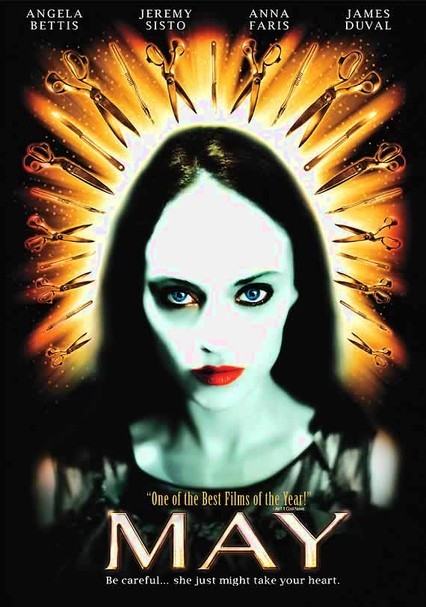
May-2003

May-2003

Director Lucky McKee

Starring Angela Bettis, Jeremy Sisto, Anna Faris

Scott’s Review #985

Reviewed January 30, 2020

Grade: B+

May (2003) is a macabre and twisted psychological horror film and the directorial film debut from Lucky McKee. Though not a box-office success, the film has become a cult favorite and is a feast for lovers of the deprived and tormented.

The wicked fun is to watch the main character, already troubled at the start of the film, dissolve into complete and utter madness.

The acting and the mood are exceptionally crafted.

Growing up with a lazy eye leaving her scarred with never-ending insecurity, May Canady (Angela Bettis) is a twenty-eight-year-old woman who has suffered from a troubled childhood.

Having always had trouble making friends, she is finally able to befriend a lesbian colleague, Polly (Anna Faris), and a handsome mechanic, Adam (Jeremy Sisto).

Before long, she spoils the friendship when her oddities brim to the surface. May descends into utter madness and decides to build a new friend using human body parts. Will bits and pieces of her friends be used in the creation?

Bettis is a goldmine in the central role and provides a healthy dose of sympathy and creepiness. Many film characters have been outright disturbing in cinematic history, but May is wounded and victimized so we, as viewers, want to see her win out for once.

All May wants is a friend and, especially with Adam, we root for her to find true love.

May is like a combination of Carrie and Frankenstein.

Adam, while handsome, is also weird, and a good mate for May. He introduces her to a bizarre movie in which two characters embark on a romantic picnic and then eat each other. Adam reveals that he created the film for a college project.

This impresses May- finally, she has a soulmate! She quickly ruins the moment by biting his lip, turning him off, and destroying her mounting confidence.

McKee is successful at making the film flow with precision and good pacing. Many rookie directors seem overwhelmed by a major motion picture undertaking, perhaps feeling more comfortable with short films. McKee proves he knows his stuff with an elegant and icy atmosphere that is just perfect for this type of film.

May is a quick one hour and thirty-three minutes, which is all that is needed to make its mark.

The final thirty minutes is the best part as the shit hits the fan in a big way. McKee’s choice to use the holiday of Halloween night as the backdrop is both obvious and ingenious.

May is not only ignored by Adam, but she learns he has a new girlfriend. To add insult to injury, Polly also finds love with their new girlfriend Ambrosia.

May feels isolated, finally snapping when she is ignored by her cat. She goes on a rampage and hacks up not only her friends but her eye.

May is a clever and atmospheric horror/thriller film with bursts of creativity and good-flowing storytelling. McKee may not always use originality and borrows heavily from other genre films, but he creates a nice blueprint of what his talents may lead to.

The film leaves the viewer unnerved and aghast, but isn’t that the point of a good horror film?

May (2003) could disappear over time but provides a worthy dedication to the horror genre.

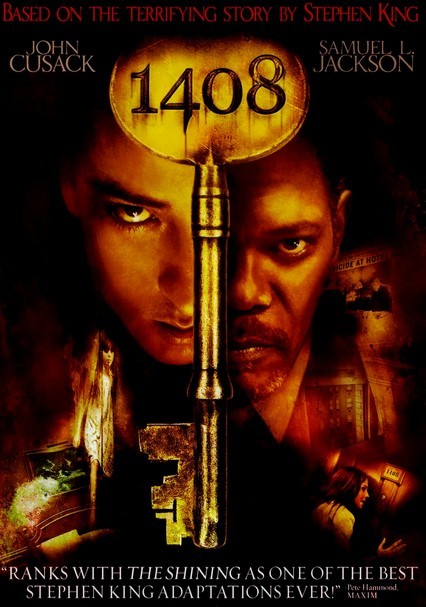
1408-2007

1408-2007

Director Mikael Hafstrom

Starring John Cusack, Samuel L. Jackson

Scott’s Review #983

Reviewed January 23, 2020

Grade: C+

A bundle of film adaptations of Stephen King novels has been birthed over the years. 1408 (2007) is one of many and while suspenseful, the project might have been better served as a quick fifty-minute episodic television event rather than a big-screen effort.

The content seems displaced and disjointed, stretched too thin.

Nonetheless, big stars like John Cusack and Samuel L. Jackson provide some stamina to a film that slowly teeters into nonsense and a confusing conclusion.

Based on Stephen King’s 1999 short story of the same name, the film follows Mike Enslin (Cusack), an author who investigates allegedly haunted houses, and rents the titular room 1408 at the Dolphin, a New York City hotel, to see what all the fuss is about.

Although skeptical of the paranormal, he is soon unable to leave the room as he experiences bizarre events.

The hotel manager, Gerald Owen (Jackson) attempts to convince Mike not to inhabit the notorious room, and intriguing is why?

The film has key success when it focuses on the atmospheric and the tense moments. The lighting and the camera techniques elicit a closed-in and claustrophobic aura because the set is mostly a hotel room.

The use of psychological tension works better than a slice-’em, dice-’em approach.

During Mike’s examination of his room, the clock radio suddenly starts playing “We’ve Only Just Begun”, a hit song by The Carpenters. Mike assumes that Olin is pulling a prank to scare him.

At 8:07, the song plays again, and the clock’s digital display changes to a countdown starting from “60:00.”

This is creepy, and the viewer is intrigued by what will happen next.

The window slams down and wounds Mike’s hand. He begins to see ghosts of the room’s past victims, followed by flashbacks of his dead daughter Katie, and his sick father. This catapults Mike into terror and he attempts to escape the room, fearing for his life.

He is unsuccessful in his escape and the room appears to have him prisoner until his wife, Lily (Mary McCormack) comes to the rescue.

What does Olin have to do with the events? Is Lily sinister or benevolent?

When Mike is out of the hotel room the film falls apart. Containing too many weird circumstances to make much sense- a surfing event on the beach, a Molotov cocktail, a fire alarm, and a return to the hotel room spin the viewer in too many directions as a hallucinogenic experience is created.

Before long the viewer will stop caring. I know I did. On paper, these oddities sound intriguing, but they did not translate to screen well.

Hafstrom directs the activity adequately and uses actors that viewers are familiar with, adding to the credibility. With fewer talents or unknowns, the film may have felt low-budget or independent, and I think the film, while not great, needs these actors to add professionalism.

The star is naturally Cusack, who enjoys the most screen time as a man who only believes what his eyes and ears tell him, and not the silliness of spirits and ghosts. The actor possesses an offbeat look which adds to the film.

From a storyline perspective, 1408 never really catches fire. The film is not pitiful, nor is it a great adaptation of a Stephen King novel. The novel is hardly a household name, which does the film a few favors.

The result is fair to middling, with a promising first half followed by a dour second. 1408 (2007) will be forgotten five years after its release.

The Reptile-1966

The Reptile-1966

Director John Gilling

Starring Ray Barrett, Jennifer Daniel

Scott’s Review #978

Reviewed January 10, 2020

Grade: B

Hammer horror film productions offer treats to be enjoyed. The budgets are always small, adding to the mystique, fun, and wonderment of what can be done.

Impressive is how creative they get with a shoestring budget.

The Reptile (1966) is an excellent film with enough murder and intrigue to satisfy, though it has many plot holes and illogical sequences.

The British class and murky locales are fantastic.

Set in Cornwall, England, events begin in a macabre way when a middle-aged bachelor hears noises coming from a nearby estate. When he investigates, he is bitten by a demonic figure and rapidly develops the “Black Death,” which kills him.

Many locals succumb to a similar fate. The bachelor’s brother, Harry Spalding (Ray Barrett), inherits his brother’s cottage and moves in despite the warnings of the resident tavern owner, Tom (Michael Ripper). Tom is the only one of the townspeople to befriend Harry and his wife, Valerie (Jennifer Daniel).

Meanwhile, the sinister Dr. Franklyn (Noel Willman), the owner of the nearby estate, is the only resident near the cottage. He lives with his daughter Anna (Jacqueline Pearce). The Doctor treats his daughter with contempt as she is attended to by a silent servant (Marne Maitland).

When Anna asks Valerie for help, Valerie and Harry are led to the estate, where dire events occur. But could this be a trap?

The setting of the coastal town is well created, and scenes in cemeteries, par for the course with Hammer productions, add a good vibe. The cottage and the estate are well-manicured, and the film feels like a British gem.

Since the sets are low-budget, the exterior sequences add to The Reptile. Assumed is that the film was shot with a “day for night” technique, a trick used to simulate a night scene while filming in daylight. This makes for positive cinematography.

The film’s final thirty minutes are best when Harry and Valerie are invited to dinner at the Doctor’s estate. Banished to her bedroom for most of the evening, Anna emerges looking ravishing in an evening dress but is soon revealed to have been met with a curse, sheds her skin, and becomes a frightening reptile.

The servant has a hold over Anna and her father while a sweet black kitten comes into play.

The characters are interesting. Benevolent Harry and Valerie mix well with the dark and cynical Dr. Franklyn and the servant. Franklyn is irritable, and the servant, though he does not speak, is devious and riddled with mystery.

Ignoring warnings to flee the town and never return, the newlyweds refuse. Blissful in their new cottage and filled with the promise of fresh life, their spirit counterbalances their neighbors’, and when the characters intersect, the real fun begins.

The creature is a bit corny and hardly scary. The makeup, reportedly complex for actress Jacqueline Pearce, looks amateurish. The cover art makes the creature look much better than in the film, but budgetary limitations tightened things.

Kudos for introducing the female creature. It was tough to root for or against her, though, since we know little about why she went from gorgeous to evil.

From a plot perspective, the viewer is encouraged not to try too hard to figure out how circumstances relate. Why and how did Anna become cursed? Did the servant curse her, and why was he there? Is the group of caged animal creatures that Anna eats?

It is mentioned that Anna needs a hot environment—is the hot molten metal in the basement enough to keep her human? Many other inquiries could be made, but they don’t matter much.

The Reptile (1966) is worth a watch, especially for fans of classic Gothic horror. Although the cast is unfamiliar, the project would have been enhanced by adding Peter Cushing or Christopher Lee, mainstays of Hammer films, in either of the central male roles.

Still, the film succeeds, and the low budget creates a fabulous texture. The main appeal is that it is a good, fun horror film with little expectations.

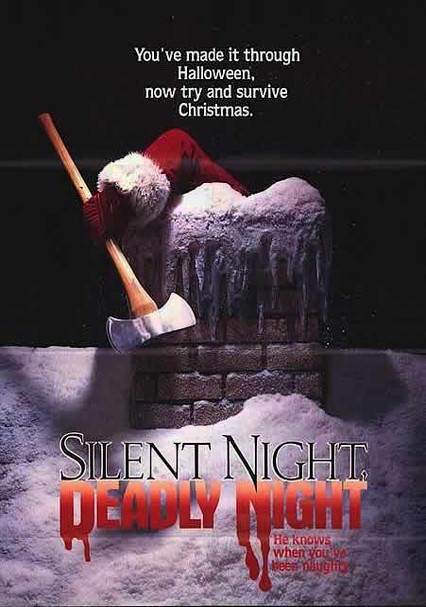
Silent Night, Deadly Night-1984

Silent Night, Deadly Night-1984

Director Charles E. Sellier Jr.

Starring Robert Brian Wilson, Gilmer McCormick

Scott’s Review #974

Reviewed December 30, 2019

Grade: B

Silent Night, Deadly Night (1984) is a fun, holiday-themed horror/slasher flick that is cheery mayhem in the spirit of the season, and a worthy addition to any horror fan’s collection.

The film is best watched late at night for appropriate effect, and obvious to view around the holiday that it celebrates.

It would make a great companion piece to Black Christmas (1974), a superior film, but both contain eerily similar musical scores, the former updated with electronic beats for the 1980s.

The horror film was met with ridicule and protest upon release for the promotion of a killer Santa Claus, despite the story being slightly overreacted to and not interpreted correctly. The ‘real’ Santa Claus does not perform the slayings, but rather a mentally unstable young man dressed in the red suit does the dirty deeds.

Nonetheless, the film was unceremoniously yanked from theaters after parents expressed fear that their kids might be traumatized by the film. Silent Night, Deadly Night has graduated to cult-classic status and is entertaining, perhaps embracing its derision instead of running from it.

The action begins in rural Utah in 1971, as the Chapman family drives to a retirement home to see their catatonic grandfather. When left alone, the elder warns five-year-old Billy to fear Santa Claus, which his parents disbelieve.

On their way home, they stop along the roadside to help a man dressed as Santa Claus, whose car appears to have broken down. The man robs and kills the parents, sparing Billy and his brother from death. Three years later Billy and Ricky reside in an orphanage led by the sadistic Mother Superior, and a kindly nun, Sister Margaret (Gilmer McCormick).

Ten years later (present times), the now-grown Billy (Robert Brian Wilson) is benevolent and friendly, obtaining a job as a stock boy at a toy store with the help of Sister Margaret. As Christmas Eve approaches, Billy has flashbacks of his parent’s murders and later is forced to play Santa Claus for the Christmas party when a co-worker falls ill.

As the staff becomes inebriated, a female co-worker is nearly raped causing Billy to go berserk and kill both the assailant and the victim who blames Billy. He then spends the night prowling the area for victims he can stab or behead.

Fun is the name of the game with Silent Night, Deadly Night.

The film is to be enjoyed and is a macabre treat for slasher fans. The kills are respectable with the traditional methods used- an ax to the head and a bow and arrow death, along with more elaborate deaths like strangling with a chain of Christmas lights, and a bare-chested female victim being impaled on a moose head.

The highlight is the beheading of a mean teenage bully as he gleefully sleighs down a hill on a stolen sled.

Plenty of gratuitous bare chests (female) common in these types of films are in store for the lusty male viewer, but a nude male is glimpsed as well to make for some R-rated diversity.

Par for the course with slasher films made decades ago is the omission of cultural diversity. Not one Black, Latin, or Asian character is ever seen. The pure-as-snow Utah setting might be one justification.

If one were to attempt to analyze Silent Night, Deadly Night (not recommended) one can deduce a specific religious message or at least a questioning of Catholicism, specifically the harshness of Mother Superior and her interpretation of punishment being good and implemented in the name of god.

Or maybe she is just a sadistic character? In perfect contrast, Sister Margaret is loving, protective, and nurturing to the orphans.

Whatever the intention of the filmmakers, humor is the recipe as the strictness and rigidity are played for laughs.

Proper for any horror film, the final scene leaves room for a sequel. Indeed, there were four follow-up films made with the younger Ricky taking over as the serial killer.

In satisfying form, Ricky glares at Mother Superior and exclaims “Naughty!” before the credits roll. The unrated version of Silent Night, Deadly Night is the preferred version to watch.

Pull up the covers, light the fire, and kick back with a six-pack of Bud Lite, roast some marshmallows, and enjoy Silent Night, Deadly Night (1984) for what it is.

Bad acting, sins of the flesh, and a delightful holiday slaughter with unintentional (or intentional) humor and cliched characters make for robust enjoyment on a lightweight scale.

Midsommar-2019

Midsommar-2019

Director Ari Aster

Starring Florence Pugh, Jack Reynor

Scott’s Review #957

Reviewed November 11, 2019

Grade: B+

Director Ari Aster made a splash with his feature-length directorial debut, the horror-drama film Hereditary, in 2018. The film received enormous accolades, even considered for an Oscar nomination, and was quite bizarre and horrific.

Aster follows up with Midsommar (2019), a film that is arguably even freakier and more ambitious.

The film is slow-moving and foreboding, but it ultimately reaches a macabre and perplexing climax. My initial reaction is that the film is a fine wine with additional richness upon subsequent viewings.

The film quickly gets off to a creepy start in the United States as college student Dani Ardor (Florence Pugh) receives a cryptic email from her troubled sister. Her sister soon kills herself and her parents by filling the house with carbon monoxide fumes.

Dani is devastated and needs support from her distant boyfriend, Christian (Jack Reynor), an anthropology student. The couple continues to feel increasingly disconnected from each other as the months pass.

Dani and Christian decide to join some friends at a midsummer festival in a remote Swedish village. One friend has relatives in the town, and another chooses to work on his thesis.

What begins as a carefree holiday takes a devious turn when the villagers invite the group to partake in festivities that grow increasingly unnerving and viscerally disturbing.

Strange events begin to occur as the subsequent series of celebrations gets underway.

Any horror film that mixes pagan cults, folklore, and religion easily provides the creeps, and Midsommar successfully hybridizes American culture with Swedish culture in frightening form.

Much of the film takes place in a remote area, with sprawling sunny lands and a deathly silent atmosphere.

The cheery locale has a peculiar California vibe, and Swedish women often adorn their hair with hairstyles reminiscent of the Charles Manson era.

Uncertain is whether this was Aster’s intent or not.

I love how the students are intelligent and worldly, using their time in the village to learn and study. The traditional horror stereotype involving high school or college students is their desire to guzzle beer, party, have sex, and do little else.

Aster wisely makes his group intellectual and more studious than the norm. The students do partake in drugs, but this has more to do with the villagers having healing remedies and other sorts of herbal delicacies.

Midsommar contains many lengthy nude scenes, both male and female, the actors readily baring both their fronts and their rears. This is almost unheard of in American film, but Midsommar is a co-production between the United States and Sweden, providing more leeway in the nudity department.

When Christian is given a strong psychedelic and beds a virginal villager eager to mate, the poor chap winds up chased around the village in the buff. This occurs after he inseminates the girl as they are surrounded by nude female villagers cheering them on.

Confusing and left unclear are the motivations of the villagers. The point is made that nine human sacrifices must be made to rid the village of evil, but why is the evil there to begin with?

During a ritual, it is revealed, in gruesome form, that those elderly folks commit suicide at age seventy-two, and their names are given to newborns.

The handsome Christian is a prime candidate to provide life, but why are the others killed? Were they lured intentionally, and does their being American have anything to do with it? Was the intent all along to crown Dani May Queen, or did she win the dancing competition?

The climax of the film ties back to the beginning portion only in terms of Dani’s and Christian’s relationship, and her family’s deaths seem to have little to do with the overall narrative. Does Dani intend revenge on Christian, or is she so drugged that she is unaware of her actions? Will she remain in the village?

A film heavily influenced by The Wicker Man (1973), Midsommar (2019) has divided audiences, with common reviews offering mixed opinions. Some despise the film, calling it one of the worst ever seen.

Others herald it as a work of art, an unsettling offering that provokes thought and provides a sinister feel.

I found an enormous number of questions left unanswered, and this may be a good thing. It only makes me want to see the film again or peel back the onion post-film to dissect the many layers Aster creates.

Independent Spirit Award Nominations: Best Cinematography

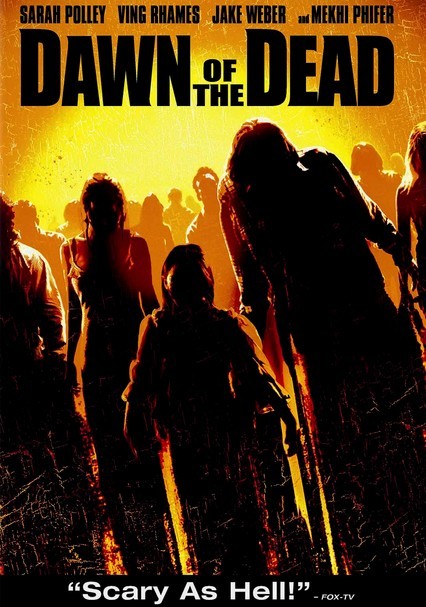
Dawn of the Dead-2004

Dawn of the Dead-2004

Director Zack Snyder

Starring Sarah Polley, Ving Rhames

Scott’s Review #956

Reviewed November 8, 2019

Grade: C+

Dawn of the Dead (2004) is a remake of the original horror-comedy-satire film by legendary George Romero. What the original provided in intrigue and concept is lacking in the much bloodier remake- the freshness is not there.

The film was made pre-television phenomenon The Walking Dead but watching it now with the zombie obsession in a steady decline, the film, while entertaining, feels tired and dated.

The film feels patterned after the successful and fresh 28 Days Later (2002).

Now set in Wisconsin (the original was in Pittsburgh, Pennsylvania), Ana (Sarah Polley), returns from a shift at the local hospital, where she works as a nurse. She soon learns that massive bulletins alert sudden zombie plague, where former human beings have turned into cannibalistic corpses.

Her husband a victim, Ana joins a small group of survivors at the local shopping mall and attempts to stay alive while being encircled by the creatures, and other not-so-nice people.

The main group includes a grizzled police sergeant, Kenneth (Ving Rhames), electronics salesman Michael, petty criminal Andre and his pregnant wife, Luda, and three guards, C.J., Bart, and Terry.  They are later joined by others who arrive via delivery truck.

The large group befriends another survivor, Andy, who is stranded in his gun store across the zombie-infested parking lot.

The rest of the film offs the characters one by one in traditional horror style, while the remaining few try to figure out an escape route.

The main problem with Dawn of the Dead is that the characters are not written well, making them either one-note or not particularly interesting, and quite stereotypical. Examples of this are the angry and defiant guards, who make trouble for the rest of the group for no other reason than as a weak plot device to create drama other than from the zombies.

Kenneth is an angry cop, a lone wolf type of character, who frequently postures and preaches. Again, there is no interesting reason behind his personality.

Finally, Steve is an oversexed playboy who keeps recordings of his sexual shenanigans for repeated viewings.

The character meant to root for is Ana. We sympathize with her for her husband’s gruesome death and her struggle to stay alive, so she is the film’s hero. Her character is likable and Polley is a worthy actress, but I wonder if a name star would have been better in this circumstance.

Polley did not last very long in the Hollywood world and this only makes the film feel more dated than it already does. Many viewers will not know who the actress is.

Another irritant is the decision to make the zombies move faster. Part of the beauty of the zombies is that they are slow and brooding, unable to think, just existing in a mummy-like haze. Suddenly, they are fast, making them tougher to flee from. This attempt at a modern approach by changing things up too much does not work at all.

Dawn of the Dead is not all dour.

Props must be given to the mall setting, updated for 2004 shopping inclusiveness. Trendy and timely stores are added, and it feels like a mall of its time. This is one aspect of the film that works and feels interesting.

Eagle-eyed viewers may spot some of their favorite stores from this decade.

The strongest part of an otherwise mediocre film is the brilliant incorporation of the heavy-metal band Disturbed’s aggressive song “Down with the Sickness” from 1999. The song is incorporated over the stylistic end credits and a summary of what happens to the survivors is provided over the lyrically brutal song.

Unfortunately, it is at the very ending of the film where it finally hits a home run.

Since this is a remake it is impossible not to compare it to the 1978 version in many ways. The characters in the original had more salt and a romance added a bit of complexity. The original also felt fun whereas the 2004 version seems hardened and angry.

The originality that made the original fresh is lacking in this retread, which limits the unique social context and thought provocation that the original contained.

With little reason to watch Dawn of the Dead (2004), unless it was still 2004, the original 1978 Romero version is far superior. A fun tip might be to watch them in sequence (I did!) to notice differences in style and pacing and for general comparison sake.

The final musical score is a win, but much of the rest is dull and dated.

Don’t Look in the Basement-1973

Don’t Look in the Basement-1973

Director S.F. Brownrigg

Starring William McGhee, Anne MacAdams, Rosie Holotik

Scott’s Review #954

Reviewed November 5, 2019

Grade: B

A film that is so low-budget that it strongly resembles the quality of independent master John Waters’ films, Don’t Look in the Basement (1973), has very low production values. It makes Waters’s films look like grandiose budget fests.

It has a campy, cheap quality that adds to the fun of watching. With a videotaped look and marginal acting, the film is perfect for a late-night indulgence, but little more.

Director S.F. Brownrigg, with screenwriter Tim Pope, brought this project to life. Also known as The Forgotten and Death Ward #13, Don’t Look in the Basement is the title that works best and conjures the most intrigue.

The story revolves around a collection of odd hospital inmates running the asylum while a series of mishaps occur.

Stephens Sanitarium is a secluded mental health facility in a remote area run by the quirky Dr. Stephens. The good doctor believes that the secret to curing his crazy group of loons is to allow them to express themselves, acting out their realities in hopes of solving their problems.

Stephens and an elderly nurse are both killed separately; he is accidentally hacked to bits by an ax, and she has her head crushed by a female patient who thinks her baby (a doll) is being taken from her.

Dr. Geraldine Masters (Anne MacAdams) is left to run the facility and greets a new nurse, the sexy Charlotte (Rosie Holotik), when she arrives from out of town, expecting a job.

Charlotte encounters all the inmates before strange events begin to occur, like an older patient having her tongue cut out, and a visiting telephone repairman being murdered.

One could speculate that Don’t Look in the Basement influenced independent treats such as Supervixens (1975), High Anxiety (1977), or the plethora of slasher films soon to be on the horizon, but this may be wishful thinking.

A few choice scenes seem like quick blueprints for these films to follow, but in an amateurish way.

Despite the film being in the horror genre, several scenes, mostly of Charlotte and Geraldine talking in an office, seem to be carved from a daytime soap opera popular at the time.

The long dialogue and almost throwaway scenes do not further the plot much, and it’s the occasional macabre death scene that achieves the most reaction.

Don’t Look in the Basement adds a big twist that is not difficult to figure out once all the pieces are presented to the viewer. The foreboding title ultimately underwhelms as this anticipated big secret barely comes to fruition.

As the players are offered one by one, the implausible conclusion reaches a climax, and the viewer will ruminate that the early stages of the film are superior to the ending.

The poor pacing and meandering story made me tune out at times. Still, the film is fun and a good, old-fashioned, campy, goofy good time.

The characters are completely over-the-top in the best possible way. A female nymphomaniac who, it is relayed, has been left by any man she has ever met and craves love and affection, is convinced that the repairman will marry her (they have only just met!) and has sex with his corpse.

A lobotomized black man only eats purple lollipops and has a heart of gold, while the ugly older woman, sans tongue, attempts to convey a secret message.

Don’t Look in the Basement (1973) is a marginal success because it does not take itself too seriously. This is both good and bad because the project takes on a juvenile quality that sometimes seems to be going for laughs more than for fright.

The acting is below par, but somehow the characters retain enough interest to warrant a recommendation, but only for those with an interest in the genre.

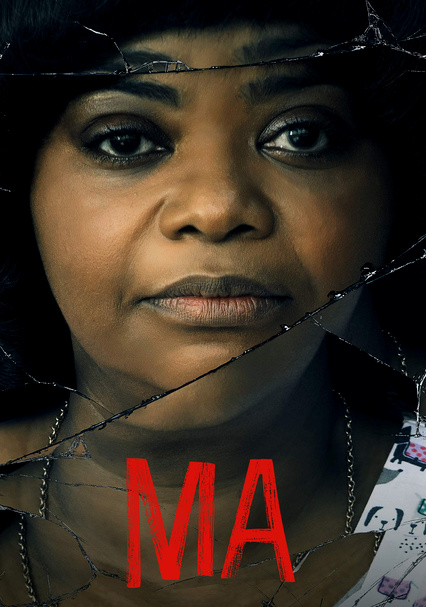
Ma-2019

Ma-2019

Director Tate Taylor

Starring Octavia Spencer, Diana Silvers

Scott’s Review #949

Reviewed October 22, 2019

Grade: B+

Marketed as a slasher film based on the trailers, Ma (2019) impressed me immensely as my expectations of a standard horror film were superseded by a more complex, perfectly paced psychological thriller.

A fantastic performance by Octavia Spencer, and dare I mention an Oscar-worthy one if this were a different type of film, the actress effortlessly brings a vulnerability to a not-so-easy role to play.

The finale is disappointing, and the film includes a few too many stereotypes, but it is a terrific effort nonetheless.

Set somewhere in remote Ohio, but looking more like the southern United States, teenager Maggie Thomson (Diana Silvers) and her mom Erica (Juliette Lewis) return to Erica’s hometown after her marriage fails.

Reduced to a job as a cocktail waitress at a local casino, she encourages Maggie to make friends. Maggie falls into the popular crowd as Erica reconnects with high-school friends who are mostly the parents of Maggie’s new friends.

Sue Ann (Spencer) bonds with the cool kids by purchasing them alcohol and hosting parties in her basement, much to the displeasure of her parents.

The audience soon realizes that something is amiss with Sue Ann. She forbids the kids from ever venturing upstairs and slowly develops a needy attachment to the teens.

Flashbacks begin to emerge as clues to her connection to the other parents and her plot for revenge.

The incorporation of a place in the house to avoid is a typical horror gimmick that always works well. Inevitably, someone will venture into that area of the house, and a secret will be revealed. Ma is no different in this regard.

It’s terrific to see more diversity, particularly among the African-American population, represented in the horror genre. Typically, the horror genre has been an all-white affair, with actors of color often cast as best friends or in minor supporting roles at best.

Thanks to Get Out (2017) and Us (2019), horror films have recently included all-black casts and have been tremendous hits.

Let’s hold out hope that the Asian, Latino, and LGBTQ communities will receive more inclusion and bring freshness to a key cinematic genre.

The film belongs to Spencer.

The Oscar-winning actress must have had a fun time with this role and gets to let loose during many scenes. She goes from coquettish to maniacal, sometimes within the same scene, with flawless precision and gutsy acting decisions.

My favorite, Sue Ann, is the unhinged one as she slyly threatens to cut one male character’s genitalia off. She smirks and uses her large, expression-filled eyes to her advantage. Psycho has never looked so good!

The climax, so crucial in horror or thrillers, to follow through and capitalize on the build-up, ultimately fails in Ma. Once the big reveal surfaces and a childhood prank is exposed, the trick hardly seems worthy of a killing bonanza.

A mousy Sue Ann performed fellatio on a nerd instead of her crush. Even those involved on the outskirts are blamed, and waiting twenty years to exact revenge on her tormentors (most of whom have repented) doesn’t seem plausible.

Ma (2019) contains a hefty cast of stalwarts, but it’s Spencer who brings the sometimes-generic material and trivial conclusion to crackling life with her brilliant portrayal of a damaged woman.

Allison Janney, Lewis, and others add respectability when the film teeters too close to mediocrity with its teen character cliches. Still, the film excels when it focuses on a character-rich story and unexpected plot points.

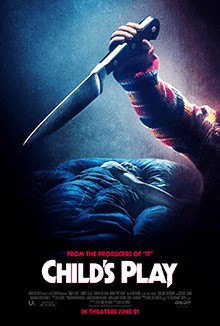
Child’s Play-2019

Child’s Play-2019

Director Lars Klevberg

Starring Aubrey Plaza, Mark Hamill

Scott’s Review #948

Reviewed October 17, 2019

Grade: B

In the horror cinematic genre, when a successful franchise has been dormant for a period, a reboot will inevitably be among the offerings.

Child’s Play (2019) resurrects the series of films popular in the late 1980s and early 1990s with a modern stamp.

The film is formulaic, but it adds a bit of macabre dark humor that lifts it above mediocrity. However, the freshness turns too silly in the final act, and neither the film nor the killer is terrifying.

Kaslan Corporation has launched a successful new global product called Buddi, a revolutionary line of high-tech dolls designed to be human-like companions to their owners, learning from their surroundings and acting accordingly.

Buddi dolls can also connect to and operate other Kaslan products, quickly becoming a phenomenon for kids worldwide. A disgruntled employee tweaks one of the dolls to turn sinister and then commits suicide.

Single mom Karen Barclay (Aubrey Plaza) works as a retail clerk in Chicago, raising a thirteen-year-old son named Andy (Gabriel Bateman), who wears a hearing aid.

New to the area, he struggles to make friends, so Karen takes the defective doll from her store as a substitute friend and picks me up for her son.

As Andy makes acquaintances within the building and takes a dislike to Karen’s new beau, Shane (David Lewis), Buddi names himself Chucky and seeks vengeance against those surrounding Andy, eventually turning on the boy.

Child’s Play takes a modernized approach by making the new Chucky a more high-tech doll, significantly advanced from the original Chucky introduced in 1988.

2019’s Chucky is creepier and more lifelike than the original Chucky, which lends the film a fresh look rather than merely a retread of the 1980s.

Set in present times, the film feels relevant and glossy. New Chucky is more human than old Chucky, with more capabilities and room for thought and deduction, making him more devious.

A treat for Star Wars (1977) fans and any fan of cinema history is the inclusion of Mark Hamill as the voice of Chucky. While Hamill’s voice is not sinister nor particularly distinguishable to the naked ear, the star power adds fun and familiarity, a throwback and ode to film lore.

Hamill’s voice is pleasant and kind, which adds a foreboding and sinister quality.

The film has some clever moments and bits of chilling dark humor that make it a fun experience. When Shane becomes the first victim of Chucky’s wrath and meets a dire fate at the hands of a tiller while hanging Christmas lights, he is beheaded, and Chucky leaves the head in a disgusted Andy’s room.

In hilarious and laugh-out-loud form, the head ends up as a wrapped Christmas present for Andy’s elderly neighbor Doreen, who props it on her mantle until she can open it.

Bryan Tyree Henry, known for his prominent roles in Widows (2018) and the wonderful If Beale Street Could Talk (2018), brings comedy and a likable edge as Andy’s neighbor, Detective Mike Norris.

Plaza, like Karen, is given limited material and unable to shine in her role, not seeming old enough nor motherly enough to add much realism. A big fan of the actress, she is more talented than this part allows her to be.

The film misfires with the cliched misunderstandings and incorrect assumptions that Andy is responsible for the deaths Chucky caused.  Andy’s two apartment buddies are caricatures, and the big finale set inside the retail store is disappointing.

Chucky brilliantly hacks the Buddi toys on the shelves, and chaos ensues as parents and children are massacred as a stampede tries to escape the store. The scene does not work as well as it should at a climax.

Sticking closely to the script and offering a predictable formula film, the 1988 film Child’s Play is remade in 2019 with added star power. Familiar faces (and voices), Plaza, Henry, and Hamill, raise the film slightly above B-movie status, though the dumb finale made me tune out a bit after the main kills were over.

I doubt the film performed well enough at the box office to secure the known actor’s returns, and hopefully, this will be a one-and-done project.

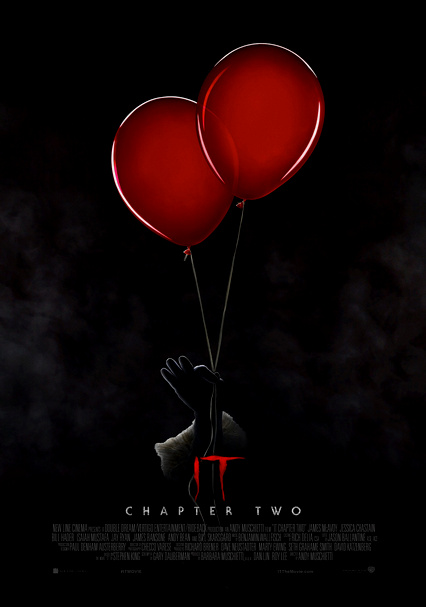
IT: Chapter Two-2019

IT: Chapter Two- 2019

Director Andy Muschietti

Starring James McAvoy, Jessica Chastain, Bill Hader

Scott’s Review #939

Reviewed September 11, 2019

Grade: B+

A companion piece to the first chapter, named It (2017), and an adaptation of the famous and chilling 1986 novel by horror novelist Stephen King, It: Chapter Two (2019) is a successful culmination of the vast story and will please many fans.

A box-office hit mixing straight-ahead horror with the supernatural, and a tad of adventure mixed in, the film is to be appreciated in many ways, though I slightly prefer the first chapter by measure.

Set in present times (2016), twenty-seven years after the first film took place, the Losers’ Club kids are now nearing middle age, in their forties.

The most prominent characters in the group, Beverly Marsh (Jessica Chastain), Bill Denbrough (James McAvoy), and Richie Tozier (Bill Hader) are summoned by childhood chum Mike Hanlon to return to the sleepy town of Derry, Maine, after a series of murders begin at the summer carnival.

Each of them, except for Mike, has fled the small town and found success in bustling cities, living prosperous lives.

Because of a promise made as kids, the entire group reunites except for Stanley Uris, who chooses to fatally slit his wrists in a bathtub rather than return and face evil Pennywise the Clown (Bill Skarsgard).

The six members wrestle with their demons and past mistakes while Pennywise takes the form of human beings and objects to terrorize the group, providing imagined and frenzied scares. At the same time, they scramble to perform a Native American ritual to destroy the beast.

It isn’t easy to write a successful review of It: Chapter Two as merely a stand-alone film since the two chapters are meant to be one cohesive, long film.

Filmed at the same time, the pacing and continuity are what make the experience an enjoyable one. The key is the interspersing of many scenes, a hybrid of childhood and adult sequences, which gives the film a cohesive package.

This style is a treat for viewers who have seen the first chapter two years ago. After the hoopla dies down, patient fans would do well to watch both chapters in sequence in back-to-back sittings for an undoubtedly pleasant experience.

Director Andres Muschietti wisely places focus on the characters so that the film is character-driven rather than plot-driven, a risk with anything in the horror genre.

Each of the six adults resembles the six kids in physical appearance, which makes the story believable. A major strength is the focus on each character individually, both in the present and in the past. Each faces insecurity, guilt, or mistakes, making them complex.

At a running time of two hours and forty-nine minutes, the film can take its time with character exploration and depth.

A nice add-on and deviating slightly from the King novel is a modern LGBTQ presence. It is implied (though I admittedly missed this when I saw the film) that Richie (Hader) is either gay or wrestling with his sexuality.

The pivotal final scenes depict Richie’s undying love for his lifelong friend Eddie, as one saves the other’s life only to sacrifice his own. The fact that the love is unrequited or unrealized is both sad and heartbreaking.

The gay-bashing opening sequence of Adrian Mellon and his boyfriend is quite a difficult watch, as is the lack of any comeuppance for their perpetrators, but the scene is faithful to King’s novel.

It is also a jarring reminder that in 2019, small towns are not always the safest place for the LGBTQ community, as far too often, small towns breed small minds.

The film could contain more jumps and scares than it does, and teeters a bit too long in the overall running time. While the focus on the character is excellent, the final climax and the battle with Pennywise are a slight letdown and feel predictable.

The film is not scary in terms of horror but does have nice special effects and visual razzle-dazzle, especially concerning Pennywise. The creepy clown is less frightening than in the first chapter, but perhaps this is due to becoming more familiar with him.

A treat for eagle-eyed fans is the cameo appearance by legendary author Stephen King. As a cantankerous pawn shop owner, he sells Bill the relic bicycle he had enjoyed in his youth.

For bonus points, Muschietti treats fans to a scene including filmmaker Peter Bogdanovich, who cameos as the director of the film based on Bill’s novel.

It: Chapter Two (2019) offers good entertainment and will please fans of the horror genre and the famous author, as the film is very faithful to the novel.

As a modern horror experience, the film is a solid win, though not without slight missteps. Superior in depth and character development to most films in the same vein, it is a film to be enjoyed and appreciated.

The Curse of La Llorona-2019

The Curse of La Llorona-2019

Director Michael Chaves

Starring Linda Cardellini

Scott’s Review #937

Reviewed August 29, 2019

Grade: C+

The Curse of La Llorona (2019) is a modern-day horror flick that possesses all the standard and expected trimmings that a genre film of this ilk usually has.

The story is left undeveloped, with many possibilities unexplored in favor of a by-the-numbers experience.

Linda Cardellini, an outstanding actress, consistently exceeds the material she is given, yet she often comes up empty-handed.

It is the sixth installment in The Conjuring Universe franchise.

The film does have jumps and frights galore, and a creepy ghost/spirit character that is scary, but more was expected from this film, which left me ultimately disappointed.

First-time director Michael Chaves is a novice, so a bit of leniency should be given as he develops a limited product, but he could have a strong future ahead of him if he works on story elements rather than focuses on merely scare tactics.

In 1673, in Mexico, a family happily plays in a field when one of the boys suddenly witnesses his mother drowning his brother, and soon suffers the same fate.

This incident becomes part of Mexican folklore and is subsequently feared by many. In present times (1973), caseworker Anna (Cardellini) is sent to investigate a woman who has locked her two sons in a room. Despite the woman’s claims that she is trying to save their lives, Anna brings them into police custody.

When the boys are later found drowned, the woman curses Anna, whose two young children are now in danger.

The positives are that Chaves makes a competent film. It is not bad and provides a level of familiarity, with creaking doors, cracking mirrors, and an evil spirit named “The Weeping Woman” that are effective and provide a scare or two at just the right moments.

Characters frequently see the spirit through a reflection, and since the film is set almost entirely at night, this tactic is successful.

Cardellini, garnering recent fame for her role in the Oscar-winning film Green Book (2018), undoubtedly signed on for The Curse of La Llorona before all the Oscar wins.

The actress gives it her all but can hardly save the film, though she does provide the professionalism that raises the film above a terrible experience. Not nearly enough praise will be given to the young child actors playing Anna’s kids.

Largely one-note and lacking any evident experience, ironically, they mirror Chavez’s inexperience. They react to the scenes as they are directed, but never add any depth or authenticity to their performances.

Besides Cardellini and the horror elements, The Curse of La Llorona lacks much shine or substance. The plot and characters are forgettable, and the viewer is left shrugging their shoulders once the film concludes, essentially forgetting the production thirty minutes later.

The story, based on folklore, is weak.

The audience is expected to believe the spirit killed her children and now roams the earth looking for other sacrificial pairs of children so that she may bring hers back from the dead?

In one perplexing sequence, the Weeping Woman softens when looking at Anna’s kids, her demonic face reveals how she once was a beautiful woman. She suddenly changes course and reverts to the evil spirit she had been.

Granted, the special effects are impressive, but this is one example of a missed opportunity. Why couldn’t we be given a meatier backstory of the motivations of the woman?

Other misses include the 1970s Los Angeles period, featuring a feathered hairstyle and a tight sweater worn by Anna, a clip of an old television show, and a car or two overlooking the City of Angels, which hardly appreciates the decade or the metropolis.

Especially laughable are the modern hairstyles and looks of the children, including the kid from the seventeenth century.

Any connection to The Conjuring (2013) or Annabelle (2014) is limited, as one character (Father Perez), appearing briefly holding the Annabelle doll, barely warrants mention.

The Curse of La Llorona (2019) may only be a blueprint of what director Chaves can build on in his career, and a bright future for him is not out of the question.

Building on the Conjuring franchise is a good place to start with a specific audience, who are sure to see this film. He should focus on developing his basics and creating films with more depth, character development, twists, and turns.

Pet Sematary-2019

Pet Sematary-2019

Director Kevin Kolsch, Dennis Widmyer

Starring Jason Clarke, John Lithgow

Scott’s Review #923

Reviewed July 26, 2019

Grade: B

In the age of movie remakes, especially within the horror genre, it was only a matter of time before Pet Sematary, first released in 1989, would resurface with its fangs bared.

Paramount Pictures presents Pet Sematary (2019), a by-the-numbers affair that’s perfect for viewing on a late Saturday night.

It is an improvement over the disappointing ’89 version, but hardly recreates the genre, feeling more like a remake than offering much in the way of new storytelling or frightening effects.

The conclusion is somewhat disappointing, offering a hybrid of slasher and zombie genres.

To compare either film to the chilling and suspenseful page-turner written by esteemed novelist Stephen King would be ridiculous. The book is a quick read that will leave its reader breathless and scared, perhaps even fearing their pets, so the bar is set way too high for a cinematic offering to match up with.

The book delves much more into the feelings and emotions of all the principal characters, something that is severely limited in the film.

The Creed family, consisting of Louis (Jason Clarke), Rachel (Amy Seimetz), and their children, Ellie and Gage, relocates from bustling Boston, Massachusetts, to rural Maine, allowing Louis the opportunity to practice medicine at a university hospital.

Their friendly neighbor Jud Crandall (John Lithgow) befriends Ellie after she stumbles across a funeral procession of children taking a deceased dog to a cemetery called Pet Sematary.

He warns her and Rachel that the woods are dangerous. When tragedy strikes the family, the cemetery unleashes a supernatural force contained in an ancient burial ground that sits beside it.

The first half of the film is superior to the second as the buildup offers more perilous moments than when all hell breaks loose. Mysterious is when an accident victim in Louis’s care dies and begins to show up in his visions, warning him of something sinister.

The victim is mangled and bloody, and quite frightening are these foreboding scenes. When a curious Ellie traipses throughout the woods with curious wondermen, the audience is nervous about what (or who) she might stumble upon.

The film also earns praise for the suspenseful birthday party scene, which culminates in a grisly death. The scene begins cheerfully with lively party music and festive balloons amid a warm summer afternoon in Maine.

In a clear example of foreshadowing, earlier in the film, Louis curses the truck drivers who drive recklessly past his house at high speed. Excitedly running after their cat named Church, Ellie and Gage pay no attention to the looming truck with the texting driver until it is too late.

The scene drips with good terror.

After the speeding tractor-trailer, the predictability of the surface strikes down one family member. Jud has already warned Louis that “sometimes dead is better”, but we know Louis will surrender to temptation out of desperation and tempt the evil spirits.

When the once-dead character returns with a droopy eye and calm, devious demeanor, the film becomes a standard slasher film and is no longer as compelling.

The final thirty minutes feel very rushed, as if the careful pacing of the buildup is all for naught.

As in most horror films, now deemed a cliché, the last sequence often allows for a sequel if box-office profits are substantial enough. I do not recall a similar ending in the chilling novel or any reference to the family living out their days as a family of the undead.

The apparent attempt at a zombie reference was unsatisfying and much different from what I expected.

From a casting point of view, Jason Clarke (usually cast in supporting roles) gives a strong performance as the main character. He is a good father figure and provides charisma to the film. Well-mannered but also somewhat outdoorsy and a “regular joe,” he is intelligent and humorous with the kids.

The child actors are fine, but hardly the main attraction, and Seimetz as the mother, Rachel, is not the best casting choice.

She plays the challenging role much too brooding and angry for my taste, especially given that she is written as the most sympathetic of all the characters.

Pet Sematary (2019) is a satisfactory horror offering with a solid first half that teeters into difficult-to-believe territory rather quickly.

A stalwart veteran like Lithgow helps immensely, lending the film some respectability, and a child actor cast in a pivotal role is enough to avoid ruining the experience.

There is little reason to see the film a second time, but it is recommended to snuggle with the King novel for some good scares.

Eyes Without a Face-1960

Eyes Without a Face-1960

Director Georges Franju

Starring Pierre Brasseur, Alida Valli

Scott’s Review #922

Reviewed July 23, 2019

Grade: A

Eyes Without a Face (1960) is a macabre and twisted French-Italian horror film co-written and directed by Georges Franju. It is based on Jean Redon’s novel, which is the same name.

The film cover art (see above) is flawless and terrifying. It induces the creeps by only giving a glimpse, causing the recipient to be curious and attempt to analyze the meaning.

The film is nestled into a short one-hour and thirty-minute package that is time to scare the audience to death with many fantastic and gruesome elements, severely limiting the gore, which only adds to the horrific nature.

Because of its subject matter, the film was highly controversial in 1960 and was subsequently either loved or reviled by its audiences.

Eyes Without a Face is riveting because the audience empathizes with the characters and takes action to correct their wrongs despite the main character’s undeniable crazyness.

The complex emotions of guilt and obsession are commonalities, making it a layered and complex horror film that appears on many Top Ten genre lists.

The film is not for the faint of heart.

Doctor Genessier (Pierre Brassier) is a brilliant and successful physician who specializes in plastic surgery. After a vicious car accident that he is to blame for, he attempts to repair the ruined face of his daughter, Christiane (Edith Scob), a victim of the wreck.

But his plan to give his daughter her looks back involves kidnapping young girls and removing their faces. He is aided in his machinations by his assistant, Louise (Alida Valli), who kidnaps the young woman and helps him in the laboratory, acting as a surrogate mother to Christiane.

Louise aids Génessier partly because he helps restore her damaged face in events before the film begins.

Scob is the stand-out character, containing an innocent and quietly melancholy existence as she is the apparent victim of the story. Her defeated posture, while resiliently hopeful and demure, is complex for an actress to carry, and she defines grace and poise.

Brasseur and Valli each deliver the goods in different ways. Valli, haunting in her best horror effort Suspiria (1977), is mesmerized by her doctor and savior so that the relationship is almost cult-like.

Brasseur is strangely heroic, as he steals lives to save lives, so his character is extraordinarily complex.

The surgery scenes are chilling, featuring white, starchy uniforms worn by a doctor, assistant, and victim. The scenes could almost be mechanical tutorials offered to first-rate medical students with scholarly intentions. If this were not a horror film, the look would be documentary-style.

Genessier calmly cuts an entire circular length of his victim as a hint of blood slowly oozes down the sides of her face in an almost tender fashion.

The film, made in 1960, is not the 1980s slasher film image that encompasses non-horror film-goers’ preconceptions. It has a gorgeous texture.

The best scene occurs when one of Genessier’s victims, lying on a gurney, comes to and gazes at a figure leaning close to her. The camera turns to the figure, revealing a blurry but recognizable image of Christiane sans the face-like mask she usually wears throughout the film.

As the victim shrieks in horror, Christiane slowly backs away from her amid a feeling of pain and heartbreak, remembering how much of a freak she must appear to others. The scene is sad and grotesque at the same time.

Horror films often get bad raps, but poetic and stylized horror films are a diamond in the rough.

Eyes Without a Face (1960) achieves its place in the cinematic archives with brilliant black and white cinematography entrenched in a Gothic, chilling story with characters whose motivations can be dissected and studied long after the film ends.

This keeps the viewer thinking and deserves repeated viewings to capture all the gems it offers.

Witchfinder General-1968

Witchfinder General-1968

Director Michael Reeves

Starring Vincent Price, Ian Ogilvy, Hilary Dwyer

Scott’s Review #904

Reviewed May 31, 2019

Grade: B+

Witchfinder General (1968) is a macabre horror film that creates an intense atmosphere amid a gruesome story centered on witch-hunting.

By the late 1960s, violence and bloodletting in cinema had become more lenient and acceptable. Hence, the film takes full advantage of the timing with an unusual amount of torture, cruelty, and brutality.

The mid-seventeenth-century English period is highly effective, as is the ghastly religious angle, making for compelling filmmaking.

Vincent Price is delicious in any film he appears in, having amassed over one hundred cinematic credits alone, to say nothing of his television appearances.

Practically trademarking his over-the-top comic wittiness and campy performances, his role in Witchfinder General may be his best yet, as he plays the character straight and deadly serious.

This succeeds in making his character chilling and, maybe, the best role of his career, despite numerous disputes with director Michael Reeves over motivation.

During the English Civil War, Mathew Hopkins (Price) took advantage of the unrest, profiting from witch-hunting. He travels from town to town, accusing the unfortunate of witchcraft, until they are mercilessly executed, after which he is paid handsomely.

Matthew is assisted in the accusations and torments by John Stearne (Robert Russell), a man his equal in brutality. Knowing these two men were real-life historical figures makes the action even more challenging to watch.

When he arrests and tortures Father Lowes (Rupert Davies), Lowes’s niece’s fiancé (Ian Ogilvy) decides to put an end to Hopkins’s sleazy practices and goes on a quest to seek vengeance.

The mixture of a romantic love story, as Richard Marshall (Ogilvy) and Sara (Hilary Dwyer) marry, and a revenge tale, as Marshall vows to destroy Hopkins, is a nice combination, as are the numerous outdoor scenes.

Witchfinder General has much going on, and the pieces all come together.

The most horrific moments of the film come during the death scenes as the victims, whom logical viewers can ascertain are innocent. The characters are merely perceived as peculiar, therefore deemed to be up to witchcraft, and do not stand much of a chance despite their endless pleas and cries.

Before they are murdered, they are typically tortured until they ultimately confess to crimes out of desperation and perceived relief. The standard mode of death is either hanging or burning to death.

In one sickening scene, victims are assumed to be witches if they can swim and then are subsequently burned at the stake; if they drown, they are innocent, but of course die anyway.

One unfortunate victim has her hands and legs bound and drowns, followed by one of the witch hunters professing how her death was tragic because she was innocent all along.

In horror films, the most frightening situations are the ones that can conceivably occur in real life, whether it be a home invasion, a psycho with a knife, or being burned at the stake in the 1600s.

The fact that witch-hunting did happen is shocking and resoundingly makes Witchfinder General creepier, especially given that most scenes take place in the daytime. Anyone can create a studio monster, but the realism of the events is the key to the film’s power.

As an aside, while watching the film, I was keen to keep in mind how many countries still treat certain classes and groups of people differently, or even oppress them in the name of God.

Food for thought and an additional component that makes Witchfinder General relevant.

The story and the screenplay are not brilliant, nor do they necessarily need to be, given the treasures existing among the elements. The writing is your basic villains getting their comeuppance with a love story thrown in, standard fare, and adequate.

While pointing out some negatives is “Witchfinder General,” the best title that Reeves could come up with, or anyone else, for that matter? The title does not exactly roll off the tongue, nor does the renamed United States release, The Conqueror Worm, sound much better.

Witchfinder General (1968) is not an easy watch, and the faint of heart may want to avoid it, but its realism and rich atmosphere make it a success.

The lit candles, an old castle, potent red and blue costumes, and one of the greatest horror legends of all time make this a must-watch among horror fans.

Taste of Fear-1961

Taste of Fear-1961

Director Seth Holt

Starring Susan Strasberg, Ronald Lewis

Scott’s Review #901

Reviewed May 21, 2019

Grade: A-

Though Taste of Fear (1961) is a Hammer Production, a British film company known for its heavy horror offerings, it plays more like an intense and chilling thriller with a Gothic, ghostly feel than a full-throttled horror display.

The title was changed for US marketing purposes to Scream of Fear, and neither the US nor the UK title quite works, lacking the appropriate pizzazz that the film warrants.

The result is a razor-edged spellbinder with marvelous cinematography and more than a few surprise twists.

The action gets off to an exciting start as a female body is suddenly discovered in the waters of coastal Italy; a young woman has taken her own life by drowning.

Soon after, a heiress who uses a wheelchair, Penny Appleby (Susan Strasberg), arrives at her father’s estate in the lavish French Riviera to bond with her new stepmother, Jane (Ann Todd), and await her father’s return from vacation.

It is explained that the deceased woman was a close friend of Penny’s.

Penny distrusts her stepmother immensely but is unsure why since the woman is more than accommodating during her stay.

Immediately, strange events begin to occur at a rapid rate, most notably seeing her father’s corpse in odd places around the house and the grounds. The body disappears when Penny calls for help, leaving the household members questioning her sanity and Penny starting to agree.

She befriends the handsome family chauffeur, Robert (Ronald Lewis), and the pair are determined to figure out what is happening.

Cleverly, the audience knows something is amiss but not what the entire puzzle will add to, which is an excellent part of the viewing pleasure. Director Seth Holt enjoys toying with his viewers, keeping them guessing at every dark turn.

The biggest questions are these: If Penny’s father is dead, where is the body being hidden? Who is responsible and why? Why does Jane leave the house for drives every night? What does the family doctor (Christopher Lee) do with the story?

The best visual aspect of Taste of Fear is the black-and-white cinematography, which adds foreboding and brooding elements throughout the film’s short running time of eighty minutes.

The grand estate with creepy nooks and crannies provides plenty of prop potential. A grand piano that seems to play by itself is pivotal to the story, as is a murky pool, shockingly deep and unkempt for such a residence. Finally, the mansion boathouse that may or may not contain lit candles takes center stage during the film.

The storytelling is quick-paced and robust, never dragging. Layers unfold as the story progresses, but the developments are necessary instead of overkill as the conclusion comes into view.

Assumptions about which character’s motivations are devious begin to unravel. The illustrious dialogue crackles with spunk, and by the time we figure out what is going on, we scratch our heads in disbelief, finally surrendering to the film’s manipulations.

Taste of Fear falters slightly when an attempt to make the story ultimately add up is pondered. Liberties must be taken happily so, as what could be deemed silly or superfluous instead results in thrilling fun.

Once or twice, I thought the setup was too contrived, but I just as quickly tabled the inquisition instead of choosing to revel in the story.

The more than adequate cast performs their roles with professionalism and energy, always careful to make the unbelievable believable. Any film starring the legendary Christopher Lee is worthy of praise, even if the actor only has a supporting role.

Justice is eventually served, though, as his character becomes central to the plot.

A fun fact is that Lee said, “Taste of Fear was the best film I was in that Hammer ever made. It had the best director, the best cast, and the best story.” Given the actor’s catalog of treasures, this is not to be easily dismissed.

A forgotten delight, Taste of Fear (1961), is a prime example of a film that does everything correctly.

It is an excellent story, Gothic gloominess, and a foray for Hammer Production company into the new psychological thriller genre. The piece is never over-the-top and is a production sure to impress Hitchcock himself.

Never Take Sweets from a Stranger-1960

Never Take Sweets from a Stranger-1960

Director Cyril Frankel

Starring Patrick Allen, Gwen Watford

Scott’s Review #900

Reviewed May 17, 2019

Grade: A

Never Take Sweets from a Stranger (modified to Never Take Candy from a Stranger in the US for marketing purposes) is a 1960 British film directed by Cyril Frankel and released by Hammer Film Productions.

The film contains brilliant cinematography and cerebral quality, and it is pretty daring for the time it was made. It combines a story of pedophilia with manipulations of the legal system, allowing those to get away with this most heinous crime because of their status.

Despite the production company name being marketed as a horror film, the film is more left-of-center than a traditional horror film.

The locale is a small, sleepy lakefront Canadian town that seems like an everyday US town. The Carter family (Peter, Sally, and their 9-year-old daughter Jean) has just moved there to give Peter a fantastic job opportunity as the school principal.

Jean confides to her parents that while playing in the woods, she and her friend Lucille went into the house of an elderly man. The man asked them to remove their clothes and dance naked for him in return for some candy, which they did.

Peter and Sally are appalled and decide to file a complaint. The elderly man is one of the wealthiest and most influential in the town, the respected Clarence Olderberry, Sr.

Jean’s experience is downplayed, and the town largely shuns the Carter family. As a trial against Olderberry commences, Jean is ridiculed on the stand and her story ripped to shreds by attorneys.

After Olderberry is acquitted, he pursues Jean and Lucille in the woods, eventually catching the girls during a harrowing lakefront chase and murdering Lucille. Jean escapes, and the truth is revealed to the shocked and devastated town.

Although the cast of Never Take Sweets from a Stranger is not a household name, each performs well.

As the parents, Patrick Allen and Gwen Watford are well-cast and believable. They are upstanding strangers in the town, wanting to protect their daughter without smothering.

As old man Olderberry, Felix Aylmer plays the role not as menacing but by providing glimpses of pain and sympathy. The audience is unclear whether the man has dementia or Alzheimer’s disease, perhaps not even knowing what he has done.

The black-and-white cinematography is gorgeous, surreal, and tremendously effective.

With ghostly tones, the film gets off to a mysterious and prominent start as we see Jean and Lucille casually playing in the woods, startled to glance up at a menacing mansion (perfect for a Hammer production) to see elderly Olderberry leering at them with binoculars.

The lakefront sequences and the chase through the woods are among the best at providing superior camera angles.

As Lucille talks Jean into entering Oldberry’s house, we presume she has done this before. She knows Oldberry will provide the girls with candy, but does she understand this comes at a price?

Immediately, there is a shred of doubt about the children’s innocence—ever so quickly. The film’s decision and Oldberry’s representation are pivotal in casting even the slightest doubt on the motivations or decisions of the main characters.

Comparisons to the brilliant The Night of the Hunter (1955) are rapid. Themes of child abuse, young children in front and center roles, a creepy lake with a prominent boat, and macabre adults are prevalent, at least to some degree, in both films.

Additionally, both films were shunned at the time of release, misunderstood, and later rediscovered, subsequently seen as treasures of brilliant filmmaking.  Measuring both films as tragedies is also apparent; each results in pain and sadness for the children involved.

Never Take Sweets from a Stranger (1960) was released decades ago. It took years for its brilliance to be recognized and appreciated, as it added admirable and thought-provoking nuances to the viewer.

The subtle qualities make this film a world of its own. Sadly, the best movies are often overlooked, marinating the flavorful juices rather than a sudden bombastic reaction.

1960, the world was not ready for this film, but it is remembered as a brave, disturbing, and relevant film offering.

Scream and Scream Again-1969

Scream and Scream Again-1969

Director Gordon Hessler

Starring Vincent Price, Christopher Lee, Peter Cushing

Scott’s Review #899

Reviewed May 16, 2019

Grade: B+

Any film featuring horror heavyweights and great actors like Vincent Price, Christopher Lee, and Peter Cushing is well worth the price of admission for the name value alone. Each is a mainstay attraction in its own right and, combined, results in an orgy of riches.

Scream and Scream Again (1969) sputters by limiting the on-screen interaction between the actors. Still, after a reflective pause, I realize the picture is to be revered for its creativity and for its use of intersecting plotlines to build a thrilling crescendo into a surprise ending.

The audience is offered three segments of the story, each revisited periodically as a stand-alone segment that culminates in overlapping components.

An athletic runner trots along the streets of London, suddenly suffering from an attack, only to awaken in the hospital with no legs.

Elsewhere, a deadly intelligence operative reports back to his repressed Eastern European country, only to murder his commanding officer with a fatal paralyzing hold.

Finally, a London detective investigates the brutal deaths of several young women in metropolitan nightclubs.

Cushing, reduced to merely a cameo-sized role as the ill-fated officer, is barely worth mentioning and adds little to the film besides appearing in it.

Lee, like Fremont, the head of Britain’s intelligence agency, plays a straight role with not much zest.

Price, with the meatiest role as a mysterious doctor specializing in limb replacement, can give anyone the creeps with his scowl and eerie mannerisms. Still, the film misses the mark by wasting the talents of the other legendary actors.

The film is not at all what a fan of Hammer horror would expect, given the familiar horror cast and the gory-sounding title.

Heaping buckets of blood or ghoulish vampires were on the anticipated menu, but that does not mean the film fails to deliver. It may not please a fan of traditional horror films, as the genres of political espionage and science fiction come into play heavily.

However, the fantastic, peculiar nightclub-serial-killer storyline will satisfy fans eager for a good kill or two.

My initial reaction to Scream and Scream Again was that it was over-complicated and had too much going on at once, especially for a horror film.

After the film concludes and the surprise ending is revealed, I realized that the numerous tidbits are necessary to achieve the desired effect, and that the events will make the viewer ponder when the film ends.

Not to ruin the big reveal, but the filmmakers borrow a healthy dose of Invasion of the Body Snatchers (1956) in a more macabre way, naturally.

Fans of the 1960s British television series The Avengers will be pleased with Scream and Scream Again, as a similar tone exists in both.

The distinctive musical soundtrack, popular in the 1960s, works well, and the nightclub sequences and some of the detectives feel reminiscent of the show.

The feel of the film is not limited to an episodic television story but contains a similar style.

High British 1960s fashion is also prevalent and pleasing to the eye.

A couple of supporting characters strike a fascination in small and almost entirely non-verbal performances.

A sexy red-headed hospital nurse with superhuman powers and a penchant for amputating limbs, combined with a brooding, mysterious serial killer, provides dubious intrigue about who the actual characters are.

What is their motivation? Do they work for someone or something sinister? Questions like these will keep the viewer occupied and thirsty for an explanation.

Bizarrely, British film and television director Gordon Hessler crafts an implausible yet fascinating story that keeps the viewer guessing.

Featuring horror superstars Price, Cushing, and Lee would seem like an assured horror masterpiece, but the stars’ limited time on-screen brings the overall project down a notch.

Scream and Scream Again (1969) still achieves a good measure of worthy entertainment.